

Special Issue "Biodegradability of Materials"

Quicklinks

A special issue of International Journal of Molecular Sciences (ISSN 1422-0067). This special issue belongs to the section "Material Sciences and Nanotechnology".

Deadline for manuscript submissions: closed (31 July 2009)

Special Issue Editors

Guest Editor
Prof. Dr. Vladimir P. Torchilin
Center for Pharmaceutical Biotechnology and Nanomedicine, Northeastern University, Mugar Building, Room 312, 360 Huntington Avenue, Boston, MA 02115, USA
Website: http://www.pharmsci.neu.edu/faculty/torchilin.html
E-Mail:

Editorial Advisor
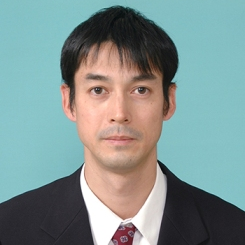
Dr. Naozumi Teramoto
Department of Life and Environmental Sciences, Faculty of Engineering, Chiba Institute of Technology 2-17-1, Tsudanuma, Narashino, Chiba 275-0016, Japan
E-Mail:
Interests: biomaterial; bio-based polymer; bioplastics; biodegradable polymer; biopolymer; composite material comprising a polymer matrix

Published Papers

Special Issue Information

To protect environment, the biodegradable materials have great advantages. However, sometimes, for material stability, biodegradation is a problem, for example, the biomedical materials.

Related Special Issues in other Journals

Submission

All papers should be submitted to ijms@mdpi.org. To be published continuously until the deadline and papers will be listed together at the special issue website.

Submitted papers should not have been published previously, nor be under consideration for publication elsewhere. All papers are refereed through a peer-review process. A guide for authors is available on the Instructions for Authors page. The International Journal of Molecular Sciences is an international peer-reviewed monthly journal published by Molecular Diversity Preservation International.

Open Access publication fees are 800 CHF per paper. English correction fees and/or formatting fees (250 CHF) will be added in certain cases (1050 CHF per paper for those papers that require extensive additional formatting and/or English corrections).

Keywords

biodegradable polymers, organics and materials

Planned Papers

Feature Papers

Type of Paper: Review
Title: Degradable Polymers as DNA and siRNA Carriers
Authors: Dhananjay Jere and Chong-Su Cho
Affiliation: Department of Agricultural Biotechnology, Seoul National University, Seoul 151-921, South Korea; E-mail: chocs@plaza.snu.ac.kr
Abstract: The availability of human genome sequence has revolutionalized the ability of medical science to manipulate genes either by inducing or silencing specific gene expression which modulates many grave diseases and genetic disorders. This gene manipulation can be accomplished by transfecting plasmid DNA (pDNA) or small interfering RNA (siRNA). Although, number of novel delivery strategies has been proposed for the efficient pDNA or siRNA transfection, only few of these strategies have been shown to enhance the expression of delivered pDNA or siRNA. This review will focus mainly on the advancements in the pDNA and siRNA delivery using degradable polymeric systems.

Regular Papers

Type of Paper: Article
Title: Glycosylation of Fluorophenols by Plant Cell Cultures
Authors: Kei Shimoda *, Naoji Kubota, Yoko Kondo and Hiroki Hamada
Affiliations: Department of Chemistry, Faculty of Medicine, Oita University, 1-1 Hasama-machi, Oita 879-5593, Japan.
* Author to whom correspondence should be addressed;
Tel. +81-97-586-5606; Fax: +81-97-586-5619 (secretary)
E-mail: shimoda@med.oita-u.ac.jp
Abstract: Fluorophenols are used as herbicides, pesticides, and starting materials for chemical syntheses. They have been released into the environment as pollutants, and caused soil contamination. From the viewpoint of environmental pollution control, biotransformation of environmentally toxic compounds by plants to their glycosides, which are accumulated in plant cells, is of importance. Here we report the glycosylation of fluorophenols to their mono- and disaccharides by Nicotiana tabacum cell cultures.

Type of Paper: Review
Title: A Literature Review of Landfill Bioreactor's Waste Biodegradation – New Technologies for Regional Development and Environmental Impacts’ Minimization
Authors: Telemachus C. Koliopoulos
Affiliations: Educational Collaborator Technological Educational Institute of Athens. 1 Melissou Str 116 35 Athens, Greece. Tel. +30-210-7012363; E-mail: tkol@otenet.gr
Abstract: The generation of landfill emissions remains an inevitable consequence of the practice of solid waste disposal in landfills. The collection and treatment of landfill gas and leachate have become common practice in order to prevent environmental pollution. Landfill emissions' treatment is highly dependent on the quality of waste physico-chemical properties, which in turn is influenced by various factors including waste synthesis and operational procedures. This paper presents the factors that influence municipal waste biodegradation, investigating the treatability of landfill bioreactors of municipal solid waste characterized by high organic and moisture content. Useful projections are made of Mid Auchencarroch experimental landfill site. In the end efficient technologies are presented for regional development and monitoring landfill emissions minimizing environmental impacts.
Keywords: Solid waste; high organic content; landfill gas; leachate quality; landfill stabilization; environmental impact assessment; digital image processing; sequential batch bioreactor; biomass biodegradation.

Last update: 25 August 2009

Int. J. Mol. Sci. EISSN 1422-0067 Published by MDPI Publishing, Basel, Switzerland RSS E-Mail Table of Contents Alert