mlCAF: Multi-Level Cross-Domain Semantic Context Fusioning for Behavior Identification

 , ,
, ,  ,
,
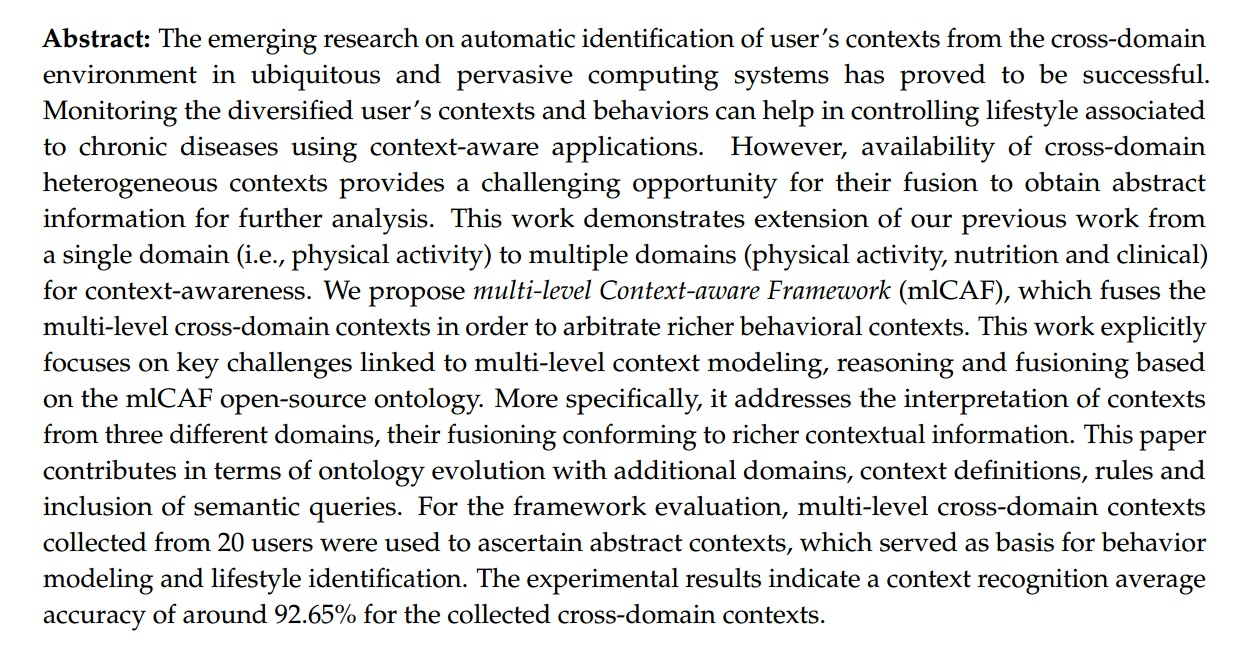
Abstract
1. Introduction
2. Related Work
3. Preliminaries on the Mining Minds Platform
3.1. Role of Physical Activities and Nutrition in Diabetes Management
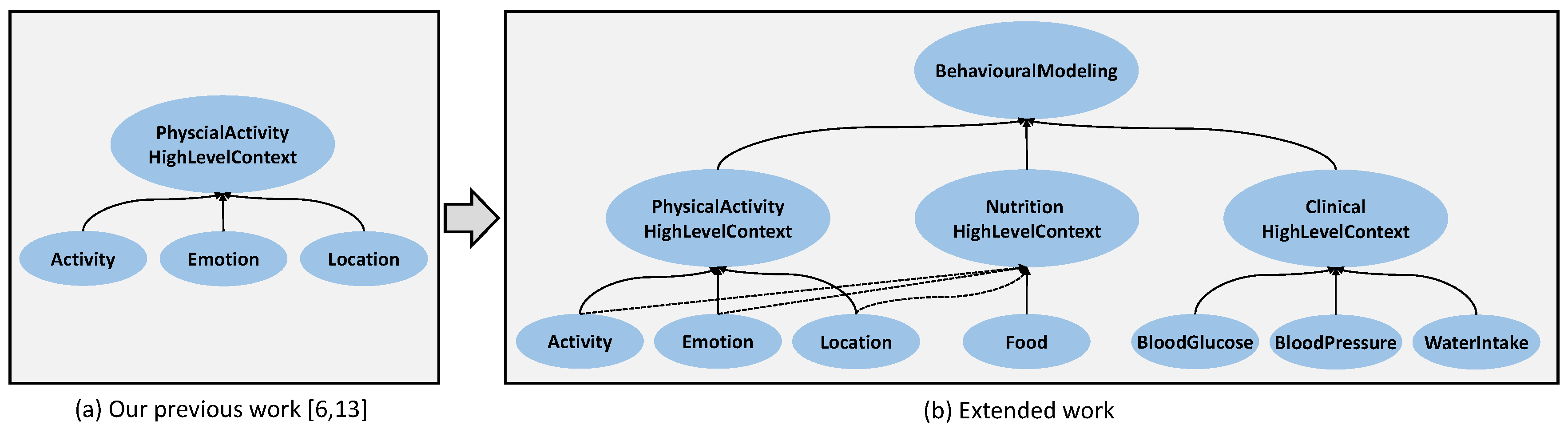
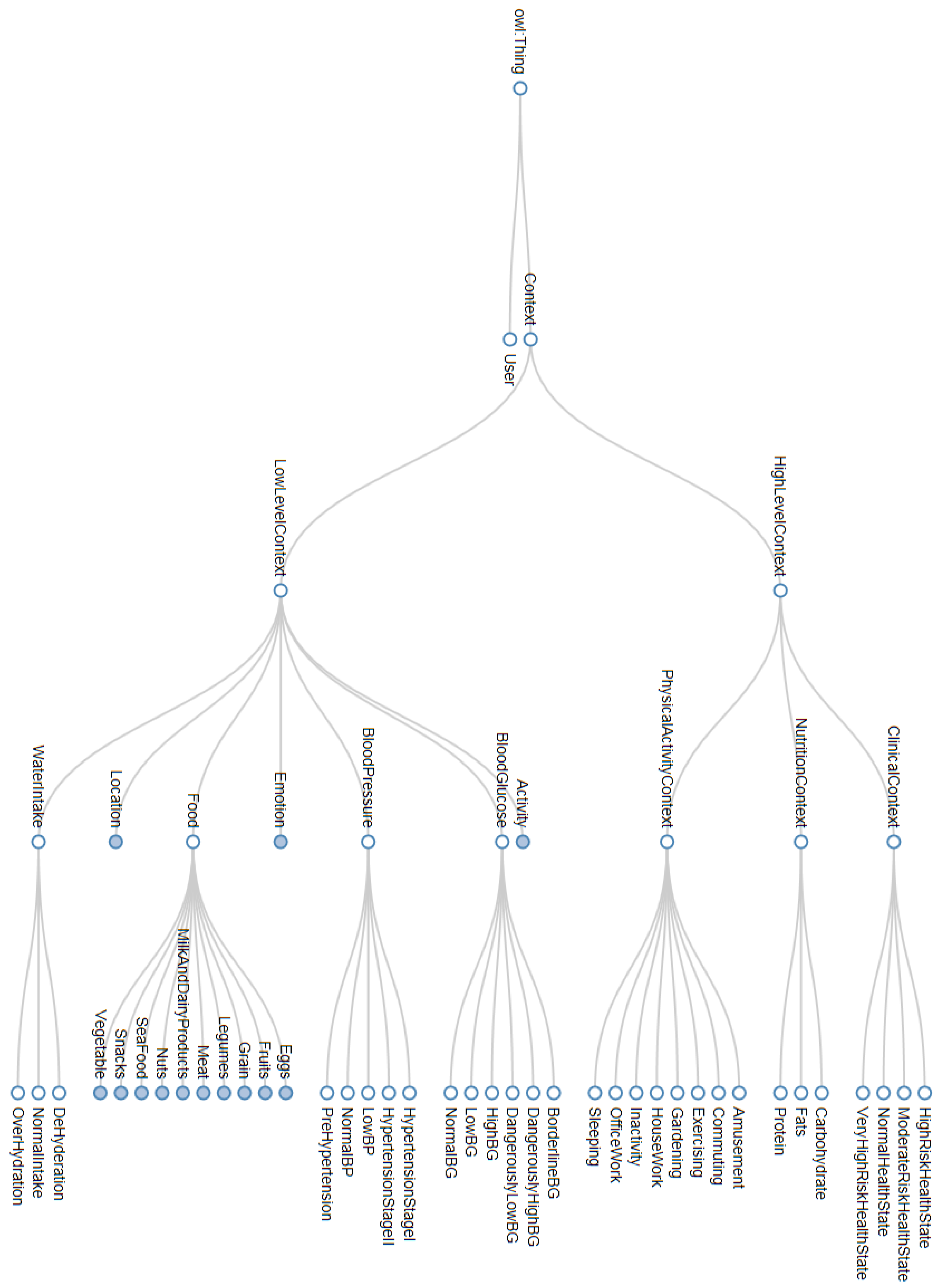
3.2. Mining Minds Context Ontology Evolution
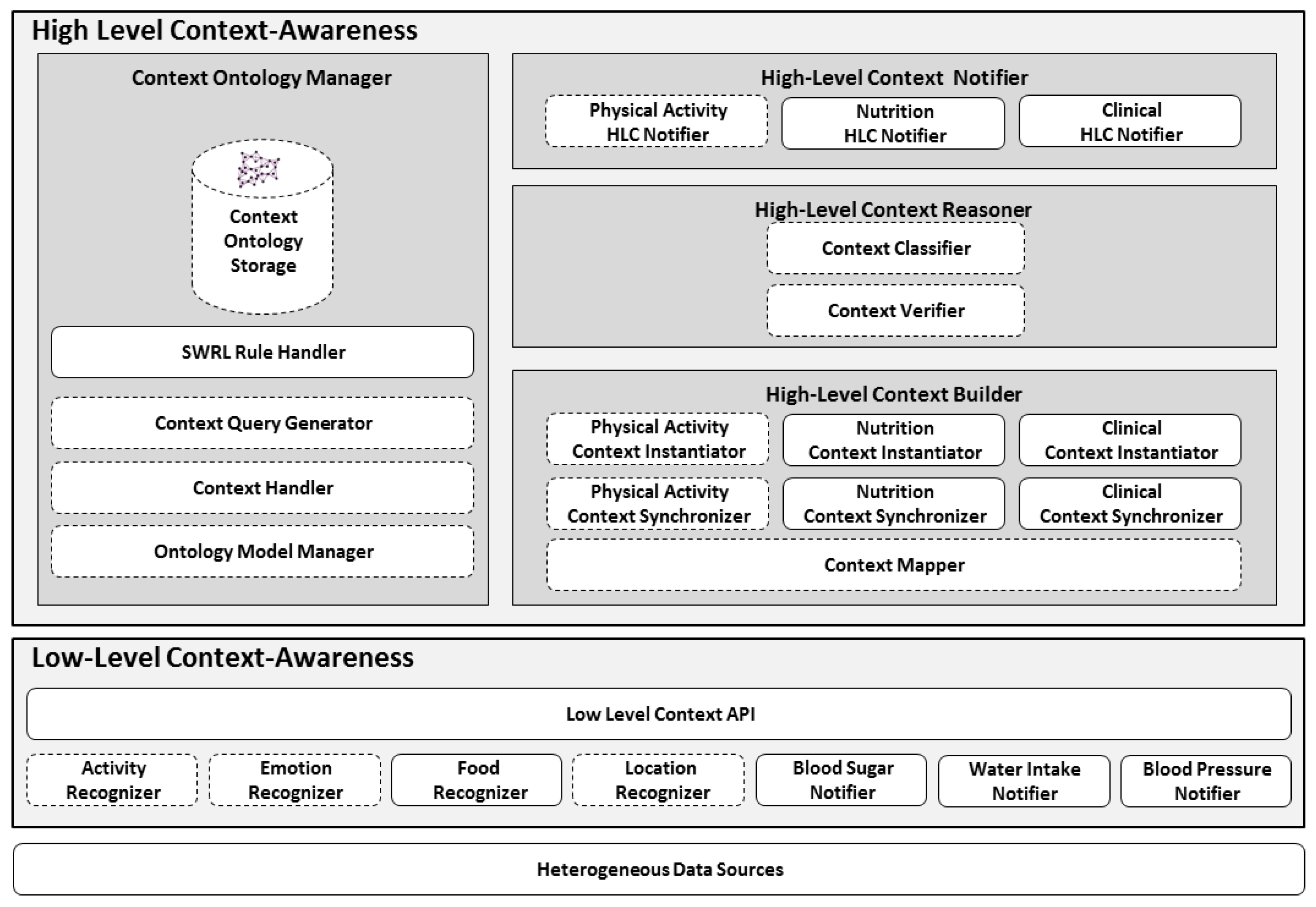
3.3. High-Level Context Awareness in a Nutshell
4. Context Reasoning
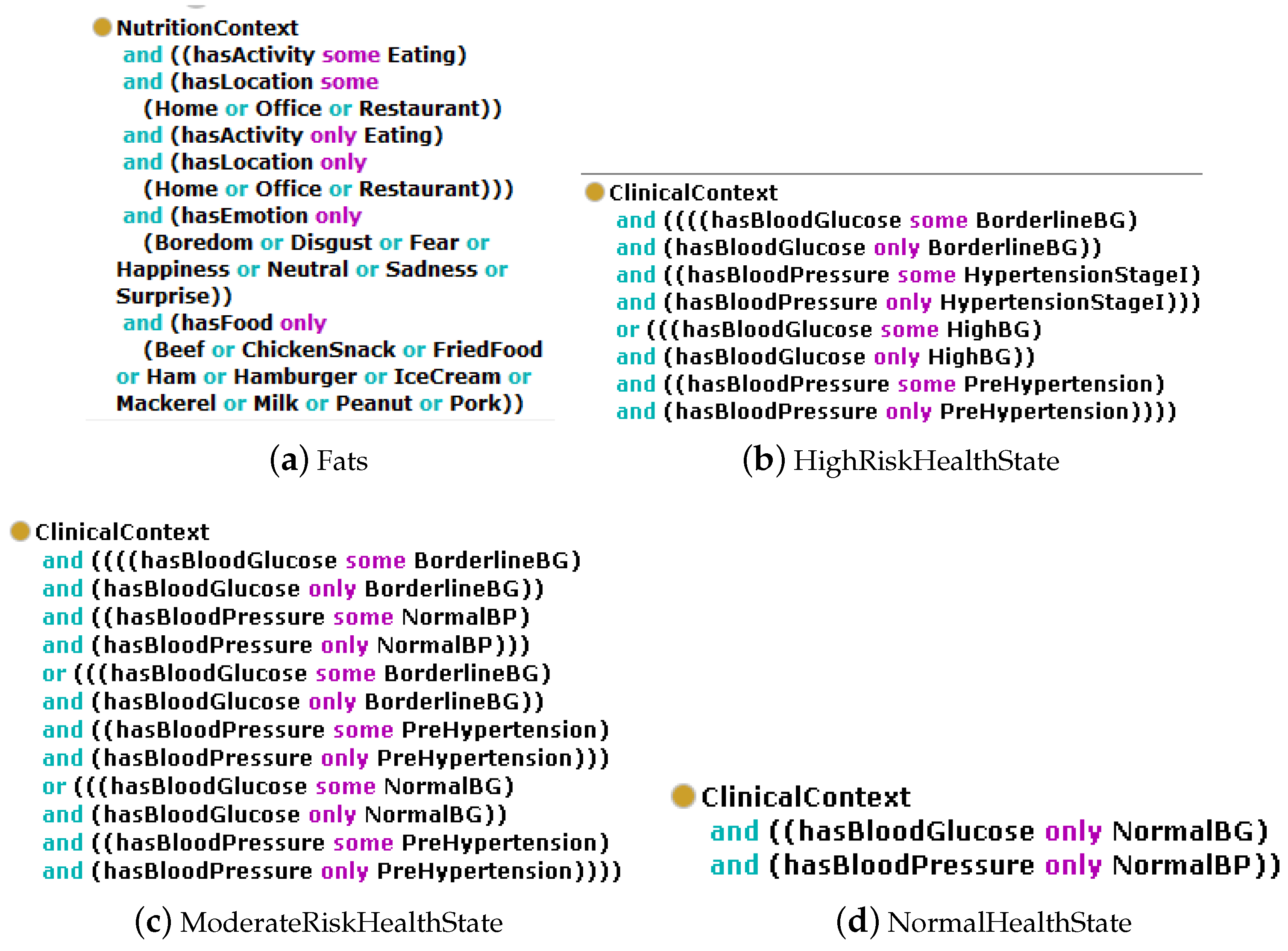
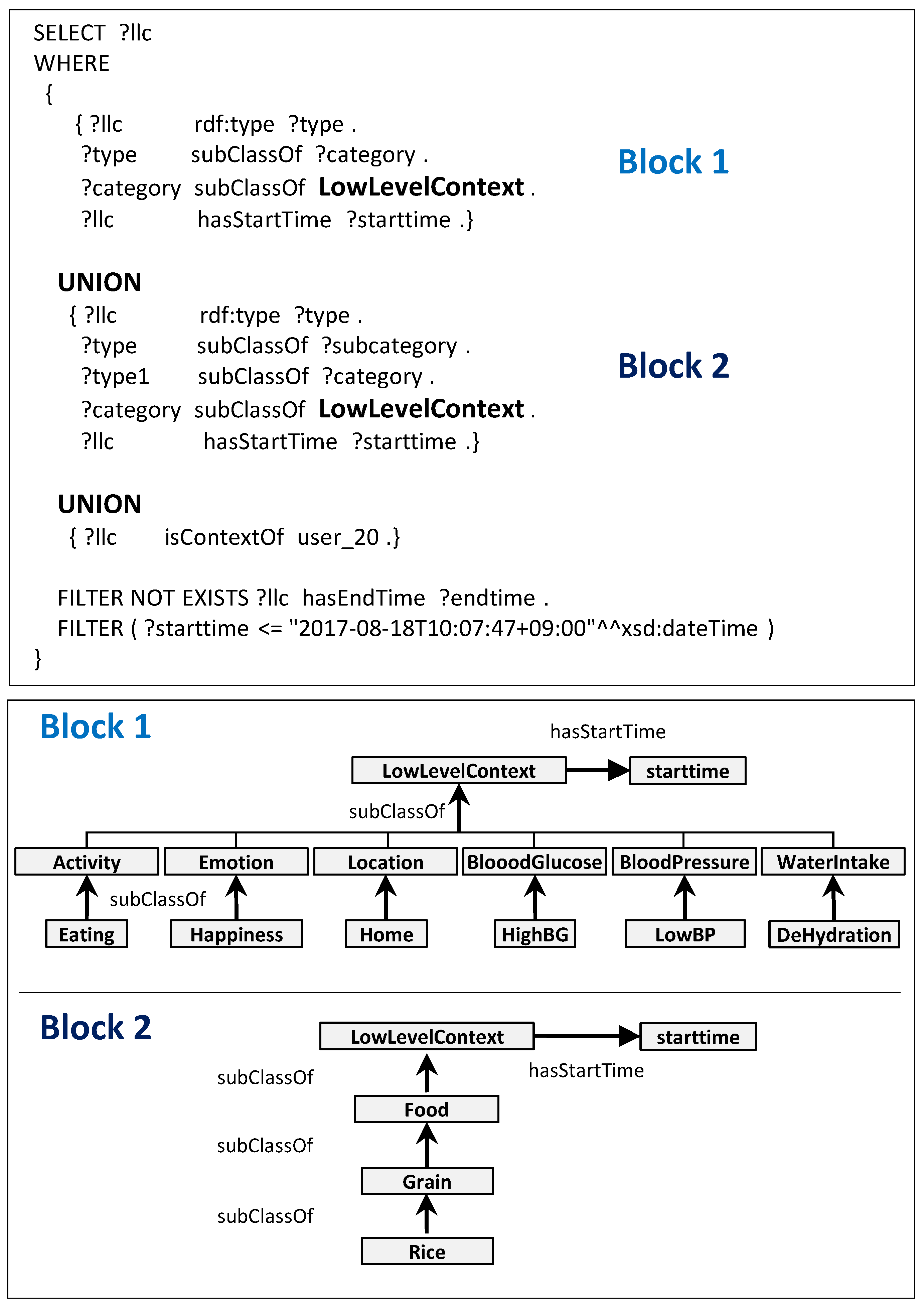
4.1. Ontology Based Reasoning
4.2. SWRL Based Reasoning/SQWRL Based Retrieval
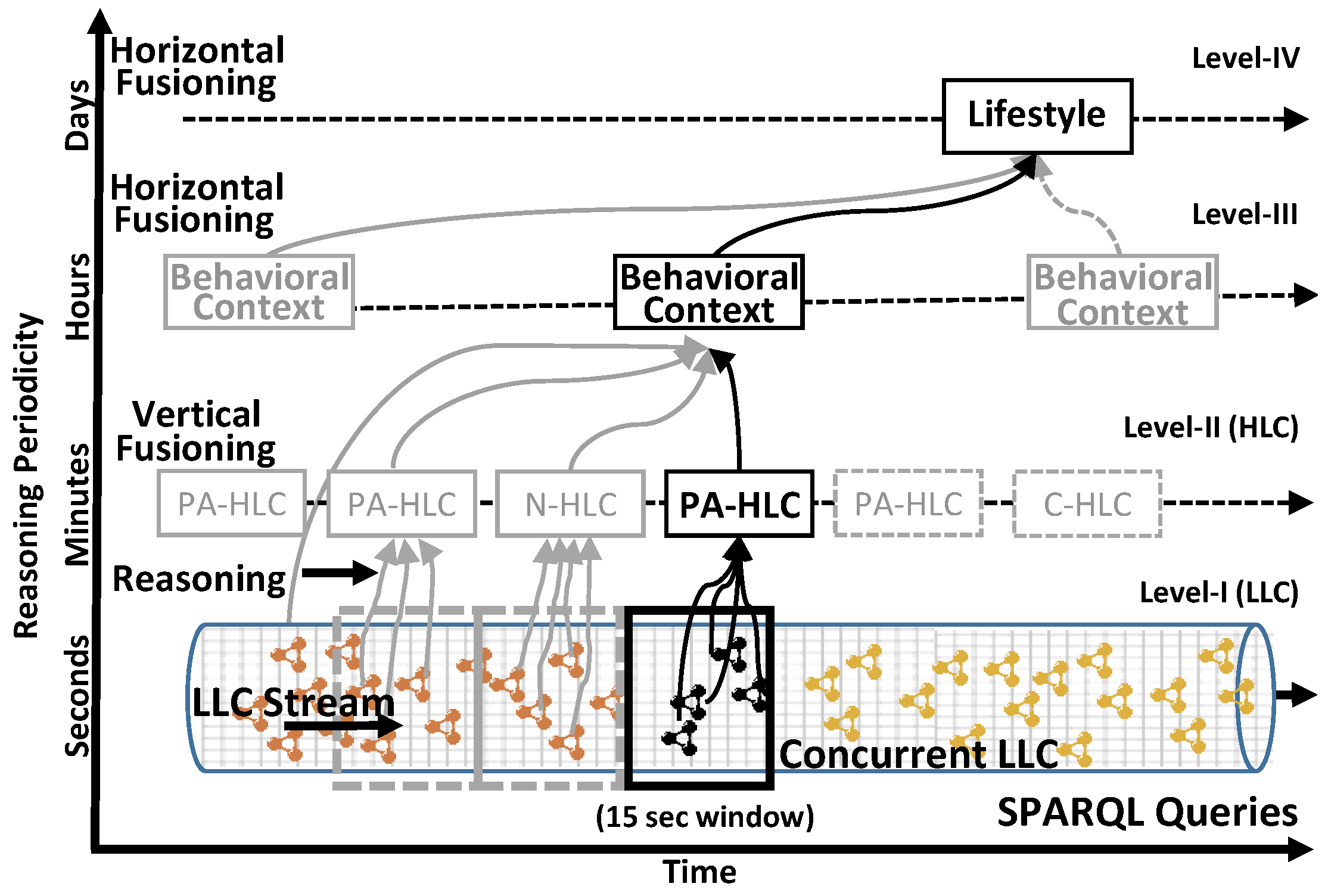
5. Multi-Level Cross-Domain Context Fusioning
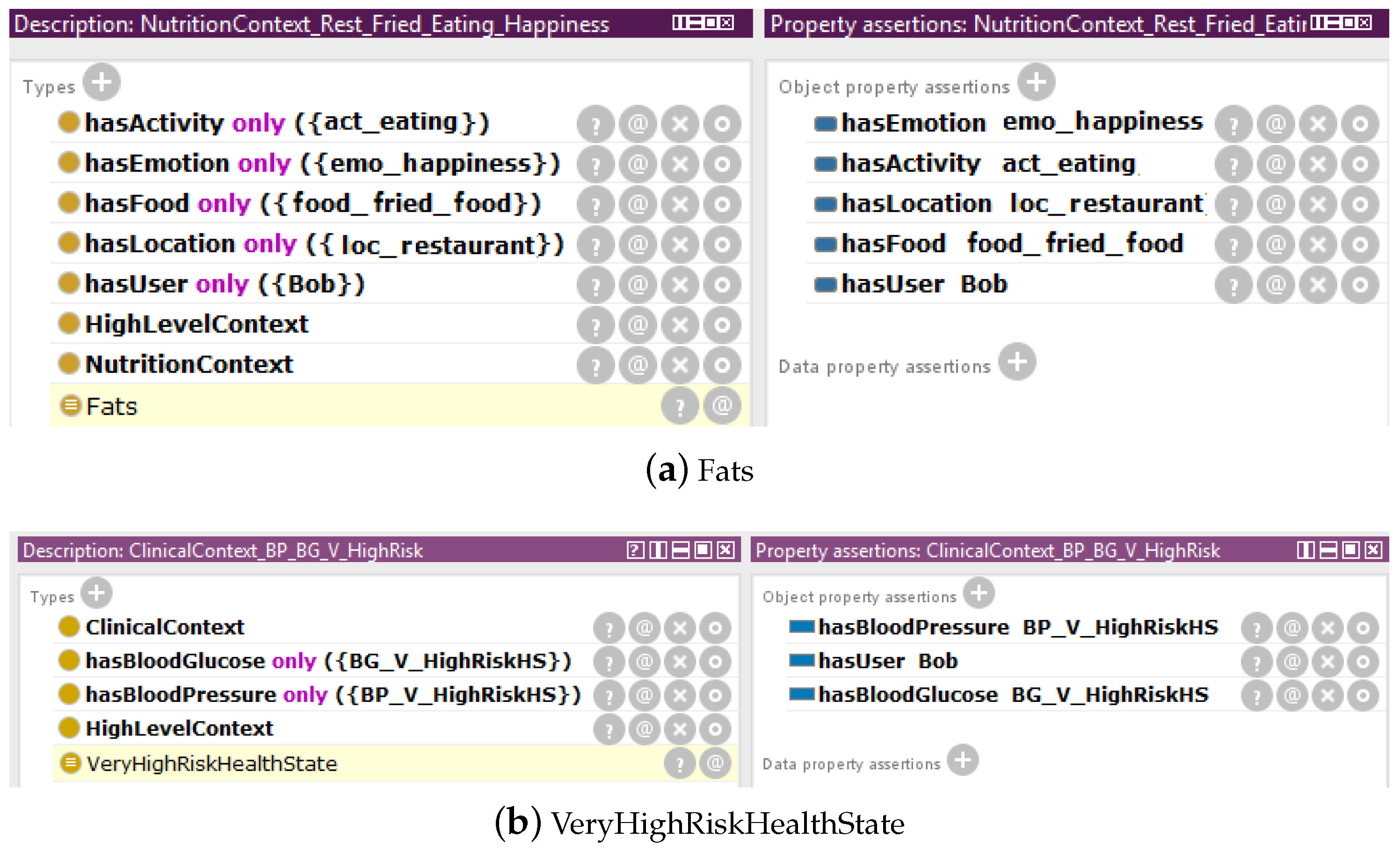
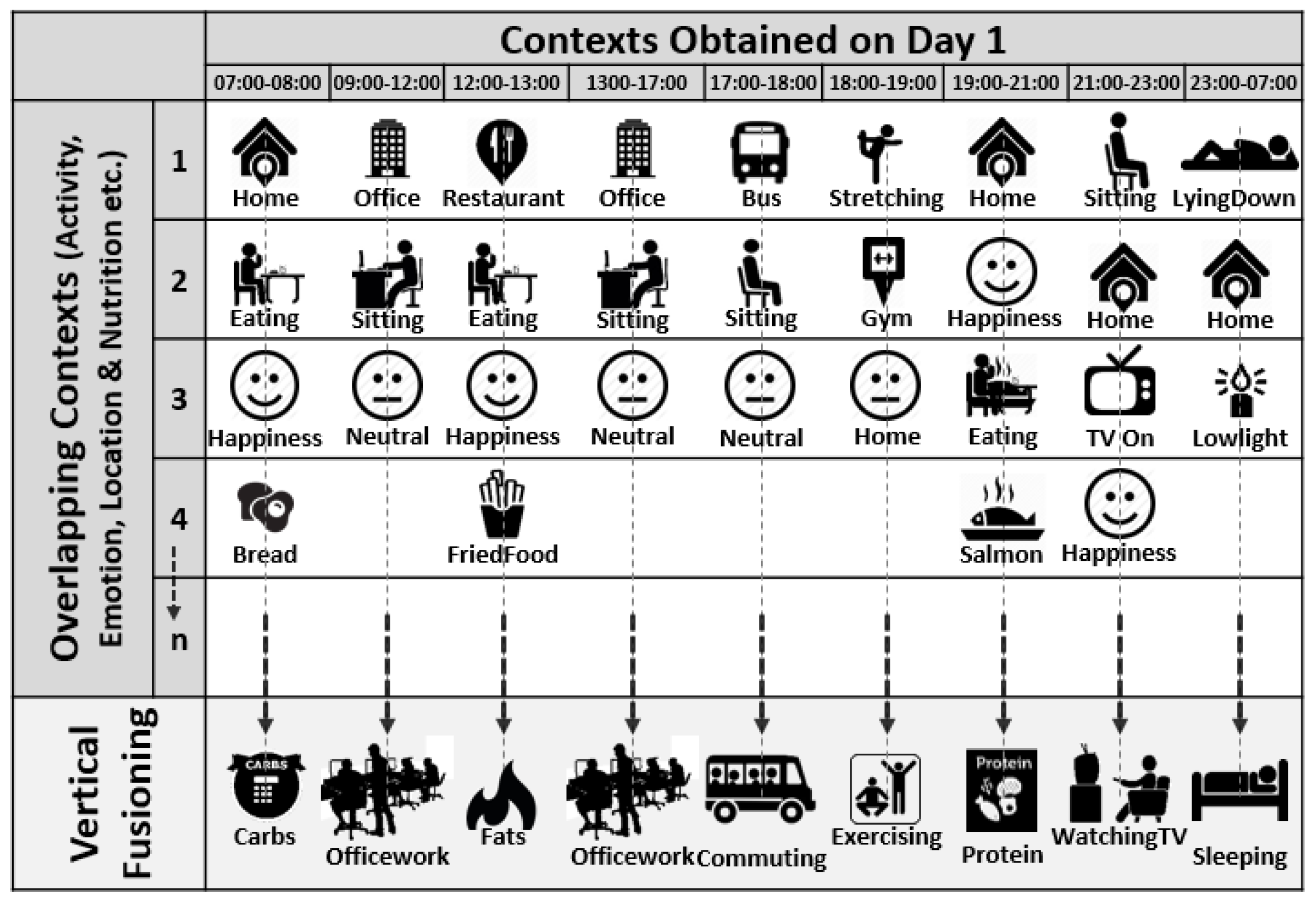
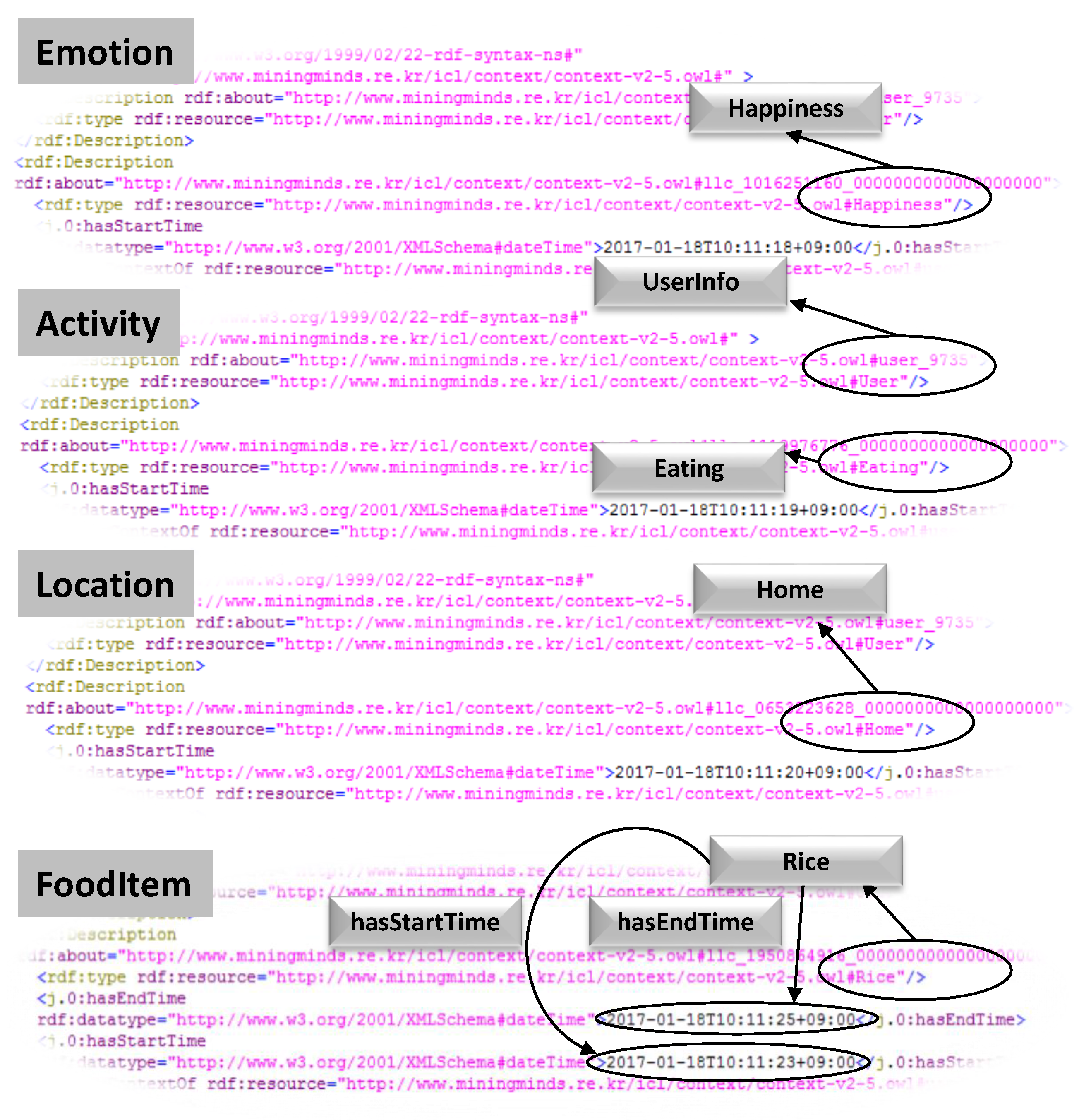
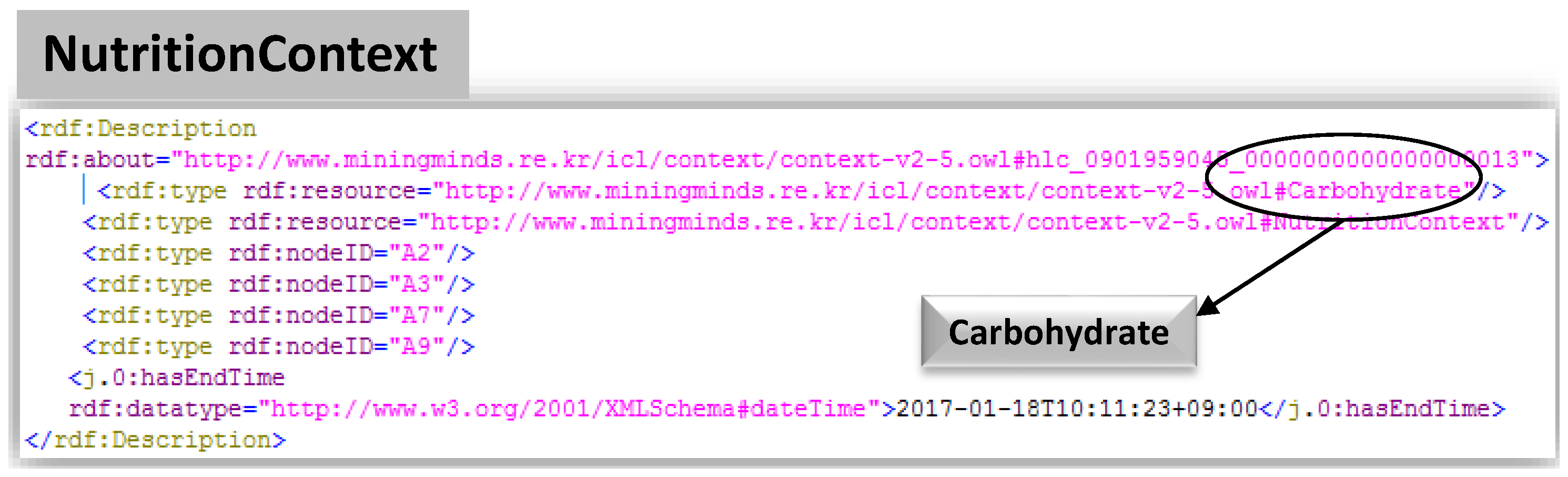
5.1. Vertical Fusioning: Context Inferring in the Mining Minds
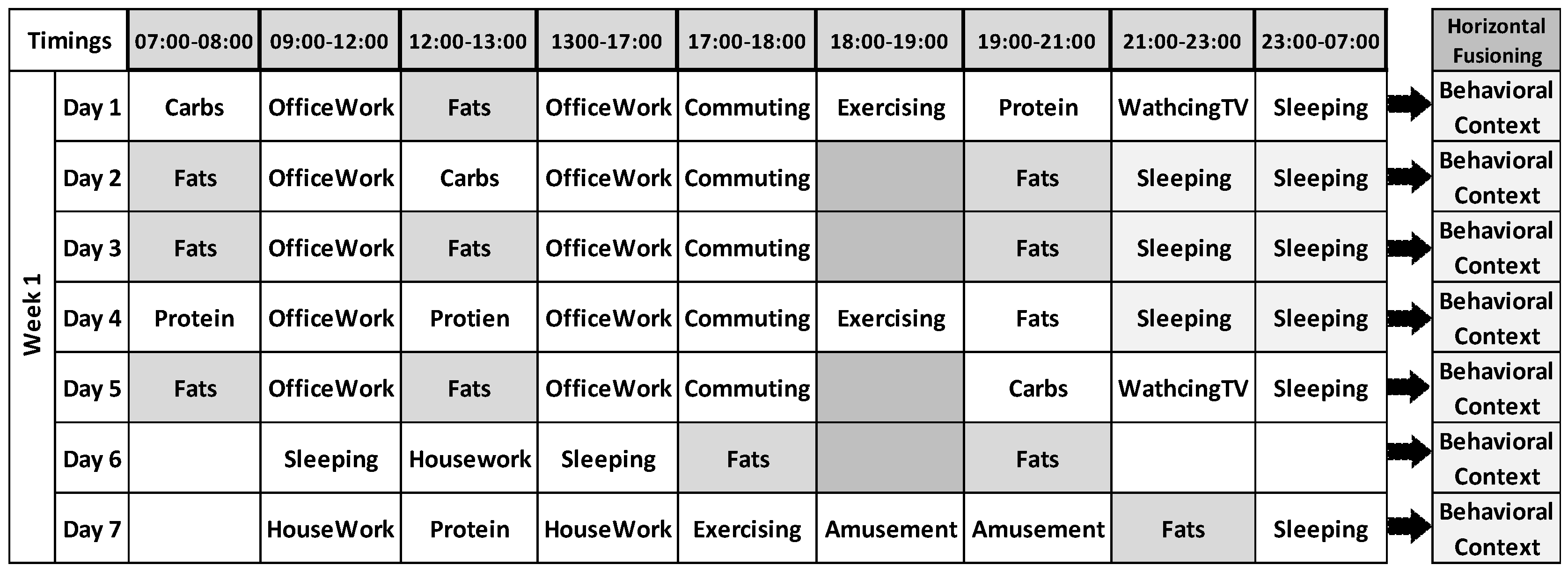
5.2. Horizontal Fusioning: Context Inferencing in the Mining Minds
6. Implementation Details
6.1. Test Environment
6.2. Semantic Web APIs Usage Details
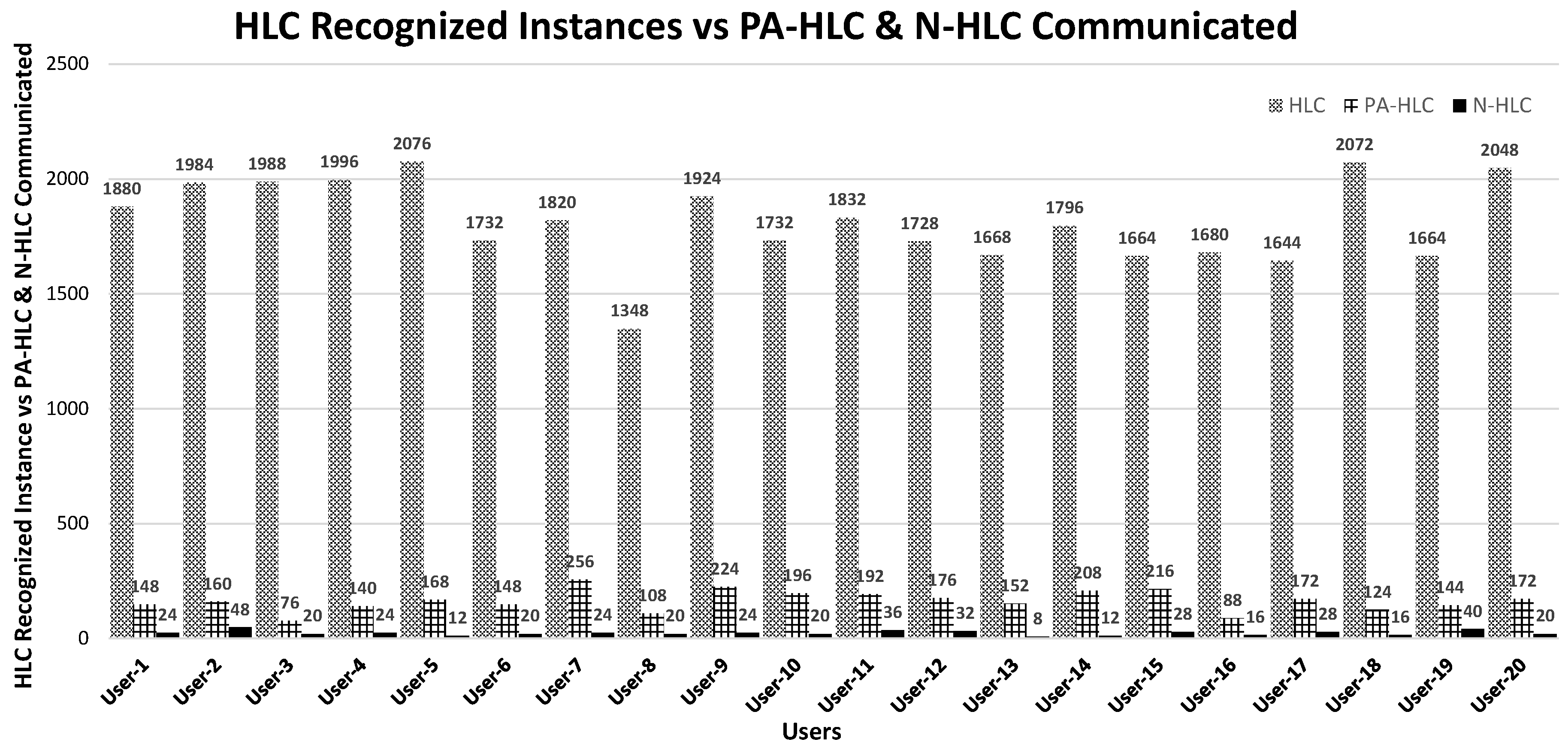
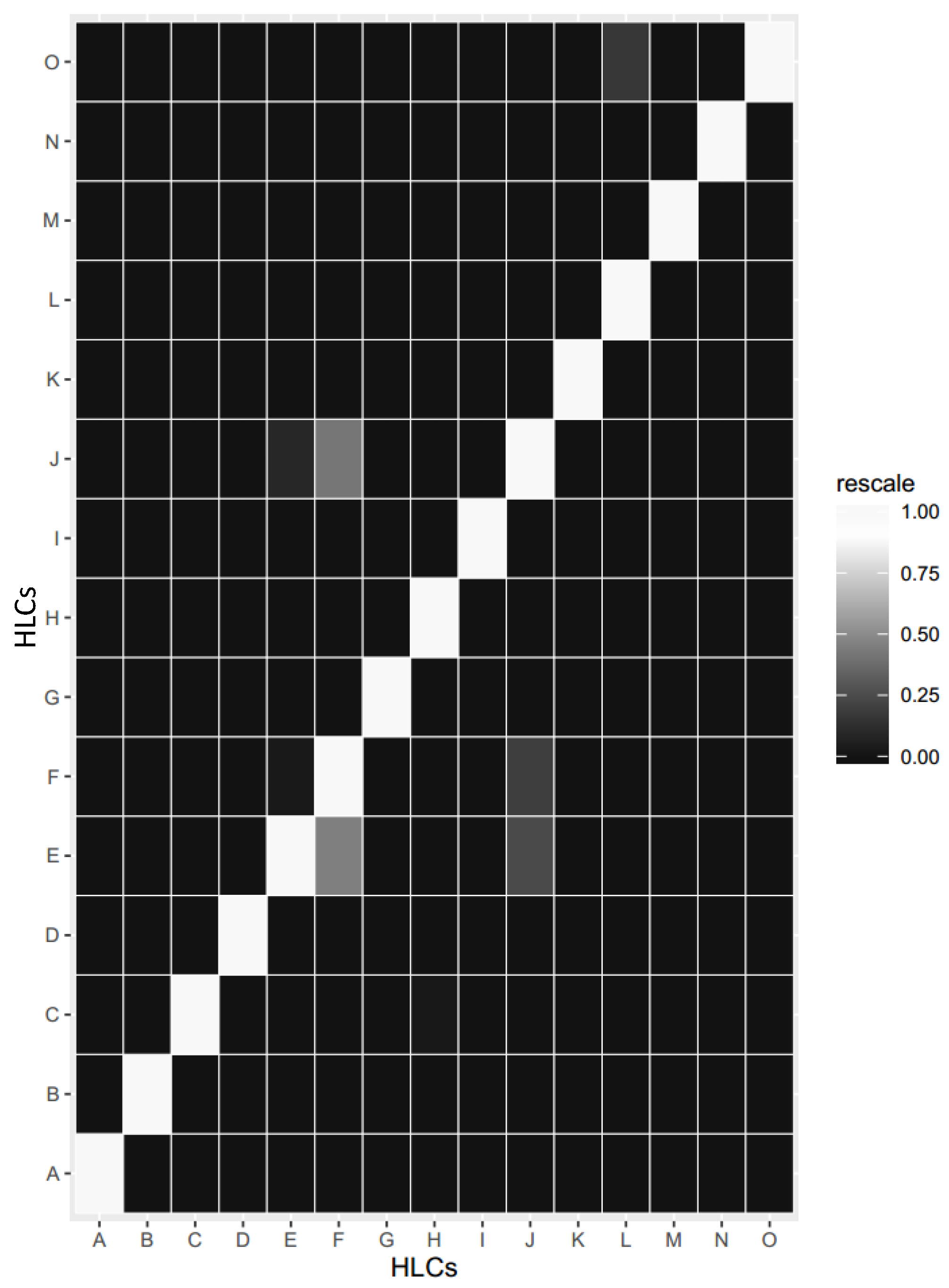
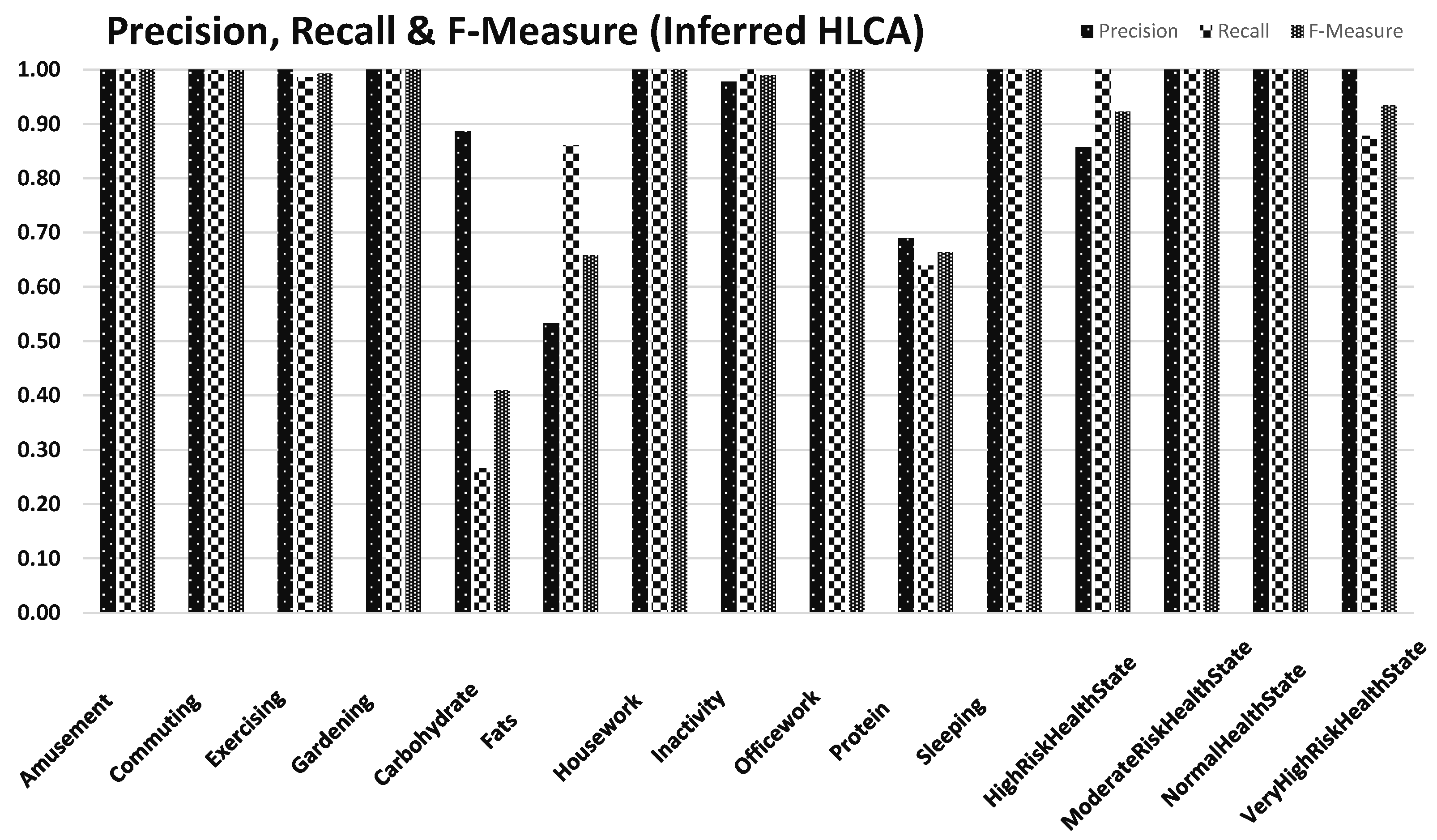
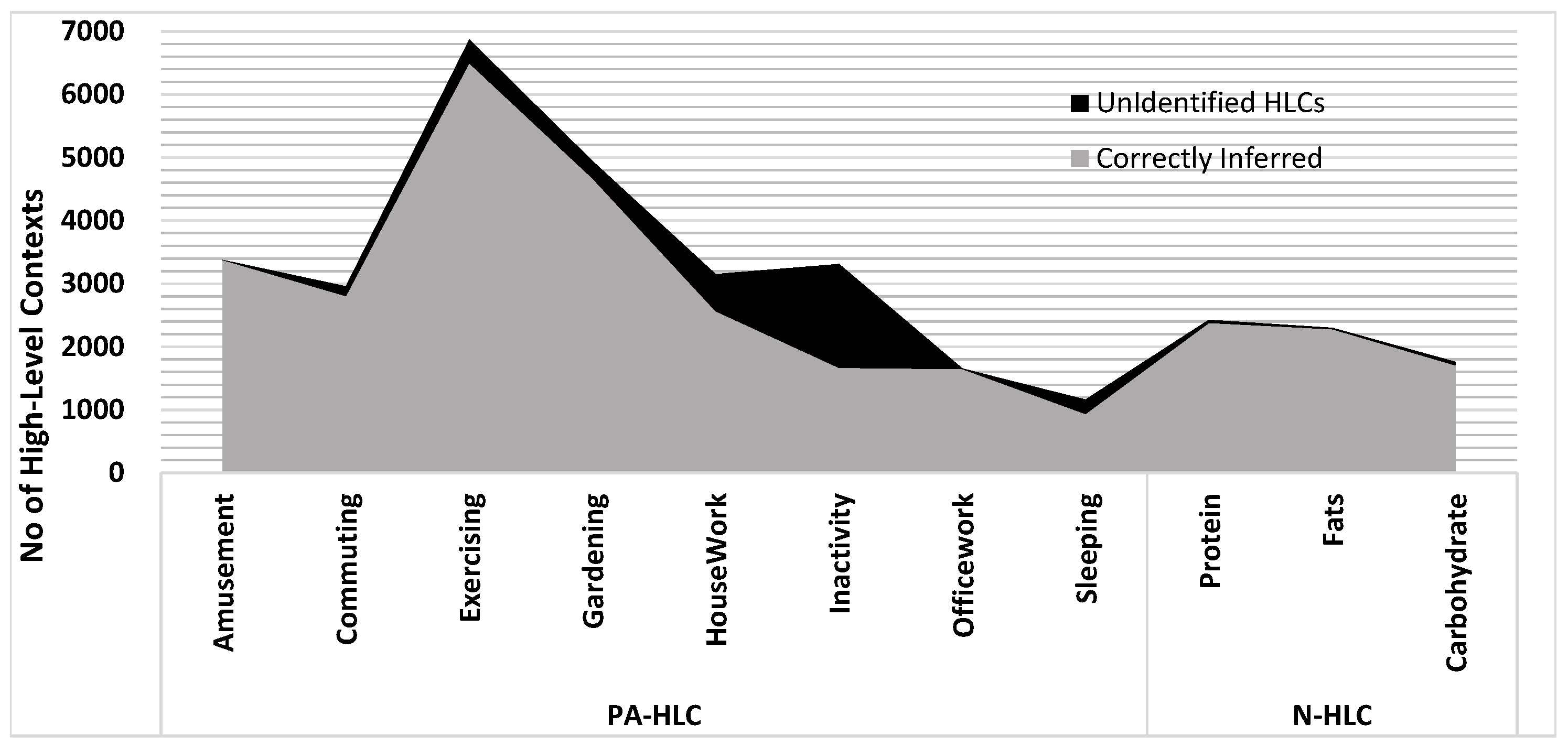
6.3. Experimental Results
- Precision: Number of HLC correctly inferred by mlCAF divided by the total number of HLC defined in MMCO.
- Recall: Number of HLC correctly answered by the mlCAF divided by the total number of mlCAF in the dataset.
6.4. SQWRL based advanced Queries
- (i)
- If the user “u” has location “Loc_Gym”.
- (ii)
- The user “u” has PA-HLC as “Exercising” and it has some start time and end time.
- (iii)
- The duration is less than two hours.
- (iv)
- The difference in a number of days is less than seven days i.e., in a week.
- (v)
- User “u” has “Sedentary Behavior” if “Exercising” PA-HLC is less than two hours in a week.
- (i)
- If the user “u” has a low intensity activity such as walking “Act_Walking” which is subClassOf of PA-HLC.
- (ii)
- The user “u” has PA-HLC as “Exercising” with start-time and end-time.
- (iii)
- If the duration is between one hour and three hours.
- (iv)
- If the difference in the number of days is less than seven days i.e., in a week.
- (v)
- This SQWRL query selects the users “u” a “Lightly Active” if “Exercising” PA-HLC is between one hour and three hours but with LLC Activity as Act_Walking in a week.
- (i)
- If the user “u” has a moderately intensive activity such as Running with instance “Act_Running”, which is subClassOf of PA-HLC.
- (ii)
- The user “u” has PA-HLC as “Exercising” with start-time and end-time.
- (iii)
- If the duration is between three hour and five hours.
- (iv)
- If the difference in the number of days is less than seven days i.e., in a week.
- (v)
- This SQWRL query selects the users “u” a “Moderately Active” if “Exercising” PA-HLC is between three hours and five hours but with LLC Activity as Act_Running in a week.
- (i)
- If the user “u” has high intensive “Exercising” with start-time and end-time as PA-HLC.
- (ii)
- The duration of “Exercising” is between one hour and three hours.
- (iii)
- The intensive “Exercising” is being performed daily.
- (iv)
- This designed SQWRL query will retrieve a list of all users who perform high intensive “Exercising” and they are termed as having Very Active behavioral context as they are regularly engaged in performing physical activities.
- (i)
- If the user “u” has vigorous-intensive “Exercising” with start-time and end-time as PA-HLC.
- (ii)
- The duration of “Exercising” is between one hour and three hours.
- (iii)
- The vigorous-intensive “Exercising” is being performed twice a day.
- (iv)
- This SQWRL query will retrieve a list of all users who perform vigorous-intensive “Exercising” and the resultant users are considered to be of Extremely Active behavior, who perform intensive workouts twice a day having an overall duration of two hours or more.
- (i)
- If the user “u” has some activity “Eating”.
- (ii)
- The user “u” has N-HLC as “Eating” and it has some start time and end time.
- (iii)
- Count the activity “Eating” per day.
- (iv)
- The presented SQWRL query calculates the frequency of an activity “Eating” in a day for the users and returns all users with given conjunctive conditions.
7. Conclusions and Future Work
Acknowledgments
Author Contributions
Conflicts of Interest
Abbreviations
| MMCO | Mining Minds Context Ontology |
| LLC | Low-level Context |
| HLC | High-level Context |
| PA-HLC | Physical Activity High-level Context |
| N-HLC | Nutrition High-level Context |
| C-HLC | Clinical High-level Context |
| BP | Blood Pressure |
| BG | Blood Glucose |
| VF | Vertical Fusioning |
| HF | Horizontal Fusioning |
References
- Borges, V.; Jeberson, W. Survey of context information fusion for sensor networks based ubiquitous systems. arXiv, 2013; arXiv:1309.0598.
- Meditskos, G.; Dasiopoulou, S.; Kompatsiaris, I. MetaQ: A knowledge-driven framework for context-aware activity recognition combining SPARQL and OWL 2 activity patterns. Pervasive Mob. Comput. 2016, 25, 104–124. [Google Scholar] [CrossRef] [Scilit]
- Ni, Q.; Pau de la Cruz, I.; García Hernando, A.B. A foundational ontology-based model for human activity representation in smart homes. J. Ambient Intell. Smart Environ. 2016, 8, 47–61. [Google Scholar] [CrossRef] [Scilit]
- Abowd, G.D.; Dey, A.K.; Brown, P.J.; Davies, N.; Smith, M.; Steggles, P. Towards a better understanding of context and context-awareness. In Proceedings of the 1st International Symposium on Handheld and Ubiquitous Computing (HUC ’99), Karlsruhe, Germany, 27–29 September 1999; Springer: Berlin, Germany, 1999; pp. 304–307. [Google Scholar]
- Perera, C.; Zaslavsky, A.; Christen, P.; Georgakopoulos, D. Context aware computing for the internet of things: A survey. IEEE Commun. Surv. Tutor. 2014, 16, 414–454. [Google Scholar] [CrossRef] [Scilit]
- Villalonga, C.; Razzaq, M.A.; Khan, W.A.; Pomares, H.; Rojas, I.; Lee, S.; Banos, O. Ontology-Based High-Level Context Inference for Human Behavior Identification. Sensors 2016, 16, 1617. [Google Scholar] [CrossRef] [Scilit] [PubMed]
- Bae, I.H. An ontology-based approach to ADL recognition in smart homes. Future Gener. Comput. Syst. 2014, 33, 32–41. [Google Scholar] [CrossRef] [Scilit]
- Khattak, A.M.; Akbar, N.; Aazam, M.; Ali, T.; Khan, A.M.; Jeon, S.; Hwang, M.; Lee, S. Context representation and fusion: Advancements and opportunities. Sensors 2014, 14, 9628–9668. [Google Scholar] [CrossRef] [Scilit] [PubMed]
- Llinas, J.; Snidaro, L.; García, J.; Blasch, E. Context and fusion: Definitions, terminology. In Context-Enhanced Information Fusion; Springer: Cham, Switzerland, 2016; pp. 3–23. [Google Scholar]
- Alti, A.; Lakehal, A.; Laborie, S.; Roose, P. Autonomic Semantic-Based Context-Aware Platform for Mobile Applications in Pervasive Environments. Future Internet 2016, 8, 48. [Google Scholar] [CrossRef] [Scilit]
- Wang, M.; Perera, C.; Jayaraman, P.P.; Zhang, M.; Strazdins, P.; Ranjan, R. City Data Fusion: Sensor Data Fusion in the Internet of Things. arXiv, 2015; arXiv:1506.09118.
- Ni, Q.; García Hernando, A.B.; Pau de la Cruz, I. A Context-Aware System Infrastructure for Monitoring Activities of Daily Living in Smart Home. J. Sens. 2016, 2016, 9493047. [Google Scholar] [CrossRef] [Scilit]
- Villalonga, C.; Banos, O.; Khan, W.A.; Ali, T.; Razzaq, M.A.; Lee, S.; Pomares, H.; Rojas, I. High-Level Context Inference for Human Behavior Identification. In Ambient Assisted Living. ICT-Based Solutions in Real Life Situations; Springer: Cham, Switzerland, 2015; pp. 164–175. [Google Scholar]
- HLCA at Github. Available online: https://github.com/ubiquitous-computing-lab/Mining-Minds/tree/master/information-curation-layer/high-level-context-awareness (accessed on 20 September 2017).
- Colberg, S.R.; Sigal, R.J.; Yardley, J.E.; Riddell, M.C.; Dunstan, D.W.; Dempsey, P.C.; Horton, E.S.; Castorino, K.; Tate, D.F. Physical activity/exercise and diabetes: A position statement of the American Diabetes Association. Diabetes Care 2016, 39, 2065–2079. [Google Scholar] [CrossRef] [Scilit] [PubMed]
- World Health Organization. Global Report on Diabetes; World Health Organization: Geneva, Switzerland, 2016. [Google Scholar]
- Yúrúr, Ó.; Liu, C.H.; Sheng, Z.; Leung, V.C.; Moreno, W.; Leung, K.K. Context-awareness for mobile sensing: A survey and future directions. IEEE Commun. Surv. Tutor. 2016, 18, 68–93. [Google Scholar] [CrossRef] [Scilit]
- Baldauf, M.; Dustdar, S.; Rosenberg, F. A survey on context-aware systems. Int. J. Ad Hoc Ubiquitous Comput. 2007, 2, 263–277. [Google Scholar] [CrossRef] [Scilit]
- Ponce, V.; Roy, P.; Abdulrazak, B. Dynamic Domain Model for Micro Context-Aware Adaptation of Applications. In Proceedings of the 2016 IEEE Intl IEEE Conferences Ubiquitous Intelligence & Computing, Advanced and Trusted Computing, Scalable Computing and Communications, Cloud and Big Data Computing, Internet of People, and Smart World Congress (UIC/ATC/ScalCom/CBDCom/IoP/SmartWorld), Toulouse, France, 18–21 July 2016; pp. 98–105. [Google Scholar]
- Zheng, Y.; Pan, W.; Sahebi, S.S.; Fernández, I. The 1st Workshop on Intelligent Recommender Systems by Knowledge Transfer & Learning (RecSysKTL). In Proceedings of the Eleventh ACM Conference on Recommender Systems, Como, Italy, 27–31 August 2017; ACM: New York, NY, USA, 2017; pp. 366–367. [Google Scholar]
- Guo, B.; Sun, L.; Zhang, D. The architecture design of a cross-domain context management system. In Proceedings of the 2010 8th IEEE International Conference on Pervasive Computing and Communications Workshops (PERCOM Workshops), Mannheim, Germany, 29 March–2 April 2010; pp. 499–504. [Google Scholar]
- Guo, B.; Zhang, D.; Sun, L.; Yu, Z.; Zhou, X. iCROSS: Toward a scalable infrastructure for cross-domain context management. Pers. Ubiquitous Comput. 2013, 17, 591–602. [Google Scholar] [CrossRef] [Scilit]
- Lin, D.; Kapoor, A.; Hua, G.; Baker, S. Joint people, event, and location recognition in personal photo collections using cross-domain context. In Proceedings of the European Conference on Computer Vision–ECCV 2010, Crete, Greece, 5–11 September 2010; pp. 243–256. [Google Scholar]
- Snidaro, L.; García, J.; Llinas, J. Context-based information fusion: A survey and discussion. Inf. Fusion 2015, 25, 16–31. [Google Scholar] [CrossRef] [Scilit]
- Tria, S.B.; Seridi-Bouchelaghem, H.; Mokhati, F. An Ontology-Based Context Model to Manage Users Preferences And Conflicts. Informatica 2016, 40, 71. [Google Scholar]
- Gu, T.; Pung, H.K.; Zhang, D.Q. A service-oriented middleware for building context-aware services. J. Netw. Comput. Appl. 2005, 28, 1–18. [Google Scholar] [CrossRef] [Scilit]
- Chen, H.; Finin, T.; Joshi, A.; Kagal, L.; Perich, F.; Chakraborty, D. Intelligent agents meet the semantic web in smart spaces. IEEE Internet Comput. 2004, 8, 69–79. [Google Scholar] [CrossRef] [Scilit]
- Riboni, D.; Bettini, C. COSAR: hybrid reasoning for context-aware activity recognition. Pers. Ubiquitous Comput. 2011, 15, 271–289. [Google Scholar] [CrossRef] [Scilit]
- Chi, Y.L.; Chen, T.Y.; Tsai, W.T. A chronic disease dietary consultation system using OWL-based ontologies and semantic rules. J. Biomed. Inform. 2015, 53, 208–219. [Google Scholar] [CrossRef] [Scilit] [PubMed]
- Okeyo, G.; Chen, L.; Wang, H. Combining ontological and temporal formalisms for composite activity modelling and recognition in smart homes. Future Gener. Comput. Syst. 2014, 39, 29–43. [Google Scholar] [CrossRef] [Scilit]
- Smirnov, A.; Levashova, T.; Shilov, N. Patterns for context-based knowledge fusion in decision support systems. Inf. Fusion 2015, 21, 114–129. [Google Scholar] [CrossRef] [Scilit]
- Wang, P.; Luo, H.; Sun, Y. A Habit-based SWRL Generation and Reasoning Approach in Smart Home. In Proceedings of the 2015 IEEE 21st International Conference on Parallel and Distributed Systems (ICPADS), Melbourne, Australia, 14–17 December 2015; pp. 770–775. [Google Scholar]
- Banos, O.; Amin, M.B.; Khan, W.A.; Afzal, M.; Hussain, M.; Kang, B.H.; Lee, S. The Mining Minds digital health and wellness framework. Biomed. Eng. OnLine 2016, 15, 76. [Google Scholar] [CrossRef] [Scilit] [PubMed]
- Banos, O.; Bang, J.H.; Hur, T.H.; Siddiqui, M.; Huynh-The, T.; Vui, L.B.; Ali-Khan, W.; Ali, T.; Villalonga, C.; Lee, S. Mining Human Behavior for Health Promotion. In Proceedings of the 37th Annual International Conference of the IEEE Engineering in Medicine and Biology Society (EMBC 2015), Milan, Italy, 25–29 August 2015. [Google Scholar]
- Banos, O.; Villalonga, C.; Bang, J.H.; Hur, T.H.; Kang, D.; Park., S.B.; Hyunh-The, T.; Vui, L.B.; Amin, M.B.; Razzaq, M.A.; et al. Human Behavior Analysis by means of Multimodal Context Mining. Sensors 2016, 16, 1264. [Google Scholar] [CrossRef] [Scilit] [PubMed]
- Færch, K.; Witte, D.R.; Brunner, E.; Kivimäki, M.; Tabak, A.; Jørgensen, M.E.; Ekelund, U.; Vistisen, D. Physical Activity and Improvement of Glycaemia in Pre-diabetes by Different Diagnostic Criteria. J. Clin. Endocrinol. Metab. 2017, 102, 3712–3721. [Google Scholar] [CrossRef] [Scilit] [PubMed]
- Han, Y.; Han, M.; Lee, S.; Sarkar, A.; Lee, Y.K. A framework for supervising lifestyle diseases using long-term activity monitoring. Sensors 2012, 12, 5363–5379. [Google Scholar] [CrossRef] [Scilit] [PubMed]
- Mining Minds Context Ontology. Available online: http://www.miningminds.re.kr/lifelog/context/context-v3.0.owl (accessed on 20 September 2017).
- American-Diabetes-Association. Available online: http://diabetes.org/ (accessed on 20 September 2017).
- Giles, T.D.; Berk, B.C.; Black, H.R.; Cohn, J.N.; Kostis, J.B.; Izzo, J.L.; Weber, M.A. Expanding the definition and classification of hypertension. J. Clin. Hypertens. 2005, 7, 505–512. [Google Scholar] [CrossRef] [Scilit]
- Skillen, K.L.; Chen, L.; Burns, W. VIPR: A Visual Interface Tool for Programming Semantic Web Rules. In Proceedings of the 2016 Intl IEEE Conferences Ubiquitous Intelligence & Computing, Advanced and Trusted Computing, Scalable Computing and Communications, Cloud and Big Data Computing, Internet of People, and Smart World Congress (UIC/ATC/ScalCom/CBDCom/IoP/SmartWorld), Toulouse, France, 18–21 July 2016; pp. 277–284. [Google Scholar]
- O’Connor, M.; Das, A. SQWRL: A query language for OWL. In Proceedings of the 6th International Conference on OWL: Experiences and Directions, Chantilly, VA, USA, 23–24 October 2009; Volume 529, pp. 208–215. [Google Scholar]
- Brickley, D.; Guha, R.V. RDF Schema 1.1. W3C Recommendation. 25 February 2014. Available online: https://www.w3.org/TR/rdf-schema/ (accessed on 20 September 2017).
- W3C OWL Working Group. OWL 2 Web Ontology Language: Document Overview, 2nd ed. W3C Recommendation. 11 December 2012. Available online: http://www.w3.org/TR/owl2-overview/ (accessed on 20 September 2017).
- Harris, S.; Seaborne, A. SPARQL 1.1 (SPARQL Query Language for RDF). W3C Recommendation. 21 March 2013. Available online: http://www.w3.org/TR/sparql11-query/ (accessed on 20 September 2017).
- Mattson, M.P.; Allison, D.B.; Fontana, L.; Harvie, M.; Longo, V.D.; Malaisse, W.J.; Mosley, M.; Notterpek, L.; Ravussin, E.; Scheer, F.A.; et al. Meal frequency and timing in health and disease. Proc. Natl. Acad. Sci. USA 2014, 111, 16647–16653. [Google Scholar] [CrossRef] [Scilit] [PubMed]



| MMCO Metrics | Metrics Detail | MMCO V2.0 (Existing Work) [6] | MMCO V3.0 (Extended Work) |
|---|---|---|---|
| Metrics | Axioms | 793 | 1092 |
| Logical Axioms | 624 | 859 | |
| Class count | 45 | 225 | |
| Object Property count | 3 | 25 | |
| Individual count | 114 | 157 | |
| DL Expressivity | ALCO | ALCHOF(D) | |
| Asserted Triples | 0 | 3312 | |
| Inferred Triples | 0 | 6041 | |
| Class Axioms | SubClassOf | 32 | 222 |
| Equivalent Classes | 9 | 17 | |
| Disjoint Classes | 5 | 14 | |
| Individual Axioms | Class Assertion | 360 | 58 |
| Object Property Assertion | 212 | 27 | |
| Data Property Assertion | 0 | 1 |
| Category | Low-Level Context Labels | Value Ranges |
|---|---|---|
| Blood Glucose [39] (mg/dL) | DangerouslyHighBG | ≥315 |
| HighBG | >215 & <280 | |
| BorderlineBG | >120 & <180 | |
| NormalBG | >70 & <108 | |
| LowBG | >50 & <70 | |
| DangerouslyLowBG | ≤50 | |
| Blood Pressure (Systolic/Diastolic) [40] | HypertensionStageII | ≥160/100 |
| HypertensionStageI | >140/90 & <159/99 | |
| PreHypertension | >120/80 & <139/89 | |
| NormalBP | ≤120/80 | |
| LowBP | <90/60 | |
| Water Intake (mL) | OverHydration | >2000 mL |
| NormalIntake | approx. 2000 mL | |
| Dehydration | <2000 mL |
| Rule | Behavioral Contexts | SWRL/SQWRL Horizontal Fusion Rules |
|---|---|---|
| 1 | Sedentary Behavior | User(?u) ∧ hasLocation(?u, Loc_Gym) ∧ isContextOf(?u, ?PAC-HLC) ∧ swrlb:equal(?PAC-HLC, “Exercising”) ∧ hasStartTime(?PAC-HLC, ?starttime) ∧ hasEndTime(?PAC-HLC, ?endtime) ∧ temporal:duration(?h, ?starttime, ?endtime, ”Hours”) ∧ temporal:duration(?d, ?starttime, ?endtime, “Days”) ∧ swrlb:lessThan (?h, 2) ∧ swrlb:lessThan(?d, 7) -> sqwrl:select(?u, ?h, ?d) |
| 2 | Lightly Active | User(?u) ∧ hasActivity(?u, Act_Walking) ∧ isContextOf(?u, ?PAC-HLC) ∧ swrlb:equal(?PAC-HLC, “Exercising”) ∧ hasStartTime(?PAC-HLC, ?starttime) ∧hasEndTime(?PAC-HLC, ?endtime) ∧ temporal:duration(?h, ?starttime, ?endtime, “Hours”) ∧ temporal:duration(?d, ?starttime, ?endtime, “Days”) ∧ swrlb:greaterThan(?h, 1) ∧ swrlb:lessThan(?h, 3) ∧ swrlb:equal(?d, 7) -> sqwrl:select(?u, ?h, ?d) |
| 3 | Moderately Active | User(?u) ∧ hasActivity(?u, Act_Running) ∧ isContextOf(?u, ?PAC-HLC) ∧ swrlb:equal(?PAC-HLC, “Exercising”) ∧ hasStartTime(?PAC-HLC, ?starttime) ∧ hasEndTime(?PAC-HLC, ?endtime) ∧ temporal:duration(?h, ?starttime, ?endtime, “Hours”) ∧ temporal:duration(?d, ?starttime, ?endtime, “Days”) ∧ swrlb:greaterThan(?h, 3) ∧ swrlb:lessThan(?h, 5) ∧ swrlb:equal(?d, 7) -> sqwrl:select(?u, ?h, ?d) |
| 4 | Very Active | User(?u) ∧ isContextOf(?u, ?PAC-HLC) ∧ swrlb:equal(?PAC-HLC, “Exercising”) ∧ hasStartTime(?PAC-HLC, ?starttime) ∧ hasEndTime(?PAC-HLC, ?endtime) ∧ temporal:duration(?h, ?starttime, ?endtime, “Hours”) ∧ temporal:duration(?d, ?starttime, ?endtime, “Days”) ∧ swrlb:greaterThan(?h, 1) ∧ swrlb:lessThan(?h, 3) ∧ sqwrl:makeSet(?s, ?d) ∧ sqwrl:groupBy(?s, ?d) ∧ sqwrl:size(?no_of_days, ?s) ∧ swrlb:equal(?no_of_days, 7) -> sqwrl:select(?u, ?h, ?no_of_days) |
| 5 | Extremely Active | User(?u) ∧ isContextOf(?u, ?PAC-HLC) ∧ swrlb:equal(?PAC-HLC, “Exercising”) ∧ hasStartTime(?PAC-HLC, ?starttime) ∧ hasEndTime(?PAC-HLC, ?endtime) ∧ temporal:duration(?h, ?starttime, ?endtime, “Hours”) ∧ temporal:duration(?d, ?starttime, ?endtime, “Days”) ∧ swrlb:greaterThan(?h, 1) ∧ swrlb:lessThan(?h, 3) ∧ sqwrl:makeSet (?s, ?PA-HLC) ∧ sqwrl:groupBy(?s, ?PA-HLC) ∧ sqwrl:size(?Exercise_per_day, ?s) ∧ swrlb:equal(?Exercise_per_day, 2) -> sqwrl:select(?u, ?h, ?Exercise_per_day) |
| 6 | Meal Frequency | User(?u)∧ hasActivity(?u, ?Act) ∧ swrlb:equal(?Act, ”Eating”) ∧ hasStartTime(?Act, ?starttime) ∧ hasEndTime(?Act, ?endtime) ∧ temporal:duration(?d, ?starttime, ?endtime, “Days”) ∧ sqwrl:makeSet(?s, ?d) ∧ sqwrl:groupBy(?s, ?d) ∧ sqwrl:size(?no_of_days, ?s) ∧ swrlb:equal(?no_of_days, 1) ∧ sqwrl:makeSet(?Actset, ?Act) ∧ sqwrl:groupBy(?Actset, ?p) ∧ sqwrl:size(?freq, ?Actset) ∧ swrlb:greaterThan(?freq, 2) -> sqwrl:select(?u, ?freq,?no_of_days) |
© 2017 by the authors. Licensee MDPI, Basel, Switzerland. This article is an open access article distributed under the terms and conditions of the Creative Commons Attribution (CC BY) license (http://creativecommons.org/licenses/by/4.0/).
Share and Cite
Razzaq, M.A.; Villalonga, C.; Lee, S.; Akhtar, U.; Ali, M.; Kim, E.-S.; Khattak, A.M.; Seung, H.; Hur, T.; Bang, J.; et al. mlCAF: Multi-Level Cross-Domain Semantic Context Fusioning for Behavior Identification. Sensors 2017, 17, 2433. https://doi.org/10.3390/s17102433
Razzaq MA, Villalonga C, Lee S, Akhtar U, Ali M, Kim E-S, Khattak AM, Seung H, Hur T, Bang J, et al. mlCAF: Multi-Level Cross-Domain Semantic Context Fusioning for Behavior Identification. Sensors. 2017; 17(10):2433. https://doi.org/10.3390/s17102433
Chicago/Turabian StyleRazzaq, Muhammad Asif, Claudia Villalonga, Sungyoung Lee, Usman Akhtar, Maqbool Ali, Eun-Soo Kim, Asad Masood Khattak, Hyonwoo Seung, Taeho Hur, Jaehun Bang, and et al. 2017. "mlCAF: Multi-Level Cross-Domain Semantic Context Fusioning for Behavior Identification" Sensors 17, no. 10: 2433. https://doi.org/10.3390/s17102433
APA StyleRazzaq, M. A., Villalonga, C., Lee, S., Akhtar, U., Ali, M., Kim, E.-S., Khattak, A. M., Seung, H., Hur, T., Bang, J., Kim, D., & Ali Khan, W. (2017). mlCAF: Multi-Level Cross-Domain Semantic Context Fusioning for Behavior Identification. Sensors, 17(10), 2433. https://doi.org/10.3390/s17102433