
Tetrodotoxin Blockade on Canine Cardiac L-Type Ca2+ Channels Depends on pH and Redox Potential

Abstract
1. Introduction
2. Results and Discussion
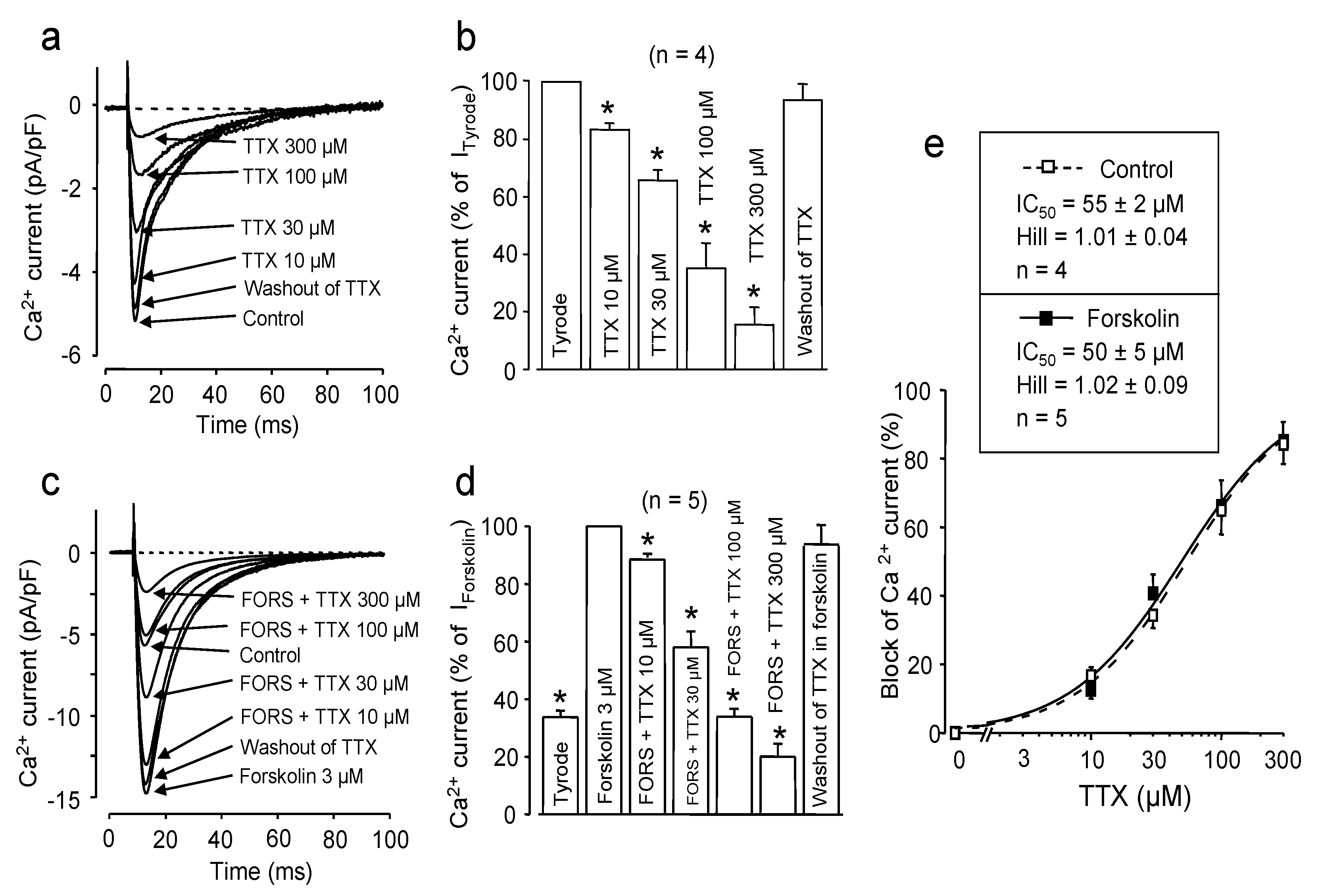
2.1. Effect of Channel Phosphorylation

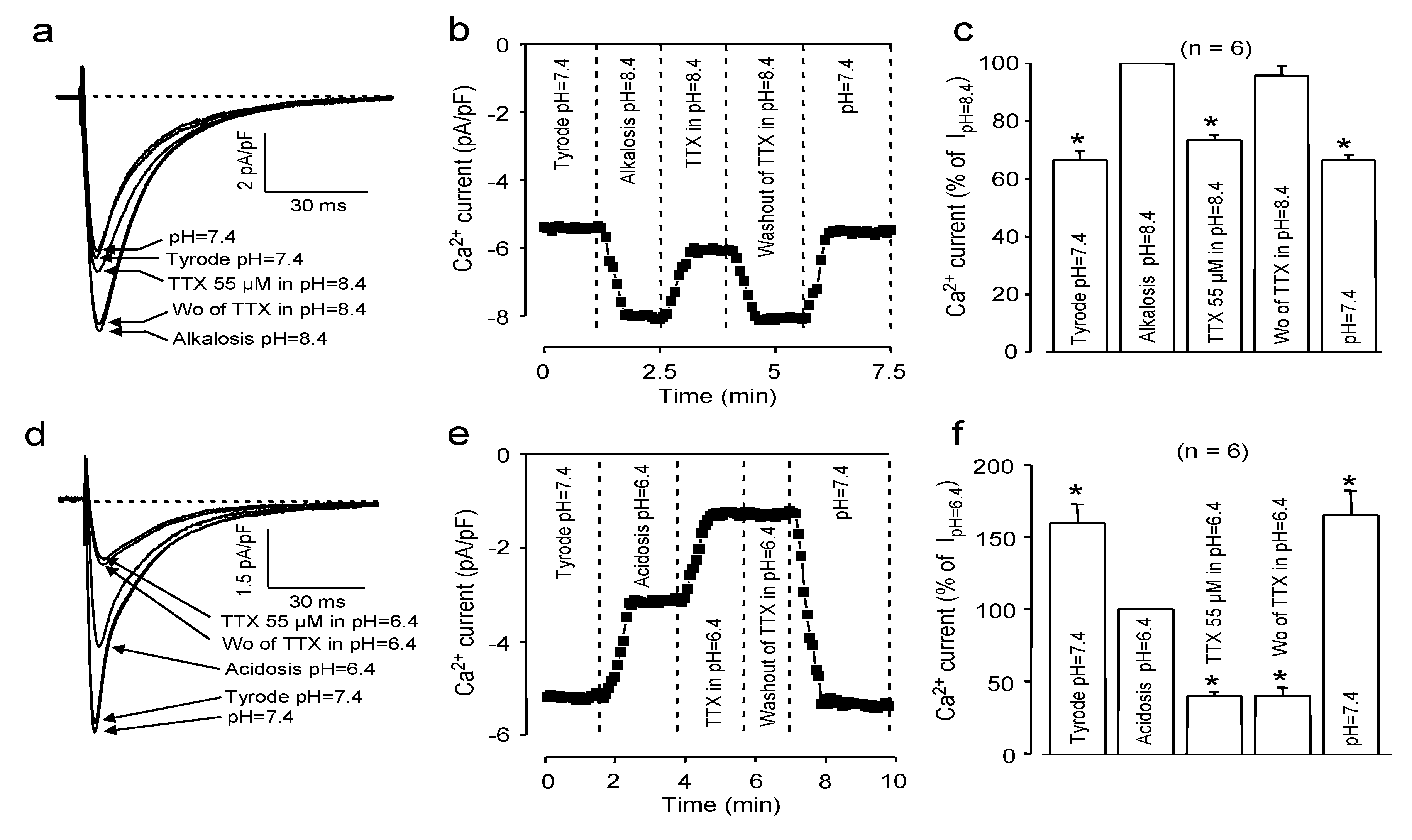
2.2. Effects of Extracellular pH

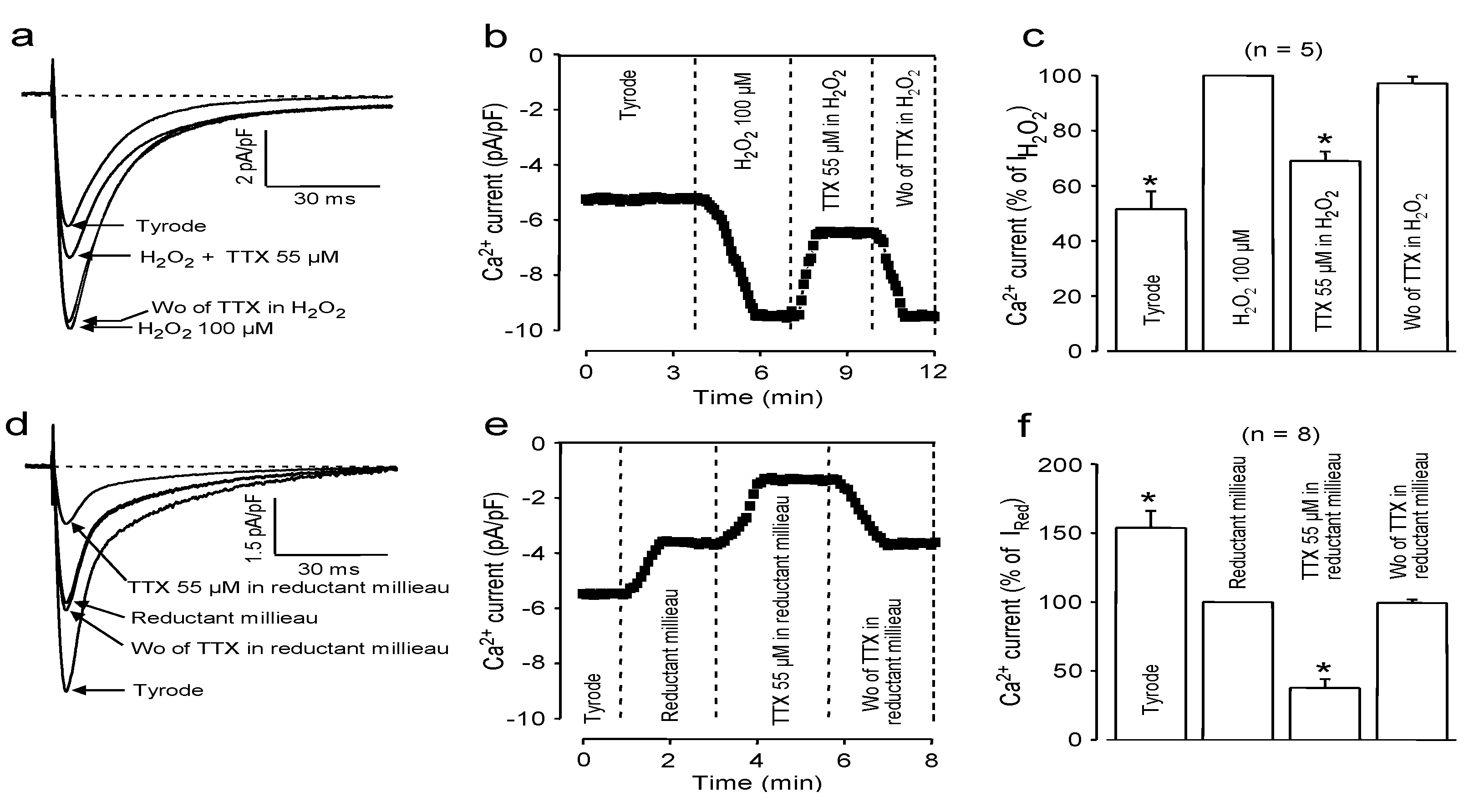
2.3. Effects of Redox Potential Changes

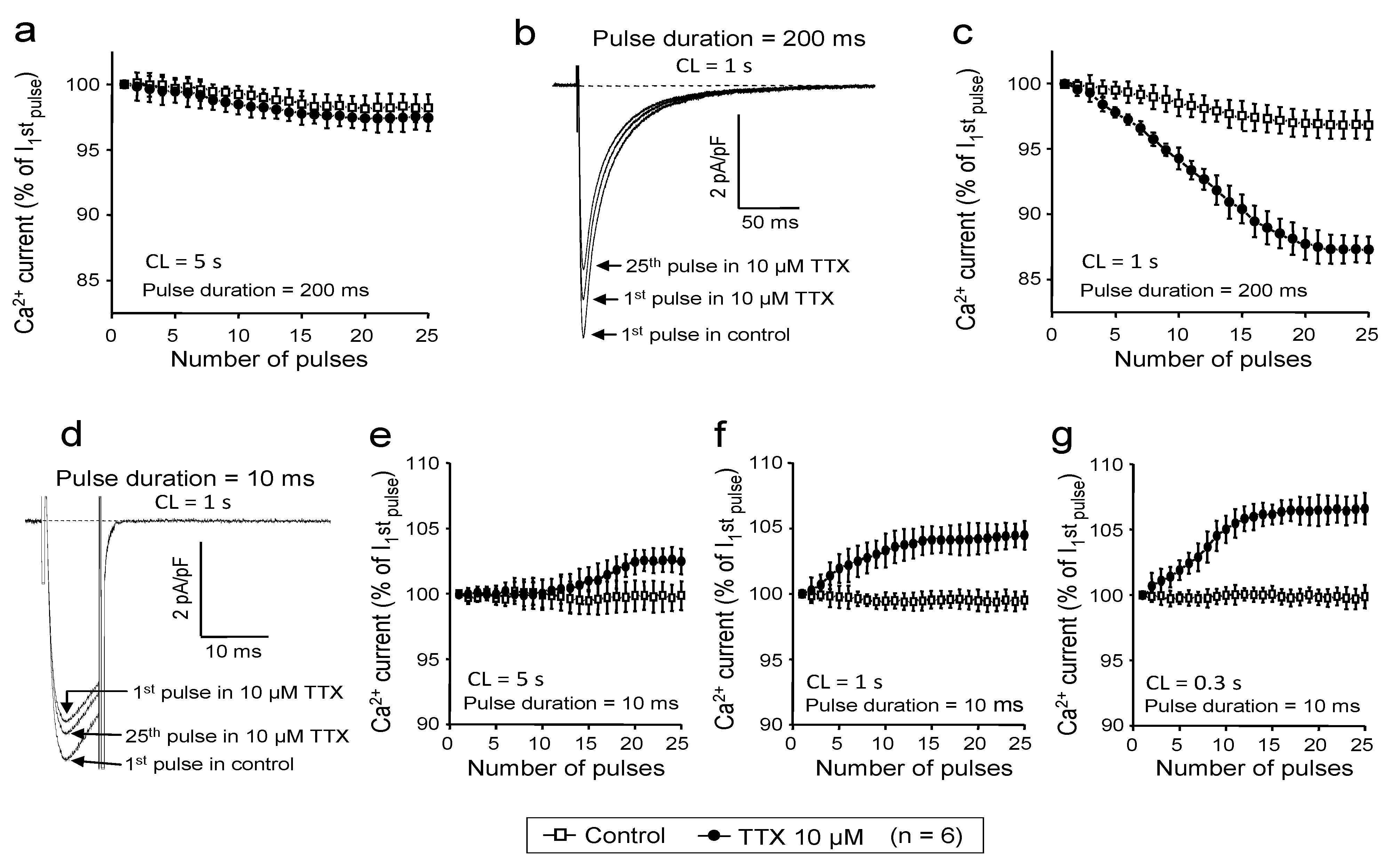
2.4. Use-Dependent Block

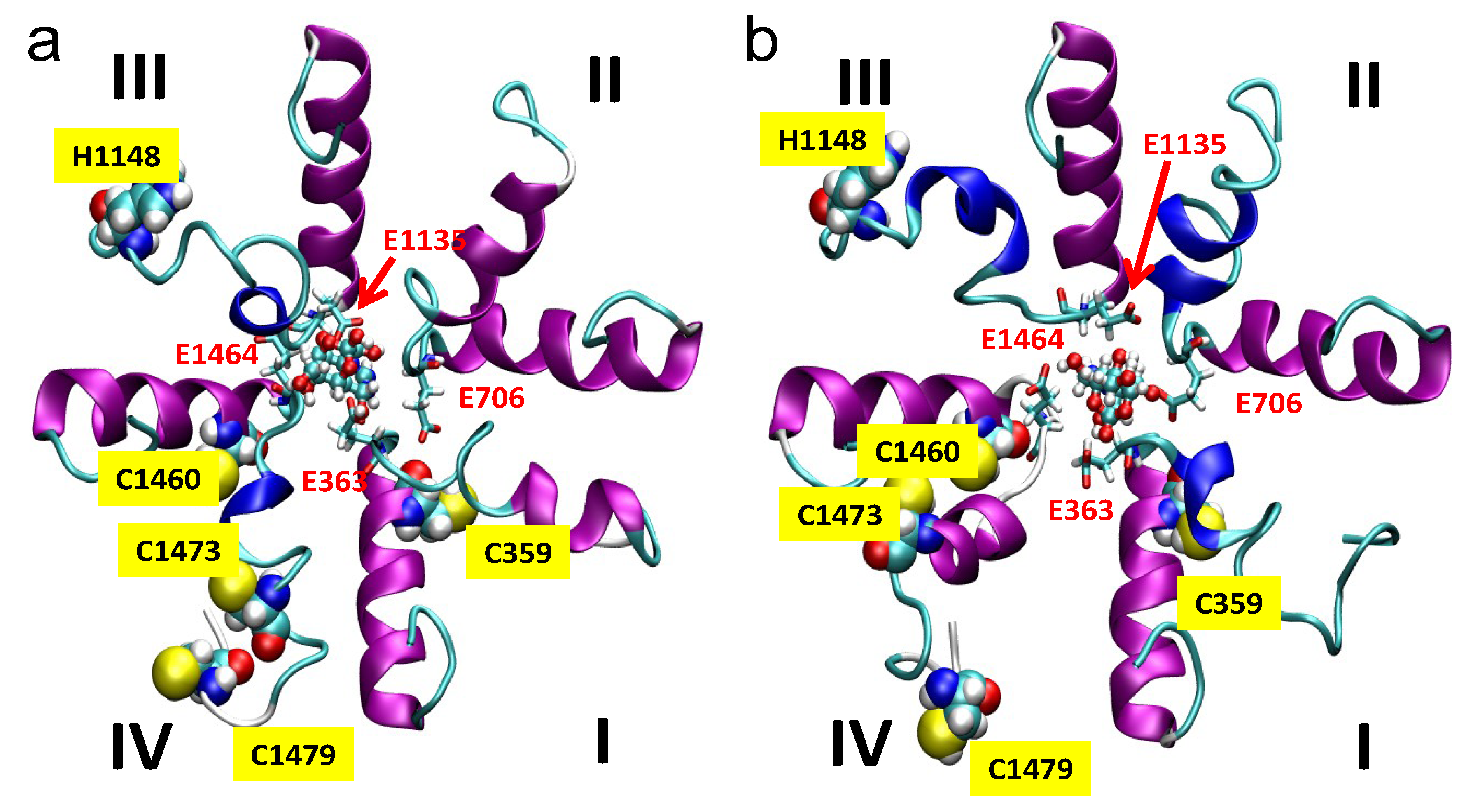
2.5. Simulations

3. Experimental Section
3.1. Isolation of Single Canine Ventricular Myocytes
3.2. Electrophysiology
3.3. Simulation of TTX Binding to Cav1.2 Channels
3.4. Statistics
4. Conclusions
Acknowledgments
References
- Baer, M.; Best, P.M.; Reuter, H. Voltage-dependent action of tetrodotoxin in mammalian cardiac muscle. Nature 1976, 263, 344–345. [Google Scholar] [CrossRef]
- Brown, A.M.; Lee, K.S.; Powell, T. Sodium current in single rat heart muscle cells. J. Physiol. 1981, 318, 479–500. [Google Scholar]
- Vornanen, M.; Hassinen, M.; Haverinen, J. Tetrodotoxin sensitivity of the vertebrate cardiac Na+ current. Mar. Drugs 2011, 9, 2409–2422. [Google Scholar] [CrossRef]
- Chorvatova, A.; Snowdon, R.; Hart, G.; Hussain, M. Effects of pressure overload-induced hypertrophy on TTX-sensitive inward currents in guinea pig left ventricle. Mol. Cell.Biochem. 2004, 261, 217–226. [Google Scholar] [CrossRef]
- Alvarez, J.L.; Salinas-Stefanon, E.; Orta, G.; Ferrer, T.; Talavera, K.; Galán, L.; Vassort, G. Occurrence of a tetrodotoxin-sensitive calcium current in rat ventricular myocytes after long-term myocardial infarction. Cardiovasc. Res. 2004, 63, 653–661. [Google Scholar] [CrossRef]
- Hegyi, B.; Horváth, B.; Bárándi, L.; Papp, F.; Magyar, J.; Bányász, T.; Krasznai, Z.; Szentandrássy, N.; Nánási, P.P. Tetrodotoxin blocks L-type Ca2+ channels in canine ventricular cardiomyocytes. Pflüg. Arch 2012, 464, 167–174. [Google Scholar] [CrossRef]
- Szabó, G.; Szentandrássy, N.; Bíró, T.; Tóth, I.B.; Czifra, G.; Magyar, J.; Bányász, T.; Varró, A.; Kovács, L.; Nánási, P.P. Asymmetrical distribution of ion channels in canine and human left ventricular wall: Epicardium versus midmyocardium. Pflüg. Arch. 2005, 450, 307–316. [Google Scholar] [CrossRef]
- Szentandrássy, N.; Bányász, T.; Bíró, T.; Szabó, G.; Tóth, I.B.; Magyar, J.; Lázár, J.; Varró, A.; Kovács, L.; Nánási, P.P. Apico-basal inhomogeneity in distribution of ion channels in canine and human ventricular myocardium. Cardiovasc. Res. 2005, 65, 851–860. [Google Scholar] [CrossRef]
- Tikhonov, D.B.; Zhorov, B.S. Modeling P-loops domain of sodium channel: Homology with potassium channels and interaction with ligands. Biophys. J. 2005, 88, 184–197. [Google Scholar] [CrossRef]
- Tikhonov, D.B.; Zhorov, B.S. Possible roles of exceptionally conserved residues around the selectivity filters of sodium and calcium channels. J. Biol. Chem. 2011, 286, 2998–3006. [Google Scholar] [CrossRef]
- Payandeh, J.; Scheuer, T.; Zheng, N.; Catterall, W.A. The crystal structure of a voltage-gated sodium channel. Nature 2011, 475, 353–358. [Google Scholar] [CrossRef]
- Payandeh, J.; Gamal El-Din, T.M.; Scheuer, T.; Zheng, N.; Catterall, W.A. Crystal structure of a voltage-gated sodium channel in two potentially inactivated states. Nature 2012, 486, 135–139. [Google Scholar]
- Tikhonov, D.B.; Zhorov, B.S. Architecture and pore block of eukaryotic voltage-gated sodium channels in view of NavAb bacterial sodium channel structure. Mol. Pharmacol. 2012, 82, 97–104. [Google Scholar] [CrossRef]
- Hove-Madsen, L.; Méry, P.F.; Jurevicius, J.; Skeberdis, A.V.; Fischmeister, R. Regulation of myocardial calcium channels by cyclic AMP metabolism. Basic Res. Cardiol. 1996, 91 (Suppl. 2), 1–8. [Google Scholar]
- Fozzard, H.A.; Lipkind, G.M. The tetrodotoxin binding site is within the outer vestibule of the sodium channel. Mar. Drugs 2010, 8, 219–234. [Google Scholar] [CrossRef]
- Satin, J.; Kyle, J.W.; Chen, M.; Bell, P.; Cribbs, L.L.; Fozzard, H.A.; Rogart, R.B. A mutant of TTX-resistant cardiac sodium channels with TTX-sensitive properties. Science 1992, 256, 1202–1205. [Google Scholar] [CrossRef]
- Favre, I.; Moczydlowski, E.; Schild, L. Specificity for block by saxitoxin and divalent cations at a residue which determines sensitivity of sodium channel subtypes to guanidinium toxins. J. Gen. Physiol. 1995, 106, 203–229. [Google Scholar] [CrossRef]
- Stryer, L. Biochemistry, 4th ed; V.H. Freeman and Company: New York, NY, USA, 1995; p. 23. [Google Scholar]
- Tombaugh, G.C.; Somjen, G.G. Effects of extracellular pH on voltage-gated Na+, K+ and Ca2+ currents in isolated rat CA1 neurons. J. Physiol. 1996, 493, 719–732. [Google Scholar]
- Saegusa, N.; Moorhouse, E.; Vaughan-Jones, R.D.; Spitzer, K.W. Influence of pH on Ca2+ current and its control of electrical and Ca2+ signaling in ventricular myocytes. J. Gen. Physiol. 2011, 138, 537–559. [Google Scholar] [CrossRef]
- Moczydlowski, E. The molecular mystique of tetrodotoxin. Toxicon 2013, 63, 711–722. [Google Scholar] [CrossRef]
- Ulbricht, W.; Wagner, H.H. The influence of pH on equilibrium effects of tetrodotoxin on myelinated nerve fibres of Rana esculenta. J. Physiol. 1975, 252, 159–184. [Google Scholar]
- Strickholm, A. Ionic permeability of K, Na, and Cl in potassium-depolarized nerve. Dependency on pH, cooperative effects, and action of tetrodotoxin. Biophys. J. 1981, 35, 677–697. [Google Scholar] [CrossRef]
- Guo, J.; Giles, W.R.; Ward, C.A. Effect of hydrogen peroxide on the membrane currents in sinoatrial node cells from rabbit heart. Am. J. Physiol. Heart Circ. Physiol. 2000, 279, H992–H999. [Google Scholar]
- Xie, L.H.; Chen, F.; Karagueuzian, H.S.; Weiss, J.N. Oxidative-stress-induced afterdepolarizations and calmodulin kinase II signaling. Circ. Res. 2009, 104, 79–86. [Google Scholar]
- Madhvani, R.V.; Xie, Y.; Pantazis, A.; Garfinkel, A.; Qu, Z.; Weiss, J.N.; Olcese, R.J. Shaping a new Ca2+ conductance to suppress early afterdepolarizations in cardiac myocytes. J.Physiol. 2011, 589, 6081–6092. [Google Scholar]
- Zhang, R.; Sun, Y.; Tsai, H.; Tang, C.; Jin, H.; Du, J. Hydrogen sulfide inhibits L-type calcium currents depending upon the protein sulfhydryl state in rat cardiomyocytes. PLoS One 2012, 7, e37073. [Google Scholar]
- Lao, Q.Z.; Kobrinsky, E.; Liu, Z.; Soldatov, N.M. oligomerization of Cavβ subunits is essential correlate of Ca2+ channel activity. FASEB J. 2010, 24, 5013–5023. [Google Scholar] [CrossRef]
- Magyar, J.; Bányász, T.; Szigligeti, P.; Körtvély, Á.; Jednákovits, A.; Nánási, P.P. Electrophysiological effects of bimoclomol in canine ventricular myocytes. Naunyn Schmiedebergs Arch. Pharmacol. 2000, 361, 303–310. [Google Scholar] [CrossRef]
- Bányász, T.; Magyar, J.; Körtvély, á.; Szigeti, G.y.; Szigligeti, P.; Papp, Z.; Mohácsi, A.; Kovács, L.; Nánási, P.P. Different effects of endothelin-1 on calcium and potassium currents in canine ventricular cells. Naunyn Schmiedebergs Arch. Pharmacol 2001, 363, 383–390. [Google Scholar] [CrossRef]
- Hamill, O.P.; Marty, A.; Neher, E.; Sakmann, B.; Sigworth, F.J. Improved patch-clamp techniques for high-resolution current recording from cells and cell-free membrane patches. Pflüg. Arch. 1981, 391, 85–100. [Google Scholar] [CrossRef]
- Sali, A.; Blundell, T.L. Comparative protein modelling by satisfaction of spatial restraints. J. Mol. Biol. 1993, 234, 779–815. [Google Scholar] [CrossRef]
- Pettersen, E.F.; Goddard, T.D.; Huang, C.C.; Couch, G.S.; Greenblatt, D.M.; Meng, E.C.; Ferrin, T.E. UCSF Chimera—A visualization system for exploratory research and analysis. J. Comput. Chem. 2004, 25, 1605–1612. [Google Scholar] [CrossRef]
- Morris, G.M.; Huey, R.; Lindstrom, W.; Sanner, M.F.; Belew, R.K.; Goodsell, D.S.; Olson, A.J. AutoDock4 and AutoDockTools4: Automated docking with selective receptor flexibility. J. Comput. Chem. 2009, 30, 2785–2791. [Google Scholar] [CrossRef]
- Morris, G.M.; Goodsell, D.S.; Halliday, R.S.; Huey, R.; Hart, W.E.; Belew, R.K.; Olson, A.J. Automated docking using a Lamarckian genetic algorithm and an empirical binding free energy function. J. Comput. Chem. 1998, 19, 1639–1662. [Google Scholar] [CrossRef]
- Hornak, V.; Abel, R.; Okur, A.; Strockbine, B.; Roitberg, A.; Simmerling, C. Comparison of multiple amber force fields and development of improved protein backbone parameters. Proteins 2006, 65, 712–725. [Google Scholar] [CrossRef]
- Wang, J.M.; Wolf, R.M.; Caldwell, J.W.; Kollman, P.A.; Case, D.A. Development and testing of a general amber force field. J. Comput. Chem. 2004, 25, 1157–1174. [Google Scholar] [CrossRef]
- Jorgensen, W.L.; Chandrasekhar, J.; Madura, J.D.; Impey, R.W.; Klein, M.L. Comparison of simple potential functions for simulating liquid water. J. Chem. Phys. 1983, 79, 926–935. [Google Scholar] [CrossRef]
- Darden, T.; York, D.; Pedersen, L. Particle mesh Ewald-an NlogN method for Ewald sums in large systems. J. Chem. Phys. 1993, 98, 10089–10092. [Google Scholar] [CrossRef]
- AMBER, version 12; University of California: San Francisco, CA, USA, 2012.
- Humphrey, W.; Dalke, A.; Schulten, K. VMD—Visual Molecular Dynamics. J. Mol. Graph. 1996, 14, 33–38. [Google Scholar] [CrossRef]
- Lipkind, G.M.; Fozzard, H.A. A structural model of the tetrodotoxin binding site of the Na+ channel. Biophys. J. 1994, 66, 1–13. [Google Scholar] [CrossRef]
Supplementary Files
© 2013 by the authors; licensee MDPI, Basel, Switzerland. This article is an open access article distributed under the terms and conditions of the Creative Commons Attribution license (http://creativecommons.org/licenses/by/3.0/).
Share and Cite
Hegyi, B.; Komáromi, I.; Kistamás, K.; Ruzsnavszky, F.; Váczi, K.; Horváth, B.; Magyar, J.; Bányász, T.; Nánási, P.P.; Szentandrássy, N. Tetrodotoxin Blockade on Canine Cardiac L-Type Ca2+ Channels Depends on pH and Redox Potential. Mar. Drugs 2013, 11, 2140-2153. https://doi.org/10.3390/md11062140
Hegyi B, Komáromi I, Kistamás K, Ruzsnavszky F, Váczi K, Horváth B, Magyar J, Bányász T, Nánási PP, Szentandrássy N. Tetrodotoxin Blockade on Canine Cardiac L-Type Ca2+ Channels Depends on pH and Redox Potential. Marine Drugs. 2013; 11(6):2140-2153. https://doi.org/10.3390/md11062140
Chicago/Turabian StyleHegyi, Bence, István Komáromi, Kornél Kistamás, Ferenc Ruzsnavszky, Krisztina Váczi, Balázs Horváth, János Magyar, Tamás Bányász, Péter P. Nánási, and Norbert Szentandrássy. 2013. "Tetrodotoxin Blockade on Canine Cardiac L-Type Ca2+ Channels Depends on pH and Redox Potential" Marine Drugs 11, no. 6: 2140-2153. https://doi.org/10.3390/md11062140
APA StyleHegyi, B., Komáromi, I., Kistamás, K., Ruzsnavszky, F., Váczi, K., Horváth, B., Magyar, J., Bányász, T., Nánási, P. P., & Szentandrássy, N. (2013). Tetrodotoxin Blockade on Canine Cardiac L-Type Ca2+ Channels Depends on pH and Redox Potential. Marine Drugs, 11(6), 2140-2153. https://doi.org/10.3390/md11062140