

Developing an Exploratory Framework Linking Australian Aboriginal Peoples’ Connection to Country and Concepts of Wellbeing

Abstract
1. Introduction
1.1. Understanding Human Wellbeing
1.2. Understanding Country (and Western Notions of Nature)
1.3. Country and Wellbeing
2. A Review of Models
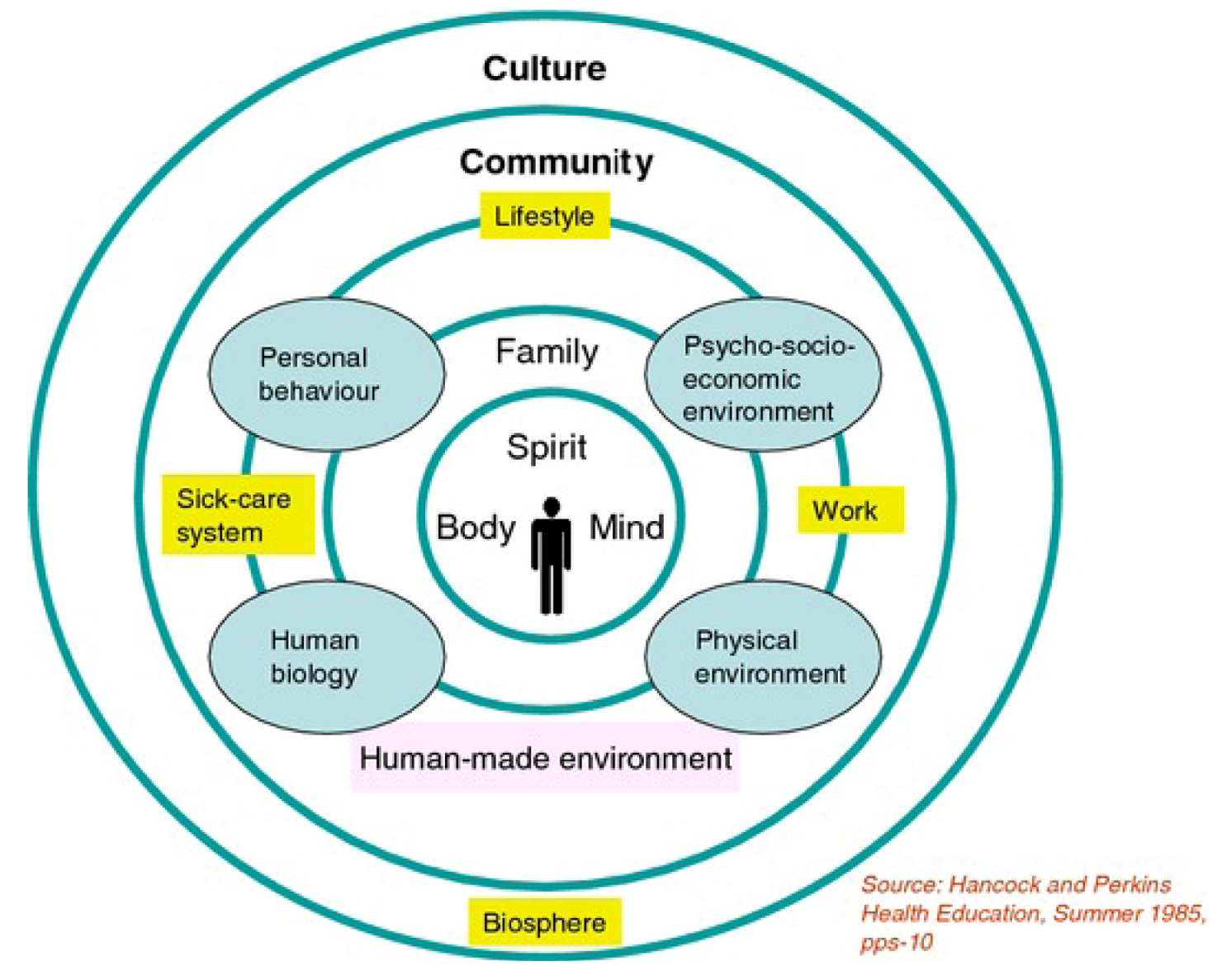
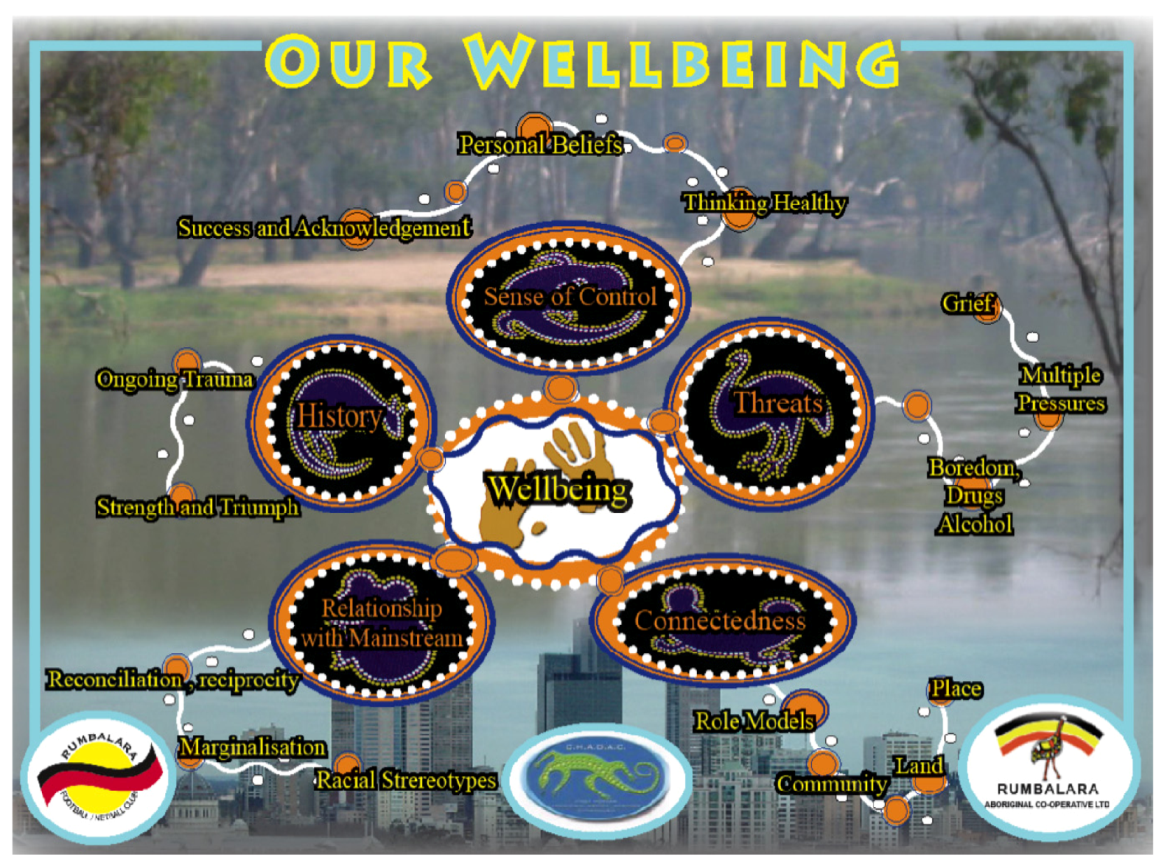
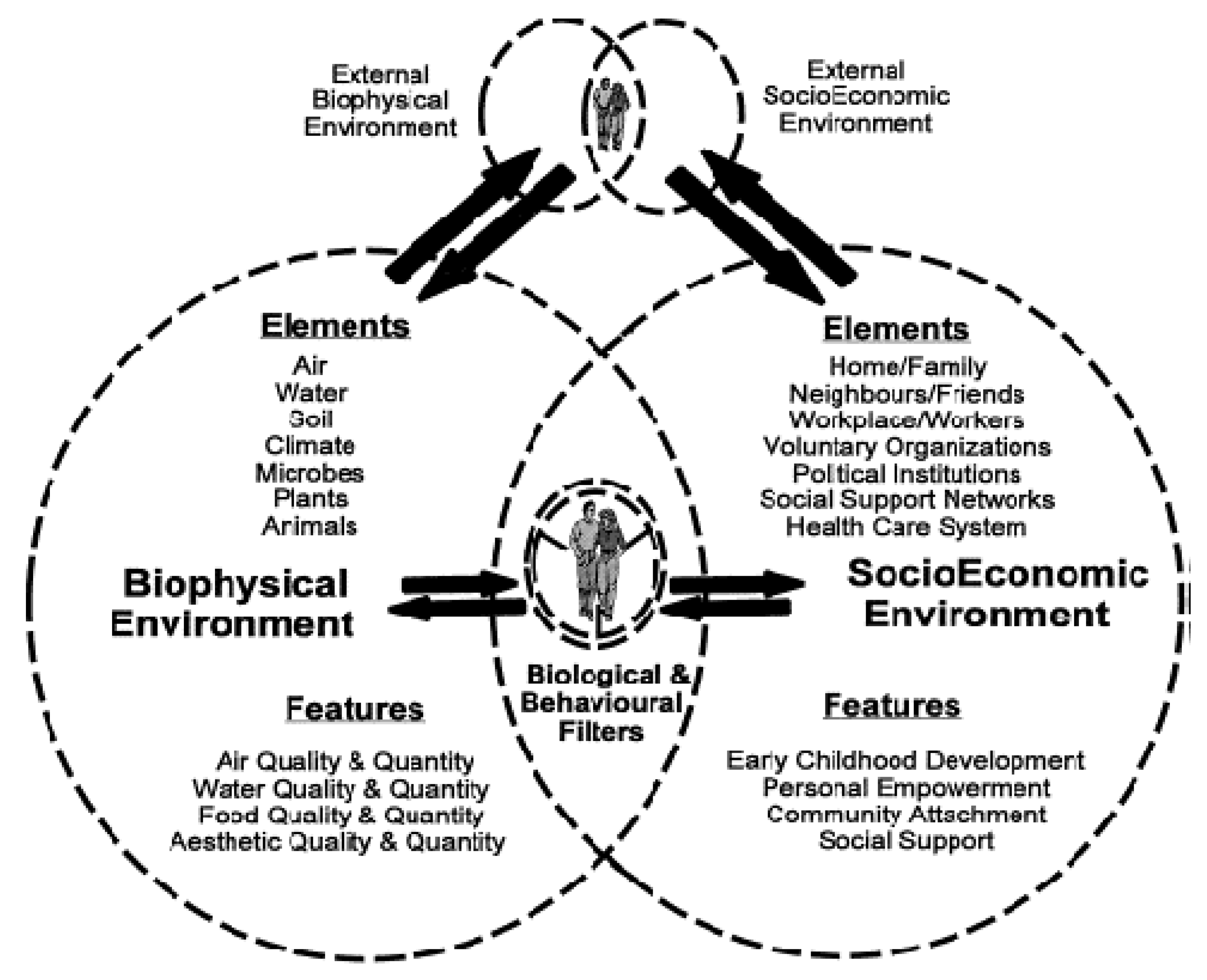
3. Discussion
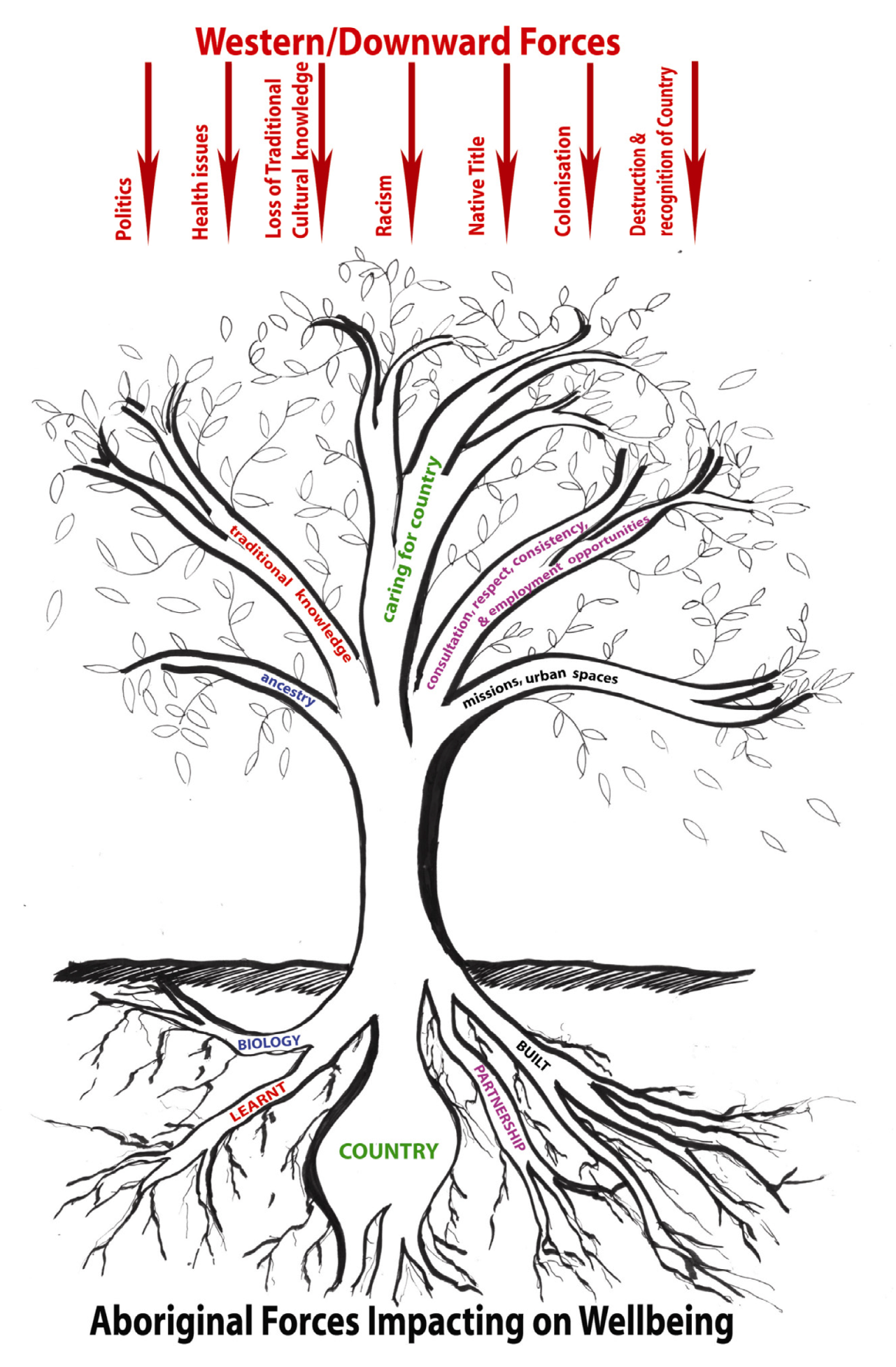
3.1. Aboriginal Forces Impacting on Wellbeing
3.2. Western/Downward Forces
4. Conclusions
Acknowledgements
References
- National Aboriginal Community Controlled Health Organisation. Definitions. Available online: http://www.naccho.org.au/aboriginal-health/definitions/ (accessed on 26 December 2012).
- Lowan, G. Exploring place from an aboriginal perspective: Considerations for outdoor and environmental education. Can. J. Environ. Educ. 2009, 14, 42–58. [Google Scholar]
- Holmes, W.; Stewart, P.; Garrow, A.; Anderson, I.; Thorpe, L. Researching aboriginal health: Experience from a study of urban young people’s health and well-being. Soc. Sci. Med. 2002, 54, 1267–1279. [Google Scholar]
- Australian Bureau of Statistics, Population Characteristics, Aboriginal and Torres Strait Islander Australians; Australian Government Publications Service: Canberra, Australia, 2010.
- MacDonald, J. Health equity and the social determinants of health in Australia. Soc. Alternative. 2010, 29, 34–40. [Google Scholar]
- Marmot, M. Social determinants and the health of indigenous Australians. MJA 2011, 194, 512–513. [Google Scholar]
- Carrington, C.; Shepherd, J.; Jianghong, L.; Zubrick, S. Social gradients in the health of indigenous Australians. Am J. Publ. Health 2012, 102, 107–117. [Google Scholar] [CrossRef]
- Victorian Advisory Council on Koori Health, Victorian Aboriginal Health Plan; VACKH: Melbourne, Australia, 2009.
- Australian Bureau of Statistics, Experimental Estimates and Projections, Aboriginal and Torres Strait Islander Australians: 30th June 1991 to 30th June 2009; Australian Government Publishing Service: Canberra, Australia, 2009.
- Pulver, L.J.; Haswell, M.R.; Ring, I.; Waldon, J.; Clark, W.; Whetung, V.; Kinnon, D.; Graham, C.; Chino, M.; LaValley, J.; Sadana, R. Indigenous Health—Australia, Canada, Aotearoa New Zealand and the United States—Laying Claim to a Future That Embraces Health for Us All; World Health Organisation: Geneva, Switzerland, 2010. [Google Scholar]
- VicHealth, Life is Health is Life, Taking Action to Close the Gap: Victorian Aboriginal Evidence-Based Health Promotion Resource; Victorian Government Department of Health and Victorian Health Promotion Foundation: Carlton, Australia, 2011.
- The Health and Wellbeing of Aboriginal Victorians Victorian Population Health Survey 2008 Supplementary Report; Department of Health: Melbourne, Australia, 2011.
- National Aboriginal Community Controlled Health Organisation, Close the Gap: Solutions to the Indigenous Health Crisis Facing Australia; Oxfam Australia: Melbourne, Australia, 2007.
- Kildea, S. Risky business: Contested knowledge over safe birthing services for aboriginal women. Health Soc. Rev. 2006, 15, 387–396. [Google Scholar]
- Stewart, J. Mind-body health connections. In Understanding Health—A Determinants Approach; Keleher, H., Murphy, B., Eds.; Oxford University Press: Melbourne, Australia, 2004; pp. 276–282. [Google Scholar]
- Measuring the Social and Emotional Wellbeing of Aboriginal and Torres Strait Islander Peoples; Australian Institute of Health and Welfare: Canberra, Australia, 2009.
- Australian Institute of Health and Welfare, The Health and Welfare of Australia’s Aboriginal and Torres Strait Islander People: An Overview; Paragon Printers Australasia: Canberra, Australia, 2011.
- Australian Human Rights Commission. Close the Gap—Campaign for Indigenous Health Inequality. Available online: http://www.hreoc.gov.au/social_justice/health/index.html (accessed on 28 September 2012).
- National Aboriginal Community Controlled Health Organisation. Close the Gap. Available online: http://www.naccho.org.au/aboriginal-health/close-the-gap-campaign/ (accessed on 28 September 2012).
- Oxfam Australia. Close the Gap. Available online: https://www.oxfam.org.au/explore/indigenous-australia/close-the-gap/ (accessed on 28 September 2012).
- Council of Australian Governments. Closing the Gap in Indigenous Disadvantage. Available online: http://www.coag.gov.au/closing_the_gap_in_indigenous_disadvantage (accessed on 28 September 2012).
- Department of Family, Housing, Community Services and Indigenous Affairs. Closing the Gap. Available online: http://www.fahcsia.gov.au/our-responsibilities/indigenous-australians/programs-services/closing-the-gap (accessed on 28 September 2012).
- Dockery, A.M. Culture and wellbeing: The case of indigenous Australians. Soc. Indic. Res. 2010, 99, 315–332. [Google Scholar]
- Prout, S. Indigenous wellbeing frameworks in Australia and the quest for quantification. Soc. Indic. Res. 2011, 109, 317–336. [Google Scholar] [CrossRef]
- Taylor, J. Indigenous peoples and indicators of well-being: Australian perspectives on United Nationals Global Frameworks. Soc. Indic. Res. 2007, 87, 111–126. [Google Scholar]
- Dietsch, E.; Martin, T.; Shackleton, P.; Davies, C.; McLeod, M.; Alston, M. Australian aboriginal kinship: A means to enhance maternal well-being. Wom. Birth 2010, 24, 58–64. [Google Scholar]
- Panelli, R.; Tipa, G. Beyond foodscapes: Considering geographies of indigenous well-being. Health Place 2009, 15, 455–465. [Google Scholar]
- Panelli, R.; Tipa, G. Placing well-being: A Maori case study of cultural and environmental specificity. Ecohealth 2007, 4, 445–460. [Google Scholar] [CrossRef]
- Stephens, C.; Parkes, M.W.; Chang, H. Indigenous perspectives on ecosystem sustainability and health. Ecohealth 2007, 4, 369–370. [Google Scholar]
- Albrecht, G.; Higginbotham, N.; Connor, L.; Freeman, S. Social and cultural perspectives on eco-health. Int. Encyclopedia Publ. Health 2008, 6, 57–63. [Google Scholar]
- Kueffer, C. Transdisciplinarity in ecohealth: Status and future prospects. Ecohealth 2008, 5, 1–3. [Google Scholar] [CrossRef]
- Bunch, M.J.; Marrison, K.E.; Parkes, M.W.; Venema, H.D. Promoting health and well-being by managing for social-ecological resilience: The potential of integrating ecohealth and water resources management approaches. Ecol. Soc. 2011, 16. Available online: http://www.ecologyandsociety.org/vol16/iss1/art6/ (accessed on 27 December 2012).
- Parkes, M.W. Ecohealth and Aboriginal Health: A Review of Common Ground; National Collaborating Centre for Aboriginal Health: Northern British Columbia, Canada, 2010. [Google Scholar]
- Sointu, E. The rise of an ideal: Tracing changing discourses of wellbeing. Sociolog. Rev. 2005, 53, 255–274. [Google Scholar]
- Carlisle, S.; Henderson, G.; Hanlon, P.W. “Wellbeing”: A collateral casualty of modernity? Soc. Sci. Med. 2009, 69, 1556–1560. [Google Scholar] [CrossRef]
- Kahn, R.L.; Juster, F.T. Well-being: Concept and Measures. J. Soc. Issues 2002, 58, 627–644. [Google Scholar]
- Muldoon, M.F.; Barger, S.D.; Flory, J.D.; Manuck, S.B. What are quality of life measurements measuring? BMJ 1998, 316, 542–545. [Google Scholar]
- Bramston, P.; Pretty, G.; Chipuer, H. Unraveling subjective quality of life: An investigation of individual and community determinants. Soc. Indic. Res. 2002, 59, 261–274. [Google Scholar] [CrossRef]
- Furnass, B. Introduction. In Survival, Health and Wellbeing into the Twenty First Century; Furnass, B., Whyte, J., Harris, J., Baker, A., Eds.; The Mulanggarri Foundation and Commonwealth Department of Human Services: Canberra, Australia, 1996; pp. 5–6. [Google Scholar]
- Trewin, D. Measuring Wellbeing; Australian Bureau of Statistics: Canberra, Australia, 2001. [Google Scholar]
- The Health and Wellbeing of Aboriginal Victorians. Victorian Population Health Survey 2008 Supplementary Report; Department of Health: Melbourne, Australia, 2011.
- Wilkinson, R.; Pickett, K. The Spirit Level: Why More Equal Societies Almost Always Do Better; Allen Lane: London, UK, 2009. [Google Scholar]
- Diener, E.; Seligman, M.E.P. Beyond money: Towards an economy of wellbeing. Psychol. Sci. Publ. Interest 2004, 5, 1–31. [Google Scholar]
- Shields, M.A.; Wheatley, P.S. Exploring the economic and social determinants of psychological well-being and perceived social support in England. J. R. Statist. Soc. A 2005, 168, 513–537. [Google Scholar] [CrossRef]
- Marmot, M.G.; Ryff, C.D.; Bumpass, L.L.; Shipley, M.J.; Marks, N.F. Social inequalities in health: Next questions and converging evidence. Soc. Sci. Med. 1997, 44, 901–910. [Google Scholar]
- Marmot, M.G.; Fuhrer, R.; Ettner, S.L.; Marks, N.F.; Bumpass, L.L.; Ryff, C.D. Contribution of psychosocial factors to socioeconomic differences in health. Milbank Q. 1998, 76, 403–448. [Google Scholar]
- Wearing, A.J.; Headey, B. Who enjoys life and why? Measuring subjective well-being. In Measuring Progress—Is Life Getting Better? Eckersley, R., Ed.; CSIRO Publishing: Collingwood, Australia, 1998; pp. 169–182. [Google Scholar]
- Cummins, R.A. Personal income and subjective well-being: A review. J. Happiness Stud. 2000, 1, 133–158. [Google Scholar]
- Dannenberg, A.L.; Jackson, R.J.; Frumkin, H.; Schieber, R.A.; Pratt, M.; Kochtitzky, C.; Tilson, H.H. The impact of community design and land-use choices on public health: A scientific research agenda. Am. J. Publ. Health 2003, 93, 1500–1508. [Google Scholar] [CrossRef]
- Helliwell, J.F.; Putnam, R.D. The social context of well-being. Philos. Trans. R. Soc. B 2004, 359, 1435–1446. [Google Scholar]
- Galea, S.; Vlahov, D. Urban health: Evidence, challenges, and directions. Ann. Rev. Publ. Health 2005, 26, 341–365. [Google Scholar] [CrossRef]
- Campbell, A.; Converse, P.E.; Rodgers, W.L. The Quality of American Life: Perceptions, Evaluations and Satisfactions; Russell Sage Foundation: New York, NY, USA, 1976. [Google Scholar]
- Cummins, R.A.; Gullone, E.; Lau, A.L.D. A model of subjective well-being homeostasis: The role of personality. In The Universality of Subjective Wellbeing Indicators—A Multi-Disciplinary and Multi-National Perspective; Gullone, E., Cummins, R.A., Eds.; Kluwer Academic Publishers: Dordrecht, The Netherlands, 2002; pp. 7–39. [Google Scholar]
- Henderson-Wilson, C. Living High but Healthy: High Rise Housing Nature, Health and Wellbeing. Ph.D. Thesis, Deakin University, Melbourne, Australia, 2007. [Google Scholar]
- Cummins, R.A.; Eckersley, R.; Pallant, J.; van Vugt, J.; Misajon, R. Developing a national index of subjective wellbeing: The Australian unity wellbeing index. Soc. Indic. Res. 2003, 64, 159–190. [Google Scholar]
- Diener, E.; Chan, M. Happy people live longer: Subjective well-being contributes to health and longevity. Appl. Psychol. Health Well-being 2011, 3, 1–43. [Google Scholar] [CrossRef]
- Arthaud-Day, M.L.; Rode, J.C.; Mooney, C.H.; Near, J.P. The subjective well-being construct: A test of its convergent, discriminant, and factorial validity. Soc. Indic. Res. 2005, 74, 445–476. [Google Scholar] [CrossRef]
- Diener, E.; Suh, E.M.; Lucas, R.E.; Smith, H.L. Subjective wellbeing: Three decades of progress. Psychol. Bull. 1999, 125, 276–302. [Google Scholar]
- Jackson, T. Where is the “Wellbeing Dividend”? Nature, structure and consumption inequalities. Local Environ. 2008, 13, 703–723. [Google Scholar]
- Tov, W.; Diener, E. Culture and subjective well-being. In Handbook of Cultural Psychology; Kitayama, S., Cohen, D., Eds.; Guilford: New Youk, NY, USA, 2007; pp. 691–713. [Google Scholar]
- McNamara, K.E.; Westoby, R. Solastalgia and the gendered nature of climate change: An example from Erub Island, Torres Strait. Ecohealth 2011, 8, 233–236. [Google Scholar]
- Nelson, R. Searching for the lost arrow: Physical and spiritual ecology in the hunters world. In The Biophilia Hypothesis; Kellert, S.R., Wilson, E.O., Eds.; Shearwater: Washington, DC, USA, 1993; pp. 201–228. [Google Scholar]
- Ganesharajah, C. Indigenous Health and Wellbeing: The Importance of Country; Australian Institute of Aboriginal and Torres Strait Islander Studies: Canberra, Australia, 2009. [Google Scholar]
- Tonkinson, R. Landscapre, tranformations, and immutability in an Aboriginal Australian culture. In Culture Memories, Knowledge and Space; Muesburger, P., Ed.; Springer Science and Business Media: Berlin, Germany, 2011; pp. 329–345. [Google Scholar]
- Weir, J. Country, Native title and ecology. In Country, Native Title and Ecology; Weir, J., Ed.; Australian National University: Canberra, Australia, 2012; pp. 1–20. [Google Scholar]
- Burgess, P.; Morrison, J. Country. In Social Determinants of Indigenous Health; Carson, B., Dunbar, T., Chenhall, R., Bailie, R., Eds.; Allen & Unwin: Crows Nest, Australia, 2007; pp. 177–202. [Google Scholar]
- McKnight, D. People, Countries, and the Rainbow Serpent: System of Classification among the Lardil of Mornington Island; Oxford University Press: New York, NY, USA, 1999. [Google Scholar]
- Kaplan, R. The role of nature in the urban Context. In Behavior and the Natural Environment; Altman, I., Wohlwill, J.F., Eds.; Plenum Press: New York, NY, USA, 1983; pp. 127–162. [Google Scholar]
- Soper, K. What is Nature? Culture, Politics and the Non-Human; Blackwell: Oxford, UK, 1995. [Google Scholar]
- Macnaghten, P.; Urry, J. Contested Natures; Sage: London, UK, 1998. [Google Scholar]
- Brook, I. The Importance of nature, green spaces and gardens in human well-being. Ethics Place Environ. 2010, 13, 295–312. [Google Scholar]
- Strang, V. Knowing me, knowing you: Aboriginal and European concepts of nature as self and other. Wortdviews 2005, 9, 25–56. [Google Scholar] [CrossRef]
- Johnston, F.H.; Jacups, S.P.; Vickery, A.J.; Bowman, D. Eohealth and aboriginal testimony of the Nexus between human health and place. Ecohealth 2007, 4, 489–499. [Google Scholar] [CrossRef]
- Nettleton, C.; Stephens, C.; Bristow, F.; Claro, S.; Hart, T.; McCausland, C.; Mijlof, I. Utz Wachil: Findings from an International study of indigenous perspectives on health and environment. Ecohealth 2007, 4, 461–471. [Google Scholar]
- Burgess, C.P.; Berry, H.L.; Gunthorpe, W.; Bailie, R.S. Development and preliminary validation of the “Caring for Country” questionnaire: Measurement of an Indigenous Australian health determinant. Int. J. Equity Health 2008, 26, 1–14. [Google Scholar]
- Huang, H.; Chen, B.; Yang, C.; Zhu, H. Indigenous knowledge and culture on natural resources management in the Salween Canyon, Yunnan Province, China. IJRAM 2008, 8, 395–411. [Google Scholar] [CrossRef]
- Garnett, S.T.; Sithole, B.; Whitehead, P.J.; Burgess, P.; Johnston, F.H.; Lea, T. Healthy country, healthy people: Policy implications of links between Indigenous human health and environmental condition in tropical Australia. AJAP 2009, 68, 53–66. [Google Scholar]
- Richmond, C.A.M.; Ross, N.A. The determinants of first nation and inuit health: A critical population health approach. Health Place 2009, 15, 403–411. [Google Scholar] [CrossRef]
- Weir, J. Murray River Country; Aboriginal Studies Press: Canberra, Australia, 2009. [Google Scholar]
- Pilgrim, S.; Samson, C.; Pretty, J. Rebuilding Lost Connections: How Revitalisation Projects Contribute to Cultural Continuity and Improve the Environment; University of Essex: Essex, UK, 2009. [Google Scholar]
- Marmot, M.G.; Stansfeld, S.; Patel, C.; North, F.; Head, J.; White, I.; Brunner, E.; Feeney, A.; Davey, S.G. Health inequalities among British civil servants: The Whitehall II Study. Lancet 1991, 337, 1387–1393. [Google Scholar]
- Campbell, D.; Burgess, C.P.; Garnett, S.T.; Wakerman, J. Potential primary health care savings for chronic disease care associated with Australian Aboriginal involvement in land management. Health Pol. 2011, 99, 83–89. [Google Scholar] [CrossRef]
- Kingsley, J.; Townsend, M.; Phillips, R.; Aldous, D. “If the land is healthy… it makes the people healthy”: The relationship between country and health for the Yorta Yorta Nation, Boonwurrung and Bangerang Tribes. Health Place 2009, 15, 291–298. [Google Scholar] [CrossRef]
- Clarke, J. Healthy County, Healthy People DVD; Park Victoria: Melbourne, Australia, 2009. [Google Scholar]
- Robertson, M.; Nichols, P.; Horwitz, P.; Bradby, K.; Mackintosh, D. Environmental narratives and the need for multiple perspectives to restore degraded landscapes in Australia. Ecosyst. Health 2000, 6, 119–133. [Google Scholar]
- Corburn, J. Community knowledge in environmental health science: Co-producing policy expertise. Environ. Sci. Pol. 2007, 10, 150–161. [Google Scholar] [CrossRef]
- Mayer, F.S.; Frantz, C.M.; Bruehlman-Senecal, E.; Dolliver, K. Why is nature beneficial: The role of connectedness of nature. Environ. Behav. 2009, 41, 607–643. [Google Scholar]
- Lee, A.C.K.; Maheswaran, R. The health benefits of urban green spaces: A review of the evidence. J. Publ. Health 2010, 33, 212–222. [Google Scholar]
- Nisbet, E.K.; Zelenski, J.M.; Murphy, S.A. Happiness is in our nature: Exploring nature relatedness as a contributor to subjective well-being. J. Happiness 2011, 12, 303–322. [Google Scholar]
- Stigsdotter, U.K.; Palsdottir, A.M.; Burls, A.; Chermaz, A.; Ferrini, F.; Grahn, P. Chapter 11: Nature-based therapeutic intervention. In Forests, Trees and Human Health; Nilsson, K., Ed.; Springer Science and Business Media: Berlin, Germany, 2011; pp. 309–342. [Google Scholar]
- Maller, C.; Townesend, M.; Pryer, A.; Brown, P.; St Leger, L. Healthy nature healthy people: “Contact with Nature” as an upstream health promotion intervention for populations. Health Promot. Int. 2006, 21, 35–54. [Google Scholar]
- Townsend, M. Feel blue? Touch green! Participation in forest/woodland management as a treatment for depression. Urban Forestry Urban Green. 2006, 5, 111–120. [Google Scholar]
- Hansen-Ketchum, P.; Marck, P.; Reutter, L. Engaging with nature to promote health: New directions for nursing research. JAN 2009, 25, 1527–1538. [Google Scholar] [CrossRef]
- Pretty, J. How nature contributes to mental and physical health. Spiritual. Health Int. 2004, 5, 68–78. [Google Scholar]
- O’Brien, L. “Strengthening heart and mind”: Using woodlands to improve mental and physical well-being. Unasylva 2006, 57, 56–61. [Google Scholar]
- Sugiyama, T.; Ward-Thompson, C. Outdoor environments, activity and the well-being of older people: Conceptualising environmental support. Environ. Plan. A 2007, 39, 1943–1960. [Google Scholar] [CrossRef]
- Frumkin, H. Beyond toxicity: Human health and the natural environment. Am. J. Prev. Med. 2001, 20, 234–240. [Google Scholar]
- Frumkin, H. Healthy places: Exploring the evidence. Am. J. Publ. Health 2003, 93, 1451–1455. [Google Scholar] [CrossRef]
- Guite, H.F.; Clark, C.; Ackrill, G. The impact of the physical and urban environment on mental well-being. Publ. Health 2006, 120, 1117–1126. [Google Scholar]
- Churchill, E. Environmental degradation and human well-being: Report of the millennium ecosystem assessment. Popul. Dev. Rev. 2005, 31, 389–398. [Google Scholar] [CrossRef]
- Albrecht, G. “Solastalgia”: A New concept in health and identity. PAN 2005, 3, 41–55. [Google Scholar] [CrossRef]
- Crighton, E.J.; Elliott, S.J.; van der Meer, J.; Small, I.; Upshur, R. Impacts of an Environmental disaster on psychosocial health and well-being in Karakalpakstan. Soc. Sci. Med. 2004, 56, 551–567. [Google Scholar]
- Albrecht, G.; Sartore, G.M.; Connor, L.; Higginbotham, N.; Freeman, S.; Kelly, B.; Stain, H.; Tonna, A.; Pollard, G. Solastalgia: The distress caused by environmental change. Australas. Psychiatr. 2007, 15, S95–S98. [Google Scholar] [CrossRef]
- Speldewinde, P.C.; Cook, A.; Davies, P.; Weinsteins, P. A relationship between environmental degradation and mental health in rural western Australia. Health Place 2009, 15, 880–887. [Google Scholar]
- Speldewinde, P.C.; Cook, A.; Davies, P.; Weinsteins, P. The hidden health burden of environmental degradation: Disease co-morbidities and dryland salinity. Ecohealth 2011, 8, 82–92. [Google Scholar] [CrossRef]
- Stain, H.J.; Kelly, B.; Carr, V.J.; Lewin, T.J.; Fitzgerald, M.; Fragar, L. The psychological impact of chronic environmental adversity: Responding to prolonged drought. Soc. Sci. Med. 2011, 73, 1593–1599. [Google Scholar]
- Hartig, T.; Staats, H. The need for psychological restoration as a determinant of environmental preferences. J. Environ. Psychol. 2006, 26, 215–226. [Google Scholar] [CrossRef]
- Hartig, T.; Kaiser, F.G.; Strumse, E. Psychological restoration in nature as a source of motivation for ecological behaviour. Environ. Conserv. 2007, 34, 291–299. [Google Scholar]
- Leslie, E.; Ester, C. Are perceptions of the local environment related to neighborhood satisfaction and mental health in adults? Prev. Med. 2008, 47, 273–278. [Google Scholar] [CrossRef]
- Lockwood, M. Humans valuing nature: Synthesising insights from philosophy, psychology and economics. Environ. Val. 1999, 8, 381–401. [Google Scholar] [CrossRef]
- Lounsbury, J.W.; Tornatzky, L.G. A scale for assessing attitudes towards environmental quality. J. Soc. Psychol. 1977, 101, 299–305. [Google Scholar]
- Heubner, R.B.; Lipsey, M.W. The relationship of three measures of locus of control to environmental activism. Basic Appl. Soc. Psychol. 1981, 2, 45–58. [Google Scholar] [CrossRef]
- Arcury, T.A. Environmental attitude and environmental knowledge. Hum. Organ. 1990, 49, 300–304. [Google Scholar]
- Steel, B.S. Thinking globally and acting locally? Environmental attitudes, behavior and activism. J. Environ. Manag. 1996, 47, 27–36. [Google Scholar] [CrossRef]
- Korpela, K.M.; Ylen, M. Perceived health is associated with visiting natural favourite places in the vicinity. Health Place 2007, 13, 138–151. [Google Scholar]
- Pretty, J. The Earth Only Endures: On Reconnecting with Nature and our Place in It; Earthscan: London, UK, 2007. [Google Scholar]
- VanLeeuwen, J.A.; Waltner-Toews, D.; Abernathy, T.; Smit, B. Evolving models of human health toward an ecosystem context. Ecosyst. Health 1999, 5, 204–219. [Google Scholar] [CrossRef]
- Waltner-Toews, D. Ecosystem Sustainability and Health: A Practical Approach; Cambridge University Press: Port Melbourne, Australia, 2004. [Google Scholar]
- Waltner-Toews, D.; Kay, J.K.; Lister, N.E. The Ecosystem Approach: Complexity, Uncertainty, and Managing for Sustainability; Columbia University Press: New York, NY, USA, 2008. [Google Scholar]
- Hancock, T.; Perkins, F. The mandala of health: A conceptual model and teaching tool. Health Educ. 1985, 24, 8–10. [Google Scholar]
- Knight, J. Models of health. In Second Opinion: An Introduction to Health Sociology; Germot, J., Ed.; Oxford University Press: Auckland, New Zealand, 1999; pp. 136–155. [Google Scholar]
- Nicholson, R.; Stephenson, P. Environmental determinants of health. In Understanding Health—A Determinants Approach; Keleher, H., Murphy, B., Eds.; Oxford University Press: Melbourne, Australia, 2004; pp. 23–39. [Google Scholar]
- Keleher, H. Public and population health: Strategic response. In Understanding Health—A Determinants Approach; Keleher, H., Murphy, B., Eds.; Oxford University Press: Melbourne, Australia, 2004; pp. 97–112. [Google Scholar]
- Rumbalara Aboriginal Cooperative, Our Wellbeing; Rumbalara Aboriginal Cooperative LTD: Shepparton, Australia, 2008.
- Kingsley, J.; Aldous, D.; Townsend, M.; Phillips, R. Investigating health, economic and socio-political factors that need consideration when establishing victorian aboriginal land management projects. AJEM 2009, 14, 34–44. [Google Scholar]
- Boulton-Lewis, G.; Pillay, H.; Wilss, L.; Lewis, D. Conceptions of health and illness held by Australian Aboriginal, Torres Strait Islanders, and Papua New Guinea health science students. AJPH 2002, 8, 9–16. [Google Scholar]
- Lutschini, M. Engaging with Holism in Australian Aboriginal health policy. Aust. New Zeal. Health Pol. 2005, 2, 1–10. [Google Scholar]
- Tse, S.; Lloyd, C.; Petchkovsky, L.; Manaia, W. Exploration of Australian and New Zealand Indigenous People’s spirituality and mental health. Aust. Occup. Ther. J. 2005, 52, 181–187. [Google Scholar] [CrossRef]
- Flannery, T. The Future Eaters: An Ecological History of the Australasian Lands and People; Grove Press: Sydney, Australia, 1994. [Google Scholar]
- Pesek, T.; Abramiuk, M.; Garagic, D.; Fini, N.; Meerman, J.; Cal, V. Sustaining Plants and people: Traditional Q’eqchi’ Maya botanical knowledge and interactive spatial modeling in prioritizing conservation of medicinal plants for culturally relative holistic health promotion. Ecohealth 2009, 6, 79–90. [Google Scholar]
- Wilson, E.O. The Biophilia Hypothesis; Harvard University Press: Cambridge, MA, USA, 1984. [Google Scholar]
- Delavari-Edalat, F.; Abdi, M.R. Human-environment interactions base on biophilia values in an urban context: Case study. J. Urban Plan. Dev. 2010, 136, 162–168. [Google Scholar] [CrossRef]
- Frumkin, H. Urban sprawl and public health. Publ. Health Rep. 2002, 117, 201–217. [Google Scholar]
- Broome, R. Aboriginal Victorians: A History Since 1800; Allen & Unwin: Crows Nest, Australia, 2005. [Google Scholar]
- Kingsley, J.; Phillips, R.; Townsend, M.; Henderson-Wilson, C. Using a qualitative approach to research to build trust between a non-Aboriginal researcher and Aboriginal participants. Qual. Res. J. 2010, 10, 2–12. [Google Scholar] [CrossRef]
- Kinglsey, J.; Aldous, D.; Townsend, M.; Phillips, R. Building collaborative partnerships a key to increasing Indigenous Victorian peoples access to country. Just Pol. 2008, 58, 32–41. [Google Scholar]
- Kingsley, J. Health country, healthy people: An Indigenous Victorian perspective. IFPRA World 2008, 9, 6–7. [Google Scholar]
- Wahbe, T.R.; Jovel, E.M.; Garcia, D.R.S.; Llagcha, V.E.P.; Point, N.R. Building international indigenous people’s partnerships for community-driven health initiatives. Ecohealth 2007, 4, 472–488. [Google Scholar]
- Duff, G.; Garnett, D.; Jacklyn, P.; Landsberh, J.; Ludwig, J.; Morrison, J.; Novelly, P.; Walker, D.; Whitehead, P. A collaborative design to adaptively manage for landscape sustainability in north Australia: Lessons from a decade of cooperative research. Landsc. Ecol. 2009, 24, 1135–1143. [Google Scholar] [CrossRef]
- Brook, R.K.; Kutz, S.J.; Veitch, A.M.; Popko, R.A.; Elkin, B.T.; Guthrie, G. Fostering community-based wildlife health monitoring and research in the Canadian North. Ecohealth 2009, 6, 266–278. [Google Scholar]
- Barra, S.L.; Redman, S.; Eades, S. Health research policy: A case study of policy change in Aboriginal and Torres Strait Islander health research. Aust. New Zeal. Health Pol. 2009, 6. [Google Scholar] [CrossRef]
© 2013 by the authors; licensee MDPI, Basel, Switzerland. This article is an open access article distributed under the terms and conditions of the Creative Commons Attribution license (http://creativecommons.org/licenses/by/3.0/).
Share and Cite
Kingsley, J.; Townsend, M.; Henderson-Wilson, C.; Bolam, B. Developing an Exploratory Framework Linking Australian Aboriginal Peoples’ Connection to Country and Concepts of Wellbeing. Int. J. Environ. Res. Public Health 2013, 10, 678-698. https://doi.org/10.3390/ijerph10020678
Kingsley J, Townsend M, Henderson-Wilson C, Bolam B. Developing an Exploratory Framework Linking Australian Aboriginal Peoples’ Connection to Country and Concepts of Wellbeing. International Journal of Environmental Research and Public Health. 2013; 10(2):678-698. https://doi.org/10.3390/ijerph10020678
Chicago/Turabian StyleKingsley, Jonathan, Mardie Townsend, Claire Henderson-Wilson, and Bruce Bolam. 2013. "Developing an Exploratory Framework Linking Australian Aboriginal Peoples’ Connection to Country and Concepts of Wellbeing" International Journal of Environmental Research and Public Health 10, no. 2: 678-698. https://doi.org/10.3390/ijerph10020678
APA StyleKingsley, J., Townsend, M., Henderson-Wilson, C., & Bolam, B. (2013). Developing an Exploratory Framework Linking Australian Aboriginal Peoples’ Connection to Country and Concepts of Wellbeing. International Journal of Environmental Research and Public Health, 10(2), 678-698. https://doi.org/10.3390/ijerph10020678

