Asymmetric Membrane Capsules for Extended Delivery of the Weakly Basic Drug Carvedilol

Abstract
1. Introduction
2. Experimental Section
2.1. Materials and methods
2.2. Solubility study
2.3. Preparation of asymmetric membrane capsules

| Ingredients | Coating Solution | ||
|---|---|---|---|
| F1 | F2 | F3 | |
| Cellulose acetate (w/v) | 15% | 15% | 15% |
| Solvent system (Acetone/water) | 45/5 | 45/5 | 45/5 |
| Glycerol (w/w of CA) | 50% | 60% | 70% |
2.4. Physical evaluation of asymmetric membrane capsules
2.4.1. Weight variations
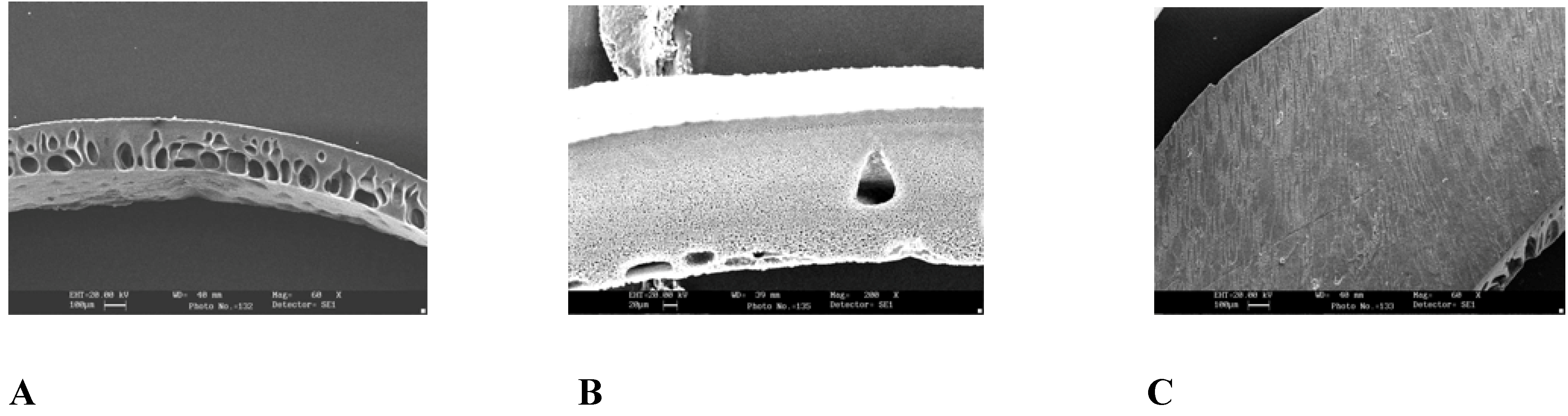
2.4.2. Surface characterization
2.4.3. Conformation of in situ pore formatio
2.5. Filling and sealing of asymmetric membrane capsules
| Formulation Code | Carvedilol | Fructose | Fumaric acid |
|---|---|---|---|
| F4 | 25 | 25 | - |
| F5 | 25 | 125 | - |
| F6 | 25 | 250 | - |
| F7 | 25 | 250 | 25 |
| F8 | 25 | 250 | 50 |
| F9 | 25 | 250 | 100 |
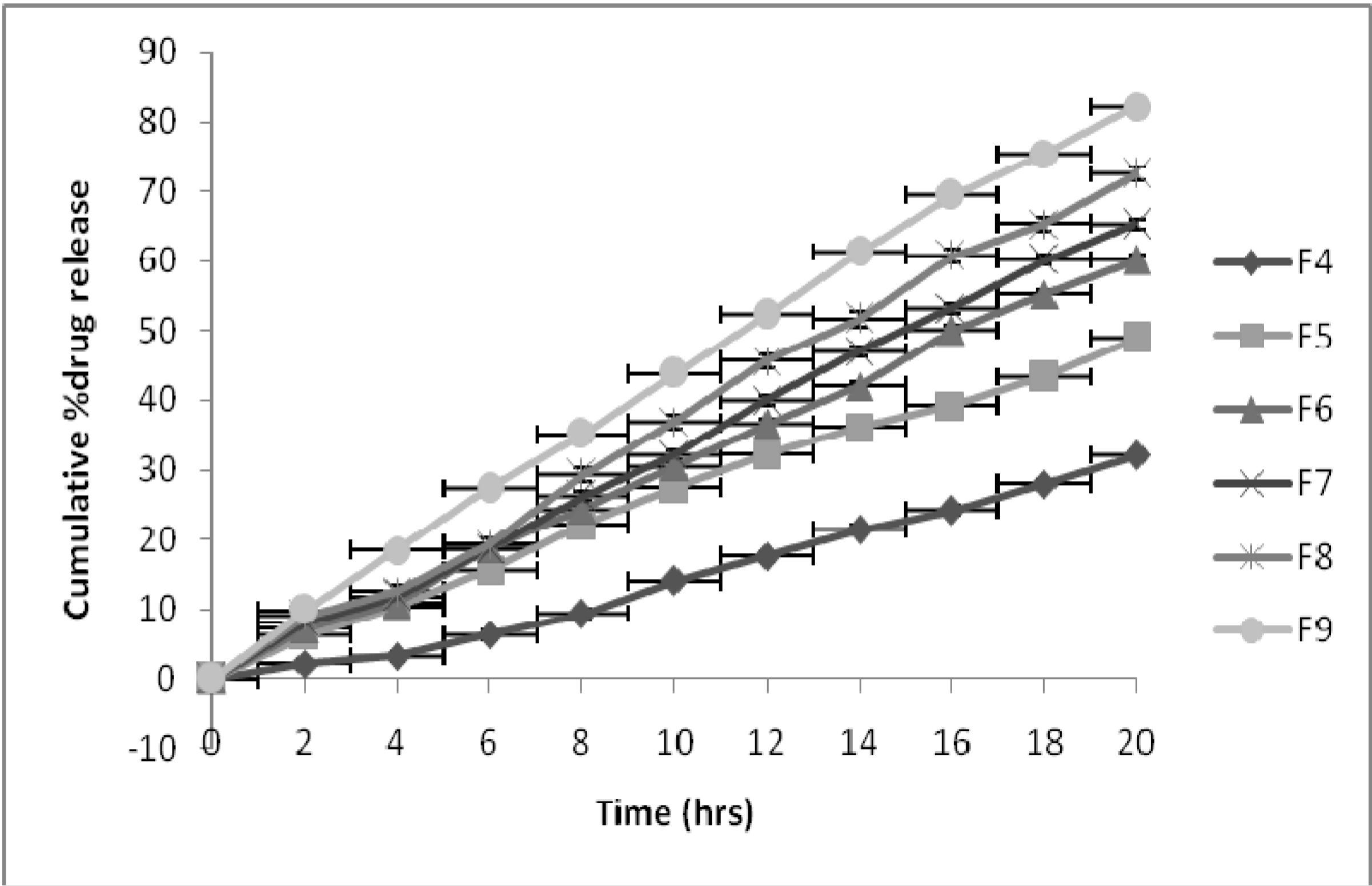
2.6. In vitro release rate study
3. Results and Discussion
| Capsule shell code | F1 | F2 | F3 |
|---|---|---|---|
| Membrane thickness (cm) | 0.0273 ± 0.03 | 0.0244 ± 0.02 | 0.0224 ± 0.04 |
| Surface area (cm2) | 6.39 ± 1.5 | 6.41 ± 1.57 | 6.43 ± 1.4 |
| Capsule shell weight (mg) | 80.28 ± 1.96 | 85.37 ± 1.64 | 88.31 ± 1.73 |
| Tensile strength (Kg/cm2) | 0.119 ± 0.24 | 0.127 ± 0.83 | 0.188 ± 0.32 |
| Void volume (cm3/g) | 2.614 ± 0.32 | 3.949 ± 0.71 | 4.955 ± 0.17 |

3.1. Solubility studies of carvedilol
3.2. In vitro release rate study
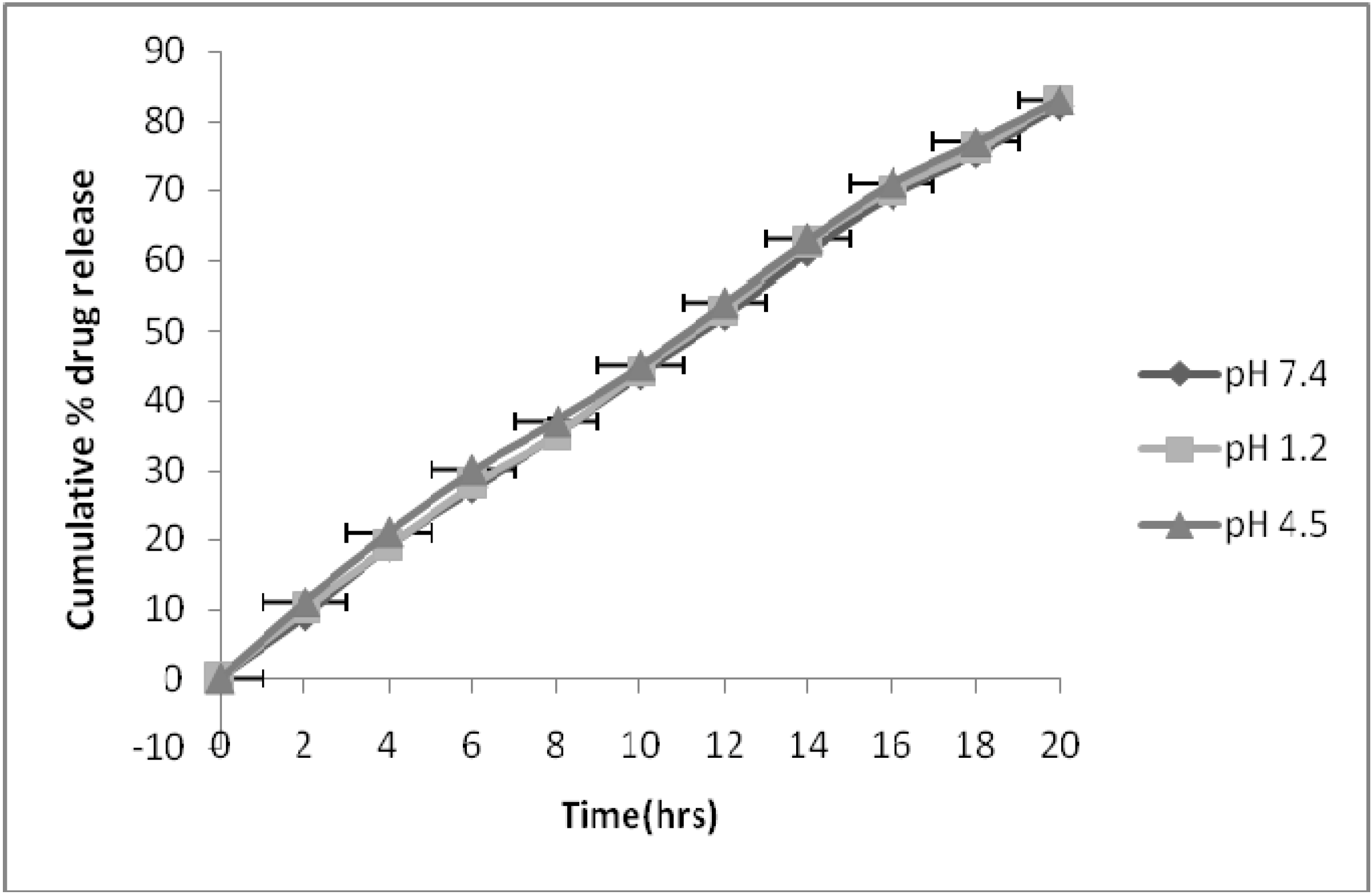
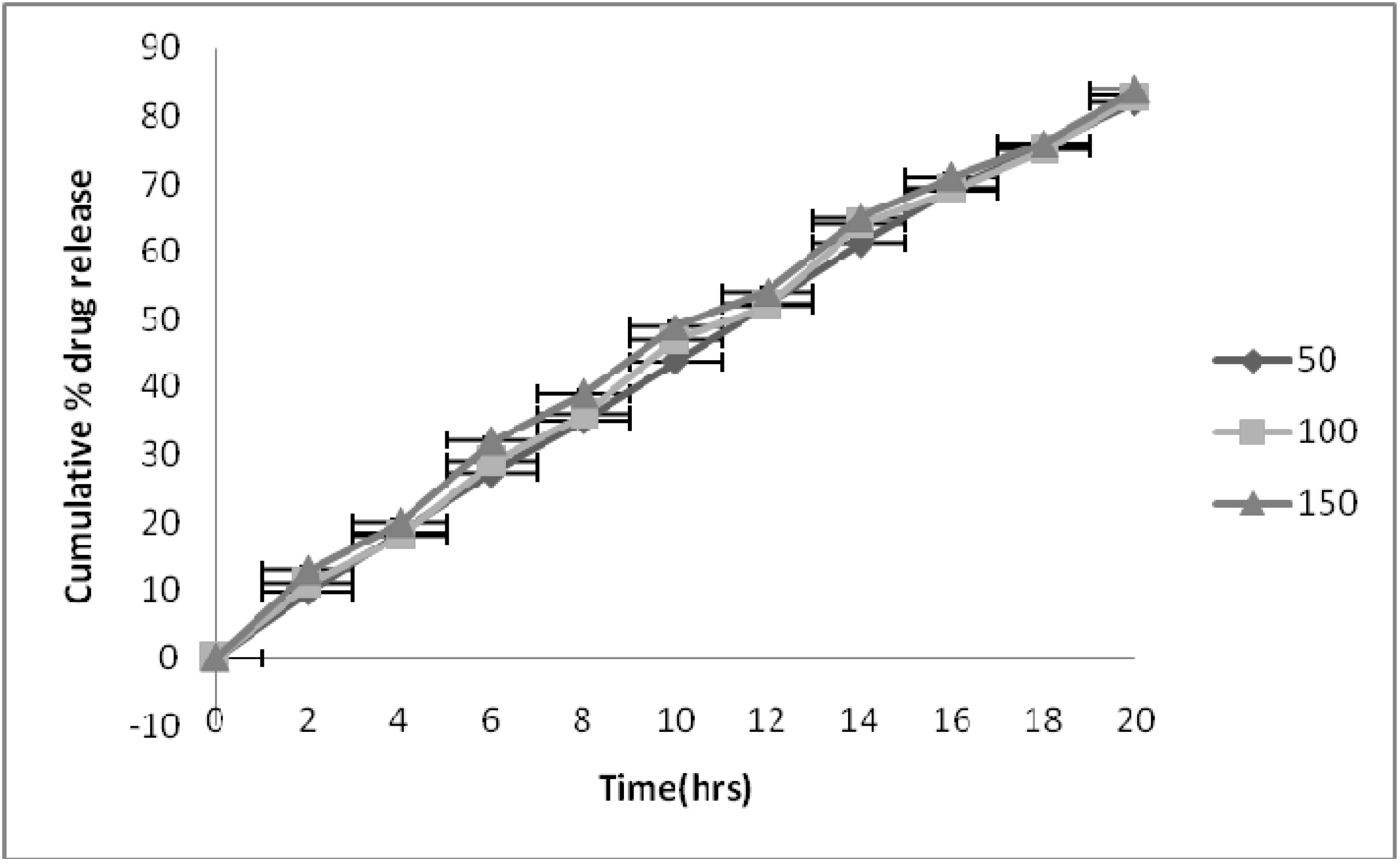
3.3. Evaluation of Optimal asymmetric membrane capsule formulation
3.4. Kinetics of drug release
| Formulation code | Zero-order | First order |
|---|---|---|
| R2 | R2 | |
| F9 | 0.997 | 0.984 |
| F8 | 0.996 | 0.972 |
| F7 | 0.988 | 0.978 |
| F6 | 0.998 | 0.983 |
| F5 | 0.996 | 0.993 |
| F4 | 0.988 | 0.979 |


4. Conclusions
References and Notes
- Choudhury, P.K.; Ranawat, M.S.; Pillai, M.K.; Chauhan, C.S. Asymmetric membrane capsule for osmotic delivery of flurbiprofen. Acta Pharm. 2007, 57, 343–350. [Google Scholar]
- Theeuwes, F. Elementary osmotic pump. J. Pharm. Sci. 1975, 64, 1987–1991. [Google Scholar] [CrossRef]
- Liu, L.; Ku, J.; khang, G.; Lee, B.; Rhee, J.M.; Lee, H.B. Nifedipine controlled delivery by sandwiched osmotic tablet system. J. Control. Rel. 2000, 68, 145–146. [Google Scholar] [CrossRef]
- Theeuwes, F. Osmotic system for delivering selected beneficial agents having varying degrees of solubility. US Patent 4,111,201, 9 May 1978. [Google Scholar]
- Kenneth, C.W.; Bruce, C.M.; Michael, C.R. Extrudable core system: Development of a single-layer osmotic controlled-release tablet. J. Control. Rel. 2009, 134, 201–206. [Google Scholar] [CrossRef]
- Thombre, A.G.; Cardinal, J.R.; DeNoto, A.R.; Gibbs, D.C. Asymmetric membrane capsule for osmotic drug delivery II- In vitro and in vivo drug release performance. J. Control. Rel. 1999, 57, 65–73. [Google Scholar] [CrossRef]
- Verma, R.K.; Krishna, D.M.; Garg, S. Formulation aspects in the development of osmotically controlled oral drug delivery systems. J. Control. Rel. 2002, 79, 7–27. [Google Scholar] [CrossRef]
- Bodmeier, R.; Paeratakul, O. Constant potassium chloride release from microporous membrane-coated tablets prepared with aqueous colloidal polymer dispersions. Pharm. Res. 1991, 8, 355–359. [Google Scholar] [CrossRef]
- Bayne, W.; Place, V.; Theeuwes, F.; Rogers, J.D.; Lee, R.B.; Davies, R.O.; Kwan, K.C.; Calif, P.A.; Pa, W.P. Kinetics of osmotically controlled indomethacin delivery system after repeated dosing. Clin. Pharmacol. Ther. 1982, 32, 270–276. [Google Scholar] [CrossRef]
- Garg, A.; Gupta, M.; Bhargava, H.N. Effect of formulation parameters on the release characteristics of propranolol from asymmetric membrane coated tablets. Eur. J. Pharm. Biopharm. 2007, 67, 725–731. [Google Scholar] [CrossRef]
- Makhija, S.N.; Vavia, P.R. Controlled porosity osmotic pump-based controlled release systems of pseudoephedrine-I Cellulose acetate as a semipermeable membrane. J. Control. Rel. 2003, 89, 5–18. [Google Scholar] [CrossRef]
- Morgan, T. Clinical pharmacokinetics and pharmacodynamics of carvedilol. Clin. Pharmacokinetics 1994, 26, 335–346. [Google Scholar] [CrossRef]
- Streubel, A.; Siepmann, J.; Dashevsky, A.; Bodmeier, R. pH independent release of a weakly basic drug from water-insoluble and-soluble matrix tablets. J. Control. Rel. 2000, 67, 101–110. [Google Scholar] [CrossRef]
- Thoma, K.; Ziegler, I. The pH-independent release of fenoldopam from pellets with insoluble film coats. Eur. J. Pharm. Biopharm. 1998, 46, 105–113. [Google Scholar] [CrossRef]
- Nie, S.; Pan, W.; Li, X.; Wu, X. The effect of citric acid added to hydroxypropyl methylcellulose (HPMC) matrix tablets on the release profile of vinpocetine. Drug Dev. Ind. Pharm. 2004, 30, 627–635. [Google Scholar] [CrossRef]
- Espinoza, R.; Hong, E.; Villafuerte, L. Influence of admixed citric acid on the release profile of pelanserin hydrochloride from HPMC matrix tablets. Int. J. Pharm. 2000, 201, 165–173. [Google Scholar] [CrossRef]
© 2010 by the authors; licensee MDPI, Basel, Switzerland. This article is an Open Access article distributed under the terms and conditions of the Creative Commons Attribution license (http://creativecommons.org/licenses/by/3.0/).
Share and Cite
Guarve, K.; Gupta, G.D. Asymmetric Membrane Capsules for Extended Delivery of the Weakly Basic Drug Carvedilol. Pharmaceutics 2010, 2, 199-208. https://doi.org/10.3390/pharmaceutics2020199
Guarve K, Gupta GD. Asymmetric Membrane Capsules for Extended Delivery of the Weakly Basic Drug Carvedilol. Pharmaceutics. 2010; 2(2):199-208. https://doi.org/10.3390/pharmaceutics2020199
Chicago/Turabian StyleGuarve, Kumar, and Ghanshyam Das Gupta. 2010. "Asymmetric Membrane Capsules for Extended Delivery of the Weakly Basic Drug Carvedilol" Pharmaceutics 2, no. 2: 199-208. https://doi.org/10.3390/pharmaceutics2020199
APA StyleGuarve, K., & Gupta, G. D. (2010). Asymmetric Membrane Capsules for Extended Delivery of the Weakly Basic Drug Carvedilol. Pharmaceutics, 2(2), 199-208. https://doi.org/10.3390/pharmaceutics2020199