Control of the Polymorphism of Calcium Carbonate Produced by Self-Healing in the Cracked Part of Cementitious Materials


Abstract
1. Introduction
2. Materials and Methods
2.1. Materials and Sample Preparation
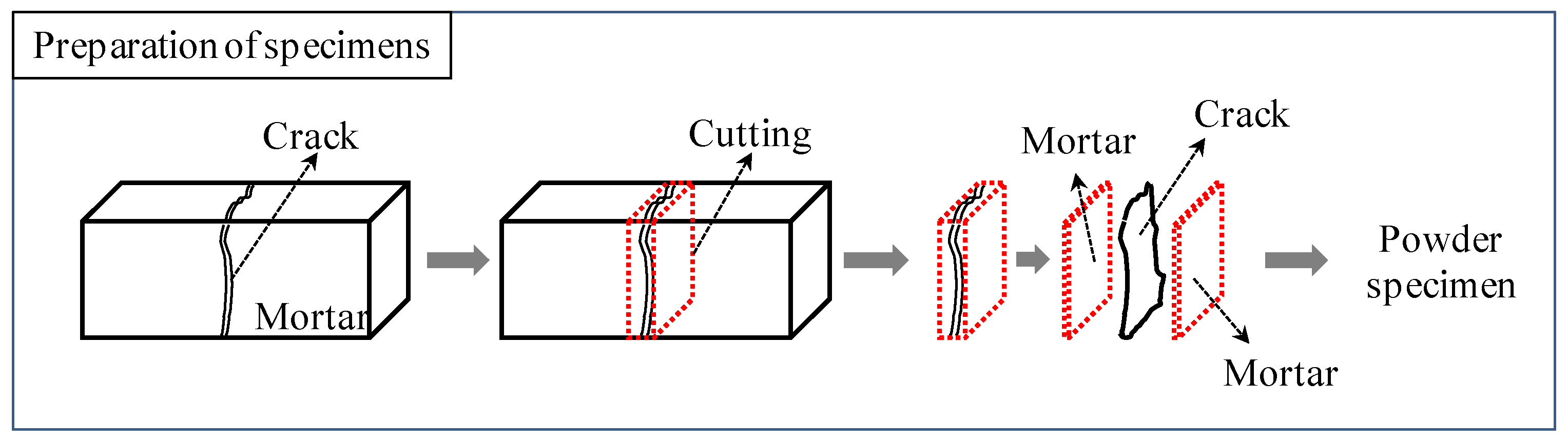
2.2. Experimental Procedure
3. Results and Discussion
3.1. Surface Section of the Cracks
3.2. Evaluation of Self-Healing Performance as a Function of Temperature and pH
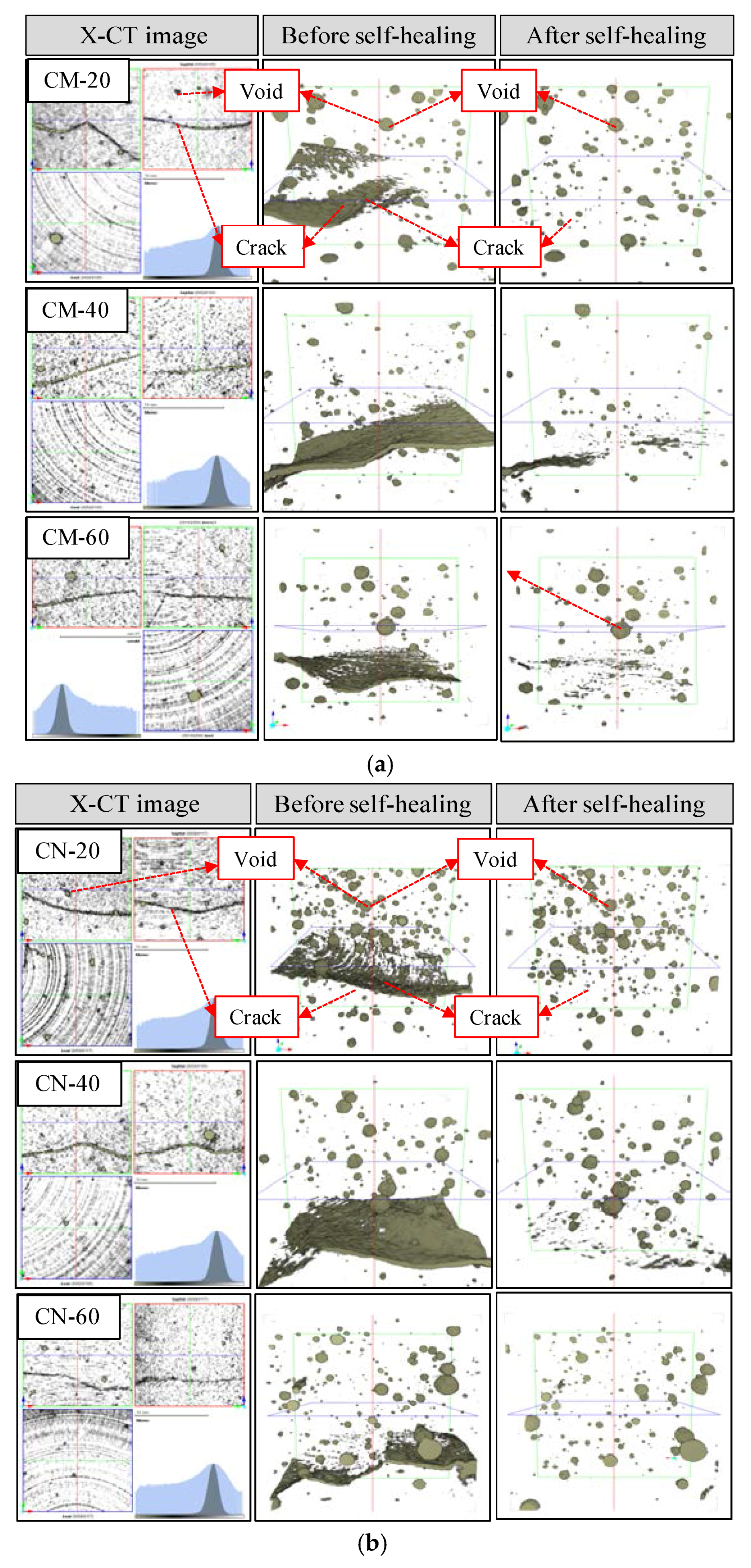
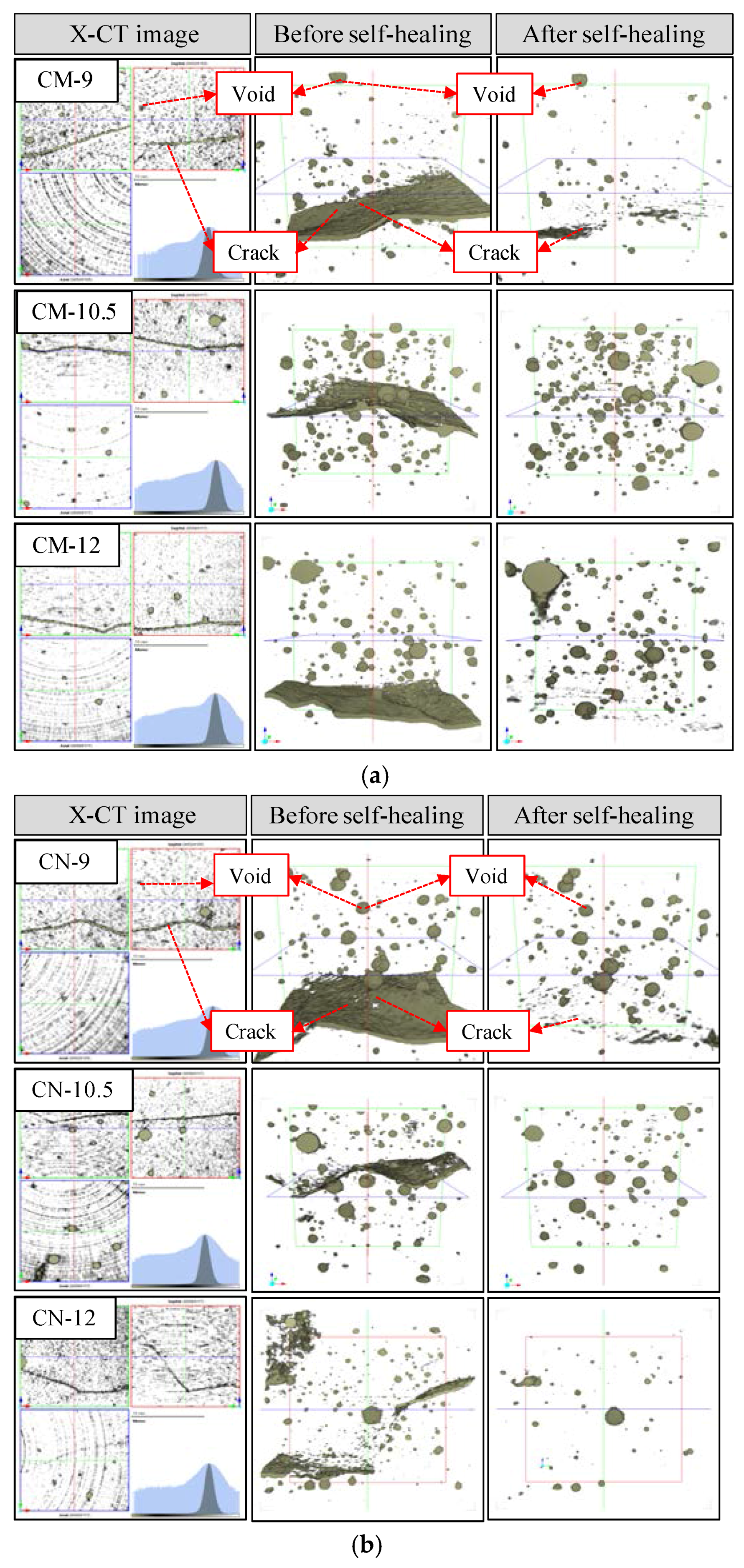
3.2.1. Volume Change in Cracked Section
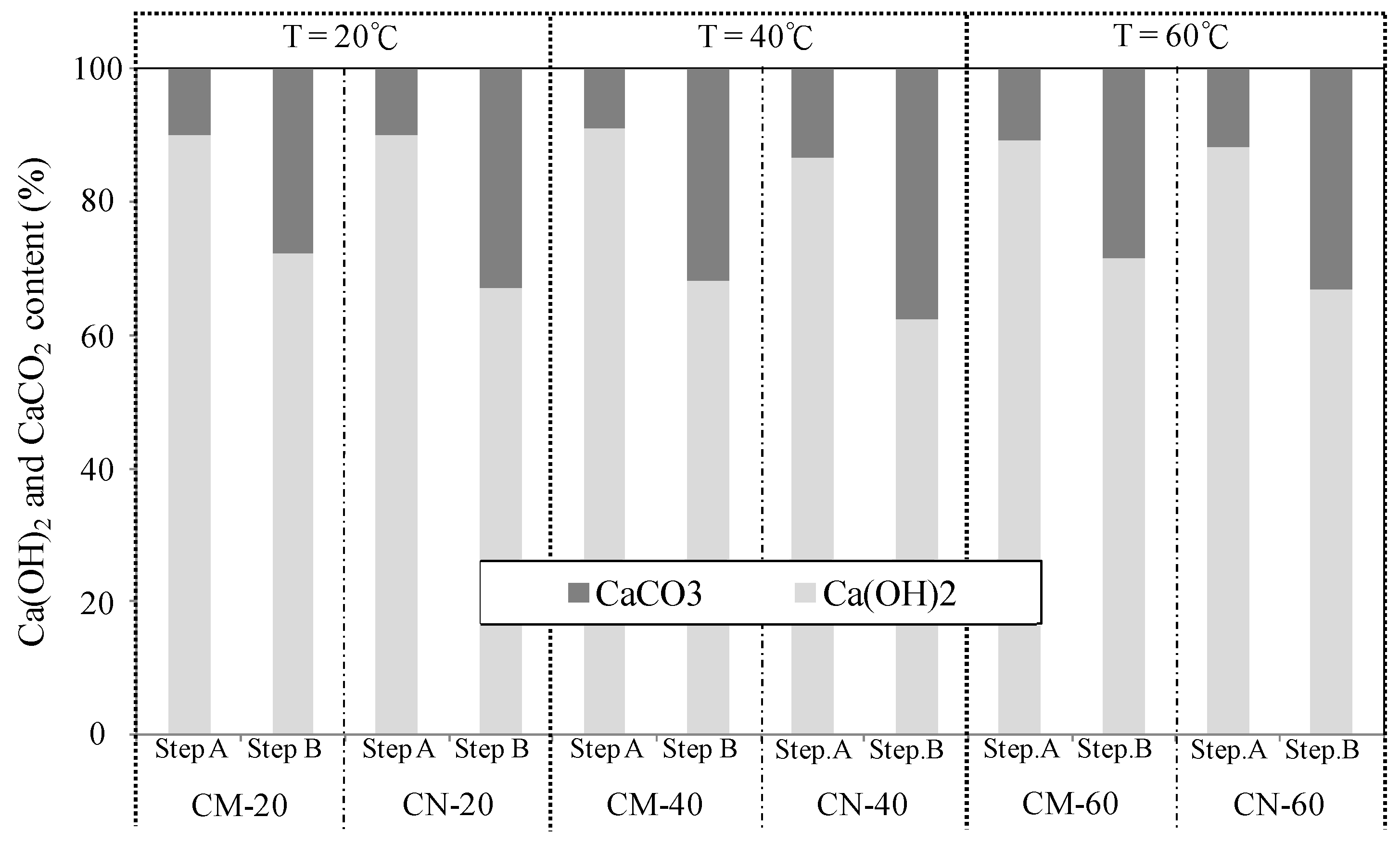
3.2.2. Chemical Evaluation of Self-Healing Precipitates
3.2.3. Crystallographic Change in Calcium Carbonate Compound (CaCO3)
4. Conclusions
Acknowledgments
Author Contributions
Conflicts of Interest
References
- Choi, H.S.; Inoue, M.; Kwon, S.M.; Choi, H.G.; Lim, M.K. Effective crack control of concrete by self-healing of cementitious composites using synthetic fiber. J. Mater. 2016, 9, 1–14. [Google Scholar] [CrossRef] [Scilit]
- Japan Concrete Institute. Practical Guideline for Investigation, Repair and Strengthening of Cracked Concrete Structure; Japan Concrete Institute: Tokyo, Japan, 2013. (In Japanese) [Google Scholar]
- Jacobson, S. Effect of cracking and healing on chloride transport in OPC concrete. Cem. Concr. Res. 1996, 26, 869–881. [Google Scholar] [CrossRef] [Scilit]
- Romildo, D.; Filho, T. Free, restrained and drying shrinkage of cement mortar composites reinforced with vegetable fibers. Cem. Concr. Compos. 2005, 27, 537–546. [Google Scholar]
- Wang, K.; Jansen, D.C.; Shah, S.P. Permeability study of cracked concrete. Cem. Concr. Res. 1997, 27, 381–393. [Google Scholar] [CrossRef] [Scilit]
- Khatri, R.P.; Sirivivatnanon, V. Role of permeability in sulfate attack. Cem. Concr. Res. 1997, 27, 1179–1189. [Google Scholar] [CrossRef] [Scilit]
- Neville, A.M. Properties of Concrete; Person Education Limited: London, UK, 1995; p. 328. [Google Scholar]
- Sanjun, M.A. Effectiveness of crack control at early age on the corrosion of steel bars in low modulus sisal and coconut fiber-reinforced mortars. Cem. Concr. Res. 1998, 28, 555–565. [Google Scholar] [CrossRef] [Scilit]
- Jacobsen, S. SEM Observations of the microstructure of frost deteriorated and self-healed concrete. Cem. Concr. Res. 1995, 25, 1781–1790. [Google Scholar] [CrossRef] [Scilit]
- Edvardsen, C. Water permeability and autogenous healing of cracks in concrete. ACI Mater. J. 1999, 96, 448–454. [Google Scholar]
- Nishiwaki, T.; Koda, M.; Yamada, M.; Mihashi, H.; Kikuta, T. Experimental study on self-healing capability of FRCC using different types of synthetic fibers. J. Adv. Concr. Technol. 2012, 10, 195–206. [Google Scholar] [CrossRef] [Scilit]
- Homma, D.; Mihashi, H.; Nishiwaki, T. Self-healing capability of fiber reinforced cementitious composites. J. Adv. Concr. Technol. 2009, 7, 217–228. [Google Scholar] [CrossRef] [Scilit]
- Gruyaert, E.; Van Tittelboom, K.; Sucaet, J.; Anrijs, J.; Van Vlierberghe, S.; Dubruel, P.; De Geest, B.G.; Remon, J.P.; De Belie, N. Capsules with evolving brittleness to resist the preparation of self-healing concrete. J. Mater. Const. 2016, 66, 1–13. [Google Scholar]
- Hilloulin, B.; Van Tittelboom, K.; Gruyaert, E.; De Belie, N.; Loukili, A. Design of polymeric capsules for self-healing concrete. Cem. Concr. Compos. 2015, 55, 298–307. [Google Scholar] [CrossRef] [Scilit]
- Jonkers, H.M. Bacteria-based self-healing concrete. Heron 2011, 56, 1–12. [Google Scholar]
- Fukuda, D.; Nara, Y.; Kobayashi, Y.; Maruyama, M.; Koketsu, M.; Hayashi, D.; Ogawa, H.; Kaneko, K. Investigation of self-sealing in high-strength and ultra-low-permeability concrete in water using micro-focus X-ray CT. Cem. Concr. Res. 2012, 42, 1494–1500. [Google Scholar] [CrossRef] [Scilit]
- Benoit, H.; Jean-Baptiste, L.; Elisabeth, L.; Odile, A.; Ahmed, L.; Frédéric, G.; Olivier, D.; Vincent, T. Monitoring of autogenous crack healing in cementitious materials by the nonlinear modulation of ultrasonic coda waves, 3D microscopy and X-ray microtomography. Constr. Build. Mater. 2016, 123, 143–152. [Google Scholar]
- Kishi, T.; Ahn, T.-H.; Hosoda, A.; Suzuki, S.; Takaoka, H. Self-healing behaviour by cementitious recrystallization of cracked concrete incorporating expansive agent. In Proceedings of the First International Conference on Self-Healing Materials, Noordwijk aan Zee, The Netherlands, 18–20 April 2007; pp. 1–10. [Google Scholar]
- Snoeck, D.; de Belie, N. Repeated autogenous healing in strain-hardening cementitious composites by using superabsorbent polymers. J. Mater. Civil Eng. 2015, 28, 1–11. [Google Scholar] [CrossRef] [Scilit]
- Snoeck, D.; Dewanckele, J.; Cnudde, V.; de Belie, N. X-ray computed microtomography to study autogenous healing of cementitious materials promoted by superabsorbent polymers. Cem. Concr. Compos. 2016, 65, 83–93. [Google Scholar] [CrossRef] [Scilit]
- Yang, Y.; Lepech, M.D.; Yang, E.-H.; Li, V.C. Autogenous healing of engineered cementitious composites under wet-dry cycles. Cem. Concr. Res. 2009, 39, 382–390. [Google Scholar] [CrossRef] [Scilit]
- Choi, H.-S.; Inoue, M.; Choi, H.-G.; Lim, M.-K.; Nishiwaki, T.; Kawajiri, S. The fundamental study of the crack control by self-healing of PVA fiber reinforced cementitious composites. J. Civil Eng. Archit. Res. 2016, 9(3), 1680–1688. [Google Scholar]
- Choi, H.-S.; Inoue, M.; Kamada, M.; Iwasawa, M. Microcrack control of cementitious materials by self-healing. In Proceedings of the 7th International Conference of Asian Concrete Federation 2016, Hanoi, Vietnam, 30 October–2 November 2016; pp. 1–8. [Google Scholar]
- Matsumoto, M. Polymorph control of calcium carbonate by reactive crystallization using microbubble technique. Chem. Eng. Res. Des. 2010, 88, 1624–1630. [Google Scholar] [CrossRef] [Scilit]
- Kojima, Y. Controls of polymorphism and morphology of calcium carbonate compounds formed by crystallizing amorphous calcium carbonate hydrate. J. Ceram. Soc. Jpn. 1994, 12, 1128–1136. (In Japanese) [Google Scholar] [CrossRef] [Scilit]
- Huang, H.; Ye, G. Self-healing of cracks in cement paste affected by additional Ca2+ ions in the healing agent. J. Intell. Mater. Sys. Struct. 2014, 27, 1–12. [Google Scholar] [CrossRef] [Scilit]
- Kim, H.-S. Fundamental study on recycling of low-quality recycled fine aggregate using carbonated nanobubble water. In Proceedings of the First International Conference on Concrete Sustainability, Tokyo, Japan, 27–29 May 2013. [Google Scholar]
- Taniguchi, S.; Otani, J.; Nishizaki, I. A study on the new evaluation method for asphalt pavement materials using X-ray CT scanner. Jpn. Soc. Civil Eng. J. Pavement Eng. 2010, 15, 41–48. (In Japanese) [Google Scholar]
- Wada, N.; Takao, U. Effect of cation (Sr, Pb and Ba) on calcium carbonate polymorphs under diffusional conditions. Gypsum Lime 1993, 245, 211–219. (In Japanese) [Google Scholar]







| Sample: Hardened cement paste (water/cement ratio: 40%) | ||
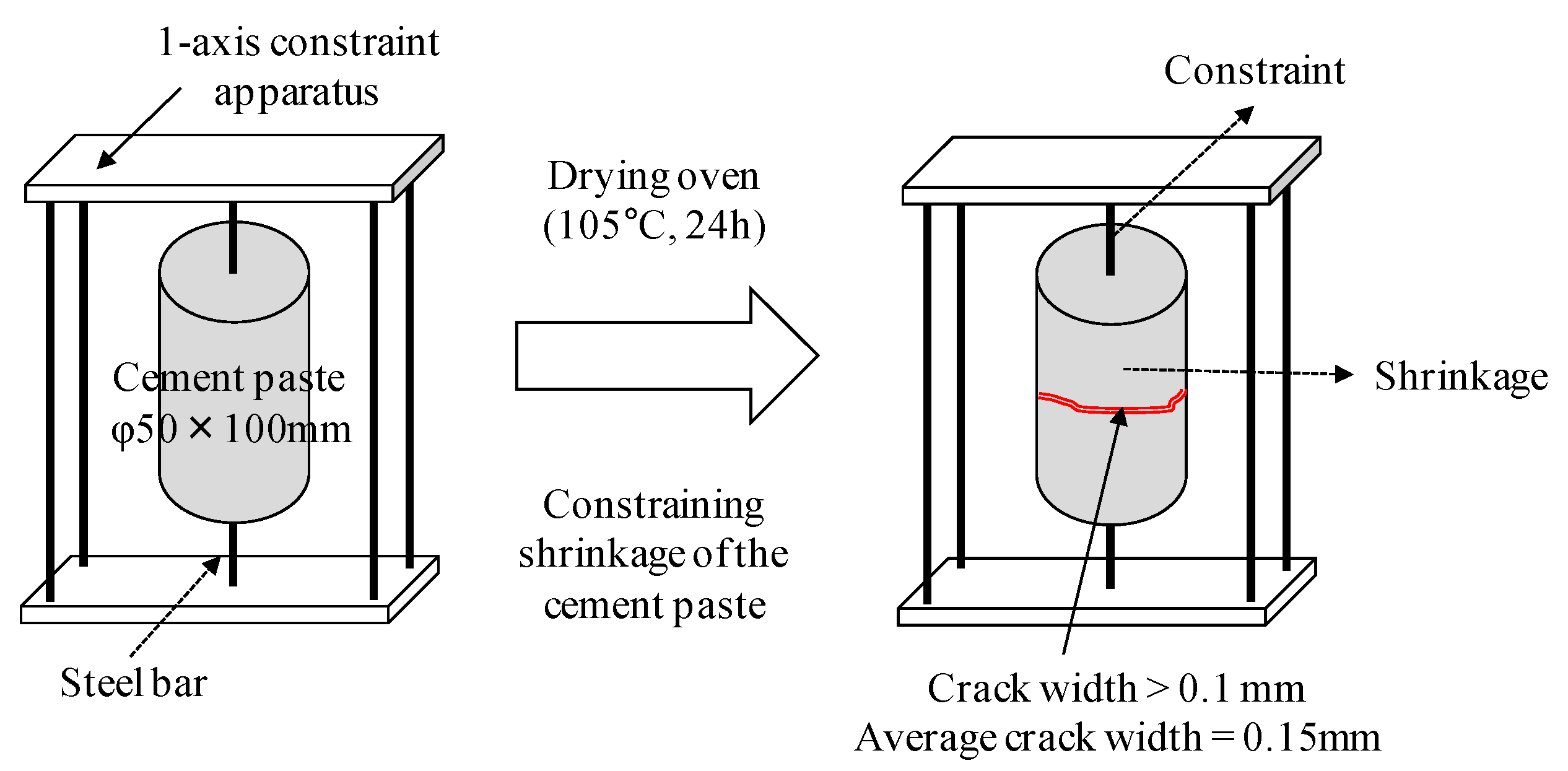
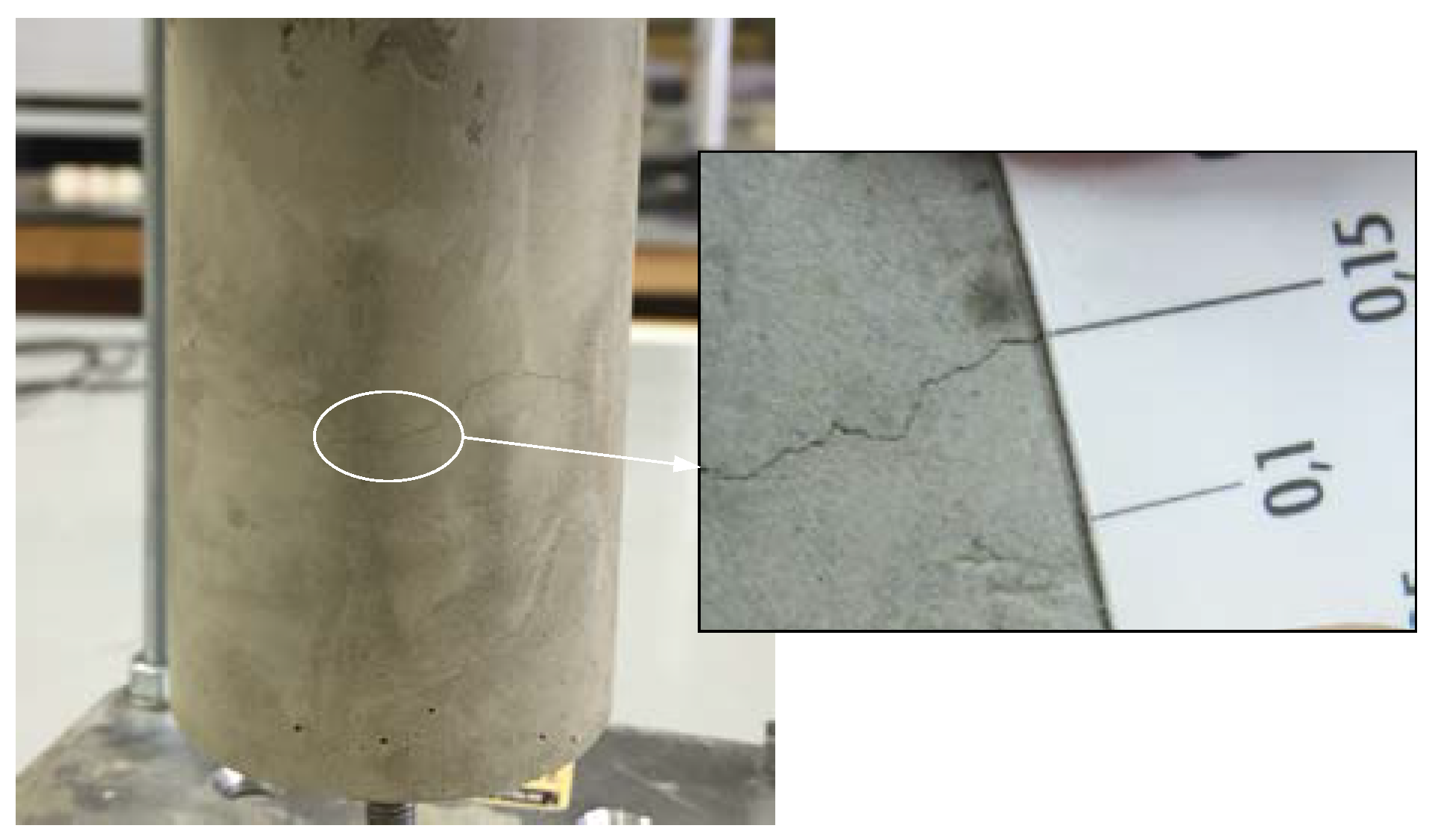
| Crack: Fine cracks generated by drying (105 °C, 24 h) | ||
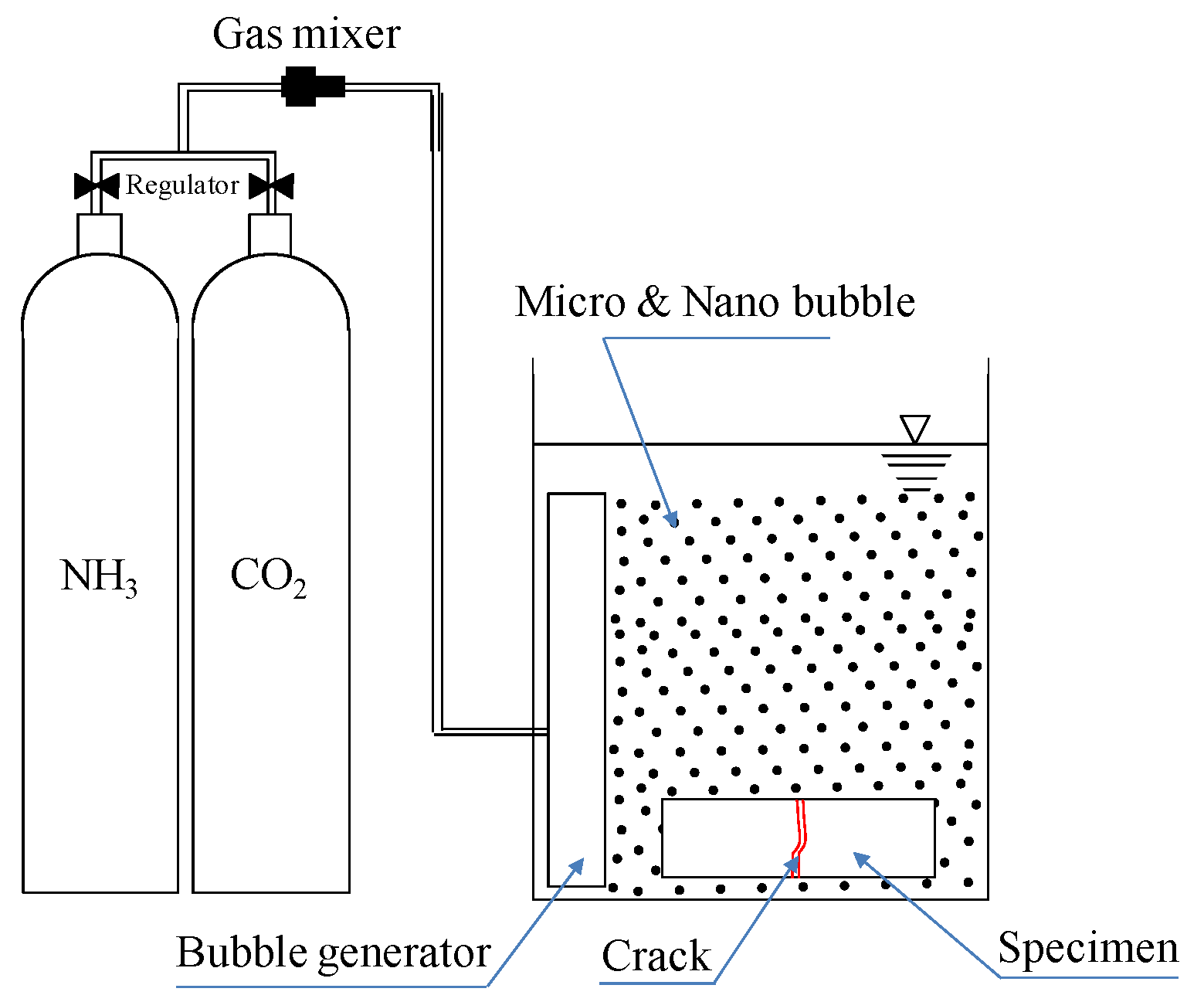
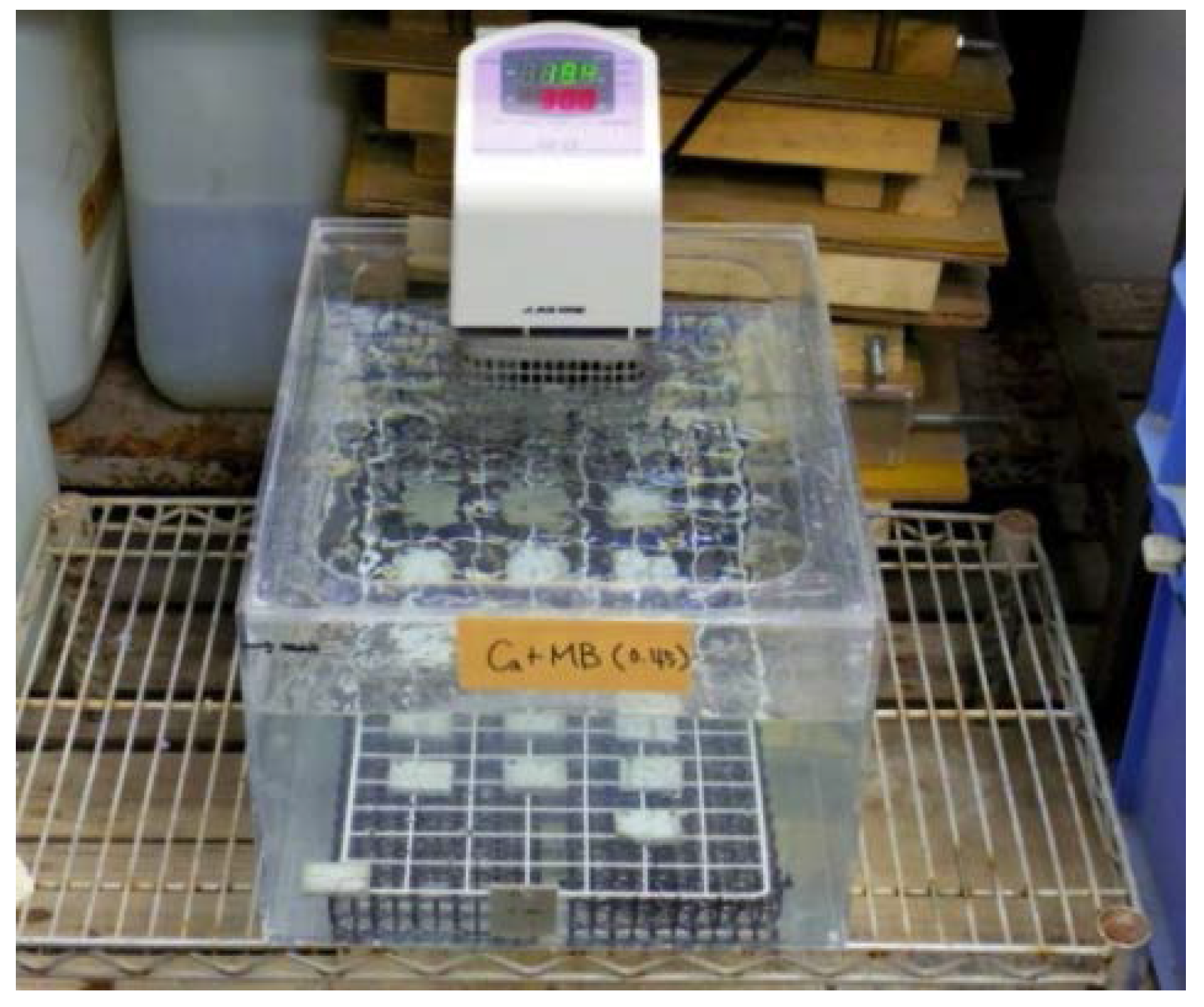
| Self-healing conditions [24,25] | Temperature: 20, 40, and 60 °C (constant pH of 9.0) | Ca(OH)2 + microbubbles (CM) Ca(OH)2 + nanobubbles (CN) |
| pH: 9.0, 10.5, and 12.0 (constant temperature of 40 °C) | ||
| Self-healing period: 7 cycles (7 days) (1 cycle: Bubbles supplied for 4 h+soaking in saturated Ca(OH)2 solution for 20 h) | ||
| Step | Experimental Sequence | Subject and Method of Evaluation | |
|---|---|---|---|
| Surface and Internal Sections of Cracks | Self-Healing Substances | ||
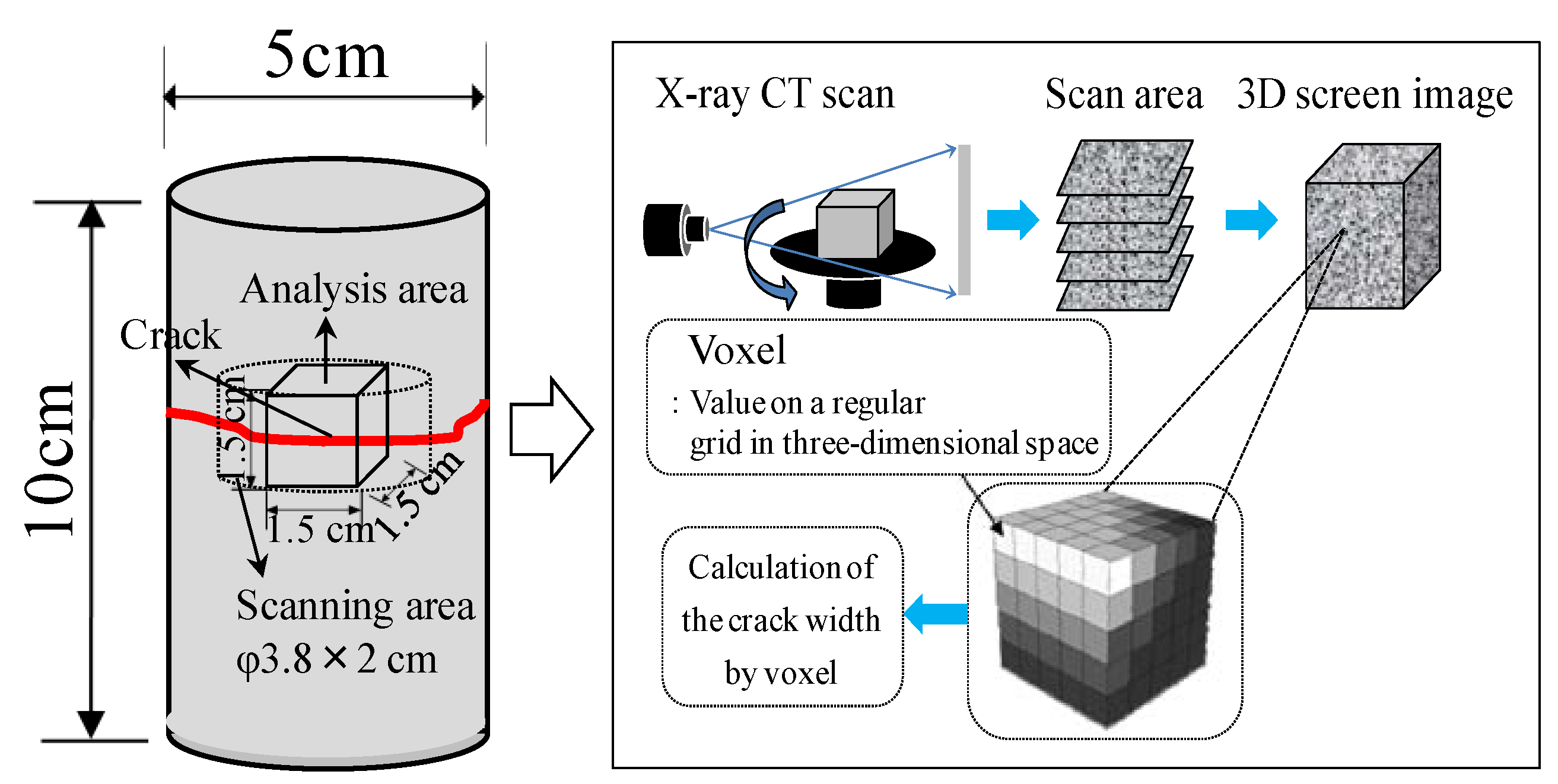
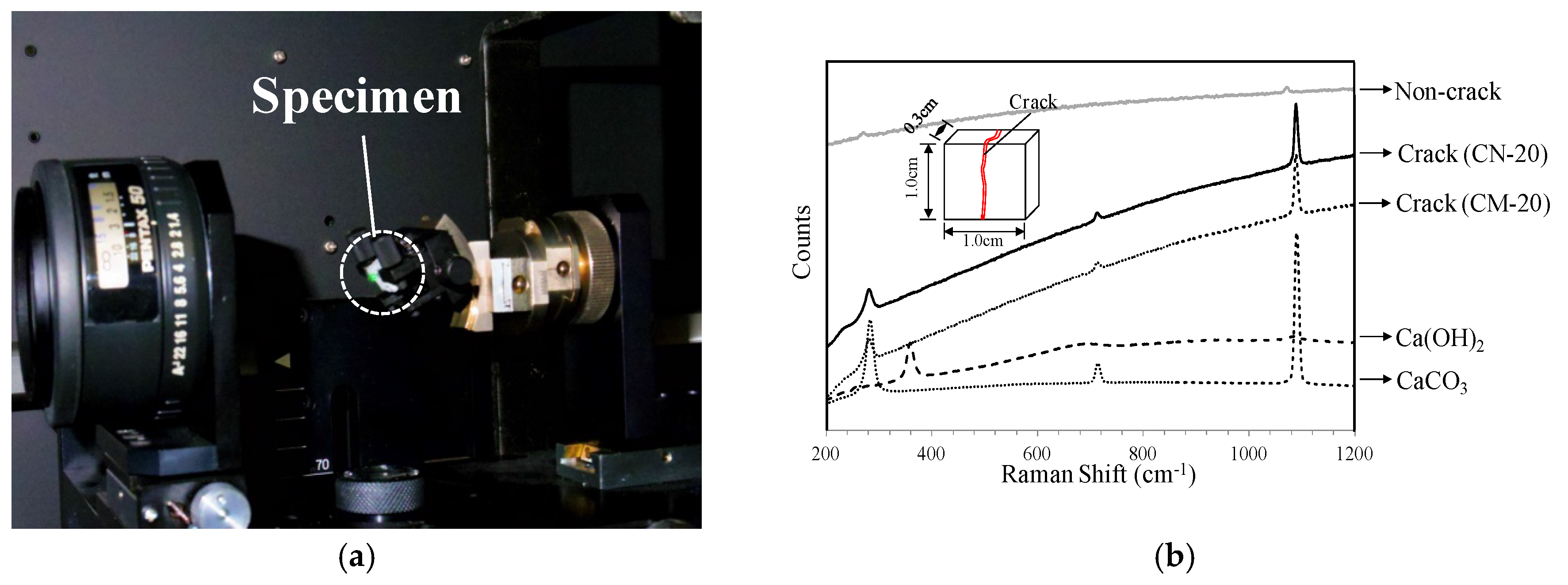
| A | Prior to self-healing | Microscope, X-ray CT | Raman spectroscopic analysis, TG-DTA, SEM analysis |
| B | After self-healing | ||
© 2017 by the authors. Licensee MDPI, Basel, Switzerland. This article is an open access article distributed under the terms and conditions of the Creative Commons Attribution (CC BY) license (http://creativecommons.org/licenses/by/4.0/).
Share and Cite
Choi, H.; Choi, H.; Inoue, M.; Sengoku, R. Control of the Polymorphism of Calcium Carbonate Produced by Self-Healing in the Cracked Part of Cementitious Materials. Appl. Sci. 2017, 7, 546. https://doi.org/10.3390/app7060546
Choi H, Choi H, Inoue M, Sengoku R. Control of the Polymorphism of Calcium Carbonate Produced by Self-Healing in the Cracked Part of Cementitious Materials. Applied Sciences. 2017; 7(6):546. https://doi.org/10.3390/app7060546
Chicago/Turabian StyleChoi, Heesup, Hyeonggil Choi, Masumi Inoue, and Risa Sengoku. 2017. "Control of the Polymorphism of Calcium Carbonate Produced by Self-Healing in the Cracked Part of Cementitious Materials" Applied Sciences 7, no. 6: 546. https://doi.org/10.3390/app7060546
APA StyleChoi, H., Choi, H., Inoue, M., & Sengoku, R. (2017). Control of the Polymorphism of Calcium Carbonate Produced by Self-Healing in the Cracked Part of Cementitious Materials. Applied Sciences, 7(6), 546. https://doi.org/10.3390/app7060546