
Commingled Yarn Spinning for Thermoplastic/Glass Fiber Composites
Abstract
1. Introduction
2. Experimental
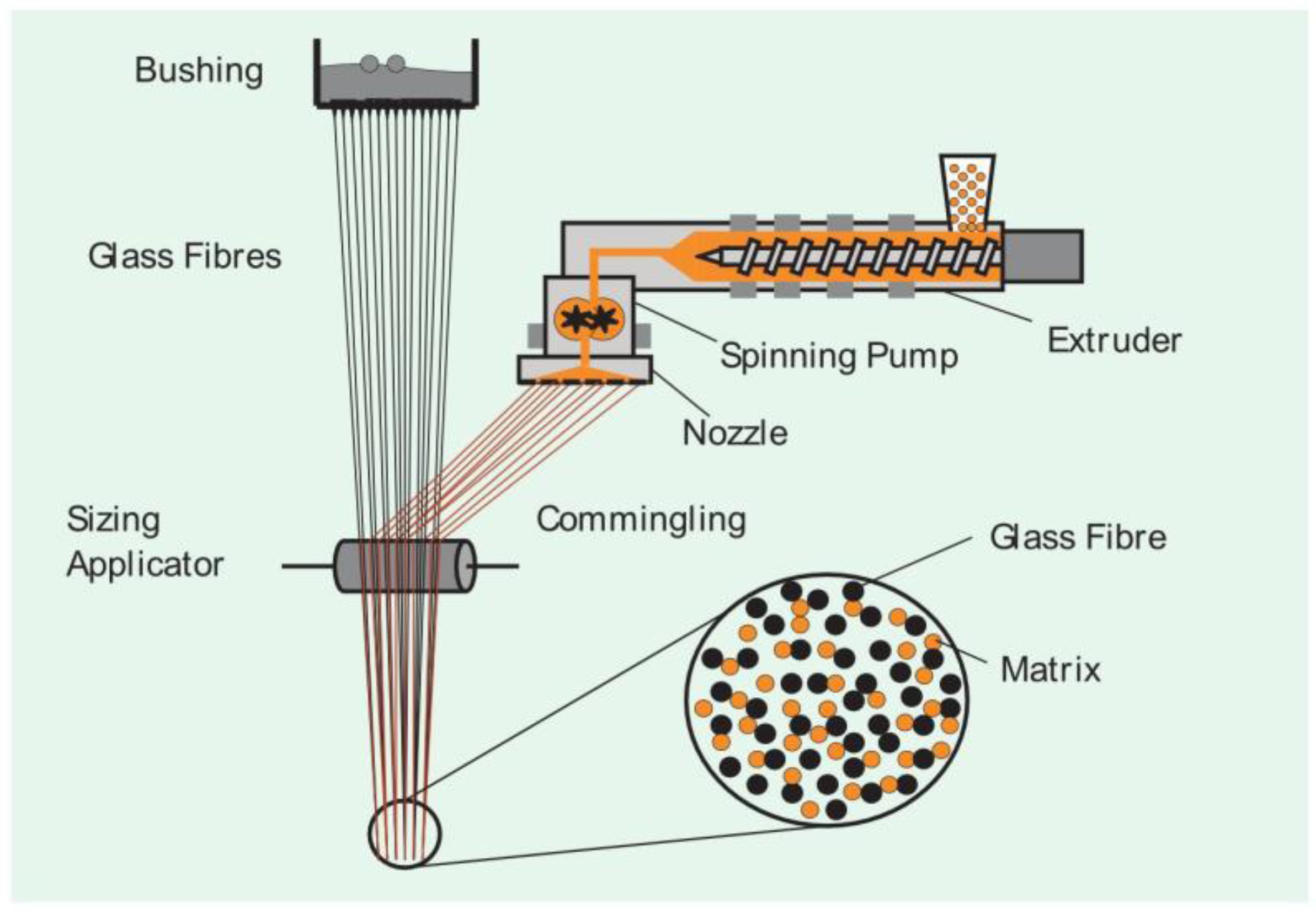
2.1. Processing of Online Commingled Yarns and Interphase Modification
2.2. Composite Manufacturing
2.3. Design of Experiments and Statistical Analysis
2.4. Physical Characterization
3. Results and Discussion
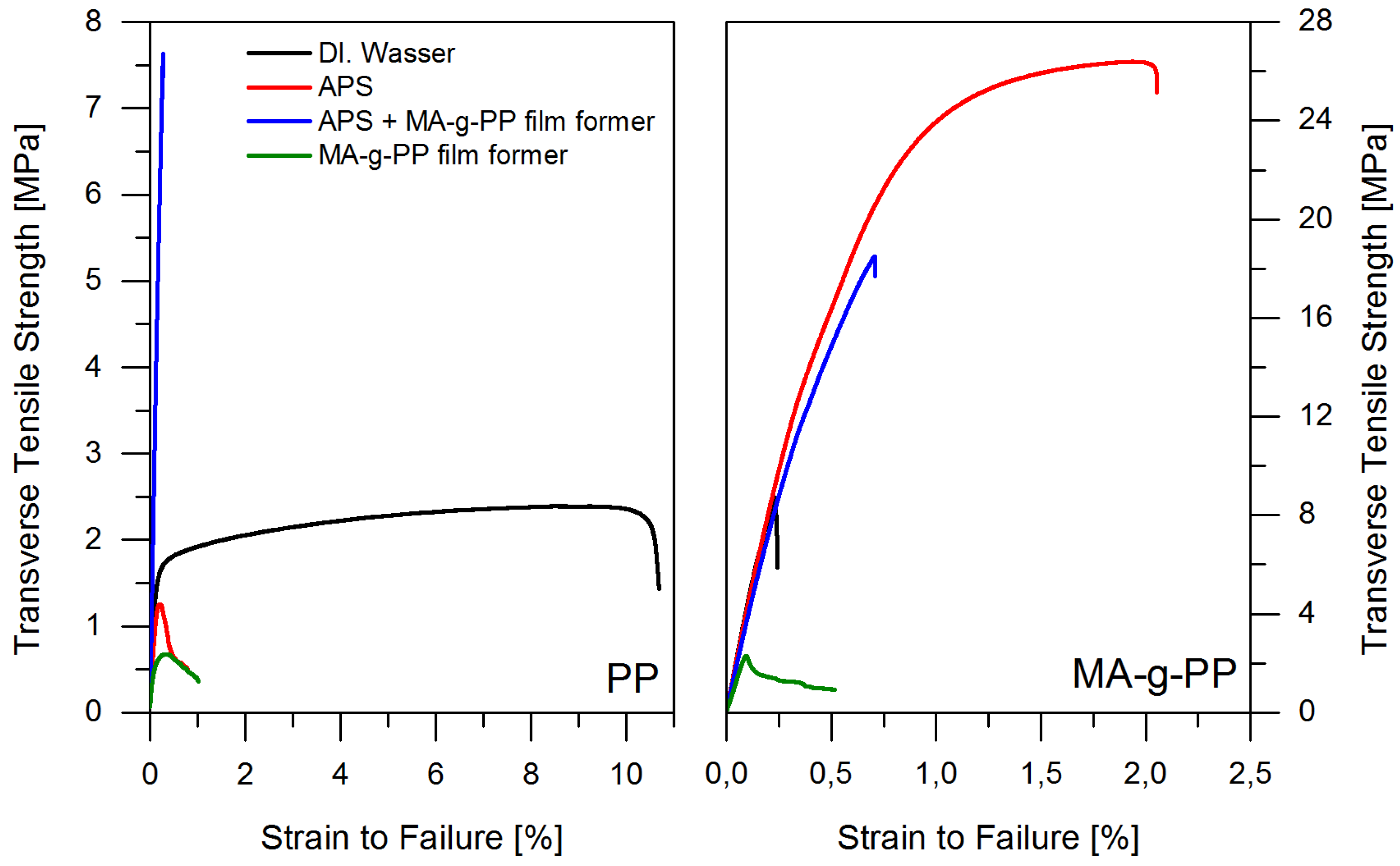
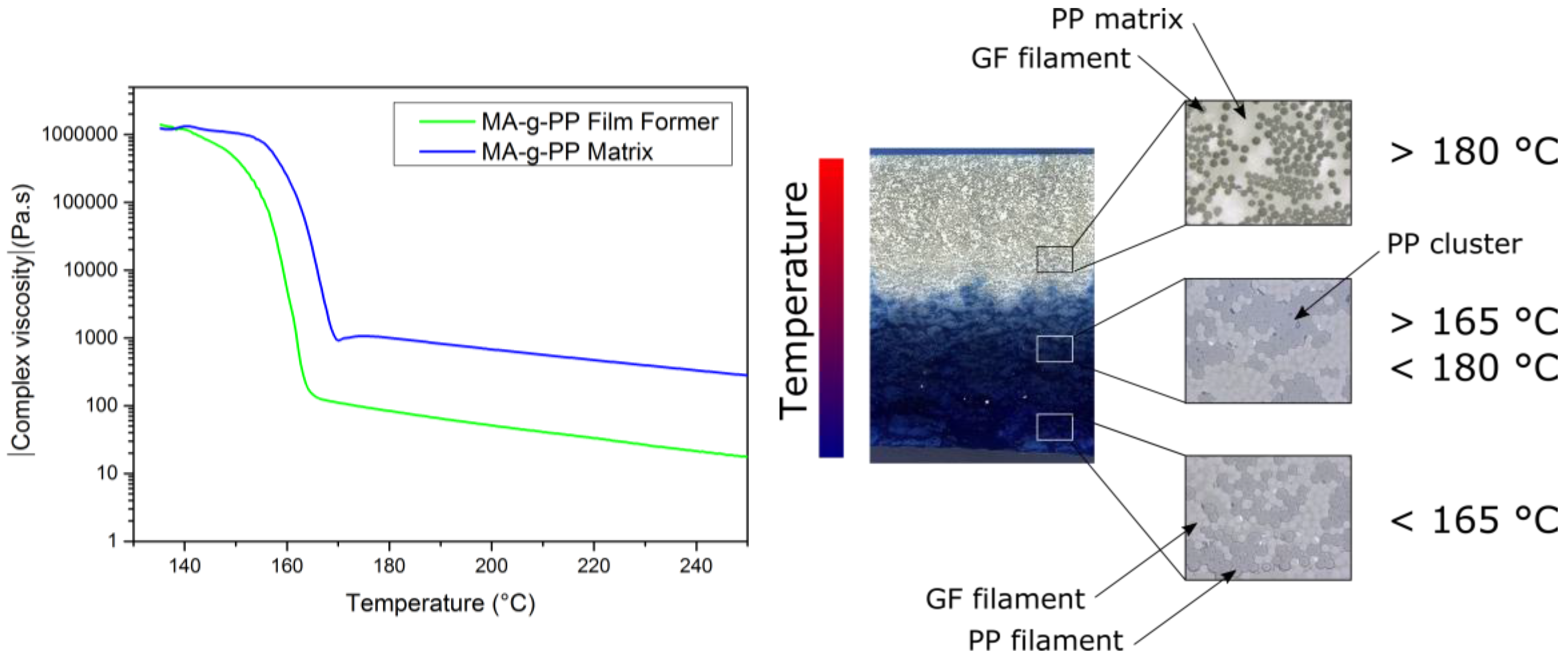
3.1. Fundamental Aspects of Tailored Interphases in Commingled Yarns
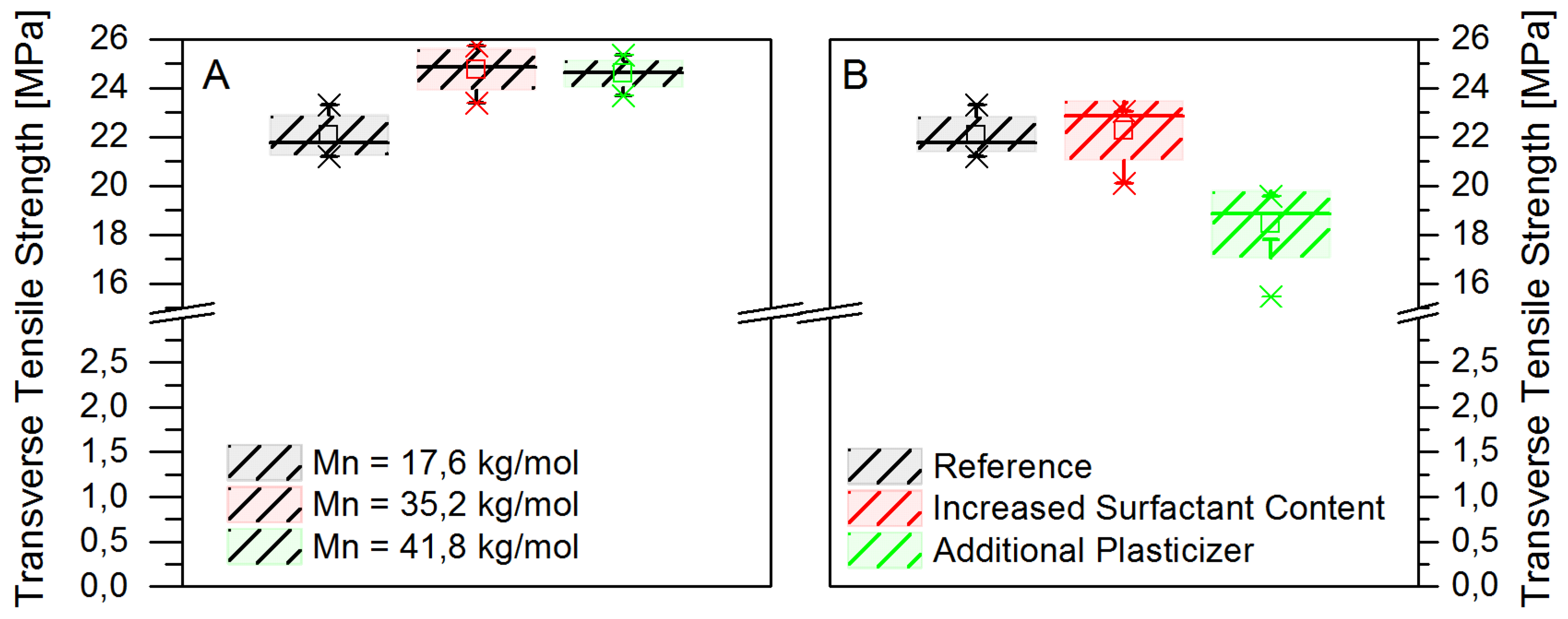
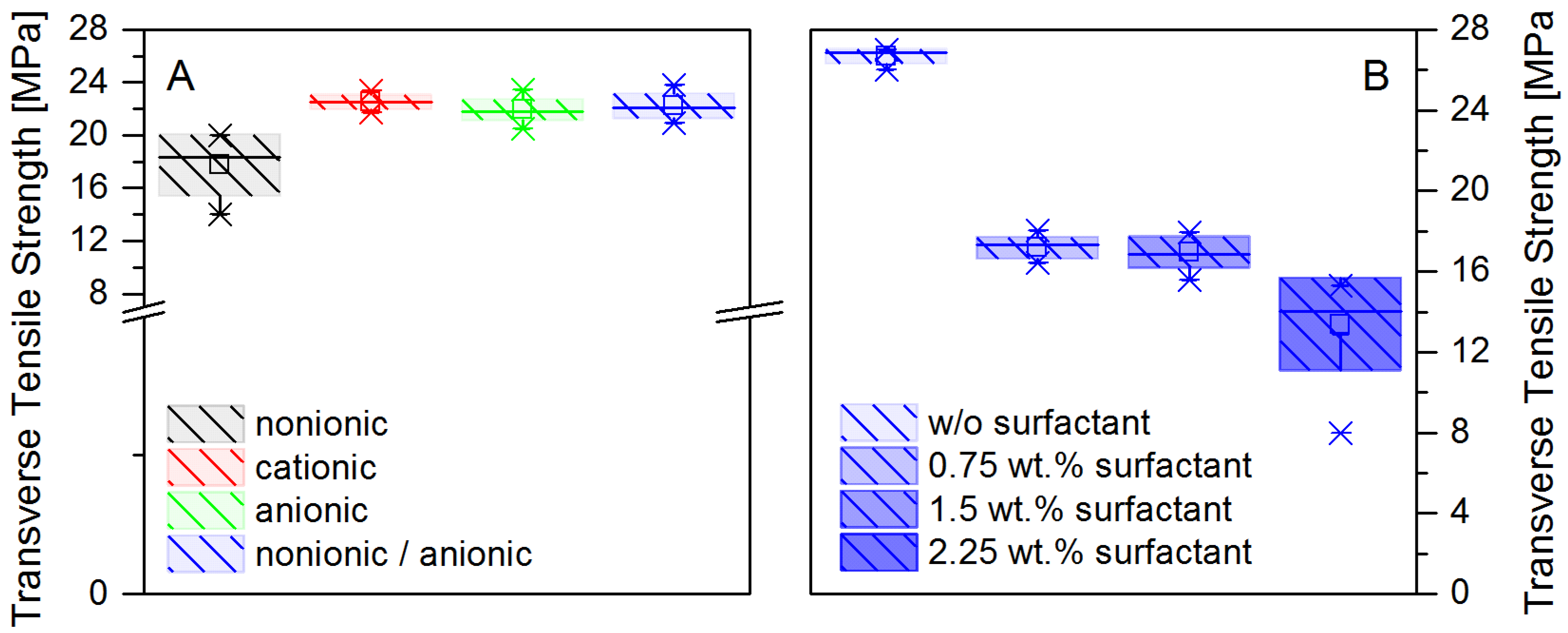
3.2. Influence of Fiber Sizing Content on the Mechanical Performance
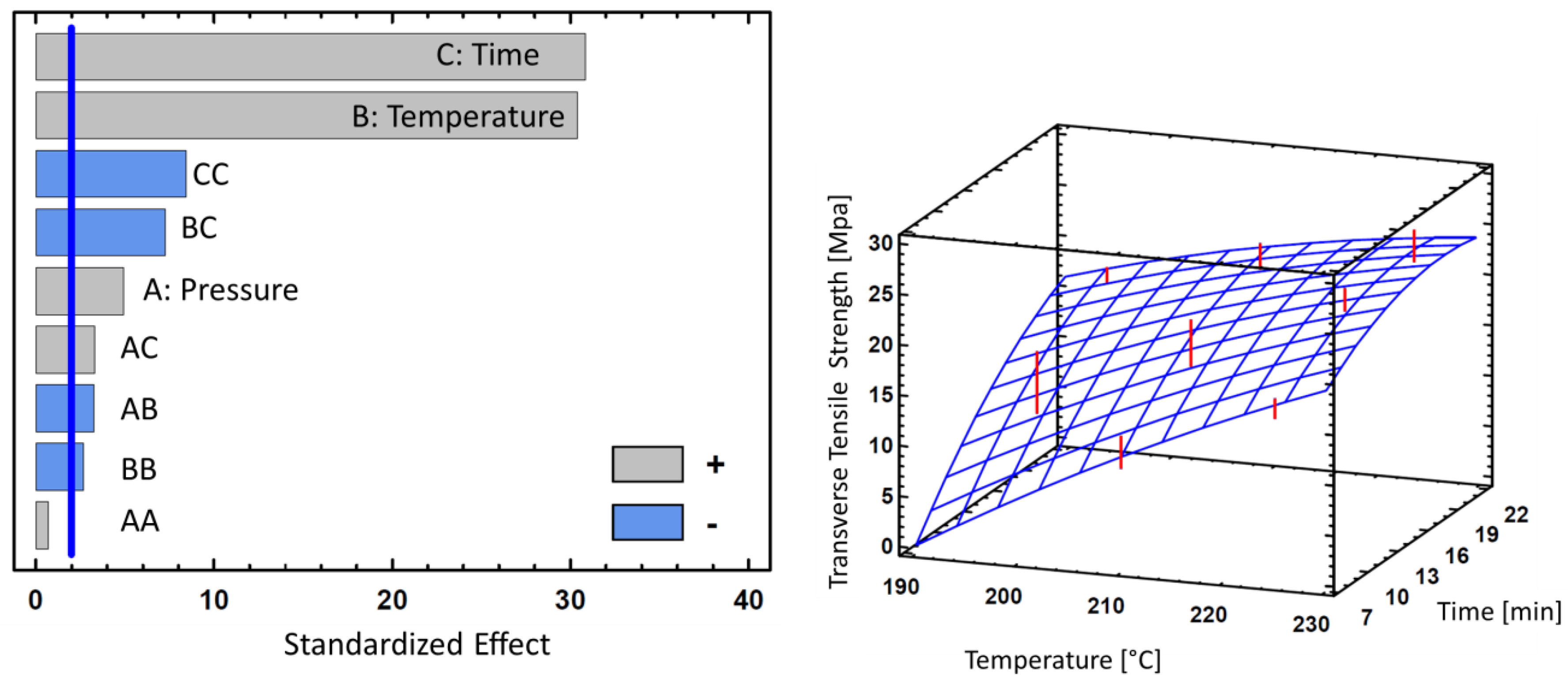
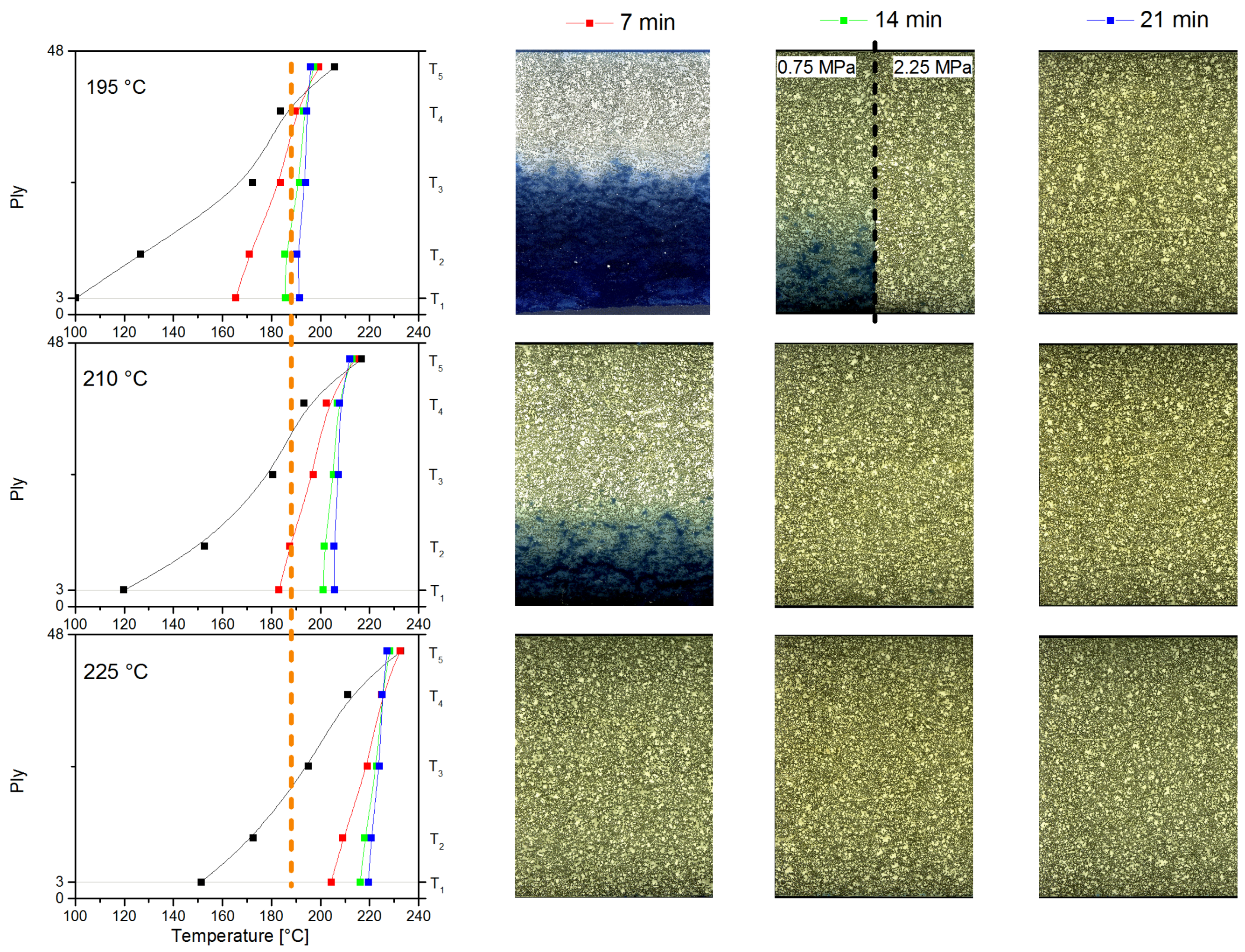
3.3. Influence of Time, Temperature and Pressure During Consolidation on the Mechanical Performance
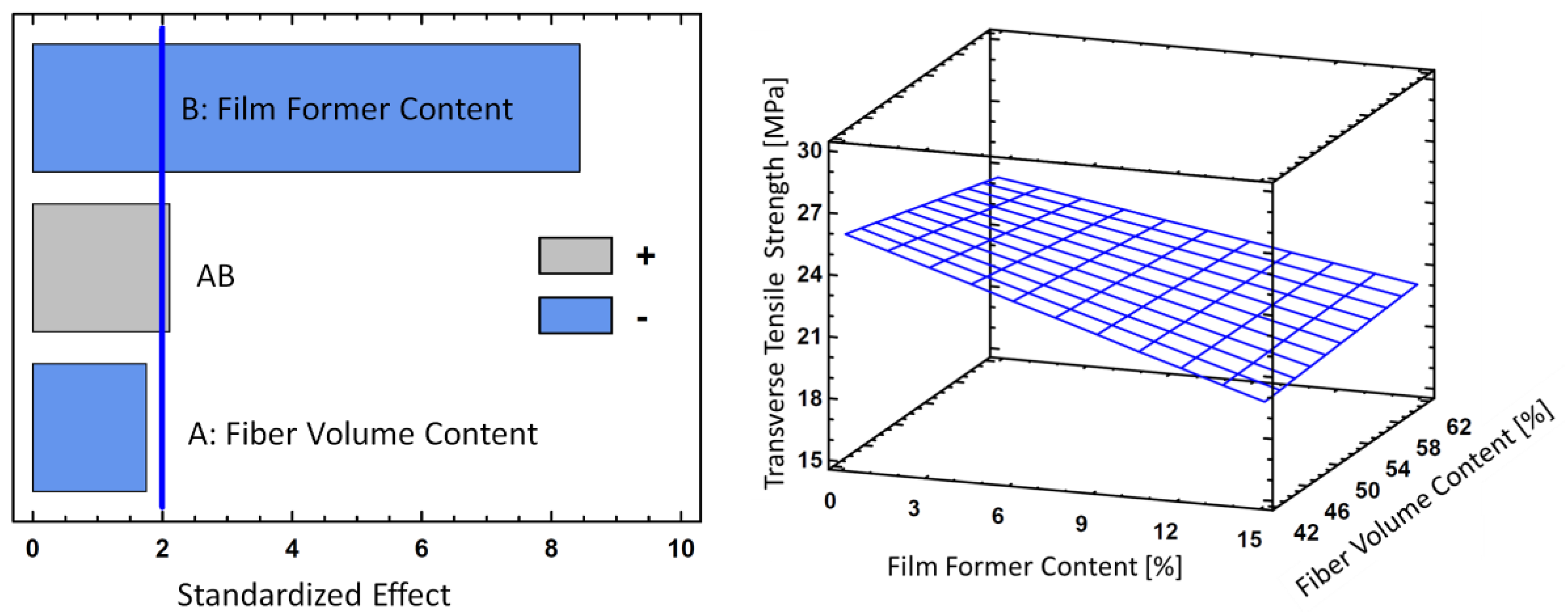
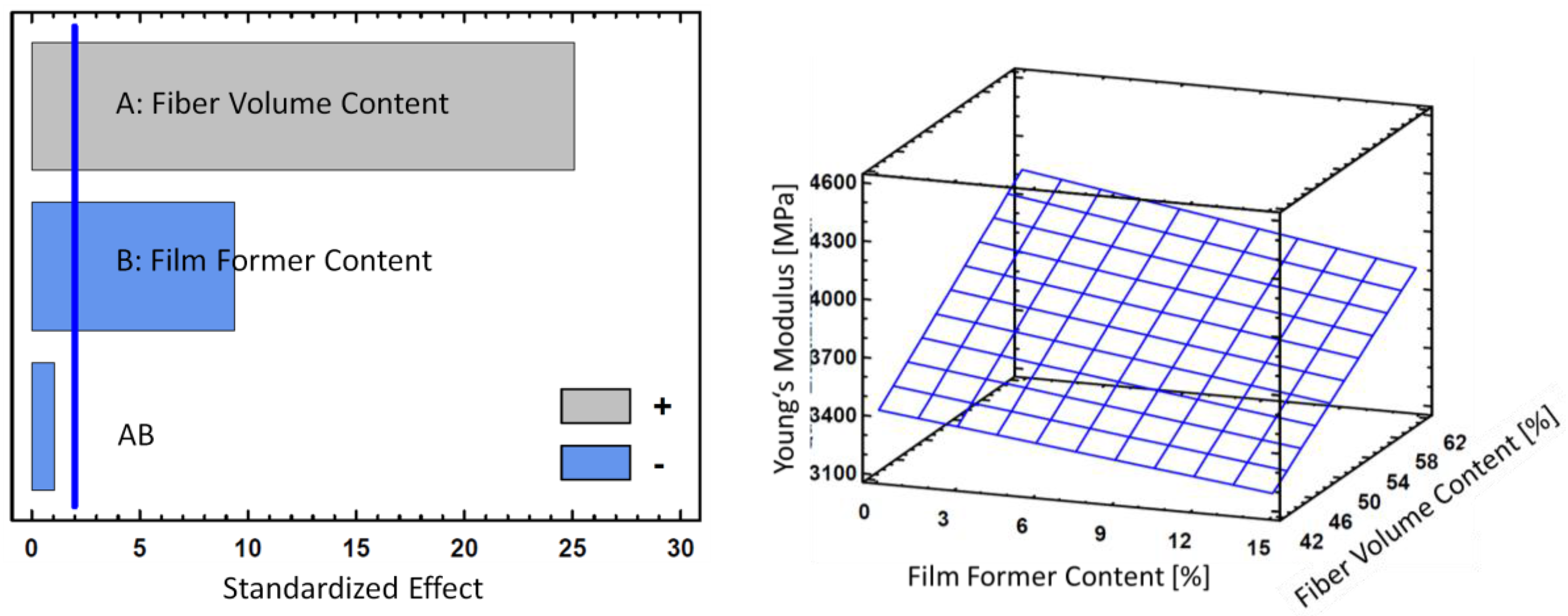
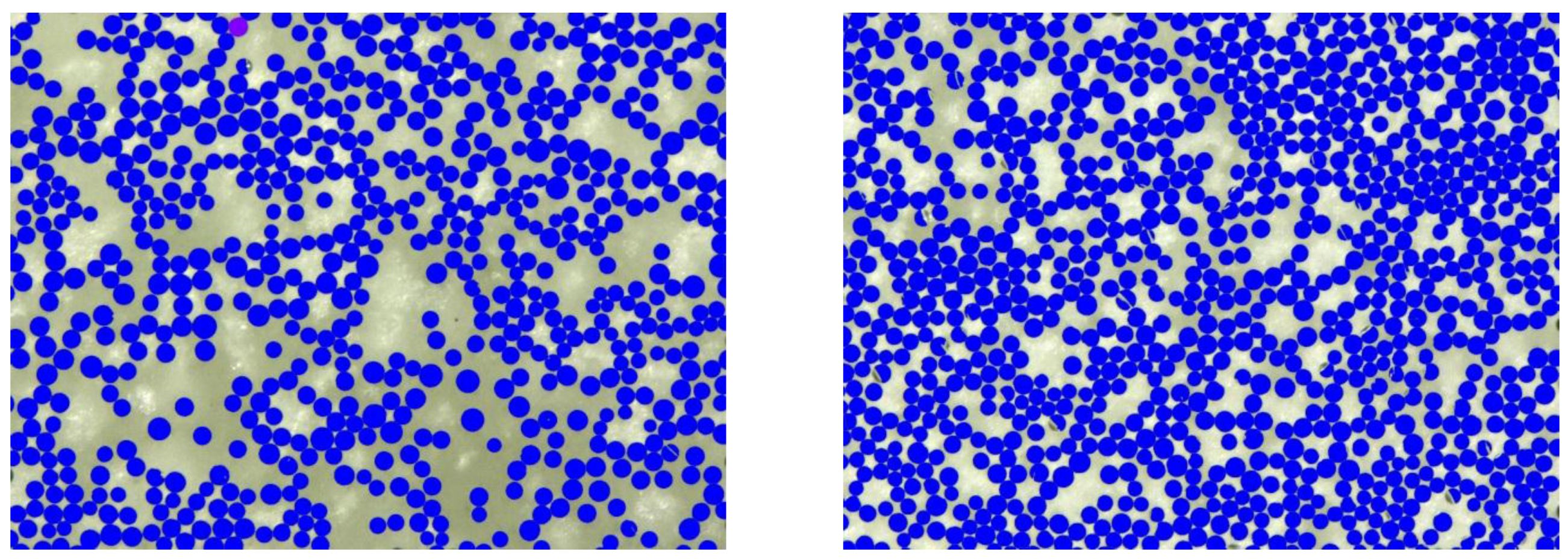
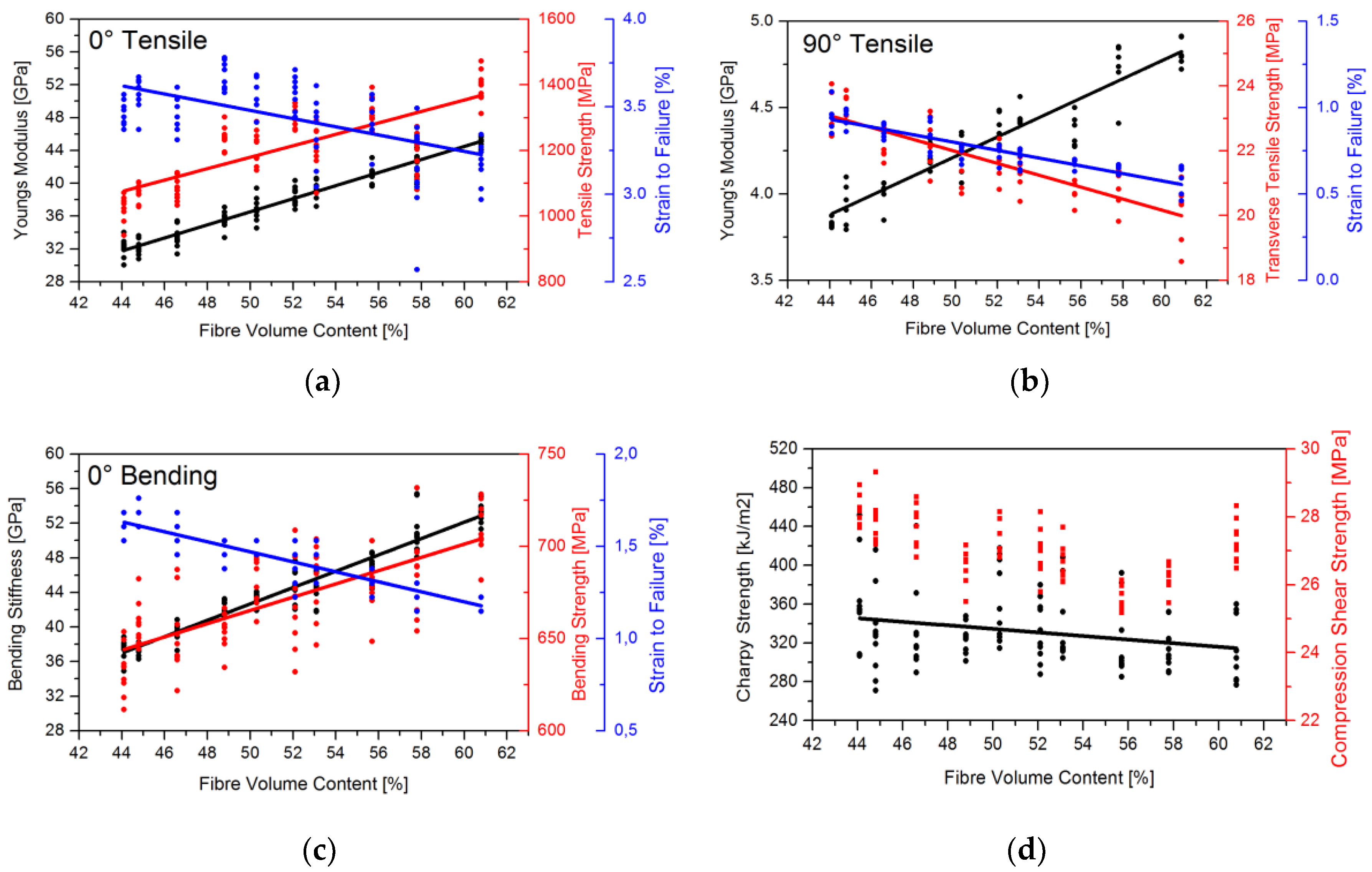
3.4. Effects of the Fiber Volume Content in GF/PP Composites on the Mechanical Properties
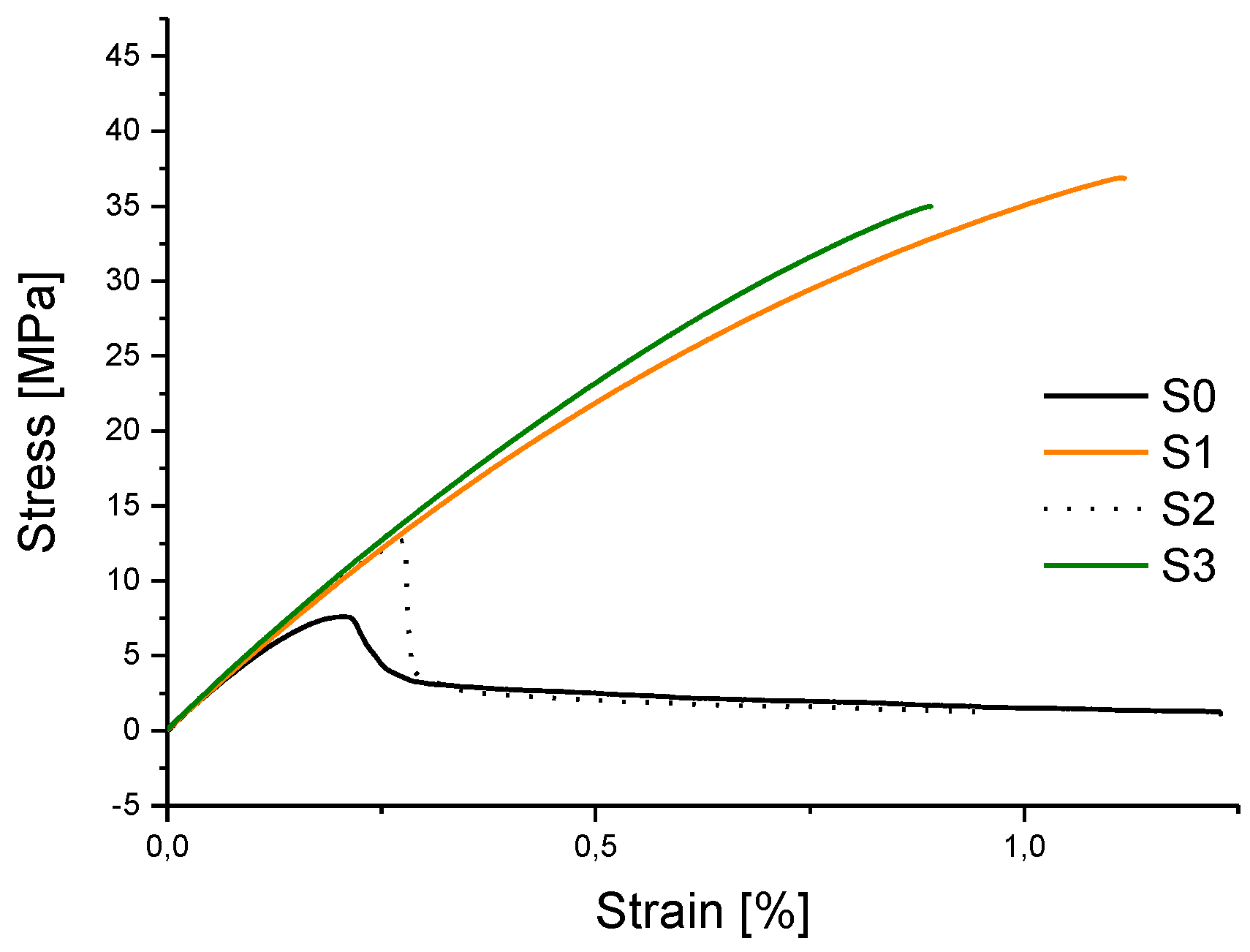
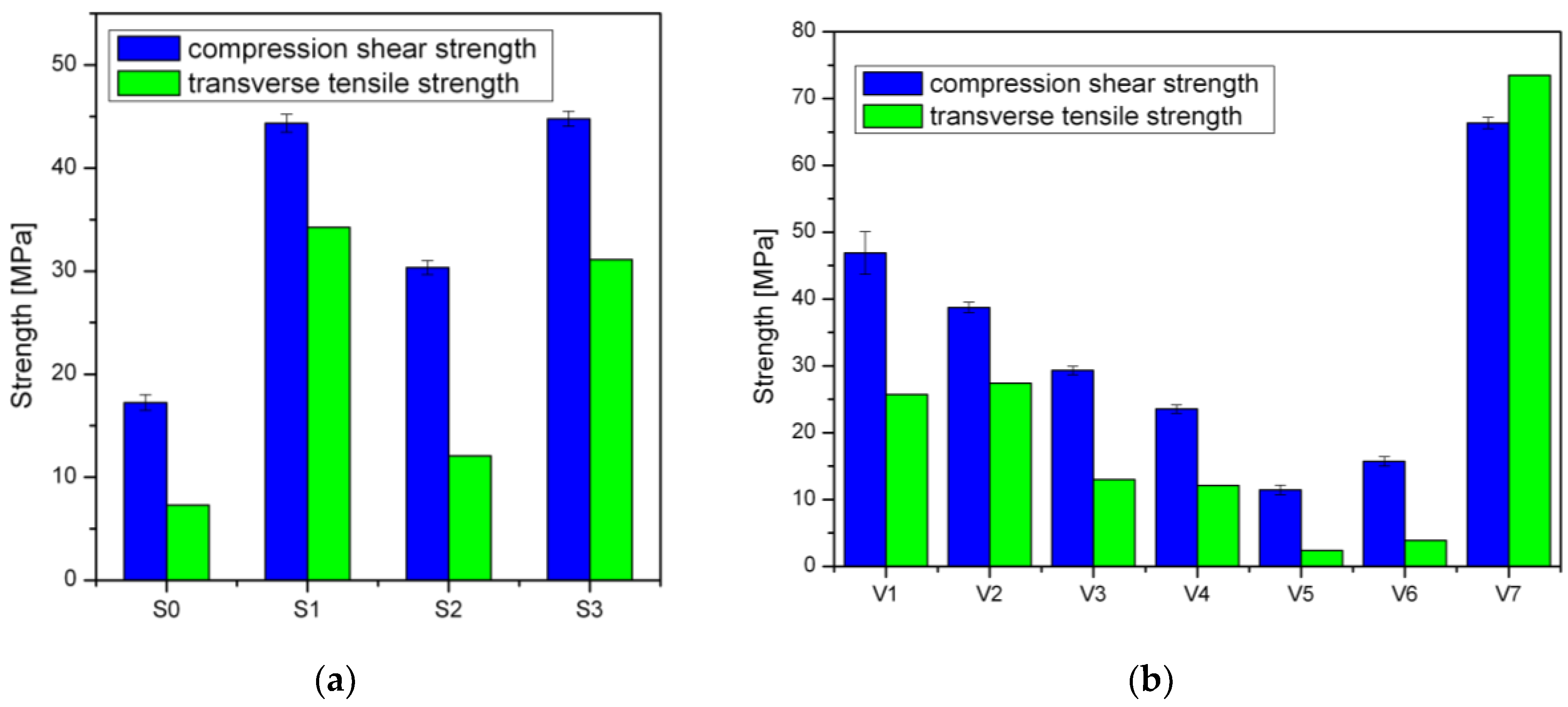
3.5. Effects of Sizings in GF/PLA and GF/PA6.6 Composites on Their Mechanical Performance
4. Conclusions
Acknowledgments
Author Contributions
Conflicts of Interest
References
- Mäder, E.; Rausch, J.; Schmidt, N. Commingled yarns-Processing aspects and tailored surfaces of polypropylene/glass composites. Compos. Part A 2008, 39, 612–623. [Google Scholar] [CrossRef] [Scilit]
- Mäder, E.; Moos, E.; Karger-Kocsis, J. Role of film formers in glass fibre reinforced polypropylene—New insights and relation to mechanical properties. Compos. Part A 2001, 32, 631–639. [Google Scholar] [CrossRef] [Scilit]
- Rausch, J.; Mäder, E. Health monitoring in continuous glass fibre reinforced thermoplastics: Manufacturing and application of interphase sensors based on carbon nanotubes. Compos. Sci. Technol. 2010, 70, 1589–1596. [Google Scholar] [CrossRef] [Scilit]
- Rausch, J.; Mäder, E. Health monitoring in continuous glass fibre reinforced thermoplastics: Tailored sensitivity and cyclic loading of CNT-based interphase sensors. Compos. Sci. Technol. 2010, 70, 2023–2030. [Google Scholar] [CrossRef] [Scilit]
- Rausch, J.; Mäder, E. Carbon nanotube coated glass fibres for interphase health monitoring in textile composites. Mater. Technol. 2011, 26, 153–158. [Google Scholar] [CrossRef] [Scilit]
- Lehtonen, T.; Tuominen, J.; Rausch, J.; Mäder, E. Biodegradable continuous fibre reinforced composites based on hybrid yarns. In Proceedings of the ICCM 18, Jeju, South Korea, 21–26 August 2011. [Google Scholar]
- Russell, K. Free radical graft polymerization and copolymerization at higher temperatures. Prog. Polym. Sci. 2002, 27, 1007–1038. [Google Scholar] [CrossRef] [Scilit]
- Plueddemann, E.P. Silane Coupling Agents; Springer Science + Business Media: New York, NY, USA, 1991; pp. 29–45. [Google Scholar]
- Kim, J.-K.; Mai, Y.-W. High Strength, High Fracture Toughness Fibre Composites with Interface Control—A Review. Compos. Sci. Technol. 1991, 41, 333–378. [Google Scholar] [CrossRef] [Scilit]
- Pukanszky, B. Interfaces and Interphases in Multicomponent Materials: Past, Present, Future. Eur. Polym. J. 2005, 41, 645–662. [Google Scholar] [CrossRef] [Scilit]
- Ishida, H. A Review of Recent Progress in the Studies of Molecular and Microstructure of coupling Agents and Their Functions in Composites. Polym. Compos. 1984, 5, 101–123. [Google Scholar] [CrossRef] [Scilit]
- Zhuang, R.-C.; Burghardt, T.; Mäder, E. Study on Interfacial Adhesion Strength of Single Glass Fibre/Polypropylene Model Composites by Altering the Nature of the Surface of Sized Glass Fibres. Compos. Sci. Technol. 2010, 70, 1523–1529. [Google Scholar] [CrossRef] [Scilit]
- Fiedler, B.; Gojny, F.H.; Wichmann, M.H.G.; Bauhofer, W.; Schulte, K. Can Carbon Nanotubes Be Used to Sense Damage in Composites? Ann. Chim.–Sci. Mater. 2004, 2, 981–994. [Google Scholar] [CrossRef] [Scilit]
- Thostenson, E.T.; Chou, T.W. Carbon Nanotube Networks: Sensing of Distributed Strain and Damage for Life Prediction and self healing. Adv. Mater. 2006, 18, 2837–2841. [Google Scholar] [CrossRef] [Scilit]
- Thostenson, E.T.; Chou, T.W. Real-Time In Situ Sensing of Damage Evolution in Advanced Fiber Composites Using Carbon Nanotube Networks. Nanotechnology 2008, 19, 215713. [Google Scholar] [CrossRef] [Scilit] [PubMed]
- Wiegand, N.; Mäder, E. Multifunctional Interphases: Percolation Behavior, Interphase Modification, and Electro-Mechanical Response of Carbon Nanotubes in Glass Fiber Polypropylene Composites. Adv. Eng. Mater. 2016, 18, 376–384. [Google Scholar] [CrossRef] [Scilit]
- Schilling, N.; Wiegand, N.; Klotzbach, U. Laser Assisted Electrical Contacting in Multifunctional GF/PP Composites. Mater. Sci. Forum. 2015, 825–826, 541–547. [Google Scholar] [CrossRef] [Scilit]
- Stern, C.; Frick, A.R.; Weickert, G.; Weickert, G.; Micher, G.H.; Henning, S. Processing, Morphology, and Mechanical Properties of Liquid Pool Polypropylene with Different Molecular Weights. Macromol. Mater. Eng. 2005, 290, 621–635. [Google Scholar] [CrossRef] [Scilit]
- Kern Sears, J.; Darby, J.R. The Technology of Plasticicizers; Wiley: New York, NY, USA, 1982. [Google Scholar]
- Schürmann, H. Konstruieren Mit Faser-Kunststoff-Verbunden; Springer: Berlin, Germany, 2007; pp. 393–440. [Google Scholar]
- Hull, D. An Introduction to Composite Materials; Press Syndicate of the University of Cambridge: New York, NY, USA, 1996; pp. 60–77. [Google Scholar]
- Van West, B.P.; Pipes, R.B.; Advani, S.G. The consolidation of commingled thermoplastic fabrics. Polym. Compos. 1991, 12, 417–427. [Google Scholar] [CrossRef] [Scilit]
- Ye, L.; Friedrich, K.; Kästel, J.; Mai, Y.-W. Consolidation of unidirectional CF/PEEK composites from commingled yarn prepreg. Compos. Sci. Technol. 1995, 54, 349–358. [Google Scholar] [CrossRef] [Scilit]
- Ye, L.; Friedrich, K.; Kästel, J. Consolidation of GF/PP commingled yarn composites. Appl. Compos. Mater. 1995, 1, 415–429. [Google Scholar] [CrossRef] [Scilit]
- Svensson, N.; Shishoo, R.; Gilchrist, M. Manufacturing of Thermoplastic Composites from Commingled Yarns-A Review. J. Thermoplast. Compos. Mater. 1998, 11, 22–56. [Google Scholar] [CrossRef] [Scilit]
- Ma, Y.; Shishoo, R. The Influences of Processing Parameters on the Fiber Distribution and Matrix Flow of Unidirectional Glass Fiber/Polyethylene Terephthalate (GF/PET) Commingled Yarns. J. Thermoplast. Compos. Mater. 1999, 12, 424–442. [Google Scholar] [CrossRef] [Scilit]
- Bernhardsson, J.; Shishoo, R. Compression Molding of Warp-Knitted PET/GF Based Composites: Influence of Forming Temperature on Consolidation Quality and Impact Properties. J. Thermoplast. Compos. Mater. 2000, 13, 326–341. [Google Scholar] [CrossRef]
- Bernhardsson, J.; Shishoo, R. Effect of processing parameters on consolidation quality of GF/PP commingled yarn based composites. J. Thermoplast. Compos. Mater. 2000, 13, 292–313. [Google Scholar] [CrossRef]
- Wakeman, M.D.; Rudd, C.D.; Cain, T.A.; Brooks, R.; Long, A.C. Compression moulding of glass and polypropylene composites for optimised macro-and micro-mechanical properties. 4: Technology demonstrator-a door cassette structure. Compos. Sci. Technol. 2000, 60, 1901–1918. [Google Scholar] [CrossRef] [Scilit]
- Thomann, U.I.; Sauter, M.; Ermanni, P. A combined impregnation and heat transfer model for stamp forming of unconsolidated commingled yarn preforms. Compos. Sci. Technol. 2004, 64, 1637–1651. [Google Scholar] [CrossRef] [Scilit]
- Thomanny, U.I.; Ermanni, P. The Influence of Yarn Structure and Processing Conditions on the Laminate Quality of Stamp formed Carbon and Thermoplastic Polymer Fiber Commingled Yarns. J. Thermoplast. Compos. Mater. 2004, 17, 259–283. [Google Scholar] [CrossRef] [Scilit]
- Greco, A.; Strafella, A.; Tegola, C.L.; Maffezzoli, A. Assessment of the relevance of sintering in thermoplastic commingled yarn consolidation. Polym. Compos. 2011, 32, 657–664. [Google Scholar] [CrossRef] [Scilit]



| Sizing | Sizing Formulation | Matrix Polymer | Glass Fiber Volume Fraction [%] |
|---|---|---|---|
| 3-Aminopropyl-triethoxysilane, maleic anhydride grafted PP film former (varying surfactants types, surfactant contents and molecule weights) | MA-g-PP | 40.1–61.2 | |
| 3-Aminopropyl-triethoxysilane | MA-g-PP | 50 | |
| Maleic anhydride grafted PP film former reference | MA-g-PP | 50 | |
| Deionized water | MA-g-PP | 50 | |
| 3-Aminopropyl-triethoxysilane, maleic anhydride grafted PP film former | PP | 50 | |
| 3-Aminopropyl-triethoxysilane | PP | 50 | |
| Maleic anhydride grafted PP film former reference | PP | 50 | |
| Deionized water | PP | 50 | |
| V1 | 3-Aminopropyl-triethoxysilane, polyurethane film former | PA6.6 | 50.4 |
| V2 | 3-Ureidopropyltrimethoxysilane, polyurethane film former | PA6.6 | 45.6 |
| V3 | 3-Aminopropyl-triethoxysilane, polyurethane/polyacrylate film former | PA6.6 | 45.6 |
| V4 | 3-Ureidopropyltrimethoxysilane, polyurethane/polyacrylate film former | PA6.6 | 46.0 |
| V5 | 3-Aminopropyl-triethoxysilane, polyurethane/epoxy film former | PA6.6 | 43.7 |
| V6 | 3-Ureidopropyltrimethoxysilane, polyurethane/epoxy film former | PA6.6 | 44.7 |
| V7 | 3-Aminopropyl-triethoxysilane | PA6.6 | 45.9 |
| S0 | bioresorbable finish [3] | PLA | 37.5 |
| S1 | 2-Aminoethyl-3-aminopropyl-trimethoxysilane, epoxy film former | PLA | 38.5 |
| S2 | 3-Ureidopropyltrimethoxysilane, polyurethane film former | PLA | 37.6 |
| S3 | 2-Aminoethyl-3-aminopropyl-trimethoxysilane, chitosan film former | PLA | 37.9 |
| Matrix Polymer | Isothermal Temperature [°C] | Consolidation Time [min] | Consolidation Pressure [MPa] |
|---|---|---|---|
| PP | 225 | 21 | 2.25 |
| PA6.6 | 295 | 20 | 2.25 |
| PLA | 170 | 20 | 1.5 |
© 2017 by the authors. Licensee MDPI, Basel, Switzerland. This article is an open access article distributed under the terms and conditions of the Creative Commons Attribution (CC BY) license (http://creativecommons.org/licenses/by/4.0/).
Share and Cite
Wiegand, N.; Mäder, E. Commingled Yarn Spinning for Thermoplastic/Glass Fiber Composites. Fibers 2017, 5, 26. https://doi.org/10.3390/fib5030026
Wiegand N, Mäder E. Commingled Yarn Spinning for Thermoplastic/Glass Fiber Composites. Fibers. 2017; 5(3):26. https://doi.org/10.3390/fib5030026
Chicago/Turabian StyleWiegand, Niclas, and Edith Mäder. 2017. "Commingled Yarn Spinning for Thermoplastic/Glass Fiber Composites" Fibers 5, no. 3: 26. https://doi.org/10.3390/fib5030026
APA StyleWiegand, N., & Mäder, E. (2017). Commingled Yarn Spinning for Thermoplastic/Glass Fiber Composites. Fibers, 5(3), 26. https://doi.org/10.3390/fib5030026