

Endiandric Acid Derivatives and Other Constituents of Plants from the Genera Beilschmiedia and Endiandra (Lauraceae)

Abstract
1. Introduction
2. Chemical Constituents
2.1. Endiandric Acid Derivatives from Beilschmiedia and Endiandra

2.1.1. Endiandric Acid Derivatives with an 13 Carbon Atoms Fused Tetracyclic Ring System (Table 1)


| Compounds | R1 | R2 | R3 | R4 | Unsaturation | Sources | Ref. |
|---|---|---|---|---|---|---|---|
| Endiandric acid A (3) | Phenyl | H | CH2COOH | H | Δ4,5, Δ8,9 | Leaves, B. obstusifolia, B. tooram, E. introrsa | [35,36,37,38,39,40] |
| Endiandric acid B (4) | Phenyl | H | CH2CH=CHCOOH | H | Δ4,5, Δ8,9 | Leaves, B. jonesii, E. introrsa, B. tooram | [40] |
| 3'',4''-methylenedioxy Endiandric acid A (5) |  | H | CH2COOH | H | Δ4,5, Δ8,9 | Leaves, B. oligandra, stem bark, B. manii, | [40,44] |
| 3'',4''-methylenedioxy Endiandric acid A methyl ester (6) |  | H | CH2COOMe | H | Δ4,5, Δ8,9 | Synthesis, methylation of B. oligandra extract | [40] |
| Endiandric acid H (7) |  | α-OH | CH2COOH | H | Δ5,6, Δ8,9 | Stem, B. fulva | [53,54] |
| Beilschmiedic acid A (8) | COOH | β-OH |  | H | Δ5,6, Δ8,9 | Leave, Beilschmiedia spp | [17,48] |
| Beilschmiedic acid B (9) | COOH | β-OH | | OH | Δ5,6, Δ8,9 | Leaves, Beilschmiedia spp; Bark, B. anacardioides | [17] |
| Beilschmiedic acid C (10) | COOH | α-OH |  | H | Δ5,6, Δ8,9 | Leaves, Beilschmiedia spp; Bark, B. anacardioides | [17,48] |
| Beilschmiedic acid D (11) | COOH | H | | H | Δ5,6, Δ8,9 | Bark, B. anacardioides | [20] |
| Beilschmiedic acid E (12) | COOH | H | | H | Δ4,5, Δ8,9 | Bark, B. anacardioides | [20] |
| Beilschmiedic acid F (13) |  | =O | CH2COOH | H | Δ5,6, Δ8,9 | Bark, B. anacardioides | [19] |
| Beilschmiedic acid H (14) | COOH | α-OH |  | H | Δ5,6, Δ8,9 | Leave , Beilschmiedia spp | [48] |
| Beilschmiedic acid I (15) | COOH | β-OH | | H | Δ5,6, Δ8,9 | Leaves, Beilschmiedia spp | [48] |
| Beilschmiedic acid J (16) | COOH | H |  | H | Δ5,6, Δ8,9 | Leaves, Beilschmiedia spp | [48] |
| Beilschmiedic acid K (17) | COOH | α-OH |  | H | Δ5,6, Δ8,9 | Leaves, Beilschmiedia spp | [48] |
| Beilschmiedic acid M (18) | COOH | α-OH |  | H | Δ5,6, Δ8,9 | Leaves, Beilschmiedia spp | [48] |
| Beilschmiedic acid L (19) | COOH | α-OH |  | H | Δ5,6, Δ8,9 | Leaves, Beilschmiedia spp | [48] |
| Beilschmiedic acid N (20) | COOH | α-OH |  | H | Δ5,6, Δ8,9 | Leaves, Beilschmiedia spp | [48] |
| Beilschmiedic acid O (21) | COOH | α-OH |  | H | Δ5,6, Δ8,9 | Leaves, Beilschmiedia spp | [48] |
| Erythrophloin A (22) | COOMe | H |  | H | Δ4,5, Δ8,9 | Roots, B. erythrophloia | [41] |
| Erythrophloin B (23) | COOMe | H |  | H | Δ4,5, Δ8,9 | Roots, B. erythrophloia | [41] |
| Erythrophloin C (24) | COOMe | H |  | H | Δ4,5, Δ8,9 | Roots, B. erythrophloia | [41] |
| Erythrophloin D (25) | COOMe | H |  | H | Δ4,5, Δ8,9 | Roots, B. erythrophloia | [41] |
| Erythrophloin E (26) | COOH | H |  | H | Δ4,5, Δ8,9 | Roots, B. erythrophloia | [41] |
| Erythrophloin F (27) | COOH | H |  | H | Δ4,5, Δ8,9 | Roots, B. erythrophloia | [41] |
| Tsangibeilin A (28) | COOH | H |  | H | Δ4,5, Δ8,9 | Roots, B. tsangii | [23] |
| Tsangibeilin B (29) | COOH | H |  | H | Δ4,5, Δ8,9 | Roots, B. tsangii; Bark, B. cryptocaryoides | [34,41,52] |
| Tsangibeilin C (30) | COOH | =O |  | H | Δ5,6, Δ8,9 | Roots, B. tsangii | [22] |
| Tsangibeilin D (31) | COOH | =O | | OH | Δ5,6, Δ8,9 | Roots, B. tsangii | [22] |
| Endiandramide A (32) | CONHCH2-ipr | H |  | H | Δ45, Δ8,9 | Roots, B. tsangii | [23] |
| Cryptobeilic acid A (33) | COOH | β-OH | | H | Δ5,6, Δ8,9 | Bark, B. cryptocaryoides | [52] |
| Cryptobeilic acid B (34) | COOH | α-OH | | H | Δ5,6, Δ8,9 | Bark, B. cryptocaryoides | [52] |
| Cryptobeilic acid C (35) | COOH | =O |  | H | Δ5,6, Δ8,9 | Bark, B. cryptocaryoides | [52] |
| Cryptobeilic acid D (36) | COOH | H | | H | Δ4,5, Δ8,9 | Bark, B. cryptocaryoides | [52] |
| Ferrugineic acid A (37) | COOH | H |  | H | Δ4,5, Δ8,9 | Leaves, flowers; B. ferruginea | [24] |
| Ferrugineic acid B (38) | COOH | H |  | H | Δ4,5, Δ8,9 | Leaves, flowers, B. ferruginea | [24] |
| Ferrugineic acid C (39) | COOH | H |  | H | Δ4,5, Δ8,9 | Leaves, flowers, B. ferruginea | [24] |
| Ferrugineic acid D (40) | COOH | H |  | H | Δ4,5, Δ8,9 | Leaves, flowers, B. ferruginea | [24] |
| Ferrugineic acid E (41) | COOH | H |  | H | Δ4,5, Δ8,9 | Leaves, flowers, B. ferruginea | [24] |
| Ferrugineic acid F (42) | COOH | α-OH |  | H | Δ5,6, Δ8,9 | Leaves, flowers, B. ferruginea | [24] |
| Ferrugineic acid G (43) | COOH | β-OH | | H | Δ5,6, Δ8,9 | B. ferruginea | [24] |
| Ferrugineic acid H (44) | COOH | =O |  | H | Δ5,6, Δ8,9 | Leaves, flowers, B. ferruginea | [24] |
| Ferrugineic acid I (45) | COOH | α-OH |  | H | Δ5,6, Δ8,9 | B. ferruginea | [24] |
| Ferrugineic acid J (46) | COOH | β-OH |  | H | Δ5,6, Δ8,9 | Leaves, flowers, B. ferruginea | [24] |
| Kingianic acid F (47) | COOH | H |  | H | Δ4,5, Δ8,9 | Bark, E. kingiana | [34] |
| Kingianic acid G (48) | COOH | α-OH |  | H | Δ5,6, Δ8,9 | Bark, E. kingiana | [34] |
| Endiandric acid (49) | COOH | H | | H | Δ5,6, Δ8,9 | Bark, E. kingiana | [34] |
2.1.2. Endiandric Acid Derivatives with an 11 Carbon Atoms Fused Tetracylic Ring System (Table 2)

| Compounds | R1 | R2 | Sources | Ref. |
|---|---|---|---|---|
| Endiandric acid C (50) | COOH |  | B. tooram, B. oligandra, E. jonessi, E. introsa | [38,40] |
| Endiandric acid I (51) | COOH |  | Root, B. erythrophloia | [49] |
| Endiandric acid J (52) | COOH |  | Root, B. erythrophloia | [49] |
| Beicyclone A (53) | COCH3 |  | Root, B. erythrophloia | [41] |
| Endiandric acid K (54) | COOH |  | Roots, B. tsangii | [23] |
| Endiandric acid L (55) | CH=CHCOOH |  | Roots of B. tsangii | [23] |
| Endiandric acid M (56) | CH=CH-COOH |  | Roots of B. tsangii, stem bark E. kingiana | [23,34] |
| Endiandramide B (57) | CONHCH2iPr |  | B. tsangii | [23] |
| Ferrugineic acid K (58) | CH=CH-COOH |  | B. ferruginea | [24] |
| Kingianic acid A (59) | COOH |  | Stem bark, E. kingiana | [34] |
| Kingianic acid B (60) | COOH |  | Stem bark, E. kingiana | [34] |
| Kingianic acid C (61) | COOH |  | Stem bark, E. kingiana | [34] |
| Kingianic acid D (62) | COOH |  | Stem bark, E. kingiana | [34] |
| Kingianic acid E (63) |  | -CH2COOH | Stem bark, E. kingiana | [34] |
2.1.3. Other Endiandric Acid Derivatives

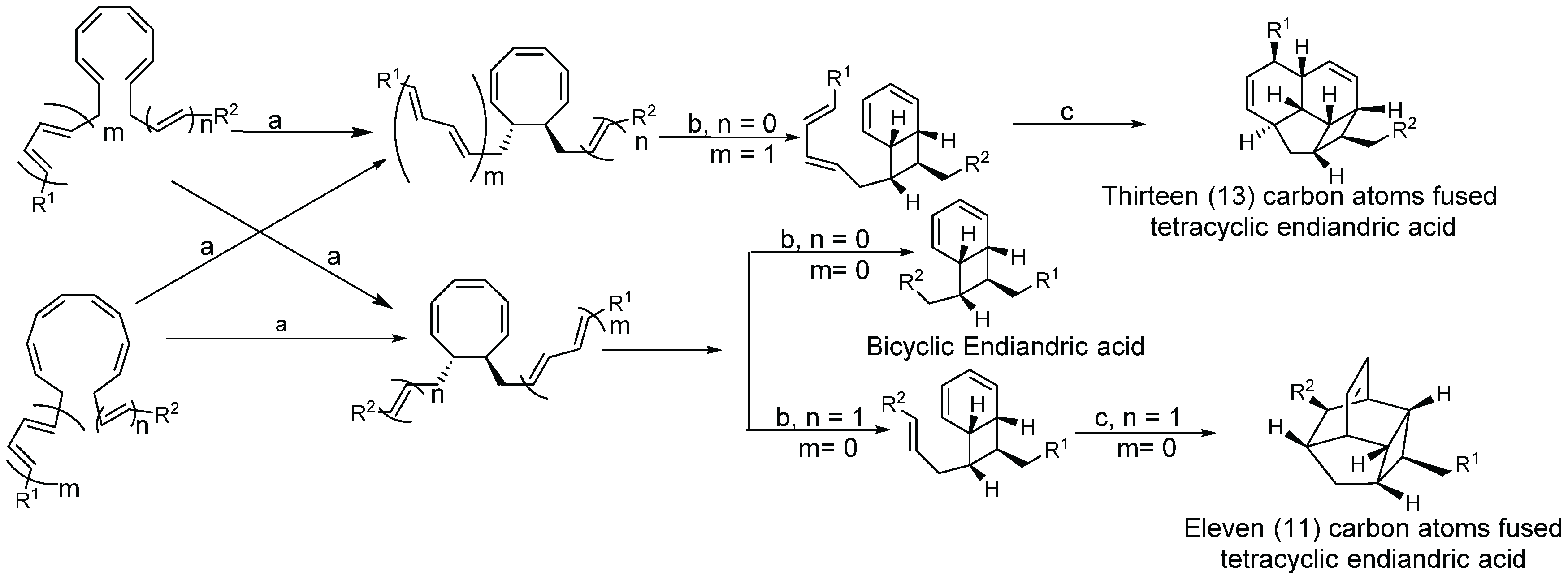
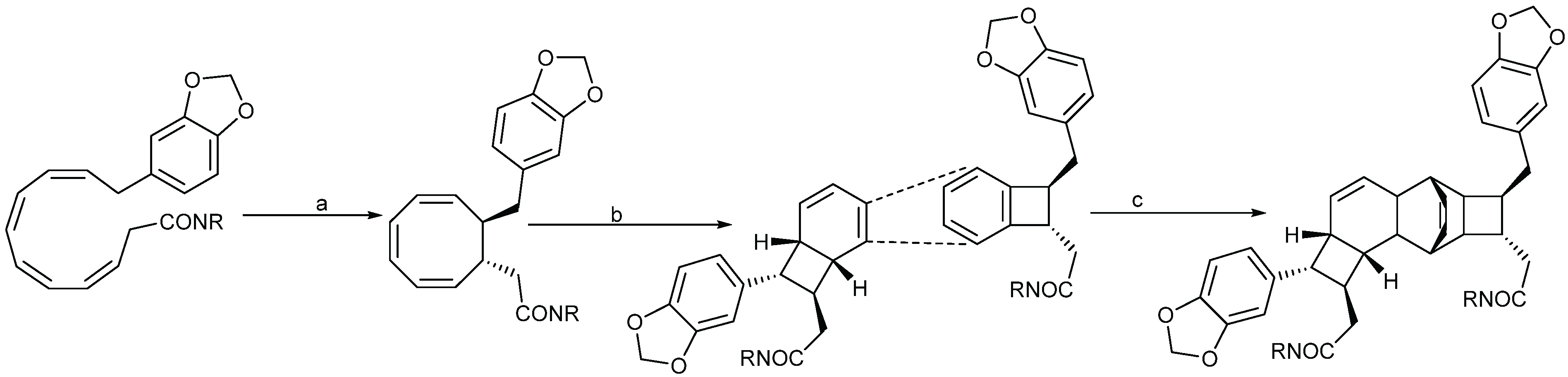
2.1.4. Biosynthesis of Endiandric Derivatives


2.1.5. Spectroscopic Characterization
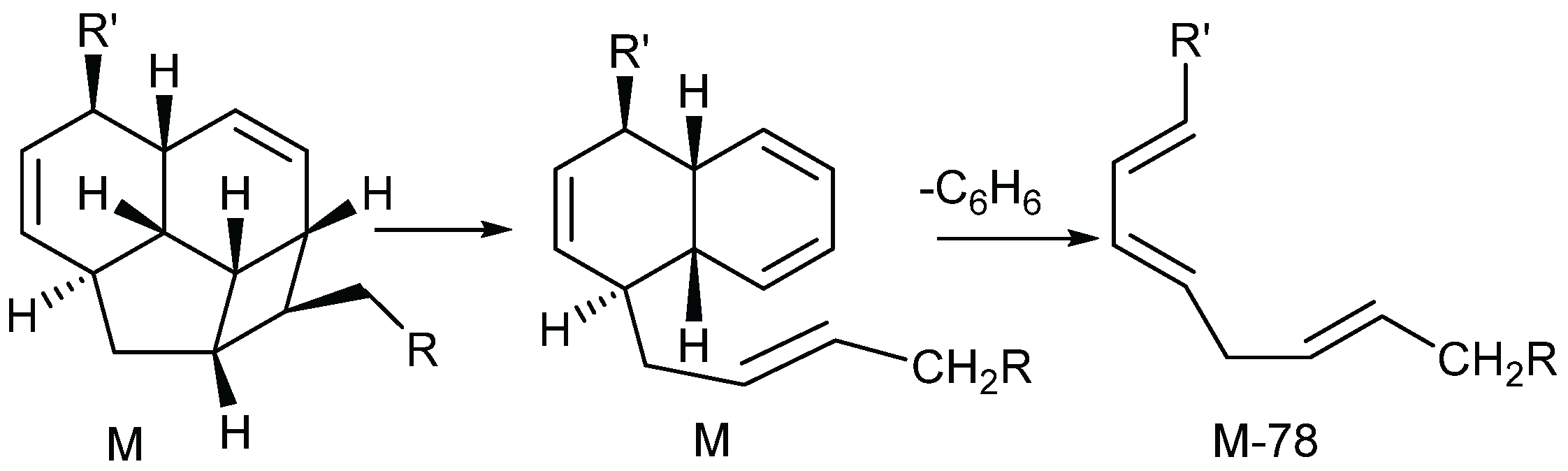
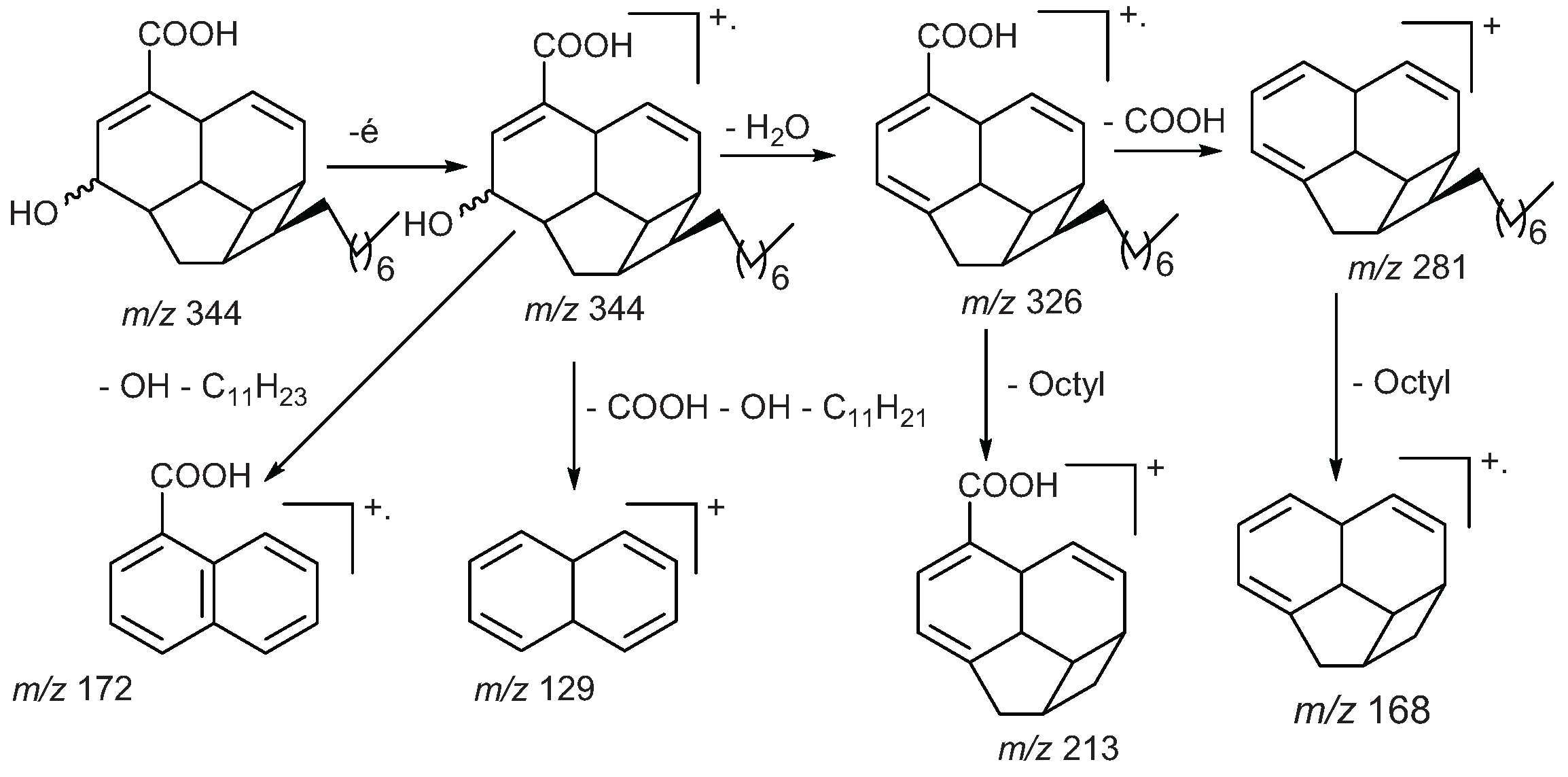
2.1.5.1. Mass Spectra


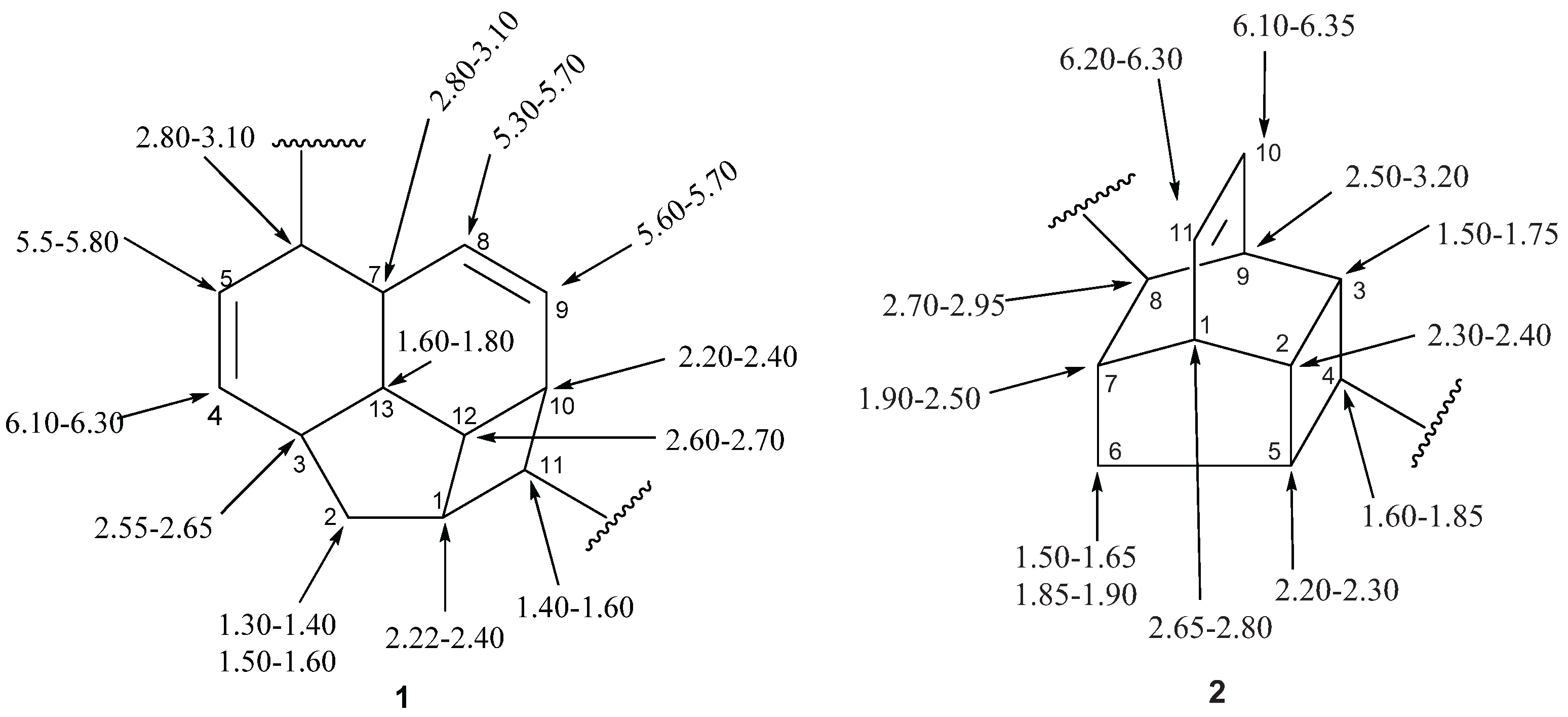
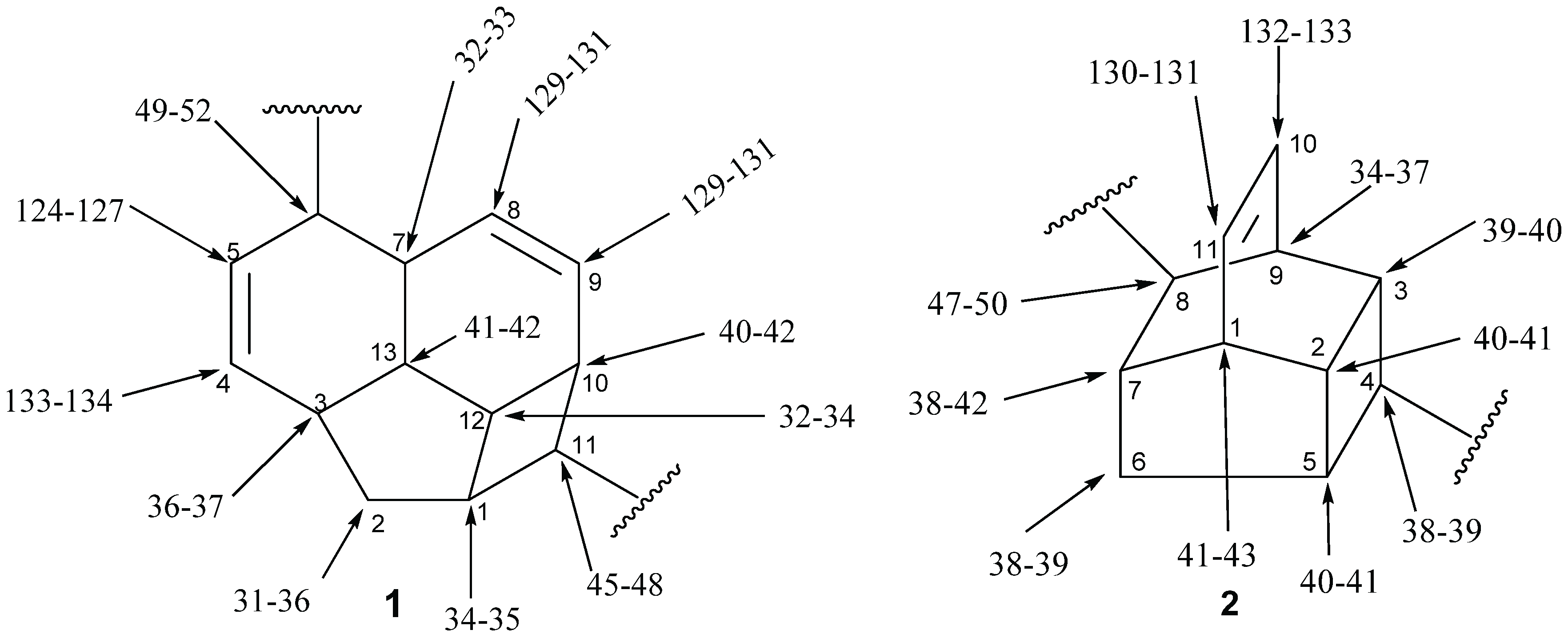
2.1.5.2. NMR Spectra


2.2. Alkaloids and Amides


| Compounds | R1 | R2 | R3 | R4 | R5 | R6 | Sources | Ref. |
|---|---|---|---|---|---|---|---|---|
| (+)-Predicentrine (73) | OH | OMe | H | OMe | OMe | Me | B. podagrica | [66] |
| Boldine (74) | OH | OMe | H | OMe | OH | Me | B. alloiophylla, B. kunstleri | [29] |
| Norpredicentrine (75) | OH | OMe | H | OMe | OMe | H | B. podagrica | [66] |
| (+)-Isocorydine (76) | OMe | OMe | OH | OMe | H | Me | B. podagrica | [66] |
| (+)-Glaucine (77) | OMe | OMe | H | OMe | OMe | Me | B. podagrica | [66] |
| (+)-N-methylindcarpine (78) | OH | OMe | OH | OMe | H | Me | B. podagrica | [66] |
| (+)-Laurelliptine (79) | OMe | OH | H | OMe | OH | H | B. podagrica | [67,68] |
| (+)-Isoboldine (80) | OMe | OH | H | OMe | OH | Me | B. alloiophylla, B. tawa | [29,46] |
| 2-Hydroxy-9-methoxy aporphine (81) | OH | H | H | H | OMe | Me | B. alloiophylla | [29] |
| (+)-Laurotetanine (82) | OMe | OMe | H | OMe | OH | H | B. alloiophylla, B. kunstleri | [29,31] |
| (−)-Asimilobine (83) | OH | OMe | H | H | H | H | B. alloiophylla | [29] |
| (+)-Norboldine (84) | OH | OMe | H | OMe | OH | H | B. kunstleri | [31] |
| (+)-Cassithicine (85) | O-CH2- | H | OMe | OH | Me | B. kunstleri | [31] | |
| Nornuciferine (86) | OMe | OMe | H | H | H | H | B. kunstleri | [31] |


2.3. Lignans and Neolignans


2.4. Flavonoids and Chalcones


2.5. Benzene Derivatives

2.6. Terpenoids


| Species | Major Constituents |
|---|---|
| B. miersii | Leaf oil: Germacrene D (185, 24.8%), α-terpinene (186, 10%), γ-curcumene (187, 9.6%), 1-octen-3-yl acetate (188, 8.2%), (E)-β-ocimene (189, 6.4%) [51] |
| B. tarairie | Leaf oil: α-terpinene (186, 17.8%), β-pinene (190, 9.4%), germacrene D (185) [75] |
| B. brenesii | Leaf oil: germacrene D (185, 19.3, (E)-caryophyllene (191, 13.4%), 2-undecanone (192, 12.8%), α-copaene (183, 9.0), trans-2-hexanal (193, 8.8%) [76] |
| B. costaricensis | Leaf oil: α-bisabolol (194, 72.1%), Cis 2-hexenol (195, 5.2%), α-terpinene (186, 3.0%) [76] |
| B. alloiophylla | Leaf oil: germacrene D (185, (18.9), cis-β-ocimene (196, 18.8%), β-pinene (190, 3.0%), trans-β-ocimene (189, 9.3%), bicyclogermacrene (197, 9.1%) [77] |
| B. talaranensis | Leaf oil: germacrene D (185, 54.9%), β-caryophyllene (191, 14.8%), α-terpinene (186, 3.6%) [77] |
| B. madang | leaf oil: δ-cadinene (198, 17.0%), β-caryophyllene (191, 10.3%), α-cubebene (199, 11.3%), and α-cadinol (200, 5.8%) [78]; bark oil: δ-cadinene (195, 20.5%), β-caryophyllene (191, 6.7%), α-cubebene (199, 15.6%), and α-cadinol (200, 10.6%) [78] |
| B."chancho chancho" | Leaf oil: β-caryophyllene (191, 16.6%), bicyclogermacrene (197, 14.1%), β-pinene (190, 7.7%), germacrene D (185, 6.6%), δ-cadinene (198, 6.1%) [79] |
| B. pendula | leaf oil: β-pinene (190, 10.4%), β-caryophyllene (191, 8.6%), c (201, 7.9%) and bicyclogermacrene (197, 7.2%) [80]; branch oil: β-caryophyllene (191, 17.3%), β-selinene (202, 9.1%), bicyclogermacrene (197, 8.9%), α-cadinol (200, 5.8%) and spathulenol (203, 4.6%) [80] |
| B. erythrophloia | Leaf oil: β-caryophyllene (191, 22.6%), α-humulene (204, 21.9%), terpinen-4-ol (205, 5.3%), cis-β-ocimene (196, 5.1%), sabinene (206, 5.0%), limonene (207, 4.5%) [81] |

2.7. Cyanoglycosides

2.8. Other Metabolites

3. Biological Activities
3.1. Anticancer and Cytotoxic Activities
| Compound | Bcl-xL/Bak Binding Affinity | Mcl-1/Bid Binding Affinity | ||
|---|---|---|---|---|
| % at 100 μM | Ki μM | % at 100 μM | Ki μM | |
| Tsangibeilin B (29) | 26 ± 2.5 | ND | 81 ± 2.4 | ND |
| Ferrugineic acid A (37) | 22 ± 2 | >100 | 0 | 14 ± 33 |
| Ferrugineic acid B (38) | 60 ± 6 | 19.2 ± 1.6 | 85 ±2 | 12.0 ±5.0 |
| Ferrugineic acid C (39) | 93 ± 3 | 12 ± 0.2 | 82 ± 2 | 13.0 ± 5.0 |
| Ferrugineic acid D (40) | 39 ± 3 | >100 | 82 ± 2 | 5.2 ± 0.2 |
| Ferrugineic acid E (41) | 20 ± 1 | ND | 14.3 ± 3 | ND |
| Ferrugineic acid F (42) | 7 ± 1 | ND | 0 | ND |
| Ferrugineic acid G (43) | 17 ± 1 | ND | 3 ± 1 | ND |
| Ferrugineic acid I (45) | 35 ± 1 | ND | 7 ± 2 | ND |
| Ferrugineic acid J (46) | 58 ± 7 | 19.4 ± 3 | 81 ± 3 | 5.9 ± 0.5 |
| Kingianic acid F (47) | 22 ± 2.9 | ND | 80 ± 0.7 | ND |
| Kingianic acid G (48) | 19 ± 1.6 | ND | 47 ± 2.9 | ND |
| Kingianic acid A (54) | 21 ± 1.8 | ND | 36 ± 2.3 | ND |
| Endiandric acid M (56) | 10 ± 0.5 | ND | 39 ± 2.9 | ND |
| Kingianic acid C (61) | 25 ±1.7 | ND | 75 ± 1.1 | ND |
| Kingianic acid E (63) | 1 ± 0.8 | ND | 8 ± 5.5 | ND |
| U-Bak (Ki) | 0.0012 ± 10−3 | ND | ||
| U-Bid (Ki) | 0.016 ± 0.002 | |||
| ABT-737 (Ki) | 57 ± 10 nM | 47 ± 22 nM | ||
| Compound | Bcl-xL Ki | ||
|---|---|---|---|
| Racemic mixture | (−) Enantiomer | (+) Enantiomer | |
| Kingianin A (112) | 213 ± 83 | 60 ± 1.5 | >300 |
| Kingianin B (113) | >300 | ||
| Kingianin C (114) | >300 | ||
| Kingianin D (115) | >300 | ||
| Kingianin E (116) | >300 | ||
| Kingianin F (117) | 231 ± 47 | ||
| Kingianin G (118) | 2 ± 0 | 1.0 ± 0.2 | 5.0 ± 1.0 |
| Kingianin H (119) | 18 ± 7 | 4.0 ± 0.4 | 27.0 ± 0.6 |
| Kingianin I (120) | 18 ± 3 | 12.0 ± 1.1 | 16.0 ± 2.2 |
| Kingianin J (121) | 29 ± 6 | 9.0 ± 0.2 | 25.0 ± 3.2 |
| Kingianin K (122) | 80 ± 36 | 6.0 ± 0.2 | 112 ± 45 |
| Kingianin L (123) | 36 ± 11 | 4.0 ± 0.1 | 71.0 ± 10 |
| Kingianin M (124) | 236 ± 34 | ||
| Kingianin N (125) | 177 ± 9 | ||
| Unlabeled Bak (BH3) | 0.90 ± 0.27 | ||

3.2. Antimalaria Activity
3.3. Anti-Asthmatic and Other Anti-Inflammatory Activities

3.4. Antimicrobial Activity
3.5. Other Activities
4. Conclusions
Acknowledgments
Author Contributions
Conflicts of Interest
References
- Nishida, S. Revision of Beilschmiedia (Lauraceae) in the neotropics. Ann. Mo. Bot. Gard. 1999, 86, 657–701. [Google Scholar] [CrossRef]
- Liao, J.-C. Lauraceae: Flora of Taiwan, 2nd ed.; Editorial Committee of the Flora of Taiwan: Taipei, Taiwan, 1996; Volume 2, pp. 433–499. [Google Scholar]
- Ng, F.S.P. Tree Flora of Malaya; Longman: Kuala Lumpur, Malaysia, 1989; p. 4. [Google Scholar]
- Henry, T.A. The Plant Alkaloids, 4th ed.; J.A. Churchill Ltd.: London, UK, 1949; p. 317. [Google Scholar]
- Perry, L.M.; Metzgr, J. Medicinal Plants East and Southest Asia: Attributed Properties and Uses; MIT Press: Cambridge, MA, USA, 1980; Volume 20, pp. 201–202. [Google Scholar]
- Fouilloy, R. Flore du Cameroun (Lauracées, Myristicaées et Momimiacées); Muséum National d’Histoire Naturelle: Paris, France, 1974; Volume 18, p. 8. [Google Scholar]
- Van der Werff, H. A synopsis of the genus Beilschmiedia (Lauraceae) in Madagascar. Adansonia 2003, 3, 77–92. [Google Scholar]
- Nkeng-Efouet, A.P. Phytochemicals from Beilschmiedia Anacardioides and Their Biological Significance: Phytochemicals—A Global Perspective of Their Role in Nutrition and Health; Rao, V., Ed.; InTech: Rijeka, Croatia, 2012; pp. 167–186. [Google Scholar]
- Burkill, I.H. A Dictionary of the Economic Products of the Malay Peninsular, 2nd ed.Government of Malaya and Singapore: Kuala Lumpur, Malaysia, 1966; p. 1773.
- Maberley, D.J. Mabberley’s Plant-Book: A Portable Dictionary of Plants, Their Classification and Uses, 3rd ed.; Cambridge University Press: Cambridge, UK, 2008; p. 1021. [Google Scholar]
- Maberley, D.J. The plant-book: A Portable Dictionary of the Vascular Plants, 2nd ed.; Cambridge University Press: Cambridge, UK, 1997; p. 858. [Google Scholar]
- Kitagawa, I.; Minagawa, K.; Zhang, R.S.; Hori, K.; Doi, M.; Inoue, M.I.; Ishida, T.; Kimura, M.; Uji, T.; Shibuya, H. Dehatrine, an antimalarial bisbenzylisoquinoline alkaloid from the Indonesian medicinal plant Beilschmiedia madang, isolated as a mixture of two rotational isomers. Chem. Pharm. Bull. 1993, 41, 997–999. [Google Scholar] [CrossRef] [PubMed]
- Suarez, L.E.C.; Vargas, O.E.B. New chalcones from Beilschmiedia tovarensis. Rev. Colomb. Quim. 2005, 34, 35–41. [Google Scholar]
- Iwu, M.M. Handbook of African Medicinal Plants; CRC Press: BocaRaton, FL, USA, 1993; p. 435. [Google Scholar]
- Tchiegang, C.; Parmentier, M. Chemical composition and nutritional evaluation of two Cameroonian soup thickeners: Belschmiedia jacques felexii and Belschmiedia anacardiodes. J. Food Sci. Tech. 2008, 45, 187–189. [Google Scholar]
- Sahoré, A.D.; Koffi, L.B. Technical sheet of Beisclmiedia mannii (Lauraceae) seed preparation in Ivory Coast. J. Pharm. Sci. Innov. 2013, 2, 62–64. [Google Scholar] [CrossRef]
- Chouna, J.R.; Nkeng-Efouet, P.A.; Lenta, B.N.; Devkota, K.P.; Neumann, B.; Stammler, H.G.; Kimbu, S.F.; Sewald, N. Antibacterial endiandric acid derivatives from Beilschmiedia anacardioides. Phytochemistry 2009, 70, 684–688. [Google Scholar] [CrossRef]
- Lenta, B.N.; Tantangmo, F.; Devkota, K.P.; Wansi, J.D.; Chouna, J.R.; Soh, R.C.F.; Neumann, B.; Stammler, H.-G.; Tsamo, E.; Sewald, N. Bioactive constituents of the stem bark of Beilschmiedia zenkeri. J. Nat. Prod. 2009, 72, 2130–2134. [Google Scholar] [CrossRef] [PubMed]
- Chouna, J.R.; Nkeng-Efouet, P.A.; Lenta, B.N.; Wansi, D.J.; Neumann, B.; Stammler, H.-G.; Fon Kimbu, S.; Sewald, N. Beilschmiedic acids F and G, other endiandric Acid derivatives from Beilschmiedia anacardioides. Helv. Chim. Acta 2011, 94, 1071–1076. [Google Scholar] [CrossRef]
- Chouna, J.R.; Nkeng-Efouet, P.A.; Lenta, B.N.; Wansi, J.D.; Fon Kimbu, S.; Sewald, N. Endiandric acid derivatives from the stem bark of Beilschmiedia anacardioides. Phytochem. Lett. 2010, 3, 13–16. [Google Scholar] [CrossRef]
- Harborne, J.B.; Mendez, J. Flavonoids of Beilschmiedia miersii. Phytochemistry 1969, 8, 763–764. [Google Scholar] [CrossRef]
- Huang, Y.-T.; Chang, H.-S.; Wang, G.-J.; Lin, C.-H.; Chen, I.-S. Secondary metabolites from the roots of Beilschmiedia tsangii and their anti-inflammatory activities. Int. J. Mol. Sci. 2012, 13, 16430–16443. [Google Scholar] [CrossRef] [PubMed]
- Huang, Y.-T.; Chang, H.-S.; Wang, G.-J.; Cheng, M.-J.; Chen, C.-H.; Yang, Y.-J.; Chen, I.-S. Anti-inflammatory endiandric acid analogues from the roots of Beilschmiedia tsangii. J. Nat. Prod. 2011, 74, 1875–1880. [Google Scholar] [CrossRef] [PubMed]
- Apel, C.; Geny, C.; Dumontet, V.; Birlirakis, N.; Roussi, F.; Pham, V.C.; Huong, D.T.M.; Nguyen, V.H.; Chau, V.M.; Litaudon, M. Endiandric acid analogues from Beilschmiedia ferruginea as dual inhibitors of Bcl-xL/Bak and Mcl-1/Bid interactions. J. Nat. Prod. 2014, 77, 1430–1437. [Google Scholar] [CrossRef]
- Chen, J.-J.; Chou, E.-T.; Duh, C.-Y.; Yang, S.-Z.; Chen, I.-S. New cytotoxic tetrahydrofuran- and dihydrofuran-type lignans from the stem of Beilschmiedia tsangii. Planta Med. 2006, 72, 351–357. [Google Scholar] [CrossRef] [PubMed]
- Chen, J.-J.; Chou, E.-T.; Peng, C.-F.; Chen, I.-S.; Yang, S.-Z.; Huang, H.-Y. Novel epoxyfuranoid lignans and antitubercular constituents from the leaves of Beilschmiedia tsangii. Planta Med. 2007, 73, 567–571. [Google Scholar] [CrossRef]
- Kumamoto, J.; Scora, R.W. Structure of sarisan, an isomer of myristicin, isolated from the leaf oil of Beilschmiedia miersii. J. Agric. Food Chem. 1970, 18, 544–545. [Google Scholar] [CrossRef]
- Lenta, B.N.; Chouna, J.R.; Nkeng-Efouet, P.A.; Fon Kimbu, S.; Tsamo, E.; Sewald, N. Obscurine: A new cyclostachine acid derivative from Beilschmiedia obscura. Nat. Prod. Commun. 2011, 6, 1591–1592. [Google Scholar] [PubMed]
- Mollataghi, A.; Coudiere, E.; Hadi, A.H.A.; Mukhtar, M.R.; Awang, K.; Litaudon, M.; Ata, A. Anti-acetylcholinesterase, anti-α-glucosidase, anti-leishmanial and anti-fungal activities of chemical constituents of Beilschmiedia species. Fitoterapia 2012, 83, 298–302. [Google Scholar] [CrossRef]
- Mollataghi, A.; Hadi, A.H.A.; Awang, K.; Mohamad, J.; Litaudon, M.; Mukhtar, M.R. (+)-Kunstlerone, a new antioxidant neolignan from the leaves of Beilschmiedia kunstleri Gamble. Molecules 2011, 16, 6582–6590. [Google Scholar] [CrossRef]
- Mollataghi, A.; Hadi, A.H.; Cheah, S.-C. (−)-Kunstleramide, a new antioxidant and cytotoxic dienamide from the bark of Beilschmiedia kunstleri Gamble. Molecules 2012, 17, 4197–4208. [Google Scholar] [CrossRef]
- Davis, R.A.; Barnes, E.C.; Longden, J.; Avery, V.M.; Healy, P.C. Isolation, structure elucidation and cytotoxic evaluation of endiandrin B from the Australian rain forest plant Endiandra anthropophagorum. Bioorg. Med. Chem. 2009, 17, 1387–1392. [Google Scholar] [CrossRef] [PubMed]
- Davis, R.A.; Carroll, A.R.; Duffy, S.; Avery, V.M.; Guymer, G.P.; Forster, P.I.; Quinn, R.J. Endiandrin A, a potent glucocorticoid receptor binder isolated from the Australian plant Endiandra anthropophagorum. J. Nat. prod. 2007, 70, 1118–1121. [Google Scholar] [CrossRef] [PubMed]
- Azmi, M.N.; Geny, C.; Leverrier, A.; Litaudon, M.; Dumontet, V.; Birlirakis, N.; Gueritte, F.; Leong, K.H.; Abd, H.; Siti, N.; et al. Kingianic acids A–G, endiandric acid analogues from Endiandra kingiana. Molecules 2014, 19, 1732–1747. [Google Scholar] [CrossRef]
- Bandaranayake, W.M.; Banfield, J.E.; Black, D.S.C.; Fallon, G.D.; Gatehouse, B.M. Endiandric acid, a novel carboxylic acid from Endiandra introrsa (Lauraceae): X-ray structure determination. J. Chem. Soc. Chem. Comm. 1980, 4, 162–163. [Google Scholar] [CrossRef]
- Bandaranayake, W.M.; Banfield, J.E.; Black, D.S.C.; Fallon, G.D.; Gatehouse, B.M. Constituents of Endiandra species. I. Endiandric acid, a novel carboxylic acid from Endiandra introrsa (Lauraceae), and a derived lactone. Aust. J. Chem. 1981, 34, 1655–1667. [Google Scholar] [CrossRef]
- Bandaranayake, W.M.; Banfield, J.E.; Black, D.S.C. Constituents of Endiandra species. II. (E)-4-(6'-phenyltetracyclo[5.4.2.03,13.010,12]trideca-4',8'-dien-11'-yl)but-2-enoic acid from Endiandra introsa (Lauraceae). Aust. J. Chem. 1982, 35, 557–565. [Google Scholar] [CrossRef]
- Bandaranayake, W.M.; Banfield, J.E.; Black, D.S.C.; Fallon, G.D.; Gatehouse, B.M. Constituents of Endiandra species. III. 4-[(E,E)-5'-Phenylpenta-2',4'-dien-1'-yl]tetracyclo[5.4.0.02.5.03.9]undec-10-ene-8-carboxylic acid from Endiandra introrsa (Lauraceae). Aust. J. Chem 1982, 35, 567–579. [Google Scholar] [CrossRef]
- Banfield, J.E.; Black, D.S.C.; Johns, S.R.; Willing, R.I. Constituents of Endiandra species. IV. Isolation of 2-(8'-[(E,E)-5"-phenylpenta-2",4"-dien-1"-yl]bicyclo[4.2.0]octa-2',4'-dien-7'-yl)acetic acid, a biogenetically predicted metabolite of Endiandra introrsa (Lauraceae) and its structure determination by means of 1D and 2D NMR spectroscopy. Aust. J. Chem. 1982, 35, 2247–2256. [Google Scholar] [CrossRef]
- Banfield, J.E.; Black, D.S.C.; Collins, D.J.; Hyland, B.P.M.; Lee, J.J.; Pranowo, S.R. Constituents of some species of Beilschmiedia and Endiandra (Lauraceae): New endiandric acid and benzopyran derivatives isolated from B. oligandra. Aust. J. Chem. 1994, 47, 587–607. [Google Scholar] [CrossRef]
- Yang, P.-S.; Cheng, M.-J.; Peng, C.-F.; Chen, J.-J.; Chen, I.-S. Endiandric acid analogues from the roots of Beilschmiedia erythrophloia. J. Nat. Prod. 2009, 72, 53–58. [Google Scholar] [CrossRef] [PubMed]
- Leverrier, A.; Dau, M.E.T.H.; Retailleau, P.; Awang, K.; Gueritte, F.; Litaudon, M. Kingianin A: A new natural pentacyclic compound from Endiandra Kingiana. Org. Lett. 2010, 12, 3638–3641. [Google Scholar] [CrossRef] [PubMed]
- Leverrier, A.; Awang, K.; Gueritte, F.; Litaudon, M. Pentacyclic polyketides from Endiandra kingiana as inhibitors of the Bcl-xL/Bak interaction. Phytochemistry 2011, 72, 1443–1452. [Google Scholar] [CrossRef] [PubMed]
- Mpetga, S.D.J. Contribution à L´étude Phytochimique D´une Plante Médicinale du Cameroun: Beilschmiedia mannii (Lauracee). Ph.D. Thesis, Université de Dschang, Dschang, Cameroon, 2005. [Google Scholar]
- Pudjiastuti, P.; Mukhtar, M.R.; Hadi, A.H.A.; Saidi, N.; Morita, H.; Litaudon, M.; Awang, K. 6,7-Dimethoxy-4-methylisoquinolinyl)-(4'-methoxyphenyl)-methanone, a new benzylisoquinoline alkaloid from Beilschmiedia brevipes. Molecules 2010, 15, 2339–2346. [Google Scholar] [CrossRef]
- Russell, G.B.; Fraser, J.G. Identification of isoboldine as the major alkaloid form berries of Beilschmiedia tawa. New Zeal. J. Sci. 1969, 12, 694–695. [Google Scholar]
- Tillequin, F.; Koch, M.; Pusset, J.; Chauviere, G. Two new morphinane alkaloids from Beilschmiedia oreophila Schlechter (Lauraceae). Heterocycles 1985, 23, 1357–1361. [Google Scholar] [CrossRef]
- Williams, R.B.; Martin, S.M.; Hu, J.-F.; Norman, V.L.; Goering, M.G.; Loss, S.; O’Neil-Johnson, M.; Eldridge, G.R.; Starks, C.M. Cytotoxic and antibacterial beilschmiedic acids from a Gabonese species of Beilschmiedia. J. Nat. Prod. 2012, 75, 1319–1325. [Google Scholar] [CrossRef] [PubMed]
- Yang, P.-S.; Cheng, M.-J.; Chen, J.-J.; Chen, I.-S. Two new endiandric acid analogs, a new benzopyran, and a new benzenoid from the root of Beilschmiedia erythrophloia. Helv. Chim. Acta 2008, 91, 2130–2138. [Google Scholar] [CrossRef]
- Zhang, J.; Ma, Z.; Feng, J.; Feng, G.; Zhang, X. Bioactivity of sarisan against Musca domestica L. and Culex pipiens pallens. J. Chin. J. Pest. Sci. 2005, 71, 85–87. [Google Scholar]
- Li, Y.; Jiang, G.; Wang, H. On analysis of bactericidal ability and effective component of four garden trees. J. Southwest. China Norm. Univ. Nat. Sci. 2014, 39, 29–34. [Google Scholar]
- Talontsi, F.M.; Lamshöft, M.; Bauer, J.O.; Razakarivony, A.A.; Andriamihaja, B.; Strohmann, C.; Spiteller, M. Antibacterial and antiplasmodial constituents of Beilschmiedia cryptocaryoides. J. Nat. Prod. 2013, 76, 97–102. [Google Scholar] [CrossRef] [PubMed]
- Eder, C.; Kogler, H.; Haag-Richter, S. New Fused Tetracyclic Compounds, e.g., Endiandric Acid H Obtained from the Plant Beilschmieda fulva, are C-maf and NFAT Inhibitors Useful for Treating Allergy or Asthma. German Patent DE 10235624 A1, 19 February 2004. [Google Scholar]
- Eder, C.; Kogler, H.; Haag-Richter, S. Endiandric Acid H and Its Derivatives, Process for Their Preparation and Use Thereof. U.S. Patent US007019028B2, 28 March 2006. [Google Scholar]
- Nicolaou, K.C.; Petasis, N.A.; Zipkin, R.E.; Uenishi, J. The endiandric acid cascade. Electrocyclizations in organic synthesis. 1 stepwise, stereocontrolled total synthesis of endiandric acids A and B. J. Am. Chem. Soc. 1982, 104, 5555–5557. [Google Scholar]
- Reynolds, W.F.; Enriquez, R.G. Choosing the best pulse sequences, acquisition parameters, postacquisition processing strategies, and probes for natural product structure elucidation by NMR spectroscopy. J. Nat. Prod. 2002, 65, 221–244. [Google Scholar] [CrossRef] [PubMed]
- Bross-Walch, N.; Kühn, T.; Moskau, D.; Zerb, O. Strategies and tools for structure determination of natural products using modern methods of NMR spectroscopy. Chem. Biodivers. 2005, 2, 147–177. [Google Scholar] [CrossRef] [PubMed]
- Coy Barrera, E.D.; Cuca Suárez, L.E. In vitro inhibitory activities of Lauraceae aporphine alkaloids. Nat. Prod. Commun. 2010, 5, 383–386. [Google Scholar] [PubMed]
- Omar, H.; Hashim, N.M.; Zajmi, A.; Nordin, N.; Abdelwahab, S.I.; Azizan, A.H.S.; Hadi, A.H.A.; Ali, H.M. Aporphine alkaloids from the leaves of Phoebe grandis (Nees) Mer. (Lauraceae) and their cytotoxic and antibacterial activities. Molecules 2013, 18, 8994–9009. [Google Scholar]
- Nasrullah, A.A.; Zahari, A.; Mohamad, J.; Awang, K. Antiplasmodial alkaloids from the bark of Cryptocarya nigra (Lauraceae). Molecules 2013, 18, 8009–8017. [Google Scholar] [CrossRef] [PubMed]
- Stermitz, F.R.; Castro, O.C. Pentasubstituted aporphine alkaloids from Phoebe molicella. J. Nat. Prod. 1983, 46, 913–916. [Google Scholar] [CrossRef]
- Custódio, D.L.; da Veiga, J.V.F. Lauraceae alkaloids. RSC Adv. 2014, 4, 21864–21890. [Google Scholar] [CrossRef]
- Pabon, L.C.; Cuca, L.E. Aporphine alkaloids from Ocotea macrophylla (Lauraceae). Quim Nova 2010, 33, 875–879. [Google Scholar] [CrossRef]
- Chen, J.; Gao, K.; Liu, T.; Zhao, H.; Wang, J.; Wu, H.; Liu, B.; Wang, W. Aporphine alkaloids: A kind of alkaloids’ extract source, chemical constitution and pharmacological actions in different botany. Asian J. Chem. 2013, 25, 10015–10027. [Google Scholar]
- Tschesche, R.; Welzel, P.; Legler, G. Structure of certain tetrasubstituted aporphine alkaloids. Tetrahedron Lett. 1965, 8, 445–450. [Google Scholar] [CrossRef]
- Johns, S.R.; Lamberton, J.A.; Sioumis, A.A.; Tweeddale, H.J. New aporphine alkaloids from Beilschmiedia podagrica. Aust. J. Chem. 1969, 22, 1277–1281. [Google Scholar] [CrossRef]
- Clezy, P.S.; Gellert, E.; Lau, D.Y.K.; Nichol, A.W. The alkaloids of Beilschmiedia elliptica. Aust. J. Chem. 1966, 19, 135–142. [Google Scholar] [CrossRef]
- Clezy, P.S.; Nichol, A.W.; Gellert, E. Structures of laurelliptine, a new aporphine alkaloid, and thalicmidine. Experientia 1968, 19, 1–2. [Google Scholar] [CrossRef]
- Chen, J.-J.; Kuo, W.-L.; Sung, P.-J.; Chen, I.-S.; Cheng, M.-J.; Lim, Y.-P.; Liao, H.-R.; Chang, T.-H.; Wei, D.-C.; Chen, J.-Y. Beilschamide, a new amide, and cytotoxic constituents of Beilschmiedia erythrophloia. Chem. Nat. Compd. 2015, 51, 302–305. [Google Scholar] [CrossRef]
- Monte Neto, R.L.; Sousa, L.M.; Dias, C.S.; Filho, J.M.; Oliveira, M.R. Yangambin cytotoxicity: A pharmacologically active lignan obtained from Ocotea duckei Vattimo (Lauraceae). Z. Naturforsch C. 2008, 63, 681–686. [Google Scholar] [CrossRef]
- Filho da Silva, A.A.; Costa, E.S.; Cunha, W.R.; Silva, M.L.A.; Nanayakkara, N.P.D.; Bastos, J.K. In vitro antileishmanial and antimalarial activities of tetrahydrofuran lignans isolated from Nectandra megapotamica (Lauraceae). Phytother. Res. 2008, 22, 1307–1310. [Google Scholar] [CrossRef] [PubMed]
- Yang, L.J.; Chen, W.; Luo, Y.P.; Li, G.P.; Yang, X.D.; Li, L. Lignans and ketonic compounds from Litsea chinpingensis (Lauraceae). Biochem. Syst. Ecol. 2009, 37, 696–698. [Google Scholar] [CrossRef]
- Yang, J.Y. A Flavonoid Study of the Lauraceae. Master Thesis, The University of British Columbia, Vancouver, Canada, 1998. [Google Scholar]
- Gomez-Garibay, F.; Calderon, J.S.; Quijano, L.; Tallez, O.; Olivares, M.D.S.; Rios, T. An unusual prenyl biflavanol from Tephrosia tepicana. Phytochemistry 1997, 46, 1285–1287. [Google Scholar] [CrossRef]
- Scora, R.W.; Scora, P.E. Essential leaf oil of Persea subgenus, Eriodaphne and closely related Perseoid genera. J. Essent. Oil Res. 2001, 13, 37–42. [Google Scholar] [CrossRef]
- Agius, B.R.; Setzer, M.C.; Stokes, S.L.; Walker, T.M.; Haber, W.A.; Setzer, W.N. Composition and bioactivity of essential oils of Lauraceae from Monteverde, Costa Rica. Int. J. Essent. Oil Ther. 2007, 1, 167–171. [Google Scholar]
- Setzer, W.N.; Haber, W.A. Leaf essential oil composition of five species of Beilschmiedia from Monteverde, Costa Rica. Nat. Prod. Commun. 2007, 2, 79–83. [Google Scholar]
- Salleh, W.M.; Ahmad, F.; Yen, K.H. Chemical compositions and biological activities of the essential oils of Beilschmiedia madang Blume (Lauraceae). Arch. Pharm. Res. 2014, 38, 485–493. [Google Scholar] [CrossRef]
- Wright, B.S.; Bansal, A.; Moriarity, D.M.; Takaku, S.; Setzer, W.N. Cytotoxic leaf essential oils from neotropical Lauraceae: Synergistic effects of essential oil components. Nat. Prod. Commun. 2007, 2, 1241–1244. [Google Scholar]
- Chaverri, C.; Ciccio, J.F. Essential oils from Beilschmiedia pendula (Sw.) Hemsl. (Lauraceae) from Costa Rica. J. Essent. Oil Res. 2010, 22, 259–262. [Google Scholar] [CrossRef]
- Su, Y.C.; Ho, C.L. Composition and in vitro cytotoxic activities of the leaf essential oil of Beilschmiedia erythrophloia from Taiwan. Nat. Prod. Commun. 2013, 8, 143–144. [Google Scholar]
- Miller, R.E.; Tuck, K.L. Reports on the distribution of aromatic cyanogenic glycosides in Australian tropical rainforest tree species of the Lauraceae and Sapindaceae. Phytochemistry 2013, 92, 146–152. [Google Scholar] [CrossRef] [PubMed]
- Wong, R.S.Y. Apoptosis in cancer: From pathogenesis to treatment. J. Exp. Clin. Canc. Res. 2011. [Google Scholar] [CrossRef]
- Davids, M.S.; Letai, A. Targeting the B-cell lymphoma/leukemia 2 family in cancer. J. Clin. Oncol. 2012, 30, 3127–3135. [Google Scholar] [CrossRef] [PubMed]
- Lessene, G.; Czabotar, P.E.; Colman, P.M. BCL-2 family antagonists for cancer therapy. Nat. Rev. Drug. Discov. 2008, 7, 989–1000. [Google Scholar] [CrossRef] [PubMed]
- Jeng, P.S.; Cheng, E.H. Cancer therapeutics: Pulling the plug on BCL-XL. Nat. Chem. Biol. 2013, 9, 351–352. [Google Scholar] [CrossRef] [PubMed]
- Placzek, W.J.; Wei, J.; Kitada, S.; Zhai, D.; Reed, J.C.; Pellecchia, M. A survey of the anti-apoptotic Bcl-2 subfamily expression in cancer types provides a platform to predict the efficacy of Bcl-2 antagonists in cancer therapy. Cell. Death Dis. 2010, 1, e40. [Google Scholar] [CrossRef] [PubMed]
- Kuete, V.; Tankeo, S.B.; Saeed, M.E.M.; Wiench, B.; Tane, P.; Efferth, T. Cytotoxicity and modes of action of five Cameroonian medicinal plants against multi-factorial drug resistance of tumor cells. J. Ethnopharmacol. 2014, 153, 207–219. [Google Scholar] [CrossRef] [PubMed]
- WHO. World Malaria Report 2014; World Health Organization: Geneva, Switzerland, 2013. [Google Scholar]
- Clark, C.; Key, S.W. WHO releases revised facts on Malaria. Malar. Wkly. 1996, 15, 7–9. [Google Scholar]
- Gessler, M.C.; Nkunya, M.H.H.; Mwasumbi, L.B.; Henrich, M.; Tanner, M. Screening Tanzanian medicinal plants for antimalarial activity. Acta Trop. 1994, 56, 65–77. [Google Scholar] [CrossRef]
- Ziegler, H.L.; Stærk, D.; Christensen, J.; Hviid, L.; Hägerstrand, H.; Jaroszewski, J.W. In vitro Plasmodium falciparum drug sensitivity assay: Inhibition of parasite growth by incorporation of stomatocytogenic amphiphiles into the erythrocyte membrane. Antimicrob. Agents Chemother. 2002, 46, 1441–1446. [Google Scholar] [CrossRef] [PubMed]
- Ray, A.; Cohn, L. Th2 cells and GATA-3 in asthma: New insights into the regulation of airway inflammation. J. Clin. Invest 1999, 104, 985–993. [Google Scholar]
- Hamid, Q.; Tulic, M.K.; Liu, M.C.; Moqbel, R. Inflammatory cells in asthma: Mechanisms and implications for therapy. J. Allergy Clin. Immunol. 2003, 111, S12–S17. [Google Scholar]
- Kuntzsch, D.; Bergann, T.; Dames, P.; Fromm, A.; Fromm, M.; Davis, R.A.; Melzig, M.F.; Schulzke, J.D. The plant-derived glucocorticoid receptor agonist endiandrin a acts as co-stimulator of colonic epithelial sodium channels (ENaC) via SGK-1 and MAPKs. PLoS ONE 2012, 7, e49426. [Google Scholar] [CrossRef] [PubMed]
- Pujols, L.; Mullol, J.; Torrego, A.; Picado, C. Glucocorticoid receptors in human airways. Allergy 2004, 59, 1042–1052. [Google Scholar] [CrossRef]
- Bamberger, C.M.; Schulte, H.M.; Chrousos, G.P. Molecular determinants of glucocorticoid receptor function and tissue sensitivity to glucocorticoids. Endocr. Rev. 1996, 17, 245–261. [Google Scholar] [CrossRef]
- Tanaka, H.; Yoshikawa, N.; Shimizu, N.; Morimoto, C. Selective modulation of glucocorticoid receptor function toward development of novel anti-inflammation: Lessons from a phenyl-pyrazolo-steroid cortivazol. Mod. Rheumatol. 2004, 14, 347–355. [Google Scholar] [CrossRef]
- Park, J.; Lee, J.; Jung, E.; Park, Y.; Kim, K.; Park, B.; Jung, K.; Park, E.; Kim, J.; Park, D. In vitro antibacterial and anti-inflammatory effects of honokiol and magnolol against Propioni bacterium sp. Eur. J. Pharm. 2004, 496, 189–195. [Google Scholar] [CrossRef]
- Fankam, A.G.; Kuiate, J.R.; Kuete, V. Antibacterial activities of Beilschmiedia obscura and six other Cameroonian medicinal plants against multi-drug resistant Gram-negative phenotypes. BMC Complem. Altern. Med. 2014. [Google Scholar] [CrossRef]
- Paulo, M.D.Q.; Barbosa-Filho, J.M.; Lima, E.O.; Maia, R.F.; Barbosa, R.D.C.; Kaplan, M.A. Antimicrobial activity of benzylisoquinoline alkaloids from Annona salzmanii D.C. J. Ethnopharmacol. 1992, 36, 39–41. [Google Scholar] [CrossRef]
- Setzer, W.N.; Stokes, S.L.; Penton, A.F.; Takaku, S.; Haber, W.A.; Hansell, E.; Caffrey, C.R.; McKerrow, J.H. Cruzain inhibitory activity of leaf essential oils of neotropical Lauraceae and essential oil components. Nat. Prod. Commun. 2007, 2, 1203–1210. [Google Scholar]
- McGrath, M.E.; EaKin, A.E.; Engel, J.C.; McKerrow, J.H.; Craik, C.S.; Fletterick, R.J. The crystal structure of cruzain: A therapeutic target for Chagas’ disease. J. Mol. Biol. 1995, 247, 251–259. [Google Scholar] [CrossRef] [PubMed]
- Steverding, D.; Tyler, K.M. Novel antitrypanosomal agents. Expert Opin. Investig. Drugs 2005, 14, 939–955. [Google Scholar] [CrossRef] [PubMed]
© 2015 by the authors; licensee MDPI, Basel, Switzerland. This article is an open access article distributed under the terms and conditions of the Creative Commons Attribution license (http://creativecommons.org/licenses/by/4.0/).
Share and Cite
Lenta, B.N.; Chouna, J.R.; Nkeng-Efouet, P.A.; Sewald, N. Endiandric Acid Derivatives and Other Constituents of Plants from the Genera Beilschmiedia and Endiandra (Lauraceae). Biomolecules 2015, 5, 910-942. https://doi.org/10.3390/biom5020910
Lenta BN, Chouna JR, Nkeng-Efouet PA, Sewald N. Endiandric Acid Derivatives and Other Constituents of Plants from the Genera Beilschmiedia and Endiandra (Lauraceae). Biomolecules. 2015; 5(2):910-942. https://doi.org/10.3390/biom5020910
Chicago/Turabian StyleLenta, Bruno Ndjakou, Jean Rodolphe Chouna, Pepin Alango Nkeng-Efouet, and Norbert Sewald. 2015. "Endiandric Acid Derivatives and Other Constituents of Plants from the Genera Beilschmiedia and Endiandra (Lauraceae)" Biomolecules 5, no. 2: 910-942. https://doi.org/10.3390/biom5020910
APA StyleLenta, B. N., Chouna, J. R., Nkeng-Efouet, P. A., & Sewald, N. (2015). Endiandric Acid Derivatives and Other Constituents of Plants from the Genera Beilschmiedia and Endiandra (Lauraceae). Biomolecules, 5(2), 910-942. https://doi.org/10.3390/biom5020910