Article

Discovery and Rational Design of a Novel Bowman-Birk Related Protease Inhibitor


1
Natural Drug Discovery Group, School of Pharmacy, Queen’s University Belfast, Belfast, Northern Ireland BT7 1NN, UK
2
Jiangsu Key Laboratory for Traditional Chinese Medicine (TCM) Formulae Research, Nanjing University of Chinese Medicine, Nanjing 210046, China
*
Authors to whom correspondence should be addressed.
The authors contributed equally to this work.
Biomolecules 2019, 9(7), 280; https://doi.org/10.3390/biom9070280
Submission received: 31 May 2019 / Revised: 11 July 2019 / Accepted: 12 July 2019 / Published: 14 July 2019

Abstract

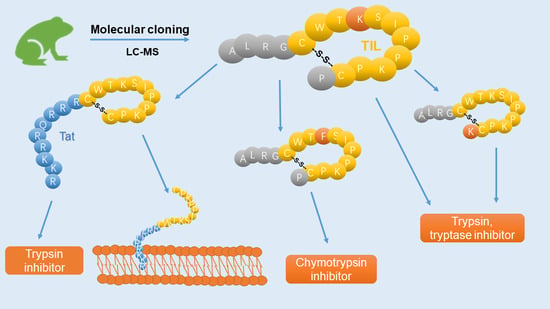
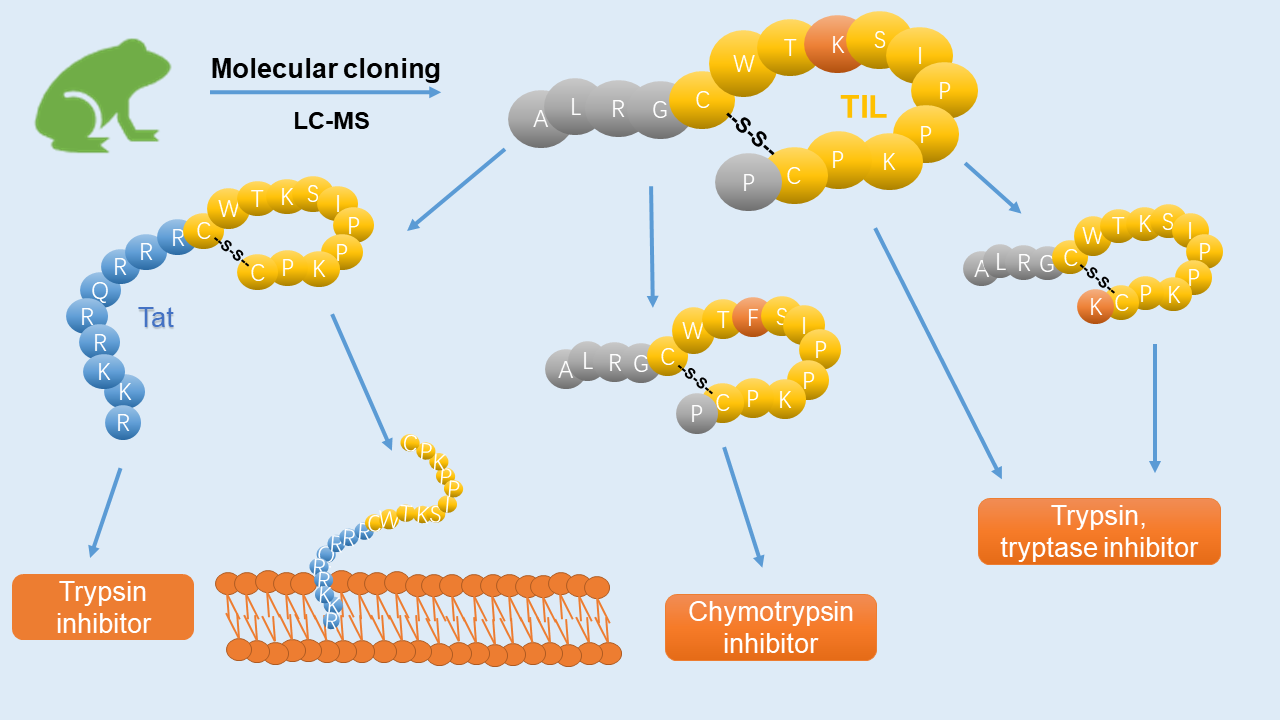
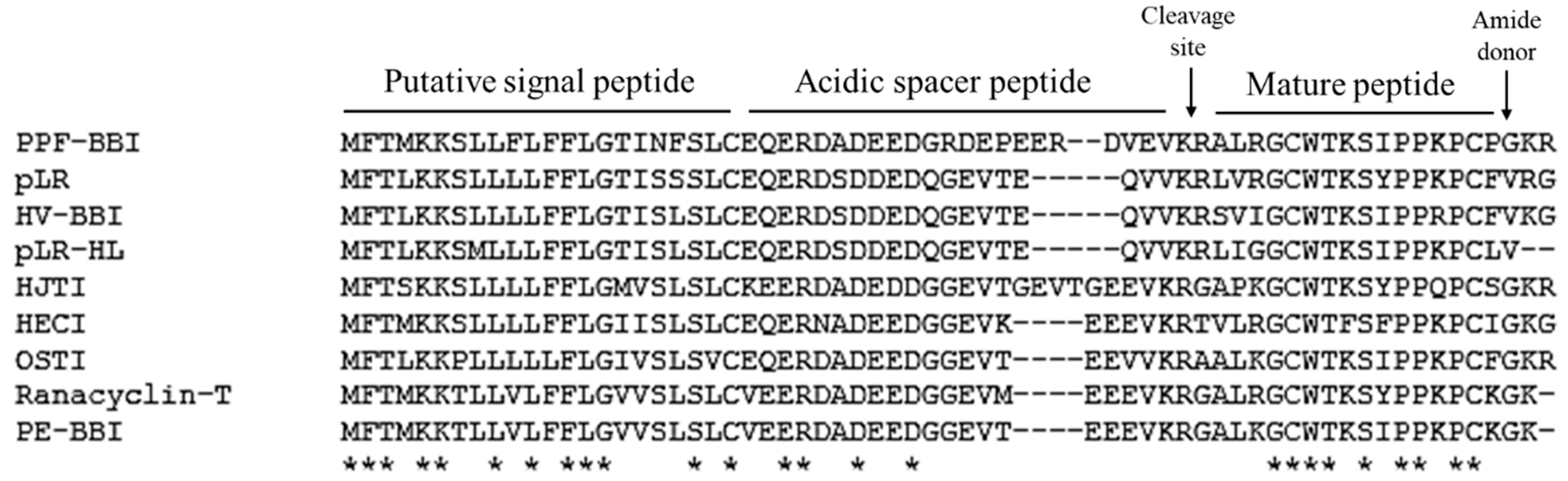
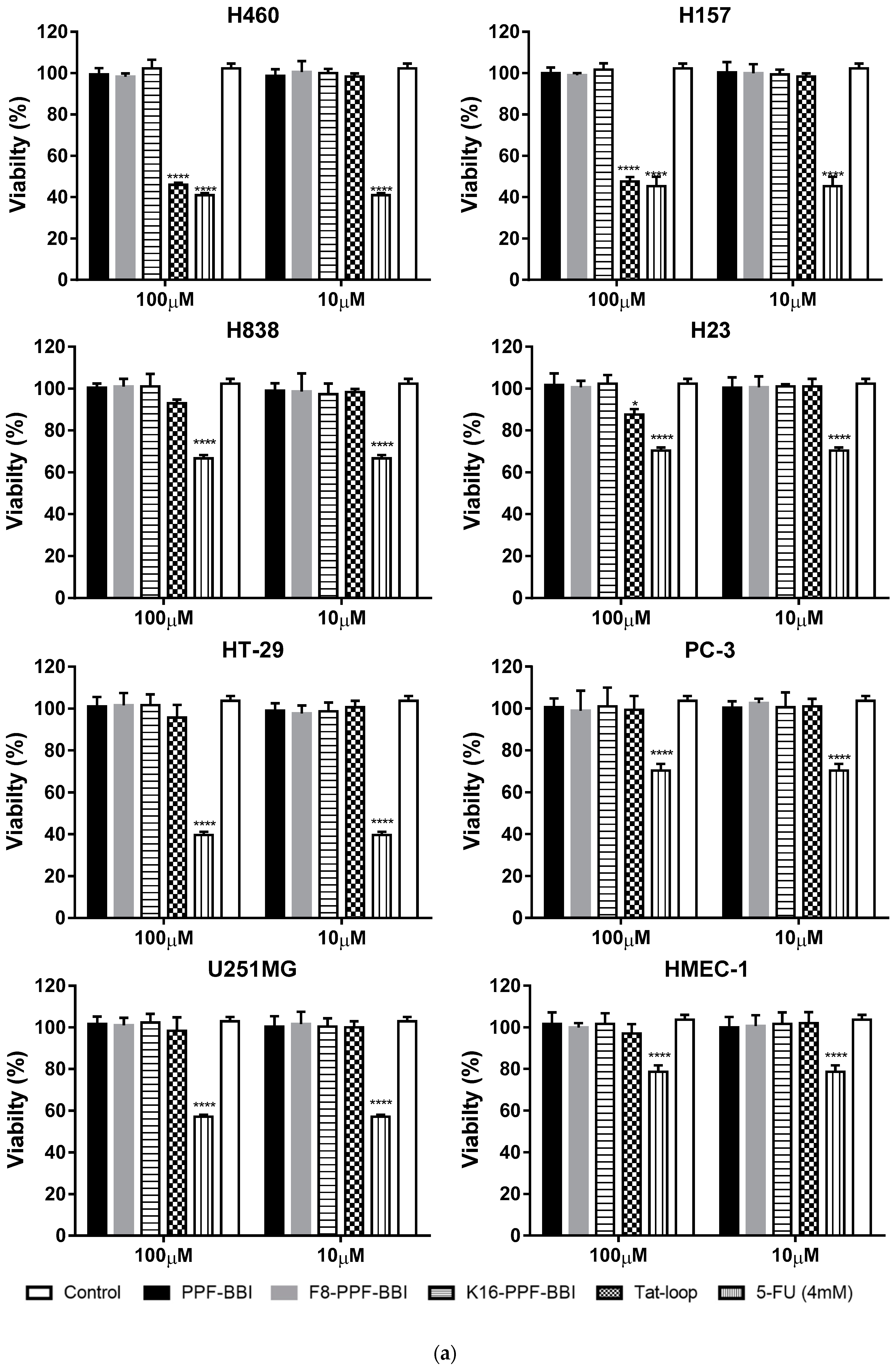
Anuran amphibian skin secretions are a rich source of peptides, many of which represent novel protease inhibitors and can potentially act as a source for protease inhibitor drug discovery. In this study, a novel bioactive Bowman-Birk type inhibitory hexadecapeptide of the Ranacyclin family from the defensive skin secretion of the Fukien gold-striped pond frog, Pelophlax plancyi fukienesis, was successfully isolated and identified, named PPF-BBI. The primary structure of the biosynthetic precursor was deduced from a cDNA sequence cloned from a skin-derived cDNA library, which contains a consensus motif representative of the Bowman-Birk type inhibitor. The peptide was chemically synthesized and displayed a potent inhibitory activity against trypsin (Ki of 0.17 µM), as well as an inhibitory activity against tryptase (Ki of 30.73 µM). A number of analogues of this peptide were produced by rational design. An analogue, which substituted the lysine (K) at the predicted P1 position with phenylalanine (F), exhibited a potent chymotrypsin inhibitory activity (Ki of 0.851 µM). Alternatively, a more potent protease inhibitory activity, as well as antimicrobial activity, was observed when P16 was replaced by lysine, forming K16-PPF-BBI. The addition of the cell-penetrating peptide Tat with a trypsin inhibitory loop resulted in a peptide with a selective inhibitory activity toward trypsin, as well as a strong antifungal activity. This peptide also inhibited the growth of two lung cancer cells, H460 and H157, demonstrating that the targeted modifications of this peptide could effectively and efficiently alter its bioactivity.
Keywords: amphibian Bowman-Birk inhibitor; Tat peptide; molecular cloning; antifungal; drug design; protease inhibitor amphibian Bowman-Birk inhibitor; Tat peptide; molecular cloning; antifungal; drug design; protease inhibitor
Graphical Abstract