



Journal Description
Land
Land
is an international, cross-disciplinary, peer-reviewed, open access journal on land system science, landscape, soil and water, urban study, land–climate interactions, water–energy–land–food (WELF) nexus, biodiversity research and health nexus, land modelling and data processing, ecosystem services, multifunctionality and sustainability, and is published monthly online by MDPI. The International Association for Landscape Ecology (IALE), International Federation of Landscape Architects (IFLA), European Land-use Institute (ELI), Landscape Institute (LI) and Urban Land Institute (ULI) are affiliated with Land, and their members receive discounts on the article processing charges.
- Open Access— free for readers, with article processing charges (APC) paid by authors or their institutions.
- High Visibility: indexed within Scopus, SSCI (Web of Science), GEOBASE, PubAg, AGRIS, GeoRef, RePEc, and other databases.
- Journal Rank: JCR - Q2 (Environmental Studies) / CiteScore - Q1 (Nature and Landscape Conservation)
- Rapid Publication: manuscripts are peer-reviewed and a first decision is provided to authors approximately 16.4 days after submission; acceptance to publication is undertaken in 2.8 days (median values for papers published in this journal in the first half of 2026).
- Recognition of Reviewers: reviewers who provide timely, thorough peer-review reports receive vouchers entitling them to a discount on the APC of their next publication in any MDPI journal, in appreciation of the work done.
- Companion journal: Drylands.
- Journal Cluster of Environmental Science: Sustainability, Land, Clean Technologies, Environments, Nitrogen, Recycling, Urban Science, Safety, Air, Waste, Aerobiology and Toxics.
Impact Factor:
3.5 (2025);
5-Year Impact Factor:
3.7 (2025)
Latest Articles
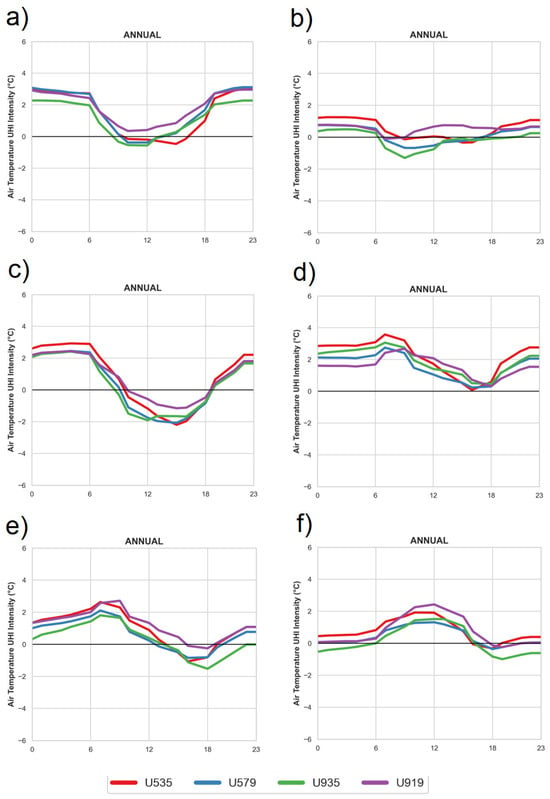
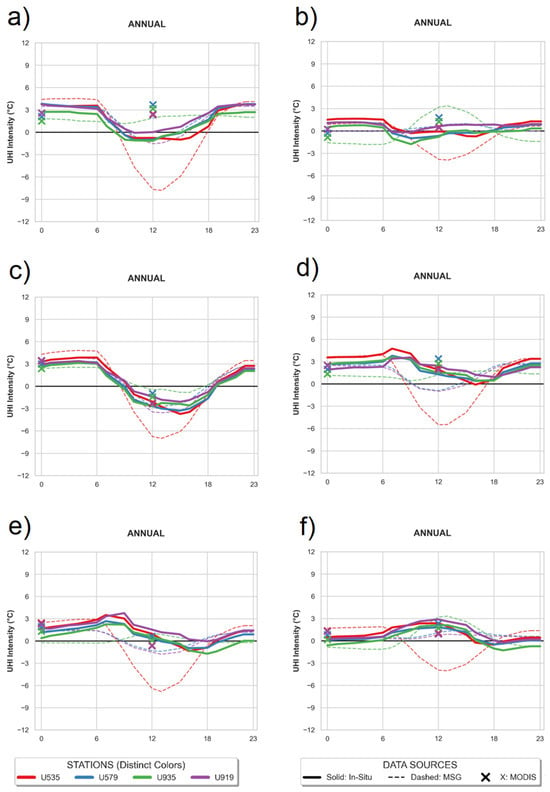
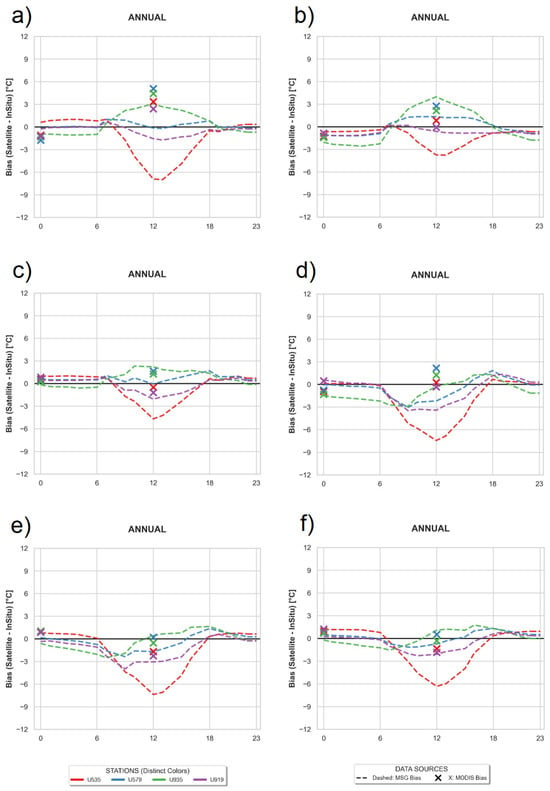
Land–Climate Interactions in Lisbon: A Climatological Characterisation of the Urban Heat Island via Ground and Satellite Observations
Land 2026, 15(7), 1209; https://doi.org/10.3390/land15071209 (registering DOI) - 6 Jul 2026
Abstract
As climate change intensifies heat extremes, the Urban Heat Island (UHI) effect amplifies local thermal stress. Assessing the UHI using robust observational data, whether ground- and/or satellite-based, is essential for climate risk assessment and evidence-based urban adaptation. Therefore, this study aims to provide
[...] Read more.
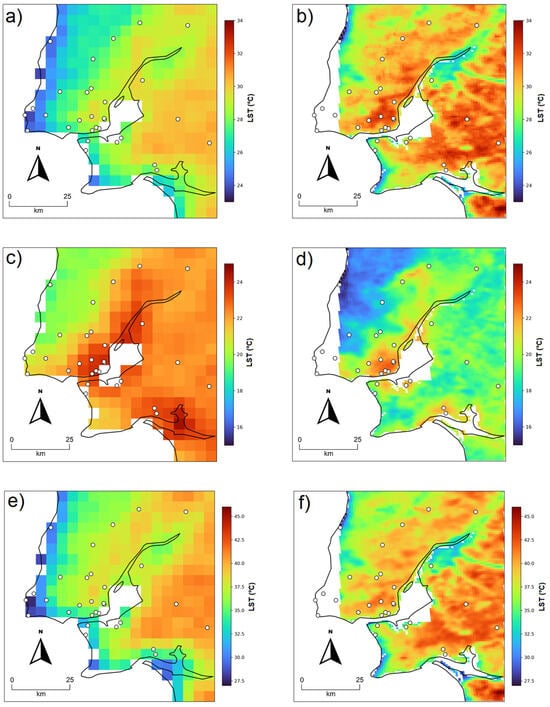
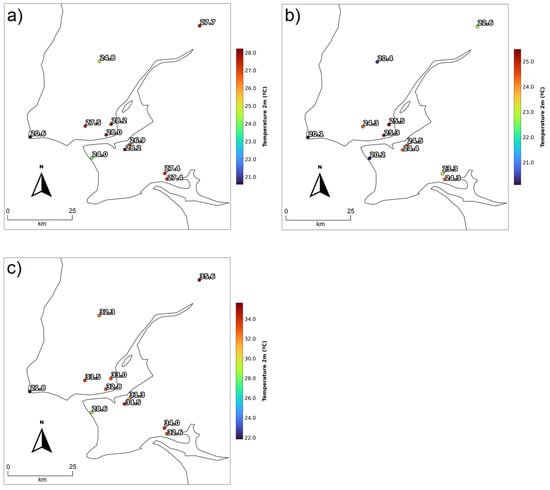
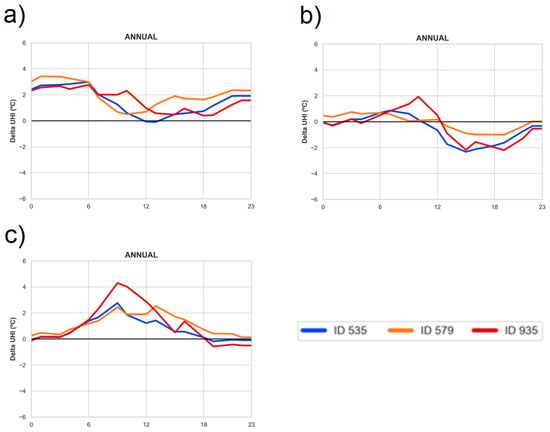
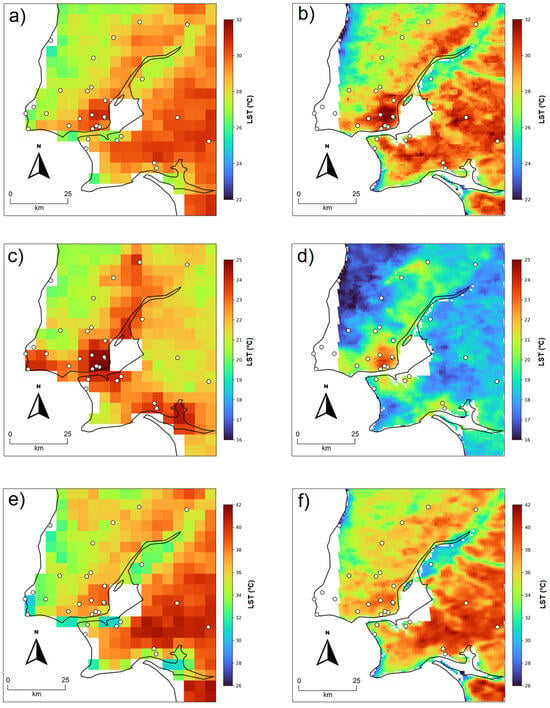
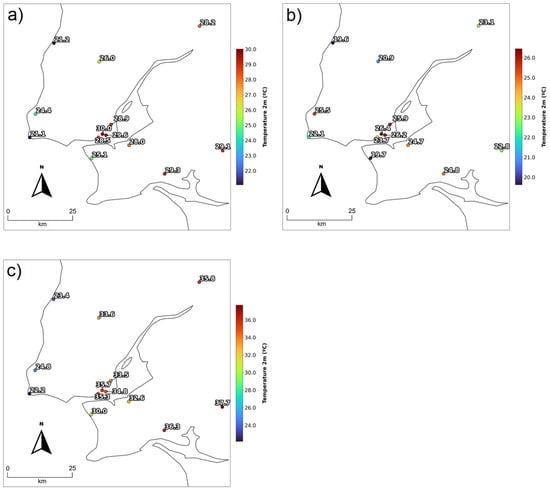
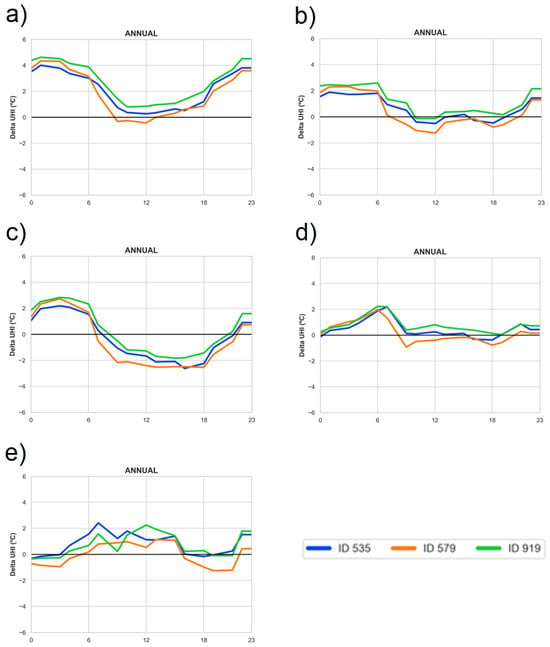
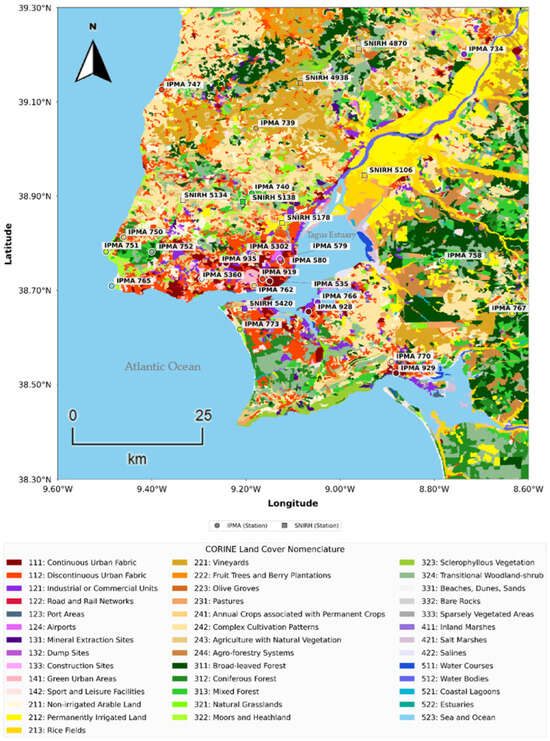
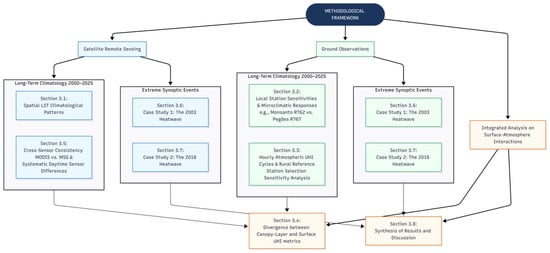
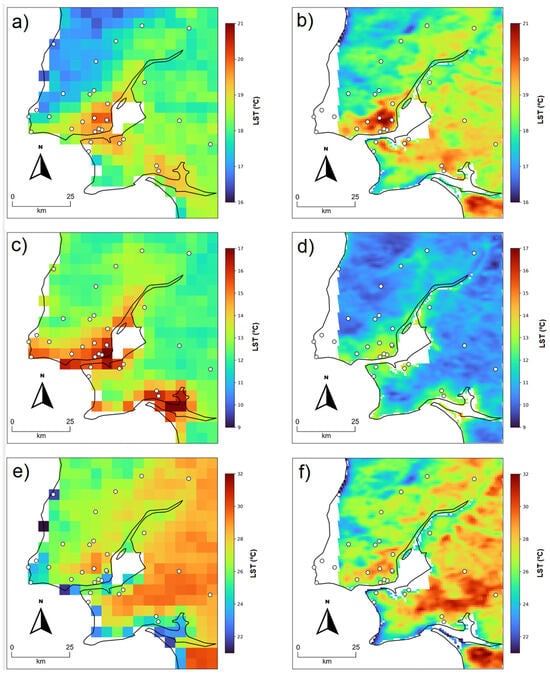
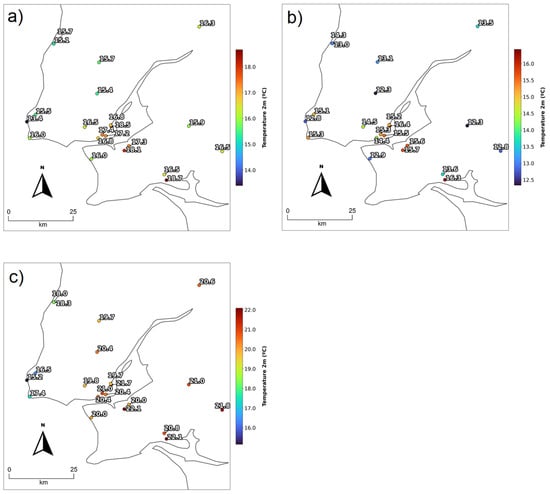
As climate change intensifies heat extremes, the Urban Heat Island (UHI) effect amplifies local thermal stress. Assessing the UHI using robust observational data, whether ground- and/or satellite-based, is essential for climate risk assessment and evidence-based urban adaptation. Therefore, this study aims to provide a comprehensive climatological assessment of air temperature patterns and UHI intensity across the Lisbon Metropolitan Area (LMA) over a 26-year period (2000–2025). The methodology employs a dense, high-quality integrated network of in-situ weather stations from the Portuguese Institute for Sea and Atmosphere (IPMA) and the National Water Resources Information System (SNIRH). To bridge critical gaps in traditional climate assessments, this research implements a dual-perspective approach that combines the high temporal resolution of MSG-SEVIRI and the spatial precision of MODIS Land Surface Temperature (LST). This framework accurately captures the lag effects between surface heating and atmospheric response. Validation results demonstrate that satellite-derived LST is a robust proxy for monitoring the nocturnal UHI, with differences generally below 1 °C compared with near-surface air temperature observations (T2m). However, daytime LST significantly overestimates atmospheric temperatures, with deviations of 2–8 °C due to solar radiation and urban geometry. The selection of rural reference stations constitutes a critical methodological factor, as a baseline shift can alter perceived UHI intensities by more than 3 °C. Despite these sensitivities, the results unequivocally confirm a persistent and spatially heterogeneous UHI effect in Lisbon, which intensifies during extreme heat events by up to an additional 4 °C. Analysis of the 2003 and 2018 heatwaves reveals surface LST anomalies exceeding 10 °C and urban–rural thermal differentials reaching up to 7 °C under conditions of suppressed maritime breezes. These nocturnal anomalies are particularly pronounced in densely built-up areas, limiting thermal dissipation and preventing physiological recovery. Integrating multi-sensor satellite data with in-situ validation provides a new benchmark for climate risk assessments, delivering the reliable, reproducible data required to strengthen long-term urban resilience under increasingly frequent extreme heat events.
Full article
(This article belongs to the Special Issue Feature Papers for "Land–Climate Interactions" Section: Integration of Remote Sensing and GIS)
►
Show Figures
Open AccessArticle
Sense of Place and the Residence Intention of On-Demand Platform Workers in China’s Megacities
by
Yuehui An, Yuting Liu, Senhu Wang, Zongcai Wei and Nannan Zhao
Land 2026, 15(7), 1208; https://doi.org/10.3390/land15071208 (registering DOI) - 6 Jul 2026
Abstract
This study examines the governance challenges posed by new forms of employment in the context of China’s new urbanization, focusing particularly on the widespread phenomenon of “residing without settling” among on-demand platform workers in megacities. Based on a survey of 1627 respondents in
[...] Read more.
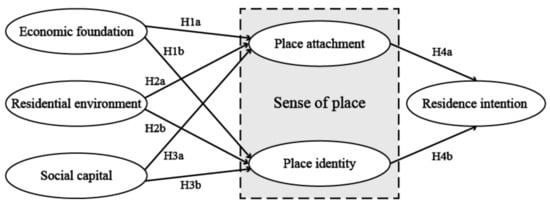
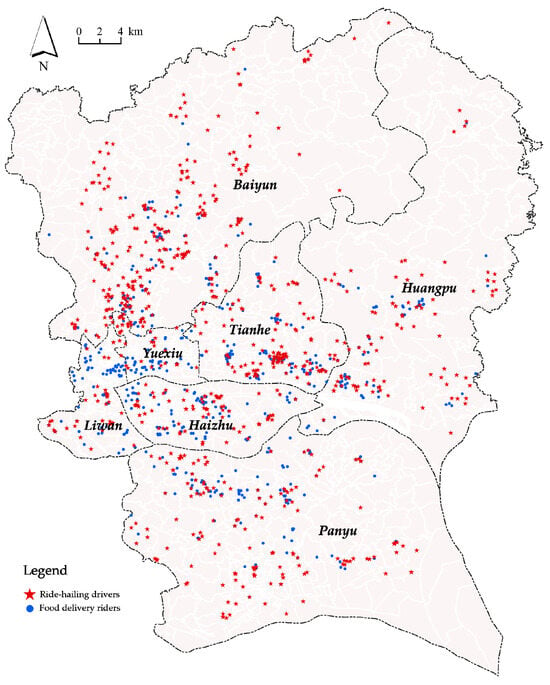
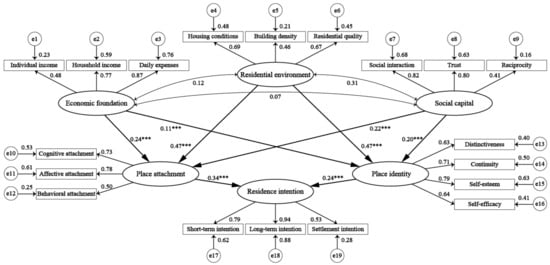
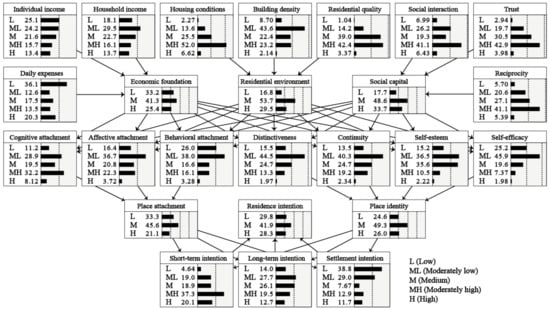
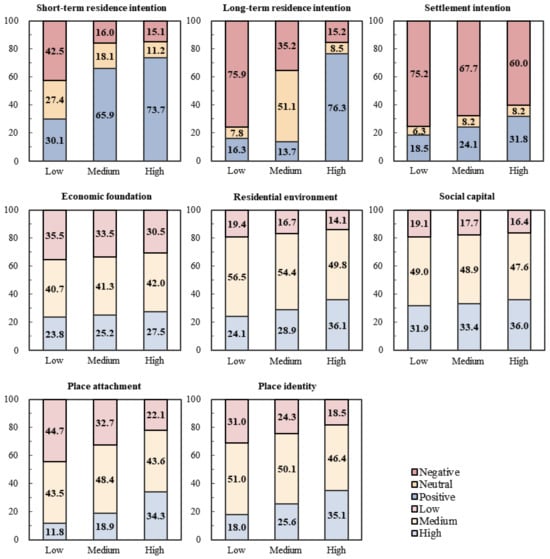
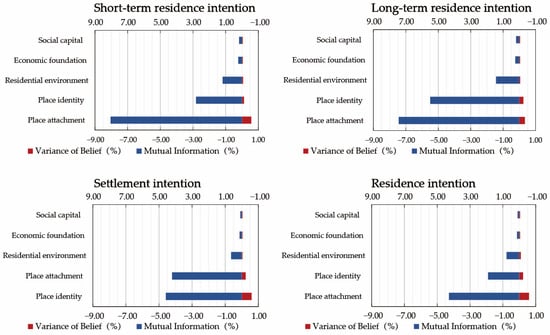
This study examines the governance challenges posed by new forms of employment in the context of China’s new urbanization, focusing particularly on the widespread phenomenon of “residing without settling” among on-demand platform workers in megacities. Based on a survey of 1627 respondents in Guangzhou, the findings reveal a pronounced gradient stratification in on-demand platform workers’ residence intention. Specifically, 57.3% of respondents demonstrate positive short-term residence intention, whereas long-term residence intention is predominantly characterized by neutral attitudes (73.3%), and settlement intention exhibits a clearly negative tendency (67.8%). Structural Equation Modeling indicates that residential environment exerts the strongest positive effect on sense of place (β = 0.47), followed by economic foundation (β = 0.24), while social capital demonstrates the weakest promoting effect (β = 0.22). Scenario analysis using Bayesian Network further reveals that when place attachment reaches a high level, the probability of positive long-term residence intention among on-demand platform workers increases by 22.1%, whereas improvements in residential environment reduce the probability of negative settlement intention by 5.2 percentage points. The results demonstrate that the residence intention of on-demand platform workers arises from the interplay of socioeconomic conditions, material space and emotional embedding. Notably, the sense of place forms a critical emotional attachment mechanism through a mediating effect. Economic deprivation acts as the primary constraint, while environmental quality serves as a fundamental limiting factor. Conversely, social capital accumulation partially mitigates these barriers. The findings contribute to a nuanced understanding of urban inclusiveness and labor force stability in the digital economy. Moreover, this study provides policy insights for optimizing urban population structures and fostering socially sustainable development.
Full article
(This article belongs to the Special Issue Rethinking Urban–Rural Dynamics Through the Lens of Social Geography)
►▼
Show Figures

Figure 1

Open AccessArticle
Structural Decoding of Lijiang’s Historical Cultural Space: Cultural–Ecological Continuity and Land Governance
by
Xinna Wei, Xiaojing Feng, Chenkai Zhao and Bo Zhou
Land 2026, 15(7), 1207; https://doi.org/10.3390/land15071207 - 5 Jul 2026
Abstract
Long-standing studies of historical cultural spaces have primarily focused on the preservation of heritage objects and landscapes, while insufficient attention has been paid to the structural relationships, land-use transformations, and cultural–ecological processes that sustain their long-term continuity. Taking the World Heritage site of
[...] Read more.
Long-standing studies of historical cultural spaces have primarily focused on the preservation of heritage objects and landscapes, while insufficient attention has been paid to the structural relationships, land-use transformations, and cultural–ecological processes that sustain their long-term continuity. Taking the World Heritage site of Lijiang as a case, this study develops a three-dimensional structural decoding framework composed of spatial base, spatial network, and spatial entity, together with an analytical pathway of “Identification–Interpretation–Evaluation–Synthesis–Practice.” By integrating qualitative and quantitative approaches with multi-source data, the study establishes an evidence chain linking historical processes and contemporary conditions to examine the formation mechanisms, continuity, and contemporary deviations of Lijiang’s historical cultural space. The results show that terrain–habitat adaptability, water system coupling, and environmental risk avoidance shaped environmental adaptation; historical corridors, landscape perception, and core node associations organized spatial networks; and functional diversity, cultural capital agglomeration, and spatial-scale compatibility supported entity-based spatial practices. Although tourism development, urban expansion, and land-use transformation have not completely dismantled these historical relationships, they have caused localized deviations in ecological boundaries, path continuity, visual connections, functional vitality, and spatial scale. This study argues that the governance of historical cultural spaces should shift from preserving isolated heritage objects to sustaining cultural–ecological relationships that support memory, identity, spatial practice, and adaptive land governance.
Full article
(This article belongs to the Section Land Planning and Landscape Architecture)
Open AccessArticle
Long-Term Dynamics and Climatic Drivers of Vegetation Cover on the Loess Plateau (2000–2024)
by
Jian Mao and Zhongming Wen
Land 2026, 15(7), 1206; https://doi.org/10.3390/land15071206 - 5 Jul 2026
Abstract
►▼
Show Figures
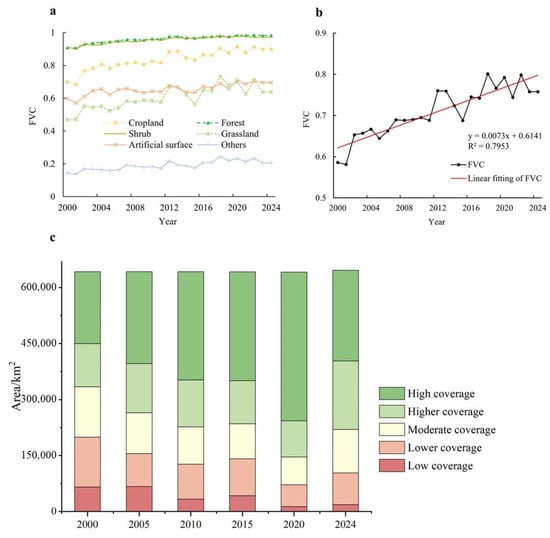
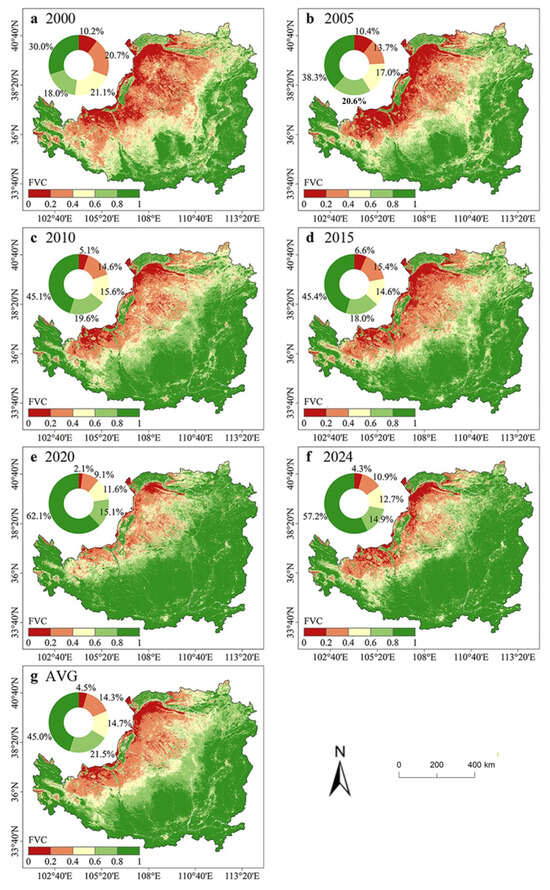
Vegetation is a key component of ecosystems and a core indicator for monitoring terrestrial ecosystem changes. Studying its spatio-temporal dynamics and natural drivers is essential for ecological restoration and management in the Loess Plateau, a region with fragile ecology and complex human-land interactions.
[...] Read more.
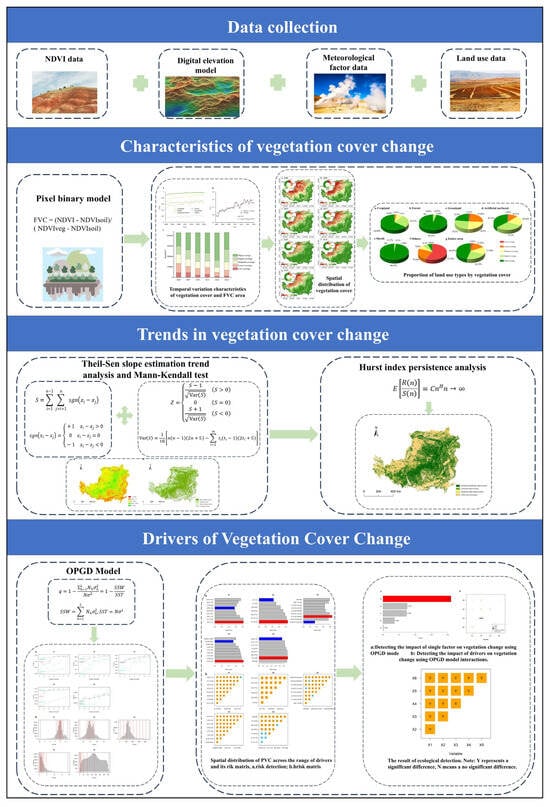
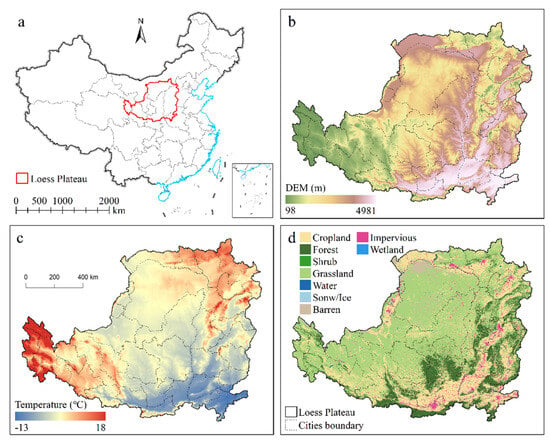
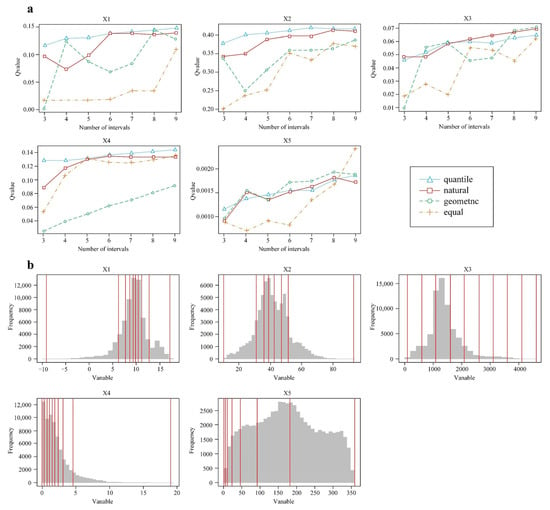
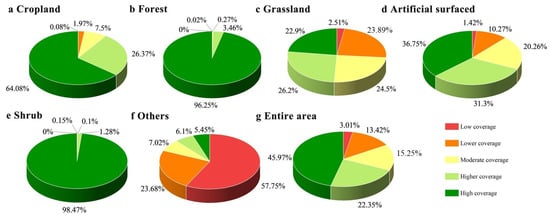
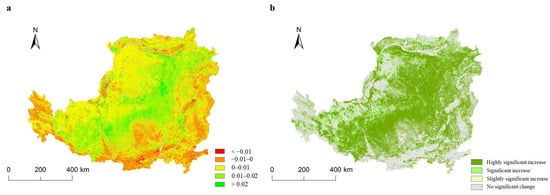
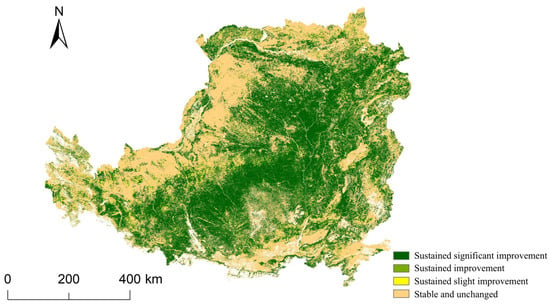
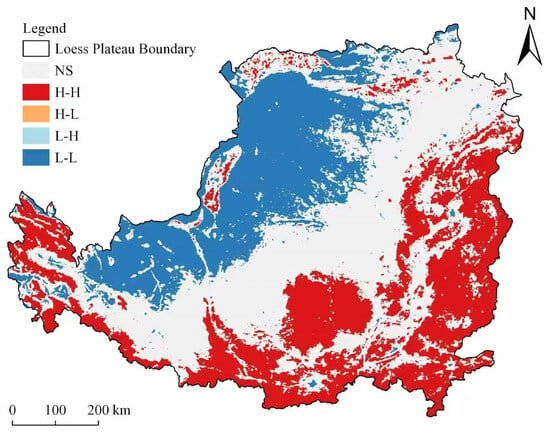
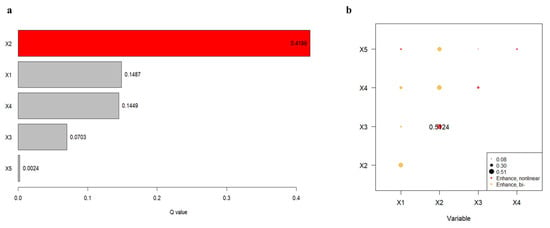
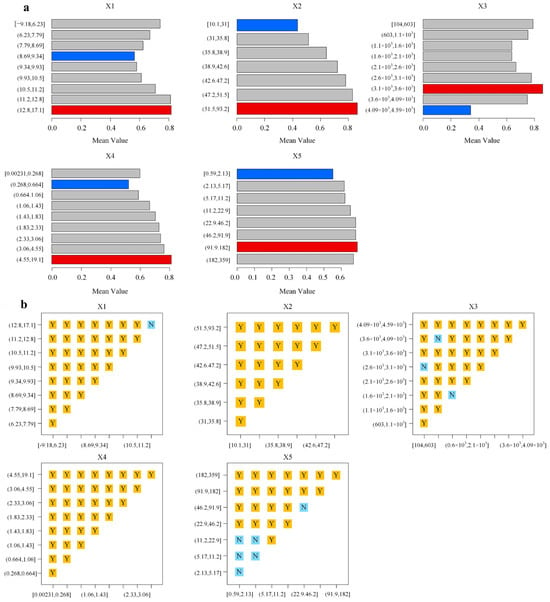
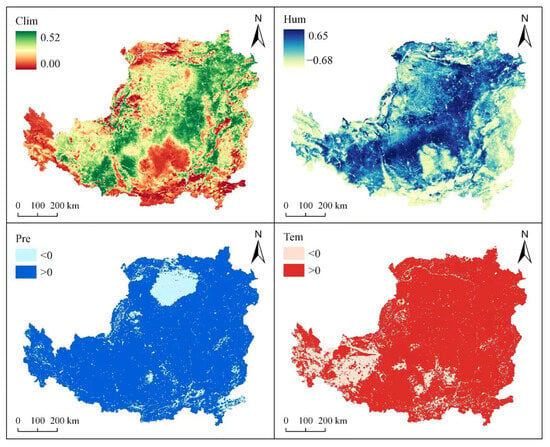
Vegetation is a key component of ecosystems and a core indicator for monitoring terrestrial ecosystem changes. Studying its spatio-temporal dynamics and natural drivers is essential for ecological restoration and management in the Loess Plateau, a region with fragile ecology and complex human-land interactions. Using data from 2000 to 2024, this study systematically investigated the spatio-temporal evolution patterns, future trends, and primary influencing factors of Fractional Vegetation Cover (FVC) by integrating the Dimidiate Pixel Model, trend analysis, Hurst index, and optimal parameter geographic detector methods. The results show that: (1) Over the 25 years, FVC on the Loess Plateau showed an overall fluctuating upward trend, with a spatial distribution pattern characterized as “low in the northwest and high in the southeast”, and notable variations across different land use types. (2) The FVC change trend was dominated by extremely significant and significant increases, accounting for 67.92% of the total area, while areas with no significant change accounted for 31.27%. Spatially, the central region exhibited strong persistence in its increasing trend, whereas the northwestern and southeastern margins tended to remain stable. (3) Precipitation was the most important single factor affecting FVC (explanatory power q = 0.4199). The interactive explanatory power of factors was higher than that of single factors, with precipitation and elevation having the strongest interaction (q = 0.5124). Land use type, as an anthropogenic proxy, also plays a significant regulatory role in FVC patterns. Using conventional remote sensing methods (dimidiate pixel model, trend analysis, Hurst index, and optimal parameter geographic detector), this study primarily contributes by extending the analysis period to 2024 and providing a focused assessment of post-2020 vegetation dynamics. This study systematically analyzes the spatio-temporal evolution patterns of FVC and quantifies the explanatory power of natural factors and land use as a human activity proxy on the Loess Plateau, providing a scientific basis for assessing regional ecological restoration effectiveness and optimizing ecological management strategies.
Full article

Figure 1
Open AccessArticle
Analysis of Spatial–Temporal Pattern and Driving Force of Heat Island in Urban Agglomeration Around Hangzhou Bay
by
Hongyu Li, Liuzhu Wang, Chao Fan, Sheng Zhao and Feng Gui
Land 2026, 15(7), 1205; https://doi.org/10.3390/land15071205 - 5 Jul 2026
Abstract
In the context of global warming, thermal environmental problems in coastal urban ag-glomerations have become increasingly prominent. This study focuses on the urban ag-glomeration around Hangzhou Bay, constructs annual heat island intensity classification maps based on MODIS summer land surface temperature (LST) data
[...] Read more.
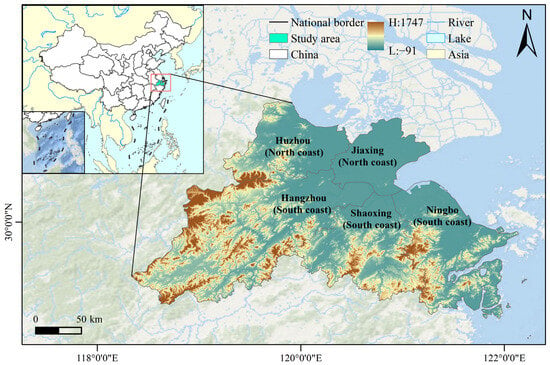
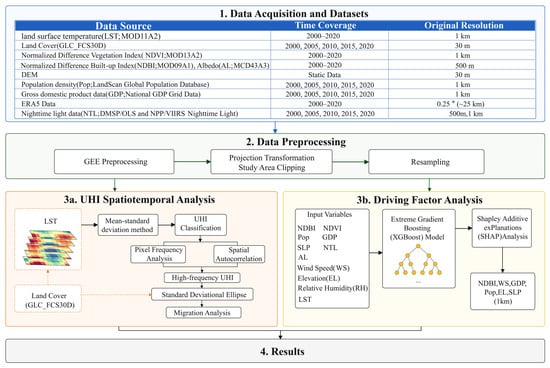
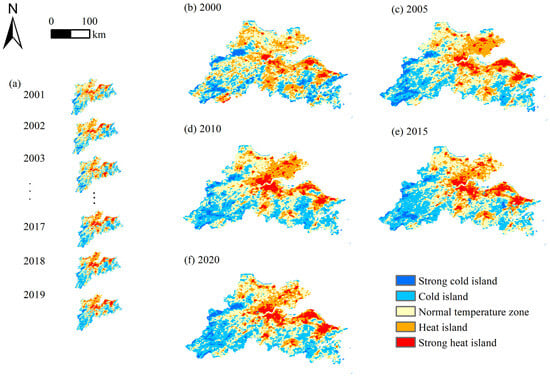
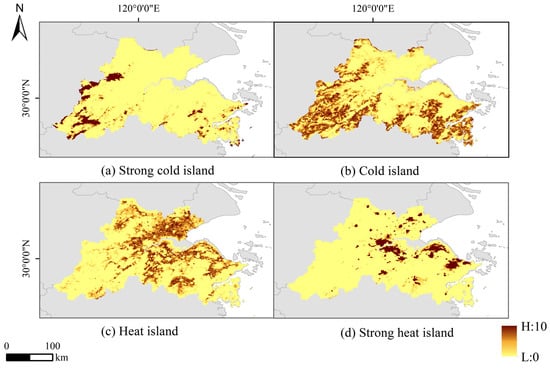
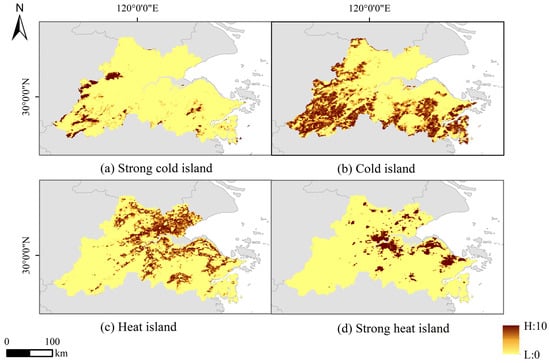
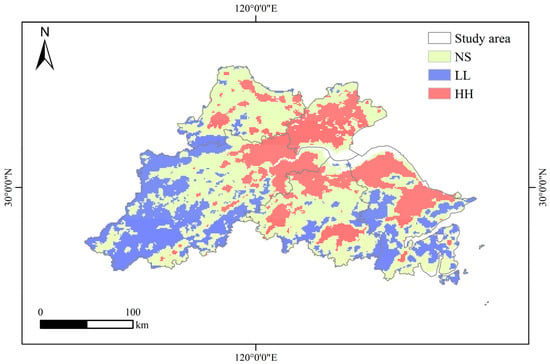
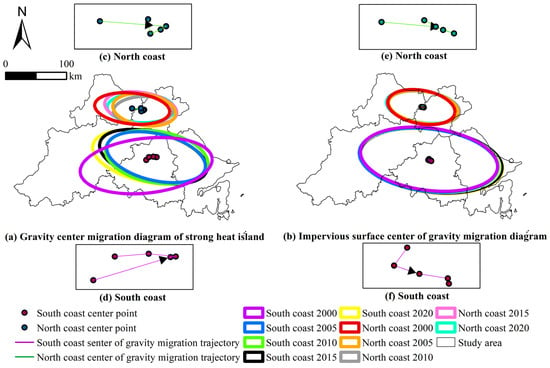
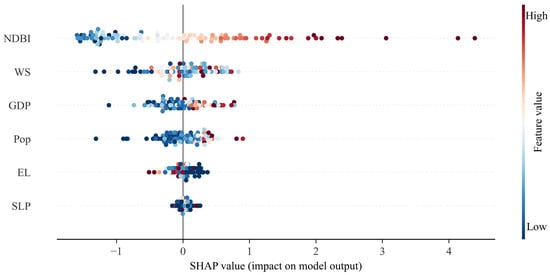
In the context of global warming, thermal environmental problems in coastal urban ag-glomerations have become increasingly prominent. This study focuses on the urban ag-glomeration around Hangzhou Bay, constructs annual heat island intensity classification maps based on MODIS summer land surface temperature (LST) data from 2000 to 2020, analyzes the spatiotemporal patterns of heat islands, and investigates their driving mechanisms using the Extreme Gradient Boosting and Shapley Additive exPlanations (XGBoost-SHAP) model. The results show that: (1) the high-frequency area of strong heat islands expanded by 62.10% during the study period, extending from early built-up areas to newly developed coastal zones, with the spatial pattern transitioning from point-like distribution to areal agglomeration; (2) significant differences exist between the north and south coasts, where strong heat island center migration on the north coast is consistent with impervious surface expansion, whereas the south coast is significantly influenced by coastal wetland siltation; (3) impermeable surfaces and wind speed are key factors affecting LST, with impermeable surfaces acting as the primary driver of temperature increase, while wind speed plays a significant role in moderating temperatures. This study provides a scientific basis for thermal environment regulation in coastal urban agglomerations.
Full article
(This article belongs to the Special Issue Feature Papers for "Land–Climate Interactions" Section: Integration of Remote Sensing and GIS)
►▼
Show Figures

Figure 1
Open AccessArticle
An Improved TVPDI for Spatiotemporal Drought Dynamics Analysis in Xinjiang, China
by
Mingyang Lyu, Yilin Chen, Yin Ouyang and Zhen’an Yang
Land 2026, 15(7), 1204; https://doi.org/10.3390/land15071204 - 5 Jul 2026
Abstract
The Temperature-Vegetation-Precipitation Drought Index (TVPDI) performs poorly in complex terrain due to Normalized Difference Vegetation Index (NDVI) saturation and land surface temperature (LST) retrieval inaccuracies. To address this, we adopted an improved TVPDI (ITVPDI) by incorporating Leaf Area Index (LAI) and the land
[...] Read more.
The Temperature-Vegetation-Precipitation Drought Index (TVPDI) performs poorly in complex terrain due to Normalized Difference Vegetation Index (NDVI) saturation and land surface temperature (LST) retrieval inaccuracies. To address this, we adopted an improved TVPDI (ITVPDI) by incorporating Leaf Area Index (LAI) and the land surface–air temperature difference (LST−T). By using multi-source data from 2000 to 2022 in Xinjiang, China, we validated ITVPDI and analyzed drought dynamics. Results show: (1) ITVPDI correlates better with solar-induced chlorophyll fluorescence (SIF) (r = 0.17) and the moisture index (MI) (r = 0.22) than the traditional TVPDI, demonstrating superior performance in densely vegetated and topographically complex areas. (2) Drought frequency ranked as follows: severe (31.55%) > moderate (29.04%) > extreme (23.44%) > mild (15.94%). Mild and moderate droughts occurred in Northern Xinjiang and the Tianshan Mountains, while severe and extreme droughts clustered around the Tarim Basin and Eastern Xinjiang desert margins. As drought intensity increases, its center of gravity shifts “from north to south” and “from mountains to basins.” (3) ITVPDI showed a slight upward trend over the 23-year period, with autumn experiencing the most severe drought (mean ITVPDI = 0.293). (4) A mean Hurst index of 0.468 indicates weak anti-persistence, suggesting the current wetting trend may reverse, and increasing future drought risk. The ITVPDI proves to be a robust tool for drought monitoring in arid and semi-arid regions with complex terrain. This study provides crucial scientific support for regional water resource allocation, precision irrigation, and collaborative drought resistance and disaster mitigation in Northwest China.
Full article
(This article belongs to the Special Issue Soils and Land Management Under Climate Change (Second Edition))
Open AccessArticle
Spatiotemporal Assessment and Obstacle Diagnosis of Cultivated Land Quality Under Rapid Urbanization: Evidence from Chengdu, China
by
Huaifei Ouyang, Yisen Liu, Xinyue Peng, Yixi Zhu, Jiayan Li and Yongheng Rao
Land 2026, 15(7), 1203; https://doi.org/10.3390/land15071203 - 5 Jul 2026
Abstract
Conventional static approaches to cultivated land quality (CLQ) assessment often fail to capture the rapid spatial restructuring of cultivated land in urbanizing regions. This study takes Chengdu, China, as the study area and employs multi-source and multi-indicator datasets from 2010, 2017, and 2023
[...] Read more.
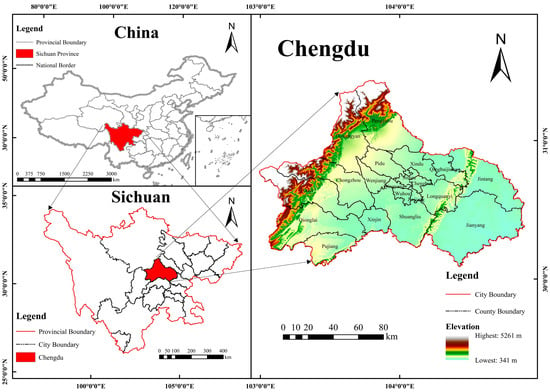
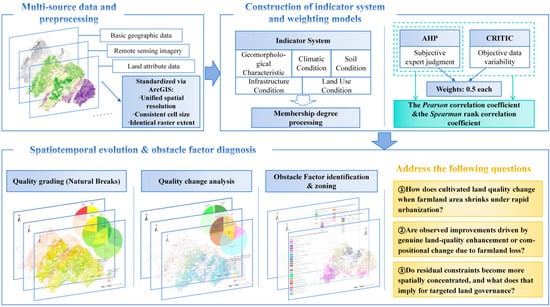
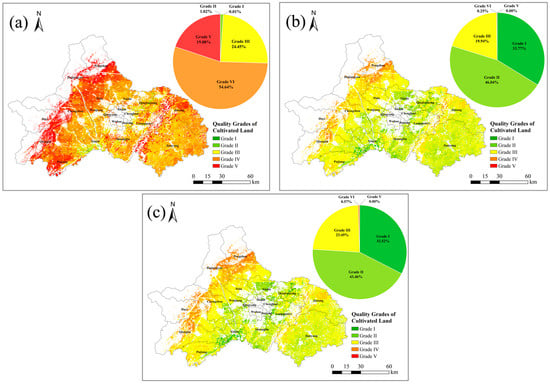
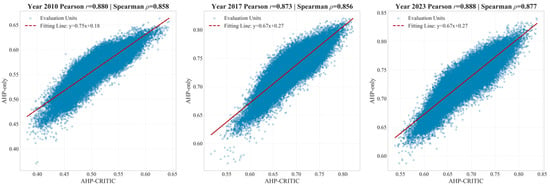
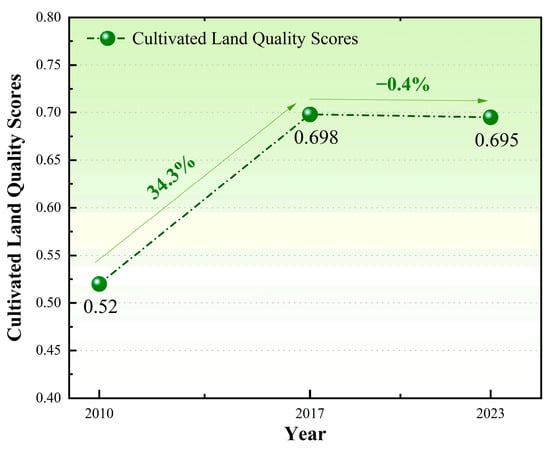
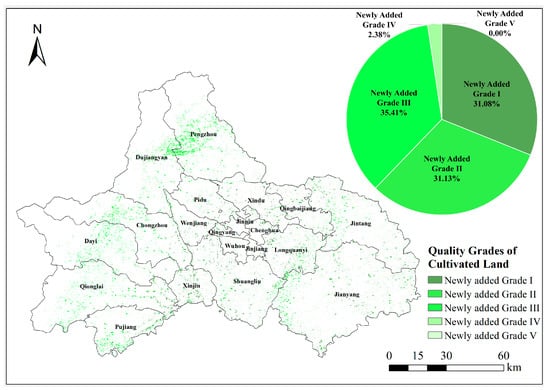
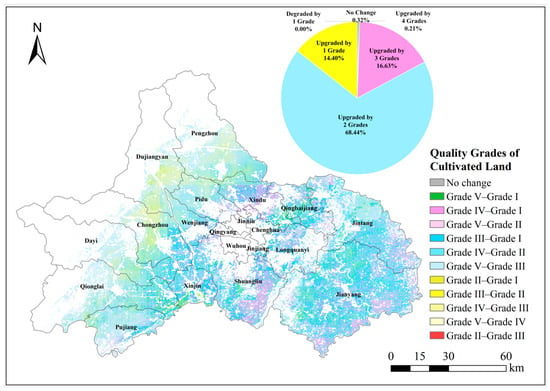
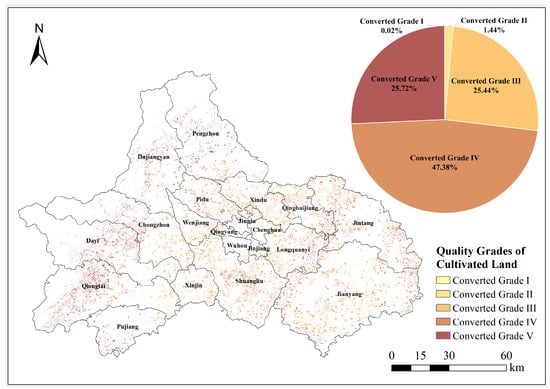
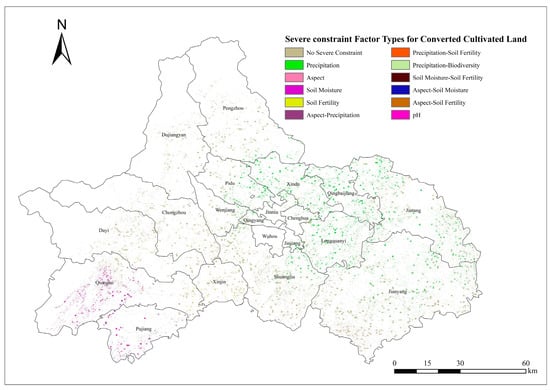
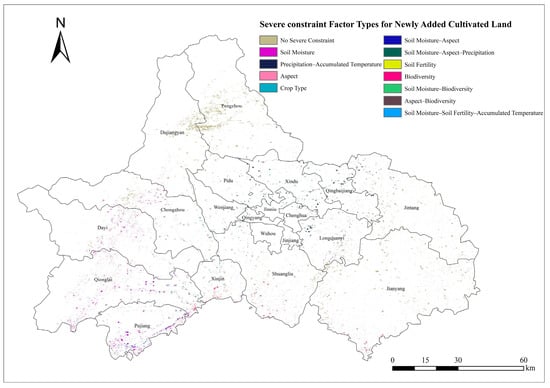
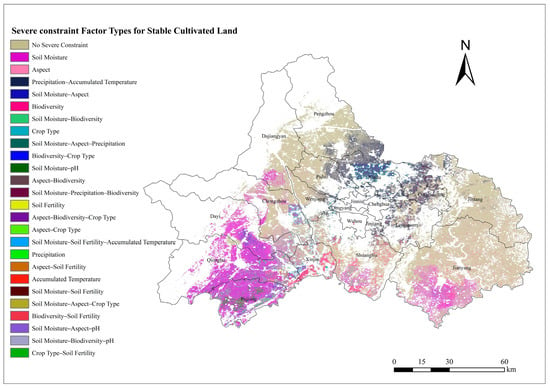
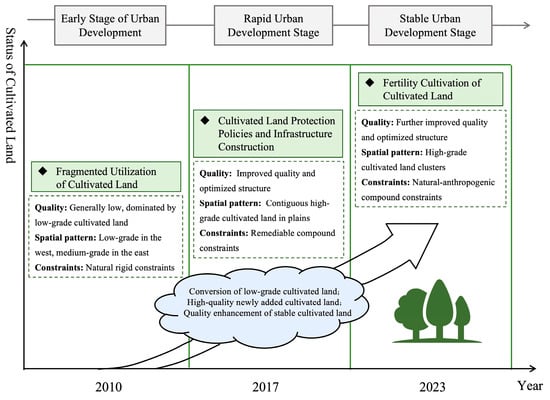
Conventional static approaches to cultivated land quality (CLQ) assessment often fail to capture the rapid spatial restructuring of cultivated land in urbanizing regions. This study takes Chengdu, China, as the study area and employs multi-source and multi-indicator datasets from 2010, 2017, and 2023 to assess CLQ using an integrated AHP-CRITIC weighting approach, combined with obstacle degree and constraint factor analyses. The results show that the mean CLQ score increased from 0.520 in 2010 to 0.695 in 2023, reflecting the continuous improvement in stable cultivated land quality. Constraint factors also shifted from natural endowment limitations to engineering- and management-related disturbances: converted land was mainly constrained by climatic and topographic conditions, newly added land by soil moisture and fertility after land-use conversion, and stable land by compound soil-water and terrain constraints. These findings provide scientific evidence and practical references for high-standard farmland construction and refined cultivated land governance in rapidly urbanizing grain-producing regions.
Full article
(This article belongs to the Topic Global Farmland Protection, Food Security and Land Use Planning)
►▼
Show Figures

Figure 1
Open AccessArticle
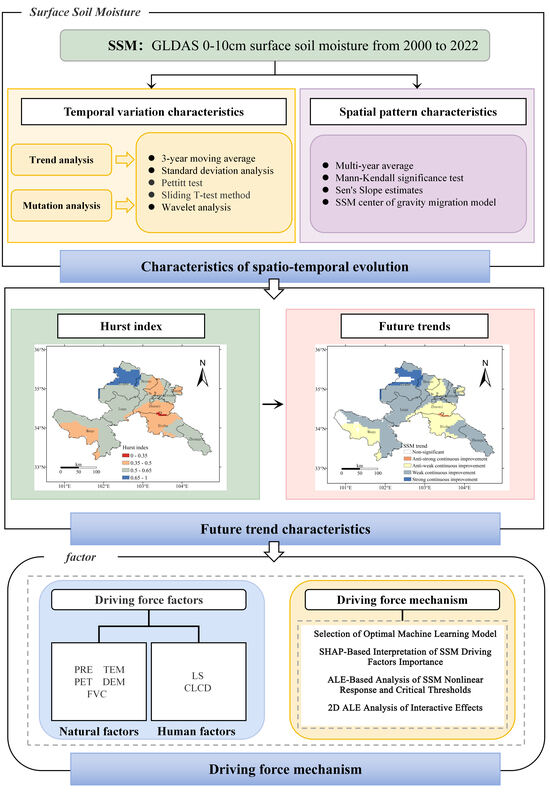
Deciphering Spatiotemporal Patterns and Drivers of Surface Soil Moisture in Gannan Prefecture (2000–2022) Using Interpretable Machine Learning
by
Xuhu Wang, Jianhao Chen, Xiaowei Zhang, Furong Niu, Xiaolei Zhou, Weibo Du and Songsong Lu
Land 2026, 15(7), 1202; https://doi.org/10.3390/land15071202 - 5 Jul 2026
Abstract
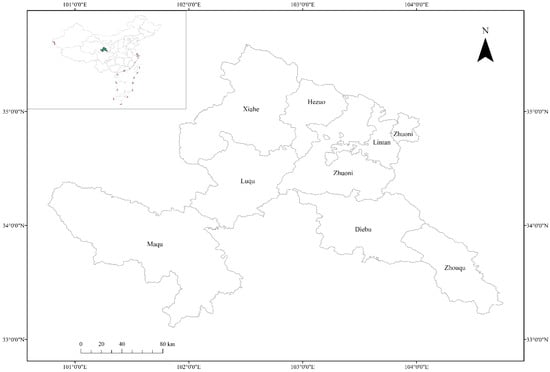
As a critical alpine transition zone linking the Qinghai–Tibet Plateau and the Loess Plateau, Gannan Prefecture acts as an important water conservation area in the upper Yellow River basin of China. Based on GLDAS-2.1 surface soil moisture (SSM) datasets spanning 2000–2022 and interpretable
[...] Read more.
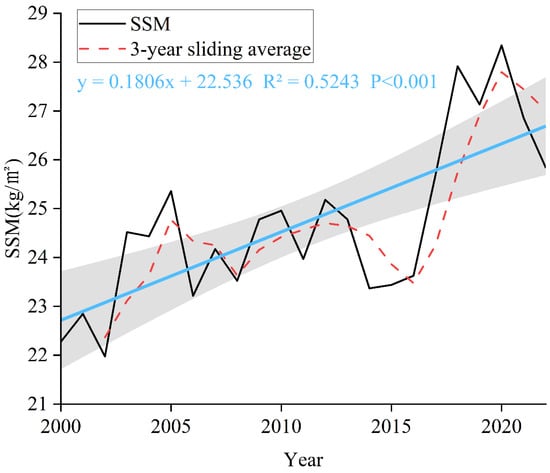
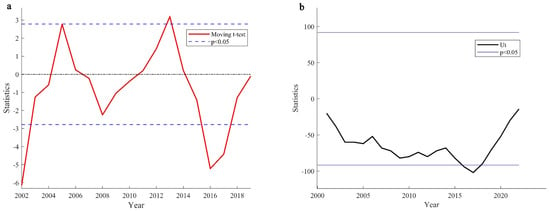
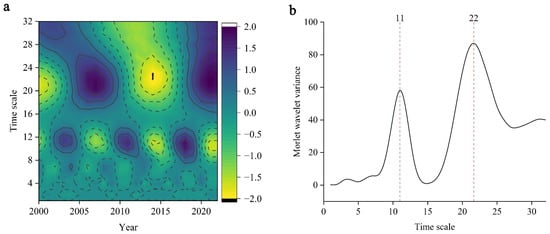
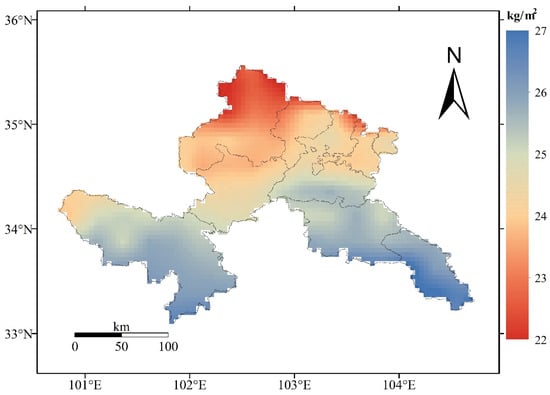
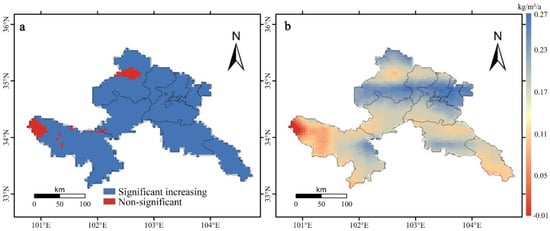
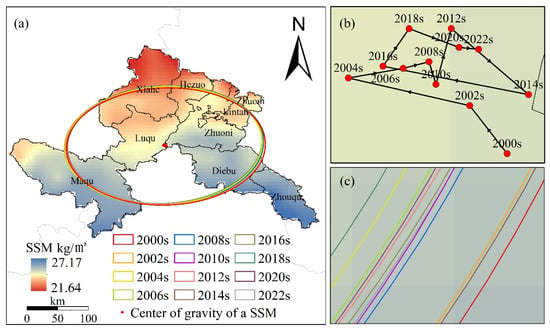
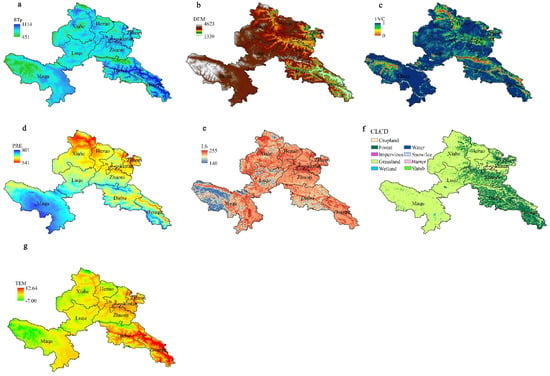
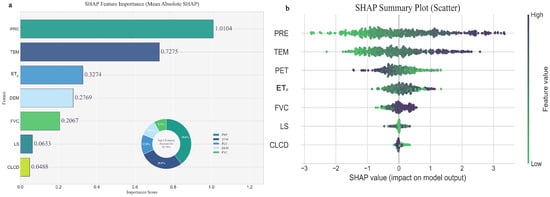
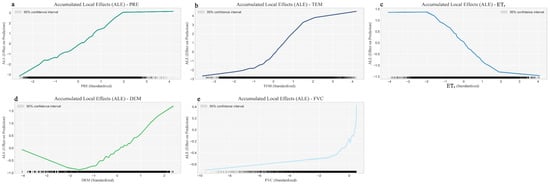
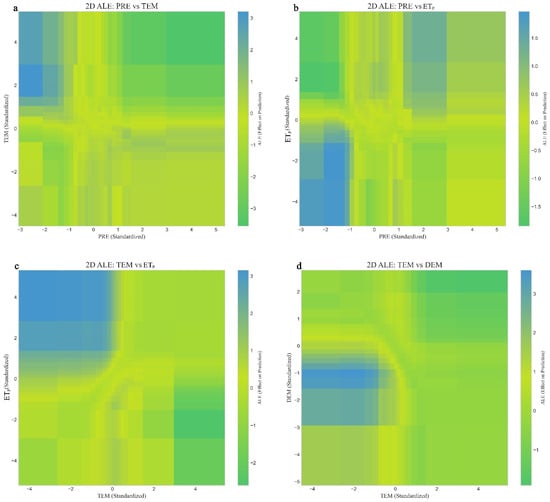
As a critical alpine transition zone linking the Qinghai–Tibet Plateau and the Loess Plateau, Gannan Prefecture acts as an important water conservation area in the upper Yellow River basin of China. Based on GLDAS-2.1 surface soil moisture (SSM) datasets spanning 2000–2022 and interpretable machine learning tools (SHAP and ALE), this paper analyzes the spatiotemporal evolution, future trend sustainability, and nonlinear statistical associations between environmental predictors and SSM. The main results were as follows: (1) SSM exhibited a significant upward trend with an annual growth rate of 0.18 kg·m−2·a−1 (p < 0.001), and an abrupt turning point occurred in 2017. The spatial pattern of high SSM in the southeast and low SSM in the northwest remained relatively stable, with the centroid migration distance being less than 1.81 km; most regions presented statistically significant moistening trends (p < 0.05). (2) Natural environmental predictors jointly carried 95.79% of the total statistical explanatory weight for modeled SSM variability. Precipitation possessed the highest explanatory proportion (37.93%), followed by temperature (27.30%), potential evapotranspiration (ETp, 12.26%), elevation (10.44%), and fractional vegetation cover (FVC, 7.77%). One-dimensional ALE curves identified sample-limited statistical breakpoints: SSM gradually plateaued when precipitation reached 650–700 mm, while modeled SSM decreased substantially once ETp exceeded 800 mm·a−1. Two-dimensional ALE further characterized combined statistical correlations among precipitation, temperature, and ETp. Model outputs also indicated that FVC above 0.45 corresponded to enhanced soil water retention within the observed sample range, which only reflects statistical patterns captured in this dataset rather than universal regulatory standards. This study offers quantitative statistical understanding of SSM variations across alpine transition zones.
Full article
(This article belongs to the Section Land, Soil and Water)
►▼
Show Figures

Graphical abstract
Open AccessArticle
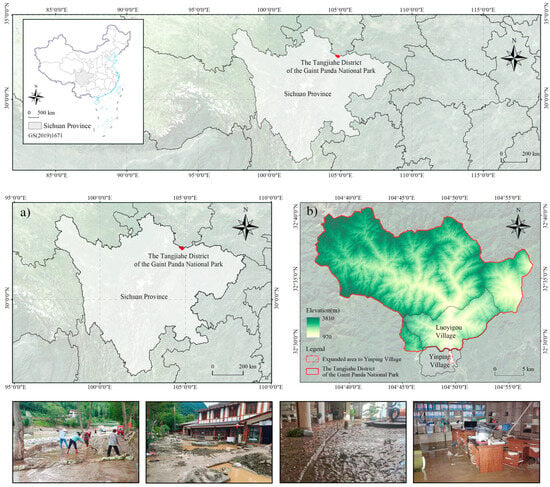
Impact of Extreme Climate Events on Community Planning and Flood Risk Management in Giant Panda National Park
by
Jiaxuan Qin, Chris Zevenbergen, Liyuan Qian, Yihua Zhong, Sixiang Zhou and Saeid Pirasteh
Land 2026, 15(7), 1201; https://doi.org/10.3390/land15071201 - 4 Jul 2026
Abstract
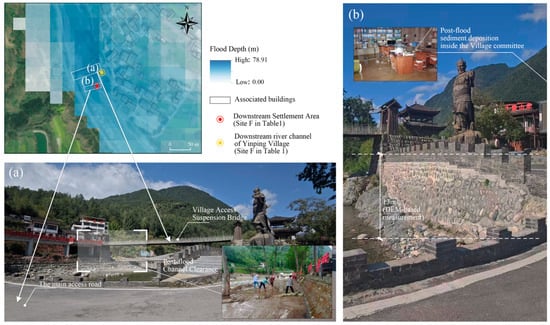
Extreme rainfall events intensify flood-related hazards in mountainous national parks and their surrounding communities, where complex terrain and coupled hazard processes create major challenges for spatial risk management. This study focuses on the Tangjiahe district of the Giant Panda National Park and develops
[...] Read more.
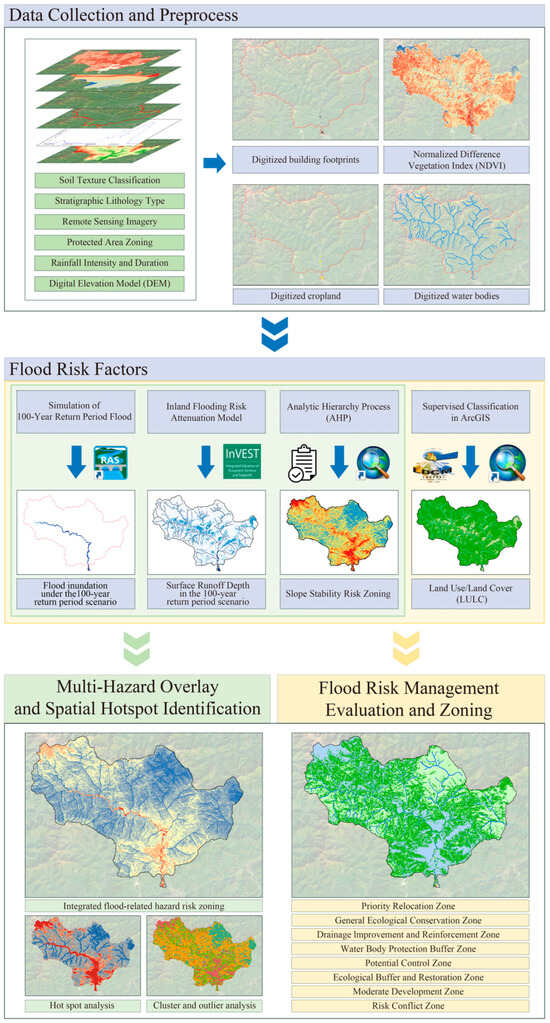
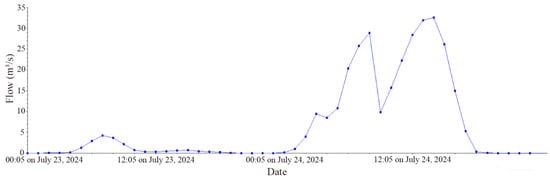
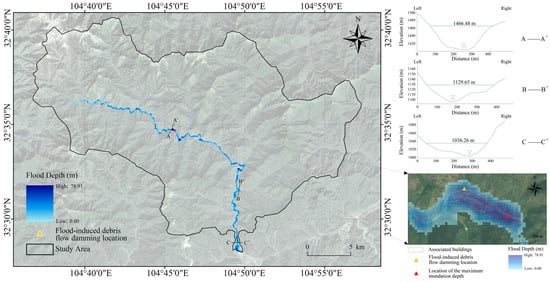
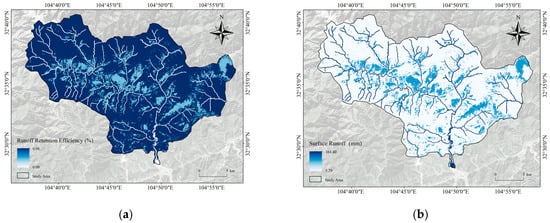
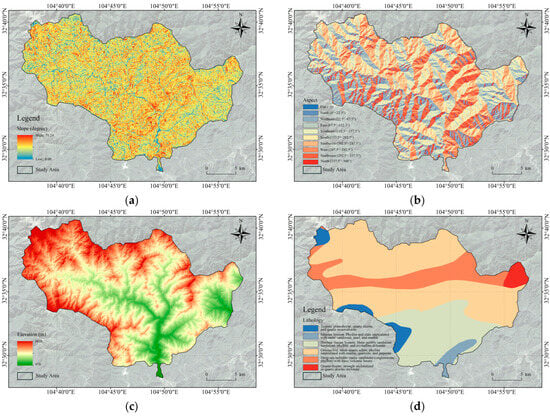
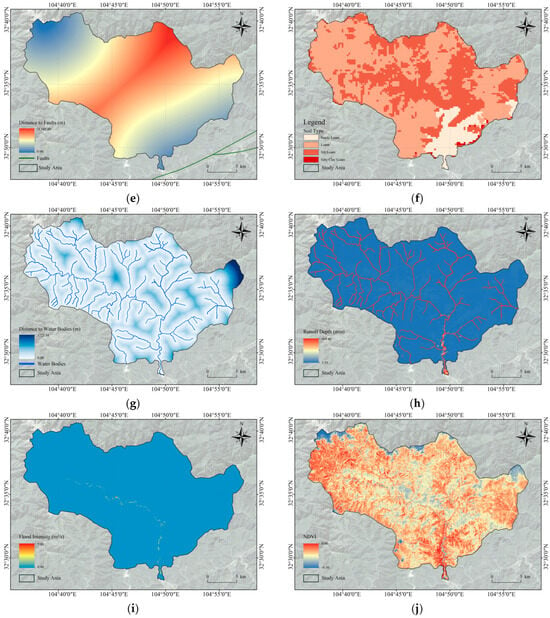
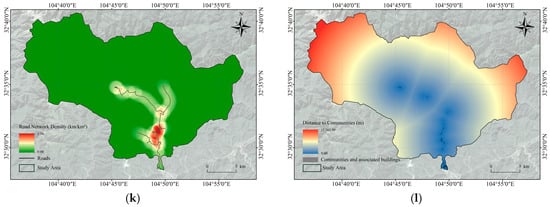
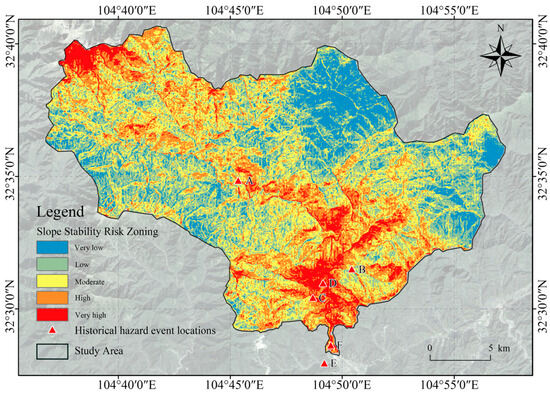
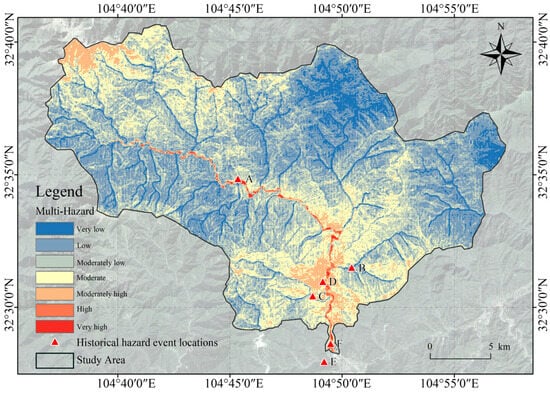
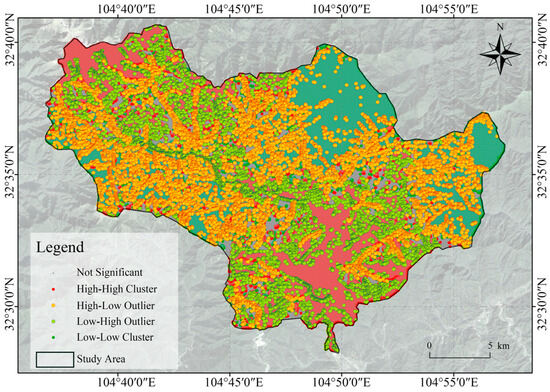
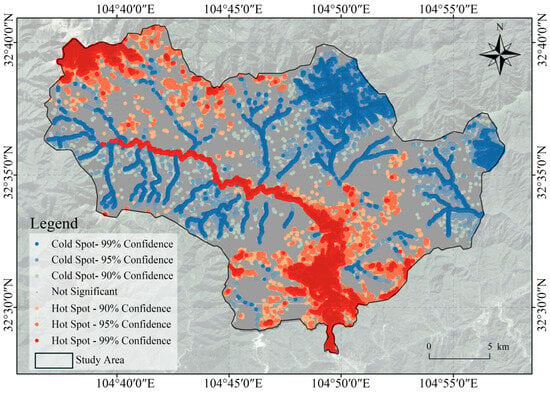
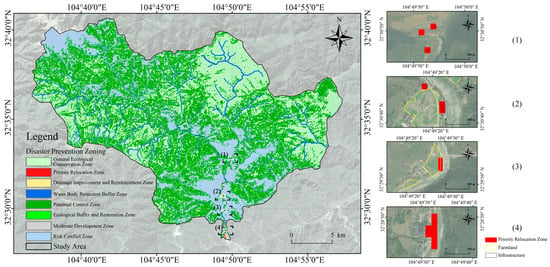
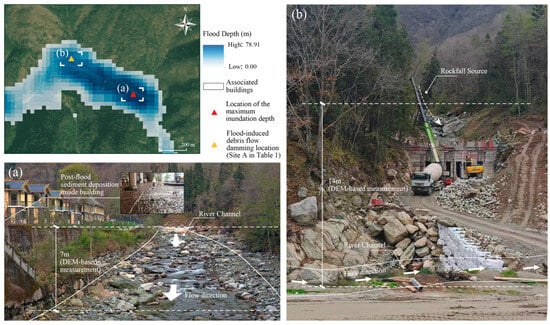
Extreme rainfall events intensify flood-related hazards in mountainous national parks and their surrounding communities, where complex terrain and coupled hazard processes create major challenges for spatial risk management. This study focuses on the Tangjiahe district of the Giant Panda National Park and develops an integrated framework for flood-related multi-hazard identification and zoning. The 100-year flood process was simulated using Hydrologic Engineering Center’s River Analysis System (HEC-RAS), runoff retention was assessed using the Integrated Valuation of Ecosystem Services and Tradeoffs (InVEST) model, and slope stability risk zoning was conducted using the Analytic Hierarchy Process (AHP). Based on multi-source spatial overlay, Integrated Flood-Related Multi-Hazard Risk Zoning was generated. Spatial statistical analyses, including Global Moran’s I, Local Indicators of Spatial Association (LISA), and Getis-Ord Gi*, supported the identification of clustered high-risk areas and hotspot zones. In parallel, Disaster Prevention and Control Zoning was established, classifying the study area into multiple management-oriented zones to support differentiated spatial governance and targeted management. The proposed framework provides a practical approach for integrating multi-hazard processes into spatial planning and disaster risk management in mountainous protected areas.
Full article
(This article belongs to the Special Issue Assessment and Monitoring of Landslides and Other Natural Hazards for Resilient Land-Use Planning)
►▼
Show Figures

Figure 1

Open AccessArticle
Unmasking Non-Static Drivers of Urban Ecological Resilience: Evidence from the Guanzhong Plain Urban Agglomeration
by
Xiaohui Ding, Yuan Wang, Kehui Li, Ruolan Li and Heng Wang
Land 2026, 15(7), 1200; https://doi.org/10.3390/land15071200 - 3 Jul 2026
Abstract
Urban ecological resilience (UER) has become a central concern in rapidly urbanizing regions where development pressures increasingly interact with ecological constraints. Focusing on the Guanzhong Plain Urban Agglomeration (GPUA), a semi-arid urban agglomeration in western China, this study examines the non-static and locally
[...] Read more.
Urban ecological resilience (UER) has become a central concern in rapidly urbanizing regions where development pressures increasingly interact with ecological constraints. Focusing on the Guanzhong Plain Urban Agglomeration (GPUA), a semi-arid urban agglomeration in western China, this study examines the non-static and locally heterogeneous drivers of UER across 11 prefecture-level cities from 2000 to 2023. UER is measured through resistance, adaptability, and recovery. An extended STIRPAT model, Elastic Net with stability selection, two-way fixed-effects period interactions, and Geographically and Temporally Weighted Regression (GTWR) are integrated to identify robust drivers, test post-2011 shifts, and estimate city-year local associations. Residual Moran’s I diagnostics and Spatial Lag GTWR (SLM-GTWR) are used as supplementary checks. The results show that UER remains relatively stable at the aggregate regional level but becomes increasingly divergent across cities. Ten robust drivers are retained, with fiscal investment intensity, human capital, medical and health level, and total energy consumption emerging as key variables. Period heterogeneity results indicate that fiscal investment becomes more favorably associated with UER after 2011, while the marginal association of energy consumption weakens. GTWR reveals clear local heterogeneity: human capital shows the most stable positive association, medical and health level remains generally negative, fiscal investment is positive but context-dependent, and energy consumption is predominantly negative but locally differentiated. Supplementary spatial diagnostics suggest that the GTWR specification captures the main spatiotemporal structure of UER, while spatial-lag checks broadly support the robustness of the local coefficient patterns, although estimates of spatial interaction remain sensitive to how inter-city linkages are defined. These findings indicate that UER drivers are dynamic rather than fixed, with resilience formation shaped mainly by governance-regime shifts and localized heterogeneity. The study contributes a sequential screening–heterogeneity framework for identifying non-static resilience drivers and suggests that resilience governance should combine stage-sensitive policy adjustment, place-based intervention, and regional coordination where ecological functions and environmental risks cross administrative boundaries.
Full article
Open AccessArticle
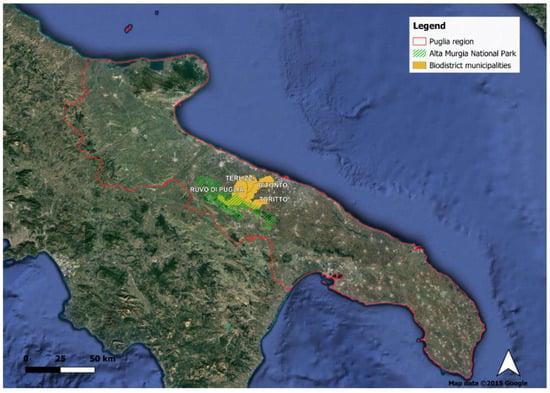
Assessing the Landscape’s Ability to Support the Agroecological Transition of Bio-Distretto Delle Lame
by
Ayantu Tadesse Deressa, Alessia Perrino, Carlo Ranieri, Gabriele Favia, Mariano Fracchiolla, Franco Santoro and Generosa Calabrese
Land 2026, 15(7), 1199; https://doi.org/10.3390/land15071199 - 3 Jul 2026
Abstract
Biodiversity and landscape heterogeneity are key components of agroecosystem functioning because they support ecosystem services and strengthen the capacity of agricultural systems to undertake sustainable agroecological transitions. This study assesses the landscape structure of the municipality of Ruvo di Puglia, within the Bio-Distretto
[...] Read more.
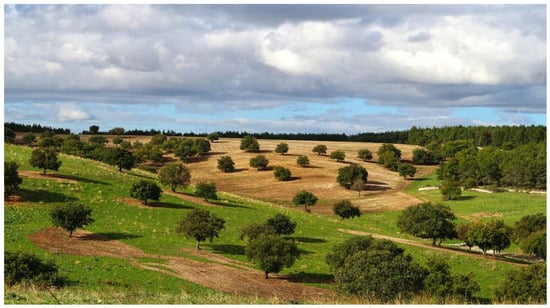
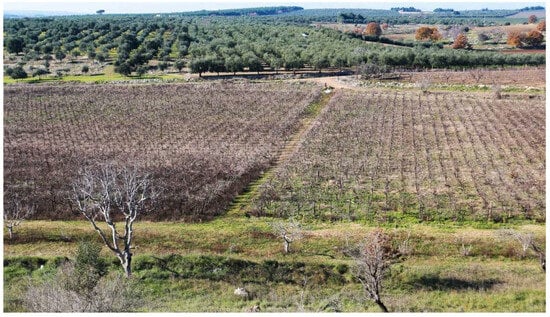
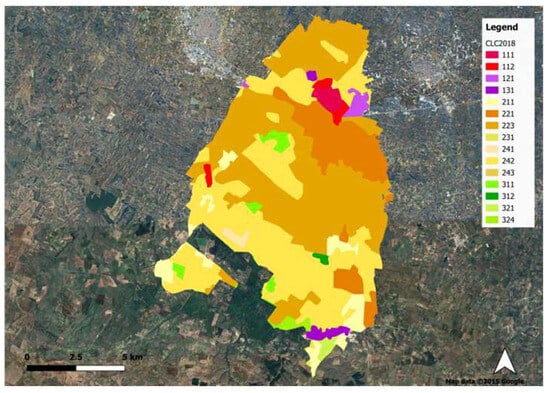
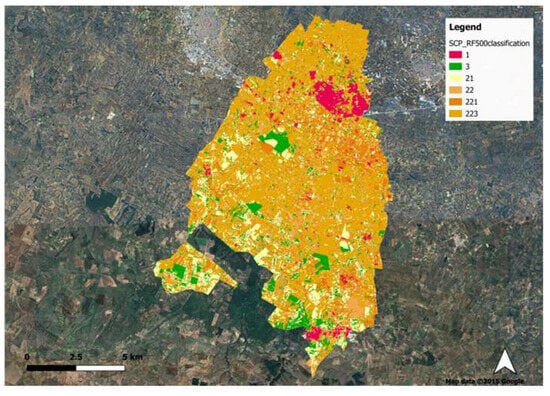
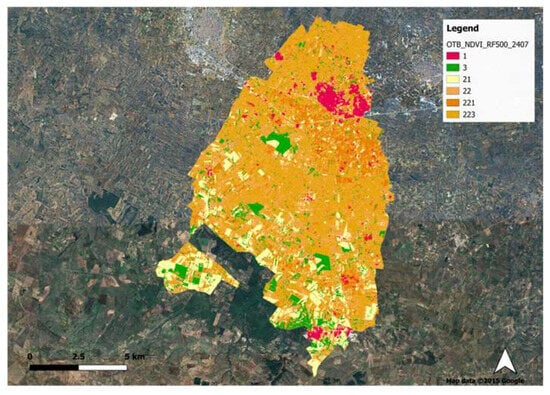
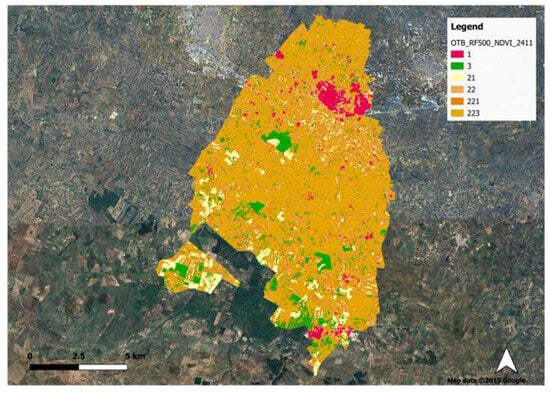
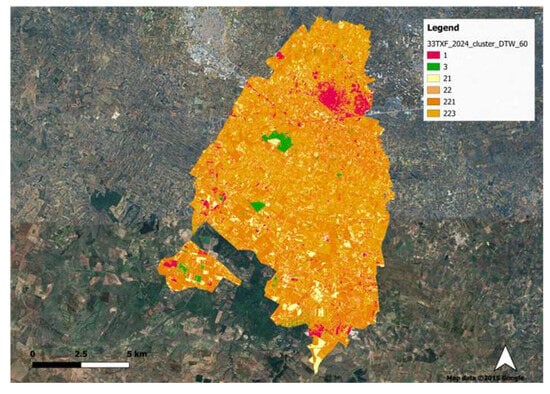
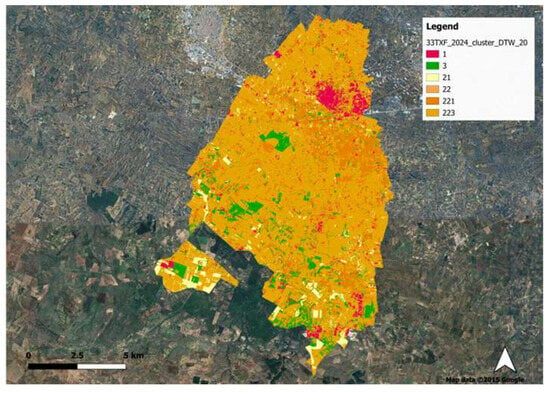
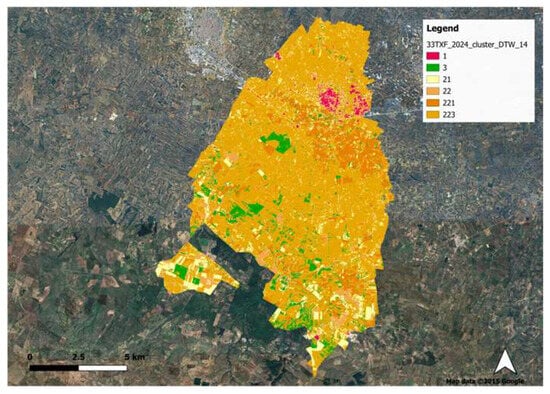
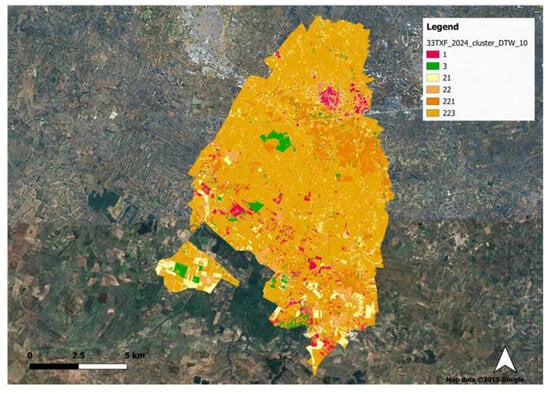
Biodiversity and landscape heterogeneity are key components of agroecosystem functioning because they support ecosystem services and strengthen the capacity of agricultural systems to undertake sustainable agroecological transitions. This study assesses the landscape structure of the municipality of Ruvo di Puglia, within the Bio-Distretto delle Lame, to evaluate its potential to support such a transition. Bio-districts are territories in which farmers, local authorities, citizens, and other stakeholders collaborate to manage natural and agricultural resources sustainably, often with a strong connection to organic farming. The research combines freely available Sentinel-2 imagery with UAV-based ground truthing to update land-use/land-cover information and to derive landscape indicators. A systematic sampling scheme was designed in QGIS, and UAV flights over 14 areas were used to generate training and validation vectors. Two classification strategies were tested on 2024 Sentinel-2 data: a supervised pixel-based approach and an unsupervised multi-temporal object-based approach (GEOBIA). The best-performing map was obtained from the supervised classification of July NDVI data, with an overall accuracy of 91.76%. In respect to the 2018 official land-cover dataset indicates a decrease in agricultural land (−490.91 ha), a reduction in arable crops (−1216.43 ha), and an increase in permanent crops (+725.52 ha), suggesting a shift toward specialization. At the same time, natural and semi-natural areas increased, improving the landscape potential for ecological functions. However, the high fragmentation detected by the landscape metrics (average patch size approximately 0.25 ha) may limit habitat continuity and species stability. The results should therefore be interpreted as an assessment of landscape structure and potential biodiversity support, rather than as a direct measurement of biological diversity. Strengthening ecotones, hedgerows and semi-natural linear elements with native species would further improve landscape resilience and support agroecological planning.
Full article
(This article belongs to the Special Issue Land Use, Ecosystem Services and Environmental Management in Mediterranean Climate Areas)
►▼
Show Figures

Figure 1
Open AccessArticle
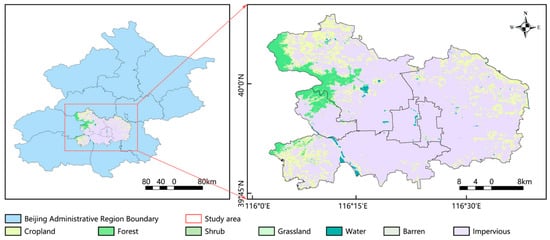
Identifying Nature-Based Solution Priority Areas for Urban Waterlogging Adaptation Under Climate Change and Urban Expansion
by
Chenchen Yang, Dongxu Lin, Yuhan Duan, Chenshuo Wang, Ming Lei and Zhifang Wang
Land 2026, 15(7), 1198; https://doi.org/10.3390/land15071198 - 3 Jul 2026
Abstract
Identifying where nature-based solutions should be prioritized has become a critical task for climate-adaptive urban stormwater management under the combined pressures of climate change and urban expansion. Taking the central urban area of Beijing as a case study, this study develops a dynamic
[...] Read more.
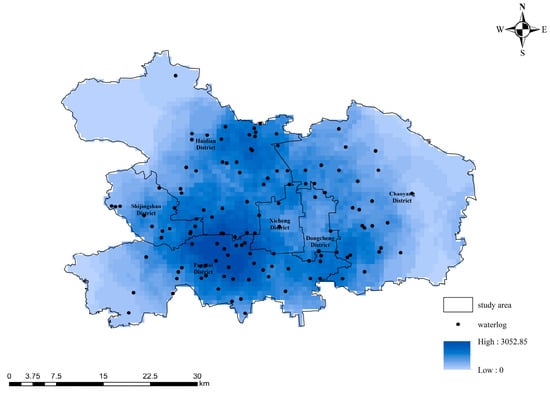
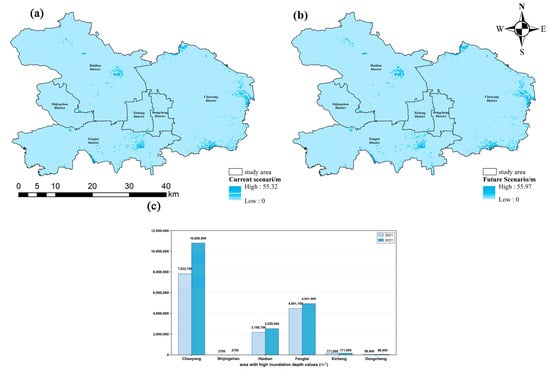
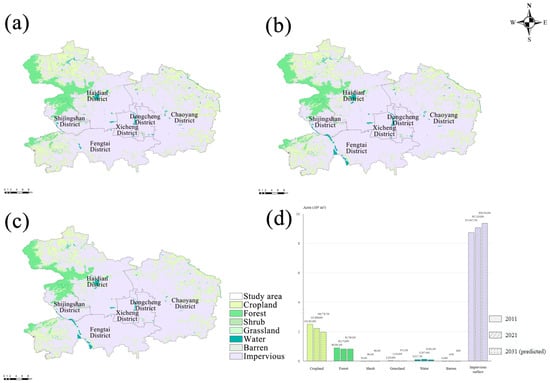
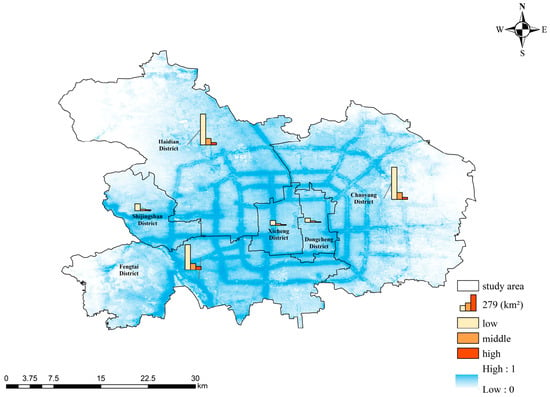
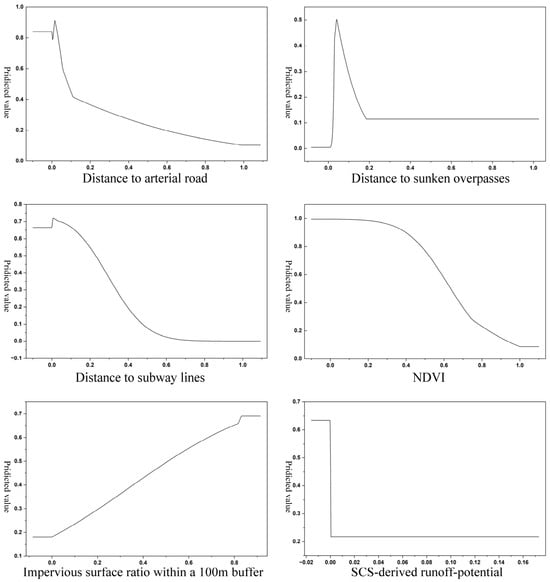
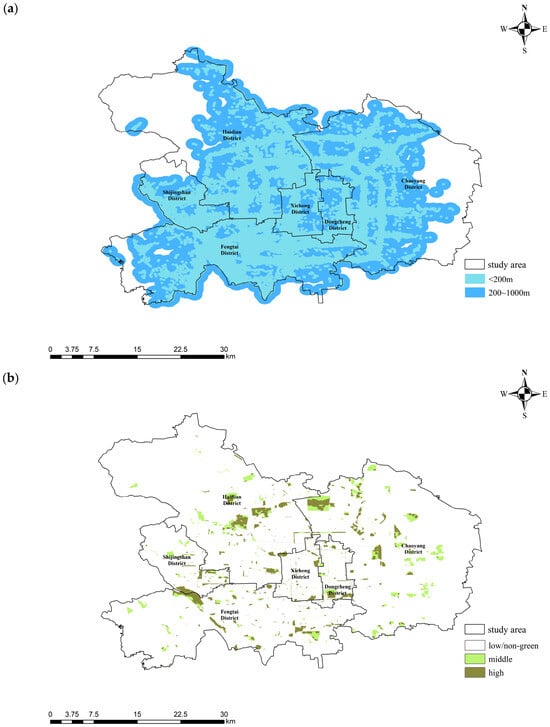
Identifying where nature-based solutions should be prioritized has become a critical task for climate-adaptive urban stormwater management under the combined pressures of climate change and urban expansion. Taking the central urban area of Beijing as a case study, this study develops a dynamic prediction framework that incorporates the Source–Flow–Sink (SFS) process of urban waterlogging. The framework integrates a future land use simulation model (FLUS), the Soil Conservation Service (SCS) hydrological model, and the Maximum Entropy (MaxEnt) model and incorporates both climate change (RCP8.5) and urban expansion to simulate the spatial configuration of waterlogging risk in 2031. High-risk areas were then overlaid with land-cover data and open-space distribution to identify potential NbS opportunity spaces, which were further examined through field investigation. The results show that future waterlogging risk in Beijing exhibits a clear corridor-oriented pattern closely associated with transportation infrastructure. Transportation-related variables account for more than 80% of total model contribution, suggesting a strong statistical association between future waterlogging occurrence and transportation-related spatial features. Field investigation further reveals that many roadside green spaces are elevated above adjacent roads, limiting their ability to receive and retain runoff. Thus, the key adaptation challenge lies not simply in the amount of green space, but in the weak hydrological connection between runoff pathways and adjacent open spaces. While Beijing’s priority areas are mainly corridor-based, other cities may be shaped by different processes and spaces. More broadly, this study demonstrates how hydrological risk simulation can be translated into spatially explicit planning priorities and more locally grounded adaptation decisions.
Full article
(This article belongs to the Special Issue Nature-Based Solutions for Climate Adaptation of Urban Stormwater Management: Performance Assessment of Blue-Green Infrastructure)
►▼
Show Figures

Figure 1

Open AccessArticle
Stage-Specific Characteristics, Trend Variability, and Future Scenario Simulation of Rocky Desertification Recovery in Southeastern Yunnan, China
by
Huan Liu, Chao Zhang and Xiyu Zhang
Land 2026, 15(7), 1197; https://doi.org/10.3390/land15071197 - 3 Jul 2026
Abstract
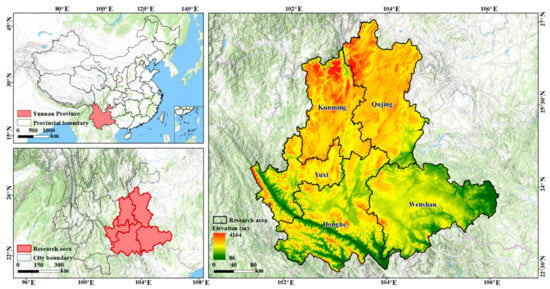
The restoration of karst rocky desertification is reflected not only in the reduction in severely degraded areas but also in the stability of the restoration process and the potential risk of future reversal. Taking southeastern Yunnan, China, as the study area, this study
[...] Read more.
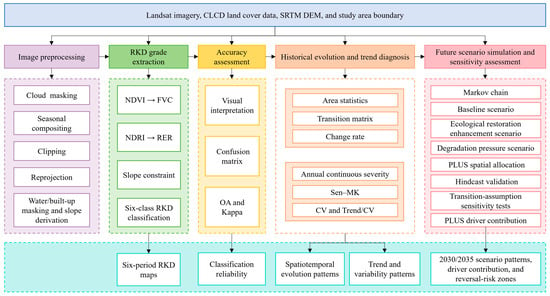
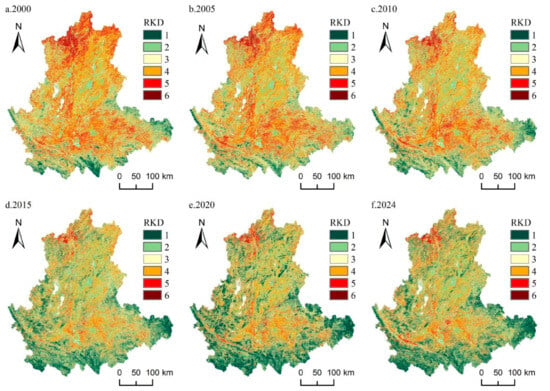
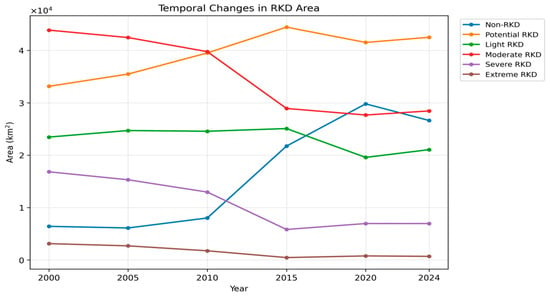
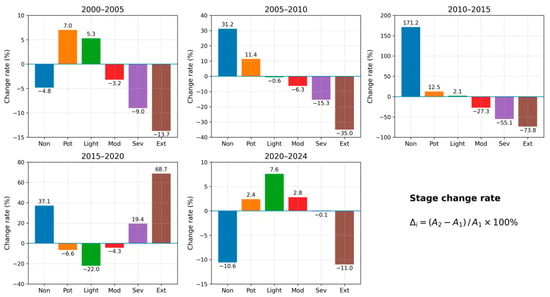
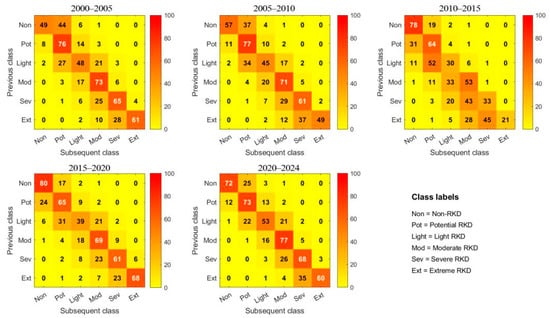
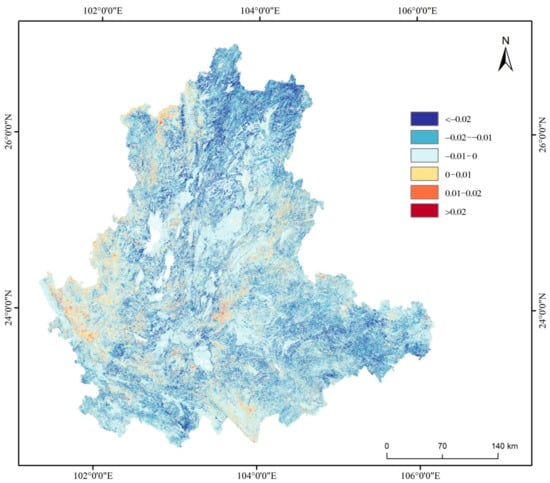
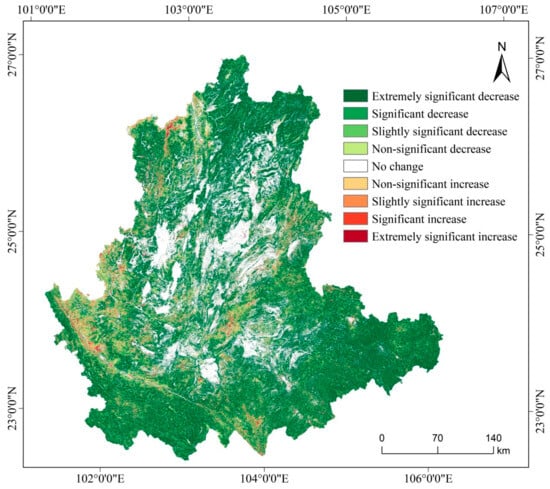
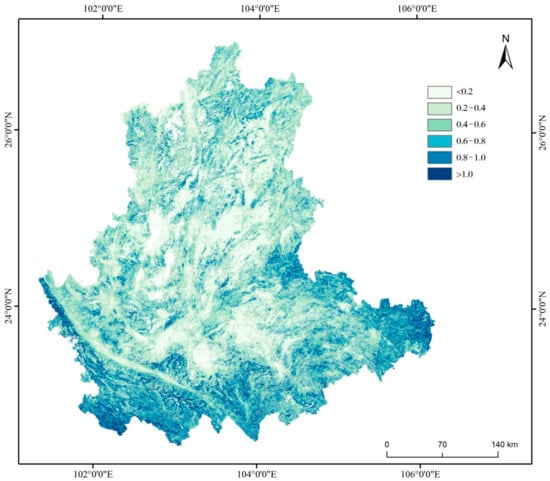
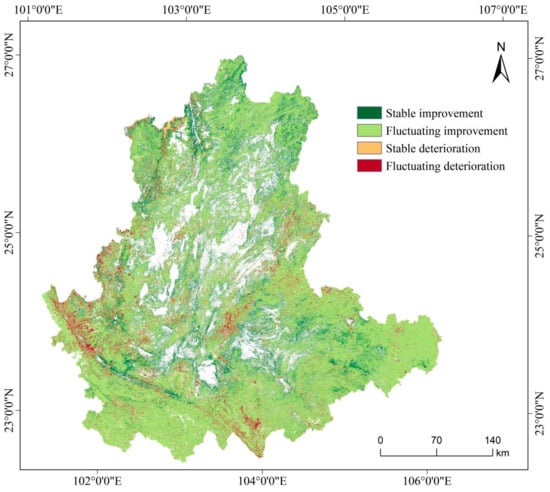
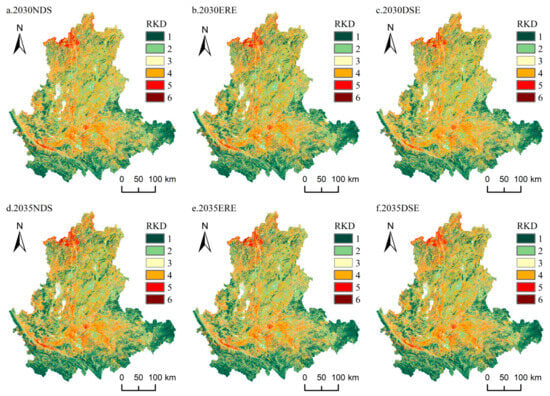
The restoration of karst rocky desertification is reflected not only in the reduction in severely degraded areas but also in the stability of the restoration process and the potential risk of future reversal. Taking southeastern Yunnan, China, as the study area, this study constructed a six-period rocky desertification grade sequence for the years 2000, 2005, 2010, 2015, 2020, and 2024 using Landsat imagery, CLCD land-cover data, and DEM-derived slope constraints. Area change analysis, grade-transition matrices, Sen–MK trend analysis, coefficient of variation (CV), Markov–PLUS scenario simulation, scenario-sensitivity analysis, and PLUS driver contribution assessment were integrated into a process-oriented diagnostic framework to examine rocky desertification recovery from three dimensions: grade-structure adjustment, trend-variability stability, and potential future reversal risk. The results indicate that rocky desertification in southeastern Yunnan generally weakened from 2000 to 2024. The proportion of moderate-and-above rocky desertification decreased from 50.32% to 28.58%, while non-rocky desertification and potential rocky desertification expanded substantially. Grade transitions were dominated by gradual conversions among adjacent classes, with the most evident improvement occurring during 2010–2015, when the proportion of improvement transitions reached 44.16%. The trend-variability analysis indicated that while improvement dominated the study area overall, the northern, northwestern, central mountainous, and parts of the southwestern areas still exhibited relatively strong variability and localized deterioration risk. Hindcast validation showed relatively high map-level consistency between simulated and historical patterns, with an overall accuracy of 0.9354 and a Kappa coefficient of 0.9153. The three-scenario comparison further showed that the proportion of moderate-and-above rocky desertification varied from 28.07% to 29.41% in 2030 and from 26.85% to 29.06% in 2035 under different transition-probability assumptions. Specifically, the ecological restoration enhancement scenario reduced projected moderate-and-above rocky desertification, whereas the degradation pressure scenario increased it relative to the baseline scenario. These findings indicate that rocky desertification recovery in southeastern Yunnan is not a continuous or linear process, but is characterized by stage-specific adjustment, spatial differentiation, and local variability. Therefore, future rocky desertification control should focus not only on reducing high-severity areas, but also on maintaining restoration stability, identifying variability-sensitive transitional zones, and strengthening differentiated management in areas where terrain constraints, land-cover proximity, and historical variability jointly increase reversal risk.
Full article
(This article belongs to the Section Land, Soil and Water)
►▼
Show Figures

Figure 1

Open AccessArticle
SVM-GAM Downscaling Framework for Quantifying Ecological Losses in Data-Limited Estuarine Dredging Areas
by
Zijing Liu, Zhaoxing Han, Liguo Zhang, Dingkun Yin, Jinxiang Cheng, Ning Zhang, Shengqiang Liu, Chaohui Zheng, Jie Liu, Yue Li, Jinpeng Lv, Qi Liu and Junhui He
Land 2026, 15(7), 1196; https://doi.org/10.3390/land15071196 - 3 Jul 2026
Abstract
Accurate quantification of ecological losses in estuarine environments is often hindered by the mismatch between coarse-resolution biological surveys and fine-scale physical disturbances from engineering activities. While numerical models can simulate high-resolution environmental shifts, the inherent sparsity of ecological monitoring points limits the precision
[...] Read more.
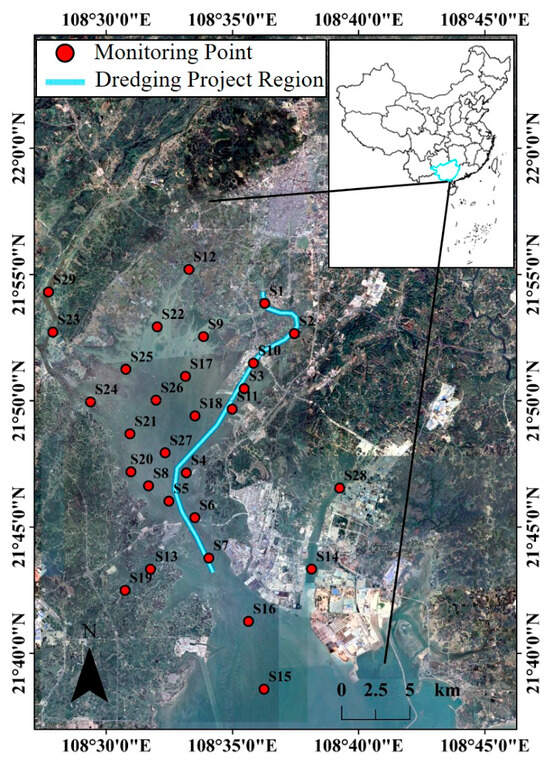
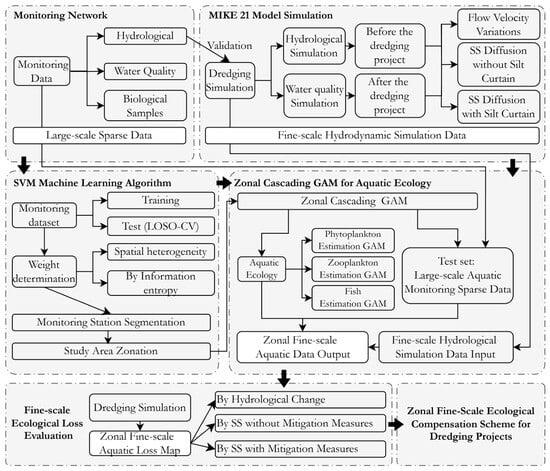
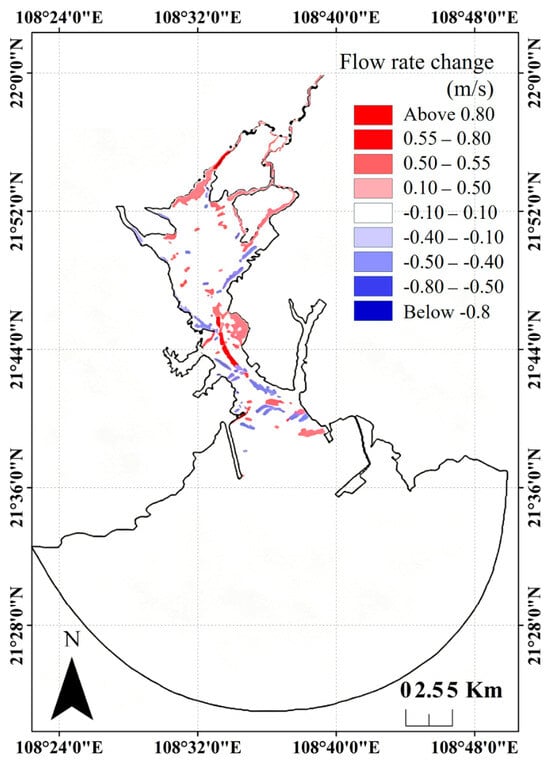
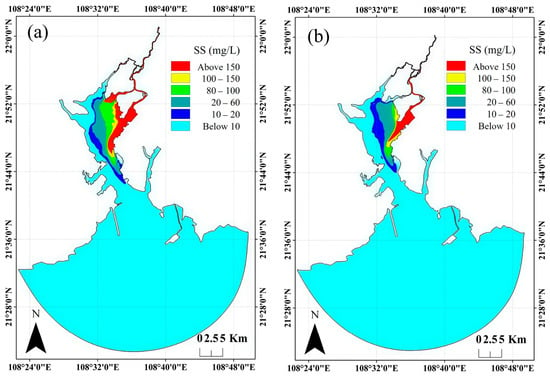
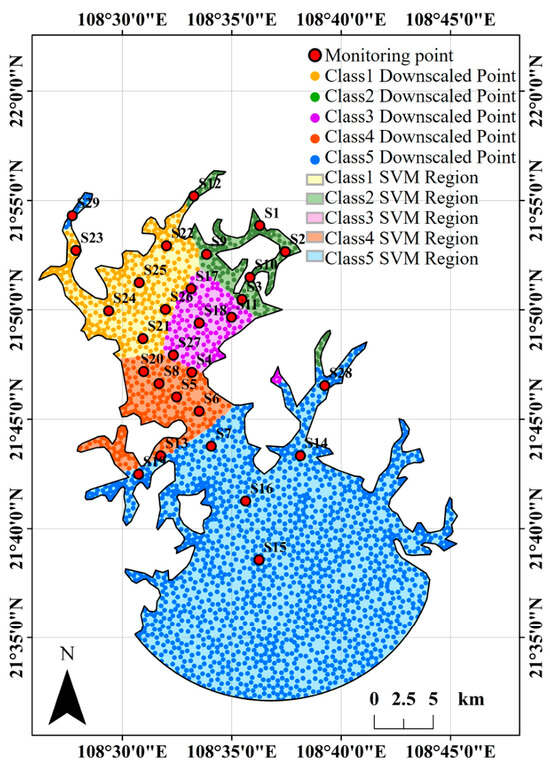
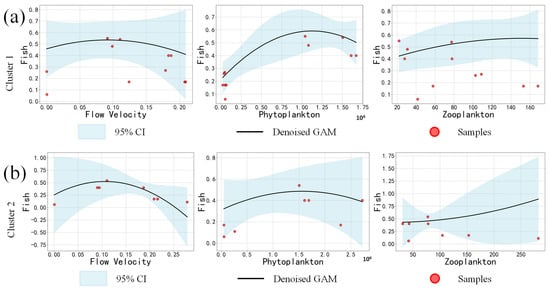
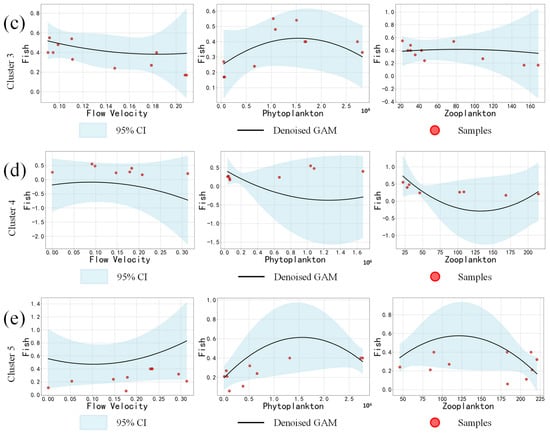
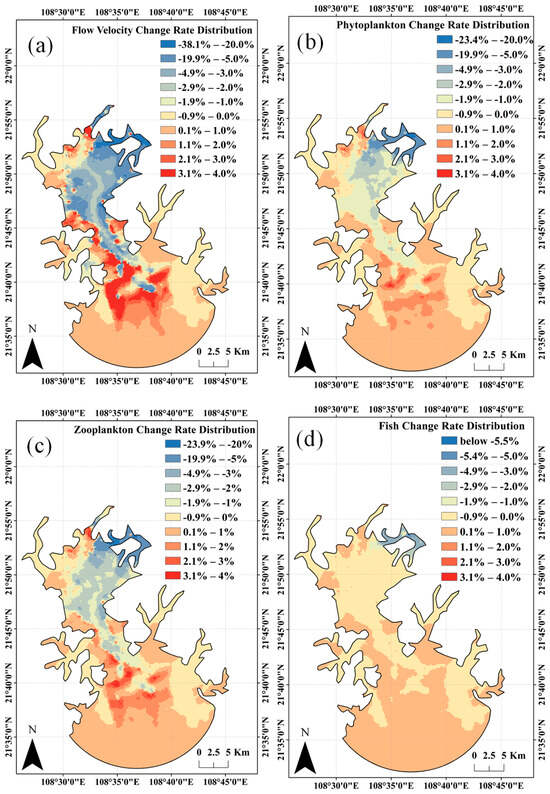
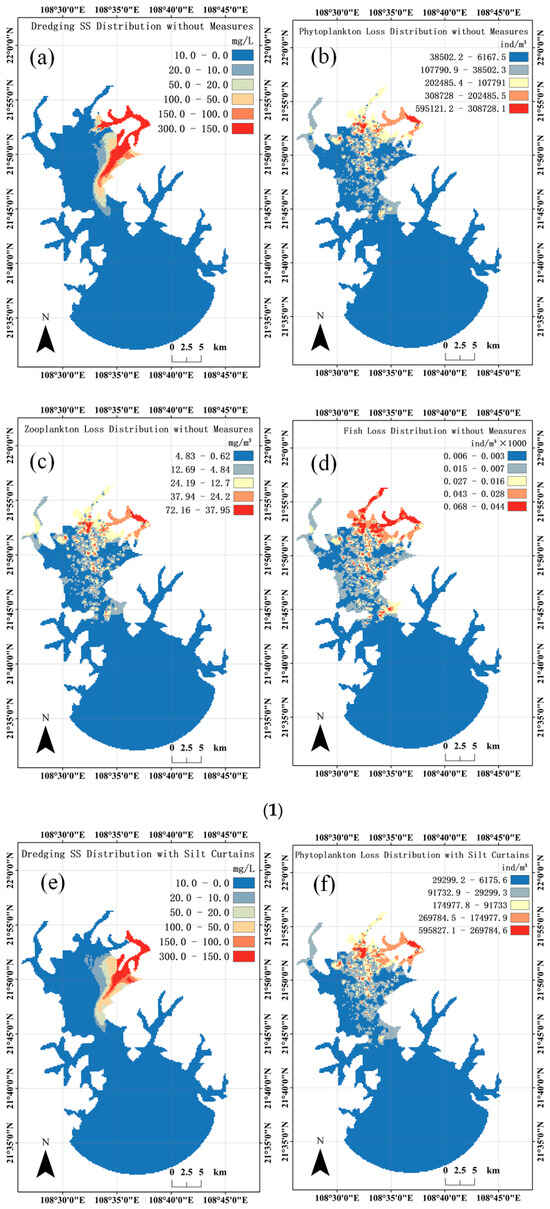
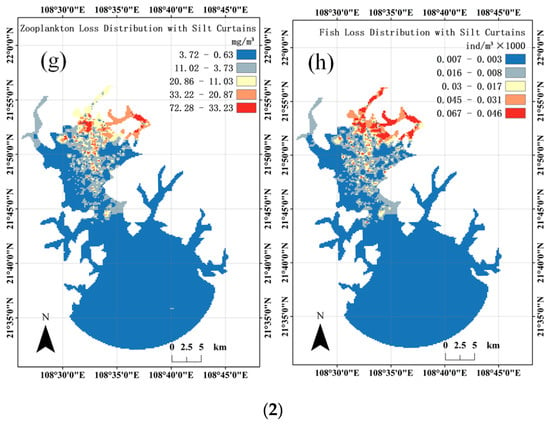
Accurate quantification of ecological losses in estuarine environments is often hindered by the mismatch between coarse-resolution biological surveys and fine-scale physical disturbances from engineering activities. While numerical models can simulate high-resolution environmental shifts, the inherent sparsity of ecological monitoring points limits the precision of spatial impact assessments. This study develops an integrated spatial-downscaling framework to transform sparse monitoring data into a high-resolution spatial continuum. A three-tiered modeling approach was used: first, the estuarine domain was partitioned into five eco-hydrodynamic zones using an entropy-weighted Support Vector Machine (SVM); second, localized chained Generalized Additive Models (GAMs) were established within each zone using MIKE-simulated hydrodynamic and water-quality data as proxy drivers; and third, these localized response functions were propagated across the study area to quantify multi-trophic biomass and economic losses. The framework revealed substantial spatial non-stationarity. Dredging operations locally altered the estuarine hydrodynamic regime. In northern channels, decreases in flow velocity were statistically associated with phytoplankton biomass to decline by 5.0% to 23.42%. Conversely, southern velocity increases enhanced water exchange and plankton growth. Using silt curtains as a mitigation strategy reduced the loss of phytoplankton by 11.4% and zooplankton by 9.6%. As a result, the total economic loss decreased from 26.54 million CNY to 25.34 million CNY, equivalent to a 4.5% reduction in economic loss. These results indicate that the proposed downscaling method can generate spatially explicit biological estimates. By offering a systematic pathway for impact evaluation and compensation in data-limited coastal regions, this framework supports more ecologically sustainable dredging operations. Nevertheless, the framework remains dependent on the representativeness of sparse monitoring stations, and future applications should integrate cross-estuary validation to improve transferability and uncertainty control.
Full article
(This article belongs to the Topic Advances in Multi-Scale Geographic Environmental Monitoring: Ecosystem Differences and Multi-Scale Comparisons)
►▼
Show Figures

Figure 1
Open AccessArticle
Monitoring Meteorological and Hydrological Droughts at a Daily Scale: Simple Physical Models and Derived Indexes
by
Dian Yuan and Er Lu
Land 2026, 15(7), 1195; https://doi.org/10.3390/land15071195 - 2 Jul 2026
Abstract
The day-to-day monitoring of drought is required by decision-makers. Treating flood/drought as an instantaneous state, we have developed a physical model to describe the time change in the state, and proposed the derived WAP (Weighted Average of Precipitation) index, which uses precipitation only
[...] Read more.
The day-to-day monitoring of drought is required by decision-makers. Treating flood/drought as an instantaneous state, we have developed a physical model to describe the time change in the state, and proposed the derived WAP (Weighted Average of Precipitation) index, which uses precipitation only and monitors meteorological drought. Evaporation is implicitly included in the model as one of the dissipation components. In the present study, we modify the model to express evaporation explicitly, making the “flood extent” forced by both precipitation and evaporation. The derived WAPE index serves as a water-balance-based drought indicator that reflects the day-to-day variation in moisture conditions, with particular emphasis on soil drying processes. Compared with WAP, WAPE captures further changes in drought extent during dry periods, corresponding to soil moisture evolution. The WAPE reasonably describes two real physical processes: (1) during dry spells with strong evaporation, drought tends to be aggravated; and (2) when local drought is severe and evaporation weakens, drought may be locally mitigated due to the restoring force from horizontal and vertical soil moisture gradients. The daily-resolution and physically based nature of the WAPE index also suggests its potential applicability to the identification and dynamic monitoring of flash droughts under climate warming.
Full article
(This article belongs to the Special Issue Global Change and Vulnerable Land Ecosystems: Integrated Vegetation–Hydrology–Climate Responses and Policy Implications for Sustainable Land Governance)
Open AccessArticle
The Impact of Grain Import Substitution on China’s Cultivated Land Pressure
by
Ziqiang Li, Weijiao Ye and Ciwen Zheng
Land 2026, 15(7), 1194; https://doi.org/10.3390/land15071194 - 2 Jul 2026
Abstract
Grain trade connects regions with different land endowments and can help relieve pressure on productive cultivated land. This study constructs a modified cultivated land pressure index incorporating a standardized land productivity coefficient to account for regional variations in land quality. Using provincial-level panel
[...] Read more.
Grain trade connects regions with different land endowments and can help relieve pressure on productive cultivated land. This study constructs a modified cultivated land pressure index incorporating a standardized land productivity coefficient to account for regional variations in land quality. Using provincial-level panel data for 30 regions in China from 2003 to 2020 and a two-way fixed-effects model, we investigate the association between grain import substitution and cultivated land pressure. (1) The virtual land calculations show that soybean had the highest virtual land content among the four major crops, with a national average of 0.554 ha/t, approximately three times that of rice. The virtual land content of soybean, wheat, rice, and maize declined by 20.25–25.76% during the study period, indicating continuous improvement in land-use efficiency. (2) From 2003 to 2020, cultivated land pressure showed clear regional disparities: the Northeast exhibited a gradual decline to moderate levels, and South China and the Middle–Lower Yangtze River regions increased from moderate to high pressure, while the Huang–Huai–Hai Region remained persistently high, and the Southwest remained at moderate levels. (3) Grain import substitution is significantly associated with lower cultivated land pressure, suggesting that imports may contribute to easing domestic land constraints; each additional 100,000 hectares of equivalent domestic cultivated land saved is associated with a reduction of 0.049 in the pressure index. The pressure-alleviating effect is stronger in northern regions and major grain-producing areas than in southern and non-major producing regions. (4) Spatial econometric analysis indicates positive spatial dependence, with increased grain import substitution in one region linked to lower cultivated land pressure in neighboring provinces. This study refines the conventional cultivated land pressure index and provides a framework for assessing both the direct and spillover effects of grain imports on domestic land resources. The findings underscore the potential of grain trade to support sustainable land use and regional resource allocation.
Full article
(This article belongs to the Section Land Use, Impact Assessment and Sustainability)
Open AccessArticle
Driving Factors of Habitat Quality and Degradation Revealed by GeoDetector-Based Analysis: A Coastal District of Çeşme, İzmir (Türkiye)
by
Esra Kut Görgün, Stefano Salata, Kemal Mert Çubukçu and Koray Velibeyoğlu
Land 2026, 15(7), 1193; https://doi.org/10.3390/land15071193 - 2 Jul 2026
Abstract
Habitats are fundamental for maintaining biodiversity, supporting ecological processes, and delivering essential ecosystem services such as carbon sequestration, water regulation, and soil conservation. Habitat degradation has become an increasingly critical environmental concern, particularly in coastal regions where anthropogenic pressures intersect with natural dynamics
[...] Read more.
Habitats are fundamental for maintaining biodiversity, supporting ecological processes, and delivering essential ecosystem services such as carbon sequestration, water regulation, and soil conservation. Habitat degradation has become an increasingly critical environmental concern, particularly in coastal regions where anthropogenic pressures intersect with natural dynamics under the accelerating impacts of climate change. (1) This study explores the spatially stratified heterogeneity and underlying driving factors of habitat quality and degradation in Çeşme, a rapidly developing coastal district in western Türkiye. (2) The InVEST Habitat Quality model was applied to assess both habitat quality and habitat degradation across the study area for the years 2017 and 2024. The GeoDetector method was applied to analyze the spatial heterogeneity in habitat quality and degradation, enabling the assessment of dominant environmental and anthropogenic drivers, including urban development pressure, tourism activities, energy-related infrastructure, road density, and vegetation conditions. (3) Night-time light intensity showed the highest explanatory power among the tested variables, although its absolute explanatory power for habitat degradation remained limited, while protection status represented a contrasting human-related factor associated with higher habitat quality. (4) These findings underscore the importance of carefully directing human interventions to balance development pressures with effective conservation strategies.
Full article
(This article belongs to the Special Issue Regenerative Landscapes: Designing with Ecological Connectivity and Habitat Use in Mind)
Open AccessArticle
Exploring Farm Diversity in Italian Commercial Chestnut Farms: Economic Intensity, Specialization, and Structural Maturity
by
Dario Macaluso, Francesco Licciardo and Tatiana Castellotti
Land 2026, 15(7), 1192; https://doi.org/10.3390/land15071192 (registering DOI) - 2 Jul 2026
Abstract
►▼
Show Figures
Italy is among the world’s leading producers and exporters of chestnut. Over the past two decades, however, the sector has undergone significant structural changes driven by phytosanitary shocks and evolving market conditions. This study examines the structural and economic heterogeneity of Italian commercial
[...] Read more.
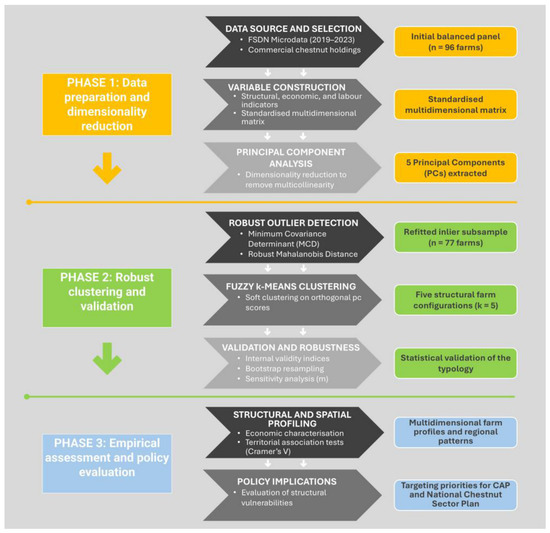
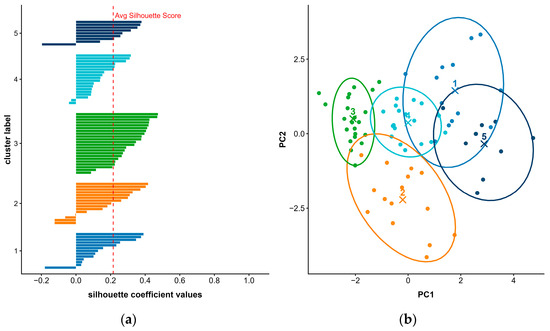
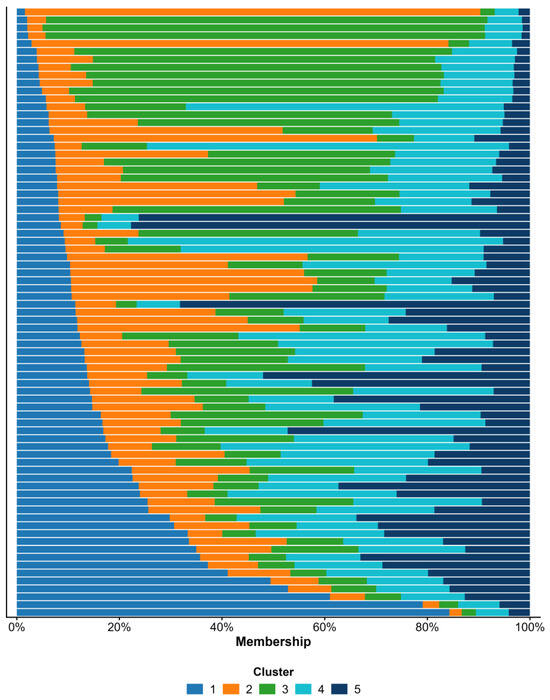
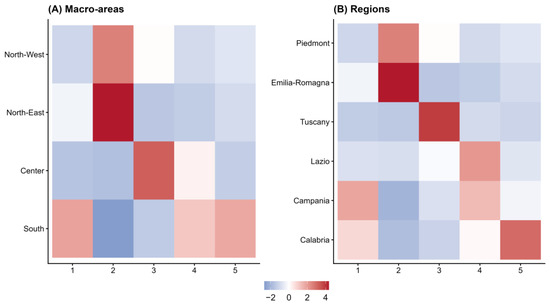
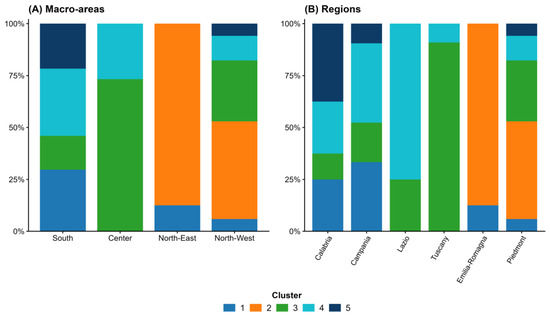
Italy is among the world’s leading producers and exporters of chestnut. Over the past two decades, however, the sector has undergone significant structural changes driven by phytosanitary shocks and evolving market conditions. This study examines the structural and economic heterogeneity of Italian commercial chestnut farms over the period 2019–2023, aiming to identify recurrent production configurations and assess their economic performance and territorial distribution within the Farm Sustainability Data Network (FSDN) field of observation. The analysis is based on a balanced panel of 96 farms, from which a subsample of 77 inliers was identified through robust multivariate diagnostic tests. Farm-level indicators were aggregated over five years to capture medium-term positioning. Principal Component Analysis (PCA) was used to identify the main latent dimensions of variability, and fuzzy k-means clustering was subsequently performed on the resulting component scores. A five-cluster configuration was selected on the basis of internal validity indices, bootstrap stability, fuzzifier sensitivity and leave-one-variable-out robustness checks. The results reveal pronounced multidimensional differentiation within the observed sample. High economic intensity does not necessarily translate into greater margin stability, the effects of structural maturity vary according to cost exposure and labor organization. Territorial differentiation is statistically significant but not deterministic. Overall, the analysis provides an empirical characterization of structural profiles and their associated trade-offs within the observed commercial segment, offering insights into differentiated policy responses for perennial Mediterranean farming systems.
Full article

Figure 1
Open AccessArticle
Evaluation of Radiometric Calibration for FY-3D MERSI-II Thermal Infrared Channels and Its Impact on Land Surface Temperature Estimation
by
Xiangchen Meng, Jie Cheng, Lixin Dong, Hao Guo, Rui Liu, Qinghou Hang and Yuezhi Cai
Land 2026, 15(7), 1191; https://doi.org/10.3390/land15071191 - 2 Jul 2026
Abstract
The radiometric stability of satellite thermal infrared (TIR) channels is an indispensable prerequisite for the accurate retrieval of land surface temperature (LST) and the generation of reliable climate data records. This study evaluates the on-orbit radiometric calibration stability of the Fengyun-3D (FY-3D)/MEdium Resolution
[...] Read more.
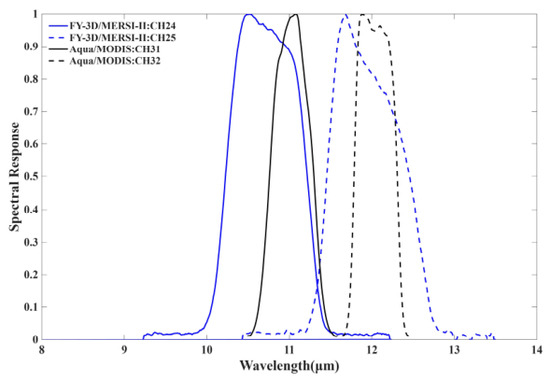
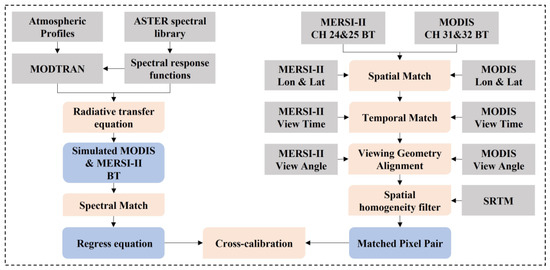
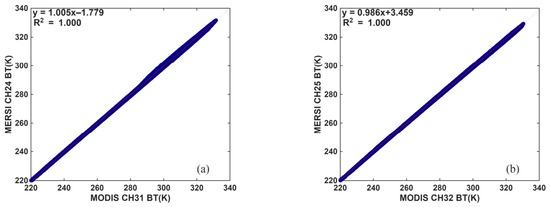
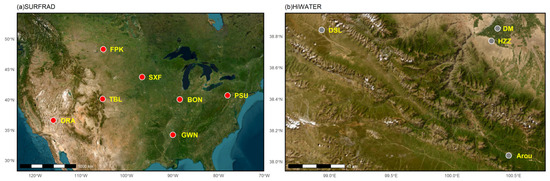
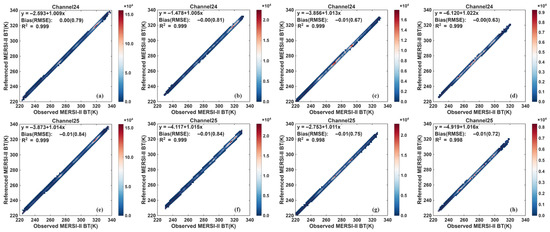
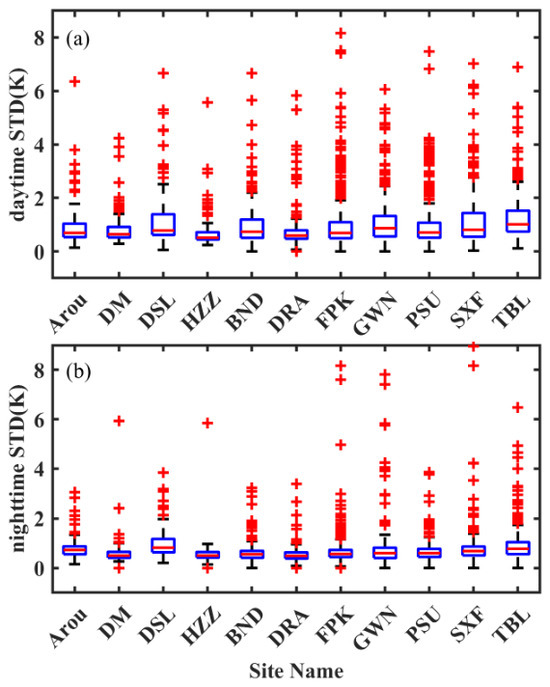
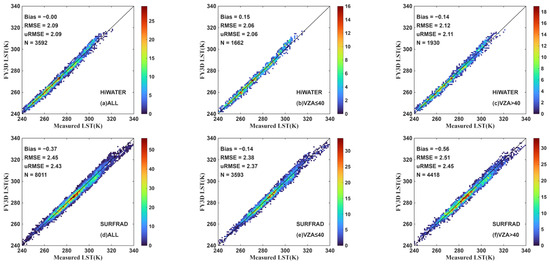
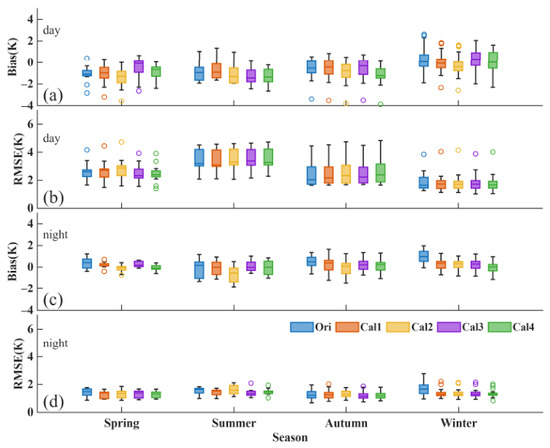
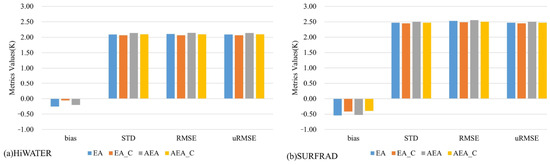
The radiometric stability of satellite thermal infrared (TIR) channels is an indispensable prerequisite for the accurate retrieval of land surface temperature (LST) and the generation of reliable climate data records. This study evaluates the on-orbit radiometric calibration stability of the Fengyun-3D (FY-3D)/MEdium Resolution Spectral Imager-II (MERSI-II) TIR channels (channels 24 and 25) over four years (2021–2024) via a rigorous cross-calibration framework against Aqua/Moderate Resolution Imaging Spectroradiometer (MODIS). By imposing stringent spectral, spatial, temporal, and angular constraints to ensure the high fidelity of collocated pixel pairs, the cross-calibration results demonstrate that FY-3D/MERSI-II exhibits exceptional radiometric stability. Absolute brightness temperature biases are typically less than 0.1 K, with root mean square errors (RMSEs) limited to 1.20 K over a range of diurnal and seasonal conditions, demonstrating no noticeable systematic degradation. Furthermore, the downstream impact of this calibration on LST retrieval was quantified using the adapted National Oceanic and Atmospheric Administration Joint Polar Satellite System Enterprise algorithm. Validated against independent ground-based longwave radiation measurements collected from the Heihe Watershed Allied Telemetry Experimental Research network (HiWATER) and the Surface Radiation Budget Network (SURFRAD), the retrieved LST yielded overall biases of 0 K and −0.37 K, respectively, with RMSEs below 2.5 K. Cross-calibration demonstrates a limited and context-dependent impact on daytime LST, while the nighttime LST accuracy can be marginally improved using seasonal calibration coefficients derived from combined day/night matchups. Mechanistically, the integration of a soil directional emissivity model into the retrieval algorithm effectively mitigates viewing-zenith-angle (VZA)-induced uncertainties, systematically reducing biases by 0.12–0.20 K and RMSEs by 0.04–0.06 K. These findings confirm that the on-orbit radiometric calibration of FY-3D/MERSI-II meets scientific quality requirements and provide practical guidance for optimizing LST retrieval.
Full article
(This article belongs to the Special Issue Sustainable Landscape Planning for Urban Heat Island Mitigation: Strategies, Tools, and Emerging Challenges)
►▼
Show Figures

Figure 1
Open AccessArticle
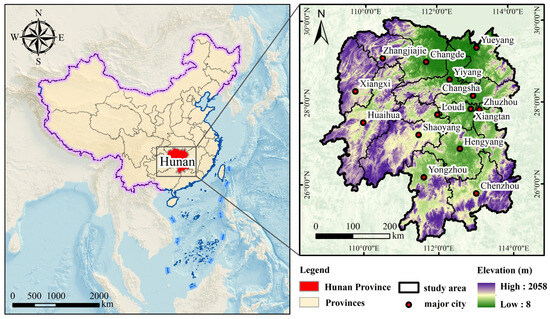
Spatiotemporal Dynamics and Predictors of Cropland Change in Hunan Province, China: An XGBoost-SHAP Approach
by
Ang Zhou, Xianchao Zhao, Sijie Gao, Zijian Zheng and Zhiyang Gao
Land 2026, 15(7), 1190; https://doi.org/10.3390/land15071190 - 2 Jul 2026
Abstract
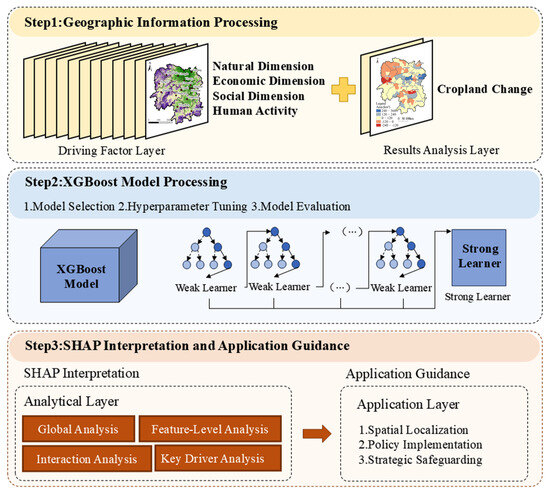
This study examines the spatiotemporal patterns of cropland change in Hunan Province and identifies the factors associated with net cropland decrease from 2000 to 2020. Using land-use transition analysis, spatial autocorrelation, Lorenz curves, Gini coefficients, and an interpretable XGBoost-SHAP model, this study analyzed
[...] Read more.
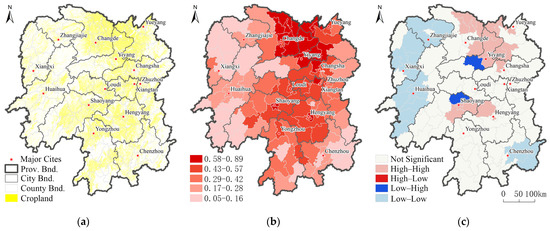
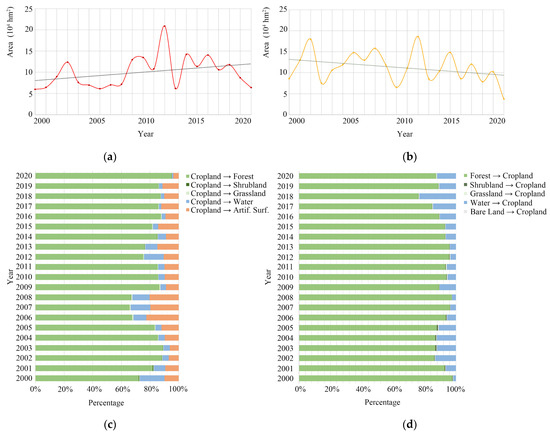
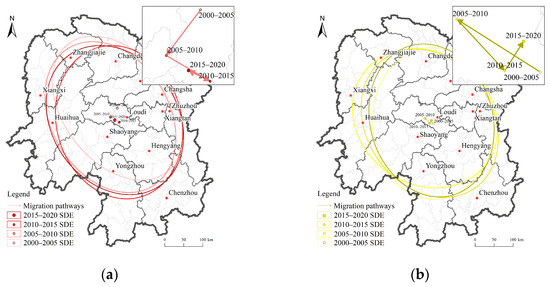
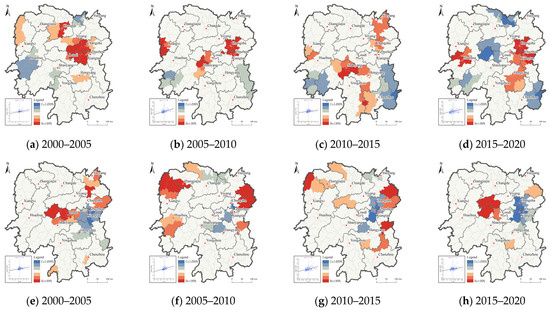
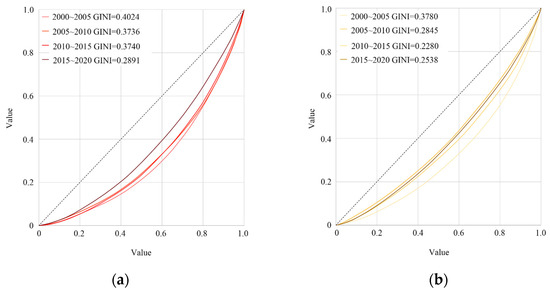
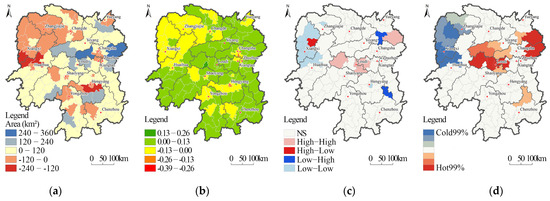
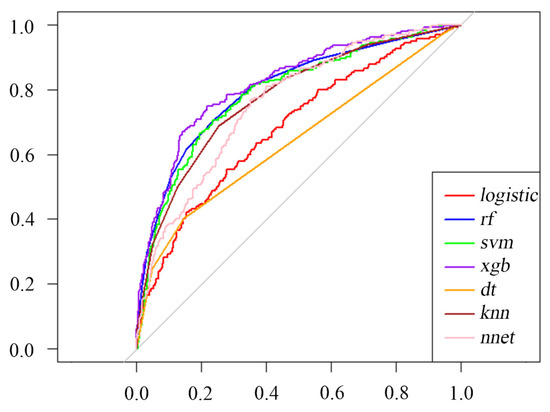
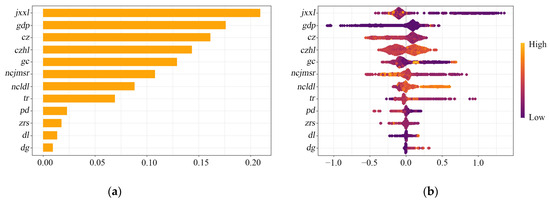
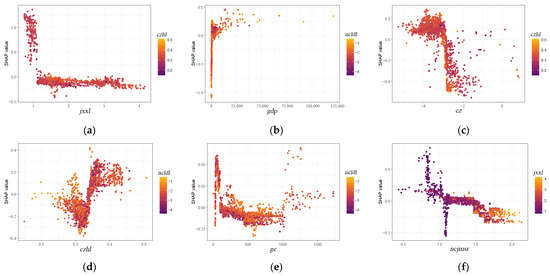
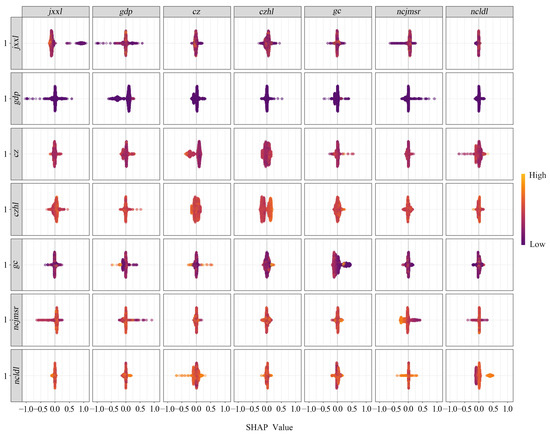
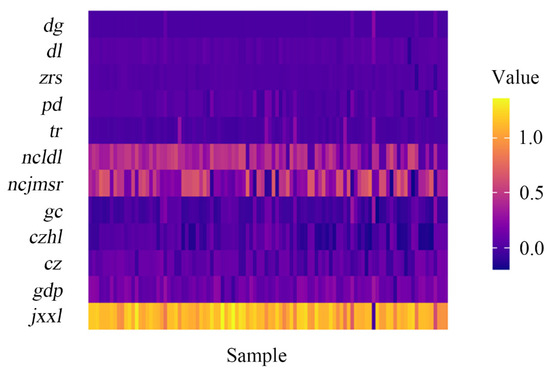
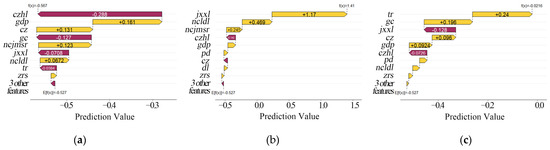
This study examines the spatiotemporal patterns of cropland change in Hunan Province and identifies the factors associated with net cropland decrease from 2000 to 2020. Using land-use transition analysis, spatial autocorrelation, Lorenz curves, Gini coefficients, and an interpretable XGBoost-SHAP model, this study analyzed cropland outflow, cropland inflow, net cropland change, and their associated explanatory patterns. The results show that: (1) cropland outflow was mainly concentrated in central and western Hunan, whereas cropland inflow was relatively more evident in central Hunan, but also occurred in parts of western and eastern Hunan. Total cropland area increased by 2961.73 km2 from 2000 to 2020, but decreased by 1467.91 km2 after peaking in 2009, indicating an inverted U-shaped trajectory; (2) the Gini coefficient of cropland outflow decreased from 0.4024 to 0.2891, while that of cropland inflow decreased from 0.3780 to 0.2538, indicating stronger spatial concentration of cropland outflow, although its spatial imbalance weakened over time; and (3) XGBoost-SHAP results showed that mechanical efficiency, gross domestic product (GDP), and fiscal conditions made the highest contributions to net cropland decrease, with mean absolute SHAP values of 0.21, 0.17, and 0.16, respectively. Overall, cropland change exhibited clear spatial heterogeneity, and socioeconomic and human-activity factors were dominant factors associated with net cropland decrease. These findings provide support for differentiated cropland protection and sustainable land-use management in major grain-producing regions.
Full article
(This article belongs to the Topic Global Farmland Protection, Food Security and Land Use Planning)
►▼
Show Figures

Figure 1
Journal Menu
► ▼ Journal Menu-
- Land Home
- Aims & Scope
- Editorial Board
- Reviewer Board
- Topical Advisory Panel
- Early Career Editorial Board
- Instructions for Authors
- Special Issues
- Topics
- Sections & Collections
- Article Processing Charge
- Indexing & Archiving
- Editor’s Choice Articles
- Most Cited & Viewed
- Journal Statistics
- Journal History
- Journal Awards
- Society Collaborations
- Conferences
- Editorial Office
Journal Browser
► ▼ Journal BrowserHighly Accessed Articles
Latest Books
E-Mail Alert
News
Topics
Topic in
Businesses, Economies, Humanities, Land, Sustainability, Tourism and Hospitality, Urban Science
Human–Environmental Relations: Ecotourism and Sustainability
Topic Editors: Tamara Gajić, Minja Bolesnikov, Aleksandar ErcegDeadline: 15 July 2026
Topic in
Forests, Land, Remote Sensing, Urban Science
Remote Sensing of Urban Forests and Their Ecological Functions
Topic Editors: Zhibin Ren, Sheng Xu, Mingming Jia, Chunlin LiDeadline: 31 July 2026
Topic in
Agronomy, Drones, Geomatics, IJGI, Land, Remote Sensing
Advances in Multi-Scale Geographic Environmental Monitoring: Ecosystem Differences and Multi-Scale Comparisons
Topic Editors: Jingzhe Wang, Xiangyu Ge, Zipeng Zhang, Ivan Lizaga, Yinghui Zhang, Yangyi WuDeadline: 31 August 2026
Topic in
Agronomy, Climate, Crops, Grasses, Horticulturae, Land, Plants
Reframing Strategies for a Low Carbon Future in Agricultural Systems
Topic Editors: M. Ibrahim Khalil, Bruce OsborneDeadline: 8 October 2026
Conferences
Special Issues
Special Issue in
Land
Urban Regeneration for a Sustainable and Inclusive Transition: Concepts, Methods and Policy
Guest Editors: Sebastiano Carbonara, Paola Pucci, Giovanni VecchioDeadline: 10 July 2026
Special Issue in
Land
GeoAI Application in Urban Land Use and Urban Climate
Guest Editors: Chunxiao Zhang, Wei Hou, Dongya Liu, Milan KonecnyDeadline: 10 July 2026
Special Issue in
Land
Spatial Optimization of Land Use: A Perspective on Carbon Emission and Energy Landscape Planning
Guest Editors: Jing Huang, Wenjing Han, Chai Duo, Jing Lan, Shan GuoDeadline: 15 July 2026
Special Issue in
Land
Application of the Ecosystem Service in Landscape Planning: From Cognition to Decision-Making (2nd Edition)
Guest Editors: Xi Li, Kai Li, Yuejing Rong, Hao Xia, Ruhong XinDeadline: 15 July 2026
Topical Collections
Topical Collection in
Land
Land Use Transitions and Land System Science
Collection Editor: Hualou Long
Topical Collection in
Land
Collection for the International Association for Landscape Ecology (IALE)
Collection Editor: Weiqi Zhou