

Topical Advisory Panel applications are now closed. Please contact the Editorial Office with any queries.
Journal Description
Laws
Laws
is an international, peer-reviewed, open access journal on legal systems, theory, and institutions, published bimonthly online by MDPI.
- Open Access— free for readers, with article processing charges (APC) paid by authors or their institutions.
- High Visibility: indexed within Scopus, ESCI (Web of Science), RePEc, vLex Justis, CanLII, Law Journal Library, and other databases.
- Journal Rank: JCR - Q2 (Law) / CiteScore - Q1 (Law)
- Rapid Publication: manuscripts are peer-reviewed and a first decision is provided to authors approximately 41.6 days after submission; acceptance to publication is undertaken in 6.7 days (median values for papers published in this journal in the first half of 2026).
- Recognition of Reviewers: reviewers who provide timely, thorough peer-review reports receive vouchers entitling them to a discount on the APC of their next publication in any MDPI journal, in appreciation of the work done.
- MDPI’s Journal Cluster of Social Studies: Challenges-Journal of Planetary Health, Disabilities, Genealogy, Laws, Sexes, Social Sciences, Societies and Systems.
Impact Factor:
1.1 (2025);
5-Year Impact Factor:
1.4 (2025)
Latest Articles
A Mark of Contempt: Spitting, Dignity, and the Misclassification of Harm in Law
Laws 2026, 15(4), 85; https://doi.org/10.3390/laws15040085 - 29 Jul 2026
Abstract
Spitting is commonly treated in legal contexts as a minor physical or public health offence; however, this classification reflects a broader doctrinal tendency to prioritise contact-based and biohazard models of harm. This paper argues that contemporary assault doctrine often privileges visible and measurable
[...] Read more.
Spitting is commonly treated in legal contexts as a minor physical or public health offence; however, this classification reflects a broader doctrinal tendency to prioritise contact-based and biohazard models of harm. This paper argues that contemporary assault doctrine often privileges visible and measurable injury, resulting in the under-recognition of symbolic and dignity-based harms. Using a purposive doctrinal and sociolegal analysis of selected legal authorities, the analysis advances the central claim that spitting may produce legally significant harm through its communicative function as an act of humiliation, degradation, and social exclusion. Drawing on dignity jurisprudence, vulnerability theory, trauma scholarship, and comparative legal analysis, the paper conceptualises spitting as a form of symbolic violence capable of producing psychologically significant impacts and legally relevant forms of harm independent of physical injury. Across custodial, clinical, and public settings, selected authorities suggest that legal reasoning often prioritises infection risk and physical contact while giving comparatively limited attention to humiliation, identity threat, and other non-physical dimensions of harm. The paper argues that existing legal and human rights principles may provide a doctrinal basis for recognising communicative and dignity-based harms, but that these principles remain inconsistently operationalised within assault law. Reframing spitting within a communicative and dignity-based model of harm may enhance doctrinal coherence and align legal interpretation more closely with the lived and relational realities of harm. In doing so, the paper contributes to broader sociolegal debates concerning dignity, vulnerability, and the recognition of non-physical injury within contemporary legal frameworks.
Full article
Open AccessArticle
From Recognition to Enforceability: Constitutionalizing the Right to Mental Health in Peru Through Constitutional Court Jurisprudence
by
Alfonso Renato Vargas-Murillo, Rafael Fortunato Supo Hallasi, Carlos Alberto Cueva Quispe, Ilda Nadia Monica de la Asuncion Pari-Bedoya, Regis André Junior Fernández Argandoña and Carlos Alberto Pajuelo Beltrán
Laws 2026, 15(4), 84; https://doi.org/10.3390/laws15040084 - 29 Jul 2026
Abstract
This article examines how the right to mental health has been constitutionalized in Peru through the jurisprudence of the Constitutional Court. Using doctrinal constitutional analysis, the article combines the interpretation of international human rights standards, domestic legislation, and the Court’s leading cases with
[...] Read more.
This article examines how the right to mental health has been constitutionalized in Peru through the jurisprudence of the Constitutional Court. Using doctrinal constitutional analysis, the article combines the interpretation of international human rights standards, domestic legislation, and the Court’s leading cases with a targeted review of recent scholarship on community mental health reform, disability rights, and coercion. It argues that the Peruvian Court has transformed mental health from a predominantly medical or welfare concern into a constitutionally enforceable right by recognizing its connection to dignity, psychological integrity, equality, and the right to health. The article further argues, however, that this constitutionalization remains incomplete: the Court has been stronger in recognition and remedial activation than in fully confronting coercion, legal capacity, and the structural determinants of unequal enjoyment. The Peruvian case therefore illustrates both the promise and the limits of judicially driven rights-based mental health reform. Its broader contribution lies in showing that constitutionalization should be assessed not only by rights recognition, but also by doctrinal elaboration, institutional remedies, and the extent to which courts reshape the underlying legal model of care.
Full article
(This article belongs to the Special Issue Mental Health Law and Policy: Rights, Regulation, and Reform)
Open AccessArticle
Research on the Risk Prevention and Control of Data Poisoning in the Age of Artificial Intelligence
by
Bo Long, Zilong Han, Yukun Yue and Yulin Tong
Laws 2026, 15(4), 83; https://doi.org/10.3390/laws15040083 - 28 Jul 2026
Abstract
The development of large artificial intelligence models relies on the integrity and accuracy of training data. Malicious contamination of training data introduces false information. This information becomes fixed as parameter bias during model training. Consequently, it affects judgment logic and model output. Therefore,
[...] Read more.
The development of large artificial intelligence models relies on the integrity and accuracy of training data. Malicious contamination of training data introduces false information. This information becomes fixed as parameter bias during model training. Consequently, it affects judgment logic and model output. Therefore, data contamination has become a primary method for attacking the security of large models. Despite this threat, legal regulations concerning data poisoning lack systematic research. This paper employs a normative analysis method. It systematically reviews regulatory rules regarding data poisoning. These rules are found within Chinese criminal and data security laws. Current legislation primarily enforces general data security duties. It also relies heavily on accountability after an incident occurs. This approach makes early intervention difficult. Risks often evolve into model defects and cause damage before effective measures are taken. Therefore, the main contribution of this paper is moving beyond the current retrospective regulation model. We advocate establishing a risk control mechanism for the entire training process. This mechanism spans from prior review to continuous monitoring and subsequent accountability. Furthermore, it clearly divides the responsibilities among four main entities. These entities include data providers, model developers, service providers, and regulatory agencies. This mechanism helps resolve practical difficulties associated with data poisoning. These challenges include multiple participants, complex causal relationships, and unclear responsibilities. The proposed framework responds to the genuine needs of data security. It aligns with the governance goal of improving hierarchical and classified security supervision. Ultimately, it provides a feasible analytical framework for protecting training data.
Full article
Open AccessArticle
Intersectional Discrimination and Institutional Violence in Cases of Sexual Violence Against Indigenous Women: A Comparative Human Rights Analysis of IACHR Case 11.565 and Camila v. Peru (CRC)
by
Yasmín Stefani Franco Bermúdez and Carlos Alberto Echeverría Mayorga
Laws 2026, 15(4), 82; https://doi.org/10.3390/laws15040082 - 28 Jul 2026
Abstract
This article examines how sexual violence against Indigenous women and girls is compounded by intersectional discrimination and secondary victimisation within state institutions. It conducts a structured, focused cross-regime comparative jurisprudential analysis of Inter-American Commission on Human Rights (IACHR) Case 11.565 (González Pérez et
[...] Read more.
This article examines how sexual violence against Indigenous women and girls is compounded by intersectional discrimination and secondary victimisation within state institutions. It conducts a structured, focused cross-regime comparative jurisprudential analysis of Inter-American Commission on Human Rights (IACHR) Case 11.565 (González Pérez et al. v. Mexico) and the UN Committee on the Rights of the Child (CRC) Views in Camila v. Peru. The cases are purposively paired because they share a common legal phenomenon—sexual violence against Indigenous survivors followed by rights-relevant institutional responses—while differing in age, immediate perpetrator, institutional pathway and international regime. The study combines doctrinal analysis with a normatively traceable benchmark framework derived from the American Convention on Human Rights, the Convention of Belém do Pará, CEDAW, the Convention on the Rights of the Child, ILO Convention No. 169, UNDRIP and international investigation standards. Six domains are assessed categorically: language and cultural accessibility; secondary victimisation and survivor-centred treatment; investigation and evidentiary practice; health and informed consent; protection from reprisals and displacement-related harms; and reparations and guarantees of non-repetition. The comparison identifies recurring failures in linguistic access, institutional treatment, protection and implementation of structural remedies. It argues that intersectionality is constitutive of the legal harm, not merely contextual, and that it modifies the content of due diligence by requiring enhanced, intercultural and child-sensitive institutional safeguards. The framework does not quantify harm or rank violations; it makes the legal and institutional basis of the comparison transparent and offers actionable benchmarks for institutional design, litigation and monitoring.
Full article
Open AccessReview
Integrating Legal Education into Medical Training: A Conceptual Framework for Reducing Medico-Legal Risks in Healthcare
by
Larisa Pătru, Oana Andreea Diaconu, Maria Cristina Bezna, Gabriela Boldeanu, Ciprian-Laurențiu Pătru, Adrian Bogdan and Elena Cristina Andrei
Laws 2026, 15(4), 81; https://doi.org/10.3390/laws15040081 - 28 Jul 2026
Abstract
Background: The rapid digitalisation of healthcare, the expanding use of artificial intelligence, and the development of cross-border medical services have significantly transformed medical practice. These developments have also intensified medico-legal risks and professional liability exposure for healthcare professionals. Despite these changes, legal education
[...] Read more.
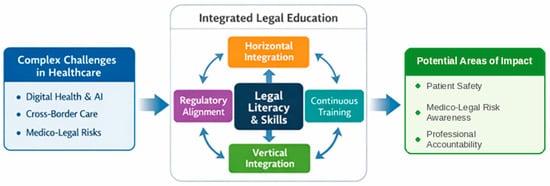
Background: The rapid digitalisation of healthcare, the expanding use of artificial intelligence, and the development of cross-border medical services have significantly transformed medical practice. These developments have also intensified medico-legal risks and professional liability exposure for healthcare professionals. Despite these changes, legal education remains insufficiently integrated into medical training, creating a gap between regulatory requirements and clinical practice. Methods: This study is based on a narrative analysis of the international literature addressing medico-legal challenges in healthcare, including medical errors, malpractice litigation, patient safety, digital health, and artificial intelligence. Drawing on international regulatory standards and educational frameworks, a conceptual model was developed to support the integration of legal education into medical curricula. Results: The analysis highlights persistent deficiencies in legal literacy among healthcare professionals, regardless of speciality or level of experience. Evidence from the reviewed literature suggests an association between lower levels of legal knowledge and increased professional vulnerability, including reported malpractice litigation and patient safety incidents. The proposed conceptual framework outlines a structured and longitudinal approach to integrating legal education into medical training, based on horizontal and vertical curricular integration, alignment with regulatory standards, and continuous professional development. Conclusions: Integrating legal education into medical curricula may represent a relevant strategy for supporting patient safety, strengthening medico-legal risk awareness, and promoting professional accountability. The proposed framework offers a conceptual and adaptable structure for medical schools and healthcare institutions.
Full article
(This article belongs to the Special Issue Legal Epidemiology: The Empirical Jurisprudence of Public Health and Health Justice)
►▼
Show Figures

Figure 1
Open AccessArticle
Excluding Parents in Cases of Complete Parental Abandonment from Intestate Succession: Different Jurisprudential Approaches in South African Law
by
Anél Gildenhuys
Laws 2026, 15(4), 80; https://doi.org/10.3390/laws15040080 - 27 Jul 2026
Abstract
This article considers the exclusion of parents to inherit under section 1(1)(d) of the South African Intestate Succession Act 81 of 1987 (ISA) in cases of complete abandonment. It is based on a desktop study of the ISA, relevant case law (primarily Wilsnach
[...] Read more.
This article considers the exclusion of parents to inherit under section 1(1)(d) of the South African Intestate Succession Act 81 of 1987 (ISA) in cases of complete abandonment. It is based on a desktop study of the ISA, relevant case law (primarily Wilsnach v TM 2021 (3) SA 568 (GP) (hereafter Wilsnach) and Jacobs v Adams [2025] 4 All SA 655 (GJ) (hereafter Jacobs)), and academic commentary, with brief reference to foreign parent-bar provisions. The article shows that South African courts have recently followed two different approaches in such cases: The Wilsnach approach, where the meaning of “parent” was interpreted in the light of the Constitution of the Republic of South Africa, 1996 and the South African Children’s Act 38 of 2005, and the Jacobs approach, where the court retained the ISA’s status-based framework but excluded the abandoning father through the doctrine of unworthiness to inherit. The article argues that, although the Wilsnach approach may appear fair and child-centered, it risks weakening the certainty of the intestate succession system. By contrast, the Jacobs approach fits more comfortably within the structure and purpose of the ISA, even though some uncertainty remains about extending unworthiness on broader public policy grounds. The article ultimately concludes that statutory reform would not easily solve the problem in the South African system of estate administration, and that the judicial application of the doctrine of unworthiness to inherit currently offers a more practical response in clear cases of complete parental abandonment.
Full article
(This article belongs to the Special Issue Societal and Ideological Challenges for Succession and Inheritance Laws in Today’s Societies)
Open AccessArticle
A New Frontier? Exploring Artificial Intelligence in Corporate Insolvency
by
Kayode Akintola
Laws 2026, 15(4), 79; https://doi.org/10.3390/laws15040079 - 27 Jul 2026
Abstract
Artificial Intelligence (AI) is a transformative phenomenon for global economies. Corporate insolvency regimes, equally, are economically significant as they promote preventive measures, company rescue/restructuring, liquidation of inefficient enterprises, and actions against errant directors. However, corporate insolvency is typically stymied by high costs and
[...] Read more.
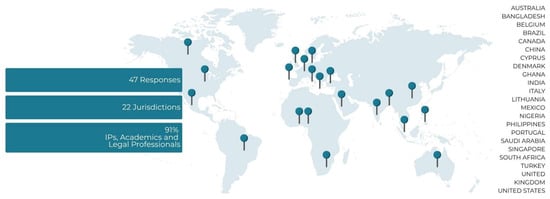
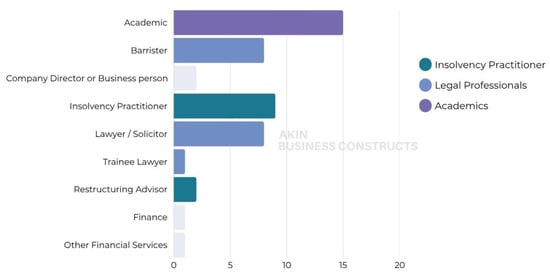
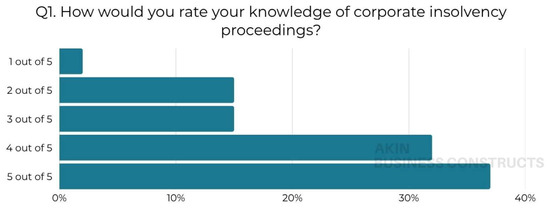
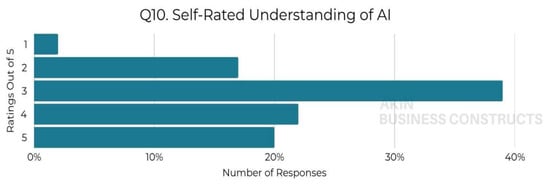
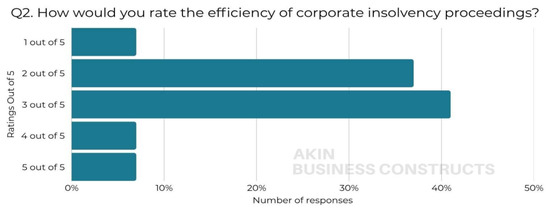
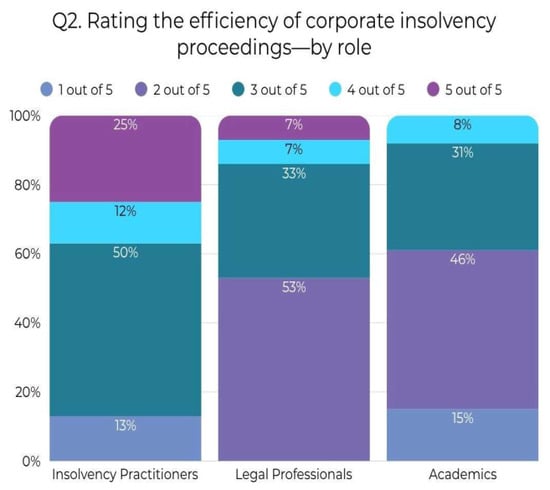
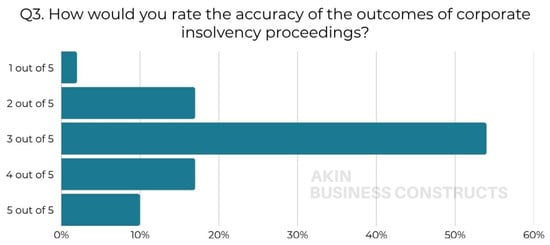
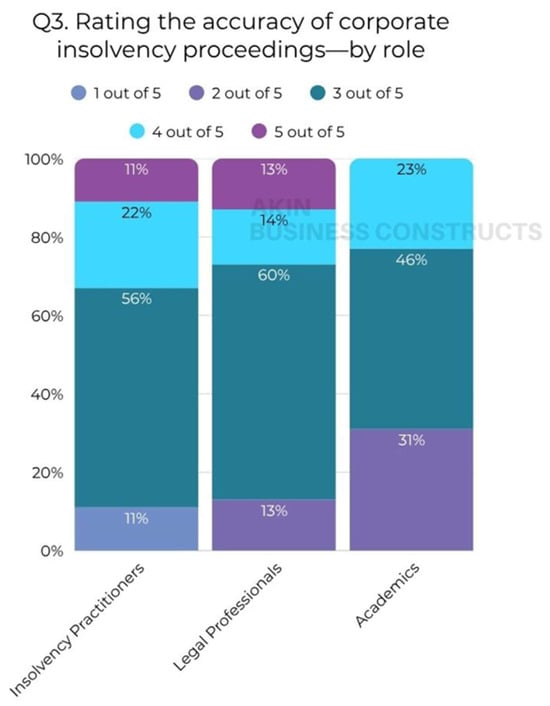
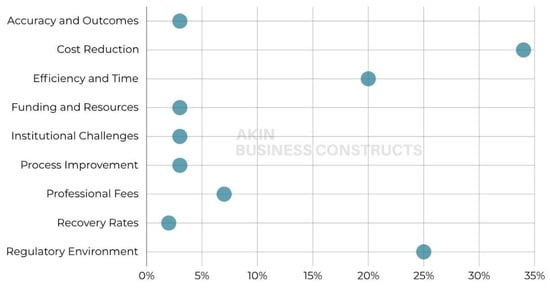
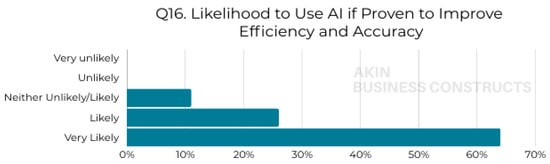
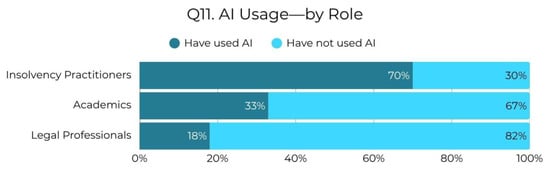
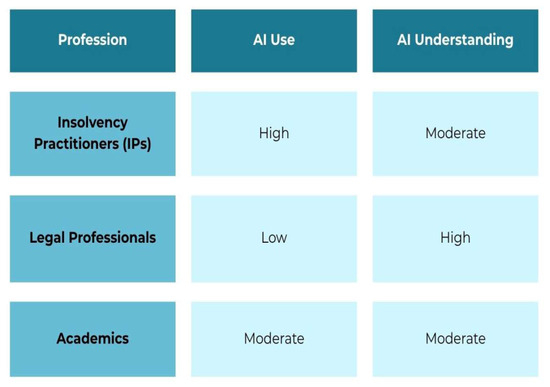
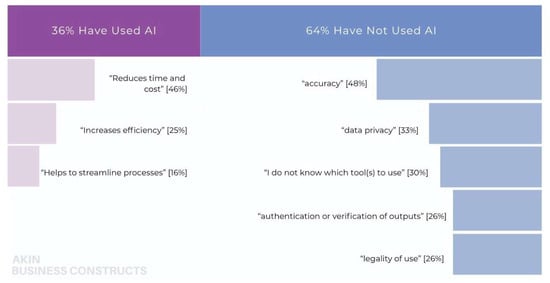
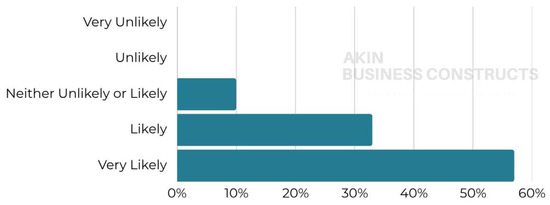
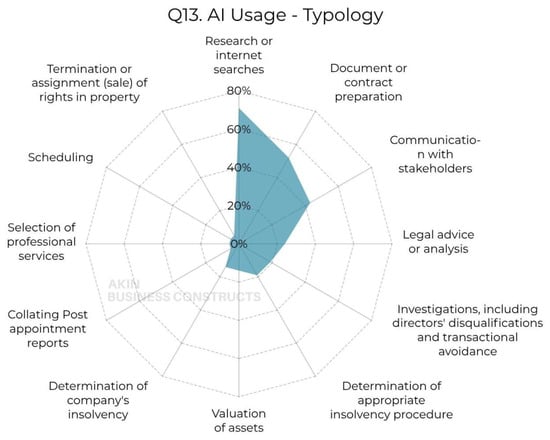
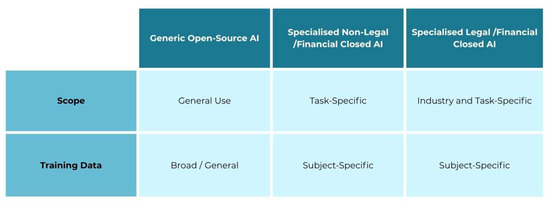
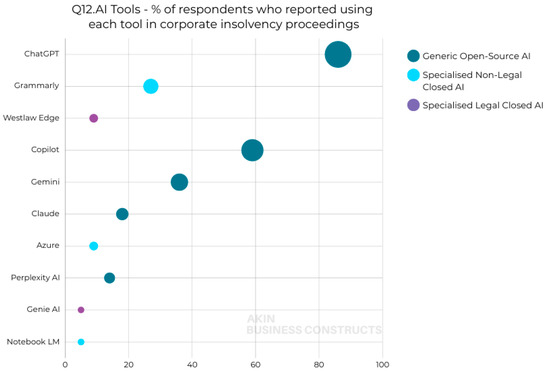
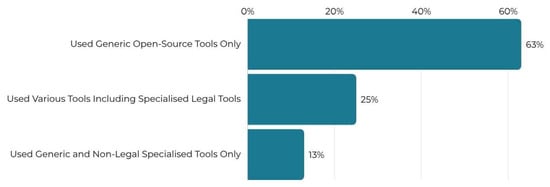
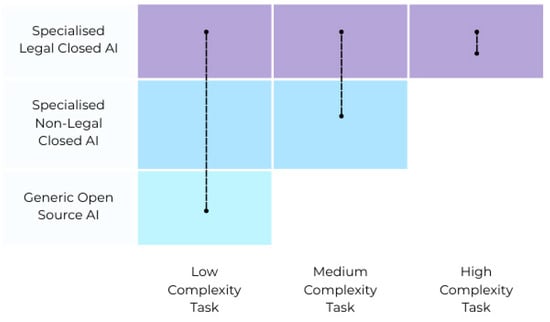
Artificial Intelligence (AI) is a transformative phenomenon for global economies. Corporate insolvency regimes, equally, are economically significant as they promote preventive measures, company rescue/restructuring, liquidation of inefficient enterprises, and actions against errant directors. However, corporate insolvency is typically stymied by high costs and complexities associated with tasks such as asset management, investigations, and resolving creditor claims. These challenges are acute for stakeholders, such as Insolvency Practitioners (IPs), who often manage corporate insolvencies under information, time, and liquidity constraints. This paper presents and analyses findings from a survey (the survey was conducted by the research team of Akin Business Constructs and led by the author. All Figures/images used in this paper were generated by Akin Business Constructs.) on the use of AI in corporate insolvency proceedings. The objectives of the survey are to determine the existence, volume, and type of/rationale for AI use in corporate insolvency. This paper will, therefore, highlight the following: there is evidence of some usage of AI for varying tasks to support corporate insolvency proceedings; such usage points towards the adaptability of AI for simple and more complex corporate insolvency tasks; while the rationale for AI use in this context is predicated on efficiency gains, arguments against its use are principally centred on the accuracy of AI outputs; and the preponderance of AI use in this context is based on generic/non-specialised generative AI tools.
Full article
(This article belongs to the Special Issue Developments in International Insolvency Law: Trends and Challenges)
►▼
Show Figures

Figure 1
Open AccessArticle
Strategic Challenges of the EU Succession Regulation: Same-Sex Marriages in Light of C-713/23 and Its Implications for Slovak Succession Law
by
Lubica Saktorová and Andrea Barancová
Laws 2026, 15(4), 78; https://doi.org/10.3390/laws15040078 - 24 Jul 2026
Abstract
The judgment of the Court of Justice of the European Union in Case C-713/23, Wojewoda Mazowiecki, constitutes a significant development in the Court’s case law concerning the recognition of personal status acquired in another Member State. While the decision has primarily been discussed
[...] Read more.
The judgment of the Court of Justice of the European Union in Case C-713/23, Wojewoda Mazowiecki, constitutes a significant development in the Court’s case law concerning the recognition of personal status acquired in another Member State. While the decision has primarily been discussed in the context of civil registration and the free movement of Union citizens, its implications for cross-border succession have received little scholarly attention. This article examines the consequences of the judgment for the application of Regulation (EU) No. 650/2012 on succession, with particular emphasis on Slovak succession law, which neither recognises same-sex marriage nor registered partnerships. Using doctrinal legal analysis and a contextual interpretation of the Court’s jurisprudence, the article argues that the judgment should be understood through the concept of functional recognition. Although Member States remain competent to regulate marriage, they may be required to recognise the legal effects of a same-sex marriage lawfully concluded in another Member State where such recognition is necessary to ensure the effectiveness of EU law. The article demonstrates that this approach may influence the determination of heirs, the status of the surviving spouse, matrimonial property settlement, and the legal effects of the European Certificate of Succession. It concludes that Slovak authorities should apply a functional, case-by-case assessment that reconciles national constitutional identity with the effective protection of rights guaranteed by EU succession law, thereby contributing to the broader debate on the interaction between national family law and European private international law.
Full article
Open AccessArticle
Dian in the Civil Code Era: A Historical, Systematic, and Axiological Reassessment
by
Wei Xiao
Laws 2026, 15(4), 77; https://doi.org/10.3390/laws15040077 - 23 Jul 2026
Abstract
As an inherent part of Chinese indigenous legal tradition, dian originated from customary practices and was gradually incorporated into the national legal framework, reflecting a distinctive historical evolution, structural composition, and value orientation. Historically, dian evolved from a simple customary transaction into a
[...] Read more.
As an inherent part of Chinese indigenous legal tradition, dian originated from customary practices and was gradually incorporated into the national legal framework, reflecting a distinctive historical evolution, structural composition, and value orientation. Historically, dian evolved from a simple customary transaction into a formalized legal institution. It first took shape during the Tang Dynasty and matured through the Ming and Qing Dynasties. Structurally, long-term practice produced unique concepts and rules that embodied the dual nature of both usufructuary and security rights. In terms of value, dian was not merely an economic transaction tool but also reflected ethical norms and pragmatic wisdom of traditional society. It played a vital role in protecting the interests of the mortgagor, promoting circulation of land, and alleviating financial shortages. In the Civil Code era, the value of dian lies particularly in its ability to reconcile individual interests with social needs and to enhance the efficiency of property utilization.
Full article
Open AccessReview
Beyond Consent-Centred Protection in Digital Healthcare: Italy, Secondary Use of Health Data, and Governance-Based Safeguards for AI-Mediated Care
by
Tommaso Spasari, Paolo Bailo, Giuliano Pesel, Giovanni D’Alessandro and Giovanna Ricci
Laws 2026, 15(4), 76; https://doi.org/10.3390/laws15040076 - 21 Jul 2026
Abstract
The digitalisation of healthcare is transforming not only clinical practice but also the legal architecture through which health rights are protected, coordinated, and operationalised. Using Italy as a doctrinal case study within the European Union (EU) framework shaped by the General Data Protection
[...] Read more.
The digitalisation of healthcare is transforming not only clinical practice but also the legal architecture through which health rights are protected, coordinated, and operationalised. Using Italy as a doctrinal case study within the European Union (EU) framework shaped by the General Data Protection Regulation, the European Health Data Space, and artificial intelligence (AI) regulation, this article argues that digital healthcare is moving beyond consent-centred protection toward governance-based safeguards. The Italian trajectory is especially revealing because regionalised healthcare governance intersects with centralised digital coordination through the Fascicolo Sanitario Elettronico, the Ecosystem of Health Data, and EU rules on the secondary use of health data. The article contends that this shift does not displace consent as a legal or constitutional value, but requires stronger substitute and complementary safeguards when consent can no longer operate as an effective practical control mechanism. These include clear legal bases, differentiated access regimes, data minimisation, secure processing environments, meaningful patient information, democratic accountability, human oversight, anti-discrimination duties, and clearer allocations of responsibility among clinicians, institutions, and technology providers. AI-mediated care is treated as a downstream test case for whether governance-based legality remains compatible with autonomy, dignity, and responsibility in clinical care.
Full article
Open AccessArticle
Dialogue with the Disabled “Other”: Expanding Legal Frameworks of Civil-Civic Engagement to Enhance Inclusion of Individuals with Down Syndrome
by
Boleslaw Z. Kabala and Kelli Neel
Laws 2026, 15(4), 75; https://doi.org/10.3390/laws15040075 - 17 Jul 2026
Abstract
Scholarship on civic engagement and democratic culture has long emphasized dialogue, inclusion, and the recognition of marginalized voices, yet the legal and civic status of individuals with disabilities—particularly those with Down syndrome—remains insufficiently examined within this literature. This article addresses that gap by
[...] Read more.
Scholarship on civic engagement and democratic culture has long emphasized dialogue, inclusion, and the recognition of marginalized voices, yet the legal and civic status of individuals with disabilities—particularly those with Down syndrome—remains insufficiently examined within this literature. This article addresses that gap by exploring how civic education and civic engagement, as supported by law at public universities, can better account for disability as a matter of democratic membership, dignity, and participation. Drawing on historical and contemporary analysis, the article examines the persistence and transformation of eugenic narratives supported by law as one underappreciated mechanism through which exclusion and devaluation continue to shape civic life. Historically, eugenic ideas influenced law, culture, and public policy by normalizing hierarchies based on health, appearance, and perceived ability. Contemporary forms of such reasoning, while often less explicit, continue to surface across legal and cultural divides, raising important questions for civic education and public deliberation. By situating disability within broader debates about civic inclusion, empathy, and democratic formation at institutions supported by law, this article argues for a more robust and balanced paradigm of civic engagement—one that critically confronts exclusionary narratives while affirming the civic agency, legal rights, and perspectives of individuals with disabilities, including those with Down syndrome and with respect to comprehensive considerations in prenatal contexts.
Full article
(This article belongs to the Special Issue Vol. II of Civic Engagement, Justice, and the Law in a National and International Context)
Open AccessArticle
Can AI Participate in Dispute Resolution? Five Fundamental Questions That Remain Open for Discussion
by
Jing Ma, Jingyi Chen, Tianhao Hu, Mingyu Deng and Xuesong Li
Laws 2026, 15(4), 74; https://doi.org/10.3390/laws15040074 - 15 Jul 2026
Abstract
Given the current global trend of actively exploring the integration of AI into dispute resolution, we contend that, under existing theoretical and normative frameworks, there is as yet no sound basis for incorporating AI—least of all for replacing judges—into these processes. This is
[...] Read more.
Given the current global trend of actively exploring the integration of AI into dispute resolution, we contend that, under existing theoretical and normative frameworks, there is as yet no sound basis for incorporating AI—least of all for replacing judges—into these processes. This is not to dismiss AI’s contribution to dispute resolution; rather, we seek to clarify how AI can be responsibly strengthened in this field. Rather than adopting simplistic technological skepticism, we develop a comprehensive theoretical framework that integrates perspectives from computer science and jurisprudence. By tracing the logical sequence of dispute resolution—goal setting, data input, subject identification, algorithmic processing, and the output and attribution of responsibility—we identify five fundamental issues. First, at the goal-setting stage, a fundamental conflict arises between algorithms, which aim to optimize efficiency, and the judiciary, which pursues multiple values (such as a just resolution and a swift one). Second, at the data-input stage, the principle of “garbage in, garbage out” manifests as the intractable and dynamically interactive problem of “algorithmic bias.” Third, at the subject-identification stage, allowing AI to replace human adjudicators—whether fully or partially—alters the judicial proceedings and undermines procedural justice. Fourth, at the algorithmic-processing stage, the black box and the hallucinations of deep learning are in sharp tension with the judiciary’s exacting demands for certainty and reasoned explanation. Finally, at the accountability stage, outsourcing judicial authority to private developers creates a supervisory vacuum and weakens the state’s liability for compensation. We therefore propose that the legal responses and rule-making needed to address these foundational issues be put in place before, not after, technological implementation.
Full article
Open AccessArticle
A Critical Approach to Technofeudalism in EU Law: The Architecture of Big Tech’s Influence
by
Tamás Dezső Ziegler, Thomas Buijnink, Reiner Diederik Duvenage, Sarolta Szabó and Gergely Gosztonyi
Laws 2026, 15(4), 73; https://doi.org/10.3390/laws15040073 - 15 Jul 2026
Abstract
The article critically examines the emergence of technofeudalism within the European Union’s legal framework, drawing on the theoretical contributions of Yanis Varoufakis, Alfred C. Yen, and Katrina Geddes. We argue that the EU’s historically market-oriented regulatory architecture contributed to conditions that facilitated the
[...] Read more.
The article critically examines the emergence of technofeudalism within the European Union’s legal framework, drawing on the theoretical contributions of Yanis Varoufakis, Alfred C. Yen, and Katrina Geddes. We argue that the EU’s historically market-oriented regulatory architecture contributed to conditions that facilitated the rise of dominant technology companies exercising quasi-governance functions over digital environments, extracting value from users while evading meaningful democratic accountability. Our analysis distinguishes between two categories of enabling legislation: structural rules, which govern corporate status, taxation, and market consolidation; and action-oriented rules, which regulate platform behavior, algorithmic governance, consumer relations, and data protection. We demonstrate how fragmented national tax regimes, ineffective merger control, under-regulated algorithms, asymmetric consumer protections, unclear liability frameworks for online content, exploitable private international law mechanisms, and inadequately enforced data protection standards collectively reinforce Big Tech’s dominance. While recent regulatory interventions such as the Digital Services Act and Digital Markets Act represent important steps, they remain embedded in a market-oriented paradigm that insufficiently addresses the broader social, cultural, and democratic implications of platform power. The article concludes by calling for a more coherent, democratically grounded approach to digital regulation—one that moves beyond fragmented, reactive policymaking toward a comprehensive framework capable of strengthening democratic accountability and public oversight within the digital sphere.
Full article
Open AccessReview
Legislating the Unwritten (Fundamental Rights-Based) Refusal Ground in European Criminal Law
by
István Szijártó
Laws 2026, 15(4), 72; https://doi.org/10.3390/laws15040072 - 14 Jul 2026
Abstract
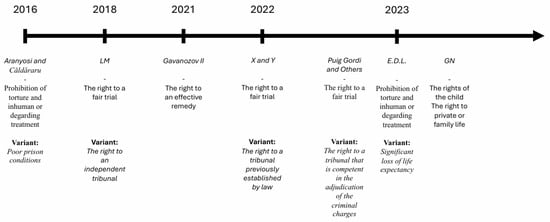
This article provides a comprehensive overview of the case law of the European Court of Justice related to the rebuttal of the principle of mutual trust in the process of judicial cooperation in criminal matters. It analyses ten judgements of the Court, which
[...] Read more.
This article provides a comprehensive overview of the case law of the European Court of Justice related to the rebuttal of the principle of mutual trust in the process of judicial cooperation in criminal matters. It analyses ten judgements of the Court, which were delivered in preliminary ruling procedures that concerned the ground for refusal—established by the Court in its jurisprudence, hence referred to as unwritten ground—in cases when the execution of the judicial decision would have possibly jeopardised the protection of fundamental rights. This article provides a thorough analysis of the cases, shedding light on the gradual extension of the scope of the unwritten refusal ground, the Court’s resolve to protect the original structure of the Aranyosi test, the exceptional derogations from this resolve, and the various procedural aspects of carrying out the Aranyosi test. It argues that the rules governing the application of the unwritten refusal ground have been clarified, so much so that they may be ready to be translated into secondary legislation. As such, the aim of this article is to provide a legislative proposal for implementing the unwritten refusal ground into secondary sources of EU law based on the case law analysis.
Full article
(This article belongs to the Section Criminal Justice Issues)
►▼
Show Figures

Figure 1
Open AccessArticle
Sea-Level Rise, Human Rights, and State Responsibility: Advisory Opinions in an Interdependent International Legal Order
by
Hatice Kubra Ecemis Yilmaz
Laws 2026, 15(4), 71; https://doi.org/10.3390/laws15040071 - 10 Jul 2026
Abstract
Sea-level rise has its gravest effects in low-lying States and coastal communities. Yet the legal obligations engaged by those effects remain dispersed across the law of the sea, climate treaty law, international human rights law, and the general law of State responsibility. This
[...] Read more.
Sea-level rise has its gravest effects in low-lying States and coastal communities. Yet the legal obligations engaged by those effects remain dispersed across the law of the sea, climate treaty law, international human rights law, and the general law of State responsibility. This article examines what the advisory opinions of ITLOS, the International Court of Justice, and the Inter-American Court of Human Rights, read together, clarify in that setting. It argues that their principal significance lies in clarifying how existing duties of prevention, cooperation, regulation, and due diligence operate across different legal regimes without effacing the legal distinctions between them. It further contends that these opinions render the law of State responsibility more workable in a context where harm accumulates over time, multiple actors contribute to it, and serious risks arise for affected persons and communities. Finally, the Kiribati–Tuvalu illustration is used to briefly show what this clarified framework can explain, and where its limits remain, in relation to the stability of maritime entitlements, continuity concerns, and the protection of persons.
Full article
(This article belongs to the Special Issue Human Rights in the Age of Globalisation: Challenges and Opportunities)
Open AccessArticle
Political Economy as Civic Education: A Contested-Principles Approach to New Statutory Requirements in Ohio
by
Robert Wyllie
Laws 2026, 15(4), 70; https://doi.org/10.3390/laws15040070 - 10 Jul 2026
Abstract
The Advance Ohio Higher Education Act of 2025 legally requires public universities in Ohio to teach students specific economics content but bans instructors from addressing controversial topics in a biased manner. Rather than avoid controversial issues, civic education should focus on contested fundamental
[...] Read more.
The Advance Ohio Higher Education Act of 2025 legally requires public universities in Ohio to teach students specific economics content but bans instructors from addressing controversial topics in a biased manner. Rather than avoid controversial issues, civic education should focus on contested fundamental economic principles for two reasons. First, it is a safer strategy for legal compliance. Second, teaching contested principles is a pedagogical boon for the education of citizens in which no single disciplinary perspective can be authoritative. There are both practical dilemmas and pedagogical upsides to the new regulatory environment that are unforeseen in the scholarly literature related to law and economics and the economics of civic education. The contested-principles approach to civics-focused economic education, developed here, is relevant beyond Ohio: to new public institutes of civic education across the United States, to universities that anticipate similar legal requirements, and to anyone interested in unforeseen pedagogical benefits of higher-education law.
Full article
(This article belongs to the Special Issue Vol. II of Civic Engagement, Justice, and the Law in a National and International Context)
Open AccessSystematic Review
Environmental Law in Transition: A Scoping Review and Doctrinal Comparative Analysis of Ukraine and Lithuania
by
Rinata Kazak, Denys Shyhal and Greta Česnaitytė
Laws 2026, 15(4), 69; https://doi.org/10.3390/laws15040069 - 9 Jul 2026
Abstract
This article examines the comparative method in environmental law through a systematic bilateral analysis of the foundational environmental protection laws adopted in Ukraine in 1991 and in Lithuania in 1992. The overarching aim is to contribute to the underexplored field of Ukraine-Lithuania comparative
[...] Read more.
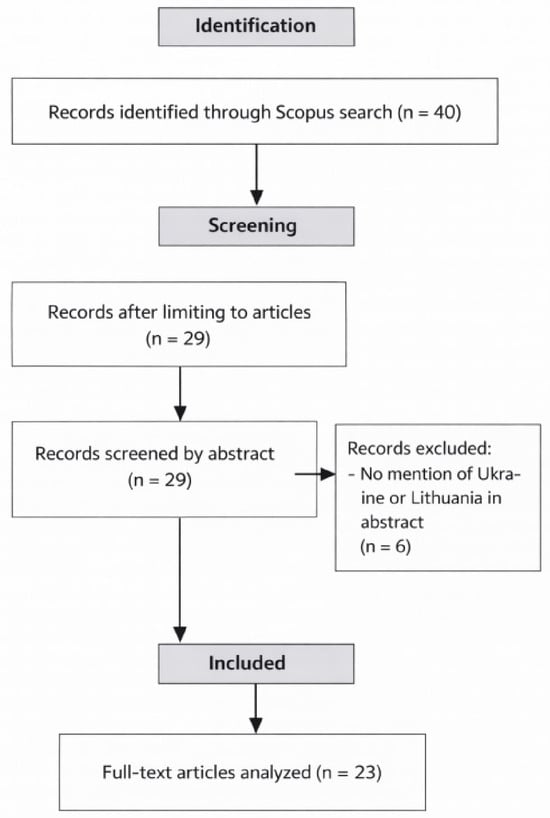
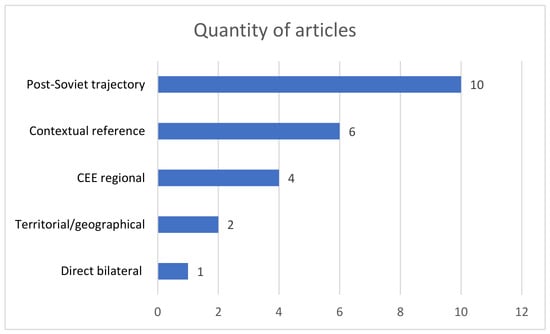
This article examines the comparative method in environmental law through a systematic bilateral analysis of the foundational environmental protection laws adopted in Ukraine in 1991 and in Lithuania in 1992. The overarching aim is to contribute to the underexplored field of Ukraine-Lithuania comparative research by identifying similarities and differences and situating them within post-Soviet legal development and European integration processes. The study adopts a mixed methodological design combining a scoping-oriented literature review, consisting of a targeted narrative review using Google Scholar and a systematic review in accordance with PRISMA 2020 guidelines using the Scopus database (n = 23), with a structured doctrinal comparison of the two legal acts. The literature review identifies four main rationales for comparing Ukraine and Lithuania in academic scholarship: shared Soviet historical heritage, post-socialist transition processes, cultural and societal similarities, and the identification of research gaps. The paper further demonstrates that comparative environmental law studies predominantly rely on broader post-Soviet or regional frameworks, with limited direct bilateral comparison between these two countries. The doctrinal analysis of environmental laws reveals both convergence and divergence. However, Lithuania exhibits a more dynamic and EU-integrated legislative trajectory characterised by continuous amendments and alignment with EU environmental acquis, whereas Ukraine demonstrates a more stable but less systematically EU-oriented legal evolution and comparatively gradual reform processes. The findings indicate that Europeanisation plays a key role in shaping divergent post-socialist environmental legal development. Lithuania represents a model of sustained EU-driven legal integration, while Ukraine reflects a more incremental adaptation path. The study contributes to the literature by providing a structured bilateral comparison of Ukraine and Lithuania in environmental law and by linking doctrinal differences to broader processes of post-Soviet transformation and Europeanisation.
Full article
(This article belongs to the Section Environmental Law Issues)
►▼
Show Figures

Figure 1
Open AccessArticle
Autonomous Organizations and the Decline of Anthropocentric Law
by
Shawn Bayern
Laws 2026, 15(4), 68; https://doi.org/10.3390/laws15040068 - 6 Jul 2026
Abstract
This article charts the legal and technological developments that have enabled nonhuman systems, such as artificially intelligent software, to take actions that have significant consequences under private law, such as the making of contracts, the management of companies, and the incursion of tort
[...] Read more.
This article charts the legal and technological developments that have enabled nonhuman systems, such as artificially intelligent software, to take actions that have significant consequences under private law, such as the making of contracts, the management of companies, and the incursion of tort or restitutionary liability. Because of these developments, it is important to recognize that while the law still serves human ends, “participants” in the legal system are no longer exclusively human; developments in organizational law have driven a shift so that, in a meaningful sense, nonhuman systems are more than the direct instrumentalities of the human beings who have set them in motion. The article gives an overview of the relevant legal and technological developments, evaluates pressures that they may put on the doctrines and concepts of private law, and considers their broader future possible effects on legal theory and on the goals that commentators suppose that law is to adopt.
Full article
(This article belongs to the Special Issue Rethinking Law for Nonhuman Minds: AI Agents and the Transformation of Legal Fundamentals)
Open AccessSystematic Review
Legal Transplants: Truths and Errors in Comparative Legal Analysis
by
José Alexander Velásquez Ochoa, Rafael Alejandro Betancourt Durango, Luis Fernando Garcés Giraldo, José Luis Castilla Cabezudo, David Alberto Garcia Arango, Marcela Giraldo Giraldo and Natalia Isabel Jaramillo Gómez
Laws 2026, 15(4), 67; https://doi.org/10.3390/laws15040067 - 4 Jul 2026
Abstract
►▼
Show Figures
Legal transplants have consolidated as a core issue of contemporary comparative law, although their study remains marked by significant theoretical and methodological tensions. This article presents a PRISMA-informed structured systematic review of 25 studies published between 2008 and 2025 and retrieved through SciSpace,
[...] Read more.
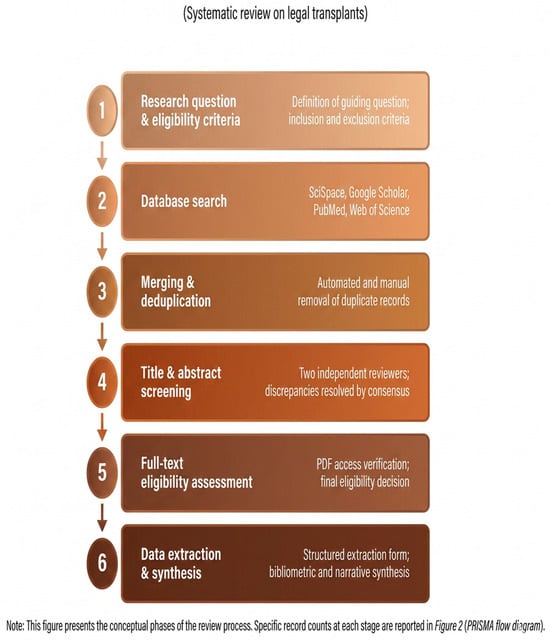
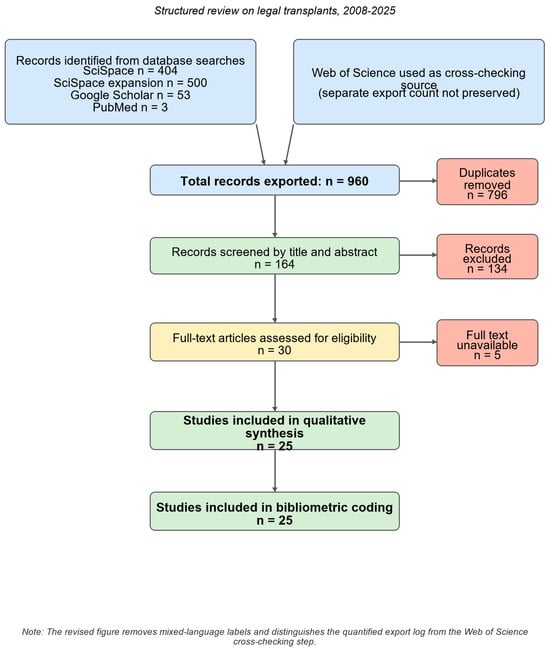
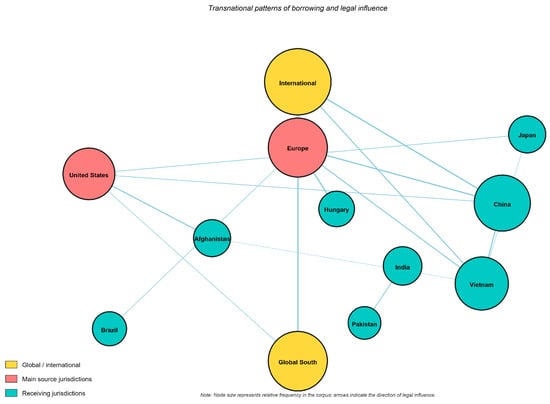
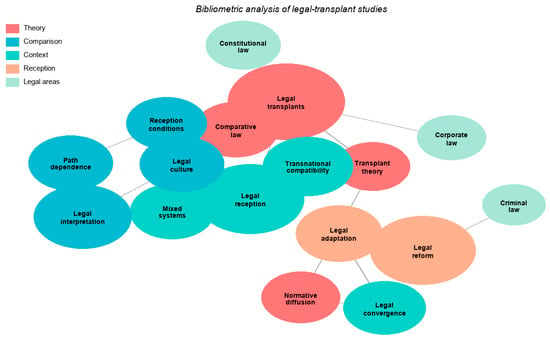
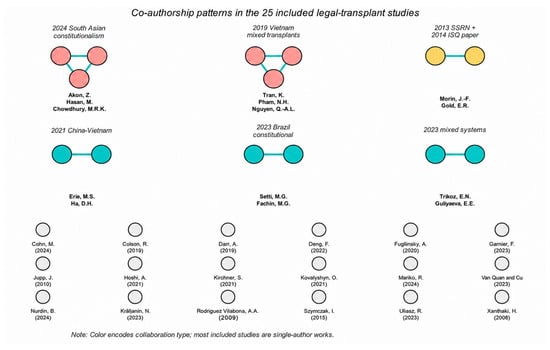
Legal transplants have consolidated as a core issue of contemporary comparative law, although their study remains marked by significant theoretical and methodological tensions. This article presents a PRISMA-informed structured systematic review of 25 studies published between 2008 and 2025 and retrieved through SciSpace, Google Scholar, PubMed, and Web of Science-supported searching, with the aim of identifying conceptual frameworks, recurrent conditions of validity, and practical limitations in recent legal-transplant scholarship. The search yielded 960 exported records; after deduplication and screening, 30 articles were assessed in full text, of which 25 were available and included. The revised article identifies the 25 studies individually and links the descriptive claims to a study-by-study coding table. The findings show five recurrent theoretical lenses: positivist transfer models, culturalist critiques, diffusion mechanisms and multicausal models, communicative metaphors, and mixed transplant concepts. The corpus covers studies in Europe, China, Asia-Pacific, Vietnam, Japan, India, Afghanistan, Pakistan, Hungary, Brazil, Africa, Latin America, and transnational settings. The evidence does not support universal causal claims, but it consistently suggests that contextual compatibility, institutional capacity, local legitimacy, and interpretive adaptation shape the effectiveness of legal transplants, while linguistic barriers, interpretive mismatches, coercive imposition, and weak implementation capacity constrain them. The corpus remains concentrated in corporate law, intellectual property, constitutional law, criminal law, and drug policy, with a predominance of comparative, doctrinal, case-study, and conceptual methodologies.
Full article

Figure 1
Open AccessArticle
Comparative Study on the Ownership of Copyright of Artificial Intelligence-Generated Works
by
Guanglei Chen, Yulin Tong and Zilong Han
Laws 2026, 15(4), 66; https://doi.org/10.3390/laws15040066 - 4 Jul 2026
Abstract
This article studies the question of copyright ownership for works produced by artificial intelligence. Taking China, the United States, and the European Union as the research subjects, a systematic analysis of the legislative provisions, administrative practices, and judicial precedents in each jurisdiction is
[...] Read more.
This article studies the question of copyright ownership for works produced by artificial intelligence. Taking China, the United States, and the European Union as the research subjects, a systematic analysis of the legislative provisions, administrative practices, and judicial precedents in each jurisdiction is conducted, concerning the copyrightability of AI-generated works and the question of rights attribution. On the basis of comparative analysis, this paper offers a theoretical review of the core disputes from the standpoints of the Lockean labour theory, the Hegelian personality theory, and the utilitarian theory. It constructs an analytical framework for distinguishing AI-assisted works from works generated autonomously by AI, with the substantiality of human participation as the core criterion, and puts forward a system of recommendations centered on a hierarchical ownership model. It advocates attributing copyright to the users of AI-assisted works that involve substantial human participation, establishing a special rights system with a shorter protection term for purely AI-generated works, and promoting the achievement of international coordinated consensus within the framework of the World Intellectual Property Organization, in keeping with the call of the Initiative for open, fair, and effective governance of artificial intelligence by all states.
Full article
Highly Accessed Articles
Latest Books
E-Mail Alert
News
Topics
Topic in
Social Sciences, Societies, Laws, World, Psychology International, IJCS
Motivated Social Cognition in Individuals, Organizations, and Societies
Topic Editors: Andrew S. Franks, Hajime OtaniDeadline: 31 October 2027
Special Issues
Special Issue in
Laws
The World Trading System in Dire Straits: Legal Challenges, Tariff Disputes, and the Future of the World Trade Organization
Guest Editors: Petros C. Mavroidis, Klemen Podobnik, Mislav MataijaDeadline: 31 July 2026
Special Issue in
Laws
Advanced Technology and Artificial Intelligence: Criminal Justice and Legal Challenges, Impacts, and Solutions
Guest Editors: Kyung-Shick Choi, Insun ParkDeadline: 15 September 2026
Special Issue in
Laws
Repelling Asylum-Seekers in Europe? Asylum-Seekers as an “Anomaly” in EU and UK Migration Laws and Policies
Guest Editor: Sylvie Da LombaDeadline: 30 September 2026
Special Issue in
Laws
Just Benefits? Intersections in Health Law and Social Welfare Law
Guest Editor: Christopher RudgeDeadline: 30 September 2026