Skip to Content

Social Sciences

Social Sciences is an international, open access journal with rapid peer-review, which publishes works from a wide range of fields, including anthropology, criminology, economics, education, geography, history, law, linguistics, political science, psychology, social policy, social work, sociology and more, and is published monthly online by MDPI.

Get Alerted

Add your email address to receive forthcoming issues of this journal.

All Articles (5,044)

In the U.S., youth face barriers to high-quality culture-centered health education and healthcare, leading to unintended pregnancy and sexually transmitted infections. This health burden falls disproportionately on youth of color in Southern states. Researchers partnered with Fact Forward to design, implement, and evaluate the “Chat About It: We’re in your corner” 10-week health communication campaign. The culture-centered health communication campaign aimed to increase awareness and use of sexual health services with a focus on youth of color in South Carolina. The study implemented a campaign evaluation pretest–posttest web-based survey among young people (ages 18–24) in South Carolina. The campaign resulted in over one million total impressions. Over two-thirds of respondents who saw the campaign indicated that it prompted them to perform a positive health behavior, with the most common behavior being discussing sexual health with a partner. Respondents with a higher PME score were over seven times more likely to seek sexual health services after seeing messages from the campaign. Findings highlight the importance of formative audience research and message testing in campaign design. By developing health communication campaigns in partnership with the target audience, health communicators can enhance engagement and improve perceived message effectiveness and campaign acceptability. Health communication campaigns may help address knowledge gaps in sexual health education.

Soc. Sci.

10 September 2026
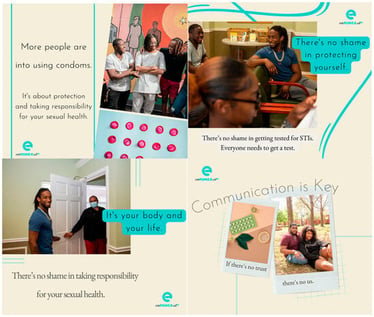
Top four performing ads.

Family Strengths and Parenting Sense of Competence in Hong Kong Families

  • Ya-Ting Teng,
  • Shiying Fang and
  • Chi Hung Leung
  • + 1 author

This study examined the associations between six dimensions of family strengths and parenting sense of competence (PSOC) among Hong Kong parents of kindergarten children and explored whether these associations differed according to children’s special educational needs (SEN) status. A total of 700 parents and caregivers recruited from local kindergartens completed a self-administered questionnaire comprising the Chinese Family Strength Measure and the Parenting Sense of Competence Scale. Data were analyzed using Pearson correlations, hierarchical multiple regression, moderation analyses, and independent-samples t tests. All six family strength dimensions were positively correlated with PSOC. After controlling for demographic variables, the six dimensions collectively explained significant additional variance in PSOC; however, Positive Communication was the only significant unique predictor. SEN status did not significantly moderate the associations between family strength dimensions and PSOC. Group comparisons indicated that families of children with SEN reported lower levels of PSOC and several family strength dimensions than families of children without SEN, although the effect sizes were small. These findings suggest that family strengths, particularly positive communication, may serve as important relational resources for parenting competence across caregiving contexts. The study highlights the potential value of strengths-based and communication-focused family support for Hong Kong parents.

Soc. Sci.

11 September 2026

The rapid evolution of generative artificial intelligence (AI) is substantially changing archival research methodologies in social sciences. Yet, more structured guidance of methodological protocols informing AI use is needed to mitigate emergent threats to validity, particularly in human rights policy. This article offers a methodological case study, combining retrospective documentation of workflow evolution with descriptive analysis of 417 AI-assisted research sessions within the database supplementing standardized data searches of acid-attack violence for 212 WHO-reporting country cases. Data collection analyzed publicly available digital sources and applied systematic review standards. AI use was slowly streamlined in the last phases of the project. The process of blending AI assistants into the archival research required extensive workflow modifications, including pilot-testing and developing specific research protocols for improved AI use. Protocols include standardizing AI version/model selection and prompts, documenting all sessions, and multi-stage auditing. Benefits included improved data triangulation and more extensive archival searches, particularly in synthesizing non-English sources or when traditional searches faced data scarcity. AI assistants can be a useful supplementary assistant in archival research. Yet, researchers must increasingly explore effective strategies to identify and address methodological concerns, including human-in-the-loop protocols.

Soc. Sci.

10 September 2026

Explicit gender stereotypes are shifting toward neutrality, yet how widely a stereotype is endorsed and how consistently it appears across domains within those who endorse it are separable properties of a stereotype climate. The same Romanian adults, parents alongside teachers and school counsellors (N = 121), reported gender-stereotyped beliefs about children’s play and traits in the abstract, together with two applied judgements: gender-differentiated educational expectations and gender suitability of occupations. Stereotyped judgement covaried across all three domains, substantially among parents and moderately among teachers. This cross-domain covariation indexes consistency within respondents rather than a common latent construct, which the confirmatory models did not support. Stereotyping was voiced more strongly as abstract belief than in either applied domain. Explicitly gender-typing occupations was a minority position, yet those who did so held the strongest beliefs, a concentration that direction-cancelling coding rendered undetectable. Because gendered channelling is concentrated rather than diffuse, awareness work is better targeted than universal and better timed before high-stakes transitions such as allocation to high-school tracks. Teachers resembled parents, suggesting professional training does not by itself displace such judgement. Where access is no longer the binding constraint, monitoring that tracks only how prevalent gender bias is will miss what remains coherent in a shrinking minority.

Soc. Sci.

10 September 2026

Highly Accessed Articles

News & Conferences

Latest Issues

Open for Submission

Journal Sections

Inclusive Research
Reprint

Inclusive Research

Is the Road More or Less Well Travelled?—2nd Edition
Editors: Patricia O’Brien
Critical Suicide Studies
Reprint

Critical Suicide Studies

Decolonial and Participatory Creative Approaches
Editors: Caroline Lenette
XFacebookLinkedIn
Soc. Sci. - ISSN 2076-0760