The Influence of the sEMG Amplitude Estimation Technique on the EMG–Force Relationship

Abstract
:1. Introduction
2. Materials and Methods
2.1. Datasets
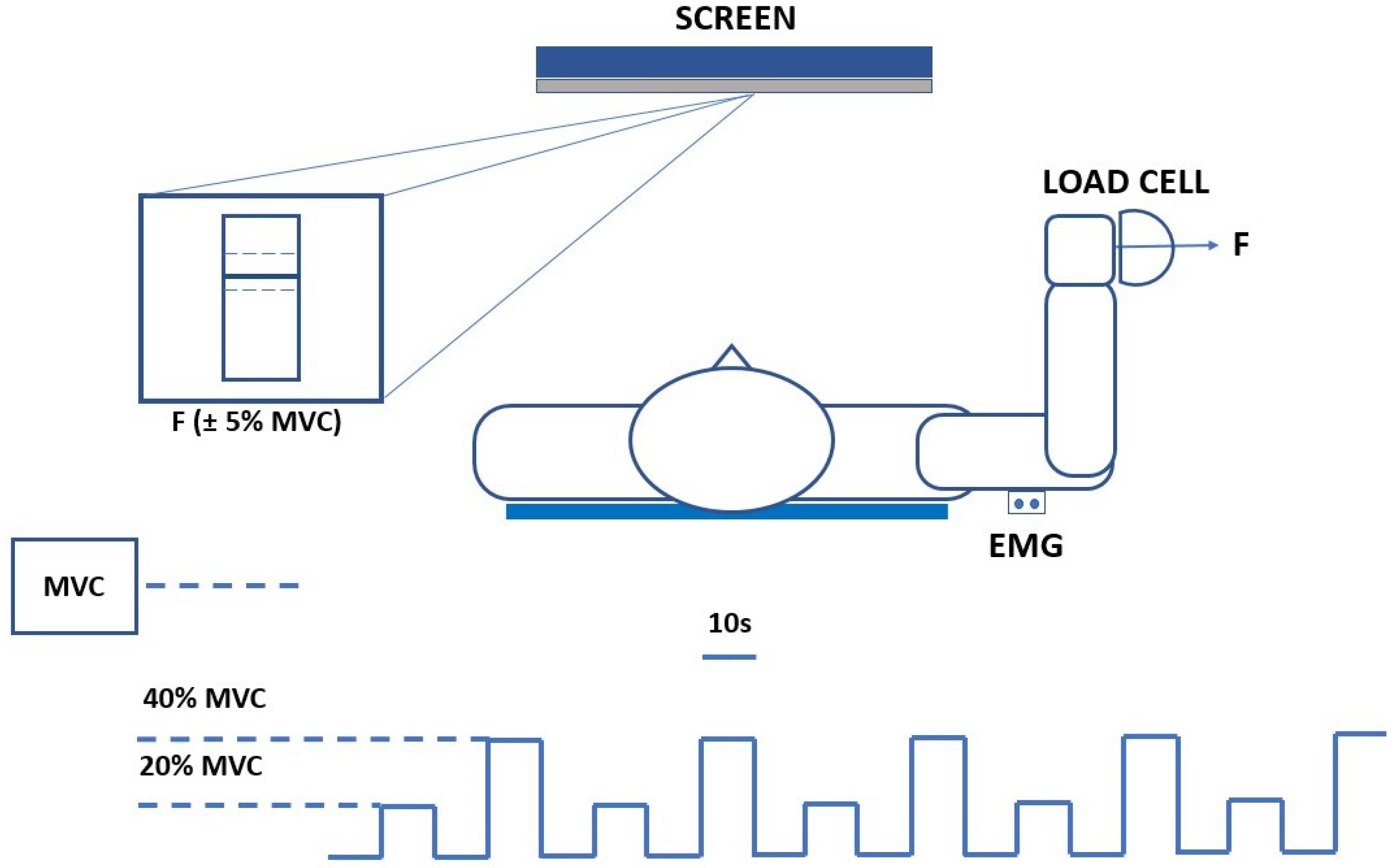
2.1.1. Experimental Protocol for the Triceps Experiment
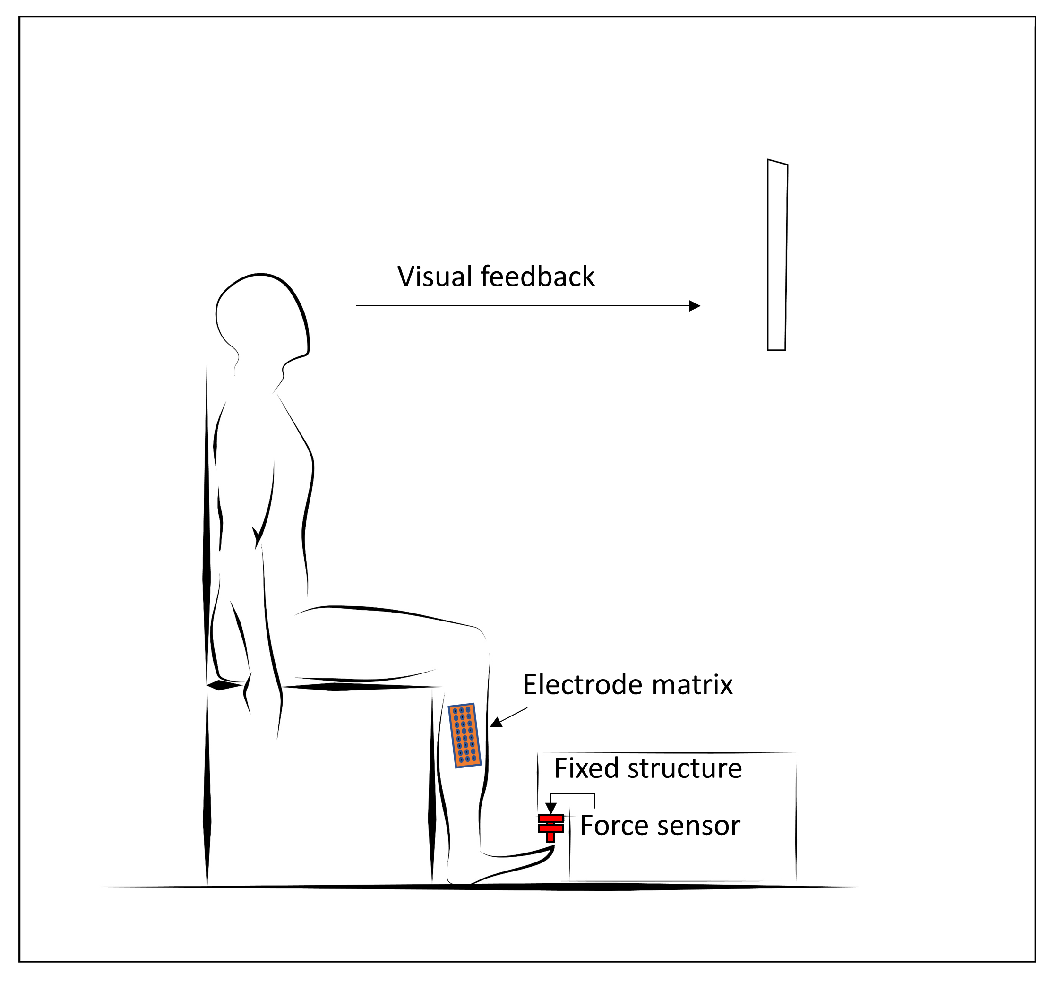
2.1.2. Experimental Protocol for the Tibialis Experiment
2.2. sEMG Processing
2.3. sEMG–Force Relationship Measures
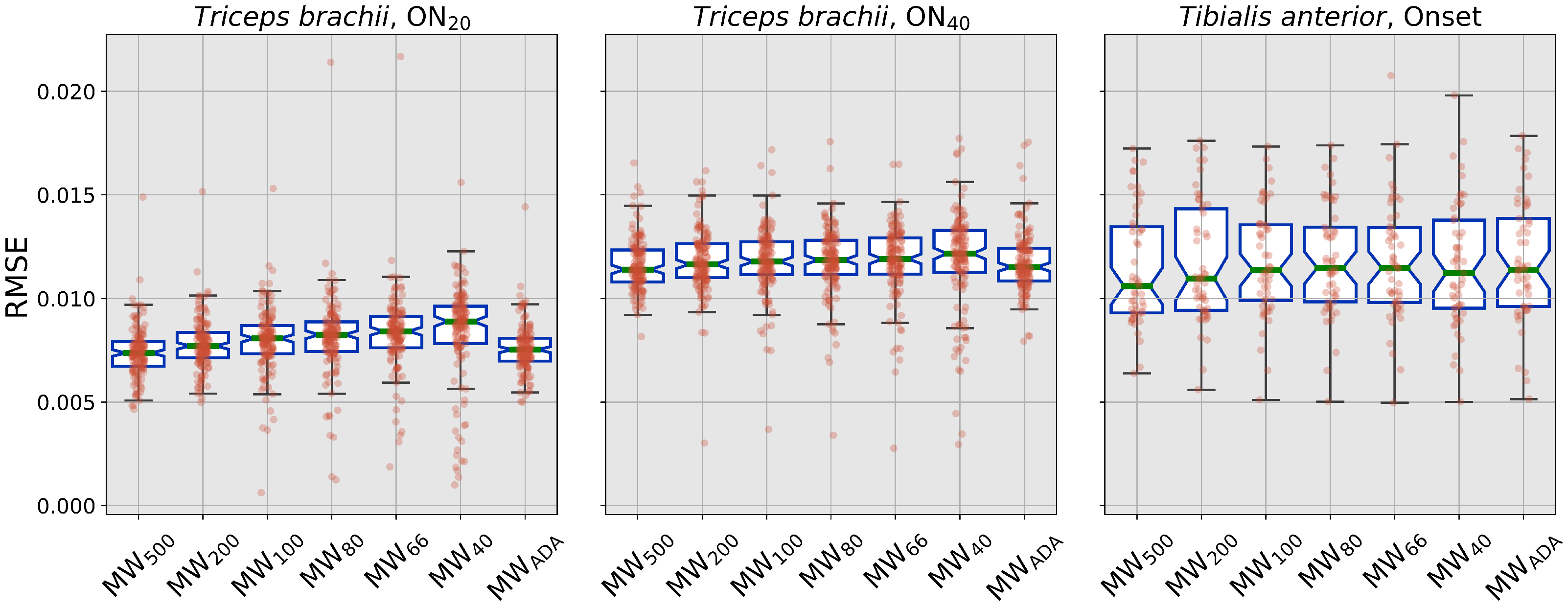
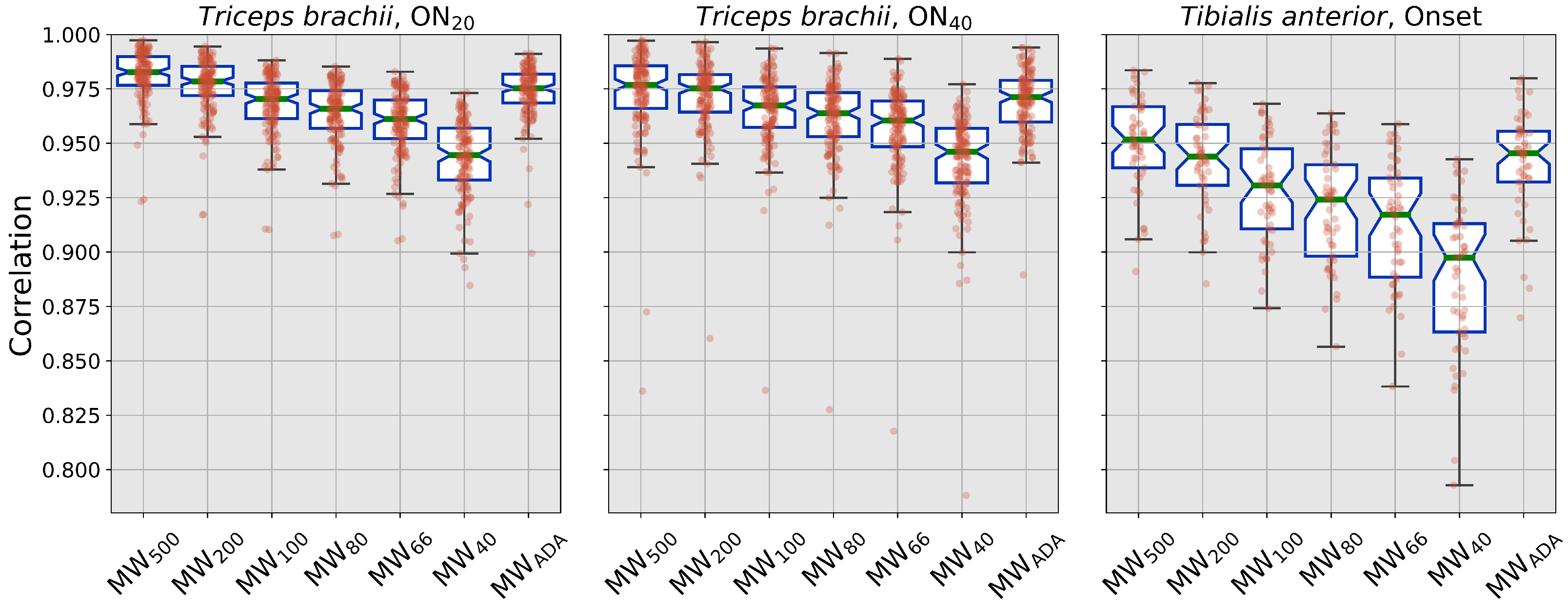
- Triceps. For this dataset, the events have been defined starting from the signal related to the visual stimuli that has been given to the subject during the experiment.
- Tibialis anterior. For this dataset, events have been defined directly from the force signal, defining a threshold based on the noise level.
3. Results
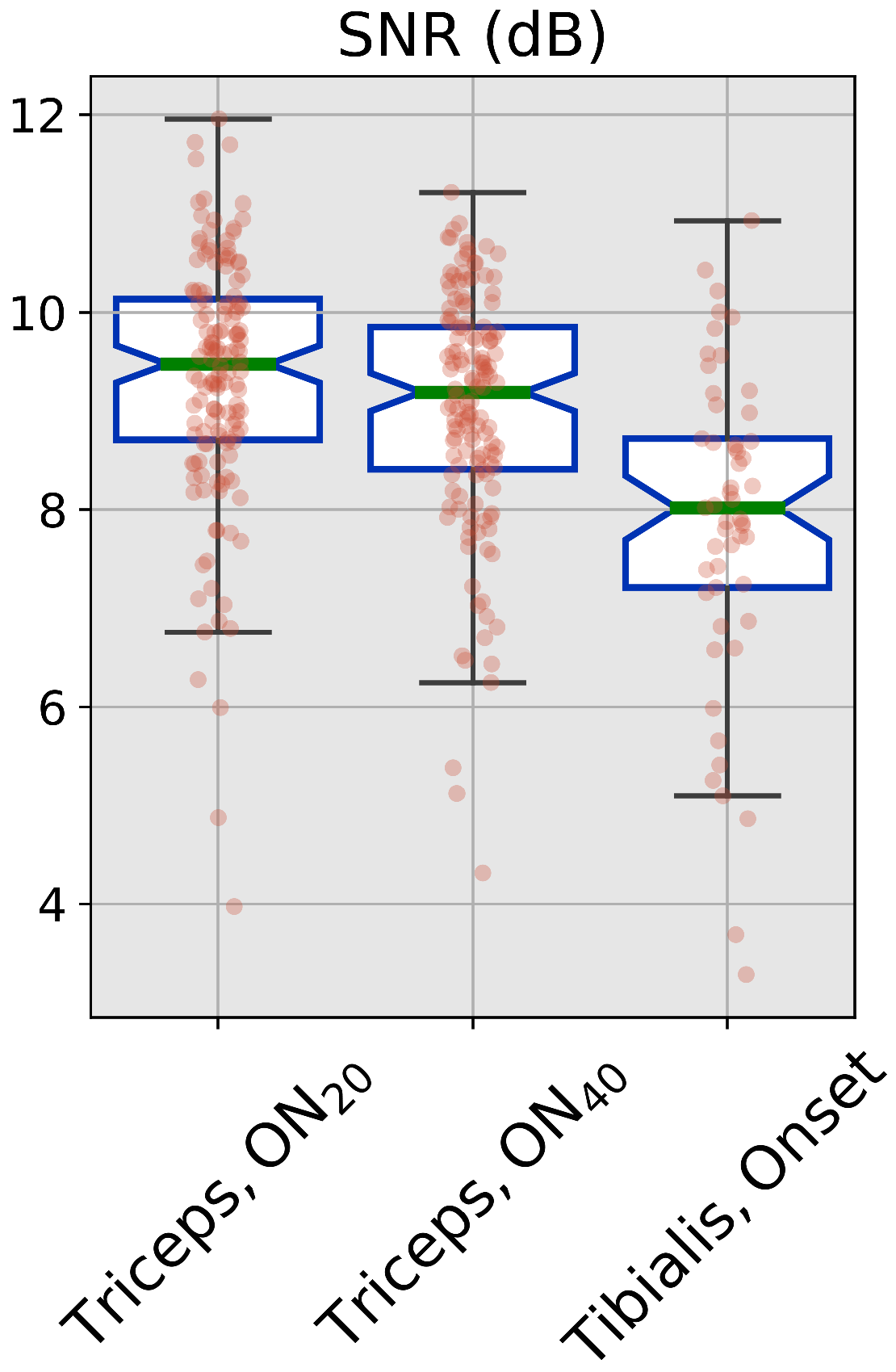
3.1. Signal to Noise Ratio
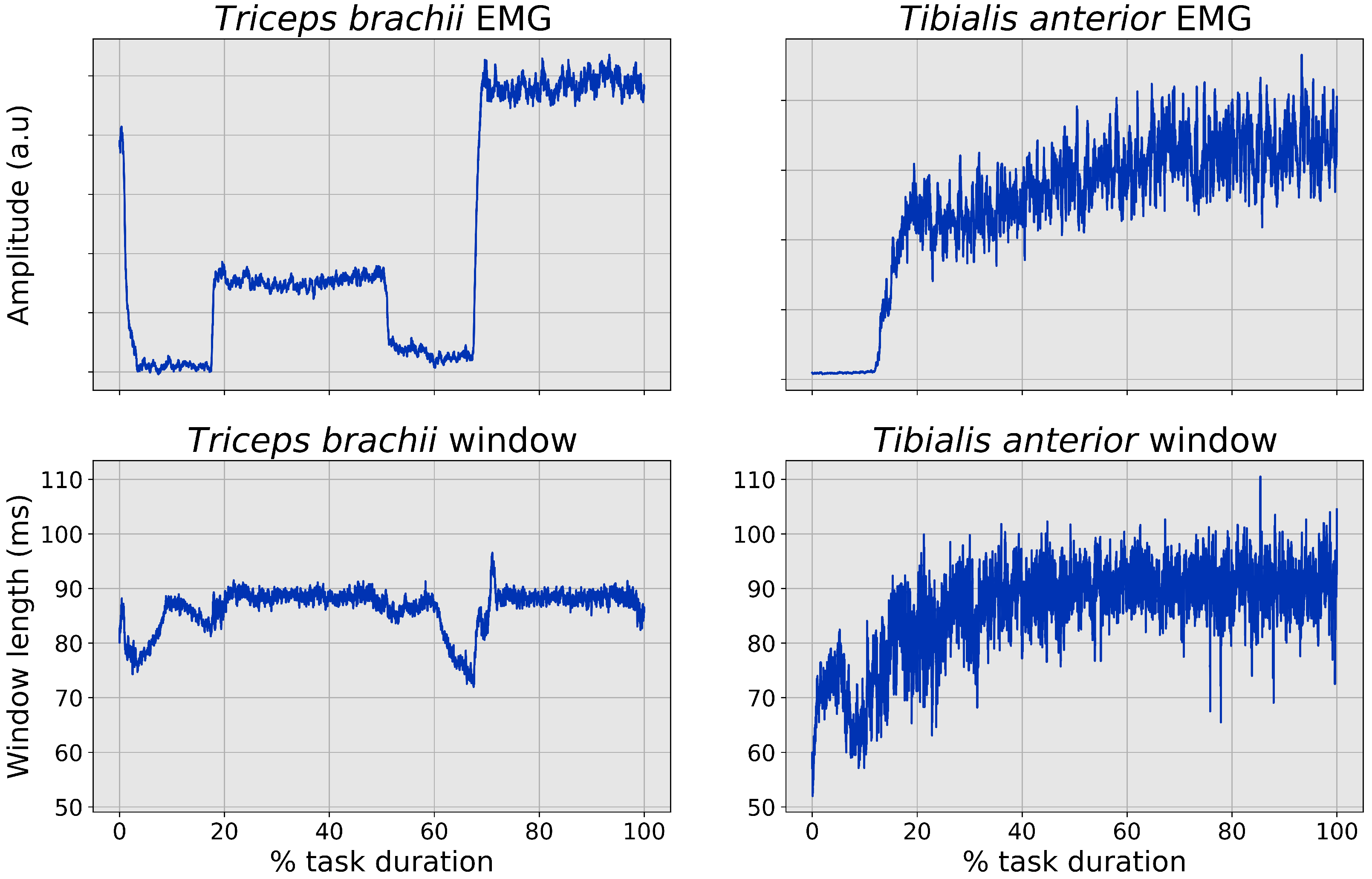
3.2. Time-Varying Filter Time Constant
- For the tibialis dataset, the minimum window length is around 60 ms, different to the 70 ms value that is recorded on the triceps signal;
- The variability of the tibialis window length is higher, with a noise level that is close to the actual range of the triceps dataset;
- For the triceps dataset, in which also a contraction offset phase is present, the same local minima for the window length can be found;
- In the triceps dataset, the local minima are more pronounced for higher-level contractions, both for onset and offset phases.
3.3. Correlation Metrics
4. Discussion
Author Contributions
Funding
Institutional Review Board Statement
Informed Consent Statement
Data Availability Statement
Conflicts of Interest
Abbreviations
| sEMG | Surface ElectroMyoGraphy |
| HD sEMG | High-Density Surface ElectroMyoGraphy |
| MW | Moving Window |
| MVC | Maximum Voluntary Contraction |
| RMS | Root Mean Square |
| RMSE | Root Mean Square Error |
References
- Hogrel, J.Y. Clinical applications of surface electromyography in neuromuscular disorders. Neurophysiol. Clin. Neurophysiol. 2005, 35, 59–71. [Google Scholar] [CrossRef] [PubMed]
- Mobasser, F.; Eklund, J.M.; Hashtrudi-Zaad, K. Estimation of elbow-induced wrist force with EMG signals using fast orthogonal search. IEEE Trans. Biomed. Eng. 2007, 54, 683–693. [Google Scholar] [CrossRef] [PubMed]
- Johns, G.; Morin, E.; Hashtrudi-Zaad, K. Force modelling of upper limb biomechanics using ensemble fast orthogonal search on high-density electromyography. IEEE Trans. Neural Syst. Rehabil. Eng. 2016, 24, 1041–1050. [Google Scholar] [CrossRef] [PubMed]
- Bida, O.; Rancourt, D.; Clancy, E. Electromyogram (EMG) amplitude estimation and joint torque model performance. In Proceedings of the IEEE 31st Annual Northeast Bioengineering Conference, Hoboken, NJ, USA, 2–3 April 2005; pp. 229–230. [Google Scholar]
- Staudenmann, D.; Roeleveld, K.; Stegeman, D.F.; Van Dieën, J.H. Methodological aspects of SEMG recordings for force estimation–a tutorial and review. J. Electromyogr. Kinesiol. 2010, 20, 375–387. [Google Scholar] [CrossRef]
- Huxley, A.F.; Simmons, R.M. Proposed mechanism of force generation in striated muscle. Nature 1971, 233, 533–538. [Google Scholar] [CrossRef]
- Hill, A.V. The heat of shortening and the dynamic constants of muscle. Proc. R. Soc. Lond. Ser. B Biol. Sci. 1938, 126, 136–195. [Google Scholar]
- Clancy, E.A.; Hogan, N. Relating agonist-antagonist electromyograms to joint torque during isometric, quasi-isotonic, nonfatiguing contractions. IEEE Trans. Biomed. Eng. 1997, 44, 1024–1028. [Google Scholar] [CrossRef]
- Disselhorst-Klug, C.; Schmitz-Rode, T.; Rau, G. Surface electromyography and muscle force: Limits in sEMG–force relationship and new approaches for applications. Clin. Biomech. 2009, 24, 225–235. [Google Scholar] [CrossRef]
- Clancy, E.A.; Bida, O.; Rancourt, D. Influence of advanced electromyogram (EMG) amplitude processors on EMG-to-torque estimation during constant-posture, force-varying contractions. J. Biomech. 2006, 39, 2690–2698. [Google Scholar] [CrossRef] [Green Version]
- De Marchis, C.; Schmid, M.; Bibbo, D.; Bernabucci, I.; Conforto, S. Inter-individual variability of forces and modular muscle coordination in cycling: A study on untrained subjects. Hum. Mov. Sci. 2013, 32, 1480–1494. [Google Scholar] [CrossRef]
- Yao, W.; Fuglevand, R.J.; Enoka, R.M. Motor-unit synchronization increases EMG amplitude and decreases force steadiness of simulated contractions. J. Neurophysiol. 2000, 83, 441–452. [Google Scholar] [CrossRef]
- Farina, D.; Negro, F. Common synaptic input to motor neurons, motor unit synchronization, and force control. Exerc. Sport Sci. Rev. 2015, 43, 23–33. [Google Scholar] [CrossRef]
- D’Alessio, T.; Conforto, S. Extraction of the envelope from surface EMG signals. IEEE Eng. Med. Biol. Mag. 2001, 20, 55–61. [Google Scholar] [CrossRef]
- Burden, A. How should we normalize electromyograms obtained from healthy participants? What we have learned from over 25 years of research. J. Electromyogr. Kinesiol. 2010, 20, 1023–1035. [Google Scholar] [CrossRef]
- Shuman, B.R.; Schwartz, M.H.; Steele, K.M. Electromyography data processing impacts muscle synergies during gait for unimpaired children and children with cerebral palsy. Front. Comput. Neurosci. 2017, 11, 50. [Google Scholar] [CrossRef]
- Hug, F.; Turpin, N.A.; Dorel, S.; Guével, A. Smoothing of electromyographic signals can influence the number of extracted muscle synergies. Clin. Neurophysiol. Off. J. Int. Fed. Clin. Neurophysiol. 2012, 123, 1895–1896. [Google Scholar] [CrossRef]
- Clancy, E.A.; Farry, K.A. Adaptive whitening of the electromyogram to improve amplitude estimation. IEEE Trans. Biomed. Eng. 2000, 47, 709–719. [Google Scholar] [CrossRef]
- Clancy, E.A.; Hogan, N. Single site electromyograph amplitude estimation. IEEE Trans. Biomed. Eng. 1994, 41, 159–167. [Google Scholar] [CrossRef]
- Ranaldi, S.; De Marchis, C.; Conforto, S. An automatic, adaptive, information-based algorithm for the extraction of the sEMG envelope. J. Electromyogr. Kinesiol. 2018, 42, 1–9. [Google Scholar] [CrossRef]
- Hajian, G.; Etemad, A.; Morin, E. Automated channel selection in high-density sEMG for improved force estimation. Sensors 2020, 20, 4858. [Google Scholar] [CrossRef]
- Harris, C.M.; Wolpert, D.M. Signal-dependent noise determines motor planning. Nature 1998, 394, 780–784. [Google Scholar] [CrossRef]
- Jones, K.E.; Hamilton, A.F.d.C.; Wolpert, D.M. Sources of signal-dependent noise during isometric force production. J. Neurophysiol. 2002, 88, 1533–1544. [Google Scholar] [CrossRef]
- Ma, R.; Zhang, L.; Li, G.; Jiang, D.; Xu, S.; Chen, D. Grasping force prediction based on sEMG signals. Alex. Eng. J. 2020, 59, 1135–1147. [Google Scholar] [CrossRef]
- Al Harrach, M.; Carriou, V.; Boudaoud, S.; Laforet, J.; Marin, F. Analysis of the sEMG/force relationship using HD-sEMG technique and data fusion: A simulation study. Comput. Biol. Med. 2017, 83, 34–47. [Google Scholar] [CrossRef]
- Contessa, P.; Adam, A.; De Luca, C.J. Motor unit control and force fluctuation during fatigue. J. Appl. Physiol. 2009, 107, 235–243. [Google Scholar] [CrossRef] [Green Version]
- Masuda, K.; Masuda, T.; Sadoyama, T.; Inaki, M.; Katsuta, S. Changes in surface EMG parameters during static and dynamic fatiguing contractions. J. Electromyogr. Kinesiol. 1999, 9, 39–46. [Google Scholar] [CrossRef]
- Castronovo, A.M.; Negro, F.; Conforto, S.; Farina, D. The proportion of common synaptic input to motor neurons increases with an increase in net excitatory input. J. Appl. Physiol. 2015, 119, 1337–1346. [Google Scholar] [CrossRef]
- Moon, H.; Kim, C.; Kwon, M.; Chen, Y.T.; Onushko, T.; Lodha, N.; Christou, E.A. Force control is related to low-frequency oscillations in force and surface EMG. PLoS ONE 2014, 9, e109202. [Google Scholar] [CrossRef]
- Lodha, N.; Christou, E.A. Low-frequency oscillations and control of the motor output. Front. Physiol. 2017, 8, 78. [Google Scholar] [CrossRef]
- Park, S.H.; Kwon, M.; Christou, E.A. Motor output oscillations with magnification of visual feedback in older adults. Neurosci. Lett. 2017, 647, 8–13. [Google Scholar] [CrossRef]


Publisher’s Note: MDPI stays neutral with regard to jurisdictional claims in published maps and institutional affiliations. |
© 2022 by the authors. Licensee MDPI, Basel, Switzerland. This article is an open access article distributed under the terms and conditions of the Creative Commons Attribution (CC BY) license (https://creativecommons.org/licenses/by/4.0/).
Share and Cite
Ranaldi, S.; Corvini, G.; De Marchis, C.; Conforto, S. The Influence of the sEMG Amplitude Estimation Technique on the EMG–Force Relationship. Sensors 2022, 22, 3972. https://doi.org/10.3390/s22113972
Ranaldi S, Corvini G, De Marchis C, Conforto S. The Influence of the sEMG Amplitude Estimation Technique on the EMG–Force Relationship. Sensors. 2022; 22(11):3972. https://doi.org/10.3390/s22113972
Chicago/Turabian StyleRanaldi, Simone, Giovanni Corvini, Cristiano De Marchis, and Silvia Conforto. 2022. "The Influence of the sEMG Amplitude Estimation Technique on the EMG–Force Relationship" Sensors 22, no. 11: 3972. https://doi.org/10.3390/s22113972
APA StyleRanaldi, S., Corvini, G., De Marchis, C., & Conforto, S. (2022). The Influence of the sEMG Amplitude Estimation Technique on the EMG–Force Relationship. Sensors, 22(11), 3972. https://doi.org/10.3390/s22113972