

Systematic Review

Frequency of Thalassemias in the Brazilian Population and Comparison Between Diagnostic Methods: A Systematic Review

by
Eliana A. Santos
1,
Luciana S. Wermelinger
1,* and
Renato S. Carvalho
2,*
1
Clinical Analysis Laboratory (LACFar), Department of Clinical and Toxicological Analysis, Pharmacy School, Federal University of Rio de Janeiro (UFRJ), Rio de Janeiro 21941-902, Brazil
2
Laboratory of Pain and Inflammatory Pharmacology, Institute of Biomedical Sciences, Health Science Centre, Federal University of Rio de Janeiro (UFRJ), Rio de Janeiro 21941-577, Brazil
*
Authors to whom correspondence should be addressed.
Thalass. Rep. 2026, 16(2), 10; https://doi.org/10.3390/thalassrep16020010
Submission received: 7 April 2026 / Revised: 16 May 2026 / Accepted: 27 May 2026 / Published: 5 June 2026

Abstract

Thalassemia is an inherited hemoglobin disorder caused by reduced or absent globin chain synthesis, with heterogeneous distribution worldwide and in Brazil. Back-ground/Objectives: This systematic review aimed to estimate the frequency of thalas-semia in the Brazilian population according to thalassemia type, geographic region, and population characteristics, as well as to evaluate the impact of diagnostic methods on frequency estimates. Methods: A systematic review was performed following PRISMA 2020 recommendations, in January 2026, including original studies conducted in Brazil-ian populations that reported thalassemia frequency data. Results: Thirty-six studies met the inclusion criteria, of which 77.8% were classified as high quality. The overall average frequency of thalassemia in Brazil was 7.5%, varying according to thalassemia type and diagnostic approach. The mean frequency of alpha thalassemia carriers was 12.3% (range: 5.5–54.0%), with regional variation from 5.79% in the Midwest to 17.3% in the Southeast. The −α3.7 kb deletion was the most frequently reported mutation na-tionwide. Beta thalassemia showed a mean frequency of 2.81% (range: 0.24–18.1%), with regional values ranging from 0.59% in the Southeast to 12.2% in the North and a wide spectrum of pathogenic variants. Distinct frequency patterns were observed in populations with inherent interpretative bias, including individuals with sickle cell trait, systemic lupus erythematosus, microcytosis, and Black populations. Molecular diagnostic methods demonstrated higher sensitivity, enabling the detection of asymp-tomatic carriers and reducing false-negative results. Conclusions: These findings pro-vide a comprehensive epidemiological overview of thalassemia in Brazil and reinforce the importance of molecular diagnostics for accurate screening, genetic counseling, and the development of public health strategies.

1. Introduction

Hemoglobin (Hb), the protein responsible for oxygen transport to tissues, is a heterotetramer composed of two alpha (α) and two beta (β) globin chains [1]. In individuals without hemoglobin disorders, the synthesis of these globin chains is tightly regulated during erythroid differentiation, resulting in red blood cells with uniform size and hemoglobin content [2].
Thalassemias are inherited disorders characterized by quantitative defects in globin chain synthesis, leading to a partial or complete reduction in the production of one or more globin chains. The most prevalent forms are alpha thalassemia (α-thal), caused by alterations in the α-globin genes, and beta thalassemia (β-thal), resulting from mutations affecting β-globin production [3,4].
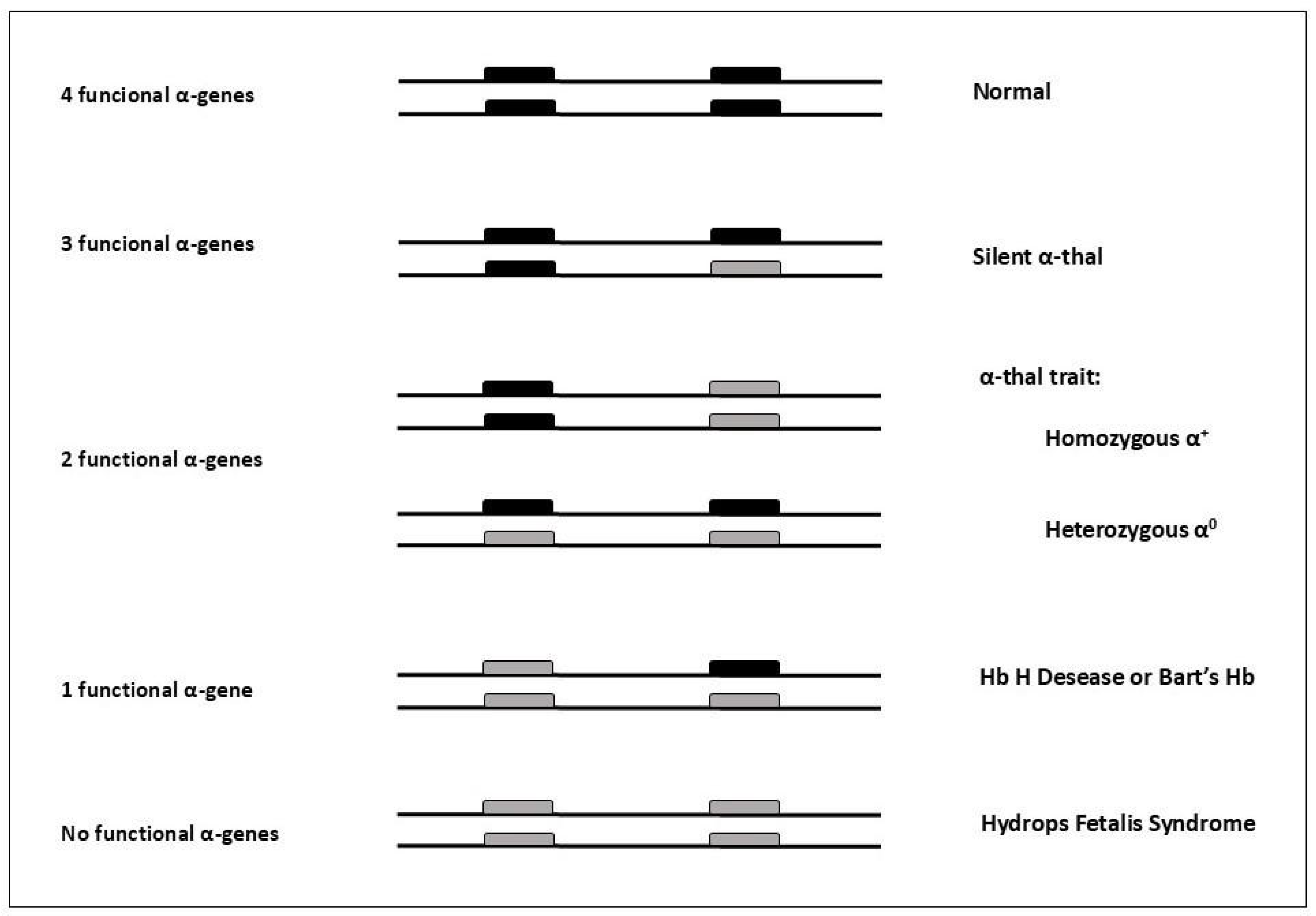
Alpha thalassemia is most frequently caused by gene deletions. Individuals without mutations possess four functional α-globin genes (αα/αα). The clinical spectrum of α-thal depends on the number of affected genes and includes: (i) silent carrier status (αα/-α), which is typically asymptomatic; (ii) α-thal trait, either α+ homozygous (-α/-α) or α0 heterozygous (--/αα), often associated with microcytosis and/or mild anemia; and (iii) hemoglobin H (HbH) disease (--/-α), characterized by significant clinical and hematological manifestations (Figure 1). HbH is a β-globin tetramer (β4) with marked instability and high oxygen affinity, impairing effective oxygen delivery [5].
A more severe form of α-thal is hydrops fetalis syndrome, which occurs when all four α-globin genes are deleted (--/--) (Figure 1). This condition is usually incompatible with life, resulting in intrauterine death or neonatal mortality. In such cases, hemoglobin electrophoresis reveals predominantly Hb Bart’s, the fetal counterpart of HbH, composed of γ-globin tetramers (γ4). Although Hb Bart’s is more stable than HbH, its high oxygen affinity severely compromises oxygen transport. The presence of HbH or Hb Bart’s leads to ineffective oxygen delivery, and in HbH disease, globin instability promotes the formation of inclusion bodies in erythrocytes, contributing to varying degrees of hemolytic anemia [5,6,7,8].
The most extensively studied α-thal deletions include α3.7 kb, α4.2 kb, α20.5 kb, αSEA, and αMED. Globally, the α3.7 kb deletion is the most prevalent, followed by α4.2 kb, both typically associated with α+-thal and partial reduction in α-globin synthesis. In contrast, the αSEA deletion is the most common α0-thal mutation and is associated with more severe clinical phenotypes [5,9].
Beta thalassemia is caused predominantly by point mutations, most commonly single nucleotide polymorphisms (SNPs), affecting β-globin gene expression. These mutations are classified as β0-thal, when β-globin synthesis is completely absent, or β+-thal, when production is reduced [10,11,12,13].
Although studies investigating the frequency of thalassemias are not new in the scientific literature, comprehensive data specifically addressing the Brazilian population remain limited. Most available studies involve isolated datasets and specific population groups, and to date, no systematic compilation integrating the frequency data reported across Brazil has been conducted. The relevance of this systematic review stems from the scarcity of consolidated data on the frequency of thalassemia in the Brazilian population. To our knowledge, this study represents the first systematic review to compile and synthesize all available data on the frequency of thalassemias exclusively in the Brazilian population. A gap that contributes to underdiagnosis, misdiagnosis, and inappropriate clinical management. This issue is particularly pronounced for α-thal, for which epidemiological data are even more limited than for β-thal. To address this gap, this study aimed to systematically review the literature on the frequency of α- and β-thalassemia in Brazil and to compare the diagnostic performance of molecular (M) and non-molecular (NM) methods, assessing potential differences in sensitivity and specificity.

2. Materials and Methods

This systematic review was conducted in accordance with the Preferred Reporting Items for Systematic Reviews and Meta-Analyses (PRISMA) 2020 Statement [14]. Systematic searches were performed in January 2026 in the PubMed, LILACS, and SciELO databases using the search terms “frequency,” “thalassemia,” and “Brazil,” without time restrictions.
Eligible studies met the following criteria: (i) original research conducted exclusively in Brazilian populations; (ii) alignment with the search terms in the title and/or abstract; (iii) availability of the full text and extractable data; and (iv) publication in Portuguese, English, or Spanish. Studies were excluded if they: (i) included non-Brazilian populations; (ii) were reviews, editorials, or letters to the editor; (iii) stratified or subdivided the study population; (iv) adopted a case–control design; or (v) evaluated populations previously diagnosed with thalassemia.
The selection of studies was independently performed by two authors according to pre-established eligibility and exclusion criteria. In cases of disagreement, a third author was consulted to reach a final decision. Studies were initially selected based on their titles, followed by a comprehensive review of the abstracts. The identification and removal of duplicate papers across databases were performed manually. For each included study, the following data were evaluated: study population, sample size, diagnostic methods (specifically molecular techniques, including mutations targeted and identified), and the frequency of thalassemia within the population. Individuals with homozygous and heterozygous genotypes were grouped and categorized as either α-thal or β-thal carriers. Data regarding the frequencies of α-thal and of β-thal were extracted separately; no additional data from the publications were collected. Two authors independently conducted the selection, quality assessment, and data extraction processes. This review was registered in the PROSPERO public registry under the number CRD420261340146.
The methodological quality of the selected studies was assessed using a modified version of the Toxicological data Reliability Assessment Tool (ToxRTool) [15]. The evaluation focused on the clarity of study objectives, reproducibility of the methods, and transparency and objectivity in data presentation. Based on these criteria, studies were classified as high, moderate, or low quality.
Comparisons between diagnostic approaches for α- and β-thalassemia were performed by analyzing the reported frequencies obtained using molecular (M) and non-molecular (NM) methods. Fisher’s chi-square (χ2) test was applied using the VassarStats online statistical platform (http://vassarstats.net/; accessed on 27 January 2026). A p-value < 0.05 was considered statistically significant.

3. Results

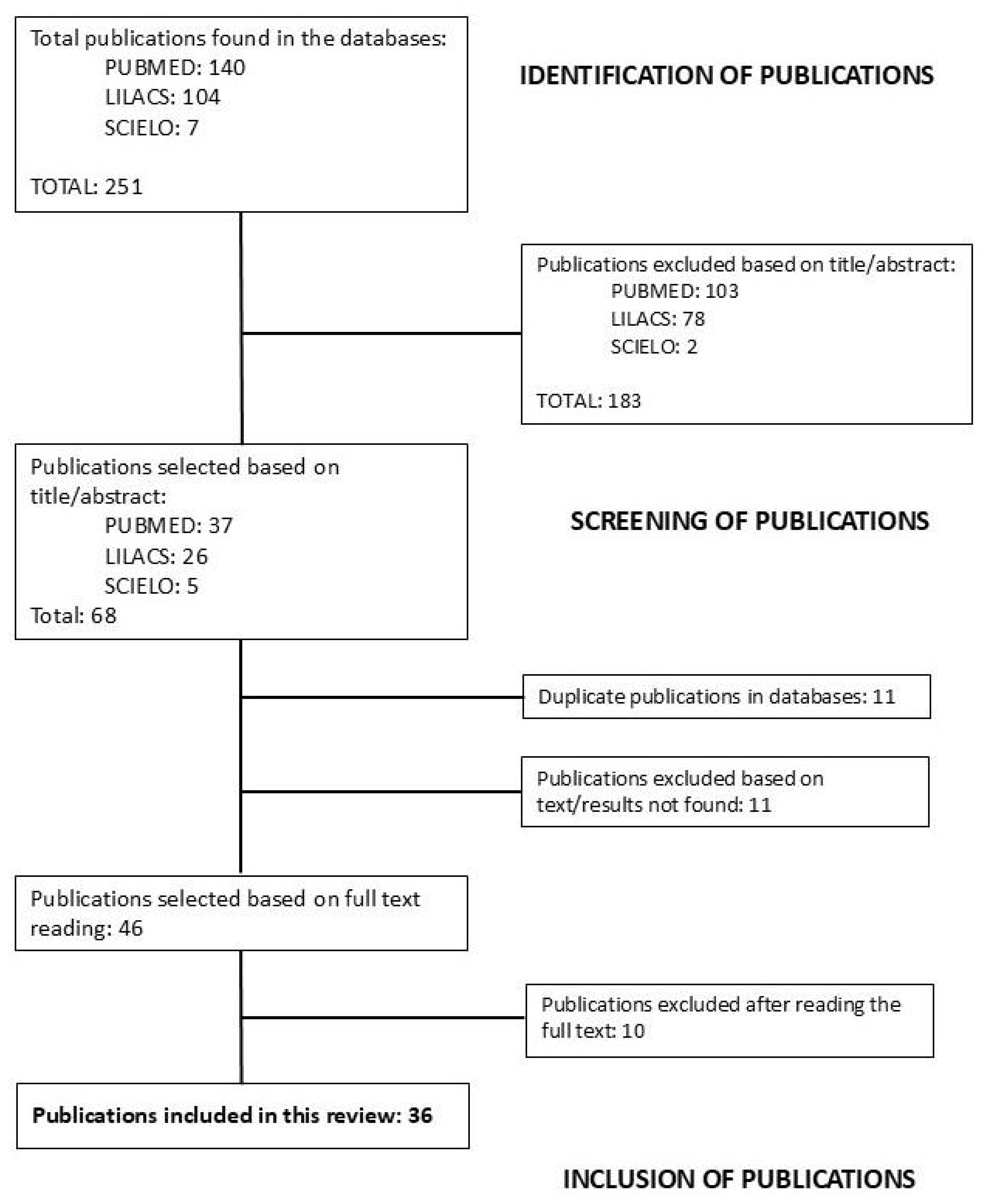
The initial search retrieved 140 publications from the PubMed database. After title and abstract screening, 38 studies were selected for full-text assessment, of which 27 met the eligibility criteria and were included for data extraction. The LILACS database yielded 104 publications; after removal of duplicates and screening, nine additional studies were included. Seven records were identified in the SciELO database; however, all were duplicates of studies already retrieved from PubMed or LILACS and were therefore excluded. In total, 36 studies were included for qualitative synthesis and data extraction in this systematic review (Figure 2).
Based on the quality assessment, 28 studies (77.8%) were classified as high quality, demonstrating clearly defined objectives, reproducible methodologies, and transparent, well-organized presentation of results. The remaining eight studies (22.2%) were classified as moderate quality, primarily due to limitations in clarity and structure in the description and presentation of the results. No studies were classified as low quality.
Across the 36 included studies, a total of 37,090 individuals were evaluated, of whom 2781 were identified as carriers of thalassemia, regardless of clinical status. This corresponds to an overall average frequency of 7.50% in the Brazilian population according to the studies evaluated, with reported frequencies ranging from 0.05% to 54.0%. Twenty-one studies focused exclusively on α-thal, five evaluated only β-thal, and ten studies assessed both α- and β-thalassemia simultaneously (Table 1). Among the included studies, the evaluated populations presented diverse characteristics, including healthy individuals, patients treated in public hospitals, individuals with hemoglobinopathies, microcytosis, or lupus, and other selected groups. To minimize potential bias in estimating the average frequency of thalassemia in the Brazilian population, only studies involving individuals without previous diagnoses were included in the final frequency analysis. Studies involving patients with hemoglobinopathies (Hb S or Hb C) or lupus or hospital-based populations were excluded, as these conditions may be associated with increased thalassemia frequency and could therefore introduce bias into the analysis. Consequently, among the 36 studies identified, 15 studies [16,17,18,19,20,21,22,23,24,25,26,27,28,29,30] were included in the final frequency estimation, representing a total population of 18,801 individuals. Among these, 738 individuals presented some form of thalassemia, corresponding to an estimated frequency of 3.9% in the Brazilian population evaluated in this systematic review.
A total of 31 studies evaluated the frequency of α-thal, encompassing a cumulative population of 16,558 individuals from different regions of Brazil. Among these, 2032 individuals were identified as α-thal carriers, including both heterozygous and homozygous genotypes, corresponding to a mean carrier frequency of 12.3% in the studies considered. However, for the calculation of the average frequency of α-thalassemia in the Brazilian population, only studies involving individuals without previous diagnoses were considered. Accordingly, 11 studies [16,17,19,20,21,22,23,25,26,29,30] were included in this analysis, resulting in an estimated mean frequency of 7.6% for α-thalassemia.
For β-thal, the total population analyzed comprised 26,481 individuals, of whom 743 were identified as carriers, resulting in an overall mean frequency of 2.81%. For the calculation of the average frequency of β-thalassemia in the Brazilian population, only studies involving individuals without previous diagnoses were considered. Accordingly, seven studies [18,20,22,24,25,27,28] were included in this analysis, resulting in an estimated mean frequency of 1.3% for β-thalassemia in the Brazilian population based on the studies considered in this review.
Regarding geographic distribution, five studies were conducted in the Northern region, three of which assessed only α-thal, while the remaining two investigated both α- and β-thalassemia. Ten studies were performed in the Northeastern region: seven evaluated only α-thal, one focused exclusively on β-thal, and two assessed both conditions. Two studies were conducted in the Central-West region, both evaluating the frequency of α- and β-thalassemia. Thirteen studies originated from the Southeastern region, including ten focused exclusively on α-thal, one on β-thal alone, and two assessing both α- and β-thalassemia. Five studies were carried out in the Southern region: two evaluated only α-thal, one assessed only β-thal, and two investigated both conditions. Finally, two studies used nationwide datasets, both exclusively addressing β-thal (Table 2).
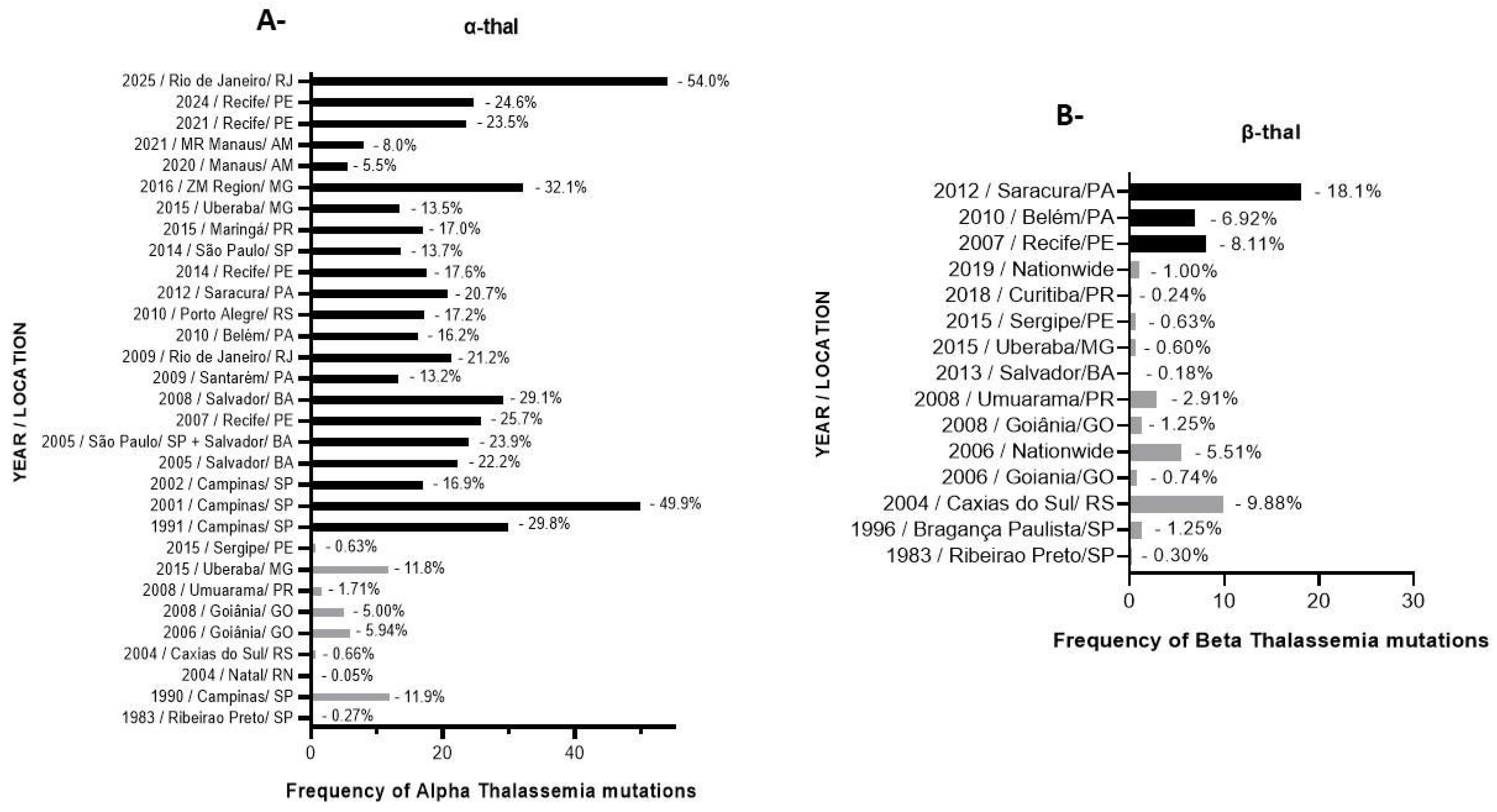
Among the 36 studies included in this review, both molecular (M) and non-molecular (NM) diagnostic methods were used for the detection of α- and β-thalassemia. A comparative analysis was performed to evaluate the frequencies reported according to the diagnostic approach employed (Figure 3). Overall, studies using molecular methods reported significantly higher carrier frequencies than those using non-molecular approaches, with statistically significant differences observed for both α- and β-thalassemia (p < 0.0001; Table 3). The results indicate that molecular methods improve the detection of thalassemia carriers, likely due to their ability to identify heterozygous mutations, particularly in α-thalassemia, regardless of the presence of clinical signs.
Thirty-one studies assessed α-thal. Of these, nine employed non-molecular diagnostic methods [16,17,18,19,20,21,22,23,24], Hb H testing by electrophoresis or intracellular inclusion testing, reporting carrier frequencies ranging from 0.05% to 11.9%. In contrast, twenty-two studies used molecular methods (by multiplex PCR or use of restriction enzymes) [25,26,27,28,29,30,32,33,35,36,37,39,40,41,42,43,46,47,48,49,50,51], with reported frequencies ranging from 5.5% to 54.0%.
For β-thal, twelve studies used non-molecular methods [16,19,20,21,22,23,24,31,34,38,46,47]—primarily high-performance liquid chromatography (HPLC) and hemoglobin electrophoresis at alkaline pH with quantification of HbA2—yielding carrier frequencies between 0.24% and 9.88%. Three studies employed molecular approaches [30,37,49], including conventional PCR followed by nucleotide sequencing, and reported higher carrier frequencies, ranging from 6.92% to 18.1%.
Among studies that employed non-molecular (NM) methods for α-thal screening, the highest carrier frequencies were reported in Campinas, São Paulo [17] (11.9%), and Uberaba, Minas Gerais [23] (11.8%). Two studies conducted in the Central-West region reported intermediate frequencies of 5.94% [20] and 5.00% [21], respectively. All remaining NM-based studies reported α-thal carrier frequencies below 2%, including values of 0.05% [18], 0.27% [16], 0.63% [24], 0.66% [19] and 1.71% [22].
Among studies using molecular (M) diagnostic methods, two investigations conducted in Manaus, Amazonas, reported carrier frequencies below 10%. These studies screened for the most common α-globin gene deletions and identified only the α3.7 kb [32,50] and α4.2 kb [50] deletions. Eight studies [27,36,37,39,40,43,44,48] reported carrier frequencies between 10% and 20% (ranging from 13.2% to 17.6%), with the α3.7 kb deletion consistently identified as the most prevalent mutation. In three of these studies [37,44,48], additional deletions (α3.7 kb, α4.2 kb, α20.5 kb, αMED, αSEA, αFIL, αTHAI) were also investigated; however, only one study [39] detected the α4.2 kb deletion in addition to α3.7 kb. The remaining studies evaluated exclusively the α3.7 kb deletion.
Twelve studies [25,26,28,29,30,33,35,41,42,45,49,51] reported α-thal carrier frequencies exceeding 20%, with values ranging from 20.7% to 54.0%, reflecting substantial heterogeneity across populations and regions.
A separate analysis of α-thal mutations detected by molecular methods revealed that the α3.7 kb deletion was both the most frequently investigated and the most prevalent mutation, being assessed in 22 studies [25,26,27,28,29,30,32,33,35,36,37,39,40,41,42,43,44,45,48,49,50,51] and detected at a mean frequency of 20.8%. The α4.2 kb deletion was investigated in 11 studies [26,28,32,35,37,41,42,44,48,49,50] and detected at a mean frequency of 0.15%. The αSEA deletion was evaluated in six studies [32,41,42,44,48,50] and identified exclusively in the state of Rio de Janeiro, with a frequency of 0.14% [42]. The αMED deletion, investigated in nine studies [26,32,37,41,42,44,48,49,50], was detected in the states of São Paulo (0.3%) [26] and Pará (2.6%) [49], with a mean frequency of 0.06%. One study [26] investigated non-deletional α-globin mutations and reported a frequency of 1.5% in the state of São Paulo. Other deletions, including α20.5 kb, αFIL, and αTHAI, were not detected despite being investigated in Brazilian populations.
For β-thal, reported carrier frequencies ranged from 0.24% [46] to 18.1% [49]. Among studies using NM methods, six [16,20,23,24,46,47] reported frequencies of up to 1%, while four [21,22,31,34] reported frequencies exceeding 1%. Two studies conducted nationwide analyses reported carrier frequencies of 5.51% [34] and 1.0% [47]. Two additional studies employed combined diagnostic approaches: one identified 9.88% [19] of individuals with elevated HbA2 levels but did not detect β-globin mutations in sequenced DNA fragments, while another [38] identified two individuals with elevated HbA2, only one of whom carried a detectable β-thalassemia mutation.
Three studies [30,37,49] utilized molecular diagnostic methods for β-thal detection, reporting carrier frequencies of 8.11%, 6.92%, and 18.1%. These studies identified a diverse spectrum of β-globin gene mutations. Bezerra et al. (2007) [30] found IVSI-5 G>C: 4.0%; IVSI-5 G>A: 1.35%; IVSI-1 G>A: 1.35%; and −88 C>T: 1.35%; Cardoso et al. (2010) [36] found −88 C>T: 3.8%; CD 24 T>A: 1.5%; IVSI-110 G>A: 0.8%; and IVSI-1 G>A: 0.8%; and Cardoso et al. (2012) [37] found −88C>T: 3.4%; CD 15 G>A: 2.6%; CD 24 T>A: 0.9%; CD 39 C>T: 3.4%; IVSI-1 G>A: 1.7%; IVSI-6 T>C: 2.6%; and IVSI-110 G>A: 3.4%.
A separate analysis of β-thal mutations detected by molecular methods demonstrated that the −88 (C>T) mutation was the most prevalent, being investigated in three studies and detected at a mean frequency of 3.13%. Other mutations were identified at lower frequencies: CD 39 (C>T) at 0.28%, IVS-I-110 (G>A) at 0.25%, IVS-I-1 (G>A) at 0.20%, CD 15 (G>A), CD 24 (T>A), IVS-I-5 (G>C), and IVS-I-6 (T>C) each at 0.15%, CD 44 (−C) at 0.07%, and IVS-I-5 (G>A) at 0.05%.

4. Discussion

Regarding regional distribution, the Southeastern region accounted for the largest number of studies on thalassemia in the Brazilian population, particularly for α-thal. This concentration likely reflects greater research infrastructure and funding availability rather than true regional differences in disease frequency, highlighting the unequal geographic distribution of epidemiological investigations in Brazil.
When comparing diagnostic approaches, molecular methods (performed by detecting mutations in DNA, using PCR) demonstrated a clear advantage over non-molecular methods (performed by detecting HbH, using hemoglobin electrophoresis or specific cell staining) for α-thal detection. Molecular testing enables the identification of silent carriers and individuals with mild phenotypes carrying one or two deleted α-globin genes (-α/αα or -α/-α or --/αα), whereas non-molecular methods predominantly detect individuals with three deleted α-globin genes (--/-α), corresponding to HbH disease (Figure 1) [51]. Consequently, non-molecular approaches underestimate carrier frequency. Differences in reported frequencies are influenced by several factors, particularly methodological sensitivity and the genetic background of the studied populations. HbH, the main target of non-molecular screening, is unstable and rapidly degraded by erythrocytic proteolytic enzymes, often producing faint electrophoretic bands that hinder visual detection and increase the likelihood of false-negative results [6,19]. Despite these limitations, non-molecular methods remain widely used due to their lower cost, shorter turnaround time, and broader technical availability, making them a feasible alternative in settings without access to molecular diagnostics. Molecular methods identified a greater number of mutation carriers than non-molecular methods. As shown in Figure 3, the reported frequency of α-thalassemia ranged from 0.05% to 11.9% when non-molecular methods were used, whereas frequencies obtained with molecular methods ranged from 5.5% to 54.0%. This difference is likely related to the higher ability of molecular approaches to detect heterozygous and asymptomatic carriers, thereby reducing false-negative results and potential underreporting. A similar pattern was observed for β-thalassemia. In addition, Table 3 demonstrates statistically significant differences between the frequencies reported according to the diagnostic method used.
Brazil’s extensive population admixture, resulting from interactions between Amerindian peoples, European colonizers and African populations, contributes to marked regional genetic heterogeneity. Therefore, differences in thalassemia frequencies across studies must be interpreted in light of population structure, selection criteria, and diagnostic strategy. Several studies that employed non-molecular methods focused on populations with known higher α-thalassemia prevalence, such as individuals of African ancestry [23] or Black populations [25], explaining the higher frequencies observed. Other investigations targeted specific groups, including university students unaware of their hemoglobinopathy status [20], patients with systemic lupus erythematosus [21]—among whom mild to moderate anemia is common—or individuals experiencing homelessness [16,18], who often have limited access to healthcare. In populations with HbH disease, clinical severity is variable, and transfusion dependence may lead to underrepresentation in screening studies, contributing to lower observed frequencies.
Unexpectedly low frequencies were reported in quilombola populations [24], despite the higher prevalence of consanguinity and genetic disorders typically observed in such communities [52]. This finding suggests potential methodological underestimation or population-specific factors that warrant further investigation. Studies conducted in southern Brazil [19,22], predominantly involving populations of European ancestry, reported frequencies consistent with the lower prevalence of α-thalassemia in Europe, reinforcing the influence of ancestry on disease distribution.
Among studies using molecular diagnostics for α-thal, those reporting lower frequencies evaluated asymptomatic individuals, such as blood donors [50] or users of primary healthcare services [32], which aligns with expectations for unselected populations. Conversely, studies reporting frequencies between 10% and 20% predominantly involved individuals with hemoglobin variants (HbS or HbC [27]), sickle cell disease [37,39,40,43], or hematological abnormalities such as microcytosis [36,44,48]. Microcytosis is a shared laboratory feature of α-thal, HbC, and certain HbS genotypes, all of which are more prevalent in populations of African descent. Increasing numbers of affected α-globin genes exacerbate microcytosis and reduce the concentration of variant hemoglobins [53]. Notably, approximately one-third [29,30,33,35,37,39,40,41,43,45,51] of the included studies evaluated α-thal frequency in populations carrying HbS or in communities with a high prevalence of sickle cell trait [28,49]. In such cases, α-thal co-inheritance reduces intracellular HbS concentration, decreases hemolysis, and improves clinical outcomes, including fewer painful crises, reduced transfusion requirements, and improved hematological indices [54].
Studies reporting α-thal frequencies exceeding 20% consistently involved populations with strong selection bias, including individuals with sickle cell disease [29,30,33,35,41,45,51], quilombola communities [49], Black blood donors [25], newborns from regions with high HbS prevalence [28], or patients with unexplained microcytosis without iron deficiency [26,42]. These findings reinforce the importance of investigating thalassemia in individuals presenting with microcytosis, particularly in the absence of iron deficiency. Although iron deficiency anemia remains the most common global cause of microcytosis [55], these results highlight the risk of misdiagnosis when thalassemia is not considered. Many studies focused exclusively on the α3.7 kb deletion due to its high global prevalence; however, this targeted approach fails to identify carriers of rare deletions, leading to underestimation of genetic diversity in highly admixed populations such as Brazil. The evaluated studies employed different molecular targets for mutation screening. This methodological variability may have contributed to false-negative results in studies that did not comprehensively investigate the mutation panel, as well as to divergent findings resulting from the specific characteristics and limitations of each diagnostic technique used.
The Brazilian population is highly admixed due to its historical formation. Initially, the authors considered that the diverse populations included in the selected studies could reflect this genetic heterogeneity. However, for the calculation of α-thalassemia and β-thalassemia frequencies, only studies involving individuals without previous diagnoses were included. Studies involving patients with hemoglobinopathies (Hb S or Hb C) or lupus or hospital-based populations were excluded because these conditions may be associated with increased thalassemia frequencies, potentially introducing bias into the analysis. Accordingly, 11 studies [16,17,19,20,21,22,23,25,26,29,30] were considered for α-thalassemia, resulting in an estimated frequency of 7.6%, while 7 studies [18,20,22,24,25,27,28] were considered for β-thalassemia, resulting in an estimated frequency of 1.3% in the Brazilian population.
The mutation frequencies identified in this review are consistent with the worldwide distribution of α-thalassemia mutations described by David Weatherall in 2001 [56] and are compatible with the ancestral origins of the Brazilian population. The most extensively investigated and most frequently identified mutation was the −α3.7 kb deletion, which is also the most widely distributed α-thalassemia mutation globally, occurring across Europe, Asia, and Africa—populations that significantly contributed to the genetic formation of the Brazilian population. In contrast, epidemiological studies evaluating thalassemia frequency in Latin America remain limited, making direct comparisons between the findings of this review and data from neighboring countries difficult.
For β-thal, non-molecular methods based on Hb/HPLC or hemoglobin electrophoresis remain cost-effective, reliable, and well-established in routine laboratory practice. However, some β-thal carriers present HbA2 levels within the reference range, particularly when coexisting with α-thal or iron deficiency, limiting diagnostic sensitivity [57]. In such cases, molecular testing enables definitive mutation identification. As observed for α-thal, molecular methods yielded significantly higher carrier frequencies for β-thal, reflecting increased sensitivity rather than overdiagnosis.
Studies reporting β-thal frequencies of up to 1% [16,20,23,24,46,47] generally involved large, asymptomatic populations, consistent with population-based screening expectations. Higher frequencies were observed in studies targeting individuals with hematological abnormalities [21,22,31,34], reinforcing the role of selection bias. Nationwide studies differed substantially: one analyzed samples submitted for diagnostic clarification [32], while the other evaluated data from a population-based health survey conducted without prior suspicion of hemoglobinopathies [47], explaining the observed discrepancy.
Combined diagnostic approaches [19,38] showed limitations, as sequenced genomic regions did not encompass the full spectrum of β-globin mutations, leaving open the possibility of undetected variants. All studies using molecular diagnostics for β-thal exhibited population selection bias, predominantly involving individuals with sickle cell disease [30,37] or quilombola communities [49]. Given the common occurrence of consanguineous marriages among quilombola communities, an increase in the frequency of genetic diseases is expected [52]. Co-inheritance of β-thal and sickle cell disease may ameliorate clinical severity through increased fetal hemoglobin production, offering cellular protection against α-globin excess [37,57]. Regional differences in mutation profiles further reinforce the genetic heterogeneity across different regions of Brazil.
Although non-molecular methods are less costly, they lack sufficient sensitivity in cases with borderline HbA2 levels, mild microcytosis and/or absence of iron deficiency. Molecular diagnostics overcome these limitations by identifying both the mutation and the genotype. Given the consistent and statistically significant differences in detected frequencies between diagnostic methods for both α- and β-thalassemia, molecular testing enables the identification of a greater number of carriers, regardless of thalassemia type, by identifying carriers missed by non-molecular approaches and providing precise genetic characterization.

5. Conclusions

Based on the results of this review, it can be concluded that the Brazilian population presents an estimated thalassemia frequency of 3.90%, according to the evaluated studies that included individuals without previous diagnoses (healthy individuals), varying according to the type of thalassemia and being directly influenced by the diagnostic method employed. For both α-thal and β-thal, frequencies vary according to geographic region and the characteristics of the population studied. Populations with inherent interpretative bias—such as carriers of HbS, individuals with systemic lupus erythematosus, Black populations, or individuals with microcytosis—exhibit thalassemia frequencies distinct from those observed in asymptomatic populations.
The findings of this review highlight the importance of investigating thalassemias in individuals with microcytosis, particularly in the absence of anemia. Molecular diagnostic methods proved to be more sensitive, enabling the detection of asymptomatic carriers and reducing the likelihood of false-negative results.
When analyzed separately, the average frequency of α-thal in Brazil was 7.6%, ranging from 5.5% to 54.0%. Regional frequencies varied from 5.79% in the Midwest to 17.3% in the Southeast. The most extensively studied α-thal mutation nationwide was the α3.7 kb deletion. The reported mutation frequencies were: α3.7 kb (20.8%), α4.2 kb (0.15%), αSEA (0.14%), αMED (0.06%), and αND (1.5%).
For β-thal, the average frequency observed in Brazil was 1.3%, with values ranging from 0.24% to 18.1%. Regional frequencies varied from 0.59% in the Southeast to 12.2% in the North. The mutations identified included: −88 C>T (3.13%), CD39 C>T (0.28%), IVS1-110 G>A (0.25%), IVS1-1 G>A (0.20%), CD15 G>A (0.15%), CD24 T>A (0.15%), IVS1-5 G>C (0.15%), IVS1-6 T>C (0.15%), CD44 (−C) (0.07%), and IVS1-5 G>A (0.05%).
The data generated by this review may serve as a valuable resource for epidemiological studies, using thalassemia mutations as genetic markers to trace the history of immigration in Brazil. Additionally, these findings support the development of personalized therapeutic strategies based on specific mutations and their associated clinical severity. Finally, this evidence may contribute to the formulation of public health policies aimed at improving diagnosis, treatment, and genetic counseling, ultimately enhancing the quality of life of individuals with thalassemia in Brazil.

Author Contributions

E.A.S.: Writing—original draft, Writing—review & editing, Methodology, Investigation, Formal analysis and Data curation. L.S.W.: Writing—review & editing, Formal analysis, Data curation, Conceptualization and Supervision. R.S.C.: Writing—review & editing, Formal analysis, Data curation, Funding Acquisition, Conceptualization and Supervision. L.S.W. and R.S.C. contributed equally to the completion of this paper. All authors have read and agreed to the published version of the manuscript.

Funding

Fundação Carlos Chagas Filho de Amparo à Pesquisa do Estado do Rio de Janeiro (FAPERJ) and the Conselho Nacional de Desenvolvimento Científico e Tecnológico (CNPq).

Informed Consent Statement

Not applicable.

Data Availability Statement

The original contributions presented in this study are included in this paper. All new data presented were extracted from the analysis of data from the papers included in this systematic review.

Acknowledgments

The authors acknowledge all members of LACFar/UFRJ and the undergraduate and graduate students involved in this work for their valuable discussions and technical support.

Conflicts of Interest

The authors declare no conflicts of interest.

Abbreviations

The following abbreviations are used in this manuscript:
AAdenine
CCytosine
CALClinical Analysis Laboratory
CDCodon
GGuanine
HbHemoglobin
Hb A2Hemoglobin type A2
Hb CPresence of anomalous Hb type C
Hb HPresence of anomalous Hb type H
Hb SPresence of anomalous Hb type S
Hb SSPresence of anomalous Hb type S in homozygosity
HPLCHigh-performance liquid chromatography
IVSIntron variation site
MMolecular methods
MODModerate
NFNo mutation was found in the analyzed fragment
NINo information
NMNon-molecular methods
NSNot studied
PCRPolymerase chain reaction
PRISMAPreferred Reporting Items for Systematic Reviews and Meta-Analyses
SCASickle Cell Anemia
SCDSickle Cell Disease
SLESystemic Lupus Erythematosus
SNPsSingle Nucleotide Polymorphisms
TThymine
UFGOFederal University of the State of Goias
UFTMFederal University of Triângulo Mineiro
UHUniversity Hospital
UnicampState University of Campinas
α-thalAlpha thalassemia
β-thalBeta thalassemia

References

  1. Mettananda, S.; Gibbons, R.J.; Higgs, D.R. Understanding α-globin gene regulation and implications for the treatment of β-thalassemia. Ann. N. Y. Acad. Sci. 2016, 1368, 16–24. [Google Scholar] [CrossRef] [PubMed]
  2. Higgs, D.R. Gene regulation in hematopoiesis: New lessons from thalassemia. Hematology 2004, 2004, 1–13. [Google Scholar] [CrossRef] [PubMed]
  3. Baird, D.C.; Batten, S.H.; Sparks, S.K. Alpha- and Beta-thalassemia: Rapid Evidence Review. Am. Fam. Physician 2022, 105, 272–280. [Google Scholar]
  4. Higgs, D.R.; Vickers, M.A.; Wilkie, A.O.M.; Pretorius, I.M.; Jarman, A.P.; Weatherall, D.J. A review of the molecular genetics of the human α-globin gene cluster. Blood 1989, 73, 1081–1104. [Google Scholar] [CrossRef] [PubMed]
  5. Piel, F.B.; Weatherall, D.J. The α-Thalassemias. N. Engl. J. Med. 2014, 371, 1908–1916. [Google Scholar] [CrossRef] [PubMed]
  6. Cançado, R.D. Talassemias alfa. Rev. Bras. Hematol. Hemoter. 2006, 28, 86–87. [Google Scholar] [CrossRef]
  7. Vichinsky, E.P. Clinical manifestations of α-Thalassemia. Cold Spring Harb. Perspect. Biol. 2013, 3, a011742. [Google Scholar] [CrossRef]
  8. Shang, X.; Xu, X. Update in the genetics of thalassemia: What clinicians need to know. Best Pract. Res. Clin. Obstet. Gynaecol. 2017, 39, 3–15. [Google Scholar] [CrossRef] [PubMed]
  9. Li, C.K. New trend in the epidemiology of thalassaemia. Best Pract. Res. Clin. Obstet. Gynaecol. 2017, 39, 16–26. [Google Scholar] [CrossRef] [PubMed]
  10. Galanello, R.; Origa, R. Beta-thalassemia. Orphanet J. Rare Dis. 2010, 5, 11. [Google Scholar] [CrossRef] [PubMed]
  11. Ministério da Saúde. Orientações para o Diagnóstico Beta Talassemia; Ministério da Saúde: Brasília, Brazil, 2016.
  12. Musallam, K.M.; Cappellini, M.D.; Coates, T.D.; Kuo, K.H.; Al-Samkari, H.; Sheth, S.; Viprakasit, V.; Taher, A.T. Alpha-thalassemia: A practical overview. Blood Rev. 2024, 64, 101165. [Google Scholar] [CrossRef] [PubMed]
  13. Kattamis, A.; Kwiatkowski, J.L.; Aydinok, Y. Thalassaemia. Lancet 2022, 399, 2310–2324. [Google Scholar] [CrossRef] [PubMed]
  14. Page, M.J.; McKenzie, J.E.; Bossuyt, P.M.; Boutron, I.; Hoffmann, T.C.; Mulrow, C.D.; Shamseer, L.; Tetzlaff, J.M.; Akl, E.A.; Brennan, S.E.; et al. The PRISMA 2020 statement: An updated guideline for reporting systematic reviews. BMJ 2021, 372, n71. [Google Scholar] [CrossRef] [PubMed]
  15. Schneider, K.; Schwarz, M.; Burkholder, I.; Kopp-Schneider, A.; Edler, L.; Kinsner-Ovaskainen, A.; Hartung, T.; Hoffmann, S. “ToxRTool”, a new tool to assess the reliability of toxicological data. Toxicol. Lett. 2009, 189, 138–144. [Google Scholar] [CrossRef] [PubMed]
  16. Zago, M.A.; Costa, F.F.; Tone, L.G.; Bottura, C. Hereditary Hemoglobin disorders in a Brazilian population. Hum. Hered. 1983, 33, 125–129. [Google Scholar] [CrossRef] [PubMed]
  17. Sonati, M.; Costa, F. Hemoglobin Bart’s in a brazilian black population. Braz. J. Med. Biol. Res. 1990, 23, 395–396. [Google Scholar]
  18. de Araújo, M.C.P.E.; Serafim, É.S.S.; de Castro, W.A.P., Jr.; de Medeiros, T.M.D. Prevalência de hemoglobinas anormais em recém-nascidos da cidade de Natal, Rio Grande do Norte, Brasil. Cad. Saude Publica 2004, 20, 123–128. [Google Scholar] [CrossRef]
  19. Lisot, C.L.A.; da Rocha Silla, L.M. Screening for hemoglobinopathies in blood donors from Caxias do Sul, Rio Grande do Sul, Brazil: Prevalence in an Italian colony. Cad. Saude Publica 2004, 20, 1595–1601. [Google Scholar] [CrossRef] [PubMed]
  20. De Melo-Reis, P.R.; Naoum, P.C.; Diniz-Filho, J.A.F.; Dias-Penna, K.G.B.; De Mesquita, M.M.; Balestra, F.A.; Ternes, Y.M.F.; Mascarenhas, C.D.C.; Chen, L.C. Prevalência de talassemias e hemoglobinas variantes no estado de Goiás, Brasil. J. Bras. Patol. Med. Lab. 2006, 42, 425–430. [Google Scholar] [CrossRef]
  21. Castro, F.S.; Silva, N.A.; Melo-Reis, P.R.; Dias-Penna, K.G.B.; Silva, C.B.; Brandão, N.A.A.; Cantero, R.M.; Ferreira, T.D.S.; Chen, L.C. Prevalência de talassemias e hemoglobinas variantes em pacientes portadores de lúpus eritematoso sistêmico. Rev. Bras. Hematol. Hemoter. 2008, 30, 24–28. [Google Scholar] [CrossRef]
  22. Seixas, F.A.V.; Silva, C.D.; Tominaga, J.; Ferro, O.C.; Nilson, L.G. Incidence of hemoglobinopathies in Northwest Paraná, Brazil. Rev. Bras. Hematol. Hemoter. 2008, 30, 287–291. [Google Scholar] [CrossRef]
  23. Carlos, A.M.; Souza, R.A.V.; de Souza, B.M.B.; de Araujo Pereira, G.; Tostes, S.; Martins, P.R.J.; Moraes-Souza, H. Hemoglobinopatias em recém-nascidos na região sul do Triângulo Mineiro, Brasil. Estudo transversal. Sao Paulo Med. J. 2015, 133, 439–444. [Google Scholar] [CrossRef] [PubMed]
  24. de Assis, E.S.; Araújo, J.A.; de Rezende, M.I.R.C.; da Cunha Oliveira, C.C.; Reis, F.P.; de Melo, C.M. Prevalence of variant hemoglobins and thalassemias in a maroon community in sergipe, Brazil. Acta Sci.—Health Sci. 2015, 37, 211–216. [Google Scholar] [CrossRef]
  25. Sonati, M.F.; Farah, S.B.; Ramalho, A.S.; Costa, F.F. High prevalence of α-thalassemia in a black population of Brazil. Hemoglobin 1991, 15, 309–311. [Google Scholar] [CrossRef] [PubMed]
  26. Borges, E.; Wenning, M.R.S.C.; Kimura, E.M.; Gervásio, S.A.; Costa, F.F.; Sonati, M.F. High prevalence of α-thalassemia among individuals with microcytosis and hypochromia without anemia. Braz. J. Med. Biol. Res. 2001, 34, 759–762. [Google Scholar] [CrossRef] [PubMed]
  27. Silva, N.M.; Soledade, C.S.; Costa, F.F.; Sonati, M.F. α-thalassemia does not significantly contribute to the low MCV level of Hb C trait. Hemoglobin 2002, 26, 305–309. [Google Scholar] [CrossRef] [PubMed]
  28. Adorno, E.V.; Couto, F.D.; de Moura Neto, J.P.; Menezes, J.F.; Rêgo, M.; dos Reis, M.G.; Gonçalves, M.S. Hemoglobinopathies in newborns from Salvador, Bahia, Northeast Brazil. Cad. Saude Publica 2005, 21, 292–298. [Google Scholar] [CrossRef]
  29. Lyra, I.M.; Gonçalves, M.S.; Braga, J.A.P.; de Fátima Gesteira, M.; Carvalho, M.H.; Saad, S.T.O.; Figueiredo, M.S.; Costa, F.F. Clinical, hematological, and molecular characterization of sickle cell anemia pediatric patients from two different cities in Brazil. Cad. Saude Publica 2005, 21, 1287–1290. [Google Scholar] [CrossRef] [PubMed]
  30. Bezerra, M.A.C.; Santos, M.N.N.; Araújo, A.S.; Gomes, Y.M.; Abath, F.G.C.; Bandeira, F.M.G.C. Molecular variations linked to the grouping of β- and α-globin genes in neonatal patients with sickle cell disease in the state of Pernambuco, Brazil. Hemoglobin 2007, 31, 83–88. [Google Scholar] [CrossRef] [PubMed]
  31. Adorno, E.V.; Zanette, Â.; Lyra, I.; Seixas, M.O.; Reis, M.G.; Gonçalves, M.S. Clinical and molecular characteristics of sickle cell anemia in the northeast of Brazil. Genet. Mol. Biol. 2008, 31, 621–625. [Google Scholar] [CrossRef]
  32. Aigner, C.P.; Sandrini, F.; Duarte, E.G.; Andrade, M.P.; Largura, M.A.; Largura, A. realizados no Alvaro Centro de Análises e Pesquisas Clínicas. Rev. Bras. Anal. Clin. 2006, 38, 107–109. [Google Scholar]
  33. Silva Filho, I.L.; Ribeiro, G.S.; Pimenta-Bueno, L.M.; Serpa, M.J.A. The frequency of β-globin gene haplotypes, α-thalassemia and genetic polymorphisms of methylenetetrahydrofolate reductase, factor V leiden and prothrombin genes in children with sickle cell disease in Rio de Janeiro, Brazil. Rev. Bras. Hematol. Hemoter. 2010, 32, 76–78. [Google Scholar] [CrossRef]
  34. Souza, A.E.S.; Cardoso, G.L.; Takanashi, S.Y.L.; Guerreiro, J.F. α-Thalassemia (3.7 kb deletion) in a population from the Brazilian Amazon region: Santarém, Pará State. Genet. Mol. Res. 2009, 8, 477–481. [Google Scholar] [CrossRef] [PubMed]
  35. Wagner, S.C.; de Castro, S.M.; Gonzalez, T.P.; Santin, A.P.; Filippon, L.; Zaleski, C.F.; Azevedo, L.A.; Amorin, B.; Callegari-Jacques, S.M.; Hutz, M.H. Prevalence of common α-thalassemia determinants in south Brazil: Importance for the diagnosis of microcytic anemia. Genet. Mol. Biol. 2010, 33, 641–645. [Google Scholar] [CrossRef]
  36. Cardoso, G.D.L.; Guerreiro, J.F. Molecular characterization of sickle cell anemia in the Northern Brazilian state of Pará. Am. J. Hum. Biol. 2010, 22, 573–577. [Google Scholar] [CrossRef] [PubMed]
  37. Cardoso, G.L.; Takanashi, S.Y.L.; Guerreiro, J.F. Inherited hemoglobin disorders in an Afro-Amazonian community: Saracura. Genet. Mol. Biol. 2012, 35, 553–556. [Google Scholar] [CrossRef]
  38. Shimauti, E.L.T.; Silva, D.G.H.; De Souza, E.M.; De Almeida, E.A.; Leal, F.P.; Bonini-Domingos, C.R. Prevalence of βs-globin gene haplotypes, α-thalassemia (3.7 kb deletion) and redox status in patients with sickle cell anemia in the state of Paraná, Brazil. Genet. Mol. Biol. 2015, 38, 316–323. [Google Scholar] [CrossRef]
  39. de Souza, R.A.V.; Carlos, A.M.; de Souza, B.M.B.; Rodrigues, C.V.; de Araujo Pereira, G.; Moraes-Souza, H. α-thalassemia: Genotypic profile associated with ethnicity and hematological differentiation of iron deficiency anemia in the Region of Uberaba, Minas Gerais, Brazil. Hemoglobin 2015, 39, 264–269. [Google Scholar] [CrossRef] [PubMed]
  40. Rodrigues, D.O.W.; Ribeiro, L.C.; Sudário, L.C.; Teixeira, M.T.B.; Martins, M.L.; Pittella, A.M.O.L.; de O Fernandes Junior, I. Determinantes genéticos e Acidente Vascular Encefálico em crianças com doença falciforme. J. Pediatr. 2016, 92, 602–608. [Google Scholar] [CrossRef] [PubMed]
  41. Spezia, J.; da Silva Carvalho, L.F.; de Almeida Camargo-Filho, M.F.; Furman, A.E.; da Rosa Utiyama, S.R.; Henneberg, R. Prevalence of anemia in schools of the metropolitan region of Curitiba, Brazil. Hematol. Transfus. Cell Ther. 2018, 40, 151–155. [Google Scholar] [CrossRef]
  42. Rosenfeld, L.G.; Bacal, N.S.; Cuder, M.A.M.; da Silva, A.G.; Machado, Í.E.; Pereira, C.A.; de Fátima Marinho de Souza, M.; Malta, D.C. Prevalence of hemoglobinopathies in the brazilian adult population: National health survey 2014–2015. Rev. Bras. Epidemiol. 2019, 22, E190007. [Google Scholar] [CrossRef] [PubMed]
  43. Anselmo, F.C.; Ferreira, N.S.; da Mota, A.J.; de Souza Gonçalves, M.; Albuquerque, S.R.L.; Fraiji, N.A.; Ferreira, A.C.D.; de Moura Neto, J.P. Deletional Alpha-Thalassemia Alleles in Amazon Blood Donors. Adv. Hematol. 2020, 2020, 4170259. [Google Scholar] [CrossRef]
  44. Anselmo, F.C.; Soumanou, A.G.; de Aguiar Ferreira, C.; Sobrinha, F.M.V.; Castro, A.C.S.; Brito, R.O.; da Mota, A.J.; de Souza Gonçalves, M.; de Moura Neto, J.P. Detection of common deletional of α-thalassemia 3.7 kb from metropolitan region of manaus, Amazonas, Brazil. Mediterr. J. Hematol. Infect. Dis. 2021, 13, e2021001. [Google Scholar] [CrossRef] [PubMed]
  45. Hatzlhofer, B.L.D.; Pereira-Martins, D.A.; de Farias Domingos, I.; da Silva Arcanjo, G.; Weinhäuser, I.; Falcão, D.A.; Farias, I.C.C.; de Freitas Batista, J.V.G.; Prado, L.P.L.; Oliveira, J.M.F.; et al. Alpha thalassemia, but not βS-globin haplotypes, influence sickle cell anemia clinical outcome in a large, single-center Brazilian cohort. Ann. Hematol. 2021, 100, 921–931. [Google Scholar] [CrossRef] [PubMed]
  46. Berti, A.C.M.; da Silveira Ramos de Castro, V.; Arcanjo, G.S.; da Silva Araujo, A.; Lucena-Araujo, A.R.; Bezerra, M.A.C.; Gazarini, L.; da Silva, D.G.H.; Belini-Júnior, E. The endocannabinoid system’s genetic polymorphisms in sickle cell anemia patients. Sci. Rep. 2024, 14, 31562. [Google Scholar] [CrossRef] [PubMed]
  47. Santos, E.A.; Perini, J.A.; Fleury, M.K.; Wermelinger, L.S.; Carvalho, R.S. Comparative analysis of the frequencies of α-thalassemia-associated mutations in microcytic patients and healthy volunteers in Rio de Janeiro, Brazil. An. Acad. Bras. Cienc. 2025, 97, e20241123. [Google Scholar] [CrossRef] [PubMed]
  48. Domingos, I.F.; Falcão, D.A.; Hatzlhofer, B.L.; Cunha, A.F.; Santos, M.N.; Albuquerque, D.M.; Fertrin, K.Y.; Costa, F.F.; Azevedo, R.C.; Machado, C.G.; et al. Influence of the βs haplotype and α-thalassemia on stroke development in a Brazilian population with sickle cell anaemia. Ann. Hematol. 2014, 93, 1123–1129. [Google Scholar] [CrossRef] [PubMed]
  49. Camilo-Araújo, R.F.; Amancio, O.M.S.; Figueiredo, M.S.; Cabanãs-Pedro, A.C.; Braga, J.A.P. Molecular analysis and association with clinical and laboratory manifestations in children with sickle cell anemia. Rev. Bras. Hematol. Hemoter. 2014, 36, 334–339. [Google Scholar] [CrossRef]
  50. Compri, M.B.; Polimeno, N.C.; Stella, M.B.; Ramalho, A.S. Programa comunitário de hemoglobinopatias hereditárias em população estudantil brasileira. Rev. Saude Publica 1996, 30, 187–195. [Google Scholar] [CrossRef]
  51. Fonseca, S.F.; de Moura Neto, J.P.; Goncalves, M.S. Prevalence and molecular characterization of β-Thalassemia in the state of Bahia, Brazil: First identification of mutation HBB: C.135delC in Brazil. Hemoglobin 2013, 37, 285–290. [Google Scholar] [CrossRef] [PubMed]
  52. Soares, L.F.; Lima, E.M.; da Silva, J.A.; Fernandes, S.S.; da Costa Silva, K.M.; Lins, S.P.; de Lima Damasceno, B.P.G.; Verde, R.M.C.L.; de Souza Gonçalves, M. Prevalência de hemoglobinas variantes em comunidades quilombolas no estado do Piauí, Brasil. Cienc. Saude Coletiva 2017, 22, 3773–3780. [Google Scholar] [CrossRef] [PubMed]
  53. Forté, S.; Eng, B.; Verhovsek, M.; Soulières, D.; Waye, J.S. Microcytosis in patients with haemoglobin C trait: Is α-thalassaemia trait to blame? Br. J. Haematol. 2020, 191, e129–e131. [Google Scholar] [CrossRef] [PubMed]
  54. Abuamer, S.; Shome, D.K.; Jaradat, A.; Radhi, A.; Bapat, J.P.; Sharif, K.A.; Al-Touq, J.; Al-Asheeri, A. Frequencies and phenotypic consequences of association of α- and β-thalassemia alleles with sickle-cell disease in Bahrain. Int. J. Lab. Hematol. 2017, 39, 76–83. [Google Scholar] [CrossRef] [PubMed]
  55. WHO. Anaemia. 2023. Available online: https://www.who.int/news-room/fact-sheets/detail/ANAEMIA (accessed on 27 August 2024).
  56. Weatherall, D.J. Phenotype-genotype relationships in monogenic disease: Lessons from the thalassaemias. Nat. Rev. Genet. 2001, 2, 245–255. [Google Scholar] [CrossRef] [PubMed]
  57. Colaco, S.; Colah, R.; Nadkarni, A. Significance of borderline HbA2 levels in β thalassemia carrier screening. Sci. Rep. 2022, 12, 5414. [Google Scholar] [CrossRef]
Figure 1. Schematic representation of the genotypic classification of alpha thalassemia and association with phenotypic expression. Gray rectangles represent deleted α genes; black rectangles represent normal or functional α genes. Legend: α-thal: α-thalassemia; α+: -α; α0: --.
Thalassrep 16 00010 g001
Figure 2. PRISMA 2020 flowchart of the process of identifying and selecting publications for this systematic review.
Thalassrep 16 00010 g002
Figure 3. Comparison of studies conducted in different regions of Brazil employing molecular and non-molecular diagnostic methods for (A) α-thalassemia and (B) β-thalassemia. Gray bars represent non-molecular diagnostic methods, and black bars represent molecular diagnostic methods. Legend: MR: Metropolitan Region; ZM: Zona da Mata Region.
Thalassrep 16 00010 g003
Table 1. Works found for the search α-thal and β-thal.
Year,
Author
Locality Type of Populationn
Total
Alpha ThalassemiaBetha ThalassemiaQuality Level
n Carrier%Mutation Researched and FoundNM or Mn Carrier%Mutation FoundNM or M
11983, Zago [16]Ribeirão Preto/SPPatients treated at the Ribeirão Preto UH and family members city population263170.27NINM80.30NINMMOD
21990,
Sonati [17]
Campinas/SPBlack newborns born at Unicamp UH3203811.9NINMNRNRNRNRHIGH
31991,
Sonati [25]
Campinas/SPBlack blood donors471429.8α3.7 kbMNRNRNRNRHIGH
41996, Compri [31]Bragança Paulista/SPStudents from elementary to high school1118NRNRNRNR141.25NINMHIGH
52001,
Borges [26]
Campinas/SPPatients with microcytosis and hypochromia33916949.9α3.7 kb: 48.1%MNRNRNRNRHIGH
αMED: 0.3%
α4.2 kb: 0
α20.5 kb: 0
αND: 1.5%
62002, Silva [27]Campinas/SPPatients with Hb C treated at Unicamp UH1362316.9α3.7 kbMNRNRNRNRMOD
72004,
Araújo [18]
Natal/RNCord blood from Public Maternity Hospitals194010.05NINMNRNRNRNRHIGH
82004,
Lisot [19]
Caxias do Sul/RSBlood donors60740.66NINM609.88NFNM + MMOD
92005, Adorno [28]Salvador/BANewborns from public maternity hospitals51411422.2α3.7 kb: 22.2%MNRNRNRNRHIGH
α4.2 kb: 0
102005, Lyra [29]São Paulo/SPPatients with Hb S living in São Paulo and Salvador711723.9α3.7 kbMNRNRNRNRHIGH
112006, Mello-Reis [20]Goiania/GOUniversity students404245.94NINM30.74NINMMOD
122006,
Aigner [32]
National ScopeSamples from across country sent to private laboratory Hb electrophoresis unit9189NRNRNRNR 5065.51NINMHIGH
132007,
Bezerra [30]
Recife/PEChildren with SCD741925.7α3.7 kbM68.1IVSI-5 G>C: 4%MMOD
IVSI-5 G>A: 1.35%
IVSI-1 G>A: 1.35%
−88 C>T: 1.35%
142008,
Castro [21]
Goiania/GOPatients with SLE treated at UH UFGO8045.0NINM11.25NINMHIGH
152008,
Seixas [22]
Umuarama/PRPatients treated at the CAL at Universidade Paranaense585101.71NINM172.91NINMHIGH
162008, Adorno [33]Salvador/BAPatients with SCA110329.1α3.7 kbMNRNRNRNRHIGH
172009, Souza [34]Santarém/PAPatients treated at the municipal hospital2202913.2α3.7 kbMNRNRNRNRHIGH
182009, Silva Filho [35]Rio de Janeiro/RJSCD children 992121.2α3.7 kb: 21.2%MNRNRNRNRHIGH
α4.2 kb: 0
192010,
Cardoso [36]
Belém/PASCA patients1302116.2α3.7 kb: 16.2%M96.9−88 C>T: 3.8%MHIGH
α4.2 kb: 0CD 24 T>A: 1.5%
α20.5 kb: 0IVSI-110 G>A: 0.8%
αMED: 0IVSI-1 G>A: 0.8%
202010, Wagner [35]Porto Alegre/RSHealthy volunteers (392) + patients with microcytosis without anemia (101)4938517.2α3.7 kb: 17.2%MNRNRNRNRHIGH
α4.2 kb: 0
α20.5 kb: 0
αSEA: 0
αMED: 0
212012,
Cardoso [37]
Saracura/PAQuilombola community1162420.7α3.7 kb: 18.1%M2118.1−88C>T: 3.4%MHIGH
α4.2 kb: 0CD 15 G>A: 2.6%
α20.5 kb: 0CD 24 T>A: 0.9%
αMED: 2.6%CD 39 C>T: 3.4%
IVSI-1 G>A: 1.7%
IVSI-6 T>C: 2.6%
IVSI-110 G>A: 3.4%
222013,
Fonseca [38]
Salvador/BAMale teenagers exempt from military service in Salvador due to too many candidates1101NRNRNRNR20.18CD 44 (-C): 0.09%NM + MHIGH
9T>C: 0.09%
232014, Camilo-Araújo [39]São Paulo/SPChildren with Hb SS1171613.7α3.7 kbMNRNRNRNRHIGH
242014,
Domingos [40]
Recife/PEPatients with SCA (SS homozygous)2614617.6α3.7 kbMNRNRNRNRMOD
252015,
Carlos [23]
Uberaba/MGNewborn at local
public hospital
100411811.8NINM60.60NINMHIGH
262015,
Assis [24]
Sergipe/PEQuilombola community31820.63NINM20.63NINMMOD
272015,
Shimauti [38]
Maringá/PRPatients with Hb SS in stable phase and Hb AS47817.0α3.7 kbMNRNRNRNRHIGH
282015, Souza [39]Uberaba/MGNewborns at the UH of the UFTM105414213.5α3.7 kb: 13.2%MNRNRNRNRHIGH
α4.2 kb: 0.3%
α20.5 kb: 0
αMED: 0
αSEA: 0
αFIL: 0
αTHAI: 0
292016,
Rodrigues [40]
Zona da Mata Region/MGChildren with SCD1063432.1α3.7 kbMNRNRNRNRMOD
302018,
Spezia [41]
Curitiba/PRStudents from public schools in the Metropolitan Region409NRNRNRNR10.24NINMHIGH
312019,
Rosenfeld [42]
National ScopeData from the National Health Survey collected between 2014 and 20158715NRNRNRNR871.00NINMHIGH
322020, Anselmo [43]Manaus/AMBlood donors989545.5α3.7 kb: 5.4%MNRNRNRNRHIGH
α4.2 kb: 0.1%
α20.5 kb: 0
αSEA: 0
αMED: 0
332021, Anselmo [44]Manaus Metropolitan Region/AMPatients treated at local health units18091448.0α3.7 kb: 8.0%MNRNRNRNRHIGH
α4.2 kb: 0
α20.5 kb: 0
αSEA: 0
αMED: 0
342021, Hatzlhofer [45]Recife/PEPatients with Hb SS61414423.5α3.7 kbMNRNRNRNRHIGH
352024, Bert [46] Recife/PEMale patients with Hb SS1383424.6α3.7 kb: 24.6%MNRNRNRNRHIGH
α4.2 kb: 0%
α20.5 kb: 0
αMED: 0
αSEA: 0
αFIL: 0
362025,
Santos [47]
Rio de
Janeiro/RJ
Healthy volunteers (187) + patients with microcytosis (998)118564054.0α3.7 kb: 97.8%MNRNRNRNRHIGH
α4.2 kb: 1.0%
α20.5 kb: 0
αSEA: 1.2%
αMED: 0
αFIL: 0
Note: research data. SCA: sickle cell anemia; SCD: sickle cell disease; Hb: hemoglobin; Hb C: presence of anomalous Hb type C; Hb S: presence of anomalous Hb type S; Hb SS: presence of anomalous Hb type S in homozygosity; UH: University Hospital; CAL: Clinical Analysis Laboratory; SLE: Systemic Lupus Erythematosus; NF: no mutation was found in the analyzed fragment; NM: non-molecular methodology; M: molecular methodology; NS: not studied; NI: no information; Unicamp: State University of Campinas; UFGO: Federal University of the State of Goias; UFTM: Federal University of Triângulo Mineiro; MOD: moderate.
Table 2. Distribution of α- and β-thalassemia frequencies by region in Brazil.
RegionAlpha ThalassemiaBeta Thalassemia
n Publicationsn Studied Populationn FoundFrequence (%)n Publicationsn Studied Populationn
Found
Frequence (%)
North532642728.3322463012.2
North East9400940310.0531493100.67
Widwest2484285.79248440.83
Southeast127069122217.2934753280.59
South417321076.1831601784.87
NationwideNot studiedNot studiedNot
studied
Not studied217,9045933.31
National Total32 *16,558203212.271526,4817432.81
* Lyra et al. (2005) [29]: Part of the population studied originated from São Paulo (SP) and Salvador (BA) so it was allocated to the Southeast and Northeast regions, respectively. Legend: α-thal: α-thalassemia; β-thal: β-thalassemia.
Table 3. Comparison between the diagnostic methods used.
Non Molecular MethodMolecular MethodpTotal
α-thalTotal Population78898669 16,558
n Publications922 31
Carriers2081824 2032
Frequency2.64%21.0%<0.0001
β-thalTotal Population26,161320 26,481
n Publications123 15
Carriers70736 743
Frequency2.70%11.3%<0.0001
Disclaimer/Publisher’s Note: The statements, opinions and data contained in all publications are solely those of the individual author(s) and contributor(s) and not of MDPI and/or the editor(s). MDPI and/or the editor(s) disclaim responsibility for any injury to people or property resulting from any ideas, methods, instructions or products referred to in the content.