WSB1 Involvement in Prostate Cancer Progression

Abstract
1. Introduction
2. Materials and Methods
2.1. TCGA Database
2.2. Statistical Analysis
3. Results
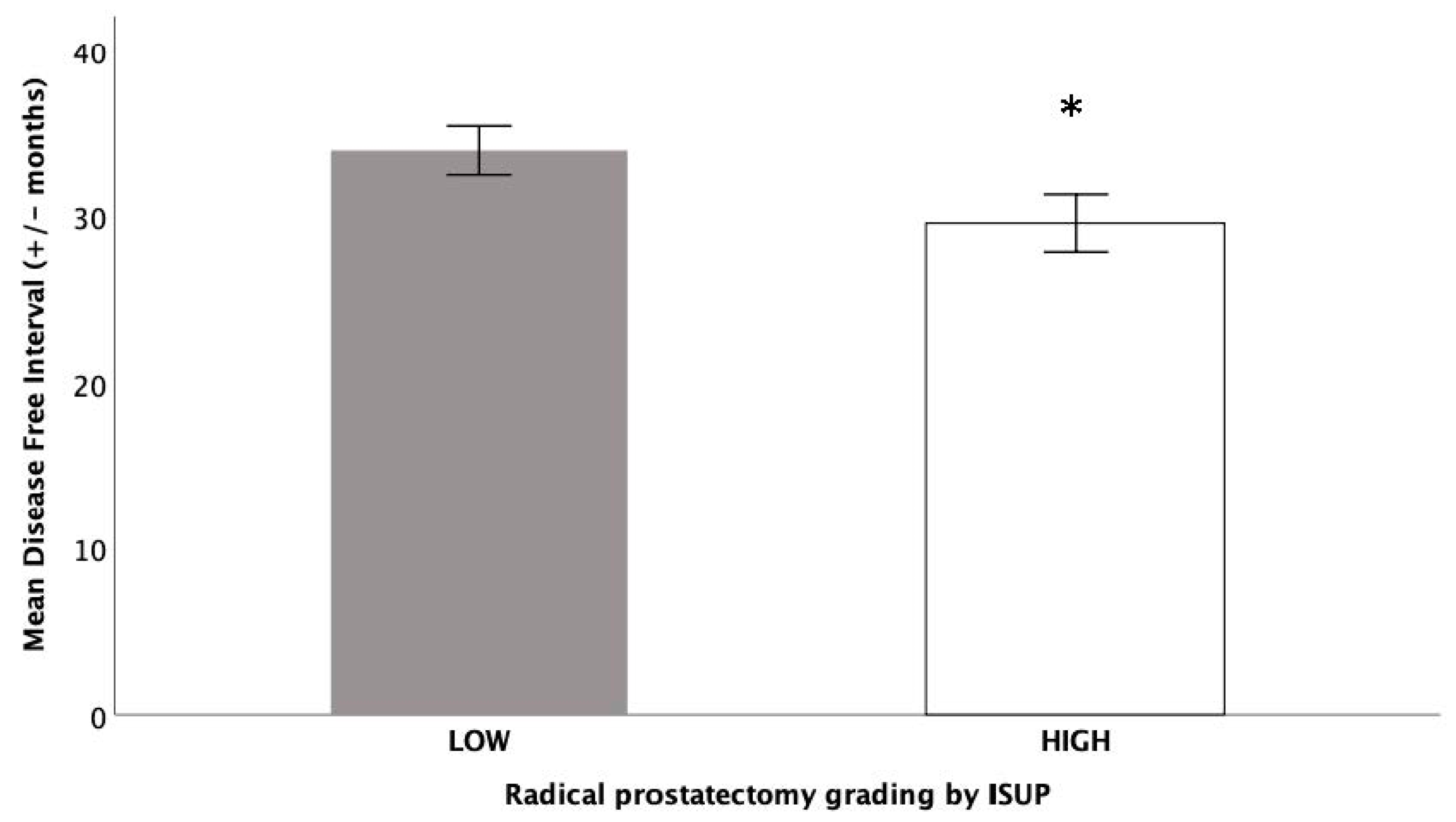
3.1. TCGA Database
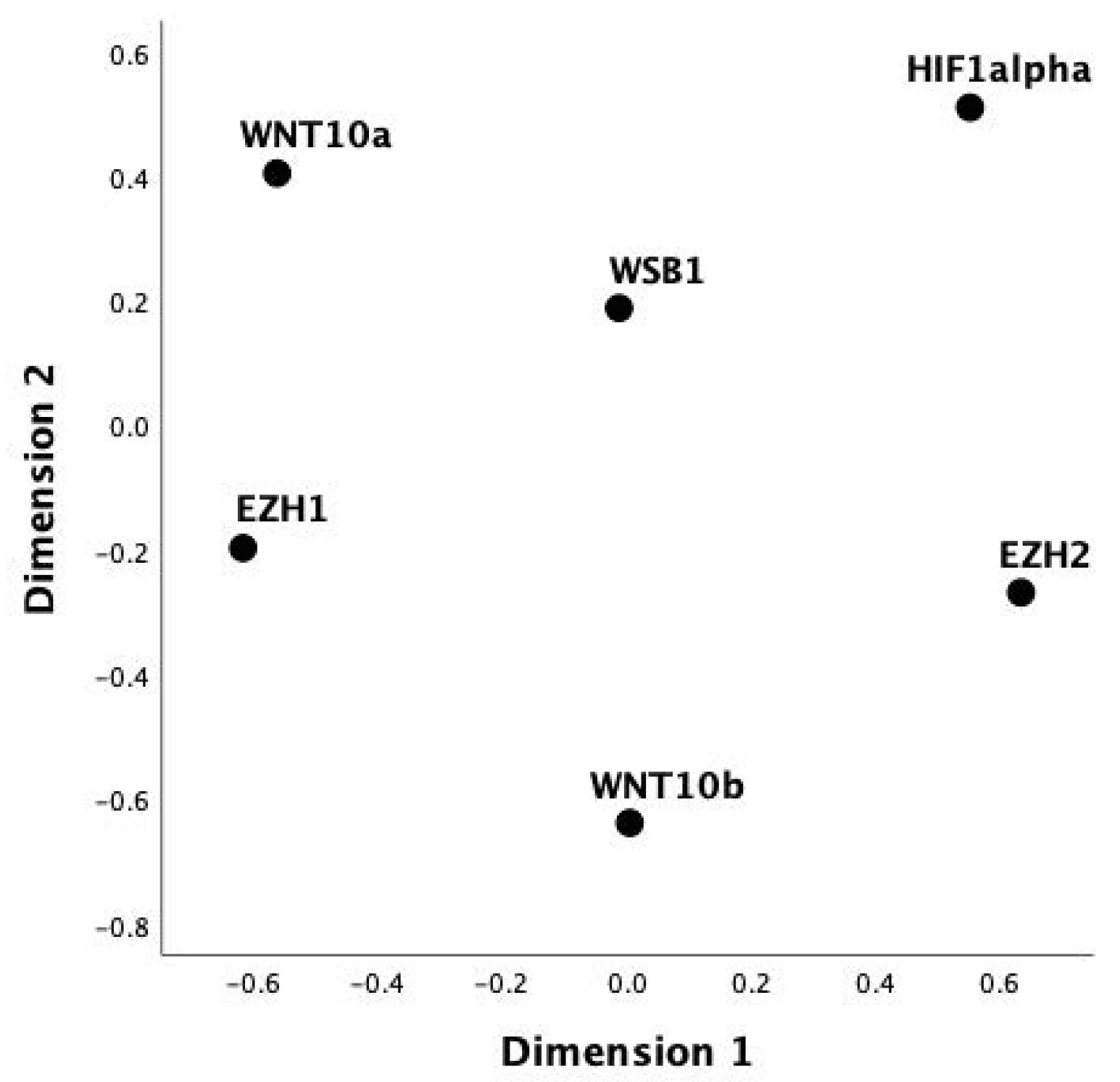
3.2. Association among Gene Expressions
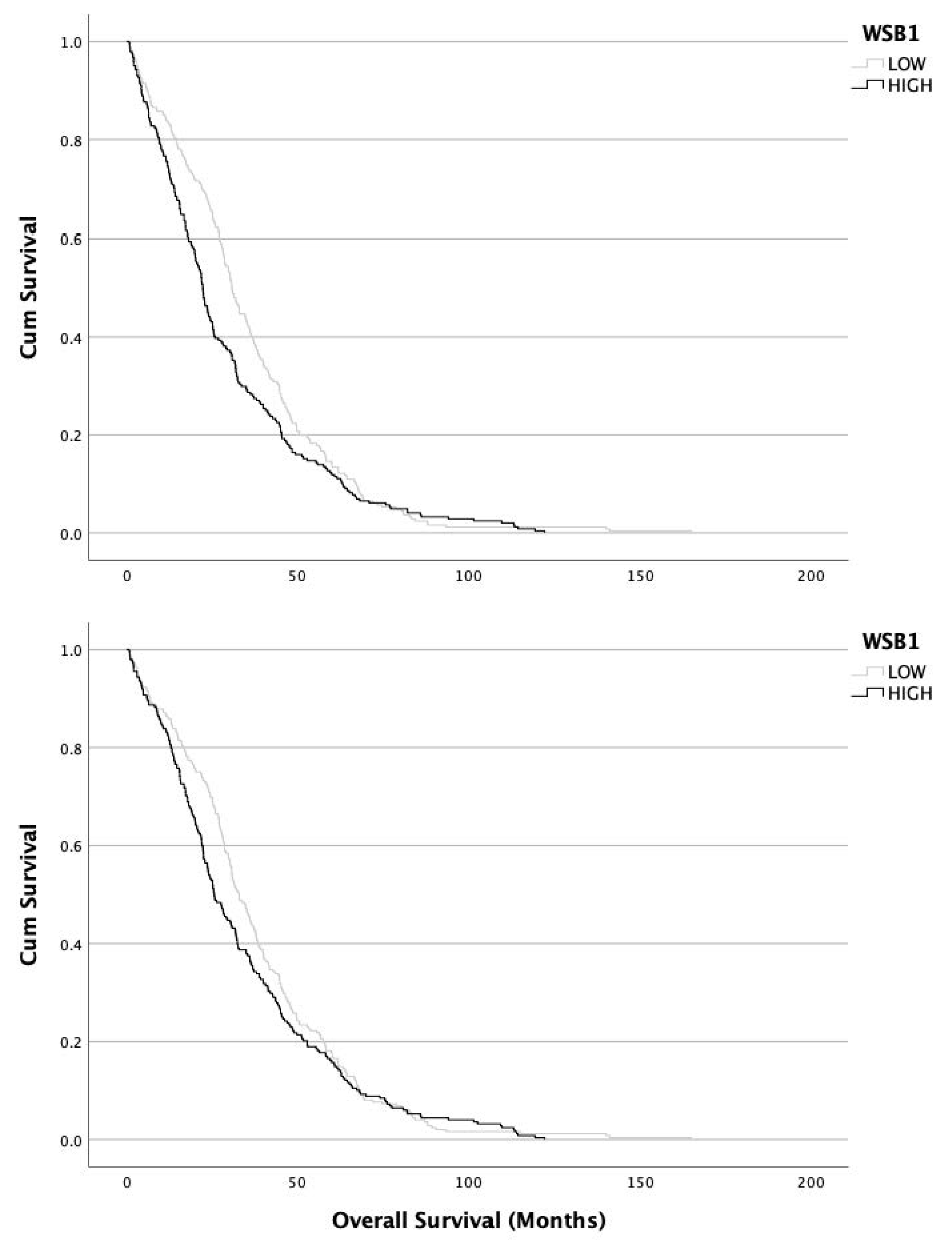
3.3. Survival Curves
4. Discussion
Author Contributions
Funding
Institutional Review Board Statement
Informed Consent Statement
Data Availability Statement
Conflicts of Interest
References
- Siegel, R.L.; Miller, K.D.; Wagle, N.S.; Jemal, A. Cancer statistics, 2023. CA Cancer J. Clin. 2023, 73, 17–48. [Google Scholar] [CrossRef]
- Dimakakos, A.; Armakolas, A.; Koutsilieris, M. Novel Tools for Prostate Cancer Prognosis, Diagnosis, and Follow-Up. BioMed Res. Int. 2014, 2014, 890697. [Google Scholar] [CrossRef]
- Wei, J.; Yin, Y.; Deng, Q.; Zhou, J.; Wang, Y.; Yin, G.; Yang, J.; Tang, Y. Integrative Analysis of MicroRNA and Gene Interactions for Revealing Candidate Signatures in Prostate Cancer. Front. Genet. 2020, 11, 176. [Google Scholar] [CrossRef]
- Al Olama, A.A.; Kote-Jarai, Z.; Berndt, S.I.; Conti, D.V.; Schumacher, F.; Han, Y.; Benlloch, S.; Hazelett, D.J.; Wang, Z.; Saunders, E.; et al. A meta-analysis of 87,040 individuals identifies 23 new susceptibility loci for prostate cancer. Nat. Genet. 2014, 46, 1103–1109. [Google Scholar] [CrossRef] [PubMed]
- Mucci, L.A.; Hjelmborg, J.B.; Harris, J.R.; Czene, K.; Havelick, D.J.; Scheike, T.; Graff, R.E.; Holst, K.; Möller, S.; Unger, R.H.; et al. Familial Risk and Heritability of Cancer among Twins in Nordic Countries. JAMA 2016, 315, 68–76. [Google Scholar] [CrossRef]
- Siltari, A.; Lönnerbro, R.; Pang, K.; Shiranov, K.; Asiimwe, A.; Evans-Axelsson, S.; Franks, B.; Kiran, A.; Murtola, T.J.; Schalken, J.; et al. How Well do Polygenic Risk Scores Identify Men at High Risk for Prostate Cancer? Systematic Review and Meta-Analysis. Clin. Genitourin. Cancer 2023, 21, 316.e1–316.e11. [Google Scholar] [CrossRef]
- Chang, A.J.; Autio, K.A.; Roach, M., III; Scher, H.I. High-risk prostate cancer classification and therapy. Nat. Rev. Clin. Oncol. 2014, 11, 308. [Google Scholar] [CrossRef] [PubMed]
- Epstein, J.I.; Egvad, L.; Amin, M.B.; Delahunt, B.; Srigley, J.R.; Humphrey, P.A.; Committee, G. The 2014 International Society of Urological Pathology (ISUP) consensus conference on Gleason grading of prostatic carcinoma: Definition of grading patterns and proposal for a new grading system. Am. J. Surg. Pathol. 2016, 40, 244–252. [Google Scholar] [PubMed]
- Moch, H.; Humphrey, P.A.; Ulbright, T.M.; Reuter, V.E. (Eds.) WHO Classification of Tumors of the Urinary System and Male Genital Organs, 4th ed.; IARC: Lyon, France, 2016. [Google Scholar]
- van Leenders, G.J.; van der Kwast, T.H.; Grignon, D.J.; Evans, A.J.; Kristiansen, G.; Kweldam, C.F.; Litjens, G.; McKenney, J.K.; Melamed, J.; Mottet, N.; et al. The 2019 International Society of Urological Pathology (ISUP) Consensus Conference on Grading of Prostatic Carcinoma. Am. J. Surg. Pathol. 2020, 44, e87–e99. [Google Scholar] [CrossRef]
- Sehn, J.K. Prostate Cancer Pathology: Recent Updates and Controversies. Mo. Med. 2018, 115, 151–155. [Google Scholar]
- Boldrini, L.; Faviana, P.; Galli, L.; Paolieri, F.; Erba, P.A.; Bardi, M. Multi-Dimensional Scaling Analysis of Key Regulatory Genes in Prostate Cancer Using the TCGA Database. Genes 2021, 12, 1350. [Google Scholar] [CrossRef] [PubMed]
- Tong, Y.; Li, Q.-G.; Xing, T.-Y.; Zhang, M.; Zhang, J.-J.; Xia, Q. HIF1 regulates WSB-1 expression to promote hypoxia-induced chemoresistance in hepatocellular carcinoma cells. FEBS Lett. 2013, 587, 2530–2535. [Google Scholar] [CrossRef] [PubMed]
- Vasiliauskas, D.; Hancock, S.; Stern, C.D. SWiP-1: Novel SOCS box containing WD-protein regulated by signalling centres and by Shh during development. Mech. Dev. 1999, 82, 79–94. [Google Scholar] [CrossRef] [PubMed]
- Choi, D.W.; Seo, Y.-M.; Kim, E.-A.; Sung, K.S.; Ahn, J.W.; Park, S.-J.; Lee, S.-R.; Choi, C.Y. Ubiquitination and Degradation of Homeodomain-interacting Protein Kinase 2 by WD40 Repeat/SOCS Box Protein WSB-1. J. Biol. Chem. 2008, 283, 4682–4689. [Google Scholar] [CrossRef] [PubMed]
- Silva, A.S.; Wood, S.H.; van Dam, S.; Berres, S.; McArdle, A.; de Magalhães, J.P. Gathering insights on disease etiology from gene expression profiles of healthy tissues. Bioinformatics 2011, 27, 3300–3305. [Google Scholar] [CrossRef]
- Rhodes, D.R.; Chinnaiyan, A.M. Integrative analysis of the cancer transcriptome. Nat. Genet. 2005, 37, S31–S37. [Google Scholar] [CrossRef]
- Benita, Y.; Kikuchi, H.; Smith, A.D.; Zhang, M.Q.; Chung, D.C.; Xavier, R.J. An integrative genomics approach identifies Hypoxia Inducible Factor-1 (HIF-1)-target genes that form the core response to hypoxia. Nucleic Acids Res. 2009, 37, 4587–4602. [Google Scholar] [CrossRef]
- Cao, J.; Wang, Y.; Dong, R.; Lin, G.; Zhang, N.; Wang, J.; Lin, N.; Gu, Y.; Ding, L.; Ying, M.; et al. Hypoxia-Induced WSB1 Promotes the Metastatic Potential of Osteosarcoma Cells. Cancer Res. 2015, 75, 4839–4851. [Google Scholar] [CrossRef]
- Archange, C.; Nowak, J.; Garcia, S.; Moutardier, V.; Calvo, E.L.; Dagorn, J.-C.; Iovanna, J.L. The WSB1 Gene Is Involved in Pancreatic Cancer Progression. PLoS ONE 2008, 3, e2475. [Google Scholar] [CrossRef]
- Kim, J.J.; Lee, S.B.; Jang, J.; Yi, S.-Y.; Kim, S.-H.; Han, S.-A.; Lee, J.-M.; Tong, S.-Y.; Vincelette, N.D.; Gao, B.; et al. WSB1 promotes tumor metastasis by inducing pVHL degradation. Genes Dev. 2015, 29, 2244–2257. [Google Scholar] [CrossRef]
- Kim, J.J.; Lee, S.B.; Yi, S.-Y.; Han, S.-A.; Kim, S.-H.; Lee, J.-M.; Tong, S.-Y.; Yin, P.; Gao, B.; Zhang, J.; et al. WSB1 overcomes oncogene-induced senescence by targeting ATM for degradation. Cell Res. 2017, 27, 274–293. [Google Scholar] [CrossRef] [PubMed]
- Siegel, R.L.; Miller, K.D.; Jemal, A. Cancer statistics, 2018. CA Cancer J. Clin. 2018, 68, 7–30. [Google Scholar] [CrossRef]
- Rebello, R.J.; Oing, C.; Knudsen, K.E.; Loeb, S.; Johnson, D.C.; Reiter, R.E.; Gillessen, S.; Van der Kwast, T.; Bristow, R.G. Prostate cancer. Nat. Rev. Dis. Primers 2021, 7, 9. [Google Scholar] [CrossRef] [PubMed]
- Gurel, B.; Iwata, T.; Koh, C.M.; Jenkins, R.B.; Lan, F.; van Dang, C.; Hicks, J.L.; Morgan, J.; Cornish, T.C.; Sutcliffe, S.; et al. Nuclear MYC protein overexpression is an early alteration in human prostate carcinogenesis. Mod. Pathol. 2008, 21, 1156–1167. [Google Scholar] [CrossRef]
- Hubbard, G.K.; Mutton, L.N.; Khalili, M.; McMullin, R.P.; Hicks, J.L.; Bianchi-Frias, D.; Horn, L.A.; Kulac, I.; Moubarek, M.S.; Nelson, P.S.; et al. Combined MYC Activation and Pten Loss Are Sufficient to Create Genomic Instability and Lethal Metastatic Prostate Cancer. Cancer Res. 2016, 76, 283–292. [Google Scholar] [CrossRef]
- Varambally, S.; Dhanasekaran, S.M.; Zhou, M.; Barrette, T.R.; Kumar-Sinha, C.; Sanda, M.G.; Ghosh, D.; Pienta, K.J.; Sewalt, R.G.A.B.; Otte, A.P.; et al. The polycomb group protein EZH2 is involved in progression of prostate cancer. Nature 2002, 419, 624–629. [Google Scholar] [CrossRef]
- Saramäki, O.R.; Tammela, T.L.J.; Martikainen, P.M.; Vessella, R.L.; Visakorpi, T. The gene for polycomb group protein enhancer of zeste homolog 2 (EZH2) is amplified in late-stage prostate cancer. Genes Chromosom. Cancer 2006, 45, 639–645. [Google Scholar] [CrossRef] [PubMed]
- Xu, K.; Wu, Z.J.; Groner, A.C.; He, H.H.; Cai, C.; Lis, R.T.; Wu, X.; Stack, E.C.; Loda, M.; Liu, T.; et al. EZH2 Oncogenic Activity in Castration-Resistant Prostate Cancer Cells Is Polycomb-Independent. Science 2012, 338, 1465–1469. [Google Scholar] [CrossRef]
- Wee, Z.N.; Li, Z.; Lee, P.L.; Lee, S.T.; Lim, Y.P.; Yu, Q. EZH2-Mediated Inactivation of IFN-γ-JAK-STAT1 Signaling Is an Effective Therapeutic Target in MYC-Driven Prostate Cancer. Cell Rep. 2014, 8, 204–216. [Google Scholar] [CrossRef]
- Kaemmerer, E.; Gassler, N. Wnt Lipidation and Modifiers in Intestinal Carcinogenesis and Cancer. Cancers 2016, 8, 69. [Google Scholar] [CrossRef]
- Monga, S.P. β-Catenin Signaling and Roles in Liver Homeostasis, Injury, and Tumorigenesis. Gastroenterology 2015, 148, 1294–1310. [Google Scholar] [CrossRef] [PubMed]
- Wu, D.-J.; Jiang, Y.-S.; He, R.-Z.; Tao, L.-Y.; Yang, M.-W.; Fu, X.-L.; Yang, J.-Y.; Zhu, K. High expression of WNT7A predicts poor prognosis and promote tumor metastasis in pancreatic ductal adenocarcinoma. Sci. Rep. 2018, 8, 15792. [Google Scholar] [CrossRef]
- Fraser, M.; Sabelnykova, V.Y.; Yamaguchi, T.N.; Heisler, L.E.; Livingstone, J.; Huang, V.; Shiah, Y.-J.; Yousif, F.; Lin, X.; Masella, A.P.; et al. Genomic hallmarks of localized, non-indolent prostate cancer. Nature 2017, 541, 359–364. [Google Scholar] [CrossRef] [PubMed]
- Abeshouse, A.; Ahn, J.; Akbani, R.; Ally, A.; Amin, S.; Andry, C.D.; Annala, M.; Aprikian, A.; Armenia, J.; Arora, A.; et al. The Molecular Taxonomy of Primary Prostate Cancer. Cell 2015, 163, 1011–1025. [Google Scholar] [CrossRef] [PubMed]
- Abida, W.; Cyrta, J.; Heller, G.; Prandi, D.; Armenia, J.; Coleman, I.; Cieslik, M.; Benelli, M.; Robinson, D.; Van Allen, E.M.; et al. Genomic correlates of clinical outcome in advanced prostate cancer. Proc. Natl. Acad. Sci. USA 2019, 116, 11428–11436. [Google Scholar] [CrossRef] [PubMed]
- Tomlins, S.A.; Rhodes, D.R.; Perner, S.; Dhanasekaran, S.M.; Mehra, R.; Sun, X.-W.; Varambally, S.; Cao, X.; Tchinda, J.; Kuefer, R.; et al. Recurrent Fusion of TMPRSS2 and ETS Transcription Factor Genes in Prostate Cancer. Science 2005, 310, 644–648. [Google Scholar] [CrossRef] [PubMed]
- Rubin, M.A. ETS rearrangements in prostate cancer. Asian J. Androl. 2012, 14, 393–399. [Google Scholar] [CrossRef] [PubMed]
- Cullen, J.; Young, D.; Chen, Y.; Degon, M.; Farrell, J.; Sedarsky, J.; Baptiste, W.; Rosen, P.; Tolstikov, V.; Kiebish, M.; et al. Predicting Prostate Cancer Progression as a Function of ETS-related Gene Status, Race, and Obesity in a Longitudinal Patient Cohort. Eur. Urol. Focus 2018, 4, 818–824. [Google Scholar] [CrossRef]
- Kim, S.H.; Kim, S.H.; Joung, J.Y.; Lee, G.K.; Hong, E.K.; Kang, K.M.; Yu, A.; Nam, B.H.; Chung, J.; Seo, H.K.; et al. Overexpression of ERG and Wild-Type PTEN Are Associated with Favorable Clinical Prognosis and Low Biochemical Recurrence in Prostate Cancer. PLoS ONE 2015, 10, e0122498. [Google Scholar] [CrossRef]
- Yan, W.; Jamal, M.; Tan, S.-H.; Song, Y.; Young, D.; Chen, Y.; Katta, S.; Ying, K.; Ravindranath, L.; Woodle, T.; et al. Molecular profiling of radical prostatectomy tissue from patients with no sign of progression identifies ERG as the strongest independent predictor of recurrence. Oncotarget 2019, 60, 6466–6483. [Google Scholar] [CrossRef]
- Demichelis, F.; Fall, K.; Perner, S.; Andrén, O.; Schmidt, F.; Setlur, S.R.; Hoshida, Y.; Mosquera, J.M.; Pawitan, Y.; Lee, C.; et al. TMPRSS2/ERG gene fusion associated with lethal prostate cancer in a watchful waiting cohort. Oncogene 2007, 26, 4596–4599. [Google Scholar] [CrossRef]
- Nam, R.K.; Sugar, L.; Wang, Z.; Yang, W.; Kitching, R.; Klotz, L.H.; Venkateswaran, V.; Narod, S.A.; Seth, A. Expression of TMPRSS2/ERG gene fusion in prostate cancer cells is an important prognostic factor for cancer progression. Cancer Biol. Ther. 2007, 6, 40–45. [Google Scholar] [CrossRef] [PubMed]
- Maughan, B.; Brundage, J. New models for defining prostate cancer biology and patient prognosis. Asian J. Androl. 2022, 24, 119–120. [Google Scholar] [CrossRef] [PubMed]
- Jiang, Q.; Li, F.; Cheng, Z.; Kong, Y.; Chen, C. The role of E3 ubiquitin ligase HECTD3 in cancer and beyond. Cell. Mol. Life Sci. 2020, 77, 1483–1495. [Google Scholar] [CrossRef] [PubMed]
- Bradner, J.E.; Hnisz, D.; Young, R.A. Transcriptional Addiction in Cancer. Cell 2017, 168, 629–643. [Google Scholar] [CrossRef] [PubMed]
- Labbé, D.; Brown, M. Transcriptional Regulation in Prostate Cancer. Cold Spring Harb. Perspect. Med. 2018, 8, a030437. [Google Scholar] [CrossRef] [PubMed]
- Haque, M.; Kendal, J.K.; MacIsaac, R.M.; Demetrick, D.J. WSB1: From homeostasis to hypoxia. J. Biomed. Sci. 2016, 23, 61. [Google Scholar] [CrossRef]
- Zhang, G.-F.; Qiu, L.; Yang, S.-L.; Wu, J.-C.; Liu, T.-J. Wnt/β-catenin signaling as an emerging potential key pharmacological target in cholangiocarcinoma. Biosci. Rep. 2020, 40, BSR20193353. [Google Scholar] [CrossRef]
- Park, S.H.; Fong, K.-W.; Mong, E.; Martin, M.C.; Schiltz, G.E.; Yu, J. Going beyond Polycomb: EZH2 functions in prostate cancer. Oncogene 2021, 40, 5788–5798. [Google Scholar] [CrossRef]
- Margueron, R.; Reinberg, D. The Polycomb complex PRC2 and its mark in life. Nature 2011, 469, 343–349. [Google Scholar] [CrossRef]
- Schümann, F.L.; Groß, E.; Bauer, M.; Rohde, C.; Sandmann, S.; Terziev, D.; Müller, L.P.; Posern, G.; Wienke, A.; Fend, F.; et al. Divergent Effects of EZH1 and EZH2 Protein Expression on the Prognosis of Patients with T-Cell Lymphomas. Biomedicines 2021, 9, 1842. [Google Scholar] [CrossRef] [PubMed]
- Madrona, A.Y.; Wilson, D.K. The structure of Ski8p, a protein regulating mRNA degradation: Implications for WD protein structure. Protein Sci. 2004, 13, 1557–1565. [Google Scholar] [CrossRef] [PubMed]
- Zhang, Y.; Li, Z.; Zhao, W.; Hu, H.; Zhao, L.; Zhu, Y.; Yang, X.; Gao, B.; Yang, H.; Huang, Y.; et al. WD repeat and SOCS box containing protein 2 in the proliferation, cycle progression, and migration of melanoma cells. Biomed. Pharmacother. 2019, 116, 108974. [Google Scholar] [CrossRef] [PubMed]
- Lutz, W.; Leon, J.; Eilers, M. Contributions of Myc to tumorigenesis. Biochim. Biophys. Acta 2002, 1602, 61–71. [Google Scholar] [CrossRef]
- Gao, X.; You, J.; Gong, Y.; Yuan, M.; Zhu, H.; Fang, L.; Zhu, H.; Ying, M.; He, Q.; Yang, B.; et al. WSB1 regulates c-Myc expression through β-catenin signaling and forms a feedforward circuit. Acta Pharm. Sin. B 2022, 12, 1225–1239. [Google Scholar] [CrossRef]
- Zoma, M.; Curti, L.; Shinde, D.; Albino, D.; Mitra, A.; Sgrignani, J.; Mapelli, S.N.; Sandrini, G.; Civenni, G.; Merulla, J.; et al. EZH2-induced lysine K362 methylation enhances TMPRSS2-ERG oncogenic activity in prostate cancer. Nat. Commun. 2021, 12, 4147. [Google Scholar] [CrossRef] [PubMed]
- Chng, K.R.; Chang, C.W.; Tan, S.K.; Yang, C.; Hong, S.Z.; Sng, N.Y.W.; Cheung, E. A transcriptional repressor co-regulatory network governing androgen response in prostate cancers. EMBO J. 2012, 31, 2810–2823. [Google Scholar] [CrossRef]
- Yu, J.; Yu, J.; Mani, R.-S.; Cao, Q.; Brenner, C.J.; Cao, X.; Wang, X.; Wu, L.; Li, J.; Hu, M.; et al. An Integrated Network of Androgen Receptor, Polycomb, and TMPRSS2-ERG Gene Fusions in Prostate Cancer Progression. Cancer Cell 2010, 17, 443–454. [Google Scholar] [CrossRef]



| Grade Group | GS | N |
|---|---|---|
| 1 | 6 (3 + 3) | 44 |
| 2 | 7 (3 + 4) | 146 |
| 3 | 7 (4 + 3) | 101 |
| 4 | 8 (4 + 4, 3 + 5, 5 + 3) | 64 |
| 5 | 9, 10 (4 + 5, 5 + 4, 5 + 5) | 141 |
| ERG | MYC | HIF1a | EZH1 | EZH2 | WSB2 | WNT10b | WNT10A | |
|---|---|---|---|---|---|---|---|---|
| WSB1 | 0.070 | 0.048 | 0.017 | 0.317 ** | 0.144 ** | –0.070 | 0.106 * | 0.129 ** |
| ERG | 0.113 * | 0.019 | –0.226 ** | –0.039 | 0.458 ** | 0.144 ** | –0.186 ** | |
| MYC | 0.189 ** | 0.019 | 0.347 ** | –0.005 | 0.131 ** | –0.167 ** | ||
| HIF1alpha | –0.250 ** | 0.130 ** | 0.201 ** | –0.030 | –0.219 ** | |||
| EZH1 | –0.222 ** | –0.441 ** | 0.008 | 0.412 ** | ||||
| EZH2 | 0.113 * | 0.050 | –0.181 ** | |||||
| WNT10b | 0.149 ** | –0.243 ** | ||||||
| WNT10a | 0.037 |
| Model | Not-Standardized Coefficients | Standardized Coefficients | t | p | ||
|---|---|---|---|---|---|---|
| B | Standard Error | β | ||||
| 1 | (Constant) | 6221 K | 1339 K | 4.645 | 0.000 | |
| EZH1 | 1.195 | 0.161 | 0.317 | 7.420 | 0.000 | |
| 2 | (Constant) | 1853 K | 1543 K | 1.201 | 0.230 | |
| EZH1 | 1.384 | 0.161 | 0.367 | 8.607 | 0.000 | |
| EZH2 | 2.110 | 0.398 | 0.226 | 5.294 | 0.000 | |
| 3 | (Constant) | 1258 K | 1560 K | 0.807 | 0.420 | |
| EZH1 | 1.377 | 0.160 | 0.365 | 8.596 | 0.000 | |
| EZH2 | 2.063 | 0.397 | 0.221 | 5.190 | 0.000 | |
| WNT10b | 4.104 | 1.845 | 0.092 | 2.224 | 0.027 | |
| 4 | (Constant) | −804 K | 1851 K | −0.435 | 0.664 | |
| EZH1 | 1.454 | 0.164 | 0.385 | 8.865 | 0.000 | |
| EZH2 | 1.997 | 0.397 | 0.214 | 5.024 | 0.000 | |
| WNT10b | 4.229 | 1.840 | 0.095 | 2.298 | 0.022 | |
| HIF1-α | 0.058 | 0.028 | 0.088 | 2.055 | 0.040 | |
| Model | R | R-Squared | Adapted R-Squared | Standard Error Value | ||
| 1 | 0.317 a | 0.100 | 0.098 | 7,746,629.967 | ||
| 2 | 0.386 b | 0.149 | 0.145 | 7,543,005.092 | ||
| 3 | 0.396 c | 0.157 | 0.152 | 7,512,987.926 | ||
| 4 | 0.405 d | 0.164 | 0.158 | 7,488,512.108 | ||
Disclaimer/Publisher’s Note: The statements, opinions and data contained in all publications are solely those of the individual author(s) and contributor(s) and not of MDPI and/or the editor(s). MDPI and/or the editor(s) disclaim responsibility for any injury to people or property resulting from any ideas, methods, instructions or products referred to in the content. |
© 2023 by the authors. Licensee MDPI, Basel, Switzerland. This article is an open access article distributed under the terms and conditions of the Creative Commons Attribution (CC BY) license (https://creativecommons.org/licenses/by/4.0/).
Share and Cite
Boldrini, L.; Bardi, M. WSB1 Involvement in Prostate Cancer Progression. Genes 2023, 14, 1558. https://doi.org/10.3390/genes14081558
Boldrini L, Bardi M. WSB1 Involvement in Prostate Cancer Progression. Genes. 2023; 14(8):1558. https://doi.org/10.3390/genes14081558
Chicago/Turabian StyleBoldrini, Laura, and Massimo Bardi. 2023. "WSB1 Involvement in Prostate Cancer Progression" Genes 14, no. 8: 1558. https://doi.org/10.3390/genes14081558
APA StyleBoldrini, L., & Bardi, M. (2023). WSB1 Involvement in Prostate Cancer Progression. Genes, 14(8), 1558. https://doi.org/10.3390/genes14081558