Systematic Review

Trap of Social Media Algorithms: A Systematic Review of Research on Filter Bubbles, Echo Chambers, and Their Impact on Youth


1
Department of Media Studies, Government College University, Lahore 54000, Pakistan
2
Department of Library, Government College University, Lahore 54000, Pakistan
3
Department of Central Library, Prince Sultan University, Riyadh 11586, Saudi Arabia
4
President Office, Prince Sultan University, Riyadh 11586, Saudi Arabia
*
Author to whom correspondence should be addressed.
Societies 2025, 15(11), 301; https://doi.org/10.3390/soc15110301
Submission received: 2 October 2025 / Revised: 24 October 2025 / Accepted: 25 October 2025 / Published: 30 October 2025
(This article belongs to the Special Issue Algorithm Awareness: Opportunities, Challenges and Impacts on Society)

Abstract

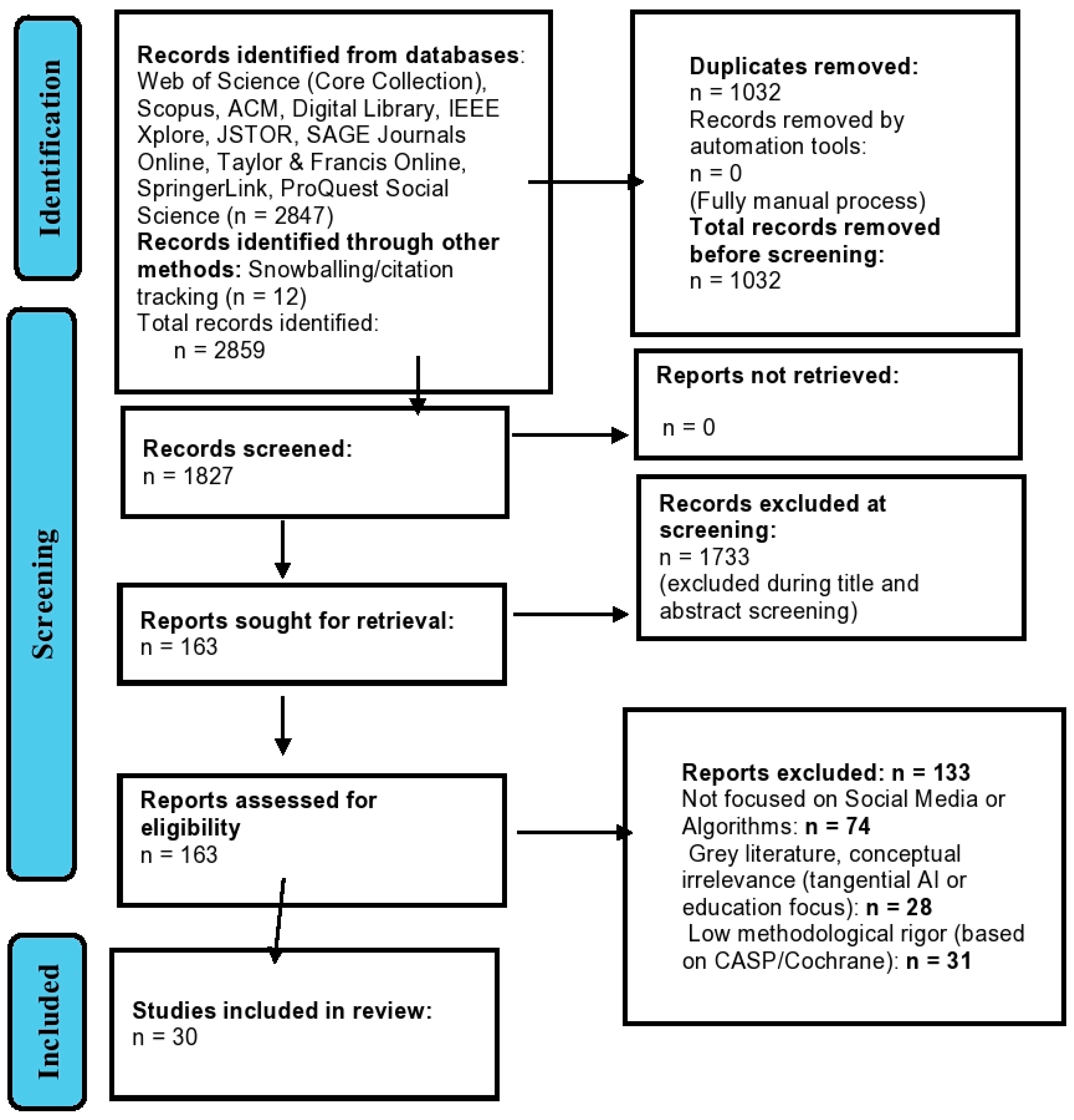
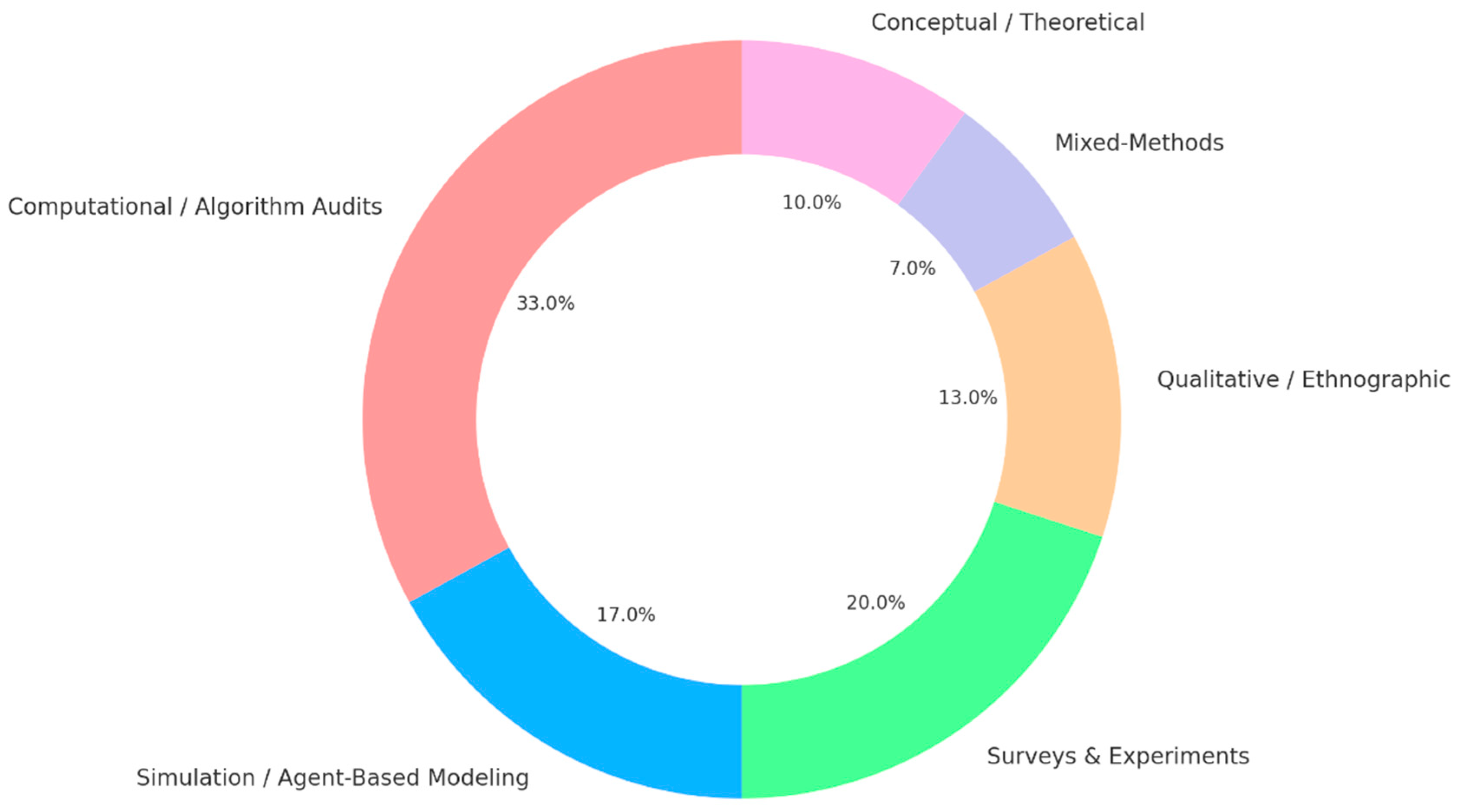
This systematic review synthesizes a decade of peer-reviewed research (2015–2025) examining the interplay of filter bubbles, echo chambers, and algorithmic bias in shaping youth engagement within social media. A total of 30 studies were analyzed, using the PRISMA 2020 framework, encompassing computational audits, simulation modeling, surveys, ethnographic accounts, and mixed-methods designs across diverse platforms, including Facebook, YouTube, Twitter/X, Instagram, TikTok, and Weibo. Results reveal three consistent patterns: (i) algorithmic systems structurally amplify ideological homogeneity, reinforcing selective exposure and limiting viewpoint diversity; (ii) youth demonstrate partial awareness and adaptive strategies to navigate algorithmic feeds, though their agency is constrained by opaque recommender systems and uneven digital literacy; and (iii) echo chambers not only foster ideological polarization but also serve as spaces for identity reinforcement and cultural belonging. Despite these insights, the evidence base suffers from geographic bias toward Western contexts, limited longitudinal research, methodological fragmentation, and conceptual ambiguity in key definitions. This review highlights the need for integrative, cross-cultural, and youth-centered approaches that bridge empirical evidence with lived experiences.
Keywords: algorithmic bias; filter bubbles; echo chambers; youth engagement; social media; polarization; media literacy algorithmic bias; filter bubbles; echo chambers; youth engagement; social media; polarization; media literacy