Article

We Came for the Lake—Late Pleistocene Landscape Reconstruction in Lieth Moor, District Pinneberg, Germany


1
Leibniz-Zentrum für Archäologie (LEIZA-ZBSA), Schlossinsel 1, 24837 Schleswig, Germany
2
CRC 1266–Scales of Transformation, Kiel University, Leibnizstraße 3, 24118 Kiel, Germany
3
Institute of Pre- and Protohistoric Archaeology, Kiel University, Johanna-Mestorf-Straße 2-6, 24118 Kiel, Germany
4
Institute of Geosciences, Kiel University, Otto-Hahn-Platz 1, 24118 Kiel, Germany
5
Schleswig-Holstein State Museums Foundation Schloss Gottorf, Schlossinsel 1, 24837 Schleswig, Germany
*
Author to whom correspondence should be addressed.
Geosciences 2024, 14(2), 30; https://doi.org/10.3390/geosciences14020030

Submission received: 30 November 2023 / Revised: 19 January 2024 / Accepted: 24 January 2024 / Published: 26 January 2024
(This article belongs to the Section Geophysics)

Abstract

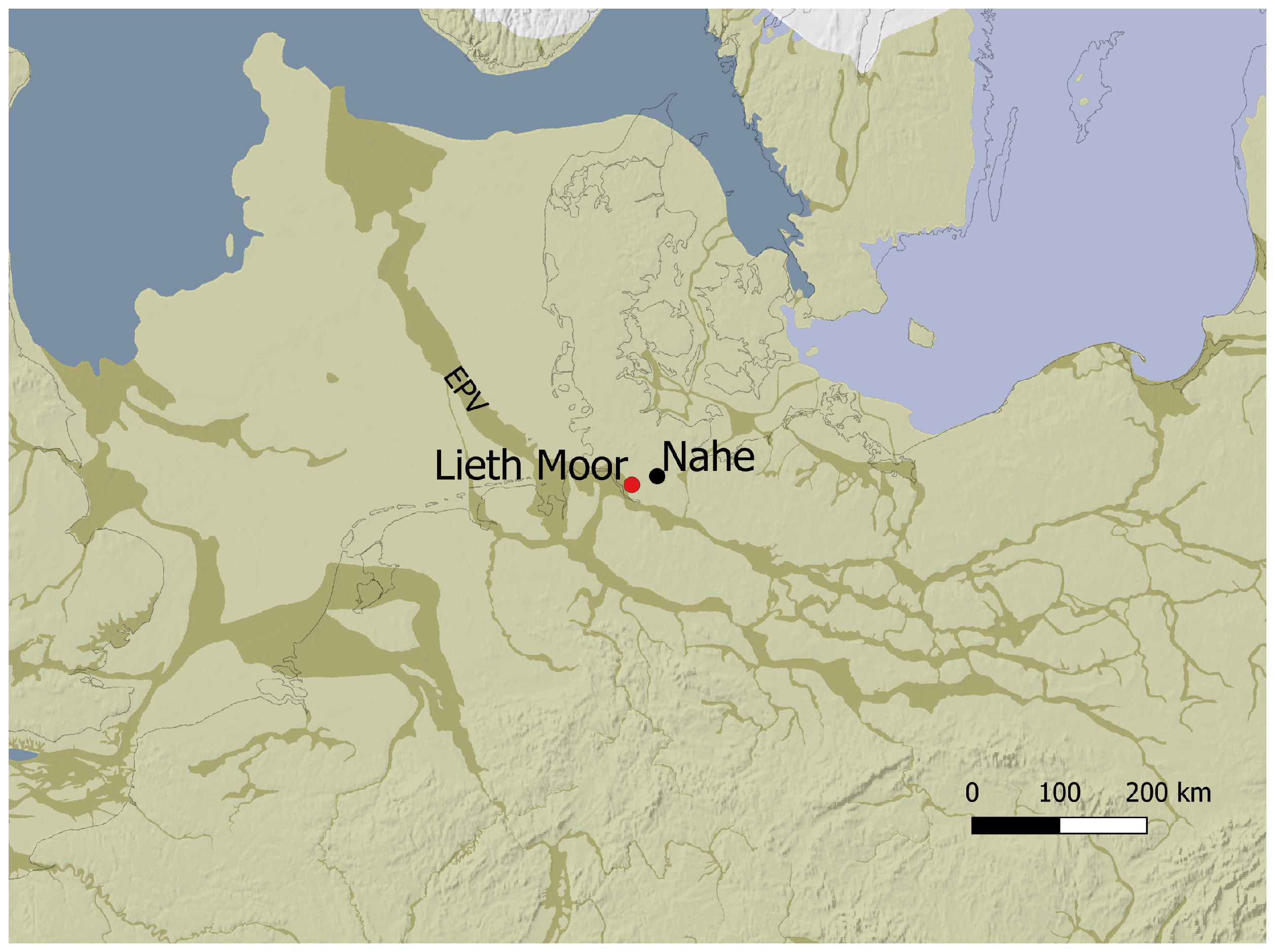
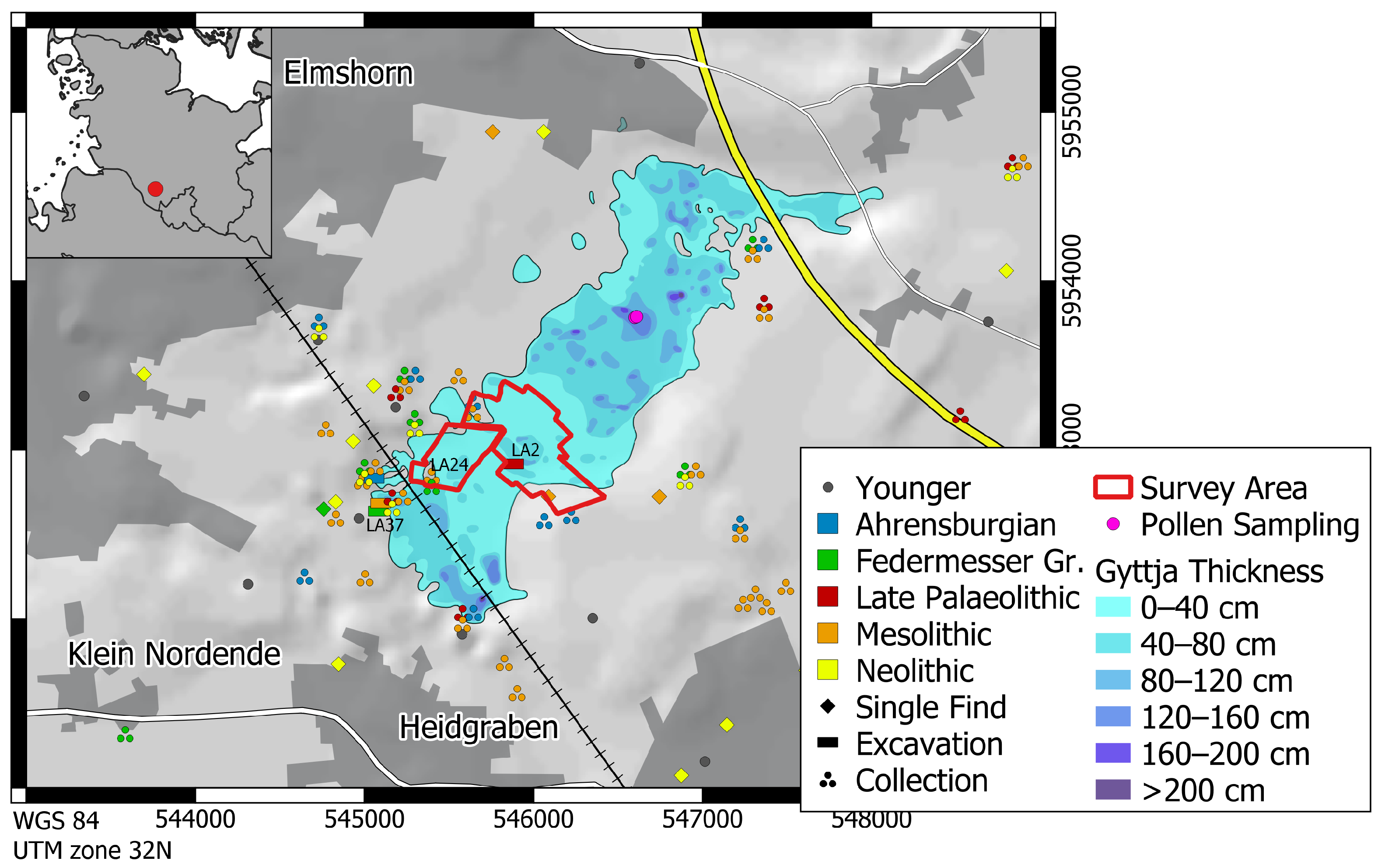
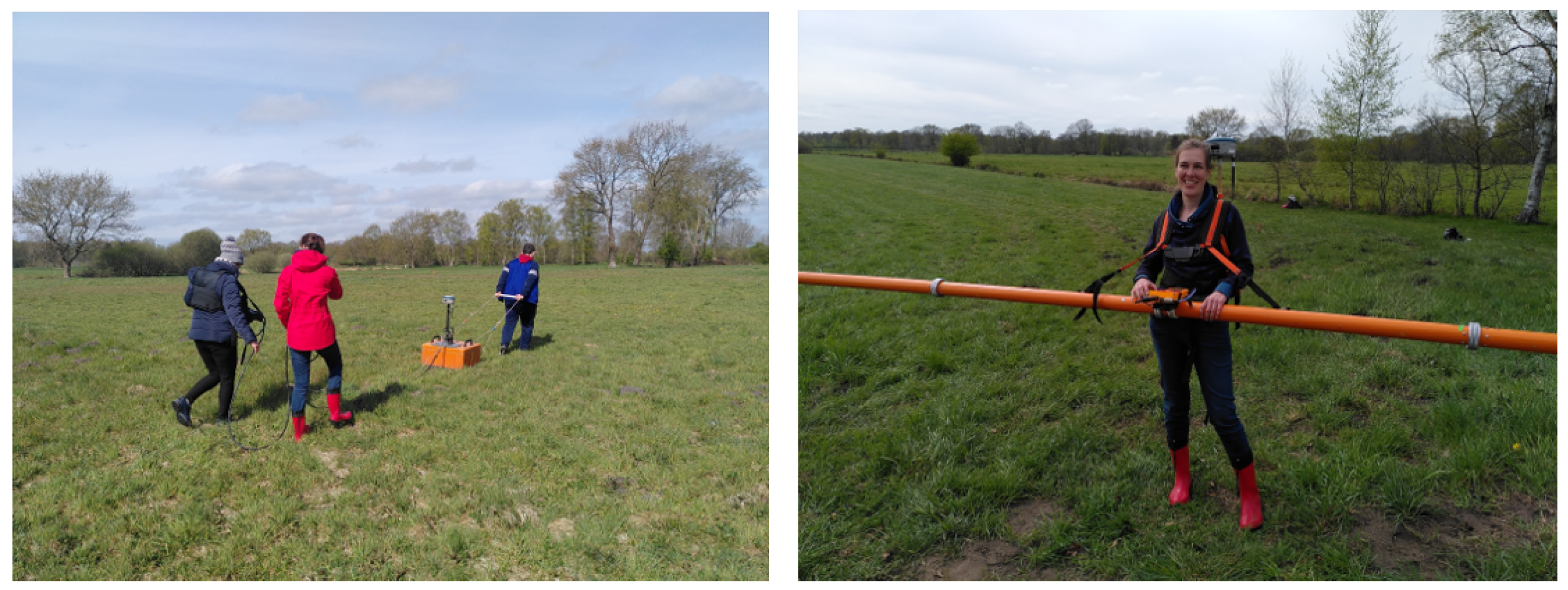
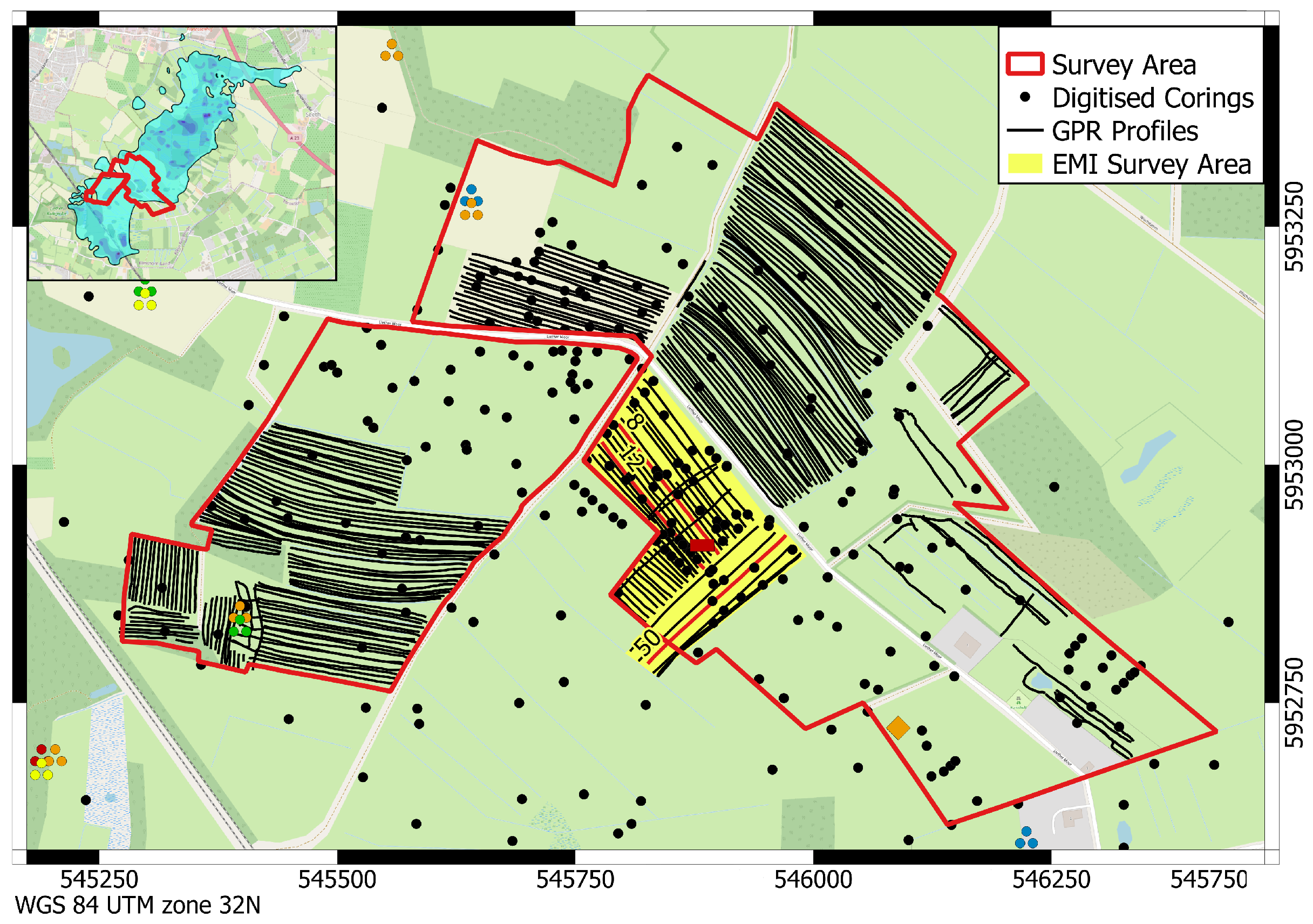
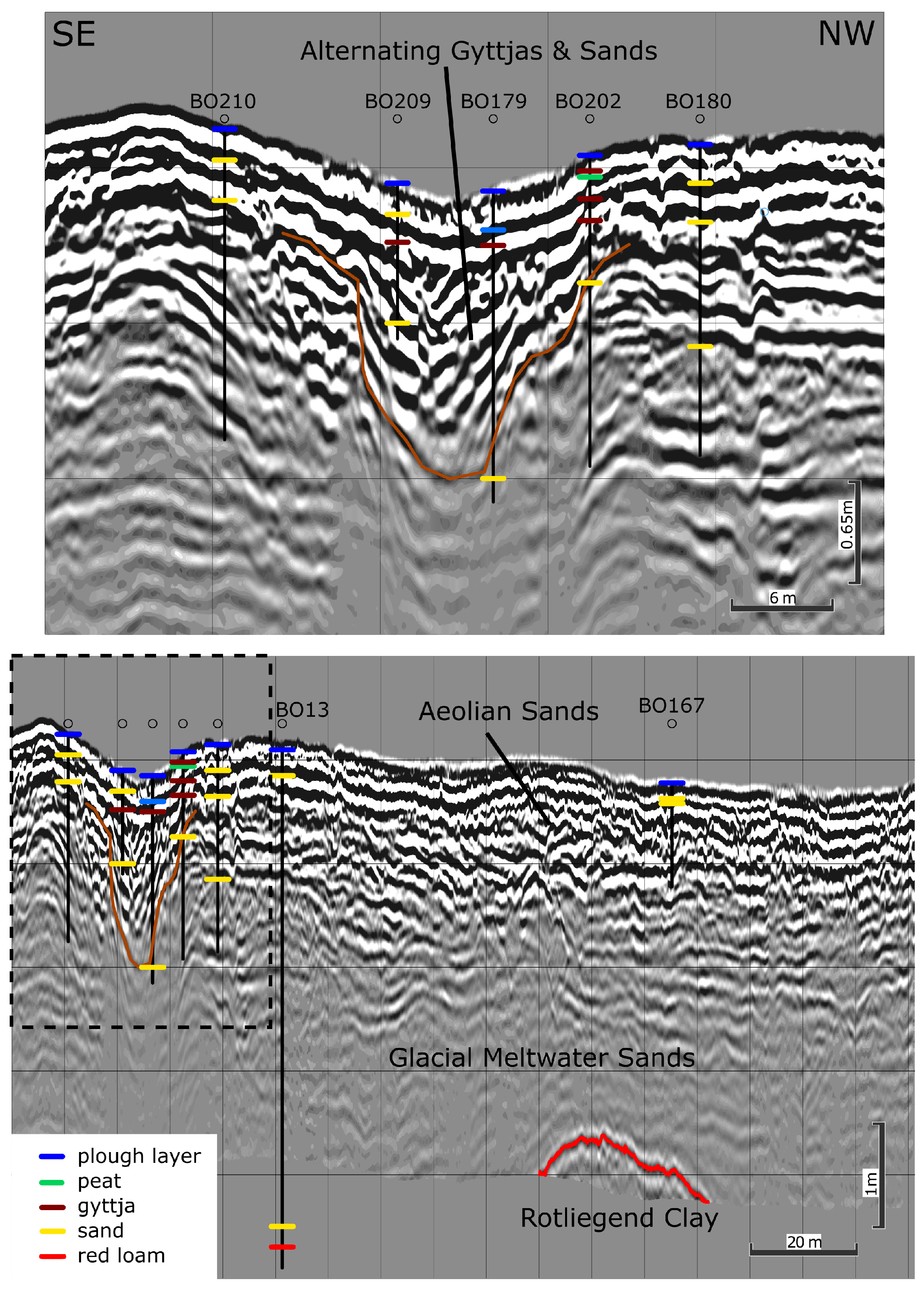
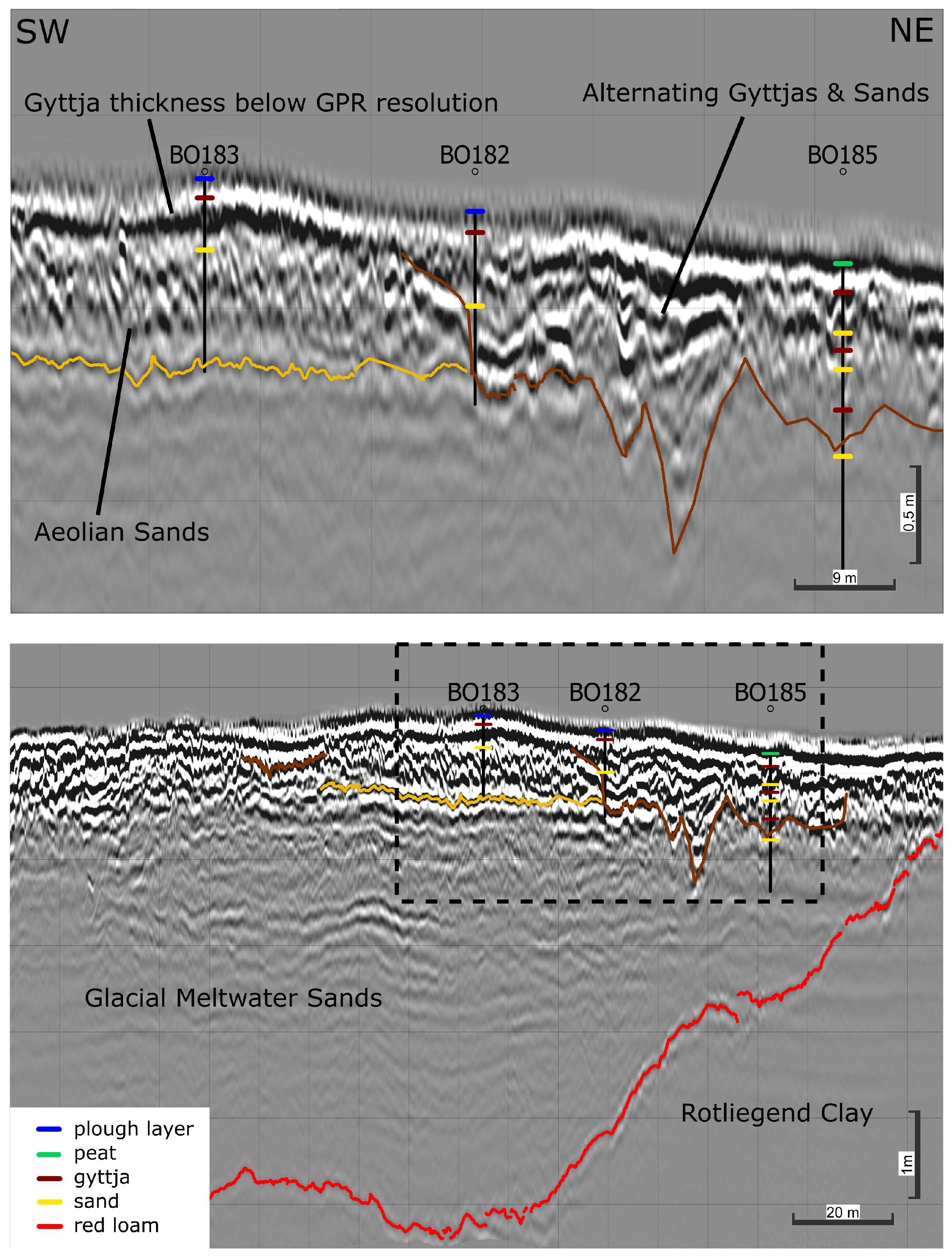
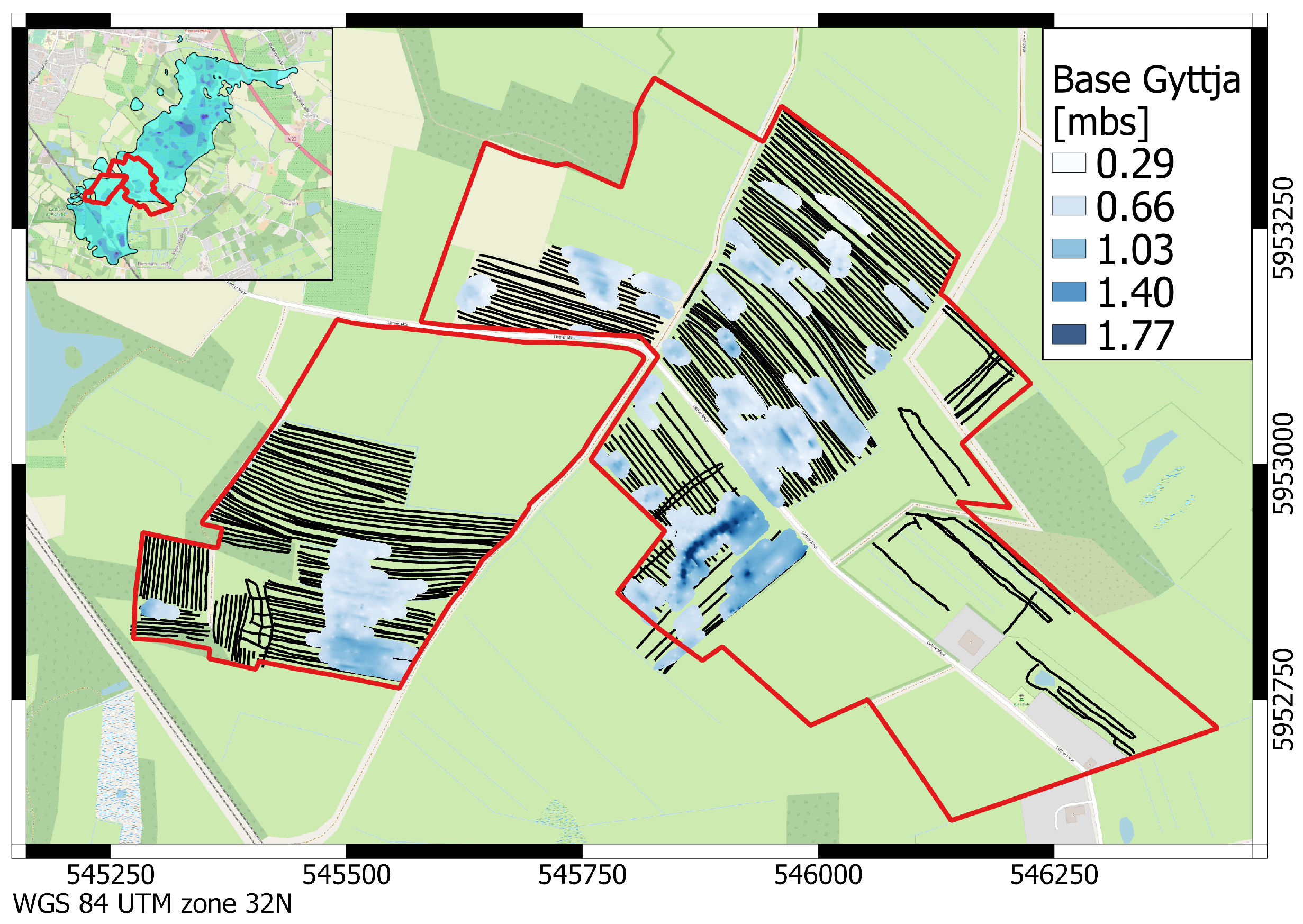
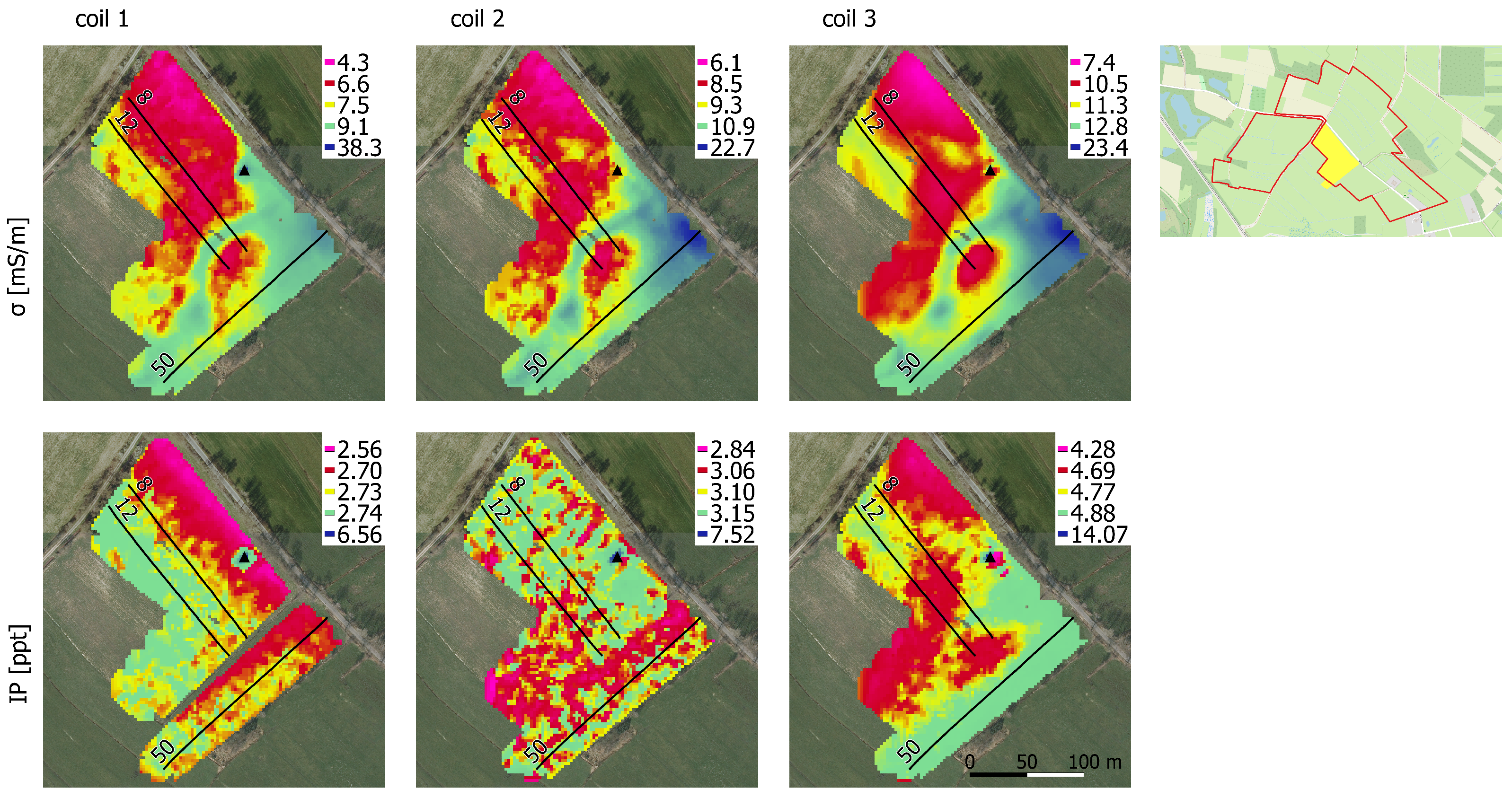
The Lieth Moor area, located in the district of Pinneberg, Schleswig-Holstein, Germany, is a hotspot of Late Palaeolithic settlement activity. The exceptional abundance of archaeological sites is commonly attributed to the presence of a large palaeolake. However, in the Weichselian Late glacial, there were numerous large lakes in Schleswig-Holstein. Thus, a well-founded explanation for the find concentration in Lieth Moor is still lacking, and forming a research desideratum until today. To improve our understanding of this Late Pleistocene landscape and its appeal to hunter–gatherer groups of that time, we conducted a large-scale archaeogeophysical study focusing on a possible ford of the potential palaeolake. We employed Ground-Penetrating Radar and Electromagnetic Induction measurements, supplemented by existing legacy drill-probing data, to identify and map limnic gyttja (organic lake mud) sediments and their spatial distribution within the area. The findings of our study indicate that during the Late Pleistocene to Early Holocene, the Lieth Moor area comprised a cluster of small ponds rather than a continuous lake. These ponds likely interconnected during periods of increased water levels. The presence of dry islands within the region corresponds with archaeological evidence, suggesting that Late Palaeolithic communities visited some of these islands. The absence of the previously postulated palaeolake places the known findings within a completely new palaeoenvironmental context: instead of the previously suspected ford, we assume that the proximity to the Elbe Palaeovalley played a decisive role in the repeated habitation of Lieth Moor. This area, rich in fresh water and fish, along with the dune chain situated to the west, serving as both a vantage point and windbreak, presented an ideal location for awaiting animals migrating along the river Elbe and/or as a resting place within the settlement system of mobile hunter–fisher–gatherer groups.
Keywords: Late Palaeolithic; geophysics; electromagnetic induction; ground penetrating radar; Federmesser-Gruppen; Ahrensburgian Late Palaeolithic; geophysics; electromagnetic induction; ground penetrating radar; Federmesser-Gruppen; Ahrensburgian