


Abstract
This study aimed to formulate a commercial quality index (CQI) for avocados (Persea americana Mill) produced in an inter-Andean valley in southern Peru. Thirty-eight commercial quality parameters of Hass and Fuerte avocados were evaluated under the marketing and export protocols approved in the Codex Alimentarius CXS 197-1995 issued by FAO and the Peruvian technical standard NTP 011.018. The index was formulated using information gathered from 44 experts in the Apurimac region. To weight the commercial quality parameters, the Delphi method was used, with the cooperation of expert producers and marketers, from which a weighted equation was formulated for the commercial quality index of Hass (CQIh) and Fuerte (CQIf) avocados. Fifteen parameters of interest were found for the formulation of the quality indexes for both varieties, which reported more than 50% coincidence among experts, based on physical and sensory evaluation. The CQI proposal would be a tool to help improve the quality attributes of avocado growers.
1. Introduction
In recent years, poverty in Peru has increased, affecting 45.7% of rural areas in 2020; of this, 50.4% corresponds to the rural highlands [1]. To try to reverse these trends, the inhabitants of these areas have dedicated themselves to emerging crops, especially avocado (Persea americana Mill), whose production increased from 4403.2 to 4416.4 tons in the period 2018 to 2019, with a slight decrease in 2020 (4399.2 tons) [2].
Since agriculture is one of the most important economic activities in the inter-Andean zones, it is necessary to know the avocado marketing-export parameters stipulated in the Codex Alimentarius, to provide tools and information to avocado farmers that will allow them to improve the marketing of this product.
The production and consumption of this seasonal fruit have increased in recent years, not only in Peru but also in other countries through exports [3,4,5,6]. This increase in production is due to the greater area of avocado plantations in the inter-Andean valleys of Peru [7]. Also, this fruit offers nutritional benefits such as improving metabolism, high content of unsaturated lipids [8], and richness in minerals, antioxidants, anti-inflammatory, vitamin E, and phytochemical compounds that promote human health [7,9,10,11,12,13,14].
The rapid growth of the avocado market has been in North America and Europe thanks to various socioeconomic and marketing factors [15,16,17], leading to an increase in production in recent decades; between 2000 and 2020, world production grew from 2,700,076 tons to 8,059,359 tons; in 2020, the main producing countries were Mexico, Dominican Republic, Indonesia, Colombia, Peru, United States, Brazil, Chile, Kenya, and China. America is the region with the highest production share in the world, with 71.8% [18].
Marketing contemplates a set of activities within the process by which a good or service is made available for customer consumption and is considered a network that provides value to the customer [19]. However, to market avocado and, in the best of cases, to export it, certain quality parameters must be met regarding minimum requirements, dry matter, ripeness requirements, external aspects, and avocado size [20,21].
According to the Food and Agriculture Organization of the United Nations (FAO) [22], avocado varieties must meet minimum parameters for marketing, such as the product must be whole and healthy for human consumption, free of any foreign matter, free of pests and abnormal external humidity, free of foreign odors and flavors, and have a peduncle smaller than 10 mm; the avocado must reach a physiological development that guarantees the ripening of the product and allows the transport and handling to ensure that it arrives at its destination in a satisfactory state.
All these parameters are included in the Codex Alimentarius with code CXS 197-1995 [22], a standard published in 1995, amended in 2005, and revised in 2013. In Peru, the Institute for the Defense of Competition and the Protection of Intellectual Property (INDECOPI) issued technical standard NTP 011.018 [23], which includes the parameters established by FAO in the Codex Alimentarius. It also includes aspects related to avocado damage and defects as quality parameters.
Stanford [24] mentions that, since new quality parameters were imposed in Mexico (avocado’s country of origin) [25], experts associate phytosanitary quality with the commercial quality of the product. Therefore, they suggest changing production and post-harvest practices, since having more quality parameters, which are accompanied by systematic methods of evaluation and verification, in theory, should benefit producers.
An important aspect of the present study was to know the commercial quality index of Hass and Fuerte avocado varieties that would help to determine their commercial quality according to the parameters found. In this sense, Robson et al. [26] used satellite images, geographic information systems, and Google Earth in their research, tools that proved to be effective in defining the spatial variability of the condition of Hass avocado plantations and fruit; they also took post-harvest fruit quality measurements to formulate indexes based on pigments and fruit structure.
Knowing the exportable quality of avocado fruit involves managing quality parameters such as color, texture, shape, size, among, and others, which allows the quality of the fruit to be perceived at first sight. The proposal for a quality index would make it possible to establish quality criteria through a single numerical data, including parameters with the greatest impact on the properties of avocado fruit.
Although the Codex Alimentarius CXS 197-1995 and NTP 011.018 indeed establish parameters for avocados, there is no commercial quality index that would make it possible to know the criteria and conditions of commercial quality, which could be introduced in the market as an easily understandable quality tool. This would allow local producers and traders or exporting companies to position the product appropriately.
The study was carried out using the Delphi method, which allows obtaining structured information from experts in agricultural product marketing [27,28,29,30,31]. It also allows obtaining information from individuals on relevant aspects involving quality, service, organization, and promotion. This allows for transforming the individual criteria of each expert into a collective or superior group judgment [32,33,34,35]. For this purpose, methodological components were considered to make it possible to form a group of experts based on the number of members, experience, and professional background; these aspects lead to obtaining reliable information [36,37,38].
2. Materials and Methods
2.1. Study Area
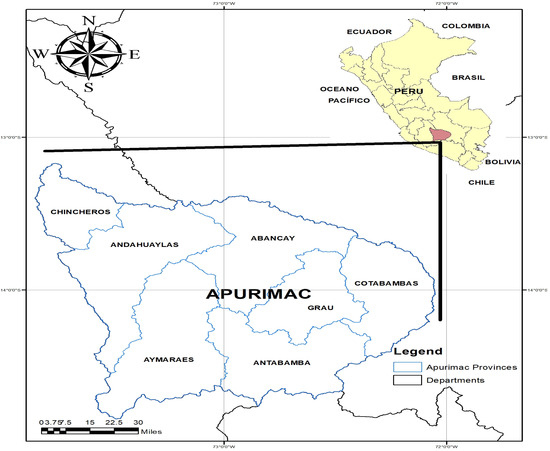
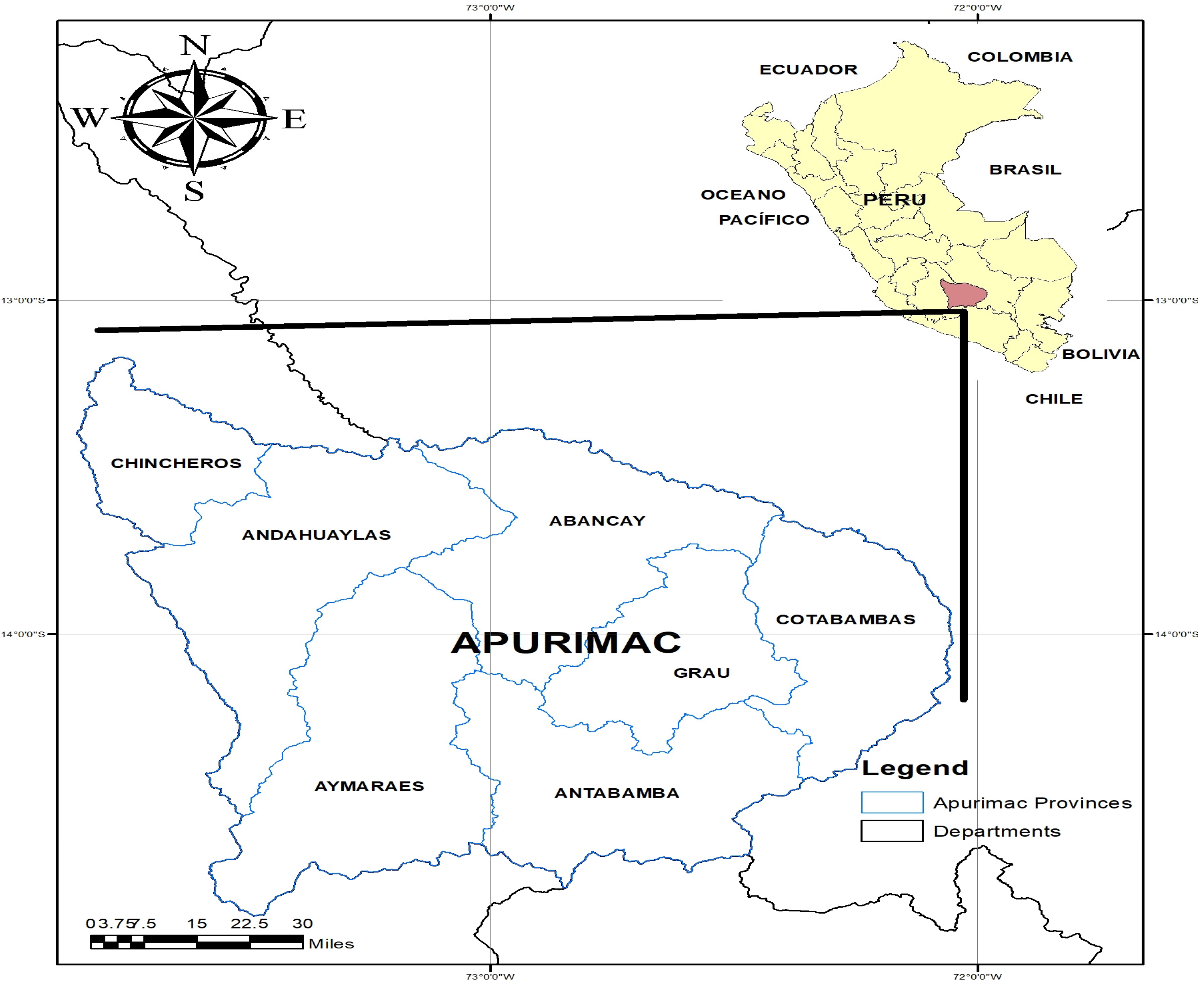
The study was conducted in an inter-Andean valley located in the Apurimac region, Perú, with coordinates 13°39′20.02″ S 73°23′13.99″ W for Andahuaylas; 13°31′22″ S 73°43′42″ W for Chincheros and 13°38′2″ S 72°52′53″ W for Abancay, with a Cwb climate according to the Köpen classification (temperate climate with winters).
Genetic Material
Information was collected on two varieties (Hass and Fuerte) produced in the inter-Andean valley located in the Apurimac region, Perú. Information was provided by specialists, independent growers, and members of avocado associations during the avocado harvesting season.
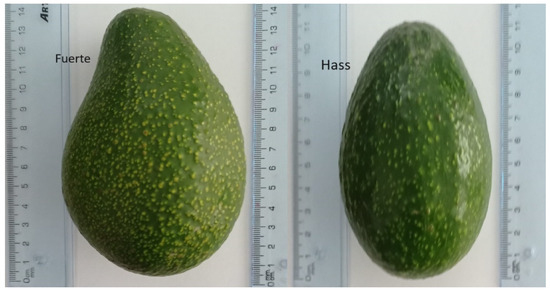
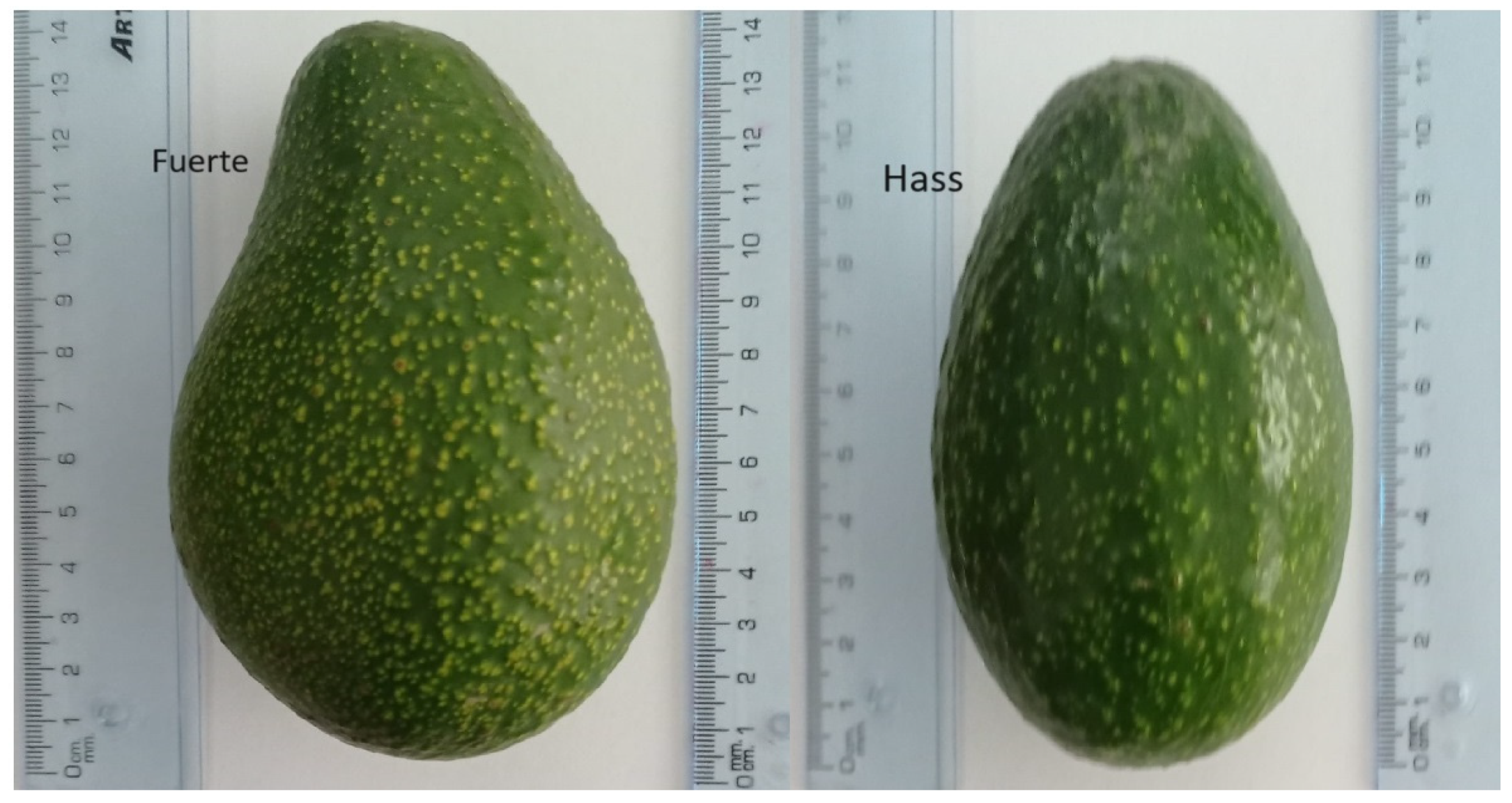
The Fuerte variety has an elongated shape with a narrower end, green color, weight between 170 and 500 g, and length approximately 14 cm. The Hass variety has an oval pyriform shape, with thick and rough skin, dark green color, weight between 200 and 300 g, and length approximately 11 cm (Figure 1).
Figure 1.
Fuerte and Hass Avocado.
2.2. Quality Evaluation Parameters
Parameters considered include whole, healthy, characteristic, clean, undamaged, free of damage, free of odor, free from foreign taste, temperature damage, peduncle, harvest, maturity, dry matter, surface appearance, discoloration, discoloration, injury, contaminants, frost damage, sunburn, open wound, rotting, conservation, and calibers.
These criteria are established by the technical standards issued by the Food and Agriculture Organization of the United Nations (FAO) and the Commission for Standardization and Control of Non-Tariff Trade Barriers of the National Institute for the Defense of Competition and Protection of Intellectual Property (INDECOPI, Peru).
2.3. Parameter Discrimination
The experts were avocado producers and exporters, as well as specialists from the Avocado Project of the Regional Government of Apurimac; the experts were informed of the importance of the Delphi method, the criteria and rounds that are applied, the brainstorming technique, working groups, and informative talks.
The Delphi method was applied, which consisted of approaching the conformity of a group of experts based on their analysis. To determine the parameters with which the avocado commercial quality index was constructed, an evaluation by experts was applied where the parameters were discriminated, going from 38 to 15 parameters, accepting those parameters that were accepted by more than 50% of the experts. In the second stage, the weighting of each of these 15 parameters in the formulation of the avocado commercial quality index was determined. Data were collected from the inter-Andean valleys of Apurimac (Figure 2).
Figure 2.
Avocado varieties’ producing areas.
2.4. Formulation of Indices
The formulation of the avocado commercial quality indexes was developed by weighting the parameters established in the first stage of the Delphi method. This weighting was obtained by finding the average of the results of the 44 experts who evaluated these parameters.
2.5. Statistical Tools
The study aimed to identify the most influential parameters on avocado quality and to propose a commercial quality index (CQI). The results obtained from the evaluation of the parameter weights collected from the expert judgment were fitted to linear and nonlinear mathematical models, using the R2 fit coefficient as the fitting criterion, through the Curve Expert Professional version 2.7.3 software, mode demo.
3. Results
3.1. Discrimination of Parameters
The evaluated parameters that were accepted by more than 50% of the respondents, were chosen to continue with the second round of the Delphi method; of the 38 evaluated parameters, 18 (47.37%) parameters were accepted as shown in Table 1. On the other hand, the parameters were unified into a single parameter so that 15 parameters were considered for the second round.
Table 1.
Parameters evaluated for Hass and Fuerte avocados.
3.2. Parameter Weighting
After the first round, the marketing-export parameters for Hass and Fuerte avocado varieties were determined; the accepted parameters are shown in Table 1.
3.3. Formulation of the Commercial Quality Index
With the information from the second round, the data of the commercial quality parameters for the Hass and Fuerte varieties were adjusted to the rational mathematical model (Equation (1)), whose adjustment coefficient R2 was close to unity. The results are shown in Table 2 and Table 3 for the Hass and Fuerte varieties, respectively.
where is value of the quality parameter from 0 to 100; is avocado quality parameter; and a, b, c are constants of the model.
Table 2.
Quality parameter values for the Hass variety.
Table 3.
Quality parameter values for the Fuerte variety.
The weighting of the quality parameters is reported in Table 4. It was observed that the parameter “free of damage” had the highest weighting for the Hass variety, while for the Fuerte variety it was “harvest of the product” (0.08); the other parameters were between 0.06 and 0.07 for both varieties.
Table 4.
Avocado commercial quality index formula components.
3.4. Application of the Delphi Method in the Proposal of a Commercial Quality Index for Hass and Fuerte Avocado
The relationship of Qi and Wi allows for proposing the commercial quality index, which is composed of 15 parameters, for both varieties under study. One of the ways to group them and obtain a single CQI value is through the weighted average, which measures the weight of each parameter of importance [39]. This index is represented by the Equation (2).
where Qi, is a quality component i (Maintain property, be clean, free of damage and other); Wi, is parameter weighting; CQI is the avocado commercial quality index, and x for the Hass variety is h and for Fuerte is f.
4. Discussion
One of the important components in the commercial quality parameters of avocados is that the product must be clean, including that it must not contain insects. However, if the avocado fruit were found to contain insects, it would be discarded for commercialization, since this aspect is a parameter required by the international market. Avocado marketing is affected worldwide by pests and diseases [40,41,42,43].
The Ministry of Foreign Relations, Perú, mentions that to pack avocado and be accepted in the United States market, the fruit must comply with seven CFR 31956-50 [44] criteria, which implies that avocado is packed in environments that are free of insects within 24 h after harvesting. So, before packing the avocado, debris or weeds that may contain any insects must be removed, maintaining the organoleptic characteristics and preserving its appearance, which facilitates its commercialization [45,46].
Another important component is that it is free of damage such as pests. Díaz Vásquez et al. [47] mentioned that sanitary measures limited the entry of Colombian avocado to the United States market, and Álvarez Flores et al. [48] mentioned that exports of Ecuadorian avocado decreased in the period from 2011 to 2015 due to the presence of pests in the cultivation areas attacking the avocado fruit as the main cause.
Regarding the parameter of frost or cold damage, it is considered important because this damage reduces the useful life of avocados, considerably affecting their commercialization in international markets [49,50]. On the other hand, it is important to control fruit lesions, especially during the processing stage, since lesions increase considerably [51].
The avocado commercial quality index (CQI) proposed in this research integrates the criteria approved by the Food and Agriculture Organization of the United Nations (FAO) in Codex CXS-197-1995 [22] and the criteria established in the Peruvian technical standard for avocado approved by the National Institute for the Defense of Competition and Intellectual Property (INDECOPI, Perú); therefore, the use of this commercial quality index (CQI) provides more criteria for a better evaluation of the commercial quality.
The implementation of this new avocado quality index must complete socialization stages among marketing channels to integrate quality criteria. However, the high demand for this fruit may generate a lack of interest in its application in the industry because in many cases the demand exceeds the market supply. Nonetheless, in the long term, this avocado commercial quality index can become a useful tool for standardizing production and marketing processes at the local and international levels.
The Delphi method made it possible to obtain information from experts in avocado marketing. This method has been used for various types of research, seeking the knowledge of experts in a given subject to reach a consensus on knowledge in an interdisciplinary and transdisciplinary manner [34], making it possible to better understand problems, opportunities, forecasts, and solutions [29]. This tool has made it possible to establish commercial quality criteria for food products (fruits, vegetables, tubers, grains, and cereals) and to forecast future trends by identifying key factors [52,53,54].
Likewise, the information gathered using the Delphi method made it possible to formulate the commercial quality index using weighted equations, since this method has the potential to make combined use of statistical techniques [55], including the elaboration of a digital twin model [56], creating scenarios to predict the future [57], or making use of a rational model as in the case of this study.
This index could be used in avocado-producing areas, mainly in Latin American countries. It could also be applied in avocado-importing countries.
5. Conclusions
Hass and Fuerte avocado fruits, produced in the inter-Andean valley located in the department of Apurimac, have become a highly exportable product. The parameters of the quality index for the commercialization-export of Hass and Fuerte avocados in the inter-Andean valley were determined. Initially, 38 marketing-export parameters were identified.
The application of the Delphi method to the experts allowed the identification of 15 relevant parameters: maintain the property, be clean, free of damage, temperature damage, peduncle, harvest of the product, dry matter content, surface appearance, discoloration, injury, contaminants, frost damage, sunburn, preservation, and caliber. The use of the Delphi method is a decision-making tool for avocado growers, allowing the formulation of a commercial quality index.
The commercial quality index (CQI), being a tool to determine the quality of avocado fruit, could be influenced by elements such as producer organization, production volume, use of agrochemicals, market demand and supply, and climatic variations. These aspects can affect the performance and robustness of the proposed quality index, so a study including these elements is recommended.
The study included the formulation of a quality index (CQI) for the commercialization of avocado, specifically Hass and Fuerte varieties, which are produced in the inter-Andean valley of Apurimac. However, additional aspects should be considered for application to other varieties.
Author Contributions
Conceptualization, J.P.A.-L., H.W.A.-C. and D.Q.-C.; methodology, J.P.A.-L., H.W.A.-C. and D.Q.-C.; software, J.P.A.-L. and D.Q.-C.; validation, J.P.A.-L., H.W.A.-C. and D.Q.-C.; formal analysis, J.P.A.-L. and D.Q.-C.; investigation, J.P.A.-L. and H.W.A.-C.; project administration, J.P.A.-L.; supervision, J.P.A.-L.; data curation, J.P.A.-L., D.Q.-C. and L.R.C.; writing—original draft, J.P.A.-L., H.W.A.-C. and A.P.-C.; writing—review and editing, J.P.A.-L., D.Q.-C. and A.P.-C.; visualization, A.P.-C. and L.R.C. All authors have read and agreed to the published version of the manuscript.
Funding
This project was funded by the Jose Maria Arguedas National University from Andahuaylas. Resolution N° 456-2022-CO-UNAJMA.
Data Availability Statement
Data are contained within the article; further inquiries can be directed to the corresponding author.
Conflicts of Interest
The authors declare no conflicts of interest.
References
- Instituto Nacional de Estadística e Informática. Pobreza Monetaria Alcanzó al 30.1% de la Población del País Durante el Año 2020. 2021. Available online: https://m.inei.gob.pe/prensa/noticias/pobreza-monetaria-alcanzo-al-301-de-la-poblacion-del-pais-durante-el-ano-2020-12875/ (accessed on 20 July 2024).
- Instituto Nacional de Estadística e Informática. Avance Económico Departamental, Marzo 2021. 2021. Available online: https://www.inei.gob.pe/media/MenuRecursivo/publicaciones_digitales/Est/Lib1804/apurimac.htm (accessed on 20 July 2024).
- Mamani, J.C.Q.; Pinto, S.L.A.; Quilca, B.E.C.; Portilla, R.M.; Huamán, R.N.T. Factores determinantes de la exportación de palta en Perú, 2008–2020. Alfa Rev. Investig. En Cienc. Agronómicas Y Vet. 2022, 6, 524–536. [Google Scholar]
- Quiroz, A.M. Evaluación de la cadena de valor de la producción del aceite de palta peruana y propuestas competitivas. Ing. Ind. 2021, 41, 151–170. [Google Scholar] [CrossRef] [Scilit]
- Flores-Izquierdo, M.A.; Espinoza-Villanueva, L.E. Situación actual y perspectivas de la producción de palta (Persea americana) peruana en el contexto del comercio internacional. Ing. Ind. 2023, 45, 157–173. [Google Scholar] [CrossRef] [Scilit]
- Choque-Quispe, D.; Diaz-Barrera, Y.; Solano-Reynoso, A.M.; Choque-Quispe, Y.; Ramos-Pacheco, B.S.; Ligarda-Samanez, C.A.; Peralta-Guevara, D.E.; Martínez-Huamán, E.L.; Aguirre Landa, J.P.; Correa-Cuba, O.; et al. Effect of the Application of a Coating Native Potato Starch/Nopal Mucilage/Pectin on Physicochemical and Physiological Properties during Storage of Fuerte and Hass Avocado (Persea americana). Polymers 2022, 14, 3421. [Google Scholar] [CrossRef] [Scilit]
- Condori Salluco, N.F. Eficacia de la Palta como Antibacteriano frente a Mycobacterium Tuberculosis. Gac. Medica Boliv. 2021, 44, 233–239. [Google Scholar] [CrossRef] [Scilit]
- Vivero, S.A.; Valenzuela, B.R.; Valenzuela, B.A.; Morales, G. Palta: Compuestos bioactivos y sus potenciales beneficios en salud. Rev. Chil. De Nutr. 2019, 46, 491–498. [Google Scholar] [CrossRef] [Scilit]
- Zafar, T.; Sidhu, J.S. Avocado Production, Processing, and Nutrition. In Handbook of Vegetables and Vegetable Processing; John Wiley & Sons Ltd.: Hoboken, NJ, USA, 2018. [Google Scholar]
- Conceição, A.R.; Fraiz, G.M.; Rocha, D.M.U.P.; Bressan, J. Can avocado intake improve weight loss in adults with excess weight? A systematic review and meta-analysis of randomized controlled trials. Nutr. Res. 2022, 102, 45–58. [Google Scholar] [CrossRef] [Scilit] [PubMed]
- Ojo, O.A.; Amanze, J.C.; Oni, A.I.; Grant, S.; Iyobhebhe, M.; Elebiyo, T.C.; Rotimi, D.; Asogwa, N.T.; Oyinloye, B.E.; Ajiboye, B.O.; et al. Antidiabetic activity of avocado seeds (Persea americana Mill.) in diabetic rats via activation of PI3K/AKT signaling pathway. Sci. Rep. 2022, 12, 2919. [Google Scholar] [CrossRef] [Scilit]
- Nyakang’i, C.O.; Ebere, R.; Marete, E.; Arimi, J.M. Avocado production in Kenya in relation to the world, Avocado by-products (seeds and peels) functionality and utilization in food products. Appl. Food Res. 2023, 3, 100275. [Google Scholar] [CrossRef] [Scilit]
- Bangar, S.P.; Dunno, K.; Dhull, S.B.; Kumar Siroha, A.; Changan, S.; Maqsood, S.; Rusu, A.V. Avocado seed discoveries: Chemical composition, biological properties, and industrial food applications. Food Chem. X. 2022, 16, 100507. [Google Scholar] [CrossRef] [Scilit]
- Monge, A.; Stern, D.; Cortés-Valencia, A.; Catzín-Kuhlmann, A.; Lajous, M.; Denova-Gutiérrez, E. Avocado consumption is associated with a reduction in hypertension incidence in Mexican women. Br. J. Nutr. 2023, 129, 1976–1983. [Google Scholar] [CrossRef] [Scilit]
- Sommaruga, R.; Eldridge, H.M. Avocado Production: Water Footprint and Socio-economic Implications. EuroChoices 2021, 20, 48–53. [Google Scholar] [CrossRef] [Scilit]
- Guevara, W.; Hidalgo-Alcázar, C.; Rojas, J.L. Analysis of the Chilean Avocado (Palta) Agroindustry in the the International Market. Chil. J. Agric. Anim. Sci. 2021, 37, 54–64. [Google Scholar] [CrossRef] [Scilit]
- Cahuana Mosqueira, M.R. Exportaciones de palta Hass y Desarrollo del Agro No Tradicional, Región La Libertad (2010–2016). Neumann Bus. Rev. 2019, 5, 62–77. [Google Scholar] [CrossRef] [Scilit]
- Production Quantities of Avocados by Country; United Nations, F.A.O.: Rome, Italy, 2022.
- Kotler, P.; Armstrong, G. Marketing, 12th ed.; Pearson: Mexico City, México, 2012. [Google Scholar]
- García, Z.T.; Quintanilla, G.J. Análisis del valor agregado: Producción de palta en trozos. Ind. Data 2014, 6, 12. [Google Scholar] [CrossRef] [Scilit]
- Rodríguez, P.; Soto, I.; Villamizar, J.; Rebolledo, A. Fatty Acids and Minerals as Markers Useful to Classify Hass Avocado Quality: Ripening Patterns, Internal Disorders, and Sensory Quality. Horticulturae 2023, 9, 460. [Google Scholar] [CrossRef] [Scilit]
- CXS197-1995; Codex Alimentairus CXS197-1995 Norma para el Aguacate. FAO: Rome, Italy, 2013.
- NTP 011.018; Norma Técnica Peruana de la Palta. INDECOPI: San Borja, Perú, 2014.
- Stanford, L. Construyendo la calidad: La economía política de los estándares en la industria del aguacate en México. Agric. Y Valores Hum. 2022, 19, 293–310. [Google Scholar] [CrossRef] [Scilit]
- Gómez Ugarte, M.; Escalera Cruz, D.Á.; Rojas Navi, P.; Andrade Valeriano, M.; Lopez Rojas, A.F.; Muruchi Suarez, A. Beneficios de la semilla de Persea americana Millo (Palta). Rev. Investig. E Inf. En Salud 2017, 12, 38–43. [Google Scholar] [CrossRef] [Scilit]
- Robson, A.J.; Petty, J.; Joyce, D.C.; Marques, J.R.; Hofman, P.J. High resolution remote sensing, GIS and Google Earth for avocado fruit quality mapping and tree number au-diting. Acta Hortic. 2016, 1130, 589–596. [Google Scholar] [CrossRef] [Scilit]
- Lena-Acebo, F.J. Aplicación del método Delphi en el diseño de una investigación cuantitativa sobre el fenómeno FABLABS. Empiria 2018, 40, 129–166. [Google Scholar]
- Galanis, P. The Delphi method. Arch. Hell. Med. 2018, 35, 564–570. [Google Scholar]
- Skulmoski, G.J.; Hartman, F.T.; Krahn, J. The Delphi Method for Graduate Research. J. Inf. Technol. Educ. Res. 2007, 6, 1–21. [Google Scholar] [CrossRef] [Scilit]
- Fathullah, M.A.; Subbarao, A.; Muthaiyah, S. Methodological Investigation: Traditional and Systematic Reviews as Preliminary Findings for Delphi Technique. Int. J. Qual. Methods 2023, 22, 1–7. [Google Scholar] [CrossRef] [Scilit]
- Mukherjee, N.; Hugé, J.; Sutherland, W.J.; Mcneill, J.; Van Opstal, M.; Dahdouh-Guebas, F.; Koedam, N. The Delphi technique in ecology and biological conservation: Applications and guidelines. Methods Ecol. Evol. 2015, 6, 1097–1109. [Google Scholar] [CrossRef] [Scilit]
- García Valdés, M.; Suárez Marín, M. El método Delphi para la consulta a expertos en la investigación científica. Rev. Cuba. Salud Pública 2013, 39, 253–267. [Google Scholar]
- Sankaran, S.; Ang, K.; Hase, S. Delphi Method. J. Syst. Think. 2023, 3, 1–15. [Google Scholar] [CrossRef] [Scilit]
- Niederberger, M.; Köberich, S. Coming to consensus: The Delphi technique. Eur. J. Cardiovasc. Nurs. 2021, 20, 692–695. [Google Scholar] [CrossRef] [Scilit]
- Hasson, F.; Keeney, S.; McKenna, H. Research guidelines for the Delphi survey technique. J. Adv. Nurs. 2000, 32, 1008–1015. [Google Scholar] [CrossRef] [Scilit]
- López Gómez, E. El método Delphi en la investigación actual en educación: Una revisión teórica y metodológica. Educ. XX1 2018, 21, 17–40. [Google Scholar] [CrossRef] [Scilit]
- McMillan, S.S.; King, M.; Tully, M.P. How to use the nominal group and Delphi techniques. International Journal of Clinical Pharmacy. Int. J. Clin. Pharm. 2016, 38, 655–662. [Google Scholar]
- Schmalz, U.; Spinler, S.; Ringbeck, J. Lessons Learned from a Two-Round Delphi-based Scenario Study. MethodsX 2021, 8, 101179. [Google Scholar] [CrossRef] [Scilit]
- Anand, V.; Gupta, S.; Gupta, D.; Gulzar, Y.; Xin, Q.; Juneja, S.; Shah, A.; Shaikh, A. Weighted Average Ensemble Deep Learning Model for Stratification of Brain Tumor in MRI Images. Diagnostics 2023, 13, 1320. [Google Scholar] [CrossRef] [Scilit]
- Tapia Rodríguez, A.; Ramírez Dávila, J.F.; Salgado Siclán, M.L.; Castañeda Vildózola, Á.; Maldonado Zamora, F.I.; Lara Díaz, A.V. Spatial distribution of anthracnose (Colletotrichum gloeosporioides Penz) in avocado in the State of Mexico, Mexico. Rev. Argent. Microbiol. 2020, 52, 72–81. [Google Scholar]
- Martínez-Martínez, N.; Ramírez-Dávila, J.F.; Mejía-Carranza, J.; Vera-Noguez, S.; Ramírez-Chimal, J. Ahuacatl: Mobile application to determine the spatial distribution of phytosanitary problems in avocado. Rev. Mex. Cienc. Agric. 2023, 14, 471–476. [Google Scholar]
- Fischer, I.H.; Moraes, M.F.D.; Palharini, M.C.D.A.; Fileti, M.D.S.; Cruz, J.C.S.; Firmino, A.C. Efeito de produtos convencionais e alternatives no controle de doenças pós-colheita do abacate. Rev. Bras. Frutic. 2018, 40, e-408. [Google Scholar]
- Everett, K.R. Avocado diseases affecting fruit quality. CAB Rev. Perspect. Agric. Vet. Sci. Nutr. Nat. Resour. 2020, 15. [Google Scholar] [CrossRef]
- Exteriores, M.d.R. Perfil Del Mercado De Palta Hass En Estados Unidos; Oficina de Promoción Comercial e Inversiones del Perú: Los Ángeles, CA, USA, 2011. [Google Scholar]
- Álvarez-Herrera, J.G.; Jaime-Guerrero, M.; Reyes-Medina, A.J. Effect of maturity accelerants on the postharvest behavior of avocado (Persea americana Mill.) cv. Lorena. Rev. Colomb. De Cienc. Hortic. 2021, 15, e13131. [Google Scholar] [CrossRef] [Scilit]
- Tremocoldi, M.A.; Daiuto, E.R.; De Alencar, S.M.; Vieites, R.L. Effect of hydrothermally “Hass” avocado about antioxidant capacity, total phenolic content and coloration. Semin. Cienc. Agrar. 2014, 35, 1279. [Google Scholar] [CrossRef] [Scilit]
- Díaz Vásquez, J.C.; Ardila López, C.; Guerra Aranguren, M.A. Estudio de caso sobre la admisibilidad del aguacate Hass colombiano en el mercado estadounidense: Oportunidades en el Este de Asia. Rev. Mundo Asia Pacífico 2019, 8, 5–27. [Google Scholar] [CrossRef] [Scilit]
- Álvarez Flores, J.J.; Vite Cevallos, H.; Garzón Montealegre, V.J.; Carvajal Romero, H. Analysis of avocado production in Ecuador for export to international markets from 2008 to 2018. Rev. Metrop. Cienc. Apl. 2021, 4, 164–172. [Google Scholar]
- Pachón, Y.V.; Balaguera-López, H.E.; Florez-Velasco, N. Postharvest behavior and chilling injury in avocado (Persea americana Mill) fruit cv. Hass treated with 1-methylcyclopropene, ethylene, and intermittent warming. Rev. Fac. Nac. De Agron. Medellin 2022, 75, 9895–9907. [Google Scholar] [CrossRef] [Scilit]
- Mendieta, B.; Olaeta, J.A.; Pedreschi, R.; Undurraga, P. Reduction of cold damage during cold storage of Hass avocado by a combined use of pre-conditioning and waxing. Sci. Hortic. 2016, 200, 119–124. [Google Scholar] [CrossRef] [Scilit]
- Fischer, I.H.; Tozze Júnior, H.J.; Arruda, M.C.; Massola Júnior, N.S. Pós-colheita de abacates ‘Fuerte’ e ‘Hass’: Características físicas e químicas, danos e controle de doenças. Semin. Ciências Agrárias 2011, 32, 209. [Google Scholar] [CrossRef] [Scilit]
- Palomino-Camargo, C.; González-Muñoz, Y.; Pérez-Sira, E.; Aguilar, V.H. Delphi methodology in food safety management and foodborne disease prevention. Rev. Peru. Med. Exp. Y Salud Pública 2018, 35, 483–490. [Google Scholar] [CrossRef] [Scilit]
- Bazzani, C.; Canavari, M. Forecasting a scenario of the fresh tomato market in Italy and in Germany using the Delphi method. Br. Food J. 2013, 115, 448–459. [Google Scholar] [CrossRef] [Scilit]
- Zickafoose, A.; Lu, P.; Baker, M. Forecasting food innovations with a Delphi Study. Foods 2022, 11, 3723. [Google Scholar] [CrossRef] [Scilit]
- Ameyaw, E.E.; Hu, Y.; Shan, M.; Chan AP, C.; Le, Y. Application of Delphi method in construction engineering and management research: A quantitative perspective. J. Civ. Eng. Manag. 2016, 22, 991–1000. [Google Scholar] [CrossRef] [Scilit]
- Dang, J.; Lal, A.; Montgomery, A.; Flurin, L.; Litell, J.; Gajic, O.; Rabinstein, A.; Cervantes-Arslanian, A.; Marcellino, C.; Robinson, C.; et al. Developing DELPHI expert consensus rules for a digital twin model of acute stroke care in the neuro critical care unit. BMC Neurol. 2023, 23, 161. [Google Scholar] [CrossRef] [Scilit]
- Jiang, R.; Kleer, R.; Piller, F.T. Predicting the future of additive manufacturing: A Delphi study on economic and societal implications of 3D printing for 2030. Technol. Forecast. Soc. Change 2017, 117, 84–97. [Google Scholar] [CrossRef] [Scilit]

Disclaimer/Publisher’s Note: The statements, opinions and data contained in all publications are solely those of the individual author(s) and contributor(s) and not of MDPI and/or the editor(s). MDPI and/or the editor(s) disclaim responsibility for any injury to people or property resulting from any ideas, methods, instructions or products referred to in the content. |
© 2024 by the authors. Licensee MDPI, Basel, Switzerland. This article is an open access article distributed under the terms and conditions of the Creative Commons Attribution (CC BY) license (https://creativecommons.org/licenses/by/4.0/).