1. Introduction
The genus
Thymus L. (Lamiaceae) comprises more than 300 species distributed mainly in Europe, North Africa, and Western Asia, with the Balkan Peninsula recognized as one of its major centers of diversity [
1,
2,
3,
4]. Bulgaria, in particular, hosts a high number of
Thymus taxa, many of which are endemic or regionally restricted, reflecting complex evolutionary processes, hybridization events, and strong ecological differentiation. Geological factors, including lithology and structural features, have been identified as important drivers of environmental heterogeneity in Bulgaria, influencing soil properties and geochemical background conditions relevant for plant growth [
5]. This taxonomic complexity is accompanied by pronounced phytochemical polymorphism, especially in essential oil composition, which underlies the medicinal, aromatic, and economic value of the genus [
6,
7].
Traditionally, horticultural production and commercial utilization of
Thymus have focused on a limited number of well-established species, such as
T. vulgaris,
T. pulegioides, and
T. citriodorus. These taxa are widely cultivated and serve as important sources of essential oils, herbal teas, and phytotherapeutic products [
8,
9,
10]. Their agronomic performance and phytochemical profiles are relatively well documented, providing a stable foundation for industrial use. However, this narrow focus overlooks the substantial potential of less-studied Balkan taxa, many of which exhibit unique chemical compositions and adaptive traits shaped by local environmental conditions.
Despite their documented chemical uniqueness in natural habitats, data on the cultivation performance and essential oil stability of these Balkan taxa remain extremely limited. A major limitation in the current use of
Thymus resources is the widespread practice of collecting wild material or cultivating mixed and taxonomically undefined populations marketed under the generic name
Thymus sp. Such an approach results in high variability in essential oil yield and composition, complicating standardization and reducing the reproducibility of biological effects [
11,
12,
13]. From a horticultural and pharmacognostic perspective, this variability represents a significant constraint on product quality, traceability, and market differentiation.
Beyond their horticultural importance, species of the genus
Thymus are well recognized for their therapeutic potential, which is largely determined by the qualitative and quantitative composition of their essential oils. Monoterpenoid phenols such as thymol, oxygenated monoterpenes including citral (neral and geranial), and selected sesquiterpenes have been associated with antimicrobial, anti-inflammatory, antioxidant, and analgesic activities, making chemically well-defined plant material particularly valuable for medicinal and functional applications. Recent pharmacological research increasingly emphasizes effect-directed and bioactivity-guided approaches for the identification of active plant constituents, highlighting the importance of precise phytochemical characterization [
14].
Furthermore, comprehensive evaluations of medicinal plants demonstrate that therapeutic efficacy, safety, and reproducibility are closely linked to chemical composition, standardization, and controlled cultivation rather than to generic taxonomic labeling [
15]. Similar principles have been reported across diverse medicinal plant systems, where chemically characterized extracts or essential oils show enhanced consistency of biological effects, including immunomodulatory and anti-inflammatory activity [
16,
17]. In this context, species-based selection and chemotype stabilization in
Thymus cultivation represent key prerequisites for reliable phytotherapeutic use and product standardization.
In this context, the targeted cultivation of clearly identified
Thymus species with stable and well-characterized phytochemical profiles emerges as a key strategy for sustainable horticulture and medicinal plant production [
7,
18]. Building upon previous cultivation experience with traditional species, the present study introduces three comparatively understudied Balkan taxa,
T. zygioides,
T. longedentatus, and
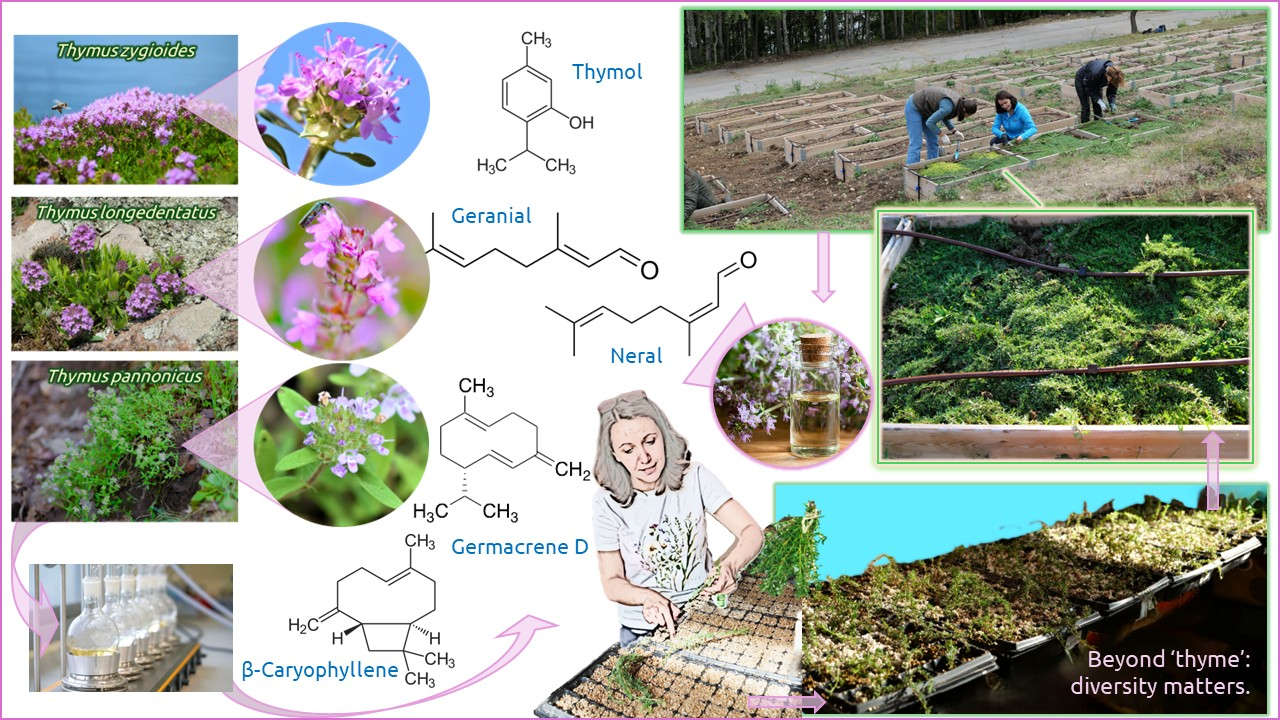
T. pannonicus, into experimental vegetative propagation and field plantation trials. These species were selected following an extensive survey of 283 natural populations across Bulgaria, based on their distinct morphological traits, genetic identity, and essential oil composition rich in valuable secondary metabolites.
Several Balkan
Thymus species included in the present study have already been investigated with respect to their phytochemical composition and biological activity [
19,
20,
21,
22,
23]. In particular,
T. zygioides has been relatively well documented in previous studies, mainly through analyses of essential oil composition and chemotype characterization of wild or experimentally grown material [
20,
24], while
T. longedentatus has been the subject of detailed phytochemical investigations, including comprehensive essential oil profiling and metabolite analyses conducted by the present authors [
19,
23].
However, these studies have been primarily focused on wild populations or descriptive phytochemical characterization, without addressing systematic field cultivation, comparative essential oil productivity, or chemotype stability under horticultural conditions. In contrast, data evaluating the targeted cultivation potential of these species, particularly in direct comparison with traditionally cultivated Thymus taxa, remain limited. Therefore, the objective of the present study is not to further analyze these species phytochemically, but to evaluate their potential for cultivation and sustainable use based on species-driven selection.
The aim of this study was to compare the cultivation performance, essential oil yield, and chemotypic differentiation of three traditional and three novel Thymus species under field conditions. By doing so, the study seeks to provide a scientifically grounded framework for diversifying Thymus cultivation, enhancing raw material quality, and supporting sustainable use and conservation of native Bulgarian biodiversity.
2. Materials and Methods
2.1. Species Selection and Plant Material
The study comprised six
Thymus species representing traditional cultivated taxa and newly introduced Bulgarian/Balkan taxa. The traditionally cultivated species included
T. vulgaris L.,
T. pulegioides L., and
T. × citriodorus (Pers.) Schreb. The newly introduced taxa were
T. longedentatus (Degen & Urum.) Ronniger,
T. zygioides Griseb., and
T. pannonicus All. Plant material was taxonomically identified by Assoc. Prof. Ina Aneva using standard floristic and taxonomic criteria for the genus
Thymus. Voucher specimens of all studied species (
T. longedentatus,
T. zygioides,
T. pannonicus,
T. pulegioides,
T. vulgaris, and
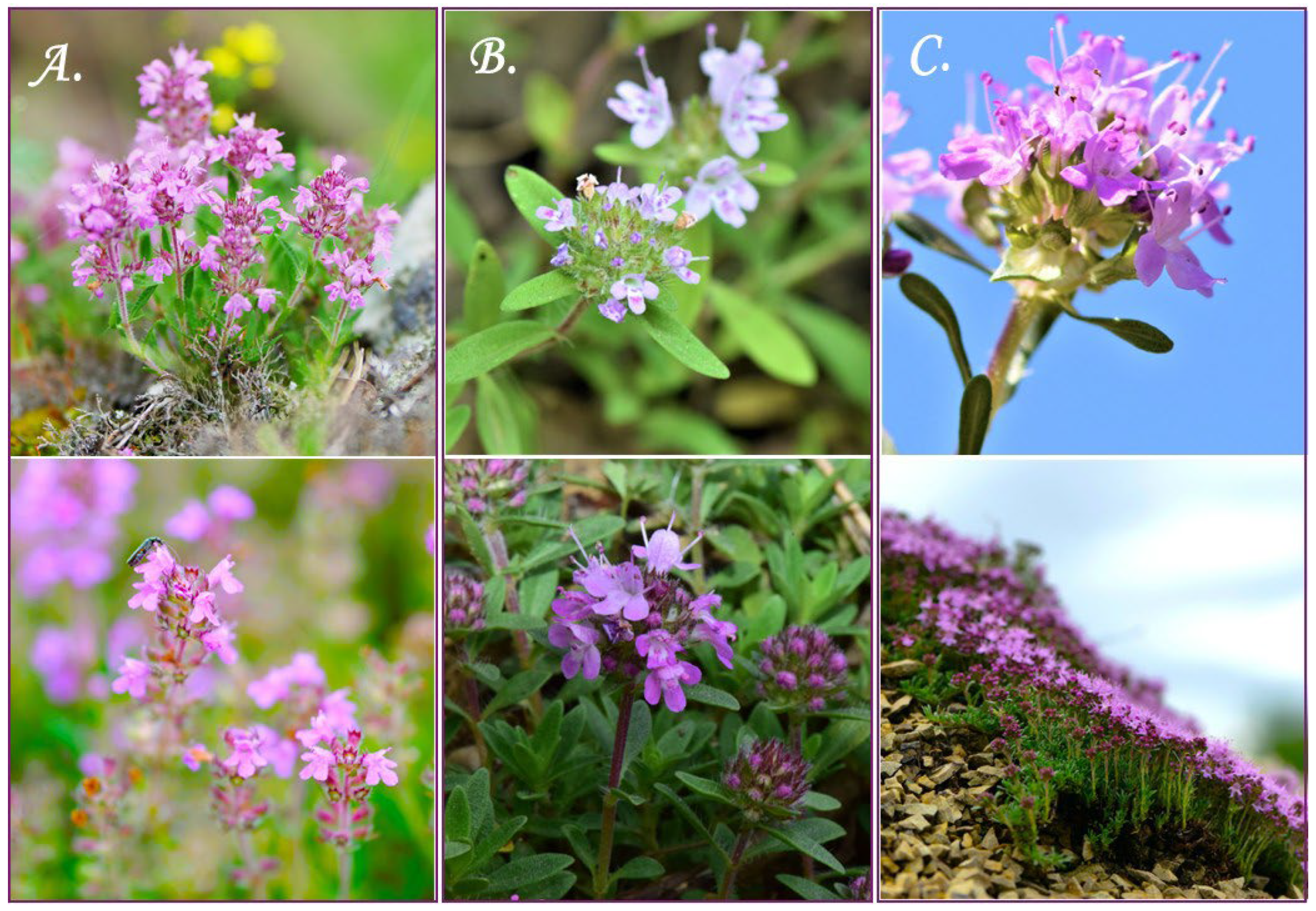
T. × citriodorus) were prepared and deposited in the Herbarium of the Institute of Biodiversity and Ecosystem Research, Bulgarian Academy of Sciences (SOM), Sofia, Bulgaria. The corresponding voucher numbers are SOM 1380, SOM 177402, SOM 1429, SOM 1430, SOM 1363, and SOM 1362, respectively. Morphological distinctiveness and species identity of the newly introduced
Thymus taxa are illustrated by representative flowering individuals and habitats presented in
Figure 1.
The selection of T. longedentatus, T. zygioides, and T. pannonicus was based on an extensive, independent survey of the genus Thymus in Bulgaria encompassing 283 natural localities. This broad screening covered multiple taxa of the genus and aimed to capture the natural diversity in morphology, ecology, and phytochemical potential. Based on the accumulated evidence from this nationwide assessment, the three species were identified as the most promising candidates for cultivation due to their clear species identity and distinctive essential oil profiles (high-value chemotypes).
After selection, the three taxa were introduced into cultivation and established as experimental field plantations. Planting material for field establishment was produced via vegetative propagation (rooted cuttings) to ensure uniformity and preservation of selected traits. The traditional species were established using standard horticultural planting material routinely applied in cultivation practice.
This stepwise approach ensured that cultivation efforts were focused on taxa with proven phytochemical value and clear taxonomic identity.
2.2. Experimental Plantation Site and Cultivation Conditions
Field cultivation trials were conducted at the Botanical Garden of the Bulgarian Academy of Sciences (Sofia, Bulgaria). The experimental site is situated in the foothill zone of the northern slopes of Vitosha Mts., at the transition between the Sofia Valley and the mountain massif, at an altitude of approximately 600–650 m a.s.l. The habitat is characterized by a temperate continental climate with pronounced mountain influence, expressed by relatively lower summer temperatures, frequent winter temperature inversions, and slightly higher precipitation compared to the central parts of Sofia. In similar climatic and soil conditions in Bulgaria, evapotranspiration dynamics have been shown to play a key role in soil water balance and plant water availability, as demonstrated through combined Penman–Monteith and HYDRUS-1D modeling approaches [
25]. The soils are predominantly deluvial–alluvial and weakly developed slope soils, locally enriched with organic matter and exhibiting good water-retention capacity, shaped by colluvial material originating from Vitosha Mts. Similar alluvial and foothill hydrogeological settings in Western Bulgaria have been shown to strongly influence groundwater flow patterns and element mobility, emphasizing the role of geological substrate and hydrological context in shaping environmental conditions relevant for plant cultivation [
26]. The area features a favorable microclimate, relatively stable soil moisture, and partial protection from strong winds, providing suitable conditions for the establishment and cultivation of both native foothill plant species and introduced taxa with diverse ecological requirements. Recent site-specific studies in the Sofia region have further demonstrated that local geological structures contribute to spatial heterogeneity of soil–gas and geochemical conditions, underlining the importance of detailed site characterization in experimental field studies [
27].
The experimental design included separate plots for each species to ensure clear species-level monitoring and to prevent admixture during harvesting and processing. Prior to planting, the soil was prepared using organic amendments (compost). Crop management followed environmentally responsible practices aligned with organic cultivation principles, including mulching, mechanical/manual weed control, and irrigation as required. No synthetic fertilizers or pesticides were applied. Plant survival, growth performance, and phenological development were monitored throughout the vegetation period.
2.3. Harvesting and Biomass Processing
The aerial parts of plants were harvested at full flowering, a stage widely recognized as optimal for essential oil accumulation in Thymus taxa. Harvested biomass was air-dried at room temperature in a shaded, well-ventilated environment until constant weight. Dried material was homogenized and used for essential oil isolation and chemical analysis.
2.4. Essential Oil Isolation
Essential oils were isolated by hydrodistillation using a Clevenger-type apparatus (local manufacturer, Sofia, Bulgaria). Briefly, 50 g of dried plant material were distilled with 500 mL of water for 3 h.
The obtained oils were separated, dried over anhydrous sodium sulfate (Merck, Darmstadt, Germany), and stored in sealed amber vials at 4 °C until analysis. Essential oil yield was expressed as % (w/w) relative to dry biomass.
2.5. GC–MS Analysis of Essential Oils
Essential oil composition was determined by gas chromatography–mass spectrometry (GC–MS). Oil samples were analyzed on a Thermo GC system (Thermo Fisher Scientific, Waltham, MA, USA) equipped with a Focus DSQ II mass detector coupled with an HP-5MS capillary column (Agilent Technologies, Santa Clara, CA, USA).
Chromatographic conditions were as follows: helium as carrier gas at a flow rate of 1.0 mL·min−1; injection volume 1 μL; split ratio 1:50. The column temperature program was 60 °C for 10 min, increased at 3 °C·min−1 to 200 °C, and held isothermally for 10 min. The injector temperature was 220 °C.
MS operating parameters included interface temperature 240 °C and electron impact ionization at 70 eV, scanning within 40–400 m/z at 1.0 scan·s−1.
2.6. Compound Identification and Data Processing
Essential oil constituents were identified by comparison of their mass spectra with those from the NIST Mass Spectral Library (National Institute of Standards and Technology, Gaithersburg, MD, USA) and published literature data [
24], as well as by comparison of retention times with authentic standards when available. Only compounds showing reliable spectral matching and consistent retention behaviour were considered positively identified.
For interpretative and comparative purposes, individual compounds were selected based on the following criteria: (i) relative abundance in the essential oil profile, with emphasis on major and quantitatively significant constituents; (ii) consistency of occurrence across analytical replicates; (iii) contribution to chemotype definition and interspecific differentiation; and (iv) documented biological activity or sensory relevance reported in the literature. Minor constituents were included when they contributed to the characteristic chemical fingerprint of a species or supported chemotype classification.
Identified compounds were further grouped into major chemical classes (monoterpene hydrocarbons, oxygenated monoterpenes, sesquiterpene hydrocarbons, oxygenated sesquiterpenes, and aromatic compounds) to facilitate comparative evaluation among species.
2.7. Replication and Statistical Analysis
Field cultivation was conducted using independent plants for each Thymus species, which were treated as biological replicates. Essential oil isolation and GC–MS analyses were performed for each biological replicate. Data are presented as mean values ± standard deviation.
Statistical analysis was performed using one-way analysis of variance (ANOVA) to assess differences among species/cultivars in essential oil yield and in the relative abundance of major compounds and chemical classes. Prior to analysis, data were checked for normality and homogeneity of variance. When significant differences were detected (p < 0.05), post hoc multiple comparison tests were applied to identify pairwise differences among species, using R software v.4.3.1 (R Foundation for Statistical Computing, Vienna, Austria).
4. Discussion
The present study demonstrates that targeted species selection within the genus Thymus, based on extensive floristic screening and detailed essential oil characterization, represents a more effective strategy for cultivation than reliance on traditionally used but chemically heterogeneous taxa. By integrating a nationwide assessment of Thymus diversity in Bulgaria with field cultivation and phytochemical analyses, this work provides a robust framework for the sustainable production of high-quality, species-specific thyme raw materials.
4.1. Advantages of Species-Based Selection over Traditional Cultivation
Traditional
Thymus crops such as
T. vulgaris,
T. pulegioides, and
T. × citriodorus are widely cultivated and economically important; however, their essential oil profiles often show considerable overlap and high variability. This is particularly evident in
T. pulegioides, a species known for pronounced chemical polymorphism influenced by environmental and edaphic factors [
24,
25,
26]. In such cases, essential oil composition may vary substantially even within the same species, limiting standardization and reproducibility.
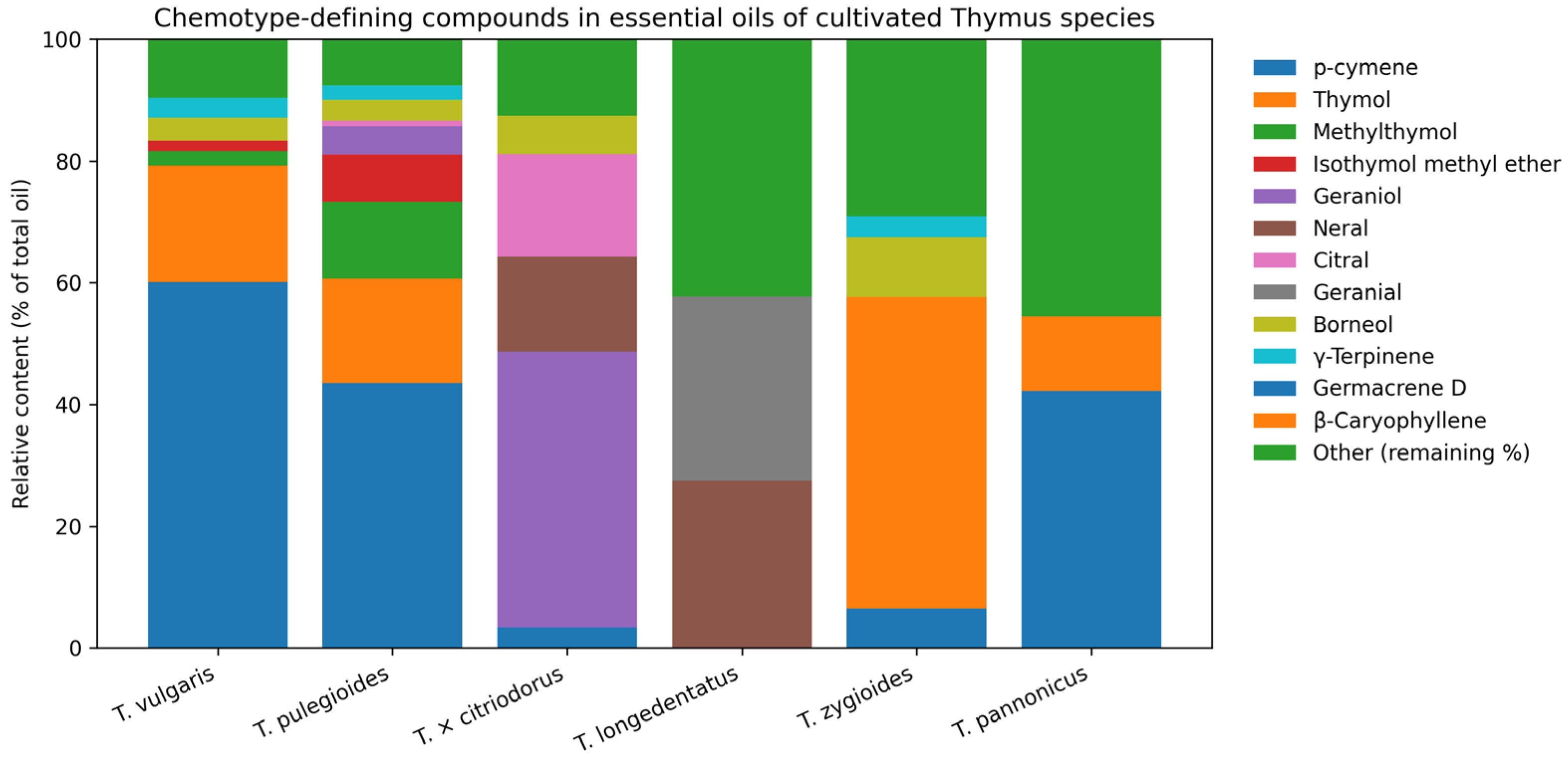
In contrast, the three newly introduced species, T. longedentatus, T. zygioides, and T. pannonicus, exhibited clearly differentiated and well-defined chemotypes under cultivation. This chemotypic clarity, combined with higher essential oil yields, highlights the potential advantages of a species-based approach that prioritizes phytochemical identity rather than broad taxonomic grouping under Thymus sp.
The clear chemotype differentiation observed among the cultivated
Thymus species has direct implications for their therapeutic applicability and product standardization. Chemotypes dominated by specific bioactive compounds, such as the citral-rich profile of
T. longedentatus or the thymol-dominated oil of
T. zygioides, are particularly relevant for medicinal use, as biological activity is strongly linked to the presence and relative abundance of these constituents. Previous pharmacological studies have demonstrated that chemically defined plant products exhibit more predictable and reproducible biological effects than heterogeneous or taxonomically undefined materials [
14,
15].
In this context, the species-based cultivation approach applied in the present study enables the production of raw materials with clearly defined chemical identities, supporting their targeted use in phytotherapeutic, functional food, or cosmetic formulations. The observed differences between traditional and newly introduced species further underline that chemotype differentiation is not only a phytochemical characteristic but also a functional attribute with direct relevance to therapeutic reliability and quality control.
It should be emphasized that the present results are based on a single cultivation season conducted at one experimental site, using vegetatively propagated planting material selected for uniformity. While this approach is appropriate for evaluating species-level cultivation potential and initial chemotype expression, it does not allow definitive conclusions regarding long-term chemical stability across years or environments. Further multi-year and multi-location trials will be necessary to confirm the temporal stability of the observed chemotypes under broader agronomic conditions.
4.2. Thymus longedentatus: A High-Yield Citral-Type Species with Exceptional Sensory Quality
Among the studied taxa, T. longedentatus emerged as the most promising species in terms of essential oil yield and aromatic quality. Its oil yield (2.30%) markedly exceeded that of all traditional species, confirming its suitability for horticultural exploitation. The dominance of oxygenated monoterpenes, particularly neral and geranial, results in a stable citral-type chemotype responsible for the intense lemon aroma.
Previous studies on lemon-scented thymes often report moderate oil yields or mixed chemical profiles. In this context, the citral-rich essential oil profile of
T. longedentatus represents a clearly differentiated chemotype within the genus
Thymus, characterized by a high proportion of oxygenated monoterpenes, particularly neral and geranial. As demonstrated by the present GC–MS analysis and earlier studies [
19,
22], this species combines high essential oil productivity with a well-defined citral-type profile under the applied cultivation conditions. These features indicate its potential for niche applications requiring a lemon-scented thyme raw material with a distinct phytochemical identity, rather than suggesting superiority over other aromatic species.
4.3. Thymus zygioides: A Focused Thymol Chemotype with High Standardization Potential
The essential oil of T. zygioides exhibited a chemically focused thymol-dominated profile, characterized by a high proportion of phenolic monoterpenes and low sesquiterpene content, consistent with compositional ranges defined for thymol-type Thymus oils in relevant ISO standards. The high thymol content (51.2%) observed under cultivation exceeds values commonly reported for many traditional thymol-bearing species and indicates a strong biosynthetic orientation toward phenolic monoterpenes.
The presence of p-cymene and γ-terpinene, known biogenetic precursors of thymol, further supports the classification of the Bulgarian accession as a thymol chemotype [
28,
29]. Compared to
T. vulgaris and
T. pulegioides, which often display mixed or environmentally driven profiles,
T. zygioides offers a more predictable and chemically “clean” source of thymol. This feature is particularly valuable for pharmaceutical and nutraceutical applications requiring consistency and high biological activity.
4.4. Thymus pannonicus: Expanding Chemical and Functional Diversity
The essential oil of T. pannonicus was characterized by a predominance of sesquiterpenes, resulting in the highest compositional complexity among the studied species. Germacrene D and β-caryophyllene, the dominant constituents, are compounds increasingly recognized for their biological activities, including anti-inflammatory and antimicrobial effects.
While sesquiterpene-rich
Thymus oils are less commonly exploited in conventional cultivation, their inclusion significantly broadens the chemical and functional spectrum of thyme-derived products. Similar sesquiterpene-dominated chemotypes have been reported for other native
Thymus populations, highlighting the importance of chemotype-based evaluation [
30]. The cultivation of
T. pannonicus thus introduces an additional dimension of diversification, enabling the development of niche products distinct from monoterpene-dominated traditional thymes.
4.5. Comparative Performance and Chemotype Differentiation of the Newly Introduced Species
When evaluated collectively, T. longedentatus, T. zygioides, and T. pannonicus clearly outperform traditional species in several key aspects: essential oil yield, chemotypic clarity, and potential for product differentiation. Whereas traditional taxa often share overlapping chemical profiles, each of the three novel species provides a distinct and complementary essential oil type—citral-rich, thymol-rich, and sesquiterpene-rich, respectively. In contrast to thymol/carvacrol-type thymes, citral- and sesquiterpene-dominated chemotypes do not correspond to the classic market definition of thyme essential oil. Their potential value should therefore be evaluated based on differentiated phytochemical profiles and niche applications rather than direct substitution within existing thyme markets.
It should be noted that existing quality standards and market definitions for thyme essential oil are primarily based on thymol- and carvacrol-dominated profiles, often associated with a minimum essential oil yield of approximately 1%. Consequently, the relevance of individual species must be interpreted within the context of their specific chemotype and intended application rather than against a single generic standard. The variation in essential oil yield and composition observed in the present study reflects the specific ecological conditions, genetic material, and cultivation practices applied at the experimental site. Therefore, the reported values should be regarded as representative for the studied biota and cultivation conditions, rather than as universally fixed parameters.
This differentiation enables the production of clearly defined, single-species herbal teas and phytotherapeutic products, moving beyond the common practice of blending heterogeneous Thymus material. Such an approach enhances product quality, transparency, and market value, while also facilitating standardization and regulatory compliance. From a horticultural perspective, the cultivation of species with high essential oil yield and well-defined chemotype under the present conditions allows more predictable production planning and higher added value.
4.6. Implications for Sustainable Cultivation and Biodiversity Conservation
Beyond their phytochemical advantages, the cultivation of selected Balkan
Thymus species contributes to the conservation of natural populations by reducing harvesting pressure on wild habitats. The establishment of genetically and chemically characterized plantations provides a sustainable alternative to wild collection and supports the long-term preservation of native genetic resources [
31,
32,
33,
34].
From a horticultural perspective, this study underscores the importance of integrating floristic research, phytochemical screening, and cultivation trials. The proposed model is transferable to other medicinal and aromatic plant genera characterized by high taxonomic and chemical diversity, offering a pathway toward more sustainable and value-oriented agricultural systems.
5. Conclusions
This study demonstrates that species-driven selection within the genus Thymus, grounded in extensive floristic screening and essential oil characterization, represents a promising approach for sustainable cultivation compared to traditional, chemically heterogeneous crops. The successful introduction of T. longedentatus, T. zygioides, and T. pannonicus into cultivation highlights their advantages in essential oil yield and chemotype expression under the present field conditions. Each of these species exhibits a distinct essential oil profile, citral-rich, thymol-dominated, and sesquiterpene-rich, respectively, supporting the development of differentiated, high-quality herbal products. In particular, T. longedentatus emerges as a high-yielding lemon-scented species with a well-defined citral-type profile.
Overall, the present study provides a first, experimentally grounded assessment of the cultivation potential of selected Balkan Thymus species under field conditions. Although the findings indicate clear interspecific differences in essential oil yield and chemotype expression, they should be regarded as preliminary with respect to long-term chemical stability. Nevertheless, the results establish a solid basis for future multi-year and multi-location studies aimed at validating chemotype persistence and refining species-based cultivation strategies.