Article

Combined Effects of Kaolin Particle Film and Training System on Sunburn Mitigation and Wine Aroma

by
Fernando Sánchez-Suárez
1,
Francisco Javier Mesas-Carrascosa
2 and
Rafael A. Peinado
1,*
1
Department of Agricultural Chemistry, Soil Science and Microbiology, University of Cordoba, Campus Rabanales, Marie Curie Building, 3rd Floor, 14014 Córdoba, Spain
2
Department of Graphic Engineering and Geomatic, University of Cordoba, Campus Rabanales, Gregor Mendel Building, 2nd Floor, 14014 Córdoba, Spain
*
Author to whom correspondence should be addressed.
Horticulturae 2026, 12(5), 554; https://doi.org/10.3390/horticulturae12050554
Submission received: 23 March 2026 / Revised: 23 April 2026 / Accepted: 28 April 2026 / Published: 1 May 2026

Highlights

What are the main findings?
The combined use of sprawl training and kaolin application reduced canopy temperature (up to 1.9 °C) and decreased sunburn and berry shrivelling under warm conditions. This integrated strategy enhanced wine composition, increasing ethanol content, colour intensity, total polyphenol index and key aroma compounds (terpenes and esters). Wines from the combined treatment showed higher values of fruity, citrus and floral aromas and achieved the best sensory evaluation.
What is the implication of the main finding?
The integration of canopy architecture and reflective particle film represents a practical short-term adaptation strategy to mitigate heat stress in Mediterranean viticulture. These practices contribute to preserving grape physiological balance and improving wine aromatic quality under climate change scenarios.

Abstract

Climate warming in Mediterranean vineyards accelerates grape ripening and increases the incidence of sunburn and berry shriveling, leading to imbalances in grape composition and wine quality. This study evaluated the combined effects of a non-positioned training system (asymmetric sprawl) and foliar application of kaolin particle film on vine microclimate, agronomic performance and wine aroma profile in a Syrah cv. vineyard under warm conditions. Vine canopy temperature was monitored by UAV thermography at veraison and harvest, while grape damage, yield components and vegetative balance were assessed at harvest. Wines obtained from each treatment were analysed for chemical composition, volatile compounds and sensory attributes. Kaolin application significantly reduced canopy temperature, particularly under water-limited conditions at veraison (up to 1.9 °C), and the combination with sprawl training decreased the proportion of sunburnt and shrivelled clusters. These microclimatic modifications were associated with higher ethanol content, improved colour intensity and increased total polyphenol index in wines. The combined strategy also enhanced the concentration of key aroma compounds, especially terpenes and fruity esters, resulting in higher values of citrus, floral and fruity aromatic series. Sensory evaluation confirmed a better overall appreciation of wines produced from vines managed with both practices. Overall, the integration of canopy architecture modification and reflective particle film represents an effective strategy to mitigate heat stress effects in warm viticultural regions, improving grape physiological performance and contributing to the preservation of wine aromatic quality under climate change scenarios.

1. Introduction

Climate change is having an increasingly negative impact on grapevine cultivation around the world, particularly in Mediterranean regions, where rising temperatures and decreasing rainfall are modifying the suitability of traditional viticultural practices [1,2]. Bioclimatic indices such as the Huglin heliothermal index (HI) and the cool night index (CI) indicate a progressive shift towards warmer growing conditions, influencing the capacity of vines to accumulate compounds related to aroma, colour and acidity in grapes [3,4].
As a consequence, the phenological development of grapevines has accelerated in many wine-producing areas [5], leading to earlier ripening and a shortening of the growing cycle [6,7,8]. Under these warmer conditions, the decoupling between technological and phenolic maturity has become increasingly frequent, resulting in musts with higher sugar concentration, lower acidity and elevated pH values, ultimately affecting wine balance and typicity [7].
Furthermore, the combined increase in temperature and reduction in rainfall intensifies vine water deficit, reducing the effectiveness of transpirational cooling and potentially resulting in ripening impairment and berry shrivelling [7,8].
To address these challenges, several adaptation strategies have been proposed, ranging from long-term measures such as the selection of new varieties, clones or rootstocks [3,8,9] to short-term management practices aimed at modifying canopy structure and crop microclimate [10,11,12].
In established vineyards, particular attention has been given to techniques that reduce cluster exposure to excessive solar radiation and high temperatures, including the adoption of non-positioned training systems and the application of reflective particle films.
Non-positioned training systems allow shoots to develop freely within the trellis plane, increasing canopy shading and reducing the proportion of overexposed leaves and clusters in contrast to the system most commonly used in the study area, vertical shoot positioning (VSP), which maximises the exposure of the bunches. This canopy architecture can contribute to moderating berry temperature, reducing heat stress and limiting the occurrence of sunburn and shrivelling [13]. Consequently, non-positioned training systems such as sprawl (Single High Wire) have been considered a practical alternative to reduce berry overheating and shrivelling and to improve vine performance under high-temperature conditions [14]. Furthermore, non-positioned training systems can improve photosynthetic performance, favouring greater accumulation of total soluble solids (TSS) and limiting the thermal and oxidative degradation of anthocyanins and flavanols in grape berries [15]. Furthermore, the adoption of non-positioned training systems can reduce production costs by allowing the mechanisation of demanding vineyard practices such as winter pruning [14].
Many studies have reported significant physiological benefits associated with the use of kaolin in grapevines. One of the most relevant effects is the reduction in leaf temperature by approximately 3–5% when kaolin is applied at rates of 500–1000 L/ha [16,17]. This cooling effect has been linked to improvements in net photosynthetic capacity [17,18] and enhanced water use efficiency [19]. In addition, kaolin application has been shown to reduce the incidence of sunburn and ripening disorders in berries exposed to excessive solar radiation [19,20,21].
Both canopy management and particle film application therefore provide complementary approaches to mitigate heat stress in vineyards. These strategies contribute to lowering leaf and berry temperature, reducing sunburn damage and improving photosynthetic performance. This study aimed to assess whether combining these practices could produce synergistic or cumulative effects in reducing heat damage. It also aimed to evaluate their impact on agronomic performance and wine composition, including volatile composition, as a distinctive metabolic response to the hot conditions at the study site.

2. Materials and Methods

2.1. Location and Test Conditions

The experiment was conducted during the 2023 growing season in a commercial vineyard of Vitis vinifera L. cv. Syrah cv. owned by Viñas de Alange S.A. (Bodegas Palacio Quemado), located in Alange, Badajoz, Spain (38°40′15″ N 6°16′22″ W).
The vineyard was managed under regulated deficit irrigation conditions, with an annual water supply of approximately 700 m3/ha and a planting density of 2778 vines/ha Vines were trained to a bilateral cordon Royat system with six two-bud spurs per vine. Row orientation was east–west.
The experimental treatments consisted of the combination of two canopy management systems and kaolin particle film application. An asymmetric sprawl system was implemented by releasing shoots on the south side of the trellis from early vegetative growth, while occasional topping was performed only to maintain canopy structure. This contrasted with the standard vertical shoot positioning (VSP) system used as control.
Kaolin was applied once at a rate equivalent to 1000 L/ha using a 5% suspension of a commercial product (purity 98%), two weeks before veraison. The application was carried out manually to ensure uniform canopy coverage.
To minimise the influence of soil variability and other uncontrolled factors, the experimental design consisted of three biological replicates per treatment, each replicate including fifteen contiguous vines distributed along three adjacent rows.

2.2. UAV Crop Temperature Determination

Canopy temperature was assessed by means of thermal imagery acquired from an unmanned aerial vehicle (UAV). Two flights were performed, one at veraison and another at harvest, at solar noon. These two key stages in the vine’s life cycle were chosen for two reasons. Firstly, they mark the beginning and end of the accumulation of substances in the grapes that are important for wine production. Secondly, they coincide with the hottest time of year in the growing region, when the effects of kaolin are most needed.
Thermal imagery was acquired using a Zenmuse XT2 dual thermal and RGB sensor (SZ DJI Technology Co., Shenzhen, China) mounted on a DJI Matrice 300 RTK unmanned aerial vehicle (UAV) platform (SZ DJI Technology Co., Shenzhen, China). The thermal camera is based on an uncooled long-wave infrared (LWIR) detector that records 16-bit raw digital images, with a temperature measurement range from −40 °C to 550 °C and a thermal sensitivity of 0.05 °C. The sensor has a focal length of 16 mm and operates within a spectral range of 7.5–13.5 μm.
UAV flights were conducted at an altitude of 40 m above ground level, resulting in a ground sampling distance of 5.8 cm. Forward and side overlaps were set at 70% and 80%, respectively. Five aluminium ground control points (GCPs) were distributed across the study area, with one located at each corner of the plot and one in the centre. The coordinates of each GCP were determined using a Leica GS15 GNSS receiver (Leica Geosystems AG, Barcelona, Spain).
Thermal orthomosaics were generated using Pix4Dmapper 4.0 software (Pix4D SA, Lausanne, Switzerland). Since remotely sensed surface temperatures are affected by atmospheric and environmental conditions during image acquisition, an empirical atmospheric correction was applied to obtain absolute temperature values. This method established a linear relationship between sensor-derived and absolute temperature values measured on two reference panels (0.5 × 0.5 m) placed within the experimental plot: a black polymer panel representing the maximum temperature and a white polymer panel representing the minimum temperature, thereby accounting for both atmospheric interference and surface emissivity effects. Panel temperatures were measured using a FLIR E60 thermal camera (FLIR Systems, Wilsonville, OR, USA). To differentiate between canopy temperature and the soil background, a spatial segmentation was performed. An automated mask was generated by applying Otsu’s threshold method, which effectively separated vine canopy pixels from the soil background. This ensured that only pure canopy pixels were considered for the final temperature extraction. Furthermore, the influence of light angle and shadows was minimized by the solar noon flight timing.
Finally, individual vine canopy temperatures were extracted using open-source geographic information system software (QGIS 3.16.14-Hannover with GRASS 7.8.5.).

2.3. Agronomic Parameters Determination

At harvest, standard agronomic parameters were recorded, including exposed leaf area (SA), number of spurs, total number of shoots, number of clusters per vine and yield per vine. Exposed leaf area was estimated according to canopy geometry, assuming a parallelepiped shape for VSP and a quarter-cylindrical canopy for the sprawl system [22].
Vegetative–productive balance was evaluated through the fertility index (clusters per fertile shoot) and the SA/yield ratio, following the methodology described by Hidalgo et al. [2].
At harvest time, the grapes were graded according to the extent of the damage they had suffered from excessive sun exposure. This damage could manifest as raisins, burns, or ripening blockage.
Cluster damage caused by excessive solar exposure was visually assessed at harvest. Bunches were classified into five categories according to the proportion of affected berries: no damage, <25%, 25–50%, 50–75% and 75–100% damage.

2.4. Harvest and Vinification

Grapes were harvested manually on the same date for all treatments when probable alcohol exceeded 13% (v/v; i.e., 221 g/L of sugars) and must pH was approximately 3.5. Each biological replicate was processed separately.
After destemming and crushing, alcoholic fermentation was carried out in 15 L stainless steel tanks inoculated with Saccharomyces cerevisiae (ICV Okay®, Lallemand Bio SL, Madrid, Spain) at 21 ± 1 °C. Cap management consisted of manual punch-downs every 12 h. Fermentation progress was monitored daily through density measurements until values below 995 g/L were reached. Malolactic fermentation took place alongside alcoholic fermentation. Malolactic fermentation was induced by inoculation with Lactiplantibacillus plantarum (ML Prime®, Lallemand Bio SL) 24 h after yeast inoculation.

2.5. Wine General Parameters

After completion of fermentation, the main oenological parameters of the wines were determined. These included pH, titratable acidity, ethanol content, volatile acidity, total polyphenol index (TPI) and colour intensity (CI), which were analysed according to the official methods of the International Organisation of Vine and Wine [23]. Malic and lactic acid concentrations were determined by enzymatic analysis and reflectometry using Reflectoquant™ test kits (Merck®, Darmstadt, Germany).

2.6. Analysis of Volatile Compounds

Wine volatile compounds were classified into two groups according to their concentration: major volatile compounds (≥10 mg/L) and minor volatile compounds (<10 mg/L). All analyses were performed in triplicate corresponding to the biological replicates.

2.6.1. Major Volatile Compounds

Major volatile compounds, alcohols, aldehydes and ketones, and polyols were quantified using an Agilent Technologies HP 6890 Series II gas chromatograph (Palo Alto, CA, USA) equipped with a CP-WAX 57 CB capillary column (50 m × 0.25 mm i.d., 0.4 μm film thickness) and a flame ionisation detector (FID), following the procedure described by Peinado et al. [23].
Wine samples (10 mL) were prepared by adding 1 mL of 4-methyl-2-pentanol (1024 mg/L) as internal standard. Prior to analysis, tartaric acid was precipitated by the addition of 0.2 g of calcium carbonate followed by centrifugation at 300 g. Aliquots of 0.5 μL were then injected into the chromatographic system.
Chromatographic conditions included a split ratio of 30:1 and a temperature programme starting at 50 °C (held for 15 min), followed by a ramp of 4 °C/min up to 190 °C, which was maintained for 35 min. Injector and detector temperatures were set at 270 °C and 300 °C, respectively. Helium was used as carrier gas at an initial flow rate of 0.7 mL/min for 16 min, followed by a gradual increase of 0.2 mL/min to reach a final flow of 1.1 mL/min, which was maintained for 52 min. Compound identification and quantification were performed by analysing analytical standards under the same chromatographic conditions.

2.6.2. Minor Volatile Compounds

Minor volatile compounds, alcohols, aldehydes, ketones, esters, terpenes and norisoprenoids were analysed following the methodology previously described by López de Lerma et al. [24], which involves a two-stage procedure.
In the first stage, volatile compounds were extracted by stir bar sorptive extraction (SBSE) using Twisters (polydimethylsiloxane coating, 0.5 mm thickness and 10 mm length; Gerstel GmbH, Mülheim an der Ruhr, Germany). Twisters were placed in vials containing 10 mL of wine sample previously diluted 1:10 (v/v) together with 0.1 mL of hexyl butyrate (0.4116 mg/L) as internal standard. Extraction was carried out under continuous stirring at 1500 rpm for 100 min. After extraction, the stir bars were removed and transferred to thermal desorption tubes for subsequent chromatographic analysis.
In the second stage, volatile compounds were analysed by gas chromatography coupled to mass spectrometry (GC–MS) using a Gerstel TDS 2 thermal desorption system. The Twisters were heated to 280 °C to release the adsorbed volatiles into a CIS 4 programmed temperature vaporisation (PTV) injector set at 25 °C and equipped with a Tenax adsorption tube. The injector was then heated to transfer the analytes into the GC–MS system, fitted with an HP-5MS capillary column (60 m × 0.25 mm i.d., 0.25 μm film thickness) from Agilent (Agilent, Barcelona, Spain).
The mass spectrometer operated in electron impact mode at 70 eV, scanning a mass range of 35–550 Da. Compound identification was performed by comparison of retention times and mass spectra with those of analytical standards and the Wiley spectral library. Quantification was carried out using external calibration curves.

2.7. Aromatic Series Calculation

Odorant activity values (OAVs) were calculated as the ratio between the concentration of each volatile compound and its corresponding odour perception threshold.
Volatile compounds were grouped into aromatic series according to their sensory descriptors, and the value of each series was obtained as the sum of the OAVs of the compounds included in that category. Nine aromatic series were considered: chemical, green, citrus, creamy, floral, fruity, green fruit, honey and waxy. A given compound could contribute to more than one aromatic series depending on its sensory attributes (Supplementary Table S1) [25,26,27,28,29,30,31,32,33,34,35,36,37,38,39,40,41,42,43,44,45,46,47,48]).

2.8. Sensory Analysis

Sensory evaluation was carried out to determine the effect of the agronomic treatments on the organoleptic characteristics of the wines. Sample preparation and tasting conditions were conducted in accordance with the UNE 87-020-93 standard [49]. The wines were assessed for colour, aroma and flavour using a scale of 1 to 10 points, as well as three quality categories (undesirable, acceptable and desirable), each associated with an increasing score in accordance with the criteria set out in the standard. Sensory results were interpreted following the recommendations of UNE 87-020-93 [49].
The tasting panel consisted of 18 trained assessors belonging to the research group, all with extensive experience in oenology and wine sensory evaluation.

2.9. Statistical Analysis

Statistical analyses were performed using IBM SPSS Statistics 25 software (IBM Corp., Armonk, NY, USA).
Plant canopy temperature data obtained from UAV thermography were initially screened for outliers using box-and-whisker plots. Identified outlier observations and the corresponding vines were excluded from further analysis.
Treatment effects were evaluated using a two-way analysis of variance (two-way ANOVA), considering canopy training system and kaolin application as fixed factors. Prior to ANOVA, the assumptions of homoscedasticity and normality were assessed using Levene’s and Shapiro–Wilk tests, respectively. When significant effects were detected, Tukey’s honestly significant difference (HSD) post hoc test was applied for multiple comparisons between means at a significance level of p ≤ 0.05.

3. Results and Discussion

3.1. Effect of Treatments on Canopy Temperature

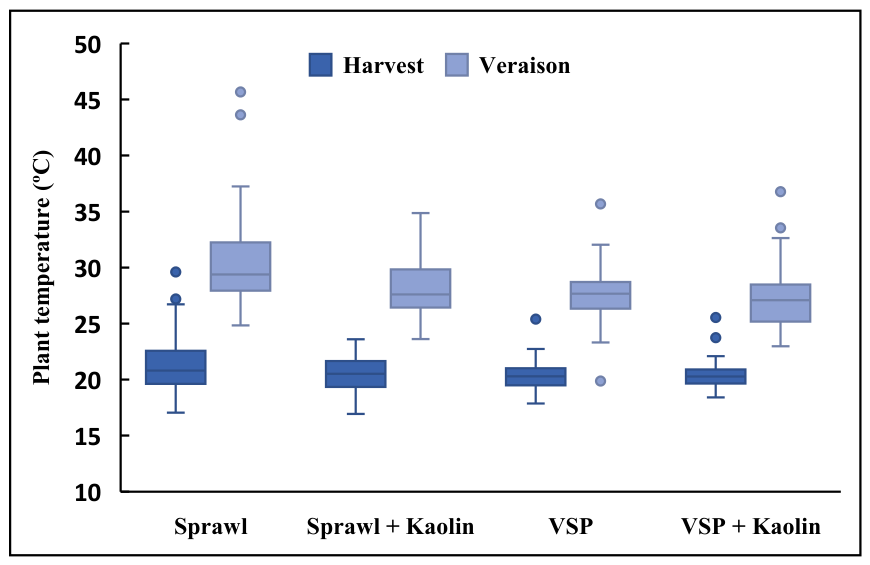
Canopy temperature was measured in a total of 180 vines (45 vines per treatment) at veraison (27 June 2023) and at harvest (27 July 2023). Box-and-whisker plots used to detect and remove outlier observations are presented in Figure 1 [50].
After excluding outliers, mean canopy temperature values for each treatment are summarised in Table 1. Vines treated with kaolin exhibited lower canopy temperatures than untreated vines, particularly at veraison. Specifically, kaolin application reduced canopy temperature by 1.88 °C in the sprawl system and by 0.76 °C in the VSP system.
The findings are in line with earlier research that also found that kaolin particle film has a cooling effect on grapevine canopies [16,17] which has been associated with improved plant energy balance and reduced heat stress under warm climatic conditions.
At harvest, the cooling effect of kaolin was less pronounced, with a temperature reduction of only 0.45 °C in the sprawl treatment and no detectable effect in the VSP system. This behaviour may be related to differences in vine water status during the season. At veraison, dry soil conditions likely limited transpirational cooling, leading to higher canopy temperatures and enhancing the relative effect of the particle film.
In contrast, irrigation applied before harvest improved plant water availability and favoured stomatal functioning, allowing transpiration to contribute more effectively to canopy cooling. Under these conditions, thermal differences between treatments were reduced.

3.2. Effect of Training System and Kaolin on Agronomic Parameters

Among the agronomic parameters (Table 2), exposed leaf area showed clear differences between training systems due to changes in canopy geometry. While the VSP system is characterised by a parallelepiped canopy structure, the asymmetric sprawl system results in a quarter-cylindrical canopy configuration [22]. Consequently, for a similar number of leaves, the sprawl system increased the proportion of exposed leaf area and reduced the presence of shaded, photosynthetically less active inner leaves. This canopy arrangement may enhance light interception and favour the accumulation of primary and secondary metabolites in berries, such as total soluble solids and anthocyanins [14].
A slight increase in yield was observed under the sprawl system, although most agronomic variables were not significantly affected by the treatments. Parameters such as the number of buds and shoots were expected to remain similar among treatments, since winter pruning practices were uniform across the experimental plots. In addition, vine fertility is largely determined by floral initiation during the previous growing season [51,52], which may explain the limited treatment effects observed for this variable.
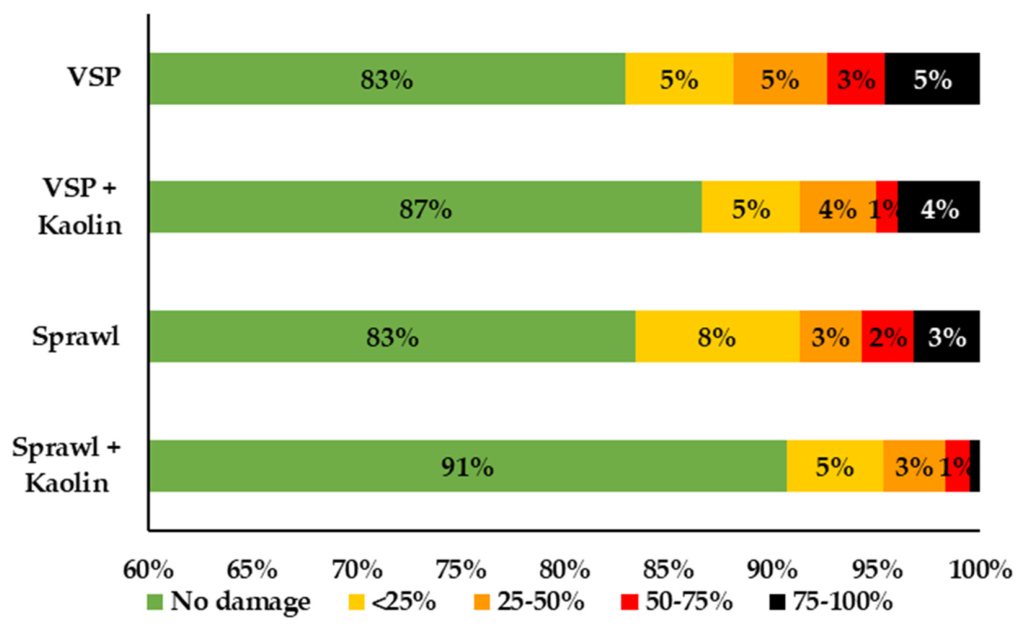
With respect to cluster damage caused by excessive solar exposure, no statistically significant differences were detected among treatments, likely due to the inherent variability between vines. Nevertheless, a consistent trend towards lower damage was observed in vines trained under the sprawl system and in those treated with kaolin (Figure 2).
Notably, the combination of sprawl training and kaolin application resulted in the highest proportion of undamaged clusters (>90%), while only 2% of bunches showed damage affecting more than 50% of berries. In contrast, the untreated VSP treatment exhibited a lower percentage of completely healthy clusters (83%) and a higher proportion of severely damaged bunches (8%), including 5% with damage exceeding 75%. These differences could be more pronounced in white grape cultivars because they are more susceptible to sunburn. Studies reporting a reduction in sunburn following kaolin application have documented the same results [20], as well as observations that increased cluster shading under sprawl training systems can mitigate radiation-induced berry damage [13].

3.3. General Wine Composition

Significant differences among treatments were observed for several oenological parameters (Table 3). Wines produced from kaolin-treated vines showed higher pH values and lower titratable acidity compared with the control treatments. This response may be linked to the berries on the untreated vines becoming more dehydrated, which could lead to a concentration effect in the organic acids. This effect would counteract the degradation of acids caused by high temperatures and water loss, resulting in an overall increase in concentration. Previous studies have reported contrasting results regarding the influence of kaolin on wine acidity, including both increases [53] and negligible changes [19,21].
The ethanol content was also higher in wines obtained from kaolin-treated vines.) This effect may be related to improved photosynthetic performance under lower canopy temperature, which can enhance sugar accumulation in berries and reduce thermal damage to the photosynthetic apparatus [17,19]. Additionally, control wines produced under the VSP system exhibited approximately 1% higher ethanol content than those from the sprawl system, likely due to partial berry shrivelling and the consequent concentration of soluble solids.
Regarding colour intensity and total polyphenol index, both parameters were higher in wines obtained from kaolin-treated vines compared with untreated controls. This response may be associated with reduced thermal and water stress, which can preserve photosynthetic activity under high-temperature conditions and promote more balanced grape ripening [18,54]. In contrast, wines produced from VSP-trained vines showed higher colour intensity and polyphenol content than those from the sprawl system. This effect could be related to partial berry dehydration in VSP canopies, which may increase the extractability of phenolic compounds and concentrate soluble solids [55]. However, under optimal growing conditions and in the absence of heat damage, previous studies have reported higher anthocyanin accumulation in non-positioned systems compared with VSP, mainly due to reduced cluster exposure and lower oxidative losses [15].

3.4. Wines’ Volatile Composition

3.4.1. Chemical Families

Volatile compounds were grouped into chemical families in order to facilitate the interpretation of treatment effects on wine aroma composition (Table 4).
Higher alcohols showed a general tendency to increase in wines obtained from kaolin-treated vines, whereas no clear differences were associated with the vegetation training system. These compounds are mainly synthesised through the Ehrlich pathway during alcoholic fermentation [56], although some, such as hexanol, originate from lipid oxidation processes in berry skins, while 2-phenylethanol is closely related to amino acid metabolism, particularly phenylalanine assimilation [57]. The observed increase in higher alcohols under kaolin treatments may therefore be associated with improved physiological conditions during ripening, leading to changes in amino acid availability in the must. Similar responses have been reported under lower ripening temperatures, where reduced thermal stress enhanced the formation of fermentation-derived alcohols [58].
Esters, which are key contributors to fruity aroma perception [59], exhibited contrasting behaviour depending on their concentration range. Wines from kaolin-treated vines showed significantly higher levels of minor esters, including isoamyl acetate, ethyl hexanoate and phenylethyl acetate, suggesting an enhancement of the fermentative fruity profile. In contrast, the concentration of major esters, particularly ethyl lactate, tended to decrease under kaolin treatments. These results may indicate a shift in fermentation metabolism associated with differences in berry composition and precursor availability. The vegetation training system had a limited effect on total ester concentration.
Minor aldehydes were influenced by both kaolin application and canopy management, with a significant interaction between factors. Phenylacetaldehyde was the predominant compound within this family and is mainly derived from the oxidative metabolism of 2-phenylethanol, itself linked to phenylalanine metabolism [57]. The higher concentration of minor aldehydes observed in some sprawl treatments may therefore reflect differences in grape metabolic status and oxidative processes during vinification.
In the case of ketones, significant increases were observed in wines obtained from the combination of sprawl training and kaolin application. This trend suggests a possible interaction between canopy microclimate and berry maturation dynamics affecting the formation of secondary volatile metabolites.
Lactones showed the most pronounced response to the treatments. Wines from kaolin-treated vines, particularly under the sprawl system, presented markedly higher concentrations of γ-butyrolactone and total lactones. These compounds are commonly associated with ripe fruit and creamy sensory notes and are often related to advanced berry maturity and higher sugar accumulation. Their strong increase under combined treatments highlights the potential synergistic effect of canopy architecture and reflective particle film on grape ripening processes.
Finally, terpenes and norisoprenoids, which contribute to floral and citrus aroma characteristics [59], exhibited significantly higher concentrations in wines from sprawl-trained and kaolin-treated vines.
The highest levels of limonene and E- and Z-nerolidol were found in the combined treatment, suggesting that reduced canopy temperature and improved vine water status may favour enzymatic activity involved in terpene biosynthesis during the late stages of ripening [60,61]. Similar trends have been reported in previous studies evaluating the influence of vineyard microclimate on varietal aroma expression [38].

3.4.2. Aromatic Series and Multivariate Analysis

Many authors [25,62,63,64,65,66,67] have grouped volatile compounds into aromatic series after calculating their odour activity values (OAVs), in order to reduce the number of variables and facilitate a more intuitive interpretation of the results. As described in the Section 2, nine aromatic series were identified (Table 5).
Of the 56 volatile compounds identified, 15 showed odour activity values higher than 1, indicating a relevant contribution to wine aroma [34]. These compounds were: ethyl butanoate, ethyl isobutanoate, ethyl 3-methylbutanoate, ethyl hexanoate, ethyl octanoate, isoamyl acetate, 2-phenylethanol acetate, γ-nonalactone, γ-decalactone, phenylacetaldehyde, β-damascenone, limonene, E-nerolidol, hexanal and decanal. Together, these compounds accounted for at least 85% of the total aromatic series value, and many of them have previously been described as major contributors to wine aroma [45]. Among these compounds, β-damascenone, limonene and E-nerolidol are particularly relevant because of their close relationship with grape metabolism. These compounds are formed from the end of veraison until full ripening [60], and their accumulation may therefore be favoured by lower plant temperature and improved vine water status through enhanced enzymatic activity [61]. Similar effects have been reported by Cataldo et al. [38], who described an antagonistic relationship between excessive sunlight and high temperatures and the formation of aroma-related compounds such as β-damascenone. Other compounds, such as phenylacetaldehyde, are more closely associated with amino acid metabolism, whereas γ-nonalactone and γ-decalactone tend to be present at higher concentrations in wines produced from musts with elevated sugar content [68].
Regarding the aromatic series, the fruity compounds showed the highest values in wines obtained from vines trained under the sprawl system and treated with kaolin. The combined use of both strategies appears to have produced a more pronounced effect, as no significant differences were observed between the two VSP treatments. In contrast, the lowest fruity values were found in wines from the sprawl treatment without kaolin, which may be related to slower grape ripening, since compounds included in the green series showed the opposite trend.
The green fruit series showed a similar pattern, with the highest values again observed in the sprawl treatment with kaolin application. The creamy and honey series displayed contrasting behaviours. In the former, values increased when sprawl and kaolin were combined, whereas in the latter they decreased. An opposite trend was observed when kaolin was added within each vegetation training treatment. In the citrus series, values increased in wines produced from kaolin-treated vines compared with the remaining treatments. The highest value was observed in the sprawl treatment with kaolin application. A similar trend was found for the chemical series. Likewise, the floral series reached its highest values in wines obtained from vines managed under the sprawl system and treated with kaolin. As shown in Table 5, the sum of all aromatic series was highest in wines from the sprawl + kaolin treatment, whereas no significant differences were found between the VSP and VSP + kaolin treatments.
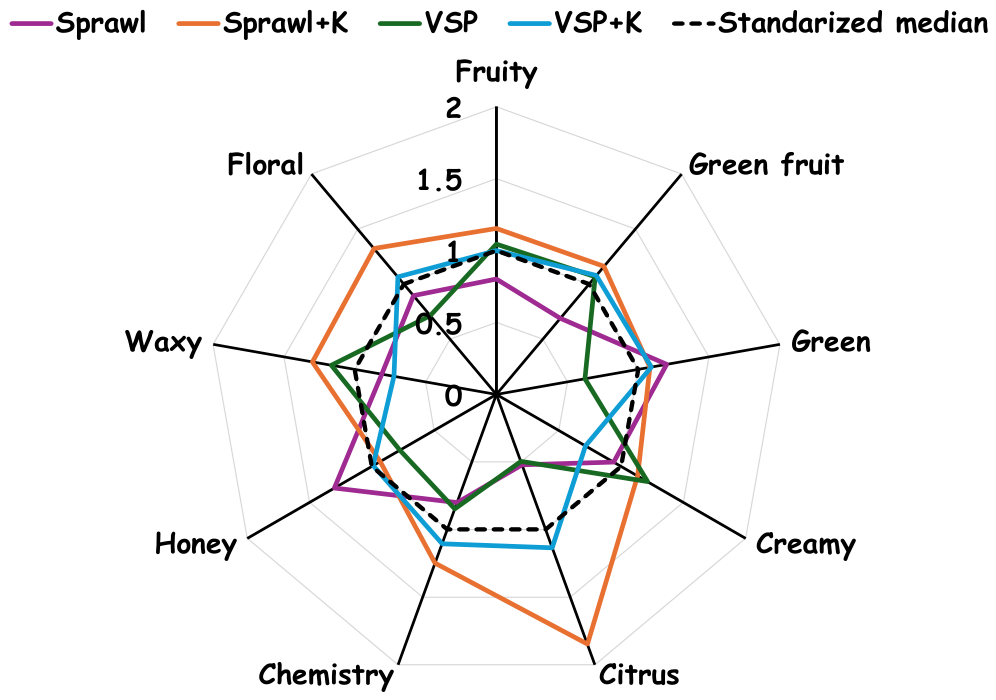
To facilitate the interpretation of treatment effects on wine aroma composition, standardised star plots were constructed to obtain an aromatic “fingerprint” linking each viticultural treatment to the overall sensory profile of the wines (Figure 3). This multivariate representation enabled the simultaneous visualisation of the relative contribution of the nine aromatic series (fruity, green fruit, green, creamy, citrus, chemical, honey, waxy and floral) thus providing an integrated overview of wine volatile composition. The standardisation of axis scales allowed direct comparison among treatments, revealing clear differences in the balance and distribution of aroma-related compounds.
Wines produced from vines managed under the combined sprawl training system and kaolin application showed polygons with larger and more evenly distributed surfaces, characterised by marked extensions along the fruity, citrus and floral axes. This configuration indicates a higher relative contribution of ester and terpene-derived volatiles, which are typically associated with improved grape physiological performance and enhanced fermentative aroma expression. Conversely, wines obtained from untreated vines, particularly under the VSP system, displayed more contracted and irregular polygon shapes, with relatively greater development towards green and honey descriptors. These patterns suggest a less balanced aromatic profile, consistent with the influence of higher thermal stress and partial berry dehydration on grape metabolic processes. Overall, the star plot analysis highlights the effect of canopy architecture modification and reflective particle film in promoting a more harmonious aromatic composition under warm viticultural conditions.

3.5. Cluster and PCA Analysis

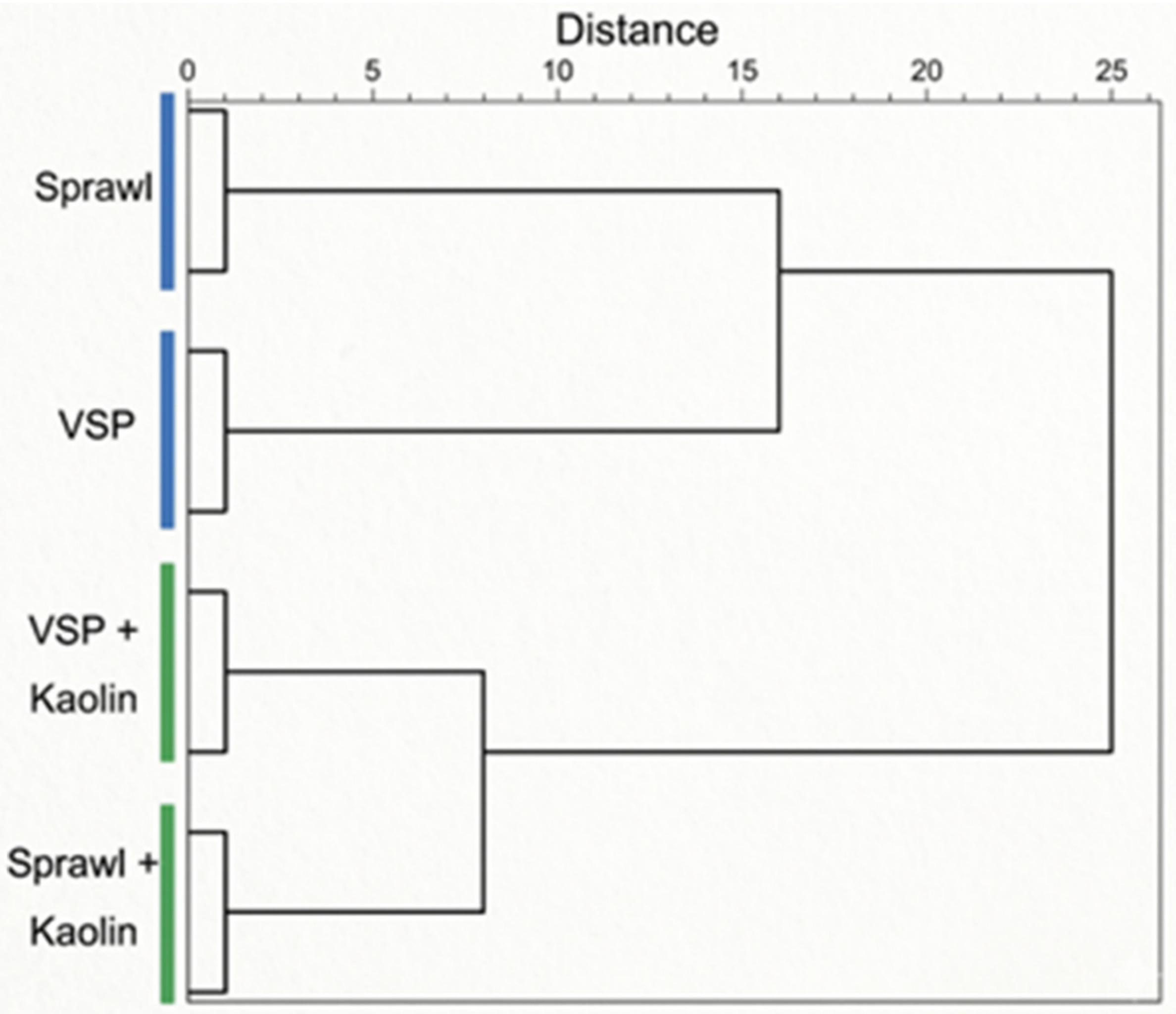
Cluster analysis is a multivariate statistical technique based on grouping the studied samples into different sets according to their degree of similarity. It is mainly a descriptive rather than an explanatory method, and therefore the interpretation of each grouping depends on the analyst. The distance at which the different clusters merge is a dimensionless measure of the similarity between groups. Several clustering procedures can be applied, and in the present study, Ward’s method was selected as it is considered one of the most effective approaches for distinguishing and defining clustering levels [69].
Cluster analysis was performed using the main oenological parameters (pH, titratable acidity, ethanol content, colour index and total polyphenol index) together with the aromatic series described in Table 5. Two clearly differentiated groups were identified. The first group included wines obtained from vines trained under the sprawl and VSP systems, whereas the second group comprised wines produced from kaolin-treated vines (Figure 4). The application of the particle film appeared to reduce differences in wine composition, as suggested by the shorter separation distance observed between treatments with and without kaolin.
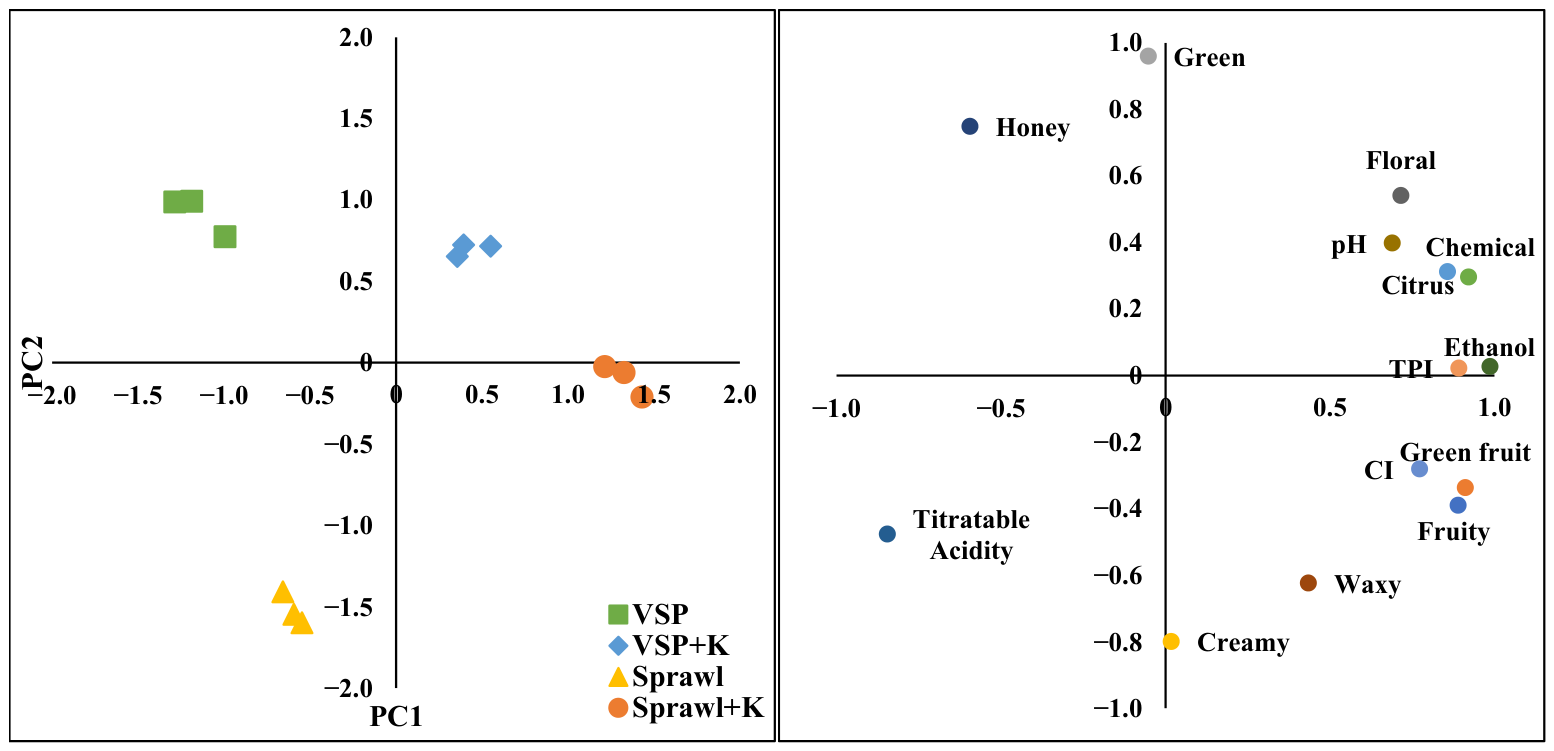
Principal component analysis (PCA) was subsequently carried out to determine which variables contributed most to the differentiation among treatments (Figure 5). This statistical tool aims to reduce data dimensionality by transforming the original variables into a new set of uncorrelated variables (principal components). Ideally, a limited number of components should explain most of the total variability. The selected components can then be related to the main sources of variation, which in this study were the vegetation training system and kaolin application. Similar approaches have been used in previous studies to relate wine composition to production variables [64,70,71].
The PCA identified two principal components, PC1 and PC2, explaining 41.25% and 33.30% of the total variance, respectively. PC1, represented on the horizontal axis, clearly separated wines obtained from trials in which kaolin was applied. The variables most strongly associated with this component were titratable acidity, which contributed to negative values, and the Fruity, Green Fruit, Citrus and Chemical aromatic series, which contributed to positive values. PC2, represented on the vertical axis, differentiated wines according to the vegetation training system, separating sprawl treatments from the VSP control. This component was mainly influenced by the Green, Creamy and Honey aromatic series.

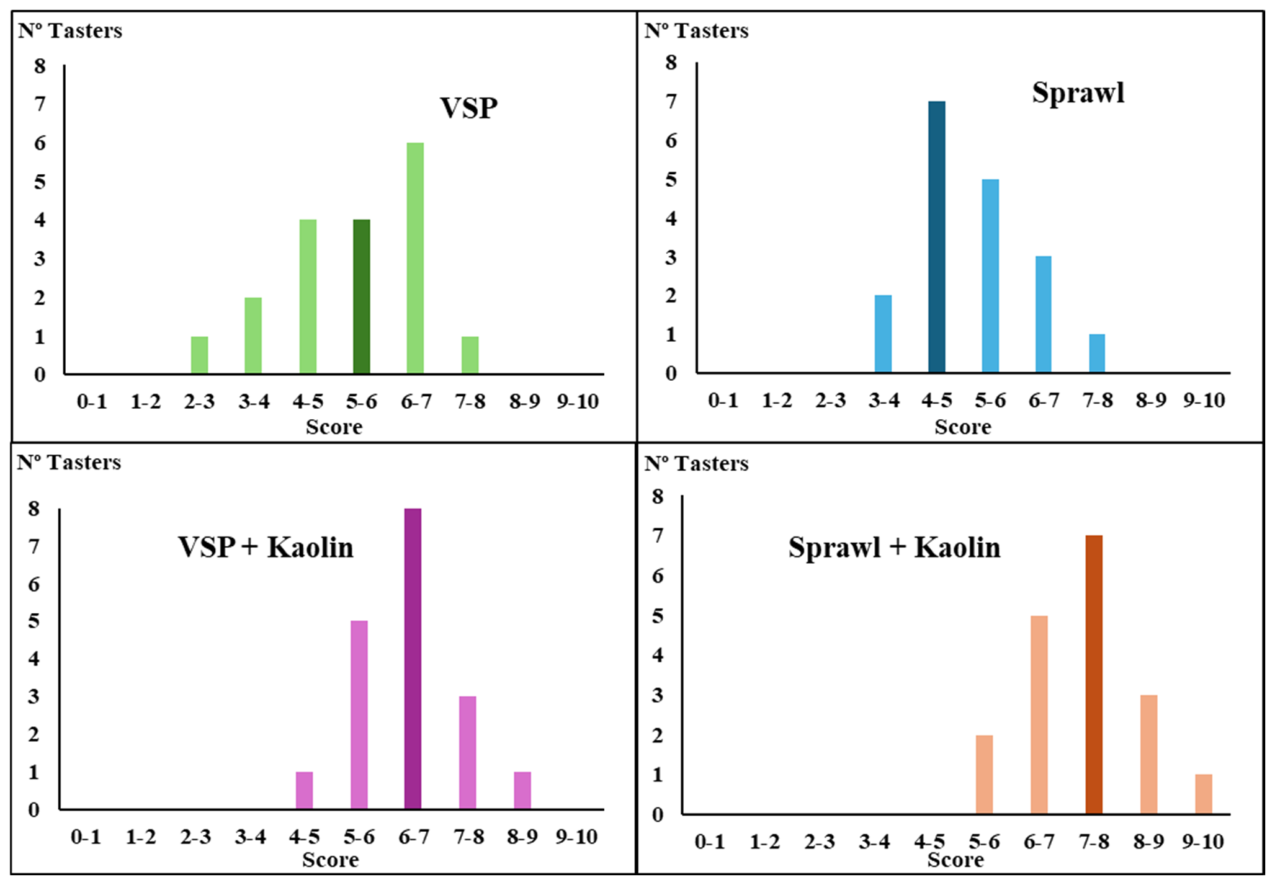
3.6. Organoleptic Analysis

Figure 6 shows the distribution of absolute frequencies obtained from the sensory evaluation of wines from the different treatments. According to the tasting panel, the wine produced from kaolin-treated grapes under the sprawl training system was perceived as more harmonious and rounder than the other wines and was therefore the most preferred. In contrast, wines obtained from untreated vines received the lowest sensory scores in most attributes. Tasters frequently described these wines as excessively acidic, with notes reminiscent of raisined fruit and an overall perception of excessive concentration, which may be associated with the slight berry shrivelling observed in these treatments.
Strong relationships were observed between the sensory scores and the values of aromatic series considered positive, particularly fruity, citrus, floral and terpenic descriptors. These results indicate that wines showing higher concentrations of these aroma-related compounds tended to receive better sensory ratings.
Overall, wines produced with kaolin application showed higher acceptance, with the sprawl treatment achieving the best overall sensory evaluation due to improved aroma perception and general balance.

4. Conclusions

The results of this study demonstrate that the combined use of asymmetric sprawl training and kaolin particle film application can be an effective strategy to mitigate the negative effects of high temperature in Mediterranean vineyards. Both practices contributed to improving canopy microclimate conditions, reducing plant temperature and limiting the incidence of sunburn and berry shrivelling.
The application of kaolin, particularly when combined with the sprawl training system, influenced grape ripening dynamics and resulted in modifications of wine composition. Wines obtained from treated vines showed higher ethanol content, increased colour intensity and total polyphenol index in some cases, as well as significant changes in volatile composition. In particular, the combined treatment enhanced the concentration of compounds associated with fruity, floral and citrus aromatic descriptors, leading to a more favourable sensory profile.
Multivariate analyses confirmed that kaolin application was a major factor differentiating wine composition, while the canopy training system also contributed to the modulation of phenolic and aromatic parameters. Sensory evaluation supported these findings, with wines from the sprawl + kaolin treatment receiving the highest overall appreciation from the tasting panel.
Overall, the integration of canopy architecture modification and reflective particle film represents a promising short-term adaptation strategy to improve grape and wine quality under warm climate conditions. However, further studies conducted over multiple seasons and locations are required to confirm the consistency of these effects and to better understand the long-term implications for vineyard management and wine typicity.

Supplementary Materials

The following supporting information can be downloaded at: https://www.mdpi.com/article/10.3390/horticulturae12050554/s1, Table S1: Odor descriptor, odor threshold and aroma series assigned to the volatile compounds identified in the wines analyzed.

Author Contributions

Conceptualization, R.A.P. and F.S.-S. Methodology, R.A.P., F.J.M.-C. and F.S.-S.; Investigation, R.A.P., F.J.M.-C. and F.S.-S.; Writing—Original Draft, F.S.-S. Writing—Review and Editing, R.A.P., F.J.M.-C. and F.S.-S.; Funding Acquisition, R.A.P. Resources, R.A.P., F.J.M.-C. and F.S.-S.; Supervision, R.A.P. and F.J.M.-C. All authors have read and agreed to the published version of the manuscript.

Funding

The authors are grateful for the funding received through Project TED2021-129208B-100 by MICIU/AEI/10, 13039/501100011033 and by the European Union Next Generation.

Data Availability Statement

The original contributions presented in this study are included in the article/Supplementary Materials. Further inquiries can be directed to the corresponding authors.

Acknowledgments

The authors would like to thank Bodegas Viñas de Alange, S.A., for allowing the experimental trials to be carried out in their vineyard and for kindly providing the grapes used in this study.

Conflicts of Interest

The authors declare no conflicts of interest.

Abbreviations

The following abbreviations are used in this manuscript:
CIColor Index
CNICool Night Index
FIDFlame Ionization Detector
MSDMass Spectrum Detector
GCPGround Control Pint
HIHuglin Heliothermic Index
LWIRLow Wave Infrared
OAVOdorant activity Value
PCAPrincipal Component Analysis
RGBRed, Green, Blue
SASurface Area
TPITotal Polyphenols Index
TSSTotal Soluble Solids
UAVUnmanned Aerial Vehicle
VSPVertical Shoot Positioning
VTSVegetation Training System

References

  1. Santillán, D.; Sotés, V.; Iglesias, A.; Garrote, L. Adapting Viticulture to Climate Change in the Mediterranean Region: Evaluations Accounting for Spatial Differences in the Producers-Climate Interactions. BIO Web Conf. 2019, 12, 01001. [Google Scholar] [CrossRef]
  2. Rafique, R.; Ahmad, T.; Kalsoom, T.; Khan, M.A.; Ahmed, M. Climatic Challenge for Global Viticulture and Adaptation Strategies. In Global Agricultural Production: Resilience to Climate Change; Springer International Publishing: Cham, Switzerland, 2022; pp. 611–634. [Google Scholar]
  3. Hidalgo Fernández-Cano, L.; Hidalgo Togores, J. Tratado de Viticultura. Volumen I y II; Mundi Prensa: Madrid, Spain, 2019. [Google Scholar]
  4. Hidalgo Togores, J. Tratado de Enología. Volumen I y II; Mundi-Prensa Libros: Madrid, Spain, 2018. [Google Scholar]
  5. Parker, A.; De Cortázar-Atauri, I.G.; Van Leeuwen, C.; Chuine, I. General Phenological Model to Characterise the Timing of Flowering and Veraison of Vitis vinifera L. Austrian J. Grape Wine Res. 2011, 17, 206–216. [Google Scholar] [CrossRef]
  6. Duchéne, E.; Schneider, C. Grapevine and Climatic Changes: A Glance at the Situation in Alsace. Agron. Sustain. Dev. 2005, 25, 93–99. [Google Scholar] [CrossRef]
  7. van Leeuwen, C.; Destrac-Irvine, A.; Dubernet, M.; Duchêne, E.; Gowdy, M.; Marguerit, E.; Pieri, P.; Parker, A.; de Rességuier, L.; Ollat, N. Ollat An Update on the Impact of Climate Change in Viticulture and Potential Adaptations. Agronomy 2019, 9, 514. [Google Scholar] [CrossRef]
  8. van Leeuwen, C.; Sgubin, G.; Bois, B.; Ollat, N.; Swingedouw, D.; Zito, S.; Gambetta, G.A. Climate Change Impacts and Adaptations of Wine Production. Nat. Rev. Earth Environ. 2024, 5, 258–275. [Google Scholar] [CrossRef]
  9. van Leeuwen, C.; Roby, J.-P.; Alonso-Villaverde, V.; Gindro, K. Impact of Clonal Variability in Vitis vinifera Cabernet Franc on Grape Composition, Wine Quality, Leaf Blade Stilbene Content, and Downy Mildew Resistance. J. Agric. Food Chem. 2013, 61, 19–24. [Google Scholar] [CrossRef]
  10. de Toda, F.; Sancha, J.; Zheng, W.; Balda, P. Leaf Area Reduction by Trimming, a Growing Technique to Restore the Anthocyanins: Sugars Ratio Decoupled by the Warming Climate. Vitis 2014, 53, 189–192. [Google Scholar]
  11. de Toda, F.; Balda, P. Delaying Berry Ripening through Manipulating Leaf Area to Fruit Ratio. Vitis J. Grapevine Res. 2013, 52, 171–176. [Google Scholar]
  12. Gutierrez-Gamboa, G.; Zheng, W.; de Toda, F. Current Viticultural Techniques to Mitigate the Effects of Global on Grape and Wine Quality: A Comprehensive Review. Food Res. Int. 2021, 139, 109946. [Google Scholar] [CrossRef] [PubMed]
  13. Reynolds, A.G.; Vanden Heuvel, J.E. Influence of Grapevine Training Systems on Vine Growth and Fruit Composition: A Review. Am. J. Enol. Vitic. 2009, 60, 251–268. [Google Scholar] [CrossRef]
  14. Del Zozzo, F.; Poni, S. Climate Change Affects Choice and Management of Training Systems in the Grapevine. Aust. J. Grape Wine Res. 2024, 2024, 1–18. [Google Scholar] [CrossRef]
  15. Yu, R.; Torres, N.; Tanner, J.D.; Kacur, S.M.; Marigliano, L.E.; Zumkeller, M.; Gilmer, J.C.; Gambetta, G.A.; Kurtural, S.K. Adapting Wine Grape Production to Climate Change through Canopy Architecture Manipulation and Irrigation in Warm Climates. Front. Plant Sci. 2022, 13, 1015574. [Google Scholar] [CrossRef]
  16. Conde, A.; Neves, A.; Breia, R.; Pimentel, D.; Dinis, L.-T.; Bernardo, S.; Correia, C.M.; Cunha, A.; Gerós, H.; Moutinho-Pereira, J. Kaolin Particle Film Application Stimulates Photoassimilate synthesis and Modifies the Primary Metabolome of Grape Leaves. J. Plant Physiol. 2018, 223, 47–56. [Google Scholar] [CrossRef]
  17. Dinis, L.T.; Malheiro, A.C.; Luzio, A.; Fraga, H.; Ferreira, H.; Gonçalves, I.; Pinto, G.; Correia, C.M.; Moutinho-Pereira, J. Improvement of Grapevine Physiology and Yield under Summer Stress by Kaolin-Foliar Application: Water Relations, Photosynthesis and Oxidative Damage. Photosynthetica 2018, 56, 641–651. [Google Scholar] [CrossRef]
  18. Garrido, A.; Serodio, J.; De Vos, R.; Conde, A.; Cunha, A. Influence of Foliar Kaolin Application and Irrigation on Photosynthetic of Grape Berries. Agronomy 2019, 9, 685. [Google Scholar] [CrossRef]
  19. Brillante, L.; Belfiore, N.; Gaiotti, F.; Lovat, L.; Sansone, L.; Poni, S.; Tomasi, D. Comparing Kaolin and Pinolene to Improve Sustainable Grapevine during Drought. PLoS ONE 2016, 11, e0156631. [Google Scholar] [CrossRef]
  20. Luzio, A.; Bernardo, S.; Correia, C.; Moutinho-Pereira, J.; Dinis, L.-T. Phytochemical Screening and Antioxidant Activity on Berry, Skin, pulp and Seed from Seven Red Mediterranean Grapevine Varieties (Vitis L.) Treated with Kaolin Foliar Sunscreen. Sci. Hortic. 2021, 281, 109962. [Google Scholar] [CrossRef]
  21. Teker, T. A Study of Kaolin Effects on Grapevine Physiology and Its Ability to Protect Grape Clusters from Sunburn Damage. Sci. Hortic. 2023, 311, 111824. [Google Scholar] [CrossRef]
  22. Sánchez-de-Miguel, P.; Baeza, P.; Junquera, P.; Lissarrague, J.R. Vegetative Development: Total Leaf Area and Surface Area Indexes. In Methodologies and Results in Grapevine Research; Springer: Dordrecht, The Netherlands, 2010; pp. 31–44. [Google Scholar]
  23. OIV. Compendium of International Methods of Wine and Must Analysis; OIV: Paris, France, 2023; ISBN 9782850380686. [Google Scholar]
  24. Peinado, R.A.; Moreno, J.A.; Muñoz, D.; Medina, M.; Moreno, J. Gas Chromatographic Quantification of Major Volatile Compounds and Polyols in Wine by Direct Injection. J. Agric. Food Chem. 2004, 52, 6389–6393. [Google Scholar] [CrossRef] [PubMed]
  25. López de Lerma, N.; Peinado, R.A.; Puig-Pujol, A.; Mauricio, J.C.; Moreno, J.; García-Martínez, T. Influence of Two Yeast Strains in Free, Bioimmobilized or Immobilized with Alginate Forms on the Aromatic Profile of Long Aged Sparkling Wines. Food Chem. 2018, 250, 22–29. [Google Scholar] [CrossRef]
  26. Burdock, G.A.; Fenaroli, G. Fenaroli’s Handbook of Flavor Ingredients, 6th ed.; Taylor & Francis: Boca Raton, FL, USA, 2010. [Google Scholar]
  27. Buttery, R.G.; Turnbaugh, J.G.; Ling, L.C. Contribution of Volatiles to Rice Aroma. J. Agric. Food Chem. 1988, 36, 1006–1009. [Google Scholar] [CrossRef]
  28. Buttery, R.G.; Seifert, R.M.; Guadagni, D.G.; Ling, L.C. Characterization of Additional Volatile Components of Tomato. J. Agric. Food Chem. 1971, 19, 524–529. [Google Scholar] [CrossRef]
  29. Ferreira, V.; López, R.; Cacho, J.F. Quantitative Determination of the Odorants of Young Red Wines from Different Grape Varieties. J. Sci. Food Agric. 2000, 80, 1659–1667. [Google Scholar] [CrossRef]
  30. Gómez-Míguez, M.J.; Cacho, J.F.; Ferreira, V.; Vicario, I.M.; Heredia, F.J. Volatile Components of Zalema White Wines. Food Chem. 2007, 100, 1464–1473. [Google Scholar] [CrossRef]
  31. Gottmann, J.; Vestner, J.; Fischer, U. Sensory Relevance of Seven Aroma Compounds Involved in Unintended but Potentially Fraudulent Aromatization of Wine Due to Aroma Carryover. Food Chem. 2023, 402, 134160. [Google Scholar] [CrossRef] [PubMed]
  32. Guth, H. Quantitation and Sensory Studies of Character Impact Odorants of Different White Wine Varieties. J. Agric. Food Chem. 1997, 45, 3027–3032. [Google Scholar] [CrossRef]
  33. Li, H.; Tao, Y.-S.; Wang, H.; Zhang, L. Impact Odorants of Chardonnay Dry White Wine from Changli County (China). Eur. Food Res. Technol. 2008, 227, 287–292. [Google Scholar] [CrossRef]
  34. Martín-García, F.J.; Palacios-Fernández, S.; López de Lerma, N.; García-Martínez, T.; Mauricio, J.C.; Peinado, R.A. The Effect of Yeast, Sugar and Sulfur Dioxide on the Volatile Compounds in Wine. Fermentation 2023, 9, 541. [Google Scholar] [CrossRef]
  35. Moreno, J.A. Influencia Del Tipo de Envejecimiento Sobre el Perfil Aromático de Vinos Generosos Andaluces. Ph. D. Thesis, University of Córdoba, Córdoba, Spain, 2005. [Google Scholar]
  36. Muñoz-Castells, R.; Moreno, J.; García-Martínez, T.; Mauricio, J.C.; Moreno-García, J. Assessing the Impact of Commercial Lachancea Thermotolerans Immobilized in Biocapsules on Wine Quality: Odor Active Compounds and Organoleptic Properties. Fermentation 2024, 10, 303. [Google Scholar] [CrossRef]
  37. Ogawa, M.; Vararu, F.; Moreno-Garcia, J.; Mauricio, J.C.; Moreno, J.; Garcia-Martinez, T. Analyzing the Minor Volatilome of Torulaspora Delbrueckii in an Alcoholic Fermentation. Eur. Food Res. Technol. 2022, 248, 613–624. [Google Scholar] [CrossRef]
  38. Pardo, E.; Rico, J.; Gil, J.V.; Orejas, M. De Novo Production of Six Key Grape Aroma Monoterpenes by a Geraniol Synthase-Engineered S. Cerevisiae Wine Strain. Microb. Cell Fact. 2015, 14, 136. [Google Scholar] [CrossRef]
  39. Peinado, R.A.; Mauricio, J.C.; Moreno, J. Aromatic Series in Sherry Wines with Gluconic Acid Subjected to Different Biological Aging Conditions by Saccharomyces Cerevisiae Var. Capensis. Food Chem. 2006, 94, 232–239. [Google Scholar] [CrossRef]
  40. Peinado, R.A.; Moreno, J.; Bueno, J.E.; Moreno, J.A.; Mauricio, J.C. Comparative Study of Aromatic Compounds in Two Young White Wines Subjected to Pre-Fermentative Cryomaceration. Food Chem. 2004, 84, 585–590. [Google Scholar] [CrossRef]
  41. Pineau, B.; Barbe, J.-C.; Van Leeuwen, C.; Dubourdieu, D. Which Impact for β-Damascenone on Red Wines Aroma? J. Agric. Food Chem. 2007, 55, 4103–4108. [Google Scholar] [CrossRef]
  42. Qu, J.; Chen, X.; Wang, X.; He, S.; Tao, Y.; Jin, G. Esters and Higher Alcohols Regulation to Enhance Wine Fruity Aroma Based on Oxidation-Reduction Potential. LWT 2024, 200, 116165. [Google Scholar] [CrossRef]
  43. Song, X.; Dai, F.; Yao, J.; Li, Z.; Huang, Z.; Liu, H.; Zhu, Z. Characterization of the Volatile Profile of Feijoa (Acca sellowiana) Fruit at Different Ripening Stages by HS-SPME-GC/MS. LWT 2023, 184, 115011. [Google Scholar] [CrossRef]
  44. Swiegers, J.H.; Bartowsky, E.J.; Henschke, P.A.; Pretorius, I.S. Yeast and Bacterial Modulation of Wine Aroma and Flavour. Aust. J. Grape Wine Res. 2005, 11, 139–173. [Google Scholar] [CrossRef]
  45. Takeoka, G.; Buttery, R.G.; Ling, L. Odour Thresholds of Various Branched and Straight Chain Acetates. LWT—Food Sci. Technol. 1996, 29, 677–680. [Google Scholar] [CrossRef]
  46. Zhang, S.; Petersen, M.; Liu, J.; Toldam-Andersen, T. Influence of Pre-Fermentation Treatments on Wine Volatile and Sensory Profile of the New Disease Tolerant Cultivar Solaris. Molecules 2015, 20, 21609–21625. [Google Scholar] [CrossRef]
  47. Zhang, Y.-S.; Du, G.; Gao, Y.-T.; Wang, L.-W.; Meng, D.; Li, B.-J.; Brennan, C.; Wang, M.-Y.; Zhao, H.; Wang, S.-Y.; et al. The Effect of Carbonic Maceration during Winemaking on the Color, Aroma and Sensory Properties of ‘Muscat Hamburg’ Wine. Molecules 2019, 24, 3120. [Google Scholar] [CrossRef]
  48. Zhu, L.-X.; Zhang, M.-M.; Shi, Y.; Duan, C.-Q. Evolution of the Aromatic Profile of Traditional Msalais Wine during Industrial Production. Int. J. Food Prop. 2019, 22, 911–924. [Google Scholar] [CrossRef]
  49. AENOR. AENOR. Análisis Sensorial. Tomo I. Alimentación; AENOR: Madrid, Spain, 1997.
  50. Iglewicz, B.; Hoaglin, D.C. How to Detect and Handle Outliers. In The ASQC Basic References in Quality Control: Statistical Techniques; Mykytka, E.F., Ed.; ASQC. Quality Press: Milwaukee, WI, USA, 1993. [Google Scholar]
  51. Keller, M. The Science of Grapevines; Elsevier: Amsterdam, The Netherlands, 2020; ISBN 9780128163658. [Google Scholar]
  52. Reynier, A. Manual de Viticultura, 11th ed.; Omega: Artarmon, Australia, 2013. [Google Scholar]
  53. Szmania, C.; Waber, J.; Bogs, J.; Fischer, U. Sensory and Aroma Impact of Mitigation Strategies against Sunburn in Riesling. OENO One 2023, 57, 127–140. [Google Scholar] [CrossRef]
  54. Frioni, T.; Tombesi, S.; Luciani, E.; Sabbatini, P.; Berrios, J.G.; Palliotti, A. Kaolin Treatments on Pinot Noir Grapevines for the Control of Heat Stress Damages. BIO Web Conf. 2019, 13, 04004. [Google Scholar] [CrossRef]
  55. Ojeda, H.; Andary, C.; Kraeva, E.; Carbonneau, A.; Deloire, A. Influence of Pre- and Postveraison Water Deficit on Synthesis and Concentration of Skin Phenolic Compounds during Berry Growth of Vitis vinifera Cv. Shiraz. Am. J. Enol. Vitic. 2002, 53, 261–267. [Google Scholar]
  56. Cordente, A.G.; Espinase Nandorfy, D.; Solomon, M.; Schulkin, A.; Kolouchova, R.; Francis, I.L.; Schmidt, S.A. Aromatic Higher Alcohols in Wine: Implication on Aroma and Palate Attributes during Chardonnay Aging. Molecules 2021, 26, 4979. [Google Scholar] [CrossRef]
  57. Waterhouse, A.L.; Sacks, G.L.; Jeffery, D.W. Understanding Wine Chemistry; Wiley: Hoboken, NJ, USA, 2016; ISBN 9781118627808. [Google Scholar]
  58. Moukarzel, R.; Parker, A.K.; Schelezki, O.J.; Gregan, S.M.; Jordan, B. Bunch Microclimate Influence Amino Acids and Phenolic Profiles of Pinot Noir Grape Berries. Front. Plant Sci. 2023, 14, 1162062. [Google Scholar] [CrossRef]
  59. Moreno, J.J.; Peinado, R.A. Enological Chemistry; Academic Press: Boston, MA, USA, 2012. [Google Scholar]
  60. Martin, D.M.; Chiang, A.; Lund, S.T.; Bohlmann, J. Biosynthesis of Wine Aroma: Transcript Profiles of Hydroxymethylbutenyl Diphosphate Reductase, Geranyl Diphosphate Synthase, and Linalool/Nerolidol Synthase Parallel Monoterpenol Glycoside Accumulation in Gewürztraminer Grapes. Planta 2012, 236, 919–929. [Google Scholar] [CrossRef]
  61. Rienth, M.; Torregrosa, L.; Sarah, G.; Ardisson, M.; Brillouet, J.-M.; Romieu, C. Temperature Desynchronizes Sugar and Organic Acid Metabolism in Ripening Grapevine Fruits and Remodels Their Transcriptome. BMC Plant Biol. 2016, 16, 164. [Google Scholar] [CrossRef]
  62. García-Martínez, T.; Moreno, J.; Mauricio, J.C.; Peinado, R. Natural Sweet Wine Production by Repeated Use of Yeast Cells Immobilized on Penicillium Chrysogenum. LWT—Food Sci. Technol. 2015, 61, 503–509. [Google Scholar] [CrossRef]
  63. Palenzuela, M.d.V.; López de Lerma, N.; Sánchez-Suárez, F.; Martínez-García, R.; Peinado, R.A.; Rosal, A. Aroma Composition of Wines Produced from Grapes Treated with Organic Amendments. Appl. Sci. 2023, 13, 8001. [Google Scholar] [CrossRef]
  64. Pérez, D.; Denat, M.; Heras, J.M.; Guillamón, J.M.; Ferreira, V.; Querol, A. Effect of Non-Wine Saccharomyces Yeasts and Bottle Aging on the Release and Generation of Aromas in Semi-Synthetic Tempranillo Wines. Int. J. Food Microbiol. 2022, 365, 109554. [Google Scholar] [CrossRef] [PubMed]
  65. Seguinot, P.; Rollero, S.; Sanchez, I.; Sablayrolles, J.-M.; Ortiz-Julien, A.; Camarasa, C.; Mouret, J.-R. Impact of the Timing and the Nature of Nitrogen Additions on the Production Kinetics of Fermentative Aromas by Saccharomyces Cerevisiae during Winemaking Fermentation in Synthetic Media. Food Microbiol. 2018, 76, 29–39. [Google Scholar] [CrossRef] [PubMed]
  66. Hernandez-Orte, P.; Bely, M.; Cacho, J.; Ferreira, V. Impact of Ammonium Additions on Volatile Acidity, Ethanol, and Aromatic Compound Production by Different Saccharomyces Cerevisiae Strains during Fermentation in Controlled Synthetic Media. Aust. J. Grape Wine Res. 2006, 12, 150–160. [Google Scholar] [CrossRef]
  67. Dumitriu (Gabur), G.-D.; Peinado, R.A.; Cotea, V.V.; López de Lerma, N. Volatilome Fingerprint of Red Wines Aged with Chips or Staves: Influence of the Aging Time and Toasting Degree. Food Chem. 2020, 310, 125801. [Google Scholar] [CrossRef]
  68. Qian, X.; Lan, Y.; Han, S.; Liang, N.; Zhu, B.; Shi, Y.; Duan, C. Comprehensive Investigation of Lactones and Furanones in Icewines and Dry Wines Using Gas Chromatography-Triple Quadrupole Mass Spectrometry. Food Res. Int. 2020, 137, 109650. [Google Scholar] [CrossRef] [PubMed]
  69. Gutiérrez, R.; González, A.; Torres, F.; Gallardo, J.A. Técnicas de Anélisis de Datos Multivariable. Tratamiento Computacional; Universidad de Granada: Granada, Spain, 1994. [Google Scholar]
  70. Morata, A.; Bañuelos, M.A.; Vaquero, C.; Loira, I.; Cuerda, R.; Palomero, F.; González, C.; Suárez-Lepe, J.A.; Wang, J.; Han, S.; et al. Lachancea Thermotolerans as a Tool to Improve PH in Red Wines from Warm Regions. Eur. Food Res. Technol. 2019, 245, 885–894. [Google Scholar] [CrossRef]
  71. Sánchez-Suárez, F.; Peinado, R.A. Use of Non-Saccharomyces Yeast to Enhance the Acidity of Wines Produced in a Warm Climate Region: Effect on Wine Composition. Fermentation 2023, 10, 17. [Google Scholar] [CrossRef]
Figure 1. Box and whisker plots of canopy temperature measured by UAV thermography at veraison and harvest. VSP: Vertical shoot positioning.
Horticulturae 12 00554 g001
Figure 2. Sunburn damage incidence in grape clusters at harvest. VSP: Vertical shoot positioning.
Horticulturae 12 00554 g002
Figure 3. Star plots of the aromatic series. VSP: Vertical Shoot Positioning. K: Kaolin foliar application.
Horticulturae 12 00554 g003
Figure 4. Cluster analysis (Ward’s method) based on oenological parameters and aromatic series. VSP: Vertical shoot positioning.
Horticulturae 12 00554 g004
Figure 5. (Left): Principal component analysis based on oenological parameters and aromatic series. VSP: Vertical shoot positioning. K: Kaolin. (Right): Variable contribution to each principal component. CI: Color Index. TPI: Total polyphenols index.
Horticulturae 12 00554 g005
Figure 6. Distribution of absolute frequencies in the sensory evaluation of wines from different treatments. Dark bars represent the median values. VSP: Vertical shoot positioning.
Horticulturae 12 00554 g006
Table 1. Canopy temperature (°C) at veraison and harvest under different treatments.
VeraisonHarvest
Sprawl30 ± 320 ± 2
Sprawl + Kaolin28 ± 221 ± 2
VSP28 ± 220 ± 1
VSP + Kaolin27 ± 220.1 ± 0.8
Two-Way ANOVAKaolin***
VTS***ns
Kaolin × VTSnsns
VSP: Vertical shoot positioning; VTS: Vegetation training system; ns: not significant, *: p < 0.05; **: p < 0.01; ***: p < 0.001.
Table 2. Agronomic parameters of the different treatments.
Two-Way ANOVA
VSPVSP + KaolinSprawlSprawl + KaolinKaolinVTSKaolin × VTS
Nº Spurs/vine5 ± 15.4 ± 0.75.7 ± 0.55.8 ± 0.4nsnsns
Nº Shoots/vine9 ± 210 ± 211 ± 211 ± 1ns**ns
Nº Clusters/vine12 ± 414 ± 416 ± 517 ± 5ns**ns
Yield (kg/vine)1.0 ± 0.41.0 ± 0.41.2 ± 0.31.2 ± 0.4nsnsns
Cluster weight (g)91 ± 2574 ± 2275 ± 1272 ± 17nsnsns
Fertility (Clusters/shoot)1.3 ± 0.51.4 ± 0.41.4 ± 0.31.5 ± 0.4nsnsns
SA (m2/vine)2.4 ± 0.32.4 ± 0.23.8 ± 0.34.0 ± 0.9ns***ns
SA/yield (m2/kg)3.1 ± 1.82.5 ± 0.83.8 ± 1.73.4 ± 0.9nsnsns
VSP: Vertical shoot positioning; VTS: Vegetation training system; SA: Surface Area; ns: not significant; **: p < 0.01; ***: p < 0.001.
Table 3. Oenological parameters of wines under different treatments.
Two-Way ANOVA
VSPVSP + KaolinSprawlSprawl + KaolinKaolinVTSKaolin × VTS
pH3.07 ± 0.073.18 ± 0.043.08 ± 0.063.19 ± 0.06**nsns
Titratable acidity
(g/L Tartaric acid)
9.88 ± 0.048.9 ± 0.29.9 ± 0.29.0 ± 0.1***nsns
Ethanol (% v/v)13.7 ± 0.214.6 ± 0.112.7 ± 0.114.8 ± 0.1*********
Volatile Acidity
(g/L Acetic acid)
0.85 ± 0.020.86 ± 0.020.76 ± 0.020.77 ± 0.02ns***ns
Lactic acid (g/L)2.43 ± 0.062.1 ± 0.12.8 ± 0.21.78 ± 0.06***ns***
Malic acid (g/L)0.93 ± 0.010.95 ± 0.020.94 ± 0.010.96 ± 0.02*nsns
Colour Index37.2 ± 0.139.4 ± 0.128.7 ± 0.235.8 ± 0.07*********
Tonality39.9 ± 0.140.5 ± 0.228.7 ± 0.740.1 ± 0.2********
Total polyohenols index46.9 ± 0.253.7 ± 0.137.8 ± 0.349.9 ± 0.1*********
VSP: Vertical shoot positioning; VTS: Vegetation training system; ns: not significant, *: p < 0.05; **: p < 0.01; ***: p < 0.001.
Table 4. Volatile compounds determined in wine.
Two-Way ANOVA
VSPVSP + KaolinSprawlSprawl + KaolinKaolinVTSKaolin × VTS
Alcohols
∑ Mayor Alcohols (mg/L)598 ± 3609 ± 2582 ± 2611 ± 4**nsns
Methanol52 ± 456 ± 342 ± 550 ± 5***ns
Propanol61 ± 249 ± 265 ± 351 ± 2***nsns
Isobutanol55 ± 251.7 ± 0.958 ± 253 ± 2**nsns
2-methylbutanol53 ± 264 ± 146 ± 266 ± 2******
3-methylbutanol329 ± 10335 ± 6325 ± 8334 ± 12nsnsns
2-phenylethanol48 ± 254 ± 347 ± 158 ± 5**nsns
∑ Minor Alcohols (µg/L)4337 ± 1223994 ± 4184109 ± 1604022 ± 67nsnsns
Hexanol4277 ± 1203954 ± 4174032 ± 1623955 ± 69nsnsns
2-ethyl-1-hexanol39 ± 232 ± 240 ± 348 ± 4ns****
OctanolN.D.N.D.23 ± 1N.D.*********
Decanol9.7 ± 0.6N.D.N.D.N.D.*********
DodecanolN.D.N.D.0.65 ± 0.040.58 ± 0.01*****
Farnesol11 ± 17.6 ± 0.413.6 ± 0.618 ± 2ns******
Esters
∑ Mayor Esters (mg/L)275 ± 1239 ± 2284 ± 4226 ± 2**ns*
Ethyl acetate66 ± 672 ± 156 ± 273 ± 3**ns*
Ethyl lactate192 ± 4150 ± 5209 ± 11133 ± 6***ns**
Diethyl succinate18 ± 218 ± 218 ± 220 ± 2nsnsns
∑ Minor Esters (µg/L)1765 ± 441915 ± 1121406 ± 552151 ± 50***ns***
Ethyl isobutanoate111 ± 6106 ± 8126 ± 9108 ± 4*nsns
Ethyl butanoate56 ± 171 ± 746 ± 469 ± 1****ns
Butyl acetate7.1 ± 0.36.6 ± 0.73.4 ± 0.35.3 ± 0.1******
Ethyl 2-methylbutanoate6.5 ± 0.27.8 ± 0.84.4 ± 0.68.63 ± 0.05***ns**
Ethyl 2-methylbutanoate9.7 ± 0.112 ± 17.3 ± 0.611.8 ± 0.4*****
Isoamyl acetate690 ± 33809 ± 28505 ± 52804 ± 26*******
Ethyl hexanoate143 ± 4145 ± 1297 ± 8164 ± 5*******
Hexyl acetate25 ± 119 ± 113.2 ± 0.330 ± 0.8***ns***
Ethyl heptanoate0.67 ± 0.030.48 ± 0.030.48 ± 0.020.75 ± 0.01******
Z-3-hexenylbutyrate4.6 ± 0.24.46 ± 0.09N.D.N.D.ns***ns
Ethyl octanoate77 ± 350 ± 253.4 ± 0.480.1 ± 0.5ns****
Ethyl phenylacetate2 ± 0.22.5 ± 0.21.62 ± 0.083.5 ± 0.1********
2-phenylethyl acetate415 ± 18611 ± 56348 ± 9625 ± 23***nsns
Geranyl acetateN.D.N.D.N.D.13.3 ± 0.2*********
Ethyl decanoate158 ± 740 ± 3169 ± 10171 ± 4*********
Phenethyl hexanoate0.26 ± 00.23 ± 0.01N.D.0.3 ± 0.01*********
Ethyl tetradecanoate10.8 ± 0.87.9 ± 0.56.2 ± 0.211.7 ± 0.1**ns***
Phenethyl benzoate1.17 ± 0.031.09 ± 0.041.15 ± 0.031.16 ± 0.02nsns*
Ethyl hexadecanoate47 ± 521.6 ± 0.724 ± 144 ± 2nsns***
Aldehydes
∑ Mayor Aldehydes (mg/L)80 ± 1262 ± 374 ± 370 ± 9*nsns
Acetaldehyde80 ± 1262 ± 374 ± 370 ± 9*nsns
∑ Minor Aldehydes (µg/L)30 ± 133 ± 248 ± 238 ± 2*******
BenzaldehydeN.D.N.D.N.D.1.2 ± 0.4******
Hexanal4.2 ± 0.46 ± 0.24.5 ± 0.25.6 ± 0.5***nsns
Heptanal0.68 ± 0.070.7 ± 0.030.43 ± 0.071.03 ± 0.06***ns***
OctanalN.D.N.D.1.2 ± 0.1N.D.*********
Nonanal0.5 ± 0.060.51 ± 0.041.4 ± 0.12 ± 0.2*******
Decanal2.1 ± 0.21.1 ± 0.11.1 ± 0.13.7 ± 0.3*********
Phenylacetaldehyde19.5 ± 0.924 ± 238 ± 221 ± 3*********
Hexyl Cinnamaldehyde2.7 ± 0.21.17 ± 0.081.3 ± 0.13.39 ± 0.07********
Ketones
∑ Mayor ketones (mg/L)70 ± 863 ± 564 ± 965 ± 8nsnsns
Acetoin70 ± 863 ± 564 ± 965 ± 8nsnsns
∑ Minor ketones (µg/L)0.84 ± 0.060.83 ± 0.090.72 ± 0.012.4 ± 0.2*********
Benzophenone0.6 ± 0.040.7 ± 0.10.56 ± 0.010.65 ± 0.03*nsns
3-Heptanone0.25 ± 0.030.14 ± 0.010.16 ± 0.021.7 ± 0.2*********
∑ Lactones7490 ± 36614,037 ± 1322577 ± 4118,824 ± 1040***ns***
γ-Butyrolactone7368 ± 35913,994 ± 1322498 ± 4018,708 ± 1042***ns***
γ-Nonalactone36 ± 325 ± 434 ± 325.6 ± 0.8***nsns
γ-Decalactone86 ± 618.5 ± 0.545 ± 290 ± 3*********
∑ Terpenes and Norisoprenoids (µg/L)75 ± 3213 ± 11120 ± 8271 ± 18*********
Limonene32 ± 2105 ± 835 ± 3151 ± 13********
E-Nerolidol26 ± 298 ± 770 ± 5101 ± 6*********
Z-Nerolidol4.7 ± 0.41 ± 0.12.06 ± 0.096.1 ± 0.3********
β-Damascenone9.1 ± 0.34.1 ± 0.19.8 ± 0.58.9 ± 0.1********
E-Geranyl acetone0.71 ± 0.031.4 ± 0.20.61 ± 0.060.71 ± 0.08*******
Z-Geranyl acetone2.01 ± 0.051.97 ± 0.092.02 ± 0.042.13 ± 0.06**ns
E-Methyldihydrojasmonate0.95 ± 0.020.87 ± 0.070.9 ± 0.051.2 ± 0.1****
VSP: Vertical shoot positioning; VTS: Vegetation training system; ns: not significant, *: p < 0.05; **: p < 0.01; ***: p < 0.001.
Table 5. Aromatic series values in wines from different treatments.
Two-Way ANOVA
VSPVSP + KaolinSprawlSprawl + KaolinKaolinVTSKaolin × VTS
Fruity68 ± 165 ± 352 ± 275 ± 1*******
Green fruit15.2 ± 0.215 ± 19.8 ± 0.716.5 ± 0.5********
Green8.2 ± 0.414.4 ± 0.915.8 ± 0.814.3 ± 0.7*********
Creamy5.3 ± 0.23.1 ± 0.24.1 ± 0.14.9 ± 0.1********
Citrus5.1 ± 0.111.6 ± 0.95.3 ± 0.319 ± 1*********
Chemistry28 ± 136.5 ± 126 ± 141 ± 2*******
Honey6.5 ± 0.28.4 ± 0.511.0 ± 0.47.9 ± 0.7***ns***
Waxy17.8 ± 0.411.1 ± 0.412.4 ± 0.219.9 ± 0.2***ns***
Floral10.4 ± 0.215.5 ± 0.113.0 ± 0.419.2 ± 0.7******ns
∑ Series164 ± 1181 ± 4150 ± 4218 ± 1*********
VSP: Vertical shoot positioning; VTS: Vegetation training system; ns: not significant, *: p < 0.05; **: p < 0.01; ***: p < 0.001.
Disclaimer/Publisher’s Note: The statements, opinions and data contained in all publications are solely those of the individual author(s) and contributor(s) and not of MDPI and/or the editor(s). MDPI and/or the editor(s) disclaim responsibility for any injury to people or property resulting from any ideas, methods, instructions or products referred to in the content.