1. Introduction
Cocoa (
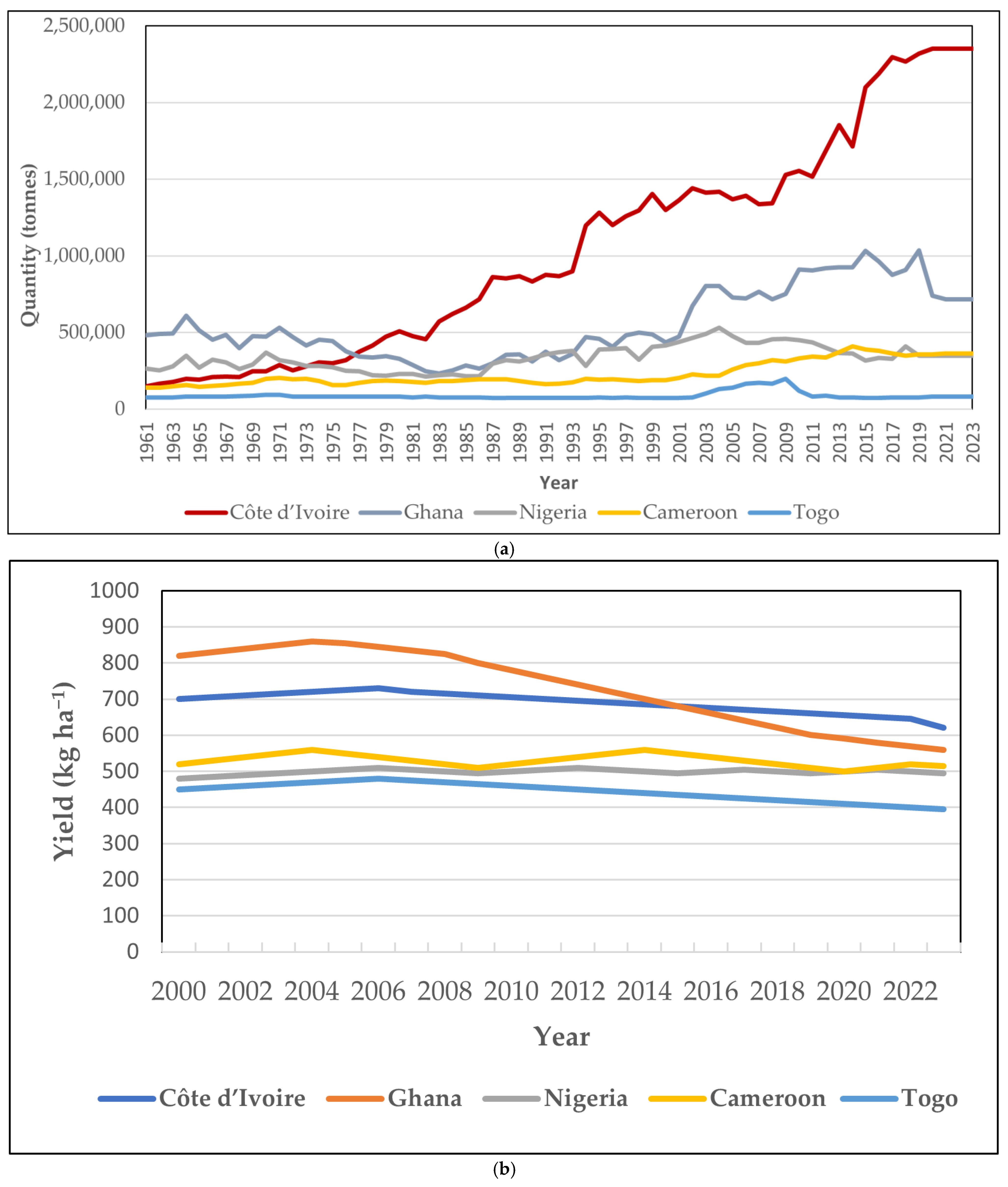
Theobroma cacao L.) cultivation remains central to the economies and rural livelihoods of West Africa, accounting for over 70% of global cocoa supply and directly supporting more than six million smallholder farmers [
1,
2,
3,
4,
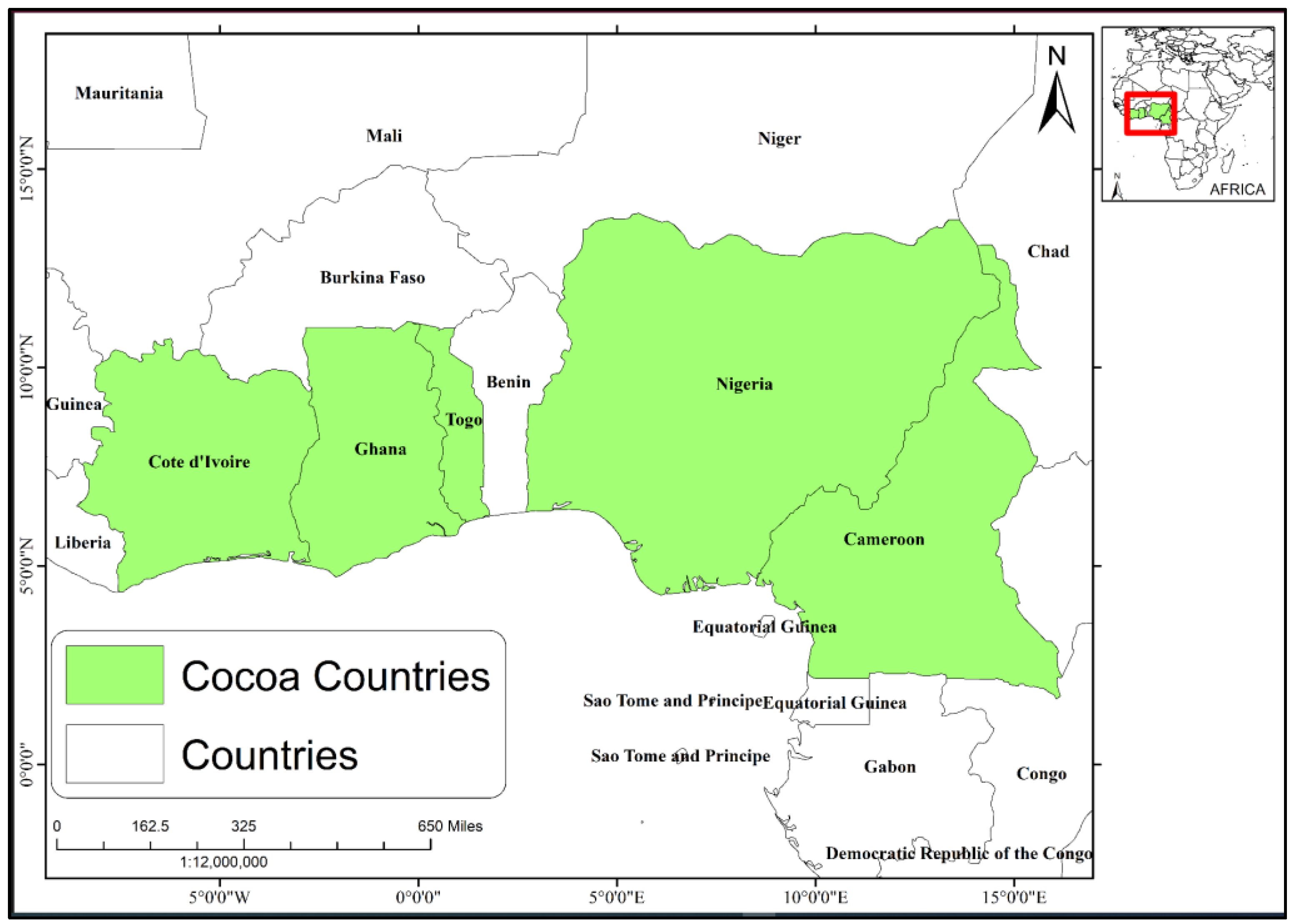
5]. Côte d’Ivoire and Ghana together contribute approximately 60% of global exports, with Nigeria, Cameroon, and Togo supplying much of the remaining regional output [
1,
2,
4] (
Figure 1). Beyond its economic importance, cocoa production underpins rural employment, export earnings, and food-system resilience across the region [
4,
5,
6].
Despite its importance, West African cocoa systems face persistent and interrelated constraints. Yield stagnation has prevailed for more than two decades, driven by soil fertility decline, aging tree stocks, pest and disease pressure, most notably cocoa swollen shoot virus disease (CSSVD), and increasing climate variability [
7,
8,
9,
10,
11,
12,
13]. Conventional responses emphasizing uniform fertilizer application or varietal replacement have delivered limited and often short-lived gains, particularly in heterogeneous smallholder landscapes where biophysical conditions vary sharply over short distances [
6,
9,
14].
Regenerative agriculture has emerged as a promising framework for addressing these challenges by prioritizing soil health restoration, biodiversity enhancement, improved nutrient cycling, and system resilience [
15,
16,
17,
18,
19,
20,
21]. In cocoa systems, RA principles align closely with agroforestry traditions and emphasize practices such as organic amendments, mulching, diversified shade, and reduced disturbance [
21,
22,
23,
24]. However, the effectiveness of these practices depends strongly on spatial targeting and adaptive management, which are difficult to achieve using field-based observations alone [
6,
25].
Unmanned aerial systems provide a complementary observational layer by delivering high-resolution, spatially explicit data on canopy condition, moisture stress, and structural variability [
26,
27,
28,
29,
30]. When combined with AI, including machine-learning and deep-learning approaches, UAS-derived data can be transformed into predictive insights that support site-specific intervention, early stress detection, and risk mapping [
31,
32,
33,
34,
35,
36,
37,
38,
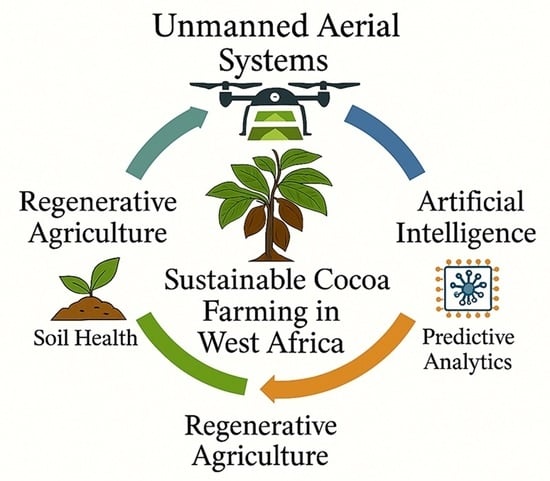
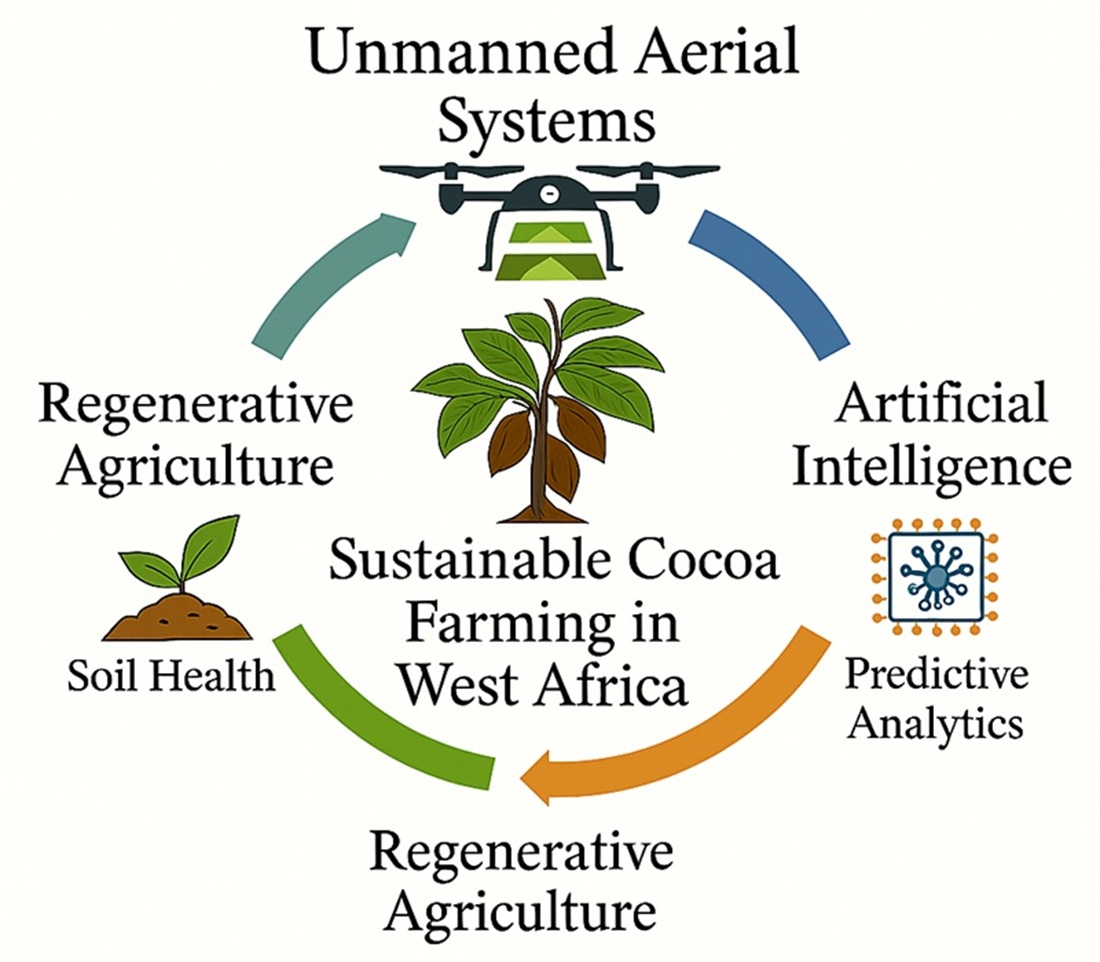
39]. Together, RA, UAS, and AI form a precision-regenerative continuum capable of addressing both ecological degradation and informational constraints in cocoa systems.
The governance and institutional organization of the cocoa sector in West Africa has been widely examined, highlighting the roles of national cocoa boards, extension systems, and development partners in shaping production outcomes [
40].
Objectives and Research Questions
The objective of this review is to synthesize empirical evidence on how RA, UAS, and AI can be integrated to improve the sustainability, resilience, and productivity of cocoa systems in West Africa. Specifically, the review addresses the following research questions:
What regenerative agriculture practices have demonstrated effectiveness in restoring soil health and stabilizing yields in West African cocoa systems? [
15,
16,
17,
18,
19,
20,
21,
24];
How have UAS-based multispectral, thermal, and structural diagnostics been applied to characterize spatial variability and agronomic constraints in cocoa landscapes? [
26,
27,
28,
29,
30,
41,
42,
43,
44,
45];
Which AI models have been used to transform UAS-derived data into decision-support tools for stress detection, yield estimation, and management zoning? [
31,
32,
33,
34,
35,
36,
37,
38,
39];
What institutional, governance, and capacity factors condition the scalability of integrated RA–UAS–AI approaches in smallholder cocoa systems? [
46,
47,
48,
49,
50,
51].
2. Methodological Framework and Literature Selection
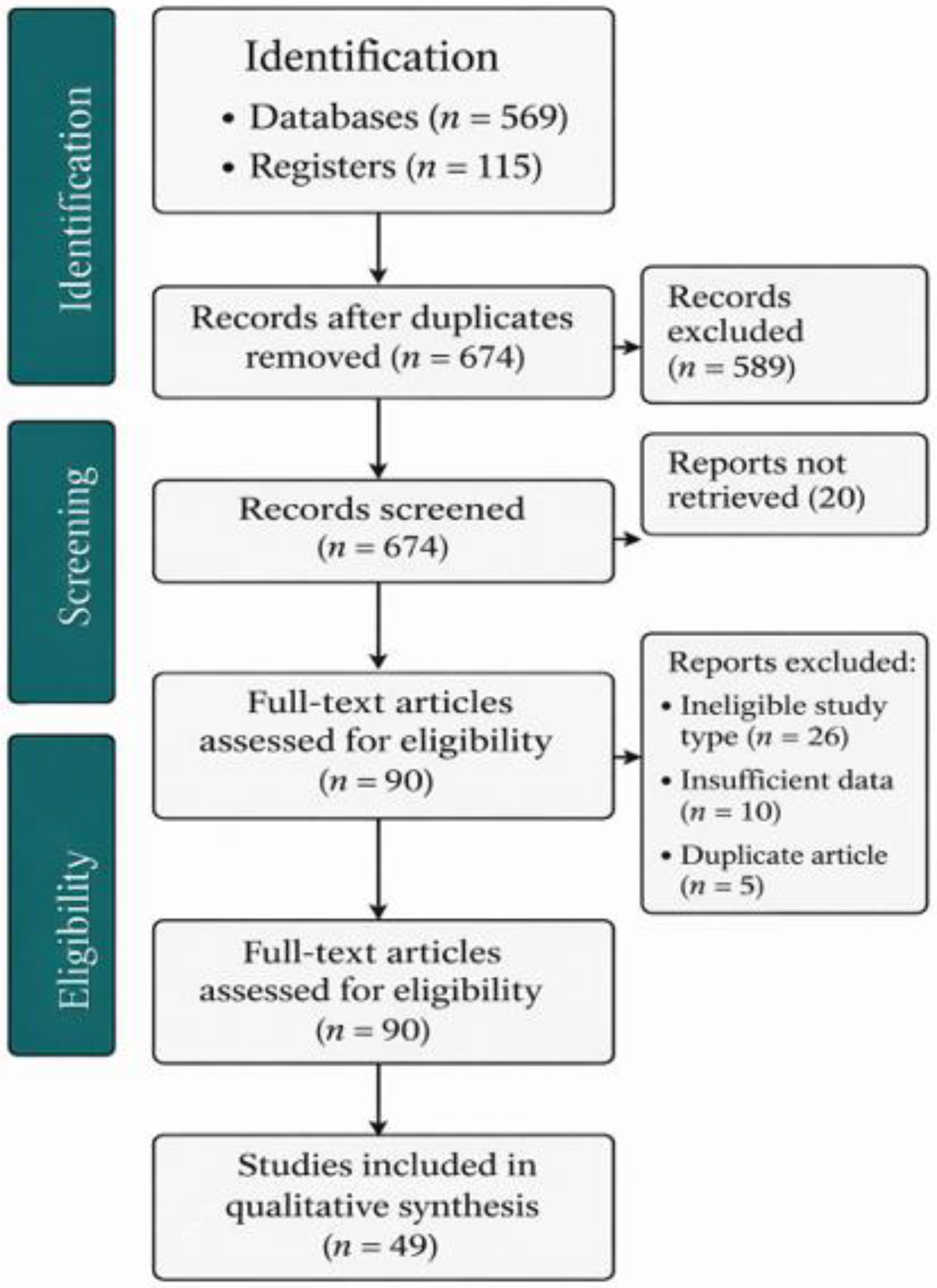
This review adopts a systematic literature assessment approach to ensure transparency, reproducibility, and analytical rigor in synthesizing evidence on RA, UAS, and AI in cocoa production systems. The methodology follows the Preferred Reporting Items for Systematic Reviews and Meta-Analyses (PRISMA 2020) guidelines [
52,
53], providing a structured framework for identifying, screening, and synthesizing relevant studies (
Figure 2).
2.1. Literature Search Strategy
A comprehensive literature search was conducted across major scientific databases, including Scopus, Web of Science, AGRICOLA, and Google Scholar. Search strings combined keywords related to cocoa (Theobroma cacao), regenerative agriculture, unmanned aerial systems (UAS or drones), and artificial intelligence or machine learning. Boolean operators and controlled vocabulary were used to capture terminology variations such as “precision agriculture,” “remote sensing”, “deep learning”, “disease detection”, and “yield prediction” [
26,
27,
28,
29,
31,
54,
55].
To complement peer-reviewed literature, selected grey literature from reputable institutional sources, including FAO, the International Cocoa Organization (ICCO), national cocoa boards, and development agencies, was included to capture policy-relevant insights and implementation experiences not always represented in academic journals [
1,
2,
4,
46,
47,
48,
49,
50,
51]. All retrieved records were imported into reference management software, and duplicates were removed prior to screening.
2.2. Eligibility Criteria and Screening Procedure
Titles and abstracts were screened for relevance to cocoa production systems and to at least one of the three analytical domains addressed in this review: RA, UAS-based monitoring, or AI-enabled analytics. Full-text screening applied the following inclusion criteria:
Focus on cocoa or cocoa-based agroforestry systems;
Relevance to regenerative practices, UAS/remote sensing, or AI-based approaches;
Empirical, methodological, or review-based contributions with sufficient technical detail;
Geographic relevance to West Africa or applicability to comparable tropical systems; and
Publication in English.
Studies were excluded if they lacked methodological transparency, addressed unrelated crops or regions without transferable insights, or consisted of non-peer-reviewed materials with insufficient technical rigor [
52,
53]. The screening and exclusion process is summarized in
Table 1.
Figure 2 summarizes the sequential stages of literature identification, screening, eligibility assessment, and final inclusion. To complement the PRISMA flow diagram,
Table 1 provides a transparent overview of database coverage, search strings, screening stages, and primary exclusion criteria.
2.3. Data Extraction and Synthesis
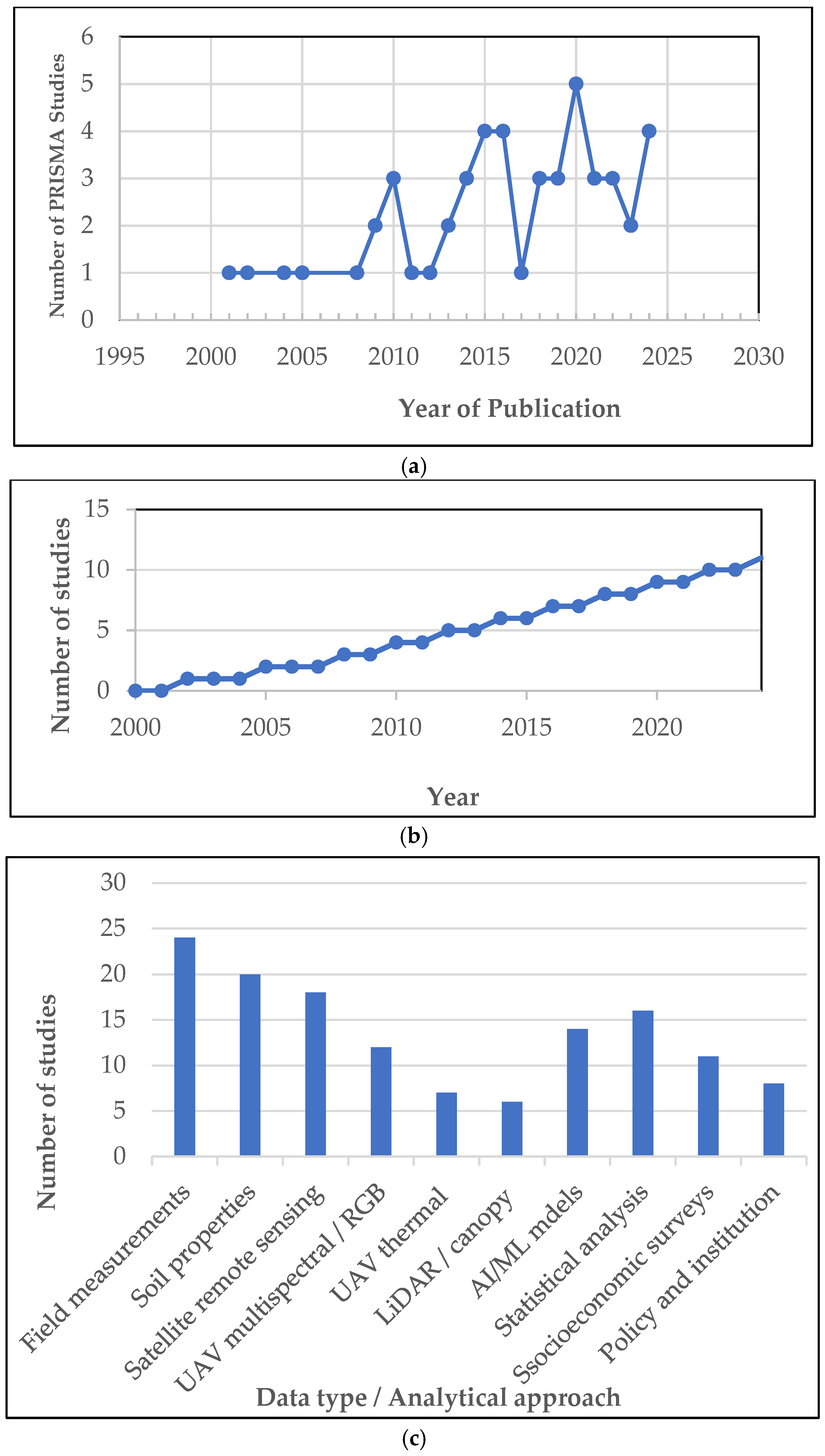
For each eligible study, information was extracted on geographic focus, production system, methodological approach, data sources, analytical techniques, and reported outcomes. Of the studies retained after screening, 49 met full PRISMA inclusion criteria and were used for structured analytical synthesis. An additional set of supporting studies was retained to provide contextual and regional background [
6,
52,
53]. Given heterogeneity in study designs, metrics, and outcomes, a quantitative meta-analysis was not feasible. Instead, a qualitative and comparative synthesis approach was adopted, emphasizing convergence of evidence, reported performance ranges, contextual dependencies, and methodological limitations [
15,
16,
17,
18,
31,
39].
2.4. Justification of the Review Period (2000–2024)
The review covers literature published between 2000 and 2024 to capture the evolution of three interrelated domains central to sustainable cocoa production. The early 2000s correspond to the formalization and empirical testing of regenerative and agroecological concepts in tropical perennial systems. From the mid-2000s onward, advances in remote sensing and increasing accessibility of UAV platforms enabled field-scale monitoring of canopy condition, soil variability, and environmental stress. Since approximately 2010, rapid progress in machine-learning and deep-learning methods has expanded analytical capacity for disease detection, yield estimation, and risk assessment.
Including literature across this period allows differentiation between foundational ecological contributions and more recent data-driven approaches. While earlier studies provide conceptual grounding, greater analytical emphasis is placed on post-2010—especially post-2015—publications when evaluating UAS- and AI-based applications, reflecting their technological maturity and relevance to current operational and policy contexts in West African cocoa systems.
2.5. Quality Assessment and Validation
Each PRISMA-included study was evaluated using a five-criterion quality rubric addressing: (1) clarity of objectives, (2) data transparency, (3) methodological rigor, (4) reproducibility, and (5) relevance to practice or policy. Studies scoring below three out of five were excluded from analytical synthesis. Inter-reviewer agreement was high (Cohen’s κ = 0.87), indicating consistent assessment.
Where applicable, reported model performance metrics (e.g., R2, RMSE, classification accuracy) and validation procedures were documented, including use of independent datasets or cross-validation strategies.
2.6. Summary of Included Evidence
The final corpus spans major cocoa-producing countries in West Africa and reflects a temporal progression from field-based and descriptive studies toward increasingly spatially explicit and AI-enabled analyses. Regenerative agriculture accounts for the largest share of literature, followed by UAS-based diagnostics and AI-driven analytical approaches. This evolving evidence base underpins the distribution analysis presented in
Section 3 and the integrative synthesis developed in
Section 4,
Section 5,
Section 6,
Section 7,
Section 8 and
Section 9.
4. Regenerative Agriculture Foundations for Sustainable Cocoa Systems
Building on the production constraints and structural patterns identified in
Section 3, this section examines regenerative agriculture (RA) as the ecological foundation for sustainable cocoa systems in West Africa. Regenerative approaches are increasingly promoted as pathways to restore degraded soils, enhance ecosystem services, and improve resilience under climate variability, particularly in perennial smallholder systems such as cocoa [
15,
16,
17,
18]. Unlike conventional input-intensive strategies, RA emphasizes process-based management that strengthens soil–plant–microbe interactions, biodiversity, and system-level functioning.
Understanding these principles is essential before introducing digital and analytical tools, as the effectiveness of UAS and AI depends fundamentally on the ecological conditions they are intended to monitor and optimize. Accordingly, this section synthesizes the conceptual foundations, mechanisms, and empirical evidence underlying regenerative cocoa systems, establishing the biophysical and ecological baseline upon which subsequent sections on UAS-enabled monitoring (
Section 5) and AI-driven analytics (
Section 6) are built.
4.1. Conceptual Foundations of Regenerative Agriculture in Cocoa Systems
Regenerative agriculture represents a systems-based approach to agricultural management that emphasizes the restoration of soil function, enhancement of ecosystem services, and long-term resilience of production systems [
15,
16,
17,
18]. In contrast to input-intensive conventional models, RA prioritizes ecological processes such as nutrient cycling, soil biological activity, carbon sequestration, and functional biodiversity [
15,
16,
17]. Within cocoa-based agroecosystems, these principles align closely with traditional agroforestry practices while offering a structured framework for improving sustainability under contemporary climatic and economic pressures.
In West Africa, cocoa production is predominantly smallholder-based and embedded within complex socioecological landscapes. Historically, cocoa was cultivated under shaded forest systems that supported soil fertility, moderated microclimates, and maintained biodiversity [
3,
58]. Over time, intensification and forest conversion have simplified these systems, leading to soil degradation, declining yields, and increased vulnerability to climatic shocks [
9,
10]. Regenerative agriculture seeks to reverse these trends by restoring ecological functions rather than substituting external inputs.
Core regenerative principles relevant to cocoa systems include minimizing soil disturbance, maintaining permanent soil cover, enhancing plant diversity through agroforestry and cover crops, integrating organic nutrient sources, and fostering beneficial biological interactions [
15,
16,
17,
68]. These principles provide the ecological foundation upon which precision tools such as UAS and AI can operate effectively.
4.2. Soil Health Restoration and Carbon Dynamics
Soil degradation remains one of the most pervasive constraints on cocoa productivity in West Africa. Long-term nutrient mining, erosion, and declining organic matter have reduced cation exchange capacity, water retention, and microbial activity across major production zones [
9,
62,
63]. Regenerative practices directly target these constraints by rebuilding soil organic carbon and improving soil structure.
Empirical evidence indicates that organic amendments, mulching, and reduced disturbance can significantly enhance soil carbon stocks and nutrient availability in cocoa systems [
9,
67]. Agroforestry-based cocoa systems have been shown to store substantially more carbon than monoculture plantations, both above and below ground [
58,
69]. Soil carbon sequestration not only contributes to climate-change mitigation but also improves aggregate stability, infiltration, and nutrient retention, thereby enhancing yield resilience under variable rainfall [
15,
59].
Long-term trials demonstrate that integrated nutrient management, combining organic inputs with judicious mineral fertilization, can outperform sole mineral fertilizer strategies in maintaining soil fertility and sustaining cocoa yields [
70,
71]. These findings reinforce the central role of soil restoration within regenerative frameworks and provide a mechanistic basis for integrating spatial diagnostics to target soil interventions.
4.3. Agroforestry, Biodiversity, and Ecosystem Services
Agroforestry is a cornerstone of regenerative cocoa systems, offering multifunctional benefits that extend beyond yield stabilization. Shade trees regulate microclimate, reduce evapotranspiration, buffer temperature extremes, and enhance nutrient cycling through litter inputs and deep rooting [
19,
20,
21,
24]. Biodiverse cocoa agroforests also support pollinators, natural enemies of pests, and broader ecosystem services essential for long-term system stability [
57,
64,
72].
Meta-analyses and field studies consistently demonstrate that well-managed shaded cocoa systems can maintain competitive yields while improving soil fertility and biodiversity relative to full-sun monocultures [
19,
58]. Although excessive shading may suppress yields, optimized shade configurations can balance productivity with resilience, particularly under increasing climatic stress [
21,
24].
From a regenerative perspective, agroforestry functions as a structural platform that enhances ecological redundancy and buffering capacity. These characteristics are especially important in West Africa, where climate variability and disease pressures are intensifying [
7,
10,
13]. Integrating spatial tools such as UAS allows practitioners to move beyond uniform shade prescriptions toward site-specific canopy optimization strategies.
4.4. Climate Resilience and Adaptive Capacity
Climate variability poses a major threat to cocoa sustainability in West Africa. Rising temperatures, altered rainfall regimes, and increased frequency of drought events have already reduced suitability in several production zones [
7,
8,
10]. Regenerative practices contribute to climate resilience by improving soil water-holding capacity, moderating microclimates, and enhancing system diversity [
15,
59].These climatic pressures are consistent with broader assessments of climate change impacts on African agricultural systems, which document increasing temperature stress, rainfall variability, and heightened production risk across tree-crop landscapes, including cocoa-growing regions [
73].
Soils with higher organic carbon content exhibit greater moisture retention and buffering capacity during dry periods, reducing crop stress and yield volatility [
67]. Agroforestry systems further mitigate heat stress by lowering canopy temperatures and reducing evapotranspiration demand [
19,
58]. At broader scales, regenerative practices contribute to ecosystem services including carbon sequestration, erosion control, and watershed regulation [
59,
72].
4.5. Evidence of Productivity and Sustainability Outcomes
A growing body of empirical evidence demonstrates that regenerative practices can stabilize or enhance cocoa productivity while improving environmental outcomes. Long-term trials and observational studies report yield stabilization or moderate yield improvements under agroforestry and organic amendment regimes, particularly under stress-prone conditions [
19,
24,
58]. Although short-term yield reductions may occur during system transitions, medium- to long-term gains in soil fertility and resilience often offset initial declines [
9,
33].
Studies across West Africa show that regenerative cocoa systems are associated with improved nutrient cycling, higher soil organic matter, and enhanced water-use efficiency [
9,
67]. These gains translate into reduced vulnerability to drought and disease outbreaks, including cocoa swollen shoot virus disease, which disproportionately affects weakened plantations [
11,
12,
13].
From an economic perspective, regenerative practices can reduce dependency on external inputs while improving long-term system stability, particularly when supported by extension services and institutional incentives [
25,
56]. However, adoption remains uneven due to labor demands, knowledge gaps, and limited access to advisory support.
4.6. Limitations and the Need for Precision Support
Despite their ecological benefits, regenerative practices are not universally effective when applied uniformly. Spatial heterogeneity in soils, topography, and microclimate leads to variable outcomes, highlighting the limitations of blanket recommendations [
25,
33]. This variability underscores the need for spatial diagnostics and adaptive management frameworks capable of guiding site-specific interventions.
Here, UAS and AI play a critical enabling role by providing high-resolution spatial data that support identification of within-field variability, targeting regenerative interventions, and monitoring outcomes over time. Without such tools, regenerative strategies risk inefficiency or misallocation of limited resources. Consequently, RA should be viewed as a foundational ecological layer whose effectiveness is enhanced when coupled with digital sensing and analytical intelligence.
This framing provides the conceptual bridge to
Section 5, which examines how UAS enable spatially explicit monitoring of canopy condition, soil moisture, and stress dynamics in support of precision–regenerative cocoa management.
5. Unmanned Aerial Systems for Spatial Monitoring of Cocoa Systems
Building on the regenerative principles outlined in
Section 4, effective implementation of soil- and ecosystem-restorative practices requires spatially explicit information capable of capturing within-field variability in cocoa systems. West African cocoa landscapes are highly heterogeneous, shaped by gradients in soil fertility, shade structure, moisture availability, and disease pressure. Conventional field-based monitoring alone is often insufficient to resolve this variability. Unmanned aerial systems therefore provide a critical observational layer for precision–regenerative management by delivering high-resolution, repeatable spatial data across fragmented smallholder landscapes [
26,
27,
28,
29,
48,
54,
55].
UAS platforms equipped with RGB, multispectral, thermal, and structural sensors enable detailed characterization of canopy structure, physiological condition, and microclimatic stress. Their flexibility, relatively low operational cost, and suitability for small plots make them particularly relevant for cocoa systems where satellite imagery often lacks sufficient spatial or temporal resolution [
26,
27,
28,
55].
5.1. RGB and Multispectral Monitoring of Canopy Condition
RGB imagery provides high-resolution information on canopy cover, crown architecture, gap formation, and phenological variation, supporting stand assessment and rehabilitation planning. When processed through structure-from-motion photogrammetric workflows, RGB data also yield surface models useful for estimating canopy height and structural variability [
26,
27,
28].
Multispectral sensors extend these capabilities by capturing reflectance in discrete spectral bands, enabling derivation of vegetation indices such as the Normalized Difference Vegetation Index (NDVI), Enhanced Vegetation Index (EVI), and Soil-Adjusted Vegetation Index (SAVI) [
43,
67,
74,
75]. These indices are widely used to assess photosynthetic activity, canopy vigor, and stress responses in perennial cropping systems. In cocoa agroecosystems, multispectral indices have been linked to nutrient status, chlorophyll content, and spatial yield variability, supporting targeted regenerative interventions such as organic amendment placement, shade regulation, and rehabilitation zoning [
28,
29,
55].
5.2. Thermal Sensing and Water-Stress Diagnostics
Thermal imagery provides complementary information by detecting variations in canopy temperature associated with transpiration and stomatal regulation. Elevated canopy temperature often indicates water stress or physiological dysfunction, making thermal sensing particularly relevant in rain-fed cocoa systems exposed to increasing rainfall variability and heat stress [
30,
42].
UAV-based thermal data have been used to delineate moisture-stressed zones, assess the buffering effects of shade trees, and evaluate the effectiveness of soil-moisture-conserving practices such as mulching or organic matter enhancement [
30,
55]. When combined with multispectral indicators, thermal imagery improves discrimination between nutrient-related and water-related stress, strengthening diagnostic accuracy for regenerative management decisions.
5.3. Structural Information from LiDAR and Photogrammetry
Structural characterization of cocoa canopies provides additional insight into productivity, light interception, and system resilience. Structure-from-motion photogrammetry and, where available, UAV-mounted LiDAR enable three-dimensional reconstruction of canopy architecture, generating metrics such as canopy height, crown volume, and vertical complexity [
26,
44,
45].
In agroforestry-based cocoa systems, these structural attributes are closely linked to shade management, biomass accumulation, and carbon stocks [
58,
69]. Structural metrics therefore support both regenerative management decisions (e.g., optimized shade density) and carbon accounting frameworks relevant to climate-smart and regenerative agriculture initiatives [
19,
58].
5.4. Multisensor Integration and Spatial Diagnostics
The analytical value of UAS increases substantially when data from multiple sensors are integrated. Combining RGB, multispectral, thermal, and structural information enables differentiation among overlapping stress drivers, including nutrient limitation, water stress, disease pressure, and shading effects. Multisensor fusion improves the robustness of spatial diagnostics compared with single-sensor approaches [
26,
27,
28,
29,
55].
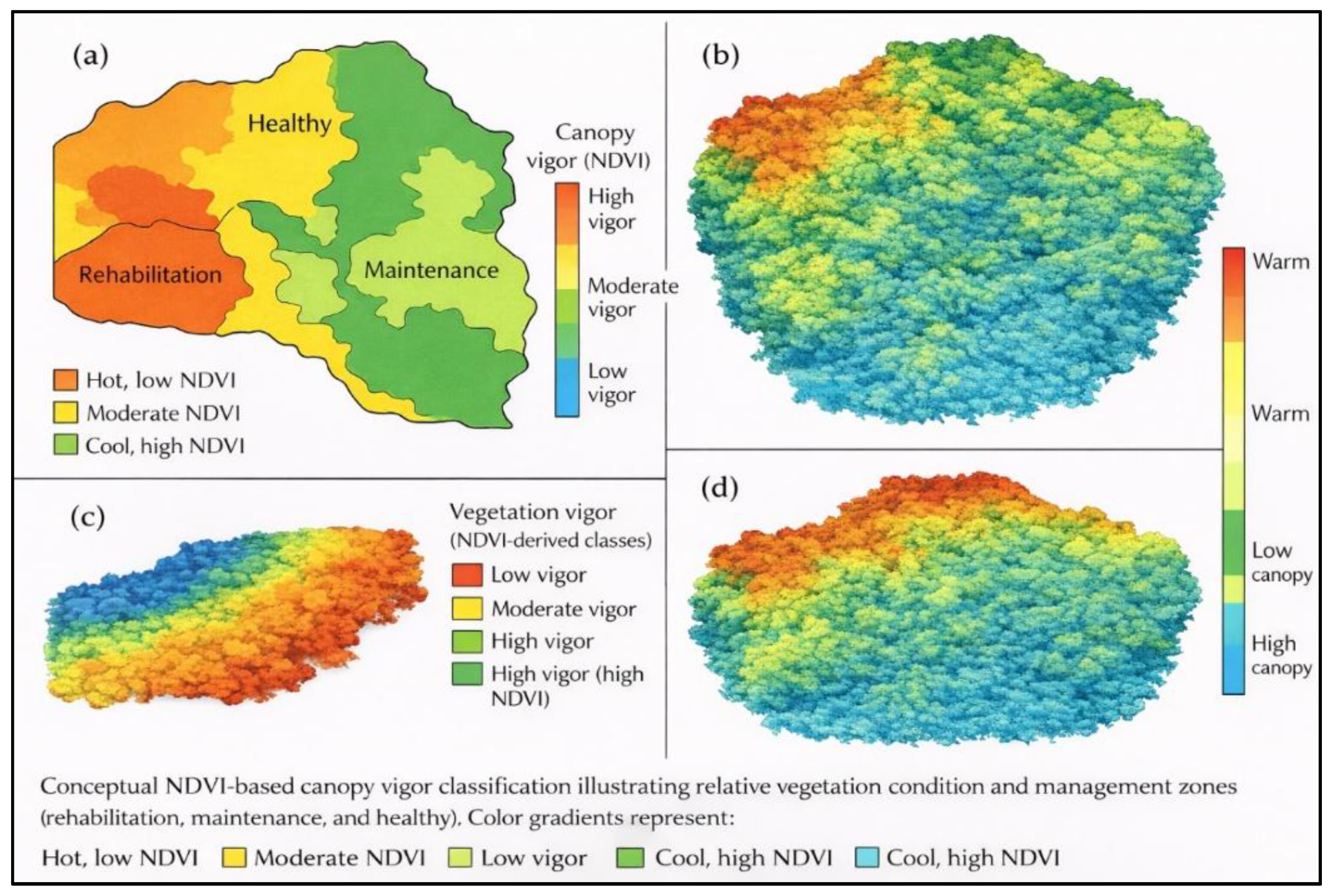
In cocoa systems, integrated datasets support delineation of management zones characterized by distinct biophysical conditions. These zones guide precision placement of organic amendments, targeted rehabilitation, shade adjustment, and focused disease surveillance. Multisensor integration also enables temporal monitoring, allowing assessment of treatment responses across seasons and years (
Figure 5).
Multispectral indices provide spatial proxies for canopy vigor and nutrient status, thermal patterns highlight water stress and microclimatic effects, and structural metrics derived from photogrammetry or LiDAR characterize canopy architecture relevant to shade management and biomass estimation. When combined, these layers enable differentiation among overlapping stress drivers and support spatially targeted regenerative interventions.
In cocoa agroforestry systems characterized by heterogeneous canopy structure, advances in spatial analysis and image-processing methods, including object-based canopy segmentation, texture analysis, and multisensor data integration, have substantially improved the extraction of tree-level structural and health indicators from remote sensing data, supporting more reliable diagnostics under complex perennial canopies [
76,
77].
5.5. From Spatial Observation to Decision Support
While UAS substantially enhances observational capacity, their agronomic value ultimately depends on how effectively spatial data are transformed into actionable insights. Outputs from multispectral, thermal, and structural analyses increasingly serve as inputs to machine-learning models that support classification, prediction, and risk assessment [
31,
32,
33,
34,
35,
36,
37,
38,
39,
54,
55]. These analytical pipelines form the bridge between sensing and decision-making and are examined in detail in
Section 6.
Beyond technical performance, UAS deployment in West African cocoa systems is shaped by institutional and operational factors, including cooperative drone services, local operator training, and accessible visualization tools. Such arrangements are critical for translating advanced sensing technologies into practical, scalable decision support for smallholder farmers [
46,
47,
48,
49,
50,
51].
5.6. Synthesis and Link to Artificial Intelligence Applications
Overall, UAS provides a foundational observational layer that operationalizes regenerative principles through spatially explicit diagnostics. By revealing fine-scale variability in canopy conditions, stress dynamics, and structural organization, UAS enables targeted, resource-efficient interventions aligned with regenerative goals. However, the full potential of these data emerges only when coupled with analytical models capable of extracting predictive insight from complex datasets.
As illustrated, UAV-based monitoring generates complementary data layers that capture distinct but interrelated dimensions of cocoa system variability. Multispectral indices provide spatial proxies for canopy vigor and nutrient status, thermal patterns highlight water stress and microclimatic effects, and structural metrics derived from photogrammetry or LiDAR characterize canopy architecture relevant to shade management and biomass estimation. When combined, these layers enable differentiation among overlapping stress drivers and support spatially targeted regenerative interventions.
To move from spatial observation to anticipatory and adaptive management, UAV-derived data must be coupled with analytical models capable of transforming complex, multi-sensor information into predictive insight. This role is fulfilled by AI and machine-learning approaches, which are examined in the following section.
Accordingly, the next section examines how AI and machine-learning approaches transform UAS-derived information into tools for disease detection, yield estimation, and risk assessment, completing the RA–UAS–AI continuum.
6. Artificial Intelligence for Predictive Analytics and Decision Support in Cocoa Systems
While UAS provides high-resolution, spatially explicit observations of cocoa agroecosystems (
Section 5;
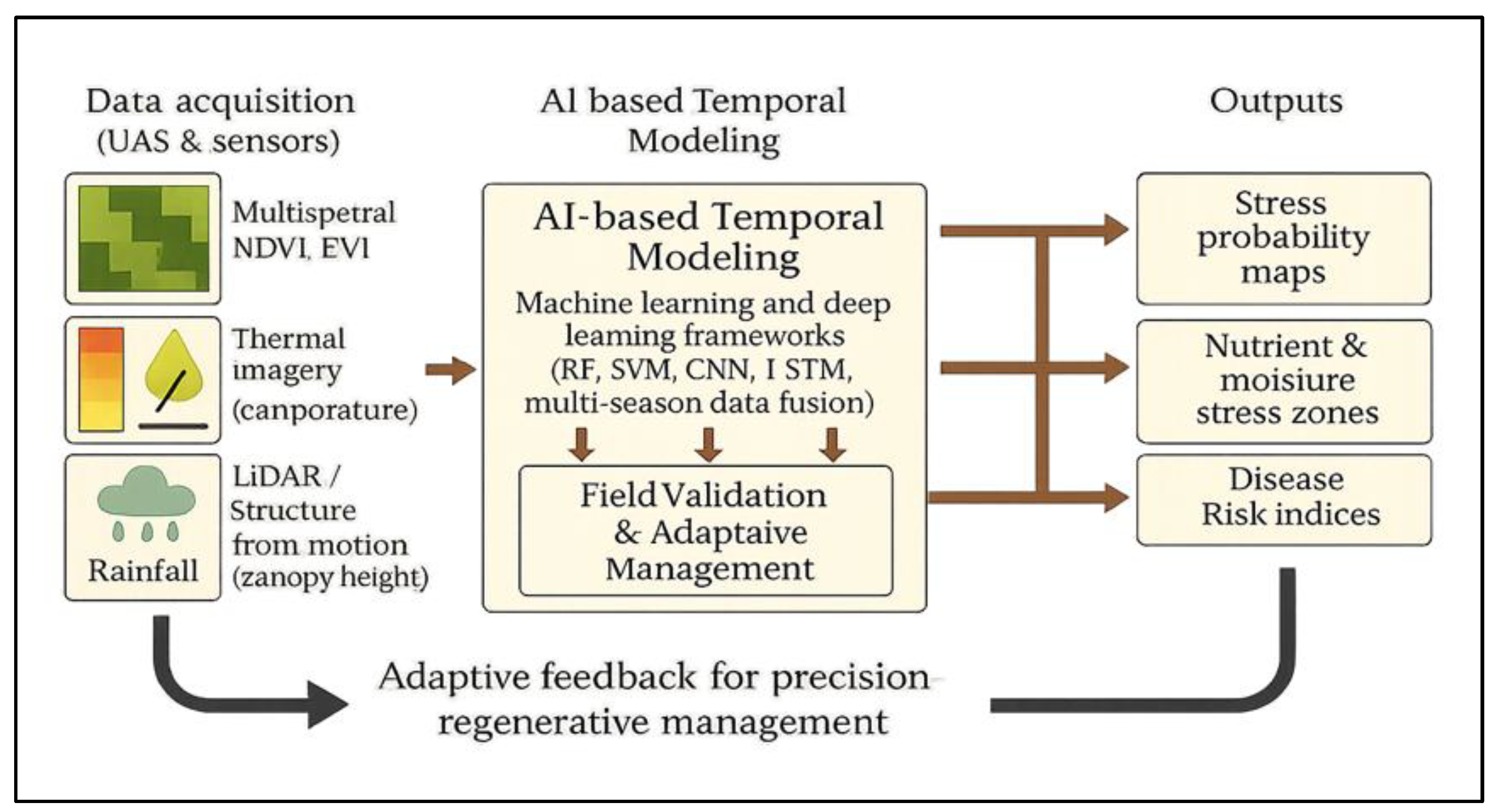
Figure 5), their full agronomic and policy value emerges only when these data streams are transformed into predictive and decision-relevant information. Artificial intelligence encompassing machine-learning and deep-learning approaches, plays a central role in this transformation by enabling pattern recognition, classification, and forecasting across complex, multivariate datasets. In cocoa systems characterized by strong spatial heterogeneity, temporal variability, and interacting biophysical and management stressors, AI provides the analytical engine that links sensing to adaptive, precision-regenerative management (
Figure 6).
This section reviews the principal AI methodologies applied to UAS-derived cocoa datasets, emphasizing their analytical strengths, operational limitations, and relevance to regenerative management objectives.
Section 6.1,
Section 6.2 and
Section 6.3 examine supervised machine-learning models, deep-learning architectures, and temporal modeling approaches, respectively. Subsequent subsections address the integration of AI outputs into adaptive management frameworks, equity and operational constraints, and the conditions under which AI-enabled analytics can support scalable, policy-relevant decision support across West African cocoa systems.
6.1. Machine-Learning Models for Spatial Classification and Risk Mapping
Classical machine-learning algorithms such as Random Forest (RF), Support Vector Machines (SVM), and Gradient Boosting Machines (GBM) are widely applied in agricultural analytics due to their robustness, flexibility, and capacity to model nonlinear relationships [
32,
33,
34,
39]. These characteristics are particularly valuable in cocoa systems, where training datasets are often heterogeneous, spatially autocorrelated, and limited in size.
In cocoa agroecosystems, RF and SVM models have been used to classify UAV-derived multispectral and thermal data into stress categories related to nutrient limitation, water stress, disease pressure, and canopy degradation [
38,
39]. RF models are especially valued for their resistance to overfitting and their ability to rank variable importance, enhancing transparency and interpretability for extension and decision-support applications [
32,
39]. GBM approaches can provide higher predictive accuracy in some contexts but require careful parameter tuning and greater computational resources [
34].
Outputs from these models are commonly expressed as spatial risk maps or management-zone delineations, supporting targeted regenerative interventions such as selective rehabilitation, shade adjustment, or localized soil restoration. The relative interpretability and modest data requirements of these algorithms make them well suited for operational deployment in smallholder-dominated cocoa landscapes.
6.2. Deep-Learning Methods for Image-Based Diagnostics
Deep-learning architectures, particularly convolutional neural networks (CNNs), have expanded the capacity of AI systems to extract complex spatial features directly from RGB and multispectral imagery [
35,
36,
38]. CNNs are increasingly used for disease detection, canopy health assessment, and fine-scale phenotyping in perennial cropping systems.
In cocoa contexts, CNN-based approaches have demonstrated promise for detecting disease-related canopy stress patterns and distinguishing healthy from compromised trees using UAV imagery [
31,
38]. These models excel at capturing subtle textural and spectral cues that may be difficult to define using handcrafted features. However, deep-learning approaches typically require large, well-labeled datasets and substantial computational resources, which can limit their scalability in data-constrained environments.
As a result, CNNs are often applied experimentally or within centralized research and advisory platforms rather than directly at the farm level. Their greatest potential lies in regional surveillance, disease early-warning systems, and centralized analytics that complement more interpretable machine-learning tools used in field-level decision making.
6.3. Time-Series Analysis and Yield Prediction
Temporal dynamics play a critical role in cocoa production, as stress responses, phenological development, and yield outcomes evolve over seasonal and interannual timescales. Long Short-Term Memory (LSTM) networks and other recurrent neural network architectures are designed to capture such temporal dependencies and have been applied to agricultural forecasting problems [
37,
38].
In cocoa systems, time-series models integrating UAV-derived vegetation indices, thermal data, and climatic variables have been explored for yield estimation and stress forecasting [
38,
39]. These approaches enable anticipatory management by identifying emerging stress trends before yield losses become irreversible. However, their effectiveness depends strongly on the availability of multi-year datasets, consistent data acquisition protocols, and reliable ground truth information.
Where data continuity is limited, hybrid approaches combining simpler statistical models with machine-learning predictors may offer more robust performance and easier interpretation.
6.4. Multisensor Data Fusion and Integrated Analytics
The predictive power of AI models increases substantially when multiple data streams are integrated. Combining multispectral indices, thermal metrics, structural variables, soil information, and climatic data allow AI systems to disentangle overlapping stress drivers and improve diagnostic accuracy [
38,
39,
78].
Multisensor fusion supports more reliable differentiation between nutrient-related stress, water stress, disease pressure, and shading effects, an essential capability in heterogeneous cocoa landscapes. Integrated analytics also facilitate management-zone delineation that reflects both current system status and future risk trajectories, strengthening the alignment between regenerative objectives and operational decisions.
6.5. Interpretability, Uncertainty, and Decision Relevance
Despite advances in predictive accuracy, the utility of AI in cocoa systems depends critically on model interpretability and trust. Black-box models that lack transparent reasoning are often poorly received by extension agents and farmers, limiting adoption [
39,
46]. Techniques such as variable-importance analysis, partial-dependence plots, and rule-based classifiers help bridge this gap by clarifying how predictions are generated.
Uncertainty characterization is equally important. Spatial predictions without confidence metrics can mislead decision making, particularly in risk-averse smallholder contexts. Integrating uncertainty estimates and validation metrics enhances credibility and supports more cautious, adaptive management strategies.
6.6. Institutional and Operational Considerations
The deployment of AI-enabled decision-support systems in West African cocoa systems is shaped as much by institutional capacity as by technical performance. Data governance, digital infrastructure, cooperative service models, and extension integration play decisive roles in determining whether AI tools translate into field-level impact [
46,
47,
48,
49,
50,
51].
Cooperative drone services, centralized analytics hubs, and advisory platforms linked to trusted institutions offer promising pathways for scaling AI applications while minimizing individual farmer burden. In such configurations, AI functions as an enabling layer that supports regenerative management rather than as a standalone technological solution.
6.7. Synthesis and Link to Empirical Evidence
Overall, AI transforms UAS-derived observations into actionable intelligence by enabling prediction, classification, and prioritization across complex cocoa agroecosystems. While deep-learning approaches offer powerful image-based diagnostics, interpretable machine-learning models remain central to operational deployment in data-limited, smallholder-dominated contexts. The effectiveness of AI depends not only on algorithmic sophistication but also on data quality, institutional integration, and alignment with regenerative management goals.
These analytical capabilities provide the foundation for evaluating real-world performance and scalability of integrated RA–UAS–AI systems. Accordingly, the following section synthesizes empirical evidence and case studies from West Africa, examining how these technologies perform in practice across diverse agroecological and institutional settings.
7. Empirical Evidence and Case Studies of Integrated RA–UAS–AI Applications in West Africa
While
Section 4,
Section 5 and
Section 6 establish the ecological, sensing, and analytical foundations of RA, UAS and AI, their practical relevance ultimately depends on demonstrated performance under real-world conditions. West African cocoa systems, characterized by pronounced heterogeneity in soils, climate, management intensity, and institutional support, provide a critical testbed for evaluating the operational feasibility of integrated RA–UAS–AI approaches.
Rather than presenting isolated project narratives, this section synthesizes empirical evidence from Côte d’Ivoire, Ghana, Nigeria, Cameroon, and Togo, emphasizing convergence across case studies, reported performance ranges, and contextual constraints that shape outcomes across diverse agroecological and socioeconomic settings.
7.1. Côte d’Ivoire: Scaling Regenerative Diagnostics in High-Production Landscapes
Côte d’Ivoire accounts for nearly 40% of global cocoa output, yet its production systems face persistent pressures from soil acidification, nutrient depletion, aging tree populations, and increasing pest and disease incidence [
2,
3,
4,
9]. Empirical studies consistently identify agroforestry rehabilitation and organic matter restoration as central regenerative strategies for stabilizing productivity and ecosystem function [
48,
58,
78].
UAS-based multispectral and thermal monitoring has been deployed to map canopy vigor, shade heterogeneity, and moisture stress across large plantation mosaics, enabling targeted rehabilitation rather than uniform replanting [
26,
27,
28,
29]. Structural diagnostics derived from photogrammetry further support assessment of canopy architecture and shade optimization in agroforestry systems [
44,
45].
AI-driven classification models, primarily Random Forest and convolutional neural networks, have been applied experimentally to identify stress hotspots, prioritize intervention zones, and support rehabilitation planning, with reported classification accuracy typically exceeding 80% under field conditions [
32,
38]. These studies indicate that integrated RA–UAS–AI workflows can improve input-use efficiency and climate-adaptive shade management. However, scalability remains constrained by data-processing capacity and limited integration with national extension services.
7.2. Ghana: Disease Pressure, Institutional Support, and Precision Intervention
Ghana provides one of the most extensively documented contexts for integrated RA–UAS–AI applications, owing to strong institutional involvement through COCOBOD and sustained research investment [
6,
13]. The rapid spread of CSSVD has intensified demand for early detection and spatial targeting of interventions [
11,
12].
Empirical evidence demonstrates that UAV-based multispectral and thermal imagery can detect canopy stress patterns associated with CSSVD prior to widespread visual symptoms, particularly when combined with machine-learning classifiers [
31,
38]. These diagnostics have supported selective tree removal, targeted rehabilitation, and soil restoration, reducing economic losses relative to reactive management approaches [
9,
67].
Regenerative interventions, including compost application, mulching, agroforestry diversification, and shade regulation, have been associated with improvements in soil organic matter, nutrient balance, and yield stability, particularly when spatially targeted using UAV diagnostics [
39,
51,
58]. Ghana thus represents an advanced example of how institutional coordination enhances RA–UAS–AI effectiveness, although adoption remains uneven among smallholders due to labor demands and access constraints.
7.3. Nigeria: Incremental Adoption Under Resource Constraints
Nigeria’s cocoa sector is characterized by lower average yields and limited access to inputs, extension services, and digital infrastructure [
32,
63]. Empirical studies indicate that regenerative practices, particularly organic amendments and shade management, can improve soil condition and yield stability, but adoption is constrained by labor availability and short-term cost considerations [
49,
51].
UAS applications remain limited but are emerging through pilot studies and cooperative drone service models. These initiatives demonstrate the feasibility of UAV-based soil and canopy diagnostics in fragmented smallholder landscapes, particularly for identifying nutrient-deficient zones and prioritizing scarce input allocation [
26,
27,
28,
29]. AI-based yield prediction and risk-mapping models have been tested experimentally, although data scarcity limits generalization and operational deployment [
38,
39].
Overall, Nigerian case studies suggest that interpretable, lower-complexity AI models combined with cooperative UAS services may offer more realistic adoption pathways than data-intensive deep-learning approaches.
7.4. Cameroon: Climate Sensitivity and Structural Diagnostics
Cameroon’s cocoa systems exhibit strong sensitivity to rainfall variability, land degradation, and suboptimal shade management, making them particularly relevant for evaluating climate-adaptive regeneration [
7,
10]. Empirical evidence highlights the role of agroforestry and organic soil restoration in buffering yield variability under erratic rainfall regimes [
58,
78].
UAS-based structural diagnostics using photogrammetry and LiDAR have been applied to assess canopy height, biomass distribution, and shade density, supporting both regenerative management and carbon accounting [
44,
45]. Structural indicators are especially valuable in agroforestry-dominated systems where canopy architecture strongly influences productivity and resilience.
AI applications remain largely experimental but demonstrate promise for integrating structural and spectral data to improve stress discrimination and biomass estimation [
38,
78]. These findings highlight the added value of multisensor integration in structurally complex cocoa systems.
7.5. Togo: Regenerative Pilots in Marginal Agroecosystems
Togo represents a lower production but analytically important context, with cocoa systems operating under marginal soil conditions and limited institutional support [
32,
63]. Pilot studies document the effectiveness of regenerative practices, such as cover cropping, organic amendments, and erosion controlling improving soil stability and yield resilience [
49,
55].
UAS applications are primarily research-driven and focus on soil mapping and canopy variability rather than continuous monitoring. These studies demonstrate that even limited UAV deployments substantially improve spatial understanding of constraints and guide regenerative interventions more efficiently than uniform management approaches [
26,
27,
28,
29].
Although AI integration remains nascent, Togo’s experience underscores the potential for scaled-down, context-appropriate RA–UAS–AI frameworks tailored to resource-limited environments.
7.6. Cross-Case Synthesis and Performance Patterns
Across the five country case studies, consistent performance patterns emerge regarding integrated RA–UAS–AI implementation. Regenerative practices reliably improve soil health and yield stability, but responses remain strongly spatially heterogeneous, reflecting variability in soils, canopy structure, and management history. These findings underscore the limitations of uniform prescriptions and the value of spatially explicit implementation strategies.
UAS-based diagnostics enhance targeting efficiency for rehabilitation, shade optimization, and early detection of water and nutrient stress. When coupled with AI-based analytical models, these diagnostics improve interpretability and predictive capacity for yield estimation, stress risk mapping, and adaptive management. Reported outcomes across studies indicate yield stabilization or improvement of approximately 12–30%, alongside reductions in fertilizer and water inputs of 10–20% where spatial targeting is implemented [
39,
51,
58,
67].
7.7. Comparative Scaling Considerations Across Regenerative, UAS-Based, and AI-Enabled Cocoa Systems
This section reviews the principal AI methodologies applied to UAS-derived cocoa datasets (
Figure 6), emphasizing their analytical strengths, operational limitations, and relevance to regenerative management objectives.
Rather than ranking technologies in isolation,
Table 3 presents a qualitative comparison of regenerative practices, UAS-based monitoring, and AI-enabled analytics across economic, agronomic, and institutional dimensions. The integrated RA–UAS–AI column reflects potential complementarities among these approaches, recognizing that realized performance depends on implementation context, institutional capacity, and data governance rather than technological integration alone.
These findings provide a direct bridge to
Section 8, which examines the governance, policy alignment, and institutional pathways required to scale precision–regenerative cocoa systems across West Africa.
7.8. Institutional, Governance, and Service-Delivery Implications for Scaling Precision–Regenerative Cocoa Systems
As synthesized in
Table 3, the transition from pilot-scale success to scalable precision-regenerative cocoa systems is conditioned less by incremental gains in model accuracy than by institutional design, governance arrangements, and service-delivery models. Cooperative UAS services, extension-linked analytics hubs, and accessible advisory platforms emerge as critical enabling mechanisms across contexts.
These findings indicate that effective scaling requires aligning analytical sophistication with local capacity, prioritizing interpretability, and embedding digital diagnostics within trusted institutional frameworks. Collectively, the empirical evidence provides a robust foundation for examining the governance, policy alignment, and financing mechanisms required to scale RA–UAS–AI systems across West African cocoa landscapes, which are addressed in the following section.
While the agronomic and analytical benefits of RA–UAS–AI integration are increasingly well established,
Table 3 underscores that their scalability is fundamentally shaped by institutional coordination, governance design, and policy support. These dimensions determine whether precision-regenerative innovations remain isolated technical demonstrations or evolve into embedded decision-support systems accessible to smallholder farmers at scale. The following section therefore focuses on the institutional, governance, and policy pathways required to operationalize the performance gains documented in
Section 7.
Collectively, the empirical evidence indicates that while integrated RA–UAS–AI approaches deliver measurable agronomic and resource-efficiency benefits, their broader impact depends fundamentally on institutional readiness, extension capacity, and governance frameworks [
39,
46,
47,
51]. These dimensions determine whether precision-regenerative innovations remain isolated technical demonstrations or evolve into embedded decision-support systems accessible to smallholder farmers at scale. Accordingly, the following section examines the institutional, governance, and policy pathways required to operationalize the performance gains documented in
Section 7.8.
8. Governance, Institutional Design, and Policy Pathways for Scaling RA–UAS–AI Systems
The empirical evidence synthesized in
Section 4,
Section 5,
Section 6 and
Section 7 demonstrates that RA, UAS, and AI can jointly enhance cocoa system resilience, yield stability, and resource-use efficiency when implemented in an integrated manner. However, the transition from pilot-scale demonstrations to durable, region-wide impact depends less on incremental gains in sensing resolution or model accuracy than on governance arrangements, institutional capacity, and service-delivery models that determine whether digital diagnostics are translated into actionable decisions at the farm level.
This section examines the governance, institutional, and policy conditions required to scale precision–regenerative cocoa systems across West Africa, focusing on extension integration, data governance, financing mechanisms, and regional coordination.
8.1. Institutional Capacity and Extension System Integration
Across West Africa, cocoa production is dominated by smallholder farmers whose access to technical knowledge, advisory services, and production inputs varies widely across countries and regions. While UAS and AI technologies generate high-resolution spatial diagnostics, their agronomic value is realized only when outputs are embedded within trusted extension and advisory systems capable of translating complex data into context-appropriate recommendations [
46,
48].
Evidence from Ghana and Côte d’Ivoire indicates that centralized analytics hubs linked to national cocoa boards, cooperatives, or extension agencies can enhance uptake by standardizing data interpretation and reducing the technical burden on farmers [
13,
46]. In contrast, contexts with weaker institutional coordination, such as Nigeria and Togo, face challenges in sustaining digital initiatives beyond pilot phases, despite demonstrated technical feasibility [
49,
50].
Effective scaling therefore requires strengthening institutional interfaces between digital service providers, extension agents, and farmer organizations. Training extension personnel to interpret UAS- and AI-derived outputs, coupled with participatory feedback mechanisms, is critical to maintaining relevance and trust while avoiding over-reliance on automated recommendations.
Evidence from smallholder agricultural systems further indicates that adoption of digital and regenerative innovations is strongly conditioned by institutional capacity, extension engagement, and perceived relevance to farmer decision-making, rather than by technological performance alone [
79].
8.2. Data Governance, Ownership, and Trust
Data governance has emerged as a central determinant of adoption and sustainability for digital agriculture systems. UAS and AI workflows generate large volumes of spatially explicit farm-level data, raising concerns related to data ownership, privacy, access rights, and downstream use [
46,
47].
Policy frameworks that clarify data ownership and ensure transparency in data use are essential to building farmer trust. International experience suggests farmer-centered data governance models, where producers retain rights over primary data while permitting aggregated analytical use, improve participation and long-term engagement [
47]. Without such safeguards, digital initiatives risk reinforcing power asymmetries or discouraging participation among smallholders.
In West African cocoa systems, where land tenure and institutional trust are often fragile, clear governance arrangements are particularly important. Integrating data governance principles into national digital agriculture strategies and cooperative bylaws can help institutionalize trust while enabling responsible innovation [
46,
50].
8.3. Financing Models and Service Delivery Mechanisms
Financial sustainability remains a major constraint to scaling RA–UAS–AI systems. While regenerative practices often reduce long-term input costs, UAS operations and AI analytics require upfront investment in equipment, data infrastructure, and skilled personnel. Evidence across reviewed case studies suggests that cooperative drone services, subscription-based analytics platforms, and public–private partnerships offer more viable pathways than individual ownership models [
48,
49]. Beyond initial uptake, the sustainability and scaling of digital and regenerative innovations in smallholder cocoa systems depend strongly on financing models, cost-recovery mechanisms, and service-delivery arrangements that align incentives across farmers, service providers, and institutions, rather than on technical effectiveness alone [
80].
Results-based financing mechanisms linked to climate-smart agriculture and ecosystem service outcomes further enhance feasibility. Regenerative cocoa systems that deliver carbon sequestration, biodiversity conservation, and watershed services are increasingly eligible for climate finance and sustainability-linked premiums [
6,
58]. Integrating UAS and AI diagnostics into monitoring, reporting, and verification (MRV) frameworks strengthens accountability while reducing transaction costs.
However, financing models must be carefully aligned with local capacity and governance structures. Overly complex systems risk exclusion, while simplified, interpretable analytics enhance inclusivity and scalability.
8.4. Policy Alignment with Climate-Smart and Digital Agriculture Strategies
RA–UAS–AI integration aligns closely with regional and international policy agendas on climate-smart agriculture, sustainable intensification, and digital transformation [
14,
25,
46,
81]. National agricultural strategies increasingly recognize the role of digital diagnostics in improving target efficiency and climate resilience, yet implementation often lags policy ambition.
Harmonizing regenerative agriculture objectives with digital agriculture roadmaps can accelerate adoption by embedding precision tools within existing policy frameworks rather than treating them as standalone innovations. In cocoa-producing countries, alignment between cocoa board mandates, climate adaptation plans, and digital agriculture strategies is particularly important for avoiding duplication and fragmentation.
Regional coordination through platforms such as ECOWAS and multilateral development initiatives can further support knowledge sharing, standard-setting, and cross-border learning, especially for transboundary challenges such as climate variability and disease spread.
8.5. Equity, Inclusion, and Capacity Development
Equity considerations are central to the long-term legitimacy of precision–regenerative systems. Without deliberate design, digital tools risk disproportionately benefiting better-resourced farmers while marginalizing smaller or more remote producers [
50]. Inclusive scaling requires attention to affordability, accessibility, and capacity development at multiple levels.
Participatory design approaches that involve farmers, cooperatives, and extension agents in system development improve relevance and adoption while reducing technology fatigue. Capacity-building initiatives, particularly those targeting youth and local service providers, can simultaneously address employment challenges and strengthen digital agriculture ecosystems.
Ensuring that AI models remain interpretable and actionable is also critical. Transparent analytics facilitate learning, support adaptive management, and enhance accountability within extension and governance structures.
8.6. Synthesis and Transition to Conclusions
Taken together, the evidence indicates that while RA–UAS–AI integration delivers measurable agronomic and resource-efficiency benefits, its broader impact is fundamentally shaped by governance, institutional readiness, and policy support. Successful scaling depends on aligning analytical sophistication with local capacity, embedding digital diagnostics within trusted extension systems, and establishing governance frameworks that promote transparency, equity, and sustainability.
These insights reinforce the central argument of this review: RA–UAS–AI integration should be viewed not as a technological endpoint, but as an enabling framework whose effectiveness depends on social, institutional, and policy contexts. The following section synthesizes these findings to outline key conclusions and priority directions for future research and implementation in West African cocoa systems.
9. Conclusions and Future Research Directions
This review synthesizes more than two decades of evidence to evaluate how the integration of RA, UAS, and AI can support more resilient, efficient, and sustainable cocoa production systems in West Africa. The analysis demonstrates that persistent yield stagnation across the region is not primarily a consequence of insufficient input use, but rather reflects deeper structural, ecological, and informational constraints embedded within smallholder-dominated production systems.
Regenerative agriculture provides a critical ecological foundation by restoring soil function, enhancing biodiversity, and improving system resilience under increasing climatic variability. Evidence across West Africa shows that agroforestry-based regeneration, organic amendments, and improved soil management can stabilize or enhance yields while delivering ecosystem services such as carbon sequestration, improved water regulation, and reduced vulnerability to drought and disease [
6,
9,
51,
58,
67]. However, the effectiveness of these practices is strongly mediated by spatial heterogeneity in soils, canopy structure, and microclimate, limiting the impact of uniform or blanket interventions.
Unmanned aerial systems operationalize regenerative principles by enabling high-resolution, spatially explicit monitoring of cocoa agroecosystems. Multispectral, thermal, and structural UAS data reveal fine-scale variability in canopy vigor, water stress, and structural organization that cannot be captured through conventional field scouting alone [
26,
27,
28,
29,
61]. When applied strategically, these diagnostics improve the targeting of rehabilitation, shade management, and soil restoration interventions, thereby enhancing resource-use efficiency and reducing unnecessary input application.
Artificial intelligence further enhances the value of UAS-derived data by enabling classification, prediction, and risk assessment across complex, multivariate datasets. Machine-learning and deep-learning approaches improve stress detection, yield estimation, and management zoning when aligned with data availability, model interpretability, and institutional capacity [
32,
33,
34,
35,
36,
37,
38,
39]. Importantly, this review finds that analytical sophistication alone does not guarantee impact; interpretable, context-appropriate models embedded within adaptive management frameworks consistently outperform highly complex approaches deployed in isolation.
Across reviewed studies, integrated RA–UAS–AI systems are commonly associated with yield stabilization or improvement in the range of approximately 12–30%, alongside reductions in fertilizer and water inputs where spatial targeting is implemented [
39,
51,
58,
67]. Nevertheless, these benefits remain unevenly distributed, underscoring the central role of governance arrangements, extension integration, and service-delivery models in determining scalability and equity.
Several priority research gaps emerge from this synthesis. First, there is a need for long-term, multi-site evaluations of integrated RA–UAS–AI systems to quantify the durability of soil, yield, and ecosystem-service outcomes across climatic gradients. Second, greater emphasis is required on model transferability, uncertainty characterization, and interpretability to support operational decision-making in data-limited smallholder contexts. Third, socio-economic analyses examining adoption pathways, labor dynamics, equity implications, and cost–benefit trade-offs are essential for informing policy design and investment strategies. Looking ahead, recent literature emphasizes that sustainable transformation of cocoa production systems will depend on integrated socio-technical pathways that combine agronomic innovation, digital tools, institutional coordination, and responsible governance, rather than isolated technological interventions [
82,
83,
84,
85].
Overall, this review positions RA–UAS–AI integration not as a technological endpoint, but as an enabling framework for precision–regenerative cocoa management. Future progress will depend on strengthening institutional capacity, aligning digital and climate-smart strategies, and ensuring that technological innovation translates into equitable, field-level impact for smallholder cocoa systems across West Africa.




 ,
,