1. Introduction
The issue of air pollution is a leading topic in scientific research due to its vast scale of impact [
1,
2,
3,
4,
5,
6,
7,
8]. According to a WHO (World Health Organization) estimate, seven million annual deaths across the globe can be attributed to the adverse effects of air pollution on human health [
9]. Additionally, air pollution can impact the environment, worsening the conditions of ecosystems [
10,
11,
12,
13,
14,
15,
16,
17].
Although pollution events can occur due to natural phenomena, such as volcanic eruptions [
18,
19,
20,
21,
22], a significant amount of pollutants are released into the atmosphere by anthropic activities ranging from transportation [
23,
24,
25,
26,
27,
28,
29], the industry sector [
30,
31,
32,
33,
34], mining and quarrying activities [
35,
36], and even agriculture, which acts as a source of pollutants and is also heavily influenced by air pollution itself [
37,
38,
39,
40,
41,
42]. Air pollution is known to affect indoor environments, enhanced by vastly reduced wind circulation and the presence of peculiar sources, such as furniture [
43,
44,
45,
46,
47]. The need to introduce sustainable policies and reduce the effects of air pollution has led to a notable increase in the efficiency of source apportionment (SA), a process by which pollutants can be traced back to their sources [
48,
49,
50,
51,
52,
53]. In the field of atmospheric sciences, SA can rely on very advanced methodologies such as the analysis of stable carbon isotopes which can effectively pinpoint emission sources with greater accuracy [
54,
55,
56]. Field activities and surveys of nearby known sources of emission can also improve the models and methods used in SA [
57,
58,
59]. Satellite data are frequently used to assess events over large scales and compensate for the gaps left by ground observatories; however, they are affected by uncertainties in the assessment of near-surface concentrations [
60,
61].
In March 2020, the Italian Republic introduced very strict regulations to mitigate the COVID-19 pandemic, effectively causing activities deemed non-essential to either stop completely or be significantly reduced [
62]. The pandemic and related lockdowns left a clear mark on Italy’s population and GDP [
63], and the restrictions were lifted in May [
64]. In the next two years, other lockdowns (LDs) occurred, but they were not as strict as the first lockdown, thus making it a unique circumstance for the assessment of SA and air quality improvement [
65,
66,
67,
68,
69,
70,
71,
72,
73,
74,
75,
76,
77,
78,
79]. Globally, multiple studies have assessed changes in air quality and pollution during lockdowns and related measures introduced by national governments, highlighting numerous factors driving their variability over time [
80,
81,
82].
In the southern Italian region of Calabria, the World Meteorological Organization—Global Atmosphere Watch (WMO/GAW) observation site of Lamezia Terme (code: LMT), Catanzaro province, gathered data that would consequently be used to assess the effects of the first Italian lockdown on the concentrations of carbon monoxide (CO), carbon dioxide (CO
2), methane (CH
4), nitrogen oxides (NO
x), and black carbon (BC) [
83]. In detail, the study defined the ante-lockdown (ALD), lockdown (LD), and post-lockdown (PLD) periods to discriminate anthropogenic outputs between three distinct periods in terms of anthropic activity allowed by law. The analysis exploited the exceptionally low anthropic activities of the LD period to test a number of hypotheses concerning greenhouse (GHG) and reactive (RG) gas, as well as aerosol, variability in the area. For example, the study attributed early morning peaks of NO
x to rush hour traffic, as hypothesized in previous research [
84]. During the LD, these emissions were nearly absent. A consequent study paired NO
x data with highway traffic, showing that vehicular transit was nearly five times lower during the LD period [
85]. With respect to CH
4, the analysis showed no substantial reduction [
83], corroborating the hypothesis by which local inputs such as livestock and agricultural farming may be responsible for peaks in CH
4 [
84,
86].
These analyses were based on all observations at LMT, thus including outputs from both local and remote sources. Research on LMT data showed the effectiveness of the O
3/NO
x ratio (ONRPI, Ozone to Nitrogen Oxides Ratio Proximity Indicator) as a means to differentiate between local and remote outputs, as higher ratios are representative of more aged air masses, while lower ratios indicate fresh anthropogenic emissions [
84,
87]. This study is therefore aimed at applying the ONRPI to the first Italian LD period at LMT, thus marking the first attempt at using the O
3/NO
x ratio methodology on specific measurements characterized by very low anthropogenic emissions. This study also introduces the analysis of SO
2, which was not included in previous research on the first LD at LMT.
This work is organized as follows:
Section 2 described the LMT site, its instruments, and the ONRPI method;
Section 3 shows the results of this research;
Section 4 discusses the results;
Section 5 concludes the paper.
4. Discussion
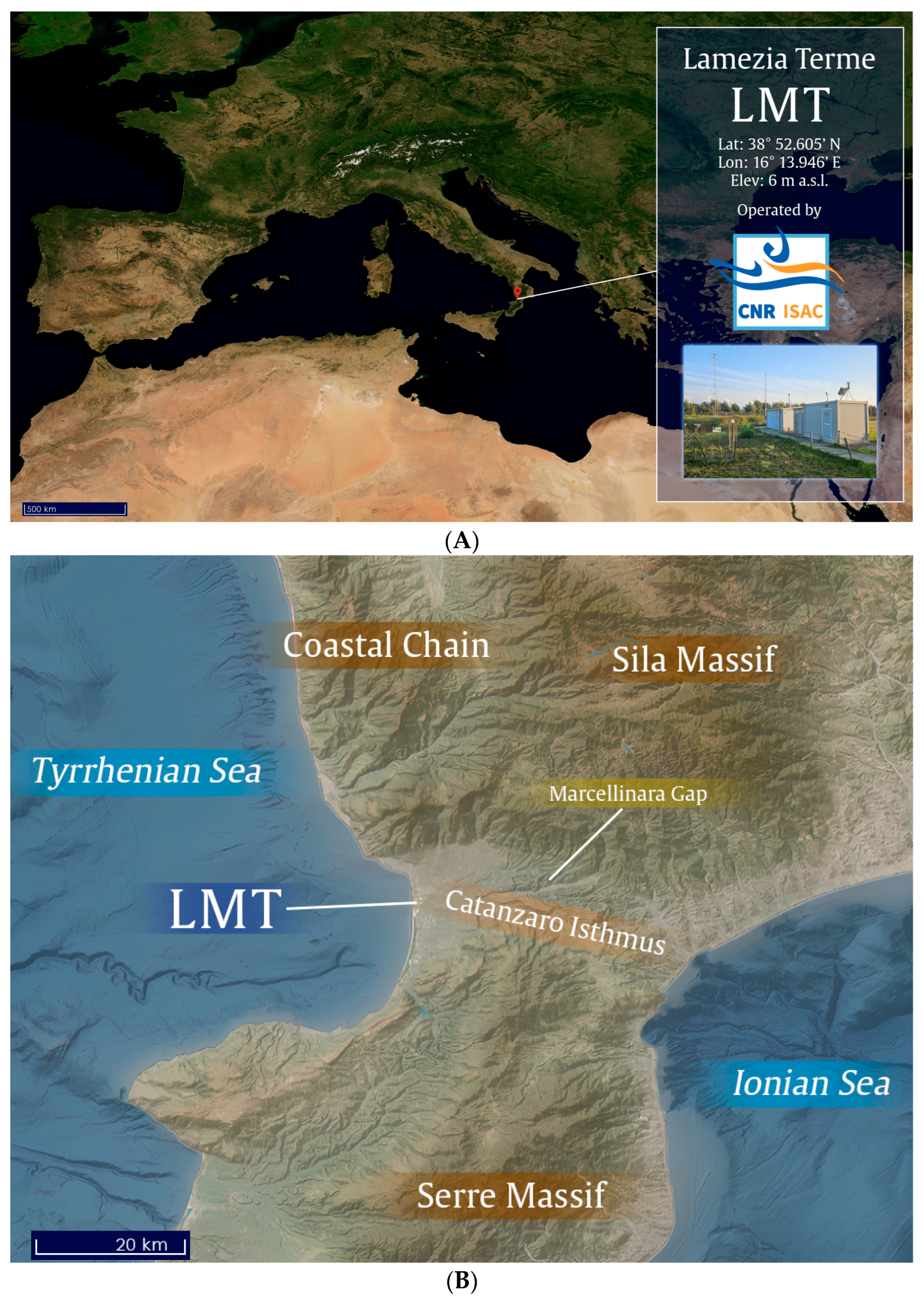
The first COVID-19 lockdown (LD) in 2020 constitutes a unique circumstance for the assessment and evaluation of emission sources, thanks to the exploitation of a period characterized by very low anthropogenic emissions. At the Lamezia Terme (LMT) site in Calabria, Italy (
Figure 1), previous research analyzed the behavior of a number of parameters at the site [
83]. This allowed us to verify a number of hypotheses raised in previous works concerning the contributions of local sources of emission [
84,
86,
119]. However, without an adequate methodology for the assessment of local and remote sources of emission, the previous work accounted for all measurements and therefore could not provide a high degree of detail concerning local variability. Additionally, the previous work did not consider SO
2.
The full extent of governmental limitations on anthropic activities in the area around LMT is difficult to assess in detail due to the absence of publicly available data. In a previous work, thanks to data provided by ANAS (the national agency managing highways and state highways), LMT measurements were compared with highway and state highway traffic data in the western Catanzaro isthmus, showing a sharp decline in emissions linked to vehicular traffic in LMT’s northeastern sector [
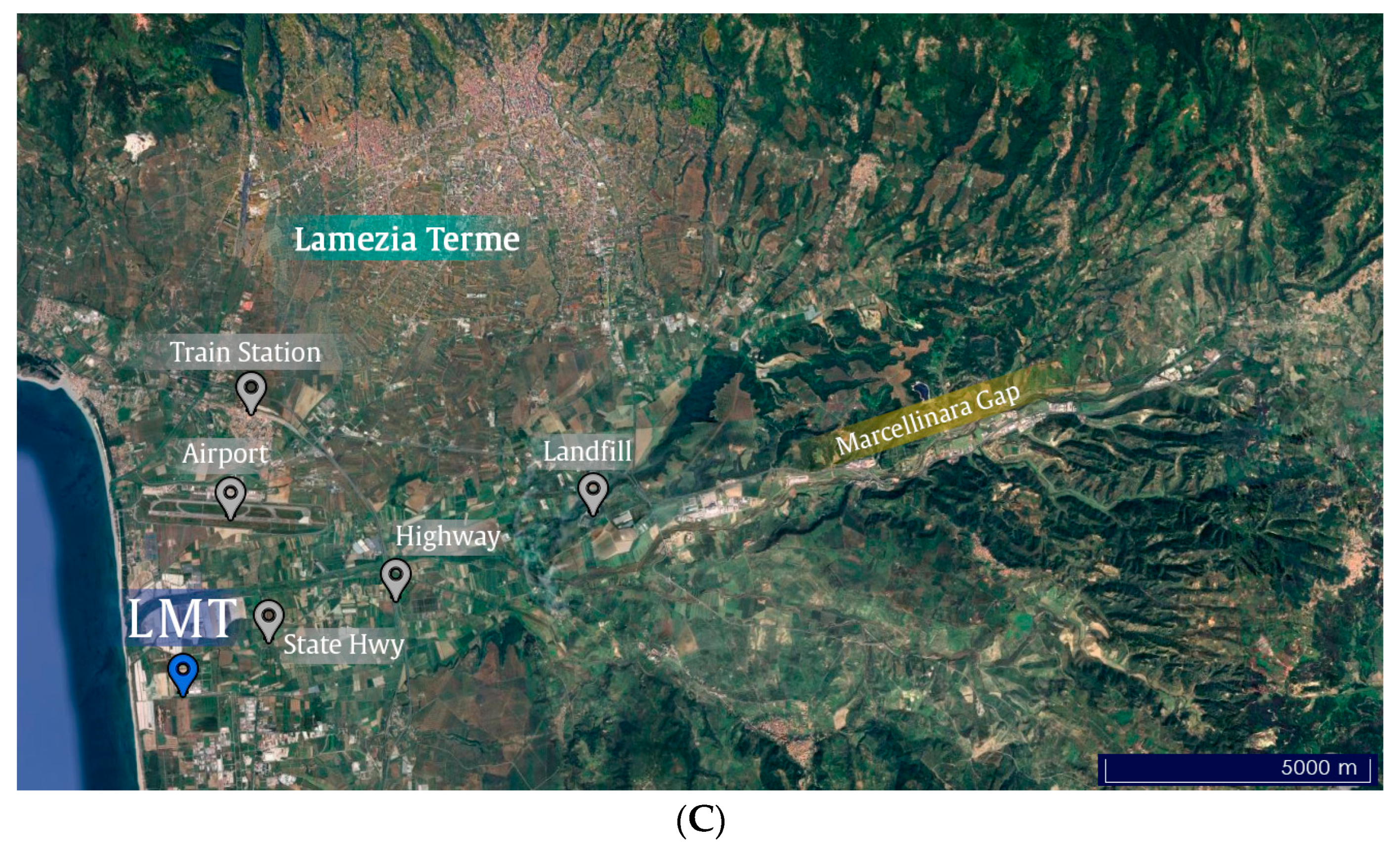
85]. Conversely, waste treatment plants in the industrial area of Lamezia Terme showed no tangible activity reduction due to waste management activities being largely unaffected by governmental restrictions. LMT is located in the northernmost part of the industrial area (
Figure 1C), and local near-surface wind circulation is primarily oriented on a W-NE axis, thus making southern winds coming from the industrial area a rare occurrence at LMT [
115,
116,
117].
This work constitutes the first implementation of the ONRPI (Ozone to Nitrogen Oxides Ratio Proximity Indicator) methodology to data gathered during a period with reduced anthropogenic emissions. At the LMT site, the ONRPI has been successfully applied to CO, CO
2, and CH
4 [
87], as well as SO
2 and eBC [
192], and also allowed the pinpointing of data particularly affected by anthropogenic emissions [
190]. This evaluation considers surface data gathered at LMT only, which cannot provide a full regional-scale picture of the balance between emissions during the study period. Previous research based on the ONRPI at LMT shows that the method is very sensitive to short-range emissions [
87], especially when very low O
3/NO
x ratios are considered, where proximity categories can change substantially in the range of only a few kilometers [
190].
Despite the effectiveness of the method, in order to be applicable, the ONRPI requires several instruments to operate at the same time: in addition to valid O
3 and NO
x measurements necessary to calculate the ratio, other instruments or even combinations of instruments all need to operate at the same time to ensure the applicability of the method [
87]. Before, during, and after the LD period at LMT, the resulting coverage rate of the ONRPI is affected by these restrictions (
Table 1). Overall, the resulting coverage rates fall between the 89.07% and 91.14% thresholds, with a peak of 99.88% during the LD period for SO
2. The resulting filtered datasets therefore allowed a detailed analysis of the ALD, LD, and PLD periods at the site. Furthermore, based on the findings of a previous work [
190], the correction accounting for NO
2 overestimation (COR) and enhanced correction accounting for O
3 photochemical production (ECOR) have been extended to all categories from URB to BKG, as they were previously limited to R–SRC and BKG, only, as representative of aged air masses [
84,
87]. The present work therefore accounts for a total of 18 categories (
Table 2), thus marking the most extensive use of the thresholds based on the O
3/NO
x ratio in research. The analysis of all parameters and their respective variability between ALD, LD and PLD (
Figures S1 and S2) is well representative of the characteristics of each parameter and its seasonal shifts. The implementation of proximity categories allows us to better differentiate measurements based on air mass aging indicators, thus leading to a more detailed understanding of local-to-remote balances in the region during the ALD, LD, and PLD periods. CO (
Figures S1A and S2A) shows very high peaks in N–URB (269.32 ± 108.7 ppb) and URB (211.29 ± 2.8 ppb) during ALD, with a consequent decline during the LD period (N–URB: 160.53 ± 34.4 ppb) and, consequently, PLD (N–URB: 112.84 ± 13.8 ppb). It is worth mentioning that URB is severely underrepresented in the study period (only three hourly measurements are flagged as URB, thus constituting ~0.06% of the entire dataset, and only one measurement is flagged as URB
cor/URB
ecor), and reported concentrations, as well as the standard deviation, may not reflect pure “urban” conditions at the site. This tendency underlines a major shift in urban-level emissions from high CO outputs attributed to transportation and, most likely, domestic heating, to lower concentrations reflecting reduced emissions at a local scale. LOC and, to some degree, N–SRC show a different behavior, as they reach a peak during the LD period (LOC: 173.76 ± 44.6 ppb; N–SRC: 139.38 ± 28.1 ppb), followed by a gradual decline. This pattern is compatible with CO outputs from domestic heating over a regional area [
119], culminating during the LD and entering a decreasing trend due to the increase in temperatures typical of the boreal Spring and the transition to Summer. This particular pattern is barely noticeable in R–SRC, further indicating that its nature could be regional; conversely, BKG shows no clear pattern and is completely absent during the ALD period and most of the LD (98.15 ± 5.0 ppb), with minimal oscillations around concentrations typical of the atmospheric background [
87,
138]. This is consistent with previous research indicating that the BKG category is characterized by very low variability: it yields the lowest concentrations in the record, and data have minimal oscillations around the average (
Figure S2, Table S1).
The influence of domestic heating on LMT’s measurements has been discussed in previous research [
84,
86,
87,
119]; however, there are no available data on the true extent of biomass burning related to this particular source of emission. The official air quality report issued by the Regional Council acknowledges the presence of diffused, domestic-related CO emissions contributing up to ~10% of the regional anthropogenic budget, and promotes the implementation of more energy efficient and sustainable means to generate heat in Calabrian households [
206]. A study by Putaud et al. [
207] found evidence of increased LD emissions in Italy attributable to wood burning for domestic heating purposes.
The previous work on the LD period at LMT found that CO variability was anticorrelated with average temperatures, providing evidence of a temperature-dependent source compatible with domestic heating. Additionally, the hydroxyl radical (OH)—which is an effective sink of CO—is lower during the winter season, thus causing wintertime (in this case, PLD and LD) concentrations of CO to be higher [
158,
208].
CO
2 (
Figures S1B and S2B) is characterized by major fluctuations between URB, N–URB, and LOC, with LOC showing a considerable amplitude in these oscillations, as well as the presence of relevant peaks during LD (450.79 ± 19.77 ppm) and PLD (460.11 ± 25.10 ppm) which are not present in the ALD (437.39 ± 11.15 ppm) period. The high degree of oscillations during the LD and, in particular, the PLD periods in N–URB through N–SRC is consistent with photosynthesis and the carbon sink typical of boreal warm seasons: the ONRPI categorizes air masses based on the O
3/NO
x ratio, and does not therefore consider the photosynthetic sink [
87]. The presence of LD and PLD peaks can be observed in N–SRC, while R–SRC and BKG indicate higher degrees of stability and values well representative of atmospheric background levels. During the LD, BKG is 418.59 ± 2.50 ppm, higher than its PLD equivalent (412.38 ± 3.49 ppm) which is affected by photosynthesis. This shows the importance of implementing the ONRPI to factor out the atmospheric background from evaluations on local budgets. A study by Rugano and Caro [
209] showed that central Calabria, likely due to its leading rural nature, did not experience the same CO
2 reduction seen in northern Italian regions, which were the most affected by LD measures and restrictions. These factors, combined, may explain CO
2’s oscillations at the site during the study period.
A peculiar behavior is seen in CH
4 (
Figures S1C and S2C), where LOC, during the ALD period, is characterized by several peaks, unlike CO
2. Although R–SRC and BKG remained stable and showed minimal influence of the LD (LD BKG: 1943.13 ± 7.2 ppb; PLD BKG: 1943.13 ± 7.2 ppb), N–SRC underlines gradual increases during the LD (1973.22 ± 33.7 ppb) and PLD (1986.88 ± 74.4 ppb) periods, which do not match the known patterns of CH
4 at the LMT site [
86,
87,
119] and other Mediterranean stations [
210,
211,
212], as the peaks are regularly linked to the Winter season. Other studies in the Mediterranean also reported that CH
4 followed patterns not perfectly aligned with the decline in anthropic activities [
213]. These patterns show the presence of constant emission sources in the area, which remained rather unaffected by the transition from ALD to LD: this hypothesis is compatible with livestock farming and agricultural activities, mentioned in previous works as possible drivers of local peaks of CH
4 [
84,
87]. The LD increase observed for N–SRC (ALD: 1957.40 ± 32.8 ppb; LD: 1973.22 ± 33.7 ppb; PLD: 1986.88 ± 74.4 ppb), which is in contrast with the known seasonal pattern at LMT, would be compatible with an increase in CH
4 mole fractions caused by domestic heating. Waste outputs of CH
4 are also expected to remain constant during the LD [
214], and an increase in CH
4’s atmospheric lifetime caused by reduced NO
x outputs has also been considered as a driver of its patterns during the LD and PLD periods [
215].
Of particular importance is the behavior of SO
2 (
Figures S1D and S2D), which contributes to a more detailed understanding of its variability at LMT. While the URB, N–URB, and LOC concentrations are stable during the entire period, the other categories show the presence of remote emission sources affecting SO
2 variability at the site. This finding is not in agreement with research on LD variability performed at other sites, where the LD was reported to cause reductions of ~50% in SO
2 concentrations [
216,
217]. There are also reports of areas in Italy where SO
2 concentrations were not substantially affected by LD measures, however [
69]. At LMT, previous works mentioned the Aeolian Arc of volcanoes, located only a few dozen kilometers from LMT, and maritime shipping as the possible sources of SO
2 peaks [
163,
192]. Eruptions of a significant magnitude are rare and the resulting columns of volcanic outputs would require ad hoc methodologies in order to be assessed in terms of air mass transport and diffusion, such as the upgraded 3D-PSCF model by Dimitriou et al. [
218]; however, previous research highlighted the impact of continuous SO
2 emissions in the area (e.g., fumaroles, degassing), which have been documented to compromise air quality and worsen health issues in the Aeolian Islands [
219,
220]. Stromboli alone is known to release ~5 kg of SO
2 per second [
221]. These continuous emissions are not negligible and affect the regional budget in the western sector of LMT.
The variability of eBC (
Figures S1E and S2E) is very closely related to that of CO, with R–SRC and BKG yielding very stable concentrations, while URB to N–SRC are characterized by more fluctuations; in particular, N–URB and LOC show an important local contribution during the ALD period which is not present in N–SRC, underlining the impact of local sources of emission, such as highways, during the ALD period, and the greater impact of domestic heating during the LD period itself, with a number of fluctuations linked by previous research to domestic heating as they were found to be related with the lowest temperature of the period [
83]. The change in the amplitude of these fluctuations between the ALD and LD periods in N–SRC is compatible with a greater regional output during the LD period caused by more people relying on domestic heating due to the restrictions introduced by the government [
62,
64]. It is also worth noting that eBC peaks at ~6.1 μg m
−3 in the entire dataset, well below the ~9 μg m
−3 threshold past which MAAP measurements are less reliable [
222].
The variability of parameters between periods and proximity categories is also affected by changes in the O
3/NO
x ratio itself during the study period (
Table 3), which are also well representative of shifts in the balance of emissions. From the analysis of categories alone it is possible to infer that the ALD period shows a limited number of hourly data falling under the URB category (STND: 0.33%; COR/ECOR: 0.11%), indicating very high degrees of anthropogenic pollution; additionally, the ALD period is characterized by the absence of measurements falling under the standard BKG category, thus indicating a large-scale influence of anthropogenic emissions before the LD. During the ALD, the atmospheric background is reported only via the implementation of COR and ECOR, which report only 6.64% of measurements falling under this category. During the LD and PLD periods, URB effectively disappears under all circumstances, further showing the shift in anthropogenic emissions occurred during the study period. N–URB also shows a sharp decline but does not completely disappear during the LD and PLD periods. During the PLD period, the BKG categories all reach notable peaks: this is particularly significant in the case of BKG
ecor at 29.27%, considering that ECOR reduces the O
3/NO
x ratio by halving O
3 under specific circumstances [
87]. The intermediate categories show heterogeneous patterns between periods; however, it is worth mentioning the peaks reached by N–SRC during the LD period (up to 55.86% in the case of N–SRC
ecor), which clearly indicate a strong footprint of anthropogenic emissions over a regional scale unlike the ALD and PLD periods.
In previous research, the analysis of concentrations representative of each category was found to be particularly relevant when applying the ONRPI methodology [
84,
87,
190,
192]. In
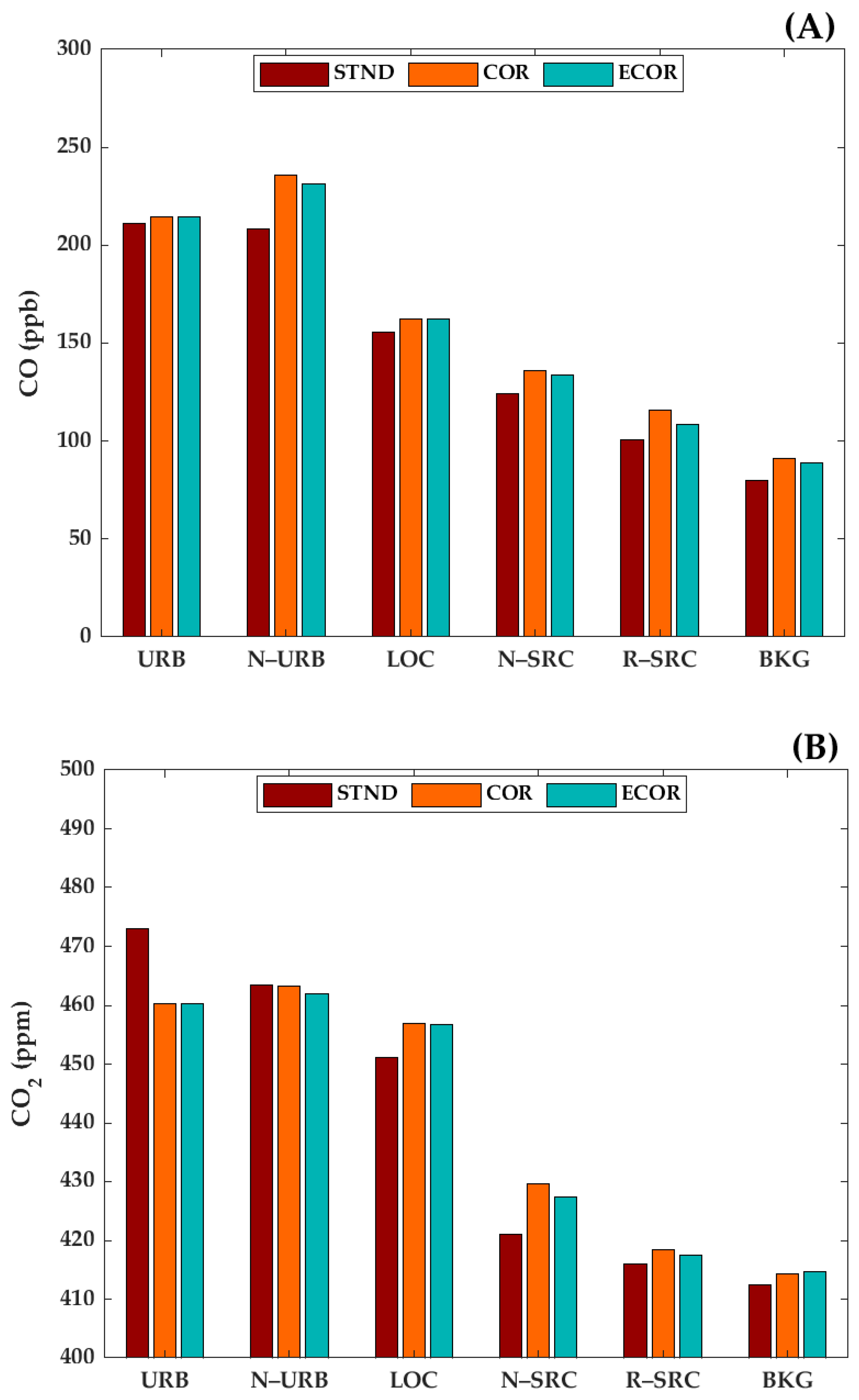
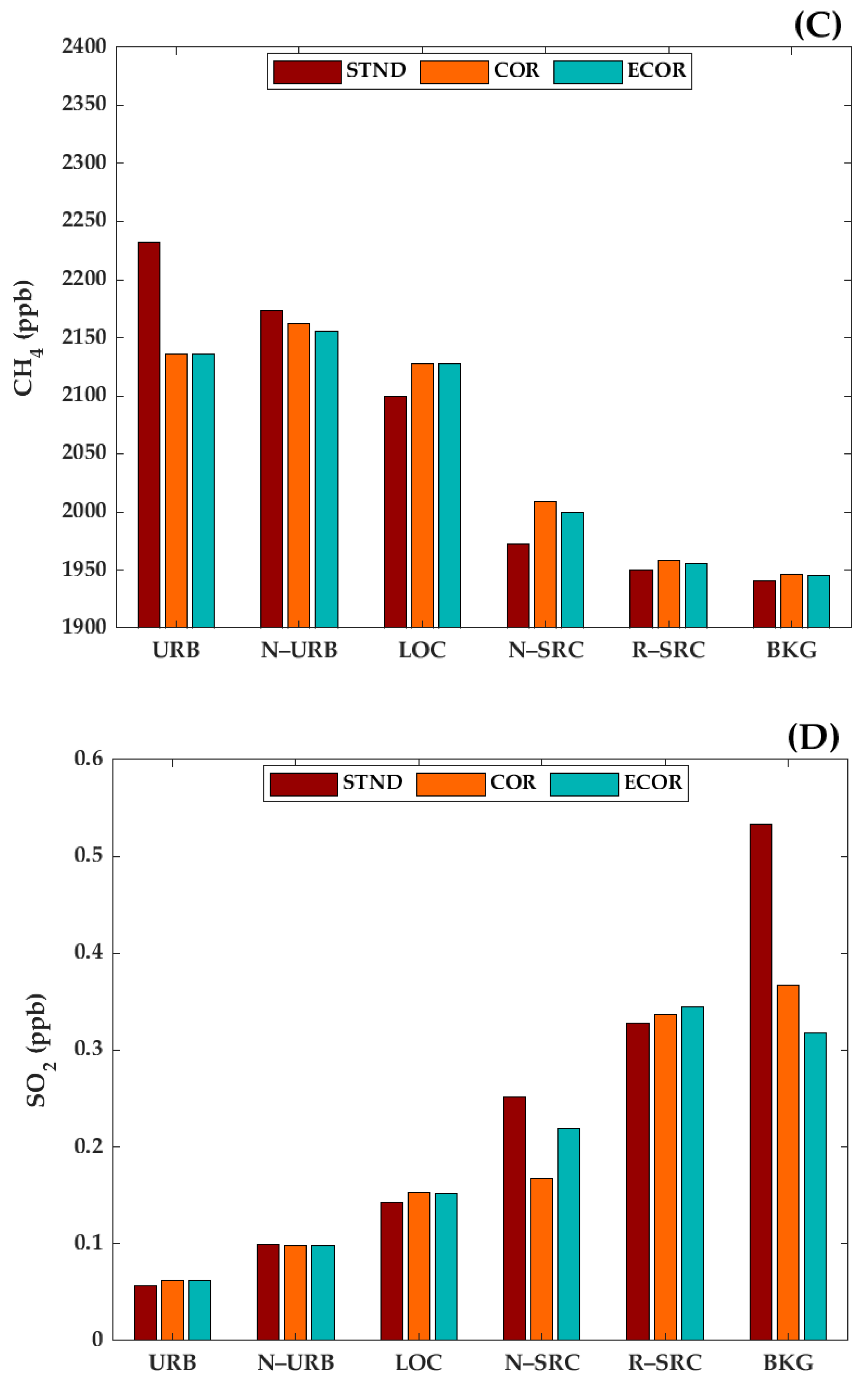
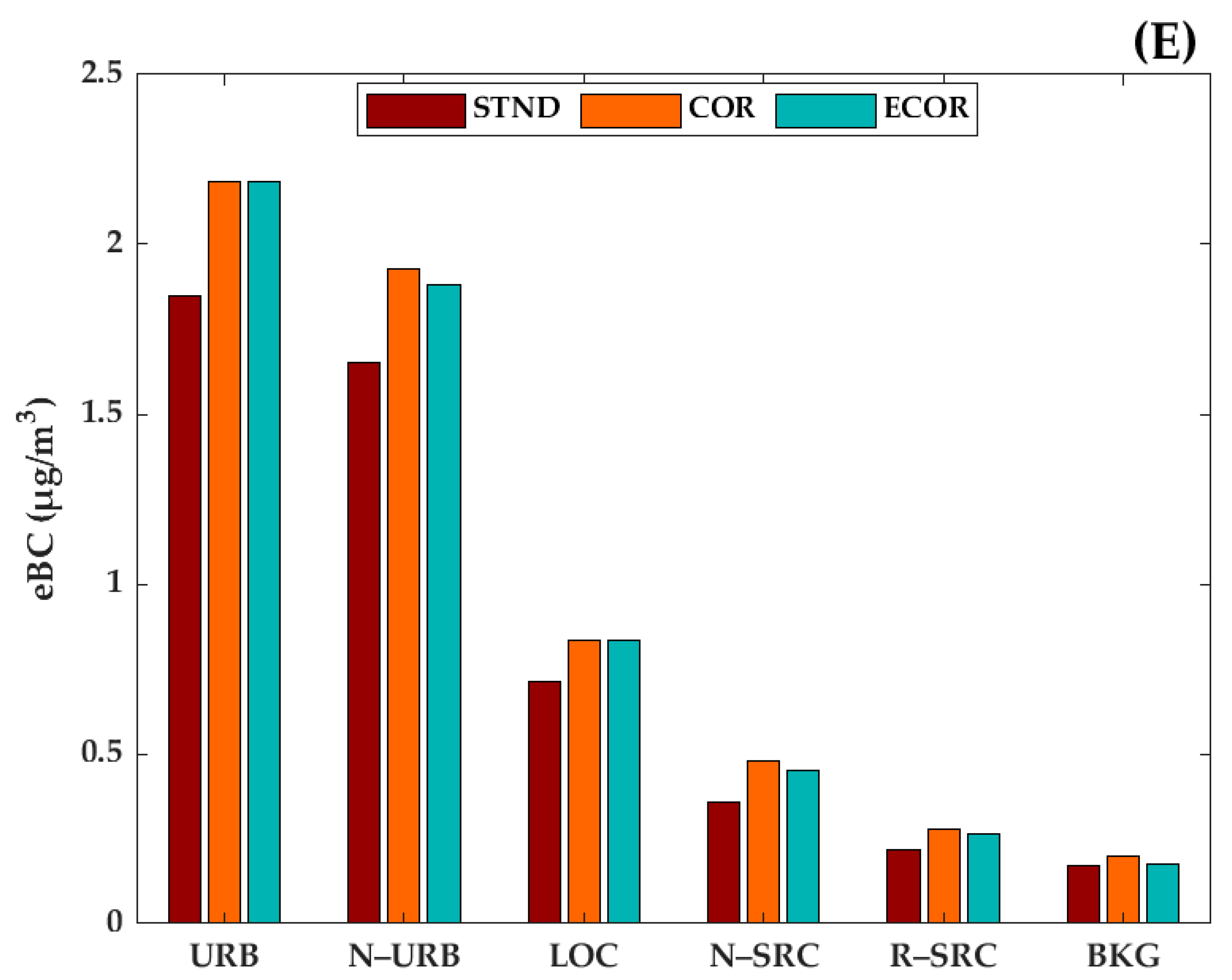
Figure 2, the transition between STND, COR, and ECOR categories shows that STND generally yields lower concentrations, although several exceptions are reported. COR tends to increase the O
3/NO
x ratio by halving NO
2, thus causing more data to fall under BKG and other categories linked to higher ratios. ECOR counterbalances the effect by reducing O
3 under specific circumstances, thus impacting R–SRC and BKG. Without considering the anomalous behavior of SO
2 (
Figure 2D), all other parameters show a clear transition from high URB and N–URB concentrations to very low BKG concentrations. CO (
Figure 2A) in particular shows higher N–URB concentrations compared to URB, but it is worth noting that only a fraction of measurements in the ALD period fall under URB, thus affecting its representativeness. The reduced coverage of URB also affects the variability indicator of the category in
Table 4,
Table 5 and
Table 6, as the low number of measurements results in URB concentrations frequently yielding a 1σ interval of ±0.0. Overall, the data show a gradual decrease from URB to BKG, with the well-known exception of SO
2, and also show generally decreasing 1σ intervals, thus reflecting high variability around URB, and very low variability around the BKG values, which are very stable.
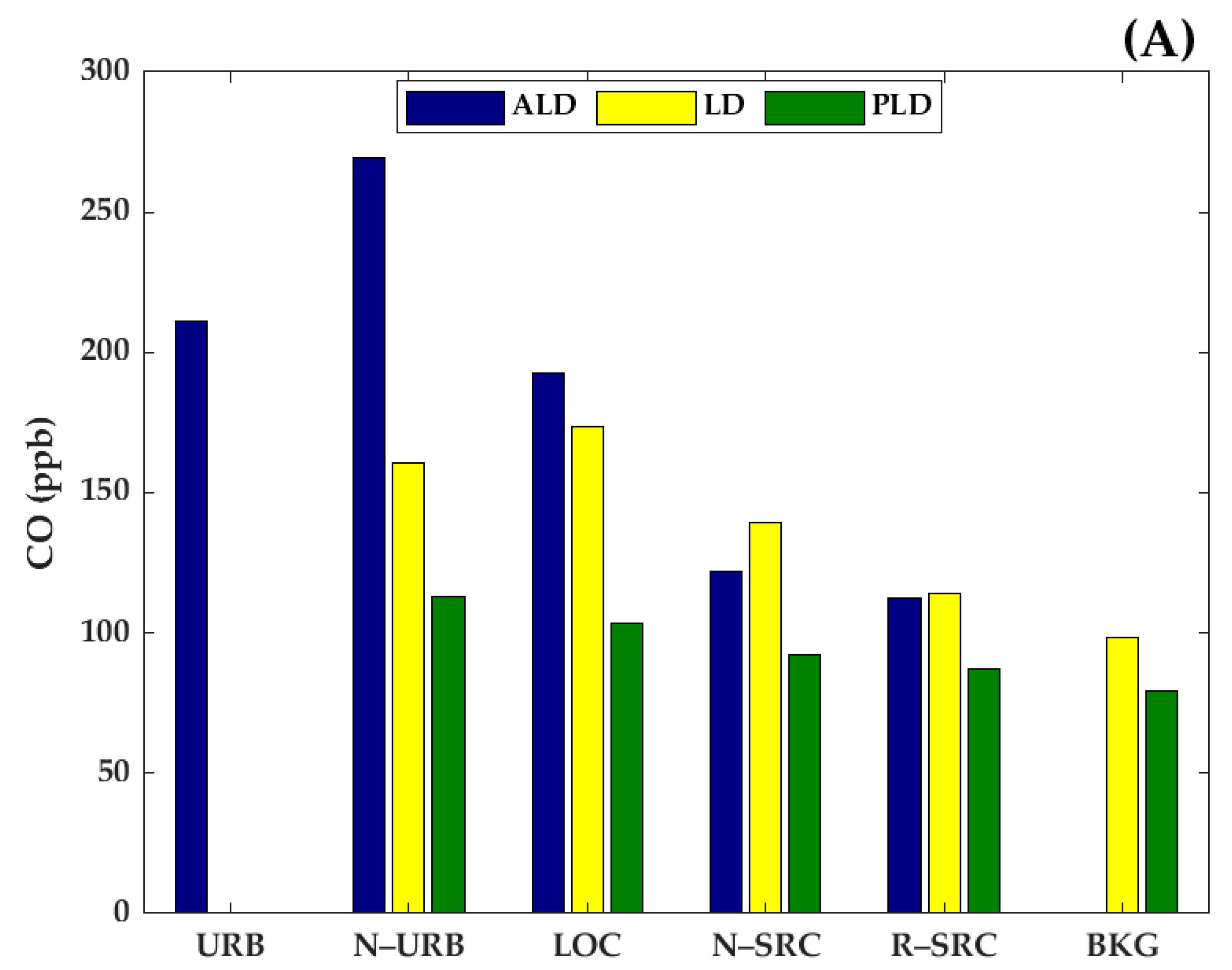
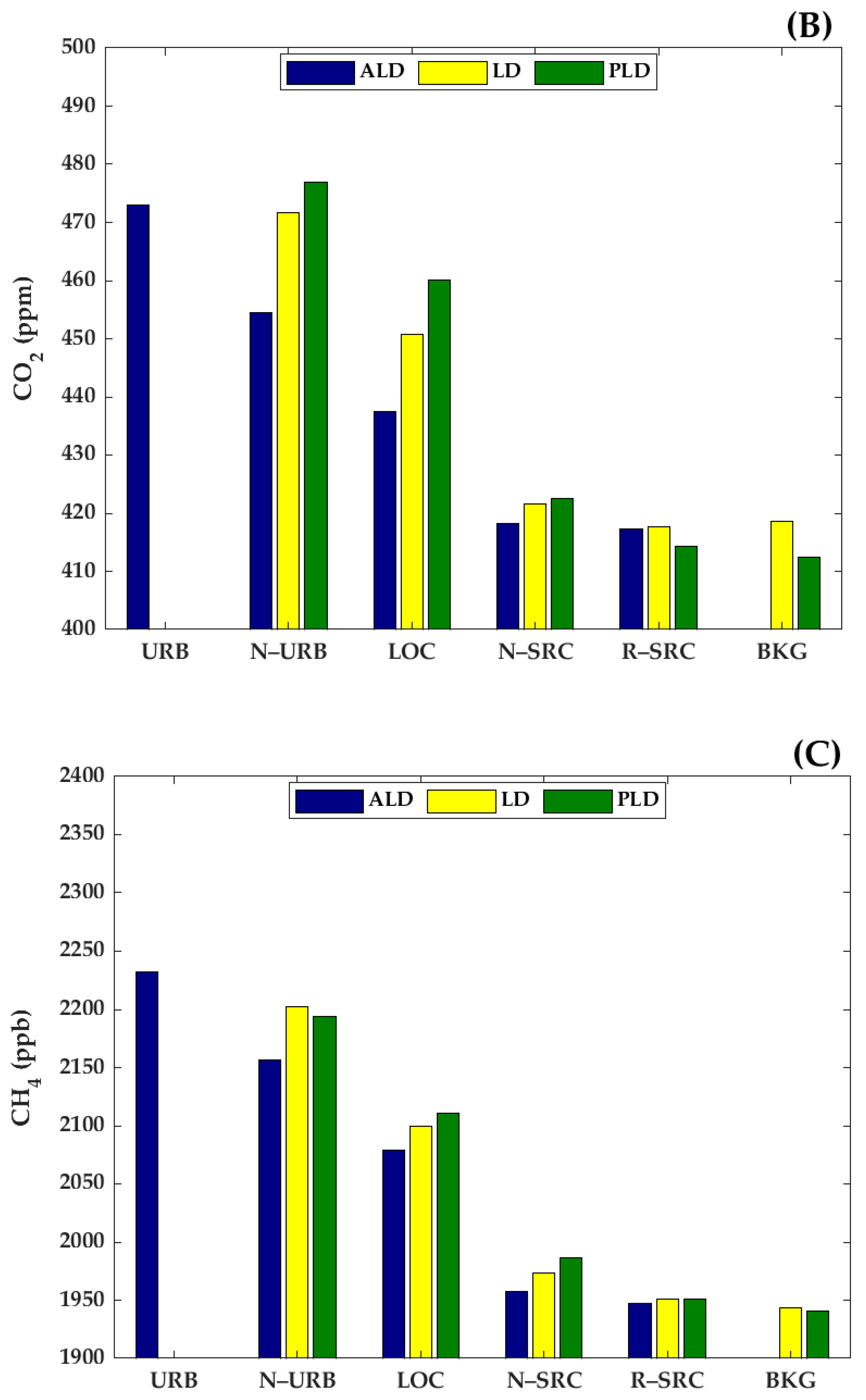
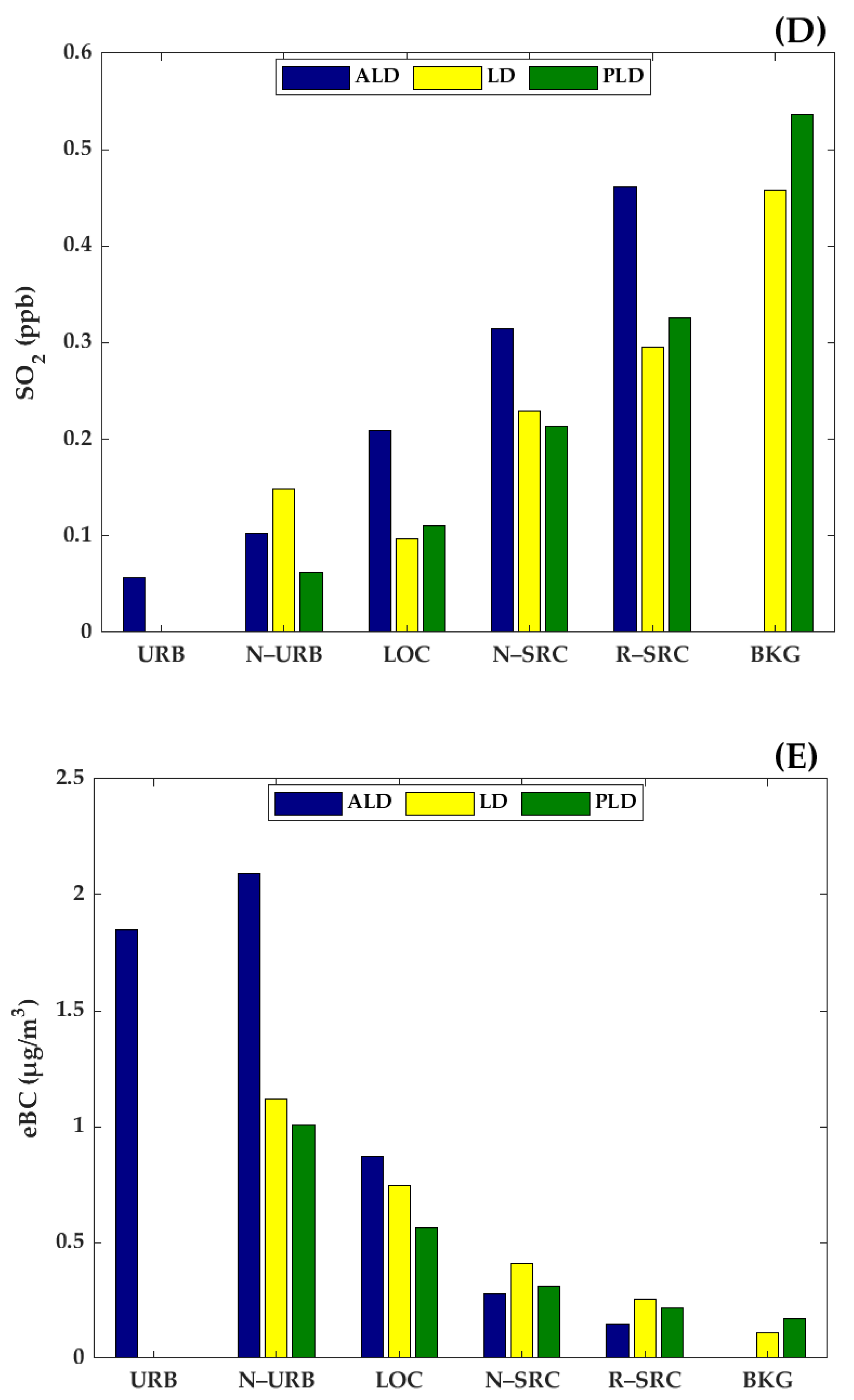
When the periods are considered instead (
Figure 3) (
Table S1A–I), the effects of LD restrictions become noticeable: URB is notably absent in LD and PLD, while BKG is not present during the ALD period.
Figure 3 shows that even during a period characterized by exceptionally low anthropogenic emissions, the ONRPI is still effective at differentiating data based on the aging of air masses.
The analysis of weekly cycles is an efficient tool to discriminate between natural and anthropogenic sources due to the absence of weekly patterns in the former. It is possible, however, for anthropogenic emissions to have no well-defined weekly patterns, thus restricting this method to specific circumstances. At LMT, the analysis of weekly patterns has improved over time [
85,
86,
87,
119,
163,
184,
190] and presently constitutes the most detailed evaluation of this kind currently being performed in the national network of atmospheric stations. As previous research showed non-negligible weekly patterns, the study period was assessed to verify the statistical significance of the differences between WD (weekday, MON-FRI) and WE (weekend, SAT-SUN).
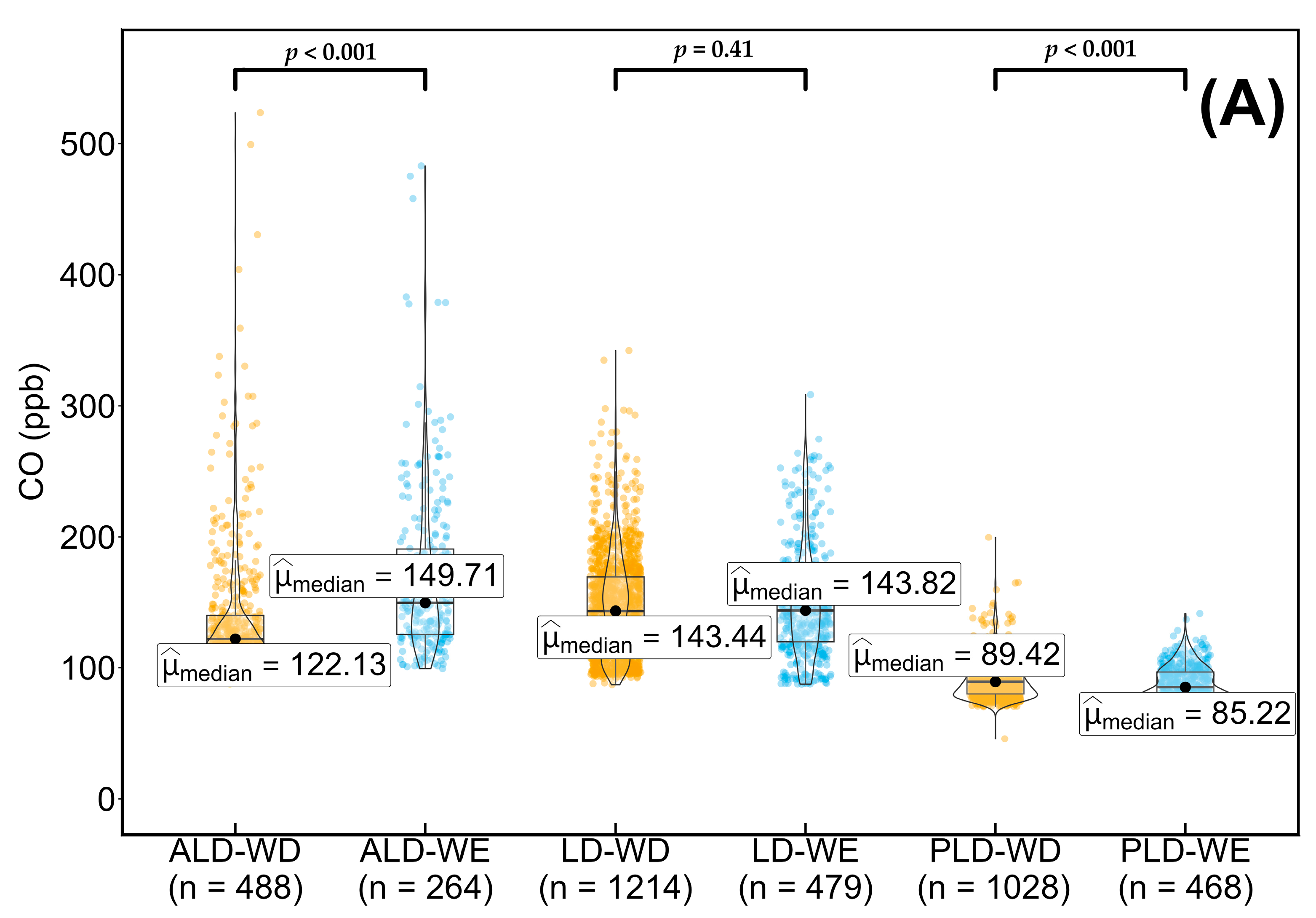
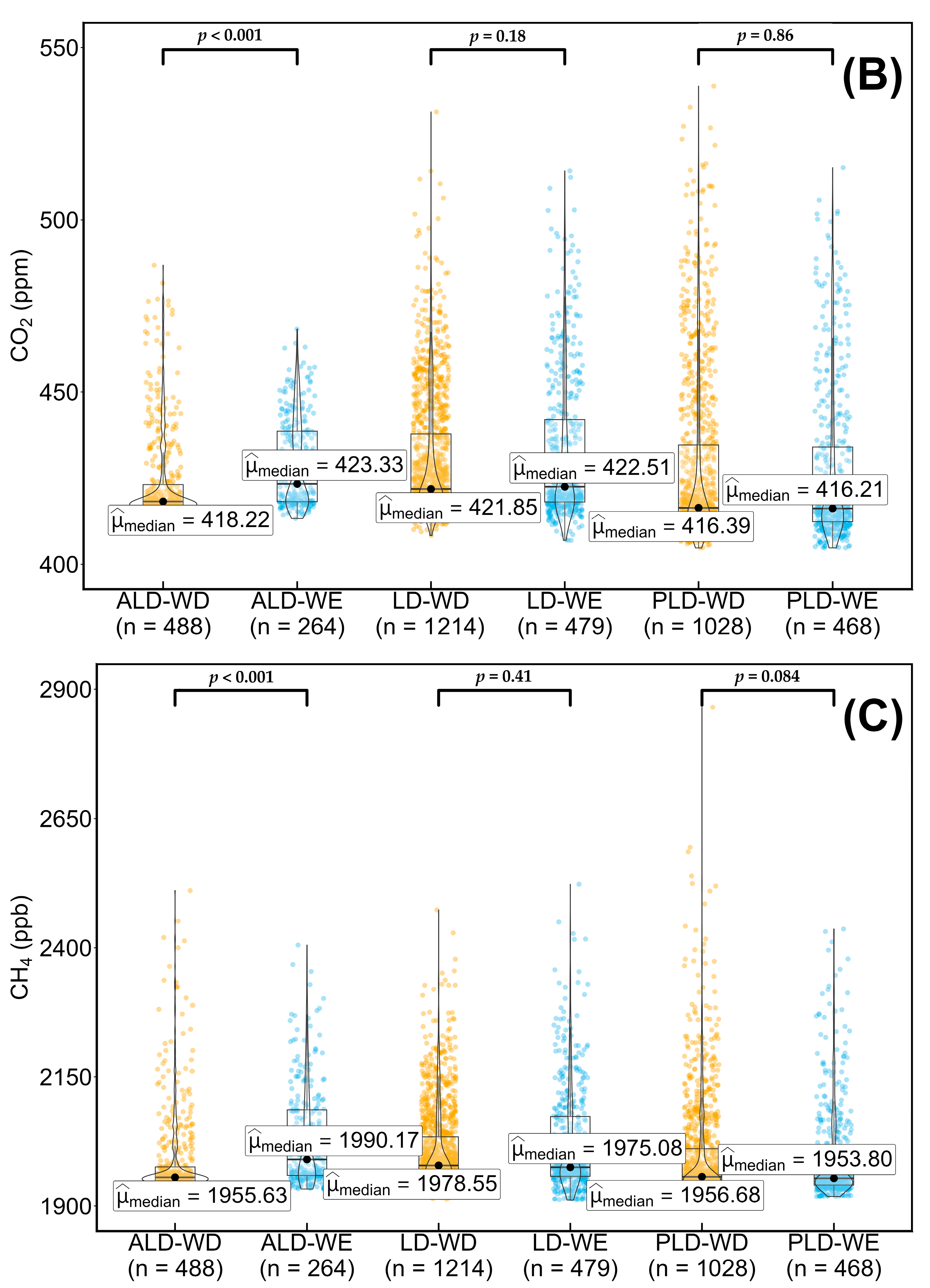
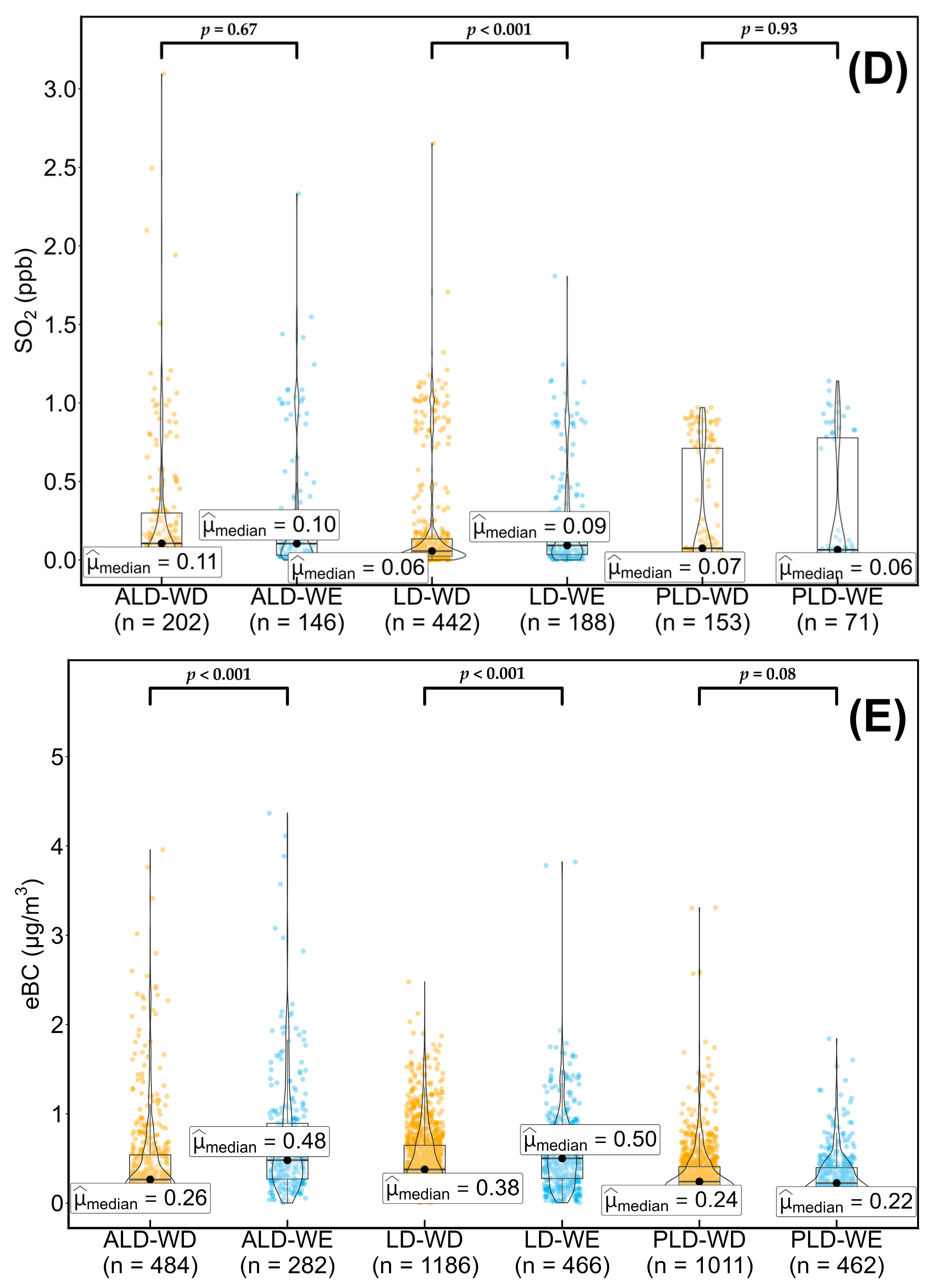
Figure 4 shows, in addition to the medians of all distributions falling in each combination of period and WD/WE, the results of pairwise Wilcoxon (Mann–Whitney U) [
202] tests. For CO (
Figure 4A), the results show the presence of well-defined weekly patterns in ALD (WD
μ: 122.13 ppb; WE
μ: 149.71 ppb;
p-value < 0.001) and PLD (WD
μ: 143.44 ppb; WE
μ: 143.82 ppb;
p-value = 0.41), compatible with regular anthropic activities characterized by such cycles (e.g., transportation), and the absence of similar patterns during the LD period, as most CO outputs were likely resulting from domestic heating and remained constant over time. The observed change in behavior occurred in a very short time span and is representative of the shifts in emission balances that occurred between the ALD and LD periods. CO
2 (
Figure 4B) shows a very significant weekly pattern during the ALD period (WD
μ: 418.22 ppm; WE
μ: 423.33 ppm;
p-value < 0.001), and non-significant patterns during LD (
p-value = 0.18) and PLD (
p-value = 0.86): while the former is deemed a direct consequence of governmental restrictions, the latter yields lower concentrations, typical of the warm boreal season due to intense photosynthetic activity [
87,
119,
138,
190] and the presence of anthropic activities not influenced by a proper weekly cycle, such as summertime tourism in Calabria [
85]. CH
4 (
Figure 4C) shows an identical pattern, with a very significant ALD (WD
μ: 1955.63 ppb; WE
μ: 1990.17 ppb;
p-value < 0.001) weekly cycle and the absence of such patterns during the LD and PLD. Like CO
2, CH
4 concentrations during the warm seasons have been reported to be considerably lower at LMT [
86,
87,
119,
138]. With constant emission sources such as livestock reported around the site [
84,
87], the absence of a weekly pattern becomes prominent in the PLD (WD
μ: 1956.68 ppb; WE
μ: 1953.80 ppb;
p-value = 0.084) period in particular, with domestic heating no longer being a factor due to the higher temperatures of the period. Waste treatment-related emissions are also believed to be largely unaffected by the LD. Conversely, these extra emissions would be the cause of very significant weekly cycles during the ALD; the consequent LD would then distribute these emissions equally during the week, thus causing an abrupt transition from an extremely significant (ALD,
p < 0.001) to a non-significant (LD,
p = 0.41) cycle. The weekly cycle of SO
2 (
Figure 4D) shows an “anomaly within the anomaly”, as the LD period is the only one characterized by a significant weekly cycle (WD
μ: 0.06 ppb; WE
μ: 0.09 ppb;
p-value < 0.001), with WE concentrations ~50% higher than their WD counterparts. The significance of this pattern could be due to the very low concentrations reported at LMT during the study period, and needs to be assessed in greater detail using proximity categories. Furthermore, SO
2 variability is influenced by sources such as maritime shipping in the Mediterranean, which are difficult to factor out [
138]. eBC (
Figure 4E) shows significant ALD (WD
μ: 0.26 μg/m
3; WE
μ: 0.48 μg/m
3;
p-value < 0.001) and LD (WD
μ: 0.38 μg/m
3; WE
μ: 0.50 μg/m
3;
p-value < 0.001) weekly cycles likely driven by domestic heating, as the difference between WD and WE is considerably lower in the LD period (0.12 μg/m
3) compared to the ALD period (0.22 μg/m
3). This does not explain, however, the presence of a significant cycle during the LD, which is absent in CO. Conversely, the PLD is characterized by lower concentrations typical of warm seasons which make weekly cycles of eBC less prominent, as previously evidenced in another work, where eBC variability at the site is generally driven by sporadic, open fire-related outputs [
119]. In addition to the total concentrations, this study performed a detailed weekly cycle analysis accounting for all categories, i.e., STND (
Table S2A), COR (
Table S2B), and ECOR (
Table S2C). The Kruskal–Wallis [
201] test requires a sufficient number of measurements in each WD/WE pair to be performed, thus leading to gaps. Specifically, none of the URB cycles could be assessed, and many N–URB and BKG were also affected due to the absence of data and the effects of correction factors. Overall, the intermediate category N–SRC shows to be the most affected by weekly cycles, reflecting weekly changes in the balance of emissions on a local-to-regional scale, while N–URB, LOC and R–SRC are less affected, indicating that sources in the area of LMT, as well as remote sources, are more dispersed. BKG is even less affected, showing that the atmospheric background remained stable during the period, and the ONRPI methodology can effectively differentiate it from other sources. When it comes to specific parameters, CO and eBC show the presence of the highest number of significant weekly cycles, with CO characterizing the ALD and PLD periods, indicating a strong fingerprint related to emissions that were affected by governmental restrictions, and eBC the LD period. SO
2 and eBC yield no valid weekly cycles during the PLD period, thus showing evidence of a shift in the prevailing nature and behavior of emissions [
119,
163,
192]. A study by Grivas et al. [
223] showed a significant BC rebound in Athens, Greece following the 2020 LD; at LMT, a PLD rebound of eBC is reported for categories up until N–SRC, while R–SRC and BKG remain unaffected (
Figures S1E and S2E). The absence of a weekly cycle does not automatically exclude anthropic influences; instead, it indicates a shift towards emissions more evenly distributed over the course of a week, with no substantial differences between WD and WE.
The analysis of contrasts between day and night, which are known to characterize the variability of data at LMT [
83,
85,
86,
87,
184,
190], is assessed in this work using the same methodology applied to the weekly cycle [
85]. Previous research evaluated these contrasts and reported on their variability without implementing the same statistical methods applied to the weekly cycle; in this work, the two assessments are homogenized, thus showing a new and integrated method for the analysis of the day–night contrast at LMT. The pairwise Wilcoxon [
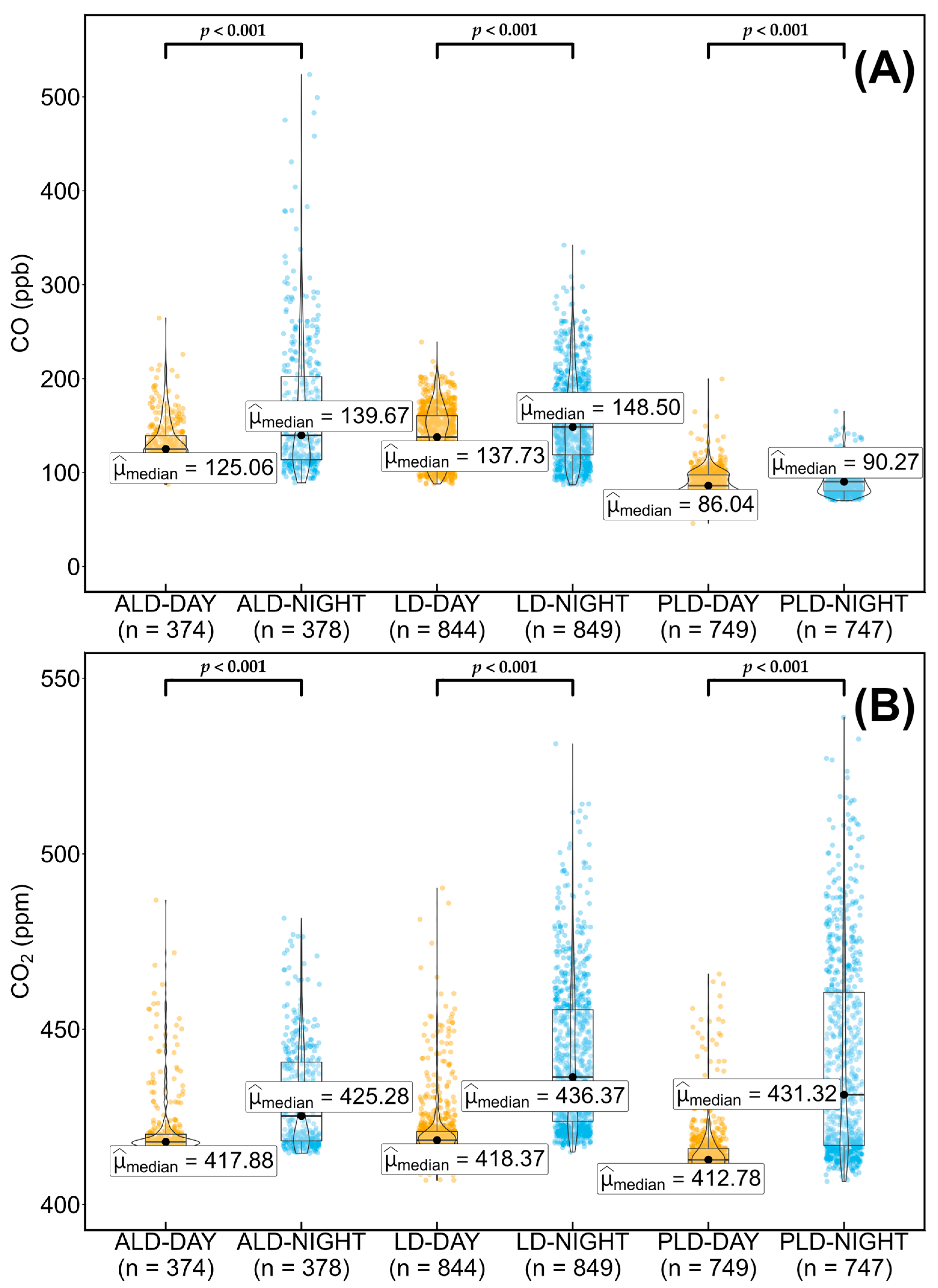
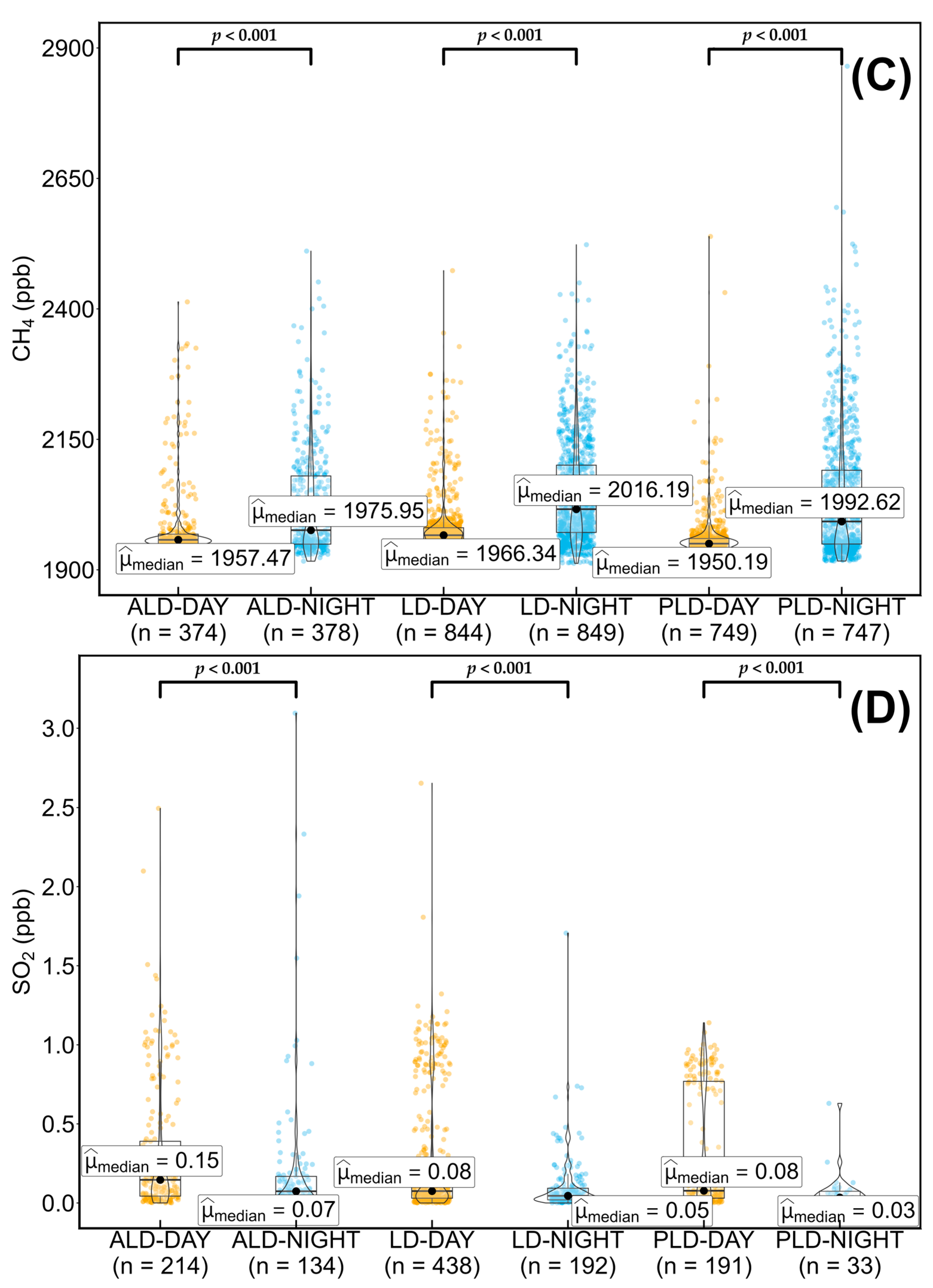
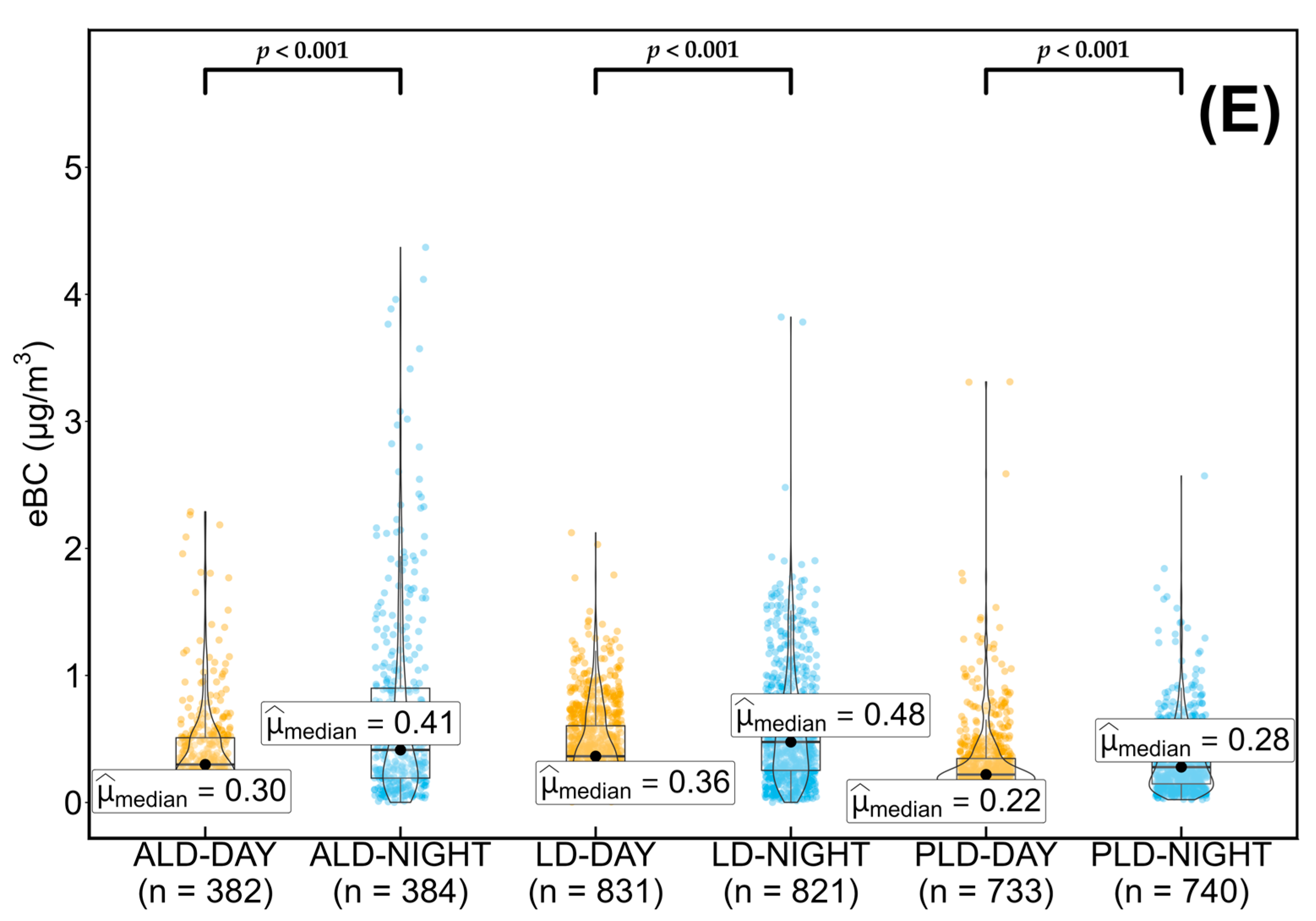
202] test applied to diurnal/nocturnal pairs shows statistically relevant results for all combinations (
Figure 5), indicating that the contrast is a key regulator of local variability, unlike the weekly cycle. Like the weekly cycle, this is also affected by the coverage of specific categories, and several gaps (most notably, the entire URB category) are present (
Table S2D–F). From the statistical analysis, the intermediate categories LOC and N–SRC are the most affected, well representing the effects of diurnal/nocturnal shifts in emission on a local-to-regional scale. As a parameter, CO
2 is considerably affected by daily oscillations due to increased photosynthesis linked to the boreal Summer in PLD [
119], although the ALD and LD are also partially affected by the phenomenon, as previously reported in
Figures S1B and S2B. Conversely, SO
2 is the least affected, showing that remote sources (volcanoes, maritime shipping) [
163] not influenced by the day–night contrasts are prominent regulators of its variability. It is also worth mentioning that CO yields relevant day–night contrasts throughout the entire period, while eBC (which has so far shown a very similar behavior) does so only during the PLD.
The last evaluation of the study relies on the PPF, introduced in a previous work [
192], to assess the balance between local and remote sources during the study period. The PPF indicates whether a given parameter follows a regular pattern from local, enriched concentrations attributable to anthropogenic emissions, and remote, very low concentrations representative of the atmospheric background. In previous research, all parameters with the exception of SO
2 yielded positive PPF values, highlighting the anomaly of SO
2 at the site and showing the presence of remote sources exceeding local outputs. In
Table 7, PPF values of ALD, LD, and PLD, and their corrected counterparts (PPF
c, PPF
ec), are reported and compared to the cumulative study period. During the ALD period, PPF and PPF
ec values could not be computed due to the absence of BKG measurements. The results show a strong negative tendency for SO
2, with the exception of ALD, where the PPF
c yields −0.046, thus indicating a virtually “neutral” scenario with respect to proximity categories. eBC yields very high values, especially during the ALD, with a PPF
c of 0.527 indicating a remarkable difference between local and remote sources, likely the effect of the peaks in anthropic activities during the boreal Winter that preceded the LD, during which eBC’s PPF reaches the non-negligible value of 0.42. CO
2 and CH
4 show a stable behavior, indicating for CH
4 the presence of local/constant emission sources in the area, as hypothesized in previous research [
84,
86,
87]. CO’s PPF
c peaks during the LD at 0.169 and shows lower values during the PLD compared to the other periods; this indicates an overall reduction in concentrations, with local sources of emission being close to the atmospheric background. The difference in the balance of CO and eBC shows that the latter is more influenced by local sources of emissions; while this can be caused by the considerably lower atmospheric lifetime of BC [
182] compared to CO [
142], the findings of this study suggest that local CO-BC balances need further investigation. Overall, the first implementation of the PPF in a scenario such as the COVID-19 LD of 2020 has allowed the changes in local-to-remote emission sources to be highlighted, with heterogeneous results due to the characteristics of each parameter.
In terms of future perspectives, LMT is part of a consortium of four atmospheric observatories in the country implementing stable carbon isotope measurements of CO
2 (δ1
3C-CO
2) and CH
4 (δ1
3C-CH
4) [
56]. Although these measurements were not in place at the time of the 2020 LD, a more accurate understanding of LMT’s CO
2 and CH
4 variability would allow researchers, to a certain degree, to retroactively test the hypotheses made in this study and verify them in the scope of source apportionment.




 ,
,