Article

Dental Age Estimation Methods Tested in a Sample of the Pakistani Population: Cross-Sectional Study


1
Department of Forensic Dentistry, Abbottabad International Medical Institute, Abbottābad 22020, Pakistan
2
School of Dentistry, University of Dundee, Dundee DD1 4HN, UK
3
Division of Forensic Dentistry, Sao Leopoldo Mandic, Campinas 13045-755, SP, Brazil
*
Author to whom correspondence should be addressed.
Oral 2023, 3(4), 511-525; https://doi.org/10.3390/oral3040042
Submission received: 11 September 2023 / Revised: 5 November 2023 / Accepted: 9 November 2023 / Published: 20 November 2023
(This article belongs to the Special Issue Advances of Forensic Dentistry)

Abstract

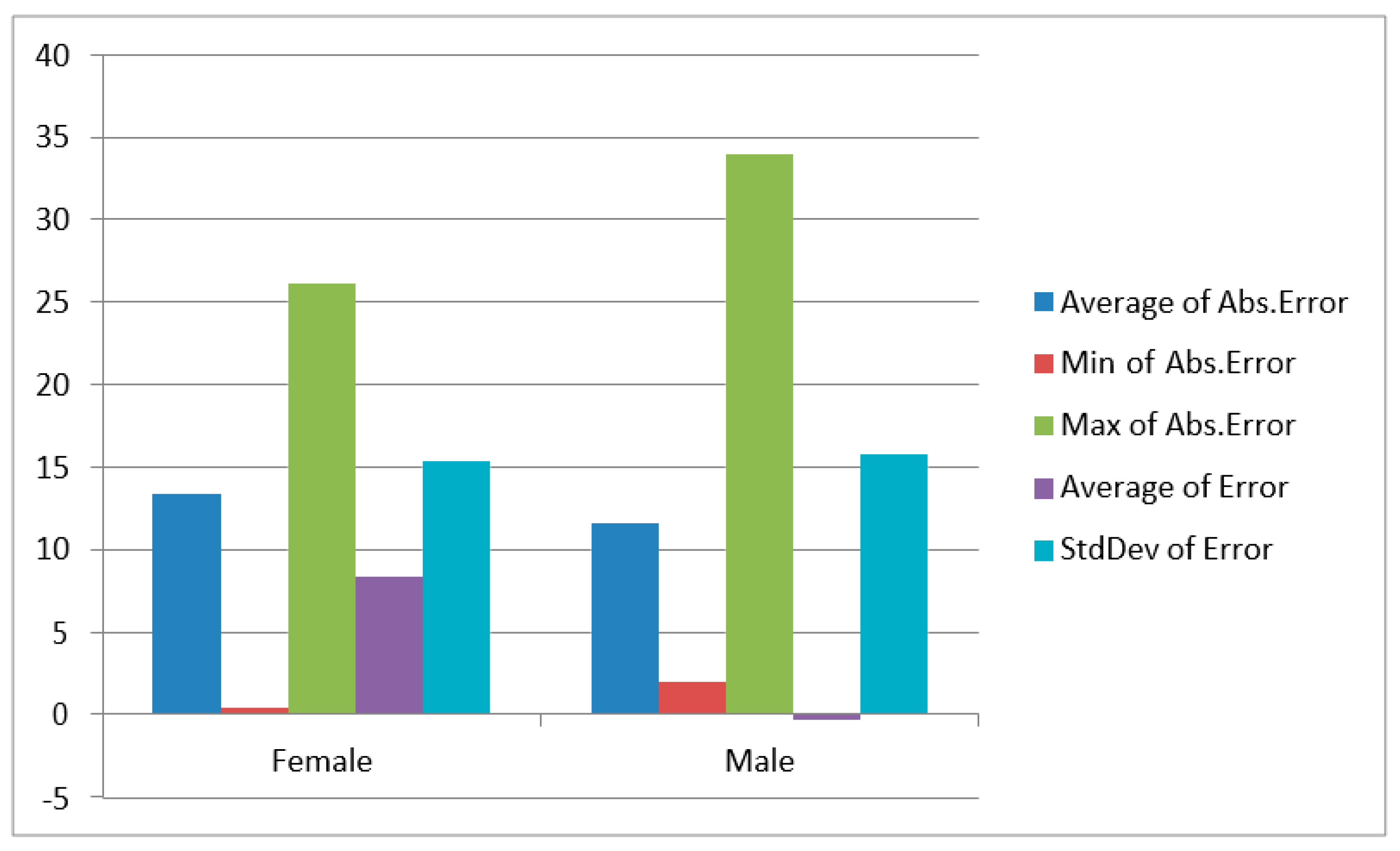
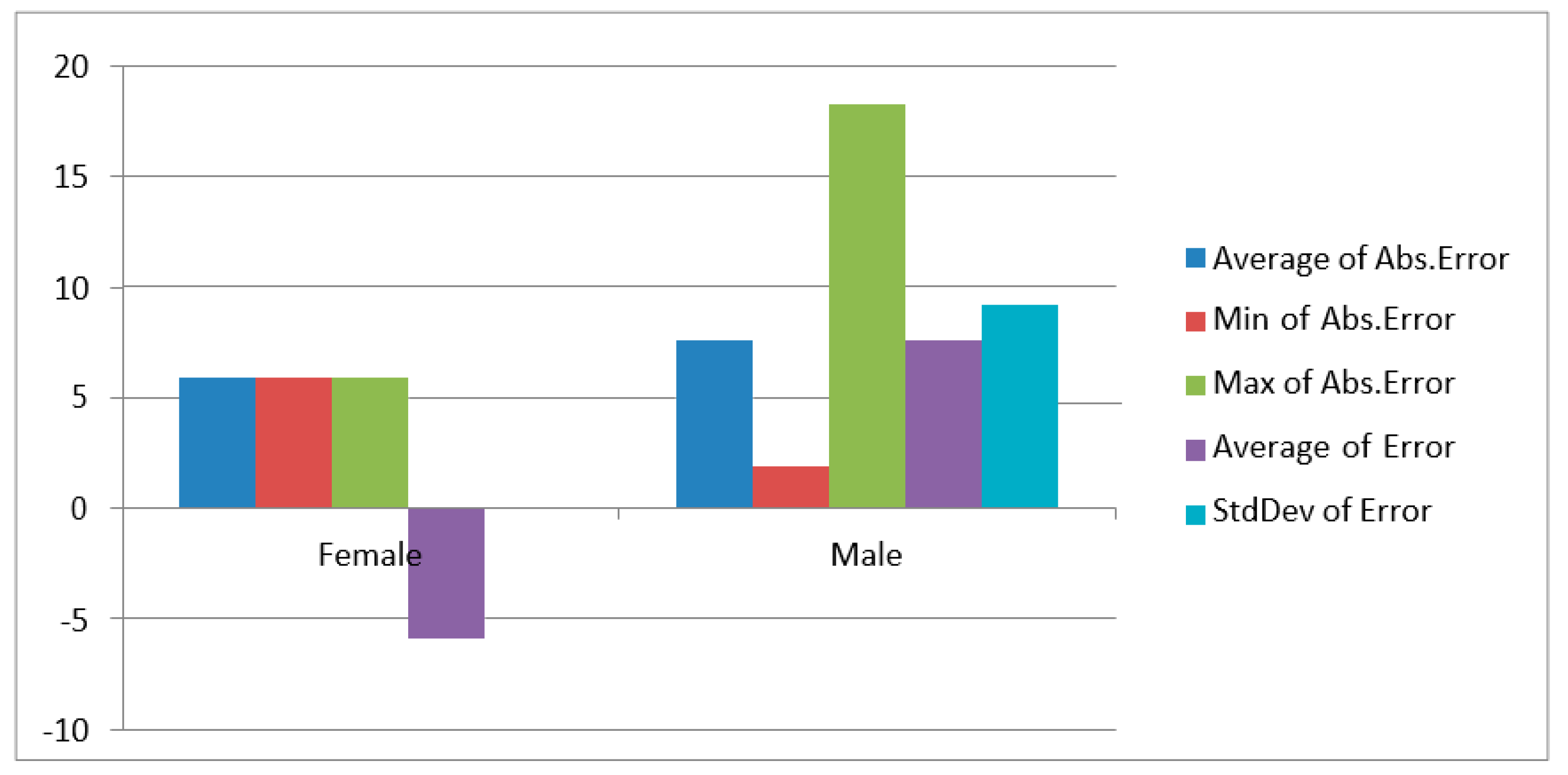
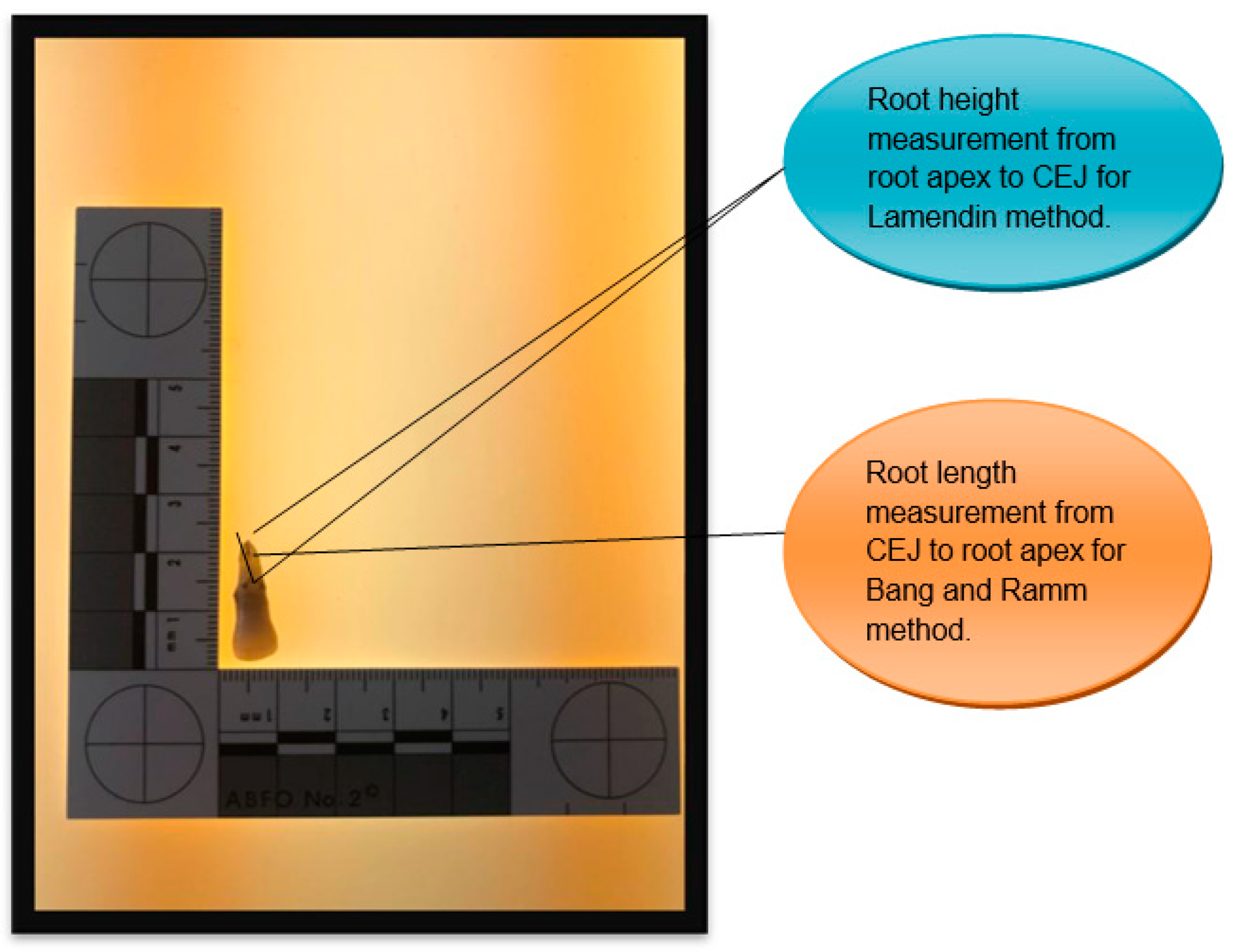
Forensic dentistry is still an emerging field in Pakistan. The lack of scientific literature on the topic may lead to difficulties in situations where age estimation has a significant part such as in criminal and civil litigation. In mass disasters such as earthquakes and accidents, the correct investigation of the chronological age can be less troublesome if population-specific evidence is available. This is the rationale that justifies dedicated dental age estimation studies. This cross-sectional study aimed to test the time efficiency, validity and applicability of four dental age estimation methods: two invasive (Bang and Ramm and Lamendin) and two non-invasive (Kvaal and Cameriere) in an adult Pakistani population. A total of 37 teeth collected from a dental hospital in Islamabad, Pakistan, were used. Teeth included the central and lateral incisors, canines, and first and second premolars of males and females. Results were calculated using a Microsoft Office 2007 excel spreadsheet. Overall, Kvaal’s method mean absolute error between chronological and estimated ages (MAE: 12.33) showed the highest variation and Bang and Ramm showed more accurate results in comparison with other methods (MAE: 4.80). It was both time-efficient and practical to use. It can be stated that these were preliminary cross-sectional outcomes and that studies with larger samples are necessary.
Keywords: age estimation by teeth; forensic dentistry; radiology; dental development; Pakistani age estimation by teeth; forensic dentistry; radiology; dental development; Pakistani