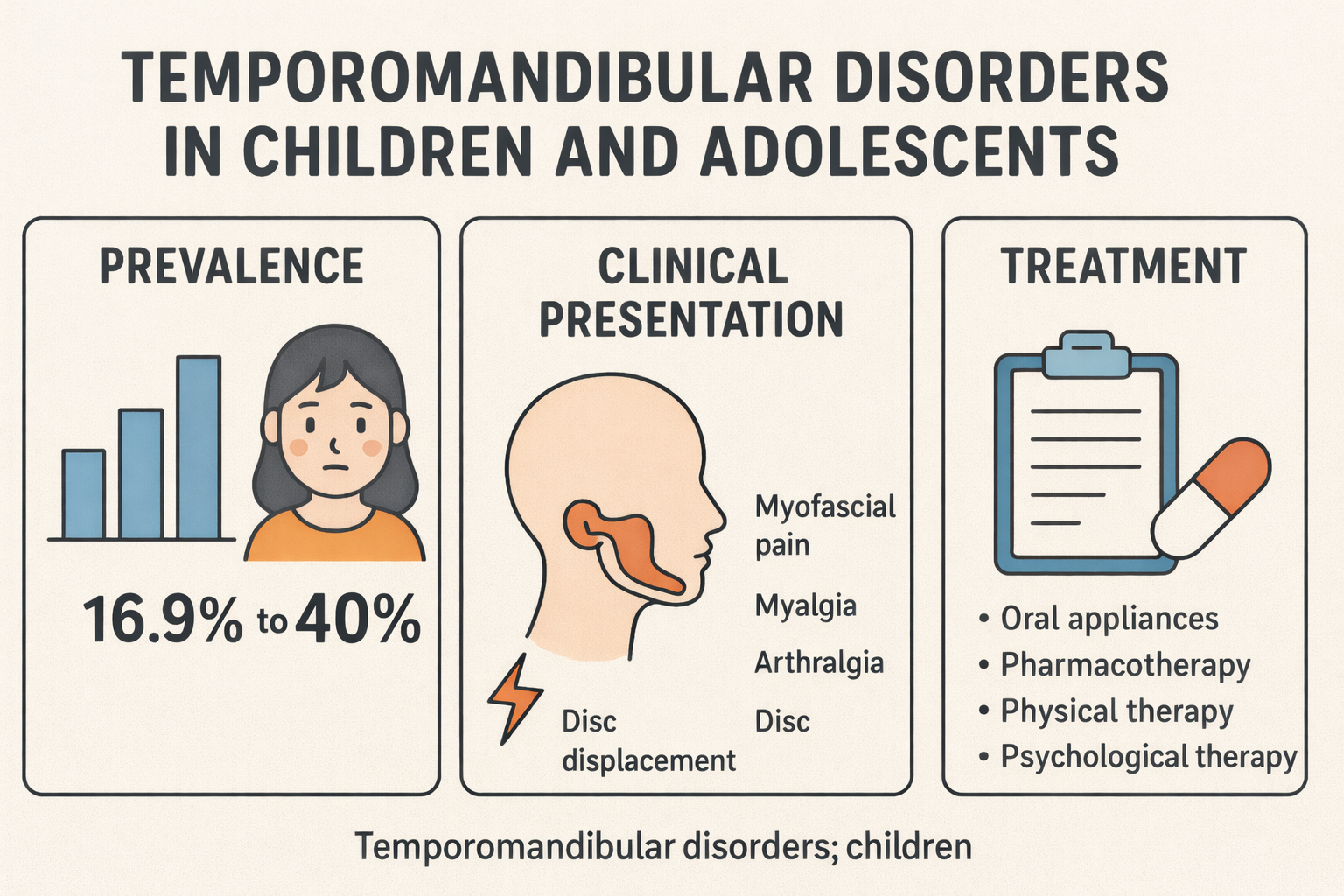
Temporomandibular Disorders in Children and Adolescents: A Scoping Review

 ,
,  ,
,
Abstract
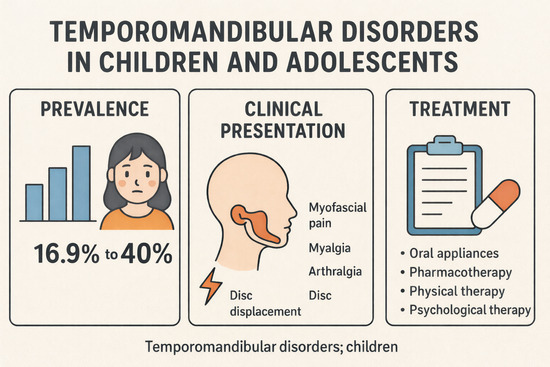
1. Introduction
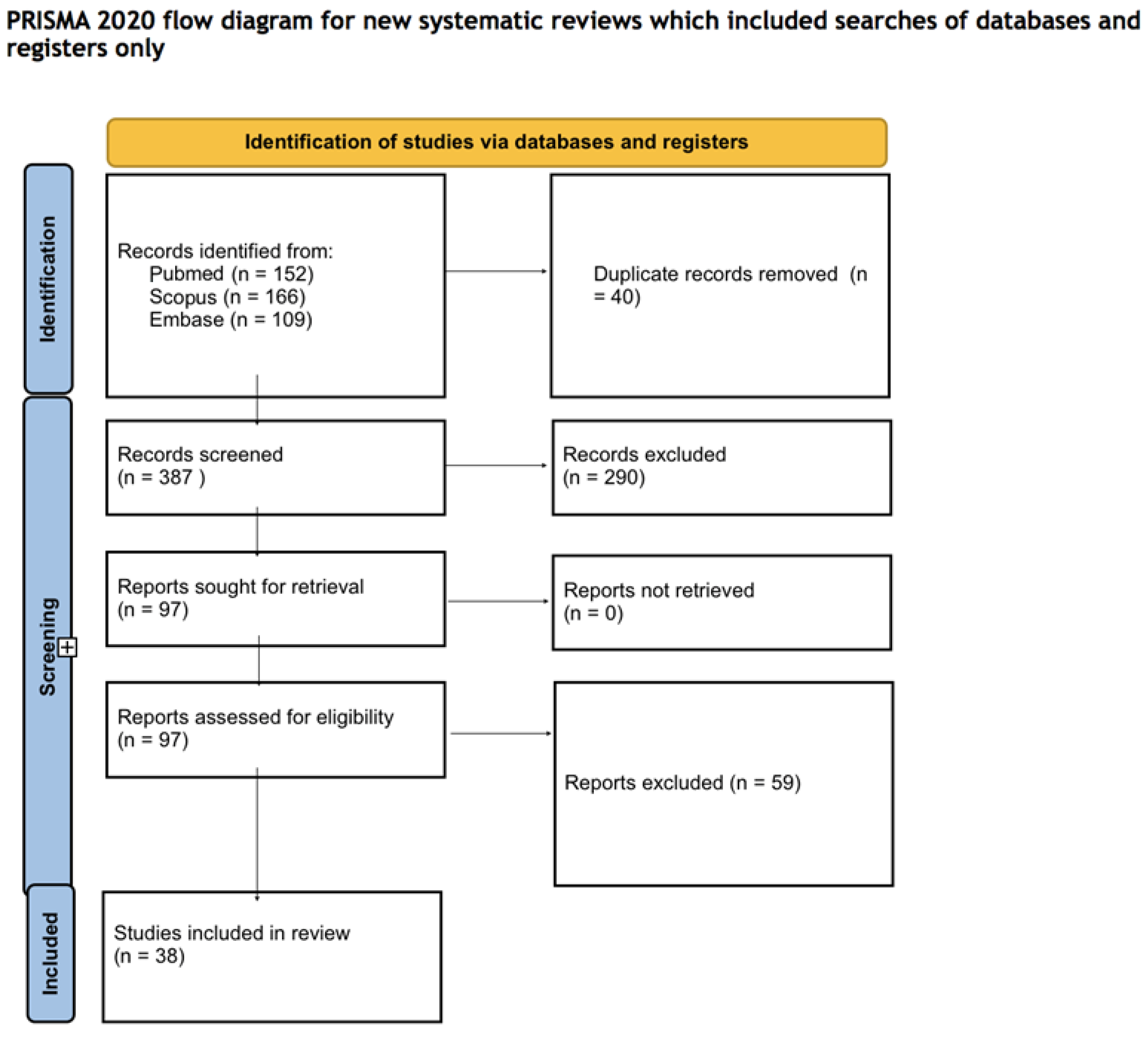
2. Materials and Methods
3. Results
3.1. TMD Prevalence in Children and Adolescents
3.2. Associated Factors
3.3. Systemic Conditions
3.4. TMD Treatment
3.5. TMJ Involvement in JIA Patients
4. Discussion
4.1. TMD Prevalence in Children and Adolescents
4.2. Associated Factors
4.3. Systemic Conditions
4.4. TMD Treatment
4.5. TMJ Involvement in JIA Patients
4.6. Implications for Clinical Practice
4.7. Critical Analysis of the Evidence
4.8. Limitations
5. Conclusions
Author Contributions
Funding
Institutional Review Board Statement
Informed Consent Statement
Data Availability Statement
Conflicts of Interest
Abbreviations
| TMD | Temporomandibular Disorder |
| TMJ | Temporomandibular Joint |
| DDwR | Disc Displacement with Reduction |
| sEMG | Surface Electromyography |
| GJH | Generalized Joint Hypermobility |
| TMJA | Temporomandibular Joint Ankylosis |
| CCG | Costochondral Graft |
| DMARDs | Disease-modifying Antirheumatic Drugs |
| cDMARDs | Conventional Disease-modifying Antirheumatic Drugs |
| TNFi | Tumor Necrosis Factor Inhibitor |
| MIO | Maximum Interincisal Opening |
| MRI | Magnetic Resonance Imaging |
| JIA | Juvenile Idiopathic Arthritis |
References
- Christidis, N.; Lindström Ndanshau, E.; Sandberg, A.; Tsilingaridis, G. Prevalence and treatment strategies regarding temporomandibular disorders in children and adolescents—A systematic review. J. Oral Rehabil. 2019, 46, 291–301. [Google Scholar] [CrossRef]
- Restrepo, C.C.; Suarez, N.; Moratto, N.; Manrique, R. Content and construct validity of the Diagnostic Criteria for Temporomandibular Disorders Axis I for children. J. Oral Rehabil. 2020, 47, 809–819. [Google Scholar] [CrossRef]
- Rongo, R.; Ekberg, E.; Nilsson, I.M.; Al-Khotani, A.; Alstergren, P.; Conti, P.C.R.; Durham, J.; Goulet, J.P.; Hirsch, C.; Kalaykova, S.I.; et al. Diagnostic criteria for temporomandibular disorders (DC/TMD) for children and adolescents: An international Delphi study—Part 1-Development of Axis I. J. Oral Rehabil. 2021, 48, 836–845. [Google Scholar] [CrossRef]
- Minervini, G.; Franco, R.; Marrapodi, M.M.; Fiorillo, L.; Cervino, G.; Cicciù, M. Prevalence of temporomandibular disorders in children and adolescents evaluated with Diagnostic Criteria for Temporomandibular Disorders: A systematic review with meta-analysis. J. Oral Rehabil. 2023, 50, 522–530. [Google Scholar] [CrossRef] [PubMed]
- Mélou, C.; Sixou, J.L.; Sinquin, C.; Chauvel-Lebret, D. Temporomandibular disorders in children and adolescents: A review. Arch. Pédiatrie 2023, 30, 335–342. [Google Scholar] [CrossRef] [PubMed]
- Warzocha, J.; Gadomska-Krasny, J.; Mrowiec, J. Etiologic Factors of Temporomandibular Disorders: A Systematic Review of Literature Containing Diagnostic Criteria for Temporomandibular Disorders (DC/TMD) and Research Diagnostic Criteria for Temporomandibular Disorders (RDC/TMD) from 2018 to 2022. Healthcare 2024, 12, 575. [Google Scholar] [CrossRef] [PubMed]
- Suvinen, T.I.; Reade, P.C.; Kemppainen, P.; Könönen, M.; Dworkin, S.F. Review of aetiological concepts of temporomandibular pain disorders: Towards a biopsychosocial model for integration of physical disorder factors with psychological and psychosocial illness impact factors. Eur. J. Pain 2005, 9, 613–633. [Google Scholar] [CrossRef]
- Da Silva, C.G.; Pacheco-Pereira, C.; Porporatti, A.L.; Savi, M.G.; Peres, M.A.; Flores-Mir, C.; Canto, G.D.L. Prevalence of clinical signs of intra-articular temporomandibular disorders in children and adolescents. J. Am. Dent. Assoc. 2016, 147, 10.e–18.e8. [Google Scholar] [CrossRef]
- Peters, M.D.J.; Godfrey, C.M.; Khalil, H.; McInerney, P.; Parker, D.; Soares, C.B. Guidance for conducting systematic scoping reviews. Int. J. Evid. Based Healthc. 2015, 13, 141–146. [Google Scholar] [CrossRef]
- Tricco, A.C.; Lillie, E.; Zarin, W.; O’Brien, K.K.; Colquhoun, H.; Levac, D.; Moher, D.; Peters, M.D.J.; Horsley, T.; Weeks, L.; et al. PRISMA Extension for Scoping Reviews (PRISMA-ScR): Checklist and Explanation. Ann. Intern. Med. 2018, 169, 467–473. [Google Scholar] [CrossRef]
- Al-Khotani, A.; Naimi-Akbar, A.; al-Badawi, E.; Ernberg, M.; Hedenberg-Magnusson, B.; Christidis, N. Prevalence of diagnosed temporomandibular disorders among Saudi Arabian children and adolescents. J. Headache Pain 2016, 17, 41. [Google Scholar] [CrossRef] [PubMed]
- Al-Khotani, A.; Naimi-Akbar, A.; Gjelset, M.; Albadawi, E.; Bello, L.; Hedenberg-Magnusson, B.; Christidis, N. The associations between psychosocial aspects and TMD-pain related aspects in children and adolescents. J. Headache Pain 2016, 17, 30. [Google Scholar] [CrossRef]
- Al-Shwaikh, H.; Urtane, I.; Pirttiniemi, P.; Pesonen, P.; Krisjane, Z.; Jankovska, I.; Davidsone, Z.; Stanevica, V. Radiologic features of temporomandibular joint osseous structures in children with juvenile idiopathic arthritis. Cone beam computed tomography study. Stomatologija 2016, 18, 51–60. [Google Scholar]
- Alpaydin, M.T.; Alpaydın, T.; Torul, D. Do symptoms and signs of temporomandibular disorders have an association with breathing pattern: A cross-sectional study on Turkish children and adolescents. BMC Oral Health 2024, 24, 721. [Google Scholar] [CrossRef]
- Braido, G.V.D.V.; Campi, L.B.; Jordani, P.C.; Fernandes, G.; Godoi Gonçalves, D.A.G. Temporomandibular disorder, body pain and systemic diseases: Assessing their associations in adolescents. J. Appl. Oral Sci. 2020, 28, e20190608. [Google Scholar] [CrossRef] [PubMed]
- Campi, L.B.; Visscher, C.M.; Ongaro, P.C.J.; Fernandes, G.; Godoi Gonçalves, D.A.G. Widespread Pain and Central Sensitization in Adolescents with Signs of Painful Temporomandibular Disorders. J. Oral Facial Pain Headache 2020, 34, 83–91. [Google Scholar] [CrossRef]
- Chaves, P.J.; de Oliveira, F.E.M.; Damázio, L.C.M. Incidence of postural changes and temporomandibular disorders in students. Acta Ortop. Bras. 2017, 25, 162–164. [Google Scholar] [CrossRef] [PubMed]
- Chaves, T.C.; dos Santos Aguiar, A.; Felicio, L.R.; Greghi, S.M.; Hallak Regalo, S.C.; Bevilaqua-Grossi, D. Electromyographic ratio of masseter and anterior temporalis muscles in children with and without temporomandibular disorders. Int. J. Pediatr. Otorhinolaryngol. 2017, 97, 35–41. [Google Scholar] [CrossRef]
- Collin, M.; Hagelberg, S.; Ernberg, M.; Hedenberg-Magnusson, B.; Christidis, N. Temporomandibular joint involvement in children with juvenile idiopathic arthritis—Symptoms, clinical signs and radiographic findings. J. Oral Rehabil. 2022, 49, 37–46. [Google Scholar] [CrossRef]
- De Melo Jùnior, P.C.; Aroucha, J.M.C.N.L.; Arnaud, M.; Lima, M.G.S.; Gomes, S.G.F.; Ximenes, R.; Rosenblatt, A.; Caldas, A.F., Jr. Prevalence of TMD and level of chronic pain in a group of Brazilian adolescents. PLoS ONE 2019, 14, e0205874. [Google Scholar] [CrossRef]
- De Paiva Bertoli, F.M.; Bruzamolin, C.D.; Pizzatto, E.; Losso, E.M.; Brancher, J.A.; de Souza, J.F. Prevalence of diagnosed temporomandibular disorders: A cross-sectional study in Brazilian adolescents. PLoS ONE 2018, 13, e0192254. [Google Scholar]
- De Stefano, A.A.; Valentini, L.M.; Musone, L.; Horodynski, M.; Macrí, M.; Galluccio, G. Mandibular Asymmetry, Generalized Joint Hypermobility, and Temporomandibular Disorders in Pre-Orthodontic Growing Individuals: A Cross-Sectional Clinical–Radiographic Study. J. Clin. Med. 2025, 14, 5990. [Google Scholar] [CrossRef]
- Demir, F.; Tüzüner, T.; Baygın, Ö.; Kalyoncu, M. Evaluation of Dental Status and Temporomandibular Joint in Children with Generalized Joint Hypermobility. JCR J. Clin. Rheumatol. 2021, 27, e312. [Google Scholar] [CrossRef]
- Dimitrijevic Carlsson, A.; Wahlund, K.; Kindgren, E.; Frodlund, M.; Alstergren, P. Increase in stress contributes to impaired jaw function in juvenile idiopathic arthritis: A two-year prospective study. Pediatr. Rheumatol. 2024, 22, 30. [Google Scholar] [CrossRef]
- Fischer, J.; Skeie, M.S.; Rosendahl, K.; Tylleskär, K.; Lie, S.; Shi, X.Q.; Gil, E.G.; Cetrelli, L.; Halbig, J.; von Wangenheim Marti, L.; et al. Prevalence of temporomandibular disorder in children and adolescents with juvenile idiopathic arthritis—A Norwegian cross-sectional multicentre study. BMC Oral Health 2020, 20, 282. [Google Scholar] [CrossRef]
- Fischer, J.; Augdal, T.A.; Angenete, O.; Gil, E.G.; Skeie, M.S.; Åstrøm, A.N.; Tylleskär, K.; Rosendahl, K.; Shi, X.Q.; Rosén, A.; et al. In children and adolescents with temporomandibular disorder assembled with juvenile idiopathic arthritis—No association were found between pain and TMJ deformities using CBCT. BMC Oral Health 2021, 21, 518. [Google Scholar] [CrossRef] [PubMed]
- Franco-Micheloni, A.; Fernandes, G.; Gonçalves, D.; Camparis, C. Temporomandibular Disorders in a Young Adolescent Brazilian Population: Epidemiologic Characterization and Associated Factors. J. Oral Facial Pain Headache 2015, 29, 242–249. [Google Scholar] [CrossRef] [PubMed]
- Ibragimova, R.; Yermukhanova, G.; Yessirkepov, A.; Xetayeva, G.; Yerkibayeva, Z. Relationship between pathogenic factors and the prevalence of temporomandibular joint dysfunctions in children. Saudi Dent. J. 2023, 35, 103–109. [Google Scholar] [CrossRef] [PubMed]
- Jin, L.; Yao, Y.; Fang, Z.; Fan, S.; Cai, B.; Xu, L.; Liu, S. Long-Term Prognosis and Influencing Factors of Chinese Adolescents with Temporomandibular Disorder After Physical Therapy. J. Oral Rehabil. 2024, 51, 2611–2621. [Google Scholar] [CrossRef]
- Karibe, H.; Shimazu, K.; Okamoto, A.; Kawakami, T.; Kato, Y.; Warita-Naoi, S. Prevalence and association of self-reported anxiety, pain, and oral parafunctional habits with temporomandibular disorders in Japanese children and adolescents: A cross-sectional survey. BMC Oral Health 2015, 15, 8. [Google Scholar] [CrossRef]
- Kaur, K.; Roychoudhury, A.; Bhutia, O.; Bhalla, A.S.; Yadav, R.; Pandey, R.M. Evaluation of Success of Transport Disc Distraction Osteogenesis and Costochondral Graft for Ramus Condyle Unit Reconstruction in Pediatric Temporomandibular Joint Ankylosis. J. Oral Maxillofac. Surg. 2020, 78, 1018.e1–1018.e16. [Google Scholar] [CrossRef] [PubMed]
- Kobayashi, F.Y.; Gavião, M.B.D.; Marquezin, M.C.S.; Fonseca, F.L.A.; Montes, A.B.M.; Barbosa, T.D.S.; Castelo, P.M. Salivary stress biomarkers and anxiety symptoms in children with and without temporomandibular disorders. Braz. Oral Res. 2017, 31, e78. [Google Scholar] [CrossRef] [PubMed]
- Macrì, M.; Murmura, G.; Scarano, A.; Festa, F. Prevalence of temporomandibular disorders and its association with malocclusion in children: A transversal study. Front. Public Health 2022, 10, 860833. [Google Scholar] [CrossRef]
- Marpaung, C.; Lobbezoo, F.; van Selms, M.K.A. Temporomandibular Disorders among Dutch Adolescents: Prevalence and Biological, Psychological, and Social Risk Indicators. Pain Res. Manag. 2018, 2018, 5053709. [Google Scholar] [CrossRef]
- Miranda, L.S.; Graciosa, M.D.; Puel, A.N.; Raulino de Oliveira, L.; Sonza, A. Masticatory muscles electrical activity, stress and posture in preadolescents and adolescents with and without temporomandibular dysfunction. Int. J. Pediatr. Otorhinolaryngol. 2021, 141, 110562. [Google Scholar] [CrossRef] [PubMed]
- Niibo, P.; Nikopensius, T.; Jagomägi, T.; Voog, Ü.; Haller, T.; Tõnisson, N.; Metspalu, A.; Saag, M.; Pruunsild, C. Genetic susceptibility to temporomandibular joint involvement in juvenile idiopathic arthritis. J. Oral Rehabil. 2024, 51, 2445–2451. [Google Scholar] [CrossRef]
- Pihut, M.; Zarzecka-Francica, E.; Gala, A. Physiotherapeutic rehabilitation of adolescent patients with temporomandibular disorders. Folia Med. Cracov. 2022, 62, 79–90. [Google Scholar]
- Rauch, A.; Schierz, O.; Körner, A.; Kiess, W.; Hirsch, C. Prevalence of anamnestic symptoms and clinical signs of temporomandibular disorders in adolescents—Results of the epidemiologic LIFE Child Study. J. Oral Rehabil. 2020, 47, 425–431. [Google Scholar] [CrossRef]
- Rentsch, M.; Zumbrunn Wojczyńska, A.; Gallo, L.M.; Colombo, V. Prevalence of Temporomandibular Disorders Based on a Shortened Symptom Questionnaire of the Diagnostic Criteria for Temporomandibular Disorders and Its Screening Reliability for Children and Adolescents Aged 7–14 Years. J. Clin. Med. 2023, 12, 4109. [Google Scholar] [CrossRef]
- Restrepo-Serna, C.; Ortiz, A.M.; Henao, A.C.; Manrique-Hernández, R. Association between psychological factors and temporomandibular disorders in adolescents of rural and urban zones. BMC Oral Health 2021, 21, 140. [Google Scholar] [CrossRef]
- Romani, V.; Di Giorgio, R.; Castellano, M.; Barbato, E.; Galluccio, G. Prevalence of craniomandibular disorders in orthodontic pediatric population and possible interactions with anxiety and stress. Eur. J. Paediatr. Dent. 2018, 19, 317–323. [Google Scholar] [PubMed]
- Roychoudhury, A.; Yadav, P.; Bhutia, O.; Kaur, K.; Dekyi, T.; Pandey, R.M. Growth Outcome and Jaw Functions Are Better After Gap Arthroplasty Plus Costochondral Graft Reconstruction Than Gap Arthroplasty Alone in Pediatric Temporomandibular Joint Ankylosis Patients: A Cluster Randomized Controlled Trial. J. Oral Maxillofac. Surg. 2021, 79, 2548–2561. [Google Scholar] [CrossRef] [PubMed]
- Stoustrup, P.; Glerup, M.; Bilgrau, A.E.; Küseler, A.; Verna, C.; Christensen, A.E.; Kristensen, K.D.; Nørholt, S.E.; Twilt, M.; Herlin, T.; et al. Cumulative Incidence of Orofacial Manifestations in Early Juvenile Idiopathic Arthritis: A Regional, Three-Year Cohort Study. Arthritis Care Res. 2020, 72, 907–916. [Google Scholar] [CrossRef]
- Stoustrup, P.; Kellenberger, C.J.; Høst, C.; Küseler, A.; Pedersen, T.K.; Herlin, T.; Glerup, M. Effects of Biologics on Temporomandibular Joint Inflammation in Juvenile Idiopathic Arthritis. J. Rheumatol. 2025, 52, 173–180. [Google Scholar] [CrossRef]
- Topaloglu-Ak, A.; Kurtulmus, H.; Basa, S.; Sabuncuoglu, O. Can sleeping habits be associated with sleep bruxism, temporomandibular disorders and dental caries among children? Dent. Med. Probl. 2022, 59, 517–522. [Google Scholar] [CrossRef]
- Torul, D.; Yılmaz, M.F.; Örnek Akdoğan, E.; Omezli, M.M. Temporomandibular joint disorders and associated factors in a Turkish pediatric population. Oral Dis. 2024, 30, 4454–4462. [Google Scholar] [CrossRef]
- Yelken Kendrici, M.; Ertürk, A.F.; Özcan, İ.; Kendirci, A.Ş.; Akgül, T. The role of scoliosis on temporomandibular joint disease: A cross-sectional study based on ultrasonography. Clin. Radiol. 2024, 79, e417–e423. [Google Scholar] [CrossRef]
- Zanaty, O.; El Metainy, S.; Abo Alia, D.; Medra, A. Improvement in the airway after mandibular distraction osteogenesis surgery in children with temporomandibular joint ankylosis and mandibular hypoplasia. Pediatr. Anesth. 2016, 26, 399–404. [Google Scholar] [CrossRef]
- Dworkin, S.F.; LeResche, L. Research diagnostic criteria for temporomandibular disorders: Review, criteria, examinations and specifications, critique. J. Craniomandib. Disord. 1992, 6, 301–355. [Google Scholar]
- Schiffman, E.; Ohrbach, R.; Truelove, E.; Look, J.; Anderson, G.; Goulet, J.P.; List, T.; Svensson, P.; Gonzalez, Y.; Lobbezoo, F.; et al. Diagnostic Criteria for Temporomandibular Disorders (DC/TMD) for Clinical and Research Applications: Recommendations of the International RDC/TMD Consortium Network and Orofacial Pain Special Interest Group†. J. Oral Facial Pain Headache 2014, 28, 6–27. [Google Scholar] [CrossRef] [PubMed]
- Ekberg, E.; Nilsson, I.; Michelotti, A.; Al-Khotani, A.; Alstergren, P.; Rodrigues Conti, P.C.; Durham, J.; Goulet, J.; Hirsch, C.; Kalaykova, S.; et al. Diagnostic criteria for temporomandibular disorders—INfORM recommendations: Comprehensive and short-form adaptations for adolescents. J. Oral Rehabil. 2023, 50, 1167–1180. [Google Scholar] [CrossRef]
- Nilsson, I.-M.; Ekberg, E.; Michelotti, A.; Al-Khotani, A.; Alstergren, P.; Conti, P.C.R.; Durham, J.; Goulet, J.-P.; Hirsch, C.; Kalaykova, S.; et al. Diagnostic criteria for temporomandibular disorders—INfORM recommendations: Comprehensive and short-form adaptations for children. J. Oral Rehabil. 2023, 50, 99–112. [Google Scholar] [CrossRef]
- Nilsson, I.M.; List, T.; Drangsholt, M. The reliability and validity of self-reported temporomandibular disorder pain in adolescents. J. Orofac. Pain 2006, 20, 138–144. [Google Scholar]
- Maspero, C.; Galbiati, G.; Perillo, L.; Favero, L.; Giannini, L. Orthopaedic treatment efficiency in skeletal Class III malocclusions in young patients: RME-face mask versus TSME. Eur. J. Paediatr. Dent. 2012, 13, 225–230. [Google Scholar] [PubMed]
- Maspero, C.; Galbiati, G.; Giannini, L.; Farronato, G. Sagittal and vertical effects of transverse sagittal maxillary expander (TSME) in three different malocclusion groups. Prog. Orthod. 2015, 16, 6. [Google Scholar] [CrossRef] [PubMed] [PubMed Central]
- Maspero, C.; Giannini, L.; Galbiati, G.; Kairyte, L.; Farronato, G. Upper airway obstruction in class II patients. Effects of Andresen activator on the anatomy of pharyngeal airway passage: Cone beam evaluation. Stomatologija 2015, 17, 124–130. [Google Scholar] [PubMed]
- Maspero, C.; Galbiati, G.; Giannini, L.; Guenza, G.; Farronato, M. Class II division 1 malocclusions: Comparisons between one- and two-step treatment. Eur. J. Paediatr. Dent. 2018, 19, 295–299. [Google Scholar] [CrossRef] [PubMed]
- Farronato, G.; Giannini, L.; Galbiati, G.; Grillo, E.; Maspero, C. Occlus-o-Guide® versus Andresen activator appliance: Neuromuscular evaluation. Prog. Orthod. 2013, 14, 4. [Google Scholar] [CrossRef] [PubMed] [PubMed Central]
- Farronato, G.; Grillo, M.E.; Giannini, L.; Farronato, D.; Maspero, C. Long-term results of early condylar fracture correction: Case report. Dent. Traumatol. 2009, 25, e37–e42. [Google Scholar] [CrossRef] [PubMed]
- Farronato, G.; Carletti, V.; Giannini, L.; Farronato, D.; Maspero, C. Juvenile Idiopathic Arthritis with temporomandibular joint involvement: Functional treatment. Eur. J. Paediatr. Dent. 2011, 12, 131–134. [Google Scholar] [PubMed]
- Farronato, G.; Rosso, G.; Giannini, L.; Galbiati, G.; Maspero, C. Correlation between skeletal Class II and temporomandibular joint disorders: A literature review. Minerva Stomatol. 2016, 65, 239–247. [Google Scholar] [PubMed]
- Tonni, I.; Borghesi, A.; Tonesi, S.; Fossati, G.; Ricci, F.; Visconti, L. An ultrasound protocol for temporomandibular joint in juvenile idiopathic arthritis: A pilot study. Dentomaxillofac. Radiol. 2021, 50, 20200399. [Google Scholar] [CrossRef]
- Wang, X.; Cheng, Z. Cross-Sectional Studies: Strengths, Weaknesses, and Recommendations. Chest 2020, 158, S65–S71. [Google Scholar] [CrossRef] [PubMed]
- Maspero, C.; Giannini, L.; Riva, R.; Tavecchia, M.G.; Farronato, G. Nasal cycle evaluation in 10 young patients: Rhynomanometric analysis. Mondo Ortod. 2009, 34, 263–268. [Google Scholar] [CrossRef]


| Database | Query String |
|---|---|
| PubMed | (“Temporomandibular Joint Disorders”[Mesh] OR “Temporomandibular Joint Diseases” OR “TMJ Disorders” OR “TMJ Diseases” OR “TMD”) AND (“Child”[Mesh] OR “Adolescent”[Mesh] OR youth OR young OR growing) |
| Scopus | (“Temporomandibular Joint Disorders” OR “Temporomandibular Joint Diseases” OR “TMJ Disorders” OR “TMJ Diseases” OR “TMD”) AND (“Child” OR “Adolescent” OR “youth” OR “young” OR “growing”) |
| Embase | (“Temporomandibular Joint Disorders” OR “Temporomandibular Joint Diseases” OR “TMJ Disorders” OR “TMJ Diseases” OR “TMD”) AND (“Child” OR “Adolescent” OR “youth” OR “young” OR “growing”) |
| Study | Country of Origin | Study Design | Aim | Study Population | Methods | Key Findings |
|---|---|---|---|---|---|---|
| Al-Khotani et al. (2016) [11] | Sweden Saudi Arabia | Epidemiological, cross-sectional, randomized study | Prevalence of TMD diagnoses in children and adolescents in Jeddah, Saudi Arabia | 456 participants 10–18 years old Divided by sex in two groups | Questionnaire on TMD pain Clinical examination according to RDC/TMD | 124 participants diagnosed (27.2%):
|
| Al-Khotani et al. (2016) [12] | Sweden Saudi Arabia | Cross-sectional study | Association between psychosocial problems (anxious/depressed, withdrawn/depressed, somatic complaints, aggressive behavior) and TMD in children and adolescents in Jaddah, Saudi Arabia | 456 participants 10–18 years old Divided by sex in two groups | Questionnaire on TMD pain Youth Self Report Scale Clinical examination according to RDC/TMD classification | Significant association in TMD-pain group (boys), anxious/depressed (10–13 y/o), somatic complaints, externalizing problem (aggressive behavior), increasing social problems |
| Al-Shwaikh et al. (2016) [13] | Latvia Finland | Cross-sectional study | Assess radiologic features of the TMJ in children with JIA using CBCT | 95 participants (65 with JIA; 30 healthy) <17 years old | CBCT | The most prevalent feature in the JIA group is condyle surface flattening for both sides (81.5% and 90.8%). Condyle surface erosion and osteophyte were also frequent in the JIA group |
| Alpaydin et al. (2024) [14] | Turkey | Retrospective, cross-sectional study | Association between TMD signs/symptoms and mouth breathing | 945 participants <18 years old | Sociodemographic data, allergies, malocclusion, bruxism, oral habits, breathing patterns, birth, TMD | Girls and those with bruxism, divorced parents, and MB behavior are more likely to have signs/symptoms of TMD |
| Braido et al. (2020) [15] | Brazil | Cross-sectional study | Investigate the association between systemic diseases and painful TMD | 690 participants 12–14 years old (adolescents) | Standardized Nordic Questionnaire Clinical examination according to RDC/TMD | Painful TMD in 16.2%. Bronchitis and asthma are significantly associated with painful TMD. Presence of persistent regional and widespread body pain is more prevalent among adolescents with painful TMD vs adolescents free of TMD. No differences based on gender or pubertal stage |
| Campi et al. (2020) [16] | Brazil | Population-based epidemiologic study | Association between signs of painful TMD, number of tender points (TPs) and fibromyalgia in adolescents. Relationship between TPs and PPT in individuals with local, regional and widespread pain to assess the presence of central sensitization (CS) | 690 participants 12–14 years old (adolescents) | Clinical examination according to the RDC/TMD Examination of TPs based on ACR diagnostic criteria from 1990 Yunus criteria to assess fibromyalgia (FM) | Significant associations between signs of painful TMD and number of TPs. Signs of association between TPs and the PPT values for local, regional, and widespread pain. No association between signs of painful TMD and fibromyalgia. Adolescents with signs of painful TMD are at increased risk of presenting with CS |
| Chaves, PJ et al. (2017) [17] | Brazil | Observational study | Incidence of postural problems and TMD in children and adolescents | 117 participants 10–18 years old | Body weight and height and BMI calculation Postural evaluation questionnaire AAOP questionnaire Fonseca anamnestic questionnaire | Of the participants with moderate (21.8%) or severe (0.9%) TMD 56% had changes in head positioning, 64% presented shoulder elevation, 24% presented shoulder protrusion |
| Chaves, TC et al. (2017) [18] | Brazil | Observational study | Differences in sEMG activity of masseter, anterior temporalis and suprahyoid muscles in children with and without TMD | 34 participants (17 with TMD; 17 without) 8–12 years old (children) | Fonseca anamnestic questionnaire RDC/TMD axis I sEMG: Myosystem® Br-1 | Significant prevalences of pain during chewing, TMJ pain, neck pain and pain in the temples in TMD group. Lower sEMG-M/AT ratios during maximum clenching in children with TMD, preferentially used their temporalis muscles during maximum voluntary clenching |
| Collin et al. (2022) [19] | Sweden | Cross-sectional, cohort study | Investigate whether findings from patient history and clinical examination using RDC/TMD can be used to diagnose TMJ involvement in children with JIA | 59 participants with JIA 7–14 years old | RDC/TMD CBCT | 64% of the CBCTs had signs of TMJ deformity. 42% of participants reported previous self-perceived TMJ symptoms. Based on RDC/TMD and CBCT, 37% presented myofascial pain, 7% myofascial pain with limited opening, 8% DDwR, 18% arthralgia, 7% osteoarthritis, 64% osteoarthrosis |
| De Melo Jùnior et al. (2019) [20] | Brazil | Observational, cross-sectional study | Prevalence of TMD and associated factors in adolescents from Recife, Brazil | 1392 participants 10–17 years old | RDC/TMD axis I and II Brazilian Economic Classification Criteria (CCEB) questionnaire | 33.2% had TMD regardless of age or economic conditions. Statistically significant association between TMD and female gender, headache/migraine, chronic pain |
| De Paiva Bertoli et al. (2018) [21] | Brazil | Cross-sectional study | Prevalence of TMD in Brazilian adolescents | 934 participants 10–14 years old | AAOP questionnaire RDC/TMD axis I | Prevalence of TMD symptoms was 34.9% (headache and neck ache (20.9%), joint sounds (18.5%)). Myofascial pain was the most prevalent TMD type (10.3%), followed by DDwR (8.0%) and arthralgia (3.5%). Significantly higher prevalence in girls |
| De Stefano et al. (2025) [22] | Italy | Observational cross-sectional study | Relationship between mandibular asymmetry (MA), generalized joint hypermobility (GJH), and temporomandibular disorders (TMDs) in preorthodontic growing individuals | 74 participants 8–16 years old | PA cephalometric Beighton Score (BS ≥ 4) DC/TMD axis I | GJH-positive group presented higher prevalence of TMD (85.4%). MA was more frequent in the GJH-positive group (68.3%). In both groups, patients with TMD were more likely to also present MA |
| Demir et al. (2021) [23] | Turkey | Observational, cross-sectional study | Evaluate dental status and TMD-related symptoms in children with GJH | 124 participants (62 GJH; 62 healthy controls) 6–16 years old | Beighton Score (BS ≥ 4) DMFT and dmft index, VPI, GBI and tooth mobility TMD evaluation | TMD-related symptom rate higher in the GJH group (clicking 35.4%, bruxism 1.6%, affected mouth opening 21%, muscle and TMJ pain 14.5%, mandibular deviation 9.6%). VPI and GBI scores higher in the GJH group |
| Dimitrijevic Carlsson et al. (2024) [24] | Sweden | Prospective, follow-up study | Investigate relationship between stress and changes in orofacial pain, psychosocial factors and jaw function in patients with JIA | 40 participants with JIA 6–16 years old | DC/TMD questionnaires (GCPS, JFLS-8, PHQ-4, PCS, PSS, Body Pain Drawings Locations, CHAQ, JADAS-71) | Change in stress associated with change in catastrophizing, psychological distress and limitation in general function and jaw function |
| Fischer et al. (2020) [25] | Norway | Cross-sectional study | Prevalence of TMD in children and adolescents with JIA. Investigate potential associations between JIA and TMD | 442 participants (221 with JIA; 221 healthy) 4–16 years old | Shortened versions of DC/TMD) and TMJaw | 39.8% of participants with JIA and 11.3% healthy controls presented with TMD |
| Fischer et al. (2021) [26] | Norway | Cross-sectional study | Association between TMD signs/symptoms and CBCT findings of TMJ structural deformities in children with JIA | 72 participants with JIA 4–16 years old | Shortened DC/TMD axis I Self-assessment questionnaire TMJaw CBCT | 29.2% pain on palpation at the lateral pole, 56.9% TMJ pain upon jaw movement and 36.1% pain from both. Of 141 TMJs, 18.4% mild and 14.2% moderate/severe structural deformities on CBCT. No association between painful TMD and CBCT imaging features. In persistent oligoarticular type, statistical significance between TMD symptoms/signs and structural CBCT deformities was found |
| Franco-Micheloni et al. (2015) [27] | Brazil | Cross-sectional study | Describe TMD epidemiologic profile and subtypes, identify associated factors in young adolescents | 3117 participants 12–14 years old (adolescents) | RDC/TMD axis I–II questionnaire on associated factors | 30.4% TMD diagnosis, 25.2% painful; mainly muscular and chronic. Female sex, headache, bruxism, clenching, and parental separation significantly associated |
| Ibragimova et al. (2023) [28] | Kazakhstan | Observational study | Compare TMD prevalence in children with mental delay and healthy peers | 659 participants (110 MDD; 331 institutionalized; 218 family) 7–18 years old | Observational analysis | TMD in 40.1% MDD, 32.6% institutions, 35.3% family; prevalence increased with age, symptoms more frequent in girls |
| Jin et al. (2024) [29] | China | Retrospective study | Investigate short-term effects and long-term prognosis of physical therapy in adolescent patients with TMD and the factors influencing long-term symptoms | 286 participants with TMD 12–18 years old (adolescents) | TMD education and physical therapy (TENS, LLLT, shortwave therapy, manual therapy and exercises) Data on pain intensity (VAS), maxillofacial tenderness, MMO, mouth opening deviation, TMJ noise | After physical therapy the improvement rate was 94.1%. 52.8% of the patients continued to experience TMD-related symptoms. Adolescents with oral parafunctional habits face a higher risk of developing symptoms during long-term follow-up |
| Karibe et al. (2015) [30] | Japan | Population-based, cross-sectional study | Relationship between TMD symptoms and other orofacial pain conditions, daily activities and trait anxiety | 1415 participants 11–15 years old | Questionnaire based on TMD symptoms Questionnaires on daily activities State-Trait Anxiety Inventory for Children-Trait (STAIC-T) scale | TMD symptoms associated with other orofacial pain conditions, particularly neck pain. Diurnal clenching strongly associated with TMD symptoms. TMD symptoms only weakly associated with trait anxiety |
| Kaur et al. (2020) [31] | India | Randomized controlled trial | Compare clinically relevant outcomes of ramus–condyle unit reconstruction using CCG and TDDO for pediatric TMJA | 24 patients with TMJA 3–16 years old | Random allocation to CCG (control) or TDDO (intervention) groups | Equal success can be achieved in RCU reconstruction using either CCG or TDDO in pediatric patients with TMJA |
| Kobayashi et al. (2017) [32] | Brazil | Observational, case–control study | Evaluate salivary alpha-amylase (sAA), cortisol levels and anxiety symptoms in children and adolescents with and without TMD | 76 participants 7–14 years old | DC/TMD MASC questionnaire Collection of saliva samples (cortisol and sAA) | Children with TMD scored higher in anxiety symptoms, no difference was observed in the salivary stress biomarkers between children with and without TMD. No significant correlation was observed between the MASC total score and the salivary cortisol and sAA levels |
| Macrì et al. (2022) [33] | Italy Spain | Transversal study | Prevalence of TMD in children and adolescents, evaluate correlation with occlusal variables | 411 participants 7–15 years old | Occlusal assessment RDC/TMD axis I | Significant association between TMDs and deep bite (43.43%), increased overjet (41.41%), and posterior crossbite (23.23%). Most frequently reported symptoms: awake bruxism, sleep bruxism, deviations during opening and diagnosis: myalgia 60%, DDwR 23.2%, arthralgia 17.2% |
| Marpaung et al. (2018) [34] | Netherlands Indonesia | Cross-sectional, population-based study | Prevalence rates of pain-related TMD and TMJ sounds in Dutch adolescents. Determine biological, psychological, social risk factors for both TMJ pain and sounds | 4235 participants 12–18 years old (adolescents) | Questionnaire on demographics, sleep and awake bruxism, signs and symptoms of TMD, psychosocial and behavioral factors. Questionnaire on oral habits | Prevalence of pain-related TMDs was 21.6% and of TMJ sounds was 15.5%. Predictors of TMD pain: female gender, increasing age, sleep bruxism, lip or cheek biting, stress, sadness. Predictors of TMJ sounds: female gender, increasing age, awake bruxism, lip or cheek biting |
| Miranda et al. (2021) [35] | Brazil | Cross-sectional study | Verify difference between masticatory muscles’ electrical activity, stress signals and posture in preadolescents and adolescents with and without TMD | 24 participants 11–18 years old | Anthropometric measurements, psychological stress analysis, RDC/TMD, postural evaluation, EMG | Greater activation of the temporal muscles in the TMD group during the inactive period of chewing. Female gender was prevalent in TMDG. No difference for postural variables |
| Niibo et al. (2024) [36] | Estonia | Case–control study | Address potential role of genetic susceptibility factors in TMJ-JIA | 263 participants (55 JIA patients; 208 healthy) 5–13 years old | Genotyping using the Illumina HumanOmniExpress BeadChip, arrays (Illumina, San Diego, CA, USA) | Six loci were identified as being associated with the risk of TMJ-JIA in Estonian JIA patients: CD6 rs3019551, SLC26A8/MAPK14 rs9470191, NLRP3 rs2056795 and MAP2K4 rs7225328 |
| Pihut et al. (2022) [37] | Poland | Randomized controlled trial | Compare effectiveness of two physiotherapeutic rehabilitation methods in adolescents with TMD | 68 participants with TMDs 14–17 years old (adolescents) | RDC/TMD. Manual therapy in group I, kinesiotherapy in group II | Results show a beneficial effect of both physiotherapeutic procedures in terms of functional rehabilitation |
| Rauch et al. (2020) [38] | Germany | Cross-sectional study | Assess prevalence of symptoms and signs of TMD in German adolescents | 1116 participants 10–18 years old | Questionnaire on TMD symptoms; DC/TMD; pubertal status assessment according to Tanner stages | Most reported symptoms were headaches (55.7%) and TMJ sounds (17.6%). Major clinical sign was TMJ sounds (31.9%). Gender comparisons revealed higher increase in TMD symptoms and signs during pubertal development in females |
| Rentsch et al. (2023) [39] | Switzerland | Cross-sectional study | Prevalence of TMD and oral habits in children aged 7–14 years | 239 participants 7–14 years old | Shortened DC/TMD symptoms questionnaire DC/TMD | The self-reported prevalence of TMD was 18.8%. Most frequently reported oral habits were nail biting (37.7%), teeth clenching (32.2%) and grinding (25.5%), increasing with age. DDwR and myalgia were the most common diagnoses |
| Restrepo et al. (2021) [40] | Colombia | Cross-sectional study | Association between psychological factors (anxiety, depression and somatization) and TMD in adolescents living in urban and rural zones of Colombia | 180 participants 12–15 years old (adolescents) | DC/TMD axis I and II | 40% presented some type of TMD. Pain-related TMDs were the most common (25.5%), particularly myalgia. Statistically significant associations between TMD and anxiety, depression and somatization were found in subjects from rural zones. No associations between psychological aspects and TMD in subjects from urban zones |
| Romani et al. (2018) [41] | Italy | Observational, cross-sectional study | Prevalence of TMD in candidates for orthodontic treatment. Evaluate relationship between psychological factors and TMD | 106 participants 8–16 years old | Orthognatodontic evaluation. Psychological evaluation (RCMAS). Fonseca Anamnestic Index (FAI) | 86.79% had at least one sign or symptom of TMD, 82% girls and 32% boys. 11.3% of TMD patients and 26.4% with joint sounds had high or medium anxiety levels. Positive correlation between TMD and increased overbite (class II) |
| Roychoudhury et al. (2021) [42] | India | Randomized controlled trial | Mandibular growth and functional outcome after gap arthroplasty (GA) or reconstructive arthroplasty with costochondral graft (CCG) in pediatric TMJA | 56 patients with TMJA 3–16 years old | Random allocation to treatment (CCG group and GA group) | Growth and jaw functions were better after reconstructive arthroplasty with CCG rather than GA in pediatric TMJA management |
| Stoustrup et al. (2020) [43] | Denmark Canada | Cohort study | Cumulative incidence of arthritis-induced orofacial symptoms, dysfunction, and dentofacial deformities in growing individuals with JIA | 351 participants with JIA 4–10 years old (children) | Data retrieved from the Aarhus JIA TMJ cohort register, containing standardized longitudinal observational data on patients with JIA | Orofacial symptoms and dysfunctions were common at 36 months and 5 years after JIA onset, with incidence of 38% and 53%, respectively. Dentofacial deformities were found in 35% of subjects at 36 months and were significantly associated with the presence of orofacial dysfunction |
| Stoustrup et al. (2025) [44] | Denmark | Prospective, observational, cohort study | Efficacy of biologics in combination with methotrexate (MTX) or leflunomide (LEF) on JIA-related TMJA | 18 participants with JIA-related TMJ arthritis 9–17 years old | MRI-based inflammation score and deformity score | Decrease in orofacial symptoms; improvement in TMJ function related to MIO; reduced inflammation score on MRI, improvement or stable deformity score in 47% of the TMJs |
| Topaloglu-Ak et al. (2022) [45] | Turkey | Cross-sectional study | Assess sleep habits, bruxism, TMD, and caries in children | 100 participants 6–13 years old | CSHQ, intraoral exam, Helkimo index | TMD (9%) linked to bruxism and bedtime resistance and sleep behavior problems |
| Torul et al. (2024) [46] | Turkey | Cross-sectional study | Presence and severity of TMD signs/symptoms, relationship to parafunctional behaviors, malocclusion, anxiety, sociodemographic traits in pediatric population | 162 participants 5–15 years old | Demographic variables; Fonseca Anamnestic Index (FAI); clinical examination; State-Trait Anxiety Scale for Children (STAI-C) | The frequency of TMD signs and symptoms reported was 19.7%. Significant relationship between the presence of TMD signs and symptoms, parafunctional habits and anxiety was found |
| Yelken Kendrici et al. (2024) [47] | Turkey | Cross-sectional study | Relationship between TMD, stomatognathic system and spine through a multidisciplinary approach | 100 participants (50 AIS; 50 healthy) 12–18 years old (adolescents) | DC/TMD Ultrasound evaluation of TMJ and masseter muscles | The incidence of TMD was significantly higher in the scoliosis group compared to the control group |
| Zanaty et al. (2016) [48] | Egypt | Observational, prospective study | Airway changes in patients with mandibular hypoplasia with TMJA after mandibular distraction osteogenesis surgery | 30 participants with micrognatia and TMJA 8–17 years old | Radiographic evaluation and polysomnography before and 6 months after DO surgery | Polysomnography after DO confirmed correction of airway obstruction in all patients. Results suggest that the distraction of a hypoplastic mandible is a good surgical option for the treatment of OSA due to micrognathia and TMJA |
Disclaimer/Publisher’s Note: The statements, opinions and data contained in all publications are solely those of the individual author(s) and contributor(s) and not of MDPI and/or the editor(s). MDPI and/or the editor(s) disclaim responsibility for any injury to people or property resulting from any ideas, methods, instructions or products referred to in the content. |
© 2026 by the authors. Licensee MDPI, Basel, Switzerland. This article is an open access article distributed under the terms and conditions of the Creative Commons Attribution (CC BY) license.
Share and Cite
Giannini, L.; Manti, A.; Mazzeo, R.; Zunino, B.; Esposito, L. Temporomandibular Disorders in Children and Adolescents: A Scoping Review. Oral 2026, 6, 26. https://doi.org/10.3390/oral6020026
Giannini L, Manti A, Mazzeo R, Zunino B, Esposito L. Temporomandibular Disorders in Children and Adolescents: A Scoping Review. Oral. 2026; 6(2):26. https://doi.org/10.3390/oral6020026
Chicago/Turabian StyleGiannini, Lucia, Antonino Manti, Rosanna Mazzeo, Benedetta Zunino, and Luca Esposito. 2026. "Temporomandibular Disorders in Children and Adolescents: A Scoping Review" Oral 6, no. 2: 26. https://doi.org/10.3390/oral6020026
APA StyleGiannini, L., Manti, A., Mazzeo, R., Zunino, B., & Esposito, L. (2026). Temporomandibular Disorders in Children and Adolescents: A Scoping Review. Oral, 6(2), 26. https://doi.org/10.3390/oral6020026