1. Introduction
A lower extremity flexion pattern (LEFP) involves coordinated flexion of the hips, knees, and ankles [
1]; it is evident in activities such as the eccentric phase of a squat and landing from a jump. The depth of a LEFP is important in any number of activities of daily living, exercise, and sport. The seat height of a chair [
2] and squat depth of a barbell squat [
3] influence the demand placed on the lower extremities. When landing from a jump, the depth will determine forces and energy flow in the body: a “softer” landing subjects the body to smaller forces, but requires larger torques and ranges of motion about the lower extremity joints [
4]. While a LEFP should be considered three-dimensional, the majority of motion should occur in the sagittal plane [
5]. Understanding how affordances and constraints shape mechanics is essential for practitioners who are working with people to produce safe, effective, and efficient LEFPs.
For example, decreased dorsiflexion range of motion (DFROM) is thought to alter the mechanics of a LEFP by: (1) decreasing knee and/or hip motion in the sagittal plane; and/or (2) increasing subtalar and/or hip motion in the frontal and transverse planes [
6]. These compensatory motions due to decreased DFROM are thought to increase the risk for several lower extremity injuries during deceleration of LEFPs, such as anterior cruciate ligament tears [
7], iliotibial band syndrome [
8], and patellofemoral pain syndrome [
9]. Consequently, the relationship between decreased DFROM and mechanics during a LEFP has become popular with both the scientific and clinical communities. However, the associations between decreased DFROM and the above-mentioned compensations are unclear.
Several studies examined the relationship between LEFP mechanics and participants’ available range of motion (not measured during the activity), but the results are equivocal. When examining differences in DFROM between participants displaying medial knee displacement during a squat task and those participants that did not, some studies found statistically significant differences between groups [
10], while others did not [
11]; and, in at least one study, the differences were dependent upon knee angle while measuring DFROM [
12]. Additionally, a small, negative correlation between DFROM and medial knee displacement was found during a drop landing task [
13], and a negative correlation was found between DFROM and squat depth [
14,
15]. Similar to medial knee displacement, the relationship between DFROM and squat depth was dependent upon the way DFROM was measured [
15]. It is important to note that these studies generally did not measure DFROM during the task itself.
The associations were no less equivocal when measuring DFROM during the task. One study comparing participants with “normal” and “low” DFROM found that the normal group had greater DFROM and knee flexion during squat tasks, but there were no group differences during a jump landing [
16]. The latter findings were confirmed by another study that found no significant correlations between ankle and knee or hip angular displacements during a jump landing [
17]. However, they were refuted by another study, which found a significant correlation between DFROM and knee and hip flexion during a drop jump landing [
18].
One reason for these equivocal results may be the inability to control for all of the biomechanical affordances and constraints that shape a movement [
19,
20]. Studies using individuals with differing amounts of DFROM are not homogeneous. Individuals with decreased DFROM may not have that single organismic constraint, and other organismic constraints (such as decreased strength [
11,
14] or decreased range of motion (ROM) at other degrees of freedom [
14]) may impact the results. For this reason, in vivo investigations need to be supplemented with in silico (computer simulation) ones. Computer simulations allow for only a single constraint to be imposed and may help explain the results of in vivo investigations.
For example, musculoskeletal models have been used to examine the effects of initial posture [
21], isolated strength of individual joints [
22,
23], and bilateral asymmetry [
24] on jump height. During simulated landings, they have been used to demonstrate that increasing hip (but not ankle) net joint torques could decrease knee valgus and varus [
25], and that increasing the mass of individual segments [
26] and the timing of joint rotations [
27] can increase the ground reaction forces. They have also been used to demonstrate the negative effect of increasing the moment arm of the soleus on plantar flexor net joint torque and power during fast movements [
28]. None of these insights would have been possible with in vivo studies alone. However, to my knowledge, no computer simulation studies have been used to examine the effect of DFROM on LEFP depth.
Therefore, the purpose of this study was to examine the joint angles that would satisfy the goals and constraints of a simple musculoskeletal model LEFP. I hypothesize that: (1) lower depth on a LEFP would require greater amounts of flexion at all three joints of the model’s lower extremity; but (2) there would be wide range of joint angles that could achieve a given depth. The findings of this study could help explain the results of previous investigations with respect to ankle mobility and squat or landing depth.
2. Materials and Methods
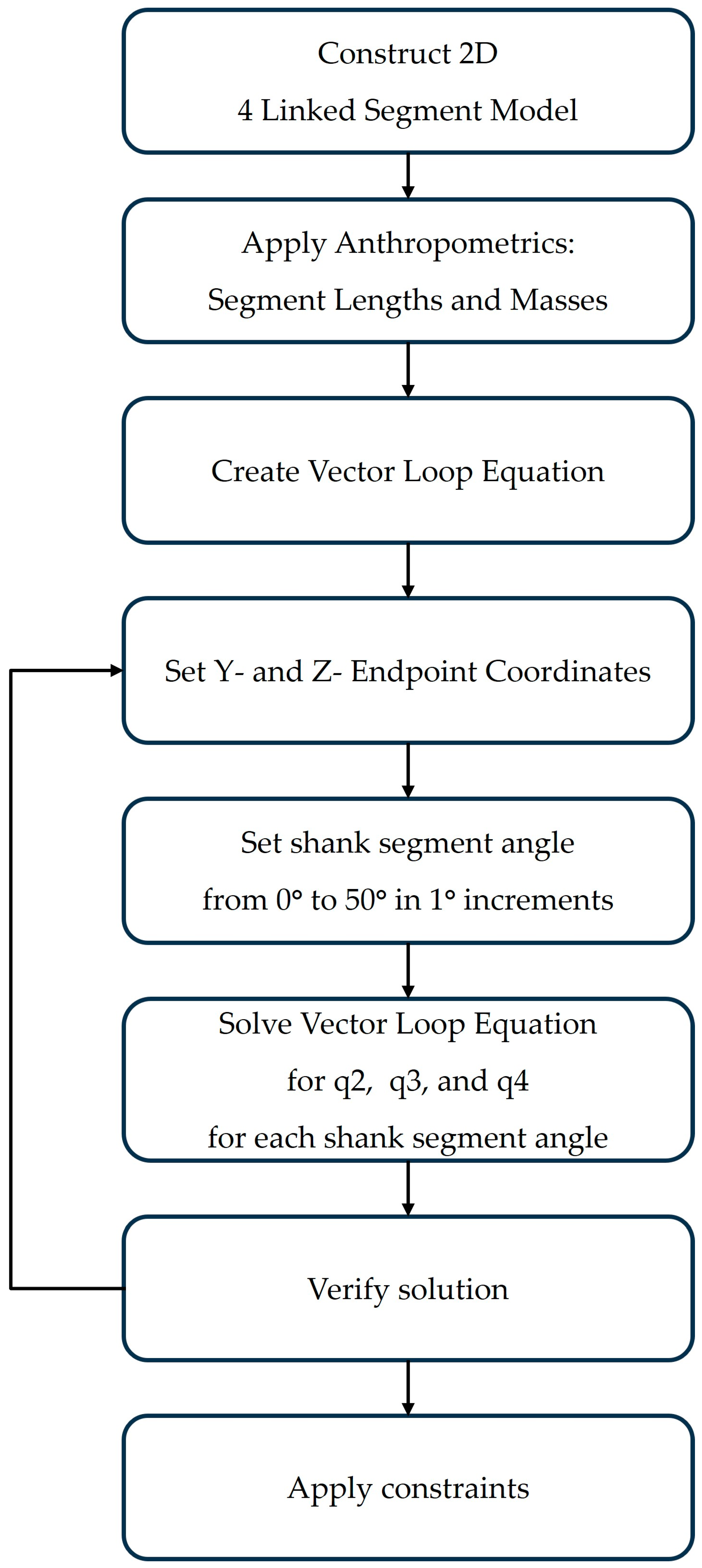
The methodological steps are presented in
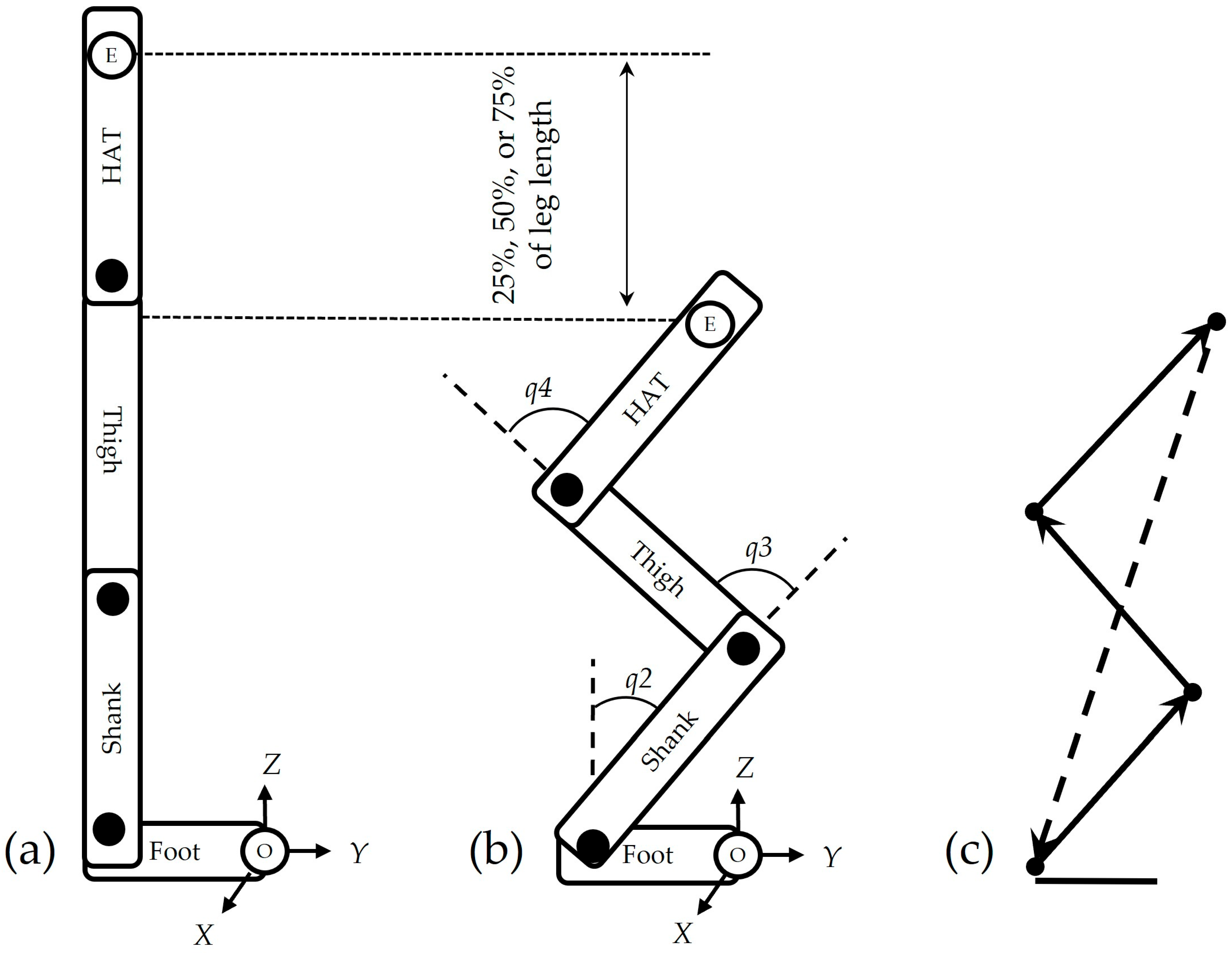
Figure 1. I modeled the body as a serial chain of four rigid bodies (foot, shank, thigh, and head, arms, and trunk (HAT)) attached by revolute joints (ankle, knee, and hip) with a single degree of freedom for each joint in the sagittal plane (about the X–axis) using MotionGenesis software (Motion Genesis, Menlo Park, CA, USA). The origin of the chain was the distal end of the foot (representing the metatarsophalangeal joint) and the endpoint of the chain was the acromion process (see
Figure 2 for reference frames). Segmental lengths were determined as a percentage of height as published in Winter [
29]. Segmental mass centers were determined as a percentage of body mass and segmental mass center locations were determined as a percentage of segment lengths using de Leva’s adjustments to Zatsiorsky-Seluyanov’s segment inertia parameters [
30]. I assumed bilateral symmetry; the mass of each segment (excluding the HAT) was doubled. I used a single male (height = 1.78 m, mass = 85 kg) and female (height = 1.62 m, mass = 55 kg) anthropometrics for separate simulations.
For the first simulation, I used male anthropometrics and a depth equal to 25% of leg length. I chose a target location for the endpoint, which represented the acromion process. The initial Z- (vertical) coordinate was to a depth of 25% of leg length (standing position −25% of leg length) to simulate landing from a jump (
Figure 2b). The initial Y- (anterior-posterior) coordinate was 50% of foot length anterior to the origin (0 + 0.5 * foot length). I created a vector loop equation, with the shank, thigh, and HAT each representing one vector, and the vector from the endpoint to the ankle joint center (dashed line in
Figure 2c) representing the final vector to close the loop [
31]. The vector loop equation was set to zero. The shank segmental angle was the driver segment for the simulations and varied from 90° to 40° from the positive Y- (horizontal) axis, in increments of 1°. This corresponded to anatomical ankle dorsiflexion angles from 0° to 50°.
For every shank angle, I solved the vector loop equation for the corresponding ankle, knee and hip anatomical angles (with the neutral position being 0°) in MotionGenesis, which I outputted to a Matlab (Mathworks, Natick, MA, USA) .m file for further analysis. Thus, there were 51 solutions for the given (Y, Z) coordinate of the endpoint. I repeated the process, keeping the Z-coordinate constant, but varying the Y-coordinate. Starting at 50% of foot length, I decreased the Y-coordinate by 10% of foot length until the Y-coordinate was −100% of foot length from the origin (corresponding to the ankle joint center). Thus, there were 16 different Y-coordinates. With 51 solutions per shank angle and 16 different Y-coordinates, I created a three-dimensional (ankle, knee, hip angle) “solution space” of 816 points. For each point in the solution space, I determined the location of the body’s center of mass (COM) in the global reference frame as the weighted sum of the mass centers of each segment.
Additional constraints were then imposed to shape the solution space. Organismic constraints limited the knee flexion angle to a maximum of 145° and the hip flexion angle to a maximum of 130° [
32]. A mechanical constraint required the center of mass of the system to remain within the bounds of the base of support. A task constraint that required the trunk segment angle to be greater than 45° from the positive Y-horizontal axis, so that the trunk remained relatively upright.
I repeated this procedure for a LEFP depth of 50% of leg length (representing a squat) and 75% of leg length (representing a deep squat). I then ran simulations at all 3 depths (25%, 50% and 75% of leg length) using female anthropometrics. In total, 4896 simulations were conducted.
I validated the model in 2 ways. First, the simulations described above solved the inverse kinematics problem, with the endpoint as the input and the joint angles as the output. I subsequently used these outputs as inputs in a series of homogeneous transformations to determine the location of the endpoint in global space [
33]. I then compared the location of the endpoints between the two methods by examining the root mean square difference between them. Since the same model was used in an inverse and forward simulation, absolute units were reported.
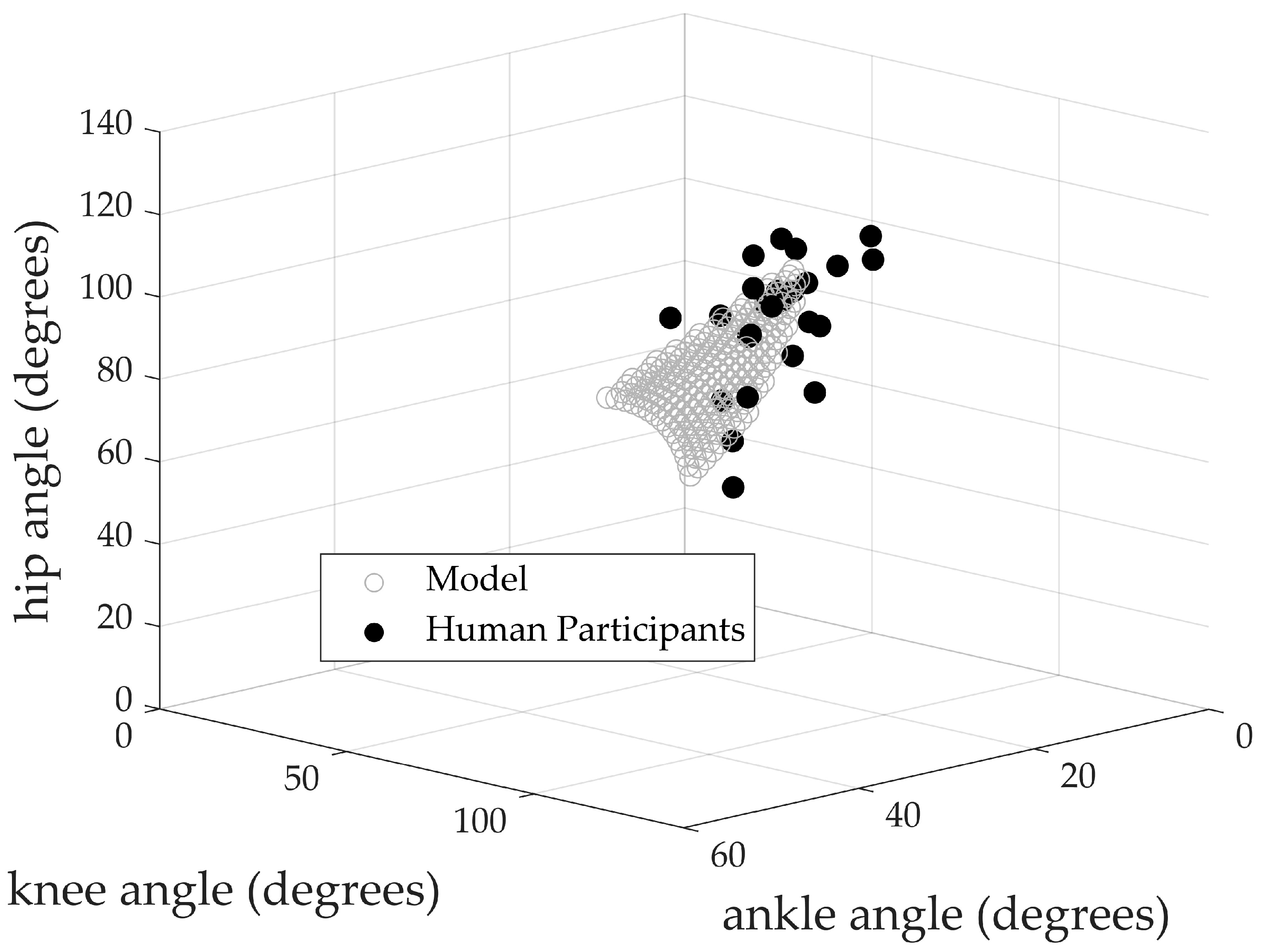
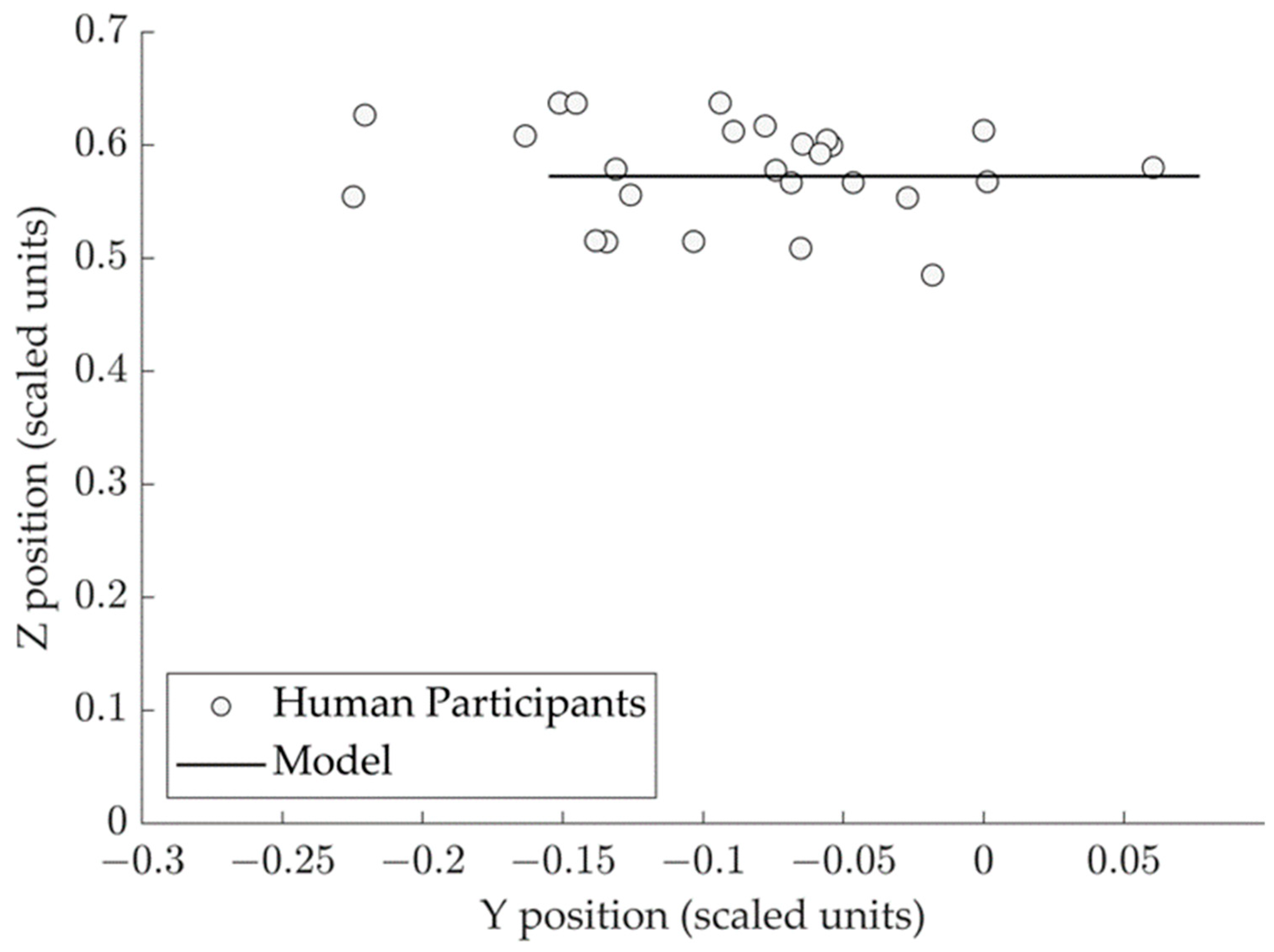
Second, I validated the model against human participants squatting to a depth of 50% of leg length, first by comparing the predicted versus the actual solution space, and then by inputting the joint angles into a scaled (to body height) model and comparing the solution to that of the model, again examining the root mean square (RMS) difference between them. The model was normalized to body height so that all participants squatted to the same “depth” and comparisons to this reference value could be made.
I used a subset of 26 (11 men and 15 women) participants’ data that were part of a larger (unpublished) study for this purpose. Participants gave their written, informed consent to participate in the protocol, which the university’s Standing Advisory Committee for the Protection of Human Subjects approved (#1516-035-1). Participants performed 12 squats while in a motion capture area defined by 12 cameras (Raptor-E, Motion Analysis Corporation, Santa Rosa, CA, USA) capturing three-dimensional retroreflective marker data at 120 Hz. I placed anatomical and tracking markers on participants to create the following rigid segments: HAT, pelvis, and bilateral foot, shank, and thigh. Participants began in an upright posture with a plastic dowel placed across the posterior aspects of the shoulders. An elastic cord attached to 2 stanchions marked a depth 50% of their leg length below the standing position of dowel. Participants squatted, with their feet flat on the floor, until the dowel met the elastic cord. Joint angles were determined as movement of the proximal segment relative to the distal segment using an x-y-z (flexion − ab/adduction − rotation) Cardan sequence in Visual3D (C-Motion, Germantown, MD, USA). Kinematic data were filtered using a lowpass Butterworth filter with a cutoff frequency of 12 Hz and 1 bi-directional pass. I extracted the ankle, knee, and hip flexion angles in the sagittal plane at the deepest part of the squat, averaged them bilaterally and across 12 trials, and inputted them into the forward kinematic model to determine endpoint positions for comparison with the model data. I normalized limb lengths to body height (scaled units) to use with joint angle data as inputs.
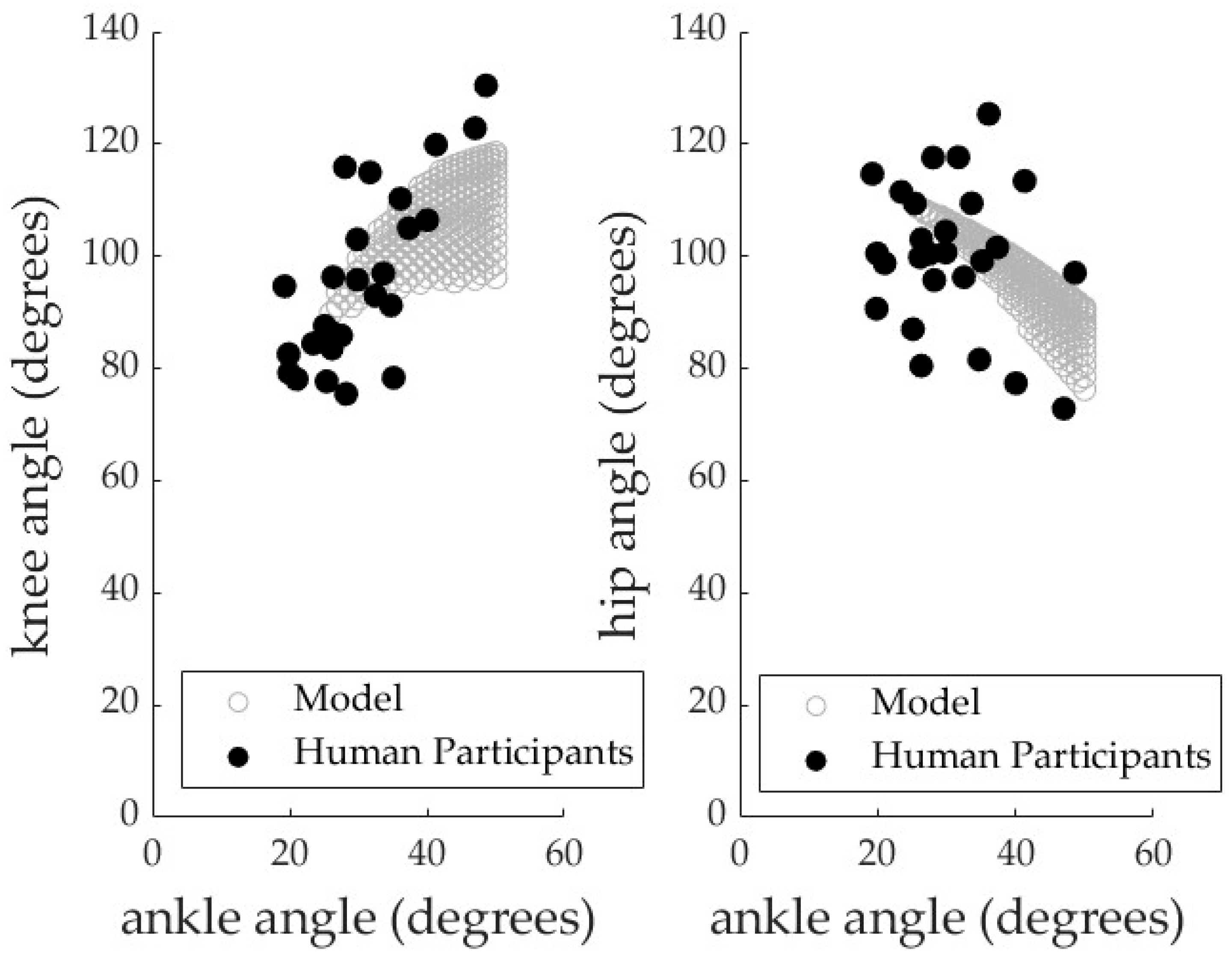
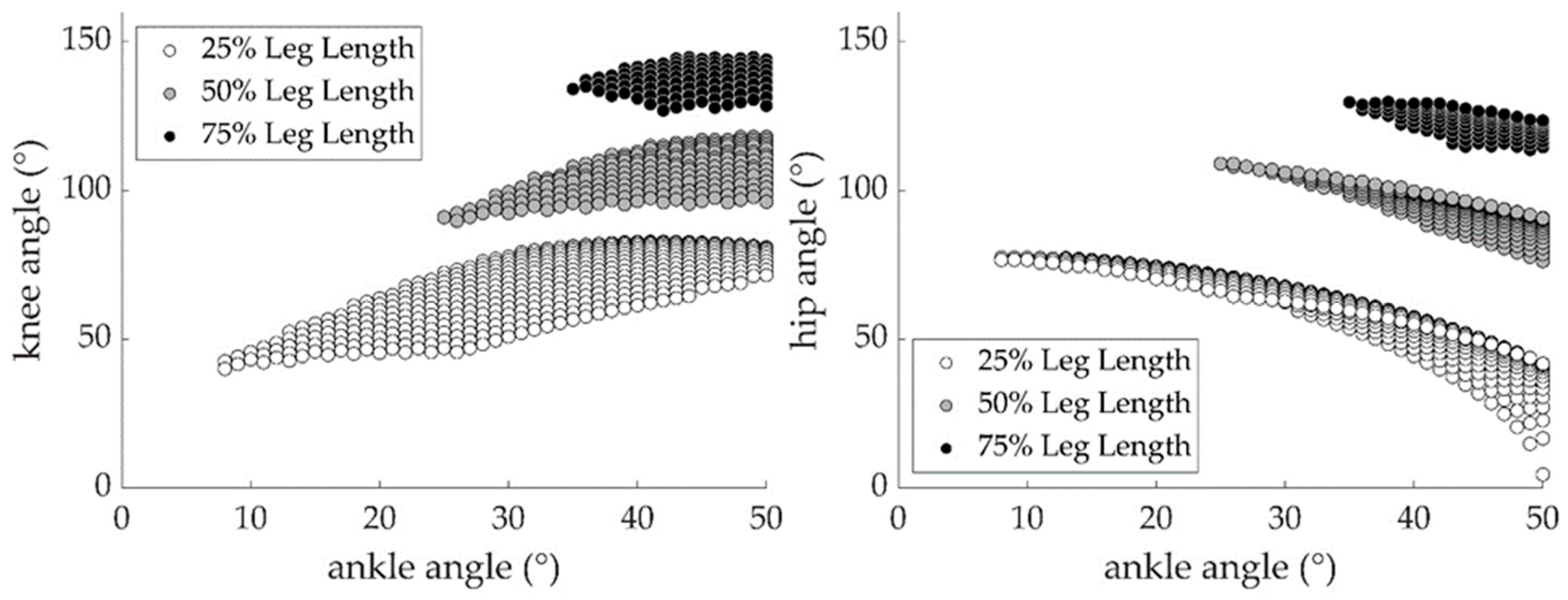
I converted ankle dorsiflexion and hip flexion angles to positive numbers so that all joint angles were positive. I defined the solution space as a discrete number for each condition and each run. I collapsed the three-dimensional solution space into two, two-dimensional spaces for ease of visual comparison (see
Figure 3). I calculated correlation coefficients, standard errors of the estimate (SEE), and coefficients of variation (CV) between joint angles with each other and with depth using IBM SPSS Statistics Version 29.0.1.0 (IBM, Armonk, NY, USA).
4. Discussion
LEFPs are ubiquitous in human movement, and depth is an important parameter in LEFPs. The depth of an LEFP is needed to reach a chair or toilet, achieve a desired loading on the lower extremity musculature during a squat exercise, and safely land from a jump. Many practitioners believe that ankle DFROM limits the depth of a LEFP, but the results from investigations remain equivocal. The purpose of this investigation was to explain the results of previous investigations with respect to squat or landing depth and ankle mobility. To this end, a simple musculoskeletal model was used because “very simple models are often the best for establishing general principles” [
34]. What does this model help explain?
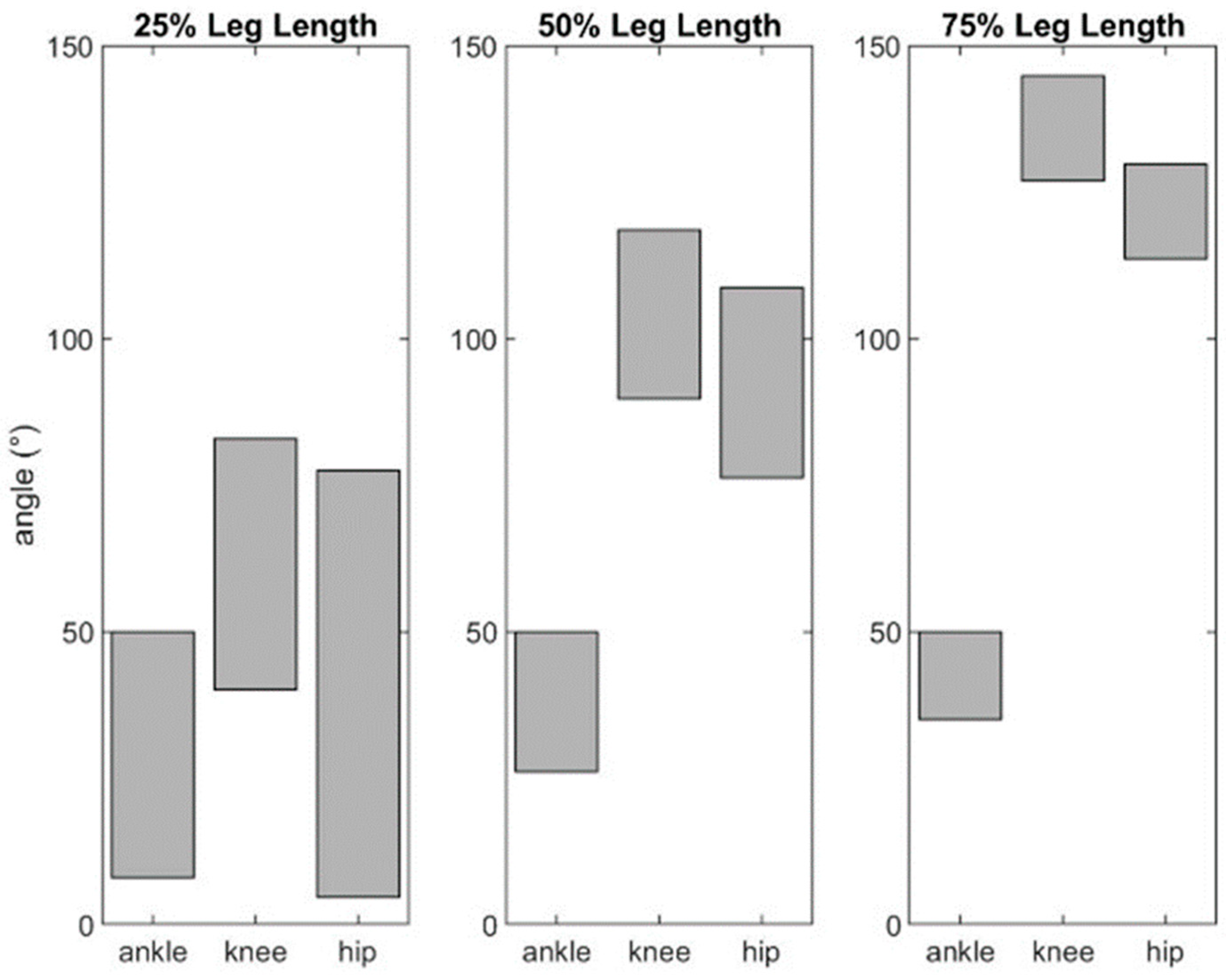
First, decreased DFROM will affect squat depth. The model required at least of 26° DFROM for the 50% depth condition and at least of 35° DFROM for the 75% depth condition. However, only 8° DFROM was needed for the 25% depth condition. Weight-bearing DFROM with the knee flexed has been reported to be approximately 42 ± 6° [
35] to as high as approximately 57 ± 7° [
36]. Taking the 75% condition of the simulations and the means of these reported values, the model’s DFROM represented approximately 71–119% to 53–88% of maximum weight-bearing DFROM. Thus, it is reasonable to conclude that someone without 50–70% of normal, weight-bearing DFROM would not be able to complete a deep LEFP. This value shifts to slightly less for the 50% condition (46–62% of normal, weight-bearing DFROM).
Second, decreased ROM at the ankle is not the only possible limitation to LEFP depth. The model required at least of 90° knee flexion for the 50% depth condition and at least of 127° knee flexion for the 75% depth condition. The model also required at least of 76° hip flexion for the 50% depth condition and at least of 114° hip flexion for the 75% depth condition. A survey of the literature reported that normal range of motion for knee flexion and hip flexion is 145° and 130°, respectively [
32]. Taking the 75% condition, the model’s knee ROM was 81–97% of these values, and the model’s hip ROM was 86–108% of these values. These values are similar to the percentages for the ankle DFROM reported above. And, at least for these simulations, the ankle went through the least ROM: 42° from its minimum value to its maximum value. This may explain why the correlation coefficient with depth for the ankle was half of that for the knee and hip (
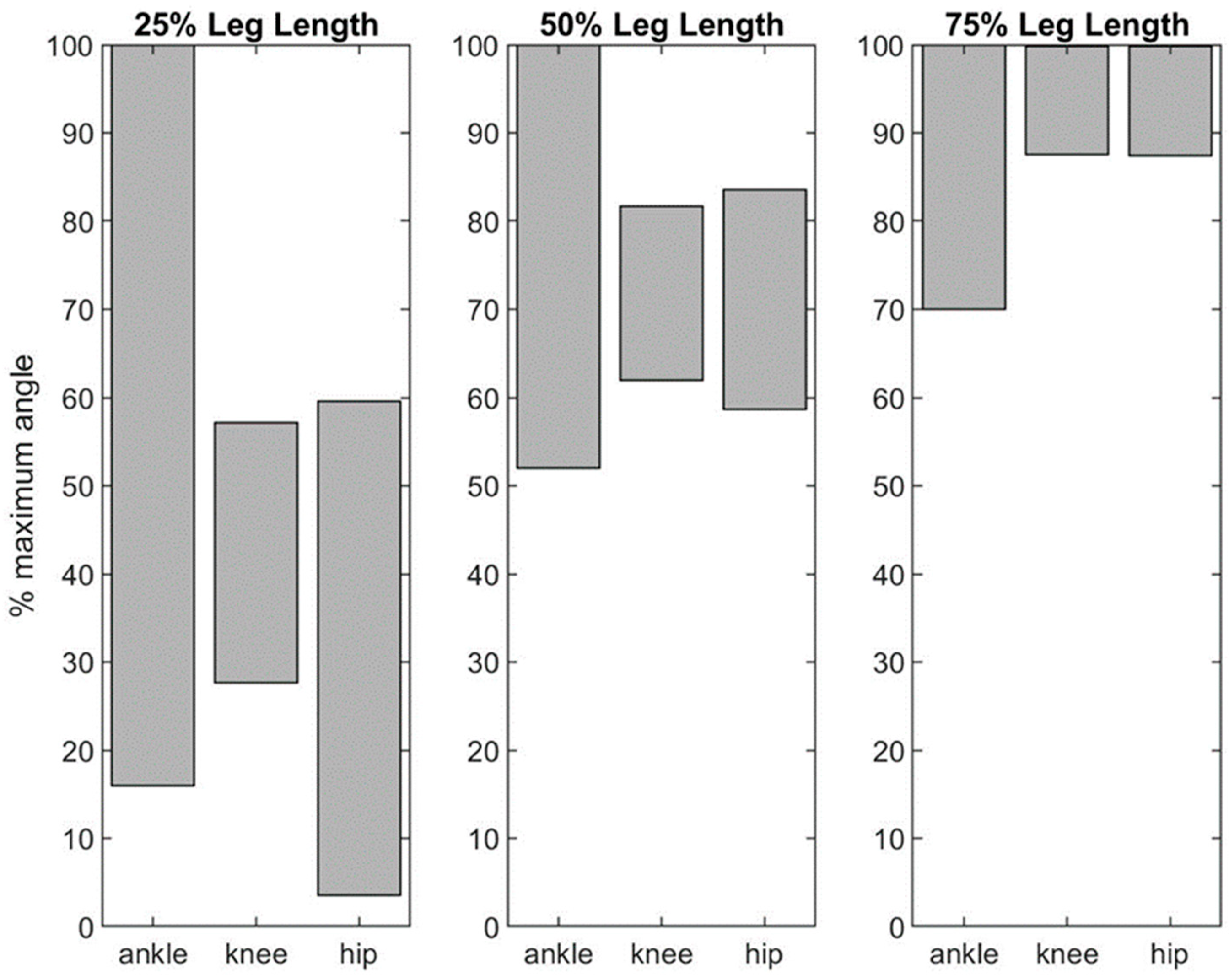
Table 2). One may argue that is more likely to have decreased ROM at the ankle compared to the other joints, and that cannot be determined by these simulations. The percentages of maximum angle were the largest at the ankle for the 25% and 50% leg length depths, but were equally high for all 3 joints at the 75% leg length depth (
Figure 7). However, the minimum percentage to complete the task were smaller at the ankle compared to the knee for all 3 LEFP depths, and for the hip at the 75% leg length depth. Therefore, it would be prudent not to assume the ankle DFROM was limiting the LEFP depth and to assess it for all joints involved in the motion.
Third, the results of this study demonstrate that there are many solutions to this problem (i.e., kinematic redundancy [
37]). Not only can the same depth be solved with many different DFROMs, but there also several combinations of knee and hip flexion that can achieve the task objective for any given ankle angle. The number of solutions increases with an increase in the model’s DFROM. However, the number of solutions also increases with an increase in the model’s knee ROM; in fact, an increase in DFROM requires a concomitant increase in knee flexion. There was an inverse relationship between ankle and hip ROM for a given depth: as the model’s ankle DFROM increased, the model’s hip angles decreased. Therefore, limitations in hip ROM are only problematic if there is also a limitation in DFROM.
Fourth, the relationships between joint ROMs and LEFP depth are many and nonlinear, and therefore the use of traditional statistics that make assumptions to the contrary (i.e., correlation and regression analyses) may lead to erroneous interpretations. Greater depths required greater average flexion angles at all 3 of the model’s joints; hence there was a significant positive correlation between joint angle and LEFP depth. However, there was a large range of angles at all 3 joints that could satisfy the requirement at any one given depth, which accounts for the large SEE and CV values. Similarly, there were significant correlations amongst the model’s joints ranges of motion at each depth. For any given depth, greater dorsiflexion angles required greater knee flexion angles (positive correlation) and decreased hip flexion angles (negative correlation), while less DFROM required greater hip and smaller knee flexion angles. But any given dorsiflexion angle could have multiple combinations of knee and hip flexion angles that satisfy both the target depth and the constraints of the task, leading to large SEEs and CVs. A large range of observations can inflate the correlation coefficient, and a large sample size can make even small correlation coefficients significant [
38]. Conversely, a large SEE and CV may be interpreted as “noise” [
38], when in reality it is not noise but a valid task solution. These limitations in regression analysis may help explain why Begalle et al. [
17] found no significant correlations between ankle displacement and knee or hip flexion displacement during a drop-landing task, while Taylor et al. [
18] did. Because of this, investigators are encouraged to report SEEs and CVs along with correlation coefficients and significance levels, and to plot the data as a solution space, uncontrolled manifold [
39], or feasible set [
33].
Fifth, coordination of the model’s joint ROMs was necessary for successful completion of the task under the given constraints. While
Figure 6 suggests the ROMs necessary at each joint, do not take this to mean that the LEFP depth is achieved as long as those ROMs were available. As demonstrated in
Figure 5, specific combinations of knee and hip angles are required within the available ROM. If the joint angles are not coupled in such a manner, then either the LEFP depth would not be achieved, or constraints of the task would not be satisfied.
The model did represent a reasonable approximation to human participants’ data, but with a smaller range of values for the hip and knee angle. While participants were required to squat to 50% of their leg length, they did not achieve exactly 50% (as the model did) because the model had a higher degree of precision than did laboratory measurements. This may have been a result of inherent human variability on the part of the investigator as well as the participants. There may have been slight measurement errors, participants may have deflected the elastic band at the bottom, and/or there could have been issues with using the plastic dowel. Additionally, as the forward model would predict some of the participants’ endpoint would be posterior to the ankle joint center, it is reasonable to assume that some of the participants may have flexed their spine or had out-of-plane movement at the hip or ankle complex. Additionally, the constraints imposed on the model were stricter than those placed on the participants. Yet, the average of all of the participants matched that of model.
Additionally, the model reasonably approximated previously reported data in the literature.
Table 7 compares the maximum flexion angles reported by Chiu et al. [
40] and Butler et al. [
41] to those of the model with the same average DFROM. It is important to note the proximity of the angle given that neither study reported squat depth, nor did they control for spinal flexion.
I decided to represent the solution space as discrete points to quantify the size of the space. One could think of it as an infinite number of points within the boundaries of that space [
33]. The decision to drive the shank angle by 1° increments was an arbitrary one. If the increments changed to 0.5° then the solution space would have doubled. If the increments changed to 2°, then the solution space would have been halved. However, the total range of motion would be minimally affected. Therefore, the relative change in the size of the solution space is more important than the actual change in the solution space.
The decision to constraint the trunk segment angle to greater than 45° was also arbitrary, albeit realistic one for squatting where one is to “keep the trunk as vertical as possible” [
42]. Recommendations for landing from a jump discuss increased knee and hip flexion [
43], but did not discuss a maximum or minimum trunk angle relative to the global reference frame. Thus, imposing this constraint on the model appears to be a reasonable one. Decreasing or increasing this angle would have increased or decreased the model’s solution space, respectively. However, since I imposed this constraint across conditions, it is unlikely to have an effect on the interpretations discussed above.
This study was limited to modeling bilaterally symmetric motions in the sagittal plane. Future investigations should model movements in the frontal and transverse planes, as well as movements that are bilaterally asymmetric. While I only used a single male and female model, the large overlap in solution spaces suggests that the results are fairly robust to changes in anthropometrics and further simulations would not have appreciably changed the findings of this study. Additionally, the model in this study used segment lengths that were a proportion of standing height [
29]. Further research should examine the effect of different segment proportions on joint ROMs and LEFP depth under various constraints [
44]. The regression analyses and results presented in
Table 2,
Table 3,
Table 4,
Table 5 and
Table 6 weighted each solution equally. This was done to demonstrate what was feasible, which would help explain equivocal results from previous studies, rather than trying to find optimal solutions. A smaller number of solutions used by a sample population may change these results. However, it is interesting to note that the ankle angles of this simulation actually had a larger predictive value of knee angles than those of participants landing from a jump (R
2 = 0.41 compared to 0.36 [
18]). Finally, this investigation used a model to determine which joint angles (solutions) were feasible to satisfy the goal and constraints of the task. It did not examine the consequences of those solutions. Future work should examine the torque demands at each joint associated with each solution to determine if certain regions of the solution space are kinetically feasible [
45] or may be associated with risk factors for injury.
I used a simple musculoskeletal model of a LEFP (as seen in the eccentric phase of a squat or landing from a jump) to examine the joint angles that would satisfy the goals and the constraints of the task. The results of the simulations suggest that decreased range of motion of all joints will affect LEFP depth, and this is not unique to the ankle joint. This suggests that the deep squat should not be used to diagnose ankle DFROM. Having the available range of motion is not enough to satisfy the goal and constraints of the task; the joint ranges of motion must also be precisely coordinated. Failure to achieve a prescribed depth with proper form may be as much a function of coordination as it is a function of ROM. The kinematic redundancy within the system allows for many solutions of the same problem. These findings should be appreciated when designing studies and rehabilitation protocols.