1. Introduction
Alpine skiing has evolved from a practical mode of transportation in mountainous regions into a modern sport characterized by high speeds, steep gradients, and substantial external loads acting on the lower extremities. Biomechanical research in alpine skiing remains challenging due to harsh environmental conditions and the high-intensity nature of the movements; however, technological progress has enabled more detailed analyses, which have traditionally focused on performance optimization in elite athletes [
1,
2]. During the same period, prosthetic technology has undergone substantial advancement, progressing from simple wooden components to sophisticated systems designed to support complex, sport-specific movement patterns [
3]. As the number of lower-limb amputations increases—particularly among young, active individuals—interest has grown in prosthetic solutions that facilitate participation in recreational and sporting activities beyond walking [
4,
5]. In the context of alpine skiing, specialized prosthetic components have been introduced, including systems that connect directly to the ski and are engineered to withstand the mechanical demands of skiing [
6].
Previous studies on transfemoral amputee skiing have examined specific prosthetic configurations and experimental approaches. McQuarrie et al. reported restricted knee flexion during turning when using a prosthetic knee combined with a conventional walking foot in a ski boot, leading to kinematics differing from non-disabled skiers [
7]. In contrast, laboratory simulations using a multi-axis skiing-specific prosthetic knee have demonstrated the potential to reproduce key aspects of able-bodied lower-limb kinematics under controlled conditions [
8]. However, whether contemporary skiing-specific prostheses enable knee-flexion patterns comparable to able-bodied skiing during defined turn phases remains unclear.
Recent three-dimensional motion capture studies have demonstrated that individuals with transfemoral amputation exhibit reduced knee joint excursions and pronounced inter-limb asymmetries during both high-demand locomotor tasks and steady-state walking, while overall coordination strategies remain qualitatively preserved [
9,
10]. Standardized marker-based motion capture protocols specifically adapted for transfemoral amputees have recently been proposed to improve the reliability and comparability of lower-limb kinematic assessments [
11]. However, three-dimensional kinematic data describing knee joint behavior during alpine skiing in this population remain scarce.
Individuals with transfemoral amputation frequently rely on asymmetrical skiing strategies such as three-track skiing, where the intact limb bears most of the load while outriggers assist with balance and stability [
12]. This practice reflects the current regulatory framework: the 2024 FIS Para Alpine Classification Rules require athletes with unilateral lower-limb impairment at or above the knee (LW2) to ski using one ski and two outriggers, whereas bilateral ski use is reserved for lower-level impairments such as unilateral transtibial amputation (LW4) [
13]. From a biomechanical perspective, however, it remains unclear how contemporary skiing-specific prosthetic systems influence knee-flexion behavior during alpine turns and to what extent partial similarity to able-bodied skiing can be achieved under specific turning conditions.
The aim of this study was to compare three-dimensional knee joint kinematics between unilateral transfemoral amputee skiers using a skiing-specific prosthesis and able-bodied ski instructors during controlled simulated alpine skiing. The primary objective was to assess knee flexion at the apex of ski turns and determine whether prosthetic-limb kinematics approximate those observed in able-bodied skiers.
Based on the previous literature, it was hypothesized that transfemoral amputee skiers using a skiing-specific prosthesis would exhibit reduced knee flexion at the apex of the turn compared with non-disabled skiers, particularly when the prosthetic limb was positioned on the inside of the turn. At the same time, it was expected that the qualitative turning strategy, characterized by greater knee flexion of the inside limb compared with the outside limb, would be preserved.
2. Materials and Methods
Based on results from previous studies [
7,
8,
14], knee flexion during recreational skiing was expected to range approximately from 30° to 80°, with mean values around 50°. Prior work has also suggested that knee flexion may be substantially affected by the presence of a prosthetic limb, with differences of up to 40% reported between intact and prosthetic limbs [
7]. On this basis, an a priori sample size estimation was performed prior to data collection to support the exploratory design of this pilot study. Assuming a clinically relevant difference of approximately 20% in mean knee flexion between groups and using a two-group comparison of mean values, it was estimated that five participants per group would provide approximately 80% statistical power at a 5% significance level.
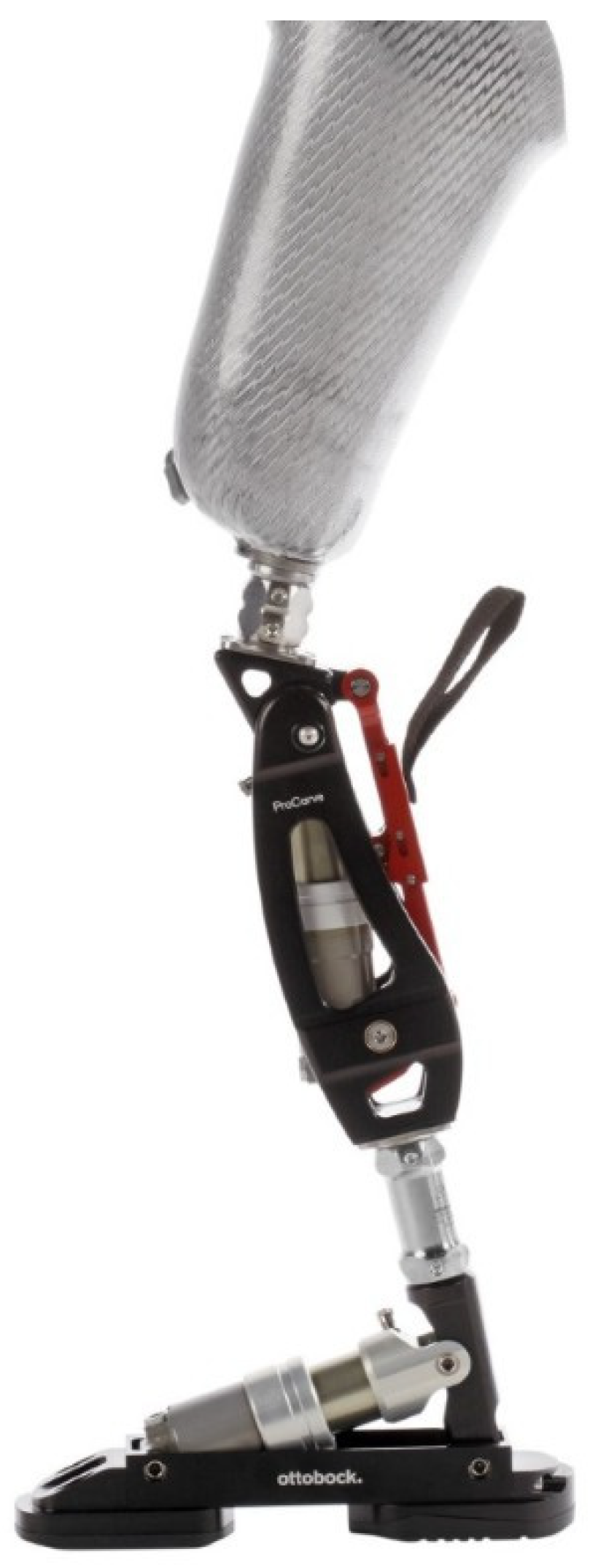
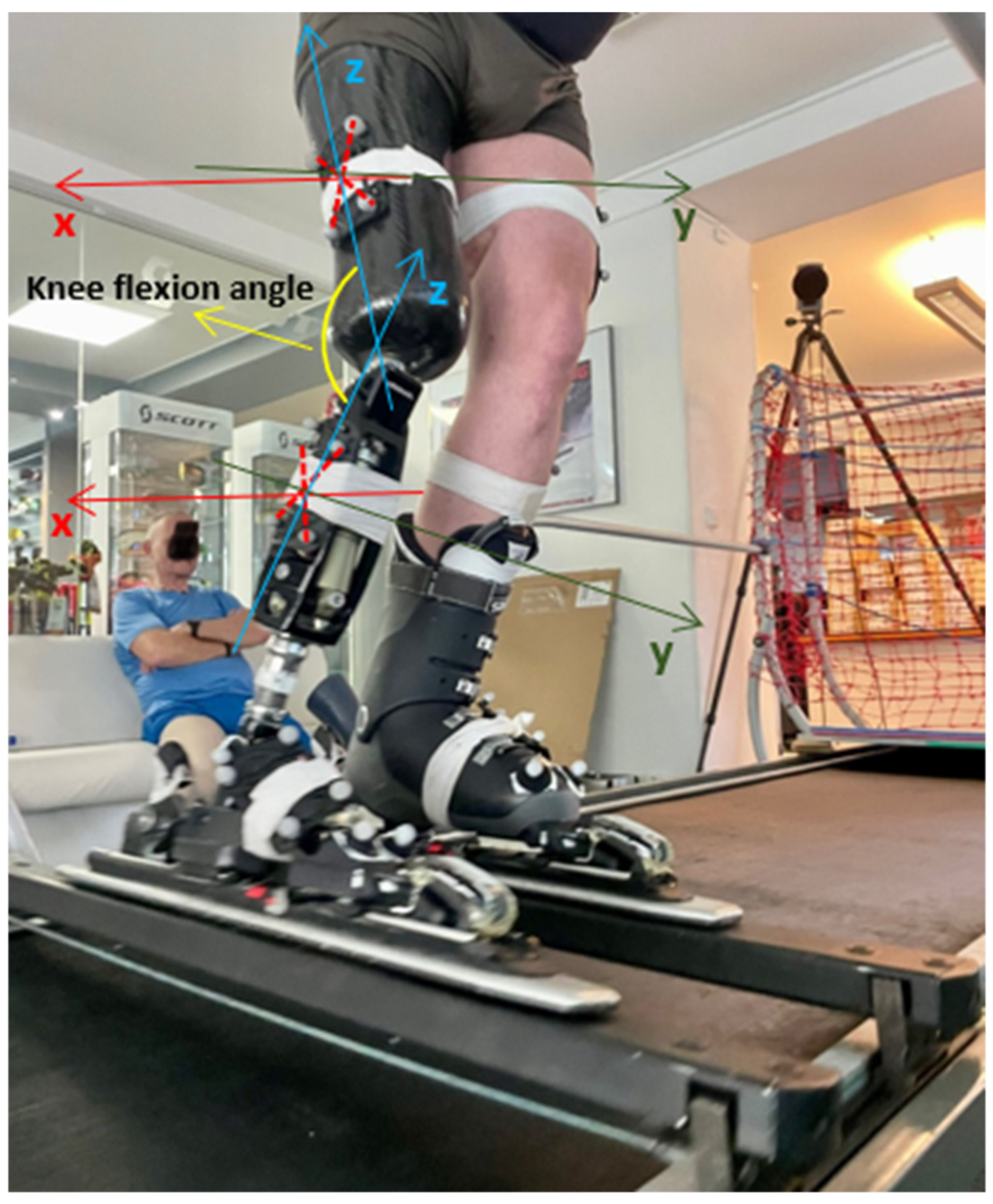
Five individuals with unilateral transfemoral amputation (four males and one female; age = 39.4 years, SD = 14.3; height = 176.0 cm, SD = 5.4; weight = 78.2 kg, SD = 21.7; experience before the amputation = 25.6 years, SD = 12.9; experience after the amputation = 6.8 years, SD = 7.7) were enrolled in this study (the intervention group, IG). The participants were equipped with a skiing prosthesis model of ProCarve by Ottobock (Ottobock, Duderstadt, Germany). The prosthesis consisted of both an artificial knee and foot joint attached to the ski binding (
Figure 1). The participants were recruited in 2024 in collaboration with the Czech Ski School of Amputees. The inclusion criteria were as follows: a unilateral transfemoral amputation and prior experience with two-track skiing. The exclusion criterion was any recent injury that had not fully healed. All participants signed written informed consent prior to taking part in the study, which was approved by the Ethics Committee of the Faculty of Physical Education and Sport, Charles University.
Table 1 contains more detailed demographic information regarding this group.
The control group (CG) included five participants (four males and one female; age = 29.2 years, SD = 3.3; height = 176.0 cm, SD = 6.1; weight = 69.8 kg, SD = 8.4; experience = 24.8 years, SD = 2.9). The only inclusion criterion was a minimum of a level C ski instructor license, while the exclusion criterion was any recent injury that had not fully healed. All participants signed written informed consent prior to taking part in this study, which was approved by the Ethics Committee of the Faculty of Physical Education and Sport, Charles University. The participants were recruited in 2024.
Table 2 contains more detailed demographic information regarding this group.
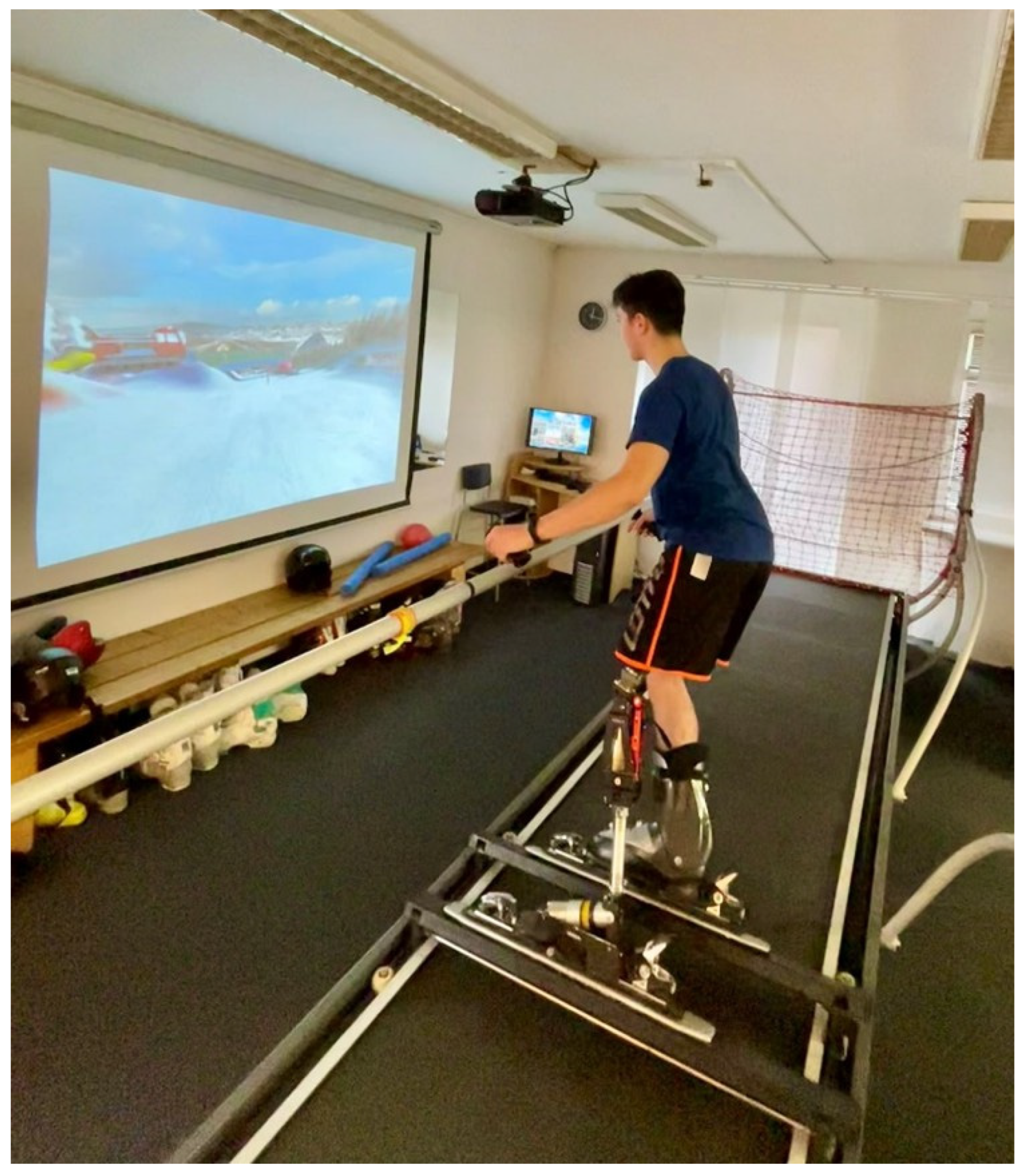
The measurement protocol involved skiing on a specially designed indoor ski simulator (SkyTechSport—model President, Los Angeles, CA, USA), see
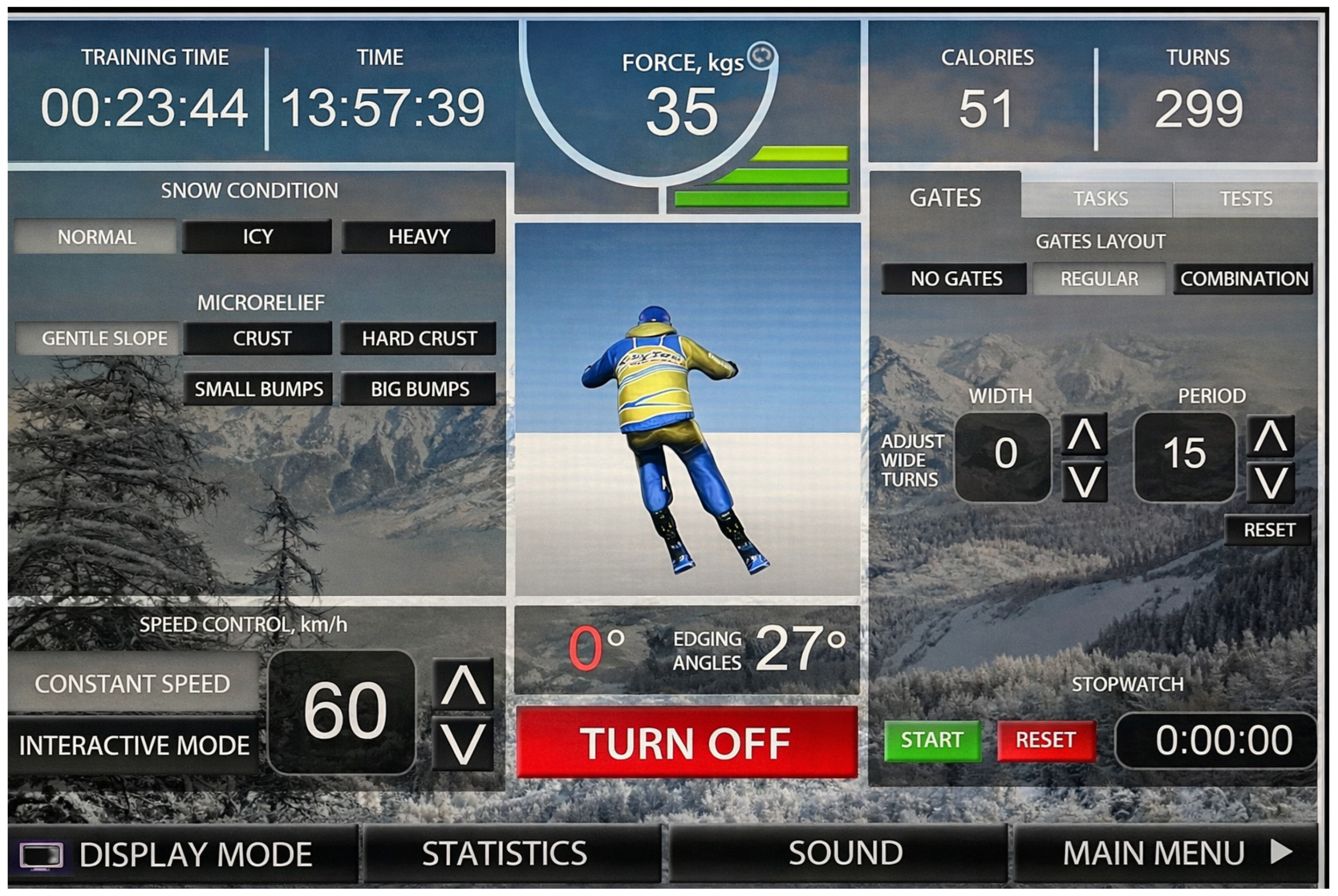
Figure 2. Participants skied on an infinite slope projected in front of them, with the speed set to 60 km/h. The gate offset was 0, and the distance between gates was 15 m (see
Figure 3). After a warm-up and familiarization phase, each participant completed two one-minute skiing trials. Six left turns and six right turns from the second trial were chosen for further analysis.
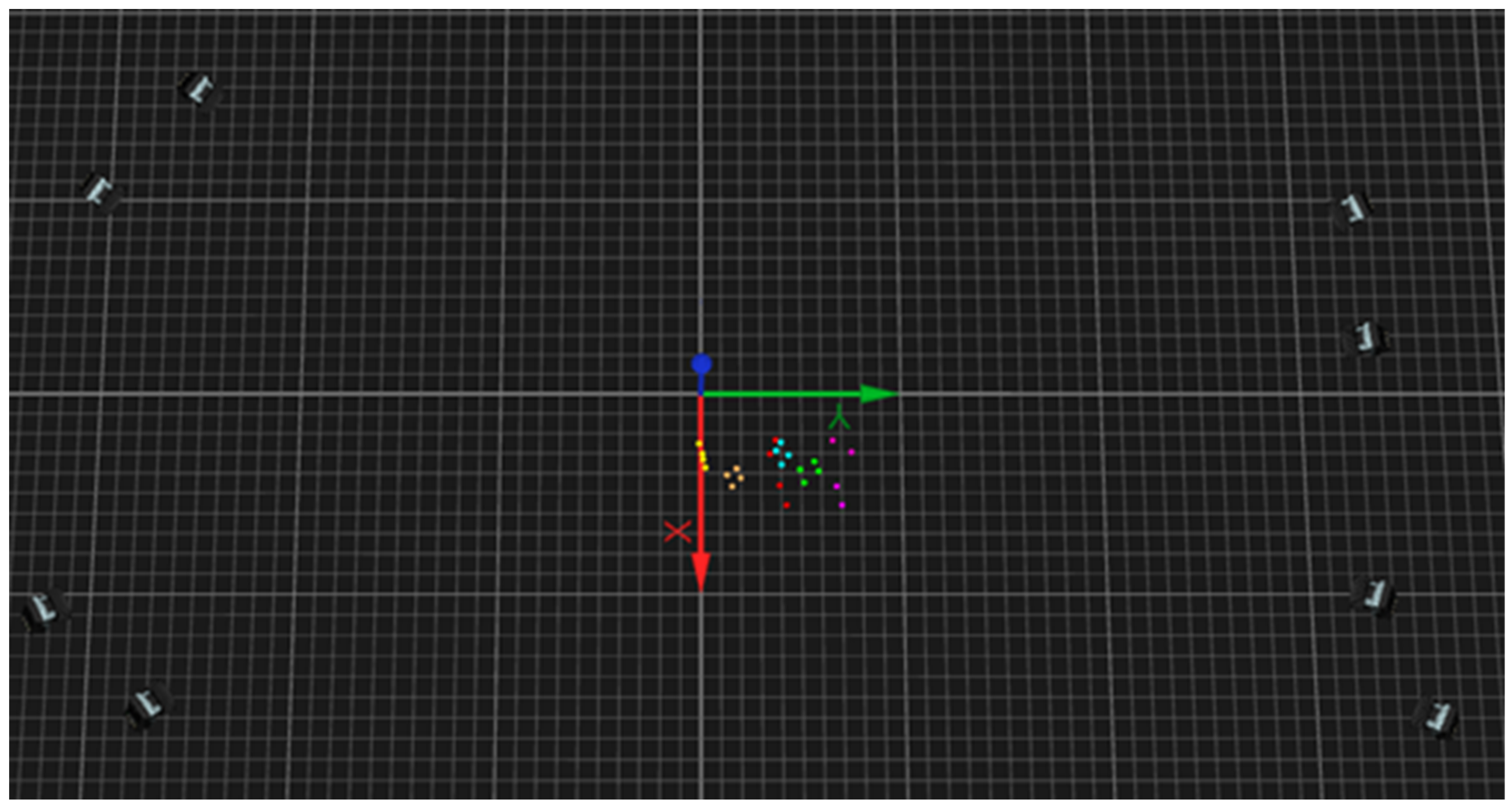
The kinematic analysis was conducted using the Qualisys motion capture system (Qualisys AB, Gothenburg, Sweden). The whole experimental area of the ski simulator was captured using eight infrared cameras Oqus 300+ (see
Figure 4), with a capturing frequency of 100 Hz. Each participant was equipped with spherical reflective markers on both lower limbs (i.e., the prosthetic and intact limbs in the case of the intervention group) as follows: hallux, 5th metatarsal, malleolus, calcaneus, a four-marker cluster on the tibia (with two markers on the ventral side being crucial), and a four-marker cluster on the femur (with the ventral markers serving as the primary reference). The configuration of the markers is shown in
Figure 5.
The recorded data were first processed in Qualisys Track Manager (version 2023.3, Qualisys, AB, Gothenburg, Sweden), where individual markers were identified, optical artifacts were corrected, and point positions and joint angles were computed for the different phases of the skiing turn. The processed data were then exported in *.tsv format for subsequent analysis in IBM SPSS Statistics for Windows, version 26 (IBM Corp., Armonk, NY, USA).
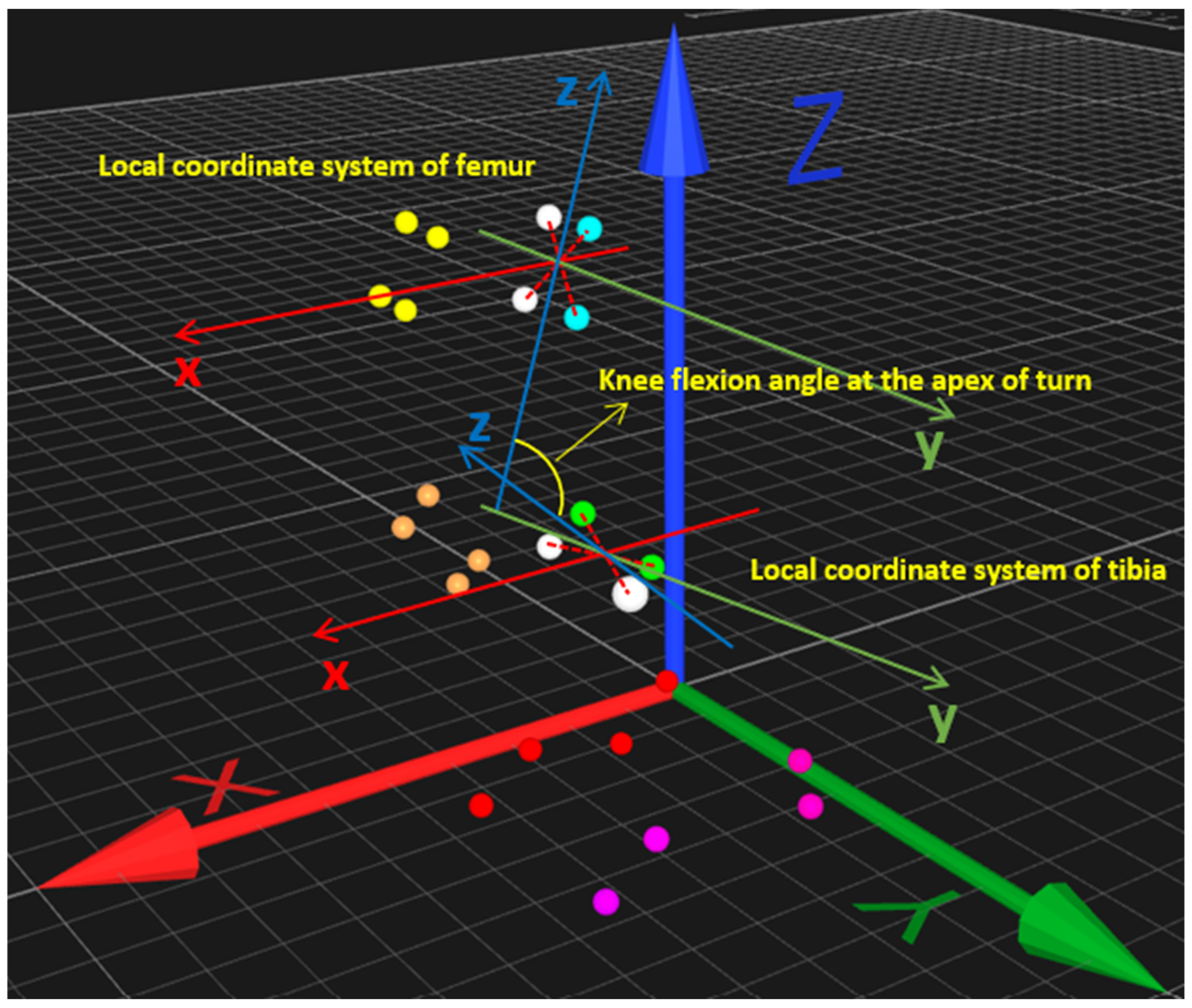
Markers used for angle calculation were placed approximately parallel to the anatomical axes of the thigh and shank segments. The absolute values were calculated based on the reference values. For each measurement, the zero value of knee flexion was defined in full extension and flexion of the lower limb or prosthesis before the start of each measurement. The primary outcome variable was the absolute value of knee flexion at the apex of each turn derived from the angle between both local coordinate systems (the tibial and femoral axes, see
Figure 6). This moment was assumed to represent the maximum range that a participant could reach during each turn.
The maximum absolute positional error of individual markers (±0.5 mm) was estimated based on the standard deviation of the calibration wand length during the Qualisys system calibration, which never exceeded this value. Assuming a minimum marker distance of 100 mm, the maximum possible absolute error in angle estimation was calculated as ±1.5°.
Statistical analyses were conducted using IBM SPSS Statistics for Windows, version 26 (IBM Corp., Armonk, NY, USA). Data normality was assessed using the Shapiro–Wilk test.
For intra-individual comparisons, knee flexion angles of the prosthetic and intact limbs within each participant were compared using paired statistical tests (paired t-tests for normally distributed data or Wilcoxon signed-rank tests for otherwise).
For inter-individual comparisons between the intervention and control groups, independent statistical tests were applied (independent-samples t-tests for normally distributed data or Mann–Whitney U tests otherwise).
All tests were two-tailed, and statistical significance was set at p < 0.05. Effect sizes were calculated using Cohen’s d. Data are presented as means with standard deviations and 95% confidence intervals.
3. Results
The demographic data did not show any significant differences between the intervention and control groups. The mean age was slightly higher in the intervention group (39.4 years, SD = 14.3) compared to the control group (29.2 years, SD = 3.3); however, skiing experience before the amputation in the intervention group (25.6 years, SD = 12.9) was very similar to the experience in the control group (24.8 years, SD = 2.9). Each group also included one female participant. Therefore, it can be assumed that the inter-individual analysis was not significantly affected by the age or skiing experience of participants in the intervention group before the amputation and the control group.
The results of intra-individual analysis can be found in
Table 3 (the intervention group) and
Table 4 (the control group). The results are presented for each individual and both their limbs in two experimental scenarios (left and right turns), when one limb is on the inside of a turn (“In”), and the other is on the outside of a turn (“Out”).
The results in the intervention group showed significant differences between a prosthetic limb and an intact limb in all participants in almost all scenarios. In two cases (RproAB7 and LproZV2), there were no significant differences between the limbs when on the inside of a turn, and there was one case (LproBS1) with no significant differences between the limbs when on the outside of a turn.
In the case of participant RproAB7, a very experienced participant (49) and a former skiing instructor with 20+ years of experience before as well as after the amputation, the results and video analysis suggest that differences between the limbs in both scenarios are very small. The only significant difference was found when comparing limbs on the outside, suggesting a higher knee flexion with a prosthetic limb being on the outside.
In the case of participant LproBS1, a female participant (23) with 13 years of experience before the amputation and three years after, there was a significant difference between the limbs when on the inside, showing a higher knee flexion in the case of an intact limb. Therefore, these results suggest that a prosthetic limb significantly affects the angle variation/knee flexion, especially when comparing both limbs on the inside of a turn.
In the case of participant LproZV2, an experienced participant (52) with huge experience before the amputation (35) and only one year of experience after the amputation, a significant difference was reached, especially for the case of outside limbs during turns (a higher value for the prosthetic limb). The results and video analysis suggest that the amputation has affected both legs in both scenarios, which might be caused mainly by little experience with a prosthetic limb.
In the case of participant LproTN3, an experienced participant (52) with huge experience before the amputation (35) and 4 years of experience after it, the results showed significant differences in both cases, favoring an intact limb with a higher knee flexion, especially in the case of limbs being on the outside. However, the results and video analysis suggest that although the prosthetic limb has affected both limbs in both scenarios, the technique of turns follows a similar pattern to that of participants without the amputation.
In the case of participant LproSB4, the least experienced participant (21) with seven years of experience before the amputation and four years after it, the results showed very significant differences in both cases, hugely favoring intact limbs with a higher knee flexion in both scenarios. The results and video analysis suggest that the amputation has significantly affected both limbs in both scenarios, especially when comparing the limbs positioned on the outside of the turn.
The results in the control group showed fewer significant differences between the left and right limbs of all participants in both scenarios (left and right turns). Significant differences were found in all cases for limbs when on the inside of a turn, except for one case (FH1). There was only one case of a significant difference between the limbs when on the outside (EF2). These could be caused by leg dominance and different skiing styles.
In the case of participant FH1, an experienced male participant (33) with 29 years of skiing experience, the results showed no significant differences between the limbs in both cases, inside and outside. The results indicate similar angle variation/knee flexion of both limbs during turns.
In the case of participant EF2, an experienced female participant (23) with 20 years of experience, the results showed significant differences for both limbs in both cases. The angle variation/knee flexion in the case of the limb on the inside was much higher than on the outside. Therefore, these results might point towards a carving skiing style.
In the case of participant OK5, an experienced male participant (30) with 26 years of experience, the results showed significant differences between the limbs in the case of the limb on the inside. This might suggest some degree of leg dominance. These results might point towards a carving skiing style as well.
In the case of participant PN6, an experienced male participant (30) with 25 years of experience, the results showed a significant difference for the case of limbs being on the inside, suggesting left-leg dominance. In the case of left turning, the carving style seems more obvious compared to the right turn.
In the case of participant AB8, an experienced male participant (30) with 24 years of experience, the results showed a less significant difference for the case of limbs being on the inside, suggesting slight left-leg dominance. Otherwise, the difference between the limbs on the inside and on the outside points towards a dominance of the carving skiing style.
The results of inter-individual analysis (the intervention vs. control group) can be found in
Table 5 and
Table 6.
Table 5 contains the mean values with standard deviations, minimum and maximum values, and confidence intervals for both groups, both experimental scenarios (left and right turns), and both limbs.
Table 6 provides the statistical comparison between both groups in terms of absolute difference of means, percentage difference of means, calculated
p-value, and the effect size measured using Cohen’s d.
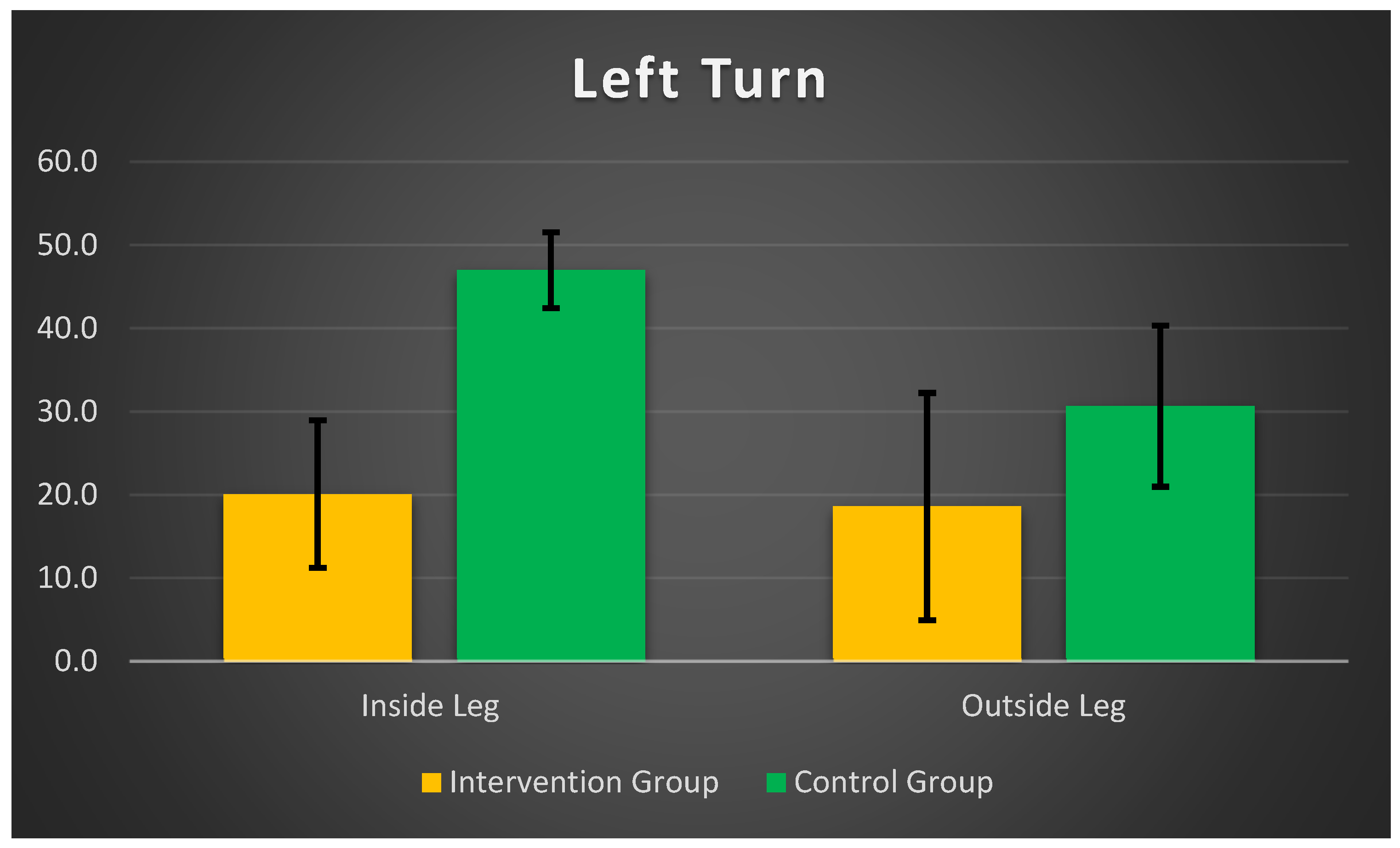
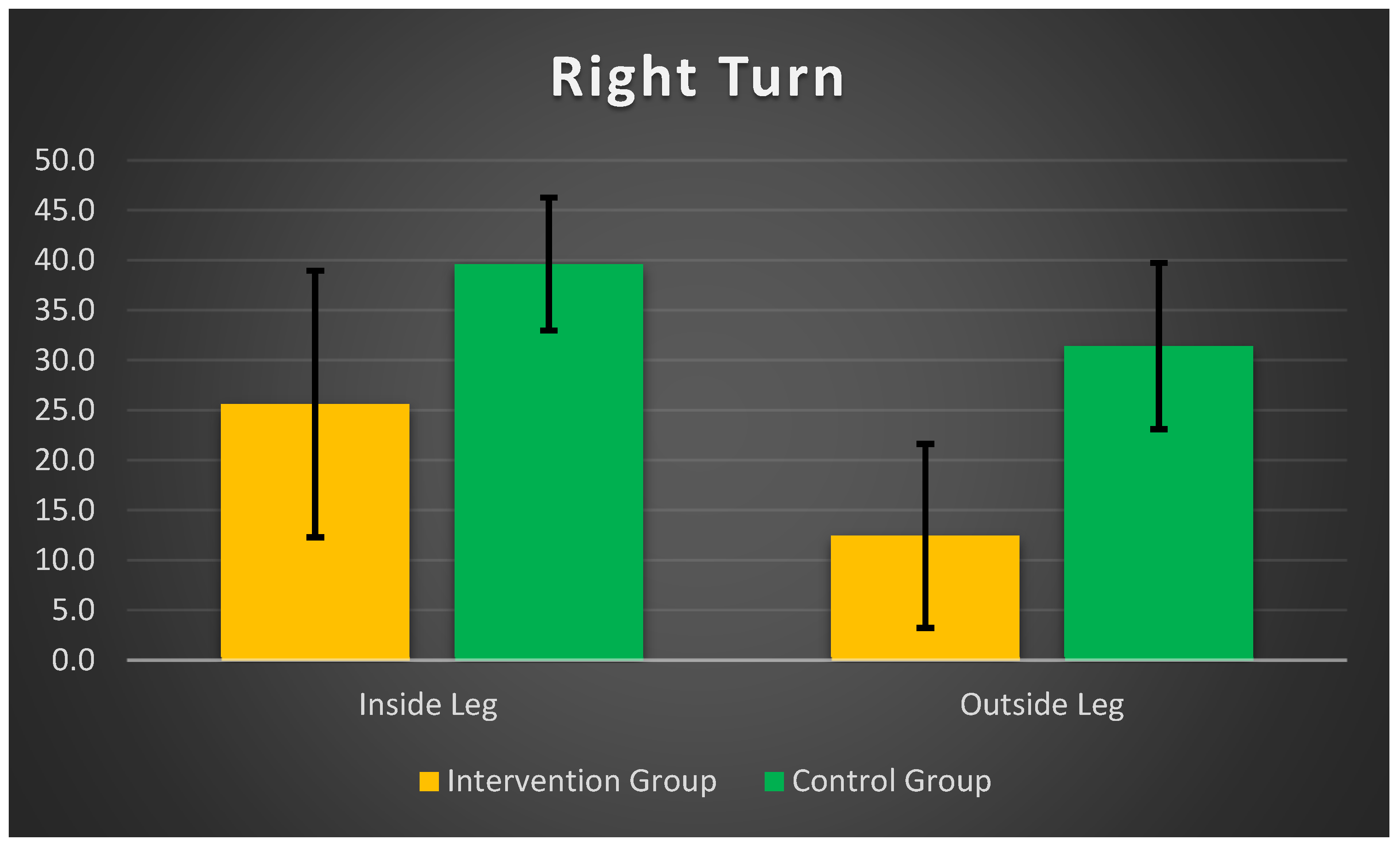
The results of statistical analysis showed significant differences between the intervention group and control group in both scenarios (left and right turns) and limbs. The results suggest that the prosthetic limb significantly affects the knee flexion of both limbs, resulting in smaller values of knee flexion compared to the control group, especially when comparing a prosthetic limb to a corresponding limb in the control group. In the case of a left turn (a prosthetic limb on the inside), the results showed the highest difference in means for the inside leg (26.9°,
p < 0.001) and the smallest difference for the outside leg (12.1°,
p = 0.013) compared to the control group. In the case of a right turn (a prosthetic limb on the outside), the results showed the highest difference in means for the outside leg (19.0°,
p < 0.001) and a smaller difference for the inside leg (14.0°,
p < 0.001). These findings indicate that amputee skiers maintain a turn strategy qualitatively similar to that of the non-disabled individuals, yet with a reduced range of motion influenced by prosthesis mechanics and user skills. The results of inter-individual analysis are presented using column charts (
Figure 7 and
Figure 8).
4. Discussion
The primary finding of the present study is that transfemoral amputee skiers using a skiing-specific prosthesis can reproduce the qualitative turning strategy observed in non-disabled skiers, characterized by greater knee flexion of the inside limb compared with the outside limb. However, this preserved coordination pattern is accompanied by a systematic reduction in knee-flexion amplitude on the prosthetic side, particularly when the prosthetic limb is positioned on the inside of the turn, where flexion demands are highest.
The comparative analysis of knee joint kinematics revealed both similarities and differences between transfemoral amputee skiers and non-disabled ski instructors, with movement patterns strongly dependent on turn direction and limb position. In the intra-individual analysis, significant asymmetries were found in all amputee participants. The prosthetic limb reduced knee-flexion amplitude in several conditions and, in some cases, also influenced the intact limb, resulting in decreased flexion at the apex of one or both turns. These reductions were most pronounced when the prosthetic limb was positioned on the inside of the turn, where knee-flexion demands are highest. In contrast, asymmetries in the control group were significantly smaller, likely reflecting natural leg dominance or individual skiing technique rather than structural limitations.
Comparable inter-limb asymmetries have been reported even in able-bodied, high-level alpine skiers, where a certain degree of limb dominance is considered a normal characteristic rather than a pathological finding. Steidl-Müller et al. demonstrated that competitive alpine ski racers systematically exhibit limb symmetry index deviations across strength- and coordination-related tasks, despite symmetrical sport demands and bidirectional turning requirements [
15]. In addition, sensorimotor aspects of leg dominance have been shown to influence lower-limb asymmetries in alpine skiing, suggesting that side-to-side differences may arise from neuromotor control strategies rather than structural or pathological factors [
16]. These findings support the interpretation that the smaller asymmetries observed in the control group of the present study likely reflect functional leg dominance inherent to alpine skiing rather than methodological artifacts or structural constraints.
Despite these differences in magnitude, the qualitative pattern of the skiing turn was remarkably similar between the two groups. In both groups, the inside limb consistently exhibited greater knee flexion than the outside limb, indicating that the fundamental biomechanical strategy of turning was preserved even with a transfemoral prosthesis. This observation aligns with the findings of Fasel et al., who demonstrated that non-disabled skiers performing turns on an indoor ski simulator exhibit a characteristic flexion–extension pattern in which the inside limb achieves higher knee flexion throughout the turn cycle [
17]. Comparable functional asymmetries between the inside and outside limbs have been described as a general feature of alpine skiing biomechanics, reflecting coordination and load-distribution strategies during turning [
18,
19]. Accordingly, the reduced knee-flexion amplitude observed on the prosthetic side represents a quantitative limitation within an otherwise preserved qualitative turning strategy. The present study shows that transfemoral amputees equipped with a skiing-specific prosthesis reproduce the same qualitative pattern, despite a reduced range of motion, supporting the interpretation that the coordination strategy of the turn remains intact.
According to the 2024 FIS Para Alpine Classification Rules, athletes classified in LW2—which includes unilateral transfemoral amputees—are required to ski with one ski and two outriggers, whereas two-ski techniques are permitted only for classes with lower degrees of impairment, such as LW4 [
13]. This restriction is regulatory rather than biomechanical and reflects historical assumptions about limited knee-flexion capacity and reduced limb control in transfemoral prosthesis users. The present findings challenge these assumptions by suggesting that transfemoral amputees using a skiing-specific prosthesis can reproduce the fundamental turning pattern of non-disabled skiers and, in some cases, achieve intact-limb knee-flexion values approaching those of the control group. However, these observations should be interpreted cautiously and are not intended to challenge or revise existing classification regulations. Rather, they indicate that under specific experimental conditions, two-ski skiing may be functionally feasible, and that current regulations may not fully reflect the biomechanical potential of contemporary skiing-specific prosthetic systems, a topic that warrants further investigation in larger and more comprehensive studies.
Earlier work by McQuarrie et al. examined two transfemoral amputee skiers using an XT9 knee and SACH foot fitted inside a conventional ski boot and concluded that this prosthetic setup did not permit biomechanics comparable to that of non-disabled skiers, particularly due to difficulty achieving knee flexion on the inside limb of the turn [
7]. Although the XT9 is marketed as appropriate for high-activity and extreme sports, its flexion-resistance mechanism, together with the limited angle compliance of the SACH foot—which provides no dorsiflexion and was not designed for alpine skiing—likely contributed to their observed movement limitations. The walking foot embedded in a ski boot may have further amplified posterior displacement of the center of mass during flexion, reducing turn stability and control. In contrast, the present study used a skiing-specific prosthesis that incorporates controlled flexion damping, optimized segmental coordination, and a direct mounting interface to the ski binding, thereby eliminating the constraints imposed by a walking foot and ski boot. This configuration enabled amputee participants to reproduce the qualitative turning strategy of able-bodied skiers and, in several cases, achieve intact-limb knee-flexion values approaching those of the control group. Collectively, these findings suggest that the limitations reported by McQuarrie et al. were primarily dependent on the specific prosthetic configuration tested rather than reflecting inherent biomechanical constraints of transfemoral alpine skiing.
The inter-individual analysis further supports this interpretation. The following inter-individual observations are presented to illustrate variability in skiing strategies and post-amputation adaptation, while the primary interpretation of the results is based on group-level patterns. While the intervention group exhibited lower knee-flexion amplitudes overall, several participants—particularly when using the intact limb in the outside-ski position—achieved flexion values approaching those of the control group. These partial overlaps indicate that skiing experience, post-amputation motor adaptation, and familiarity with the prosthesis can meaningfully influence functional performance.
Pronounced inter-individual variability and limb-specific compensation strategies have been consistently reported in unilateral transfemoral amputees during locomotion. Hobara et al. demonstrated increased mechanical loading and asymmetric limb contributions in the intact limb during dynamic tasks using running-specific prostheses [
20], while large-cohort gait analyses have shown that transfemoral amputees exhibit greater inter-limb asymmetries and between-subject variability than those with lower amputation levels [
21].
Importantly, these findings indicate that substantial inter-subject variability is an inherent characteristic of unilateral transfemoral amputation rather than a methodological artifact, even under standardized experimental conditions.
Nevertheless, the prosthetic limb remained the principal source of reduced flexion, as evidenced by large effect sizes in most comparisons. Due to the limited sample size, these findings must be interpreted cautiously.
Although this pilot study intentionally focused on a single kinematic outcome variable, recent methodological developments in movement biomechanics offer complementary approaches for studies with small and heterogeneous samples. In particular, data-driven methods combining data balancing with machine learning and generative artificial intelligence have been shown to improve movement pattern classification in low-sample contexts. For example, Trabassi et al. demonstrated that generative AI-based augmentation can enhance gait pattern discrimination despite pronounced inter-individual variability. Such approaches may represent a useful methodological extension for future prosthesis-related biomechanics research, where conventional statistical analyses are constrained by limited sample sizes [
22].
To conclude, the results demonstrate that skiing-specific prosthetic systems enable transfemoral amputee skiers to adopt a turning strategy that closely resembles that of non-disabled individuals, even though the achievable flexion range is reduced. For a more comprehensive understanding of these similarities and differences, future research should incorporate load-distribution measurements, joint kinetics, and trunk–pelvis coordination. Larger cohorts and outdoor skiing analyses will be essential to determine whether the kinematic patterns observed in simulated conditions translate to real slope environments and to support further refinement of prosthetic components that facilitate bilateral skiing techniques.
To address the current lack of load-distribution data in prosthetic skiing, the focus of our future work is on the development of a strain-gauge force measurement plate designed to be positioned between the ski and the ski binding. This system will enable direct quantification of forces in skiing prostheses that attach directly to the binding and cannot accommodate pressure-insole sensor technology. Such measurements will allow future studies to link prosthetic loading patterns with joint kinematics, thereby improving our understanding of how prosthetic design influences turning mechanics and overall skiing performance.
5. Methodological Considerations
This pilot study was conducted with an exploratory sample size to assess differences between amputee skiers and non-disabled ski instructors in terms of knee flexion during both turn scenarios.
Another strength of the current study, although a pilot one, is its uniqueness, because, to our knowledge, there is no such study assessing and comparing the kinematics of unilateral transfemoral amputee skiers with a model of prosthetic limb specifically designed for alpine skiing to non-disabled skiers.
However, the present study acknowledges several methodological limitations that must be explicitly acknowledged. The age distribution was more heterogeneous in the amputee group, and each cohort included only one female participant. Due to the extremely small sample size, the potential effects of age and sex on knee joint kinematics could not be statistically modeled or examined, and their influence on the observed results, therefore, cannot be excluded.
In addition, potential effects of leg dominance were acknowledged in the interpretation of control group results; however, leg dominance was not explicitly modeled as an independent factor due to the limited sample size and exploratory nature of the study. Its influence on the observed asymmetries, therefore, cannot be excluded.
Another important limitation concerns the generalizability and ecological validity of the findings. The participants in the intervention group represented a highly selected subgroup of unilateral transfemoral amputee skiers who were able to ski bilaterally using a skiing-specific prosthesis. This does not reflect the majority of transfemoral amputee skiers, many of whom ski using one-ski techniques with outriggers or do not employ bilateral skiing in accordance with current para-alpine skiing practice and classification rules. Consequently, the present results cannot be generalized to the broader population of transfemoral amputee skiers and should be interpreted as specific to individuals capable of bilateral skiing under controlled conditions.
Firstly, although shown adequate, the sample size is small for a more complex and thorough analysis of differences between both cohorts in the case of the primary variable (knee flexion), but also other variables, factors, and possible covariates (age, gender, skiing experience, leg dominance, and the influence of hip, ankle, and trunk kinematics). Both cohorts included only one female participant, there were no measurements of joint range of motion, and the control group included very specific participants instead of recruiting a more representative sample of the general public.
Secondly, although three-dimensional kinematic data were recorded, the analysis was intentionally restricted to a single scalar outcome (knee flexion angle at the apex of the turn) in order to maintain a focused, proof-of-concept approach consistent with the exploratory nature of this pilot study. The kinematics of alpine skiing is a very complex movement requiring contributions from almost all body segments. However, as a pilot study, the goal was to focus on the kinematics of one joint/segment first before diving deeper into a more complex biomechanical analysis.
Thirdly, the experimental protocol. It was conducted in a simulator-based environment, which may not fully replicate the dynamic conditions of outdoor alpine skiing. While the ski simulator allowed for standardized testing conditions and precise motion capture, it cannot reproduce the full range of environmental, sensory, and mechanical demands encountered during on-slope skiing, such as variable snow conditions, terrain gradients, and speed-dependent loading. Therefore, extrapolation of the present findings to real-world alpine skiing should be made with caution. In addition, repeated turns within individual participants were treated as separate observations in the statistical analysis, which may introduce a degree of pseudoreplication and lead to an underestimation of inter-individual variability. Although this approach allowed characterization of within-subject consistency across repeated turns in a controlled setting, subject-level averaging or hierarchical (mixed-effects) modeling would represent a more conservative and statistically robust strategy in future studies with larger sample sizes. And finally, no load-distribution measurements and joint dynamics were assessed that could provide additional reasoning and explanation of results, supporting their interpretation or providing their correction.
6. Conclusions
Intra-individual analysis revealed significant asymmetries in all amputee participants, with a prosthetic limb demonstrating a poorer knee flexion at the apex of a turn, especially when positioned on the inside of the turn. On the other hand, asymmetries in the control group were smaller and likely related to leg dominance rather than structural limitations. In the case of a prosthetic limb, inter-individual comparisons showed significantly lower values of knee flexion in the intervention group in nearly all scenarios compared to the control group. However, in the case of an intact limb, a partial similarity emerged, especially when the intact limb was positioned on the outside of a turn. Overall, these findings indicate that transfemoral amputee skiers preserve the qualitative turning strategy observed in non-disabled skiers, while exhibiting a quantitatively reduced knee-flexion range on the prosthetic side, influenced by prosthesis mechanics and user adaptation.
Future work should incorporate load-distribution measurements, kinetic analyses, and trunk–pelvis coordination to better understand how prosthetic design, alignment, and user adaptation influence skiing biomechanics. Larger cohorts and on-slope validation studies will be essential to determine whether the kinematic similarities observed in a controlled skiing simulator can be translated into real slope performance. Such investigations may provide biomechanical insight relevant for the future development and optimization of skiing-specific prosthetic systems.
The reduced knee-flexion range observed in the prosthetic limb at the apex of the turn indicates that current skiing-specific prosthetic knees may impose excessive flexion resistance during load-bearing phases, particularly when the prosthetic limb is positioned on the inside of the turn. These findings suggest that future prosthetic designs could benefit from improved modulation of flexion resistance, together with adaptive or phase-dependent suspension and damping, and increased rotational compliance, to support knee-flexion patterns closer to those of non-disabled skiers.