1. Introduction
Cities occupy a central position in tourism geography. They concentrate attractions, infrastructure, and symbolic meanings that shape how tourism is produced and experienced. As urban tourism becomes increasingly diverse and experience-oriented, the ability to read and interpret the spatial organisation of cities has become a fundamental competence for future tourism professionals. Recent scholarship highlights the importance of spatial literacy. This is understood as the capacity to recognise spatial patterns, interpret urban form, and connect physical environments with cultural narratives [
1]. However, pedagogical approaches that actively cultivate these skills through hands-on city engagement remain relatively underexplored.
This article addresses this gap by examining the Urban Hunting Game as a walking-based, place-oriented activity designed to develop students’ capacity to interpret urban space through observation, spatial reasoning, and creative engagement. The methodology combines identifying points of interest, designing interpretive challenges, and digital mapping. These activities enable students to construct their own readings of the city while producing small-scale tourism experiences grounded in field observation.
To explore how this approach operates in contrasting contexts, the activity was implemented in two European cities with distinct urban profiles. Porto (Portugal) is characterised by a compact historic centre and strong tourism pressure. Kaunas (Lithuania) is marked by a more dispersed structure, modernist heritage, and an emerging cultural scene. This comparative design allows analysis of how students engage with different urban environments within a shared methodological framework, applied through different instructional configurations.
Building on the literature on urban tourism, spatial literacy and place-based learning, this study is structured as an empirical qualitative investigation designed to examine the pedagogical and analytical potential of the Urban Hunting Game (UHG) within tourism geography education. Specifically, it aims to: (i) evaluate the UHG as a place-based learning methodology; (ii) analyse how it contributes to the development of spatial literacy and interpretive competence; and (iii) examine how different pedagogical configurations and urban contexts influence students’ spatial reasoning, spatial decision-making and representational practices. By adopting a comparative case study design, this research moves beyond a descriptive account of pedagogical activities and provides a structured analysis of how experiential and map-based learning processes support the interpretation of urban space.
The remainder of the article is structured as follows.
Section 2 reviews the literature on urban tourism, spatial literacy and place-based learning.
Section 3 outlines the methodology and case study design.
Section 4 presents the results, followed by a discussion in
Section 5. The conclusion reflects the implications for tourism education and future research.
2. Literature Review
Research on urban tourism, spatial literacy and place-based learning provides a theoretical foundation for understanding how students interpret, represent and narrate urban space in tourism education [
2]. Urban tourism has long been seen as a phenomenon shaped by the interaction between cultural heritage, spatial structure and everyday urban life. Foundational work positions cities as complex cultural landscapes where tourism interacts with urban form, governance and social practices [
3]. Later contributions shift focus, emphasising analytical perspectives sensitive to historical depth, political economy and cultural meaning [
4,
5]. Historic city centres, with their architectural coherence and dense street morphology, illustrate how symbolic heritage shapes tourist behaviour and interpretive experience. Elements such as narrow medieval layouts, waterfront districts and visually coherent ensembles influence how visitors navigate and understand urban space [
6,
7,
8].
Urban morphology studies further demonstrate how street patterns, block structures and the rhythm of the built environment create “landscapes of movement” that guide perception and physical engagement with place [
9]. Historic districts, with their variations in density, building continuity, spatial permeability and conservation history, impact tourism vitality as well as the aesthetic and experiential qualities of destinations [
10,
11]. Morphological characteristics affect how heritage areas respond to contemporary pressures. For example, research on cultural clusters and heritage-led regeneration indicates that tourism can restructure neighbourhood identities, encourage cultural branding and, in some contexts, trigger gentrification or social displacement [
12,
13,
14]. Studies of UNESCO-listed cities reveal that tourism alters spatial practices and land use, thus generating tensions between conservation and the demands of accessibility, mobility and visitor flows [
10,
11]. Other contributions underscore how legibility, connectivity and architectural character influence the interpretive possibilities for visitors. This reinforces the importance of spatial configuration in understanding heritage environments [
15,
16].
Alongside this morphological perspective, research on geography and tourism education has placed increasing focus on spatial literacy as a core competence. Spatial literacy involves understanding spatial patterns, analysing relationships, interpreting scales and linking the physical with the cultural dimensions of place [
17,
18]. This skill supports key tourism practices such as route design, accessibility assessment, visitor-flow analysis and destination interpretation. Despite its importance, studies highlight persistent gaps in students’ spatial skills and note their limited integration into higher education curricula [
18,
19]. Research on cognitive mapping reveals how learners conceptualise spatial relationships [
20]. Additionally, a broader body of work demonstrates the pedagogical value of digital mapping tools for spatial analysis, interpretive reasoning and active inquiry [
21,
22,
23]. In tourism and geography education, platforms such as StoryMaps, MyMaps and uMap facilitate route design, interpretive content development and the visualisation of spatial relationships [
24,
25,
26].
Digital transformation in tourism education further shows how mapping technologies shape both learning processes and destination understanding. Interactive and multimodal tools enhance engagement with spatial data, encouraging interpretation of cultural landscapes through visual and narrative elements [
22,
27]. Decision-making studies demonstrate that digital cartographic interfaces influence how destinations are perceived and selected. These spatial representations actively frame interpretive possibilities, rather than simply conveying neutral information [
28]. Parallel research using big data and digital spatial traces reveals that spatial footprints can expose underlying urban patterns. Such methods distinguish tourist from resident behaviours and identify clustering dynamics that remain invisible through traditional observation [
29,
30]. In educational contexts, geoinformation mapping has been used in tourism and local history activities to support the construction of spatially grounded narratives [
20]. Comparative studies of spatial competence continue to highlight persistent disparities, underscoring the need to strengthen spatial learning in tourism programmes [
18].
These strands intersect with research on place-based, experiential and creative learning. Placing learning within the material and cultural characteristics of specific environments supports the development of sense of place and socio-spatial awareness [
31,
32]. Interdisciplinary approaches show how place-based learning links abstract concepts to real-world contexts, enhancing cultural, historical and spatial understanding [
33,
34]. Experiential methods that emphasise observation, bodily engagement and slow movement through the city foster spatial awareness, critical reflection and interpretive skills [
35,
36,
37]. At the same time, creative and gamified learning has expanded in tourism and geography education. These studies reveal positive effects on engagement, motivation and environmental interpretation [
38,
39,
40,
41,
42,
43,
44]. Research that links these approaches to mapping practices demonstrates how observation, spatial analysis and representation can be integrated to deepen our understanding of urban environments [
27,
45]. However, many initiatives rely on predefined structures rather than embracing student-designed routes or maps [
46,
47].
Taken together, the literature shows that interpreting urban space depends on the interaction between morphological structure, experiential engagement and representational practices. It highlights the role of morphological elements in shaping movement and orientation [
3,
4,
9], demonstrates that spatial awareness and interpretive competence are strengthened through sensory experience and close observation [
31,
36], and confirms that geoinformation tools play a central role in organising, analysing and narratively representing spatial relationships [
22,
24,
26]. Despite these connections, few studies have integrated urban morphology, spatial literacy, digital mapping and experiential learning into a single pedagogical model for tourism education. This study addresses the gap by examining a map-centred, place-based methodology implemented by tourism students in Porto and Kaunas. It analyses how learners construct their own routes, interpret morphological cues and narrate the city through an Urban Hunting Game. This gap highlights the need for integrative pedagogical approaches that combine spatial analysis, experiential engagement and digital mapping within tourism geography education.
3. Materials and Methods
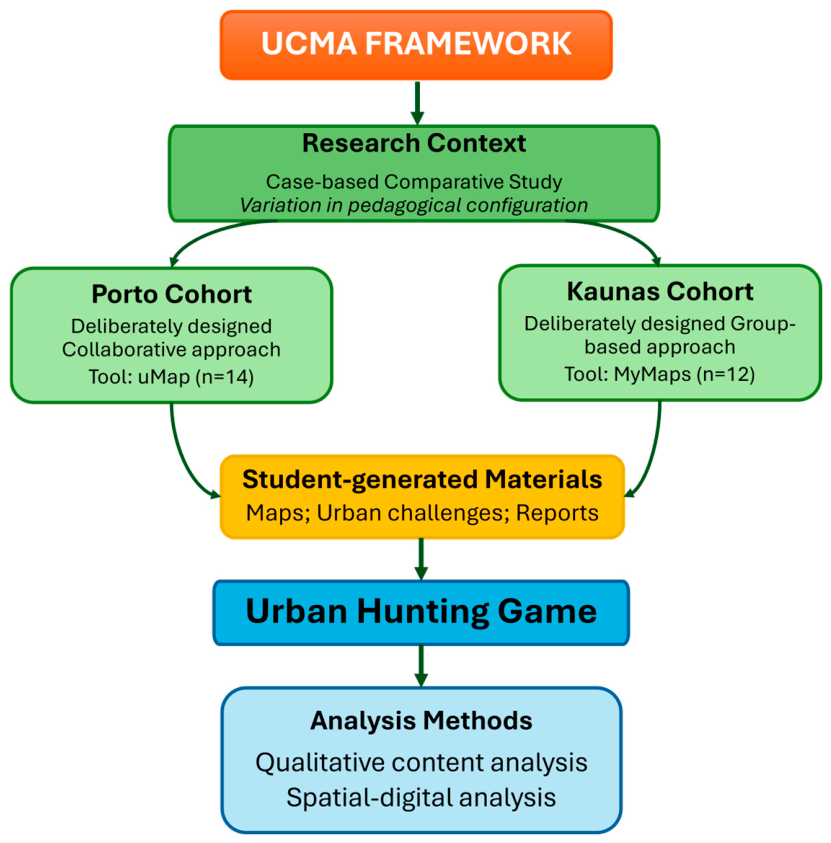
This study adopts a qualitative comparative case study design, framed as an empirical investigation into how place-based and map-centred learning processes support the development of spatial literacy and interpretive competence in tourism geography. The research is based on the Urban Creative Mapping Approach (UCMA), whose framework (
Figure 1) integrates walking exploration, direct and indirect observation, documentary research, digital mapping and the development of interpretive challenges, combining these elements to support students in reading and interpreting the urban landscape. Digital maps are treated not merely as final outputs but as analytical instruments through which field experience is translated into spatial reasoning and structured tourism itineraries, providing the organising structure for the procedures conducted in both cities.
Building on the UCMA framework presented above, the methodological design is directly aligned with the research objectives, as it enables the examination of how spatial literacy and interpretive competence develop through place-based and map-centred learning processes. The comparative case study approach allows further analysis of how different pedagogical configurations and urban contexts influence students’ spatial reasoning and representational practices.
Two cohorts of students participated in the study: 14 students in Porto and 12 students in Kaunas. While the conceptual structure of UCMA remained identical across both settings, its pedagogical configuration was intentionally differentiated as part of the research design. In Porto, the activity was structured as a fully collaborative, class-based process, in which students collectively produced a single integrated version of the Urban Hunting Game (UHG). In Kaunas, the activity was implemented as a group-based project, with students working in small teams, each designing an independent thematic itinerary. The duration of the activity differed between the two case studies, with a more extended implementation in Porto and a shorter, more intensive format in Kaunas. However, the total number of contact hours dedicated to the development of the Urban Hunting Game was comparable in both contexts (approximately 15 h). This ensures that differences in outcomes are not attributable to unequal time allocation, but reflect the influence of pedagogical configuration, urban context and digital tools.
These different organisational configurations were introduced to broaden the empirical scope of the study and to examine how UCMA operates under different instructional conditions, interacting with distinct urban morphologies and digital mapping environments. This design allows the analysis to focus on how spatial form, pedagogical structure and representational tools jointly shape students’ spatial reasoning and interpretive practices.
In both cities, the activity followed the same procedural sequence: walking exploration, observation of spatial and cultural features, identification and selection of points of interest, digital mapping and reflective interpretation. Students in Porto used the uMap platform, which required brief initial guidance and supported collaborative editing, whereas students in Kaunas used the more intuitive Google MyMaps interface, enabling a faster transition from field observation to digital representation. Despite these procedural differences, the underlying logic of UCMA remained consistent across both cohorts, linking observation, research and creative mapping (
Table 1).
Data were collected through multiple sources generated during and after the implementation of the Urban Hunting Game (UHG) in both case studies. These included digital maps created in uMap (Porto) and MyMaps (Kaunas), point descriptions and challenge texts associated with each location, students’ written reports, and informal reflective comments collected during class discussions and follow-up moments. The data collection process was embedded within the pedagogical activity but systematically organised for analytical purposes, ensuring that all materials produced by students were documented, compiled and prepared for subsequent analysis. All data were anonymised and used exclusively for research purposes, in accordance with institutional ethical guidelines, and informed consent was obtained from all participants. The analysis followed an iterative qualitative approach combining content analysis with spatial analysis of mapping outputs. In the first stage, written materials (reports, descriptions and reflective comments) were subjected to repeated close readings and comparative interpretation. The analytical process involved identifying recurring references, similarities and contrasts across the materials, which were progressively grouped into broader thematic categories aligned with the objectives of the study, namely spatial reasoning, interpretive engagement, representational practices and collaborative or creative processes. To support the organisation and synthesis of the qualitative material, analytical tables were created to systematise recurrent themes, illustrative excerpts and interpretive patterns identified across the two case studies. These tables facilitated cross-case comparison and supported the integration of qualitative interpretation with the spatial analysis of the mapping outputs. Particular attention was given to how students described route organisation, interpreted urban features and justified spatial and representational choices.
In the second stage, digital maps were analysed in terms of spatial distribution, sequencing logic, thematic coherence and the visual translation of field observations. These analytical strands were then systematically compared and integrated to identify patterns across the two case studies. This combined analytical approach allowed us to examine how spatial literacy and interpretive competence developed through the integration of walking, observation, research and mapping within the UCMA framework.
To ensure analytical rigour, the study adopted a strategy of data triangulation, combining multiple data sources (digital maps, written materials and observational insights) and analytical perspectives (qualitative content analysis and spatial analysis). The iterative nature of the analytical process, together with the cross-case comparison between Porto and Kaunas, enhanced the consistency, credibility and robustness of the findings.
4. Results
4.1. Case Study: Porto
Development Process of the Urban Hunting Game in Porto
The creation of the Urban Hunting Game (UHG) in Porto progressed over the first 5 weeks of the semester, with students from the Tourism Geography course in the Tourism undergraduate program. The process constituted a cumulative interpretative pathway in which observation, spatial reasoning, group negotiation and representational practice were inseparable. All stages of development were documented in the reflective reports produced by students, which provide a consistent account of how decisions emerged and how the urban environment shaped the learning process.
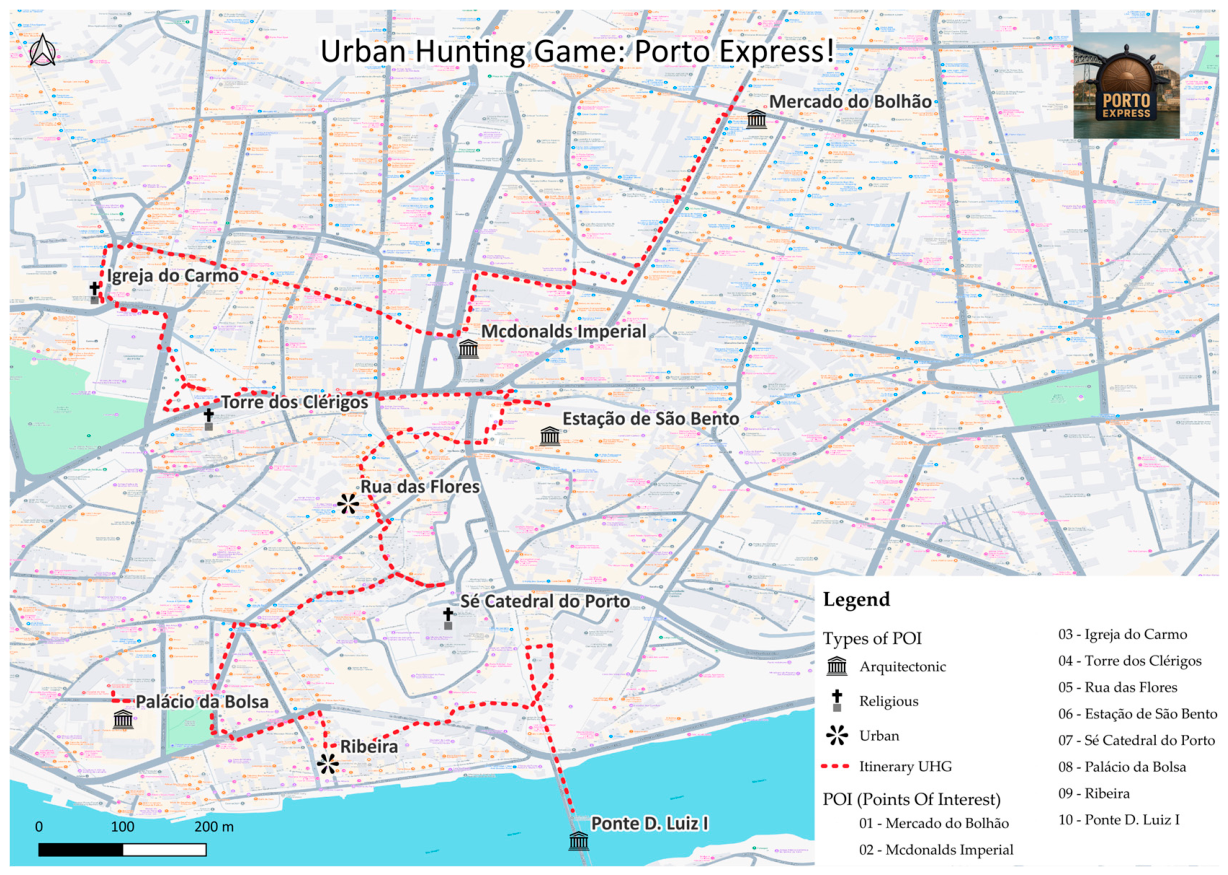
The first phase involved collectively selecting the ten points of interest that would structure the route. Through multiple rounds of discussion and voting, and with support from preliminary field observations, the class converged on a set of locations situated entirely within Porto’s historic centre. This final selection reflected a shared preference for heritage-rich environments and culturally iconic sites. Students frequently referred in their reports to the need to represent what they perceived as the city’s “essence,” a tendency that is well documented in the literature on cognitive mapping in historic destinations. The morphology of Porto, with its concentration of monumental architecture, tile (azulejo) façades and emblematic views, guided these choices and contributed to the emergence of a heritage-centred thematic orientation.
Once this convergence was achieved, the class proceeded to construct the itinerary using a collaborative workflow within uMap (
Figure 2). This stage made the spatial dimension of the task explicit: the need to order locations logically, consider topographic constraints, calculate walking feasibility and ensure thematic coherence, which required sustained negotiation among groups. According to the reports, the visual and interactive nature of the digital map played a crucial role in making discrepancies and inconsistencies evident, prompting iteration and refinement. As one student noted, “we were looking at how the places should be in order” (Student 1), while another reported that “when we placed everything on the map, we realised that some points did not follow a logical sequence and had to be reorganised” (Student 2). A further reflection stated that “seeing the route on the map helped us notice distances we had not considered before” (Student 3) (
Table 2). The mapping exercise, therefore, functioned simultaneously as a representational tool and an analytical device through which students learned to read the city’s structure.
The subsequent phase focused on designing challenges for each point of interest. Students emphasised the difficulty of this task, noting that it required detailed knowledge of the sites, creativity, attention to material features and an understanding of how visitors interpret urban spaces. As one student explained, “creating the challenges was the most demanding part, because we had to look closely at the place and think of something that really made sense there” (Student 4). The same student added that “we needed to observe small details that people usually ignore in order to build a meaningful task,” and further noted that “the challenge had to connect with what we saw, not something random, so we had to analyse the space carefully” (Student 4). The challenges produced ranged from visual interpretation exercises and riddles to creative tasks such as sketching urban views or performing embodied actions. Many were grounded in the observation of architectural details, symbolic motifs or landscape features, demonstrating an interpretative engagement that aligns with UCMA’s emphasis on multisensory analysis and critical reading of place.
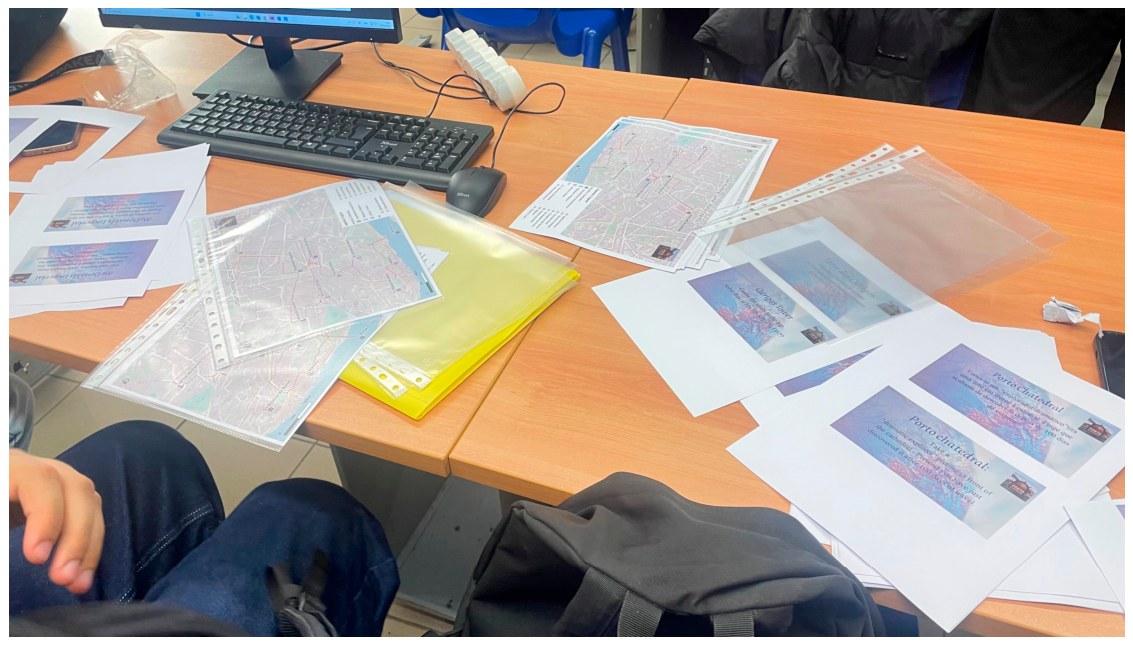
The final stage involved assembling the complete game kit, including the map, instructions, bilingual challenge cards and graphic identity (
Figure 3).
Reports describe this as the phase in which the conceptual work of previous stages was translated into an operational tourism product, requiring precision, organisation and collaborative coordination (
Table 2). As one student reflected, “we had to be very organised and divide the tasks so that everything would come together correctly in the final version” (Student 4). Another student noted that “this was the moment when we realised the responsibility of creating materials that visitors could actually use” (Student 8). An additional comment highlighted the need for clarity and consistency, emphasising that “the instructions had to be simple and well structured so that the game could be followed without difficulty” (Student 6).
Taken together, these phases illustrate how the development of the UHG became an extended interpretative process shaped by Porto’s spatial form, cultural landscape and tourism identity, while simultaneously providing a structure through which students learned to observe, discuss and represent the city.
4.2. Case Study: Kaunas
Development Process of the Urban Hunting Game in Kaunas
The development of the Urban Hunting Game (UHG) in Kaunas took place over two weeks with international students from the Travel Geography and Tours course. The process was shorter than in Porto, and for that reason, some methodological procedures were adapted, such as the use of Google Mymaps, and the group-based approach.
Kaunas is characterised by layered identities, combining medieval foundations, interwar modernism and contemporary creative expressions. Students repeatedly described the city as being shaped by overlapping historical and cultural layers, referring to it as “a city built through multiple layers of history, culture, and modern development” (Group report 2). This perception directly informed both thematic choices and route organisation.
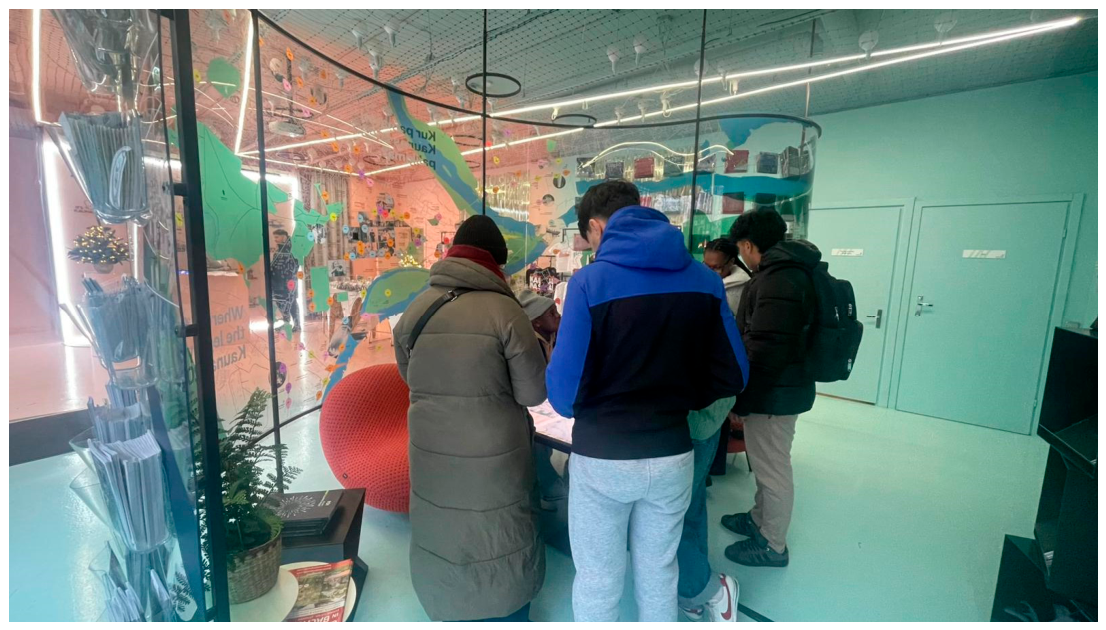
The work began with exploratory field trips to the Old Town and the central corridor of Laisvės Alėja, complemented by an analysis of official tourism maps and guidance obtained at the Kaunas Tourist Information Centre (
Figure 4). In their reports, students emphasised that this preliminary contact with the city helped them understand visitor flows, spatial concentration and thematic opportunities. One group noted that the central area is “dense with heritage sites, making it ideal for an urban hunting game” (Group report 1), confirming the suitability of Kaunas’s urban structure for a walking-based interpretive activity.
Unlike in Porto, where the class converged on a single collaborative route, the Kaunas cohort worked in small groups, each developing an independent thematic itinerary. This organisational structure resulted in varied narrative approaches, including interwar statehood, layered urban identity and memory-based interpretations. Despite these differences, students consistently framed Kaunas through the lens of memory and identity, noting that “memory and identity intersect constantly” in the city and shape how places are understood and connected within the route (Group report 3).
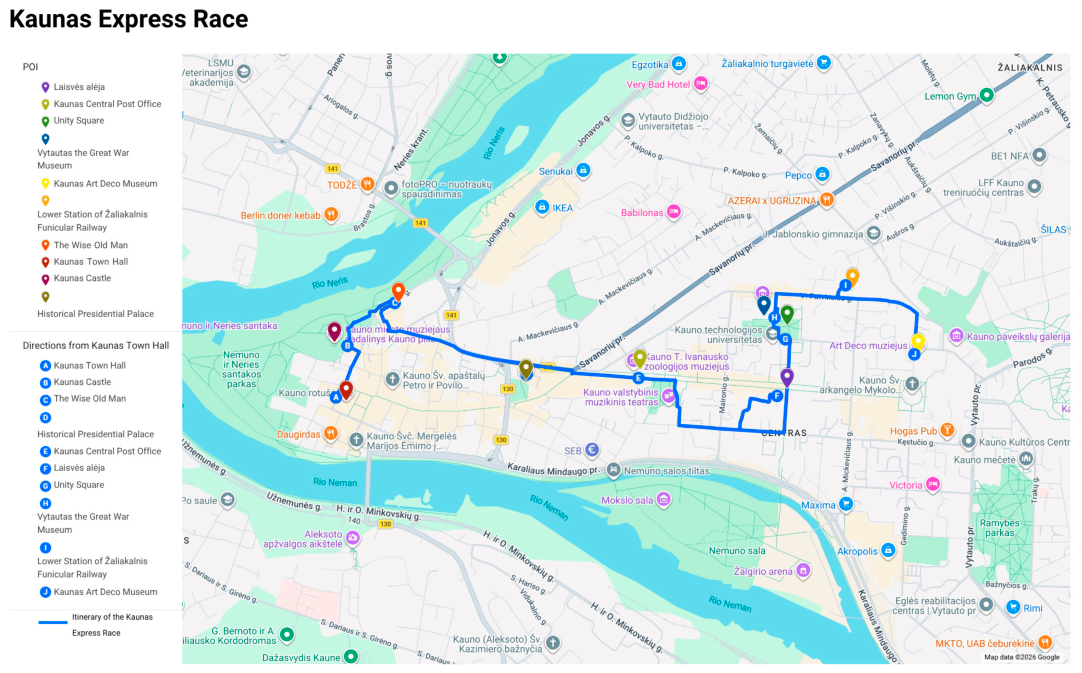
Route construction and spatial sequencing were carried out in Google MyMaps (
Figure 5). Students highlighted the importance of digital mapping in managing distances, estimating walking times and ensuring logical sequencing between points of interest. The use of MyMaps allowed groups to verify feasibility and adjust their routes so that “the full game could be completed in approximately 85 min, respecting the maximum duration” established for the activity (Group report 1). Mapping thus functioned not only as a representational tool but also as an analytical device supporting spatial reasoning and temporal control.
Developing challenges was a central interpretive stage. In all projects, challenges were designed to require direct, on-site observation rather than prior knowledge or online searches. As noted in one report, tasks “could only be solved by being physically present at the location” (Group report 4). This focus on embodied observation encouraged attention to architectural details, symbols and material features, reinforcing the UCMA framework’s place-based logic.
In the final phase, each group assembled a complete tourism product: thematic rationale, digital map, challenge descriptions and rules of play. Students found that translating interpretive work into a visitor-oriented format increased their awareness of the organisational and communicative demands of tourism product design. This phase underscored the need for clarity, coherence and feasibility, as the game had to function as both an academic exercise and an operational urban tourism experience.
4.3. Comparative Synthesis of the Porto and Kaunas Case Studies Under the UCMA Framework
The comparative synthesis examines how differentiated learning configurations emerge from the interaction between urban morphology, pedagogical configuration and digital mapping practices. The observed differences between the two case studies can be interpreted through two complementary dimensions: pedagogical configuration and urban morphology. Pedagogical configuration influences how students organise their work, negotiate spatial decisions and construct narratives, while urban morphology shapes the availability, distribution and symbolic prominence of points of interest. Distinguishing between these dimensions provides a more precise understanding of how spatial decision-making and representational outcomes are formed. The contrasts summarised in
Table 3 reflect the interaction between three analytically distinct but interrelated dimensions: urban morphology, pedagogical configuration and digital mapping affordances. The comparison highlights UCMA’s capacity to operate as a relational framework that adapts to place-specific conditions while maintaining methodological coherence.
In Porto, the learning configuration was deliberately designed as a fully collaborative, class-based process, resulting in the collective development of a single Urban Hunting Game and highlighting the influence of pedagogical configuration. This pedagogical approach interacted with the city’s compact historic structure and high symbolic density, favouring spatial convergence and collective interpretive alignment. Students gravitated toward iconic heritage landmarks and constructed dense, linear routes that reinforced the city’s canonical narratives. The use of uMap, which supports shared editing and collective negotiation, further contributed to this convergence, producing highly coherent and spatially integrated representations.
In Kaunas, the activity was implemented as a group-based project, with each team developing an independent thematic itinerary. This pedagogical approach interacted with a wider spatial grid, interwar modernist heritage and layered urban identities, enabling more exploratory spatial reasoning and personalised selections of points of interest. The use of Google MyMaps (version 2026) facilitated rapid experimentation and thematic differentiation, resulting in more dispersed routes and plural narratives centred on memory, identity, and temporality, and reflecting both the pedagogical configuration and the characteristics of the urban environment. Within this configuration, UCMA supported creative interpretation and individualised spatial storytelling rather than collective convergence.
5. Discussion
5.1. Interpreting Urban Space Through Experiential and Representational Practices
The comparative analysis of the Porto and Kaunas cohorts provides insights into how students interpret urban space when engaged in experiential, place-based and representational learning activities. The findings indicate that spatial decision-making, narrative construction, and interpretive depth are shaped by the interaction among urban form, modes of engagement with the city, and digital mapping practices. The observed patterns are interpreted as expressions of students’ spatial reasoning processes, which are shaped by the interaction between urban morphology, pedagogical structure and representational practices.
In the Porto case, students’ spatial decisions displayed a clear pattern of convergence. Points of interest were clustered within the compact historic core, privileging emblematic landmarks and visually dominant heritage spaces. This pattern is consistent with the morphological characteristics of Porto’s medieval urban structure, which is marked by high symbolic density, narrow streets and strong visual cues. As noted in the literature, urban environments characterised by such features are commonly associated with spatial concentration and canonical readings of place, as legibility and symbolic prominence focus attention on a limited number of sites [
3,
4,
7]. The resulting routes were dense and spatially integrated, supporting coherent interpretive narratives.
In the Kaunas case, spatial decisions were more heterogeneous. Students selected a wider variety of locations, including modernist architecture, civic spaces, street art and everyday urban environments, which were often distributed across broader sections of the city. This pattern reflects the city’s less compact spatial structure and a historical identity strongly influenced by its interwar modernist period. Previous research suggests that urban environments with lower symbolic concentration and less constrained spatial layouts are associated with exploratory movement and engagement with non-canonical spaces [
9,
11]. The Kaunas routes consequently exhibited greater thematic diversity and more personalised interpretive readings.
Across both contexts, digital mapping played a central role in translating field experience into structured representations. Map-making required students to externalise spatial reasoning, justify sequencing decisions, and construct narratives that could function as tourism products. Differences in representational outcomes were observed between the two cohorts, with more compact and integrated narratives in Porto and more dispersed and varied representations in Kaunas. These findings align with research on spatial literacy and representational learning, which frames map-making as a cognitive and interpretive practice rather than a purely technical task [
21,
22,
24]. In this sense, digital mapping functioned not only as a tool for visualisation, but also as a means of navigation and reflection, enabling students to structure spatial decisions, evaluate route feasibility and critically engage with the construction of tourism narratives.
Embodied engagement with the city further contributed to interpretive depth. Walking, direct observation and the design of place-specific challenges heightened students’ attention to architectural details, symbolic elements and micro-spatial features that are often overlooked in classroom-based learning. This supports existing work on place-based and walking methodologies, which emphasises the role of sensory experience and movement in shaping spatial understanding [
31]. Creative and gamified tasks supported curiosity and interpretive experimentation, enabling students to move beyond descriptive accounts and engage critically with the ways in which urban spaces communicate meaning to visitors.
These findings reinforce and extend previous research on spatial literacy, place-based learning and digital mapping in tourism education, by demonstrating how these dimensions interact in applied, student-driven contexts.
5.2. Advancing Tourism Education Through UCMA Framework
By integrating walking, observation, digital mapping and creative interpretation, UCMA builds on existing approaches in tourism and geography education while organising these components within a single pedagogical and analytical framework. Its contribution lies in articulating experiential engagement, spatial analysis and digital representation as interconnected stages of student-led urban interpretation. The framework engages students in constructing spatial narratives grounded in field observation, spatial reasoning and direct interaction with the urban environment.
The comparative application in Porto and Kaunas shows that this approach operates coherently across contrasting urban morphologies, digital tools and pedagogical configurations, while supporting the development of spatial literacy, interpretive competence and destination-reading skills. The methodology showcases how learning processes are shaped by the interaction among city form, digital representation, and embodied experience.
Grounded in empirical evidence and positioned within established theoretical debates, UCMA offers a scalable and adaptable methodological contribution to tourism education, supporting more critical, situated and creative engagements with urban space. The findings should be understood as context-specific and analytically grounded, reflecting the qualitative and comparative nature of the study and the particular characteristics of the two case studies analysed. While the results are intrinsically linked to these educational and urban contexts, the UCMA framework may be adapted and applied in other place-based and experiential learning settings in tourism and geography.
6. Conclusions
This study examined the Urban Hunting Game as a place-based learning methodology for strengthening spatial literacy and interpretive competence in tourism geography. Through structured engagement with urban space, combining walking, observation, digital mapping and creative interpretation, this research demonstrates how students can be supported in learning to read, organise and narrate the city as a tourism environment.
Across both case studies, the findings show that experiential and place-based learning activities enable students to move beyond descriptive engagements with urban space and to develop more reflective and interpretive readings. Walking and attentive observation enhanced sensitivity to architectural detail, symbolic cues and micro-spatial features, while the design of place-specific challenges encouraged students to consider how urban spaces communicate meaning to visitors.
Digital mapping emerged as a key mediating practice in this process. Map-making supported the externalisation of spatial reasoning and the translation of field observations into coherent spatial narratives with tourism relevance. Differences in representational outcomes underscore the importance of considering how mapping tools shape the organisation and communication of spatial knowledge, reinforcing the role of digital cartography as an interpretive rather than purely technical practice in tourism education. In this sense, this study acts not only as a pedagogical reflection but as an empirical examination of how spatial learning processes unfold in applied tourism geography contexts.
This study has some limitations, namely the relatively small cohorts, which do not allow statistical generalisation, and the differences in students’ familiarity with the cities. The findings should therefore be understood as context-specific, providing analytically grounded insights into how spatial literacy and interpretive competence develop within applied tourism geography contexts.
Despite these limitations, this study offers a clear contribution to tourism education and tourism geography. By integrating walking methodologies, place-based learning, digital mapping, and creative interpretation within a coherent framework, the Urban Creative Mapping Approach supports the development of competencies central to urban tourism practice, including destination analysis, itinerary design, and interpretive communication.
From a practical perspective, the findings highlight the potential of the UCMA framework as a pedagogical tool in tourism education, supporting the development of key professional competences such as spatial analysis, itinerary design and interpretive communication. This approach is particularly relevant in educational contexts that seek to integrate field-based learning, digital tools and creative engagement with urban environments.
Future research could extend this work by using larger, more diverse cohorts and by applying it to different urban and educational contexts. Further exploration of app-based or location-aware formats may also expand the pedagogical and analytical potential of Urban Hunting Games.
Author Contributions
Conceptualization, H.A.; methodology, H.A.; software, H.A.; validation, H.A., J.M. and J.A.Q.; formal analysis, H.A., J.M. and J.A.Q.; investigation, H.A., J.M. and J.A.Q.; resources, H.A., J.M. and J.A.Q.; data curation, H.A.; writing—original draft preparation, H.A.; writing—review and editing, H.A., J.M. and J.A.Q.; visualisation, H.A., J.M. and J.A.Q.; supervision, H.A.; project administration, H.A. All authors have read and agreed to the published version of the manuscript.
Institutional Review Board Statement
The study was conducted in accordance with the Declaration of Helsinki and approved by the Ethics Committee of Portucalense University (protocol code CES/01/06/24 from 1 June 2024).
Informed Consent Statement
Informed consent was obtained from all subjects involved in the study.
Data Availability Statement
The original contributions presented in this study are included in the article. Further inquiries can be directed to the corresponding author.
Conflicts of Interest
The funders had no role in the design of the study; in the collection, analyses, or interpretation of data; in the writing of the manuscript; or in the decision to publish the results.
References
- Iranmanesh, A.; Mousavi, S.A. Insights from the relationship between urban form, social media, and edu-tourism. Curr. Issues Tour. 2022, 26, 2559–2574. [Google Scholar] [CrossRef]
- Langran, E.; DeWitt, J. Place-Based Learning, Geospatial Literacy, and Maps. In Navigating Place-Based Learning; Palgrave Macmillan: Cham, Switzerland, 2020. [Google Scholar] [CrossRef]
- Ashworth, G.; Page, S.J. Urban tourism research: Recent progress and current paradoxes. Tour. Manag. 2011, 32, 1–15. [Google Scholar] [CrossRef]
- Costa, C.; Albuquerque, H. Um novo modelo conceptual para o Turismo Urbano (29). In Planeamento e Desenvolvimento Turístico; Silva, F., Umbelino, J., Eds.; Edições Lidel: Lisbon, Portugal, 2017; pp. 409–423. [Google Scholar]
- Cankurt Semiz, S.N.; Özsoy, F.A. Transmission of Spatial Experience in the Context of Sustainability of Urban Memory. Sustainability 2024, 16, 9910. [Google Scholar] [CrossRef]
- Gospodini, A. Urban Design, Urban Space Morphology, Urban Tourism: An Emerging New Paradigm Concerning Their Relationship. Eur. Plan. Stud. 2001, 9, 925–934. Available online: http://hdl.handle.net/10795/3534 (accessed on 5 January 2026). [CrossRef]
- Lew, A.A.; McKercher, B. Modeling Tourist Movements. Ann. Tour. Res. 2006, 33, 403–423. [Google Scholar] [CrossRef]
- García-Hernández, M.; De La Calle-Vaquero, M.; Yubero, C. Cultural Heritage and Urban Tourism: Historic City Centres under Pressure. Sustainability 2017, 9, 1346. [Google Scholar] [CrossRef]
- Miller, H.M.-L.; Haak, C. Landscapes of Movement and Historical Spatial Literacy. In Tourism, Roads & Cultural Identities: Meaning, Memory & Development/Routes Touristiques et Itinéraires Culturels, Entre Mémoire et Développement, Proceedings of the International Conference, Unitwin, UNESCO, Québec City, QC, Canada, 13–15 June 2012; Bourdeau, L., Marcotte, P., Saidi, M.H., Eds.; de l’Université Laval: Québec City, QC, Canada, 2013; Volume II, pp. 115–124. ISBN 978-2-7637-1789-0. [Google Scholar]
- Nugroho, A.; Verikios, G.; Pham, T.; Su, J.-J. The distributional and spillover impacts of tourism across regions: The case of Indonesia. Tour. Econ. 2024, 31, 611–630. [Google Scholar] [CrossRef]
- Zhang, R.; Casanovas, M.M.; González, M.B.; Sun, S. Revitalizing heritage: The role of urban morphology in creating public value in China’s historic districts. Land 2024, 13, 1919. [Google Scholar] [CrossRef]
- Gravari-Barbas, M.; Guinand, S. Introduction. Addressing tourism-gentrification processes in contemporary Metropolises. In Tourism and Gentrification in Contemporary Metropolises: International Perspectives; Gravari-Barbas, M., Guinand, S., Eds.; Routledge: London, UK, 2016; pp. 1–22. [Google Scholar]
- Cócola-Gant, A. Holiday rentals: The new gentrification battlefront. Sociol. Res. Online 2016, 21, 112–120. [Google Scholar] [CrossRef]
- Bellini, N.; Pasquinelli, C. Urban brandscape as value ecosystem: The cultural destination strategy of fashion brands. Place Brand. Public Dipl. 2016, 12, 5–16. [Google Scholar] [CrossRef]
- Jamhawi, M.M.; Zidan, R.J.; Sherzad, M.F. Tourist movement patterns and the effects of spatial configuration in a cultural heritage and urban destination: The case of Madaba, Jordan. Sustainability 2023, 15, 1710. [Google Scholar] [CrossRef]
- Szubert, M.; Warcholik, W.; Żemła, M. The Influence of Elements of Cultural Heritage on the Image of Destinations, Using Four Polish Cities as an Example. Land 2021, 10, 671. [Google Scholar] [CrossRef]
- Hickman, J. Spatial thinking and GIS: Developing and assessing student competencies. Int. Res. Geogr. Environ. Educ. 2023, 32, 140–158. [Google Scholar] [CrossRef]
- Kavlak, M.Ö.; Metin, T.C.; Aksoy, T.; Erdoğan, Ö.; Korkmaz, C.; Günok, E.; Altunel, M.C.; Çabuk, S.N.; Çabuk, A. Spatial Analysis of Academic Competence Level of Countries Regarding Tourism—Recreation Planning and Geographical Information Systems Relationship. GSI J. Ser. A Adv. Tour. Recreat. Sports Sci. 2025, 8, 137–158. [Google Scholar] [CrossRef]
- Bearman, N.; Jones, N.; André, I.; Cachinho, H.A.; DeMers, M. The future role of GIS education in creating critical spatial thinkers. J. Geogr. High. Educ. 2016, 40, 394–408. [Google Scholar] [CrossRef]
- Barrena-Herrán, M.; Modrego-Monforte, I.; Grijalba, O. Mapping the Spatiotemporal Urban Footprint of Residents and Tourists: A Data-Driven Approach Based on User-Generated Reviews. ISPRS Int. J. Geo-Inf. 2025, 14, 456. [Google Scholar] [CrossRef]
- Bishop, B.W.; Johnston, M.P. Geospatial Thinking of Information Professionals. J. Educ. Libr. Inf. Sci. 2013, 54, 15–21. Available online: http://www.jstor.org/stable/43686929 (accessed on 5 January 2026).
- Balula, A.; Moreira, G.; Moreira, A.; Kastenholz, E.; Eusébio, C.; Breda, Z. Digital Transformation in Tourism Education. ToSEE Tour. South. East. Eur. 2019, 5, 61–72. [Google Scholar] [CrossRef]
- Kholoshyn, I.V.; Bondarenko, O.V.; Hanchuk, O.V.; Shmeltser, E.O. Cloud ArcGIS Online as an innovative tool for developing geoinformation competence with future geography teachers. CTE Workshop Proc. 2019, 6, 403–412. [Google Scholar] [CrossRef]
- Pradhan, D.; Malik, G.; Vishwakarma, P. Gamification in tourism research: A systematic review, current insights, and future research avenues. J. Vacat. Mark. 2023, 31, 130–156. [Google Scholar] [CrossRef]
- Tarmizi, Z.A.A.; Kamarulzaman, N.D.; Haris, L. Tourism Digital Project: The transition form Traditional Maps to Interactive Digital Mapping Technologies in Tourism Sector. Int. J. Sci. Res. Eng. Dev. 2025, 8, 3076–3085. [Google Scholar] [CrossRef]
- Cao, K.; Qi, Y.; Neo, H.Y.R.; Guo, H. Web GIS as a pedagogical tool in tourist geography course: The effect on spatial thinking ability and self-efficacy. J. Geogr. High. Educ. 2023, 48, 193–210. [Google Scholar] [CrossRef]
- Chan, A.; Suryadipura, D.; Sukmadewi, R. Mapping of Tourism Interests Through the Use of Digital Data. Rev. Integr. Bus. Econ. Res. 2022, 11, 166–183. [Google Scholar]
- Utami, Y.S.; Pawito Utari, P.; Kartono, D.T. Examining The Experience and Interest in Using Digital Maps as A Tourism Communication Medium Among Visitors in Bantul Regency, Indonesia. J. Soc. Political Sci. 2024, 7, 166–178. Available online: https://www.asianinstituteofresearch.org/JSParchives/examining-the-experience-and-interest-in-using-digital-maps-as-a-tourism-communication-medium-among-visitors-in-bantul-regency%2C-indonesia- (accessed on 5 January 2026). [CrossRef]
- Salas-Olmedo, M.H.; Moya-Gómez, B.; García-Palomares, J.C.; Gutiérrez, J. Tourists’ digital footprint in cities: Comparing big data sources. Tour. Manag. 2018, 66, 13–25. [Google Scholar] [CrossRef]
- Li, S.; Dragicevic, S.; Castro, F.A.; Sester, M.; Winter, S.; Çöltekin, A.; Pettit, C.; Jiang, B.; Haworth, J.; Stein, A.; et al. Geospatial big data handling theory and methods: A review and research challenges. ISPRS J. Photogramm. Remote. Sens. 2016, 115, 119–133. [Google Scholar] [CrossRef]
- Tan, Y.S.M.; Atencio, M. Unpacking a place-based approach—“What lies beyond?” Insights drawn from teachers’ perceptions of Outdoor Education. Teach. Teach. Educ. 2016, 56, 25–34. [Google Scholar] [CrossRef]
- Yemini, M.; Engel, L.; Ben Simon, A. Place-based education—A systematic review of literature. Educ. Rev. 2025, 77, 640–660. [Google Scholar] [CrossRef]
- Montgomery, J. Learning Places: Place-Based Learning in an Interdisciplinary Approach to Undergraduate Research. In Interdisciplinary Team Teaching; Lansiquot, R.D., Ed.; Palgrave Macmillan: Cham, Switzerland, 2020. [Google Scholar] [CrossRef]
- Hernandez Gonzalez, F. Exploring the Affordances of Place-Based Education for Advancing Sustainability Education: The Role of Cognitive, Socio-Emotional and Behavioural Learning. Educ. Sci. 2023, 13, 676. [Google Scholar] [CrossRef]
- Duignan, M.B.; McGillivray, D. Walking methodologies, digital platforms and the interrogation of Olympic spaces: The ‘#RioZones-Approach’. Tour. Geogr. 2021, 23, 275–295. [Google Scholar] [CrossRef]
- Lane, J.M.; Stoltman, J.P. Guided Educational Tourism as Informal Physical Geography Education on St. Helena Island, Michigan. J. Geogr. 2017, 116, 119–126. [Google Scholar] [CrossRef]
- Rabbiosi, C.; Meneghello, S. Questioning Walking Tourism from a Phenomenological Perspective: Epistemological and Methodological Innovations. Humanities 2023, 12, 65. [Google Scholar] [CrossRef]
- Xu, F.; Weber, J.; Buhalis, D. Gamification in Tourism. In Information and Communication Technologies in Tourism 2014; Xiang, Z., Tussyadiah, I., Eds.; Springer: Cham, Switzerland, 2013. [Google Scholar] [CrossRef]
- Nair, B.B. Endorsing gamification pedagogy as a helpful strategy to offset the COVID-19 induced disruptions in tourism education. J. Hosp. Leis. Sport Tour. Educ. 2021, 30, 100362. [Google Scholar] [CrossRef] [PubMed]
- Fernández-Ruano, M.L.; Frías-Jamilena, D.M.; Polo-Peña, A.I.; Peco-Torres, F. The use of gamification in environmental interpretation and its effect on customer-based destination brand equity: The moderating role of psychological distance. J. Destin. Mark. Manag. 2022, 23, 100677. [Google Scholar] [CrossRef]
- Wei, Z.; Zhang, J.; Huang, X.; Qiu, H. Can gamification improve the virtual reality tourism experience? Analyzing the mediating role of tourism fatigue. Tour. Manag. 2023, 96, 104715. [Google Scholar] [CrossRef]
- Adanali, R. How Geogames Can Support Geographical Education? RIGE Rev. Int. Geogr. Educ. Online 2021, 11, 215–235. [Google Scholar] [CrossRef]
- Ohaka, R. Gamification and Geography Education: A Survey and Typology of Games. Graduate Research Papers. 4646. 2025. Available online: https://scholarworks.uni.edu/grp/4646 (accessed on 11 December 2025).
- Fraga, C.; Cardoso, L.; de Stefano, E.; Santos, L.L.; Motta, N. Mapping Gamification for Sustainable Urban Development: Generating New Insights for Tourism Education. Tour. Hosp. 2025, 6, 17. [Google Scholar] [CrossRef]
- Widodo, B.S.; Prastiyono, H.; Utami, W.S.; Prabawati, I.; Wahyuni, J.; Dizon, C.S. The Potential of Tourism Villages Based Learnscape as a Geography Learning Resource (Case study in Panglipuran, Bali). Geoj. Tour. Geosites 2024, 57, 2164–2175. [Google Scholar] [CrossRef]
- Demeuov, A.; Tilekova, Z.; Abdimanapov, B.; Tanirbergenova, A.; Rey, I. Integration of geoinformation mapping into tourism and local history activities as a tool for developing spatial thinking in schoolchildren. Int. J. Innov. Res. Sci. Stud. 2025, 8, 287–302. [Google Scholar] [CrossRef]
- Mínguez, C. Teaching tourism: Urban routes design using GIS Story Map. Investig. Geogr. 2021, 75, 25–42. [Google Scholar] [CrossRef]
| Disclaimer/Publisher’s Note: The statements, opinions and data contained in all publications are solely those of the individual author(s) and contributor(s) and not of MDPI and/or the editor(s). MDPI and/or the editor(s) disclaim responsibility for any injury to people or property resulting from any ideas, methods, instructions or products referred to in the content. |