Article

The Influence of Chemical Heterogeneity on the Tribological Properties of High-Alloy Sintered Steels

1
Faculty of Mechanical Engineering, University of Zilina, Univerzitná 8215/1, 010 26 Žilina, Slovakia
2
Department of Operation, Laser Technologies and Nanotechnology, Kielce University of Technology, Al. Tysiąclecia Państwa Polskiego 7, 25-314 Kielce, Poland
*
Author to whom correspondence should be addressed.
Powders 2026, 5(2), 20; https://doi.org/10.3390/powders5020020
Submission received: 27 March 2026 / Revised: 15 May 2026 / Accepted: 27 May 2026 / Published: 3 June 2026

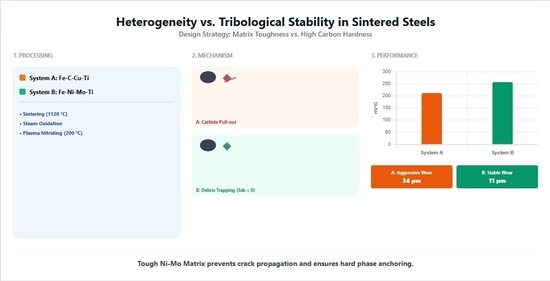
Highlights

Main Findings:
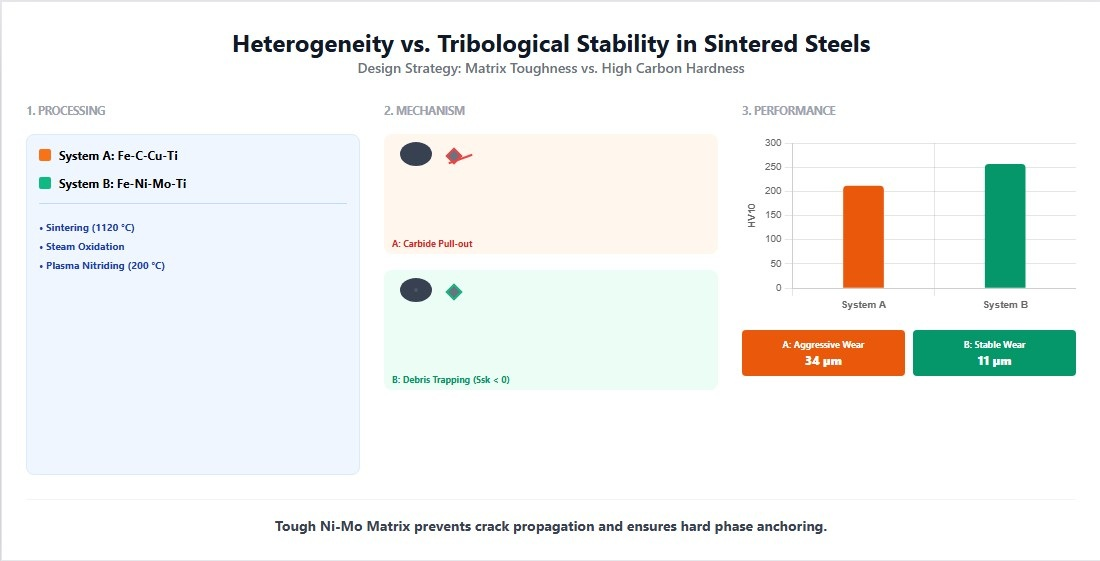
  • A comparative analysis of two hybrid MMC systems (Fe-C-Cu-Ti vs. Fe-Ni-Mo-Ti) revealed that matrix toughness is more critical for tribological stability than the initial bulk hardness.
  • In situ formation of TiC/VC hard phases within a tough Ni-Mo matrix prevents carbide pull-out during dynamic loading.
  • Topographical analysis confirmed that surface porosity in high-alloy sintered steels acts as a beneficial micro-reservoir for debris trapping (negative Ssk effect).
Implications:
  • The study provides a design strategy for powder metallurgy components subjected to high dynamic loads, emphasizing the role of chemical homogeneity in the matrix.
  • Low-temperature plasma nitriding (200 °C) was proven effective in increasing surface hardness to 256 HV10 without compromising the core properties of high-alloy sintered systems.

Abstract

With the increasing demands on energy efficiency and dynamic stability of modern combustion engines (e.g., TDI systems), conventional powder metallurgy materials are reaching their limits in terms of fatigue life and surface integrity. This scientific problem has led to the need to develop hybrid metal matrix (MMC) systems that use in situ hard phase formation. This study presents a comparative analysis of two real industrial components representing hybrid systems with a uniquely high content of titanium and vanadium (>1% by weight). The Ni-Mo-Ti system and the high-carbon C-Cu-Ti system were compared. The samples were processed by steam oxidation and plasma nitriding at 200 °C after sintering. The experimental methodology included chemical analysis on the Bruker Q2 ION 2 instrument, 10-point EDX analysis (Phenom), measurement of the apparent hardness of HV10 and dynamic ball-on-disc tribological tests at a load of 5.00 N supplemented by 3D profilometry. The results showed that the Ni-Mo-Ti system achieves higher hardness at functional edges (256 HV10) and three times higher resistance to deep penetration (11.46 μm vs. 34.67 μm) compared to the C-Cu-Ti system. Topographic analysis confirmed the positive role of porosity as a micro-reservoir for abrasion particles (negative Ssk). The study confirms that the nickel–molybdenum matrix ensures more efficient fixation of in situ generated TiC carbides, thus providing higher functional stability for automotive applications, which was verified by the non-destructive vibroacoustic diagnostics of Polytec PSV-500.

Graphical Abstract

1. Introduction

Powder metallurgy (PM) has become a key technology for the mass production of precision components with complex geometries, especially in the automotive industry. Modern research in this area focuses on the transition from traditional Fe-Cu-C systems to advanced pre-alloyed (e.g., Astaloy) and diffusion-bound (e.g., Distaloy) powders [1]. Studies have shown that while pre-alloyed systems with Cr and Mo exhibit homogeneous microstructure and inter-particle failure, diffusion-bonded systems with Ni-Cu-Mo retain a heterogeneous soft-core structure, which positively affects fatigue strength [1,2,3,4]. The main advantage of PM is the ability to achieve almost 100% utilization of raw materials with minimal energy intensity, which significantly reduces the environmental footprint of production. Modern alloying systems for sintered steels are undergoing a transformation from traditional iron, copper and carbon (Fe-Cu-C)-based compounds towards advanced pre-alloy powders containing nickel, molybdenum and chromium, which allow for excellent hardenability and impact toughness.
The scientific literature confirms that the integration of microalloying elements such as titanium (Ti) and vanadium (V) is critical for PM steels in terms of grain refinement and precipitation hardening. Titanium prevents the coalescence of austenitic grains during sintering by forming stable Ti (C, N) precipitates, while vanadium precipitates at lower temperatures (below 700 °C) and increases the yield strength [5,6,7,8]. However, the literature indicates that titanium concentrations exceeding 1% (as in the case of the analyzed samples from MIBA Sinter) are unusually high for commercial sintered steels and can lead to the formation of primary carbides increasing hardness but potentially decreasing toughness [8,9,10].
A critical aspect in PM is the control of innate porosity, which directly determines not only the static strength characteristics, but also the dynamic durability and corrosion resistance of the material. In recent years, there has been a growing interest in the integration of special alloying elements, such as titanium (Ti), which promotes the formation of secondary phases and carbides in quantities above 1% by weight, thus significantly increasing the hardness and abrasion resistance of the matrix [11,12,13].
This study focuses on a comparative analysis of two industrially manufactured components from MIBA Sinter Group Slovakia. The aim is to elucidate the influence of two contrasting metallurgical approaches [14,15,16,17]. One is a nickel–molybdenum alloy (Ni-Mo-Ti) specimen focused on impact toughness and microstructural stability, and the other is a high-copper and carbon (C-Cu-Ti) sample designed for applications requiring maximum hardness and dimensional stability during sintering. The research analyzes the relationship between these chemical gradients, the resulting pore morphology, and functional properties, thus contributing to the understanding of the microstructural adaptability of sintered systems under extreme operating conditions [18,19,20,21].

2. Materials and Methods

The subject of experimental research are two real industrial components manufactured in MIBA Sinter Slovakia (Dolný Kubín, Slovakia). They are shaped moldings that are used in most industries. Their properties can be influenced by the choice of the material used and the way it is processed. The samples had a metal-clean surface after being pressed and sintered in a protective atmosphere. “Metal-clean” in the context of sintering means a surface free of oxides, delubrication and impurities, achieved by the reducing effect of the protective atmosphere during the sintering process. Subsequently, after heat treatment, they were oxidatively blackened with a layer of Fe3O4. Sintered metals are processed similarly to homogeneous materials. Sintering was performed in a mesh belt furnace at a temperature of 1120 °C for 30 min in a reducing atmosphere of N2/H2 (90/10%). Due to its porous nature, sintered metal has less thermal conductivity, which results in poorer hardenability and lower hardness [22,23]. The samples underwent nitriding in a gaseous medium in a protective atmosphere. Nitriding took place at 200 °C in the medium of gaseous ionized N2 and Ar in a ratio of 1:3, at a pressure of about 0.2 Mbar for 2 h.
Sample 1: Sensor code disc/flange (equivalent to grade 15). A component with a diameter of approximately 45 mm, based on the Ni-Mo-Ti system (0.88% C; 0.76% Ni; 0.25% Mo; 0.42% V; 1.22% Ti). Nickel enhances toughness and prevents fatigue crack propagation, critical for parts exposed to engine vibrations. Sample 2: Crankshaft timing gear (equivalent to grade 19). This part (VW OEM 038 105 263 F) has a diameter of 60–80 mm and utilizes a high-carbon (1.37%) and copper (1.75%) system. Copper causes “copper growth” during sintering by expanding into pores, increasing matrix hardness via solid solution strengthening.
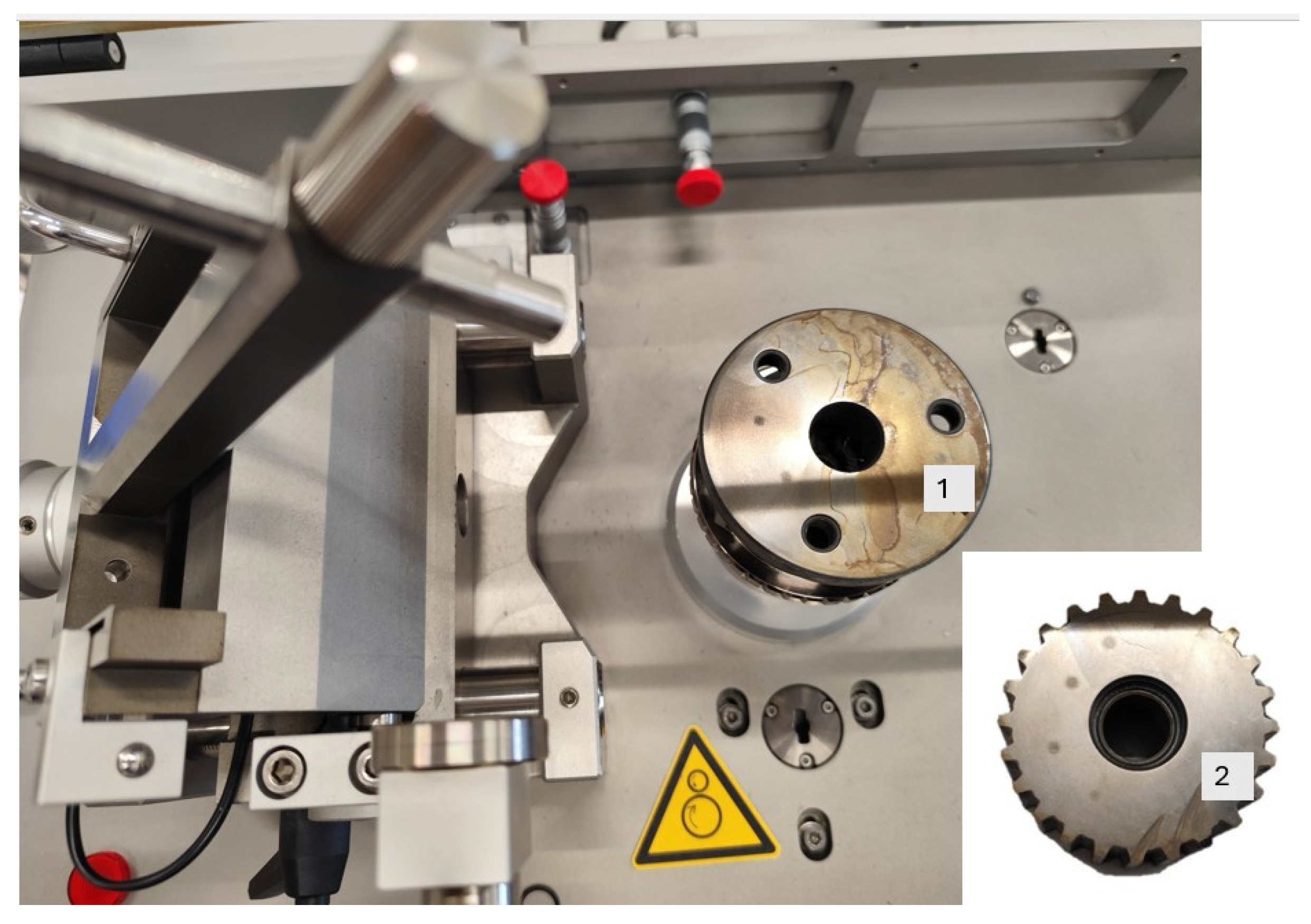
Sample 1 (Figure 1) is used as a sensor disc or flange. This component, used as a sensor hub for exhaust systems, uses the Ni-Mo-Ti chemical system. Nickel increases toughness and prevents the spread of fatigue cracks, which is crucial for components exposed to engine vibrations. Sample 2 is used for the timing gear of the crankshaft for passenger car engines. The material uses a system with a high content of carbon (1.37%) and copper (1.75%), which ensures extreme tooth hardness and dimensional accuracy according to technological standards. The copper in PM steels causes so-called dimensional growth during sintering, i.e., it expands into the pores. A higher amount of copper will cause an increase in hardness due to the strengthening of the solid solution. Carbon is key to the formation of perlite. Chromium and molybdenum increase hardness, hardenability, and temper resistance [24,25,26,27].
The presence of titanium in amounts above 1% in both samples represents a unique scientific element, indicating the experimental use of hybrid systems to increase abrasion resistance. In Table 1. Chemical analysis was performed using a Bruker Q2 ION 2 optical emission spectrometer (Billerica, MA, USA). Each sample was measured four times to ensure statistical reliability. Tribological testing followed the ASTM G99-17 standard [28] using an Anton Paar TRB3 tribometer in a ball-on-disc configuration (Graz, Austria). The tests were conducted under dry sliding conditions with a normal load of 5.00 N, a sliding speed of 0.20 m/s, and a total distance of 1000 m. Hardness was evaluated using a Future-Tech FM-810 microhardness tester at a load of HV10 (Kawasaki, Japan).

3. Results

3.1. Tribological Characterization

Tribological testing of sintered steels is a critical step in verifying their functional reliability in automotive applications. For components such as a crankshaft gear or a sensor flange, the coefficient of friction and the intensity of wear are the dominant factors determining the service life of the entire mechanism. The test is performed in order to simulate real operating conditions of sliding contact and to quantify the influence of surface treatments (steam oxidation, nitriding) and matrix chemistry (especially unique systems with high Ti and V content) on resistance to surface degradation. Tribological properties were determined by the non-destructive ball-on-disc method in accordance with the international standard ASTM G99-17. The essence of the test consists of pressing a stationary counter-body (steel ball) against a rotating sample with a defined normal force. During the test, the frictional force is recorded in real time, from which the software calculates the coefficient of friction. After the completion of the test, the volume loss of the material and the depth of penetration into the surface layer are evaluated using optical profilometry [29,30].
Tribological characterization was carried out in order to simulate real operating conditions of sliding contact in automotive applications such as gears and sensor hubs. Tribological properties were determined using the Anton Paar TRB tribometer in a ball-on-disc configuration. The choice of a normal load of 5.00 N was chosen to achieve measurement stability without creating dynamic instability that could distort the friction coefficient. The use of a counter-body made of 100Cr6 steel with a hardness of approximately 60 HRC is the standard for verifying the abrasion resistance of sintered steels, as it allows us to monitor the mechanisms of micro-cutting and plastic deformation of the sintered die, temperature 23.9–26.3 °C and relative humidity 16.1–25.3% [31,32,33]. The test was conducted in an uncontrolled laboratory environment while maintaining a record of temperature and humidity, which is consistent with the protocol for comparative studies of new material systems [31,32,33]. The test parameters are listed in Table 2.
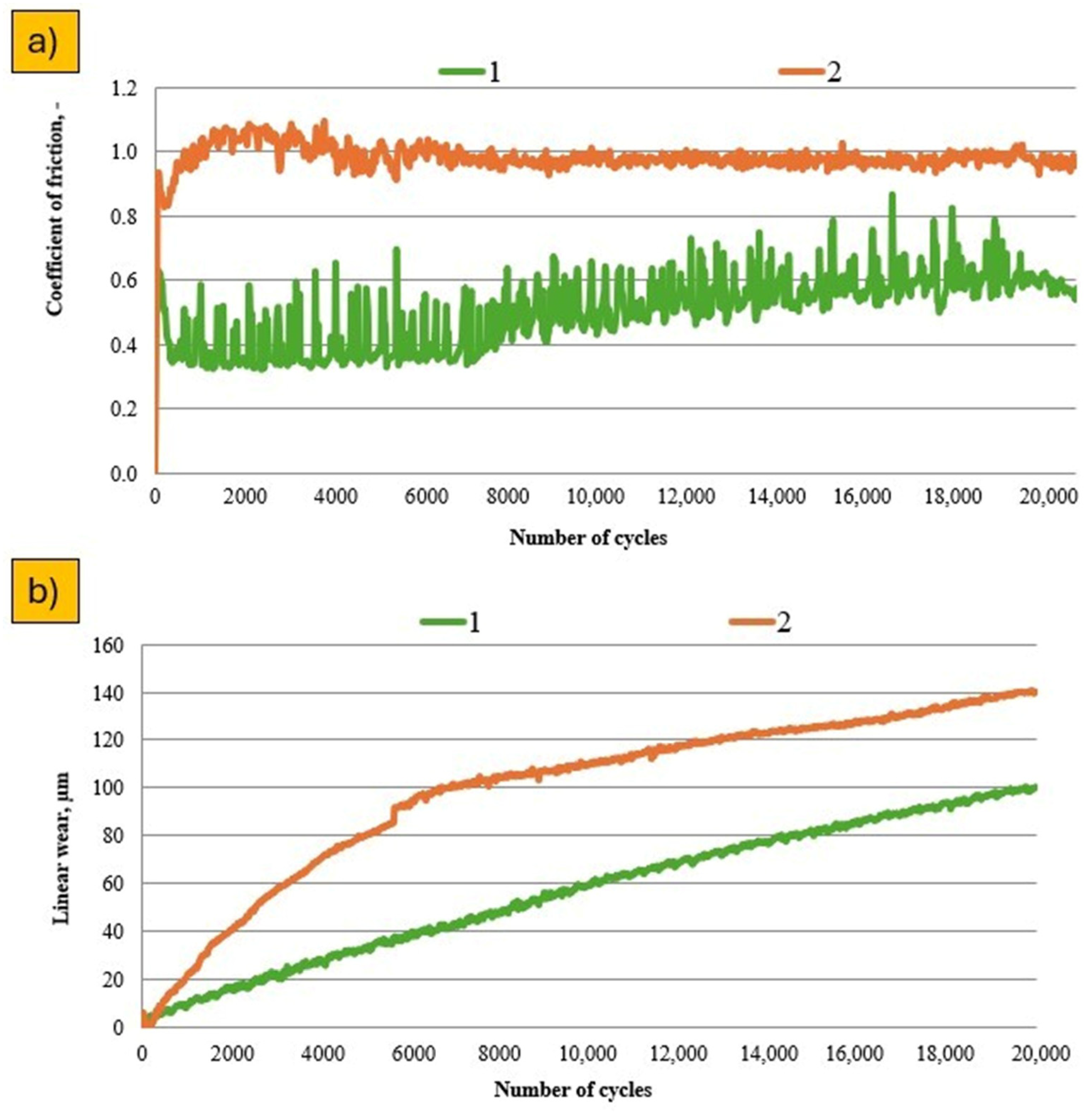
Figure 2a presents the dependence of the coefficient of friction on the number of cycles for Sample 1 (Ni-Mo-Ti) and Sample 2 (C-Cu-Ti). The graph documents the aggressive onset of friction in a high-carbon system compared to a more stable course Ni-alloys. Figure 2b: Comparison of penetration depth over time. A threefold difference in the depth of penetration of the counter-body is visible (11.46 μm vs. 34.67 μm), which indicates higher plasticity and better fixation of the hard phases in Sample 1.
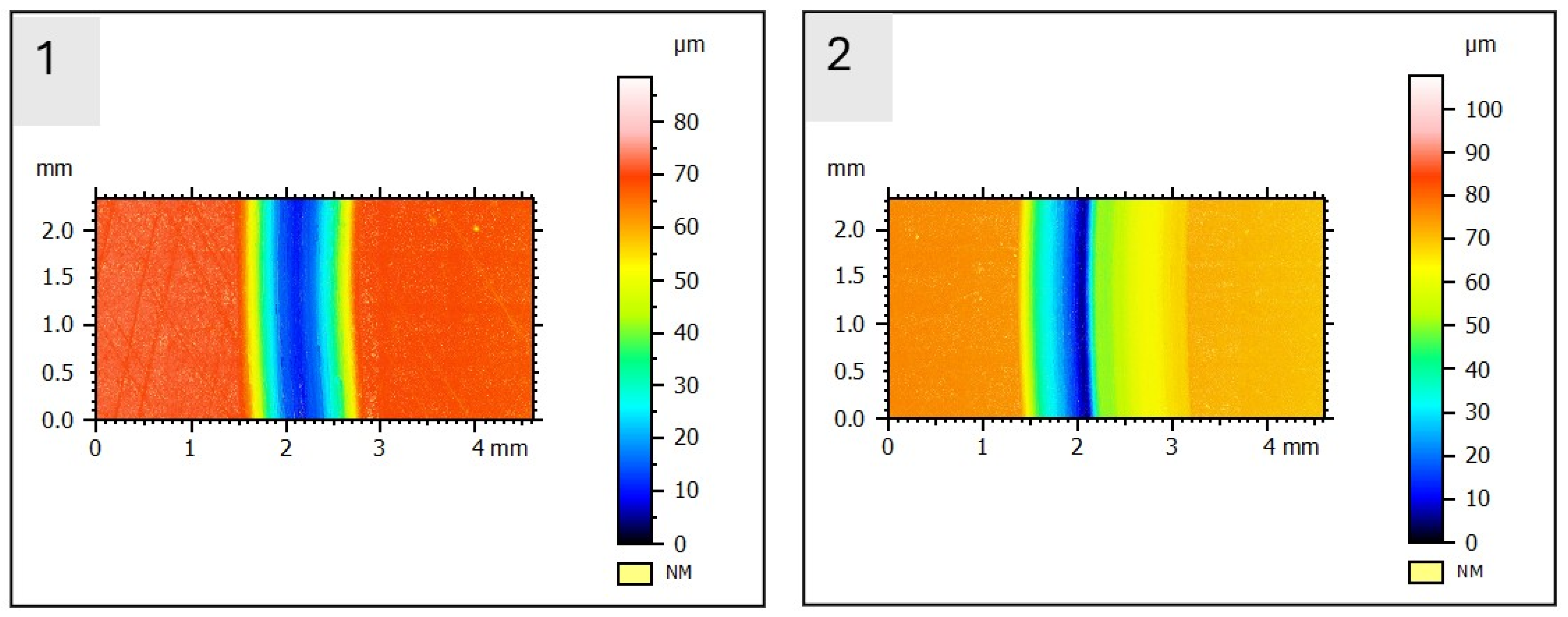
On the left, the morphology of the surface of Sample 1 (Ni-Mo-Ti system) is captured with a vertical color scale of height levels in the range of 0–80 μm (Figure 3). On the right, the topography of Sample 2 (C-Cu-Ti system) is shown with the color gamut adjusted in the range of 0–100 μm (Figure 3). The color gradient on both maps represents local changes in profile height in accordance with ISO 25178 [34]. The blue spectrum (negative values relative to the reference plane) defines the geometry and depth of the wear groove formed by contact with the 100Cr6 counter-body. The orange-red areas represent the original relief of the surface of the components with a characteristic roughness after steam oxidation and nitriding. The mapped area for each sample has nominal dimensions of 4.5 × 2.3 mm.
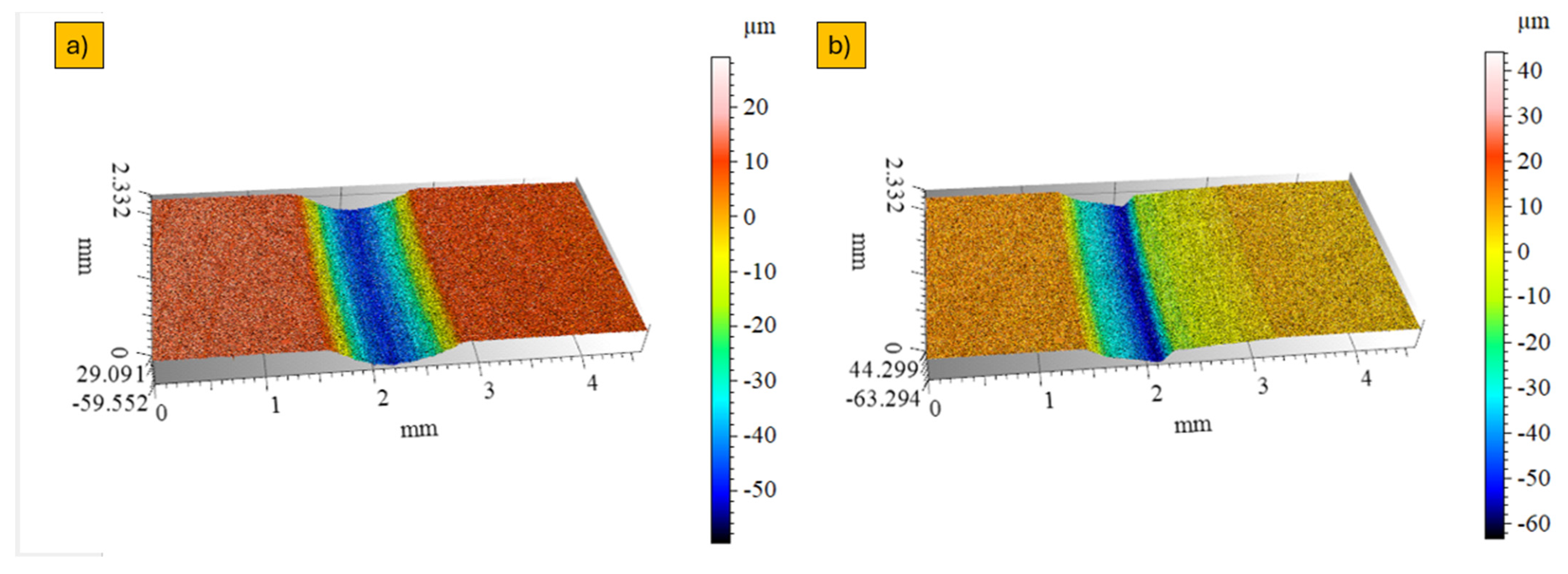
The part on the left shows (Figure 4) the spatial morphology of the Sample 1 friction trail (Ni-Mo-Ti system). The vertical axis (Z) captures the relief in the range from −59.55 μm (foot bottom) to +29.09 μm (tops of the original surface). The right part (2) documents the condition of Sample 2 (C-Cu-Ti system), where the vertical range is more pronounced, from −63.29 μm to +44.30 μm. The color scale (right) assigned to each map indicates local height differences in micrometers in accordance with ISO 25178 [34,35,36]. Both visualizations cover an area measuring approximately 4.5 × 2.3 mm. Sample 1 shows a regular, symmetrical groove cross-section with a maximum measured steady-state penetration depth of 11.46 μm. In Sample 2, the profile indicates a wider and geometrically more rugged wear area, which correlates with a dynamically measured penetration depth of 34.67 μm.
The isometric cutouts on the right provide a view of the micro-texture of the bottom of the friction trail, where the directional orientation of the micro-grooves formed by the interaction with the 100Cr6 counter-body is visible.
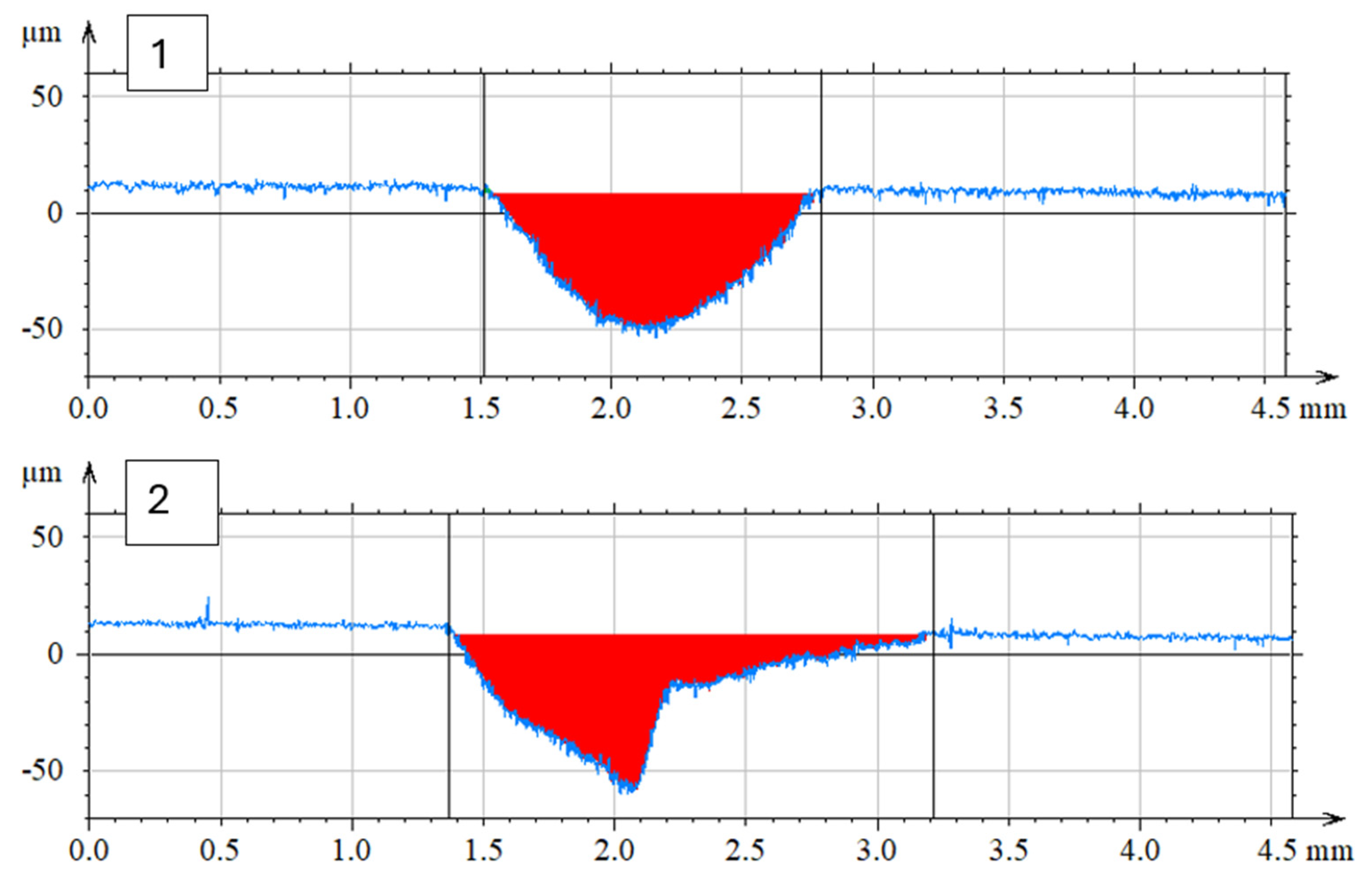
The profile shape (Figure 5) of Sample 1 shows a relatively symmetrical, shallow and wide trace. The value of Sq = 19.352 μm expresses the average height deviation of the track. Negative asymmetry Ssk = −1.552 confirms that valleys (pores and grooves) predominate in the track, which serve as micro-reservoirs for the capture of abrasion particles (debris). A lower Sku value = 3.783 indicates a more stable wear pattern with less occurrence of sharp peaks. In Sample 2, the trace is markedly asymmetrical with a deep local indentation (red area). This irregular shape is indicative of the micro-ploughing mechanism. The maximum trace depth reaches up to 70,005 μm, which is significantly higher than in the first sample. The cross-sectional area is 47,576.764 μm2, which represents the volume of material pulled out under dynamic loading. An overview of key data is provided in the Table 3.
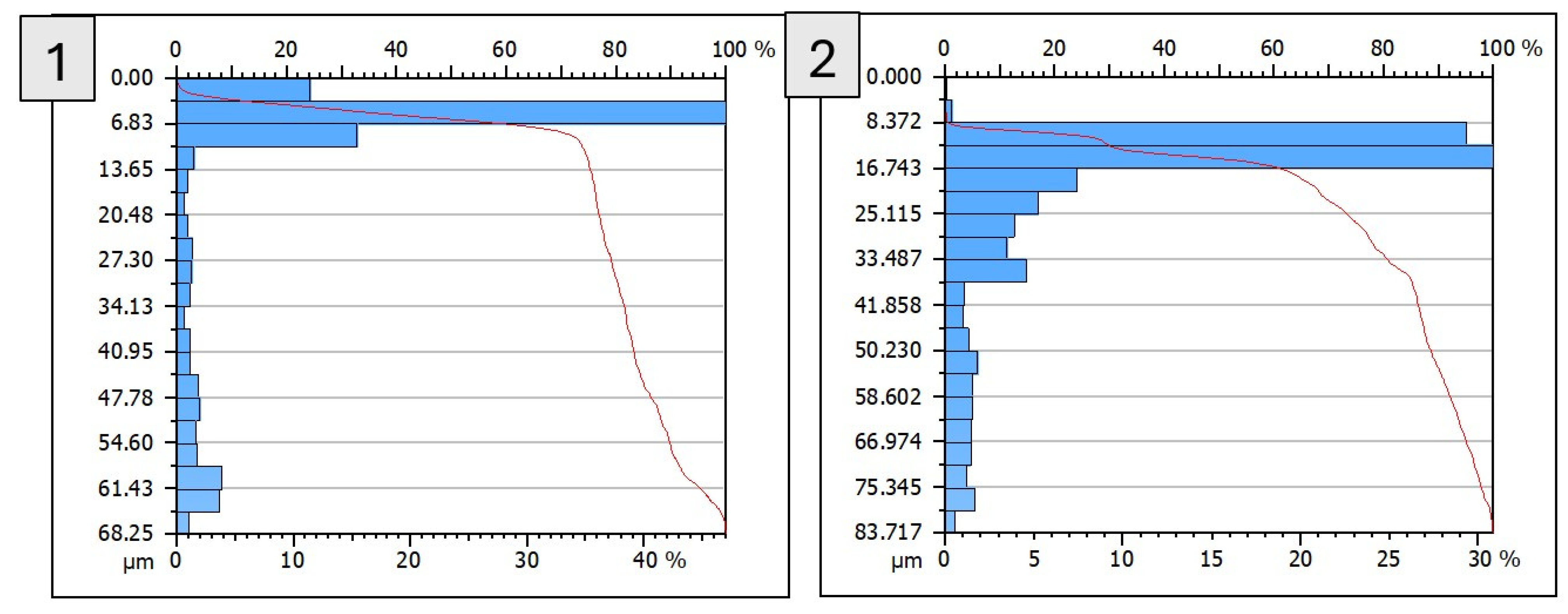
Figure 6 shows a statistical analysis of the topography of the wear footprint in accordance with ISO 25178. The vertical axis (Y) in both graphs represents the depth/height of the profile in micrometers μm). The horizontal axis (top) expresses the material ratio as a percentage % for the red curve. Graph 1 (left): belongs to Sample 1 (Ni-Mo-Ti). The total analyzed vertical range is from 0.00 to 68.25 μm. The red curve of the material ratio shows a steep decrease in the initial phase (up to approximately 7 μm), which indicates the character of the bearing surface. Graph 2 (right): belongs to Sample 2 (C-Cu-Ti). The vertical range in this case is wider, up to 83,717 μm, which correlates with the deeper penetration found in dynamic measurement.
Table 4 captures a set of quantitative parameters of the height distribution of the surface in accordance with the international standard ISO 25178. These indicators provide a comprehensive view of the roughness and overall morphology of the investigated materials, while serving to mathematically describe the surface texture. The parameters of arithmetic and quadratic deviation define the degree of roughness, while the coefficients of asymmetry and pointiness determine the predominance of peaks over valleys and the steepness of the elevation distribution. Also included are the parameters of maximum heights and depths, which define the overall vertical span of the relief. Overall, these data make it possible to accurately assess the geometric integrity of surface layers before and after tribological loading and to identify the mechanisms of friction-induced structural changes. The mapping was performed on the worn surface (inside the wear track) to characterize the micro-topography of the friction contact area.
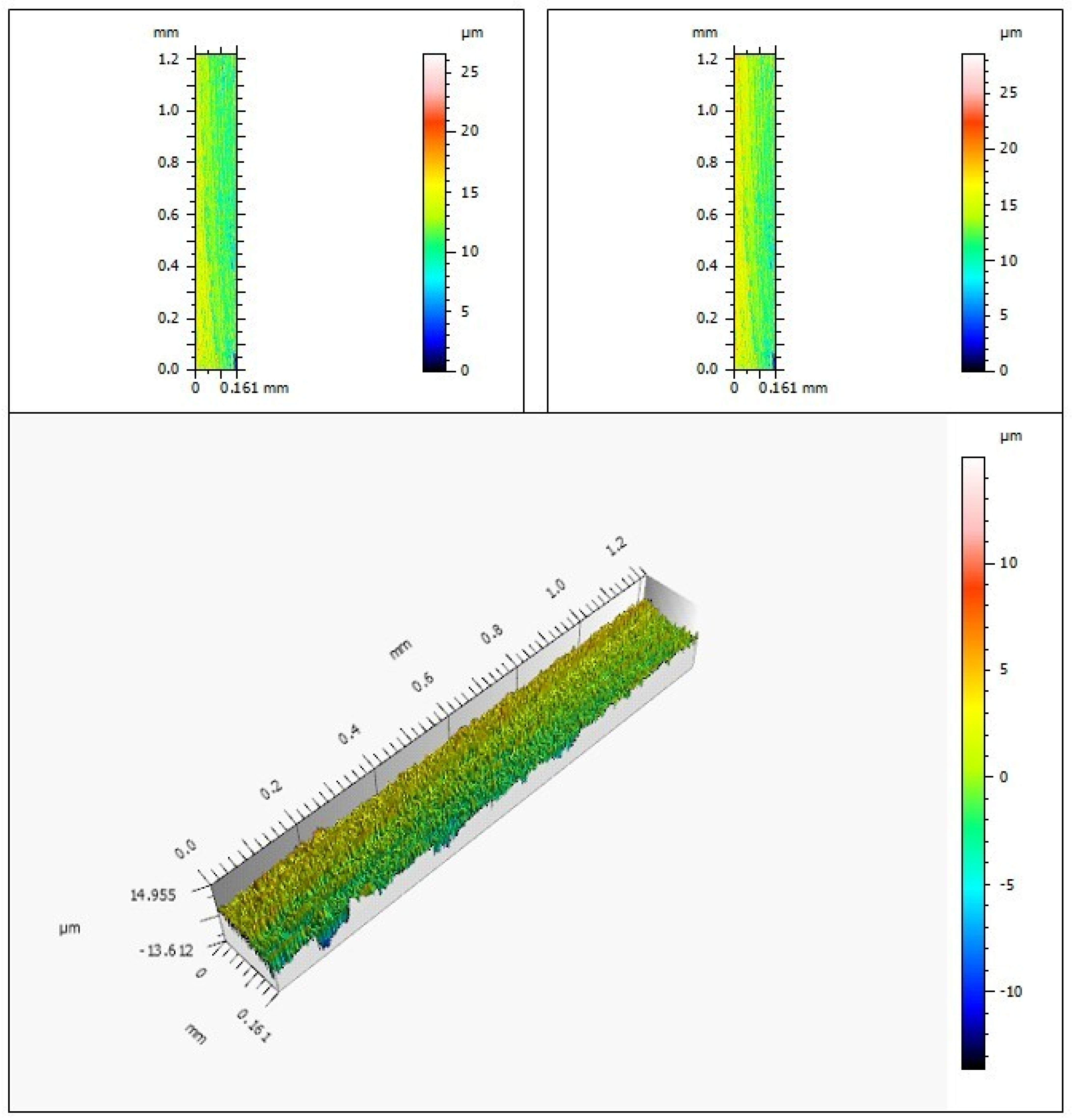
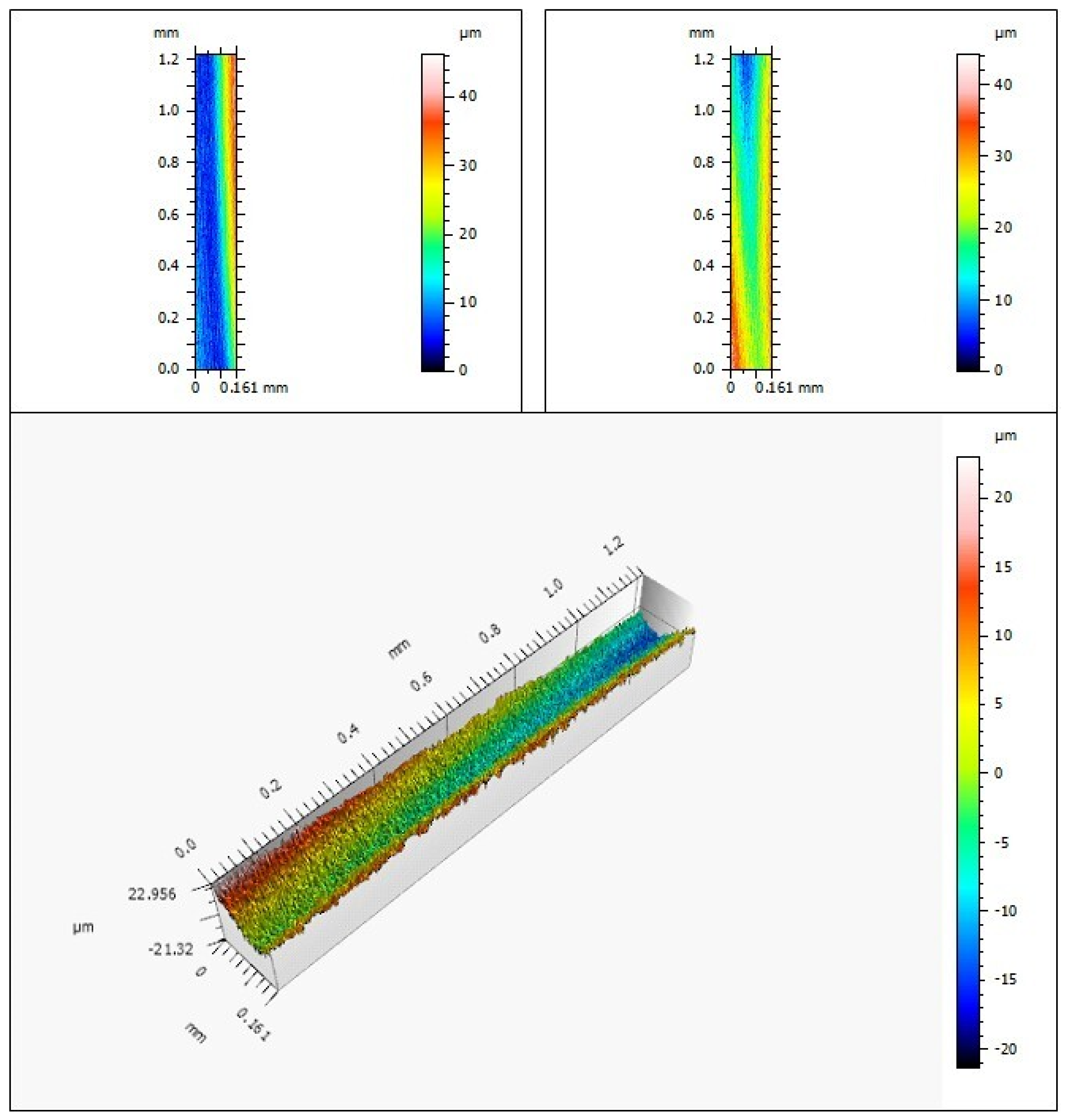
Figure 7 and Figure 8 represent a detailed mapping of a surface measuring 1.2 × 0.161 mm. Sample 1 (Ni-Mo-Ti): Figure 7 shows 2D elevation maps, where a color gradient in the range of 0–40 μm represents the distribution of local peaks and valleys. The lower 3D model captures a micro-relief with a vertical range of the Z-axis from −21.32 to +22.95 μm. Sample 2 (C-Cu-Ti): The upper row documents the surface with a color gamut adjusted to 0–25 μm for better resolution of finer textures. The 3D isometric view (bottom) shows a vertical range of Z from −13.61 to +14.95 μm. These measurements are used to accurately quantify the condition of the surface before tribological loading (roughness analysis after nitriding) or to characterize the micro-texture of the bottom of the friction track. They make it possible to identify the presence of open pores and trace grooves after the net-shape molding process.

3.2. Microstructure of SEM/EDX Analysis

Scanning electron microscopy (SEM) in conjunction with energy-dispersive X-ray spectroscopy (EDX) represents the dominant technique for the detailed study of surface morphology and micro-chemical constitution of materials. In the field of powder metallurgy and automotive development, this method is necessary to identify the distribution of alloying elements in a heterogeneous sintered matrix and to characterize secondary phases, such as titanium carbides and vanadium investigated in this work. The main goal of measurements on the Phenom benchtop microscope (Eindhoven, Netherlands) is a comparative analysis of the surface condition before and after the tribological load (base material) and after it (friction trace) [37,38].
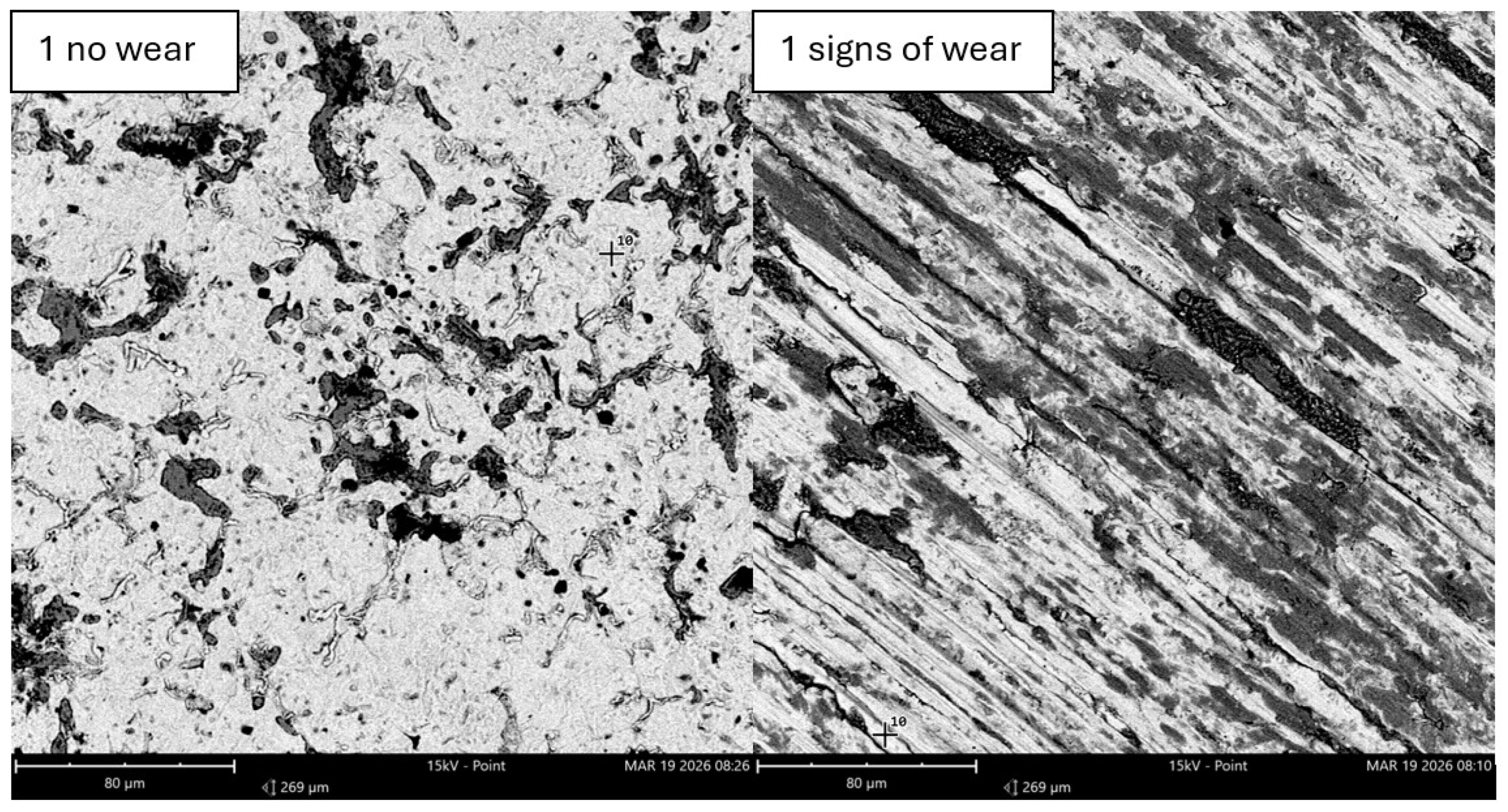
The image on the left (Figure 9) documents the initial surface condition of the component. A typical heterogeneous morphology of sintered steel is evident with the presence of open pores (dark irregular areas) and a continuous metal matrix (light areas). The surface shows signs of integrity after the processes of vapor oxidation and plasma nitriding. The image on the right (Figure 9) captures the detailed morphology of the trace of wear. The surface is characterized by parallel grooves and micro-grooves oriented in the direction of relative motion of the counter-body, which confirms the dominant mechanism of micro-ploughing [34,35].
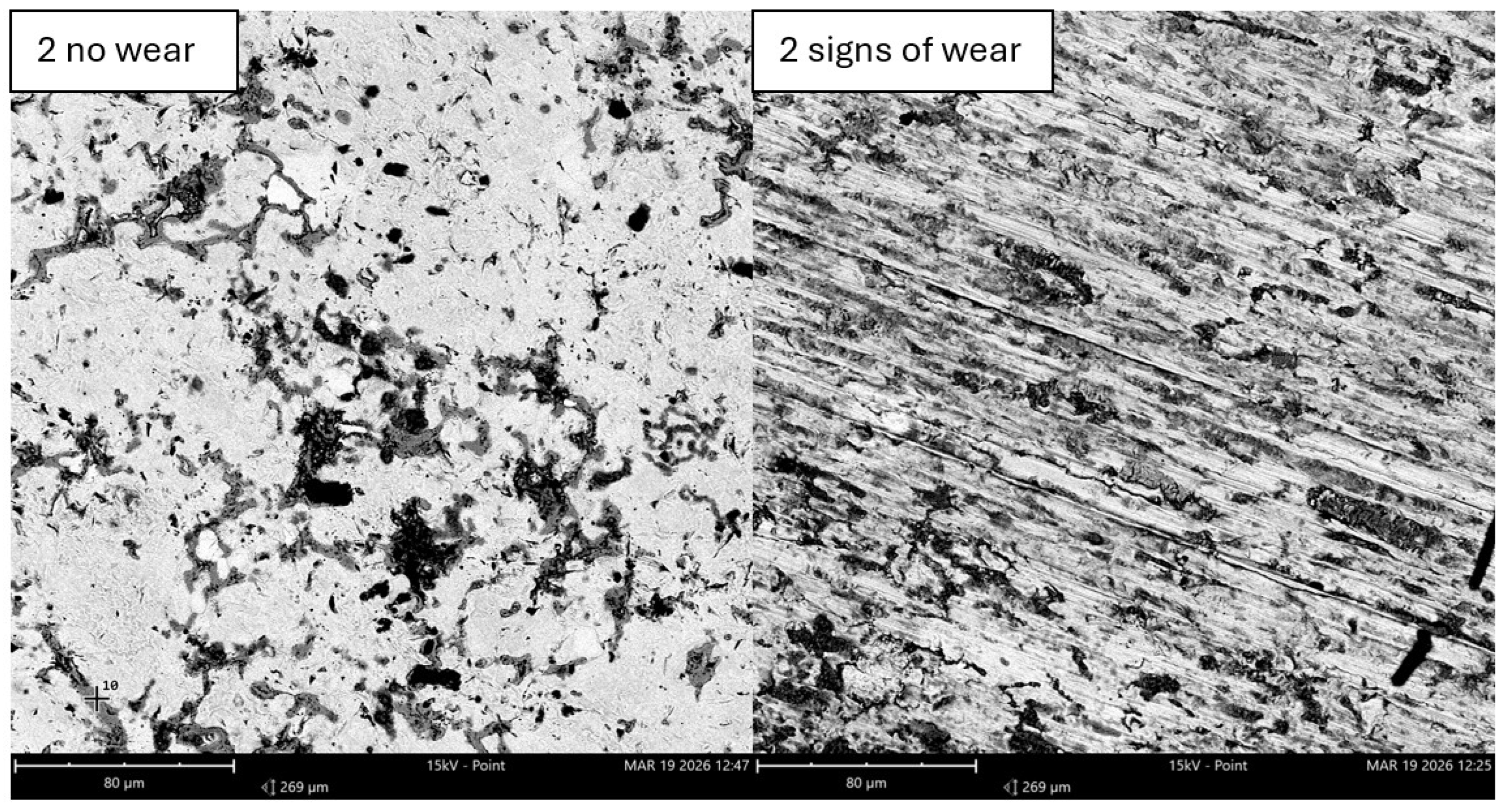
The left image (Figure 10) shows the initial surface state of the high-carbon system. A dense network of open pores (black irregular formations) in an evenly sintered matrix is visible. The lighter areas correspond to the metal necks, with the surface morphology reflecting the final treatment by steam oxidation and nitriding. The image on the right (Figure 10) shows the surface of the friction path after the 1000 m friction path. Compared to Sample 1, there is a denser network of parallel grooves and a more pronounced plastic deformation of the edges of the grooves, which indicates an aggressive micro-cutting mechanism.
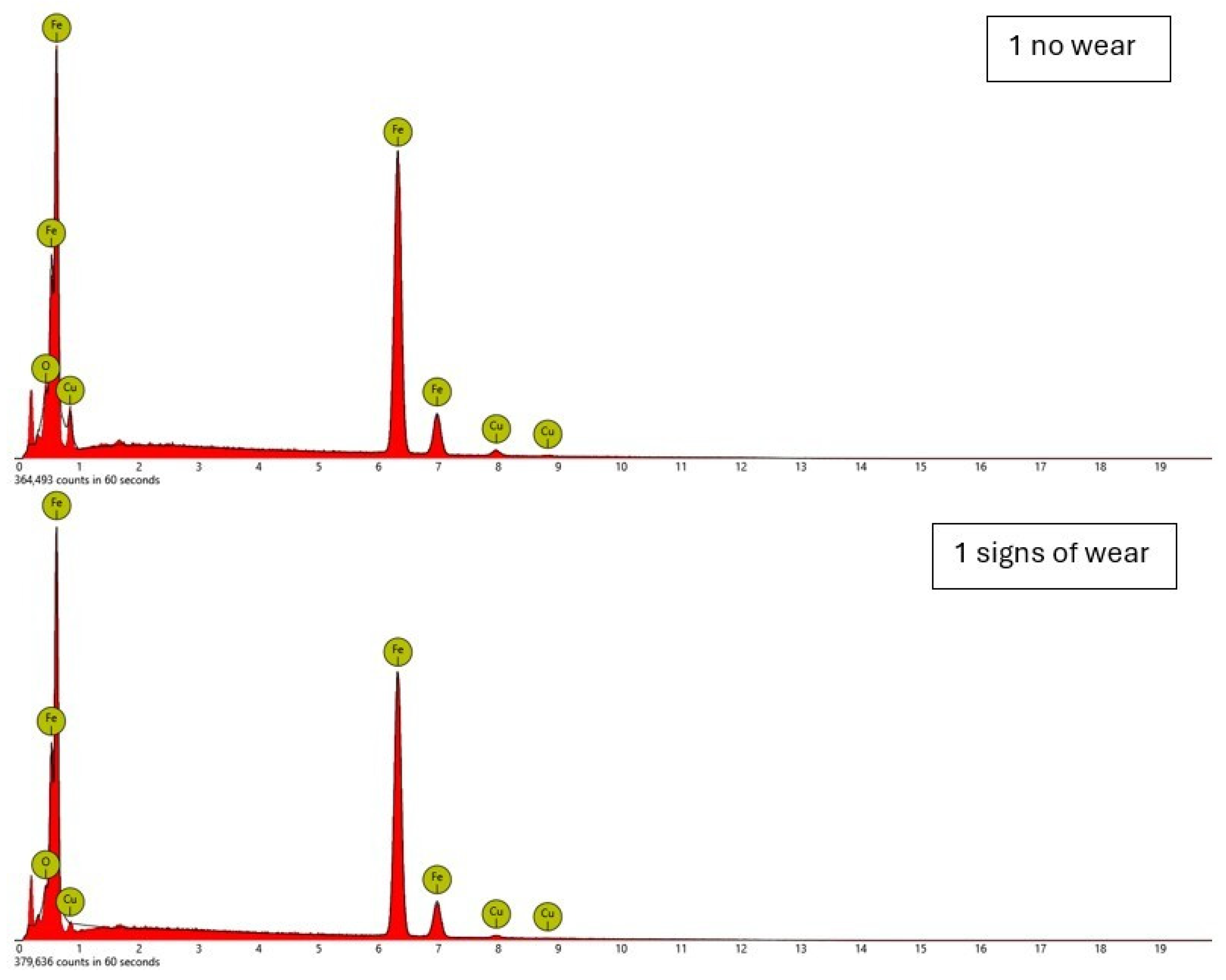
The upper spectrum (1 no wear, Figure 11) represents the chemical state of the base material before the test. It is dominated by characteristic iron peaks supplemented by low-intensity copper and oxygen peaks. Spot analysis in this area confirmed the low initial oxidation of the surface after heat treatment. The lower spectrum (1 signs of wear) captures the elemental composition directly in the frictional path after the end of the test. Compared to the basic material, there is a significant increase in the intensity of the oxygen peak. The quantitative evaluation of the point analysis in the wear trace showed an increase in the mass concentration of oxygen up to the level of 31.74%, while in the base material the measured values were significantly lower. This significant increase in oxygen content at the point of contact with the 100Cr6 counter-body is direct evidence of the tribo-oxidative mechanism of wear. The resulting oxide layers in combination with the nickel–molybdenum matrix contribute to the stabilization of friction contact, which correlates with the measured lower coefficient of friction and a minimum penetration depth of 1.46 μm in this sample.
Table 5 provides a quantitative overview of changes in the local chemical composition of Sample 1 (Ni-Mo-Ti) before and after tribological loading. It documents the atomic and mass concentrations of the dominant elements iron, copper and oxygen, capturing the chemical response of the surface. At the point of wear (signs of wear), a slight increase in oxygen and iron content is observed, which indicates the formation of tribo-oxide layers. On the contrary, the mass concentration of copper shows a decrease from the initial 4.28% to 2.12%, which indicates a local transformation of the surface texture. These data, obtained by the spectrometer of the Phenom instrument, are used for accurate statistical verification of wear mechanisms observed on SEM micrographs and complement the results of dynamic tribometry.
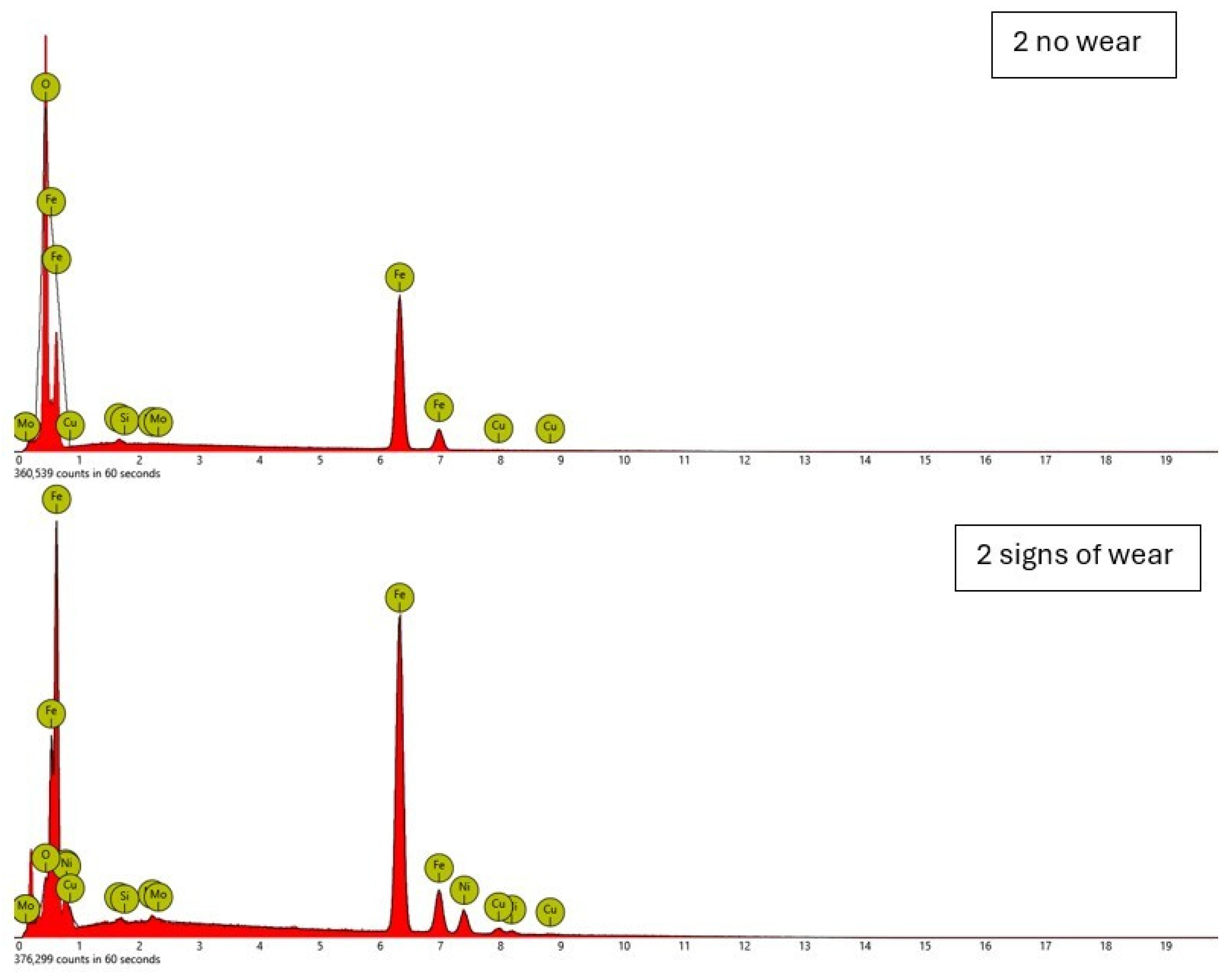
The upper record (2 no wear, Figure 12) represents the chemical profile of the base material of Sample 2. The spectrum shows dominant iron peaks accompanied by copper, molybdenum and silicon peaks. The significant intensity of the oxygen peak in the initial state confirms the presence of a continuous oxide layer (magnetite) formed by the process of vapor oxidation. Quantitative spot analysis in this area identified an initial oxygen content of 5.88% w/w. The bottom record (2 signs of wear) captures the elemental composition at the point of the friction path. The spectrum confirms the presence of all alloying elements of the matrix, with an increase in oxygen concentration up to 11.95% by weight recorded at some points. This phenomenon indicates local oxidation of the surface during dynamic contact. Traces of nickel are also visible in the spectrum, which indicates a slight chemical heterogeneity of the sintered structure in this system.
Table 6 summarizes the changes in the local chemical composition of Sample 2 (C-Cu-Ti) before and after tribological loading. The comparison of the values confirms a slight increase in the mass concentration of oxygen from the initial 7.96% to 10.94%, which verifies the course of oxidation processes at the site of dynamic contact with the counter-body. A significant increase in silicon content (from 0.36% to 3.82%) and changes in the proportion of copper and molybdenum in the wear trace indicate local exposure of deeper layers of the die and redistribution of elements due to mechanical ploughing.


3.3. Hardness

Hardness measurement is one of the fundamental methods of material characterization, which provides direct information about the mechanical resistance of the material to local plastic deformation. In the context of powder metallurgy and the samples examined, this test has a double meaning. After the first sintering process, it defines the overall strength of the component, while after secondary treatments, such as plasma nitriding at 200 °C in this case, it is used to verify the efficiency of the surface hardening and the depth of the diffusion layer. The main goal of this part of the research is to quantify the influence of chemical heterogeneity (Ni-Mo-Ti system vs. C-Cu-Ti) on the resulting mechanical properties of the surface [39,40,41,42]. Measuring hardness profiles from the surface to the core is essential for determining the effective nitrided layer depth, which is directly correlated with tribological and shock load resistance in automotive applications. Table 7 shows the Vickers hardnesses; these are the average values from 10 measurements.

4. Discussion

Although both materials have the character of hybrid metal matrix composites (MMCs) due to their titanium content of more than 1%, their reinforcement mechanisms are different. The Ni-Mo-Ti system (Sample 1) benefits from the presence of nickel, which stabilizes the toughness of the die and prevents the spread of cracks around the pores. On the contrary, the C-Cu-Ti system (Sample 2) relies on a high content of carbon and copper (the “copper growth” mechanism), which leads to a higher proportion of hard pearlitic areas, but also increases the internal brittleness of the sintered necks. The most important scientific finding emerged from the correlation between the hardness and depth of penetration of the counter-body. Dynamic tribometry has shown that the high-carbon system exhibits a more aggressive friction build-up and significantly deeper penetration into the surface. This phenomenon can be interpreted as a consequence of the lower coherence between the hard TiC carbides and the more fragile high-carbon matrix. During friction, carbide particles are extracted, which then act as a free abrasive in the friction trace. In contrast, the nickel-containing system demonstrated the ability to maintain surface integrity even under prolonged contact. A more tough matrix absorbs contact energy more efficiently and fixes secondary phases better, which is reflected in a steady course of the coefficient of friction and minimal penetration. Visual analysis using SEM confirmed that while Sample 2 is dominated by the mechanism of intensive micro-ploughing, Sample 1 is dominated by tribo-oxidation, which creates a protective layer stabilizing the friction path.
The analysis of the 3D topography brought a deeper insight into the role of the innate porosity of PM steels. Negative values of the coefficient of asymmetry (Ssk) in both systems confirmed that the pores in the sintered structure perform a positive function of micro-reservoirs. These cavities effectively trap loose abrasion particles (debris), thus preventing the formation of three-body abrasive contact. Sample 1 showed a better response because the surface hardness increased from a bulk value of 207 HV10 to 256 HV10 on the edge (increase of 24%), while Sample 2 increased only from 188 to 211 HV10 (increase of 12%). However, the difference in the pointed parameter (Sku) revealed a different texture of the track. Significantly higher values for Sample 2 indicate a surface with sharp grooves, which correlates with the observed carbide pulling mechanism. On the contrary, lower values in the nickel–molybdenum system indicate smoother and more uniform wear of the functional surfaces.
The results of the apparent hardness measurement indicate that the low-alloy system shows a better response to combined steam oxidation and nitriding treatment. The significant increase in hardness at the functional edges (a 24% increase for Sample 1 compared to 12% for Sample 2) suggests a more efficient response of the Ni-alloyed matrix to the plasma nitriding process. While the absence of cross-sectional metallography limits direct observation of the nitrided layer thickness, the observed hardness gradient between the bulk and the edge serves as an indirect indicator of surface strengthening efficiency. The lower core hardness of Sample 2 potentially points to a higher degree of internal porosity, which may contribute to its lower dynamic stability during testing.

5. Conclusions

The presented study provides a comprehensive comparison of two industrial material systems based on sintered MMCs alloyed with titanium and vanadium. Based on the experimental results, the following conclusions can be formulated:
  • Tribological Integrity and Depth Stability
    Dynamic tests at a load of 5.00 N revealed fundamental differences in wear mechanisms. The tougher Sample 1 exhibits a stable coefficient of friction of 0.54 and a minimum penetration depth of 11.46 μm. In contrast, the high-carbon Sample 2 exhibits an aggressive friction onset (up to 0.97) and three times higher surface penetration (4.67 μm). This phenomenon is attributed to the extraction of carbides from a more fragile matrix, which subsequently act as a free abrasive.
  • Topographic and diagnostic parameters
    Quantitative surface analysis confirmed that the porosity of PM steels performs the function of micro-reservoirs for abrasion particles, which was verified by negative values of the asymmetry coefficient Ssk (up to −1.729). The Sku spike parameters (up to 5.039 in Sample 2) clearly identified the transition to intensive micro-cutting. The application of non-destructive vibroacoustic diagnostics (Polytec PSV-500, Waldbronn, Germany) has shown high sensitivity to these microstructural changes, which predestines this method as an effective tool for quality control in automotive production.
  • Mechanical response and hardness
    Although the differences in apparent hardness HV10 between the two systems are relatively limited, Sample 1 demonstrated superior functional stability. This suggests that the wear resistance is not solely governed by bulk hardness but is primarily driven by the synergy between matrix toughness (enhanced by Ni) and the effective fixation of in situ TiC carbides. The Ni-Mo-Ti system’s ability to retain hard phases under load, verified by the three-fold difference in penetration depth (11.46 µm vs. 34.67 µm), is the key factor in its superior performance compared to the more brittle high-carbon system.

Author Contributions

Conceptualization, E.K. and M.A.M.; methodology, E.K. and M.A.M.; validation, J.H. and J.K.; formal analysis, J.K.; research, E.K. and J.H.; sources, M.A.M. and J.K.; writing—preparation of the original draft, E.K.; writing—review and editing, E.K. and J.H.; visualization, E.K. and J.H. All authors have read and agreed to the published version of the manuscript.

Funding

This research received no external funding.

Data Availability Statement

The data presented in this study are available on request from the corresponding author. The data are not publicly available due to privacy restrictions related to industrial manufacturing processes and the large size of the raw tribological datasets.

Acknowledgments

The research was supported by Visegrad Fellowship No. 62610054; This research was co-funded by the European Union under the Programme Slovakia within the project: Research of advanced technologies for increasing the efficiency of multivalent energy systems for sustainable industrial development, ITMS2021+ project code: 401101C504.

Conflicts of Interest

The authors declare no conflicts of interest. The industrial partner (MIBA Sinter Slovakia) provided the samples for testing but had no role in the design of the study; in the collection, analyses, or interpretation of data; in the writing of the manuscript; or in the decision to publish the results.

Abbreviations

The following abbreviations are used in this manuscript:
PMPowder Metallurgy
MMCMetal Matrix Composite
OESOptical Emission Spectrometry
I AMScanning Electron Microscopy
EDX/EDSEnergy-Dispersive X-ray Spectroscopy
XRDX-ray Diffraction
NDTNon-Destructive Testing
LDVDoppler Laser Vibrometers
COF/μCoefficient of Friction
BSDBack-Scattered Electron (Detector)
FOVField of View
HVVickers Hardness
HRCRockwell Hardness (C-scale)
ISEIndentation Size Effect
SDStandard Deviation
SqRoot Mean Square height (ISO 25178)
SskSkewness of the height distribution
SKUKurtosis of the height distribution
SpMaximum peak height
StMaximum pit depth
SzMaximum height of the surface
WithArithmetical mean height
TDITurbocharged Direct Injection
OEMOriginal Equipment Manufacturer

References

  1. Nový, F.; Harvanec, J.; Mičian, M. The Influence of Induction Hardening, Nitriding and Boronising on the Mechanical Properties of Conventional and Sintered Steels. Coatings 2024, 14, 1602. [Google Scholar] [CrossRef]
  2. Turo, A.; Chavez, J.A.; Hernandez, M.J.G.; Bulkai, A.; Tomek, P.; Toth, G.; Girones, A.; Jordi, S. Ultrasonic inspection system for powder metallurgy parts. Measurement 2013, 46, 1101–1108. [Google Scholar] [CrossRef]
  3. Zhao, Q.; Luo, H.; Pan, Z.; Wang, X.; Cheng, H.; Zong, Y. Effect of Ion Nitriding on Properties of High Carbon Chromium Bearing Steel Containing Rare Earth Elements. J. Mater. Eng. Perform. 2023, 33, 6930–6941. [Google Scholar] [CrossRef]
  4. Silveira, P.H.P.M.; Eltom, A.E.; Le Sénéchal, N.V.; dos Santos, J.L.; Gomes, A.V.; da Silva, M.H.P. Evaluation of the Effect of Fe2O3 as a Sintering Additive on Densification, Microstructure, and Thermal Stability of Al2O3. Adv. Mater. Sustain. Manuf. 2025, 2, 10005. [Google Scholar] [CrossRef]
  5. Momeni, M.; Danninger, H.; Gierl, C.; Dudrová, E.; Arvand, A. Relationship between tensile toughness and impact energy of Mo prealloyed and Ni-Cu-Mo diffusion bonded sintered steels. Powder Metall. Prog. 2011, 11, 62–68. [Google Scholar]
  6. Ocak-Araz, S.; Birden, A.; Bayca, S.U.; Bican, O. Effect of Powder-Pack Boronizing on the Microhardness, Wear, and Corrosion Behaviors of AISI 304L Steel. J. Mater. Eng. Perform. 2023, 33, 166–172. [Google Scholar] [CrossRef]
  7. Alkan, S.; Günen, A.; Gülen, M.; Gök, M.S. Effect of boriding on tribocorrosion behavior of HSLA offshore mooring chain steel. Surf. Coat. Technol. 2024, 476, 130276. [Google Scholar] [CrossRef]
  8. Ondar, A.A.; Dudina, D.V.; Grigoreva, T.F.; Devyatkina, E.T.; Vosmerikov, S.V.; Ukhina, A.V.; Esikov, M.A.; Anisimov, A.G.; Lyakhov, N.Z. Cu-10 wt.% Al Alloys Produced by Spark Plasma Sintering of Powder Blends and a Mechanically Alloyed Mixture: A Comparative Investigation. Powders 2023, 2, 515–524. [Google Scholar] [CrossRef]
  9. Shaik, M.A.; Golla, B.R. Microstructure, mechanical and wear property correlation of Al bronze alloys. Powder Metall. 2023, 66, 54–63. [Google Scholar] [CrossRef]
  10. Dudina, D.V.; Bokhonov, B.B. Materials development using high-energy ball milling: A review dedicated to the memory of M.A. Korchagin. J. Compos. Sci. 2022, 6, 188. [Google Scholar] [CrossRef]
  11. Gökçe, A.; Fındık, F.; Kurt, A.O. Microstructural Examination and Properties of Premixed Al–Cu–Mg Powder Metallurgy Alloy. Mater. Charact. 2011, 62, 730–735. [Google Scholar] [CrossRef]
  12. Kantoríková, E.; Moravec, J. Study of coatings intended for active parts of forming tools produced by powder metallurgy. Manuf. Technol. 2022, 22, 20–25. [Google Scholar] [CrossRef]
  13. Hanzl, P.; Zetková, I.; Kučerová, L. Structural Changes and Microstructure of Maraging Steel Lattice Structures using Additive Manufacturing. Manuf. Technol. 2019, 19, 37–41. [Google Scholar] [CrossRef]
  14. Konar, R.; Mičian, M. Material ultrasonic attenuation influence on conventional ultrasonic non-destructive Copper alloy cast testing. Arch. Metall. Mater. 2019, 64, 353–357. [Google Scholar] [CrossRef]
  15. Mehl, R.F. Metals Handbook, Vol. 7: Atlas of Microstructures of Industrial Alloys, 8th ed.; American Society for Metals: Metal Park, OH, USA, 1972. [Google Scholar]
  16. He, T.; Tian, J.; Liu, Z.; Song, G.; Du, S.; Zhang, Y. Comparative Analysis of the Microstructure and Tribological Behaviors of Ni-, Fe-, and Co-Based Plasma Cladding Coatings. Metals 2025, 15, 344. [Google Scholar] [CrossRef]
  17. Wang, W.J.; Jiang, W.J.; Wang, H.Y.; Liu, Q.Y.; Zhu, M.H.; Jin, X.S. Experimental study on the wear and damage behavior of different wheel/rail materials. Proc. Inst. Mech. Eng. Part F J. Rail Rapid Transit 2016, 230, 3–14. [Google Scholar] [CrossRef]
  18. Maruthamuthu, S.; Nagendran, T.; Anandkumar, B.; Karthikeyan, M.S.; Palaniswamy, N.; Narayanan, G. Microbiologically influenced corrosion on rails. Curr. Sci. 2011, 100, 870–880. [Google Scholar]
  19. Gee, M.G.; Gant, A.; Roebuck, B. Wear mechanisms in abrasion and erosion of WC/Co and related hardmetals. Wear 2007, 263, 137–148. [Google Scholar] [CrossRef]
  20. Ivanov, Y.; Gromov, V.; Yuriev, A.; Kormyshev, V.; Rubannikova, Y.; Semin, A. Deformation strengthening mechanisms of rails in extremely long-term operation. J. Mater. Res. Technol. 2021, 11, 710–718. [Google Scholar] [CrossRef]
  21. Ye, W.T.; Xie, M.D.; Huang, Z.B.; Wang, H.M.; Zhou, Q.; Wang, L.; Chen, B.; Wang, H.F.; Liu, W.M. Microstructure and tribological properties of in-situ carbide/CoCrFeNiMn high entropy alloy composites synthesized by flake powder metallurgy. Tribol. Int. 2023, 181, 108295. [Google Scholar] [CrossRef]
  22. Xie, G.Z.; Song, X.L.; Zhang, D.J.; Wu, Y.P.; Lin, P.H. Microstructure and corrosion properties of thick WC composite coating formed by plasma cladding. Appl. Surf. Sci. 2010, 256, 6354–6358. [Google Scholar] [CrossRef]
  23. Zhao, J.B.; Wang, Y.; Han, B.; Li, M.; Cui, G. Antifriction effects of Cu2S film on Ni-based MMC coating. Surf. Coat. Technol. 2017, 315, 391–398. [Google Scholar] [CrossRef]
  24. Xie, T.X.; Zhou, L.; Ding, H.H.; Zhu, Y.; Yang, W.B.; Xiao, Q.; Wang, W.J.; Guo, J.; Liu, Q.Y. Investigation on the Rolling Contact Fatigue Behaviors of Different Laser Cladding Materials on the Damaged Rail. J. Tribol. 2021, 143, 051108. [Google Scholar] [CrossRef]
  25. Qin, S.; Bo, Y.; Herzog, S.; Hallstedt, B.; Kaletsch, A.; Broeckmann, C. Influence of Process Parameters on Porosity and Hot Cracking of AISI H13 Fabricated by Laser Powder Bed Fusion. Powders 2022, 1, 184–193. [Google Scholar] [CrossRef]
  26. ASTM B962-17; Standard Test Methods for Density of Compacted or Sintered Powder Metallurgy (PM) Products Using Archimedes’ Principle. ASTM International: West Conshohocken, PA, USA, 2017.
  27. ASTM G99-17; Standard Test Method for Wear Testing with a Pin-on-Disk Apparatus. ASTM International: West Conshohocken, PA, USA, 2017; For measurements on the Anton Paar TRB3.
  28. Gordon, J.V.; Narra, S.P.; Cunningham, R.W.; Liu, H.; Chen, H.; Suter, R.M.; Beuth, J.L.; Rollett, A.D. Defect structure process maps for laser powder bed fusion additive manufacturing. Addit. Manuf. 2020, 36, 101552. [Google Scholar] [CrossRef]
  29. Kaletsch, A.; Qin, S.; Herzog, S.; Broeckmann, C. Influence of high initial porosity introduced by laser powder bed fusion on the fatigue strength of Inconel 718 after post-processing with hot isostatic pressing. Addit. Manuf. 2021, 47, 102331. [Google Scholar] [CrossRef]
  30. Mertens, R.; Vrancken, B.; Holmstock, N.; Kinds, Y.; Kruth, J.-P.; van Humbeeck, J. Influence of Powder Bed Preheating on Microstructure and Mechanical Properties of H13 Tool Steel SLM Parts. Phys. Procedia 2016, 83, 882–890. [Google Scholar] [CrossRef]
  31. Schuliger, A.; Price, S.; Sousa, B.C.; Cote, D.L.; Neamtu, R. Multiple-Instance Regression for Metal Powder Hall Flow Rate Prediction Using Augmented Particle Size and Shape Data. Powders 2023, 2, 189–204. [Google Scholar] [CrossRef]
  32. Kourayt, N.; Li, X.; Tan, W.; Kappes, B.; Spear, A.D. Modeling process–structure–property relationships in metal additive manufacturing: A review on physics-driven versus data-driven approaches. J. Phys. Mater. 2021, 4, 032002. [Google Scholar] [CrossRef]
  33. Zhang, Y.; Ling, C. A strategy to apply machine learning to small datasets in materials science. npj Comput. Mater. 2018, 4, 25. [Google Scholar] [CrossRef]
  34. ISO 25178; Geometrical product specifications (GPS)—Surface texture: Aerial; For 3D Topography Maps and Parameters Sq, Sa, Ssk, Sku. International Organization for Standardization: Geneva, Switzerland, 2021.
  35. Kroeger, J.; Poirié, T.; Moghimian, P.; Marion, F.; Larouche, F. Flow rate ranges for spherical metallic powders for additive manufacturing. Prog. Addit. Manuf. 2022, 7, 411–418. [Google Scholar] [CrossRef]
  36. Walter, A.; Witt, G.; Platt, S.; Kleszczyński, S. Manufacturing and Properties of Spherical Iron Particles from a by-Product of the Steel Industry. Powders 2023, 2, 216–231. [Google Scholar] [CrossRef]
  37. Sista, K.S.; Dwarapudi, S.; Nerune, V.P. Direct Reduction Recycling of Mill Scale Through Iron Powder Synthesis. ISIJ Int. 2019, 59, 787–794. [Google Scholar] [CrossRef]
  38. Walther, G.; Büttner, T.; Kiebach, B.; Weißgärber, T. Manufacturing of fine spherical iron powder and the influence of the powder morphology on the sintering behaviour. In Proceedings of the World PM2016, Hamburg, Germany, 9–13 October 2016. [Google Scholar]
  39. Zettl, M. Continuous Drying of Pharmaceutical Materials with Regard to Maintaining Particle Properties. Ph.D. Thesis, Graz University of Technology, Graz, Austria, 2021. [Google Scholar]
  40. Marchetti, L.; Hulme-Smith, C. Flowability of steel and tool steel powders: A comparison between testing methods. Powder Technol. 2021, 384, 402–413. [Google Scholar] [CrossRef]
  41. ISO 6507-1; Metallic Materials—Vickers Hardness Test—Part 1: Test Method; Basis for Microhardness on Future-Tech Equipment. International Organization for Standardization: Geneva, Switzerland, 2018.
  42. ISO 4498:2010; Sintered Metal Materials, Excluding Hardmetals—Determination of Apparent Hardness and Microhardness. International Organization for Standardization: Geneva, Switzerland, 2010.
Figure 1. Specimens numbered 1 and 2. A photo of the samples just before the triblog test.
Powders 05 00020 g001
Figure 2. (a) Dependence of the coefficient of friction on the number of cycles; (b) penetration depth.
Powders 05 00020 g002
Figure 3. Topography of the friction trace after the tribological test at a load of 5 Npre Samples 1 and 2. The color scale represents the height distribution of the profile, where the blue area defines the depth of the wear groove.
Powders 05 00020 g003
Figure 4. 3D isometric visualization of surface wear (a) Sample 1 (Ni-Mo-Ti), (b) Sample 2 (C-Cu-Ti).
Powders 05 00020 g004
Figure 5. Profile shapes of the wear tracks: (1) Ni-Mo-Ti system (grade 15); (2) C-Cu-Ti system (grade 19).
Powders 05 00020 g005
Figure 6. Histograms of the height distribution and material ratio curves (Abbott-Firestone curves) of the friction track.
Powders 05 00020 g006
Figure 7. Detailed micro-topographic analysis of surface segments (2D maps and 3D isometric views) of Sample 1.
Powders 05 00020 g007
Figure 8. Detailed micro-topographic analysis of surface segments (2D maps and 3D isometric views) of Sample 2.
Powders 05 00020 g008
Figure 9. SEM micrographs of the surface of Sample 1 (Ni-Mo-Ti) before and after tribological loading.
Powders 05 00020 g009
Figure 10. SEM surface micrographs Samples 2 (C-Cu-Ti) before and after tribological loading.
Powders 05 00020 g010
Figure 11. EDX spectra Samples 1 (Ni-Mo-Ti) documenting changes in chemical composition due to tribological loading.
Powders 05 00020 g011
Figure 12. EDX spectra Samples 2 (C-Cu-Ti) documenting changes in chemical composition due to tribological loading.
Powders 05 00020 g012
Table 1. Chemical composition.
Element (w.%)Sample 1 (Ni-Mo-Ti)Sample 2 (C-Cu-Ti)
C0.8781.367
Si0.2570.218
Mn0.1330.119
P<0.01<0.01
S<0.01<0.01
Cr0.036<0.01
Mo0.2520.025
No0.763<0.01
Cu1.2491.748
Al0.3700.227
What0.0350.029
Mg>0.144>0.144
Nb0.0250.011
Ti1.2181.077
V0.4240.503
W<0.1000.112
Fe93.5093.75
Table 2. Experimental parameters of the ball-on-disc tribological test [28].
ParameterValue
Normal load Fn5 N
Against bodyBall 100Cr6
Counter-body diameter6 mm
Rotational frequency2 Hz
Max. linear speed0.2 m/s
Total friction path1000 m
Friction conditionsDry friction
Table 3. Parameters and profile comparison.
ParameterSample 1 (Ni-Mo-Ti)Sample 2 (C-Cu-Ti)
Sq (RMS height)19.352 μm-
Ssk (Skewness)−1.552-
Sku(Kurtosis)3.783-
Maximum trace depth50.00 μm70.01 μm
Cross-sectional area (Aperture area)47,177.07 µm247,576.76 μm2
Maximum height (bumps)-1.479 μm
Table 4. Abrasion parameters.
ParameterSample 1 (Ni-Mo-Ti)Sample 2 (C-Cu-Ti)
Sq (Rough Mean)1.507 μm6.895 μm
Ssk (Skewness)−0.1350.139
Sku (Kurtosis)3.3582.552
Sp (peak height)16.337 μm22.956 μm
St (pit height)8.952 μm21.320 μm
Sz (Max. height)25.290 μm44.277 μm
Sa (Arithmetic mean)1.210 μm5.643 μm
Table 5. EDX analysis of Sample 1.
No WearSigns of Wear
Element NumberElementAtomic Conc.Weight Conc.Atomic Conc.Weight Conc.
26Iron92.6894.6594.2196.71
29Copper3.694.281.822.12
8Oxygen3.641.063.971.17
Table 6. EDX analysis of Sample 2.
No WearSigns of Wear
Element NumberElementAtomic Conc.Weight Conc.Atomic Conc.Weight Conc.
26Iron75.9591.1882.8783.49
8Oxygen23.147.9610.3310.94
14Silicon0.590.363.333.82
29Copper0.240.330.480.82
42Molybdenum0.080.172.680.77
Table 7. Hardness HV10.
SampleMeasurement AreaMean ± SD [HV10]
1Center206.7 ± 3.1
Edge256.0 ± 2.6
2Bulk188.3 ± 3.1
Tooth211.0 ± 7.9
Disclaimer/Publisher’s Note: The statements, opinions and data contained in all publications are solely those of the individual author(s) and contributor(s) and not of MDPI and/or the editor(s). MDPI and/or the editor(s) disclaim responsibility for any injury to people or property resulting from any ideas, methods, instructions or products referred to in the content.