Review

Pet Health Insurance in France: Costs, Coverage Differences and Veterinary Care Implications

Department of Veterinary Forensics and Economics, Institute of Economics and Biostatistics, University of Veterinary Medicine Budapest, István u. 2, 1078 Budapest, Hungary
*
Author to whom correspondence should be addressed.
Submission received: 8 November 2025 / Revised: 16 January 2026 / Accepted: 22 January 2026 / Published: 4 February 2026

Abstract

Pet health insurance can reduce the financial burden of veterinary care and ensure adequate treatment for companion animals. In France, where 67% of households own at least one pet and 68% of owners consider them family members, awareness of pet insurance reaches 94%, yet only around 5–6% of pets are insured. This review aims to provide an overview of the French pet health insurance market, analysing its structure, coverage options, and potential implications for veterinary practice. A literature review was conducted using French and English sources, complemented by simulated price quotes from major insurance companies for four virtual pets (two dogs and two cats). The analysis compared 11 major French pet insurance providers across criteria such as species covered, waiting periods, age limits, coverage rates, reimbursement mechanisms, and preventive care benefits. The results reveal significant variability in coverage options, preventive care allowances, and reimbursement procedures. Across providers, simulated annual premiums for the virtual pets ranged from EUR 71.76 to EUR 1426.44, with reimbursement rates of 50–100% and annual caps of EUR 763–2500. It can be concluded that pet insurance may help owners manage unexpected veterinary costs and encourage preventive care. However, subscription rates remain low due to limited understanding of insurance plans and perceived high costs. Wider adoption of pet insurance could improve access to care and ensure fair remuneration for veterinarians.

1. Introduction

Veterinary medicine is a rapidly developing field, with new imaging and diagnostic methods becoming increasingly available, ensuring faster and more precise diagnosis for sick patients [1]. However, such progress comes at a considerable cost that many pet owners cannot afford [1]. In France, a 2020 survey showed that 68% (n = 682/1003) of respondents considered their pets “[as] a family member” [2]. With pets occupying an ever-growing place in French households, pet health insurance would seem like the ideal solution to help manage high veterinary costs. Limited affordability of veterinary services is driven primarily by the costs of advanced diagnostics and the management of complex conditions. Indeed, with a simple fracture surgery costing an average of EUR 200–500, and bloodwork costing around EUR 100, the average pet owner may require financial assistance to cope with the sudden burden of a veterinary invoice [3,4]. With over a dozen pet insurance companies operating in France, French pet owners have a wide range of plans and options to choose from. Even though up to 94% (n = 942/1002) of pet owners are aware of the existence of pet health insurance, fewer than 6% of French pets are actually insured [5,6].

1.1. Pet Keeping in France: Key Numbers

France is leading European trends in pet ownership: an estimated 67% (n = 360/537) of French households own at least one companion animal, with 30% (n = 161/537) having at least one cat and 20% (n = 107/537) at least one dog; in other words, around 15 million cats and 7.5 million dogs are kept as pets [7,8,9]. While a gradual decrease in dog ownership has been observed since 2018, cat keeping has increased by 6% between 2018 and 2021 [9].
Pet insurance rates can vary according to the breed of the animal, due to different breeds having specific predispositions. The Société Centrale Canine is the French equivalent of the American Kennel Club. It manages the LOF (Livre des Origines Français), which publishes an annual report on the most commonly registered dog breeds in France. Reports from 2020 to 2022 show that the Australian Shepherd has been the most popular dog breed in France for three consecutive years, with 20,018 individuals registered [10]. As for cats, the I-CAD (Identification des Carnivores Domestiques) maintains a record of all domestic carnivores, and its 2020 report showed that Siamese cats were the most common registered purebred cats in French households [11]. It is worth noting that European Shorthair cats are the most commonly kept overall, with 775,029 individuals compared to 12,759 Siamese cats. However, they are not recognised as a breed, rather, the term European Shorthair is used as an umbrella designation for any cat that does not resemble a specific breed [11].

1.2. Pet Insurance Versus Liability Coverage in France

When speaking about pet insurance in France, a distinction must be made between “mutuelle animaux” and “assurance”. While the latter would literally translate to “insurance”, it does not refer to health insurance. Instead, it represents a form of civil liability coverage: if the pet causes injury or damage due to the owner’s or the animal’s fault to a third party, no reimbursement is provided to the pet owner by the “assurance”. This “assurance” covers costs to third parties in cases where the animal causes any kind of damage, whereas the “mutuelle” would cover the treatment fees of the pet [12]. Subscribing to an “assurance” is required by law if the animal is considered dangerous or categorised as a Category 1 or 2 dog. Category 1 refers to “attack dogs”. Dogs are categorised 1 according to their physical appearance, not by their pedigree. Tosa type, American Staffordshire Terrier type, and Mastiff (or Boerbull) type dogs must be assessed by a competent veterinarian, to include or exclude them from this category [12]. Assessment of the type is purely based on physical measurements. Category 2 refers to “protection dogs” and is defined by breed and type: Rottweiler breed and type dogs, American Staffordshire Terrier breed, and Tosa breed dogs [12].
For pets not falling into these categories, liability coverage remains optional. For simplicity’s sake, any mention of pet insurance in English in this document refers to “mutuelle”, while “assurance” will always be understood as civic liability coverage [1,6,13].
This study aims to review key features of the French pet health insurance market, focusing on differences in costs, coverage options, and potential implications for veterinary care.

2. Literature Search

The literature review was performed as follows:
An online search was conducted for relevant articles using PubMed, Web of Science, Scopus, and Google Scholar. The search strategy was adapted to each database using Boolean operators (AND/OR). The following keywords were used: “veterinary”, “pet”, “insurance”, “pet insurance”, “preventive care”, and “price”. The cutoff date for the articles was set to September 2025, as the evolution of trends relating to pet insurance over time was also relevant to the topic. The initial search yielded the following records: PubMed (n = 89), Web of Science (n = 107), Scopus (n = 78), and Google Scholar (n = 87).
The inclusion criteria were applied as follows: peer-reviewed articles published between 2000 and 2025, studies focusing on the relation between pet insurance and veterinary care, and publications written in English and/or in French.
The following exclusion criteria were applied: non-peer-reviewed sources, articles not related to pet insurance (e.g., livestock insurance or human health insurance) or veterinary costs, and articles not written in English or French.
Titles and abstracts were screened for relevance to the research questions. Records that met the inclusion criteria underwent full-text assessment to confirm eligibility based on the criteria above. Disagreements during selection were resolved through discussion among the authors.
A web-based search using the keywords “mutuelle” or “assurance” and “animaux” and “France” was conducted to access the official webpages of the insurance companies, and further articles relating to pet insurance. The cutoff date for this search was also set to September 2025. All research related to the collection of price quotes was conducted in French. Web-based sources were included only if they were official company webpages or official downloadable brochures providing verifiable written information on pricing and/or coverage at the time of data collection. Sources were excluded if pricing/coverage information was not available in written form online, could not be verified, or did not apply to the defined pet profiles.
Four virtual pets were created to obtain price quotes from insurance companies. The selection criteria for these virtual pets were based on a study conducted by Santévet [14], which found that the most insured dog breed is the French Bulldog, and the average age at which dogs are first insured is 2.5 years. It is important to note that the most common dog breed in France is the Australian Shepherd. The same study also reported that male pets represented 58.8% of insured animals, and females 41.2% [14]. Accordingly, Dog 1 was defined as a 3-year-old male French Bulldog, and Dog 2 as a 3-year-old male Australian Shepherd. For cats, European Shorthairs were overrepresented, and the average age of first insurance was 3 years. Among purebred cats, Maine Coons were the most frequently insured breed in France [14]. Thus, Cat 1 was defined as a 3-year-old male European Shorthair, and Cat 2 as a 3-year-old male Maine Coon.
A comparative table was created in September 2025, when over 30 insurance companies offered pet health insurance services in France (Supplementary Data S1). For this review, 11 were selected based on the availability of a written quote, and their established position in the market (Supplementary Table S1). Quotes were obtained directly from the companies’ websites, either by using their quote-estimating-tools [15,16,17,18,19,20], or by accessing their online brochures [21].

3. Results

3.1. Policy Terms and Coverage Components in the French Pet Insurance Market

The selected companies were compared using the following criteria: species covered, age limit at the time of subscription, different formulas offered, coverage, deductible (franchise), preventive treatment allowance, maximum yearly coverage, and coverage of therapeutic diets.
Species covered: While this study mainly focuses on dogs and cats, exotic pets are also widespread in France, making it interesting to examine how well insurance companies address their needs [22]. Among the reviewed providers, the ones covering exotic pets are Santévet and Fidanimo. They insure rabbits, chinchillas, ferrets, parrots, and gerbils. There is minimal variation between the formulas for the different exotic species.
Waiting period: This refers to the time between the moment a client subscribes to the insurance and the point time at which a claim can be made. For example, if a dog insured at Santévet (under any plan) has an accident, the insurance must have been active for at least 48 h [15]. Most insurers follow a similar structure: a two-day waiting period for accidents, six months for surgeries (resulting from illness), and 45 days for illnesses.
Age limit at the time of subscription: On average, insurers accept pets older than three months, but the upper limit varies considerably, ranging from five years at Bulle Bleue, seven years at Santévet and Allianz [15,18,21], to ten years at Assur O’Poil. A newer feature of some insurers, such as Santévet, is that the age limit depends on the pet’s breed [15,18,20]. Certain breeds such as Chihuahuas and Golden Retrievers can be insured for the first time until up to 7 years of age, whereas other breeds such as French Bulldogs and Bernese Mountain Dogs can only start their insurance until their 5th year of age [15]. The animal remains covered by the insurance until death (or withdrawal), but a contract cannot be initiated if the pet does not meet the age criteria.
Different formulas offered: The greater the number of formulas per insurance, the more specific the coverage can be. They may be structured in various ways: for Lovys (formerly Otherwise), the available formulas are “Accident only” and “Accident and Illness”. For Santévet, the formulas are categorised as “Light”, “Comfort”, and “Premium”, depending on the range of services covered or the reimbursement level and preventative treatment allowance [15,17].
Coverage: This indicates the percentage of veterinary treatment costs reimbursed, ranging from 50% to 100%, depending on the insurer and the chosen plan.
Deductible (franchise). This amount is deducted from the first reimbursement request of the year (a policy year begins on the subscription date, not on the calendar year). In simpler terms, if the deductible for a plan is EUR 20 (e.g., Santévet “Confort” plan), EUR 20 will be subtracted from the first reimbursement. Deductibles range from EUR 0 to EUR 150 or may be expressed as a percentage with a minimum amount (e.g., 40% with a minimum of EUR 15). When calculated as a percentage, it applies to each invoice. If several invoices refer to the same disease or treatment, all invoices issued within 30 days are considered as one claim, and the deductible is taken from the total [20].
Preventive treatment allowance: Surprisingly, not all companies offer a fixed allowance for preventive care. Preventive treatment fees typically cover deworming, antiparasitic treatments, neutering, vaccination, and identification (microchip/tattoo, passport) [16,20].
Maximum yearly coverage: This is the maximum reimbursable amount per policy year. It ranges from EUR 763 at GMF, to EUR 2500 at Santévet, Crédit Mutuel, Dalma, Assur O’poil, and Solly Azar [15,16,20,23,24].
Therapeutic diet coverage: Only a few companies offer this benefit, and the reimbursement may be capped (e.g., Santévet) or total (e.g., Dalma, “Bien-être” plan) [15,16].

3.2. Provider Overview and Premium Quotes for the Virtual Pets

Santévet was created in 2003 and is exclusively a pet insurer. Santévet claims that approximately 700,000 pets are insured as of 2025; these pets are owned by an estimated 350,000 pet owners [15]. Their cheapest formula, with 60% reimbursement (up to EUR 1500 per year) costs EUR 518.64 per year for Dog 1, EUR 295.92 for Dog 2, EUR 201.00 for Cat 1, and EUR 270.24 for Cat 2. Their most expensive option, which includes therapeutic diet coverage and 100% reimbursement (up to EUR 4000 per year) costs EUR 1461.12 per year for Dog 1, EUR 972.00 for Dog 2, EUR 629.28 for Cat 1, and EUR 754.56 for Cat 2. Their “Cat indoor” formula for indoor-only cats covers up to 90% of expenses (capped at EUR 3000 per year) and costs EUR 326.16 per year for both Cat 1 and Cat 2, as this formula is not breed dependent.
Lovys, (previously known as Otherwise) has been present on the French market since 2020. It offers multiple types of insurance policies. The company is completely digital, meaning all claims and bills must be uploaded on their app [17]. There are three main plans which can be further customised by selecting the reimbursement rate (from 50% to 100% in 10% increments), and the annual cap (EUR 1000, EUR 1200, EUR 1500, EUR 1800, EUR 2000, and EUR 2500). Therapeutic diet coverage can be added to any plan for an additional annual cost ranging from EUR 50 to EUR 150. The price of this add-on corresponds to the allowance amount. Their cheapest non-customised plan, with 70% reimbursement (up to EUR 1200 per year) and no therapeutic diet coverage costs EUR 446.88 a year for Dog 1, EUR 288.72 for Dog 2, EUR 161.88 for Cat 1, and EUR 207.96 for Cat 2. Their most expensive option covers 90% of expenses (up to EUR 2000 per year) and, without therapeutic feed coverage, costs EUR 828.48 per year for Dog 1, EUR 538.44 for Dog 2, EUR 307.44 for Cat 1, and EUR 394.80 for Cat 2.
Bulle bleue, formerly known as Animal Experts, was created in 2010 by veterinarians. The company claims an estimated 100,000 pet owners have subscribed since its creation [18]. The company’s selling point is the wide scope of coverage, with only six hereditary/congenital diseases being excluded from contracts. In dogs, these are hip and elbow dysplasia, shoulder cartilage ailments, patellar (sub)luxation in small breed dogs, brachycephalic syndrome, and ectopic testicles. In cats, these diseases are hip dysplasia, brachycephalic syndrome, and ectopic testicles. Their cheapest formula covers 80% reimbursement (up to EUR 1000 per year) and costs EUR 267.84 per year for Dog 1, EUR 190.92 for Dog 2, EUR 132.96 for Cat 1, and EUR 172.80 for Cat 2. Their most expensive formula covers 80% reimbursement (up to EUR 3000 per year) and costs EUR 906.00 per year for Dog 1, EUR 657.60 for Dog 2, EUR 466.56 for Cat 1, and EUR 600.84 for Cat 2.
Dalma is a pet insurance company launched in 2021, and is present on the French and German markets with a self-claimed 60,000 pets insured since 2021 [16]. The company’s selling point is the lack of a deductible (franchise) and guaranteed reimbursement within 48 h. Dalma offers three different levels based on the reimbursement rate: 60%, 80%, and 100%. For pets over seven years of age, the reimbursement rate can be set to a maximum of 80%. Within each level, pet owners can choose one of three annual caps: EUR 1000, EUR 1500, and EUR 2500. Furthermore, three add-on options are available for preventive treatments (EUR 100, EUR 150, or EUR 200 per year), at an additional annual cost of EUR 84, EUR 132, and EUR 168, respectively. Altogether, pet owners can choose between 27 different options. The cheapest option offers 60% reimbursement capped at EUR 1000 per year, with no therapeutic diet coverage and no preventive care allowance, and costs EUR 203.88 per year for Dog 1, EUR 132.48 for Dog 2, EUR 83.88 for Cat 1, and EUR 91.68 for Cat 2. The most comprehensive option includes a 100% reimbursement rate (up to 7 years of age) capped at EUR 2500 per year; this includes therapeutic diet coverage and provides EUR 200 for preventive treatments. This option costs EUR 1175.88 per year for Dog 1, EUR 827.88 for Dog 2, EUR 515.88 for Cat 1, and EUR 659.88 for Cat 2.
Allianz is a well-established insurance company created in Germany in 1890 and offers a wide range of insurance products, including pet insurance. Allianz first entered the French market in 1997 and acquired the largest French insurance company at the time (Assurances Générales de France) in 2009 [21]. Three pet insurance plans are offered. The most basic plan provides 70% reimbursement up to EUR 1400 per year, with no annual deductible (franchise), and no preventive care allowance. The intermediate plan also covers 70% of expenses up to EUR 1700 per year, has a EUR 20 deductible, and does also not cover preventive treatments. The third plan covers 80% of expenses up to EUR 2200 per year, has a EUR 30 deductible, and offers EUR 60 per year for preventive treatments. While no precise quote could be obtained, the company states that prices start at EUR 126.00 per year for dogs and EUR 106.8 for cats for the most basic plan. For their more comprehensive plan, prices start at EUR 498.00 per year for dogs and EUR 442.8 for cats.
Assur O’poil is a pet insurance brand created in 2002 and is part of HD Assurances SAS which has been on the market since 1994. The company operates in France, Belgium, and Italy, and claims to cover over 120,000 pets in all countries [20]. The insurance offers five basic plans, each with three annual caps (EUR 1300, EUR 1800, or EUR 2500). While therapeutic diet coverage is not included, each plan covers preventive treatments to some extent (EUR 15 for the cheapest option and up to EUR 160 for the most extensive one). The deductible (franchise) is applied to each invoice, at 20–40% per bill, with a minimum of EUR 15 per invoice. Their cheaper plan provides 80% reimbursement (capped at EUR 1300 per year) and costs EUR 207.36 per year for both cats and dogs. The same plan with a EUR 2500 annual cap costs EUR 417.48 per year for both cats and dogs. Their most expensive plan costs EUR 783.48 per year with the lowest cap and EUR 1310.16 per year with the highest cap. In addition, a dog-specific plan starts at EUR 289.68 per year with the lowest cap and rises to EUR 810.12 with the highest cap. The cat-specific plan starts at EUR 227.88 with the lowest cap, and rises up to EUR 739.2 with the highest cap.
Carrefour assurance is an insurance branch created in 1984 by the Carrefour retail group. It offers multiple types of insurance, including pet insurance [19]. The insurance offers three plans: one that covers accidents only, one that covers accidents and surgeries resulting from illness, and one that covers accidents and illnesses. Notably, there is no upper age limit to subscribe to the accident-only formula. The accident-only plan provides 80% reimbursement, with an annual cap of either EUR 1000 or EUR 2000. The cheapest option (accident-only, 80% reimbursement rate, capped at EUR 1000) costs EUR 170.42 per year for Dog 1, EUR 117.97 for Dog 2, and EUR 79.20 for Cats 1 and 2. The same plan capped at EUR 2000 per year costs EUR 183.84 for Dog 1, EUR 126.20 for Dog 2, and EUR 84.61 for Cats 1 and 2. The most comprehensive plan includes EUR 76 for preventive treatments and EUR 50 for neutering. With 80% reimbursement capped at EUR 1000, it costs EUR 670.92 per year for Dog 1, EUR 480.71 for Dog 2; and EUR 328.33 for Cats 1 and 2. The same plan capped at EUR 2000 costs EUR 718.79 for Dog 1, EUR 509.53 for Dog 2, and EUR 347.78 for Cats 1 and 2.
Credit mutuel is a French company offering bank and insurance services, including pet insurance [23]. It offers two plans: one that covers only surgical costs resulting from an accident or illness, and another the covers treatment and consultation costs in addition to surgical costs. Both plans provide 80% reimbursement, capped at EUR 1500 per year for the more basic plan, and EUR 2500 for the most comprehensive plan. While no precise quote could be obtained, prices start at EUR 99.60 per year for dogs, and EUR 87.60 per year for cats.
Fidanimo is a pet-related branch of LSA Courtage, which offers different kinds of insurances under the name Assurpeople. Fidanimo’s plans are outsourced from either AXA or Allianz [25]. The insurance offers seven different plans, which can be upgraded to include preventive treatments. The most basic option which covers accidents only, provides 50% reimbursement capped at EUR 1000 per year. It costs EUR 114 per year for dogs, and EUR 96 for cats. The most comprehensive plan provides 90% reimbursement up to EUR 1500 per year, includes EUR 50 per year for preventive treatments, and costs EUR 660.72 per year for dogs, and EUR 534.00 for cats.
GMF is an insurance company founded in 1934, initially as car insurer for public servants. It now offers a range of insurance products, including pet insurance [26]. It offers a single plan providing 100% reimbursement up to EUR 763 yearly. Once the pet reaches 10 years of age, the coverage drops to 50% up to EUR 381 per year. This plan costs EUR 107.64 per year and covers dogs only.
Solly azar is not an independent insurance company but a multi-specialist wholesale broker. This means that Solly Azar designs and manages the plans, while the underwriting risk is carried by another insurance company [24]. Insurance is offered in the form of four plans, one of which covers accidents only. Two plans include a preventive care allowance of up to EUR 30 or EUR 60. The accident-only plan provides 70% reimbursement (up to EUR 2000 per year), and costs EUR 46.80 per year for dogs and cats. The most basic plan provides 50% reimbursement (up to EUR 1500 per year), and costs EUR 228.60 per year for Dog 1, EUR 257.04 for Dog 2, and EUR 180.48 for cats. The most comprehensive plan provides 100% reimbursement (up to EUR 2500 euros yearly), has EUR 60 per year for preventive treatments, and costs EUR 594.60 per year for Dog 1, EUR 625.44 for Dog 2, and EUR 460.44 for cats.

3.3. Reimbursement and Claim Process

The following steps must be taken to receive reimbursement from the insurer: pet owners must first pay the invoice issued by their veterinarian, then submit proof of payment along with a “claim form”, which is completed partly by the veterinarian and partly by the pet owner. This claim form is available on insurers’ websites and must be filled by both the pet owner and the veterinarian.
Information provided by the veterinarian includes the name of the pet owner, the pet’s name and identification number (tattoo or microchip), the date of the veterinary visit, the date when symptoms were first observed by the owner, the date of the first visit related to the condition, the name of the veterinarian, their professional ID number and stamp, and the total cost of the visit.
The pet owner must provide their contract number (insurance-related ID number), their personal information such as their address and phone number, and finally in the case of an accident, a brief description of how it occurred. Another prerequisite for reimbursement eligibility is that all vaccinations and antiparasitic treatments (both external and internal) must be up to date [15,16,17].
Additionally, any subsequent prescriptions, pharmacy invoices, and laboratory invoices (issued within 30 days) should be attached to the claim. All the aforementioned documents may be sent by post or uploaded to the insurance company’s website or mobile application (when such services are available).
This system therefore provides a “security net” for veterinarians, as they are rightfully paid for their services regardless of whether the insurance company reimburses the client. Pet owners may also pay the invoice using an insurance-issued card, meaning the insurance company pays the veterinarian directly. However, if reimbursement is denied (for instance, if documents are submitted late or incorrectly completed), the amount paid with the insurance-issued card will be debited from the pet owner’s bank account [27]. While this payment method is much less common, Santévet and Crédit Mutuel do offer it [15,23].

4. Discussion

The first pet insurance policies in France were launched in the 1970s by MUTAEF and AMA. Today, only around 5% of pets in France are insured [6]. For comparison, in the United Kingdom, the pet insurance market is more recent, dating back to the early 2000s, yet 17% of dogs and 11% of cats are already insured [1]. Notably, in France there are numerous independent pet insurance companies available, but the subscription rate is barely higher than in Hungary, where very few pet insurance options exist and most are included within home insurance policies [13]. With the rising costs of veterinary care, pet insurance can help ensure that sick animals receive the necessary treatment while also ensuring that veterinary professionals are fairly compensated for their services.

4.1. Pet-Related Expenses in France

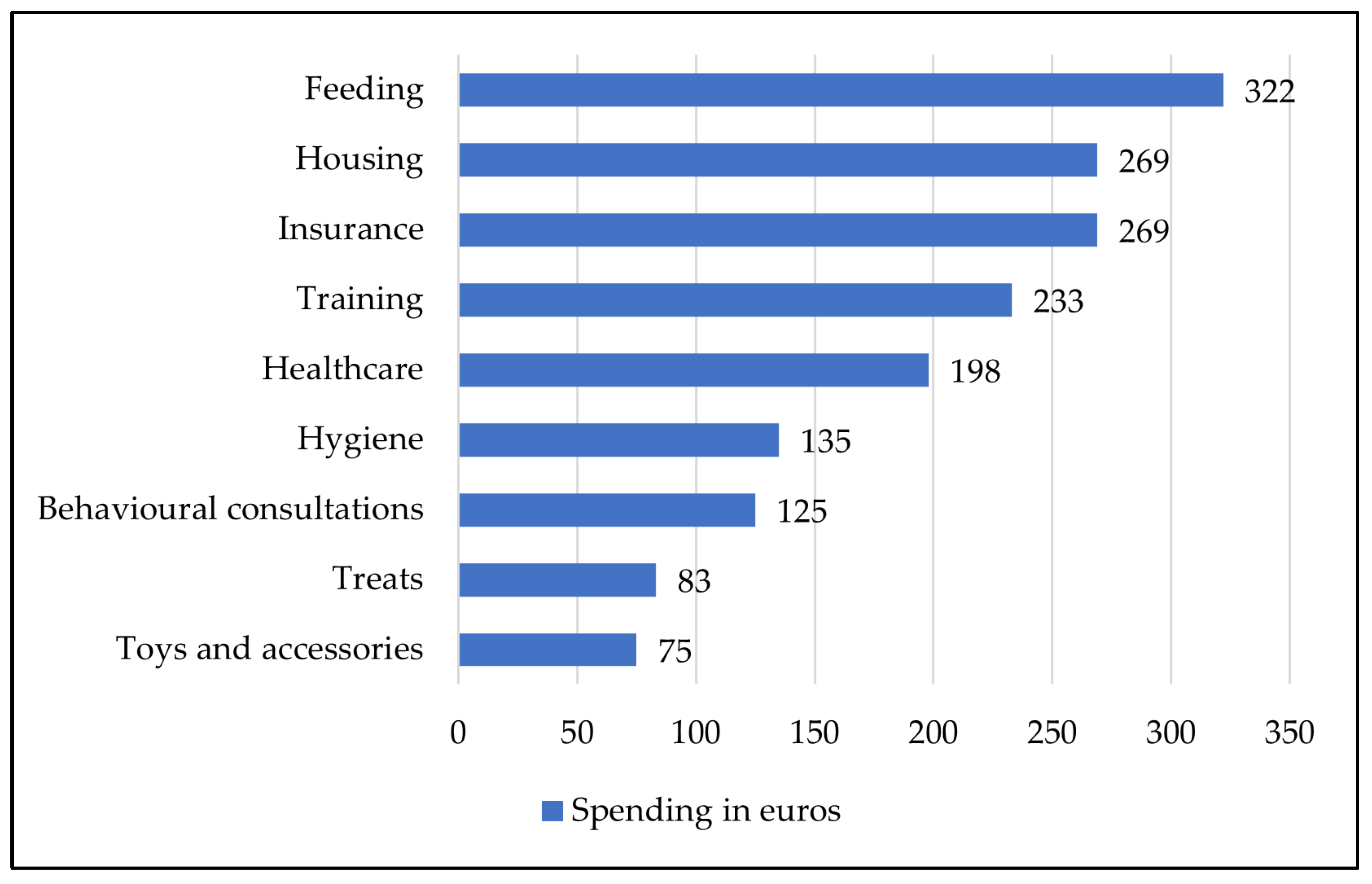
While veterinary care is often considered the most expensive aspect of pet ownership, feeding, housing, and training actually more costly on a yearly basis [28]. Figure 1 compares the average annual expenditure on the main services and items related to pet ownership in France. “Housing” refers to keeping costs, such as kennels, beds, litter boxes and litter, food/water bowls, scratching posts, etc.
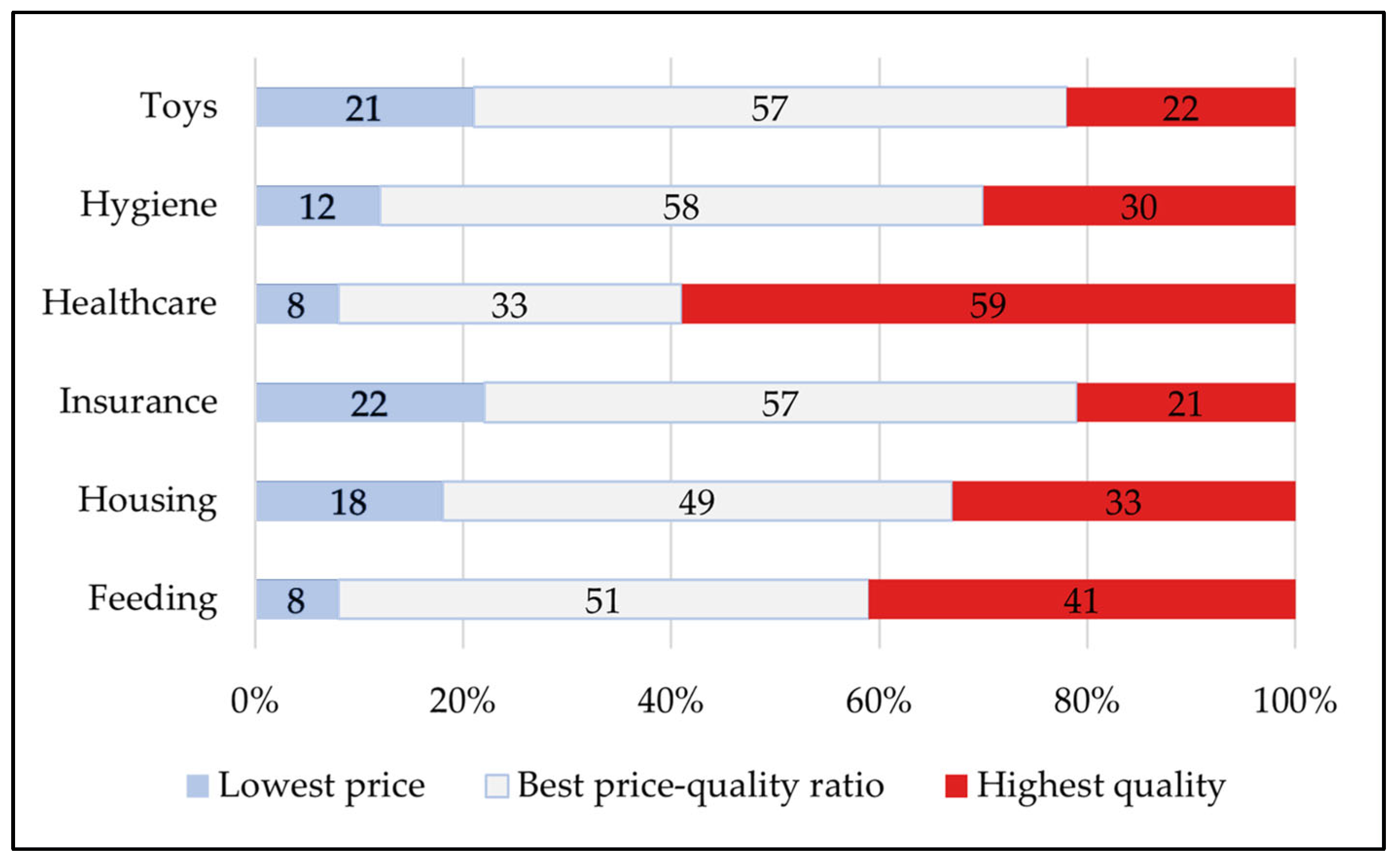
Figure 2 illustrates the different choices French pet owners make when considering the price and quality of a service [28]. Higher quality items or services can be defined as having intangible characteristics that increase their perceived value. For objects, this may be characterised by the durability; for food or treats, quality may be determined by the ingredient composition. For services, those that consistently fulfil needs and expectations are perceived as higher quality. The definition of quality is subjective [29]. However, this does not affect the survey results, as the survey focuses on price sensitivity in relation to pet-related expenses.
When it comes to their pets’ health, most French pet owners are less price sensitive. This may partly be explained by the existence of pet insurance, as pet owners might be more willing to spend if they know they will be partially reimbursed [30]. Similar patterns regarding the perceived affordability of pet insurance and willingness to pay for premiums have been reported in other countries, where household structure, income, and awareness of pet insurance significantly influence their likelihood of purchasing coverage [31]. In France, some French pet insurers, such as Dalma, Santévet, and Lovys (formerly Otherwise), also offer coverage for therapeutic diets when prescribed by a veterinarian, which may further reduce out-of-pocket costs for owners [15,16,17].

4.2. Veterinary Fees

Veterinary fees are still often criticised in France [32]. In 2020, the average basic consultation fee, where no treatment was performed by the veterinarian, ranged from EUR 30 to EUR 40, while a vaccination booster averaged EUR 60. Annual veterinary visits for a healthy, medium-sized dog that neither fell ill nor required emergency care could therefore reach an estimated EUR 500 per year [3]. By comparison, the German Veterinary Chamber (Bundestierärztekammer) has set minimal fixed fees and specific rules for billing for veterinary acts [33]. This is called the “fee schedule for veterinarians” (Gebührenordnung für Tierärztinnen und Tierärzte). This allows veterinarians to be fairly compensated for their work, while also setting rules that prevent excessively high prices and excessively low prices, which would be deemed unfair competition amongst veterinarians. The fee schedule states that veterinarians are allowed to charge one to three times the basic set fee, or two to four times in the case of emergency services. As an example, the fee for a consultation without examination of the patient, whether over the phone or in writing, must be billed at a minimum of EUR 11.26, and a maximum of EUR 33.78 euros. A general examination with consultation must be charged at least EUR 23.62, and maximum EUR 70.86 [33].
Another aspect to consider is that in France, vaccinating dogs and cats is not mandatory, except for Category 2 dogs, and for dogs travelling abroad. In these cases, a valid rabies vaccination must be recorded in the pet’s passport [12]. As a result, a high proportion of pets do not visit veterinarians regularly. A 2015 study showed that only 53% of registered cats and 82% of registered dogs were regularly vaccinated in France [34].
With advances in diagnostic techniques, medical equipment, and new treatments, veterinary costs will naturally increase over time. A multi-country European analysis also revealed marked differences in the prices of core small animal services between countries, with some of the highest fees observed in markets with a high proportion of insured pets, such as Sweden [35]. This may indicate that higher insurance uptake can be associated with higher service utilisation and, consequently, higher overall price levels.
The general increase in veterinary costs does not necessarily encourage pet owners to seek regular check-ups for their pets. High veterinary treatment costs may even lead some pet owners to consider euthanasia. A study conducted in the United States in 2000 found that one in three pet owners would choose euthanasia if the treatment cost exceeded USD 500 [1]. Another U.S. study produced similar results: the average uninsured pet owner would opt for euthanasia if treatment fees exceeded USD 575, whereas for insured pets, the threshold rose to USD 2000 [36]. These findings suggest that having pet insurance may encourage owners to seek veterinary treatment more regularly. More recently, research from the United Kingdom highlighted that rising veterinary costs also affect the psychological well-being of both owners and veterinary professionals, with some owners cancelling their pet insurance policies because they can no longer afford the premiums [37].

4.3. Pet Insurance and Preventive Care

An early and precise diagnosis of a disease can reduce the overall cost of treatment and improve the prognosis [38]. For instance, a simple tumour removal costs an estimated EUR 500–700, while radiotherapy sessions cost around EUR 1200–1500; dental cleaning typically costs between EUR 50–150, while tooth extraction combined with the treatment of subsequent gingivitis using antibiotics starts at EUR 350 (for the removal of multiple teeth in a dog weighing less than 10 kg) [4,39].
Furthermore, regular preventive consultations with veterinarians are essential for early detection of potential health issues. Veterinarians should better inform pet owners about the importance of preventive treatments such as dental care, vaccination, and neutering [31]. Since vaccinating pets is not mandatory in France, veterinarians may have patients they do not see even once a year. For this reason, promoting regular vaccinations can help veterinarians monitor the overall health and condition of their patients and detect potential health issues early.
It must be kept in mind that while pet owners often consider veterinary fees to be high, which can reduce their willingness to attend routine preventive visits, veterinarians themselves also face significant challenges. The lack of official fee regulations has created a highly competitive environment, where practitioners are often forced to lower their prices to attract clients in areas with multiple veterinary clinics [40]. Consequently, some French insurance companies have expressed willingness to establish a regulated base fee, aiming to reduce competition while still ensuring fair revenue for veterinarians [41]. Insured patients would therefore be expected to contribute to a more stable income for veterinarians, as clients would be less likely to base their choice of provider primarily on the treatment cost. These economic dynamics are further shaped by the ongoing corporatisation of companion animal practice in many European countries, where the growth of large clinic chains and private equity ownership has been associated with both increased access to advanced diagnostics and concerns about fee inflation [42]. The Federation of Veterinarians of Europe published a report in 2025 evaluating the burden of administrative tasks in clinical practices [43]. While 65% of respondents claimed that less than one hour weekly was enough to complete insurance-related tasks, the time spent on these tasks is still unpaid administrative work added on top of regular tasks.
Evidence also suggests that pet insurance is associated with higher utilisation of veterinary services. Dunn noted that “insured pets see veterinarians […] more often than uninsured [ones], clients who have insured pets spend […] more on average, […] on core services [and on] ancillary services” [1]. She also recommended that veterinarians inform pet owners about the existence of pet insurance during the first visit with a new client. It is also worth noting that if veterinarians are the ones to inform pet owners about pet insurance, they can choose to promote providers that are more convenient to work with and better suited to their practice.
While pet insurance can serve as a tool to increase veterinarians’ revenue, it can also help reduce the sudden financial burden of a large invoice for pet owners. Indeed, through monthly premiums, pet owners can spread costs over a longer period. With this unexpected financial strain reduced, pet owners may be less likely to opt for euthanasia instead of treatment, allowing appropriate therapy to begin sooner, ultimately improving the animal’s prognosis [1,38]. Given the large number of pet insurance companies and wide variety of plans available, pet owners are likely to find one that fits both their budget and their needs.
Additionally, the veterinarian–client relationship should be considered. The stronger the relationship, the less price-sensitive pet owners tend to be. Moreover, they are more likely to follow veterinary advice and post-visit recommendations than owners who are highly price-sensitive and do not trust their veterinarian [44]. Finally, when there is strong mutual trust between the veterinarian and the pet owner, the latter is more likely to accept suggestions regarding pet insurance providers than when such recommendations come directly from the insurance company [30].

4.4. Limitations

This review has several limitations. The number of insurers included was constrained by the availability of sufficiently detailed, publicly accessible pricing information. As a result, only a subset of pet insurance providers active on the French market could be assessed, selected based on the accessibility of quotes, and their established position in the market. In addition, the French pet insurance market evolves rapidly, so plan features and pricing may change over time. Finally, price estimates were based on a limited number of virtual pet profiles selected to reflect common and frequently insured breeds in France, which cannot capture the full diversity of pet characteristics that may influence premiums and coverage conditions.

5. Conclusions

Pet health insurance in France represents an underdeveloped yet promising market. Despite high owner awareness and the growing importance of pets in French households, subscription rates remain very low. Based on the comparative assessment of selected insurers using standardised virtual pet profiles, we observed substantial variation in premiums and coverage across providers, species, and profiles, suggesting that plan design (e.g., annual caps, deductibles, preventive care allowances, and therapeutic diet coverage) can materially affect both affordability and the level of protection. Expanding pet insurance coverage could alleviate the financial burden of veterinary care, reduce the risk of treatment refusal or euthanasia due to cost, and strengthen preventive care practices. From a veterinary perspective, wider insurance adoption would ensure more predictable revenue and foster trust-based relationships with clients. Further research should explore strategies to increase owner engagement and better integrate pet insurance into routine veterinary care, thereby contributing to improved animal welfare and the financial sustainability of the veterinary profession.

Supplementary Materials

The following supporting information can be downloaded at https://www.mdpi.com/article/10.3390/pets3010009/s1, Supplementary Data S1: List of pet insurance providers in France (2025); Supplementary Table S1: Comparative table of selected pet health insurance plans in France (2025).

Author Contributions

Conceptualisation, Z.G. and L.Ó.; methodology, Z.G. and L.Ó.; validation, Z.G. and M.M.; formal analysis, Z.G.; investigation, Z.G.; resources, L.Ó.; data curation, Z.G.; writing—original draft preparation, Z.G.; writing—review and editing, Z.G., M.M. and L.Ó.; visualisation, Z.G. and M.M.; supervision, L.Ó.; project administration, L.Ó.; funding acquisition, L.Ó. All authors have read and agreed to the published version of the manuscript.

Funding

This research received no external funding.

Institutional Review Board Statement

Not applicable.

Informed Consent Statement

Not applicable.

Data Availability Statement

The original contributions presented in this study are included in the article/supplementary material. Further inquiries can be directed to the corresponding author.

Conflicts of Interest

The authors declare no conflicts of interest.

References

  1. Dunn, L. Small Animal Practice: Billing, Third-party Payment Options, and Pet Health Insurance. Vet. Clin. North Am. Small Anim. Pract. 2006, 36, 411–418. [Google Scholar] [CrossRef] [PubMed]
  2. Statista Research Department. Importance des Animaux de Compagnie dans les Foyers Français 2020. 2021. Available online: https://fr.statista.com/statistiques/1142610/importance-animal-compagnie-france/ (accessed on 13 March 2025).
  3. Diedrichs, C. Quels Sont les Tarifs Vétérinaires? Pourquoi de Tels Ecarts? 2025. Available online: https://jardinage.lemonde.fr/dossier-2375-tarifs-veterinaires.html (accessed on 29 January 2025).
  4. Bardou, D. Quel est le Tarif d’un Vétérinaire? Comparatif des Soins 2023. 2025. Available online: https://reassurez-moi.fr/guide/assurance-chien-chat/frais-veterinaire (accessed on 21 February 2025).
  5. Depouilly, L.; André, C.; Plait, J. Observatoire des Animaux de Compagnie: Vers une Meilleure Compréhension de la Santé Animale. 2018. Available online: https://www.ipsos.com/sites/default/files/ct/news/documents/2018-03/santevet_-_observatoire_animaux_compagnie_2018.pdf (accessed on 14 March 2025).
  6. Pellefigue, M. La Jungle des Assurances pour Animaux. 2023. Available online: https://www.lemonde.fr/argent/article/2023/03/03/la-jungle-des-assurances-pour-animaux_6163964_1657007.html (accessed on 13 March 2025).
  7. Corbet, L. Les Français et Leur Animal de Compagnie|YouGov. 2020. Available online: https://fr.yougov.com/topics/society/articles-reports/2020/03/06/les-francais-et-leur-animal-de-compagnie (accessed on 13 March 2025).
  8. Delestre, S. Les Français et les Animaux de Compagnie-Faits et Chiffres. 2025. Available online: https://fr.statista.com/themes/3183/les-francais-et-les-animaux-de-compagnie/ (accessed on 12 March 2025).
  9. Petiteau, B. Les chiffres Clés—Parc des Animaux Familiers 2020. 2022. Available online: https://www.facco.fr/wp-content/uploads/2022/05/rapport-annuel-facco-2022pdf.pdf (accessed on 12 March 2025).
  10. Centrale Canine. En 2022, le Berger Australien Reste le Chien Préféré des Français! 2023. Available online: https://www.centrale-canine.fr/actualites/en-2022-le-berger-australien-reste-le-chien-prefere-des-francais (accessed on 4 March 2025).
  11. Ministère de L’agriculture et de L’alimentation. Identification des Chiens et Chats, Races et Noms 2020. 2021. Available online: https://www.i-cad.fr/uploads/21.Identification.Races.DEF.pdf (accessed on 4 March 2025).
  12. DDCSPP de l’Yonne. Réglementation Relative aux Animaux de Compagnie; Préfet de l’Yonne, Direction Départementale de l’Emploi, du Travail, des Solidarités et de la Protection des Populations: Auxerre, France, 2022. [Google Scholar]
  13. Révész, A.; Ózsvári, L. The perception and experience of pet insurance among pet owners and veterinary practitioners in Hungary. Magy Allatorvosok Lapja 2022, 144, 91–99. [Google Scholar]
  14. Pacheteau, C. Les Races de Chiens et Chats les plus Assurées. 2023. Available online: https://www.santevet.com/articles/les-races-de-chiens-et-chats-les-plus-assurees (accessed on 14 March 2025).
  15. Santévet. Assurance Animaux—Mutuelle Santé Chien et Chat: SantéVet. 2025. Available online: https://www.santevet.com/ (accessed on 1 October 2025).
  16. Dalma. L’assurance Santé des Animaux Heureux. 2025. Available online: https://www.dalma.co/ (accessed on 1 October 2025).
  17. Lovys. Assurance Animaux—Lovys. 2025. Available online: https://www.lovys.com/fr/assurance/animaux (accessed on 1 October 2025).
  18. Bulle Bleue. Assurance & Mutuelle Animaux Chat et Chien. 2025. Available online: https://www.bullebleue.fr/ (accessed on 1 October 2025).
  19. Carrefour Assurance. Assurance Santé Chien et Chat—Assurez vos Animaux avec Carrefour Assurance. 2025. Available online: https://assurance.carrefour.fr/assurance-sante-chien-chat (accessed on 25 October 2025).
  20. Assur O’Poil. Assurance et Mutuelle pour Animaux. 2025. Available online: https://www.assuropoil.fr/ (accessed on 1 October 2025).
  21. Allianz. Assurance Chien Chat—Assurance Animal Domestique. 2025. Available online: https://www.allianz.fr/assurance-particulier/sante-prevoyance/assurance-sante/assurance-chiens-chats.html (accessed on 25 October 2025).
  22. MacGillivray, W. Un Intérêt Grandissant pour les Nouveaux Animaux de Compagnie (NAC). 2019. Available online: https://www.ifop.com/publication/un-interet-grandissant-pour-les-nouveaux-animaux-de-compagnie-nac/ (accessed on 21 February 2025).
  23. Crédit Mutuel. Assurance Animaux de Compagnie. 2025. Available online: https://www.creditmutuel.fr/fr/particuliers/assurance/assurance-animaux-de-compagnie.html (accessed on 1 October 2025).
  24. Solly Azar. Assurance Santé & Mutuelle pour Animaux. 2025. Available online: https://www.sollyazar.com/assurance-animaux (accessed on 21 October 2025).
  25. Fidanimo. Assurance Chien, Chat et NAC. 2025. Available online: https://www.fidanimo.com/ (accessed on 1 October 2025).
  26. GMF Fidélio. Une Assurance Chien Adaptée Aux Besoins de Votre Animal de Compagnie. 2025. Available online: https://www.gmf.fr/protection-juridique-loisirs/assurance-loisirs-animaux/assurance-chien-chat-fidelio (accessed on 21 October 2025).
  27. Le Monde. L’assurance Chien/Chat Rembourse-T-Elle Directement le Vétérinaire? 2025. Available online: https://jardinage.lemonde.fr/dossier-3674-assurance-chien-chat-rembourse-directement-veterinaire.html (accessed on 5 September 2025).
  28. Vetitude. Animal de Compagnie: Un Sondage Explore les Critères de Choix des Français et Leur Budget Associé. 2016. Available online: https://vetitude.fr/animal-de-compagnie-un-sondage-explore-les-criteres-de-choix-des-francais-et-leur-budget-associe/ (accessed on 29 April 2025).
  29. Pesqueux, Y. Définition de la Notion de Qualité, Chronologie et Fondements de la Gestion de la Qualité. Master Fr. 2020. Available online: https://shs.hal.science/halshs-02615732v1 (accessed on 29 December 2025).
  30. Williams, A.; Williams, B.; Hansen, C.R.; Coble, K.H. The impact of pet health insurance on dog owners’ spending for veterinary services. Animals 2020, 10, 1162. [Google Scholar] [CrossRef] [PubMed]
  31. Adib, A.Z.; Riaman, R.; Subartini, B. Analysis of pet owners’ willingness to pay for pet insurance premiums in DKI Jakarta using logistic regression model. Int. J. Quant. Res. Model. 2024, 5, 148–153. Available online: https://journal.rescollacomm.com/index.php/ijqrm/article/view/578/0 (accessed on 20 January 2026).
  32. Franceinfo. Cliniques Vétérinaires: Quand la Facture Flambe. 2025. Available online: https://www.franceinfo.fr/replay-jt/france-2/20-heures/cliniques-veterinaires-quand-la-facture-flambe_7679221.html (accessed on 28 October 2025).
  33. Bundestierärztekammer e.V. Gebührenordnung (GOT). 2025. Available online: https://www.bundestieraerztekammer.de/tieraerzte/beruf/got/index.php (accessed on 29 December 2025).
  34. Garcia, F. Médecine préventive: Une stratégie d’entreprise à mettre en place. La Sem. Vétérinaire 2015, 1618, 40. [Google Scholar]
  35. Egenvall, A.; Höglund, O.V.; Hoffman, R.; Valle, P.S.; Andersen, P.H.; Lönnell, C.; Byström, A.; Bonnett, B.N. Prices for veterinary care of dogs, cats and horses in selected countries in Europe. Front. Vet. Sci. 2025, 12, 1694780. [Google Scholar] [CrossRef] [PubMed]
  36. Stowe, J.D. Pet insurance—Essential option? Can. Vet. J. 2000, 41, 639–644. [Google Scholar] [PubMed]
  37. Williams, R. How the cost of veterinary care impacts the wellbeing, learning and practice of early career vets. Vet. Rec. 2025, 196, e4597. [Google Scholar] [CrossRef] [PubMed]
  38. American Veterinary Medical Association. Loving Your Pet, Managing the Costs. 2025. Available online: https://www.avma.org/resources/pet-owners/yourvet/financial-assistance-veterinary-care-costs (accessed on 25 February 2025).
  39. OFFER WEB SAS. Tous les Tarifs du Vétérinaire pour un Chien. 2025. Available online: https://conseils-animaux.fr/veterinaire/tarif-veterinaire-chien/ (accessed on 21 April 2025).
  40. Stowe, J.D. Fees—Demon or delight? Can. Vet. J. 2000, 41, 496–501. [Google Scholar] [PubMed]
  41. Marques, C. Les Soins Vétérinaires Vers le Développement D’une Offre 2.0. 2017. Available online: https://www.veterinaire.fr/system/files/files/import/Asteres_-_Ordre_national_des_veterinaires_-_Janvier_2018__002_.pdf (accessed on 21 February 2025).
  42. Diana, A.; Mickov, D.; van Dobbenburgh, R.; Jansen, W.; Sternberg Lewerin, S.; Neumann, S.; Uldahl, M.; De Briyne, N. Quo Vadis: Is corporatisation reshaping companion animal veterinary care in Europe? Pets 2025, 2, 15. [Google Scholar] [CrossRef]
  43. Delsaute, M. Admininistrative Burden in the Veterinary Profession; After Hours: Unveiling the Silent Toll of Admin Work on Veterinarians; Federation of Veterinarians of Europe: Brussels, Belgium, 2025; Available online: https://fve.org/cms/wp-content/uploads/Admin-burden-report-R10.pdf (accessed on 29 December 2025).
  44. Lue, T.W.; Pantenburg, D.P.; Crawford, P.M. Impact of the owner–pet and client–veterinarian bond on the care that pets receive. J. Am. Vet. Med. Assoc. 2008, 232, 531–540. [Google Scholar] [CrossRef] [PubMed]
Figure 1. Average annual expenses of French pet owners in 2016 [28].
Pets 03 00009 g001
Figure 2. Service choices of French pet owners based on price versus quality [28].
Pets 03 00009 g002
Disclaimer/Publisher’s Note: The statements, opinions and data contained in all publications are solely those of the individual author(s) and contributor(s) and not of MDPI and/or the editor(s). MDPI and/or the editor(s) disclaim responsibility for any injury to people or property resulting from any ideas, methods, instructions or products referred to in the content.