


Journal Description
Logistics
Logistics
is an international, scientific, peer-reviewed, open access journal of logistics and supply chain management published monthly online by MDPI.
- Open Access— free for readers, with article processing charges (APC) paid by authors or their institutions.
- High Visibility: indexed within Scopus, ESCI (Web of Science), RePEc, and other databases.
- Rapid Publication: manuscripts are peer-reviewed and a first decision is provided to authors approximately 19.6 days after submission; acceptance to publication is undertaken in 4.6 days (median values for papers published in this journal in the second half of 2025).
- Journal Rank: JCR - Q2 (Operations Research and Management Science) / CiteScore - Q1 (Information Systems and Management)
- Recognition of Reviewers: reviewers who provide timely, thorough peer-review reports receive vouchers entitling them to a discount on the APC of their next publication in any MDPI journal, in appreciation of the work done.
Impact Factor:
3.6 (2024);
5-Year Impact Factor:
3.8 (2024)
Latest Articles
Enabling Reuse and Recycling in Circular Supply Chains: A Game-Theoretic Analysis of Glass Bottle Refilling
Logistics 2026, 10(4), 83; https://doi.org/10.3390/logistics10040083 - 7 Apr 2026
Abstract
Background: Circular economy (CE) practices, such as glass bottle refilling, are critical to the beverage industry’s sustainability. However, coordinating manufacturer marketing efforts with collector reverse logistics investment remains a strategic challenge. Methods: This study develops a Stackelberg game-theoretic model featuring a
[...] Read more.
Background: Circular economy (CE) practices, such as glass bottle refilling, are critical to the beverage industry’s sustainability. However, coordinating manufacturer marketing efforts with collector reverse logistics investment remains a strategic challenge. Methods: This study develops a Stackelberg game-theoretic model featuring a manufacturer and a collector. The model incorporates communication effort as a demand driver and analyzes the role of bottle quality (damage rates) and the reusable bottle unit cost on the optimal decisions of the players and the collection rate. Results: Equilibrium analysis shows that the quality of the reusable bottle and the rate of bottle damage are crucial in reducing the operational costs of the refilling program. Additionally, these factors significantly influence the decisions made by manufacturers and collectors regarding their investments in communication and collection systems. Conclusions: The study demonstrates that successful refilling requires strategic coordination between manufacturers and collectors, particularly in terms of communication and investment in reverse logistics. Managerial insights indicate that investing in the quality of bottles is the key factor for achieving joint profitability.
Full article
Open AccessSystematic Review
Inbound Logistics Optimization Under Uncertainty: Systematic Literature Review
by
Celeste Gaxiola-Goray, Luis Alberto Rodríguez-Picón and Víctor Hugo Flores-Ochoa
Logistics 2026, 10(4), 82; https://doi.org/10.3390/logistics10040082 - 3 Apr 2026
Abstract
Background: Inbound logistics (IL) is a critical subsystem of the supply chain (SC) that supports production destined for the end consumer. Its effectiveness is reduced by uncertainty, which generates inaccuracies in production planning, disruptions, bottlenecks, and waste. Methods: This article presents
[...] Read more.
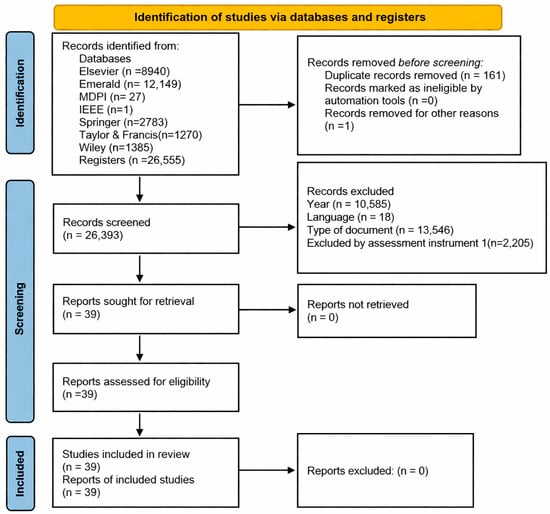
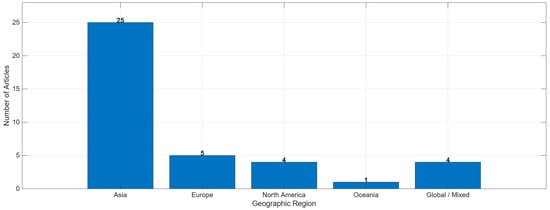
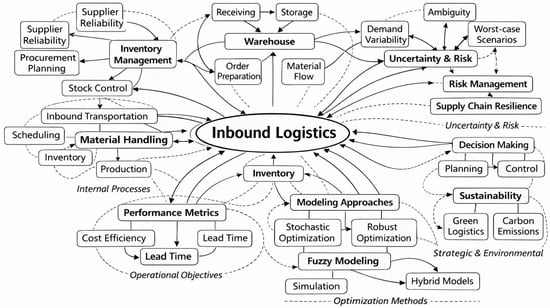
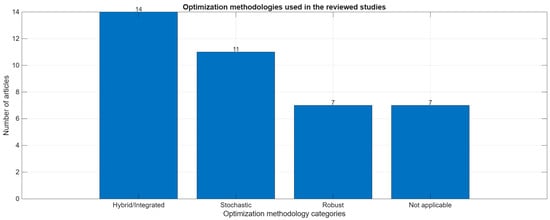
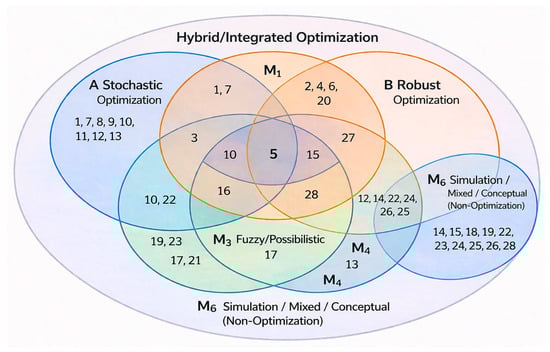
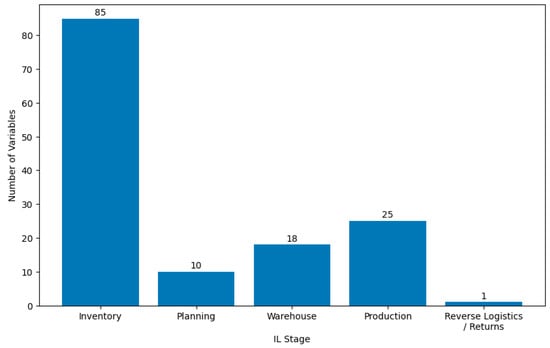
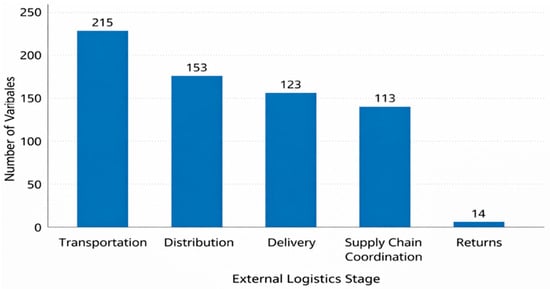
Background: Inbound logistics (IL) is a critical subsystem of the supply chain (SC) that supports production destined for the end consumer. Its effectiveness is reduced by uncertainty, which generates inaccuracies in production planning, disruptions, bottlenecks, and waste. Methods: This article presents a systematic review to identify key concepts, variables, and optimization methodologies for IL under conditions of uncertainty. The PRISMA methodology and two article evaluation tools were applied. These methodologies allowed for the identification of 26,555 documents before applying inclusion and exclusion filters. After applying the selection criteria, the analysis concludes with the analysis of 39 articles that stood out for their empirical relevance and methodological soundness. Results: This study makes a theoretical contribution by integrating IL variables, optimization methods, and uncertainty within a structured framework. Conclusions: In practice, it facilitates decision-making by identifying key variables and approaches for designing more robust logistics systems in uncertain environments. Furthermore, the possibility of generating new research focused on optimization under conditions of uncertainty is recognized through the proposal of hybrid optimization models that integrate input variables from IL and formal methods to address uncertainty.
Full article
(This article belongs to the Special Issue Logistics and Supply Chain Challenges and Solutions in the Turbulent World)
►▼
Show Figures

Figure 1
Open AccessArticle
Modal and Territorial Concentration in Import Logistics: Assessing Disruption Exposure Using Customs Revenue Data
by
Pablo Emilio Basantes-Garcés, Carlos David Lizano-Arauz, Alexander Sánchez-Rodríguez, Gelmar García-Vidal, Rodobaldo Martínez-Vivar and Reyner Pérez-Campdesuñer
Logistics 2026, 10(4), 81; https://doi.org/10.3390/logistics10040081 - 3 Apr 2026
Abstract
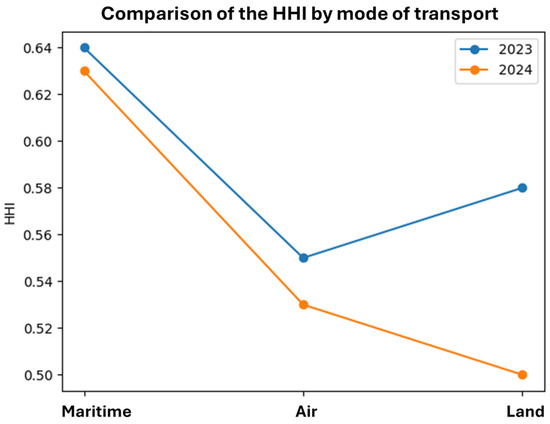
Background: Understanding how logistics structure affects fiscal performance and exposure to disruption is critical in import-dependent economies. This study examines the concentration of Ecuador’s import logistics system using customs revenue as an operational–fiscal proxy. Methods: The analysis uses 2023–2024 customs revenue
[...] Read more.
Background: Understanding how logistics structure affects fiscal performance and exposure to disruption is critical in import-dependent economies. This study examines the concentration of Ecuador’s import logistics system using customs revenue as an operational–fiscal proxy. Methods: The analysis uses 2023–2024 customs revenue data to evaluate modal and territorial concentration through the Herfindahl–Hirschman Index (HHI). Scenario-based stress tests are applied to assess sensitivity to redistribution and disruption shocks. Results: Results reveal a high dependence on maritime transport and a dominant customs district, with the Guayaquil–Maritime node accounting for most revenue. HHI values confirm strong concentration patterns. Scenario analysis shows that even moderate disruptions in dominant nodes generate disproportionate fiscal impacts, while limited modal diversification slightly reduces vulnerability. Conclusions: The findings indicate that logistics concentration constitutes a structural source of fiscal exposure. The study contributes by framing customs revenue as an integrated proxy linking logistics structure and vulnerability. However, results should be interpreted cautiously due to the short-term dataset, static analysis, and absence of behavioral responses.
Full article
(This article belongs to the Special Issue Tackling Disruptions in Supply Chain Networks Through Resilient, Sustainable and Innovative Methods and Practices)
►▼
Show Figures

Figure 1
Open AccessArticle
Identifying Barriers to Shipbuilding in India: A Delphi–DEMATEL Approach
by
Rupesh Kumar and Saroj Koul
Logistics 2026, 10(4), 80; https://doi.org/10.3390/logistics10040080 - 3 Apr 2026
Abstract
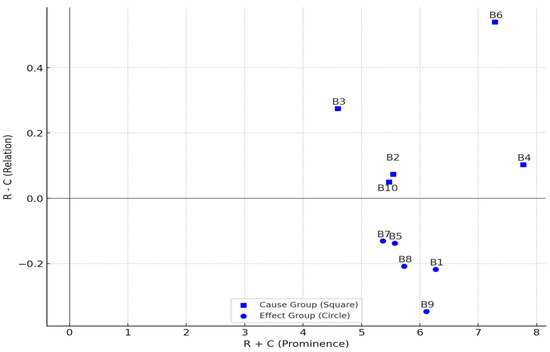
Background: This study examines the systemic barriers constraining the development of India’s shipbuilding industry and identifies leverage points for effective policy intervention. Methods: A mixed-methods design was adopted, combining the Delphi technique with fuzzy DEMATEL to capture expert consensus and causal
[...] Read more.
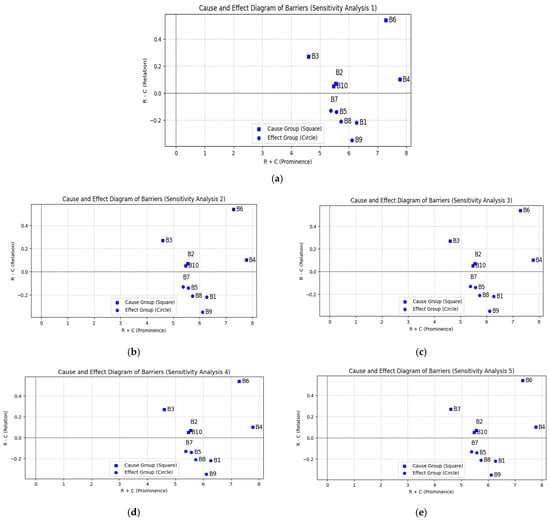
Background: This study examines the systemic barriers constraining the development of India’s shipbuilding industry and identifies leverage points for effective policy intervention. Methods: A mixed-methods design was adopted, combining the Delphi technique with fuzzy DEMATEL to capture expert consensus and causal interdependencies among barriers. A panel of 20 experts, drawn from academia, the government, shipbuilding and ship repair, ports, logistics, and maritime consultancy, participated in two iterative Delphi rounds. An initial list of 21 barriers was refined to 10 based on convergence thresholds. These barriers were then analysed using a seven-step fuzzy DEMATEL procedure to distinguish causal drivers from dependent factors. Results: High raw material costs emerged as the most dominant causal barrier, with the highest net influence (R−C = 0.540), followed by high working capital requirements (R−C = 0.103) and complex regulatory frameworks (R−C = 0.275). Shortages of skilled labour, inefficiencies in ship design, and delays in clearances were largely effect-type barriers shaped by upstream structural conditions. Sensitivity analysis confirmed the stability of barrier rankings under alternative expert weighting scenarios. Conclusions: Policy efforts should prioritise reducing input cost disadvantages, strengthening long-term policy support, and rationalising regulatory processes, rather than focusing solely on downstream operational symptoms. The study is limited to expert judgement in the Indian shipbuilding sector. Future research could extend this framework to comparative country settings or integrate causal analysis with econometric evidence to further strengthen policy design. Contribution: Unlike prior thematic studies, this research provides an integrated causal mapping of structural, financial, and institutional barriers specific to Indian shipbuilding, enabling policy sequencing rather than simple ranking.
Full article
(This article belongs to the Special Issue Multi-Criteria Decision-Making and Its Application in Sustainable Smart Logistics—2nd Edition)
►▼
Show Figures

Figure 1
Open AccessArticle
Performance Impact of Digitalization in the Food Supply Chain: Evidence from the Food Processing Complex in Ethiopia
by
Tadesse Kenea Amentae, Amanuel Fufa Uka and Girma Gebrsenbet
Logistics 2026, 10(4), 79; https://doi.org/10.3390/logistics10040079 - 2 Apr 2026
Abstract
►▼
Show Figures
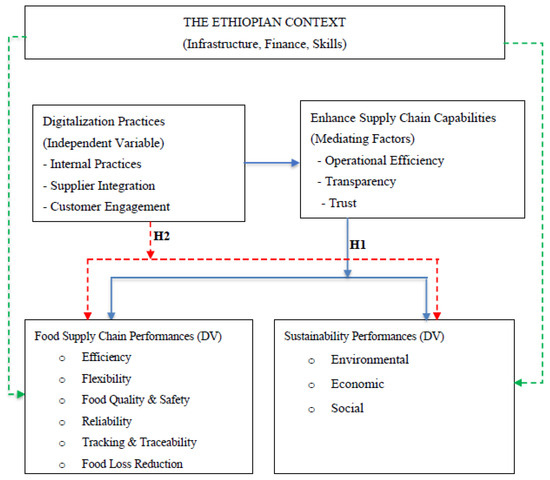
Background: Although digitalization is recognized to improve the food supply chain, its effect pathways have not been thoroughly researched, especially in the context of developing countries. This study examines the association of three digitalization practices: digital internal practice (DIP), digital integration with
[...] Read more.
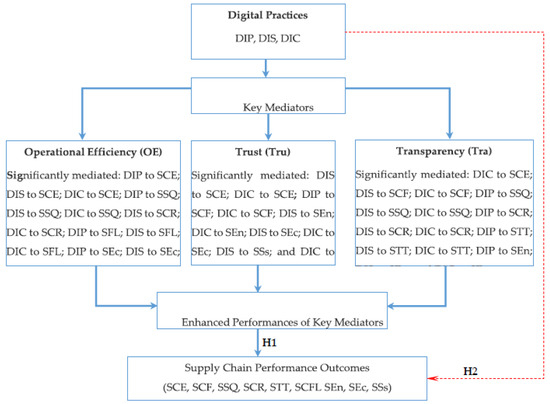
Background: Although digitalization is recognized to improve the food supply chain, its effect pathways have not been thoroughly researched, especially in the context of developing countries. This study examines the association of three digitalization practices: digital internal practice (DIP), digital integration with suppliers (DIS), and digital integration with customers (DIC) with nine supply chain performance metrics: efficiency, flexibility, food safety/quality, reliability, traceability, food loss, and sustainability, mediated by operational efficiency, trust, and transparency, using food processing company case in Ethiopia. Methods: Using an explanatory approach, data from 153 respondents were analyzed through mediation-based structural equation modeling (SEM) in JASP (v.0.95.4.0). The analysis involved 27 direct and 81 indirect effect paths. Results: The results demonstrated a fundamental comprehension that while digital practices manifest direct positive (improvement) effects, a purely direct-impact assessment is insufficient. Statistically, more than half of the suggested direct paths were not significant. The total effects, on the other hand, were significant for all 27 paths tested with much stronger positive associations. Conclusions: The mediation-based examination of the relationship of digitalization practices on food supply chain performance offers essential insight, indicating that the impact of digitalization on supply chain performance is primarily indirect, functioning through the enhanced capabilities it fosters.
Full article
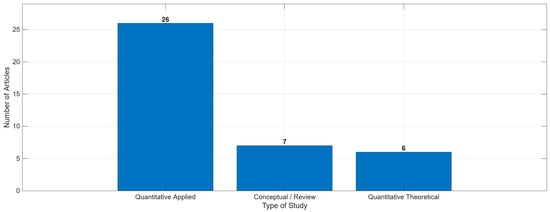
Figure 1
Open AccessArticle
Developing a Decision Support System to Improve the Waste Transportation Process
by
Vadim Mavrin and Irina Makarova
Logistics 2026, 10(4), 78; https://doi.org/10.3390/logistics10040078 - 2 Apr 2026
Abstract
►▼
Show Figures
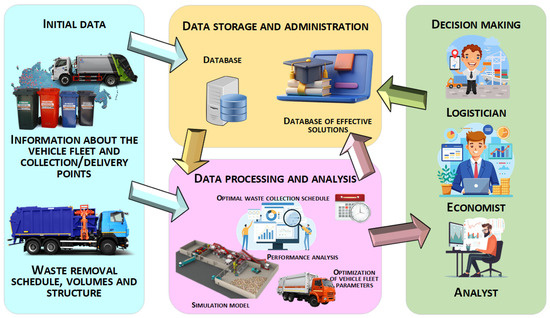
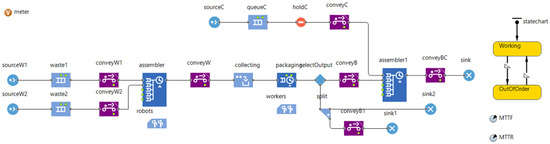
Background: The increasing volume of waste and stricter environmental regulations necessitate efficient waste transportation. Optimizing the specialized vehicle fleet remains a challenge due to fragmented decision-making approaches. Methods: This study develops a Decision Support System (DSS) integrating a simulation model (developed
[...] Read more.
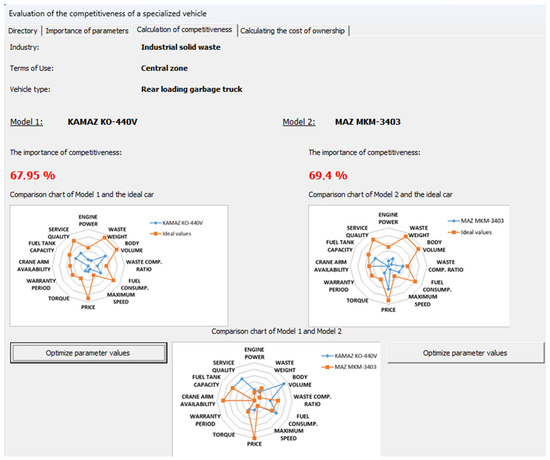
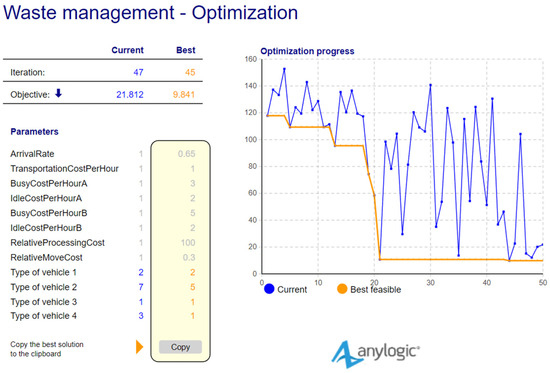
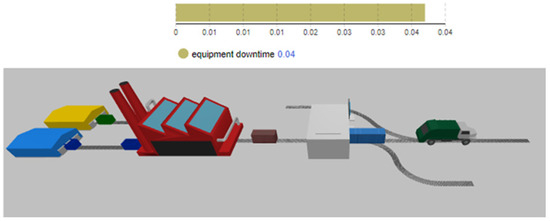
Background: The increasing volume of waste and stricter environmental regulations necessitate efficient waste transportation. Optimizing the specialized vehicle fleet remains a challenge due to fragmented decision-making approaches. Methods: This study develops a Decision Support System (DSS) integrating a simulation model (developed in AnyLogic) with a vehicle competitiveness assessment module (developed in Python). The simulation reproduces waste generation, collection (schedule-based and event-based), and transport logistics. An optimization experiment was conducted to minimize total logistics costs by varying fleet composition. Results: The findings indicate that the optimal fleet configuration reduced total logistics costs by 40.64% compared to the baseline; this reduction was statistically significant. Conclusions: The proposed DSS enables integrated optimization of fleet composition, demonstrating substantial potential for improving both economic and environmental performance of waste transportation systems. The modular architecture supports adaptation to diverse operational contexts.
Full article
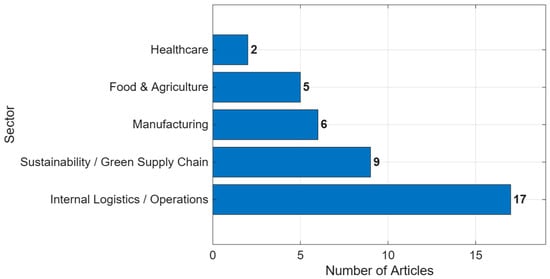
Figure 1
Open AccessArticle
Bridging Accuracy and Interpretability: A Decision Support System for Stock Deployment and Additive Manufacturing Decisions in Spare Parts Distribution Networks
by
Alessandra Cantini, Antonio Maria Coruzzolo, Francesco Lolli, Filippo De Carlo and Alberto Portioli-Staudacher
Logistics 2026, 10(4), 77; https://doi.org/10.3390/logistics10040077 - 2 Apr 2026
Abstract
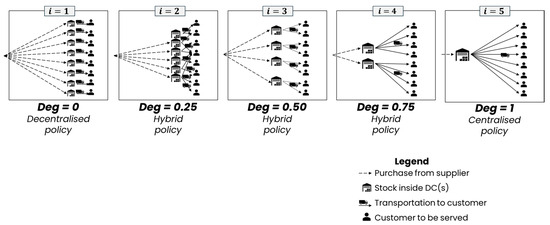
Background: Spare parts distribution networks (DNs) play a strategic role in retailers’ profitability. Among DN configuration decisions, selecting the optimal stock deployment policy—centralised, decentralised, or hybrid inventory allocation across distribution centres (DCs)—critically affects service levels and logistics costs. This decision becomes more complex
[...] Read more.
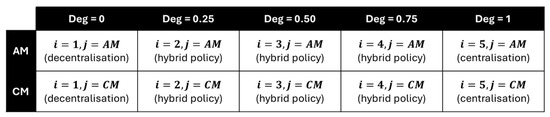
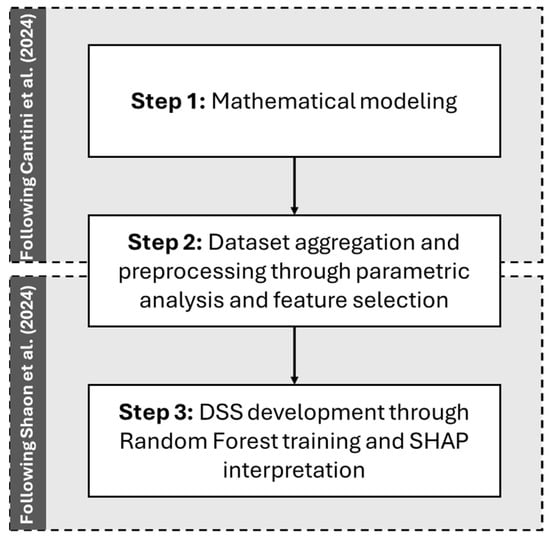
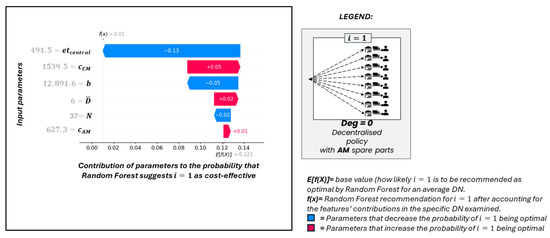
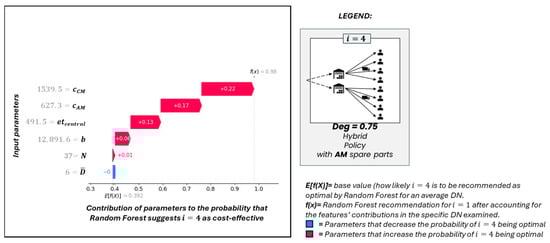
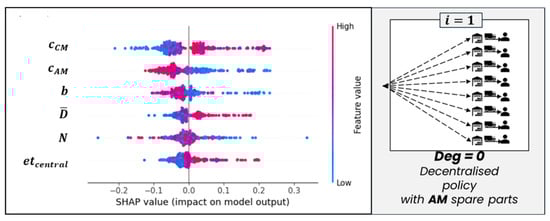
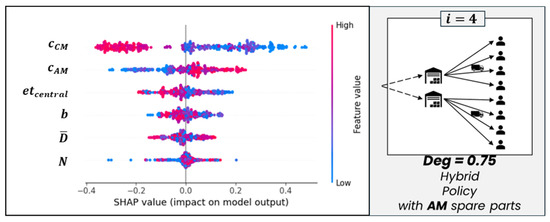
Background: Spare parts distribution networks (DNs) play a strategic role in retailers’ profitability. Among DN configuration decisions, selecting the optimal stock deployment policy—centralised, decentralised, or hybrid inventory allocation across distribution centres (DCs)—critically affects service levels and logistics costs. This decision becomes more complex with additive manufacturing (AM) as an alternative to conventional manufacturing (CM). While AM enables production with shorter lead times, its higher costs alter stock deployment cost-effectiveness. Given the complexity of joint stock deployment and manufacturing decisions, retailers require decision support systems (DSSs). Methods: To address this need, we develop a DSS through a three-step methodology: (i) a mathematical model evaluates logistics costs across different stock deployment policies and manufacturing technologies; (ii) parametric analysis tests the model across 2000 realistic scenarios; (iii) Random Forest trained on this dataset predicts optimal solutions, with SHapley Additive exPlanations (SHAP) interpreting post hoc recommendations. Results: The DSS achieves 93.4% prediction accuracy—outperforming (+16.4%) the only comparable literature DSS (77%)—while explaining recommendations. SHAP reveals that AM and CM unit costs dominate decision-making, followed by backorder costs. Conclusions: Beyond individual spare parts recommendations, the DSS provides guidelines enabling retailers to maintain cost-effective DNs aligned with evolving customer needs and to plan valuable investments in AM.
Full article
(This article belongs to the Special Issue New Progresses and Main Implications in Additive Manufacturing for Operations and Supply Chain Management)
►▼
Show Figures

Figure 1
Open AccessArticle
Analyzing Barriers and Strategies for Rail Freight Digital Transformation in Thailand
by
Photsawi Sirisaranlak and Duangpun Kritchanchai
Logistics 2026, 10(4), 76; https://doi.org/10.3390/logistics10040076 - 2 Apr 2026
Abstract
►▼
Show Figures
Background: Railways worldwide are increasingly adopting digital technologies to improve operational performance and reliability. However, digital transformation in rail freight remains challenging, particularly in developing countries where organizational, technological, and institutional barriers persist. This study aims to identify key barriers to rail
[...] Read more.
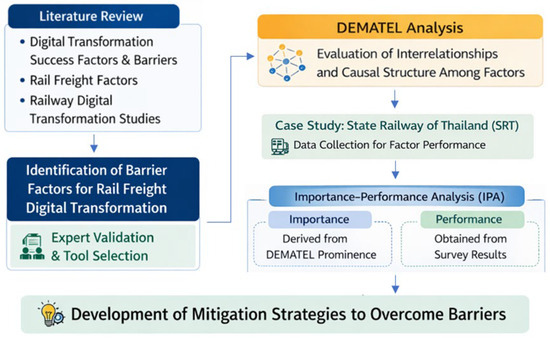
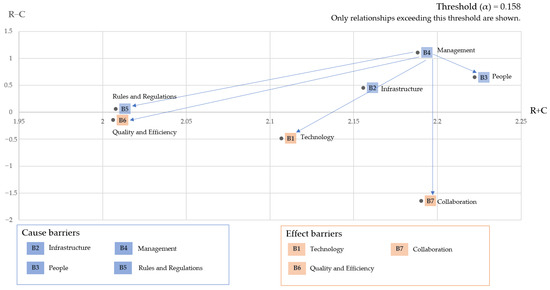
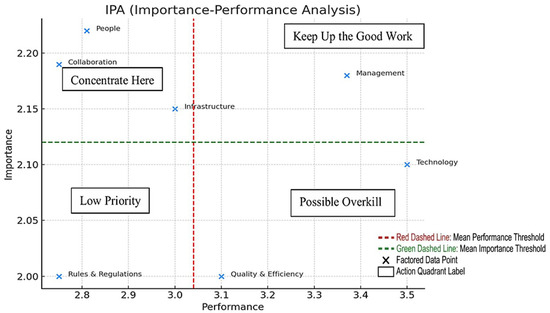
Background: Railways worldwide are increasingly adopting digital technologies to improve operational performance and reliability. However, digital transformation in rail freight remains challenging, particularly in developing countries where organizational, technological, and institutional barriers persist. This study aims to identify key barriers to rail freight digital transformation and propose strategies to address these challenges in Thailand’s rail freight sector. Methods: An integrated analytical approach combining Decision-Making Trial and Evaluation Laboratory (DEMATEL) and Importance–Performance Analysis (IPA) was applied. DEMATEL was used to analyze causal relationships among seven factors influencing digital transformation barriers, while IPA evaluated their importance and performance based on a case study of the State Railway of Thailand. Results: The findings show that management has the highest causal prominence, while quality and efficiency emerge as the primary effect factor. IPA results indicate that people, collaboration, and infrastructure require priority improvement. Conclusions: The study proposes four strategic directions to support rail freight digital transformation and provides a structured framework for identifying and prioritizing digital transformation barriers in rail freight systems. The study contributes by providing a structured framework for identifying, prioritizing, and addressing digital transformation barriers in rail freight systems.
Full article
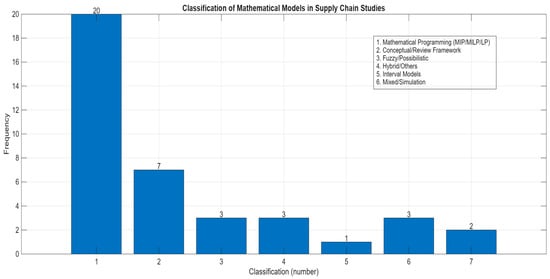
Figure 1
Open AccessArticle
How Does AI Acceptance in Logistics Services Influence Value Co-Creation Behavior and Brand Loyalty Among Thai Gen Z Consumers?
by
Anuman Chanthawong, Narinthon Imjai, Kanyarat Nimtrakool, Berto Usman and Somnuk Aujirapongpan
Logistics 2026, 10(4), 75; https://doi.org/10.3390/logistics10040075 - 1 Apr 2026
Abstract
Background: Artificial intelligence (AI) is increasingly integrated into logistics services, yet limited research explains how AI acceptance translates into relational outcomes among Generation Z consumers. This study investigates the influence of AI acceptance in logistics services on value co-creation behavior and brand
[...] Read more.
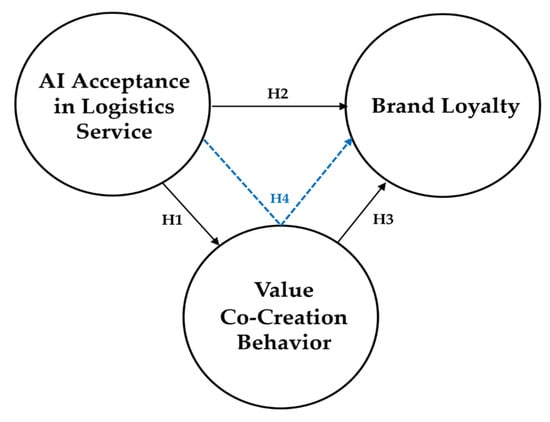
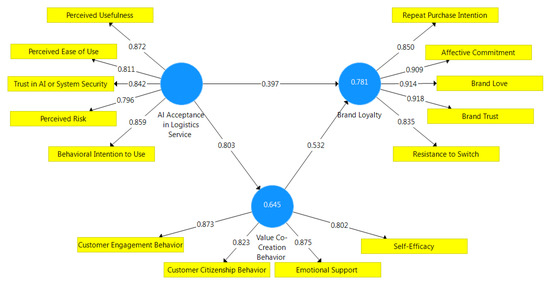
Background: Artificial intelligence (AI) is increasingly integrated into logistics services, yet limited research explains how AI acceptance translates into relational outcomes among Generation Z consumers. This study investigates the influence of AI acceptance in logistics services on value co-creation behavior and brand loyalty in Thailand. Methods: A quantitative approach was employed using a structured questionnaire administered to 461 Thai Generation Z consumers with experience in AI-enabled parcel delivery services. Data were analyzed using Partial Least Squares Structural Equation Modeling (PLS-SEM). Results: The findings reveal that AI acceptance significantly and positively affects both value co-creation behavior and brand loyalty. Value co-creation behavior also exerts a strong positive effect on brand loyalty and partially mediates the relationship between AI acceptance and brand loyalty. The measurement and structural models demonstrated satisfactory reliability and validity. Conclusions: The results indicate that AI acceptance enhances brand loyalty both directly and indirectly through customer participation in value co-creation. These findings highlight the importance of designing AI-enabled logistics interfaces that promote user engagement and relational value, particularly for digitally native Generation Z consumers.
Full article
(This article belongs to the Section Artificial Intelligence, Logistics Analytics, and Automation)
►▼
Show Figures

Figure 1
Open AccessArticle
Modelling Attitude as a Delighter in Supply Chains: A Kano-Based Perspective
by
Andrea Rankl and Peter Nemeth
Logistics 2026, 10(4), 74; https://doi.org/10.3390/logistics10040074 - 1 Apr 2026
Abstract
Background: Global supply chains operate in increasingly volatile and technology-intensive environments shaped by digital transformation and artificial intelligence integration. While prior research has emphasized structural and technological enablers of flexibility, the behavioral foundations of supply chain adaptability remain insufficiently explored. Methods:
[...] Read more.
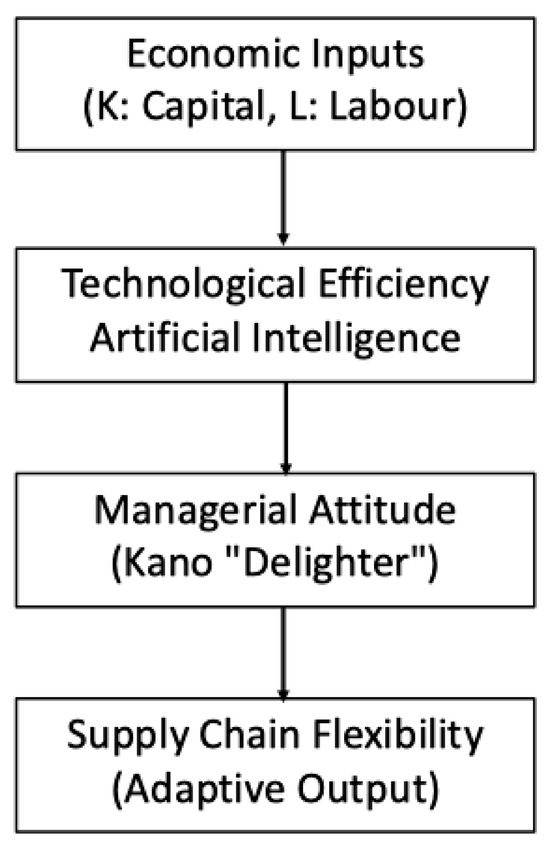
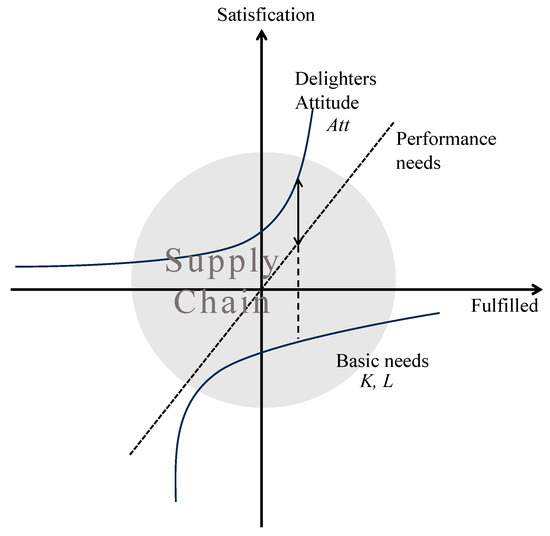
Background: Global supply chains operate in increasingly volatile and technology-intensive environments shaped by digital transformation and artificial intelligence integration. While prior research has emphasized structural and technological enablers of flexibility, the behavioral foundations of supply chain adaptability remain insufficiently explored. Methods: This study develops a conceptual integration of the Kano model and the Cobb–Douglas production function to position managerial attitude as a strategic “delighter” within supply chain systems. The proposed framework models supply chain flexibility as a function of capital, labor, artificial intelligence integration, and managerial attitude within an extended economic representation. Results: The model suggests that managerial attitude acts as a behavioral amplifier that strengthens the performance effects of technological and economic inputs, potentially generating nonlinear gains in responsiveness and adaptive capacity. By distinguishing human-driven, algorithmic, and hybrid attitudinal configurations, the framework clarifies how behavioral orientations influence artificial intelligence adoption and supply chain flexibility, particularly in small and medium-sized enterprise contexts. Conclusions: Although conceptual in nature, the framework provides a formal analytical foundation for future empirical testing and elasticity-based sensitivity analysis in supply chain research.
Full article
(This article belongs to the Section Sustainable Supply Chains and Logistics)
►▼
Show Figures

Figure 1
Open AccessArticle
Integrating Digital Twins into Smart Warehousing: A Practice-Based View Framework for Identifying and Prioritizing Critical Success Factors
by
Sadia Samar Ali, Jose Antonio Marmolejo-Saucedo, Rosario Landa Piedra and Gerhard-Wilhelm Weber
Logistics 2026, 10(4), 73; https://doi.org/10.3390/logistics10040073 - 26 Mar 2026
Abstract
►▼
Show Figures
Background. Smart warehousing increasingly relies on digital twin technologies to enhance operational efficiency, real-time visibility, and decision-making in logistics systems. However, existing research primarily focuses on technological capabilities while paying limited attention to the organizational practices that shape successful implementation. Methods. This study
[...] Read more.
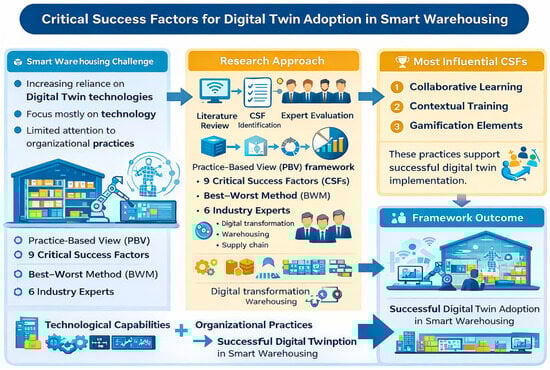
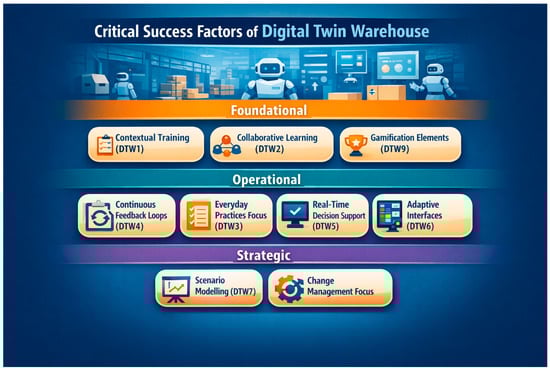
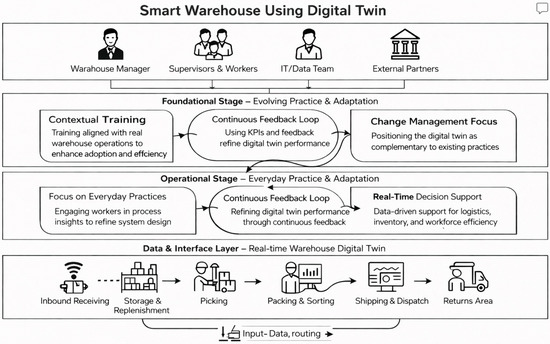
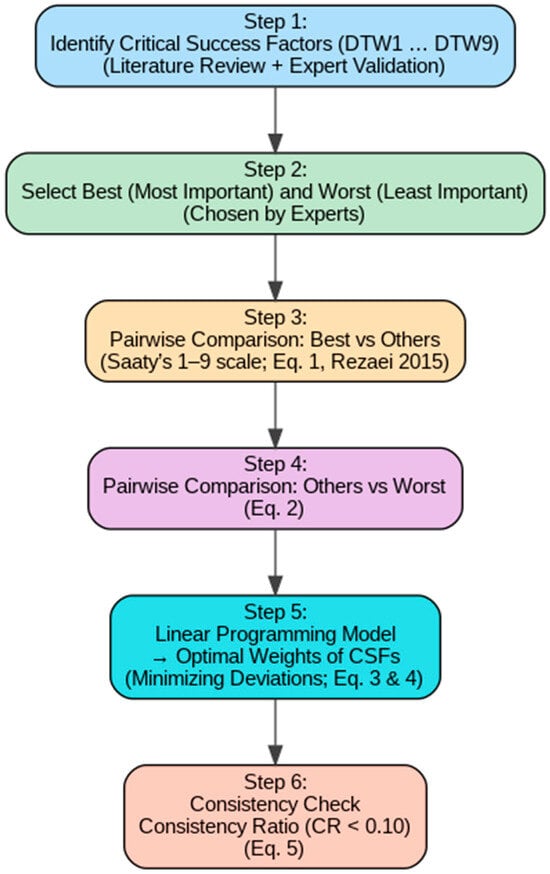
Background. Smart warehousing increasingly relies on digital twin technologies to enhance operational efficiency, real-time visibility, and decision-making in logistics systems. However, existing research primarily focuses on technological capabilities while paying limited attention to the organizational practices that shape successful implementation. Methods. This study aims to identify and prioritize the critical success factors (CSFs) for integrating digital twins into smart warehousing using the Practice-Based View (PBV) as the theoretical lens. Based on insights from prior research and expert validation, nine CSFs were identified and evaluated using the Best–Worst Method (BWM). Empirical input was obtained from six industry experts with experience in digital transformation, warehousing, and supply chain management. Results. The results indicate that collaborative learning, contextual training, and gamification elements emerge as the most influential critical success factors, highlighting the importance of organizational practices in supporting digital twin adoption in smart warehousing. Conclusions. By linking technological capabilities with organizational routines, the proposed framework provides both theoretical insights and practical guidance for implementing digital twins in smart warehouse environments.
Full article
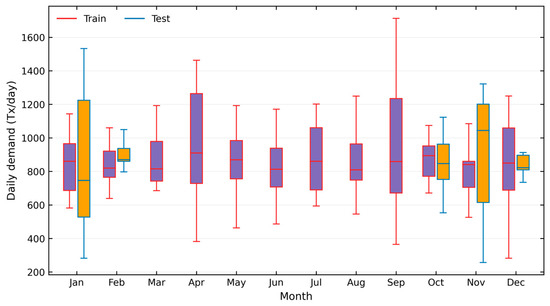
Figure 1
Open AccessArticle
A Data-Driven Approach to Optimal Sensor Placement for Waste Collection
by
Lorenzo Mazza, Edoardo Fadda, Paolo Brandimarte, Marco Francesco Urso and Andrea Merli
Logistics 2026, 10(4), 72; https://doi.org/10.3390/logistics10040072 - 26 Mar 2026
Abstract
►▼
Show Figures
Background: Solid waste collection is a relevant issue for municipalities and can be improved by installing volumetric sensors inside dumpsters. Sensors generate a maintenance cost but provide additional information to decide which dumpsters to empty in a given day when visiting all of
[...] Read more.
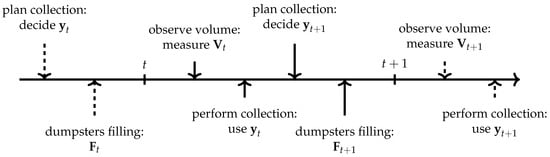
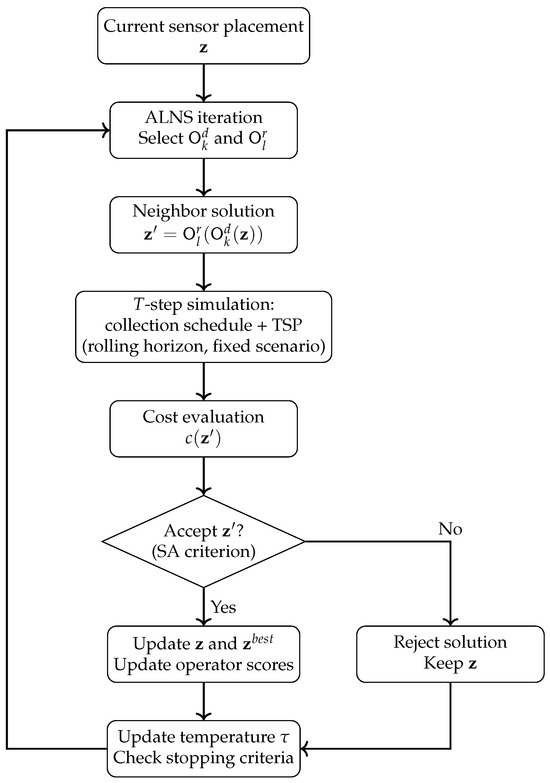
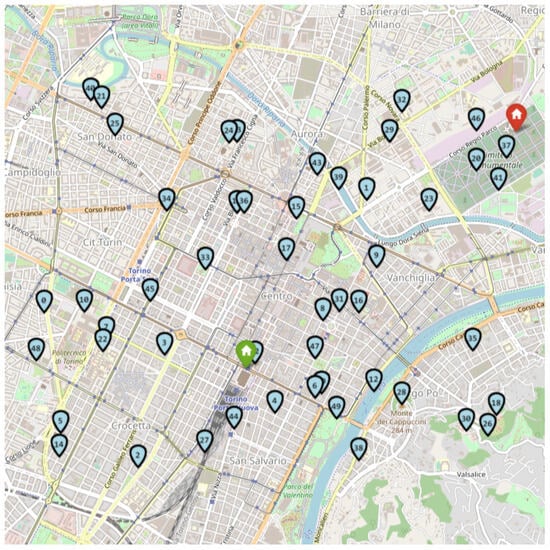
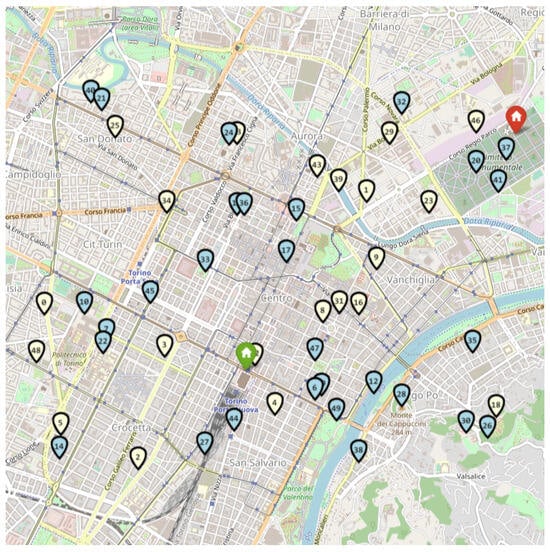
Background: Solid waste collection is a relevant issue for municipalities and can be improved by installing volumetric sensors inside dumpsters. Sensors generate a maintenance cost but provide additional information to decide which dumpsters to empty in a given day when visiting all of them is expensive. Moreover, dumpsters close to each other are expected to follow similar filling trends, as they serve the same catchment area; hence, equipping them all with sensors may be inconvenient. This leads to the problem of finding sensor locations that minimize routing, waste overflow, and sensor maintenance costs. Methods: We tackle the problem using a heuristic based on adaptive large neighborhood search and a one-step look-ahead policy, performed through a rolling horizon method to approximate the multi-stage stochastic programming problem, in order to compute the number and locations of sensors to be installed, minimizing the total cost. Results: We apply the proposed approach to a realistic setting with 50 dumpsters in Torino. The results show that placing sensors in 21 dumpsters at optimized locations allowed saving about 17,000 € per year and reduced vehicle emissions by 15.5%. Conclusions: The proposed approach enables more cost-effective and sustainable waste collection operations.
Full article
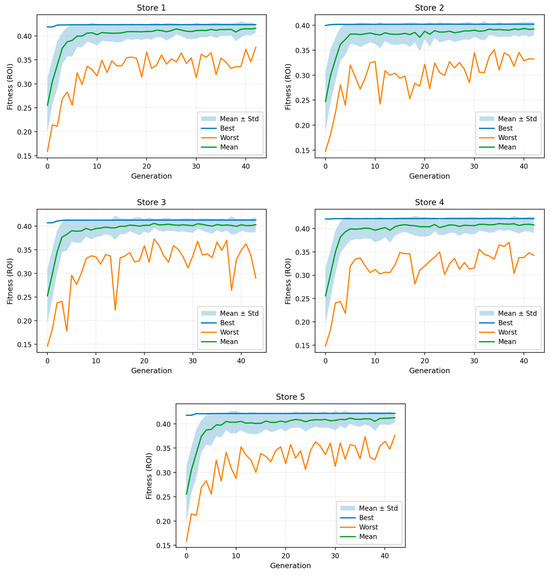
Figure 1
Open AccessArticle
A Roadmap Approach to Enhancing ESG and Operational Performance in Road Freight Logistics
by
Beatriz Lavezo Reis, Fabio Neves Puglieri and Cassiano Moro Piekarski
Logistics 2026, 10(4), 71; https://doi.org/10.3390/logistics10040071 - 26 Mar 2026
Abstract
Background: Environmental, social, and governance (ESG) practices have evolved from regulatory requirements to strategic drivers of competitiveness and long-term value creation, particularly in road freight logistics, where environmental impacts, greenhouse gas emissions, labor relations, and stakeholder transparency are critical. Methods: This
[...] Read more.
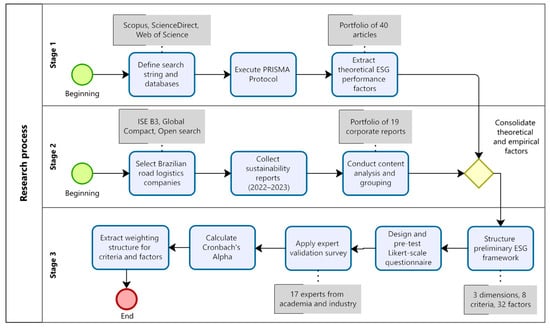
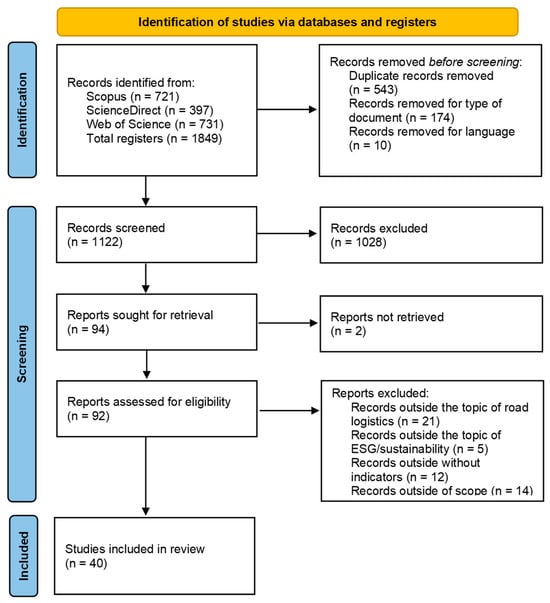
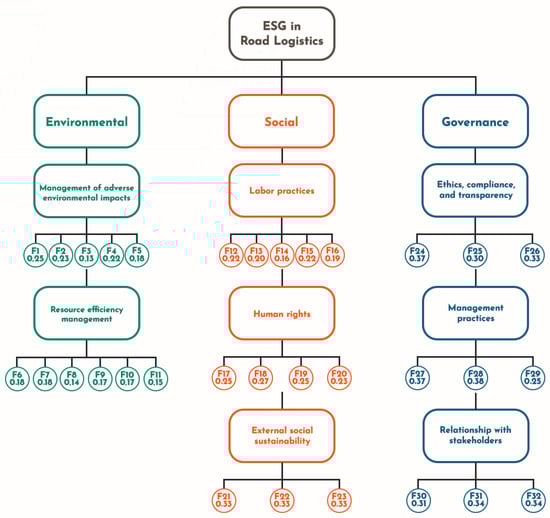
Background: Environmental, social, and governance (ESG) practices have evolved from regulatory requirements to strategic drivers of competitiveness and long-term value creation, particularly in road freight logistics, where environmental impacts, greenhouse gas emissions, labor relations, and stakeholder transparency are critical. Methods: This study identifies and systematizes ESG-related critical performance factors in road logistics by combining a systematic literature review with an analysis of sustainability reports from Brazilian road freight logistics companies. Academic findings and market practices were compared to support the development of an integrated ESG monitoring and assessment dashboard. Results: The findings reveal limited standardization in sustainability monitoring and control practices, with convergence observed around a restricted set of critical performance factors across companies. Conclusions: Based on these results, a unified theoretical dashboard integrating the three ESG dimensions into structured criteria and performance indicators is proposed. The model contributes to a more systematic assessment of ESG maturity and offers a theoretically grounded framework to support sustainability monitoring and managerial decision-making in road freight logistics.
Full article
(This article belongs to the Section Sustainable Supply Chains and Logistics)
►▼
Show Figures

Figure 1
Open AccessArticle
Candidate SCOR-Linked Financial Proxies: Exploratory Evidence from a 12-Firm Panel Using SCOR_E Ratio Analysis of Supply Chain Efficiency
by
Juan Roman
Logistics 2026, 10(4), 70; https://doi.org/10.3390/logistics10040070 - 25 Mar 2026
Abstract
Background: Many SCOR performance measures rely on internal operational data, which limits empirical work using public information. Methods: This study evaluates a small set of publicly auditable, SCOR-linked ratios (SCOR_E) in a panel of 12 publicly traded firms across four sectors from 2000
[...] Read more.
Background: Many SCOR performance measures rely on internal operational data, which limits empirical work using public information. Methods: This study evaluates a small set of publicly auditable, SCOR-linked ratios (SCOR_E) in a panel of 12 publicly traded firms across four sectors from 2000 to 2022. Using firm- and year-fixed-effects panel models, the paper examines whether these candidate proxies show pre-specified directional associations within firms and whether the same ratios are associated with operating margin in parallel models. Instrumental-variable (IV) specifications are reported only as sensitivity analyses, and nearly all are weak by the paper’s reported first-stage diagnostics. Results: Accordingly, most findings are interpreted as associative rather than causal. After false-discovery-rate adjustment and weak-instrument-robust inference, only four firm–proxy pairs meet the paper’s detection criterion; all remaining estimates are treated as non-robust. Conclusions: The contribution is therefore narrow: this is a constrained exploratory screening exercise showing which candidate mappings survive the paper’s inferential filters in this sample and which do not. The results do not establish a validated cross-industry scorecard, a scalable benchmarking framework, or a basis for policy claims.
Full article
(This article belongs to the Topic Decision Science Applications and Models (DSAM))
Open AccessArticle
Real-Time Supply Chain Wave Analytics: A Framework for KPI Monitoring in Non-Food Retail
by
Paria Mahmoudi, Mohammad Hori Najafabadi, Bernd Noche and André Terharen
Logistics 2026, 10(3), 69; https://doi.org/10.3390/logistics10030069 - 23 Mar 2026
Abstract
►▼
Show Figures
Background: Modern supply chains (SC) are increasingly difficult to manage as they become more complex and interconnected. This encourages companies to rely more on real-time data analysis and analytical tools on operational processes. This study aims to develop and evaluate a Supply
[...] Read more.
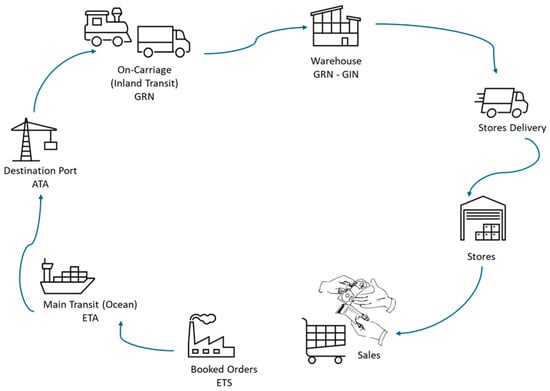
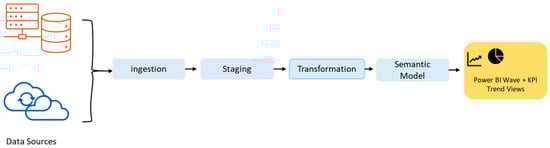
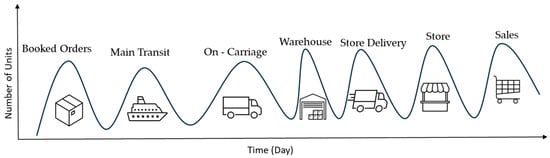
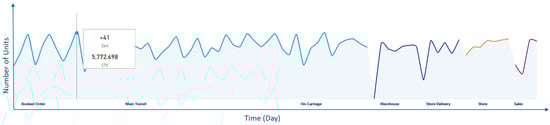
Background: Modern supply chains (SC) are increasingly difficult to manage as they become more complex and interconnected. This encourages companies to rely more on real-time data analysis and analytical tools on operational processes. This study aims to develop and evaluate a Supply Chain Wave Report for a non-food retail that represents goods movement across logistics stages as a continuous analytical flow. Methods: Proposed framework integrates multiple operational phases—Booked Orders, Main Transit, On-Carriage, Warehouse Operations, Store Delivery, and Sales—into a unified monitoring structure. This model can combine operational data with advanced analytics, including Artificial Intelligence-, cloud computing-, and Internet of Things-based technologies. Through cloud-based data infrastructures, System enables data integration and near real-time visibility across organizational functions, allowing continuous monitoring through key performance indicators and predictive simulations. Results: This framework enables dynamic performance of supply chain management and generates real-time signals as goods move across logistics network. This enables managers to detect irregularities earlier and respond before operational deviations propagate further along the chain. Wave-based monitoring approach highlights interdependence between SC stages and illustrates how small disruptions may propagate over time, potentially contributing to effects like bullwhip effect. Conclusions: Findings suggest that a cloud-enabled wave analytics framework can enhance coordination, reduce information gaps, and support informed decision-making in retail.
Full article

Figure 1
Open AccessArticle
PSO-Based Optimization of Shipping Box Configurations: An Empirical Study with South Korean Enterprise Data
by
Changsoo Ok, Heesu Ahn and SeJoon Park
Logistics 2026, 10(3), 68; https://doi.org/10.3390/logistics10030068 - 17 Mar 2026
Abstract
Background: The rapid growth of e-commerce has intensified the need for packaging strategies that reduce logistics costs and environmental impact. Traditional box recommendation methods select the best-fitting box from a fixed set of options, which limits their ability to minimize unused space
[...] Read more.
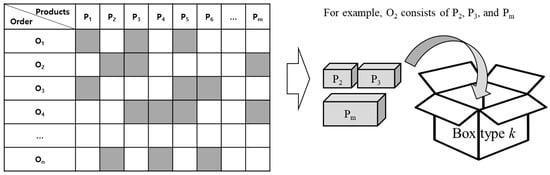
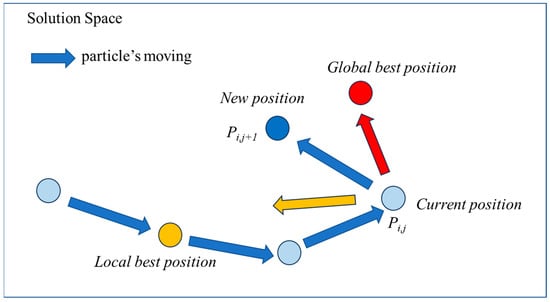
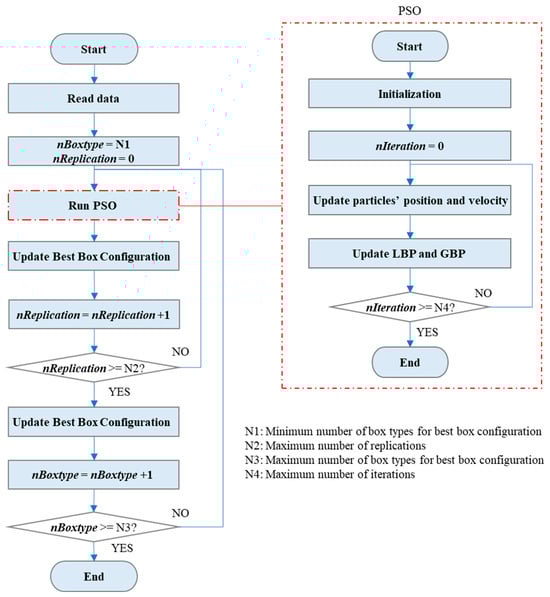
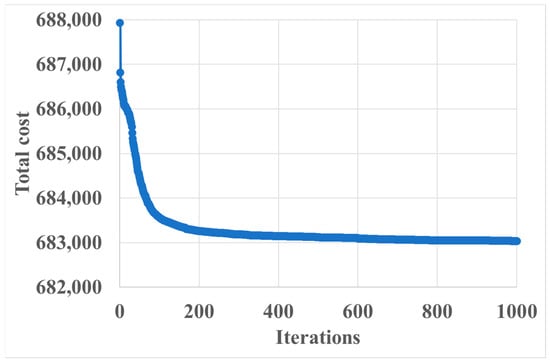
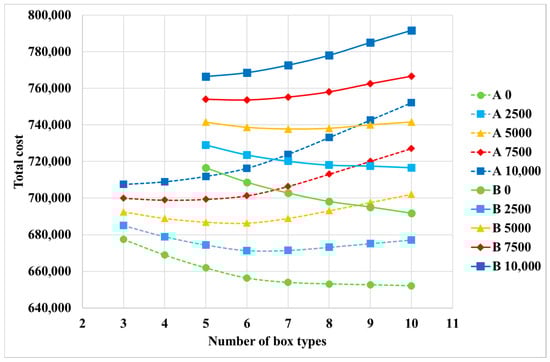
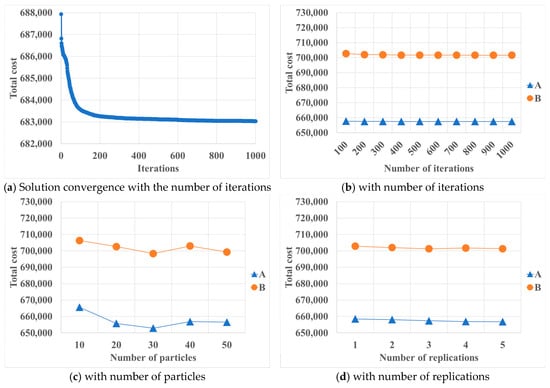
Background: The rapid growth of e-commerce has intensified the need for packaging strategies that reduce logistics costs and environmental impact. Traditional box recommendation methods select the best-fitting box from a fixed set of options, which limits their ability to minimize unused space and total costs. Methods: This study formulates the Shipping Box Configuration Problem (SBCP), which aims to determine an optimal set of box types and dimensions for multi-product orders. To solve this problem, we propose a Particle Swarm Optimization (PSO)-based heuristic that dynamically designs box configuration rather than selecting from predefined sizes. Results: The proposed method is evaluated using real order data from two South Korean e-commerce companies with different product characteristics and existing box configurations. Computational results show that the PSO-based approach reduces total packaging and shipping costs and improves space utilization compared to current box configurations. The analysis also indicates that increasing the number of box types and reducing safety ratios generally lead to cost savings, although these effects must be balanced against operational complexity. Conclusions: The results suggest that adaptive box configuration design can improve both economic efficiency and environmental performance, providing practical guidance for e-commerce logistics managers seeking to optimize packaging strategies under operational constraints.
Full article
(This article belongs to the Section Artificial Intelligence, Logistics Analytics, and Automation)
►▼
Show Figures

Figure 1
Open AccessArticle
Quantum Computing for Supply Chain Optimization: Algorithms, Hybrid Frameworks, and Industry Applications
by
Fayçal Fedouaki, Mouhsene Fri, Kaoutar Douaioui and Amellal Asmae
Logistics 2026, 10(3), 67; https://doi.org/10.3390/logistics10030067 - 16 Mar 2026
Abstract
Background: This paper investigates hybrid quantum–classical optimization approaches for addressing core supply chain management (SCM) problems. A unified hybrid framework is implemented and evaluated across five representative domains: vehicle routing, scheduling, facility location, inventory optimization, and demand forecasting. Methods: The framework
[...] Read more.
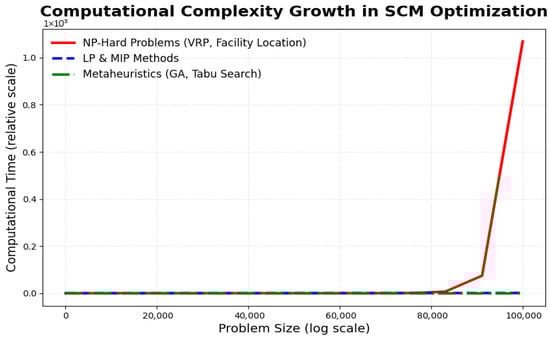
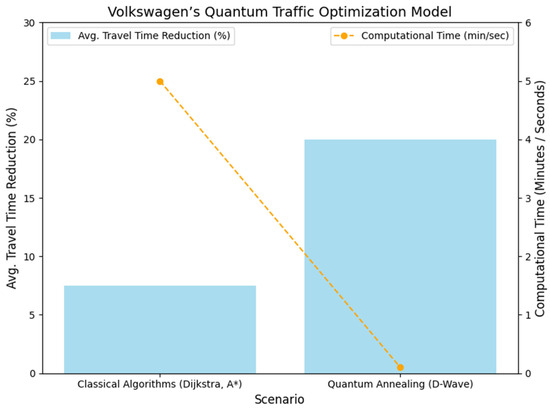
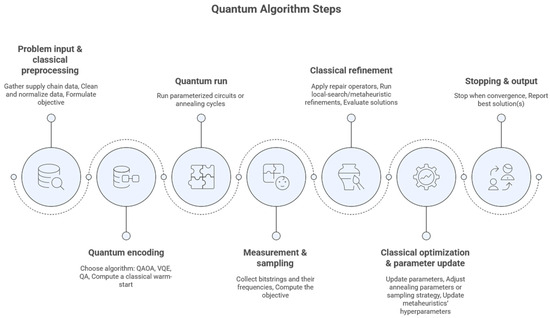
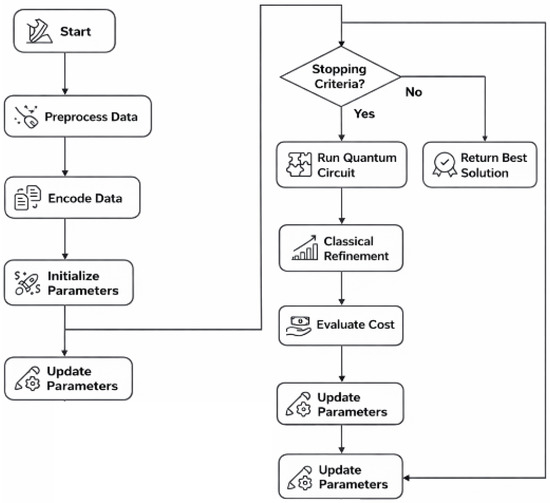
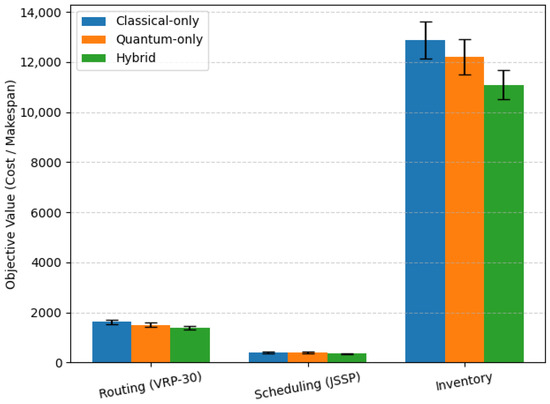
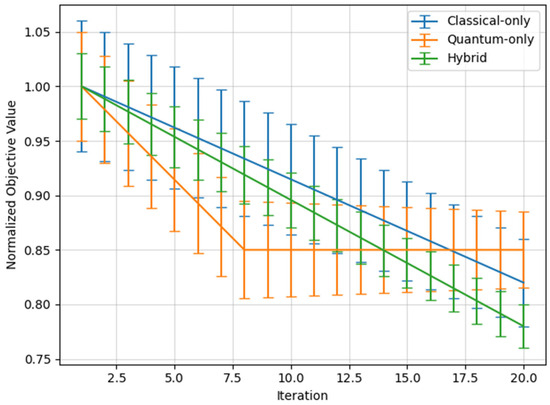
Background: This paper investigates hybrid quantum–classical optimization approaches for addressing core supply chain management (SCM) problems. A unified hybrid framework is implemented and evaluated across five representative domains: vehicle routing, scheduling, facility location, inventory optimization, and demand forecasting. Methods: The framework integrates quantum algorithms—namely the Quantum Approximate Optimization Algorithm (QAOA), Quantum Annealing (QA), and the Variational Quantum Eigensolver (VQE)—with classical constraint-handling and local refinement procedures in an iterative workflow. Quantum solvers are employed for global solution exploration, while classical optimization ensures feasibility and convergence stability. Results: Experiments conducted on standardized synthetic benchmarks demonstrate that the proposed hybrid framework consistently outperforms classical-only and quantum-only baselines, achieving 12–18% reductions in operational costs and 20–35% faster convergence. In routing and fulfilment tasks, quantum-generated candidate solutions provide effective warm starts for classical refinement. Robustness analysis based on stochastic SCM simulations further indicates lower performance variance under uncertainty. Conclusions: These results demonstrate that hybrid quantum–classical optimization constitutes a practical and scalable strategy for near-term SCM decision-making under current Noisy Intermediate-Scale Quantum (NISQ) hardware constraints.
Full article
(This article belongs to the Topic Sustainable Supply Chain Practices in A Digital Age)
►▼
Show Figures

Figure 1
Open AccessArticle
Emergent Competitiveness in Artisanal Furniture: A Case Study from Misantla, Mexico
by
Luis Enrique García-Santamaría, Eduardo Fernández-Echeverría, Gregorio Fernández-Lambert, Nora Amalia Parra-Hernández, Elizabeth Delfín-Portela, Areli Brenis-Dzul, José Aparicio-Urbano and Juan Manuel Carrión-Delgado
Logistics 2026, 10(3), 66; https://doi.org/10.3390/logistics10030066 - 15 Mar 2026
Abstract
Background: This study examines the competitive dynamics of the artisanal wooden furniture industry in Misantla, Veracruz, Mexico, a predominantly informal productive system characterized by family-managed production units and strong territorial embeddedness. Methods: A mixed-methods research design was employed. Quantitative data were collected from
[...] Read more.
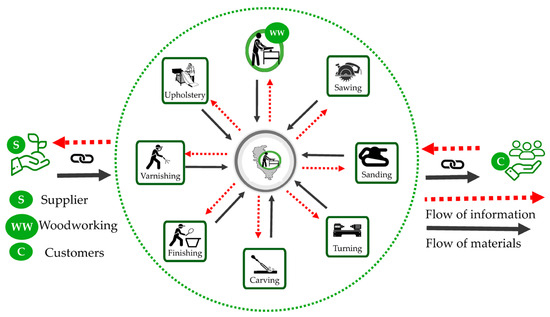
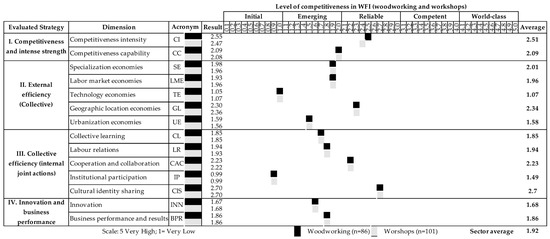
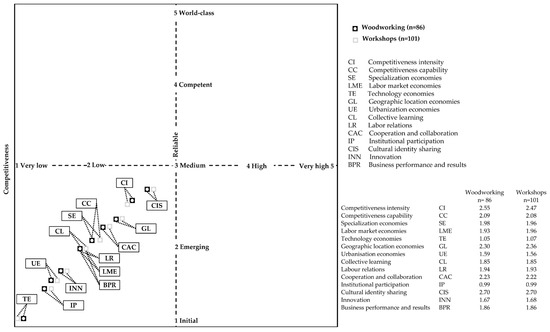
Background: This study examines the competitive dynamics of the artisanal wooden furniture industry in Misantla, Veracruz, Mexico, a predominantly informal productive system characterized by family-managed production units and strong territorial embeddedness. Methods: A mixed-methods research design was employed. Quantitative data were collected from 187 family-managed production units (86 woodworking units and 101 workshops) using a structured questionnaire based on five-level Likert scales assessing external efficiency, collective efficiency, and innovation. Statistical analyses included descriptive measures and chi-square tests to examine associations between competitiveness and collective strategies, while qualitative validation and thematic interpretation based on expert assessments were used to contextualize sectoral practices and structural constraints. Results: The findings indicate a low overall competitiveness score (1.92/5), associated with informal practices, limited technical training, and weak supply chain integration. Despite these constraints, the sector maintains a strong cultural identity and contributes to its local economy. Conclusions: Artisanal supply chains can achieve functional levels of logistics performance through internal coordination dynamics. Strengthening collaboration mechanisms is a viable strategy for improving logistics performance in artisanal manufacturing systems in emerging economies. These findings provide empirical evidence to support the design of collaborative strategies that integrate traditional craftsmanship with modern supply chain practices in artisanal micro-industries.
Full article
(This article belongs to the Section Sustainable Supply Chains and Logistics)
►▼
Show Figures

Figure 1
Open AccessArticle
Willingness to Implement Logistics and Supply Chain Resilience Strategies Amid COVID-19: Insights from Japanese Manufacturing Firms
by
Rajali Maharjan, Hironori Kato and Sunkyung Choi
Logistics 2026, 10(3), 65; https://doi.org/10.3390/logistics10030065 - 13 Mar 2026
Abstract
►▼
Show Figures
Background: The COVID-19 pandemic has underscored the critical importance of supply chain resilience. However, little is known about firms’ willingness to implement logistics and supply chain resilience strategies (SCRESTs), and how this willingness varies across contexts. This study investigates the willingness of
[...] Read more.
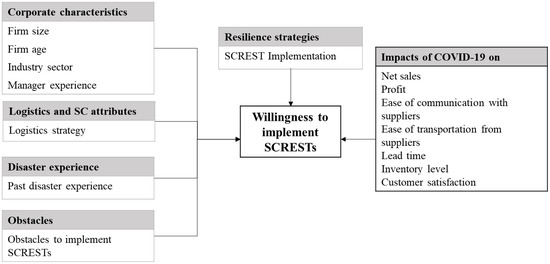
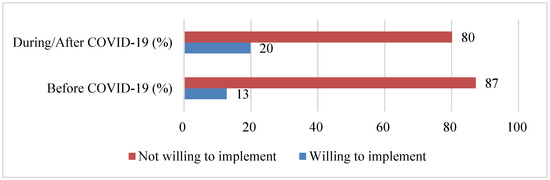
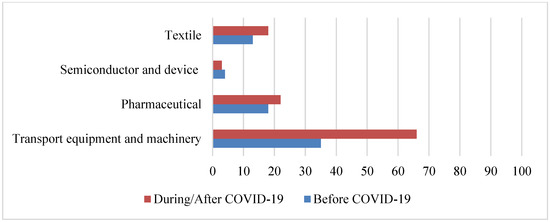
Background: The COVID-19 pandemic has underscored the critical importance of supply chain resilience. However, little is known about firms’ willingness to implement logistics and supply chain resilience strategies (SCRESTs), and how this willingness varies across contexts. This study investigates the willingness of Japanese manufacturing firms to implement SCRESTs and examines how the pandemic has influenced this willingness. Methods: Using survey data from 549 Japanese manufacturing firms collected from March to April 2022, we employed binary choice models and the average treatment effect on the treated (ATET) analysis to examine the factors influencing the willingness to implement SCRESTs before and during/after the pandemic. Results: Firms demonstrated significantly higher willingness to implement SCRESTs during/after the pandemic compared with before. Company size, industry sector, logistics strategy, implementation obstacles, and past SCREST implementation significantly influenced willingness across both periods. The ATET analysis confirmed that past SCREST implementation positively affects future willingness. Conclusions: The pandemic served as a catalyst for enhanced supply chain resilience awareness among Japanese manufacturers. Sector-specific interventions addressing both informational and structural barriers are essential to sustain and strengthen the willingness to implement SCRESTs, particularly in strategically important sectors where financial incentives alone may prove insufficient.
Full article

Figure 1
Open AccessArticle
Optimizing Inventory in Convenience Stores to Maximize ROI Using Random Forest and Genetic Algorithms
by
Kelly Zavaleta-Zarate, Jesus Escobal-Vera and Eliseo Zarate-Perez
Logistics 2026, 10(3), 64; https://doi.org/10.3390/logistics10030064 - 13 Mar 2026
Abstract
Background: Convenience stores face volatile demand and a direct trade-off between stock-outs and overstocking, both of which affect service levels and profitability. This study aims to optimize inventory management through a reproducible forecasting-and-optimization workflow, assessing its impact on return on investment (ROI)
[...] Read more.
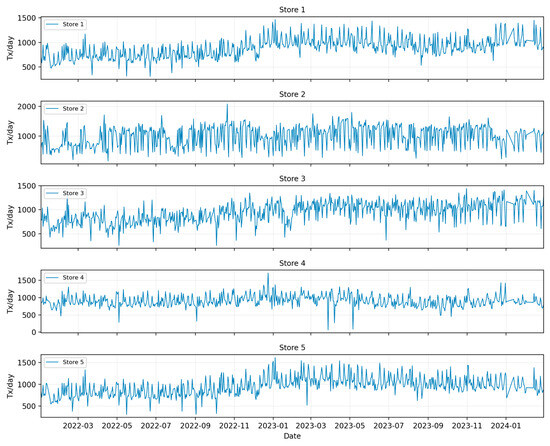
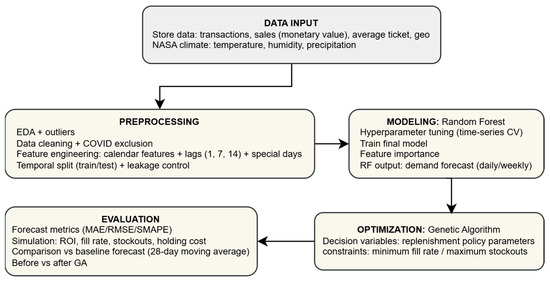
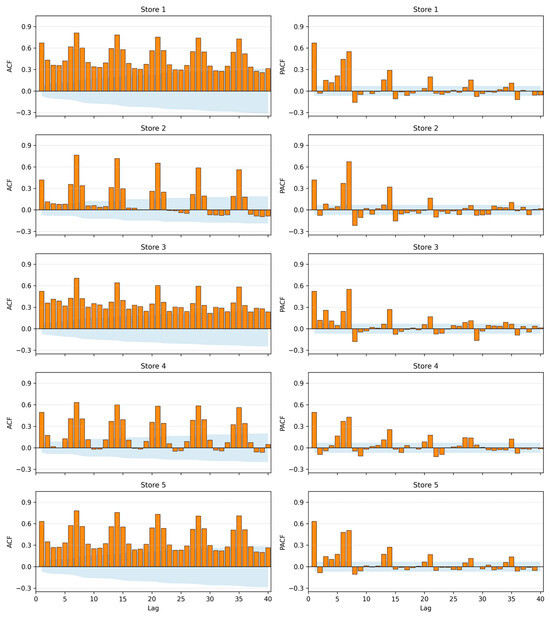
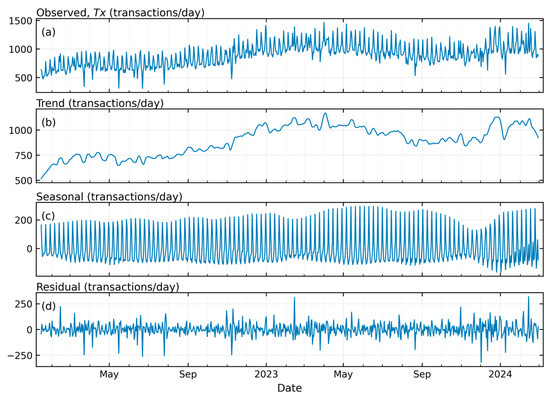
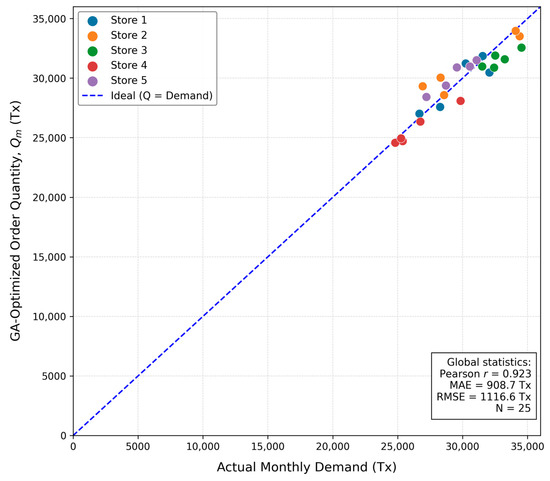
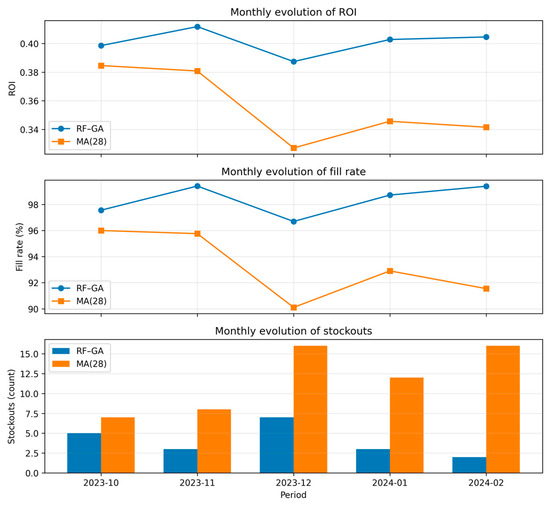
Background: Convenience stores face volatile demand and a direct trade-off between stock-outs and overstocking, both of which affect service levels and profitability. This study aims to optimize inventory management through a reproducible forecasting-and-optimization workflow, assessing its impact on return on investment (ROI) and operational metrics, such as fill rate and stockouts. Methods: The workflow integrates daily, store-level transactions with external covariates, constructs temporal and lag features, and trains a Random Forest (RF) model using chronological splitting and time-series validation. Daily forecasts are then aggregated to the monthly level and used as inputs to an inventory simulation and an ROI-based economic model. Building on this simulation, a Genetic Algorithm (GA) optimizes the parameters of a monthly replenishment policy, incorporating minimum-coverage constraints. Results: In testing, the forecasting model achieved a mean absolute percentage error (MAPE) below 13%, and the RF+GA scheme outperformed the 28-day moving average baseline (MA28) in ROI across all five stores, with an average improvement of 4.52 percentage points; statistical significance was confirmed using the Wilcoxon test. Conclusions: Overall, the RF+GA approach serves as a decision-support tool that generates monthly order quantities consistent with demand and operational constraints, delivering verifiable improvements in both economic and service metrics.
Full article
(This article belongs to the Special Issue Multi-Criteria Decision-Making and Its Application in Sustainable Smart Logistics—2nd Edition)
►▼
Show Figures

Figure 1
Highly Accessed Articles
Latest Books
E-Mail Alert
News
Topics
Topic in
Computers, Informatics, Information, Logistics, Mathematics, Algorithms
Decision Science Applications and Models (DSAM)
Topic Editors: Daniel Riera Terrén, Angel A. Juan, Majsa Ammuriova, Laura CalvetDeadline: 30 June 2026
Topic in
Applied Sciences, Drones, Infrastructures, Logistics, Modelling, Energies, Technologies, Future Transportation
New Technological Solutions, Research Methods, Simulation and Analytical Models That Support the Development of Modern Transport Systems, 2nd Edition
Topic Editors: Artur Kierzkowski, Tomasz Nowakowski, Agnieszka A. Tubis, Franciszek Restel, Tomasz Kisiel, Anna Jodejko-Pietruczuk, Mateusz Zaja̧c, Viktoria Ivannikova, Michał Stosiak, Andrija VidovićDeadline: 31 August 2026
Topic in
Logistics, Sustainability, Systems, JMSE, Platforms
Digital Technologies in Supply Chain Risk Management
Topic Editors: Zongsheng Huang, Decui LiangDeadline: 31 December 2026
Topic in
Logistics, Sustainability, World
Research on Public Procurement for Sustainability
Topic Editors: Paul Davis, David McKevittDeadline: 31 March 2027
Special Issues
Special Issue in
Logistics
Logistics and Supply Chain Challenges and Solutions in the Turbulent World
Guest Editors: Edit Süle, Diego D'Urso, Abderahman RejebDeadline: 30 April 2026
Special Issue in
Logistics
Harvesting the Future: Advanced Strategies and Innovations in Agroforestry Residual Biomass Logistics
Guest Editor: Leonel NunesDeadline: 2 May 2026
Special Issue in
Logistics
New Progresses and Main Implications in Additive Manufacturing for Operations and Supply Chain Management
Guest Editors: Antonio Maria Coruzzolo, Alessandra Cantini, Francesco Lolli, Filippo De CarloDeadline: 31 July 2026
Special Issue in
Logistics
Artificial Intelligence and Business Analytics Applications in Supply Chain Operations
Guest Editors: Hokey Min, Seong-Jong JooDeadline: 16 October 2026