The Short-Term Effects of Soybean Intake on Oxidative and Carbonyl Stress in Men and Women


 ,
,
Abstract
1. Introduction
2. Results and Discussion
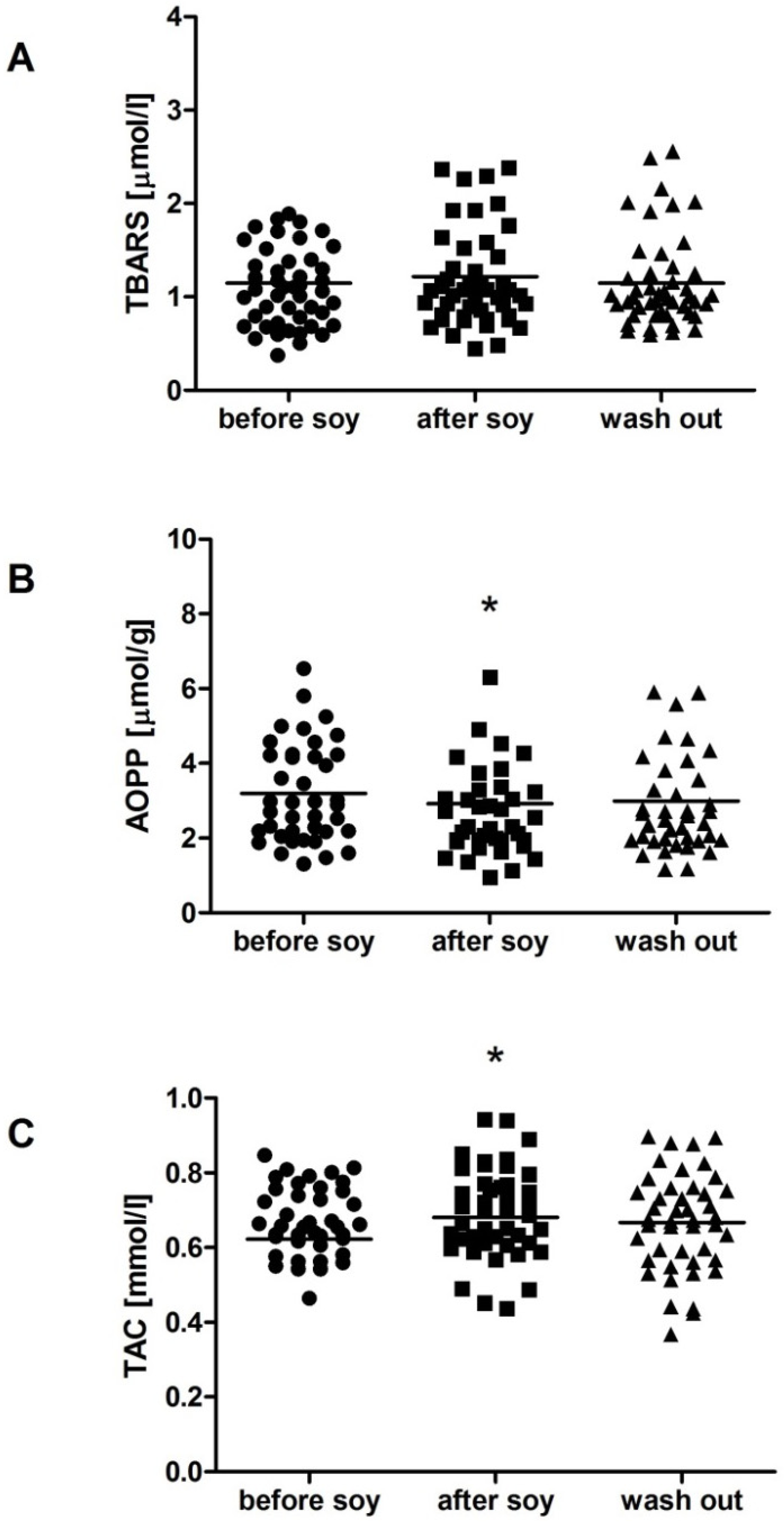

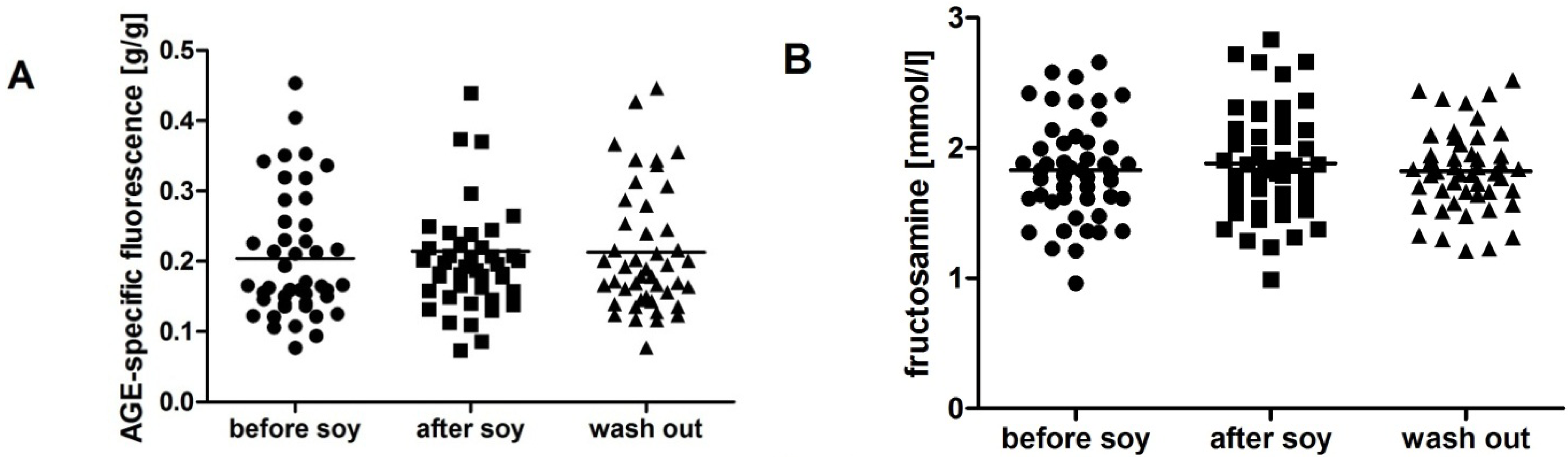
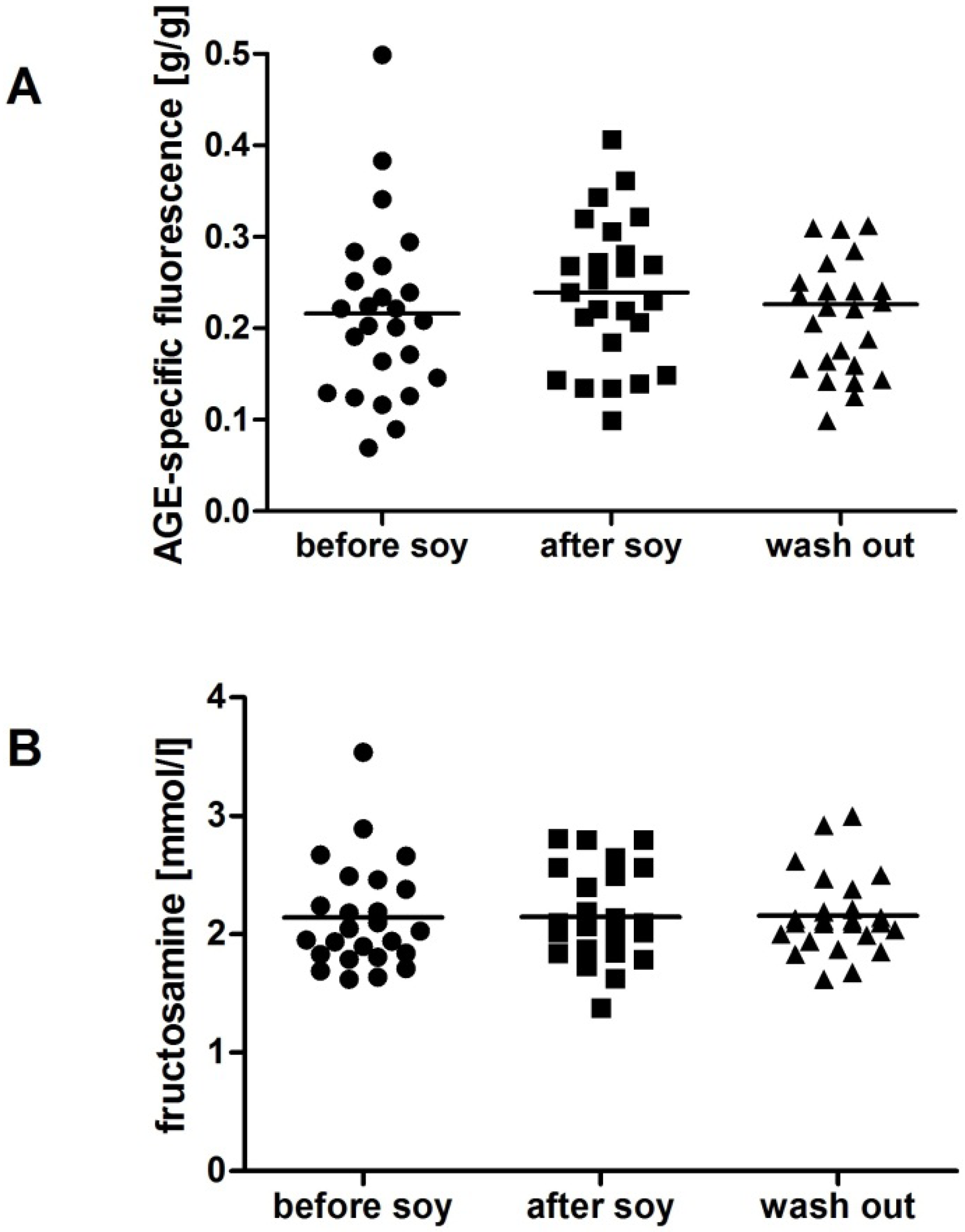
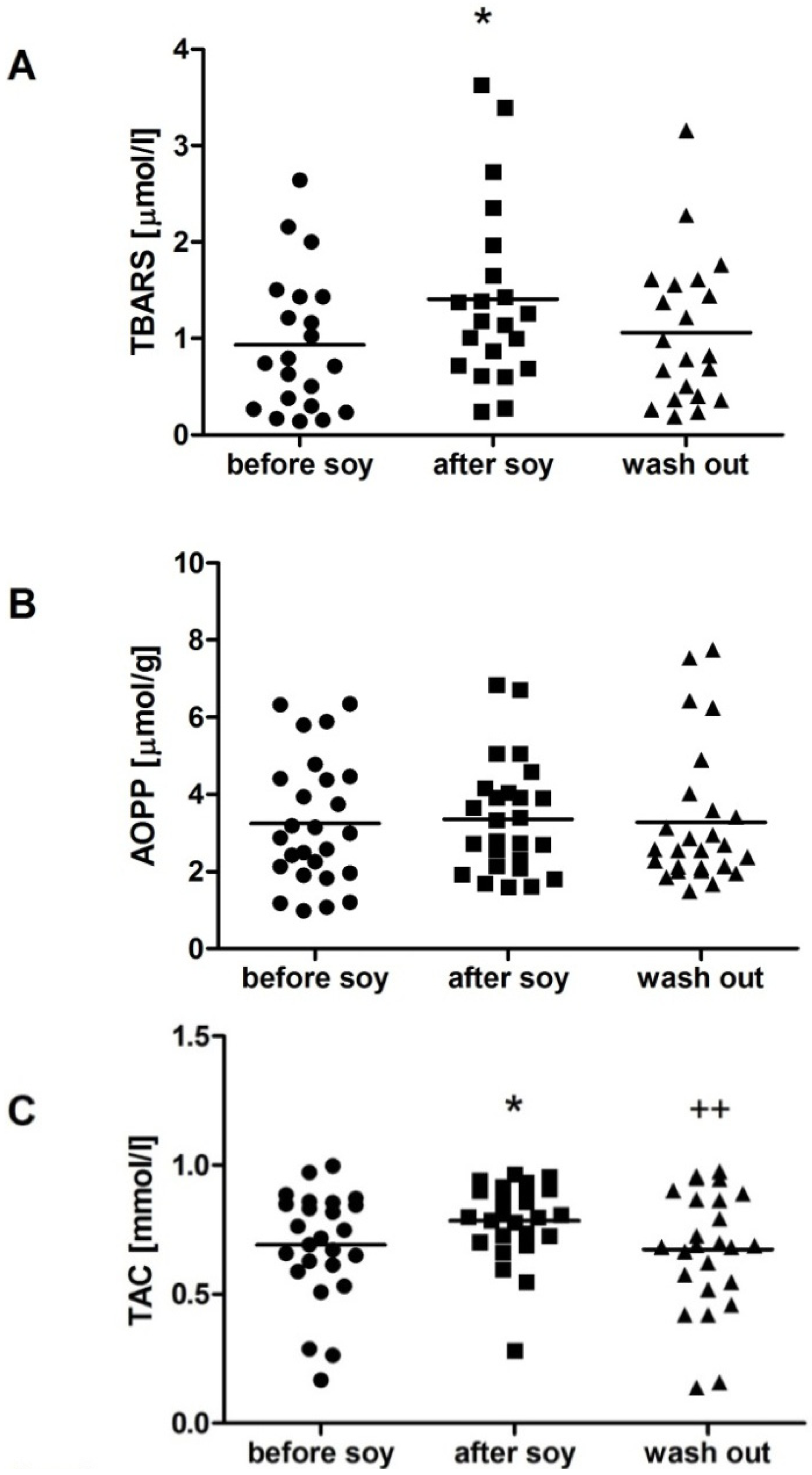
3. Experimental
3.1. Oxidative Stress Markers
3.2. Carbonyl Stress Markers
3.3. Statistical Analysis
4. Conclusions
Acknowledgments
Conflicts of Interest
References
- Han, K.K.; Soares, J.M.; Haidar, M.A.; de Lima, G.R.; Baracat, E.C. Benefits of soy isoflavone therapeutic regimen on menopausal symptoms. Obstet. Gynecol. 2002, 99, 389–394. [Google Scholar] [CrossRef]
- Ferrari, A. Soy extract phytoestrogens with high dose of isoflavones for menopausal symptoms. J. Obstet. Gynaecol. Res. 2009, 35, 1083–1090. [Google Scholar] [CrossRef]
- Chiechi, L.M.; Secreto, G.; D'Amore, M.; Fanelli, M.; Venturelli, E.; Cantatore, F.; Valerio, T.; Laselva, G.; Loizzi, P. Efficacy of a soy rich diet in preventing postmenopausal osteoporosis: The Menfis randomized trial. Maturitas 2002, 42, 295–300. [Google Scholar] [CrossRef]
- Scheiber, M.D.; Liu, J.H.; Subbiah, M.T.R.; Rebar, R.W.; Setchell, K.D.R. Dietary inclusion of whole soy foods results in significant reductions in clinical risk factors for osteoporosis and cardiovascular disease in normal postmenopausal women. Menopause 2001, 8, 384–392. [Google Scholar] [CrossRef]
- Shu, X.O.; Zheng, Y.; Cai, H.; Gu, K.; Chen, Z.; Zheng, W.; Lu, W. Soy food intake and breast cancer survival. JAMA 2009, 302, 2437–2443. [Google Scholar] [CrossRef]
- Wu, A.H.; Wan, P.; Hankin, J.; Tseng, C.C.; Yu, M.C.; Pike, M.C. Adolescent and adult soy intake and risk of breast cancer in Asian-Americans. Carcinogenesis 2002, 23, 1491–1496. [Google Scholar] [CrossRef]
- Nagata, C.; Takatsuka, N.; Kurisu, Y.; Shimizu, H. Decreased serum total cholesterol concentration is associated with high intake of soy products in Japanese men and women. J. Nutr. 1998, 128, 209–213. [Google Scholar]
- Weggemans, R.M.; Trautwein, E.A. Relation between soy-associated isoflavones and LDL and HDL cholesterol concentrations in humans: a meta-analysis. Eur. J. Clin. Nutr. 2003, 57, 940–946. [Google Scholar] [CrossRef]
- Rivas, M.; Garay, R.P.; Escanero, J.F.; Cia, P.; Alda, J.O. Soy milk lowers blood pressure in men and women with mild to moderate essential hypertension. J. Nutr. 2002, 132, 1900–1902. [Google Scholar]
- Colacurci, N.; Chiantera, A.; Fornaro, F.; de Novellis, V.; Manzella, D.; Arciello, A.; Chiantera, V.; Improta, L.; Paolisso, G. Effects of soy isoflavones on endothelial function in healthy postmenopausal women. Menopause 2005, 12, 299–307. [Google Scholar] [CrossRef]
- Cuevas, A.M.; Irribarra, V.L.; Castillo, O.A.; Yanez, M.D.; Germain, A. Isolated soy protein improves endothelial function in postmenopausal hypercholesterolemic women. Eur. J. Clin. Nutr. 2003, 57, 889–894. [Google Scholar] [CrossRef]
- Anthony, M.S.; Clarkson, T.B.; Bullock, B.C.; Wagner, J.D. Soy protein versus soy phytoestrogens in the prevention of diet-induced coronary artery atherosclerosis of male cynomolgus monkeys. Arterioscl. Throm. Vas. 1997, 17, 2524–2531. [Google Scholar] [CrossRef]
- Tikkanen, M.J.; Adlercreutz, H. Dietary soy-derived isoflavone phytoestrogens—Could they have a role in coronary heart disease prevention? Biochem. Pharmacol. 2000, 60, 1–5. [Google Scholar] [CrossRef]
- Xu, S.Z.; Zhong, W.; Ghavideldarestani, M.; Saurabh, R.; Lindow, S.W.; Atkin, S.L. Multiple mechanisms of soy isoflavones against oxidative stress-induced endothelium injury. Free Radic. Biol. Med. 2009, 47, 167–175. [Google Scholar]
- Mahn, K.; Borras, C.; Knock, G.A.; Taylor, P.; Khan, I.Y.; Sugden, D.; Poston, L.; Ward, J.P.; Sharpe, R.M.; Vina, J.; et al. Dietary soy isoflavone-induced increases in antioxidant and eNOS gene expression lead to improved endothelial function and reduced blood pressure in vivo. FASEB J. 2005, 19, 1755–1757. [Google Scholar]
- Hsieh, H.M.; Wu, W.M.; Hu, M.L. Soy isoflavones attenuate oxidative stress and improve parameters related to aging and Alzheimer’s disease in C57BL/6J mice treated with d-galactose. Food Chem. Toxicol. 2009, 47, 625–632. [Google Scholar] [CrossRef]
- Hagen, M.K.; Lehenbauer-Ludke, A.R.; Paludo, A.C.; Schenkel, P.; Goncalves, L.; Fernandes, T.G.; Caron, R.; Llesuy, S.; Mill, J.G.; Bello-Klein, A. Diet with isolated soy protein reduces oxidative stress and preserves ventricular function in rats with myocardial infarction. Nutr. Metab. Cardiovas. 2009, 19, 91–97. [Google Scholar] [CrossRef]
- Djuric, Z.; Chen, G.; Doerge, D.R.; Heilbrun, L.K.; Kucuk, O. Effect of soy isoflavone supplementation on markers of oxidative stress in men and women. Cancer Lett. 2001, 172, 1–6. [Google Scholar] [CrossRef]
- Mitchell, J.H.; Collins, A.R. Effects of a soy milk supplement on plasma cholesterol levels and oxidative DNA damage in men—a pilot study. Eur. J. Nutr. 1999, 38, 143–148. [Google Scholar] [CrossRef]
- Hanwell, H.E.C.; Kay, C.D.; Lampe, J.W.; Holub, B.J.; Duncan, A.M. Acute fish oil and soy isoflavone supplementation increase postprandial serum (n-3) polyunsaturated fatty acids and isoflavones but do not affect triacylglycerols or biomarkers of oxidative stress in overweight and obese hypertriglyceridemic Men. J. Nutr. 2009, 139, 1128–1134. [Google Scholar] [CrossRef]
- Campbell, C.G.; Brown, B.D.; Dufner, D.; Thorland, W.G. Effects of soy or milk protein during a high-fat feeding challenge on oxidative stress, Inflammation, and lipids in healthy men. Lipids 2006, 41, 257–265. [Google Scholar] [CrossRef]
- Beavers, K.M.; Serra, M.C.; Beavers, D.P.; Cooke, M.B.; Willoughby, D.S. Soymilk supplementation does not alter plasma markers of inflammation and oxidative stress in postmenopausal women. Nutr. Res. 2009, 29, 616–622. [Google Scholar] [CrossRef]
- Engelman, H.M.; Alekel, D.L.; Hanson, L.N.; Kanthasamy, A.G.; Reddy, M.B. Blood lipid and oxidative stress responses to soy protein with isoflavones and phytic acid in postmenopausal women. Am. J. Clin. Nutr. 2005, 81, 590–596. [Google Scholar]
- Heneman, K.M.; Chang, H.C.; Prior, R.L.; Steinberg, F.M. Soy protein with and without isoflavones fails to substantially increase postprandial antioxidant capacity. J. Nutr. Biochem. 2007, 18, 46–53. [Google Scholar] [CrossRef]
- Korde, L.A.; Wu, A.H.; Fears, T.; Nomura, A.M.Y.; West, D.W.; Kolonel, L.N.; Pike, M.C.; Hoover, R.N.; Ziegler, R.G. Childhood soy intake and breast cancer risk in Asian American women. Cancer Epidem. Biomark. 2009, 18, 1050–1059. [Google Scholar] [CrossRef]
- Yan, L.; Spitznagel, E.L. Soy consumption and prostate cancer risk in men: A revisit of a meta-analysis. Am. J. Clin. Nutr. 2009, 89, 1155–1163. [Google Scholar] [CrossRef]
- Hwang, Y.W.; Kim, S.Y.; Jee, S.H.; Kim, Y.N.; Nam, C.M. Soy food consumption and risk of prostate cancer: A meta-analysis of observational studies. Nutr. Cancer 2009, 61, 598–606. [Google Scholar] [CrossRef]
- Nhan, S.; Anderson, K.E.; Nagamani, M.; Grady, J.J.; Lu, L.J.W. Effect of a soymilk supplement containing isoflavones on urinary F2 isoprostane levels in premenopausal women. Nutr. Cancer 2005, 53, 73–81. [Google Scholar] [CrossRef]
- Dyrskog, S.E.U.; Jeppesen, P.B.; Colombo, M.; Abudula, R.; Hermansen, K. Preventive effects of a soy-based diet supplemented with stevioside on the development of the metabolic syndrome and type 2 diabetes in Zucker diabetic fatty rats. Metabolism 2005, 54, 1181–1188. [Google Scholar] [CrossRef]
- Villegas, R.; Gao, Y.T.; Yang, G.; Li, H.L.; Elasy, T.A.; Zheng, W.; Shu, X.O. Legume and soy food intake and the incidence of type 2 diabetes in the Shanghai Women’s Health Study. Am. J. Clin. Nutr. 2008, 87, 162–167. [Google Scholar]
- Cao, G.; Booth, S.L.; Sadowski, J.A.; Prior, R.L. Increases in human plasma antioxidant capacity after consumption of controlled diets high in fruit and vegetables. Am. J. Clin. Nutr. 1998, 68, 1081–1087. [Google Scholar]
- Hwang, C.S.; Kwak, H.S.; Lim, H.J.; Lee, S.H.; Kang, Y.S.; Choe, T.B.; Hur, H.G.; Han, K.O. Isoflavone metabolites and their in vitro dual functions: They can act as an estrogenic agonist or antagonist depending on the estrogen concentration. J. Steroid Biochem. Mol. Biol. 2006, 101, 246–253. [Google Scholar] [CrossRef]
- Nathan, L.; Chaudhuri, G. Antioxidant and prooxidant actions of estrogens: Potential physiological and clinical implications. Semin. Reprod. Endocrinol. 1998, 16, 309–314. [Google Scholar] [CrossRef]
- Ostatnikova, D.; Celec, P.; Hodosy, J.; Hampl, R.; Putz, Z.; Kudela, M. Short-term soybean intake and its effect on steroid sex hormones and cognitive abilities. Fertil. Steril. 2007, 88, 1632–1636. [Google Scholar] [CrossRef]
- Witko-Sarsat, W.; Gausson, V.; Nguyen, A.T.; Touam, M.; Drueke, T.; Santangelo, F.; Descamps-Latscha, B. AOPP-induced activation of human neutrophil and monocyte oxidative metabolism: A potential target for N-acetylcysteine treatment in dialysis patients. Kidney Int. 2003, 64, 82–91. [Google Scholar] [CrossRef]
- Santanam, N.; Shern-Brewer, R.; McClatchey, R.; Castellano, P.Z.; Murphy, A.A.; Voelkel, S.; Parthasarathy, S. Estradiol as an antioxidant: incompatible with its physiological concentrations and function. J. Lipid Res. 1998, 39, 2111–2118. [Google Scholar]
- Wiseman, H. The therapeutic potential of phytoestrogens. Expert Opin. Investig. Drugs 2000, 9, 1829–1840. [Google Scholar] [CrossRef]
- Wiseman, H.; Casey, K.; Bowey, E.A.; Duffy, R.; Davies, M.; Rowland, I.R.; Lloyd, A.S.; Murray, A.; Thompson, R.; Clarke, D.B. Influence of 10 wk of soy consumption on plasma concentrations and excretion of isoflavonoids and on gut microflora metabolism in healthy adults. Am. J. Clin. Nutr. 2004, 80, 692–699. [Google Scholar]
- Hampl, R.; Ostatnikova, D.; Celec, P.; Putz, Z.; Lapcik, O.; Matucha, P. Short-term effect of soy consumption on thyroid hormone levels and correlation with phytoestrogen level in healthy subjects. Endocr. Regul. 2008, 42, 53–61. [Google Scholar]
- Kulling, S.E.; Lehmann, L.; Metzler, M. Oxidative metabolism and genotoxic potential of major isoflavone phytoestrogens. J. Chromatogr. B 2002, 777, 211–218. [Google Scholar] [CrossRef]
- Pool-Zobel, B.L.; Adlercreutz, H.; Glei, M.; Liegibel, U.M.; Sittlingon, J.; Rowland, I.; Wahala, K.; Rechkemmer, G. Isoflavonoids and lignans have different potentials to modulate oxidative genetic damage in human colon cells. Carcinogenesis 2000, 21, 1247–1252. [Google Scholar] [CrossRef]
- Sample Availability: Samples of the compounds used for biochemical analyses are available from the authors.
© 2013 by the authors; licensee MDPI, Basel, Switzerland. This article is an open access article distributed under the terms and conditions of the Creative Commons Attribution license (http://creativecommons.org/licenses/by/3.0/).
Share and Cite
Celec, P.; Hodosy, J.; Pálffy, R.; Gardlík, R.; Halčák, L.; Ostatníková, D. The Short-Term Effects of Soybean Intake on Oxidative and Carbonyl Stress in Men and Women. Molecules 2013, 18, 5190-5200. https://doi.org/10.3390/molecules18055190
Celec P, Hodosy J, Pálffy R, Gardlík R, Halčák L, Ostatníková D. The Short-Term Effects of Soybean Intake on Oxidative and Carbonyl Stress in Men and Women. Molecules. 2013; 18(5):5190-5200. https://doi.org/10.3390/molecules18055190
Chicago/Turabian StyleCelec, Peter, Július Hodosy, Roland Pálffy, Roman Gardlík, Lukáč Halčák, and Daniela Ostatníková. 2013. "The Short-Term Effects of Soybean Intake on Oxidative and Carbonyl Stress in Men and Women" Molecules 18, no. 5: 5190-5200. https://doi.org/10.3390/molecules18055190
APA StyleCelec, P., Hodosy, J., Pálffy, R., Gardlík, R., Halčák, L., & Ostatníková, D. (2013). The Short-Term Effects of Soybean Intake on Oxidative and Carbonyl Stress in Men and Women. Molecules, 18(5), 5190-5200. https://doi.org/10.3390/molecules18055190