Article

Orange Peel Waste as Feedstock for the Production of Glycerol-Free Biodiesel by the Microalgae Nannochloropsis oculata

by
Giuseppe Tardiolo
1,†,
Marco Sebastiano Nicolò
2,*,†,
Carmelo Drago
3,*,
Claudia Genovese
4,
Giovanni Fava
5,
Concetta Gugliandolo
2 and
Nicola D’Antona
3
1
Department of Veterinary Sciences, University of Messina, Polo Universitario dell’Annunziata, Via Palatucci snc, 98168 Messina, Italy
2
Department of Chemical, Biological, Pharmaceutical and Environmental Sciences, University of Messina, Viale Ferdinando Stagno d’Alcontres 31, 98166 Messina, Italy
3
National Research Council, Institute of Biomolecular Chemistry, Via Paolo Gaifami 18, 95126 Catania, Italy
4
National Research Council, Institute for Agricultural and Forest Systems in the Mediterranean, Via Empedocle 58, 95128 Catania, Italy
5
Independent Researcher, 95126 Catania, Italy
*
Authors to whom correspondence should be addressed.
These authors equally contributed to this work.
Molecules 2023, 28(19), 6846; https://doi.org/10.3390/molecules28196846

Submission received: 14 August 2023 / Revised: 15 September 2023 / Accepted: 25 September 2023 / Published: 28 September 2023

Abstract

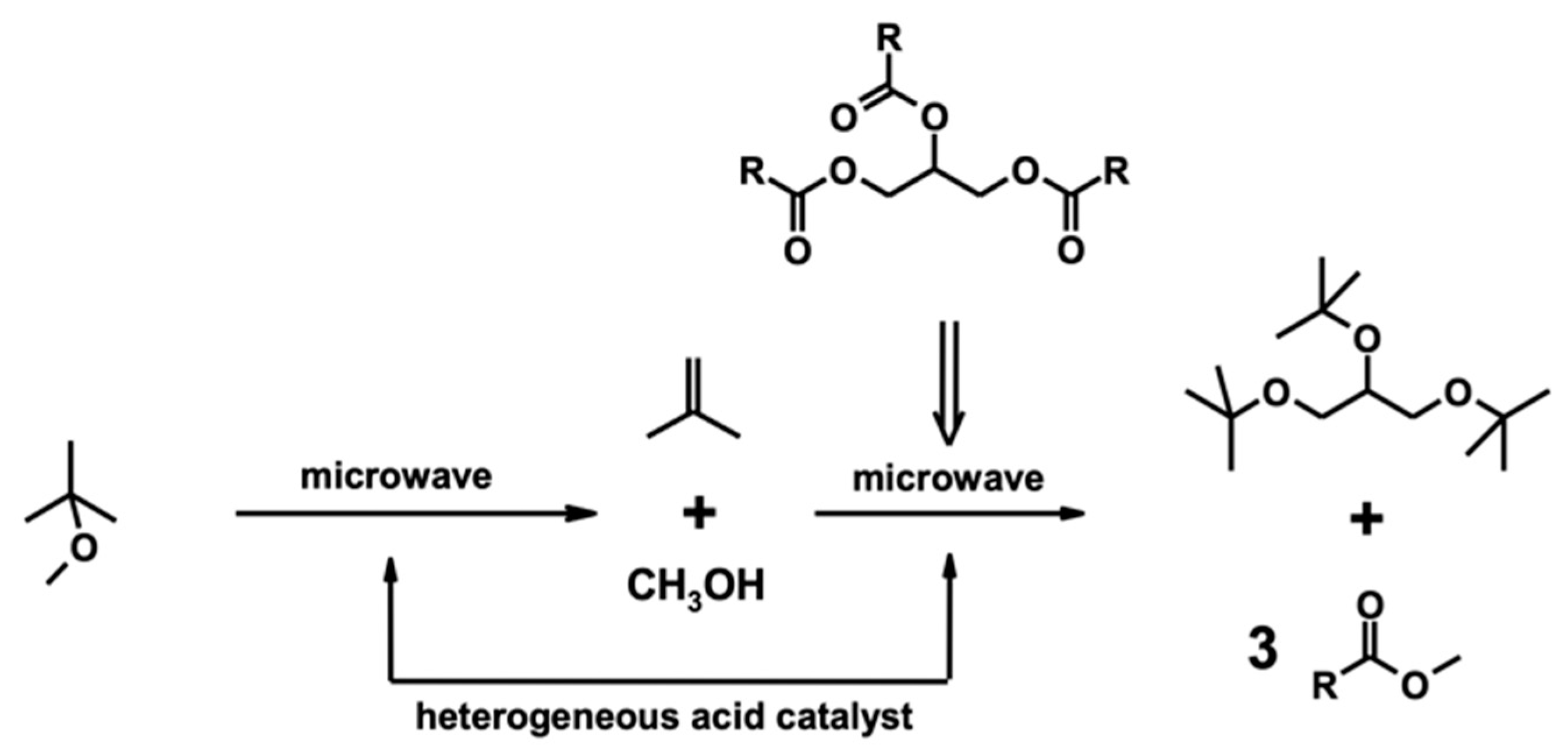
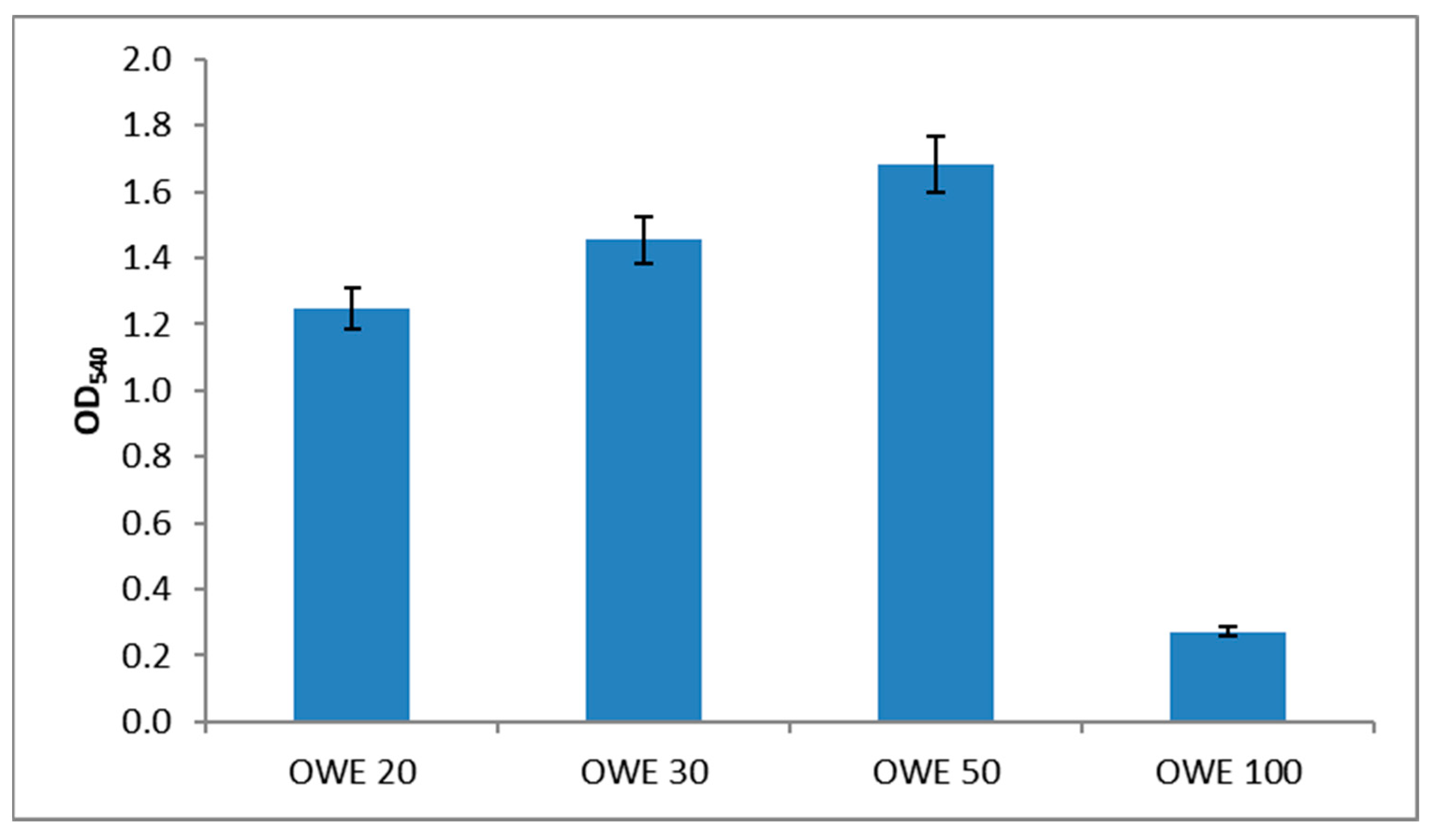
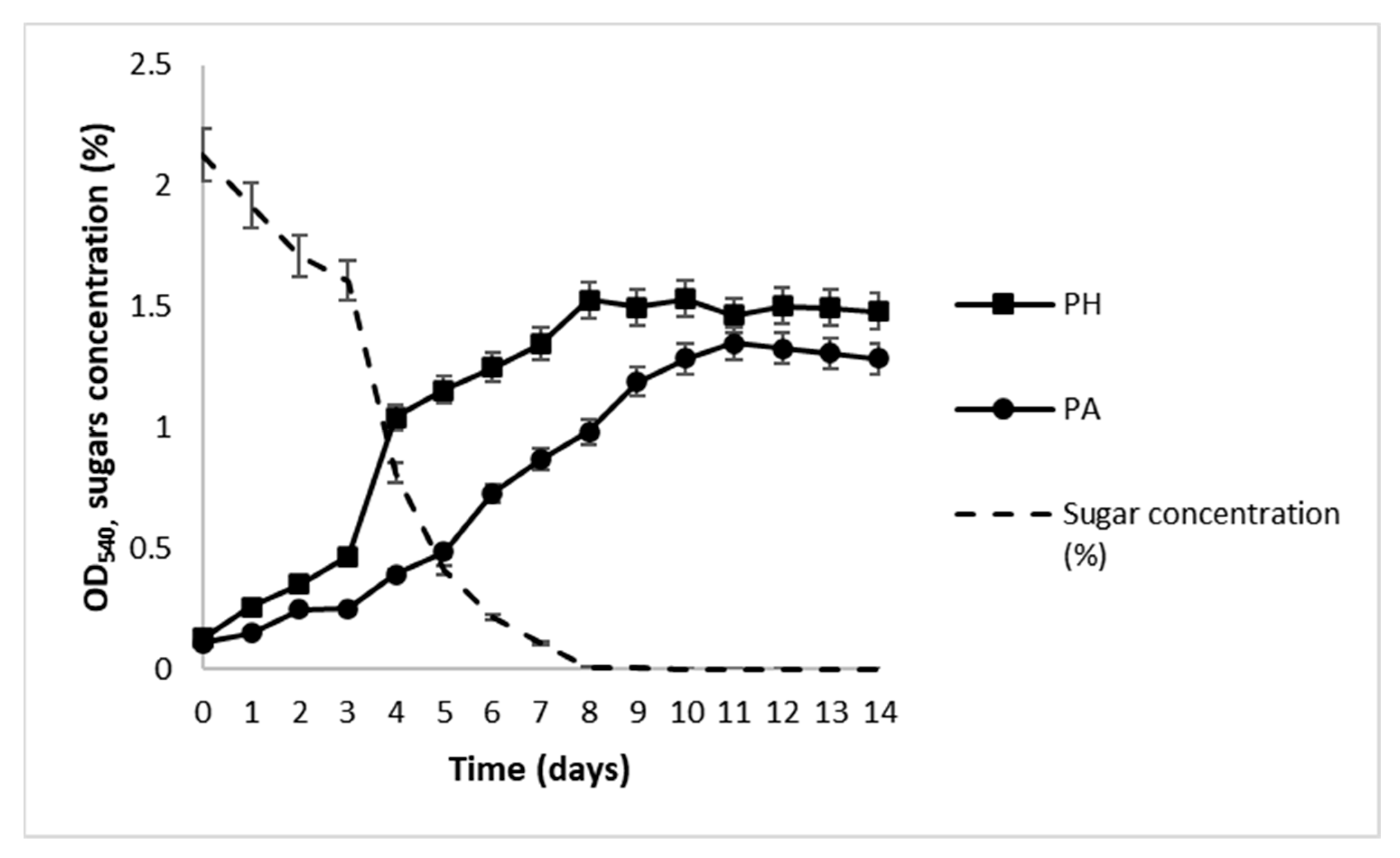
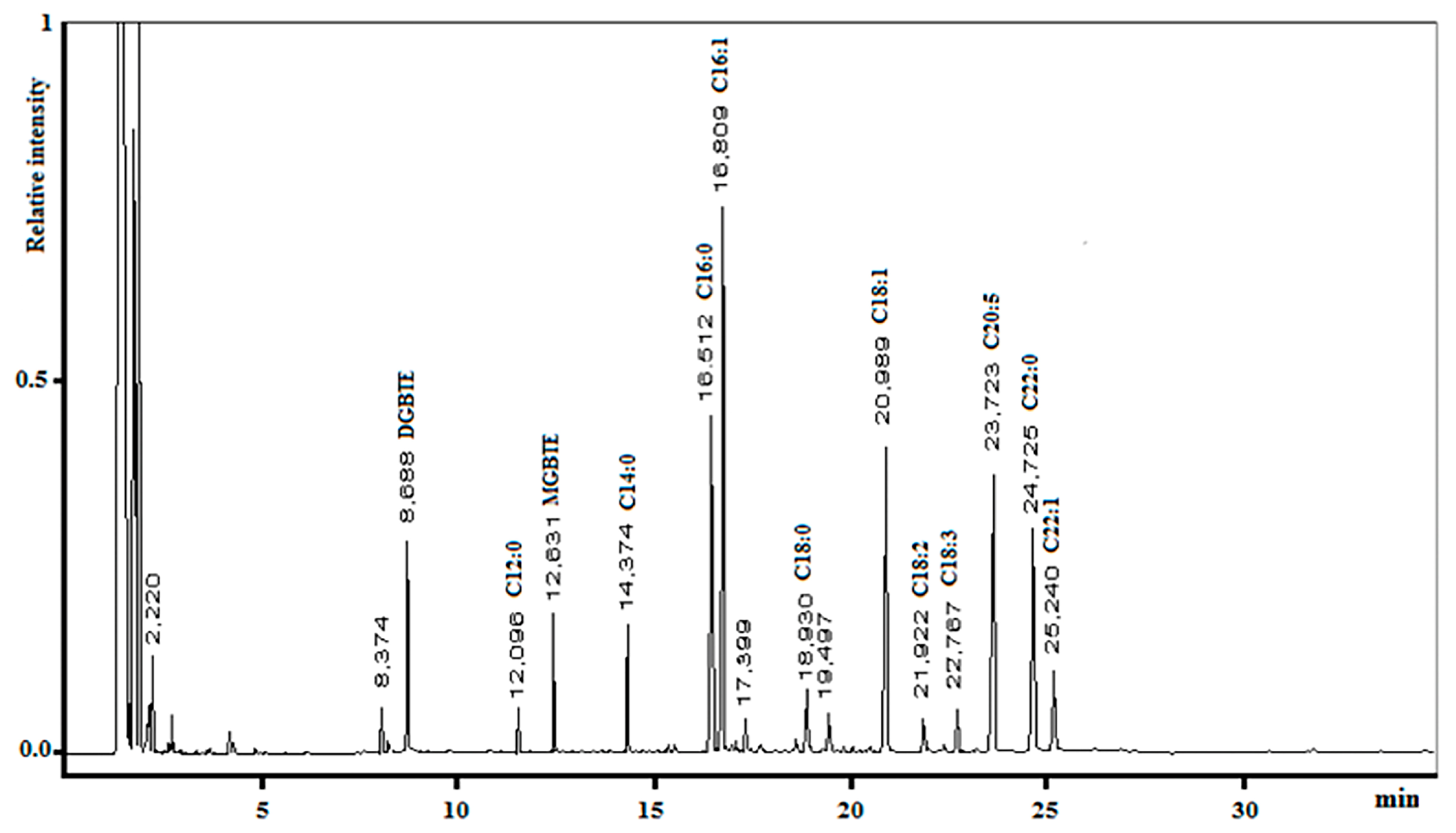
The bioconversion of agri-food waste into high-value products is gaining growing interest worldwide. Orange peel waste (OPW) is the main by-product of orange juice production and contains high levels of moisture and carbohydrates. In this study, the orange waste extract (OWE) obtained through acid hydrolysis of OPW was used as a substrate in the cultivation of the marine microalgae Nannochloropsis oculata. Photoheterotrophic (PH) and Photoautotrophic (PA) cultivations were performed in OWE medium and f/2 medium (obtained by supplementing OWE with macro- and micronutrients of f/2 medium), respectively, for 14 days. The biomass yields in PA and PH cultures were 390 mg L−1 and 450 mg L−1, while oil yields were 15% and 28%, respectively. The fatty acid (FA) profiles of PA cultures were mostly represented by saturated (43%) and monounsaturated (46%) FAs, whereas polyunsaturated FAs accounted for about 10% of the FAs. In PH cultures, FA profiles changed remarkably, with a strong increase in monounsaturated FAs (77.49%) and reduced levels of saturated (19.79%) and polyunsaturated (2.72%) FAs. Lipids obtained from PH cultures were simultaneously extracted and converted into glycerol-free biodiesel using an innovative microwave-assisted one-pot tandem protocol. FA methyl esters were then analyzed, and the absence of glycerol was confirmed. The FA profile was highly suitable for biodiesel production and the microwave-assisted one-pot tandem protocol was more effective than traditional extraction techniques. In conclusion, N. oculata used OWE photoheterotrophically, resulting in increased biomass and oil yield. Additionally, a more efficient procedure for simultaneous oil extraction and conversion into glycerol-free biodiesel is proposed.
Keywords: Nannochloropsis oculata; microalgae cultivation; orange peel waste; acid hydrolysis; photoautotrophic; photoheterotrophic; bioconversion; lipid production and extraction; biodiesel Nannochloropsis oculata; microalgae cultivation; orange peel waste; acid hydrolysis; photoautotrophic; photoheterotrophic; bioconversion; lipid production and extraction; biodiesel