
A Study on the Thermal Properties of High-Strength Concrete Containing CBA Fine Aggregates


Abstract
1. Introduction
2. Experimental Program
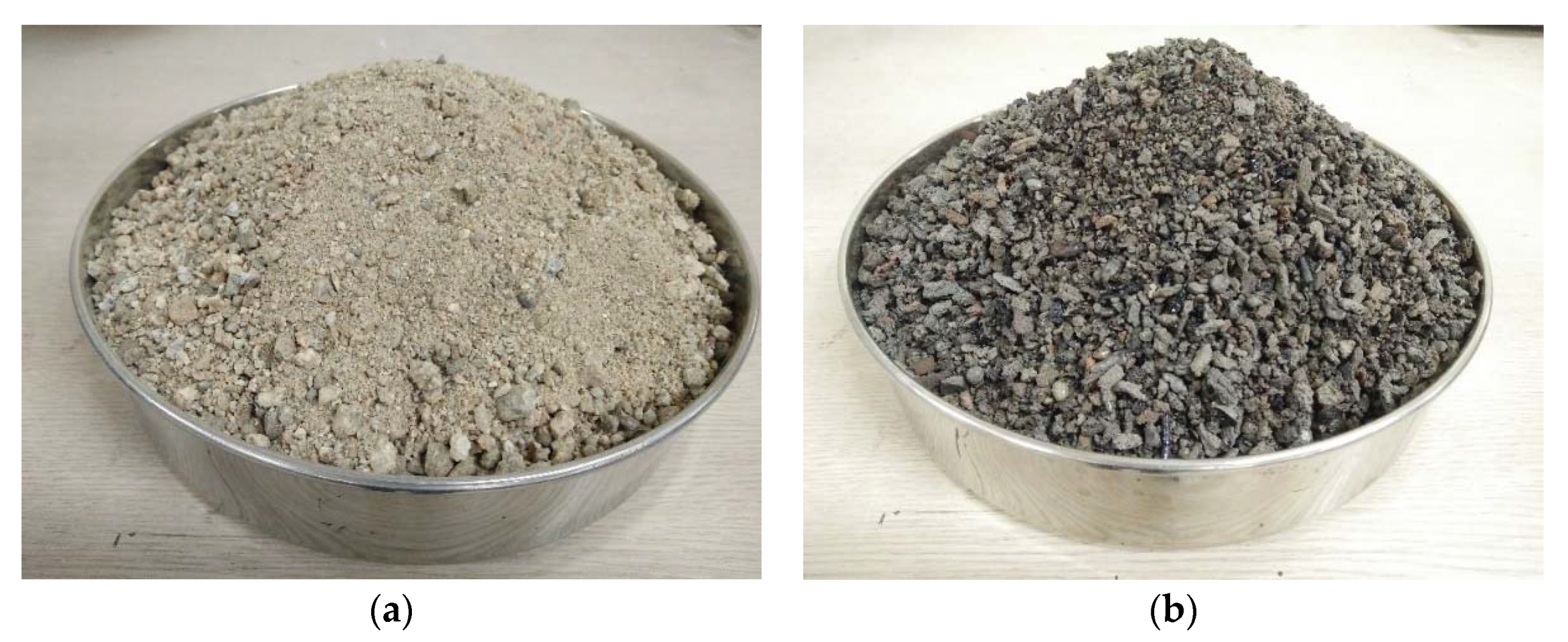
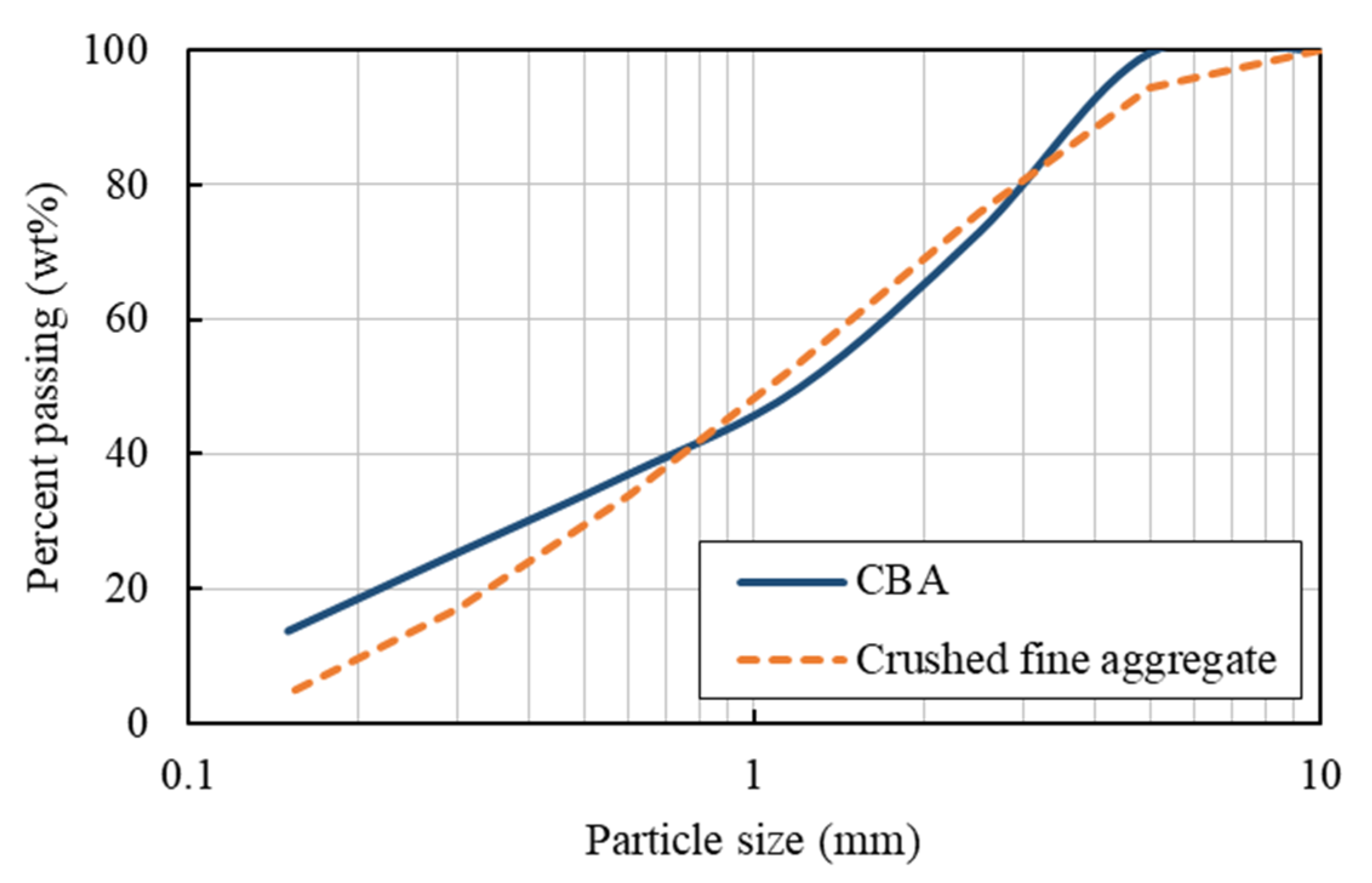
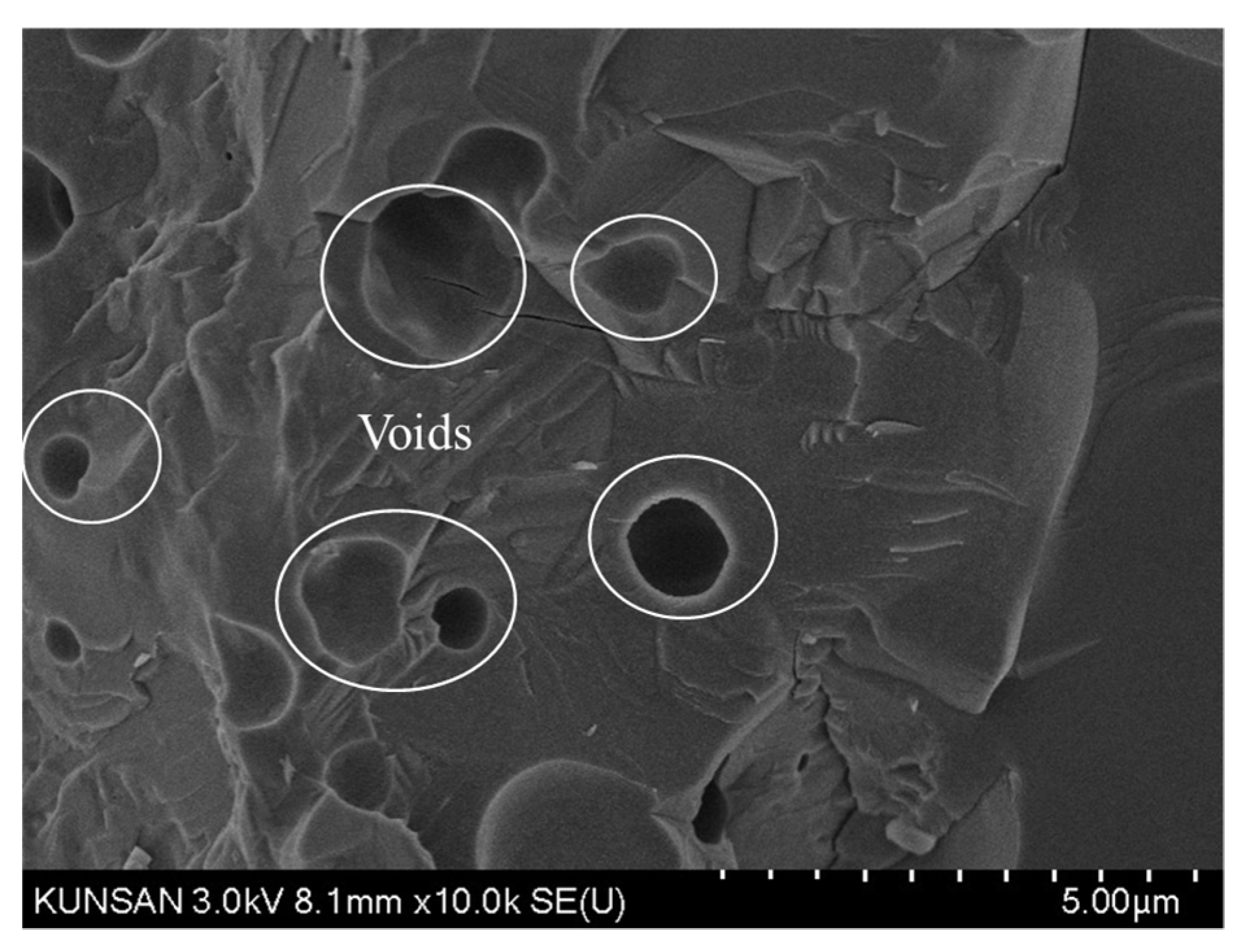
2.1. Materials
2.2. Mixing Proportions
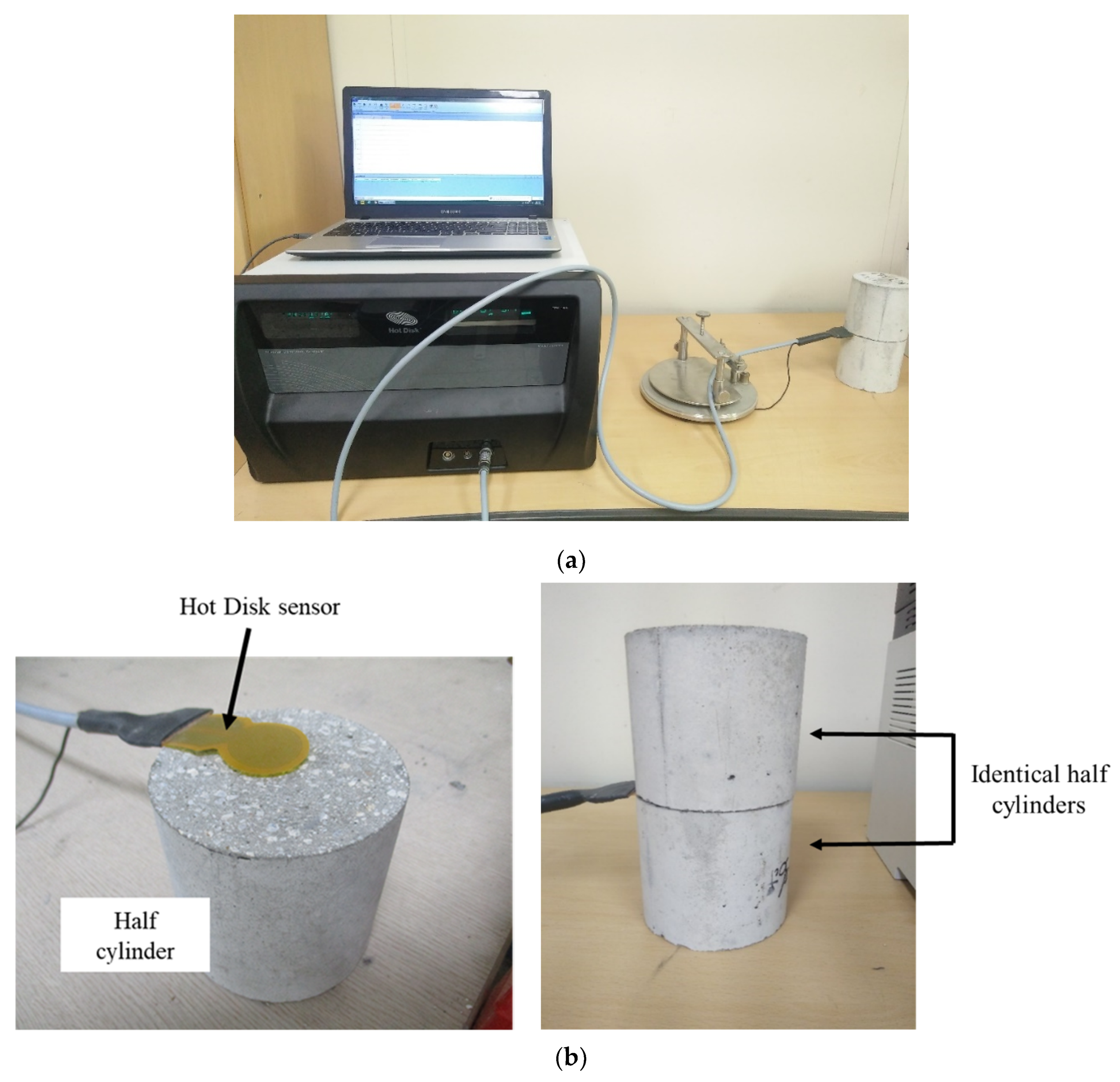
2.3. Specimen Preparation and Test Procedures
3. Test Results and Discussion
3.1. Properties of Fresh Concrete
3.2. Unit Weight
3.3. Thermal Conductivity
3.4. Compressive Strength
3.5. Ultrasonic Velocity
4. Conclusions
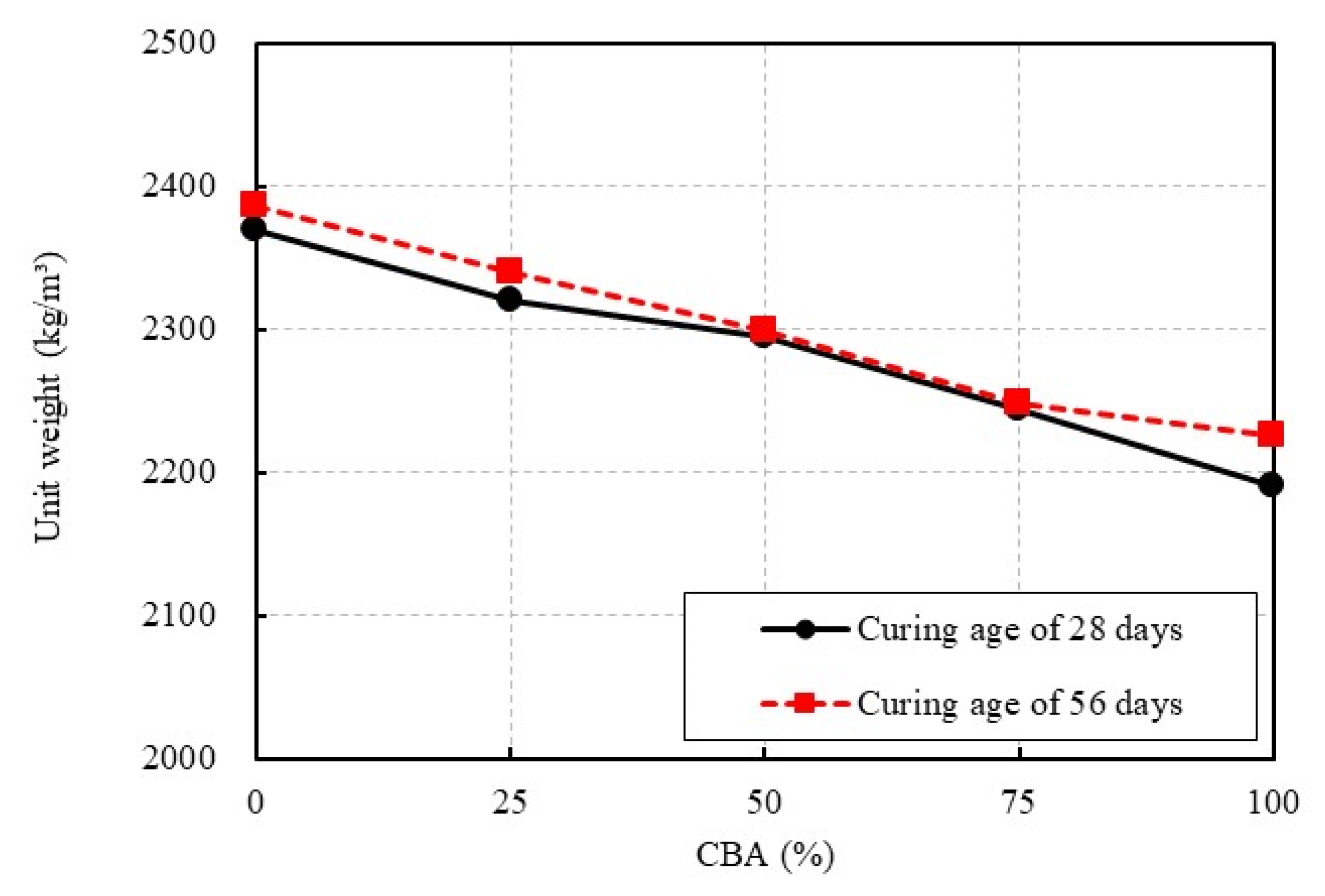
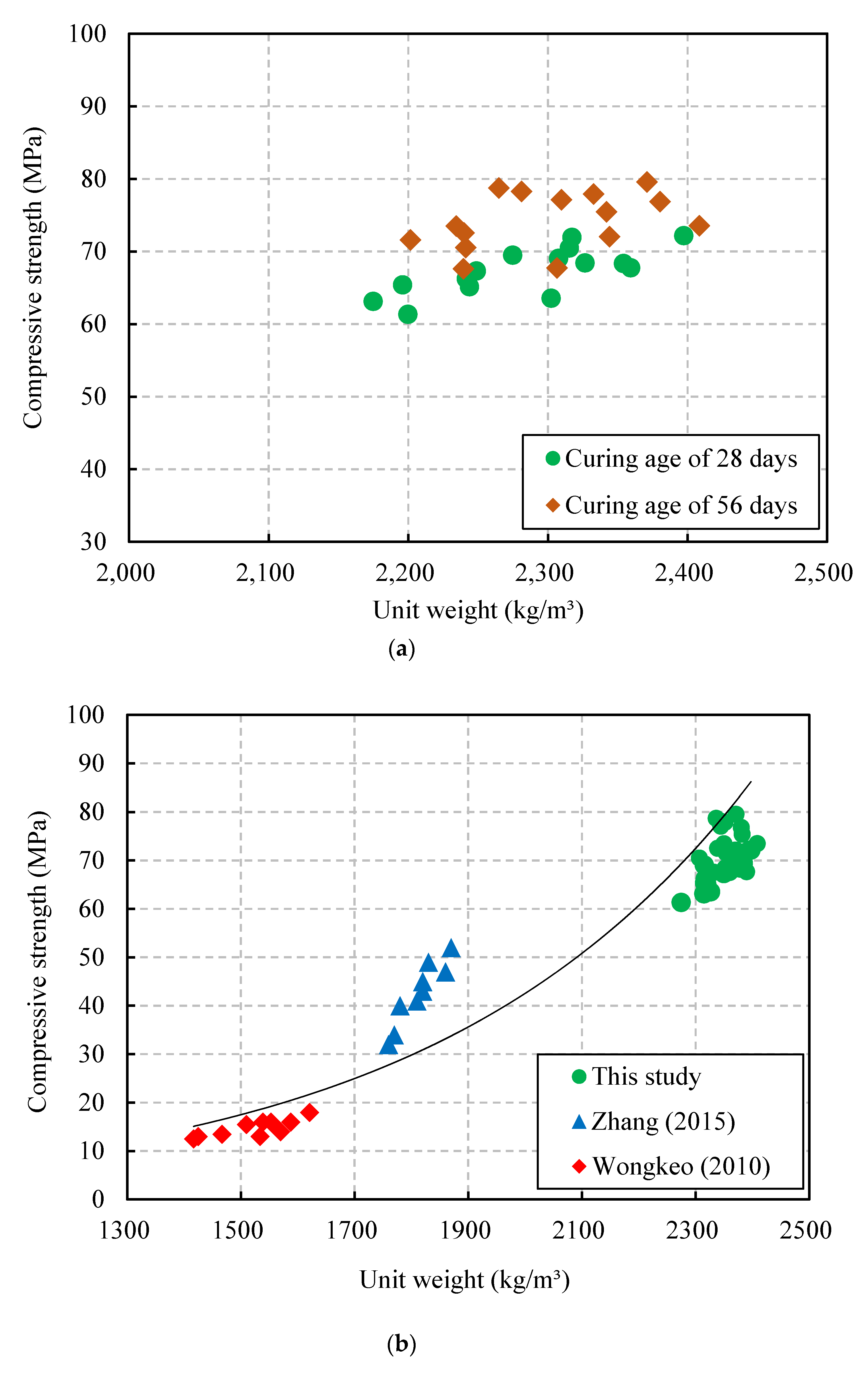
- The unit weight of CBA concrete decreased as the replacement of CBA as fine aggregate increased. This decrease in the unit weight of the CBA concrete mixtures occurred because the CBA had a lower unit weight and a higher porosity than the crushed fine aggregate.
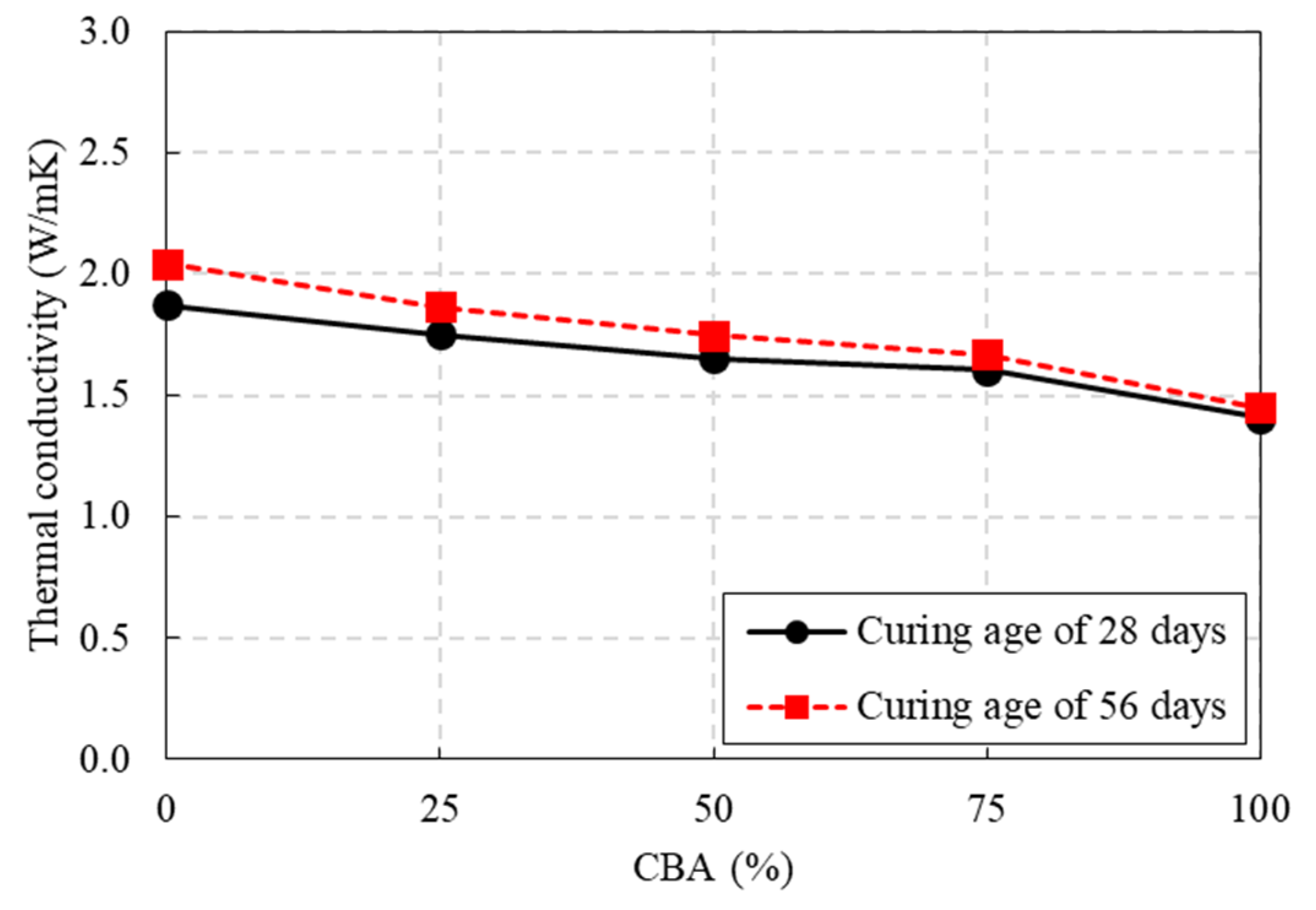
- The thermal conductivity of the CBA concrete was highly dependent on the CBA content. In addition, overall, the thermal conductivity of the CBA concrete increased as the curing age increased. When the curing age increased from 28 to 56 days, the thermal conductivity of the concrete increased by 3.1~6.5%.
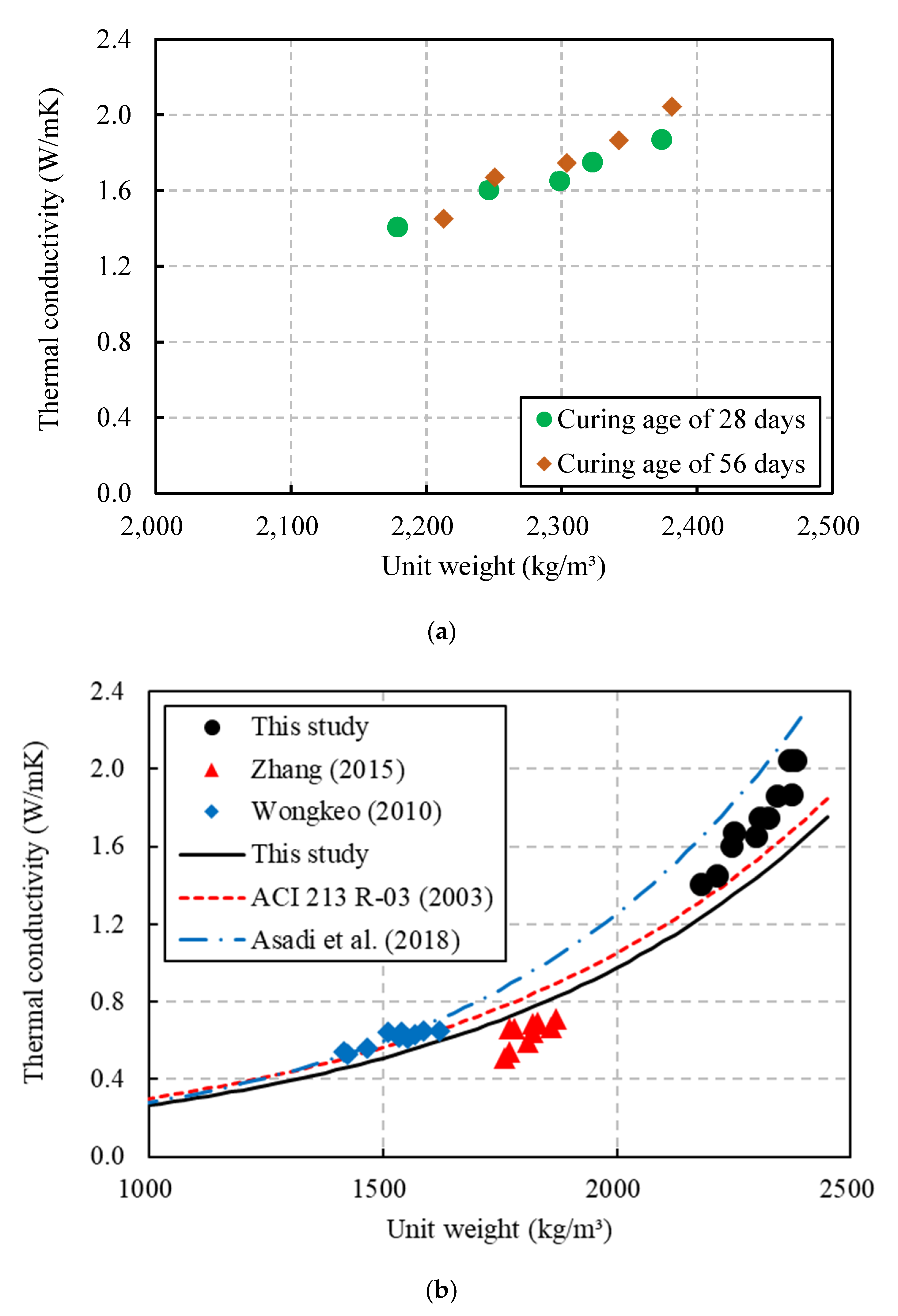
- The relationship between the thermal conductivity and the unit weight of the CBA concrete was modeled with an exponential function. The results indicate that the equation proposed in this study provides predictions that are in good agreement with the test results.
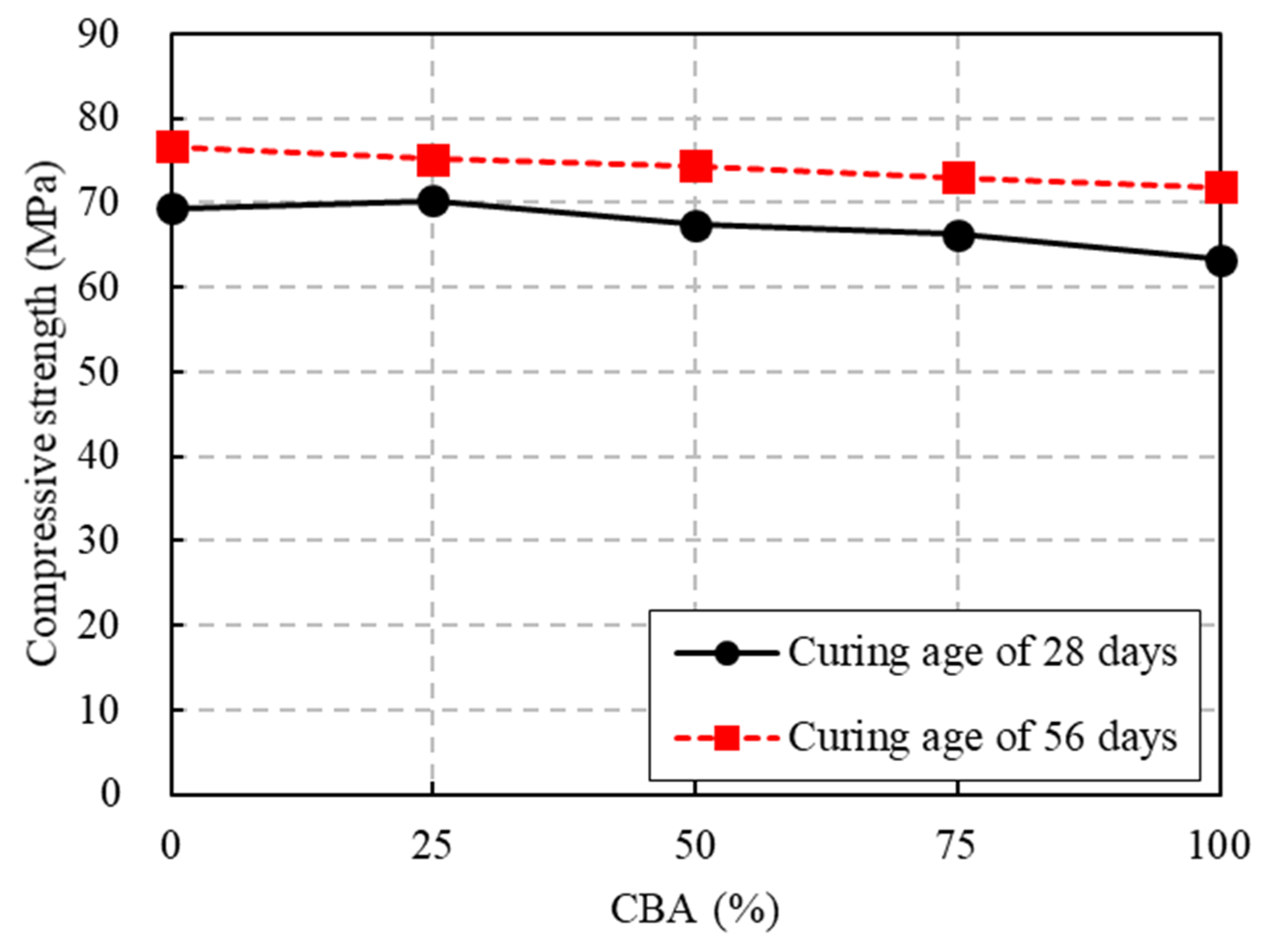
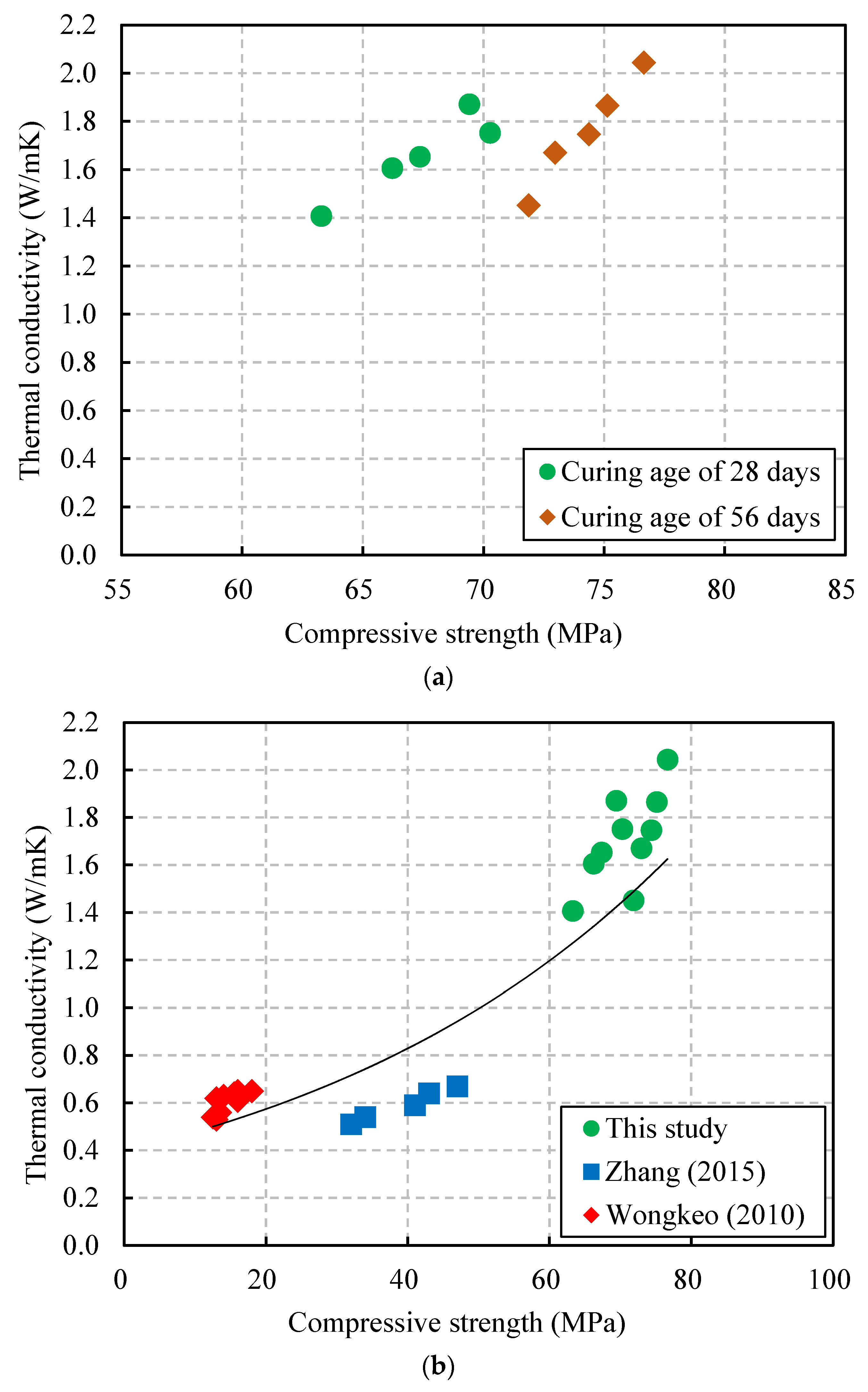
- The compressive strength of the CBA concrete decreased as the CBA content in the concrete increased. In addition, an equation relating the thermal conductivity of the CBA concrete to the compressive strength was proposed. The equation overestimates the thermal conductivity of moderate-strength concrete (30~50 MPa), whereas it underestimates the thermal conductivity of high-strength concrete (60~80 MPa) because the test results used as a basis for the equation have some deviations.
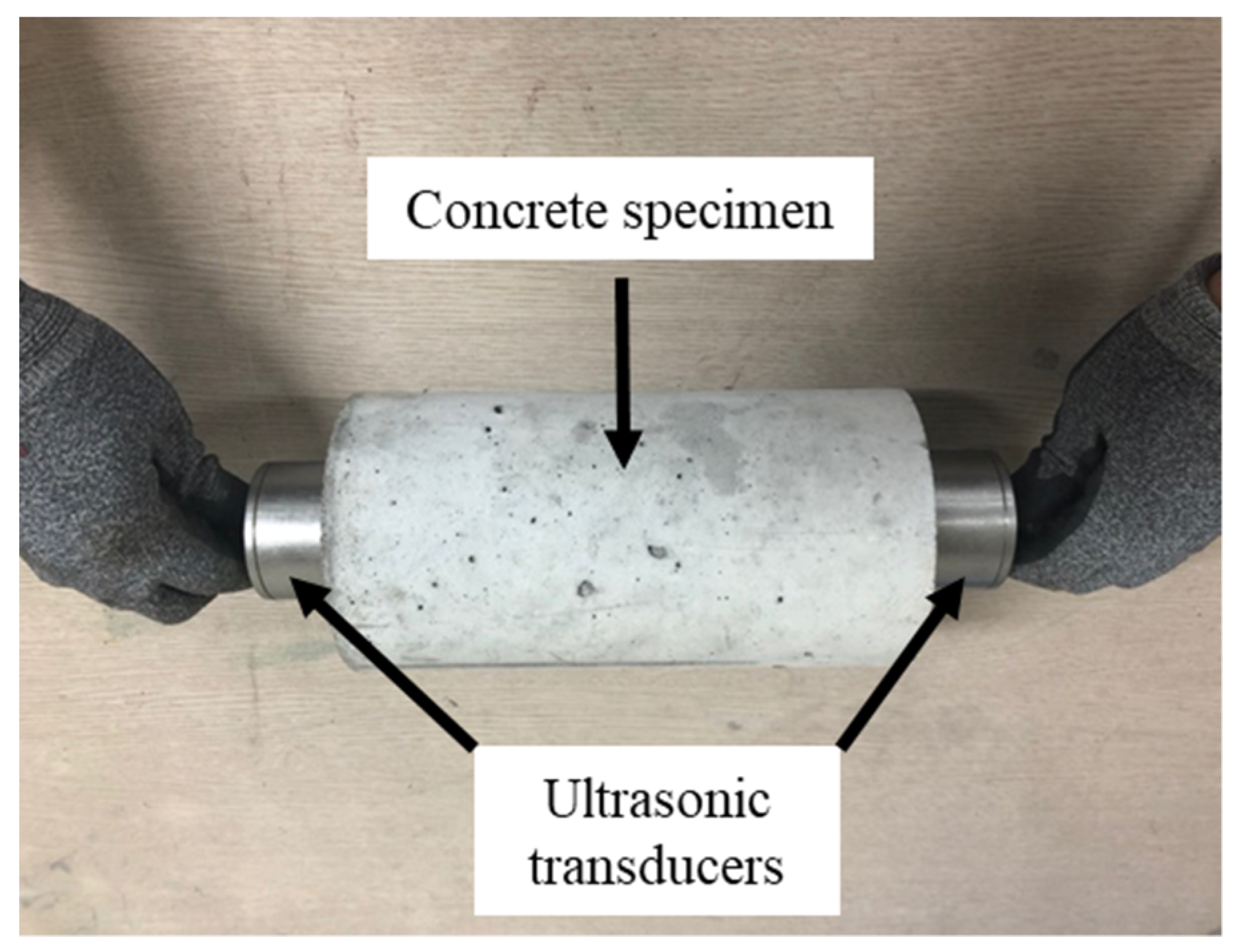
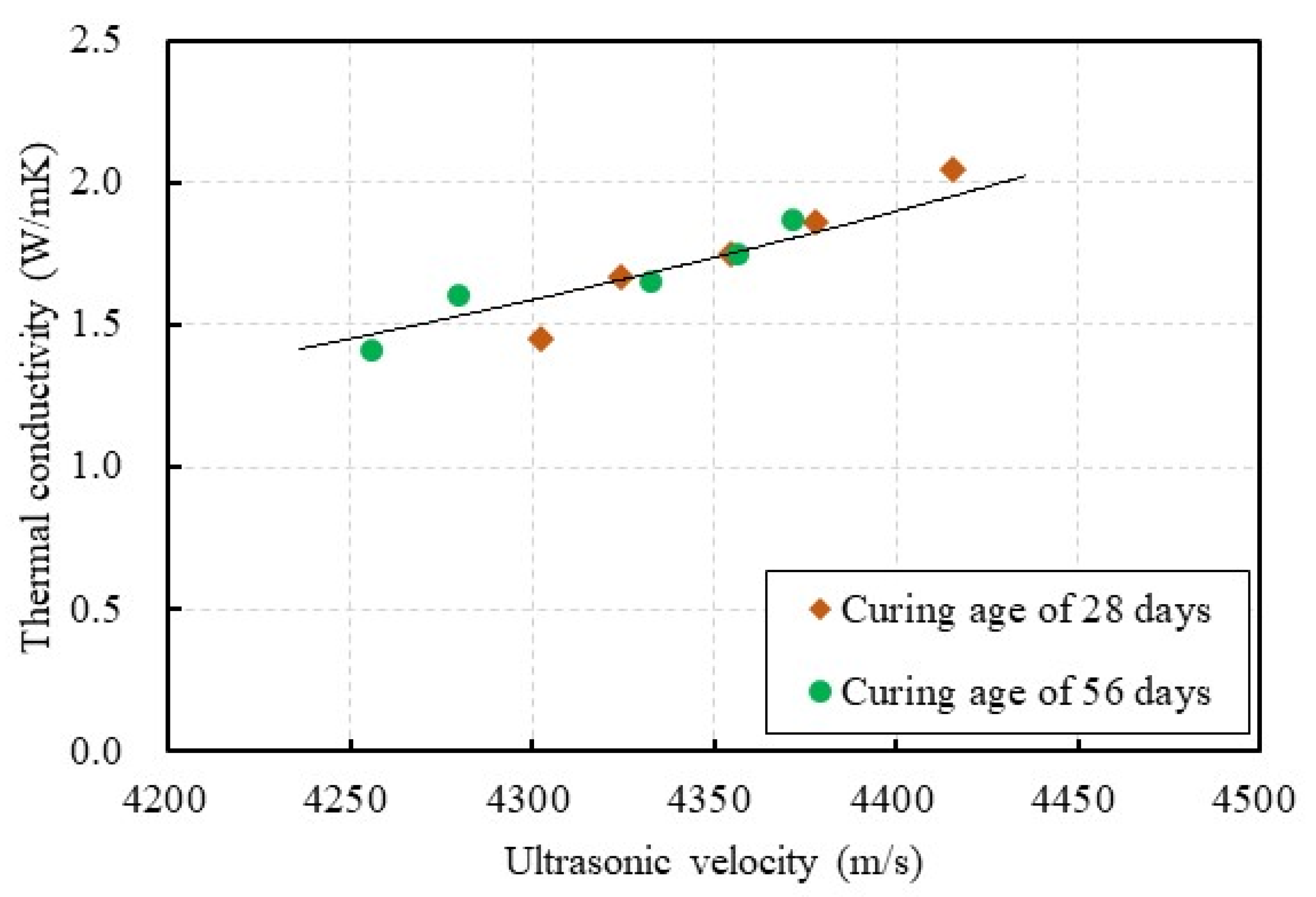
- The ultrasonic velocity of the CBA concrete decreased as the amount of CBA fine aggregate in the concrete increased. Moreover, the test results show that there was an approximately linear relationship between the thermal conductivity and ultrasonic velocity of the CBA concrete.
Data Availability
Author Contributions
Funding
Conflicts of Interest
References
- Danish, M.S.S.; Senjyu, T.; Ibrahimi, A.M.; Ahmadi, M.; Howlader, A.M. A managed framework for energy-efficient building. J. Build. Eng. 2019, 21, 120–128. [Google Scholar] [CrossRef] [Scilit]
- Najjar, M.; Figueiredo, K.; Hammad, A.W.A.; Haddad, A. Integrated optimization with building information modeling and life cycle assessment for generating energy efficient buildings. Appl. Energy 2019, 250, 1366–1382. [Google Scholar] [CrossRef] [Scilit]
- Sayadi, S.; Tsatsaronis, G.; Morosuk, T.; Baranski, M.; Sangi, R.; Muller, D. Exergy-based control strategies for the efficient operation of building energy systems. J. Clean. Prod. 2019, 241, 118277. [Google Scholar] [CrossRef] [Scilit]
- Elrahman, M.A.; Chung, S.Y.; Sikora, P.; Rucinska, T.; Stephan, D. Influence of nanosilica on mechanical properties, sorptivity, and microstructure of lightweight concrete. Materials 2019, 12, 3078. [Google Scholar] [CrossRef] [Scilit]
- Khoukhi, M.; Abdelbaqi, S.; Hassan, A. Yearly energy performance assessment of employing expanded polystyrene with variable temperature and moisture–thermal conductivity relationship. Materials 2019, 12, 3000. [Google Scholar] [CrossRef] [Scilit]
- Aghdam, M.K.H.; Mahmoodi, M.J.; Safi, M. Effect of adding carbon nanotubes on the thermal conductivity of steel fiber-reinforced concrete. Compos. Part B 2019, 174, 106972. [Google Scholar] [CrossRef] [Scilit]
- Wang, L.; Liu, P.; Jing, Q.; Liu, Y.; Wang, W.; Zhang, Y.; Li, Z. Strength properties and thermal conductivity of concrete with the addition of expanded perlite filled with aerogel. Constr. Build. Mater. 2018, 188, 747–757. [Google Scholar] [CrossRef] [Scilit]
- Nguyen, L.H.; Beaucour, A.L.; Ortola, S.; Noumowe, A. Experimental study on the thermal properties of lightweight aggregate concretes at different moisture contents and ambient temperatures. Constr. Build. Mater. 2017, 151, 720–731. [Google Scholar] [CrossRef] [Scilit]
- Brooks, A.L.; Zhou, H.; Hanna, D. Comparative study of the mechanical and thermal properties of lightweight cementitious composites. Constr. Build. Mater. 2018, 159, 316–328. [Google Scholar] [CrossRef] [Scilit]
- Tasdemir, C.; Sengul, O.; Tasdemir, M.A. A comparative study on the thermal conductivities and mechanical properties of lightweight concretes. Energy Build. 2017, 151, 469–475. [Google Scholar] [CrossRef] [Scilit]
- Asadi, I.; Shafigh, P.; Hassan, Z.F.B.A.; Mahyuddin, N.B. Thermal conductivity of concrete—A review. J. Build. Eng. 2018, 20, 81–93. [Google Scholar] [CrossRef] [Scilit]
- Dwivedi, A.; Jain, M.K. Fly ash—Waste management and overview: A review. Recent Res. Sci. Technol. 2014, 6, 30–35. [Google Scholar]
- Fu, B.; Liu, G.; Mian, M.M.; Sun, M.; Wu, D. Characteristics and speciation of heavy metals in fly ash and FGD gypsum from Chinese coal-fired power plants. Fuel 2019, 251, 593–602. [Google Scholar] [CrossRef] [Scilit]
- Cicek, T.; Cincin, Y. Use of fly ash in production of light-weight building bricks. Constr. Build. Mater. 2015, 94, 521–527. [Google Scholar] [CrossRef] [Scilit]
- Rathnayake, M.; Julnipitawong, P.; Tangtermsirikul, S.; Toochinda, P. Utilization of coal fly ash and bottom ash as solid sorbents for sulfur dioxide reduction from coal fired power plant: Life cycle assessment and applications. J. Clean. Prod. 2018, 202, 934–945. [Google Scholar] [CrossRef] [Scilit]
- Munawer, M.E. Human health and environmental impacts of coal combustion and post-combustion wastes. J. Sustain. Min. 2018, 17, 87–96. [Google Scholar] [CrossRef] [Scilit]
- Ramsey, A.B.; Szynkiewicz, A. Coupled chemical-isotope assessment of potential metal releases to the water column from river sediments impacted by coal ash spill. Appl. Geochem. 2019, 107, 34–44. [Google Scholar] [CrossRef] [Scilit]
- Singh, N.; Bhardwaj, A. Reviewing the role of coal bottom ash as an alternative of cement. Constr. Build. Mater. 2020, 233, 117267. [Google Scholar] [CrossRef] [Scilit]
- Singh, N.; Mithulraj, M.; Arya, S. Utilization of coal bottom ash in recycled concrete aggregates based self-compacting concrete blended with metakaolin. Resour. Conserv. Recycl. 2019, 144, 240–251. [Google Scholar] [CrossRef] [Scilit]
- Muthusamy, K.; Rasid, M.H.; Jokhio, G.A.; Budiea, A.M.A.; Hussin, M.W.; Mirza, J. Coal bottom ash as replacement in concrete: A review. Constr. Build. Mater. 2020, 236, 117507. [Google Scholar] [CrossRef] [Scilit]
- More, S.R.; Bhatt, D.V.; Menghani, J.V. Failure analysis of coal bottom ash slurry pipeline in thermal power plant. Eng. Fail. Anal. 2018, 90, 489–496. [Google Scholar] [CrossRef] [Scilit]
- Zhou, H.; Bhattarai, R.; Li, Y.; Li, S.; Fan, Y. Utilization of coal fly and bottom ash pellet for phosphorus adsorption: Sustainable management and evaluation. Resour. Conserv. Recycl. 2019, 149, 372–380. [Google Scholar] [CrossRef] [Scilit]
- Mangi, S.A.; Ibrahim, M.H.W.; Jamaluddin, N.; Arshad, M.F.; Jaya, R.P. Short-term effects of sulphate and chloride on the concrete containing coal bottom ash as supplementary cementitious material. Eng. Sci. Technol. Int. J. 2019, 22, 515–522. [Google Scholar] [CrossRef] [Scilit]
- Mangi, S.A.; Ibrahim, M.H.W.; Jamaluddin, N.; Arshad, M.F.; Shahidan, S. Performances of concrete containing coal bottom ash with different fineness as a supplementary cementitious material exposed to seawater. Eng. Sci. Technol. Int. J. 2019, 22, 929–938. [Google Scholar] [CrossRef] [Scilit]
- Balapour, M.; Zhao, W.; Garboczi, E.J.; Oo, N.Y.; Spatari, S.; Hsuan, Y.G.; Billen, P.; Farnam, Y. Potential use of lightweight aggregate (LWA) produced from bottom coal ash for internal curing of concrete systems. Cem. Concr. Compos. 2020, 105, 103428. [Google Scholar] [CrossRef] [Scilit]
- Khongpermgoson, P.; Abdulmatin, A.; Tangchirapat, W.; Jaturapitakkul, C. Evaluation of compressive strength and resistance of chloride ingress of concrete using a novel binder from ground coal bottom ash and ground calcium carbide residue. Constr. Build. Mater. 2019, 214, 631–640. [Google Scholar] [CrossRef] [Scilit]
- Korea Industrial Standards. Portland Cement; KS L 5201; Korea Industrial Standards: Seoul, Korea, 2016. [Google Scholar]
- American Society for Testing and Materials (ASTM). Standard Test Method for Determination of Thermal Conductivity of Soil and Soft Rock by Thermal Needle Probe Procedure; ASTM D5334-05; ASTM: West Conshohocken, PA, USA, 2005. [Google Scholar]
- Kim, K.-H.; Jeon, S.-E.; Kim, J.-K.; Yang, S. An experimental study on thermal conductivity of concrete. Cem. Concr. Res. 2003, 33, 363–371. [Google Scholar] [CrossRef] [Scilit]
- Gustafsson, S.E. Transient plane source techniques for thermal conductivity and thermal diffusivity measurements of solid materials. Rev. Sci. Instrum. 1991, 62, 797–804. [Google Scholar] [CrossRef] [Scilit]
- Log, T.; Gustafsson, S.E. Transient plane source (TPS) technique for measuring thermal transport properties of building materials. Fire Mater. 1995, 19, 43–49. [Google Scholar] [CrossRef] [Scilit]
- He, Y. Rapid thermal conductivity measurement with a hot disk sensor: Part 1. Theoretical considerations. Thermochim. Acta 2005, 436, 122–129. [Google Scholar] [CrossRef] [Scilit]
- Bentz, D.P.; Peltz, M.A.; Durán-Herrera, A.; Valdez, P.; Juárez, C.A. Thermal properties of high-volume fly ash mortars and concretes. J. Build. Phys. 2010, 34, 263–275. [Google Scholar] [CrossRef] [Scilit]
- Yuan, H.-W.; Lu, C.-H.; Xu, Z.-Z.; Ni, Y.-R.; Lan, X.-H. Mechanical and thermal properties of cement composite graphite for solar thermal storage materials. Sol. Energy 2012, 86, 3227–3233. [Google Scholar] [CrossRef] [Scilit]
- Wongkeo, W.; Chaipanich, A. Compressive strength, microstructure and thermal analysis of autoclaved and air cured structural lightweight concrete made with coal bottom ash and silica fume. Mater. Sci. Eng. A 2010, 527, 3676–3684. [Google Scholar] [CrossRef] [Scilit]
- Abdulmatin, A.; Tangchiratpa, W.; Jaturapitakkul, C. An investigation of bottom ash as a pozzolanic material. Constr. Build. Mater. 2018, 186, 155–162. [Google Scholar] [CrossRef] [Scilit]
- ACI Committee 213. ACI 213.R-03. Guide for structural lightweight-aggregate concrete. In ACI Manual of Concrete Practice, Part 1; American Concrete Institute: Farmington Hills, MI, USA, 2003. [Google Scholar]
- Zhang, B.; Poon, C.S. Use of furnace bottom ash for producing lightweight aggregate concrete with thermal insulation properties. J. Clean. Prod. 2015, 99, 94–100. [Google Scholar] [CrossRef] [Scilit]
- Singh, M.; Siddique, R. Strength properties and micro-structural properties of concrete containing coal bottom ash as partial replacement of fine aggregate. Constr. Build. Mater. 2014, 50, 246–256. [Google Scholar] [CrossRef] [Scilit]
- Albayrak, M.; Yorukoglu, A.; Karahan, S.; Atlıhan, S.; Aruntas, H.Y.; Girgin, I. Influence of zeolite additive on properties of autoclaved aerated concrete. Build. Environ. 2007, 42, 3161–3165. [Google Scholar] [CrossRef] [Scilit]
- American Society for Testing and Materials (ASTM). Standard Test Method for Pulse Velocity through Concrete; ASTM C597-02; ASTM: West Conshohocken, PA, USA, 2002. [Google Scholar]
- Ashrafian, A.; Taheri Amiri, M.J.; Rezaie-Balf, M.; Ozbakkaloglu, T.; Lotfi-Omran, O. Prediction of compressive strength and ultrasonic pulse velocity of fiber reinforced concrete incorporating Nano silica using heuristic regression methods. Constr. Build. Mater. 2018, 190, 479–494. [Google Scholar] [CrossRef] [Scilit]
- Sadeghi Nik, A.; Lotfi Omran, O. Estimation of compressive strength of self-compacted concrete with fibers consisting Nano-SiO2 using ultrasonic pulse velocity. Constr. Build. Mater. 2013, 44, 654–662. [Google Scholar] [CrossRef] [Scilit]
- Neville, A.M. Properties of Concrete, 4th ed.; Addison Wesley Longman Ltd.: Essex, UK, 1995. [Google Scholar]



| Property | Fineness Modulus | Water Absorption (%) | Density (g/cm3) | |
|---|---|---|---|---|
| Material | ||||
| Crushed fine aggregate | 3.17 | 0.69 | 2.60 | |
| Coarse aggregate | 6.77 | 1.44 | 2.61 | |
| CBA | 3.83 | 6.87 | 1.84 | |
| Component | CBA (%) | OPC (%) |
|---|---|---|
| SiO2 | 60.03 | 31.90 |
| Al2O3 | 20.25 | 8.97 |
| Fe2O3 | 9.80 | 0.87 |
| CaO | 5.58 | 46.95 |
| Na2O | 1.95 | 0.38 |
| MgO | 1.44 | 3.25 |
| K2O | 0.95 | 0.96 |
| SO3 | - | 5.25 |
| Mixtures | CBA Content (%) | W/C | Water | Unit Content (kg/m3) | ||||
|---|---|---|---|---|---|---|---|---|
| Cement (OPC) a | Coarse Aggregate | Crushed Fine Aggregate | CBA | Superplasticizer (0.6% × Cement) | ||||
| CBA00 | 0 | 0.3 | 178.5 | 595.0 | 878.5 | 663.0 | 0.0 | 3.6 |
| CBA25 | 25 | 0.3 | 178.5 | 595.0 | 878.5 | 497.2 | 117.7 | 3.6 |
| CBA50 | 50 | 0.3 | 178.5 | 595.0 | 878.5 | 331.5 | 235.3 | 3.6 |
| CBA75 | 75 | 0.3 | 178.5 | 595.0 | 878.5 | 165.7 | 353.0 | 3.6 |
| CBA100 | 100 | 0.3 | 178.5 | 595.0 | 878.5 | 0.0 | 470.7 | 3.6 |
© 2020 by the authors. Licensee MDPI, Basel, Switzerland. This article is an open access article distributed under the terms and conditions of the Creative Commons Attribution (CC BY) license (http://creativecommons.org/licenses/by/4.0/).
Share and Cite
Yang, I.-H.; Park, J. A Study on the Thermal Properties of High-Strength Concrete Containing CBA Fine Aggregates. Materials 2020, 13, 1493. https://doi.org/10.3390/ma13071493
Yang I-H, Park J. A Study on the Thermal Properties of High-Strength Concrete Containing CBA Fine Aggregates. Materials. 2020; 13(7):1493. https://doi.org/10.3390/ma13071493
Chicago/Turabian StyleYang, In-Hwan, and Jihun Park. 2020. "A Study on the Thermal Properties of High-Strength Concrete Containing CBA Fine Aggregates" Materials 13, no. 7: 1493. https://doi.org/10.3390/ma13071493
APA StyleYang, I.-H., & Park, J. (2020). A Study on the Thermal Properties of High-Strength Concrete Containing CBA Fine Aggregates. Materials, 13(7), 1493. https://doi.org/10.3390/ma13071493