

Biosynthesis and Characterization of Nanocellulose-Gelatin Films

Abstract
1. Introduction
2. Results and Discussion
2.1. Morphology
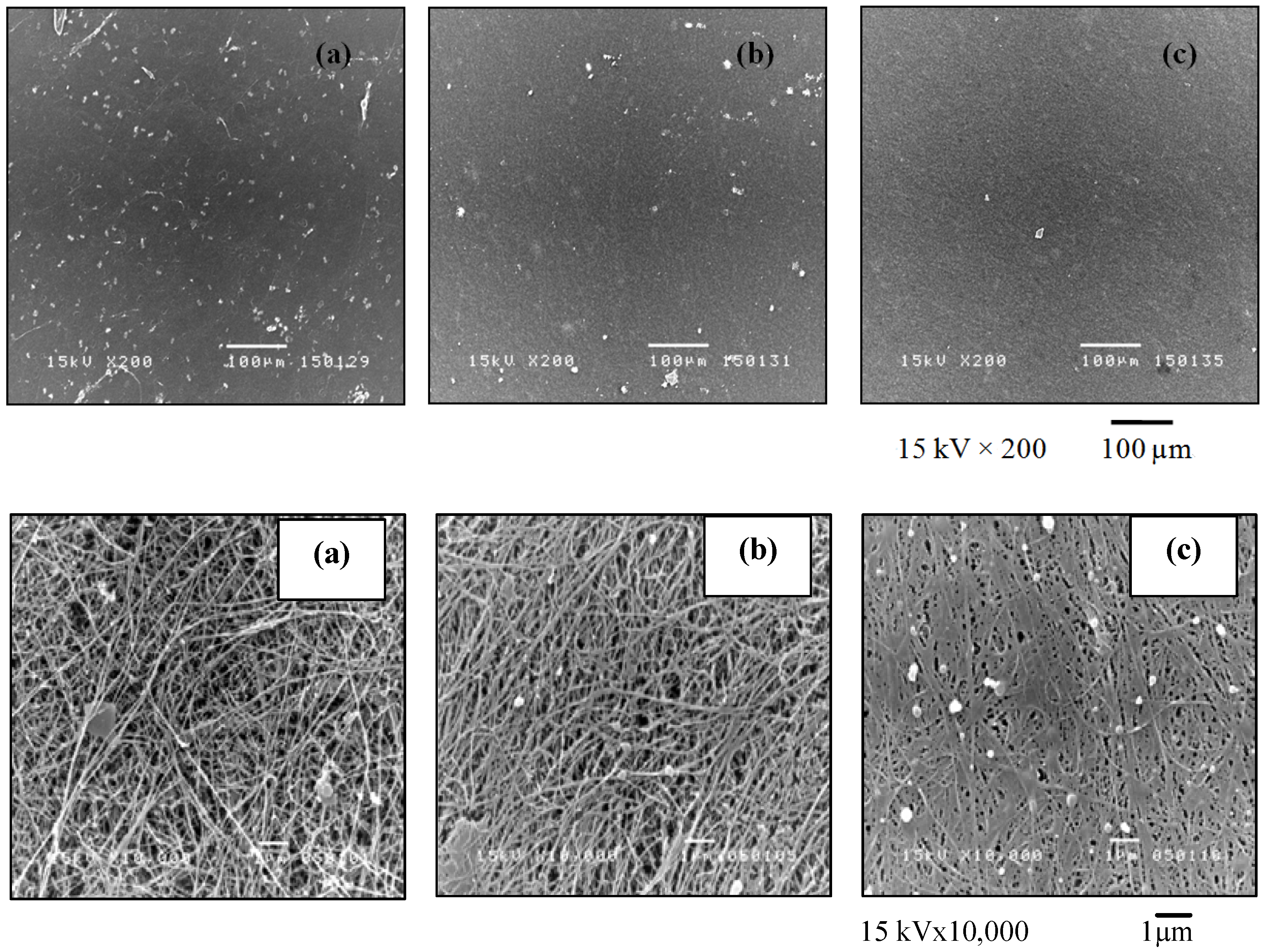
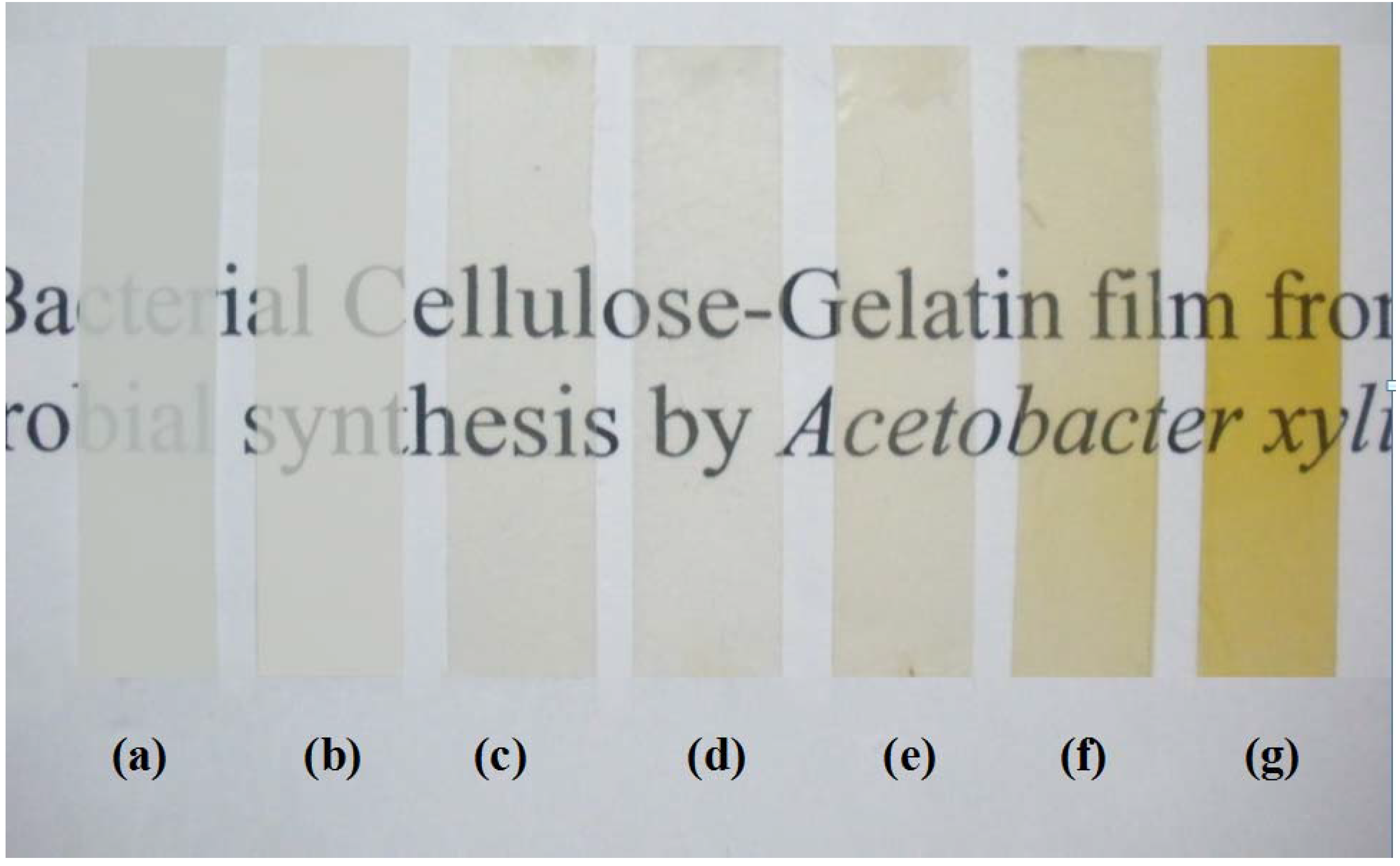
2.2. FTIR Analysis
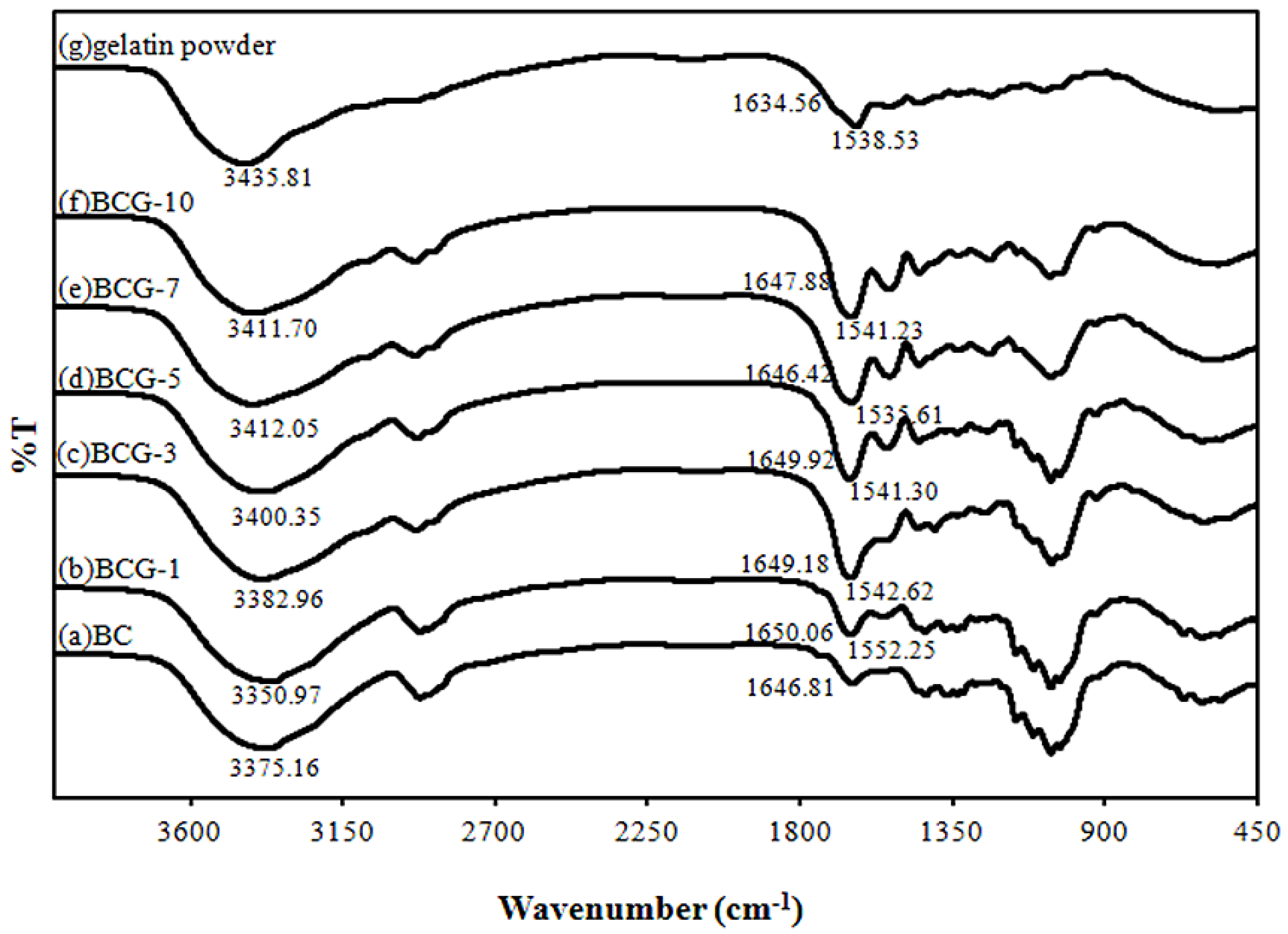
2.3. Crystallinity
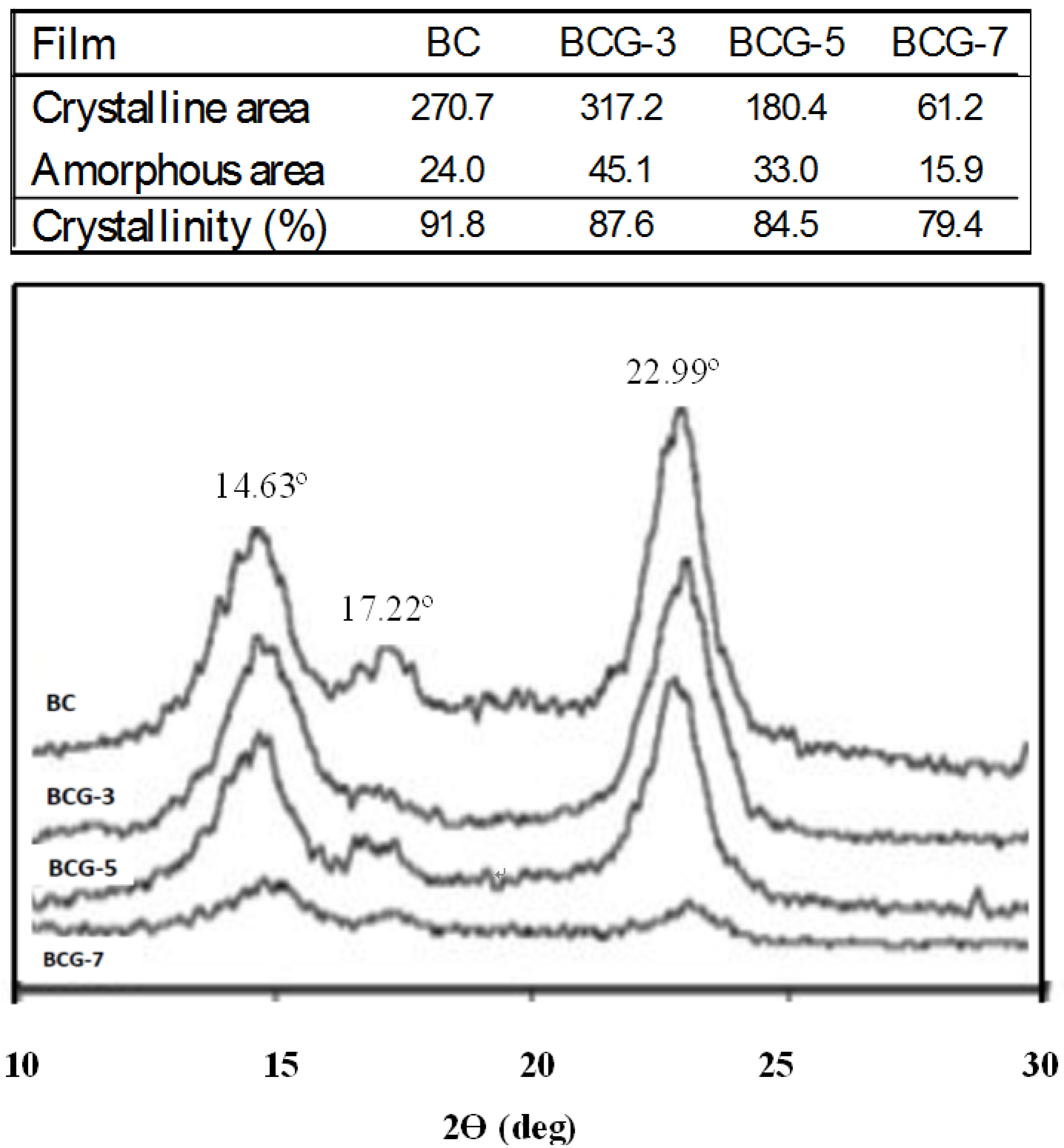
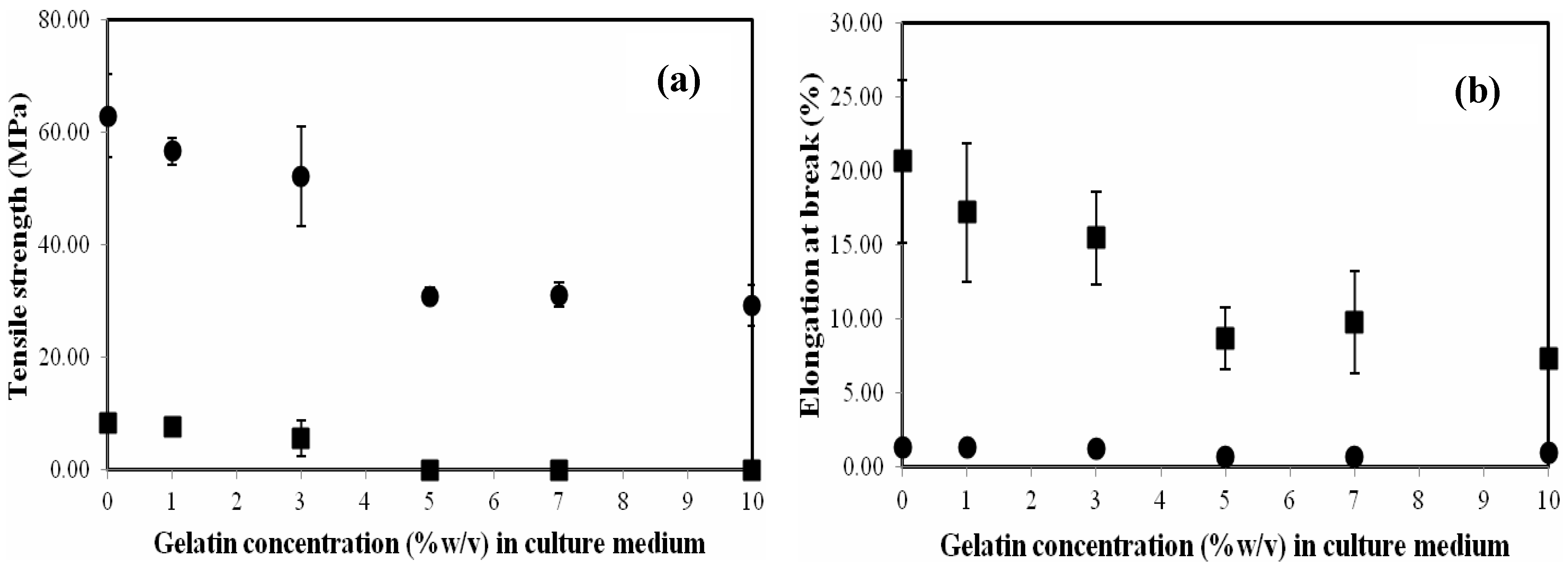
2.4. Mechanical Property
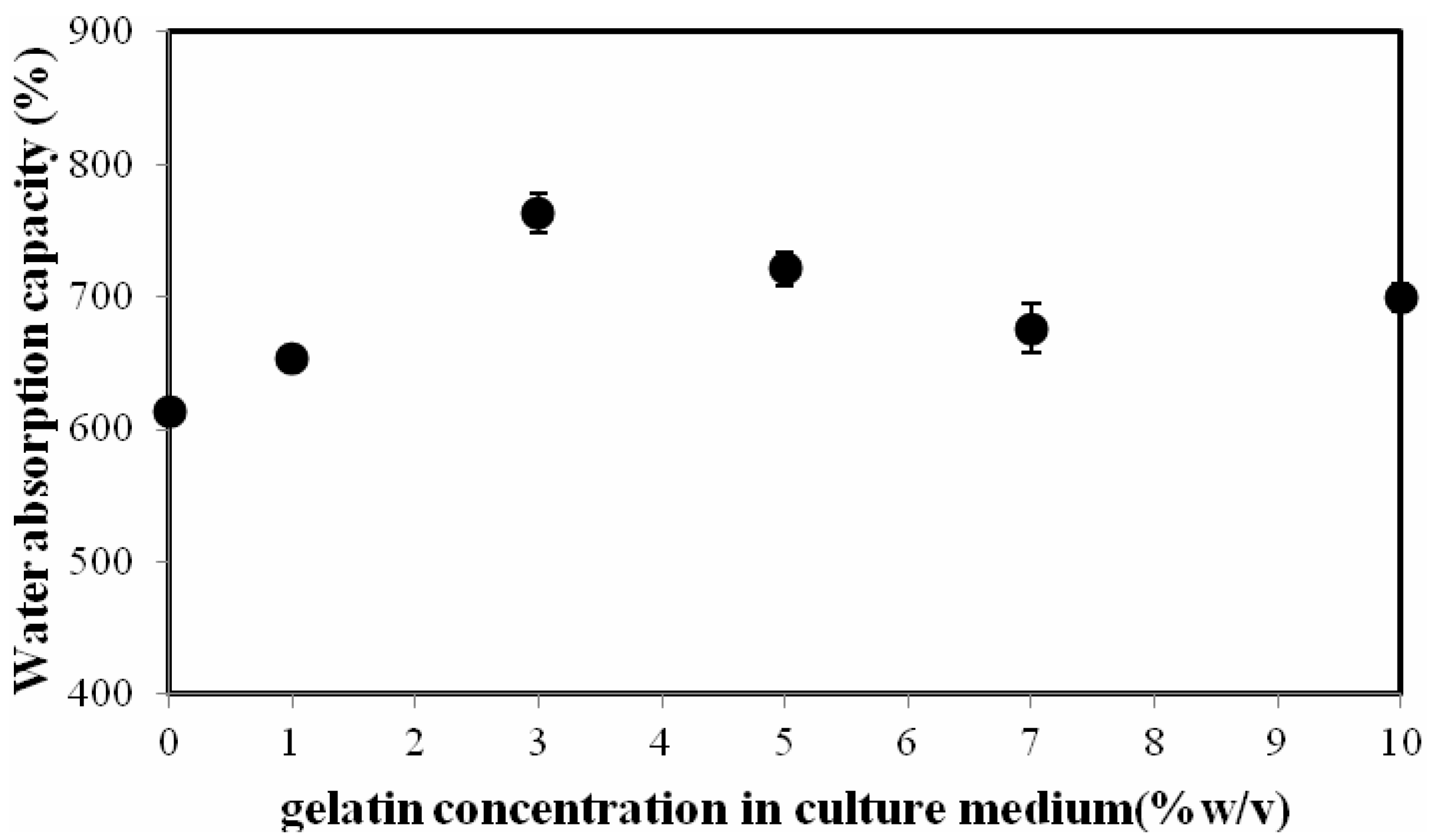
2.5. Water Absorption Capacity (WAC)
2.6. Gas (Vapor) Transmission Rate
2.7. Cytoxicity

| Type of films | Absorbance | ||
|---|---|---|---|
| 0 h | 24 h | 48 h | |
| BC | 0.298 ± 0.037 | 0.376 ± 0.029 | 0.481 ± 0.036 |
| BCG-10 | 0.256 ± 0.020 | 0.342 ± 0.044 | 0.589 ± 0.052 |
3. Experimental Section
3.1. Microbial Strains
3.2. Culture Media and Method
3.3. Characterizations
4. Conclusions
Acknowledgements
References
- Hoenich, N. Cellulose for medical applications. BioResources 2006, 1, 270–280. [Google Scholar]
- Brown, E.E.; Laborie, M.P.G. Bioengineering bacterial cellulose/poly(ethylene oxide) nanocomposites. Biomacromolecules 2007, 8, 3074–3081. [Google Scholar] [CrossRef] [PubMed]
- Jonas, R.; Farah, L.F. Production and application of microbial cellulose. Polym. Degrad. Stab. 1998, 59, 101–106. [Google Scholar] [CrossRef]
- Saied, H.E.; Basta, A.H.; Gobran, R.H. Research progress in friendly environmental technology for the production of cellulose products (bacterial cellulose and its application). Polym. Plast. Technol. Eng. 2004, 43, 797–820. [Google Scholar] [CrossRef]
- Iguchi, M.; Yamanaka, S.; Budhiono, A. Bacterial cellulose-masterpiece of nature’s arts. J. Mater. Sci. 2000, 35, 261–270. [Google Scholar] [CrossRef]
- Chen, S.; Zou, Y.; Yan, Z.; Shen, W.; Shi, S.; Zhang, X.; Wang, H. Carboxymethylated-bacterial cellulose for copper and lead ion removal. J. Hazard. Mater. 2009, 161, 1355–1359. [Google Scholar] [CrossRef] [PubMed]
- Fontana, J.D.; de Souza, A.M.; Fontana, C.K.; Torriani, I.L.; Moreschi, J.C.; Gallotti, B.J.; de Souza, S.J.; Narcisco, G.P.; Bichara, J.A.; Farah, L.F.X. Acetobacter cellulose pellicle as a temporary skin substitute. Appl. Biochem. Biotechnol. 1990, 24–25, 253–263. [Google Scholar]
- Klemm, D.; Schumann, D.; Udhardt, U.; Marsch, S. Bacterial synthesized cellulose artificial blood vessels for microsurgery. Prog. Polym. Sci. 2001, 26, 1561–1603. [Google Scholar] [CrossRef]
- Svensson, A.; Nicklasson, E.; Harrah, T.; Panilaitis, B.; Kaplan, D.L.; Brittberg, M.; Gatenholm, P. Bacterial cellulose as a potential scaffold for tissue engineering of cartilage. Biomaterials 2005, 26, 419–431. [Google Scholar] [CrossRef] [PubMed]
- Czaja, W.; Krystynowicz, A.; Bielecki, S. Microbial cellulose—The natural power to heal wounds. Biomaterials 2006, 27, 145–151. [Google Scholar] [CrossRef] [PubMed]
- Peña, C.; de la Caba, K.; Eceiza, A.; Ruseckaite, R.; Mondragon, I. Enhancing water repellence and mechanical properties of gelatin films by tannin addition. Biores. Technol. 2010, 101, 6836–6842. [Google Scholar] [CrossRef]
- Dong, Z.; Wang, Q.; Du, Y. Alginate/gelatin blend films and their properties for drug controlled release. J. Membr. Sci. 2006, 280, 37–44. [Google Scholar] [CrossRef]
- Lien, S.M.; Ko, L.Y.; Huang, T.J. Effect of pore size on ECM secretion and cell growth in gelatin scaffold for articular cartilage tissue engineering. J. Acta Biomater. 2009, 5, 670–679. [Google Scholar] [CrossRef]
- Tabata, Y.; Ikada, Y. Vascularization effect of basic fibroblast growth factor released from gelatin hydrogels with different biodegradabilities. Biomaterials 1999, 20, 2169–2175. [Google Scholar] [CrossRef] [PubMed]
- Yakimets, I.; Wellner, N.; Smith, A.C.; Wilson, R.H.; Farhat, I.; Mitchell, J. Mechanical properties with respect to water content of gelatin films in glassy state. Polymer 2005, 46, 12577–12585. [Google Scholar] [CrossRef]
- Phisalaphong, M.; Jatupaiboon, N. Biosynthesis and characterization of bacterial cellulose-chitosan film. Carbohydr. Polym. 2008, 74, 482–488. [Google Scholar] [CrossRef]
- Kingkaew, J.; Jatupaiboon, N.; Sanchavanakit, N.; Pavasant, P.; Phisalaphong, M. Biocompatibility and growth of human keratinocytes and fibroblasts on biosynthesized cellulose-chitosan film. J. Biomater. Sci. Polym. Ed. 2010, 21, 1009–1021. [Google Scholar] [CrossRef] [PubMed]
- Kanjanamosit, N.; Muangnapoh, C.; Phisalaphong, M. Biosynthesis and characterization of bacteria cellulose-alginate film. J. Appl. Polym. Sci. 2009, 115, 1581–1588. [Google Scholar] [CrossRef]
- Wiegand, C.; Elsner, P.; Hipler, U.C.; Klemm, D. Protease and ROS activities influenced by a composite of bacterial cellulose and collagen type I in vitro. Cellulose 2006, 13, 689–696. [Google Scholar] [CrossRef]
- Watanabe, K.; Eto, Y.; Takano, S.; Nakamori, S.; Shibai, H.; Yamanaka, S. A new bacterial cellulose substrate for mammalian cell culture. Cytotechnology 1993, 13, 107–114. [Google Scholar] [CrossRef] [PubMed]
- Andradea, F.K.; Pertilea, R.N.; Douradoa, F.; Gama, F.M. Bacterial cellulose: Properties, production and applications. In Cellulose: Structure and Properties; Lejeune, A., Deprez, T., Eds.; Nova Science Publishers Inc.: New York, NY, USA, 2010; Chapter 18; pp. 427–458. [Google Scholar]
- Wang, J.; Wan, Y.; Han, J.; Lei, X.; Yan, T.; Gao, C. Nanocomposite prepared by immobilising gelatin and hydroxyapatite on bacterial cellulose nanofibres. Micro Nano Lett. 2011, 6, 133–136. [Google Scholar] [CrossRef]
- Chang, S.T.; Chen, L.C.; Lin, S.B.; Chen, H.H. Nano-biomaterials application: Morphology and physical properties of bacterial cellulose/gelatin composites via crosslinking. Food Hydrocoll. 2012, 27, 137–144. [Google Scholar] [CrossRef]
- Nakayama, A.; Kakugo, A.; Gong, J.P.; Osada, Y.; Takai, M.; Erata, T.; Kawano, S. High mechanical strength double-network hydrogel with bacterial cellulose. Adv. Funct. Mater. 2004, 14, 1124–1128. [Google Scholar] [CrossRef]
- Yano, H.; Sugiyama, J.; Nakagaito, A.N.; Nogi, M.; Matsuura, T.; Hikita, M.; Handa, K. Optically transparent composites reinforced with networks of bacterial nanofibers. Adv. Mater. 2005, 17, 153–155. [Google Scholar] [CrossRef]
- Gea, S.; Bilotti, E.; Reynolds, C.T.; Soykeabkeaw, N.; Peijs, T. Bacterial cellulose-poly(vinyl alcohol) composites prepared using an in situ process. Mater. Lett. 2010, 64, 901–904. [Google Scholar] [CrossRef]
- Wang, S.; Chow, Y.; Tan, D.W.; Zhang, D.; Zhang, Y. Nanostructured and transparent polymer membranes with thermosensitivity for wound dressing and cell grafting. Adv. Mater. 2004, 16, 1790–1794. [Google Scholar] [CrossRef]
- Cai, Z.; Kim, J. Bacterial cellulose/poly (ethylene glycol) composite. Cellulose 2010, 17, 83–91. [Google Scholar] [CrossRef]
- Kim, J.; Cai, Z.; Chen, Y. Biocompatible bacterial cellulose composites for biomedical application. J. Nanotechnol. Eng. Med. 2010, 1, 1–7. [Google Scholar]
- Liang, X.H.; Guo, Y.Q.; Gu, L.Z.; Ding, E.Y. Crystalline amorphous phase transition of poly(ethylene glycol)/cellulose blend. Macromolecules 1995, 28, 6551–6555. [Google Scholar] [CrossRef]
- Liang, S.M.; Wu, J.J.; Tian, H.F.; Zhang, L.N.; Xu, J. High-strength cellulose/poly (ethylene glycol) gels. ChemSusChem 2008, 1, 558–563. [Google Scholar] [CrossRef] [PubMed]
- Shibazaki, H.; Saito, M.; Kuga, S.; Okano, T. Native cellulose II production by Acetobacter xylinum under physical constraints. Cellulose 1998, 5, 165–173. [Google Scholar] [CrossRef]
- Hirai, A.; Tsuji, M.; Horii, F. TEM study of band-like cellulose assemblies produced by Acetobacter xylinum at 4 °C. Cellulose 2002, 9, 105–113. [Google Scholar] [CrossRef]
- Hesse, S.; Kondo, T. Behavior of cellulose production of Acetobacter xylinum in 13C-Enriched cultivation media including movements on nematic ordered cellulose templates. Carbohydr. Polym. 2005, 60, 457–465. [Google Scholar] [CrossRef]
- Hong, F.; Qiu, K. An alternative carbon source from konjac powder for enhancing production of bacterial cellulose in static cultures by a model strain Acetobacter xylinus ATCC 23770. Carbohydr. Polym. 2008, 72, 545–549. [Google Scholar] [CrossRef]
- Haigler, C.H.; White, A.R.; Brown, R.M., Jr.; Cooper, K.M. Alteration of in vivo cellulose ribbon assembly by carboxymethyl-cellulose and other cellulose derivatives. J. Cell Biol. 1982, 94, 64–69. [Google Scholar] [CrossRef] [PubMed]
- Keenan, T.R. Gelatin. Encycl. Polym. Sci. Technol. 2003, 6, 311–324. [Google Scholar]
- Saibuatong, O.; Phisalaphong, M. Novo Aloe vera-bacterial cellulose composite film from biosynthesis. Carbohydr. Polym. 2010, 79, 455–460. [Google Scholar] [CrossRef]
© 2013 by the authors; licensee MDPI, Basel, Switzerland. This article is an open access article distributed under the terms and conditions of the Creative Commons Attribution license (http://creativecommons.org/licenses/by/3.0/).
Share and Cite
Taokaew, S.; Seetabhawang, S.; Siripong, P.; Phisalaphong, M. Biosynthesis and Characterization of Nanocellulose-Gelatin Films. Materials 2013, 6, 782-794. https://doi.org/10.3390/ma6030782
Taokaew S, Seetabhawang S, Siripong P, Phisalaphong M. Biosynthesis and Characterization of Nanocellulose-Gelatin Films. Materials. 2013; 6(3):782-794. https://doi.org/10.3390/ma6030782
Chicago/Turabian StyleTaokaew, Siriporn, Sutasinee Seetabhawang, Pongpun Siripong, and Muenduen Phisalaphong. 2013. "Biosynthesis and Characterization of Nanocellulose-Gelatin Films" Materials 6, no. 3: 782-794. https://doi.org/10.3390/ma6030782
APA StyleTaokaew, S., Seetabhawang, S., Siripong, P., & Phisalaphong, M. (2013). Biosynthesis and Characterization of Nanocellulose-Gelatin Films. Materials, 6(3), 782-794. https://doi.org/10.3390/ma6030782

