Article

Microfluidic Chip for Detection of Drug Resistance at the Single-cell Level

1
College of Medical Technology and Engineering, Henan University of Science and Technology, Luoyang 471023, China
2
Chongqing Key Laboratory of Soft Condensed Matter Physics and Smart Materials, College of Physics, Chongqing University, Chongqing 401331, China
*
Author to whom correspondence should be addressed.
These authors contributed to the work equally.
Micromachines 2023, 14(1), 46; https://doi.org/10.3390/mi14010046
Submission received: 17 November 2022 / Revised: 21 December 2022 / Accepted: 21 December 2022 / Published: 25 December 2022
(This article belongs to the Special Issue Microfluidic Device Fabrication and Cell Manipulation)

Abstract

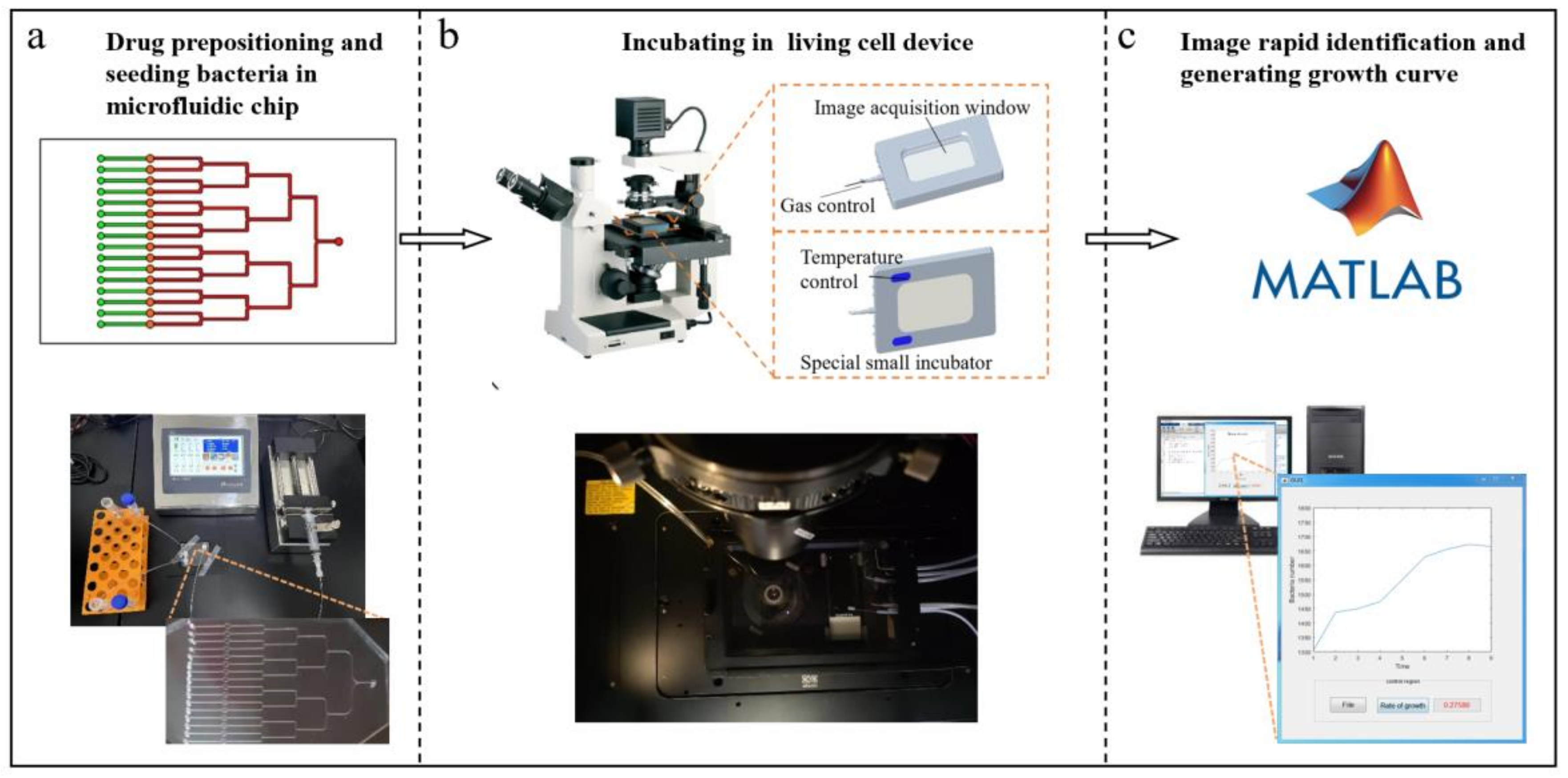
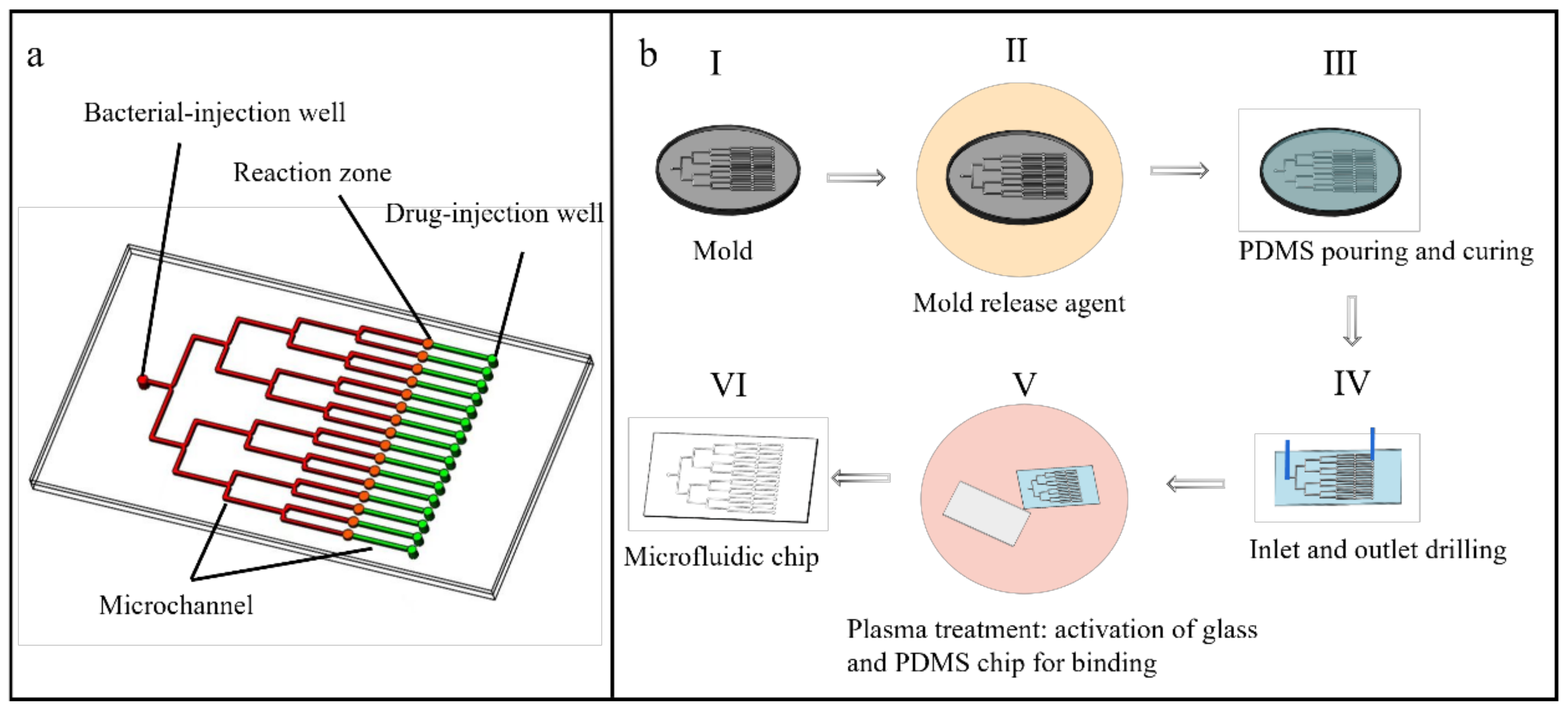
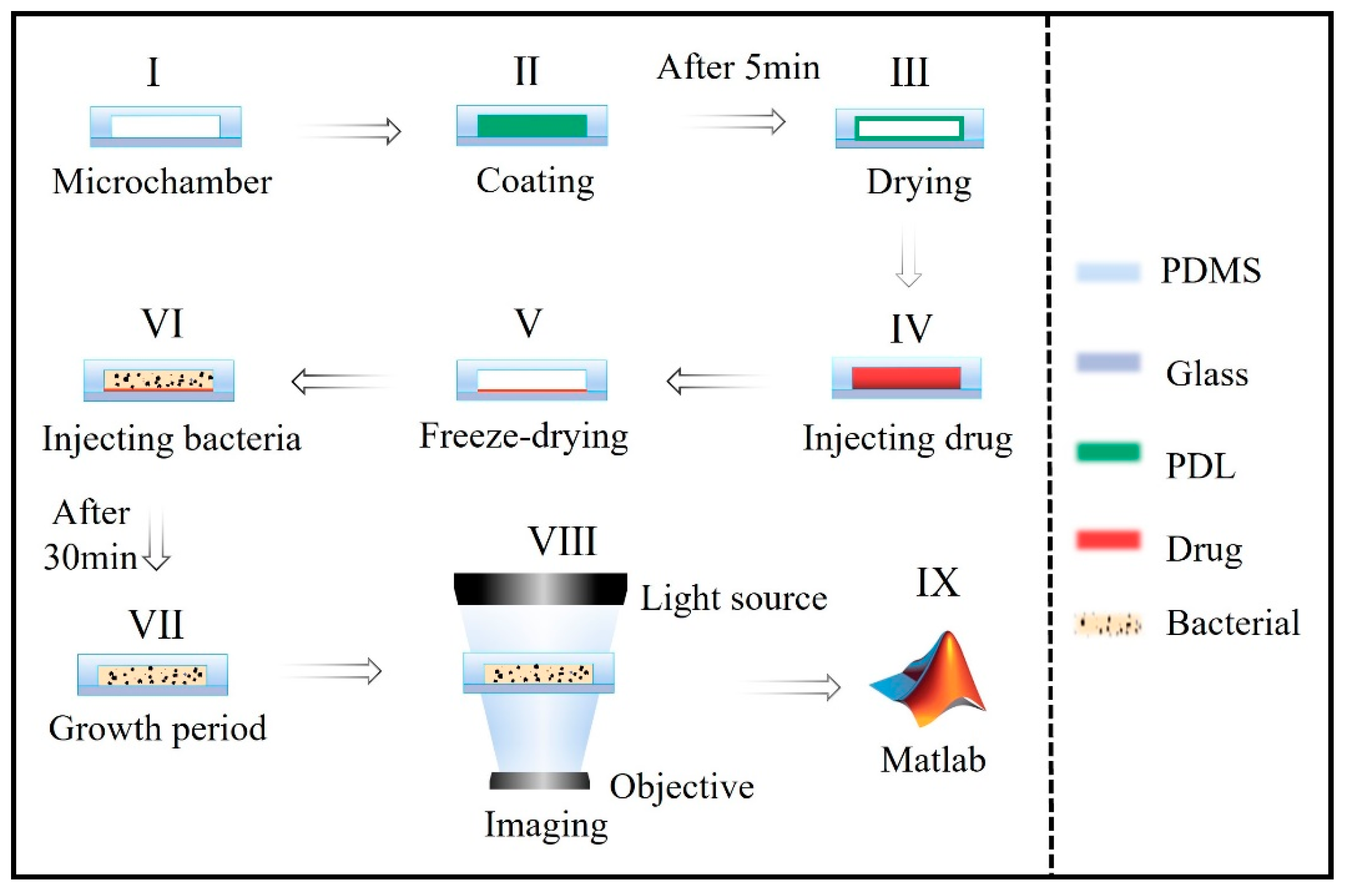
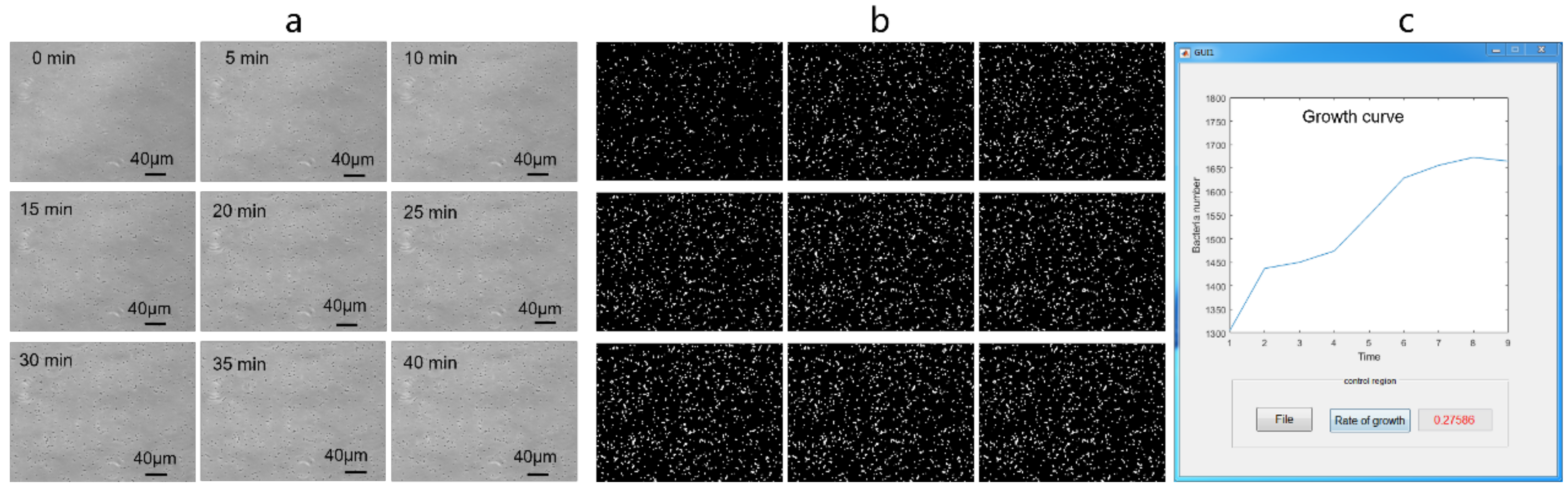
Drug-resistant bacterial strains seriously threaten human health. Rapid screening of antibiotics is urgently required to improve clinical treatment. Conventional methods of antimicrobial susceptibility testing rely on turbidimetry that is evident only after several days of incubation. The lengthy time of the assay can delay clinical treatment. Here, we proposed a single-cell level rapid system based on a microfluidic chip. The detection period of 30 min to 2 h was significantly shorter than the conventional turbidity-based method. To promote detection efficiency, 16 independent channels were designed, permitting the simultaneous screening of 16 drugs in the microfluidic chip. Prepositioning of drugs in the chip permitted prolonged transportation and storage. This may allow for the widespread use of the novel system, particularly in the regions where medical facilities are scarce. The growth curves were reported rapidly through a custom code in Matlab after tracking and photographing the bacteria during microscopy examination. The capability of the proposed system was validated by antimicrobial susceptibility testing trials with standard strains. The system provides a potentially useful detection tool for drug-resistant bacteria.
Keywords: antimicrobial susceptibility testing (AST); single-cell level; drug prepositioning; microfluidic chip antimicrobial susceptibility testing (AST); single-cell level; drug prepositioning; microfluidic chip