Journal Description
Micromachines
Micromachines
is a peer-reviewed, open access journal on the science and technology of small structures, devices and systems, published monthly online by MDPI. The Chinese Society of Micro-Nano Technology (CSMNT) and AES Electrophoresis Society are affiliated with Micromachines and their members receive a discount on the article processing charges.
- Open Access— free for readers, with article processing charges (APC) paid by authors or their institutions.
- High Visibility: indexed within Scopus, SCIE (Web of Science), PubMed, PMC, Ei Compendex, dblp, and other databases.
- Journal Rank: JCR - Q2 (Instruments and Instrumentation) / CiteScore - Q1 (Mechanical Engineering)
- Rapid Publication: manuscripts are peer-reviewed and a first decision is provided to authors approximately 16.8 days after submission; acceptance to publication is undertaken in 1.9 days (median values for papers published in this journal in the second half of 2025).
- Recognition of Reviewers: reviewers who provide timely, thorough peer-review reports receive vouchers entitling them to a discount on the APC of their next publication in any MDPI journal, in appreciation of the work done.
- Testimonials: See what our editors and authors say about Micromachines.
- Companion journal: Micro.
- Journal Cluster of Instruments and Instrumentation: Actuators, AI Sensors, Instruments, Metrology, Micromachines and Sensors.
Impact Factor:
3.0 (2024);
5-Year Impact Factor:
3.1 (2024)
Latest Articles
High-Performance Asymmetric Supercapacitors Assembled from La-Doped ZnCo2O4/MnCo-LDH Nanoflower Positive Electrodes and Ti-Supported Sb-Doped SnO2 Negative Electrodes
Micromachines 2026, 17(6), 692; https://doi.org/10.3390/mi17060692 - 3 Jun 2026
Abstract
Transition-metal oxide/layered double hydroxide (LDH) electrodes often suffer from insufficient utilization of active sites, sluggish electron/ion transport, and limited cycling stability at high rates. Here, La-doped ZnCo2O4/MnCo-LDH nanoflowers serve as the positive electrode and Ti-supported Sb-doped SnO2 (Ti/Sb-SnO
[...] Read more.
Transition-metal oxide/layered double hydroxide (LDH) electrodes often suffer from insufficient utilization of active sites, sluggish electron/ion transport, and limited cycling stability at high rates. Here, La-doped ZnCo2O4/MnCo-LDH nanoflowers serve as the positive electrode and Ti-supported Sb-doped SnO2 (Ti/Sb-SnO2) serves as the negative electrode for constructing an asymmetric supercapacitor. A stepwise hydrothermal route, La-doping regulation, and ethylenediamine-assisted morphology control transform stacked nanosheets into open porous nanoflowers with a specific surface area of 382.5 m2 g−1, thereby exposing more electroactive sites and shortening OH− diffusion pathways. La3+-induced lattice distortion and defect-related oxygen species further tune the electronic structure and improve interfacial charge-transfer kinetics. The optimized La-ZnCo2O4/MnCo-LDH electrode delivers 2130 F g−1 at 1 A g−1 and retains 1993 F g−1 after 10,000 cycles at 3 A g−1. The Ti/Sb-SnO2 negative electrode provides 673 F g−1 at 1 A g−1 and 302 F g−1 at 15 A g−1. The assembled device operates stably from 0 to 1.8 V in 2 M KOH and achieves 69 Wh kg−1 and 13,500 W kg−1.
Full article
(This article belongs to the Special Issue Advancing Energy Storage Techniques: Chemistry, Materials and Devices)
Open AccessArticle
Optimization and Parallelization of Sorting by Interfacial Tension (SIFT) for High-Throughput Metabolic Cell Sorting
by
Aria Trivedi, Thomas Mathew, Matthew Shulman, Lakshmi Thangam, Pooja Dubey, Charlotte V. Cohen, Kelsey Voss and Paul Abbyad
Micromachines 2026, 17(6), 691; https://doi.org/10.3390/mi17060691 - 3 Jun 2026
Abstract
A systematic optimization of throughput and operational run time in Sorting by Interfacial Tension (SIFT) is presented. Reducing droplet size and enabling a broader distribution of droplet trajectories increased the number of droplets processed per sorting element, resulting in about a four-fold improvement
[...] Read more.
A systematic optimization of throughput and operational run time in Sorting by Interfacial Tension (SIFT) is presented. Reducing droplet size and enabling a broader distribution of droplet trajectories increased the number of droplets processed per sorting element, resulting in about a four-fold improvement in throughput from 30 to 125 droplets per second. Throughput was further enhanced through device parallelization, as demonstrated by devices incorporating two and four independent sorting regions. These configurations distribute droplets evenly across sorting elements. The elements exhibited comparable pH sorting thresholds, indicating similar flow conditions and drag forces within each region. Among the designs evaluated, the two-element configuration provided the optimal balance of throughput, specificity, robustness, and simplicity. It achieved maximum throughputs of about 250 droplets per second. In many biological applications, only 1 in 20–30 droplets are occupied to minimize multiple-cell occupancy, resulting in an effective sorting rate of approximately 8 cells per second. Throughput and pH sorting thresholds were preserved for two hours of continuous cell sorting. The improved platform was applied to examine the relationship between cellular glycolysis and iron homeostasis at the single-cell level in activated Jurkat cells. It revealed a subpopulation of highly glycolytic cells with significantly elevated iron uptake, consistent with prior reports linking iron regulation and T cell metabolism. Collectively, these advances expand the scale, stability, and biological applicability of SIFT. These advances facilitate large-scale functional studies and the capture of rare, metabolically distinct, cell populations.
Full article
(This article belongs to the Special Issue Advanced Developments in Droplet Microfluidics)
►▼
Show Figures

Figure 1
Open AccessArticle
6–18 GHz High-Efficiency Power Amplifier MMIC Based on Broadband Impedance Matching
by
Shuai Liu, Xiaohua Ma, Yi Zhang, Zhaoke Bian and Chunliang Xu
Micromachines 2026, 17(6), 690; https://doi.org/10.3390/mi17060690 - 3 Jun 2026
Abstract
To meet the high standard requirements for broadband high-efficiency power amplifiers in modern communication technology, a 6–18 GHz high-efficiency monolithic microwave integrated circuit (MMIC) power amplifier was developed using a 0.25 μm gallium nitride high-electron mobility transistor (GaN HEMT) process. A multistage Chebyshev-filter-based
[...] Read more.
To meet the high standard requirements for broadband high-efficiency power amplifiers in modern communication technology, a 6–18 GHz high-efficiency monolithic microwave integrated circuit (MMIC) power amplifier was developed using a 0.25 μm gallium nitride high-electron mobility transistor (GaN HEMT) process. A multistage Chebyshev-filter-based matching approach is utilized to provide the requisite bandwidth while concurrently managing second-harmonic terminations for enhanced PAE. In the final power stage, a multi-cell combining architecture is employed to achieve high saturated output power. The designed GaN amplifier achieves a saturated power of above 43.5 dBm and a PAE of over 30%. The area of the proposed GaN amplifier is 4 × 3.2 mm2. This chip, with its high efficiency and compact size, is promising for high-performance wideband systems.
Full article
(This article belongs to the Special Issue RF and Power Electronic Devices and Applications, 2nd Edition)
►▼
Show Figures

Figure 1
Open AccessArticle
Research on Temperature Compensation Technology for a Flexible Capacitive Pressure Sensing System
by
Jianyi Zheng, Shuhan Chen and Zhicheng Xia
Micromachines 2026, 17(6), 689; https://doi.org/10.3390/mi17060689 - 2 Jun 2026
Abstract
Real-time pressure field measurement in aerospace vehicles is challenging because flexible sensor arrays must operate on curved surfaces under coupled thermal and pressure conditions. In this study, a temperature-compensated flexible capacitive pressure sensing system was developed for aerospace applications by integrating an 8
[...] Read more.
Real-time pressure field measurement in aerospace vehicles is challenging because flexible sensor arrays must operate on curved surfaces under coupled thermal and pressure conditions. In this study, a temperature-compensated flexible capacitive pressure sensing system was developed for aerospace applications by integrating an 8 × 8 flexible sensor array, a multi-channel readout circuit based on time-division multiplexing and synchronous detection, and a Particle Swarm Optimization–Backpropagation (PSO-BP) neural network model. Calibration results showed high linearity, with a correlation coefficient of 0.9998 and a maximum relative error of 2.23%. Under coupled temperature–pressure conditions over 5–150 kPa and 10–110 °C, the average measurement error remained below 6%. Flight experiments further demonstrated valid in-flight data acquisition and trend-level pressure variations during key flight events, verifying the feasibility of the proposed approach for distributed aerospace pressure monitoring.
Full article
(This article belongs to the Special Issue Flexible and Wearable Sensors, 4th Edition)
►▼
Show Figures

Figure 1
Open AccessArticle
Ultra-High Contact Electrified Current Generation and Chemical Sensing at IL-Based Immiscible Liquid–Liquid Interface
by
Yunfei Deng, Junyan Zhang, Hongmian Qi, Shaobin Wen, Chengfa Wang, Zhe Yu and Mengqi Li
Micromachines 2026, 17(6), 688; https://doi.org/10.3390/mi17060688 - 2 Jun 2026
Abstract
Though the charge transfer efficiency of a liquid–liquid (L-L) nanogenerator is much higher than that of the solid–liquid and solid–solid counterparts, there is still much room for improving the level of interfacial charge transfer. In this study, a power generation system was designed
[...] Read more.
Though the charge transfer efficiency of a liquid–liquid (L-L) nanogenerator is much higher than that of the solid–liquid and solid–solid counterparts, there is still much room for improving the level of interfacial charge transfer. In this study, a power generation system was designed using an ionic liquid (IL)-based immiscible L-L interface via the contact/separation mode. The maximum output electric current reaches as high as about 8.12 μA by contacting a saturated NaCl droplet with an immiscible IL droplet. The magnitude of the generated electric current signals increases with an increase in the ionic concentration of the NaCl solution, the droplet contact area, and the liquid volume of IL. Moreover, the magnitude of the signals varies slightly when the pH value is under 12 and increases sharply in strong alkaline conditions. A maximum instantaneous power output of about 82 nW was obtained with a 100 kΩ resistor in series. The IL-based immiscible L-L interface configuration has been proven to be capable of sensing metal ions at an ultra-low concentration via the contact/separation mode.
Full article
(This article belongs to the Special Issue Electrokinetic and Electrochemical Phenomena in Microsystems)
►▼
Show Figures

Graphical abstract
Open AccessReview
Progress in the Fabrication and Optimization of High-Energy Diamond X-Ray Refractive Lenses
by
Hao Huang, Kang Du, Wenbin He, Weiwei Zhang, Xiaohong Yang and Wuyi Ming
Micromachines 2026, 17(6), 687; https://doi.org/10.3390/mi17060687 - 1 Jun 2026
Abstract
The extreme thermal loads encountered in fourth-generation synchrotron radiation sources and X-ray free-electron lasers (XFEL) impose stringent requirements on X-ray optical components. Conventional materials such as beryllium and silicon increasingly exhibit limitations under high-energy conditions, including insufficient thermal conductivity, limited radiation stability, and
[...] Read more.
The extreme thermal loads encountered in fourth-generation synchrotron radiation sources and X-ray free-electron lasers (XFEL) impose stringent requirements on X-ray optical components. Conventional materials such as beryllium and silicon increasingly exhibit limitations under high-energy conditions, including insufficient thermal conductivity, limited radiation stability, and significant absorption losses, rendering them inadequate for next-generation high-energy X-ray optics. In this context, single-crystal diamond, with its high thermal conductivity, low absorption coefficient, and excellent mechanical strength and radiation resistance, has emerged as a promising candidate for high-energy X-ray refractive optics. This review systematically summarizes recent advances in the fabrication and performance optimization of diamond X-ray refractive lenses for high-energy applications. Starting from the evolving demands of modern synchrotron radiation facilities and XFEL, the fundamental requirements for materials and structural design in high-energy X-ray optics are analyzed. Through comparisons with representative materials, the advantages of diamond in thermal management and transmission performance are highlighted. Major micro- and nanofabrication techniques, including femtosecond laser processing, focused ion beam milling, and plasma etching, are comprehensively reviewed, with emphasis on their respective characteristics in terms of processing efficiency, precision control, and damage introduction. The emerging trend of hybrid fabrication strategies is also discussed. Furthermore, the effects of surface roughness, subsurface damage, and crystal defects on wavefront quality and focusing performance are examined, along with corresponding post-processing and surface correction methods. Finally, current challenges related to large-size single-crystal growth, high-precision low-damage fabrication, and long-term operational stability are discussed, and future development directions for diamond-based X-ray refractive optical components are outlined.
Full article
(This article belongs to the Special Issue Micro/Nanomanufacturing and Cross-Scale Fabrication: Methods, Systems, and Applications)
►▼
Show Figures

Figure 1
Open AccessArticle
Optimization and Predictive Modeling of SiC Wafer Dicing Using a Thin Diamond Grinding Wheel via RSM and NSGA-II
by
Jian Liu, Meiling Du, Jinzhong Wu, Sheng Gong, Penggen Ouyang, Shuai Huang and Fengjun Chen
Micromachines 2026, 17(6), 686; https://doi.org/10.3390/mi17060686 - 1 Jun 2026
Abstract
To investigate how the process parameters of ultra-thin diamond grinding wheel dicing affect the dicing quality of silicon carbide (SiC) wafers, single-factor experiments were designed. This study examined the influence of key process parameters, including spindle speed, feed rate, and first dicing depth,
[...] Read more.
To investigate how the process parameters of ultra-thin diamond grinding wheel dicing affect the dicing quality of silicon carbide (SiC) wafers, single-factor experiments were designed. This study examined the influence of key process parameters, including spindle speed, feed rate, and first dicing depth, on the maximum chip width on the front side W1 and the maximum chip width on the back side W2, thereby determining their optimal parameter ranges. Subsequently, a quadratic polynomial prediction model was established using response surface analysis to analyze the interactive effects among the grinding wheel dicing process parameters. Finally, the prediction model was optimized using the genetic algorithm NSGA-II, and the optimal parameter combination for the two response variables was determined: a spindle speed of 31,960 r/min, a feed rate of 2.0019 mm/s, and a first dicing depth of 197.51 μm, yielding an average W1 of 4.8852 μm and W2 of 18.5360 μm. The relative errors between the predicted and average experimental values are 2.83% for W1 and 4.43% for W2. Both errors are below 5%, confirming the validity of the model. Therefore, the model serves as a practical reference for planning subsequent dicing processes using ultra-thin diamond grinding wheels.
Full article
(This article belongs to the Special Issue Ultra-Precision Micro Cutting and Micro Polishing)
►▼
Show Figures

Figure 1
Open AccessArticle
Active-Learning-Guided Acoustic Metamaterial Resonators for Low-Frequency Noise Suppression and Piezoelectric Energy Harvesting
by
Syed Muhammad Anas Ibrahim and Jungyul Park
Micromachines 2026, 17(6), 685; https://doi.org/10.3390/mi17060685 - 31 May 2026
Abstract
Low-frequency traffic noise below 500 Hz is difficult to mitigate because its long wavelengths require impractically large conventional resonators. Here, we report an active-learning-guided inverse-design approach for scalable phononic-crystal-based acoustic metamaterial resonators that simultaneously suppress low-frequency noise transmission and harvest acoustic energy. The
[...] Read more.
Low-frequency traffic noise below 500 Hz is difficult to mitigate because its long wavelengths require impractically large conventional resonators. Here, we report an active-learning-guided inverse-design approach for scalable phononic-crystal-based acoustic metamaterial resonators that simultaneously suppress low-frequency noise transmission and harvest acoustic energy. The approach combines Gaussian process regression surrogate modeling with genetic algorithm optimization to efficiently explore high-dimensional cavity geometries. By iteratively retraining the surrogate with FEM-validated designs, the active-learning process guides the search toward high-performance structures while reducing costly FEM evaluations compared with conventional GA optimization. After geometric scaling, the 2.5D prototype derived from the nine-point optimized cavity achieved a pressure amplification factor of approximately 20 near 490 Hz, while the revolved 3D cavity exhibited amplification exceeding 30 and a transmission loss of approximately 14 dB near the target frequency. Integrated with a mass-loaded five-PZT stack, the device generated 5.5 Vpp and 0.25 mW under 100 dB SPL, corresponding to a normalized power density of 0.58 μW Pa−2 cm−3. These results demonstrate a route toward multifunctional piezoelectric acoustic devices for noise mitigation, localized energy harvesting, and self-powered sensing.
Full article
(This article belongs to the Collection Piezoelectric Transducers: Materials, Devices and Applications)
►▼
Show Figures

Figure 1
Open AccessArticle
Mechanics of Long-Shank 5 mm Neural Probe Insertion into the Rat Brain: Effects of Geometry and Vibration-Assisted Insertion
by
Mahasty Khajehzadeh, Christopher K. Nguyen, Mrigank Maharana, Shriya Peddapuram, Alexandra Joshi-Imre, Juan M. Pascual and Stuart F. Cogan
Micromachines 2026, 17(6), 684; https://doi.org/10.3390/mi17060684 - 31 May 2026
Abstract
Insertion of microelectrode arrays (MEAs) into brain tissue remains a mechanical challenge, especially for long, thin probes designed to access deep structures. This study investigates the mechanical properties of 5 mm long amorphous silicon carbide (a-SiC) probes with different geometries and the effect
[...] Read more.
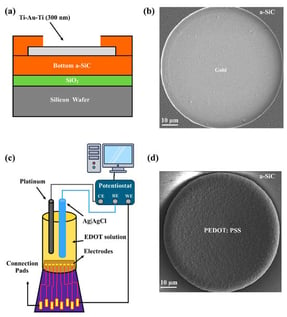
Insertion of microelectrode arrays (MEAs) into brain tissue remains a mechanical challenge, especially for long, thin probes designed to access deep structures. This study investigates the mechanical properties of 5 mm long amorphous silicon carbide (a-SiC) probes with different geometries and the effect of vibration-assisted insertion on penetration into rat brain. Methods: Two planar a-SiC probe designs were fabricated with identical lengths and thicknesses but differing width geometries: one with a uniform width (175 µm) and the other with a tapered shape (tapering from 175 to 75 µm). Critical buckling forces (FCs) were estimated by finite element modeling (FEM) and validated experimentally. Insertion mechanics were assessed in a brain mimic of 1.2% agarose gel at varying insertion speeds (20–1000 µm/s) and in vivo by implantation in rat cortex. Insertion metrics included penetration force (FP), cortical dimpling depth (Dd), maximum insertion force (Fmax), and success rate of insertion, all evaluated with and without vibrational assistance. Results: The tapered design exhibited lower penetration force and higher insertion success compared to the uniform-width probe, despite having a lower critical buckling force. An optimal insertion rate of 100 µm/s was identified, balancing insertion time with low Fmax and high insertion success across designs. Higher FP and Dd with a lower success rate were observed for uniform probes compared with tapered probes in rat brain. Vibration-assisted insertion was then investigated with tapered probes. Applying vibration significantly reduced FP, whereas Dd and Fmax remained unchanged. Notably, in 40% of actuated insertions in rat, no detectable FP peak was observed, suggesting unimpeded pial penetration. Conclusions: A tapered probe geometry and vibration-assisted insertion can reduce Fmax and FP while enhancing the insertion success rate for probe penetration in rat brain. These strategies are generally applicable to long-shank MEA insertions in brain and may inform design and insertion strategies.
Full article
(This article belongs to the Special Issue Neural Microelectrodes: Design, Integration, and Applications)
►▼
Show Figures

Figure 1
Open AccessArticle
High-Update-Rate Frequency Readout of Sinusoidal Signals for Silicon Resonant Accelerometers Using Digital Closed-Loop Frequency Tracking
by
Xiangyu Zhang, Libin Huang, Song Xue and Zhenyu Sheng
Micromachines 2026, 17(6), 683; https://doi.org/10.3390/mi17060683 - 30 May 2026
Abstract
Silicon resonant accelerometers generate sinusoidal outputs with frequency shifts that carry acceleration information. At high update rates, conventional counting-based readout suffers from gate-boundary timing quantization. This work proposes a high-update-rate frequency readout method that reconstructs frequency from the continuous phase evolution of the
[...] Read more.
Silicon resonant accelerometers generate sinusoidal outputs with frequency shifts that carry acceleration information. At high update rates, conventional counting-based readout suffers from gate-boundary timing quantization. This work proposes a high-update-rate frequency readout method that reconstructs frequency from the continuous phase evolution of the original sinusoidal resonant signal through quadrature demodulation, phase extraction, and phase difference rather than waveform reshaping and edge counting. To implement the proposed readout chain, an FLL–PLL cooperative loop was included to assist coarse acquisition and fine tracking on a Zynq-7020 platform. This study focuses on the readout principle, FPGA implementation, and prototype-level evaluation. At a 1 kHz update rate, the proposed method showed a lower theoretical quantization limit than the synchronous multi-cycle counting method. Under room-temperature conditions, after a 30 min startup, the proposed method reduced the standard deviation of the 1-second-averaged zero-bias output over 1800–5400 s from 4.1 μg to 2.4 μg and reduced the frequency-difference peak-to-peak value from 0.03743 Hz to 0.02410 Hz. These results support the feasibility and practical value of the proposed method for high-update-rate readout of sinusoidal resonant signals under the tested steady-state conditions.
Full article
(This article belongs to the Special Issue Recent Advances in Silicon-Based MEMS Sensors and Actuators)
Open AccessArticle
A Dual-FBG Sensor with Machine Learning for Microstrain–Temperature Decoupling Under Cyanoacrylate Bonding Toward Catheter Applications
by
Sung-Ho Yang, Cheng-Kai Yao, Amare Mulatie Dehnaw, Yong-Quan Zhuang and Peng-Chun Peng
Micromachines 2026, 17(6), 682; https://doi.org/10.3390/mi17060682 - 30 May 2026
Abstract
In cardiovascular interventional procedures, real-time, precise monitoring of minute strain and temperature fluctuations at the catheter tip is essential to improving both the safety and efficacy of these interventions. Fiber Bragg grating (FBG)-based sensors present a promising solution owing to their diminutive size
[...] Read more.
In cardiovascular interventional procedures, real-time, precise monitoring of minute strain and temperature fluctuations at the catheter tip is essential to improving both the safety and efficacy of these interventions. Fiber Bragg grating (FBG)-based sensors present a promising solution owing to their diminutive size and immunity to electromagnetic interference; however, the inherent cross-sensitivity between strain and temperature remains a significant obstacle. This paper introduces a dual-FBG fiber optic sensing structure that leverages machine learning techniques. The system incorporates two FBGs: one set acts as the primary sensing element, positioned within a simulated catheter and affixed to the substrate under examination with cyanoacrylate adhesive to detect composite strain and temperature signals; the second set is spirally wound around the catheter surface to solely measure temperature, thus effectively isolating temperature interference. Additionally, a machine learning model is employed to learn the nonlinear mapping between the recorded FBG spectra and the actual strain and temperature parameters. Experimental validation was conducted within the physiologically relevant temperature range of 20 °C to 45 °C. The findings indicate that the proposed machine learning model can successfully decouple strain and temperature, achieving high-precision predictions even in situations where the sensing unit exhibits a slight nonlinear response due to adhesive bonding. This study substantiates the feasibility of utilizing machine learning-enhanced dual-FBG structures for multi-parameter sensing in complex environments. The proposed methodology presents a promising avenue for the development of next-generation smart optical fiber sensors intended for application in catheter systems.
Full article
(This article belongs to the Special Issue MEMS and NEMS Sensors: Innovations, Applications, and Future Directions in Micro/Nano Technologies)
Open AccessArticle
Research on an Efficient Barrier Adjustment Method for Bistable Vibration Energy Harvesters Based on a Rhombus Linkage Mechanism
by
Lulu Fu, Zhen Xiao, Tao Yu, Guansong Shan, Guanggui Cheng and Jie Song
Micromachines 2026, 17(6), 681; https://doi.org/10.3390/mi17060681 - 30 May 2026
Abstract
►▼
Show Figures
Although bistable vibration energy harvesters offer promising broadband characteristics, their efficiency is often hindered by fixed potential barriers that confine the system to small-amplitude intra-well motion. The core innovation of this work is the proposal of a synchronous potential barrier regulation mechanism for
[...] Read more.
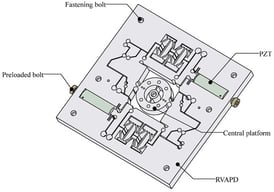
Although bistable vibration energy harvesters offer promising broadband characteristics, their efficiency is often hindered by fixed potential barriers that confine the system to small-amplitude intra-well motion. The core innovation of this work is the proposal of a synchronous potential barrier regulation mechanism for multiple subsystems based on a rhombus linkage mechanism. This study introduces a novel multi-subsystem bistable vibration energy harvester (MBEH) integrated with a rhombus linkage mechanism to achieve tunable potential barriers. The mechanism facilitates the coupling of four bistable subsystems, where adjusting the magnet spacing of one subsystem allows for the synchronous regulation of magnetic gaps in others. This architecture ensures a continuous and precise optimization of the potential barrier. Consequently, this mechanism yields remarkable performance advancements, achieving highly efficient coupling among subsystems. Furthermore, potential barrier regulation efficiency is substantially increased, while operating bandwidths of subsystems are complementary and superimposed. Results from numerical investigations indicate that at an excitation acceleration of 0.6 g, MBEH outperforms conventional BEH with a 13.58 Hz increase in summed subsystem bandwidth and a 0.0223 μW gain in output power. The findings validate the efficacy of the proposed MBEH as a high-performance solution for robust broadband vibration energy harvesting.
Full article

Figure 1
Open AccessArticle
Microstrip Antenna Bandwidth Optimization for RF Microsystems Using Swarm Intelligence and Reinforcement Learning
by
Shaolong Cao, Yu Shao, Jie Zhang, Yang Wang, Ju Tan, Kai Zhu and Lianghong Li
Micromachines 2026, 17(6), 680; https://doi.org/10.3390/mi17060680 - 30 May 2026
Abstract
As essential radiating elements in RF and microwave microsystems, microstrip antennas require sufficient bandwidth to ensure stable operation, integration flexibility, and overall microsystem performance. From a microsystem optimization perspective, this paper proposes a bandwidth extension method for microstrip antennas that combines swarm intelligence
[...] Read more.
As essential radiating elements in RF and microwave microsystems, microstrip antennas require sufficient bandwidth to ensure stable operation, integration flexibility, and overall microsystem performance. From a microsystem optimization perspective, this paper proposes a bandwidth extension method for microstrip antennas that combines swarm intelligence and reinforcement learning. The proposed ICOA-TD3 framework is designed to enhance antenna bandwidth within target frequency bands and thus improve the performance robustness of compact RF microsystems. In the proposed method, an improved crayfish optimization algorithm (ICOA) is first used to explore the global design space and achieve global bandwidth enhancement, followed by the Twin Delayed Deep Deterministic Policy Gradient (TD3) algorithm for local refinement and further exploitation of the antenna structure’s bandwidth potential. In Experiment 1, the impedance bandwidth ( ) is increased by up to 200%. In Experiment 2, the impedance bandwidth ( ) and axial-ratio (AR) bandwidth ( ) are improved by up to 27% and 250%, respectively. The results indicate that the proposed method is a feasible solution for bandwidth-oriented optimization of microstrip antennas and is promising for the intelligent design of high-performance RF microsystems.
Full article
Open AccessArticle
Study and Optimization of a High-Performance SPR-PCF Temperature Sensor for Low-Temperature Monitoring Applications
by
Xinyuan Wang, Ke Jia, Zixi Fu, Yifan Feng, Jingheng Xiao, Yulin Wang and Wenjiang Ye
Micromachines 2026, 17(6), 679; https://doi.org/10.3390/mi17060679 - 30 May 2026
Abstract
To meet the demand for highly sensitive temperature sensing in low-temperature environments, a surface plasmon resonance photonic crystal fiber (SPR-PCF) sensor with a central air hole and a dual-layer air-hole arrangement is designed and optimized. In this work, these air-hole features are used
[...] Read more.
To meet the demand for highly sensitive temperature sensing in low-temperature environments, a surface plasmon resonance photonic crystal fiber (SPR-PCF) sensor with a central air hole and a dual-layer air-hole arrangement is designed and optimized. In this work, these air-hole features are used for mode-field regulation in a low-temperature sensing structure based on surface plasmon resonance (SPR), together with a polished gold film and an ethanol/chloroform (1:1) temperature-sensitive medium. The finite element method (FEM) was employed to analyze the resonance behavior and thermal response, and key structural parameters, including gold-film thickness, air-hole sizes, and radial positions, were optimized through cumulative parametric scanning. The optimized sensor shows good temperature response from −25 °C to 40 °C, with a maximum sensitivity of 36 nm/°C, a full width at half-maximum (FWHM) of 18.57 nm, and a figure of merit (FOM) of 1.2923. It is promising for cold-chain monitoring, low-temperature storage and transportation, and low-temperature sensing.
Full article
(This article belongs to the Section A:Physics)
►▼
Show Figures

Figure 1
Open AccessArticle
Physics-Informed Optimization for the Sub-Feature-Scale Fabrication of Hollow Microneedles via Digital Light Processing
by
Junhong Huang, Zhangzhe Xu, Shuo Wu, He Zhang, Guanzheng Liu and Bin Liu
Micromachines 2026, 17(6), 678; https://doi.org/10.3390/mi17060678 - 29 May 2026
Abstract
To overcome low bioavailability and high trauma in inner ear therapies, targeted delivery across the round window membrane (RWM) via hollow microneedles (HMNs) offers a promising solution. However, the fabrication of high-aspect-ratio, small-size HMNs remains challenging. This study demonstrates the successful fabrication of
[...] Read more.
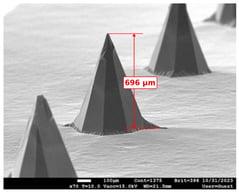
To overcome low bioavailability and high trauma in inner ear therapies, targeted delivery across the round window membrane (RWM) via hollow microneedles (HMNs) offers a promising solution. However, the fabrication of high-aspect-ratio, small-size HMNs remains challenging. This study demonstrates the successful fabrication of small-outer-diameter HMNs using a 10 μm resolution digital light processing (DLP) system. Finite element analysis (FEA) identified a double tangent-arc transition as the optimal structural design for minimizing stress concentration. To manage the heightened parameter sensitivity at sub-feature-scale fabrication, a corrected curing index (CCI) model was established via a physics-informed regression approach incorporating polymerization kinetics and nonlinear spatial intensity distribution, achieving high fitting accuracy (R2 > 0.96). Under optimized parameters, the fabricated HMNs possessed mean dimensions of 805.13 μm in height, 37.54 μm in inner diameter, and 79.36 μm in outer diameter. Compressive tests exhibited a robust structural strength of up to 141 mN per needle following post-curing. Combined in silico and in vitro experiments demonstrated excellent penetration performance. Furthermore, the HMNs achieved stable, pressure-dependent delivery with volumetric flow rates rising from 0.14 mL∙min−1 to 0.39 mL∙min−1 as driving pressure escalated from 50 kPa to 300 kPa, validating their functional capacity for controlled drug administration.
Full article
(This article belongs to the Special Issue Preparation, Manipulation, and Biomedical Applications of Micro/Nanodroplets/Fluids)
►▼
Show Figures

Figure 1
Open AccessArticle
Development and Static Performance Test of EPDM-Encapsulated FBG Sensors for Wind Turbine Blade Deformation Monitoring
by
Jianping He, Zhilong Zhou, Tongchun Qin, Qiyu Qu, Haiqin Ding, Hao Wang and Yuping Bao
Micromachines 2026, 17(6), 677; https://doi.org/10.3390/mi17060677 - 29 May 2026
Abstract
►▼
Show Figures
Wind turbine blades serve as the core components of wind energy conversion systems, and their safe and stable operation is pivotal to the operational efficiency and reliability of wind farms. However, prolonged operation in harsh environmental conditions such as strong winds, heavy rainfall,
[...] Read more.
Wind turbine blades serve as the core components of wind energy conversion systems, and their safe and stable operation is pivotal to the operational efficiency and reliability of wind farms. However, prolonged operation in harsh environmental conditions such as strong winds, heavy rainfall, ultraviolet radiation, and temperature fluctuations renders wind turbine blades susceptible to fatigue damage and structural failure. Aiming at the drawbacks of traditional electromagnetic sensors, including their vulnerability to lightning strikes and poor corrosion resistance, as well as the elastic modulus mismatch between existing fiber Bragg grating (FBG)-encapsulated sensors and wind turbine blade structures, this study selects the ethylene–propylene–diene monomer (EPDM) as the encapsulation material to develop EPDM-FBG strain sensors. The effectiveness of the proposed sensor in blade strain monitoring is ultimately verified via static load model tests on small-scale wind turbine blades. Test results demonstrate that the EPDM-FBG strain sensor exhibits excellent static strain sensing performance, with its test results being highly consistent with those of bare FBG sensors and a relative error of less than 5%, which can fully meet the practical requirements of static strain monitoring for wind turbine blades. This research provides a novel and reliable monitoring method for the health monitoring of wind turbine blades.
Full article

Figure 1
Open AccessArticle
3D-Printing-Assisted Fabrication and Characterization of Pregabalin-Loaded PVA/PVP Dissolving Microneedle Arrays
by
Arjun Gokulan Manivannan, Sreeja Balakrishna Pillai Suseela, Mohana Priya Kandan, Narayanan Jayshankar, Bhupendra G. Prajapati, Chitra Vellapandian, Suhaskumar Patel and Dignesh Khunt
Micromachines 2026, 17(6), 676; https://doi.org/10.3390/mi17060676 - 29 May 2026
Abstract
Background: A transdermal drug delivery system has significant benefits over conventional routes; however, its effectiveness is limited by the barrier properties of the stratum corneum. Dissolving microneedles (DMNs) have emerged as a minimally invasive strategy to enhance drug permeation while improving patient compliance.
[...] Read more.
Background: A transdermal drug delivery system has significant benefits over conventional routes; however, its effectiveness is limited by the barrier properties of the stratum corneum. Dissolving microneedles (DMNs) have emerged as a minimally invasive strategy to enhance drug permeation while improving patient compliance. The integration of advanced fabrication techniques such as 3D printing enables precise control over microneedle geometry and reproducibility. Objective: This study aimed to fabricate and characterize pregabalin-loaded PVA/PVP dissolving microneedle arrays using a 3D-printing-assisted mold fabrication approach for efficient transdermal drug delivery. Methods: Microneedle master molds were fabricated using 3D printing, followed by replication using polydimethylsiloxane (PDMS) to obtain negative molds. Pregabalin-loaded bilayer microneedles were prepared using a micromolding technique with PVA/PVP polymers. The formulation was evaluated through rheological analysis, scanning electron microscopy (SEM), mechanical strength testing, insertion studies, swelling behavior, drug loading efficiency, Fourier transform infrared spectroscopy (FTIR), differential scanning calorimetry (DSC), X-ray diffraction (XRD), and in vitro drug release studies. Results: The fabricated microneedles exhibited uniform geometry with sharp tips and no structural defects. Rheological analysis confirmed shear-thinning behavior suitable for mold filling. The microneedles demonstrated adequate mechanical strength (~3.3 N/needle) and efficient insertion into the parafilm model. Drug loading efficiency was high (92.4%), indicating effective encapsulation. FTIR analysis confirmed compatibility between drug and polymers, while DSC and XRD results indicated partial amorphization of pregabalin within the polymer matrix. The formulation showed a biphasic drug release profile with an initial burst followed by sustained release, achieving ~96.8% cumulative release over 24 h. Conclusions: The study successfully demonstrates a robust and reproducible 3D-printing-assisted approach for fabricating pregabalin-loaded dissolving microneedles. The developed system exhibited desirable mechanical, physicochemical, and drug release properties, highlighting its potential as an effective transdermal drug delivery platform.
Full article
(This article belongs to the Special Issue Additive Manufacturing for Medical Applications, 2nd Edition)
►▼
Show Figures

Figure 1
Open AccessArticle
Controlled-Atmosphere Corrosion Engineering Toward NiFe-LDH Enabling High-Performance Alkaline Seawater Electrolysis with Long-Term Stability
by
Yang Su, Yuqing Li, Qing Wang, Yue Hu, Liu Han, Xiyuan Feng, Bin Wu, Jie Wang and Yingtang Zhou
Micromachines 2026, 17(6), 675; https://doi.org/10.3390/mi17060675 - 29 May 2026
Abstract
Electrochemical water splitting stands as a feasible approach for sustainable hydrogen production, but its industrial implementation is restricted by sluggish oxygen evolution reaction (OER) kinetics and excessive dependence on freshwater resources. As a widely existing alternative, seawater contains a high concentration of chloride
[...] Read more.
Electrochemical water splitting stands as a feasible approach for sustainable hydrogen production, but its industrial implementation is restricted by sluggish oxygen evolution reaction (OER) kinetics and excessive dependence on freshwater resources. As a widely existing alternative, seawater contains a high concentration of chloride ions (Cl−), which give rise to serious electrode corrosion and catalyst deactivation, bringing great challenges to actual electrolysis applications. Herein, we report a facile room-temperature two-step soaking strategy to fabricate sulfur-modified NiFe layered double hydroxide (S-NiFe-LDH) catalysts for efficient OER in both alkaline freshwater and seawater electrolytes. The introduction of sulfur not only optimizes the electronic structure of NiFe-LDH to strengthen intrinsic catalytic activity and speed up charge transfer, but also promotes the formation of a Cl−-resistant layer, thus significantly improving corrosion resistance. In addition, DFT calculations show sulfur modification in NiFe layered double hydroxide upshifts the O 2p-band center to activate lattice oxygen, switches the oxygen evolution reaction pathway to the lattice oxygen mechanism with reduced thermodynamic barriers, and realizes the selective adsorption of OH− over Cl−. As a result, the as-prepared S-NiFe-LDH catalyst exhibits exceptional OER performance, requiring overpotentials (η) of 250, 270, and 290 mV to reach current densities of 50, 100, and 200 mA·cm−2 in 1 M KOH, respectively, with a Tafel slope of 22.3 mV·dec−1. Moreover, it maintains remarkable stability for more than 200 h in alkaline seawater electrolytes and achieves nearly 100% Faradaic efficiency for water splitting, effectively avoiding the parasitic chlorine evolution reaction (CER). This work provides a scalable and energy-efficient synthetic route for designing advanced non-noble metal catalysts, paving the way for industrial-scale hydrogen production from seawater.
Full article
(This article belongs to the Special Issue Energy Conversion Materials/Devices and Their Applications, 2nd Edition)
►▼
Show Figures

Figure 1
Open AccessArticle
An Integrated Physics-Based and Data-Driven Framework for Defect Prediction in Advanced Nanoimprint Lithography Toward Inorganic Semiconductor Patterning
by
Jean Chien and Eric Lee
Micromachines 2026, 17(6), 674; https://doi.org/10.3390/mi17060674 - 29 May 2026
Abstract
Advanced nanoimprint lithography (NIL) is promising for inorganic semiconductor patterning because it enables high-resolution replication with a relatively simple process flow; however, yield loss increasingly originates from spatially distributed, subcritical distortions accumulated across coating, exposure, etching, and imprinting. In this study, we propose
[...] Read more.
Advanced nanoimprint lithography (NIL) is promising for inorganic semiconductor patterning because it enables high-resolution replication with a relatively simple process flow; however, yield loss increasingly originates from spatially distributed, subcritical distortions accumulated across coating, exposure, etching, and imprinting. In this study, we propose an integrated physics-based and data-driven framework for pre-manufacturing defect-risk prediction in NIL. The framework combines an NDA-safe layout database, a physics-based process twin, and a stochastic risk prediction model using a physics-augmented convolutional neural network with conformal uncertainty calibration. Starting from binary design layouts, the process twin sequentially captures resist thickness variations during spin coating, proximity-induced dose redistribution and development-induced pattern deformation during electron-beam lithography (EBL), density-sensitive pattern transfer during reactive ion etching (RIE), and three-dimensional resist filling during imprinting, thereby generating physically consistent parameter maps for downstream learning. The results demonstrate an end-to-end virtual inspection flow that converts layouts into spatially resolved risk maps before fabrication. In addition, patterns with similar contour extent but different local density exhibit distinctly different risk distributions, indicating that manufacturability is governed not only by nominal geometry but also by local pattern environment. These findings support pre-manufacturing virtual inspection as a physically interpretable route for early yield-risk screening in advanced NIL.
Full article
(This article belongs to the Special Issue Nanoscale Lithography—Pressing Miniaturization Towards Ever Smaller Sizes, 2nd Edition)
►▼
Show Figures

Figure 1
Open AccessEditorial
New Advances in Wide-Bandgap RF and Power Electronic Devices: From Material Innovation to System Integration
by
Hao Lu and Qinzhu Sun
Micromachines 2026, 17(6), 673; https://doi.org/10.3390/mi17060673 - 29 May 2026
Abstract
With the rapid development of 5G and beyond 5G (B5G) wireless networks, global connectivity is undergoing a revolutionary transformation [...]
Full article
(This article belongs to the Special Issue RF and Power Electronic Devices and Applications)
Journal Menu
► ▼ Journal Menu-
- Micromachines Home
- Aims & Scope
- Editorial Board
- Reviewer Board
- Topical Advisory Panel
- Early Career Editorial Board
- Instructions for Authors
- Special Issues
- Topics
- Sections & Collections
- Article Processing Charge
- Indexing & Archiving
- Editor’s Choice Articles
- Most Cited & Viewed
- Journal Statistics
- Journal History
- Journal Awards
- Society Collaborations
- Conferences
- Editorial Office
Journal Browser
► ▼ Journal BrowserHighly Accessed Articles
Latest Books
E-Mail Alert
News
9 October 2025
Meet Us at the 3rd International Conference on AI Sensors and Transducers, 2–7 August 2026, Jeju, South Korea
1 June 2026
MDPI INSIGHTS: The CEO’s Letter #35 – 30 Years of Open Science, Open Access Policies, Spain Summit, MMCS 2026 & Antibiotics 2026
Topics
Topic in
Applied Sciences, Optics, Sensors, Materials, Fibers, Photonics, Micromachines
Distributed Optical Fiber Sensors
Topic Editors: Jian Li, Hao Wu, Giancarlo C. Righini, Zhe Ma, Yahui WangDeadline: 30 June 2026
Topic in
Electronics, Eng, Materials, Micro, Micromachines
Wide Bandgap Semiconductor Electronics and Devices
Topic Editors: Joseph Bernstein, Asaf AlboDeadline: 31 July 2026
Topic in
Applied Sciences, Computers, Electronics, Sensors, ASI, Micromachines
Collection Series on Applied System Innovation
Topic Editors: Sheng-Joue Young, Shoou-Jinn Chang, Stephen D. Prior, Liang-Wen JiDeadline: 31 August 2026
Topic in
Electronics, Fluids, Machines, Micromachines, Applied Sciences
Micro-Mechatronic Engineering, 2nd Edition
Topic Editors: Teng Zhou, Antonio F. MiguelDeadline: 31 October 2026
Conferences
Special Issues
Special Issue in
Micromachines
Emerging Trends in Soft Robotics and Bioinspired Technologies
Guest Editor: Dan SameotoDeadline: 15 June 2026
Special Issue in
Micromachines
MEMS Inertial Device, 3rd Edition
Guest Editor: Huiliang CaoDeadline: 20 June 2026
Special Issue in
Micromachines
Microfluidics for Bioanalysis: From Sample Preparation to Integrated Detection
Guest Editor: Yang Jun KangDeadline: 25 June 2026
Special Issue in
Micromachines
Synthesis, Characterization, and Applications of Polymeric Nanocarriers
Guest Editor: Daniel GromadzkiDeadline: 30 June 2026
Topical Collections
Topical Collection in
Micromachines
Lab-on-a-Chip
Collection Editors: Jeong-Bong Lee, Ning Xue, Xiwei Huang
Topical Collection in
Micromachines
Micromixers: Analysis, Design and Fabrication
Collection Editor: Kwang-Yong Kim
Topical Collection in
Micromachines
Women in Micromachines
Collection Editors: Regina Luttge, Anna Vikulina, Xiao-Ying Yu