Responses of Water Level in China’s Largest Freshwater Lake to the Meteorological Drought Index (SPEI) in the Past Five Decades

Abstract
1. Introduction
2. Study Area and Data
2.1. Overview of the Study Area
2.2. Data
3. Methods
3.1. Standardized Precipitation Evapotranspiration Index (SPEI)
- (1)
- Calculate potential evapotranspiration (PET) using the Tornthwaite method [45].
- (2)
- Compute the monthly climatic water balance:where Di is the difference between the monthly precipitation Pi and the monthly potential evapotranspiration PETi.
- (3)
- Normalize the water balance. As there may be negative values in D series, the log-logistic distribution is selected by Vicente-Serrano et al. for standardizing the D series. The probability density function of a three-parameter log-logistic distributed variable is as:where α, β, and γ are the scale, shape, and origin parameters, respectively, which can be obtained using the L-moment method.
- (4)
- Standardize the Log-Logistic distribution function, and then calculate the SPEI as follows:where P is the probability of exceeding a determined D and P = 1 − F(x), and the constants in the Equations (5) and (6) are c0 = 2.515517, c1 = 0.802853, c2 = 0.010328, d1 = 1.432788, d2 = 0.189269, and d3 = 0.001308. The five classifications of meteorological drought based on the SPEI values are given in Table 1 [7].
3.2. Mann–Kendall Trend Test
3.3. Accumulative Anomaly
4. Results
4.1. Dryness Phenomenon in the Poyang Lake
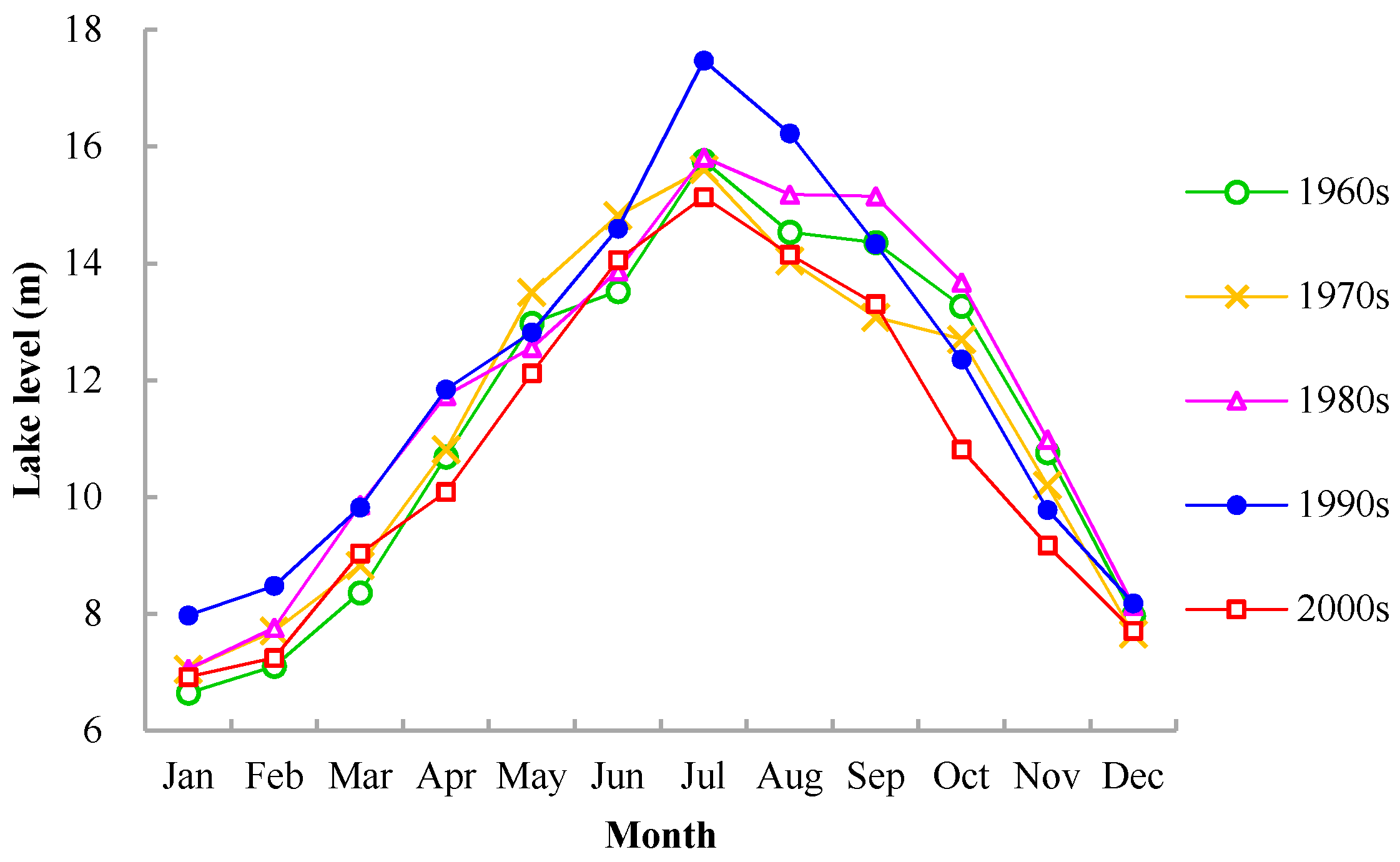
4.1.1. Inner-Annual Variation Characteristics of Lake Level
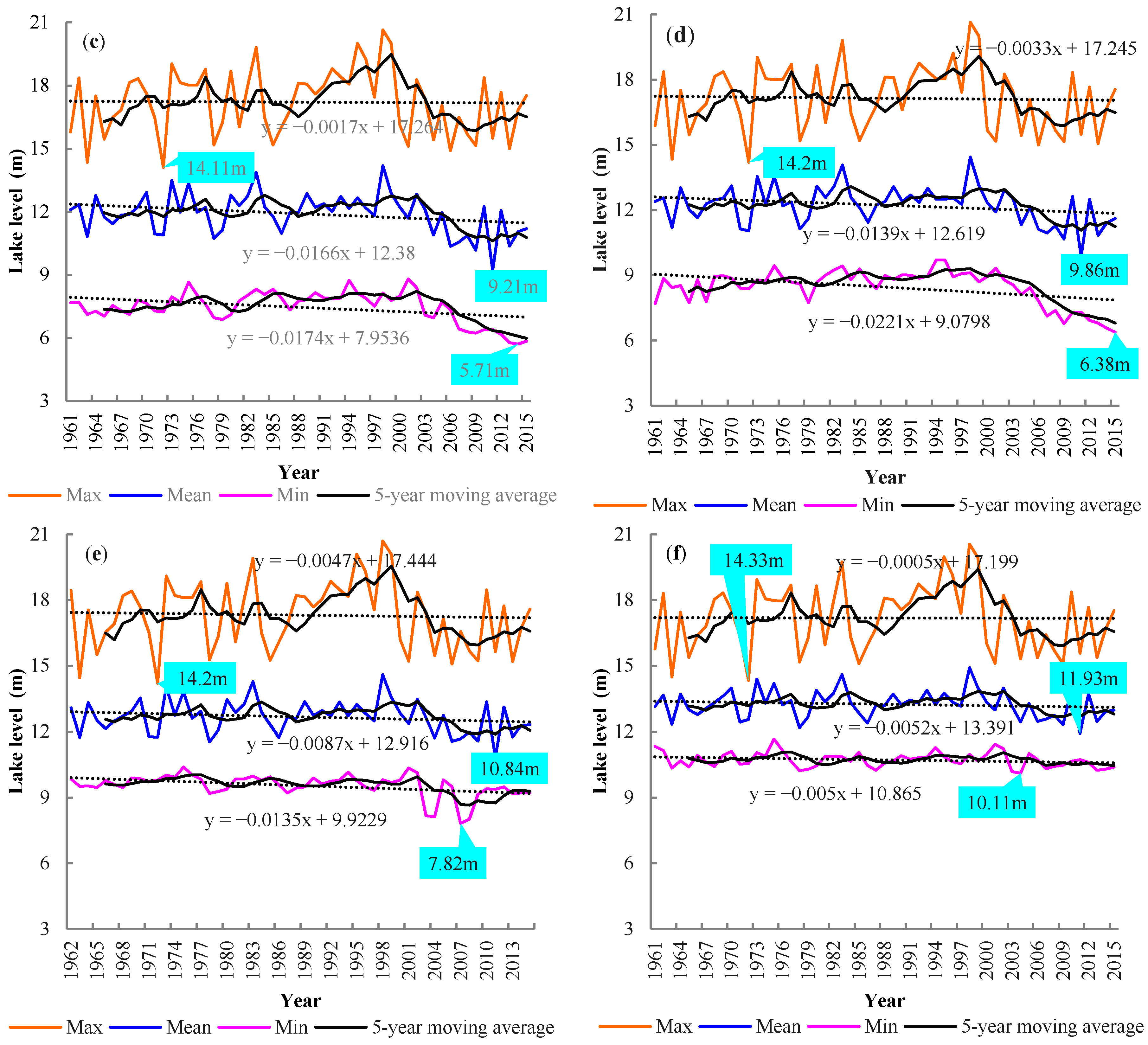
4.1.2. Inter-Annual Variation Characteristics of Lake Level
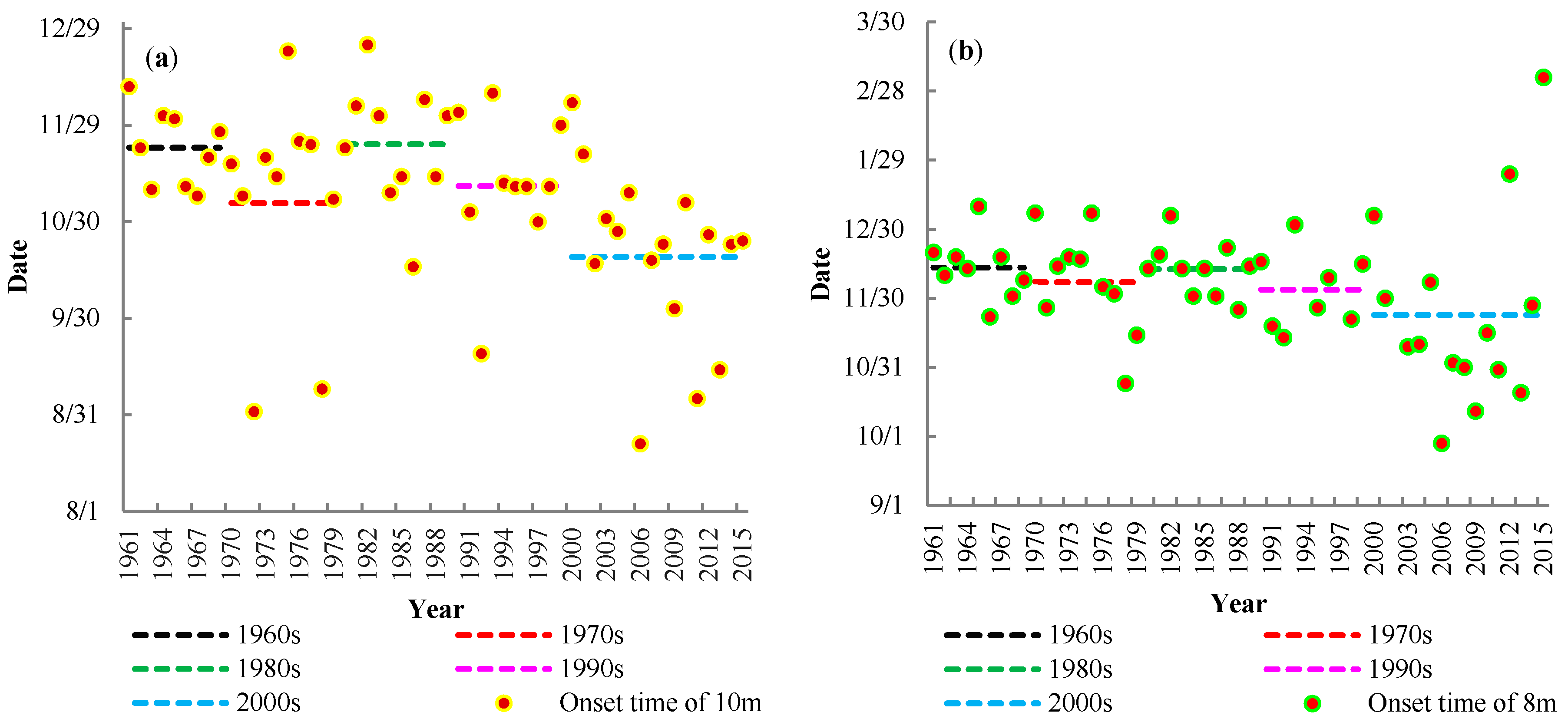
4.1.3. Temporal Statistics of Low Lake Level
4.2. Meteorological Drought in the Basin
4.2.1. Spatial-Temporal Trends of the SPEI
4.2.2. Spatial-Temporal Distribution Characteristics of the SPEI
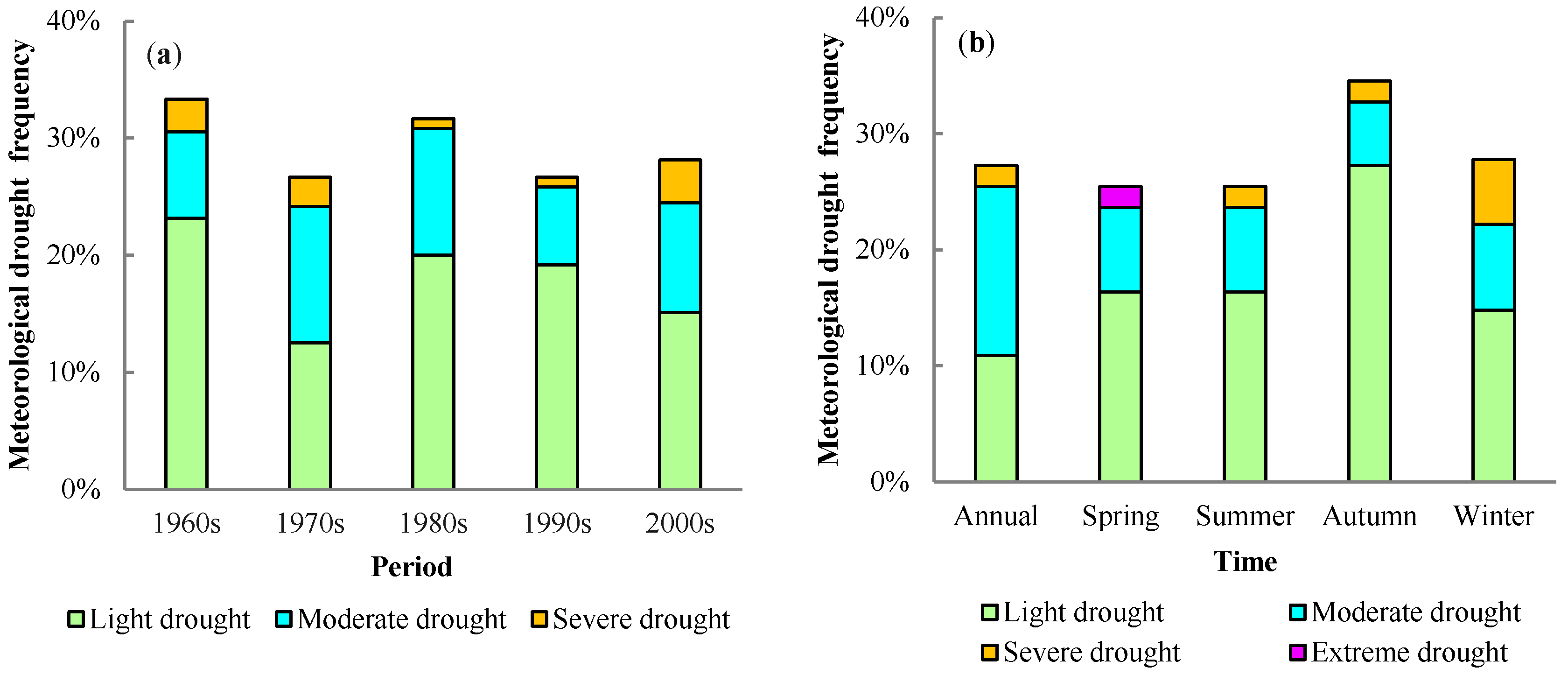
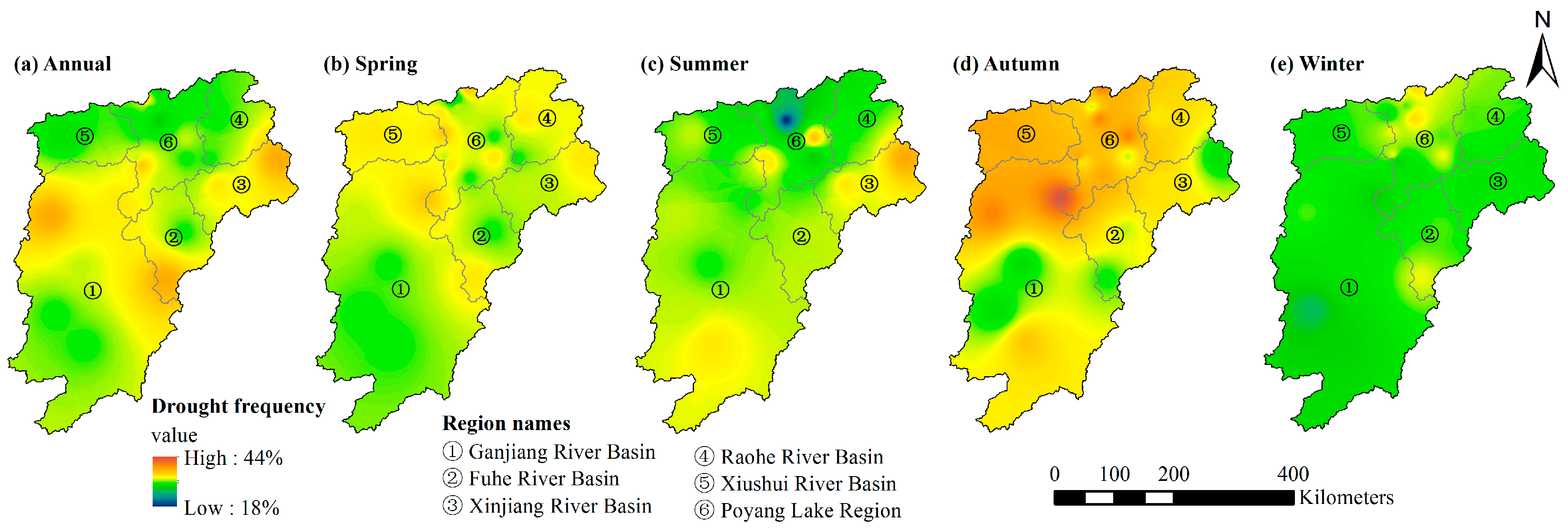
4.2.3. Drought Frequency
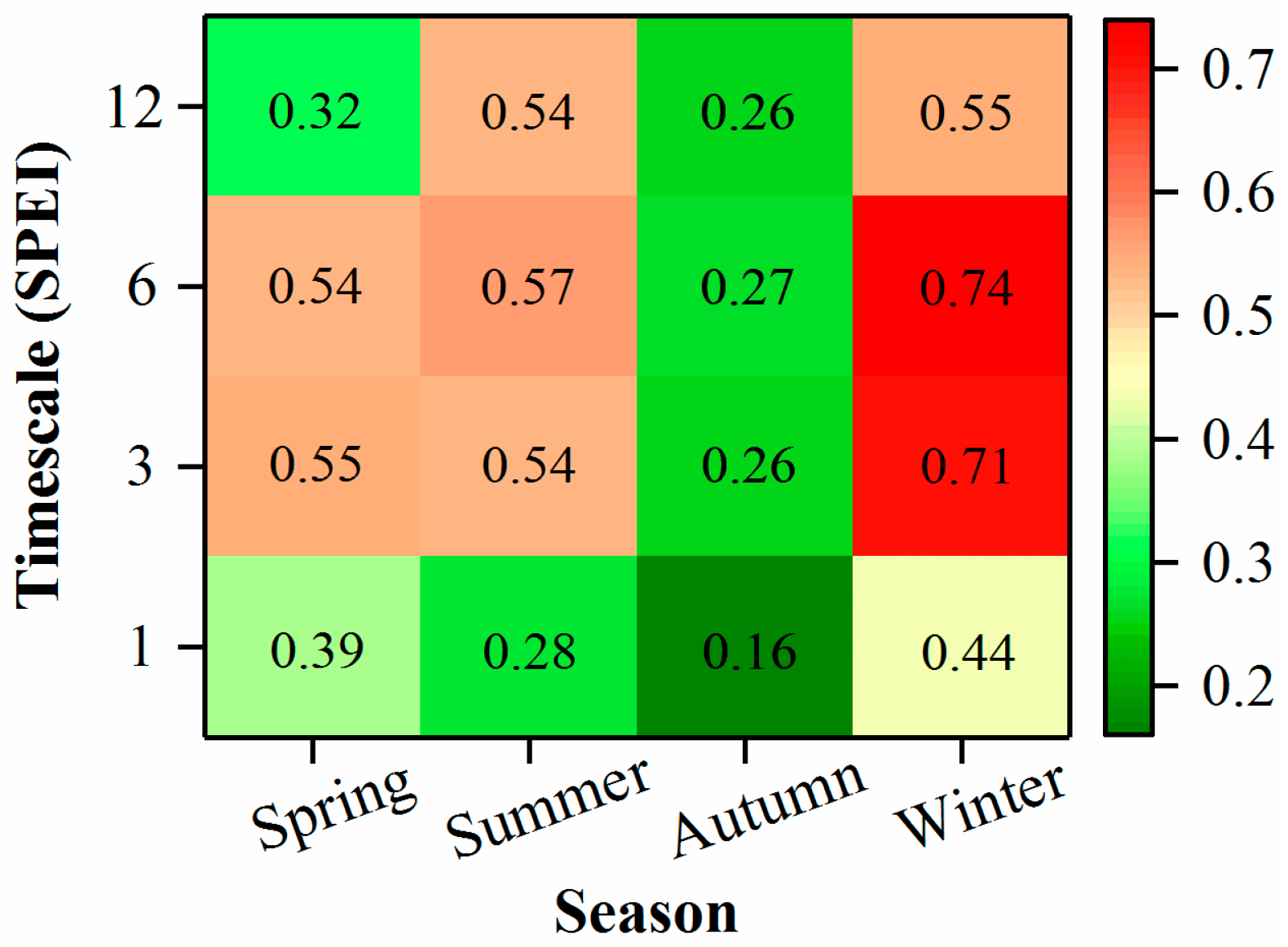
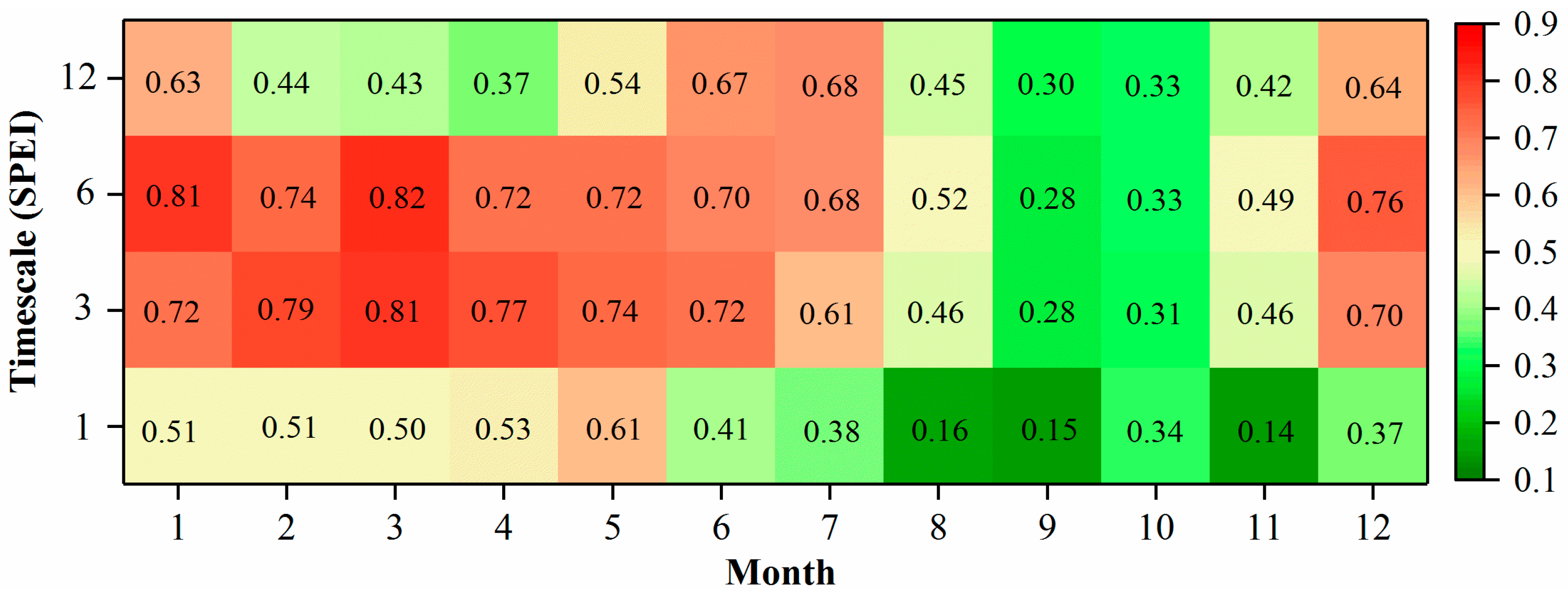
4.3. Correlation Analysis between Meteorological Drought and Lake Level
5. Discussion
5.1. Analysis of the Driving Forces of the Poyang Lake Dryness
5.2. Responses of the Lake Level to the SPEI
6. Conclusions
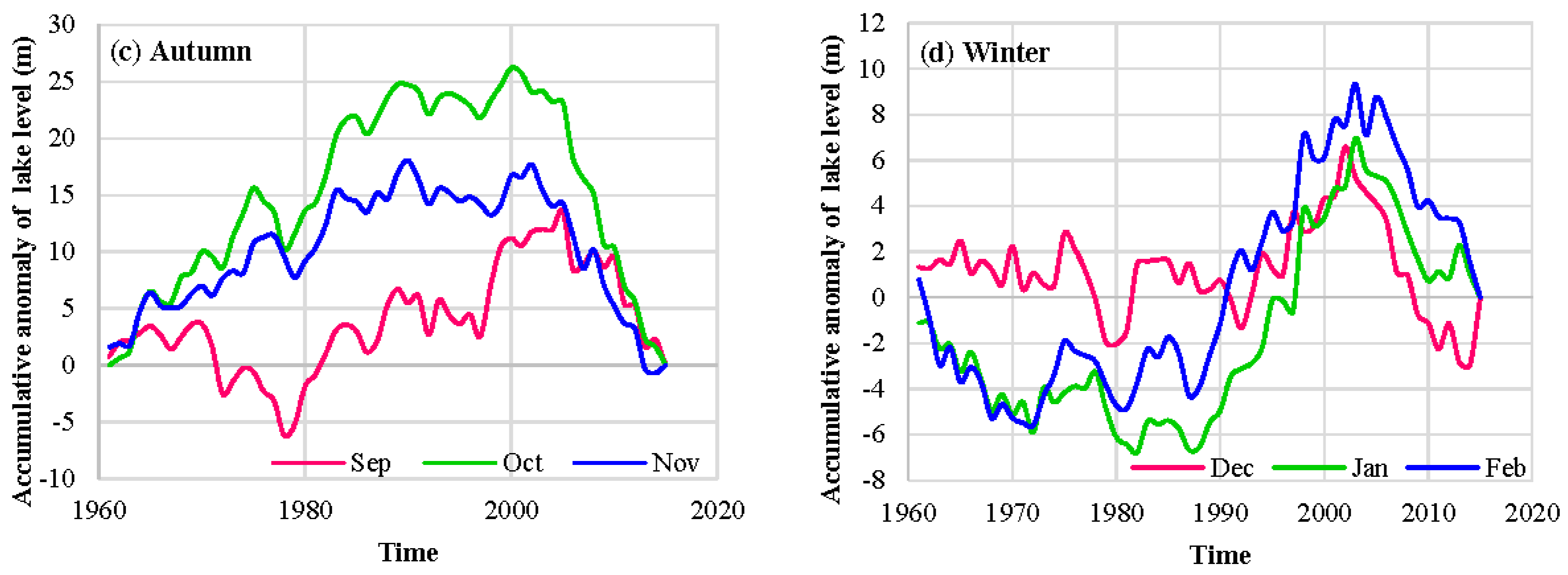
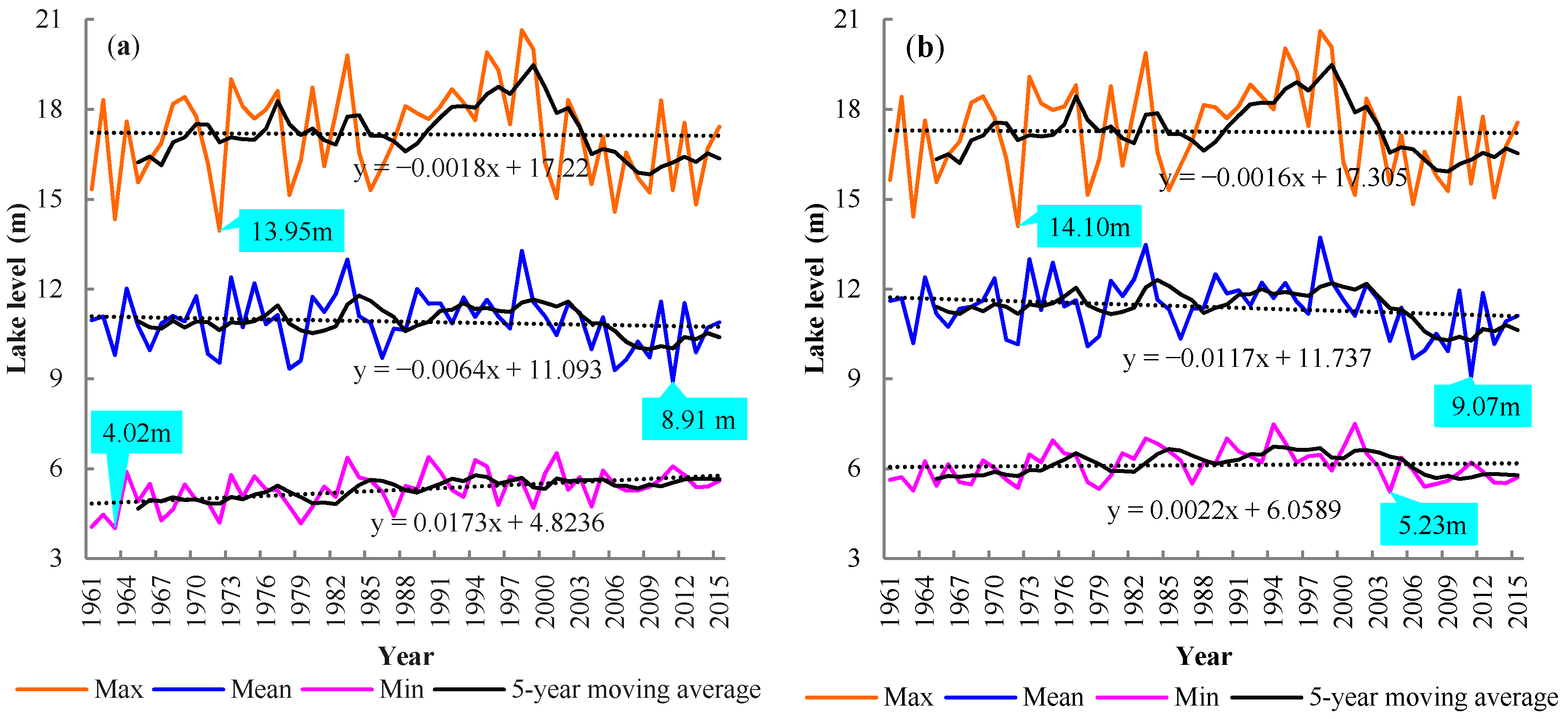
- Compared to past decades, the dryness in Poyang Lake has become more dramatic since 2000. In addition, during the 2000s, the lake level clearly decreased in autumn, with a speed of 11.26 cm/day. The annual average, maximum, and minimum lake levels showed decreasing trends during the past decade. Moreover, the occurrences of the different grades of low lake level (10 m, 8 m) in the Poyang Lake both moved forward, and their durations were also prolonged.
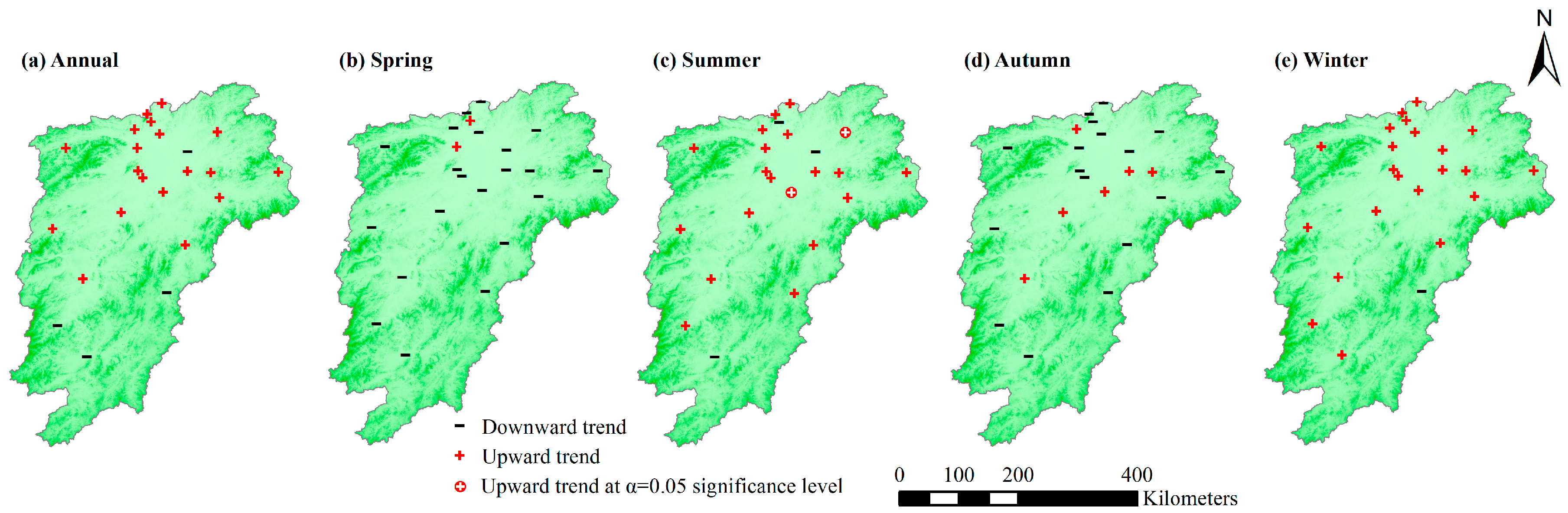
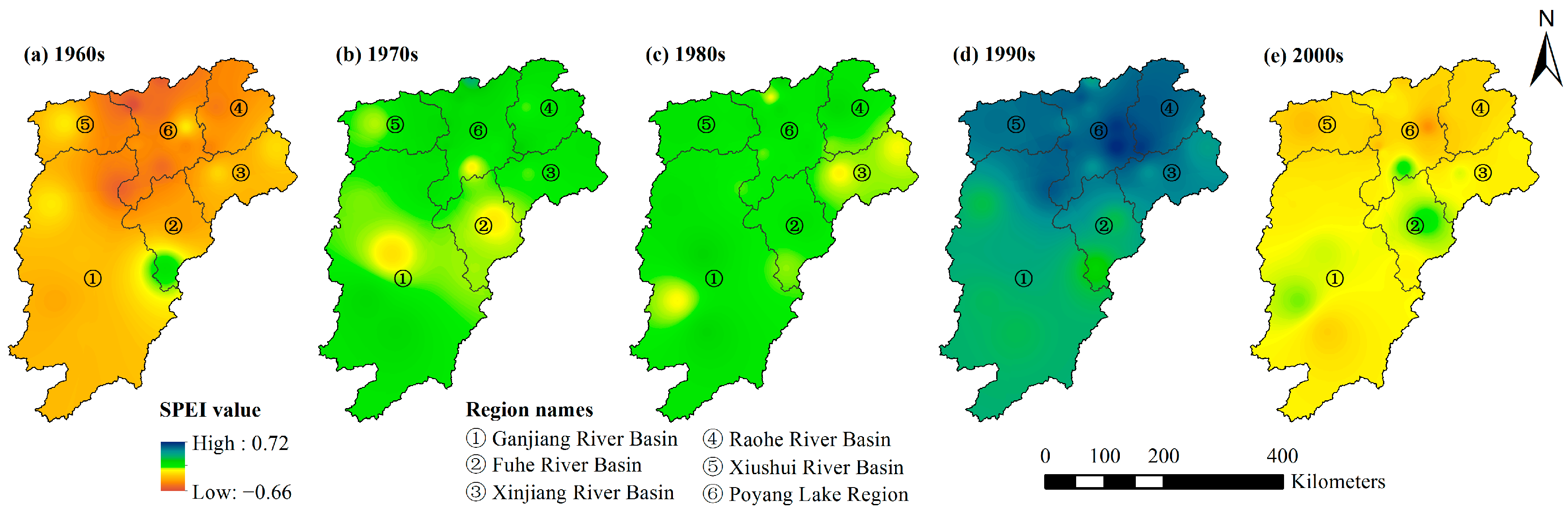
- The meteorological drought in the Poyang Lake Basin showed obviously seasonal characteristics over time; drying tendencies were apparent in spring and autumn, which will undoubtedly make it more difficult for the region to achieve drought resistance. In addition, the worsening meteorological drought in autumn and spring may lead to severe agricultural drought in the Poyang Lake Basin. Furthermore, the spatial distribution of SPEI values in the 2000s showed that the Poyang Lake Basin has entered a second relative drought period. Moreover, seasonal meteorological droughts have also occurred frequently in previous decades, especially in autumn (34.5%).
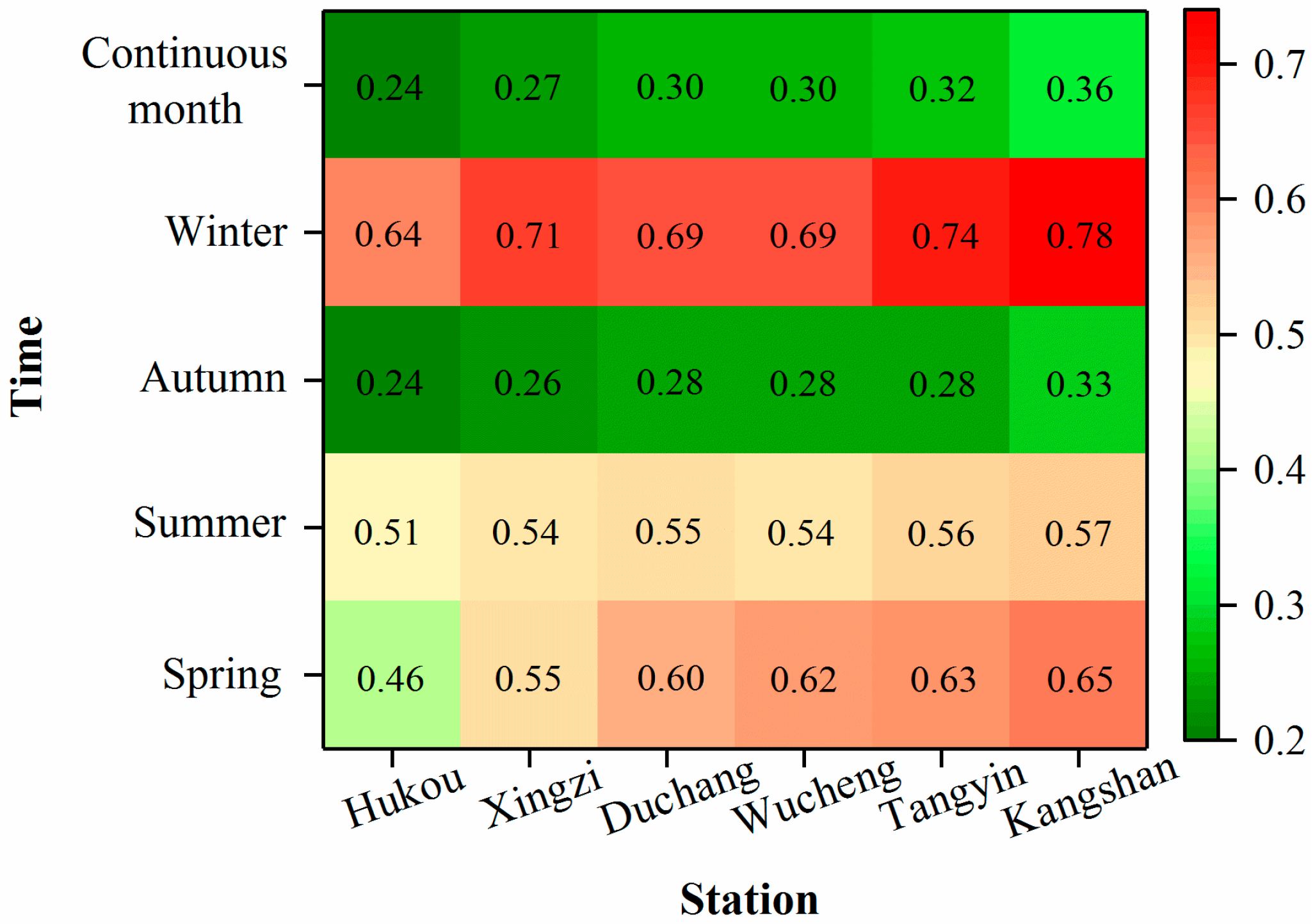
- There was a significant correlation between the water level of Poyang Lake and the meteorological drought index (SPEI), and the three- and six-month timescales were the optimum times for the lake level to respond to climate changes in the basin. Seasonally, the correlation between lake level and SPEI was best in winter, with a maximum correlation of 0.74, and worst in autumn. Furthermore, the correlation coefficients increased from north to south, namely, the spatial distribution of correlations between the SPEI and lake level was: Hukou < Xingzi < Duchang < Wucheng < Tangyin < Kangshan.
Acknowledgments
Author Contributions
Conflicts of Interest
References
- Dai, A. Drought under global warming: A review. Wiley Interdiscip. Rev. Clim. Chang. 2011, 2, 45–65. [Google Scholar] [CrossRef] [Scilit]
- Wilhite, D.A. Drought as a natural hazard: Concepts and definitions. Drought Glob. Assess. 2000, 1, 3–18. [Google Scholar]
- Mishra, A.K.; Singh, V.P. A review of drought concepts. J. Hydrol. 2010, 391, 202–216. [Google Scholar] [CrossRef] [Scilit]
- Yao, Y.B.; Zhang, Q.; Li, Y.H.; Wang, Y.; Wang, J.S. Drought risk assessment technological processes and problems. Resour. Sci. 2013, 35, 1884–1897. (In Chinese) [Google Scholar]
- Glantz, M.H. Understanding: The drought phenomenon: The role of definitions. Water Int. 1985, 10, 111–120. [Google Scholar]
- Liu, M.; Xu, X.; Xu, C.; Sun, A.Y.; Wang, K.; Scanlon, B.R.; Zhang, L. A new drought index that considers the joint effects of climate and land surface change. Water Resour. Res. 2017, 53, 3262–3278. [Google Scholar] [CrossRef] [Scilit]
- Vicenteserrano, S.M.; Beguería, S.; Lópezmoreno, J.I. A multiscalar drought index sensitive to global warming: The standardized precipitation evapotranspiration index. J. Clim. 2010, 23, 1696–1718. [Google Scholar] [CrossRef] [Scilit]
- Zhou, L.; Wu, J.J.; L, A.F.; Zhang, J.; Zhao, L. Drought evolution of different land cover regions in North China. Geogr. Res. 2012, 31, 597–607. (In Chinese) [Google Scholar]
- Shi, B.L.; Zhu, X.Y.; Hu, Y.C.; Yang, Y.Y. Spatial and temporal variations of drought in Henan province over a 53-year period based on standardized precipitation evapotranspiration index. Geogr. Res. 2015, 34, 1547–1558. (In Chinese) [Google Scholar]
- Zhang, S.Y. Arid Meteorology; China Meteorological Press: Beijing, China, 2008.
- Wang, Z.L.; Huang, Z.Q.; Li, J.; Zhong, R.D.; Huang, W.W. Assessing impacts of meteorological drought on vegetation at catchment scale in China based on SPEI and NDVI. Trans. Chin. Soc. Agric. Eng. 2016, 32, 177–186. (In Chinese) [Google Scholar]
- Hao, Z.; Singh, V.P. Drought characterization from a multivariate perspective: A review. J. Hydrol. 2015, 527, 668–678. [Google Scholar] [CrossRef] [Scilit]
- Li, X.N.; Xie, P.; Li, B.B.; Zhang, B. A probability calculation method for different grade drought event under changing environment-Taking Wuding River basin as an example. ShuiLi Xuebao 2014, 45, 585–594. (In Chinese) [Google Scholar]
- Zhao, H.; Gao, G.; An, W.; Zou, X.; Li, H.; Hou, M. Timescale differences between SC-PDSI and SPEI for drought monitoring in China. Phys. Chem. Earth 2015, 102, 48–58. [Google Scholar] [CrossRef] [Scilit]
- Liu, L.; Hong, Y.; Bednarczyk, C.N.; Yong, B.; Shafer, M.A.; Riley, R.; Hocker, J.E. Hydro-climatological drought analyses and projections using meteorological and hydrological drought indices: A case study in Blue River Basin, Oklahoma. Water Resour. Manag. 2012, 26, 2761–2779. [Google Scholar] [CrossRef] [Scilit]
- Dabanli, I.; Mishra, A.K.; Şen, Z. Long-term spatio-temporal drought variability in Turkey. J. Hydrol. 2017, 552, 779–792. [Google Scholar] [CrossRef] [Scilit]
- Vicente-Serrano, S.M.; Beguería, S.; López-Moreno, J.I. Comment on “Characteristics and trends in various forms of the palmer drought severity index (PDSI) during 1900–2008” by Aiguo Dai. J. Geophys. Res. Atmos. 2011, 116, 484–491. [Google Scholar] [CrossRef] [Scilit]
- Wang, L.; Chen, W. Applicability analysis of standardized precipitation evapotranspiration index in drought monitoring in China. Plateau Meteorol. 2014, 33, 423–431. (In Chinese) [Google Scholar]
- Ye, X.C.; Li, Y.L.; Li, X.H.; Xu, C.Y.; Zhang, Q. Investigation of the variability and implications of meteorological dry/wet conditions in the Poyang Lake Catchment, China, during the period 1960–2010. Adv. Meteorol. 2015, 72, 928534. [Google Scholar] [CrossRef] [Scilit]
- Yang, M.; Yan, D.; Yu, Y.; Yang, Z. SPEI-based spatiotemporal analysis of drought in Haihe River Basin from 1961 to 2010. Adv. Meteorol. 2016, 2016, 7658015. [Google Scholar] [CrossRef] [Scilit]
- Dan, Z.; Bo, Z.; Jing, L.; Zhang, C.; Meiling, A.N.; Dong, W. SPEI-based intensity characteristics and cause analysis of drought in north China during recent 50 years. J. Nat. Disasters 2014, 23, 192–202. [Google Scholar]
- Sun, B.; Zhao, H.; Wang, X. Spatiotemporal characteristics of drought in northeast China based on SPEI. Ecol. Environ. Sci. 2015, 24, 22–28. [Google Scholar]
- Vörösmarty, C.J.; Mcintyre, P.B.; Gessner, M.O.; Dudgeon, D.; Prusevich, A.; Green, P.; Glidden, S.; Bunn, S.E.; Sullivan, C.A.; Liermann, C.R. Global threats to human water security and river biodiversity. Nature 2010, 467, 555–561. [Google Scholar] [CrossRef] [Scilit] [PubMed]
- Zhang, D.; Liao, Q.; Zhang, L.; Wang, D.; Luo, L.; Chen, Y.; Zhong, J.; Liu, J. Occurrence and spatial distributions of microcystins in Poyang Lake, the largest freshwater lake in China. Ecotoxicology 2015, 24, 19–28. [Google Scholar] [CrossRef] [Scilit] [PubMed]
- Jin, B.S.; Nie, M.; Li, Q.; Chen, J.K.; Zhou, W.B. Basic characteristics, challenges and key scientific questions of the Poyang Lake Basin. Resour. Environ. Yangtze Basin 2012, 21, 268–275. (In Chinese) [Google Scholar]
- Editorial Board of Study on Poyang Lake. Study on Poyang Lake; Shanghai Scientific and Technical Publishers: Shanghai, China, 1988. (In Chinese) [Google Scholar]
- Luo, W.; Zhang, X.; Deng, Z.M.; Xiao, Y. Variation of the total runoff into Poyang Lake and drought-flood abrupt alternation during the past 50 years. J. Basic Sci. Eng. 2013, 21, 845–856. (In Chinese) [Google Scholar]
- Zhang, Y.; You, Q.; Lin, H.; Chen, C. Analysis of dry/wet conditions in the Gan River Basin, China, and their association with large-scale atmospheric circulation. Glob. Planet. Chang. 2015, 133, 309–317. [Google Scholar] [CrossRef] [Scilit]
- Li, X.; Zhang, Q.; Ye, X. Dry/wet conditions monitoring based on trmm rainfall data and its reliability validation over Poyang Lake Basin, China. Water 2013, 5, 1848–1864. [Google Scholar] [CrossRef] [Scilit]
- Xia, S.X.; Yu, X.B.; Liu, Y.; Jia, Y.F.; Zhang, G.S. Current issues and future trends of Poyang Lake wetland. Resour. Environ. Yangtze Basin 2016, 25, 1103–1111. (In Chinese) [Google Scholar]
- Huang, Y.; Li, Y.K.; Ji, W.T.; Xu, P.; Wang, Z.G. Bird diversity and conservation status in Poyang Lake Area. Wetl. Sci. 2016, 14, 311–327. (In Chinese) [Google Scholar]
- Zhang, L.; Yao, X.; Tang, C.; Xu, H.; Jiang, X.; Zhang, Y. Influence of long-term inundation and nutrient addition on denitrification in sandy wetland sediments from Poyang Lake, a large shallow subtropical lake in China. Environ. Pollut. 2016, 219, 440–449. [Google Scholar] [CrossRef] [Scilit] [PubMed]
- Ye, X.; Zhang, Q.; Bai, L.; Hu, Q. A modeling study of catchment discharge to Poyang Lake under future climate in China. Quat. Int. 2011, 244, 221–229. [Google Scholar] [CrossRef] [Scilit]
- Zhang, Q.; Li, L.; Wang, Y.G.; Werner, A.D.; Xin, P.; Jiang, T.; Barry, D.A. Has the Three-Gorges Dam made the Poyang Lake wetlands wetter and drier? Geophys. Res. Lett. 2012, 39. [Google Scholar] [CrossRef] [Scilit]
- Feng, L.; Hu, C.; Chen, X.; Zhao, X. Dramatic inundation changes of China’s two largest freshwater lakes linked to the Three Gorges Dam. Environ. Sci. Technol. 2013, 47, 9628–9634. [Google Scholar] [CrossRef] [Scilit] [PubMed]
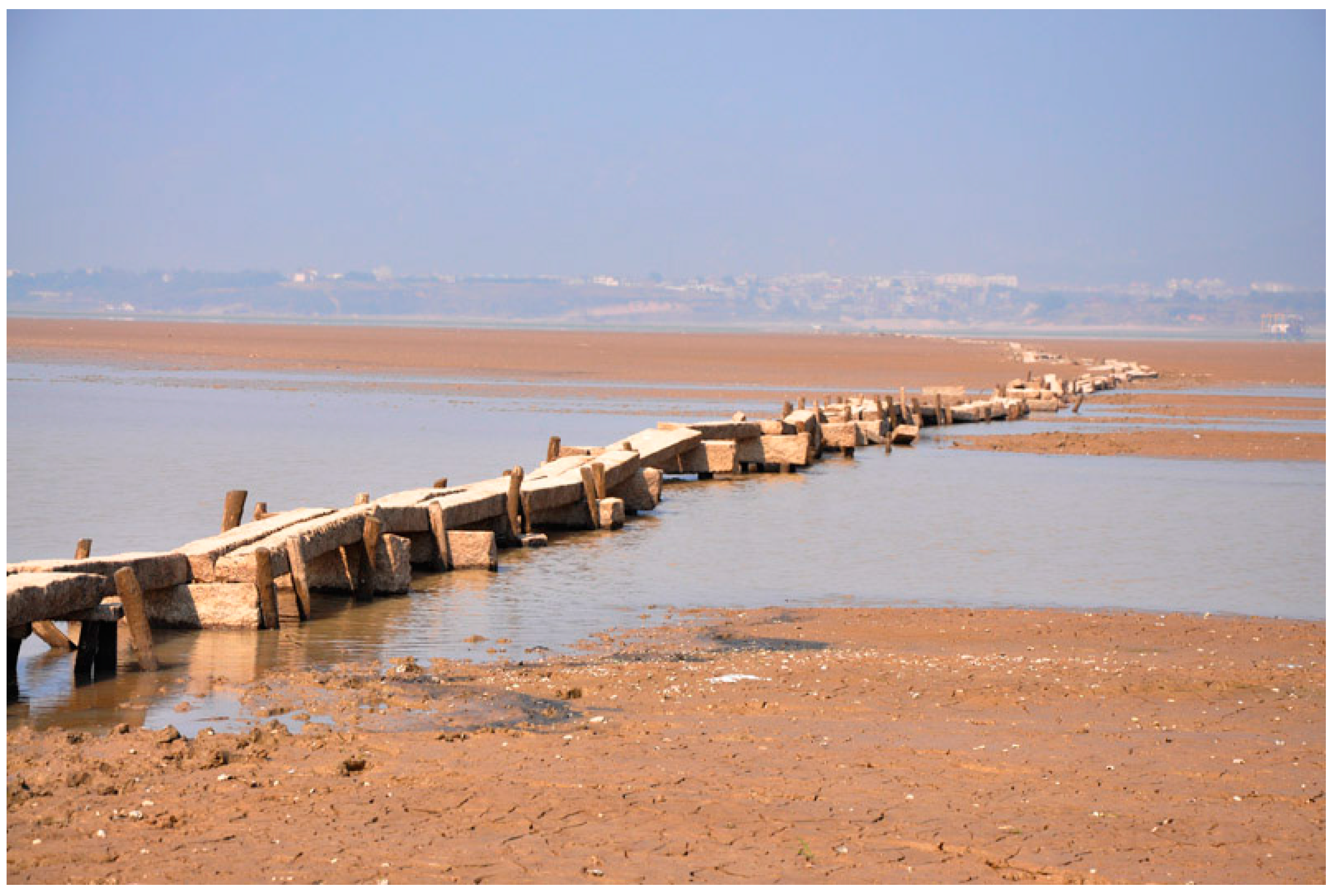
- China Broadcasting Network. Poyang Lake Entered Dry Season Earlier than Normal, as a Result, the “Thousand-Eye Bridge” Built in the Ming Dynasty Revealed. Available online: http://jx.cnr.cn/2011jxfw/shxw/201310/t20131023_513909110.shtml (accessed on 23 October 2013).
- Xu, L.; Zhu, M.; He, B.; Wang, X.; Zhang, Q.; Jiang, J.; Razafindrabe, B.H.N. Analysis of water balance in Poyang Lake Basin and subsequent response to climate change. J. Coast. Res. 2014, 68, 136–143. [Google Scholar] [CrossRef] [Scilit]
- Zhang, Z.; Huang, Y.; Xu, C.Y.; Chen, X.; Moss, E.M.; Jin, Q.; Bailey, A.M. Analysis of Poyang Lake water balance and its indication of river–lake interaction. Springerplus 2016, 5, 1555. [Google Scholar] [CrossRef] [Scilit] [PubMed]
- Dai, X.Z.; Fang, Y.; Chen, K.; Lin, L.S.; Liao, G.Z.; Tane, H. Integrated technology approach for Poyang Lake watershed planning and managenment. Jiangxi Sci. 2003, 21, 217–221. (In Chinese) [Google Scholar]
- Thiessen, A.H. Precipitation averages for large areas. Mon. Weather Rev. 1911, 39, 1082–1084. [Google Scholar] [CrossRef] [Scilit]
- Fetter, C.W. Applied Hydrogeology; Pearson: London, UK, 2001; pp. 278–289. [Google Scholar]
- Oloruntade, A.J.; Mohammad, T.A.; Ghazali, A.H.; Wayayok, A. Analysis of meteorological and hydrological droughts in the Niger-South Basin, Nigeria. Glob. Planet. Chang. 2017, 155, 225–233. [Google Scholar] [CrossRef] [Scilit]
- Ayantobo, O.O.; Li, Y.; Song, S.; Yao, N. Spatial comparability of drought characteristics and related return periods in mainland China over 1961–2013. J. Hydrol. 2017, 550, 549–567. [Google Scholar] [CrossRef] [Scilit]
- Gao, X.; Qi, Z.; Zhao, X.; Wu, P.; Pan, W.; Gao, X.; Miao, S. Temporal and spatial evolution of the standardized precipitation evapotranspiration index (SPEI) in the Loess Plateau under climate change from 2001 to 2050. Sci. Total Environ. 2017, 595, 191–200. [Google Scholar] [CrossRef] [Scilit] [PubMed]
- Thornthwaite, C.W. An approach toward a rational classification of climate. Geogr. Rev. 1948, 38, 55–94. [Google Scholar] [CrossRef] [Scilit]
- Mann, H.B. Nonparametric tests against trend. Econometrica 1945, 13, 245–259. [Google Scholar] [CrossRef] [Scilit]
- Kendall, M.G. Rank Correlation Methods; Charles Griffin: London, UK, 1975. [Google Scholar]
- Zeng, X.; Zhao, N.; Sun, H.; Ye, L.; Zhai, J. Changes and relationships of climatic and hydrological droughts in the Jialing River Basin, China. PLoS ONE. 2015, 10, e0141648. [Google Scholar] [CrossRef] [Scilit] [PubMed]
- Hisdal, H.; Stahl, K.; Tallaksen, L.M.; Demuth, S. Have streamflow droughts in Europe become more severe or frequent? Int. J. Climatol. 2001, 21, 317–333. [Google Scholar] [CrossRef] [Scilit]
- Wu, H.; Soh, L.K.; Samal, A.; Chen, X.H. Trend analysis of streamflow drought events in Nebraska. Water Resour. Manag. 2008, 22, 145–164. [Google Scholar] [CrossRef] [Scilit]
- Mei, X.; Dai, Z.; Fagherazzi, S.; Chen, J. Dramatic variations in emergent wetland area in China’s largest freshwater lake, Poyang Lake. Adv. Water Resour. 2016, 96, 1–10. [Google Scholar] [CrossRef] [Scilit]
- Wen, X.; Wu, X.; Gao, M. Spatiotemporal variability of temperature and precipitation in Gansu Province (Northwest China) during 1951–2015. Atmos. Res. 2017, 197, 132–149. [Google Scholar] [CrossRef] [Scilit]
- Zhao, Y.; Zou, X.; Liu, Q.; Yao, Y.; Li, Y.; Wu, X.; Wang, C.; Yu, W.; Teng, W. Assessing natural and anthropogenic influences on water discharge and sediment load in the Yangtze River, China. Sci. Total Environ. 2017, 607–608, 920–932. [Google Scholar] [CrossRef] [Scilit] [PubMed]
- Ran, L.; Wang, S.; Fan, X. Channel change at Toudaoguai Station and its responses to the operation of upstream reservoirs in the upper Yellow River. J. Geogr. Sci. 2010, 20, 231–247. [Google Scholar] [CrossRef] [Scilit]
- Yu, Z.W.; Hu, K.D. Analysis on hydraulic gradient at the bottom of the concrete cutoff walls in strengthening earthrock dams. Jiang Hydraul. Sci. Technol. 2014, 40, 253–257. (In Chinese) [Google Scholar]
- Tan, G.L.; Guo, S.L.; Wang, J. Study on the Evolution of Hydrology and Water Resources in Poyang Lake Ecological Economic Zone; China Water and Power Press: Beijing, China, 2013. [Google Scholar]
- Lu, G.Y.; Wong, D.W. An adaptive inverse-distance weighting spatial interpolation technique. Comput. Geosci. 2008, 34, 1044–1055. [Google Scholar] [CrossRef] [Scilit]
- Zhang, Q.; Ye, X.C.; Werner, A.D.; Li, Y.L.; Yao, J.; Li, X.H.; Xu, C.Y. An investigation of enhanced recessions in Poyang Lake: Comparison of Yangtze River and local catchment impacts. J. Hydrol. 2014, 517, 425–434. [Google Scholar] [CrossRef] [Scilit]
- Wu, H.; Zeng, G.; Liang, J.; Chen, J.; Xu, J.; Dai, J.; Sang, L.; Li, X.; Ye, S. Responses of landscape pattern of China’s two largest freshwater lakes to early dry season after the impoundment of Three-Gorges Dam. Int. J. Appl. Earth Obs. Geoinf. 2017, 56, 36–43. [Google Scholar] [CrossRef] [Scilit]
- Ouyang, Q.L.; Liu, W.L. Variation characteristics of water level in Poyang Lake over 50 year. Resour. Environ. Yangtze Basin 2014, 23, 1545–1550. (In Chinese) [Google Scholar]
- Zhao, J.K.; Li, J.F.; Jiang, C.J.; Li, L.X.; Zhao, Z.; Zhang, A.S.; Cao, M. Water exchange between river and lake in the middle and lower reach of Changjiang River. Adv. Water Sci. 2013, 24, 759–770. (In Chinese) [Google Scholar]
- Min, Q.; Zhang, L.S. Characteristics of low-water level changes in Lake Poyang during 1952–2011. J. Lake Sci. 2012, 24, 675–678. (In Chinese) [Google Scholar]
- Liu, Y.B.; Zhao, X.S.; Wu, G.P. A primary investigation on the formation of frequent droughts in the Poyang Lake Basin in recent decade. Resour. Environ. Yangtze Basin 2014, 23, 131–138. (In Chinese) [Google Scholar]
- Guo, H.; Yin, G.Q.; Jiang, T. Prediction on the possible climate change of Poyang Lake Basin in the future 50 year. Resour. Environ. Yangtze Basin 2008, 17, 73–78. (In Chinese) [Google Scholar]
- Ye, X.; Li, Y.; Li, X.; Zhang, Q. Factors influencing water level changes in China’s largest freshwater lake, Poyang Lake, in the past 50 years. Water Int. 2014, 39, 983–999. [Google Scholar] [CrossRef] [Scilit]
- Mei, X.; Dai, Z.; Du, J.; Chen, J. Linkage between Three Gorges Dam impacts and the dramatic recessions in China’s largest freshwater lake, Poyang Lake. Sci. Rep. 2015, 5, 18197. [Google Scholar] [CrossRef] [Scilit] [PubMed]
- Gan, X.Y.; Liu, C.L.; Huang, X.M. Study on the drought in Poyang Lake. J. Anhui Agric. Sci. 2011, 39, 14676–14678. (In Chinese) [Google Scholar]
- Lai, X.; Shankman, D.; Huber, C.; Yesou, H.; Huang, Q.; Jiang, J. Sand mining and increasing Poyang Lake’s discharge ability: A reassessment of causes for lake decline in China. J. Hydrol. 2014, 519, 1698–1706. [Google Scholar] [CrossRef] [Scilit]
- Zhang, F.P.; Fang, S.W.; Zhou, Z.H.; Wen, T.F.; Zhang, M.H. Research on multi-time-scale dynamic characteristics of water-level fluctuation of the Poyang Lake in China. Resour. Environ. Yangtze Basin 2017, 26, 126–133. (In Chinese) [Google Scholar]
- Wan, R.R.; Yang, G.S.; Wang, X.L.; Qin, N.X.; Dai, X. Progress of research on the relationship between the Yangtze River and its connected lakes in the middle reaches. J. Lake Sci. 2014, 26, 1–8. (In Chinese) [Google Scholar]






| Category | SPEI Value |
|---|---|
| No drought | −0.5 < SPEI |
| Light drought | −1 < SPEI ≤ −0.5 |
| Moderate drought | −1.5 < SPEI ≤ −1 |
| Severe drought | −2 < SPEI ≤ −1.5 |
| Extreme drought | SPEI ≤ −2 |
| Period | ≤10 m | ≤8 m | ||||
|---|---|---|---|---|---|---|
| Earliest Date | Mean Date | Duration (Day) | Earliest Date | Mean Date | Duration (Day) | |
| 1960s | 7 November | 22 November | 120 | 22 November | 13 December | 79 |
| 1970s | 1 September | 4 November | 128 | 24 October | 7 December | 78 |
| 1980s | 16 October | 23 November | 107 | 25 November | 12 December | 65 |
| 1990s | 19 September | 10 November | 114 | 13 November | 3 December | 62 |
| 2000s | 22 August | 19 November | 142 | 28 September | 22 November | 84 |
© 2018 by the authors. Licensee MDPI, Basel, Switzerland. This article is an open access article distributed under the terms and conditions of the Creative Commons Attribution (CC BY) license (http://creativecommons.org/licenses/by/4.0/).
Share and Cite
Wang, R.; Peng, W.; Liu, X.; Wu, W.; Chen, X.; Zhang, S. Responses of Water Level in China’s Largest Freshwater Lake to the Meteorological Drought Index (SPEI) in the Past Five Decades. Water 2018, 10, 137. https://doi.org/10.3390/w10020137
Wang R, Peng W, Liu X, Wu W, Chen X, Zhang S. Responses of Water Level in China’s Largest Freshwater Lake to the Meteorological Drought Index (SPEI) in the Past Five Decades. Water. 2018; 10(2):137. https://doi.org/10.3390/w10020137
Chicago/Turabian StyleWang, Ruonan, Wenqi Peng, Xiaobo Liu, Wenqiang Wu, Xuekai Chen, and Shijie Zhang. 2018. "Responses of Water Level in China’s Largest Freshwater Lake to the Meteorological Drought Index (SPEI) in the Past Five Decades" Water 10, no. 2: 137. https://doi.org/10.3390/w10020137
APA StyleWang, R., Peng, W., Liu, X., Wu, W., Chen, X., & Zhang, S. (2018). Responses of Water Level in China’s Largest Freshwater Lake to the Meteorological Drought Index (SPEI) in the Past Five Decades. Water, 10(2), 137. https://doi.org/10.3390/w10020137