A Data-Driven Framework for Early-Stage Fatigue Damage Detection in Aluminum Alloys Using Ultrasonic Sensors




Abstract
1. Introduction
2. Experimental Method
2.1. Specimen Design
2.2. Fatigue Testing Apparatus
2.3. Heterogeneous Sensors for Damage Detection
2.3.1. Ultrasonic Sensors
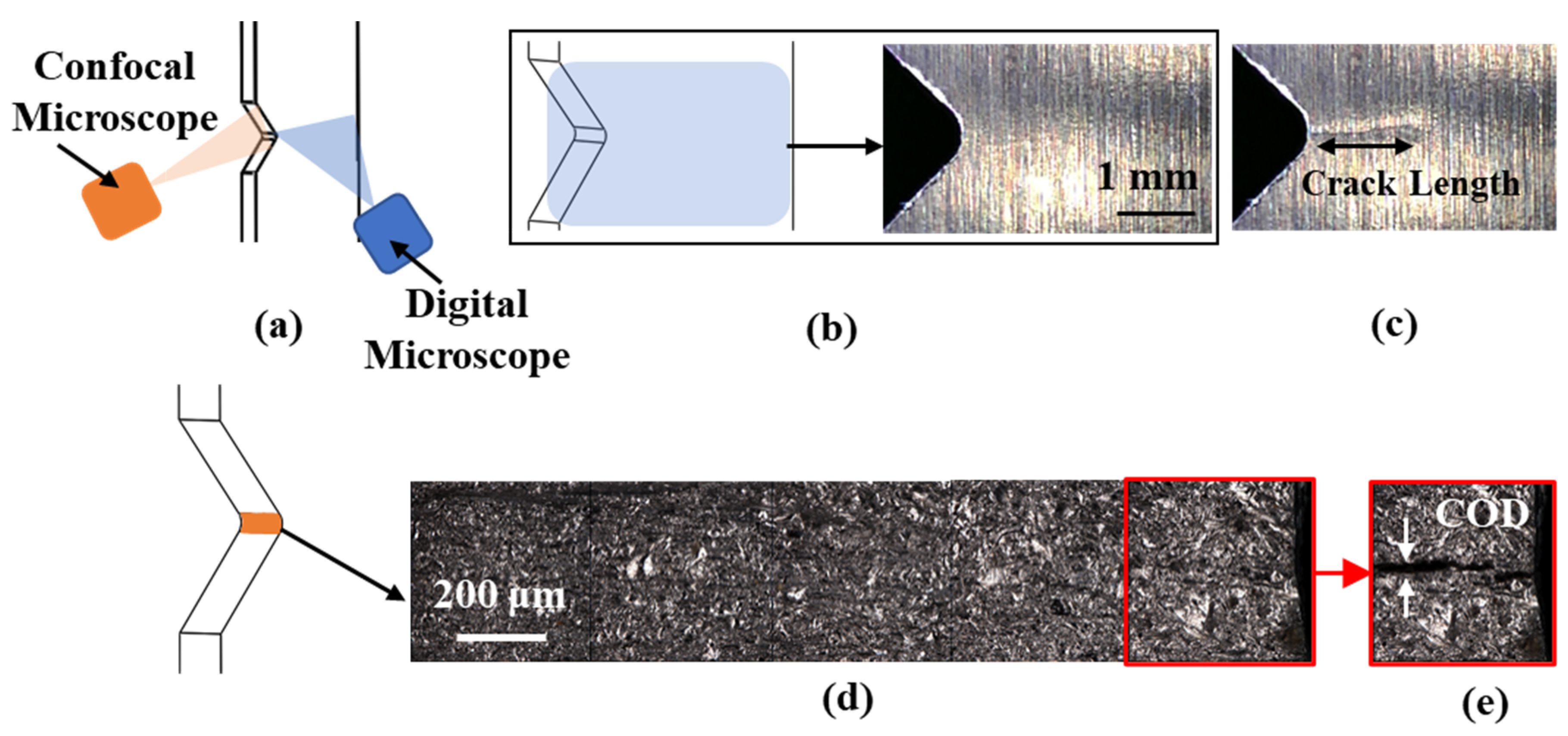
2.3.2. Confocal and Digital Microscope
3. Integration of Symbolic Time-Series Analysis (STSA) with Machine Learning
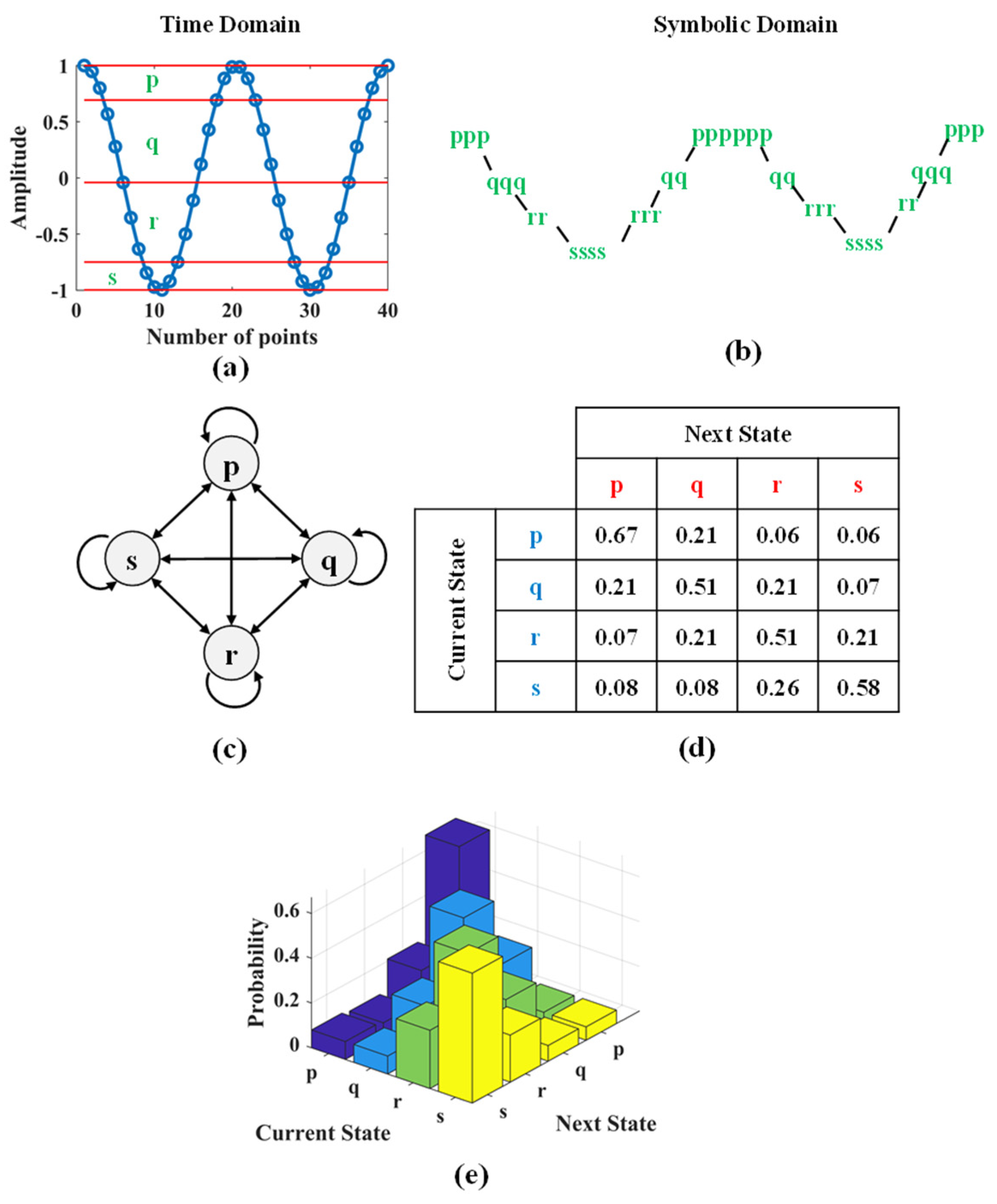
3.1. Symbolic Time-Series Analysis (STSA)
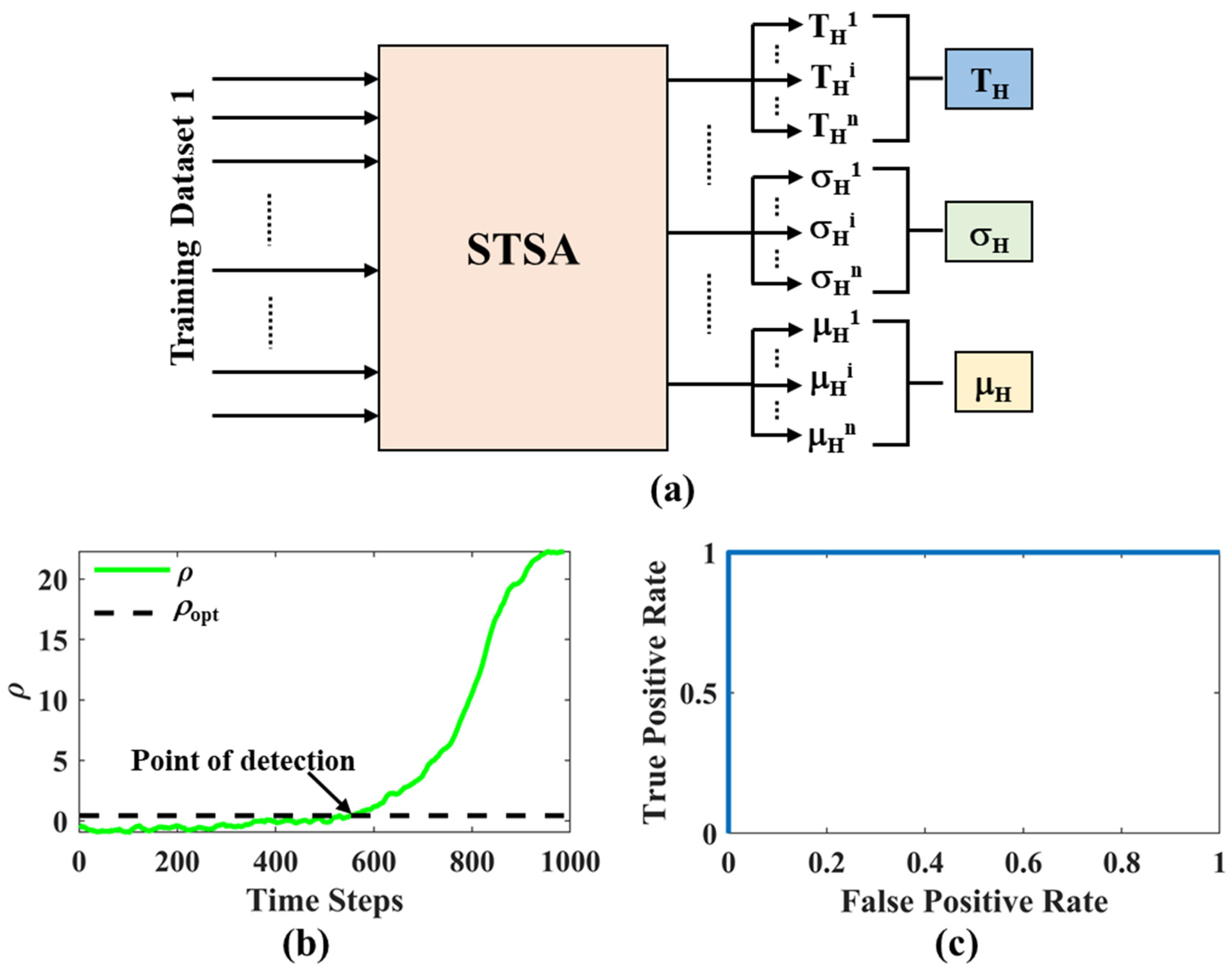
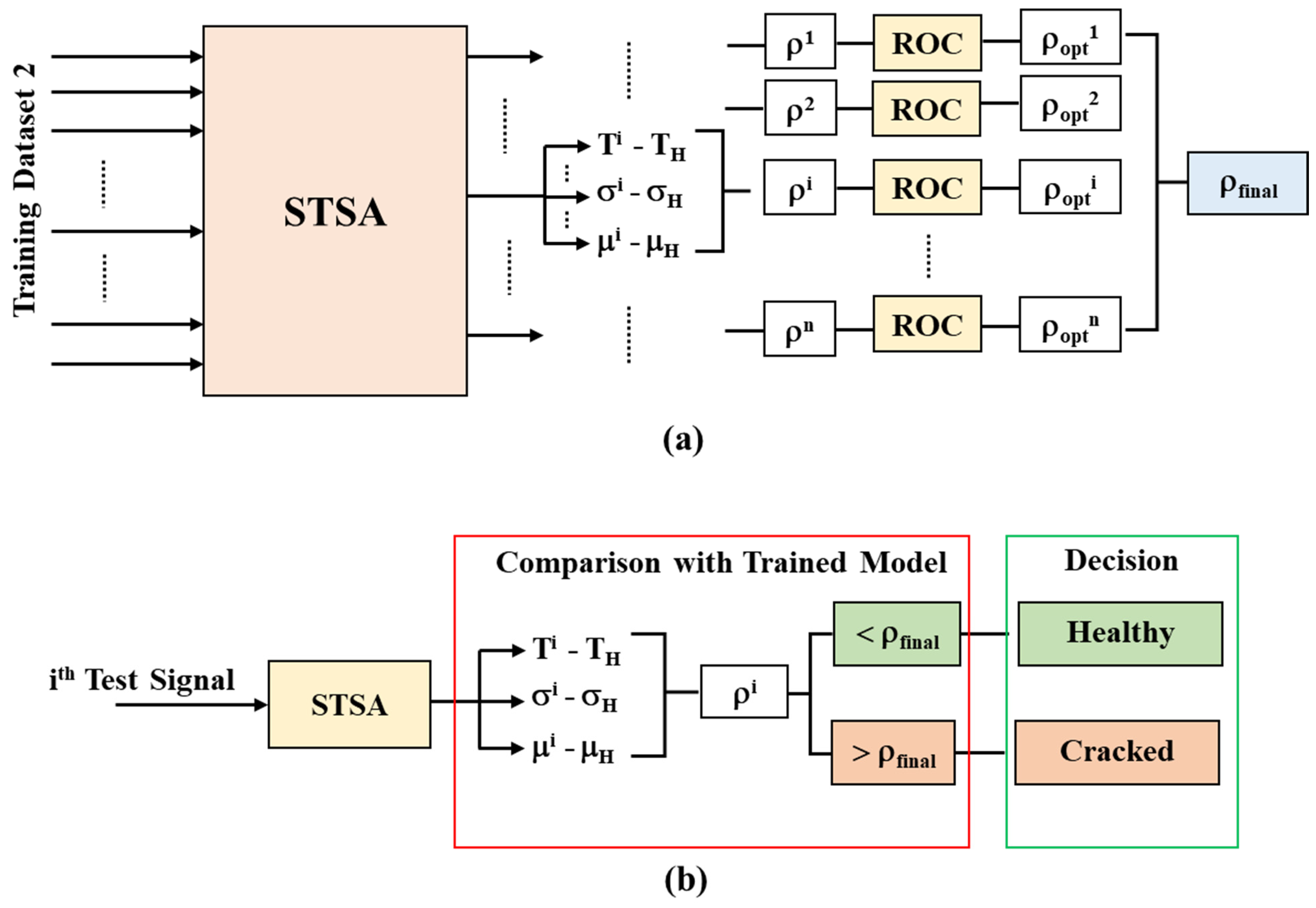
3.2. Machine Learning Framework
4. Results and Discussion
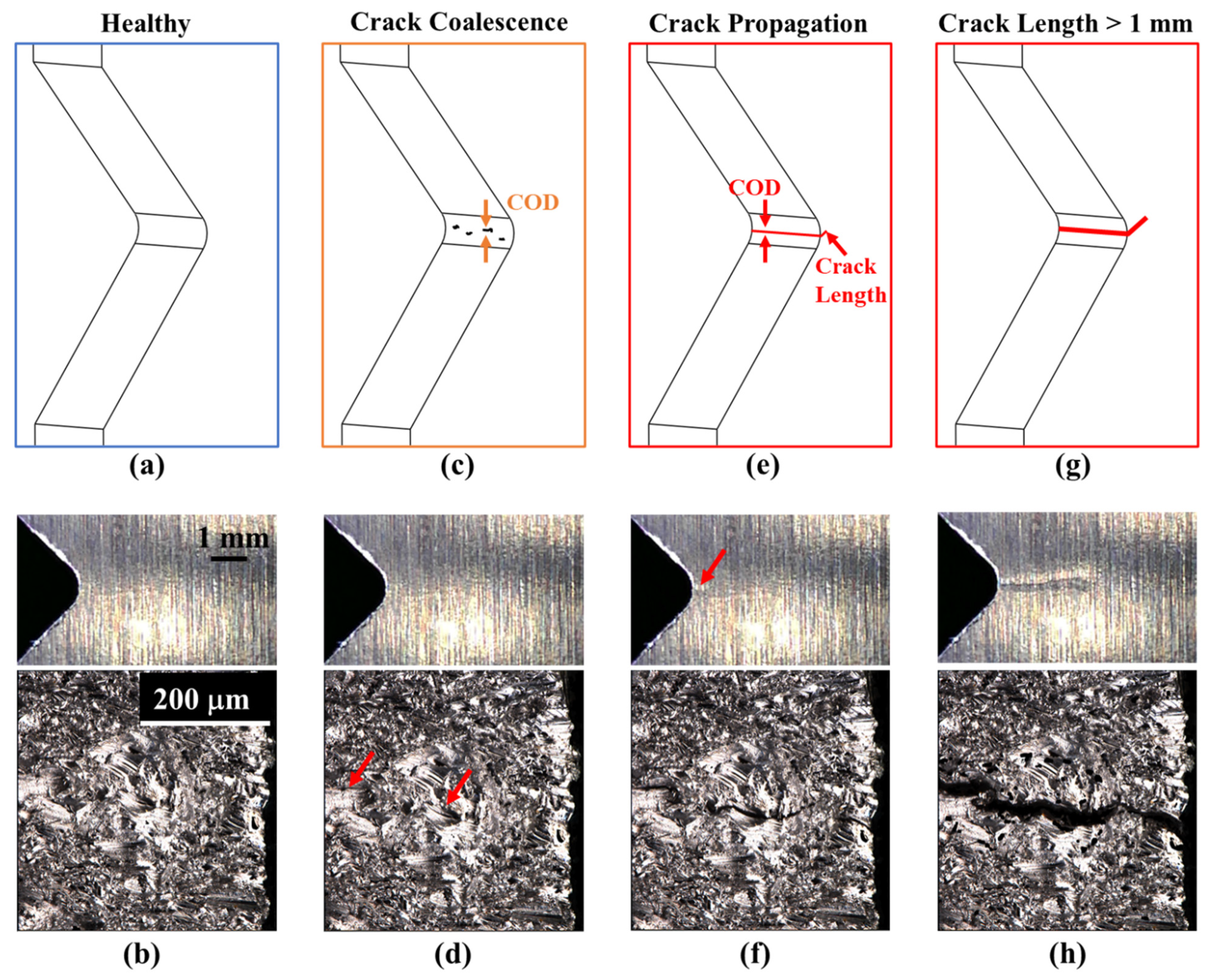
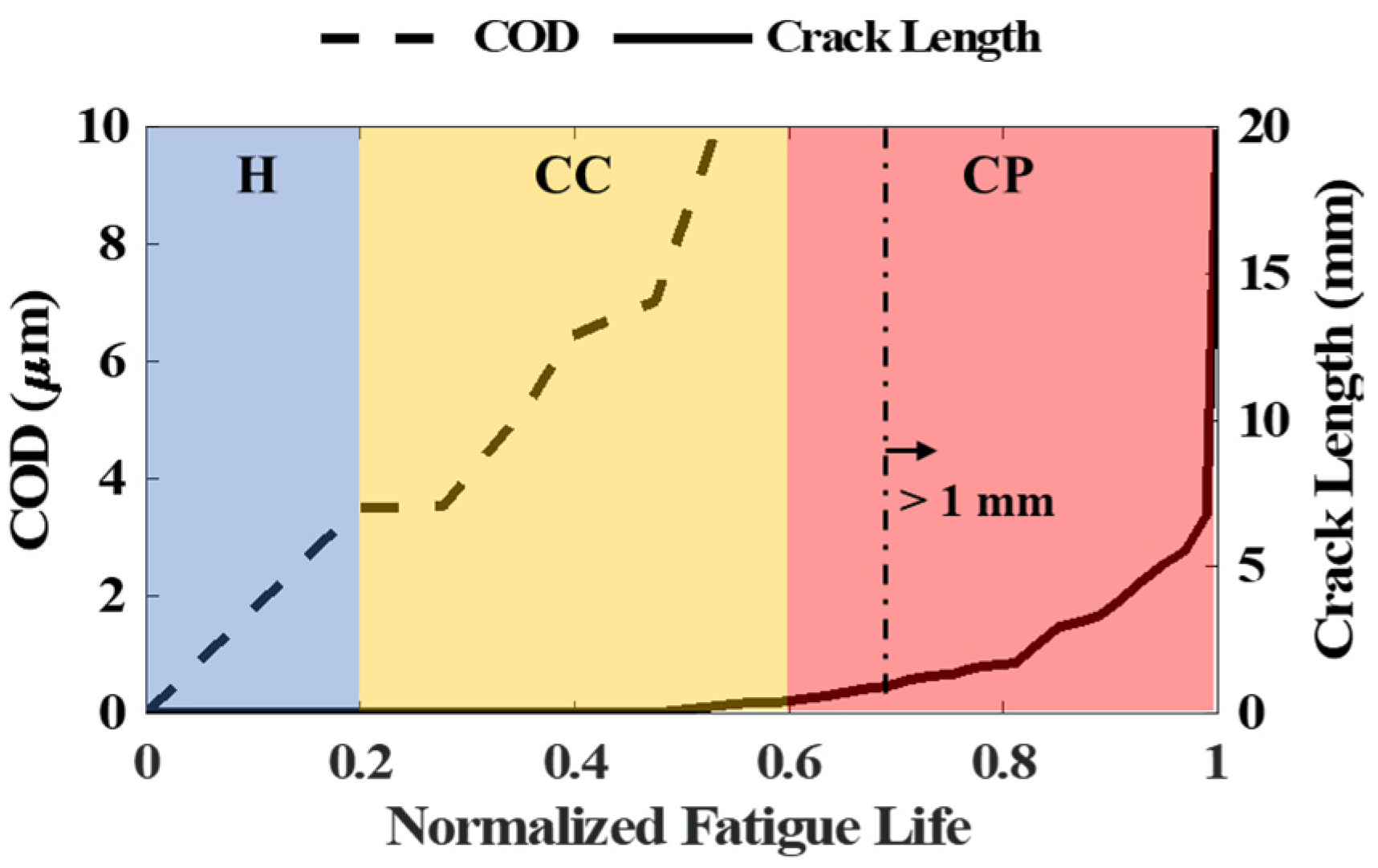
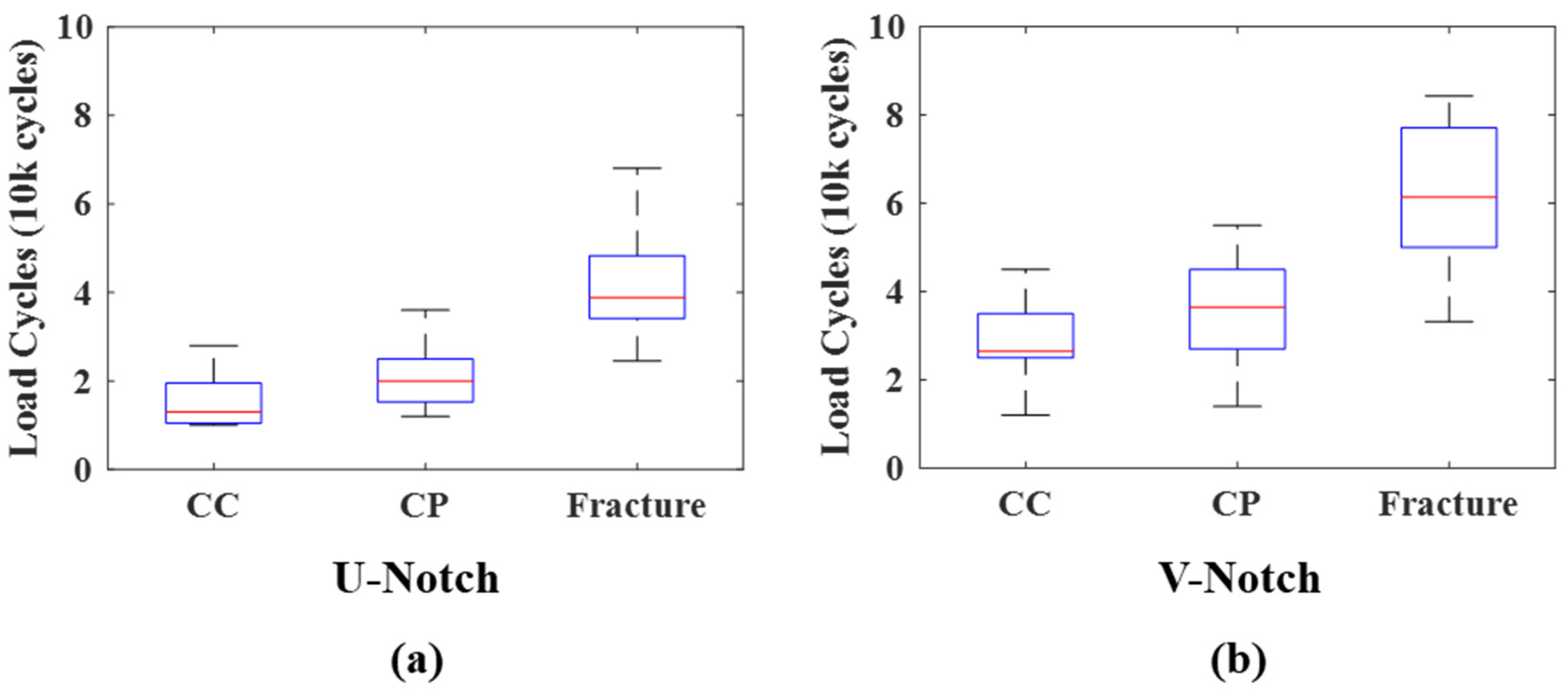
4.1. Fatigue Failure Progression
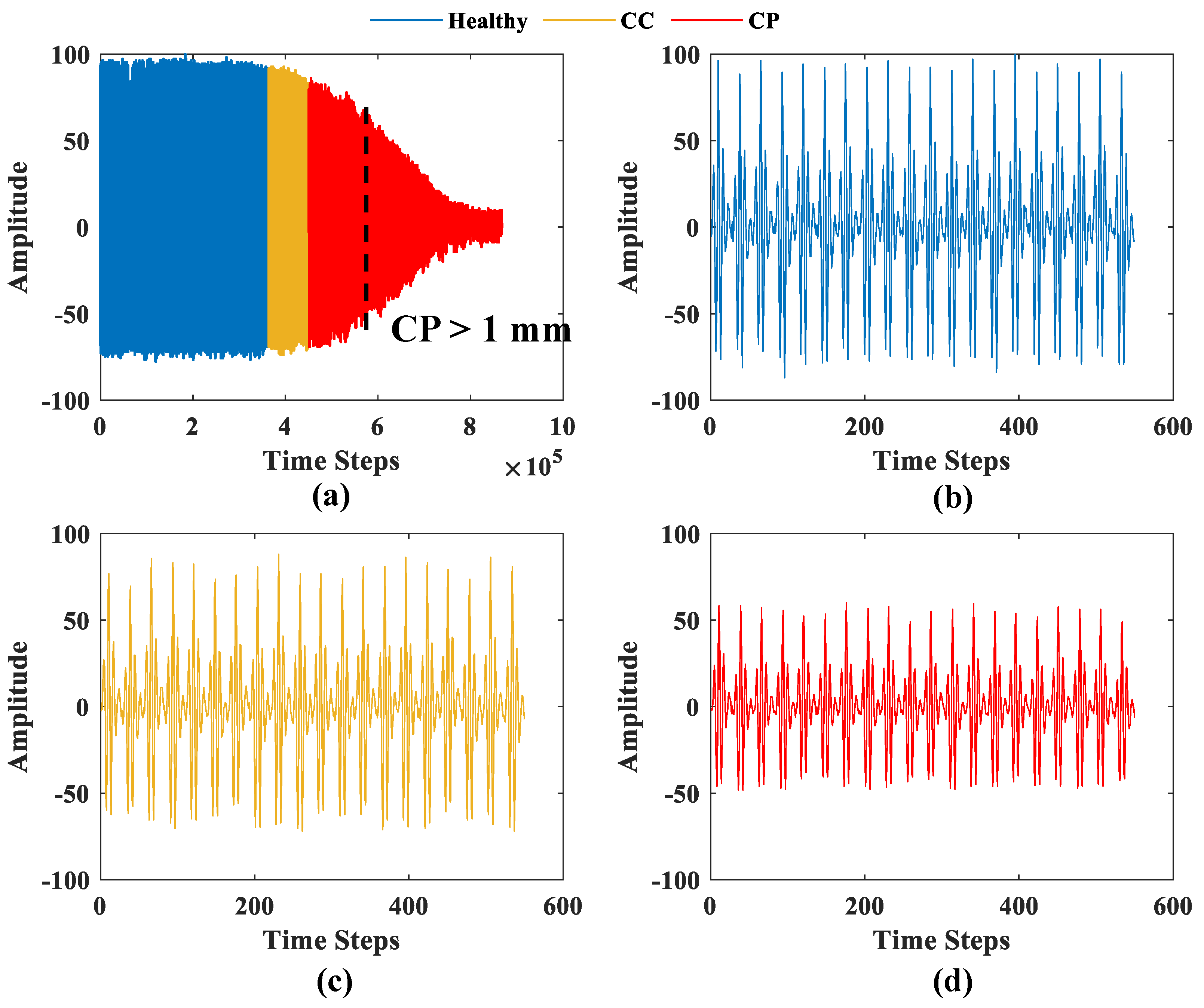
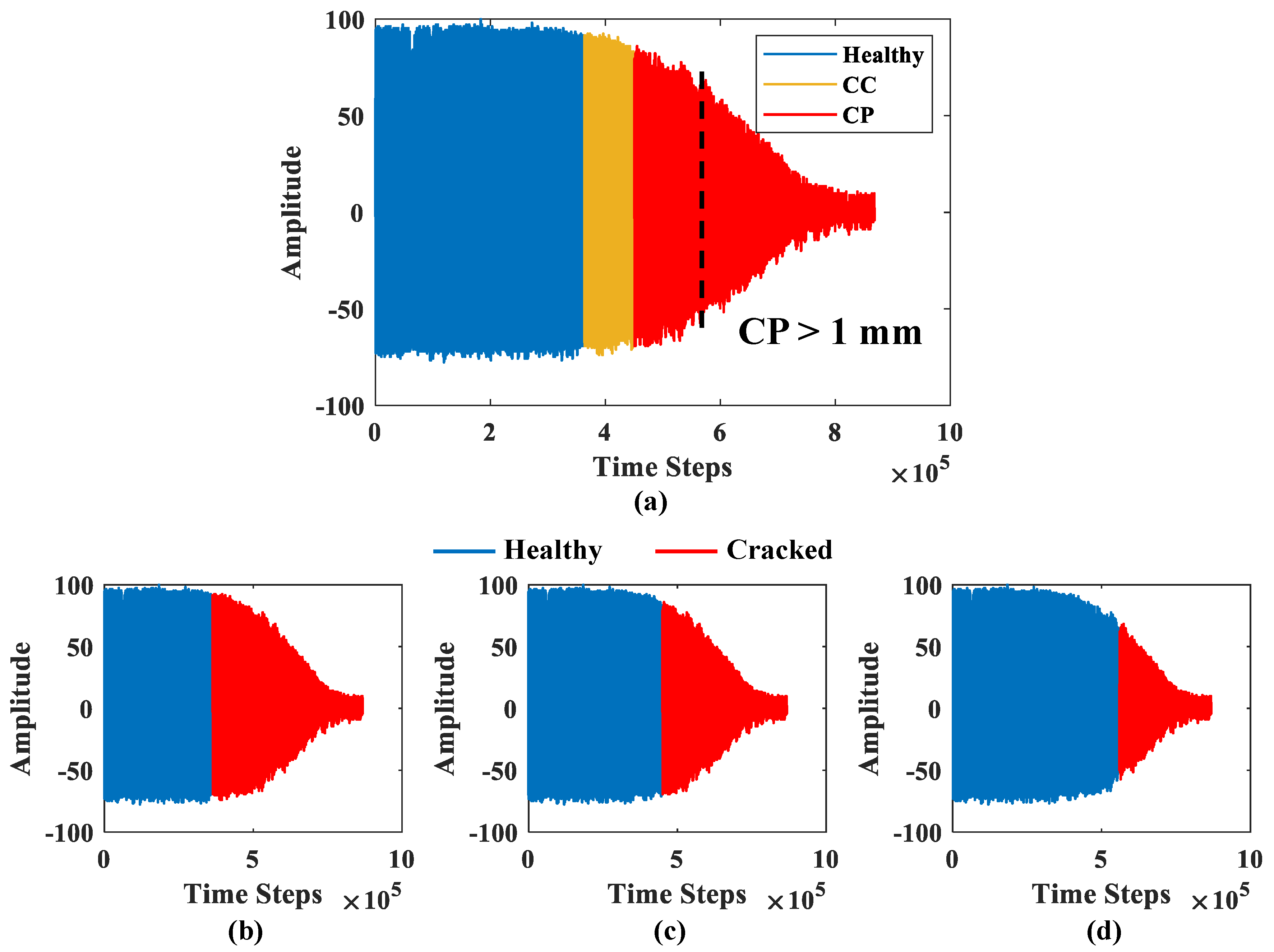
4.2. Ultrasonic Time-Series Signal
4.3. Regime-Specific Fatigue Crack Detection
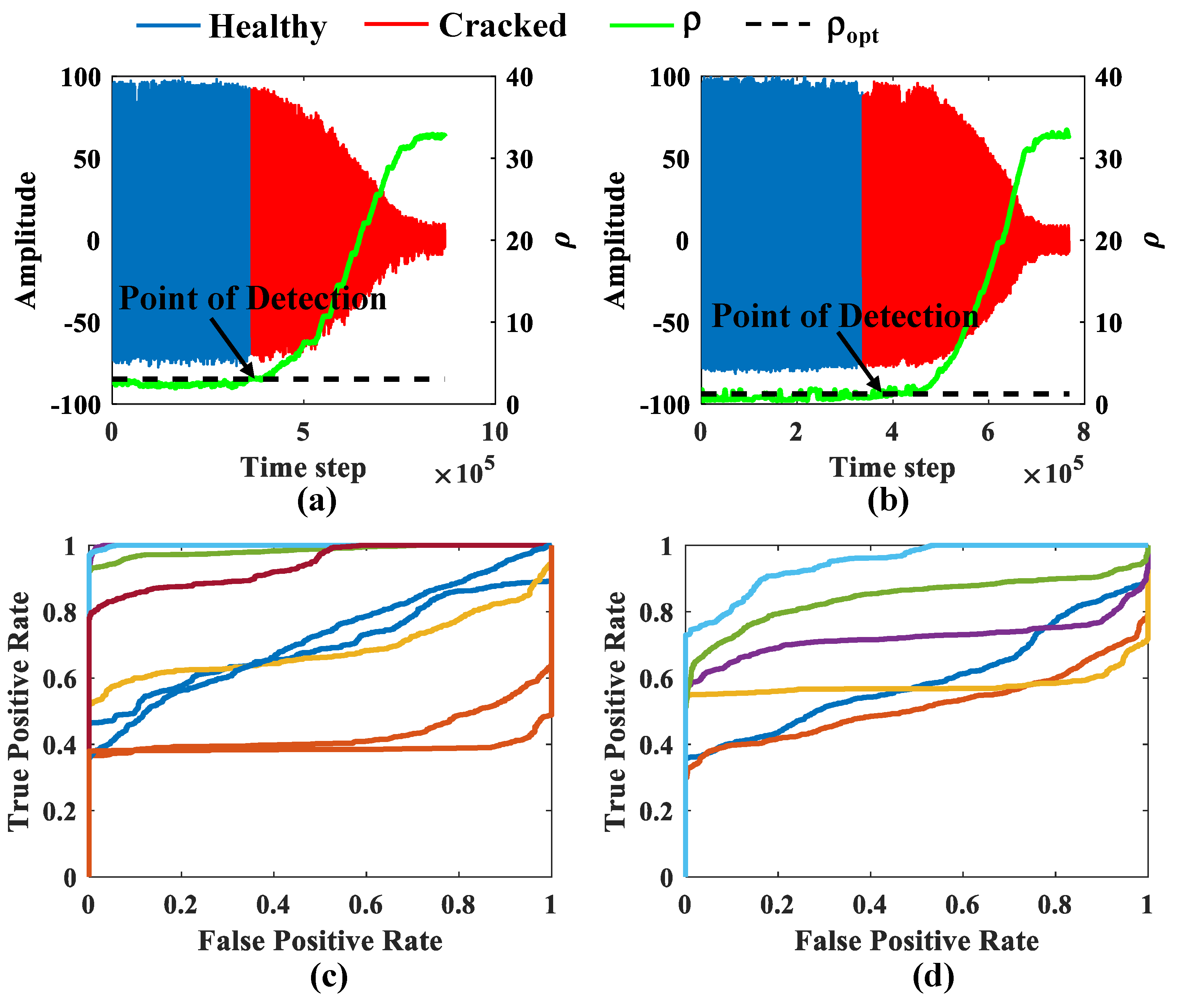
4.3.1. Fatigue Crack Detection in the CC Regime
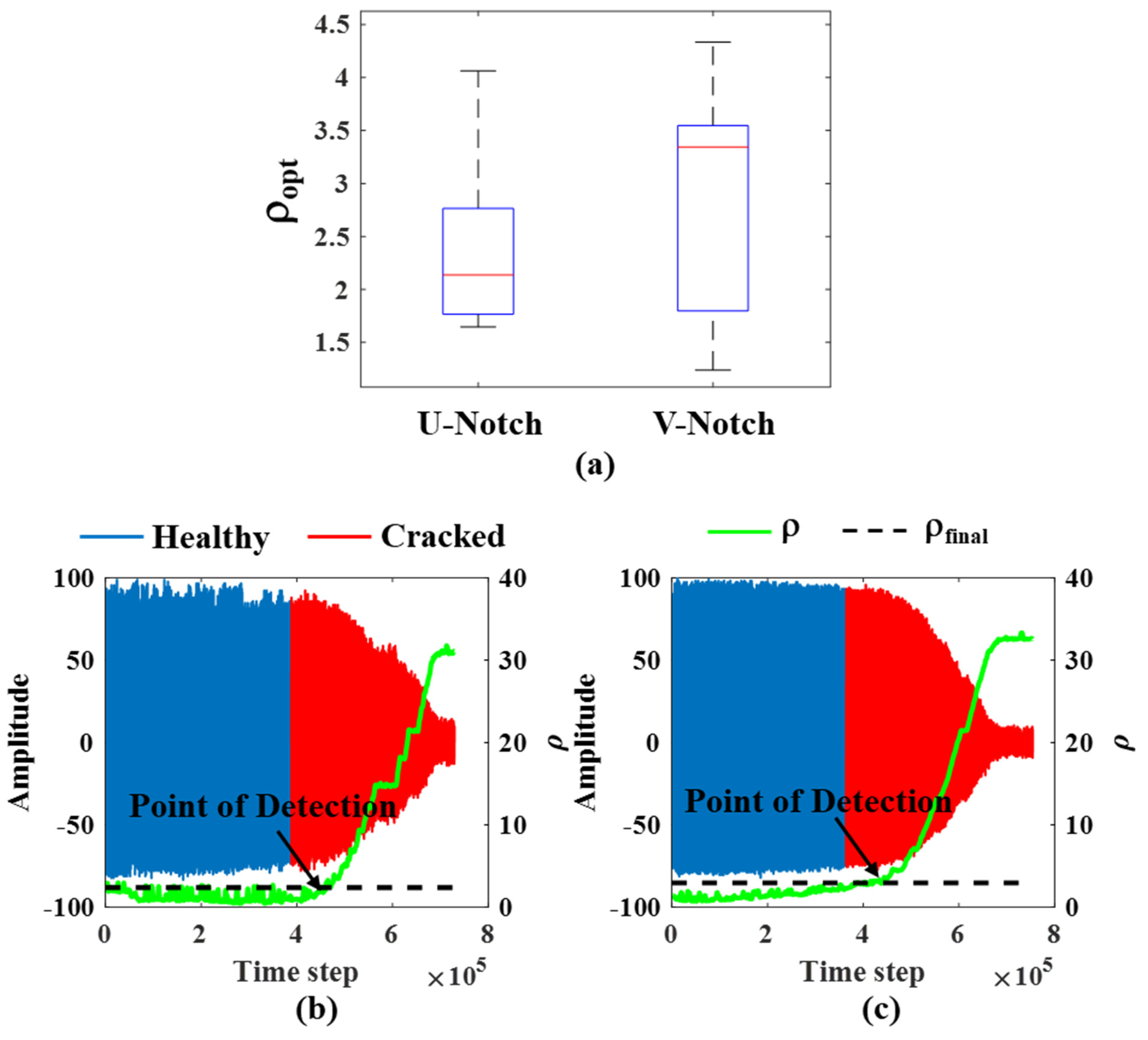
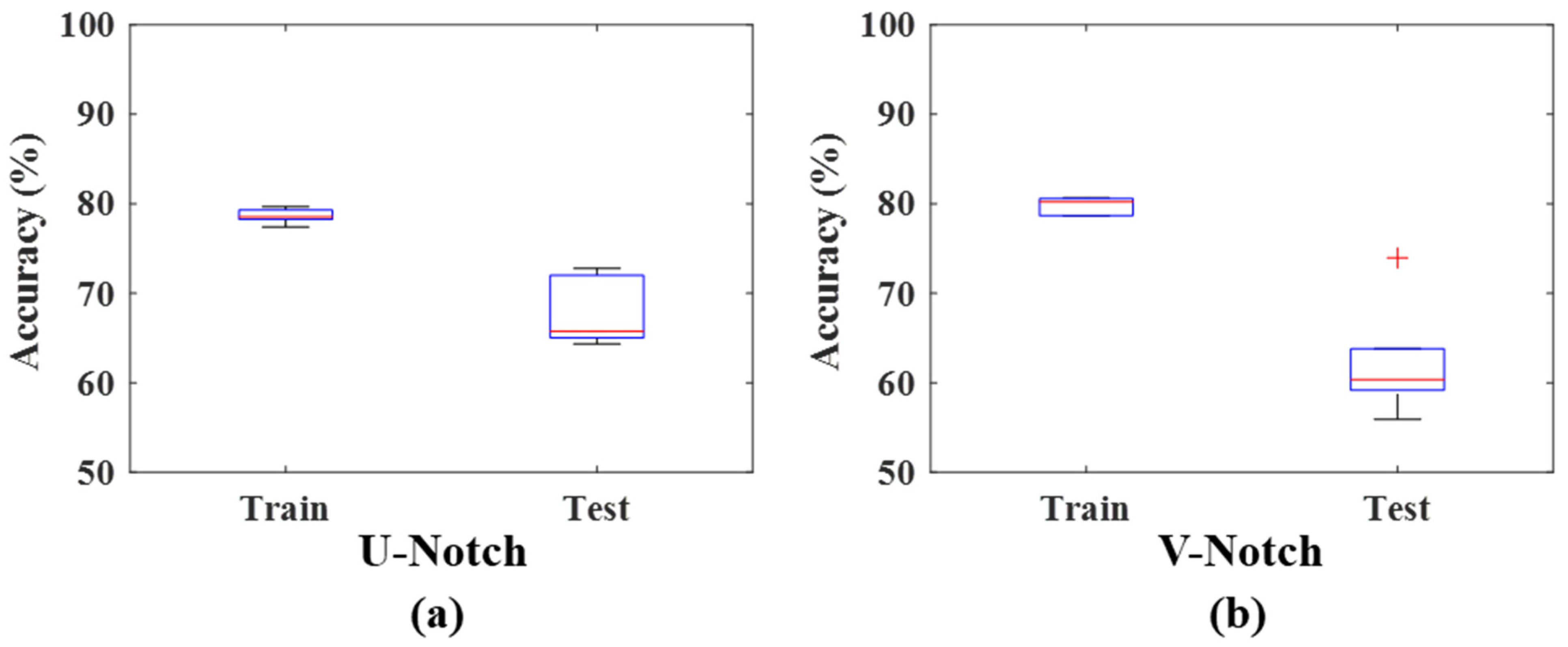
4.3.2. Fatigue Crack Detection in the CP and CP > 1 Regimes
5. Summary, Conclusions, and Future Work
Author Contributions
Funding
Institutional Review Board Statement
Informed Consent Statement
Data Availability Statement
Acknowledgments
Conflicts of Interest
References
- Suresh, S. Fatigue of Materials; Cambridge University Press: Cambridge, UK, 1998. [Google Scholar]
- Inman, D.J.; Farrar, C.R.; Junior, V.L.; Junior, V.S. Damage Prognosis: For Aerospace, Civil. and Mechanical Systems; John Wiley & Sons: New York, NY, USA, 2005. [Google Scholar]
- Gupta, S.; Ray, A.; Keller, E. Online fatigue damage monitoring by ultrasonic measurements: A symbolic dynamics approach. Int. J. Fatigue 2007, 29, 1100–1114. [Google Scholar] [CrossRef] [Scilit]
- Karimian, S.F.; Modarres, M.; Bruck, H.A. A new method for detecting fatigue crack initiation in aluminum alloy using acoustic emission waveform information entropy. Eng. Fract. Mech. 2020, 223, 106771. [Google Scholar] [CrossRef] [Scilit]
- Papazian, J.M.; Nardiello, J.; Silberstein, R.P.; Welsh, G.; Grundy, D.; Craven, C.; Evans, L.; Goldfine, N.; Michaels, J.E.; Michaels, T.E.; et al. Sensors for monitoring early stage fatigue cracking. Int. J. Fatigue 2007, 29, 1668–1680. [Google Scholar] [CrossRef] [Scilit]
- Leong, W.H.; Staszewski, W.J.; Lee, B.C.; Scarpa, F. Structural health monitoring using scanning laser vibrometry: III. Lamb waves for fatigue crack detection. Smart Mater. Struct. 2005, 14, 1387. [Google Scholar] [CrossRef] [Scilit]
- Kong, X.; Li, J.; Collins, W.; Bennett, C.; Laflamme, S.; Jo, H. A robust signal processing method for quantitative high-cycle fatigue crack monitoring using soft elastomeric capacitor sensors. In Proceedings of the Sensors and Smart Structures Technologies for Civil, Mechanical, and Aerospace Systems, Portland, OR, USA, 26–29 March 2017; Volume 10168, p. 101680B. [Google Scholar]
- Dharmadhikari, S.; Basak, A. Energy dissipation metrics for data-driven fatigue damage detection in the short crack regime for aluminum alloys. In Turbo Expo: Power, Land, Sea, and Air; American Society of Mechanical Engineers; 7 June 2021; Volume 85031, p. V09BT26A004.
- Anderson, T.L. Fracture Mechanics: Fundamentals and Applications; CRC Press: Boca Raton, FL, USA, 2017. [Google Scholar]
- Danzl, R.; Helmli, F.; Scherer, S. Focus variation—A new technology for high resolution optical 3D surface metrology. In Proceedings of the 10th International Coneference of the Slovenian Society for Non-Destructive Testing, Ljubljana, Slovenia, 1–3 September 2009; pp. 481–491. [Google Scholar]
- Dharmadhikari, S.; Basak, A. Evaluation of Early Fatigue Damage Detection in Additively Manufactured AlSi10Mg. In Proceedings of the Annual International Solid Freeform Fabrication Symposium, Virtual, 2–4 August 2021. [Google Scholar]
- Mitra, M.; Gopalakrishnan, S. Guided wave based structural health monitoring: A review. Smart Mater. Struct. 2016, 25, 53001. [Google Scholar] [CrossRef] [Scilit]
- Rose, J.L. Ultrasonic Guided Waves in Solid Media; Cambridge University Press: Cambridge, UK, 2014. [Google Scholar]
- Cho, H.; Lissenden, C.J. Structural health monitoring of fatigue crack growth in plate structures with ultrasonic guided waves. Struct. Heal. Monit. 2012, 11, 393–404. [Google Scholar] [CrossRef] [Scilit]
- Matlack, K.H.; Kim, J.Y.; Jacobs, L.J.; Qu, J. Review of Second Harmonic Generation Measurement Techniques for Material State Determination in Metals. J. Nondestruct. Eval. 2015, 34, 273. [Google Scholar] [CrossRef] [Scilit]
- Herrera, R.H.; Orozco, R.; Rodriguez, M. Wavelet-based deconvolution of ultrasonic signals in nondestructive evaluation. J. Zhejiang Univ. A 2006, 7, 1748–1756. [Google Scholar] [CrossRef] [Scilit]
- Bagnall, A.; Lines, J.; Bostrom, A.; Large, J.; Keogh, E. The great time series classification bake off: A review and experimental evaluation of recent algorithmic advances. Data Min. Knowl. Discov. 2017, 31, 606–660. [Google Scholar] [CrossRef] [Scilit]
- Bhattacharya, C.; Dharmadhikari, S.; Basak, A.; Ray, A. Early detection of fatigue crack damage in ductile materials: A projection-based probabilistic finite state automata approach. ASME Lett. Dyn. Syst. Control. 2021, 1, 41003. [Google Scholar] [CrossRef] [Scilit]
- Mukherjee, K.; Ray, A. State splitting and merging in probabilistic finite state automata for signal representation and analysis. Signal. Process. 2014, 104, 105–119. [Google Scholar] [CrossRef] [Scilit]
- Available online: http://asm.matweb.com/search/SpecificMaterial.asp?bassnum=MA7075T6 (accessed on 5 May 2019).
- E466-07, Standard Practice for Conducting Force Controlled Constant Amplitude Axial Fatigue Tests of Metallic Materials; ASTM International: West Conshohocken, PA, USA, 2007.
- N’Diaye, A.; Hariri, S.; Pluvinage, G.; Azari, Z. Stress concentration factor analysis for notched welded tubular T-joints. Int. J. Fatigue 2007, 29, 1554–1570. [Google Scholar] [CrossRef] [Scilit]
- Kurowski, P. Engineering Analysis with SolidWorks Simulation 2013; SDC publications: Mission, KS, USA, 2013. [Google Scholar]
- Boud, F.; Loo, L.F.; Kinnell, P.K. The Impact of Plain Waterjet Machining on the Surface Integrity of Aluminium 7475. Procedia CIRP 2014, 13, 382–386. [Google Scholar] [CrossRef] [Scilit]
- Albedah, A.; Bouiadjra, B.B.; Mohammed, S.; Benyahia, F. Fractographic analysis of the overload effect on fatigue crack growth in 2024-T3 and 7075-T6 Al alloys. Int. J. Miner. Metall. Mater. 2020, 27, 83–90. [Google Scholar] [CrossRef] [Scilit]
- Dharmadhikari, S.; Keller, E.; Ray, A.; Basak, A. A dual-imaging framework for multi-scale measurements of fatigue crack evolution in metallic materials. Int. J. Fatigue 2021, 142, 105922. [Google Scholar] [CrossRef] [Scilit]
- Siddiqui, S.F.; Fasoro, A.A.; Cole, C.; Gordon, A.P. Mechanical Characterization and Modeling of Direct Metal Laser Sintered Stainless Steel GP1. J. Eng. Mater. Technol. 2019, 141, 031009. [Google Scholar] [CrossRef] [Scilit]
- Jiang, X.; Tong, Z.; Li, D. On-Machine Measurement System and Its Application in Ultra-Precision Manufacturing. Precis. Mach. 2020, 563–599. [Google Scholar] [CrossRef] [Scilit]
- Danzl, R.; Helmli, F.; Scherer, S. Focus Variation--a Robust Technology for High Resolution Optical 3D Surface Metrology. Stroj. Vestn. J. Mech. Eng. 2011, 57, 245–256. [Google Scholar] [CrossRef] [Scilit]
- Bishop, C.M. Pattern Recognition and Machine Learning; Springer: Berlin/Heidelberg, Germany, 2006. [Google Scholar]
- Veanes, M. Applications of symbolic finite automata. In Proceedings of the International Conference on Implementation and Application of Automata, Halifax, NS, Canada, 16–19 July 2013; pp. 16–23. [Google Scholar]
- Hettiarachchi, S.; Spears, W.M.; König, L.; Mostaghim, S.; Schmeck, H. Decentralized evolution of robotic behavior using finite state machines. Int. J. Intell. Comput. Cybern. 2009, 2, 695–723. [Google Scholar]
- Piccardi, C. On parameter estimation of chaotic systems via symbolic time-series analysis. Chaos An. Interdiscip. J. Nonlinear Sci. 2006, 16, 43115. [Google Scholar] [CrossRef] [Scilit]
- Makki Alamdari, M.; Samali, B.; Li, J.; Lu, Y.; Mustapha, S. Structural condition assessment using entropy-based time series analysis. J. Intell. Mater. Syst. Struct. 2017, 28, 1941–1956. [Google Scholar] [CrossRef] [Scilit]
- Makki Alamdari, M.; Samali, B.; Li, J. Damage localization based on symbolic time series analysis. Struct. Control. Heal. Monit. 2015, 22, 374–393. [Google Scholar] [CrossRef] [Scilit]
- Kumar, S.; Pecht, M.G. Health Monitoring of Electronic Products Using Symbolic Time Series Analysis. In Proceedings of the AAAI Fall Symposium: Artificial Intelligence for Prognostics, Arlington, VA, USA, 9–11 November 2007; pp. 73–80. [Google Scholar]
- Brida, J.G. Multiple Regimes Model Reconstruction Using Symbolic Time Series Methods. Int. J. Appl. Math. Stat. 2006, 5, 19–40. [Google Scholar]
- Poor, H.V. An Introduction to Signal Detection and Estimation; Springer Science & Business Media: New York, NY, USA, 2013. [Google Scholar]
- Schijve, J. Fatigue of Structures and Materials; Springer Science & Business Media: New York, NY, USA, 2001. [Google Scholar]



| Fatigue Crack Detection Paradigm | ||||
|---|---|---|---|---|
| Sensor Type (Detection Sensor + Imaging Sensor) | Operational Principle of the Detection Sensor | Data Analysis Algorithm | Capability of Detection Using Image Calibration | Reference |
| Ultrasonic + Digital/Optical | Change in material impedance or attenuation due to crack growth | STSA | ~0.2 mm (crack length) | [3] |
| Acoustic Emission + Optical | Change in ultrasonic stress waves released during loading | Information entropy | ~0.25 mm (crack length) | [4] |
| LDV + Digital | Change in characteristic frequency and mode-shapes during operation | Peak-to-peak amplitude | ~0.3 mm (crack length) | [6] |
| Strain Gauge + Digital | Local plastic deformation | Peak-to-peak Amplitude | ~0.9 mm (crack length) | [7] |
| Eddy Current + Digital | Change in conductivity | Change in conductivity | ~0.5 mm (crack length) | [5] |
| Contribution of the Article | ||||
|---|---|---|---|---|
| Sensor Type (Detection Sensor + Imaging Sensor) | Sensor Operational Principle | Data Analysis Technique | Capability of Detection Using Image Calibration | Reference |
| Ultrasonic + Confocal + Digital | Change in material impedance or attenuation due to crack growth | STSA + Machine Learning | ~0.2 mm (crack length) with ~82% testing accuracy ~3 μm (COD) with ~ testing 71% accuracy | Current |
Publisher’s Note: MDPI stays neutral with regard to jurisdictional claims in published maps and institutional affiliations. |
© 2021 by the authors. Licensee MDPI, Basel, Switzerland. This article is an open access article distributed under the terms and conditions of the Creative Commons Attribution (CC BY) license (https://creativecommons.org/licenses/by/4.0/).
Share and Cite
Dharmadhikari, S.; Bhattacharya, C.; Ray, A.; Basak, A. A Data-Driven Framework for Early-Stage Fatigue Damage Detection in Aluminum Alloys Using Ultrasonic Sensors. Machines 2021, 9, 211. https://doi.org/10.3390/machines9100211
Dharmadhikari S, Bhattacharya C, Ray A, Basak A. A Data-Driven Framework for Early-Stage Fatigue Damage Detection in Aluminum Alloys Using Ultrasonic Sensors. Machines. 2021; 9(10):211. https://doi.org/10.3390/machines9100211
Chicago/Turabian StyleDharmadhikari, Susheel, Chandrachur Bhattacharya, Asok Ray, and Amrita Basak. 2021. "A Data-Driven Framework for Early-Stage Fatigue Damage Detection in Aluminum Alloys Using Ultrasonic Sensors" Machines 9, no. 10: 211. https://doi.org/10.3390/machines9100211
APA StyleDharmadhikari, S., Bhattacharya, C., Ray, A., & Basak, A. (2021). A Data-Driven Framework for Early-Stage Fatigue Damage Detection in Aluminum Alloys Using Ultrasonic Sensors. Machines, 9(10), 211. https://doi.org/10.3390/machines9100211