Salinity-Induced Changes of Multiparametric Fluorescence Indices of Tomato Leaves

Abstract
1. Introduction
2. Experimental Section
2.1. Genotypes and Growth Conditions
2.2. Treatments
2.3. Analytical Determinations
2.3.1. Mineral Concentrations
2.3.2. Proline Concentration
2.3.3. Chlorophyll Concentration
2.4. Fluorescence Measurements
2.4.1. Pulse-Amplitude-Modulated (PAM) Chlorophyll Fluorescence
2.4.2. Multiple Fluorescence Excitation and Fluorescence Ratios
2.5. Data Analysis
3. Results
3.1. Mineral, Proline and Chlorophyll Concentrations

| Tomato Cultivar | Treatments | Na [mg/g DM] | K [mg/g DM] | Mg [mg/g DM] | Proline [mg/g DM] | Chl a + b [mg/g DM] |
|---|---|---|---|---|---|---|
| Rio Grande | Control | 4.74 ± 0.20 * | 70.95 ± 1.44 * | 3.74 ± 0.14 * | 0.54 ± 0.04 * | 12.67 ± 0.26 *ns |
| NaCl | 20.95 ± 7.26 | 53.97 ± 2.35 | 3.20 ± 0.07 | 4.14 ± 0.18 | 13.69 ± 0.63 | |
| H-2274 | Control | 4.99 ± 0.21 * | 69.07 ± 1.84 * | 3.32 ± 0.12 * | 0.44 ± 0.07 * | 12.28 ± 0.28 *ns |
| NaCl | 16.56 ± 1.20 | 63.36 ± 1.97 | 2.87 ± 0.05 | 3.36 ± 0.24 | 12.40 ± 0.29 | |
| Harzfeuer | Control | 5.40 ± 0.13 * | 73.04 ± 2.40 * | 2.47 ± 0.07 * | 0.25 ± 0.03 * | 14.32 ± 0.35 * |
| NaCl | 33.79 ± 1.27 | 38.71 ± 1.87 | 1.83 ± 0.09 | 1.79 ± 0.21 | 12.54 ± 0.41 |
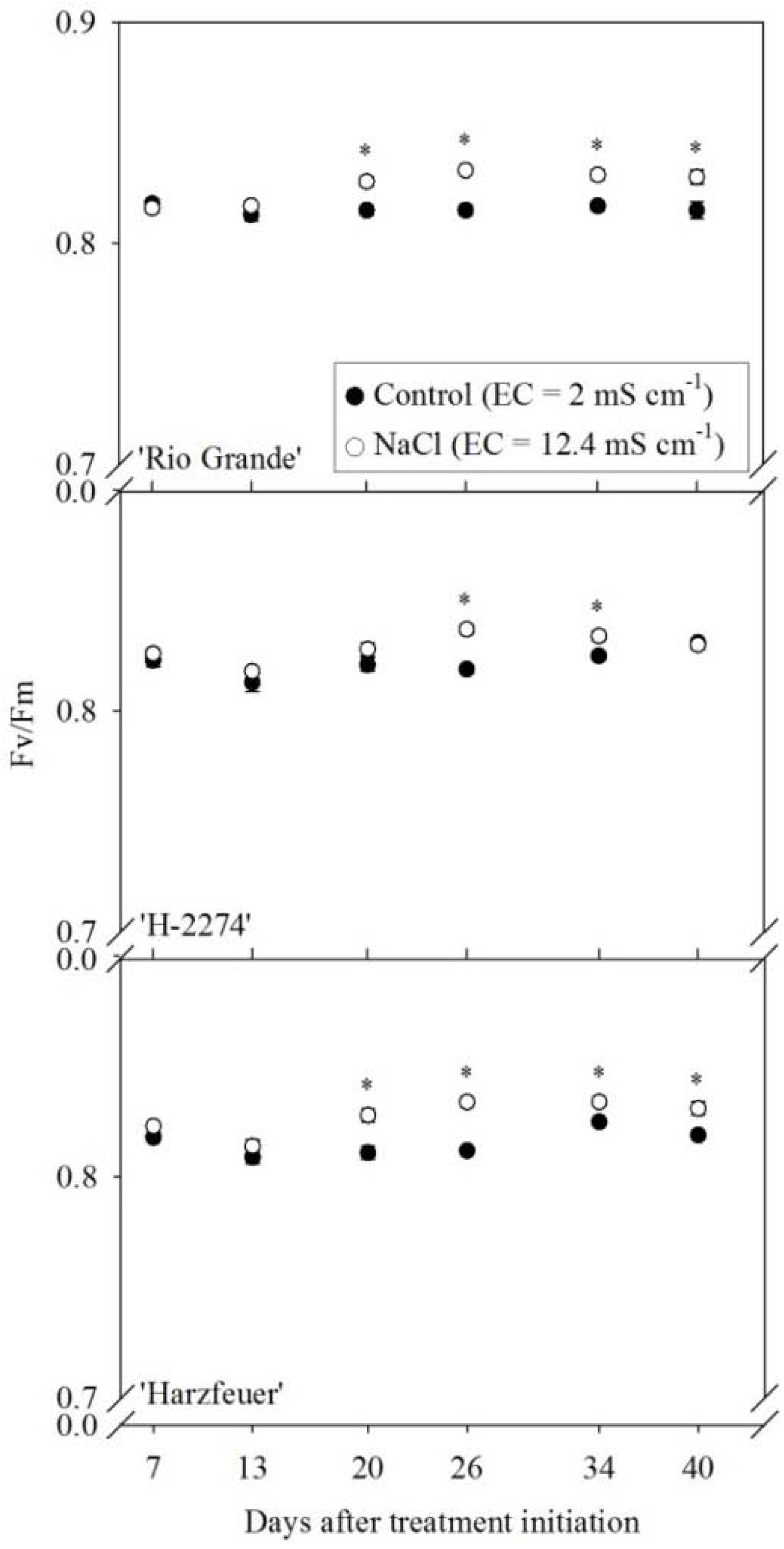
3.2. Maximum Quantum Efficiency of Photosystem II (Fv/Fm)

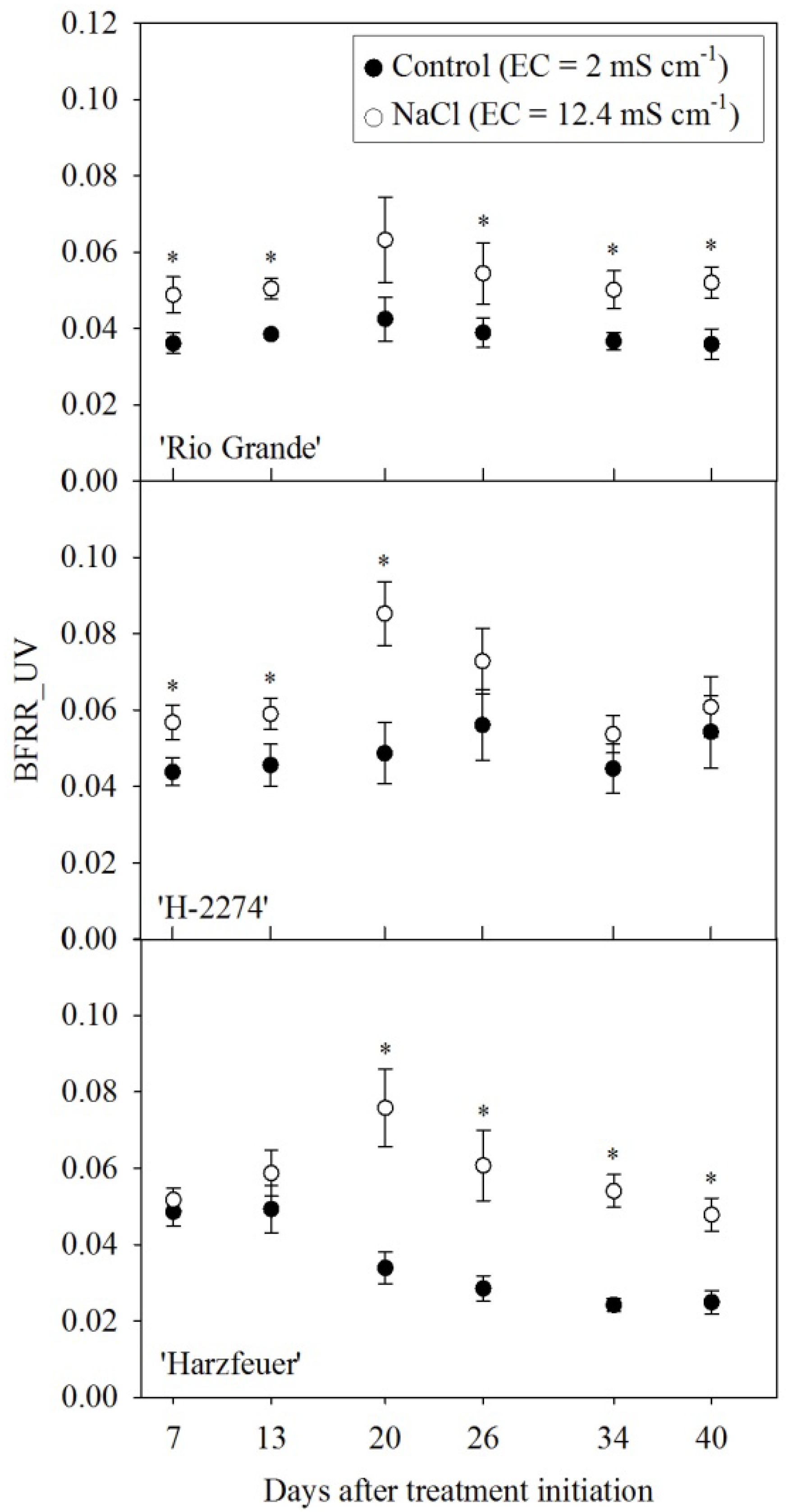
3.3. Blue-to-Far-Red Fluorescence Ratio (BFRR_UV)

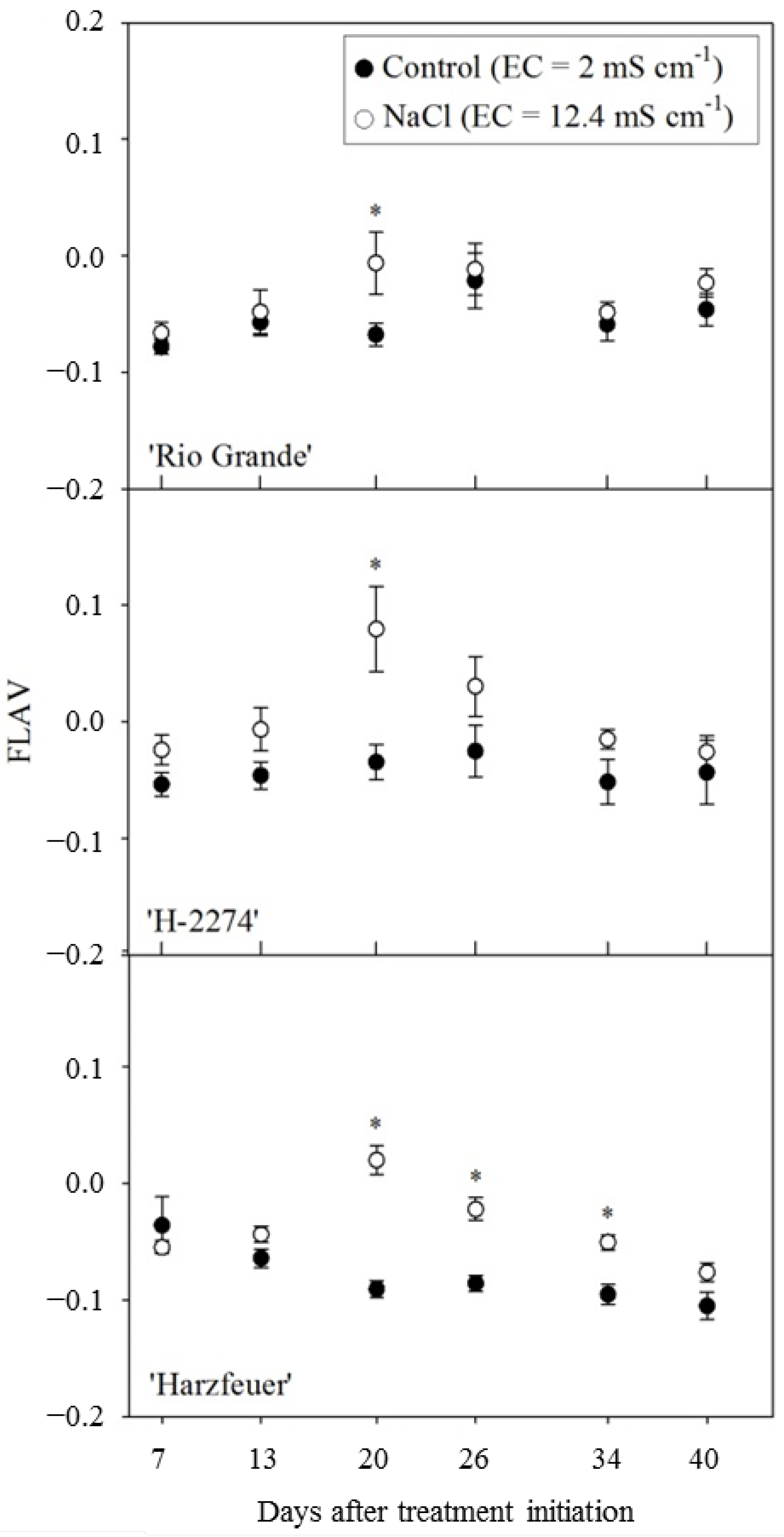
3.4. Flavonol-Index (FLAV)

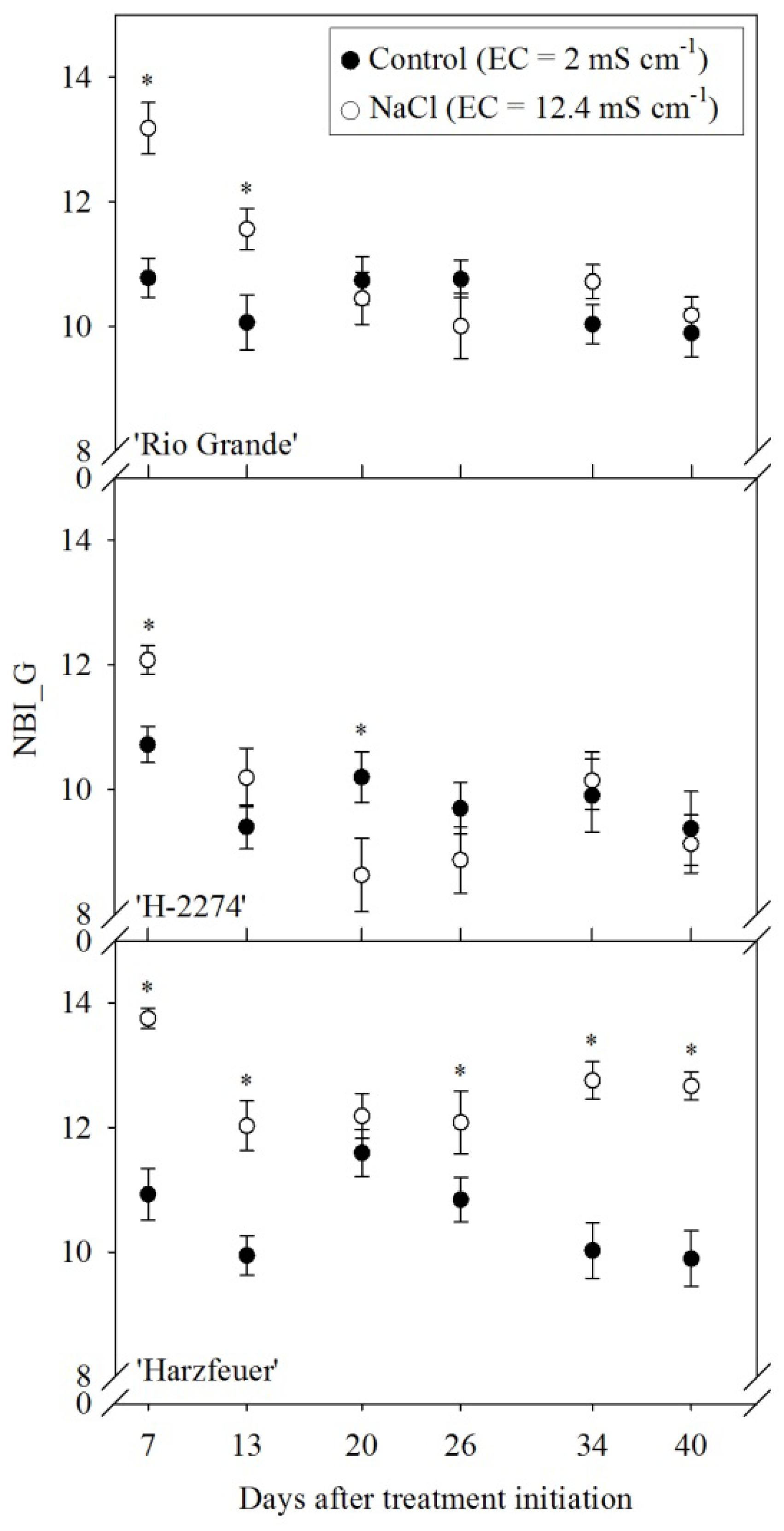
3.5. Nitrogen Balance Index (NBI_G)

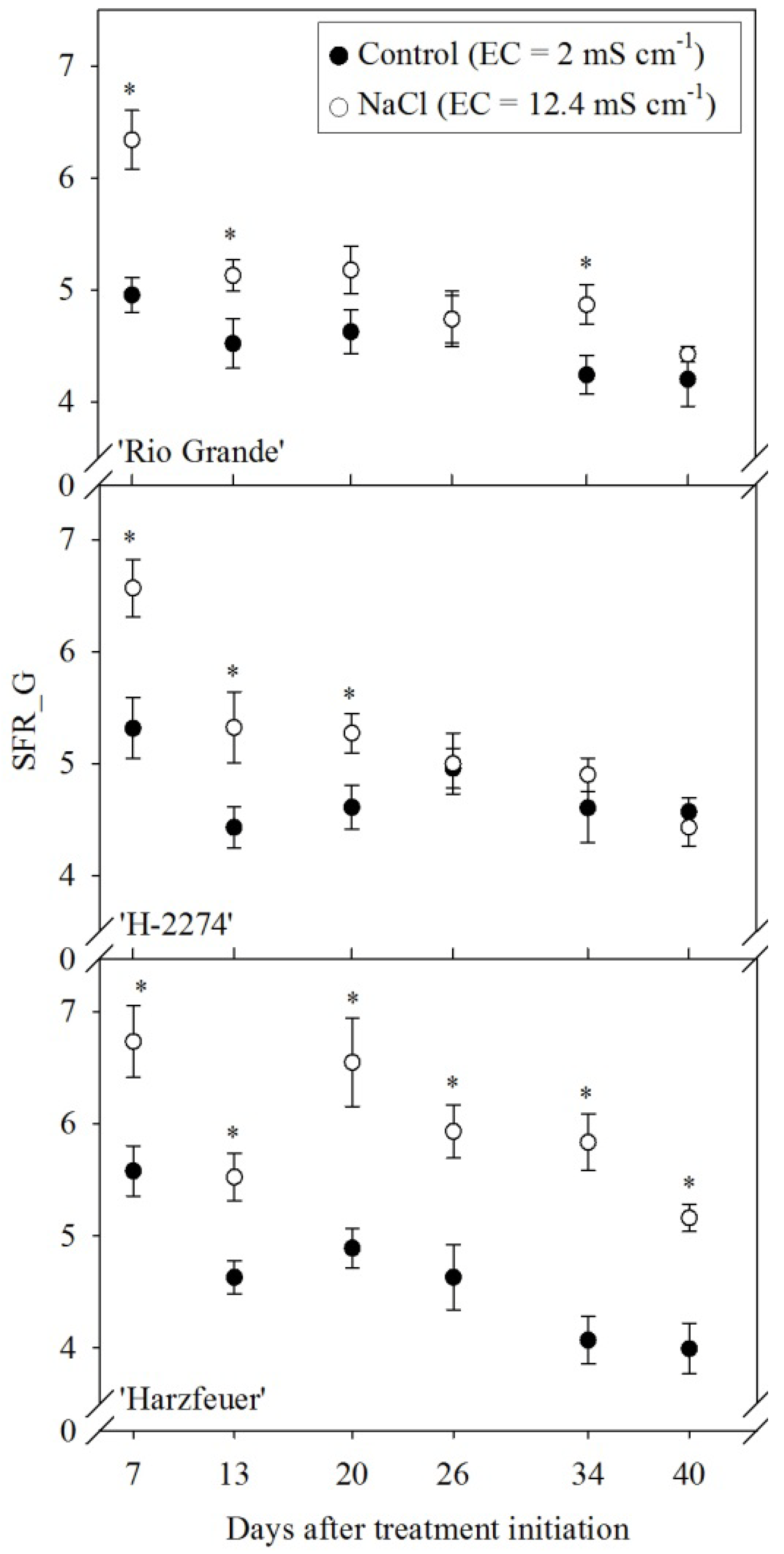
3.6. Simple Fluorescence Ratio (SFR_G)
4. Discussion

5. Conclusions
Acknowledgments
Author Contributions
Abbreviations
| BF | blue fluorescence |
| BFRR_UV | blue-to-far-red fluorescence ratio |
| Chl | chlorophyll |
| ChlF | chlorophyll fluorescence |
| G | green |
| DAT | days after treatment induction |
| DM | dry matter; FLAV, flavonol-index |
| FRF | far-red fluorescence |
| Fo | ground fluorescence |
| Fm | maximum fluorescence |
| Fv/Fm | maximum quantum efficiency of photosystem II |
| H-2274 | Solanum lycopersicum L. var. H-2274 |
| Harzfeuer | Solanum lycopersicum L. F1 hybrid Harzfeuer |
| NBI | nitrogen balance index |
| PAM | pulse-amplitude-modulated chlorophyll fluorescence |
| RF | red fluorescence |
| SFR | simple fluorescence ratio |
| UV | ultraviolet |
| var. | variety |
Conflicts of Interest
References
- Cuartero, J.; Bolarín, M.C.; Asíns, M.J.; Moreno, V. Increasing salt tolerance in the tomato. J. Exp. Bot. 2006, 57, 1045–1058. [Google Scholar] [CrossRef]
- Hunsche, M.; Bürling, K.; Saied, A.S.; Schmitz-Eiberger, M.; Sohail, M.; Gebauer, J.; Noga, G.; Buerkert, A. Effects of NaCl on surface properties, chlorophyll fluorescence and light remission, and cellular compounds of Grewia tenax (Forssk.) fiori and Tamarindus inidica L. leaves. Plant Growth Regul. 2010, 61, 253–263. [Google Scholar] [CrossRef]
- Hunsche, M.; Lankes, C.; Hoffstall, H.; Noga, G. Vegetative performance, leaf water potential, and partitioning of minerals and soluble sugars: Traits for ranking the NaCl-tolerance of tomato genotypes. Plant Growth Regul. 2010, 62, 151–162. [Google Scholar] [CrossRef]
- Gautier, H.; Lopez-Lauri, F.; Massot, C.; Murshed, R.; Marty, I.; Grasselly, D.; Keller, C.; Sallanon, H.; Génard, M. Impact of ripening and salinity on tomato fruit ascorbate content and enzyme activities related to ascorbate recycling. Funct. Plant Sci. Biotechnol. 2010, 4, 66–75. [Google Scholar]
- Incerti, A.; Navari-Izzo, F.; Pardossi, A.; Mensuali, A.; Izzo, R. Effect of sea water on biochemical properties of fruit of tomato (Lycopersicon esculentum Mill.) genotypes differing for ethylene production. J. Sci. Agric. 2007, 87, 2528–2537. [Google Scholar] [CrossRef]
- Cayuela, E.; Pérez-Alfocea, F.; Caro, M.; Bolarín, M.C. Priming of seeds with NaCl induces physiological changes in tomato plants grown under salt stress. Physiol. Plant. 1996, 96, 231–236. [Google Scholar] [CrossRef]
- Juan, M.; Rivero, R.M.; Romero, L.; Ruiz, J.M. Evaluation of some nutritional and biochemical indicators in selecting salt-resistant tomato cultivars. Environ. Exp. Bot. 2005, 54, 193–201. [Google Scholar] [CrossRef]
- Baker, N.R.; Rosenqvist, E. Applications of chlorophyll fluorescence can improve crop production strategies: An examination of future possibilities. J. Exp. Bot. 2004, 55, 1607–1621. [Google Scholar] [CrossRef]
- Bilger, W.; Schreiber, U.; Bock, M. Determination of the quantum efficiency of photosystem II and of non-photochemical quenching of chlorophyll fluorescence in the field. Oecologia 1995, 120, 425–432. [Google Scholar] [CrossRef]
- Lichtenthaler, H.K.; Lang, M.; Sowinska, M.; Heisel, F.; Miehé, J.A. Detection of vegetation stress via a new high resolution fluorescence imaging system. J. Plant Physiol. 1996, 148, 599–612. [Google Scholar] [CrossRef]
- Cerovic, Z.G.; Samson, G.; Morales, F.; Tremblay, N.; Moya, I. Ultraviolet-induced fluorescence for plant monitoring: Present state and prospects. Agronomic 1999, 19, 543–578. [Google Scholar] [CrossRef]
- Buschmann, C.; Lichtenthaler, H.K. Principles and characteristics of multi-colour fluorescence imaging of plants. J. Plant Physiol. 1998, 152, 297–314. [Google Scholar] [CrossRef]
- Morales, F.; Cerovic, Z.G.; Moya, I. Time-resolved blue-green fluorescence of sugar beet (Beta vulgaris L.) leaves. Spectroscopic evidence for the presence of ferulic acid as the main fluorophore of the epidermis. Biochim. Biophys. Acta 1996, 1273, 251–262. [Google Scholar] [CrossRef]
- Lichtenthaler, H.K.; Schweiger, J. Cell wall bound ferulic acid, the major substance of the blue-green fluorescence emission of plants. J. Plant Physiol. 1998, 152, 272–282. [Google Scholar] [CrossRef]
- Bürling, K.; Cerovic, Z.G.; Cornic, G.; Ducruet, J.-M.; Noga, G.; Hunsche, M. Fluorescence-based sensing of drought-induced stress in the vegetative phase of four contrasting wheat genotypes. Environ. Exp. Bot. 2013, 89, 51–59. [Google Scholar] [CrossRef]
- Leufen, G.; Noga, G.; Hunsche, M. Physiological response of sugar beet (Beta vulgaris) genotypes to a temporary water deficit, as evaluated with a multiparameter fluorescence sensor. Acta Physiol. Plant. 2013, 35, 1763–1774. [Google Scholar] [CrossRef]
- Kautz, B.; Noga, G.; Hunsche, M. Sensing drought- and salinity-imposed stresses on tomato leaves by means of fluorescence techniques. Plant Growth Regul. 2014. [Google Scholar] [CrossRef]
- Müller, V.; Lankes, C.; Schmitz-Eiberger, M.; Noga, G.; Hunsche, M. Estimation of flavonoid and centelloside accumulation in leaves of Centella asiatica L. Urban by multiparametric fluorescence measurements. Environ. Exp. Bot. 2013, 93, 27–34. [Google Scholar] [CrossRef]
- Bates, L.S.; Waldren, R.P.; Teare, I.D. Rapid determination of free proline for water stress studies. Plant Soil 1973, 39, 205–207. [Google Scholar] [CrossRef]
- Munné-Bosch, S.; Alegre, L. Changes in carotenoids, tocopherols and diterpenes during drought and recovery, and the biological significance of chlorophyll loss in Rosmarinus officinalis plants. Planta 2000, 210, 925–931. [Google Scholar] [CrossRef]
- Bürling, K.; Hunsche, M.; Noga, G. Quantum yield of non-regulated energy dissipation in PSII (Y(NO)) for early detection of leaf rust (Puccinia triticina) infection in susceptible and resistant wheat (Triticum aestivum L.) cultivars. Precis. Agric. 2010, 11, 703–716. [Google Scholar] [CrossRef]
- Kishor, K.P.B.; Sreenivasulu, N. Is proline accumulation per se correlated with stress tolerance or is proline homeostasis a more critical issue? Plant Cell Environ. 2014, 37, 300–311. [Google Scholar] [CrossRef]
- Santa-Cruz, A.; Acosta, M.; Rus, A.; Bolarin, M.C. Short-term salt tolerance mechanisms in differentially salt tolerant tomato species. Plant Physiol. Biochem. 1999, 37, 65–71. [Google Scholar] [CrossRef]
- Botella, M.A.; Rosado, A.; Breassan, R.A.; Hasegawa, P.M. Plant adaptive responses to salinity stress. In Plant Abiotic Stress; Jenks, M.A., Hasegawa, P.M., Eds.; Blackwell Publishing Ltd.: Berlin, Germany, 2005; pp. 37–70. [Google Scholar]
- Chinnusamy, V.; Zhu, J.-K. Plant salt tolerance. In Plant Responses to Abiotic Stress; Hirt, H., Shinozaki, K., Eds.; Springer: Berlin/Heidelberg, Germany, 2004; pp. 241–270. [Google Scholar]
- Takagi, H. Proline as a stress protectant in yeast: Physiological functions, metabolic regulations, and biotechnological applications. Appl. Microbiol. Biotechnol. 2008, 81, 211–223. [Google Scholar] [CrossRef]
- Kumar, S.G.; Reddy, A.; Sudhakar, C. NaCl effects on proline metabolism in two high yielding genotypes of mulberry (Morus alba L.) with contrasting salt tolerance. Plant Sci. 2003, 165, 1245–1251. [Google Scholar] [CrossRef]
- Li, G.; Wan, S.; Zhou, J.; Yang, Z.; Qin, P. Leaf chlorophyll fluorescence, hyperspectral reflectance, pigments content, malondialehyde and proline accumulation responses of castor bean (Ricinus communis L.) seedlings to salt stress levels. Ind. Crop Prod. 2010, 31, 13–19. [Google Scholar]
- Havaux, M. Stress tolerance of photosystem II in vivo. Plant Physiol. 1992, 100, 424–432. [Google Scholar] [CrossRef]
- Lu, C.; Qiu, N.; Lu, Q.; Wang, B.; Kuang, T. Does salt stress lead to increased susceptibility of photosystem II to photoinhibition and changes in photosynthetic pigment composition in halophyte Suaeda salsa grown outdoors. Plant Sci. 2002, 163, 1063–1068. [Google Scholar] [CrossRef]
- Buschmann, C.; Langsdorf, G.; Lichtenthaler, H.K. Imaging of the blue, green, and red fluorescence emission of plants: An overview. Photosynthetica 2000, 38, 483–491. [Google Scholar] [CrossRef]
- Bilger, W.; Veit, M.; Schreiber, L.; Schreiber, U. Measurement of leaf epidermal transmittance of UV radiation by chlorophyll fluorescence. Physiol. Plant. 1997, 101, 754–763. [Google Scholar] [CrossRef]
- Tremblay, N.; Wang, Z.; Cerovic, Z.G. Sensing crop nitrogen status with fluorescence indicators. A review. Agron. Sustain. Dev. 2012, 32, 451–464. [Google Scholar] [CrossRef]
- Gitelson, A.A.; Buschmann, C.; Lichtenthaler, H.K. The chlorophyll fluorescence ratio F735/F700 as an accurate measure of the chlorophyll content in plants. Remote Sens. Environ. 1999, 69, 296–302. [Google Scholar] [CrossRef]
- Lichtenthaler, H.K.; Rinderle, U. The role of chlorophyll fluorescence in the detection of stress conditions in plants. Crit. Rev. Anal. Chem. 1998, 19, 29–85. [Google Scholar] [CrossRef]
- Lichtenthaler, H.K. Vegetation stress: An introduction to the stress concept in plants. J. Plant Physiol. 1996, 148, 4–14. [Google Scholar] [CrossRef]
- Buschmann, C. Variability and application of the chlorophyll fluorescence emission ratio red/far-red of leaves. Photosynth. Res. 2007, 92, 261–271. [Google Scholar] [CrossRef]
- Cerovic, Z.G.; Goutouly, J.-P.; Hilbert, G.; Destrac-Irvine, A.; Martinon, M.; Moise, N. Mapping winegrape quality attributes using portable fluorescence-based sensors. In Proceedings of the FRUTIC 09, Conception, Chile, Progap INIA, Santiago, Chile, January 2009; Best, S., Ed.; Instituto de Investigaciones Agropecuarias: Santiago, Chile, 2009; pp. 301–310. [Google Scholar]
- Bhivare, V.N.; Nimbalkar, J.D. Salt stress effects on growth and mineral nutrition of French beans. Plant Soil 1984, 80, 91–98. [Google Scholar] [CrossRef]
- Maggio, A.; Raimondi, G.; Martino, A.; de Pascale, S. Salt stress response in tomato beyond the salinity tolerance threshold. Environ. Exp. Bot. 2007, 59, 276–282. [Google Scholar] [CrossRef]
© 2014 by the authors; licensee MDPI, Basel, Switzerland. This article is an open access article distributed under the terms and conditions of the Creative Commons Attribution license (http://creativecommons.org/licenses/by/3.0/).
Share and Cite
Kautz, B.; Hunsche, M.; Noga, G. Salinity-Induced Changes of Multiparametric Fluorescence Indices of Tomato Leaves. Agriculture 2014, 4, 132-146. https://doi.org/10.3390/agriculture4020132
Kautz B, Hunsche M, Noga G. Salinity-Induced Changes of Multiparametric Fluorescence Indices of Tomato Leaves. Agriculture. 2014; 4(2):132-146. https://doi.org/10.3390/agriculture4020132
Chicago/Turabian StyleKautz, Burkard, Mauricio Hunsche, and Georg Noga. 2014. "Salinity-Induced Changes of Multiparametric Fluorescence Indices of Tomato Leaves" Agriculture 4, no. 2: 132-146. https://doi.org/10.3390/agriculture4020132
APA StyleKautz, B., Hunsche, M., & Noga, G. (2014). Salinity-Induced Changes of Multiparametric Fluorescence Indices of Tomato Leaves. Agriculture, 4(2), 132-146. https://doi.org/10.3390/agriculture4020132