Article

Improving Fundamental Movement Skills during Early Childhood: An Intervention Mapping Approach

by
Alexandra Patricia Dobell
1,*,
Mark A. Faghy
2,
Andy Pringle
2 and
Clare M. P. Roscoe
2
1
Institute of Applied Health Research, School of Medical and Dental Sciences, University of Birmingham, Edgbaston, Birmingham B15 2TT, UK
2
Human Sciences Research Centre, College of Science and Engineering, University of Derby, Kedleston Road, Derby DE22 1GB, UK
*
Author to whom correspondence should be addressed.
Children 2023, 10(6), 1004; https://doi.org/10.3390/children10061004

Submission received: 18 May 2023 / Revised: 29 May 2023 / Accepted: 31 May 2023 / Published: 2 June 2023
(This article belongs to the Special Issue Movement Behaviors and Motor Skills in Early Years Children)

Abstract

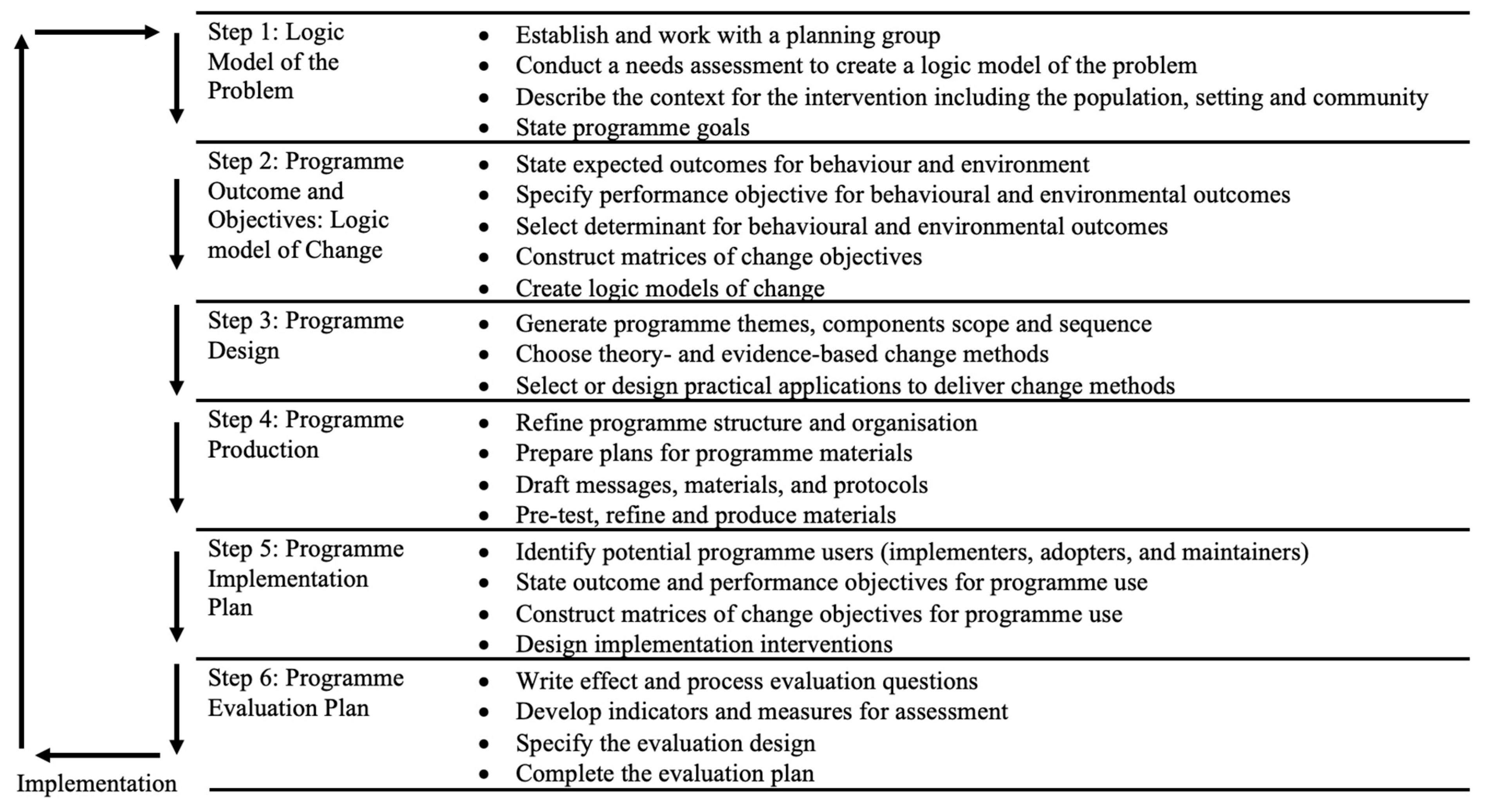
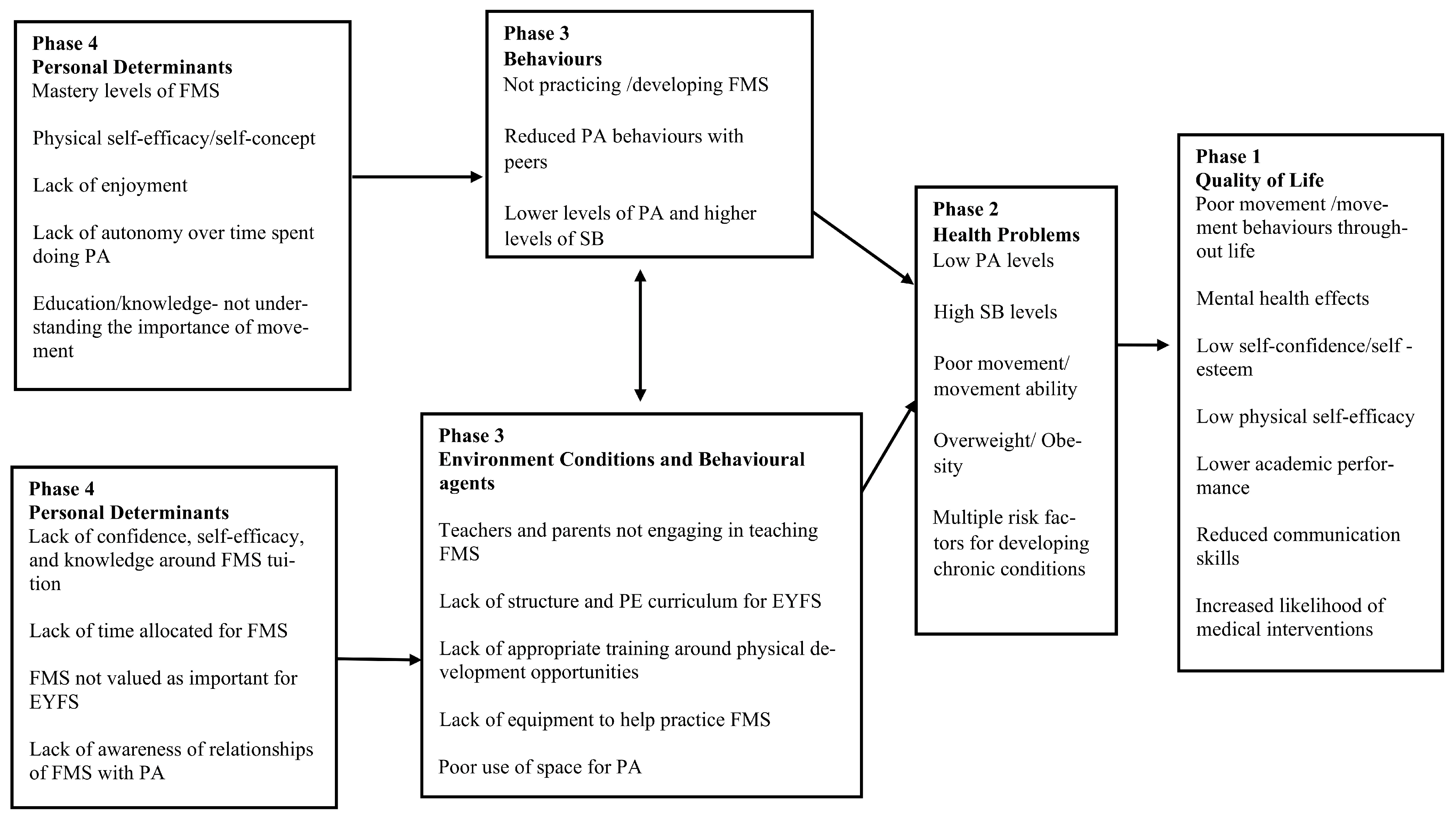
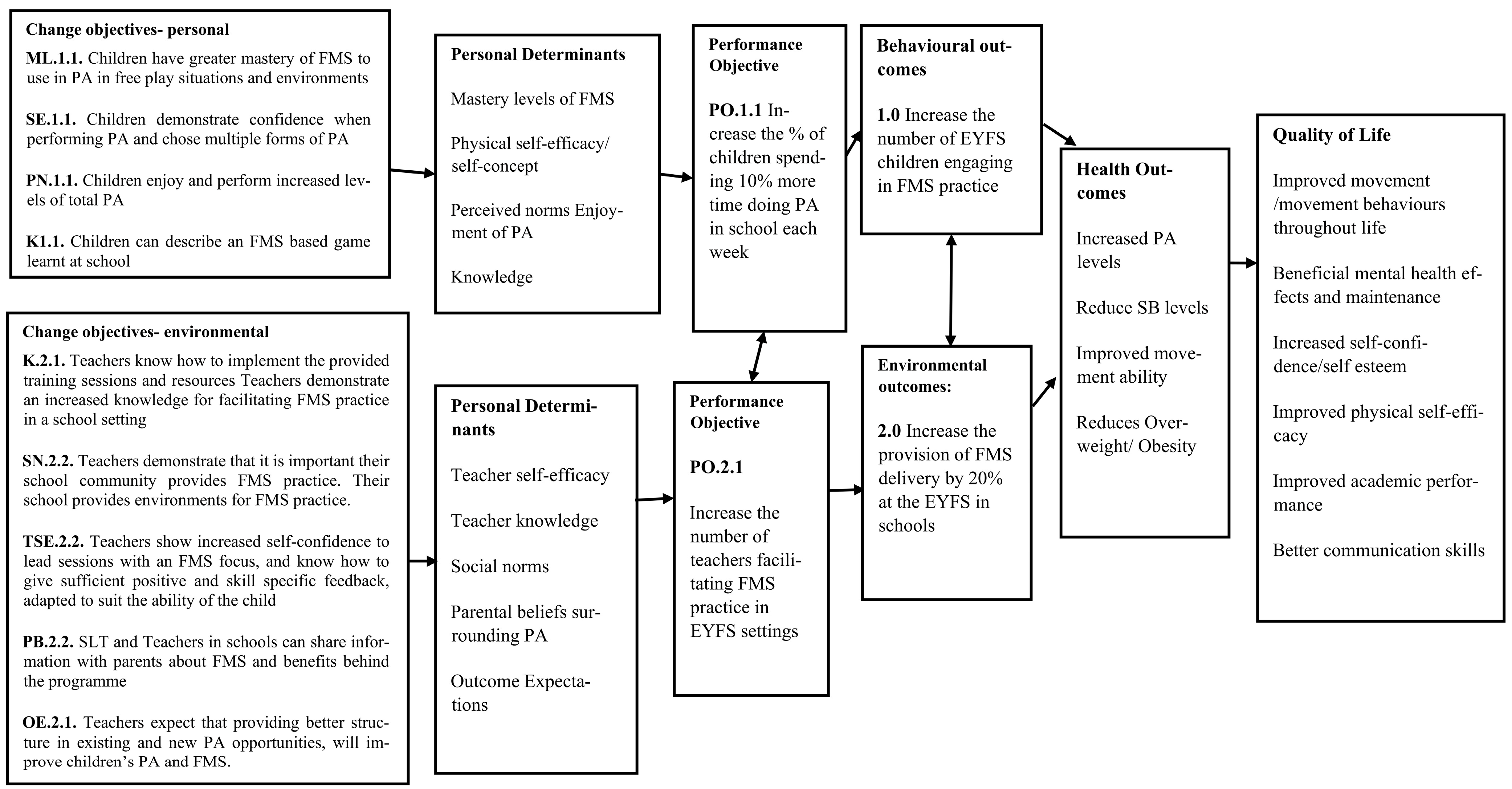
The earlier in life that a child can begin mastering fundamental movement skills (FMS), the more positive their physical activity (PA) trajectories and health outcomes are. To achieve sufficient development in FMS, children must be guided with tuition and practice opportunities. Schools and educators provide an opportunity for interventions that improve health behaviours and outcomes for children. The aim of this study was to use intervention mapping (IM) to design a programme of school-based intervention to improve FMS for children aged 4–5 years old. Following the six steps of IM, with each step comprising three to five tasks that require the input of a planning group formed by key stakeholders, a programme of intervention was planned. Prior knowledge and primary and secondary evidence was used to support the development of the programme. A logic model of the problem as well as logic models of change, programme design, production, implementation, and evaluation were proposed or completed within the study. The results can be used to begin to implement an FMS-focussed intervention within school settings within England and propose a sustainable and realistic approach for helping children to develop FMS with the support of well-informed educators who are confident to deliver better FMS practice and PA opportunities.
Keywords: fundamental movement skills; physical activity; early childhood; intervention mapping fundamental movement skills; physical activity; early childhood; intervention mapping