


-
Unveiling Distinctive Eye Tracking Markers to Distinguish Toddlers with High-Risk Autism as Indicated by ADOS Within an Elevated-Likelihood Toddler Sample -
Social Determinants of Neurodevelopmental Disorders: Associations with ADHD and ASD Among U.S. Children -
Non-Invasive Surfactant Administration in Preterm Infants -
Impact of School-Based Physical Activity Intervention on Obesity and Physical Parameters in Children: A Systematic Review
Journal Description
Children
Children
is an international, peer-reviewed, open access journal on children’s health, published monthly online by MDPI.
- Open Access— free for readers, with article processing charges (APC) paid by authors or their institutions.
- High Visibility: indexed within Scopus, SCIE (Web of Science), PubMed, PMC, Embase, and other databases.
- Journal Rank: JCR - Q2 (Pediatrics) / CiteScore - Q2 (Pediatrics, Perinatology and Child Health)
- Rapid Publication: manuscripts are peer-reviewed and a first decision is provided to authors approximately 17.5 days after submission; acceptance to publication is undertaken in 2.7 days (median values for papers published in this journal in the second half of 2025).
- Recognition of Reviewers: reviewers who provide timely, thorough peer-review reports receive vouchers entitling them to a discount on the APC of their next publication in any MDPI journal, in appreciation of the work done.
Impact Factor:
2.1 (2024);
5-Year Impact Factor:
2.3 (2024)
Latest Articles
Perceptions and Practices of Healthcare Professionals in Managing Pediatric Obesity: Insight from a Focus Group Interviews in South Korea
Children 2026, 13(6), 760; https://doi.org/10.3390/children13060760 (registering DOI) - 29 May 2026
Abstract
Background/Objectives: Pediatric obesity poses significant public health challenges and is associated with an increased risk of adult obesity. Healthcare professionals play an important role in providing patient-centered care; however, barriers to effective pediatric obesity management remain insufficiently explored in South Korea. Methods: Eleven
[...] Read more.
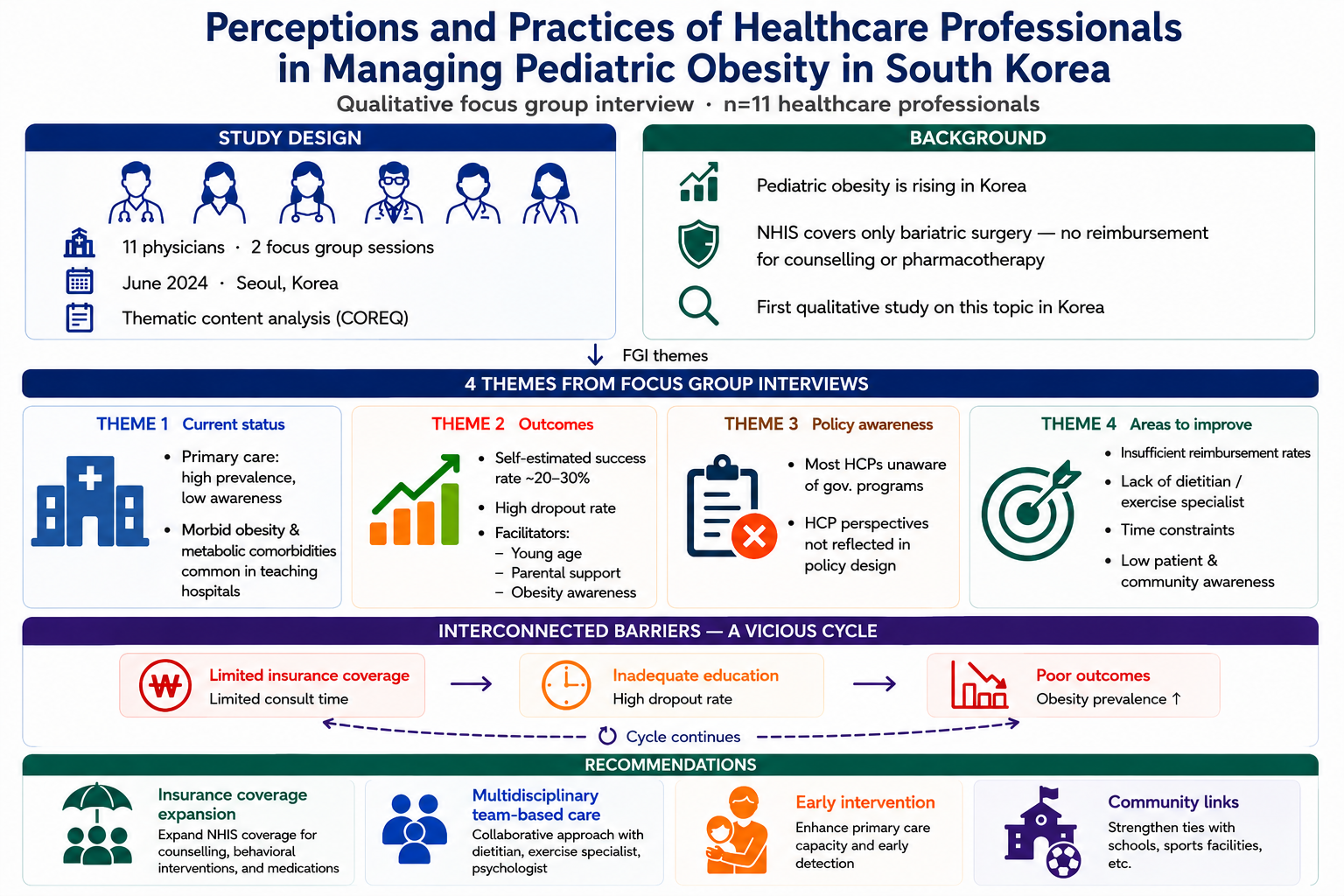
Background/Objectives: Pediatric obesity poses significant public health challenges and is associated with an increased risk of adult obesity. Healthcare professionals play an important role in providing patient-centered care; however, barriers to effective pediatric obesity management remain insufficiently explored in South Korea. Methods: Eleven healthcare professionals managing pediatric obesity participated in focus group interviews. Audio-recorded interviews were transcribed verbatim and analyzed using thematic content analysis. Four main themes emerged: (1) the current status of pediatric obesity management, (2) clinical experiences and outcomes, (3) awareness of governmental policies, and (4) areas needing improvement. Results: Participants described multiple barriers to pediatric obesity management, including limited clinical resources, time constraints, low awareness among patients and families, and perceived inadequacies in reimbursement policies. Participants also reported low treatment adherence and frequent dropout during follow-up care. Many participants reported limited awareness of governmental initiatives related to pediatric obesity management but expressed willingness to utilize such programs if they became more accessible and better integrated into clinical practice. Conclusion: The findings suggest that pediatric obesity management in South Korea may be influenced by structural, financial, and sociocultural barriers. Participants emphasized the need for improved multidisciplinary collaboration, greater institutional support, and increased accessibility of obesity-related programs and resources. Further comparative and context-specific studies may help inform tailored approaches to pediatric obesity management.
Full article
(This article belongs to the Section Global Pediatric Health)
►
Show Figures
Open AccessArticle
Development and Preliminary Validation of the Breath Motor Pattern Index (BMPI): An Observational Measure of Respiratory Pattern Quality in Children
by
Aleksandra Moluszys, Łukasz Mański, Mirella Kozakiewicz, Marek Niedoszytko and Eliza Wasilewska
Children 2026, 13(6), 759; https://doi.org/10.3390/children13060759 (registering DOI) - 29 May 2026
Abstract
Background/Objectives: Breathing is increasingly recognized as an integral component of the motor system, interacting with postural control and movement. Despite this, clinical assessment of respiratory function in children remains largely limited to physiological parameters, with relatively few tools available to evaluate breathing
[...] Read more.
Background/Objectives: Breathing is increasingly recognized as an integral component of the motor system, interacting with postural control and movement. Despite this, clinical assessment of respiratory function in children remains largely limited to physiological parameters, with relatively few tools available to evaluate breathing as an organized motor pattern. The aim of this study was to develop and preliminarily validate the Breath Motor Pattern Index (BMPI), an observational tool designed to assess the organization of respiratory motor patterns in children. Methods: A scoping review was conducted to identify key components of respiratory motor pattern organization. Based on these findings, the BMPI was developed and evaluated in a cohort of 210 children aged 0–72 months, divided into three groups: healthy controls, children with neurological conditions, and children with respiratory disorders. Inter-rater and test–retest reliability was assessed using intraclass correlation coefficients (ICC). Measurement error was quantified using the standard error of measurement (SEM) and minimal detectable change (MDC95). Construct-related validity was examined through correlations with the Gross Motor Function Measure (GMFM-88) and comparisons between clinical groups. Results: The BMPI showed high inter-rater reliability (ICC = 0.998) and test–retest reliability (ICC = 0.999), with low measurement error (SEM = 0.55; MDC95 = 1.53). A weak but statistically significant correlation with GMFM-88 was observed (rho = 0.23, p < 0.001). BMPI scores differed significantly between groups (p < 0.001), with lower values observed in the neurological group and higher values in the pulmonary group. Conclusions: The BMPI appears to be a promising observational tool with potential clinical applicability for assessing respiratory motor pattern organization in children. The findings support the conceptualization of breathing as an integrated component of the motor system while highlighting the need for further psychometric and longitudinal validation studies. Future research should further investigate the responsiveness of the BMPI as well as its potential utility in clinical decision-making and therapeutic monitoring.
Full article
(This article belongs to the Special Issue Physical Therapy in Pediatric Developmental Disorders)
Open AccessReview
Diagnosis and Staging of Necrotizing Enterocolitis: Current Controversies and a Phenotype-Based Framework
by
Usha Devi, Jörn-Hendrik Weitkamp, Jeffrey S. Shenberger and Parvesh Mohan Garg
Children 2026, 13(6), 758; https://doi.org/10.3390/children13060758 (registering DOI) - 29 May 2026
Abstract
Necrotizing enterocolitis (NEC) remains one of the most devastating gastrointestinal emergencies in neonates and also presents major diagnostic challenges. Despite extensive research, NEC still lacks a practical definition and relies on a set of nonspecific clinical, laboratory, and radiological findings rather than a
[...] Read more.
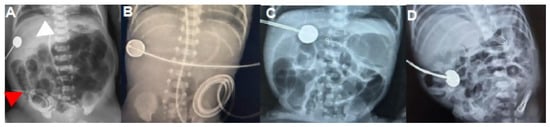
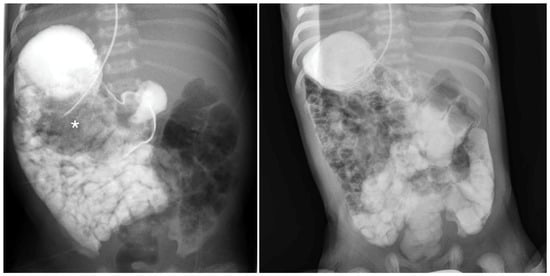
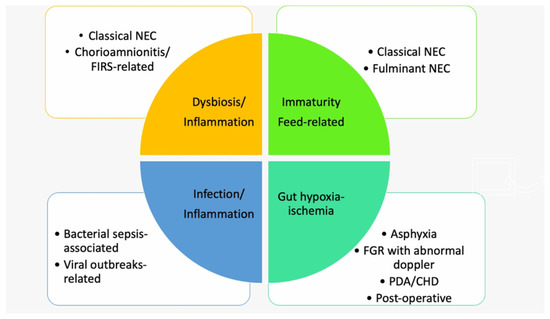
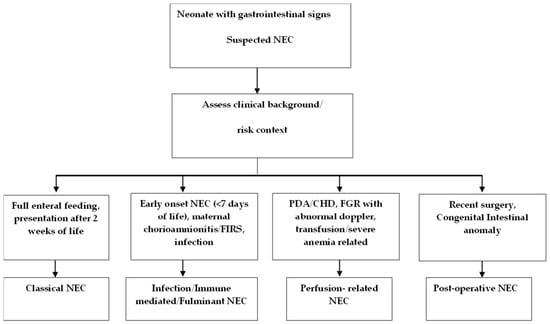
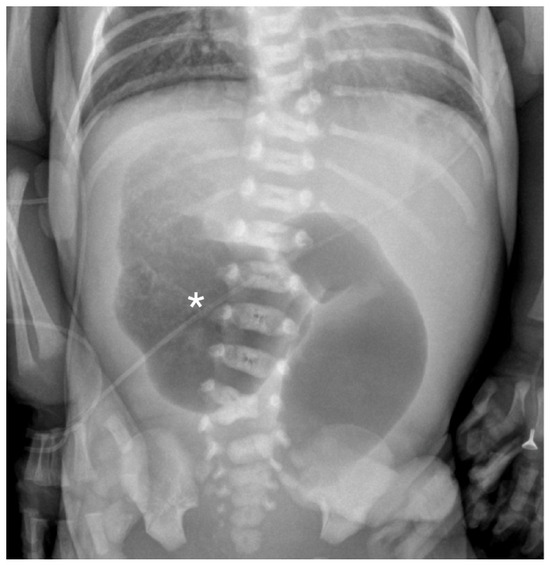
Necrotizing enterocolitis (NEC) remains one of the most devastating gastrointestinal emergencies in neonates and also presents major diagnostic challenges. Despite extensive research, NEC still lacks a practical definition and relies on a set of nonspecific clinical, laboratory, and radiological findings rather than a single pathognomonic presentation or test. The modified Bell staging system remains the most widely used framework in clinical practice and research, but it was originally developed to guide treatment decisions rather than aid diagnosis and has important limitations when applied as a diagnostic aid. Clinical and radiological criteria used for early stages of NEC are nonspecific, disease progression is not always linear, radiographic signs are inconsistently present, and histopathological confirmation is unavailable in most of the cases as surgery is not undertaken in all the cases. These limitations have led to the opinion that even the modified Bell staging is “broken” when it is used to define the disease itself. At the same time, increased understanding about gut immunity and microbiome progression, and neonatal hemodynamics make it increasingly clear that NEC is not a single uniform disease. It is now regarded as a heterogeneous syndrome comprising multiple phenotypes that share a final common pathway of intestinal injury and necrosis differing in timing, predisposing factors, mechanism, and clinical course. These presentations overlap with several neonatal conditions including spontaneous intestinal perforation, septic ileus, cow’s milk protein allergy, congenital heart disease-related intestinal hypoperfusion, viral enterocolitis, malrotation with volvulus, and intussusception. This review discusses controversies in the definition and staging of NEC, consolidates alternative diagnostic criteria beyond Bell’s system, and elaborates on a phenotype-based framework for clinical distinction. Also, the review sheds light on the clinical mimickers, practical bedside diagnosis using serial clinical assessment and imaging, consequences of NEC, and emerging precision medicine approaches. A shift from stage-based labeling toward a practical, phenotype-informed framework may improve diagnostic precision, reduce misclassification, and enhance both clinical care and research.
Full article
(This article belongs to the Special Issue Necrotizing Enterocolitis in Newborns)
►▼
Show Figures

Figure 1
Open AccessArticle
The Italian Version of the Drooling Impact Scale: Translation and Psychometric Validation in Children with Neurodevelopmental Conditions
by
Federica Pauciulo, Marco Tofani, Giulia Stella, Alessandra Lacopo, Susanna Summa, Giulia Tullo, Caterina Delia, Antonella Cerchiari and Gessica Della Bella
Children 2026, 13(6), 757; https://doi.org/10.3390/children13060757 (registering DOI) - 29 May 2026
Abstract
Background/Objectives: Drooling is a common and clinically relevant issue in children with neurodevelopmental conditions, with important consequences for daily functioning, social participation, and caregiver burden. The lack of validated tools in Italian makes it difficult to quantify the impact of drooling on daily
[...] Read more.
Background/Objectives: Drooling is a common and clinically relevant issue in children with neurodevelopmental conditions, with important consequences for daily functioning, social participation, and caregiver burden. The lack of validated tools in Italian makes it difficult to quantify the impact of drooling on daily life, support appropriate care pathways, and evaluate the effectiveness of interventions. The aim of this study was to translate, culturally adapt, and evaluate the psychometric properties of the Italian version of the Drooling Impact Scale (DIS) in a pediatric population. Methods: The DIS is a 10-item caregiver-reported outcome measure, with each item rated on an ordinal 0–10 scale, designed to assess the functional and psychosocial impact of drooling. It was translated using a standard forward–backward procedure, followed by expert review and cognitive debriefing with caregivers. Caregivers of children aged ≥2 years with heterogeneous neurodevelopmental conditions and feeding/swallowing impairments were consecutively recruited from a tertiary pediatric hospital. Psychometric properties were assessed in line with COSMIN recommendations, including internal consistency (Cronbach’s α), structural validity through exploratory factor analysis, inter-rater and test–retest reliability (intraclass correlation coefficients, ICC), measurement error (standard error of measurement, SEM; smallest detectable change, SDC), and construct validity through correlation with the Pediatric Quality of Life Inventory (PedsQL). Results: The Italian DIS was completed by caregivers of 126 children. It showed excellent internal consistency (Cronbach’s α = 0.92). Factor analysis indicated a clear dominant factor, explaining 56.5% of the variance, while additional factors contributed only marginally. Agreement between caregivers was excellent (ICC = 0.94), and test–retest reliability was good (ICC = 0.85). Measurement error analysis yielded SEM = 8.66, SDC_individual = 24.00, and SDC_group = 2.14. As expected, DIS scores were associated with health-related quality of life. Conclusions: The Italian version of the DIS appears to be a reliable and structurally sound instrument for assessing the impact of drooling in children with neurodevelopmental conditions. It may be useful in both clinical practice and research, although further studies are needed to explore its responsiveness and confirm these findings in different settings.
Full article
(This article belongs to the Special Issue Children with Specific Neurodevelopmental Disorders: Assessment and Intervention (3rd Edition))
Open AccessSystematic Review
Preschool Oscillometry and Later Asthma-Related Outcomes: A Systematic Review of Longitudinal Studies
by
Dafni Moriki, Dimosthenis Maris, Aspasia Mavronasou, Panagiotis Dalamarinis, Despoina Koumpagioti, Maria Tsouprou, Vasilis Grammeniatis, Michalis Kalogiannis, Angeliki Galani, Eleni A. Kortianou and Konstantinos Douros
Children 2026, 13(6), 756; https://doi.org/10.3390/children13060756 (registering DOI) - 29 May 2026
Abstract
Background: Preschool wheezing is common, but distinguishing transient wheezing from early persistent asthma remains difficult. Oscillometric techniques, including impulse oscillometry (IOS), may provide objective prognostic information. Objective: To systematically review longitudinal studies assessing whether oscillometric measurements obtained at preschool age are associated with
[...] Read more.
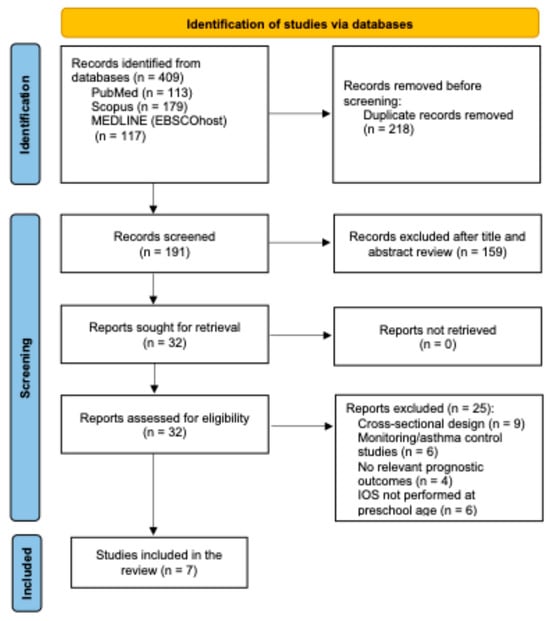
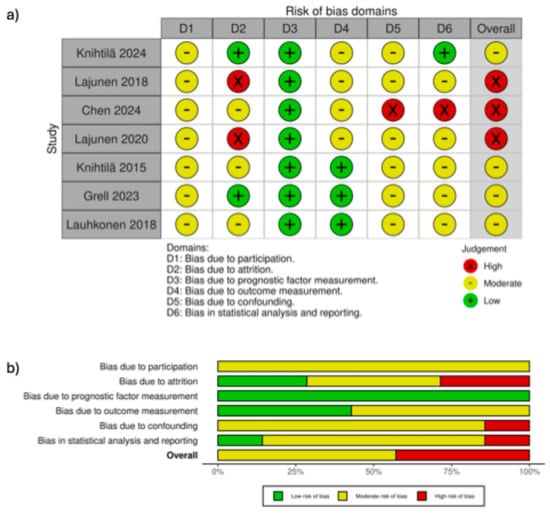
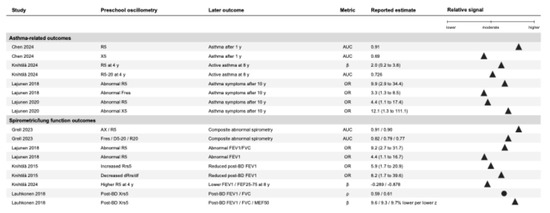
Background: Preschool wheezing is common, but distinguishing transient wheezing from early persistent asthma remains difficult. Oscillometric techniques, including impulse oscillometry (IOS), may provide objective prognostic information. Objective: To systematically review longitudinal studies assessing whether oscillometric measurements obtained at preschool age are associated with later asthma-related outcomes or lung function impairment. Methods: PubMed, Scopus, and MEDLINE (via EBSCOhost) were searched from inception to 28 February 2026. Eligible studies included preschool-aged children or closely related early-childhood populations assessed with IOS or forced oscillation technique (FOT), longitudinal follow-up, and later asthma-related or spirometric outcomes. Two reviewers independently screened studies, extracted data, and assessed risk of bias with QUIPS. Owing to substantial heterogeneity, findings were synthesized qualitatively. Results: Seven longitudinal cohort studies, encompassing 1077 children, met the eligibility criteria; baseline oscillometry was performed between ages 2 and 7 years, and follow-up ranged from 1 to 10 years. Short-term classification and longer-term prognostic studies were interpreted separately. Resistance-based indices, particularly R5, showed the most consistent associations with later asthma-related outcomes and lower subsequent spirometric indices, including FEV1 and FEV1/FVC. Most studies were at moderate risk of bias, and some reports came from related cohorts. Conclusions: Preschool oscillometry may provide complementary physiological information to assess asthma risk in symptomatic or high-risk preschool-aged children, particularly through resistance-based measures. However, evidence remains limited, heterogeneous, and insufficient to support a single validated cutoff, routine screening of apparently healthy children, or routine stand-alone prognostic use.
Full article
(This article belongs to the Section Pediatric Pulmonary and Sleep Medicine)
►▼
Show Figures

Figure 1
Open AccessArticle
Fiberscope-Assisted Surfactant Therapy (FAST) in Neonatal Respiratory Distress Syndrome: Four-Year Retrospective Cohort Study
by
David Guevorkian, Eric Cavatorta and Yoann Marechal
Children 2026, 13(6), 755; https://doi.org/10.3390/children13060755 (registering DOI) - 29 May 2026
Abstract
Background/Objective: Surfactant replacement therapy remains a life-saving intervention in the management of neonatal respiratory distress syndrome (RDS). In 2022, we presented a novel minimally invasive method of surfactant delivery with a flexible endoscope: Fiberscope-Assisted Surfactant Therapy (FAST). This new study describes the
[...] Read more.
Background/Objective: Surfactant replacement therapy remains a life-saving intervention in the management of neonatal respiratory distress syndrome (RDS). In 2022, we presented a novel minimally invasive method of surfactant delivery with a flexible endoscope: Fiberscope-Assisted Surfactant Therapy (FAST). This new study describes the clinical course of neonatal RDS in neonates treated with FAST, comparing them to those treated with INSURE (Intubation–Surfactant–Extubation). Method: In this single-center cohort study, we retrospectively analyzed data from neonates with RDS admitted to our unit between 2021 and 2024. Following surfactant therapy, short- and medium-term respiratory and hemodynamic effects were compared between the two cohorts. Results: Data from 21 neonates born at 27 to 35 weeks of gestation (birth weights 890–2685 g) treated with FAST and 37 neonates born at 27 to 35 weeks (birth weights 920–2910 g) treated with INSURE were analyzed. The two groups were comparable in gestational age and antenatal steroid exposure. In the FAST group, the procedure was successfully completed in all cases without sedation and analgesia, with a consistent trend toward reduced FiO2 and pCO2, as well as increased pH. Comparing FAST with INSURE, no significant differences were observed in respiratory outcomes, with a significant difference in the need for blood volume expansion after surfactant delivery (1 infant in FAST vs. 17 infants in INSURE; p < 0.001). Conclusions: FAST demonstrated comparable respiratory efficacy to INSURE, with greater hemodynamic stability without sedation and analgesia or laryngoscopy, making it an even less invasive option for surfactant therapy.
Full article
(This article belongs to the Special Issue Diagnosis and Management of Newborn Respiratory Distress Syndrome (2nd Edition))
Open AccessArticle
Community-Based Combined Lifestyle Interventions for Children with Overweight or Obesity: Exploring the Professional Teams Composition and Approach to Collaboration
by
Jenneke J. E. H. Saat, Elke Naumann, Merle Borremans, Willem J. J. Assendelft, Koos van der Velden and Gerdine A. J. Fransen
Children 2026, 13(6), 754; https://doi.org/10.3390/children13060754 (registering DOI) - 29 May 2026
Abstract
Background: Community-based combined lifestyle interventions (CLIs) are used to help children with overweight or obesity achieve a healthier lifestyle. CLIs utilize the combined knowledge and expertise of professionals from a variety of disciplines. Here, we describe the composition of teams of professionals
[...] Read more.
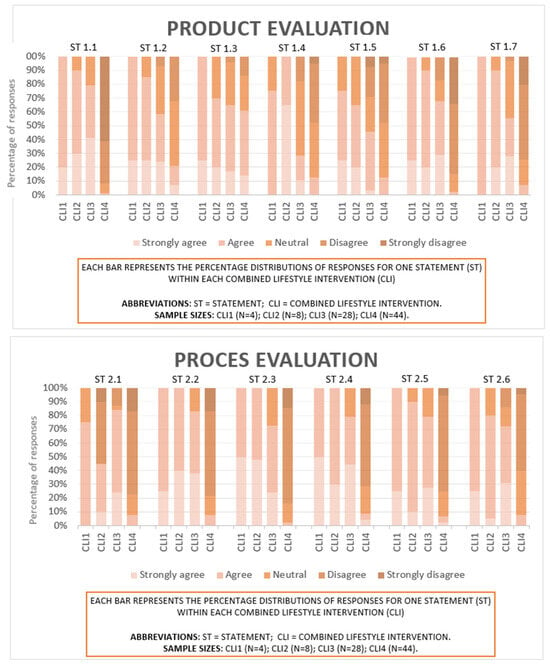
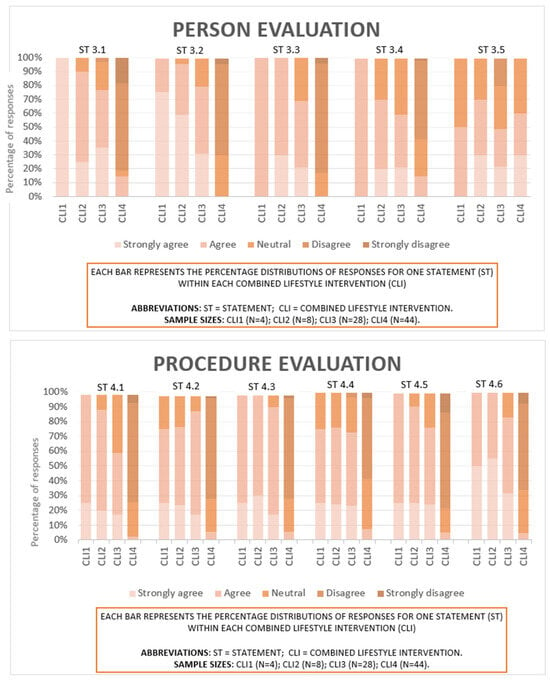
Background: Community-based combined lifestyle interventions (CLIs) are used to help children with overweight or obesity achieve a healthier lifestyle. CLIs utilize the combined knowledge and expertise of professionals from a variety of disciplines. Here, we describe the composition of teams of professionals and their approach to collaboration in four community-based CLIs designed for children with overweight or obesity (focusing on children 4–12 years of age) living in the Netherlands. Methods: A descriptive cross-case comparison was conducted in which four community-based CLIs implemented in ten communities were conceptualized as “cases”. Quantitative data regarding the frequency of contact within the teams, topics addressed in meetings of the CLI teams, the perceived importance of other relevant disciplines in the team, and perceived satisfaction with the collaboration between professionals within the team were collected via questionnaires answered by the professionals (n = 82 respondents). Descriptive analyses including frequencies, percentages, and cross-case comparisons of team characteristics and collaboration were also conducted. Results: The CLI teams differed in composition, size, and background disciplines. The frequency of contact was higher in small teams (<6 professionals) compared to large teams. Larger teams appeared to report a lower perceived satisfaction regarding collaboration. Moreover, the role of coordinator or central healthcare provider was perceived as more important in the large teams than in the small teams. Conclusions: Variation was observed in professional expertise and collaboration within CLI teams. Moreover, professionals in a team should collaborate based on the local possibilities. In large teams (>6 professionals) in particular, a coordinator or trained central healthcare provider can help facilitate collaboration.
Full article
(This article belongs to the Special Issue Childhood Obesity: Prevention, Intervention and Treatment)
►▼
Show Figures

Figure 1
Open AccessArticle
Visual System Alterations for Identifying Teacher-Reported Academic Difficulties in Schoolchildren: A Machine Learning Analysis
by
Rut González-Jiménez, José Ramón Trillo, Ricardo Bernárdez-VIlavoa, Juan Cedrún-Sánchez, Carla Otero-Currás and Francisco Javier Povedano-Montero
Children 2026, 13(6), 753; https://doi.org/10.3390/children13060753 (registering DOI) - 29 May 2026
Abstract
Background/Objectives: Efficient visual processing is relevant for reading, writing, and sustained attention in schoolchildren. However, the relative discriminative value of different visual domains for identifying teacher-reported academic difficulties remains unclear. This study evaluated five visual system alteration domains for identifying teacher-reported academic difficulties
[...] Read more.
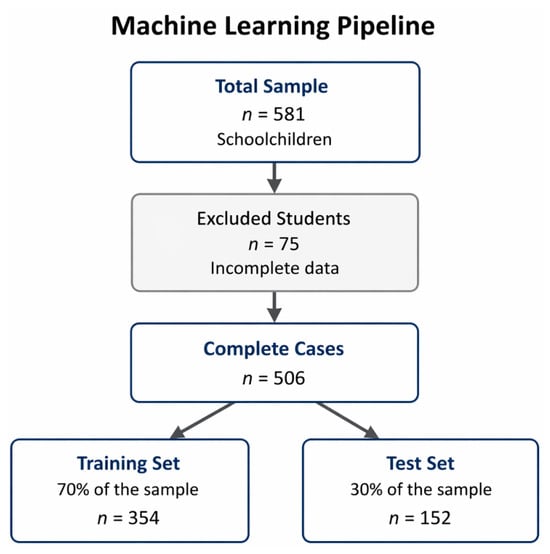
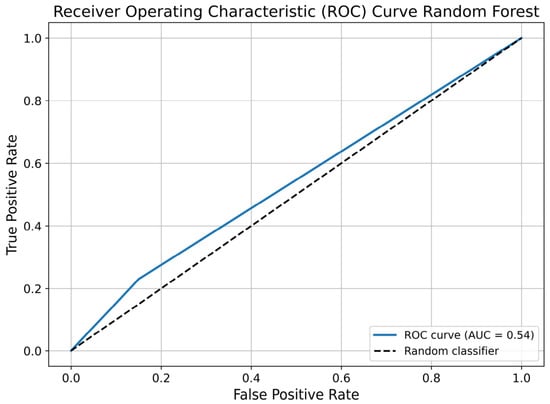
Background/Objectives: Efficient visual processing is relevant for reading, writing, and sustained attention in schoolchildren. However, the relative discriminative value of different visual domains for identifying teacher-reported academic difficulties remains unclear. This study evaluated five visual system alteration domains for identifying teacher-reported academic difficulties using machine learning models. Methods: An observational analytical study was conducted in 581 primary schoolchildren. After complete-case analysis, 506 participants were included in the machine-learning analyses. Academic functioning was rated by teachers using a 1–5 ordinal scale and dichotomized as a pragmatic school-based indicator of teacher-reported academic difficulties. Five predictor groups were analyzed: DIVE-based oculomotor function, clinical oculomotor assessment, accommodative system, vergence system, and axial length. Five classifiers were evaluated using stratified 5-fold cross-validation combined with model-complexity penalization through hyperparameter optimization. Results: The accommodative system showed the highest cross-validated performance (XGBoost: accuracy 0.952 ± 0.021; macro-F1 0.919 ± 0.028), followed by clinically assessed and instrumentally assessed oculomotor predictors. Oculomotor alterations also showed strong performance, whereas vergence alterations showed high specificity but very low sensitivity, and abnormal axial length showed limited discriminative performance. Conclusions: Functional visual domains, particularly accommodation and oculomotor control, showed stronger cross-validated classification performance than vergence or axial-length variables. These findings are exploratory and require external validation cohorts, standardized academic outcomes, and future combined-domain modeling before clinical or educational implementation.
Full article
(This article belongs to the Section Pediatric Ophthalmology)
►▼
Show Figures

Figure 1
Open AccessArticle
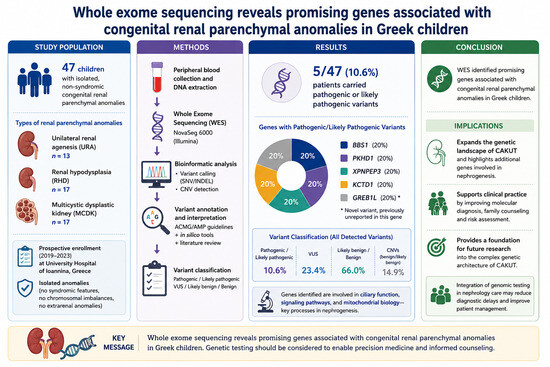
Whole Exome Sequencing Reveals Promising Genes Associated with Congenital Renal Parenchymal Anomalies in Greek Children
by
Anna Zisi, Charilaos Kostoulas, Athanasia Sesse, Chrysoula Kosmeri, Anastasios Serbis, Hane Lee, Ioannis Georgiou and Ekaterini Siomou
Children 2026, 13(6), 752; https://doi.org/10.3390/children13060752 (registering DOI) - 28 May 2026
Abstract
Background: Congenital anomalies of the kidney and urinary tract (CAKUT) comprise a broad spectrum of malformations and constitute the leading cause of end-stage kidney disease (ESKD) in childhood. Despite extensive research, a monogenic cause is identified in only ~10% of cases, while variable
[...] Read more.
Background: Congenital anomalies of the kidney and urinary tract (CAKUT) comprise a broad spectrum of malformations and constitute the leading cause of end-stage kidney disease (ESKD) in childhood. Despite extensive research, a monogenic cause is identified in only ~10% of cases, while variable penetrance and expressivity suggest a more complex disease mechanism. Epigenetic and environmental factors have also been implicated, further complicating efforts to elucidate the etiology of these anomalies. Methods: Whole exome sequencing (WES) was performed in 47 individuals with isolated, non-syndromic congenital renal parenchymal anomalies. Results: Variants in four genes (BBS1, PKHD1, XPNPEP3, and KCTD1) were identified, each of which has an established role in nephrogenesis and is implicated in syndromic disorders in which CAKUT can occur as part of the clinical spectrum. In addition, a variant in GREB1L was detected, a gene previously associated with CAKUT. The WES analysis identified candidate variants in 10.6% of patients, consistent with diagnostic yields reported in comparable CAKUT studies. The genes harboring variants are involved in key biological processes, including signaling pathways, ciliary function, and mitochondrial biology, supporting their relevance for further investigation. Conclusions: Our findings support WES as a valuable tool for identifying clinically relevant variants and expanding the genetic landscape of CAKUT.
Full article
(This article belongs to the Section Pediatric Nephrology & Urology)
►▼
Show Figures

Graphical abstract
Open AccessReview
The Otoacoustic Emissions in the Universal Neonatal Hearing Screening in China and India: An Update on the Asian States (2005 to 2025)
by
Stavros Hatzopoulos, Ludovica Cardinali, Piotr Henryk Skarzynski and Giovanna Zimatore
Children 2026, 13(6), 751; https://doi.org/10.3390/children13060751 - 28 May 2026
Abstract
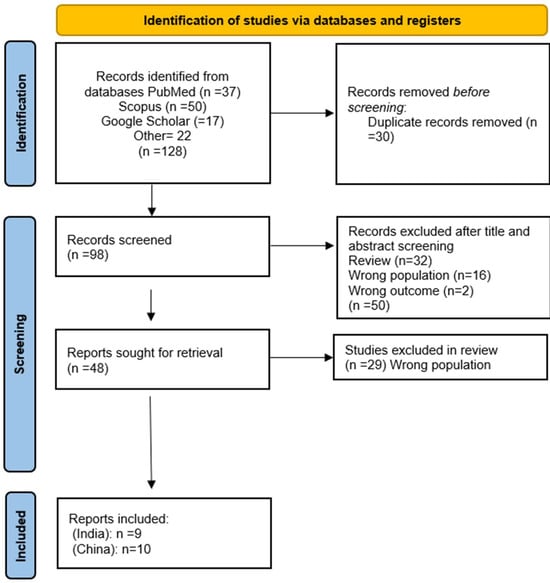
Background: China and India represent a large proportion of the Asian birth cohort and have produced extensive but heterogeneous evidence on neonatal hearing screening. This scoping review summarizes studies published between 2005 and 2025 on otoacoustic-emission-based neonatal hearing screening programs in these countries,
[...] Read more.
Background: China and India represent a large proportion of the Asian birth cohort and have produced extensive but heterogeneous evidence on neonatal hearing screening. This scoping review summarizes studies published between 2005 and 2025 on otoacoustic-emission-based neonatal hearing screening programs in these countries, with emphasis on program implementation, screening coverage, the prevalence of congenital and bilateral hearing loss, follow-up, and intervention pathways. Methods: Searches were conducted in PubMed, Scopus, and Google Scholar using predefined keywords. Studies reporting screening protocols, coverage, prevalence, or follow-up outcomes were included. The standard English language filter was used. A total of 19 papers were considered for this review. Results: The data from the two assessed Asian states show two clearly different screening implementation profiles. In China, universal hearing screening has evolved into a large-scale and increasingly standardized system, supported by technical specifications and regional or municipal databases. The reported screening coverage was 85.8% in early rural programs, 93.6% in Shanghai, and 97.9% in Liuzhou. National institutional surveys indicate that UNHS has now been substantially implemented in many regions. Reported hearing loss prevalence estimates generally ranged from 1.66 to 3.43 per 1000 newborns, although follow-up and regional equity remain problematic, especially in rural settings. In India, the evidence is dominated by tertiary-hospital feasibility studies rather than a uniformly implemented national program. Reported hearing loss prevalence estimates varied more widely, from 0.29 to 5.60 per 1000 screened newborns, largely reflecting differences in study design, screening timing, referral completion, and population risk profile. Across both countries, OAE-based two-stage or sequential OAE + AABR protocols reduced referral rates and improved case identification, but loss to follow-up remained a recurrent limitation. Conclusions: China and India provide complementary models of neonatal hearing screening expansion. China demonstrates the effects of system-level scale-up, whereas India highlights the feasibility and constraints of hospital-based implementation in a highly diverse healthcare environment. Future priorities include stronger follow-up systems, harmonized reporting standards, and broader dissemination of outcome data through peer-reviewed publications.
Full article
(This article belongs to the Special Issue Assessment and Intervention in Language and Communication for Pediatric Populations with Hearing Loss)
►▼
Show Figures

Figure 1
Open AccessReview
Autistic Traits, Pragmatic Difficulties, and Adaptive Outcomes in Williams Syndrome: A Systematic Narrative Review
by
Dimitra V. Katsarou and Eleni E. Kyvrakidou
Children 2026, 13(6), 750; https://doi.org/10.3390/children13060750 - 28 May 2026
Abstract
Background and Objectives: Williams syndrome (WS) is a rare neurodevelopmental genetic condition traditionally described as being associated with a highly sociable behavioral profile. However, growing evidence indicates that this characterization may oversimplify the socio-cognitive phenotype, as some individuals with WS exhibit socio-communicative and
[...] Read more.
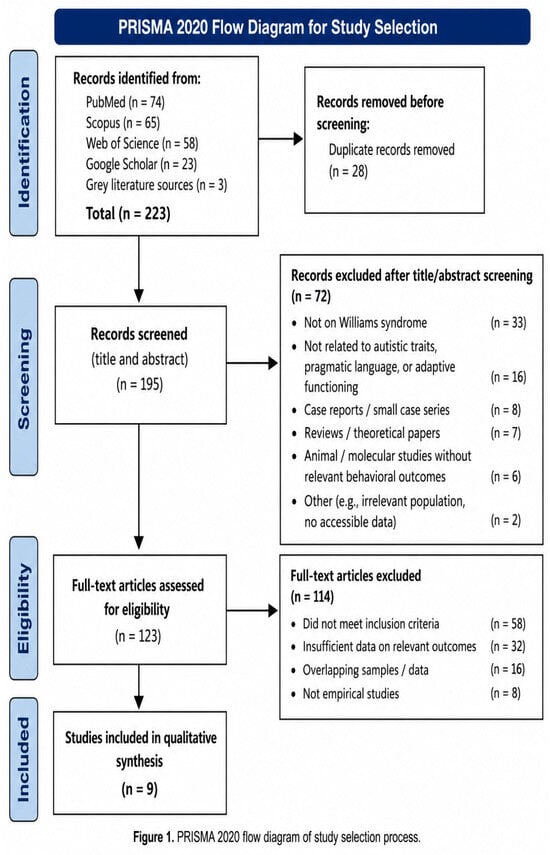
Background and Objectives: Williams syndrome (WS) is a rare neurodevelopmental genetic condition traditionally described as being associated with a highly sociable behavioral profile. However, growing evidence indicates that this characterization may oversimplify the socio-cognitive phenotype, as some individuals with WS exhibit socio-communicative and pragmatic difficulties that may overlap with ASD-related features, although these difficulties should not be interpreted as autism-specific. The present systematic review aimed to investigate the presence of autistic traits in WS, to synthesize evidence on pragmatic and socio-communicative difficulties, and to explore their association with adaptive functioning and, indirectly, adaptive and functional outcomes. Materials and Methods: This study follows a systematic search and selection process in accordance with PRISMA 2020 guidelines and employs a systematic review with structured narrative synthesis. A systematic search of PubMed, Scopus, and Web of Science was performed up to December 2022, supplemented by grey literature sources. Nine studies met the predefined inclusion criteria. Due to substantial methodological heterogeneity, findings were synthesized using a structured narrative approach. Study quality was evaluated using adapted criteria addressing research design, sample characteristics, measurement tools, and risk of bias. Results: The findings suggest that autistic traits may constitute a potentially clinically relevant, though not universal, aspect of the WS phenotype. Pragmatic language difficulties were consistently reported, particularly in relation to conversational management, social reciprocity, and context-appropriate language use. These difficulties appear to function as a key mechanism linking socio-cognitive characteristics with functional outcomes. Patterns of adaptive functioning showed both distinctions from and overlaps with autism spectrum disorder (ASD), especially in communication domains. Available genetic and molecular evidence points to a possible contribution of additional modifying factors for phenotypic variability, with possible phenotypic overlap between WS and ASD, particularly in pragmatic language and adaptive communication. Conclusions: The evidence supports a multidimensional and spectrum-based conceptualization of socio-communicative functioning in Williams syndrome. Despite strong social motivation, individuals with WS may experience meaningful pragmatic and adaptive challenges, with implications for assessment and intervention. These findings highlight the importance of multidimensional and individualized clinical approaches.
Full article
(This article belongs to the Special Issue Neurodevelopmental Disorders in Youth: Communication, Language, and Literacy)
►▼
Show Figures

Figure 1
Open AccessArticle
Laparoscopic Repair of Duodenal Atresia with Concurrent Situs Anomaly: A Case Series and Technical Considerations
by
Min-Jung Bang, Wontae Kim, Sungjoo Park, Sanghoon Lee and Jeong-Meen Seo
Children 2026, 13(6), 749; https://doi.org/10.3390/children13060749 - 28 May 2026
Abstract
Background: Laparoscopic duodenoduodenostomy is an established approach for duodenal atresia, yet its applicability in neonates with concurrent situs anomalies remains poorly defined. This study evaluated the feasibility and perioperative outcomes of laparoscopic duodenoduodenostomy in this population. Methods: A retrospective review was conducted of
[...] Read more.
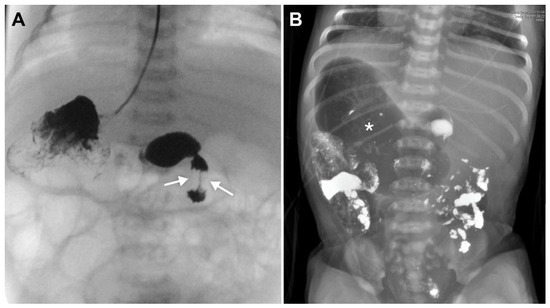
Background: Laparoscopic duodenoduodenostomy is an established approach for duodenal atresia, yet its applicability in neonates with concurrent situs anomalies remains poorly defined. This study evaluated the feasibility and perioperative outcomes of laparoscopic duodenoduodenostomy in this population. Methods: A retrospective review was conducted of all neonates who underwent laparoscopic repair for duodenal atresia by a single surgeon at Samsung Medical Center between January 2017 and December 2023. Thirteen patients were divided into situs anomaly (n = 3) and situs solitus (n = 10) groups. Anatomical features, operative details, and perioperative outcomes were reviewed and descriptively summarized according to situs status. Results: All three neonates in the situs anomaly group had situs ambiguus—left isomerism with polysplenia (n = 2) or right isomerism with asplenia (n = 1). Interrupted inferior vena cava with azygos continuation and intestinal malrotation were present in all three patients; however, only two required a concurrent Ladd procedure. Laparoscopic repair was completed in all 13 patients without open conversion. Operative time, feeding milestones, and hospital stay were descriptively similar between groups. No anastomotic complications, reoperations, or mortality occurred. Conclusion: In this small case series, laparoscopic duodenoduodenostomy was completed without conversion or perioperative anastomotic complications in neonates with duodenal atresia and concurrent situs anomalies. Situs anomaly alone may not preclude minimally invasive repair in experienced hands.
Full article
(This article belongs to the Special Issue Application of Endoscopy and Endosurgery in Pediatric Surgery)
►▼
Show Figures

Figure 1
Open AccessCase Report
Pachydermodactyly: A Diagnostic Pitfall in Adolescents Referred to Pediatric Rheumatology for Suspected Juvenile Idiopathic Arthritis
by
Andrei-Ioan Munteanu, Delia-Maria Nicoară, Iulius Jugănaru, Raluca Asproniu and Otilia Mărginean
Children 2026, 13(6), 748; https://doi.org/10.3390/children13060748 - 27 May 2026
Abstract
Pachydermodactyly (PDD) is a benign, non-inflammatory, non-erosive digital fibromatosis characterized by progressive, asymptomatic, periarticular soft tissue thickening predominantly affecting the proximal interphalangeal (PIP) joints. Additional localizations, including the palm and the distal interphalangeal (DIP) or metacarpophalangeal (MCP) joints, have also been reported. The
[...] Read more.
Pachydermodactyly (PDD) is a benign, non-inflammatory, non-erosive digital fibromatosis characterized by progressive, asymptomatic, periarticular soft tissue thickening predominantly affecting the proximal interphalangeal (PIP) joints. Additional localizations, including the palm and the distal interphalangeal (DIP) or metacarpophalangeal (MCP) joints, have also been reported. The etiology of PDD is multifactorial, encompassing idiopathic, trauma-induced, genetic, and behavioral factors. Objective: The aim of this report is to describe the clinical, imaging, and laboratory features of pachydermodactyly in two male adolescents initially referred to a pediatric rheumatology service for suspected juvenile idiopathic arthritis (JIA), highlighting the diagnostic pitfalls and differentiation criteria from inflammatory arthritis. In addition, a narrative review of cases published from 1975 to 2025 is presented to contextualize our findings within the broader literature. Results: Two male adolescents (aged 13 years and 5 months and 16 years) presented with progressive, painless periarticular soft tissue swelling of the PIP joints, initially raising suspicion for JIA. Comprehensive evaluation identified characteristic features of PDD in both patients, with complete absence of inflammatory markers, synovitis, or osseous changes. Case 1 was classified as mono-PDD and Case 2 as classic, trauma-associated PDD with atypical perilesional hypopigmentation, requiring MRI for definitive exclusion of infiltrative pathology. A narrative review of 15 representative published cases from 2014 to 2025 is presented, demonstrating persistent underdiagnosis and consistent misclassification as JIA across multiple clinical settings and geographic regions. Conclusions: PDD should be considered in the differential diagnosis of any adolescent presenting with painless digital swelling. Its recognition as a benign, non-inflammatory entity is essential to prevent unnecessary diagnostic procedures and immunosuppressive therapy. Clinical awareness and multidisciplinary assessment remain the cornerstones of accurate diagnosis and appropriate management.
Full article
(This article belongs to the Special Issue Diagnosis, Treatment and Care of Pediatric Rheumatology: 2nd Edition)
Open AccessCase Report
Life-Threatening Complications and Intensive Care of Diffuse Neonatal Hemangiomatosis of the Liver in a One-Month-Old Girl: A Case Report
by
Regina R. Tukhvatullina, Nune V. Matinyan, Vasiliy A. Akimov, Raisa V. Milutis, Tatiana S. Belysheva, Lana R. Turkia, Ekaterina V. Chufistova, Guzel M. Muftakhova, Julietta A. Karmanova, Anatoly P. Kazantsev, Vera V. Reshetnikova, Timur T. Valiev, Kirill I. Kirgizov, Tatiana V. Gorbunova, Svetlana R. Varfolomeeva, Irina Zh. Shubina and Mikhail V. Kiselevskiy
Children 2026, 13(6), 747; https://doi.org/10.3390/children13060747 - 27 May 2026
Abstract
Background: An infantile hemangioma (IH) is a benign lesion that develops as a result of pathologically dysregulated proliferation of the endothelial cells of the capillaries, typically appearing within the first three years of life. The disease is found mostly on the skin
[...] Read more.
Background: An infantile hemangioma (IH) is a benign lesion that develops as a result of pathologically dysregulated proliferation of the endothelial cells of the capillaries, typically appearing within the first three years of life. The disease is found mostly on the skin and—less often—in the internal organs. Although IH generally has a good prognosis and may sometimes undergo spontaneous regression, certain types of IH with a specific form, localization, and size may lead to life-threatening conditions including impairment of vital functions. This determines the need for precise diagnostics and treatment. Case presentation: The paper presents a clinical observation of an infant in the first months of life with IH presenting as diffuse hepatic hemangiomatosis and a hemangioma of the left eyebrow area. The IH was associated with life-threatening conditions. However, effective treatment with the non-selective β-adrenoblocker propranolol led to a positive outcome and the resolution of complications. Conclusions: This case demonstrates the critical importance of timely diagnosis and treatment for lesions that, while benign, can lead to fatal complications if not addressed promptly.
Full article
(This article belongs to the Special Issue Pediatric Solid Tumor: Precision Medicine and Long-Term Prognosis)
Open AccessArticle
Do Rural–Urban Disparities Translate into Nursing Complexity at Hospital Admission? Evidence from a Single Tertiary-Care Pediatric Hospital in Italy
by
Manuele Cesare, Gianfranco Damiani, Gloria Anderson, Jessica Preziosi, Rosemary Frasso, Leonardo Villani, Nursing and Public Health Group, Vittorio Maio and Antonello Cocchieri
Children 2026, 13(6), 746; https://doi.org/10.3390/children13060746 - 27 May 2026
Abstract
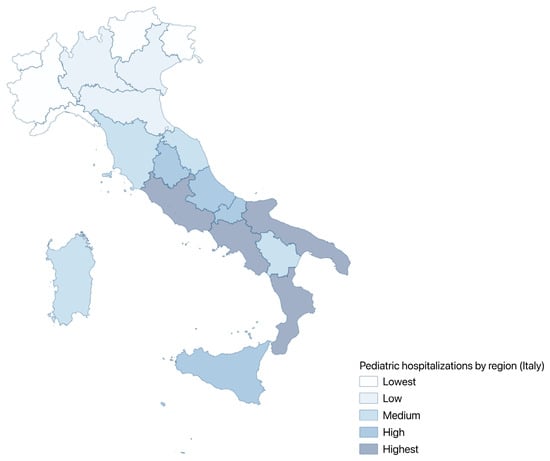
Background/Objectives: Rural–urban disparities are well documented in pediatric healthcare, influencing access, service organization, and outcomes. However, whether these differences extend to the domain of nursing care remains unclear. This study examined the association between degree of urbanization and nursing complexity among children admitted
[...] Read more.
Background/Objectives: Rural–urban disparities are well documented in pediatric healthcare, influencing access, service organization, and outcomes. However, whether these differences extend to the domain of nursing care remains unclear. This study examined the association between degree of urbanization and nursing complexity among children admitted to a single tertiary-care pediatric hospital, comparing clinical, organizational, and nursing characteristics across geographic groups. Methods: Routinely collected electronic nursing documentation and hospital administrative records were retrospectively examined in a tertiary-care pediatric hospital in Rome, Italy. Children aged 2 to <18 years were consecutively included. Degree of urbanization was defined using the ISTAT-derived DEGURBA classification. The study outcome for nursing complexity corresponded to the number of nursing diagnoses documented at hospital admission. Descriptive analyses and a multivariable negative binomial regression model assessed the association between urbanization and nursing complexity, adjusting for age, sex, DRG weight, number of medical diagnoses, and chronic conditions. Results: Among 1652 pediatric hospitalizations, those from rural areas showed a higher clinical burden, with significantly higher DRG weight and more chronic conditions, but nursing complexity did not differ significantly across geographic groups. In the multivariable model, degree of urbanization was not independently associated with nursing complexity for admissions from towns and suburbs (IRR = 0.93, 95% CI 0.82–1.04, p = 0.211) or rural areas (IRR = 1.00, 95% CI 0.84–1.20, p = 0.966), compared with those from cities. Higher DRG weight (IRR = 1.11, 95% CI 1.05–1.17) and a greater number of medical diagnoses (IRR = 1.17, 95% CI 1.11–1.25) were positively associated with nursing complexity, whereas the number of chronic conditions showed an inverse association (IRR = 0.90, 95% CI 0.84–0.96). Conclusions: In this single-center sample, rural–urban differences in clinical burden are not accompanied by statistically detectable differences in nursing complexity at hospital admission. Despite a higher clinical burden among children admitted from less urbanized areas, nursing complexity does not appear to differ significantly across geographic groups. Standardized nursing data enhance the ability to compare admission-level care needs across geographic contexts, enabling more precise and stratified population and public health analyses.
Full article
(This article belongs to the Section Global Pediatric Health)
►▼
Show Figures

Figure 1
Open AccessBrief Report
Use of Tramadol in Pain Management of Neonates with Epidermolysis Bullosa: A Single-Center Experience
by
Jole Rechichi, Domenico Umberto De Rose, Flaminia Pugnaloni, Andrea Diociaiuti, Elisa Pisaneschi, Andrea Dotta, Annabella Braguglia and May El Hachem
Children 2026, 13(6), 745; https://doi.org/10.3390/children13060745 - 27 May 2026
Abstract
Background: Inherited Epidermolysis Bullosa (EB) is a wide group of rare genetic disorders characterized by mucocutaneous fragility and blister formation. In neonates with EB, pain control is particularly complex because painful skin lesions coexist with developmental vulnerability, repeated handling, and the need
[...] Read more.
Background: Inherited Epidermolysis Bullosa (EB) is a wide group of rare genetic disorders characterized by mucocutaneous fragility and blister formation. In neonates with EB, pain control is particularly complex because painful skin lesions coexist with developmental vulnerability, repeated handling, and the need for frequent wound care. Traditional opioid use carries a risk of adverse effects such as respiratory depression. Tramadol, a centrally acting weak opioid with a dual mechanism of action, may offer a safer alternative. Methods: This retrospective observational study analyzed neonates with different EB subtypes admitted to our tertiary neonatal care center between January 2020 and October 2022. Genetic diagnosis was confirmed via next-generation sequencing. Pain was assessed using the Neonatal Infant Pain Scale (NIPS). Tramadol was administered intravenously (1–2 mg/kg bolus or 0.1–0.2 mg/kg/h infusion) before daily wound dressings, then transitioned to oral dosing when appropriate. Pain scores before and after tramadol administration were compared. Results: Six neonates with various EB subtypes were included. All patients received tramadol for procedural pain control. No significant differences in NIPS scores were observed before and after tramadol administration (p = 0.997), indicating adequate pain control, although baseline pain scores were low, limiting interpretation of analgesic efficacy. No immediate adverse events were observed during hospitalization or reported during follow-up. Conclusions: Scheduled tramadol administration appears to be a safe and effective option for pain management in neonates with EB, with no observed hemodynamic or respiratory complications. Given the scarcity of data in this population, our findings highlight the need for multicenter studies to establish standardized analgesia protocols for EB neonates.
Full article
(This article belongs to the Special Issue Advances in Neonatal and Pediatric Intensive Care: Prospects and Ethical Challenges)
Open AccessSystematic Review
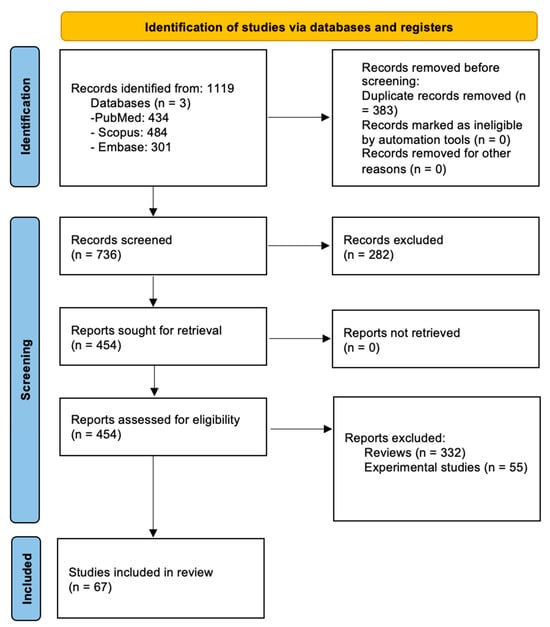
The Bidirectional Relationship Between Type 1 Diabetes Mellitus and Obesity in Pediatric Patients: A Systematic Review
by
Cătălina Mărgineanu, Lia-Oxana Usatiuc, Maria Lucia Sur, Mara Similie, Alexandru Cristian Bolunduț, Csilla-Enikő Szabo, Dana-Teodora Anton-Păduraru and Gabriela Roman
Children 2026, 13(6), 744; https://doi.org/10.3390/children13060744 - 27 May 2026
Abstract
Background/Objectives: The rising prevalence of childhood obesity has coincided with increasing incidence of type 1 diabetes mellitus (T1DM), raising questions regarding their potential bidirectional interaction. This systematic review evaluated the association between obesity and T1DM risk, as well as post-diagnostic weight trajectories and
[...] Read more.
Background/Objectives: The rising prevalence of childhood obesity has coincided with increasing incidence of type 1 diabetes mellitus (T1DM), raising questions regarding their potential bidirectional interaction. This systematic review evaluated the association between obesity and T1DM risk, as well as post-diagnostic weight trajectories and metabolic outcomes in pediatric populations. Methods: A systematic review was conducted in accordance with PRISMA 2020 guidelines. PubMed, Embase, and Scopus were searched for studies published between January 2010 and January 2026. Eligible studies included observational and interventional research in children and adolescents addressing T1DM and obesity; reviews, case reports, and non-English studies were excluded. Risk of bias was assessed using Joanna Briggs Institute tools. Due to heterogeneity, results were synthesized narratively. Results: Sixty-seven studies were included. Population-based data showed a positive association between higher BMI and incident T1DM, with obesity associated with a twofold increased risk (HR 2.05, 95% CI 1.58–2.66) and a 25% increase per 1-SD BMI increment. Insulin resistance (IR) indices correlated with BMI and predicted faster progression to clinical T1DM in autoantibody-positive individuals. At diagnosis, 20–30% of children were overweight or obese, increasing to 30–40% during follow-up. Excess adiposity was associated with higher insulin requirements and increased prevalence of hypertension and dyslipidemia. Longitudinal data indicate that BMI standard deviation scores rise with age, diabetes duration, and pubertal stage, with higher insulin doses and intensive insulin therapy contributing to weight gain. Conversely, some large cohort studies report no linear association between BMI and incident T1DM, indicating heterogeneity across populations. The limitations of this review include the predominance of observational studies, heterogeneous methodologies, and limited generalizability beyond predominantly European and North American pediatric populations. Conclusions: Overall, the evidence supports a bidirectional relationship: obesity may increase T1DM risk and accelerate disease progression, while T1DM-related factors promote weight gain after diagnosis. These findings highlight the importance of integrating weight management strategies into routine pediatric T1DM care.
Full article
(This article belongs to the Section Global Pediatric Health)
►▼
Show Figures

Figure 1
Open AccessPerspective
Pediatric New Daily Persistent Headache: Integrating Novel Research Methods to Support and Delineate Evolving Clinical Phenotypes
by
Hannah Rogan, Jenny John, Kevin Zhao, Scott Holmes and Alyssa A. Lebel
Children 2026, 13(6), 743; https://doi.org/10.3390/children13060743 - 27 May 2026
Abstract
Pediatric new daily persistent headache (NDPH) is a clinically defined headache subtype that remains controversial due to a lack of unique and objective mechanistic features. For many headache subtypes, different, and sometimes unique, patterns of structural and functional changes can be observed in
[...] Read more.
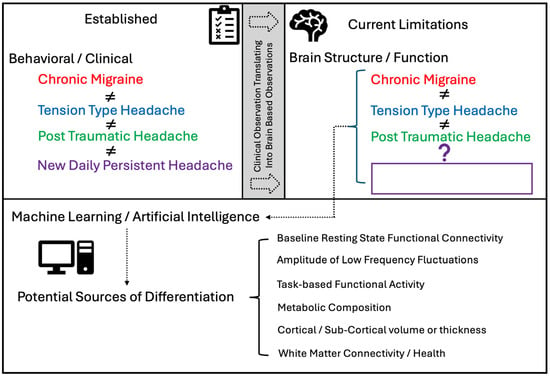
Pediatric new daily persistent headache (NDPH) is a clinically defined headache subtype that remains controversial due to a lack of unique and objective mechanistic features. For many headache subtypes, different, and sometimes unique, patterns of structural and functional changes can be observed in the brain, supporting a unique role for neuroimaging in identifying the presence and type of headache experienced. To date, there has been little research into pediatric NDPH and how it may have a unique mechanism relative to other headache subtypes. We review published research that addressed structural and functional neuroimaging in persons with NDPH. We found that research to date supports differences in both brain structure and function in persons with NDPH relative to healthy controls. Such differences reflect both cortical and sub-cortical regions of the brain. No studies to date have evaluated brain data between persons with NDPH and other headache subtypes. We discuss application of machine learning and artificial intelligence to validate NDPH as a unique headache diagnosis. We believe that future work pursuing both neuroimaging alongside machine learning can help inform the classification and differential diagnosis of pediatric patients with NDPH from other chronic headache conditions.
Full article
(This article belongs to the Section Pediatric Anesthesiology, Pain Medicine and Palliative Care)
►▼
Show Figures

Figure 1
Open AccessArticle
Feasibility of Repeated Patient-Reported Outcome Collection and Trial Design Implications for Structured Transition Care in Adolescents with Congenital Heart Disease: A Single-Center Pilot Randomized Controlled Study
by
Salvatore Angileri, Rosario Caruso, Serena Francesca Flocco, Irene Baroni, Gaia Spaziani, Silvia Favilli, Iacopo Olivotto, Daniele Ciofi, Ilaria Milani, Giulia Maga, Cristina Arrigoni, Arianna Magon and Maddalena De Maria
Children 2026, 13(6), 742; https://doi.org/10.3390/children13060742 - 26 May 2026
Abstract
Background/Objectives: Structured transition care models for adolescents with congenital heart disease (CHD) are increasingly advocated, but methodological evidence to support the design of adequately powered randomized trials remains limited. This pilot randomized study was designed primarily to assess the feasibility of repeated
[...] Read more.
Background/Objectives: Structured transition care models for adolescents with congenital heart disease (CHD) are increasingly advocated, but methodological evidence to support the design of adequately powered randomized trials remains limited. This pilot randomized study was designed primarily to assess the feasibility of repeated patient-reported outcome (PRO) collection and to generate empirical parameters for planning a future confirmatory trial, rather than to formally evaluate intervention efficacy. Methods: This was a single-center, parallel-group, pilot randomized controlled trial conducted at Meyer Children’s Hospital, Florence, Italy, within the TELEMACO project (NCT05713591). Twenty-three adolescents with CHD were randomized 1:1 to a structured transition care intervention (n = 11) or usual care (n = 12). PROs, including the SF-12 Physical (PCS12) and Mental (MCS12) Component Summaries, health engagement, life satisfaction, and healthcare needs, were collected at baseline and at 3, 6, 9, and 12 months. Pre-specified exploratory analyses addressed retention, missingness, linear mixed-effects models, intraclass correlation coefficients (ICCs), and sample size scenarios. Results: Retention at 12 months was 63.6% (intervention) and 58.3% (control), with substantially lower completion rates at intermediate assessments (T2–T3: 27–50%), directly affecting the reliability of longitudinal estimates at those time points. Mixed-effects models showed no significant time-by-group interaction for PCS12 (p = 0.13) or MCS12 (p = 0.39); unadjusted contrasts suggested nominally higher PCS12 values in the intervention group at selected assessments. ICCs were approximately 0 for PCS12 and 0.56 for MCS12, indicating fundamentally different variance structures. Conclusions: Repeated PRO collection was feasible, though retention across intermediate assessments was inconsistent. The pilot generated empirically grounded estimates for the design of a future confirmatory trial. Sample-size scenarios were highly sensitive to uncertainty in the PCS12 variability estimate, ranging from approximately 25 to 115 analyzable participants per group, depending on the true standard deviation. Within this pilot dataset, PCS12 at 12 months, analyzed cross-sectionally with baseline adjustment, emerged as a provisional endpoint option requiring further evaluation in an adequately powered confirmatory trial.
Full article
(This article belongs to the Section Pediatric Cardiology)
Open AccessReview
Hematopoietic Cell Transplantation for Sickle Cell Disease
by
Gregory Michael Taylor Guilcher
Children 2026, 13(6), 741; https://doi.org/10.3390/children13060741 - 26 May 2026
Abstract
Sickle cell disease is the most common monogenetic disease worldwide and affects millions of children and adults. While supportive care practices have improved life expectancy, particularly in high income countries, sickle cell disease typically has adverse impact on quality of life and reduced
[...] Read more.
Sickle cell disease is the most common monogenetic disease worldwide and affects millions of children and adults. While supportive care practices have improved life expectancy, particularly in high income countries, sickle cell disease typically has adverse impact on quality of life and reduced life expectancy. As a result, patients and providers are increasingly seeking information regarding curative and transformative therapies and advocating for improved global access. This review will describe allogeneic hematopoietic cell transplantation eligibility, approaches to transplant, short and long-term outcomes and key supportive care considerations for providers who care for patients with sickle cell disease.
Full article
(This article belongs to the Special Issue Sickle Cell Disease: From Pathophysiology to Advances in Treatment)
Journal Menu
► ▼ Journal Menu-
- Children Home
- Aims & Scope
- Editorial Board
- Reviewer Board
- Topical Advisory Panel
- Early Career Editorial Board
- Instructions for Authors
- Special Issues
- Topics
- Sections & Collections
- Article Processing Charge
- Indexing & Archiving
- Editor’s Choice Articles
- Most Cited & Viewed
- Journal Statistics
- Journal History
- Journal Awards
- Conferences
- Editorial Office
Journal Browser
► ▼ Journal BrowserHighly Accessed Articles
Latest Books
E-Mail Alert
News
Topics
Topic in
Behavioral Sciences, Education Sciences, J. Intell., Children
Personality, Emotions, and Emotional Intelligence Assessments: New Applications and Instruments
Topic Editors: Roberto Burro, Daniela Raccanello, Joana PipaDeadline: 30 June 2026
Topic in
Behavioral Sciences, Children, Healthcare, IJERPH, JFMK, Obesities
The Effect of Physical Activity on the Population's Health
Topic Editors: Stefania Paduano, Federica ValerianiDeadline: 31 August 2026
Topic in
Nutrients, Metabolites, Healthcare, Children, Obesities, Life
Non-Communicable Diseases Silent Killer: Metabolic and Obesity Risks of Sedentary Behaviors
Topic Editors: Kotsedi Daniel Monyeki, Machoene Derrick SekgalaDeadline: 30 September 2026
Topic in
Behavioral Sciences, Children, EJIHPE, IJERPH, Healthcare
Mental Health and the 2030 Sustainable Development Agenda: Old Problems and New Perspectives
Topic Editors: Carlos Laranjeira, Ana QueridoDeadline: 31 October 2026
Conferences
Special Issues
Special Issue in
Children
Current Trends and Innovations in Pediatric Interventional Cardiology
Guest Editors: James A. Kuo, George T. NicholsonDeadline: 30 May 2026
Special Issue in
Children
Advances in Neonatal Resuscitation and Intensive Care—2nd Edition
Guest Editors: Pranav Jani, Dharmesh Shah, Rajesh MaheshwariDeadline: 30 May 2026
Special Issue in
Children
Nephrotic Syndrome in Children: Understanding Pathogenesis and Novel Therapies
Guest Editors: Ramona Florina Stroescu, Mihai Gafencu, Andreea Bot (Rachisan)Deadline: 30 May 2026
Special Issue in
Children
Advances in the Epidemiology of Hemostasis Disorders in Children
Guest Editors: Anca Colita, Cristina GavriloviciDeadline: 30 May 2026
Topical Collections
Topical Collection in
Children
Emotional and Behavioral Problems in Children and Adolescents: Assessment and Intervention
Collection Editors: Pietro Muratori, Valentina Levantini
Topical Collection in
Children
Advancements in the Management of Children with Cerebral Palsy
Collection Editor: Erich Rutz
Topical Collection in
Children
Novel Precision Medicine and Translational Based Approaches, Treatments and Prevention Strategies in Neonatal, Pediatric, Adolescent, and Transition Endocrinology
Collection Editors: Dimitris T. Papadimitriou, George Paltoglou, Antonis Voutetakis, George Mastorakos, Constantine A. Stratakis