


Abstract
Recently, growing attention has focused on the impact of air pollution on gut microbiota as a possible mechanism by which air pollutant exposure increased the risk for chronic diseases, as evidenced by in vivo studies demonstrating important exposure-induced alterations in the diversity and relative abundance of gut bacterial taxa. This systematic review provides updated state-of-art findings of studies examining the impact of air pollution on the human gut microbiota. Databases PubMed, Scopus, and Web of Science were searched with the following strategy: “air poll*” AND “gut micro*” OR “intestinal micro*”; moreover, a total of 10 studies were included. Overall, there is the evidence that short-term and long-term exposure to air pollutants have the potential to alter the composition and diversity of gut microbiota; some studies also correlated air pollution exposure to adverse health effects (impaired fasting glucose, adverse pregnancy outcomes, and asthma attacks) via alterations in the composition and/or function of the gut microbiota. However, the evidence on this topic is still scarce, and large cohort studies are needed globally.
1. Introduction
Air pollution represents one of the most important environmental threats to public health globally, and it is responsible for an increased risk of morbidity and mortality due to cardiopulmonary and neoplastic diseases [1,2]. Epidemiological studies have shown an association between exposure to air pollutants and an increased incidence of asthma and chronic obstructive pulmonary disease [3,4,5]; their exposure has also been associated with the development of lung cancer [6,7,8]. Lastly, exposure to air pollution has been linked with an increased risk of stroke and ischemic heart disease [9,10].
According to the World Health Organization, around 90% of individuals globally, living in urban areas, are exposed to air containing high levels of pollutants, and about 4.2 million people die prematurely from outdoor air pollution each year [2,11]. In urban areas, rapid economic development and urbanization have concurrently boosted energy consumption and pollutant emissions, which has led to increasingly serious environmental pollution [12]. The air pollutants include gaseous components (carbon oxides, nitrogen oxides, sulphur oxides, and ozone), volatile organic compounds (e.g., hydrocarbons also halogenated), and fine and ultrafine particulate matter (PM) that may contain metals, semi-metals, and persistent organic pollutants. All these contaminants may determine deleterious effects on human health [13].
Evidence has been provided on air pollutant’s ability to directly irritate airway epithelium and cause oxidative stress and inflammation, underlying the development or progression of respiratory diseases, including lung cancer [14,15]. In addition, air pollutants may reach the gastrointestinal tract through the muco-ciliary clearance of inhaled pollutants or the intake of contaminated food and water [14]. Once in the gastrointestinal tract, air pollutants may interact with the intestinal epithelium, promoting the production of reactive oxygen species and pro-inflammatory oxidative lipids and contributing to the development of intestinal diseases [16,17]. In support of this hypothesis, recent studies have associated air pollution with intestinal diseases [13], including colorectal cancer [18] and inflammatory bowel diseases [19].
More recently, growing attention has focused on the impact of air pollution on gut microbiota as a possible mechanism by which air pollutant exposure increases the risk for chronic diseases. In this regard, particularly interesting are in-vivo studies demonstrating important exposure-induced alterations in the diversity and relative abundance of gut bacterial taxa [20,21,22].
Intestinal microbiota is more complex than other microbiota niches [23,24,25], for instance, the genital microbiota [26,27], and accounts for approximately 1013 bacteria; the most dominant bacterial phyla are Firmicutes (60–80%) and Bacteroidetes (20–40%), while Proteobacteria, Actinobacteria, Fusobacteria, and Verrucomicrobia are in the minority. Typically, obligate anaerobes (e.g., Bacteroides, Clostridium, Fusobacterium, and Bifidobacterium) prevail over facultative anaerobes (e.g., Lactobacillus, Escherichia, and Enterococcus) and the balance of the intestinal microbiota is essential for the integrity of the intestinal epithelial barrier and its functions as well as for the protection against pathogenic challenges. On the contrary, a disbalance of the gut microbiota composition, namely dysbiosis, has been associated with several chronic conditions, such as inflammatory bowel disease [28], cancer [29], and metabolic disorders [30].
The intestinal microbiota composition is highly variable among individuals; specifically, the abundance of specific bacteria varies in relation to several factors, including age, diet, the administration of antibiotics, and, as recently highlighted, environmental pollution exposure [31].
This systematic review provides updated state-of-art findings of studies examining the impact of air pollution on the human gut microbiota. Potential mechanisms by which air pollution can cause adverse health effects via the alteration of human microbiota are also described.
2. Materials and Methods
2.1. Selection Protocol and Search Strategy
This systematic review was registered in the International Prospective Register of Systematic Reviews, registration number: CRD42022328390. The protocol was written according to the Preferred Reporting Items for Systematic Review and Meta-Analysis (PRISMA) statement [32]. Zotero citation management software (RRID: SCR_013784) was used to identify any duplicates and to manage and screen the selected literature records.
The research study was performed between 23rd and 31st May 2022 in databases PubMed, Web of Science, and Scopus. We restricted the publication language to English. Relevant studies were identified using the following keyword and Boolean operator combinations: “air poll*” AND “gut micro*” OR “intestinal micro*”. Truncation filters (*) were used to represent any combination of letters. Three independent reviewers (SF, MDP, and CP) performed the search, reading the titles and abstracts of the articles identified by the search strategy. During the multi-step exclusion process, disagreements on the studies were discussed until reaching a consensus. The process was supervised by other investigators (MV and RS). The PRISMA flow chart diagram was used for summarizing the selection steps for the present systematic review.
2.2. Study Selection and Eligibility Criteria
Three (SF, MDP, and CP) of the co-authors independently performed study selection using the Population, Intervention, Comparison, Outcomes, and Study (PICOS) criteria for inclusion and exclusion criteria. We included all studies meeting the following criteria: (1) all genders and all age individuals; (2) exposure to ambient air pollution; (3) gut dysbiosis outcome. Exclusion criteria were as follows: (1) exposure to indoor air pollution; (2) respiratory outcomes and skin microbiota dysbiosis. Animal studies, reviews, systematic reviews, meta-analysis, editorials, commentaries, case reports, case series, semi-experimental and experimental studies, proceedings, individual contributions (e.g., conference speeches), and purely descriptive studies published in scientific conferences without any quantitative or qualitative findings were excluded from the review.
2.3. Data Extraction Process and Quality Assessment
Three authors (SF, MDP, and CP) independently extracted the following information from each included study: first author’s name, publication year, study region, study period, study population, sample size, study design, parameters of air pollution, duration of exposure, type of exposure, exposure assessment methods, and confounding factors. Differences in the composition and diversity of gut microbiota and any measure of association to air pollutants were reported as main results. Two different reviewers (MV and RS) assessed the methodological quality of the selected studies with the Newcastle–Ottawa Scale (NOS) rating tool, adapted for evaluating case–control, cross-sectional, and cohort studies [33]. The NOS is divided in eight categories evaluating three different quality aspects: selection, comparability, and outcome; scores range from 0 to 9, and the quality of a study was high if the NOS score was 7 to 9, intermediate if the NOS score was 4 to 6, and low if it was 0 to 3 [34].
Studies were also assessed according to the “Strengthening The Organization and Reporting of Microbiome Studies” (STORMS) checklist criteria for reporting metagenomic studies [35].
3. Results
Study Selection and Characteristics
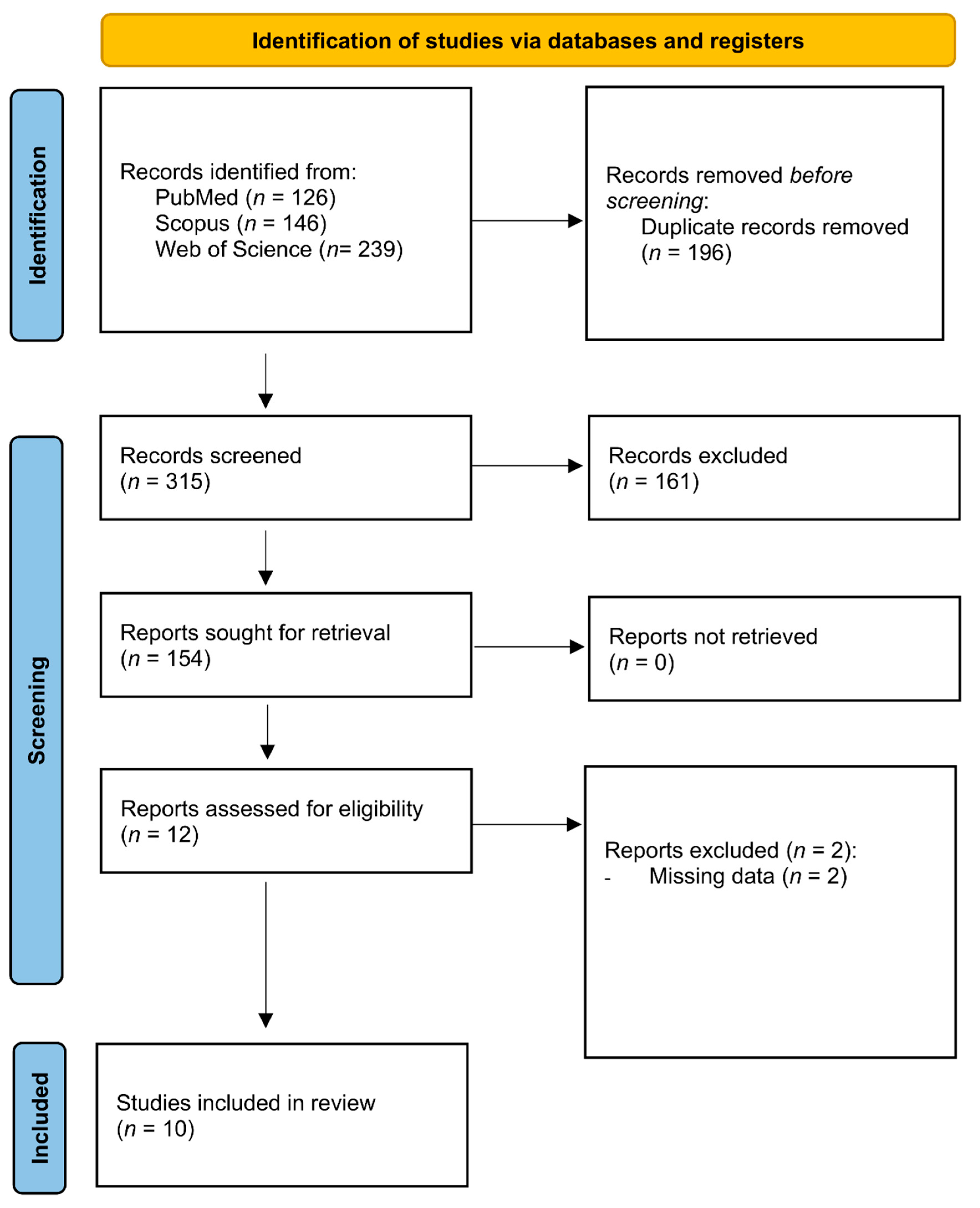
After searching the designated databases, 511 articles were retrieved. A total of 196 articles were excluded after removing duplicates. Out of the remaining 315 papers, 154 were subjected to further screening and evaluated for inclusion in the systematic review after considering inclusion and exclusion criteria. Finally, 12 articles were considered eligible to be included in the systematic review, but 2 articles were excluded for missing data. A total of 10 articles were used for the data extraction [36,37,38,39,40,41,42,43,44,45]. The PRISMA flow diagram in Figure 1 illustrates the search results.
Figure 1.
PRISMA flow diagram.
Table 1.
General characteristics of the studies included in the systematic review.
The included studies (nine cross-sectional and one cohort study) were published from 2018 to 2022 [36,37,38,39,40,41,42,43,44,45] (Table 2). Among the ten studies, two of them were conducted in America [39,45], seven in China [36,37,38,40,41,42,43], and one in Europe (Finland) [44], and the sample size was very variable, ranging from 21 to 6627 subjects.
The studies included healthy individuals as well as vulnerable populations such as obese adolescents, asthmatic children, schizophrenic patients, and pregnant women with adverse pregnancy outcomes. Both male and female were enrolled in all studies, with the exception of one study that included females only [38]. Children, adolescents, young adults, adults, and older people were included, with ages ranging from 5 to over 70 years.
Half of the air pollution studies (n = 5; 50%) examined multiple air pollutants: PM10 (n = 4; 40%), PM2.5 (n = 7; 70%), O3 (n = 4; 40%), NOx (n = 6; 60%), SO2 (n = 4; 40%), and CO (n = 2; 20%) [36,38,39,41,43]. Lastly, one study analysed polycyclic aromatic hydrocarbons (PAHs) [44] and one focused on the levels of urbanization [40].
Regarding exposure time, short-term exposure (from 2 to 5 days) to air pollutants was considered in four studies [37,41,42], whereas long-term exposure (28 days to 2 years) was investigated in six studies [36,38,39,40,44,45]. Moreover, the methods of exposure assessments varied among studies: daily air quality index scores assigned using the monitoring data of China National Environmental Monitoring Centre [38], levels of urbanization [40], ambient monitoring station [41], real-time personal exposure [37,42], passive sampling devices [44], and other various modelled estimates (n = 3) [36,43,45] were used (Table 1).
As for the STORMS metagenomic checklist, all included studies provided a partial description of methods for sample collection, storage, and DNA isolation. Sequencing methods were reported by almost all included studies. 16S rDNA gene sequencing was performed in nine studies by using Illumina Hiseq or Miseq platforms, whereas whole-genome shotgun sequencing was conducted in one study [39] via the Illumina Hiseq platform. The region of amplification of the 16S rDNA gene varied among studies, such as V4 (n = 4), V3–V4 (n = 2), and V5 (n = 1) (Table 2). Two studies mentioned that they used three different regions (V4, V3–4, and V4–5), but it was unclear how these analyses were integrated into bacteria characterization [37,42]. Moreover, the primers used for the amplification varied across studies: three studies used 515F/806R primers, and two used 341F/805R and 338F/806R, respectively (Table 2).
The majority of the studies (n = 8) reported quantitative measures of microbial diversity and richness within bacterial community via different alpha-diversity indices (e.g., Chao1’s, Shannon’s, and Simpson’s indices). Two studies reported a β-diversity measure [41,42] to evaluate differences in microbial abundances between multiple samples. Lastly, three studies performed linear discriminant analyses for identifying potential markers of dysbiosis associated with air pollution exposure [38,40,41]. Functional gene pathways were investigated in two studies [39,41]. Concerning the study quality assessment, the median NOS score was 6 (interquartile range 1.75), hence indicating an intermediate average level. Specifically, n = 4 studies were of high quality (NOS equal to 7), and n = 6 studies were of intermediate quality (score of 5 to 6). Table S1 shows the results of the scoring method applied to each study included in the review, with reference to publication year.
Overall, a significant correlation between exposure to specific air pollutant and alteration in human gut microbiota was found, and it did not depend on duration of exposure (short- and long-term exposure). A significant association was found in healthy individuals as well as vulnerable populations.
Table 2.
Study design, 16S rDNA sequencing regions, primers, and sequencing platform adopted by the included studies.
4. Discussion
This systematic review assembled the currently available evidence on the impact of air pollution on human gut microbiota. All 10 revised studies evidenced that the exposure to air pollutants has the potential to alter the composition of gut microbiota [36,37,38,39,40,41,42,43,44,45]; some of them also correlated air pollution exposure to negative effects on human health via alterations in composition and/or function of the gut microbiota [36,38,41,43,45], and only three studies characterized some mechanisms by which air pollutants may have adverse health effects via the dysregulation of gut microbiota [37,39,42].
Concerning the effects of air pollution on the composition of gut microbiota, long-term (from 6 months up to 24 months) exposure to O3, NO2, SO2 PM10, PM2.5, and PM1, as well as to traffic-related air-pollution (TRAP), has been shown to alter richness and diversity of human gut microbiota independently from age and gender of the study’s populations. For example, higher O3 exposure was associated with a higher abundance of bacterial species belonging to the Bacteroidaceae family [39]. Higher NO2 levels were associated with a higher abundance of Coriobacteriaceae [39], and freeway TRAP exposure was correlated to decreased Bacteroidaceae and increased Coriobacteriaceae [45]. Lastly, short-time exposure to air pollutants (PM2.5 for 3 days) was also demonstrated to induce alterations in gut microbiota, characterized by an increased abundance of a varied mix of both beneficial and harmful bacteria [37].
Several interesting evidence showed that the interplay between gut microbiota and air pollution also possessed negative effects on human health. Shifts in the relative abundance of Eggerthella, Phascolarctobacterium, and Clostridium have been described to partially mediate the effects of multiple air pollutants (PM2.5, PM10, O3, NO2, and SO2) on adverse pregnancy outcomes [38]. In young adults, TRAP-mediated decreased abundances of Bacteroidaceae and increased abundances of Coriobacteriaceae were correlated with impaired fasting glucose, a known risk factor for type 2 diabetes [45]. Lastly, in adults, a decreased abundance of Firmicutes, Proteobacteria, and Verrucomicrobia, induced by PM2.5 and PM1 exposure, increased the risk of impaired fasting glucose and type 2 diabetes [36].
New insights into the mechanisms by which air pollutants can cause adverse health effects via the dysregulation of gut microbiota are of pathological importance. On this regard, functional microbial gene pathways related to cell growth and insulin release (L-ornithine de novo biosynthesis, pantothenate, and coenzyme A biosynthesis I) were found to be associated with O3 exposure. This supported the etiological role of gut microbiota in the association between air pollution and metabolic disorders, such as type 2 diabetes [39]. Zheng et al. suggested that the smog-dependant shift of gut microbiota with reduced abundances of Clostridia may trigger asthma attacks [41]. As a matter of fact, Clostridia can synthesize propionic acid or butyrates, which are known to stimulate the production of regulatory T cells that influence airway health indirectly through the gut–lung axis [46]. Interestingly, air pollution may simultaneously impact gut and lung health because, over the years, it has been proved that gut and lungs can communicate and influence each other, and they are connected via blood circulation and lymphatic system [47,48]. As a result, immune cells, cytokines, chemokines, and microbial metabolites can travel from an organ to the other, affecting its health. In this scenario, it is likely that lung inflammation and shifts in lung microbiota, following the exposure to air pollution, may lead to gut dysbiosis and, hence, to the onset or progression of intestinal pathologies.
Different potential mechanisms of damage were also described for other air pollutants; PM2.5 may affect sphingolipid metabolism, which is partially mediated by the decreased abundance of Shuttleworthia, contributing to insulin resistance and, hence, type 2 diabetes [42]. Another study suggested that PM2.5 exposure may result in changes in tryptophan metabolism, which is associated with the imbalance in the gut microbiota, thereby activating the gut–brain axis through the production of central neurotransmitters such as serotonin [36]. Specifically, tryptophan, a precursor of serotonin, is stored in limited quantities in the brain, and continuous supplementation from the digestive system is required for brain development and function [49].
The main strengths of the reviewed studies are the characterization of gut microbiota via high-throughput sequencing technologies (16S rDNA sequencing and shotgun metagenomics), as well as the accurate analysis of outdoor air pollutants. Moreover, the application of stringent inclusion criteria allowed greatly diminishing the impact of confounding bias related to the selection of the study population. In this regards, potentially important confounder factors known to be associated with the exposure to air pollutants and/or with the gut microbiota (for example, smoke or therapy with antibiotics) were considered.
Despite all the compelling evidence highlighted in this systematic review, a long road is still ahead of us before reaching clinically relevant conclusions due to the small number of papers (n = 10) and their weaknesses.
First, a high heterogeneity of sample size and type, as well as of exposure time, methods of exposure assessment, and metagenomic analysis, was observed. In particular, sample sizes were very variable among studies; notably, two studies [41,45] enrolled a low number of individuals (n = 21 and 42, respectively), and their results should be considered with caution. Moreover, the study populations included different categories of individuals, including pregnant women [38], children [41], young adults [39,45], adults [36,40,43], and older adults [37,42,44], with ages ranging from 5 to over 70 years. In this regard, it is well known that gut microbiota composition and diversity vary from infants to the elderly [50]. Of note, studies also included vulnerable populations, such as obese adolescents, asthmatic children, elderly, and pregnant women, which might be more susceptible to the negative effects of air pollution exposure. Concerning exposure time and assessment, these also varied among studies; time of exposure ranged from 3 days [37,42] to two years [36], which may lead to different changes in gut microbial composition. Daily air quality index scores assigned using the monitoring data of the China National Environmental Monitoring Centre [38], levels of urbanization [40], ambient monitoring station [41], real-time personal exposure [37,42], passive sampling devices [44], and other various modelled estimates [36,39,43,45] were used. It is well-known that the usage of different approaches in the assessment of air pollution exposure results in different accuracies and precision of estimates [51]. The most accurate method for assessing pollutant exposure seems to be personal monitoring, particularly biological monitoring; however, when the number of enrolled subjects is high, determining air pollutants levels can be suitable by using a variety of exposure assessment models [51]. This issue should be carefully considered for future research in the field. Lastly, it is very challenging to compare the biodiversity and the composition of the gut microbiota between different studies and patient groups due to different primers and hypervariable regions of 16S rDNA chosen for sequencing, alongside the numerous and diverse statistical measures used for bioinformatic analyses.
Second, almost all reviewed studies were observational, limiting the ability to provide a proof of causality.
Third, most of the examined studies enrolled mostly Chinese populations with distinct eating habits known to have impacts on the composition and diversity of the human gut microbiota [52]. The considerable disease burden attributable to air pollution following rapid economic development might explain the high number of studies in China [53].
Another relevant issue emerging from this review is that the overall risk of bias was partially considered in individual studies. For example, important information such as indoor activity time (home, school, and university) and indoor air pollution exposure, known to influence the composition of gut microbiota [54], was not considered. Moreover, the interplay between the different air pollutants and gut microbiota in the onset and development of chronic diseases has not been investigated. Similarly, nutrition and diet effects cannot be fully controlled, considering the long-term exposure to air pollution in most studies (>50%).
5. Conclusions
Overall, the exposure to air pollutants may be able to induce significant alterations in the composition of the gut microbiota. In addition, potential mechanisms by which air pollution may contribute to adverse health effects, such as impaired fasting glucose, adverse pregnancy outcomes, and asthma attacks via alterations in composition and/or function of the gut microbiota, were reported. However, the current evidence is weak due to the small number of papers, observational design of the included studies, as well as the high heterogeneity of the methods used for human microbiome and air pollution analyses. As a result, it will be of great interest to reach a consensus on the several parameters involved in designing metagenomic studies related to air pollution. Surely, an improved standardization of the methodological approach, from sample collection and storage to DNA extraction, genome amplification, and sequencing methods, is needed to obtain increased data accuracy, reproducibility, and comparability of results. In the future, large cohort studies worldwide based on simultaneous stool and respiratory sampling with the application of STORMS checklist for metagenomic analysis [35], as well as biological monitoring, will allow gaining deeper insights into the impact of air pollution on the growing prevalence of chronic diseases, although this study type is expensive and time consuming.
Supplementary Materials
The following supporting information can be downloaded at: https://www.mdpi.com/article/10.3390/toxics10100579/s1, Table S1: NOS score of the studies included in the systematic review.
Author Contributions
Conceptualization, S.F., M.D.P., C.P., M.V. and R.S.; methodology, S.F., M.D.P., A.A. and C.P.; software, S.F., M.D.P. and C.P.; resources, S.F. and R.S.; data curation, S.F., M.D.P. and C.P.; visualization, S.F., M.D.P., A.A. and C.P.; writing-original draft preparation, S.F., M.D.P. and R.S.; writing-review and editing, S.F., M.D.P., C.P., A.A., M.V. and R.S. All authors have read and agreed to the published version of the manuscript.
Funding
Simone Filardo benefits from funding FSE REACT-EU, within the program PON “Research and Innovation” 2014–2020 (PON R&I), Action IV.6 “Contratti di ricerca su tematiche Green”.
Institutional Review Board Statement
Not applicable.
Informed Consent Statement
Not applicable.
Data Availability Statement
Not applicable.
Conflicts of Interest
The authors declare no conflict of interest.
References
- World Health Organization. 7 Million Premature Deaths Annually Linked to Air Pollution. 2014. Available online: https://www.who.int/news/item/25-03-2014-7-million-premature-deaths-annually-linked-to-air-pollution (accessed on 27 July 2022).
- World Health Organization. World Health Organization Ambient (Outdoor) Air Quality and Health. Available online: https://www.who.int/en/news-room/fact-sheets/detail/ambient-(outdoor)-air-quality-and-health (accessed on 27 July 2022).
- Shin, S.; Bai, L.; Burnett, R.T.; Kwong, J.C.; Hystad, P.; van Donkelaar, A.; Lavigne, E.; Weichenthal, S.; Copes, R.; Martin, R.V.; et al. Air Pollution as a Risk Factor for Incident Chronic Obstructive Pulmonary Disease and Asthma. A 15-Year Population-Based Cohort Study. Am. J. Respir. Crit. Care Med. 2021, 203, 1138–1148. [Google Scholar] [CrossRef] [Scilit] [PubMed]
- Khreis, H.; Cirach, M.; Mueller, N.; de Hoogh, K.; Hoek, G.; Nieuwenhuijsen, M.J.; Rojas-Rueda, D. Outdoor Air Pollution and the Burden of Childhood Asthma across Europe. Eur. Respir. J. 2019, 54, 1802194. [Google Scholar] [CrossRef] [Scilit] [PubMed]
- Bouazza, N.; Foissac, F.; Urien, S.; Guedj, R.; Carbajal, R.; Tréluyer, J.-M.; Chappuy, H. Fine Particulate Pollution and Asthma Exacerbations. Arch. Dis. Child. 2018, 103, 828–831. [Google Scholar] [CrossRef] [Scilit] [PubMed]
- Huang, Y.; Zhu, M.; Ji, M.; Fan, J.; Xie, J.; Wei, X.; Jiang, X.; Xu, J.; Chen, L.; Yin, R.; et al. Air Pollution, Genetic Factors, and the Risk of Lung Cancer: A Prospective Study in the UK Biobank. Am. J. Respir. Crit. Care Med. 2021, 204, 817–825. [Google Scholar] [CrossRef] [Scilit] [PubMed]
- Guo, H.; Chang, Z.; Wu, J.; Li, W. Air Pollution and Lung Cancer Incidence in China: Who Are Faced with a Greater Effect? Environ. Int. 2019, 132, 105077. [Google Scholar] [CrossRef] [Scilit] [PubMed]
- Raaschou-Nielsen, O.; Andersen, Z.J.; Beelen, R.; Samoli, E.; Stafoggia, M.; Weinmayr, G.; Hoffmann, B.; Fischer, P.; Nieuwenhuijsen, M.J.; Brunekreef, B.; et al. Air Pollution and Lung Cancer Incidence in 17 European Cohorts: Prospective Analyses from the European Study of Cohorts for Air Pollution Effects (ESCAPE). Lancet Oncol. 2013, 14, 813–822. [Google Scholar] [CrossRef] [Scilit]
- Kaufman, J.D.; Elkind, M.S.V.; Bhatnagar, A.; Koehler, K.; Balmes, J.R.; Sidney, S.; Burroughs Peña, M.S.; Dockery, D.W.; Hou, L.; Brook, R.D.; et al. Guidance to Reduce the Cardiovascular Burden of Ambient Air Pollutants: A Policy Statement from the American Heart Association. Circulation 2020, 142, e432–e447. [Google Scholar] [CrossRef] [Scilit]
- Verhoeven, J.I.; Allach, Y.; Vaartjes, I.C.H.; Klijn, C.J.M.; de Leeuw, F.-E. Ambient Air Pollution and the Risk of Ischaemic and Haemorrhagic Stroke. Lancet Planet. Health 2021, 5, e542–e552. [Google Scholar] [CrossRef] [Scilit]
- Xue, Y.; Chu, J.; Li, Y.; Kong, X. The Influence of Air Pollution on Respiratory Microbiome: A Link to Respiratory Disease. Toxicol. Lett. 2020, 334, 14–20. [Google Scholar] [CrossRef] [Scilit]
- Chen, Y.; Zhu, Z.; Cheng, S. Industrial Agglomeration and Haze Pollution: Evidence from China. Sci. Total. Environ. 2022, 845, 157392. [Google Scholar] [CrossRef] [Scilit]
- Vignal, C.; Guilloteau, E.; Gower-Rousseau, C.; Body-Malapel, M. Review Article: Epidemiological and Animal Evidence for the Role of Air Pollution in Intestinal Diseases. Sci. Total Environ. 2021, 757, 143718. [Google Scholar] [CrossRef] [Scilit] [PubMed]
- Albano, G.D.; Montalbano, A.M.; Gagliardo, R.; Anzalone, G.; Profita, M. Impact of Air Pollution in Airway Diseases: Role of the Epithelial Cells (Cell Models and Biomarkers). Int. J. Mol. Sci. 2022, 23, 2799. [Google Scholar] [CrossRef] [Scilit] [PubMed]
- Xue, Y.; Wang, L.; Zhang, Y.; Zhao, Y.; Liu, Y. Air Pollution: A Culprit of Lung Cancer. J. Hazard. Mater. 2022, 434, 128937. [Google Scholar] [CrossRef] [Scilit] [PubMed]
- Feng, J.; Cavallero, S.; Hsiai, T.; Li, R. Impact of Air Pollution on Intestinal Redox Lipidome and Microbiome. Free Radic. Biol. Med. 2020, 151, 99–110. [Google Scholar] [CrossRef] [Scilit] [PubMed]
- Araujo, J.A.; Barajas, B.; Kleinman, M.; Wang, X.; Bennett, B.J.; Gong, K.W.; Navab, M.; Harkema, J.; Sioutas, C.; Lusis, A.J.; et al. Ambient Particulate Pollutants in the Ultrafine Range Promote Early Atherosclerosis and Systemic Oxidative Stress. Circ. Res. 2008, 102, 589–596. [Google Scholar] [CrossRef] [Scilit] [PubMed]
- Pritchett, N.; Spangler, E.C.; Gray, G.M.; Livinski, A.A.; Sampson, J.N.; Dawsey, S.M.; Jones, R.R. Exposure to Outdoor Particulate Matter Air Pollution and Risk of Gastrointestinal Cancers in Adults: A Systematic Review and Meta-Analysis of Epidemiologic Evidence. Environ. Health Perspect. 2022, 130, 36001. [Google Scholar] [CrossRef] [Scilit]
- Hirota, J.A.; Carlsten, C.; Sadatsafavi, M.; Kaplan, G.; Hirota, S.A. Airway Diseases and Inflammatory Bowel Diseases: Is It Something in the Air (Pollution)? Eur. Respir. J. 2015, 46, 287–288. [Google Scholar] [CrossRef] [Scilit]
- Mutlu, E.A.; Comba, I.Y.; Cho, T.; Engen, P.A.; Yazıcı, C.; Soberanes, S.; Hamanaka, R.B.; Niğdelioğlu, R.; Meliton, A.Y.; Ghio, A.J.; et al. Inhalational Exposure to Particulate Matter Air Pollution Alters the Composition of the Gut Microbiome. Environ. Pollut. 2018, 240, 817–830. [Google Scholar] [CrossRef] [Scilit]
- Ribière, C.; Peyret, P.; Parisot, N.; Darcha, C.; Déchelotte, P.J.; Barnich, N.; Peyretaillade, E.; Boucher, D. Oral Exposure to Environmental Pollutant Benzo[a]Pyrene Impacts the Intestinal Epithelium and Induces Gut Microbial Shifts in Murine Model. Sci. Rep. 2016, 6, 31027. [Google Scholar] [CrossRef] [Scilit]
- Li, R.; Yang, J.; Saffari, A.; Jacobs, J.; Baek, K.I.; Hough, G.; Larauche, M.H.; Ma, J.; Jen, N.; Moussaoui, N.; et al. Ambient Ultrafine Particle Ingestion Alters Gut Microbiota in Association with Increased Atherogenic Lipid Metabolites. Sci. Rep. 2017, 7, 42906. [Google Scholar] [CrossRef] [Scilit]
- Filardo, S.; Scalese, G.; Virili, C.; Pontone, S.; di Pietro, M.; Covelli, A.; Bedetti, G.; Marinelli, P.; Bruno, G.; Stramazzo, I.; et al. The Potential Role of Hypochlorhydria in the Development of Duodenal Dysbiosis: A Preliminary Report. Front. Cell Infect. Microbiol. 2022, 12, 854904. [Google Scholar] [CrossRef] [Scilit] [PubMed]
- Harris-Tryon, T.A.; Grice, E.A. Microbiota and Maintenance of Skin Barrier Function. Science 2022, 376, 940–945. [Google Scholar] [CrossRef] [Scilit] [PubMed]
- Filardo, S.; di Pietro, M.; Porpora, M.G.; Recine, N.; Farcomeni, A.; Latino, M.A.; Sessa, R. Diversity of Cervical Microbiota in Asymptomatic Chlamydia Trachomatis Genital Infection: A Pilot Study. Front. Cell Infect. Microbiol. 2017, 7, 321. [Google Scholar] [CrossRef] [Scilit] [PubMed]
- Filardo, S.; di Pietro, M.; Tranquilli, G.; Latino, M.A.; Recine, N.; Porpora, M.G.; Sessa, R. Selected Immunological Mediators and Cervical Microbial Signatures in Women with Chlamydia Trachomatis Infection. mSystems 2019, 4, e00094-19. [Google Scholar] [CrossRef] [Scilit] [PubMed]
- Ceccarani, C.; Foschi, C.; Parolin, C.; D’Antuono, A.; Gaspari, V.; Consolandi, C.; Laghi, L.; Camboni, T.; Vitali, B.; Severgnini, M.; et al. Diversity of Vaginal Microbiome and Metabolome during Genital Infections. Sci. Rep. 2019, 9, 14095. [Google Scholar] [CrossRef] [Scilit] [PubMed]
- Baldelli, V.; Scaldaferri, F.; Putignani, L.; del Chierico, F. The Role of Enterobacteriaceae in Gut Microbiota Dysbiosis in Inflammatory Bowel Diseases. Microorganisms 2021, 9, 697. [Google Scholar] [CrossRef] [Scilit]
- Sadrekarimi, H.; Gardanova, Z.R.; Bakhshesh, M.; Ebrahimzadeh, F.; Yaseri, A.F.; Thangavelu, L.; Hasanpoor, Z.; Zadeh, F.A.; Kahrizi, M.S. Emerging Role of Human Microbiome in Cancer Development and Response to Therapy: Special Focus on Intestinal Microflora. J. Transl. Med. 2022, 20, 301. [Google Scholar] [CrossRef] [Scilit]
- Li, D.; Li, Y.; Yang, S.; Lu, J.; Jin, X.; Wu, M. Diet-Gut Microbiota-Epigenetics in Metabolic Diseases: From Mechanisms to Therapeutics. Biomed. Pharmacother. 2022, 153, 113290. [Google Scholar] [CrossRef] [Scilit]
- Bailey, M.J.; Naik, N.N.; Wild, L.E.; Patterson, W.B.; Alderete, T.L. Exposure to Air Pollutants and the Gut Microbiota: A Potential Link between Exposure, Obesity, and Type 2 Diabetes. Gut Microbes 2020, 11, 1188–1202. [Google Scholar] [CrossRef] [Scilit]
- Page, M.J.; McKenzie, J.E.; Bossuyt, P.M.; Boutron, I.; Hoffmann, T.C.; Mulrow, C.D.; Shamseer, L.; Tetzlaff, J.M.; Akl, E.A.; Brennan, S.E.; et al. The PRISMA 2020 Statement: An Updated Guideline for Reporting Systematic Reviews. BMJ 2021, 372, n71. [Google Scholar] [CrossRef] [Scilit]
- Wells, G.; Shea, B.; O’Connell, D.; Peterson, J.; Welch, V.; Losos, M.; Tugwell, P. The Newcastle-Ottawa Scale (NOS) for Assessing the Quality of Nonrandomised Studies in Meta-Analyses. Available online: https://www.ohri.ca/programs/clinical_epidemiology/oxford.asp (accessed on 20 July 2022).
- McPheeters, M.L.; Kripalani, S.; Peterson, N.B.; Idowu, R.T.; Jerome, R.N.; Potter, S.A.; Andrews, J.C. Quality Improvement Interventions to Address Health Disparities; Agency for Healthcare Research and Quality: Rockville, MD, USA, 2012.
- Mirzayi, C.; Renson, A.; Genomic Standards Consortium; Massive Analysis and Quality Control Society; Zohra, F.; Elsafoury, S.; Geistlinger, L.; Kasselman, L.J.; Eckenrode, K.; van de Wijgert, J.; et al. Reporting Guidelines for Human Microbiome Research: The STORMS Checklist. Nat. Med. 2021, 27, 1885–1892. [Google Scholar] [CrossRef] [Scilit] [PubMed]
- Liu, T.; Chen, X.; Xu, Y.; Wu, W.; Tang, W.; Chen, Z.; Ji, G.; Peng, J.; Jiang, Q.; Xiao, J.; et al. Gut Microbiota Partially Mediates the Effects of Fine Particulate Matter on Type 2 Diabetes: Evidence from a Population-Based Epidemiological Study. Environ. Int. 2019, 130, 104882. [Google Scholar] [CrossRef] [Scilit] [PubMed]
- Li, T.; Fang, J.; Tang, S.; Du, H.; Zhao, L.; Wang, Y.; Deng, F.; Liu, Y.; Du, Y.; Cui, L.; et al. PM2.5 Exposure Associated with Microbiota Gut-Brain Axis: Multi-Omics Mechanistic Implications from the BAPE Study. Innovation 2022, 3, 100213. [Google Scholar] [CrossRef] [Scilit]
- Gan, Q.; Ye, W.; Zhao, X.; Teng, Y.; Mei, S.; Long, Y.; Ma, J.; Rehemutula, R.; Zhang, X.; Zeng, F.; et al. Mediating Effects of Gut Microbiota in the Associations of Air Pollutants Exposure with Adverse Pregnancy Outcomes. Ecotoxicol. Environ. Saf. 2022, 234, 113371. [Google Scholar] [CrossRef] [Scilit] [PubMed]
- Fouladi, F.; Bailey, M.J.; Patterson, W.B.; Sioda, M.; Blakley, I.C.; Fodor, A.A.; Jones, R.B.; Chen, Z.; Kim, J.S.; Lurmann, F.; et al. Air Pollution Exposure Is Associated with the Gut Microbiome as Revealed by Shotgun Metagenomic Sequencing. Environ. Int. 2020, 138, 105604. [Google Scholar] [CrossRef] [Scilit]
- Du, Y.; Ding, L.; Na, L.; Sun, T.; Sun, X.; Wang, L.; He, S.; Wang, Z.; Lu, Z.; Li, F.; et al. Prevalence of Chronic Diseases and Alterations of Gut Microbiome in People of Ningxia China During Urbanization: An Epidemiological Survey. Front. Cell Infect. Microbiol. 2021, 11, 707402. [Google Scholar] [CrossRef] [Scilit]
- Zheng, P.; Zhang, B.; Zhang, K.; Lv, X.; Wang, Q.; Bai, X. The Impact of Air Pollution on Intestinal Microbiome of Asthmatic Children: A Panel Study. BioMed Res. Int. 2020, 2020, 5753427. [Google Scholar] [CrossRef] [Scilit]
- Zhao, L.; Fang, J.; Tang, S.; Deng, F.; Liu, X.; Shen, Y.; Liu, Y.; Kong, F.; Du, Y.; Cui, L.; et al. PM2.5 and Serum Metabolome and Insulin Resistance, Potential Mediation by the Gut Microbiome: A Population-Based Panel Study of Older Adults in China. Environ. Health Perspect. 2022, 130, 027007. [Google Scholar] [CrossRef] [Scilit]
- Yi, W.; Ji, Y.; Gao, H.; Pan, R.; Wei, Q.; Cheng, J.; Song, J.; He, Y.; Tang, C.; Liu, X.; et al. Does the Gut Microbiome Partially Mediate the Impact of Air Pollutants Exposure on Liver Function? Evidence Based on Schizophrenia Patients. Environ. Pollut. 2021, 291, 118135. [Google Scholar] [CrossRef] [Scilit]
- Vari, H.K.; Roslund, M.I.; Oikarinen, S.; Nurminen, N.; Puhakka, R.; Parajuli, A.; Grönroos, M.; Siter, N.; Laitinen, O.H.; Hyöty, H.; et al. Associations between Land Cover Categories, Gaseous PAH Levels in Ambient Air and Endocrine Signaling Predicted from Gut Bacterial Metagenome of the Elderly. Chemosphere 2021, 265, 128965. [Google Scholar] [CrossRef] [Scilit]
- Alderete, T.L.; Jones, R.B.; Chen, Z.; Kim, J.S.; Habre, R.; Lurmann, F.; Gilliland, F.D.; Goran, M.I. Exposure to Traffic-Related Air Pollution and the Composition of the Gut Microbiota in Overweight and Obese Adolescents. Environ. Res. 2018, 161, 472–478. [Google Scholar] [CrossRef] [Scilit] [PubMed]
- Yip, W.; Hughes, M.R.; Li, Y.; Cait, A.; Hirst, M.; Mohn, W.W.; McNagny, K.M. Butyrate Shapes Immune Cell Fate and Function in Allergic Asthma. Front. Immunol. 2021, 12, 628453. [Google Scholar] [CrossRef] [Scilit]
- Enaud, R.; Prevel, R.; Ciarlo, E.; Beaufils, F.; Wieërs, G.; Guery, B.; Delhaes, L. The Gut-Lung Axis in Health and Respiratory Diseases: A Place for Inter-Organ and Inter-Kingdom Crosstalks. Front. Cell Infect. Microbiol. 2020, 10, 9. [Google Scholar] [CrossRef] [Scilit]
- Dang, A.T.; Marsland, B.J. Microbes, Metabolites, and the Gut–Lung Axis. Mucosal. Immunol. 2019, 12, 843–850. [Google Scholar] [CrossRef] [Scilit] [PubMed]
- Roth, W.; Zadeh, K.; Vekariya, R.; Ge, Y.; Mohamadzadeh, M. Tryptophan Metabolism and Gut-Brain Homeostasis. Int. J. Mol. Sci. 2021, 22, 2973. [Google Scholar] [CrossRef] [Scilit] [PubMed]
- Yatsunenko, T.; Rey, F.E.; Manary, M.J.; Trehan, I.; Dominguez-Bello, M.G.; Contreras, M.; Magris, M.; Hidalgo, G.; Baldassano, R.N.; Anokhin, A.P.; et al. Human Gut Microbiome Viewed across Age and Geography. Nature 2012, 486, 222–227. [Google Scholar] [CrossRef] [Scilit] [PubMed]
- Han, B.; Hu, L.-W.; Bai, Z. Human Exposure Assessment for Air Pollution. In Ambient Air Pollution and Health Impact in China; Dong, G., Ed.; Advances in Experimental Medicine and Biology; Springer: Singapore, 2017; Volume 1017, pp. 27–57. [Google Scholar]
- Lu, J.; Zhang, L.; Zhai, Q.; Zhao, J.; Zhang, H.; Lee, Y.-K.; Lu, W.; Li, M.; Chen, W. Chinese Gut Microbiota and Its Associations with Staple Food Type, Ethnicity, and Urbanization. NPJ Biofilms Microbiomes 2021, 7, 71. [Google Scholar] [CrossRef] [Scilit]
- Yin, P.; Brauer, M.; Cohen, A.J.; Wang, H.; Li, J.; Burnett, R.T.; Stanaway, J.D.; Causey, K.; Larson, S.; Godwin, W.; et al. The Effect of Air Pollution on Deaths, Disease Burden, and Life Expectancy across China and Its Provinces, 1990-2017: An Analysis for the Global Burden of Disease Study 2017. Lancet Planet. Health 2020, 4, e386–e398. [Google Scholar] [CrossRef] [Scilit]
- Dujardin, C.E.; Mars, R.A.T.; Manemann, S.M.; Kashyap, P.C.; Clements, N.S.; Hassett, L.C.; Roger, V.L. Impact of Air Quality on the Gastrointestinal Microbiome: A Review. Environ. Res. 2020, 186, 109485. [Google Scholar] [CrossRef] [Scilit]
Publisher’s Note: MDPI stays neutral with regard to jurisdictional claims in published maps and institutional affiliations. |
© 2022 by the authors. Licensee MDPI, Basel, Switzerland. This article is an open access article distributed under the terms and conditions of the Creative Commons Attribution (CC BY) license (https://creativecommons.org/licenses/by/4.0/).