Hydrophobic Forces Are Relevant to Bacteria-Nanoparticle Interactions: Pseudomonas putida Capture Efficiency by Using Arginine, Cysteine or Oxalate Wrapped Magnetic Nanoparticles

Abstract
1. Introduction
2. Materials and Methods
2.1. Reagents and Microbial Culture
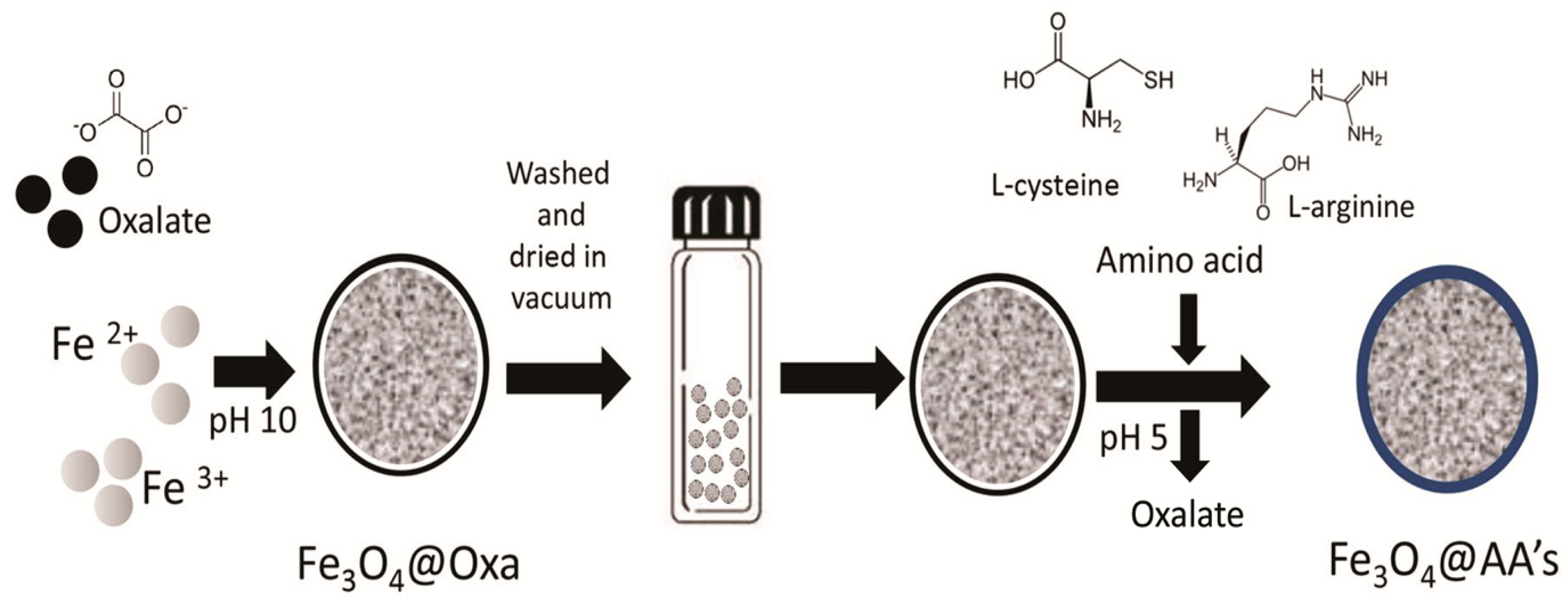
2.2. Synthesis of Oxalate Coated Fe3O4 NPs (Fe3O4@Oxa)
2.3. Synthesis of Amino Acids Coated Fe3O4 NPs from Fe3O4@Oxa
2.4. Characterization Methods
2.5. Bacteria Capture Experiments
3. Results
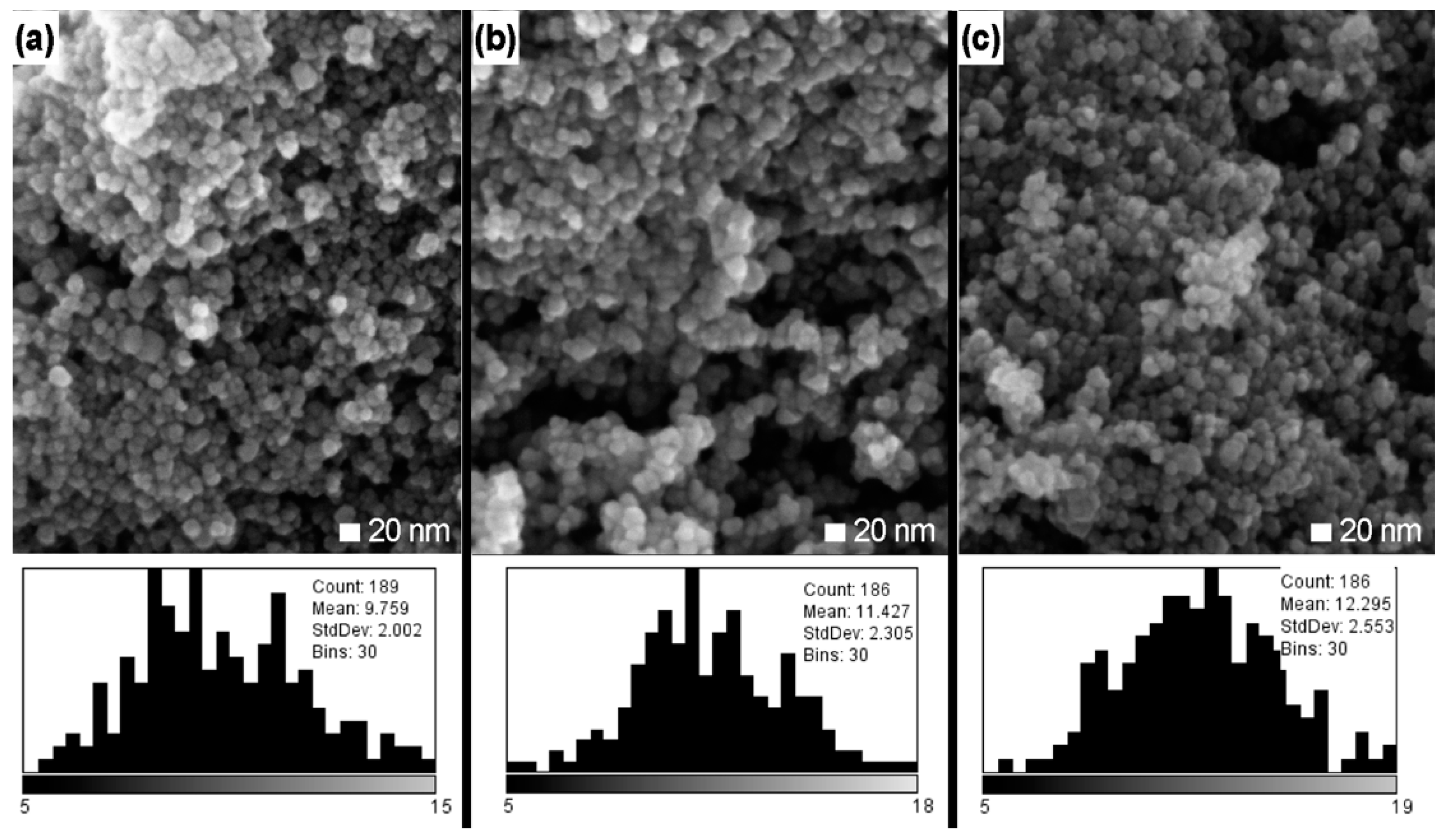
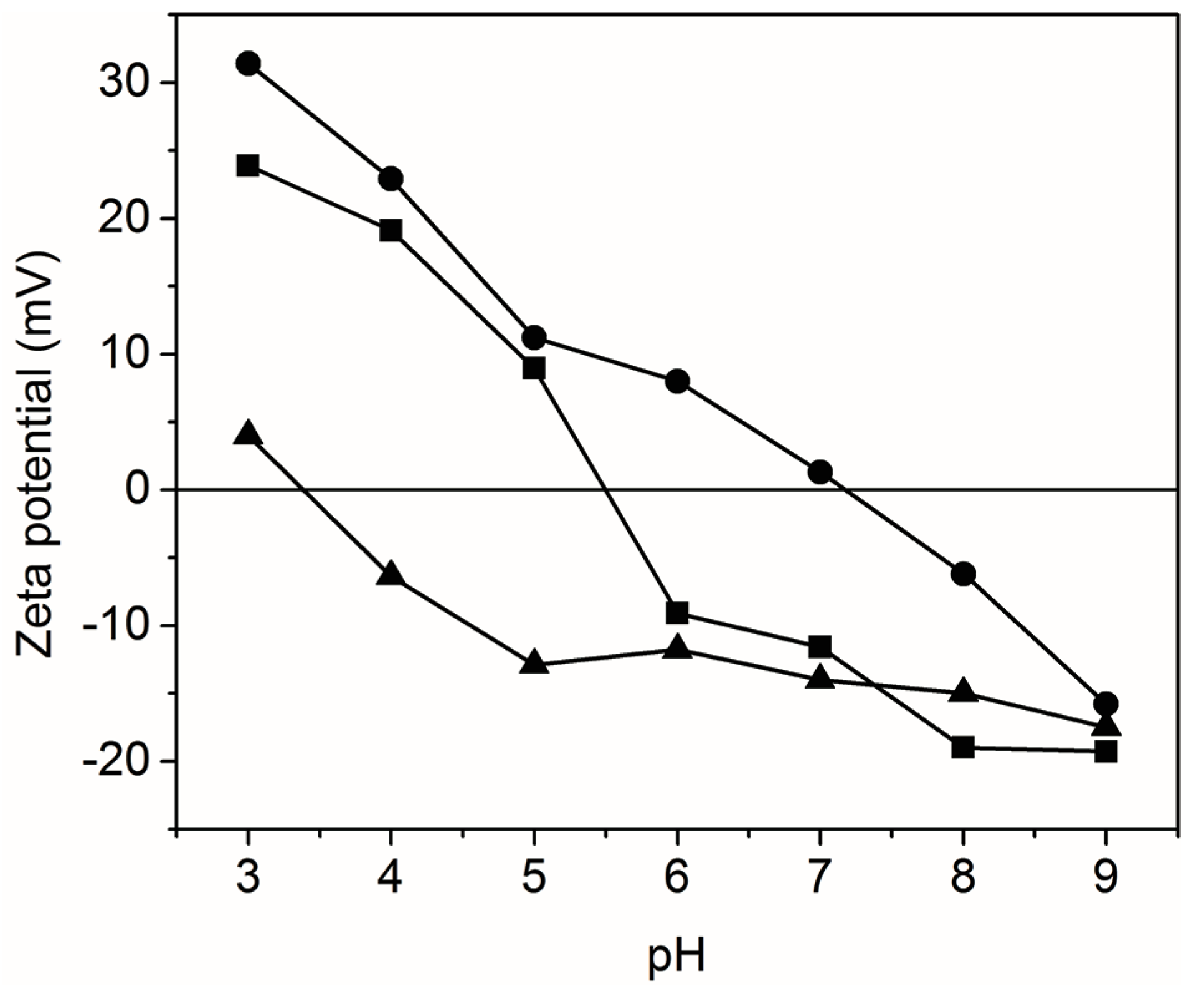
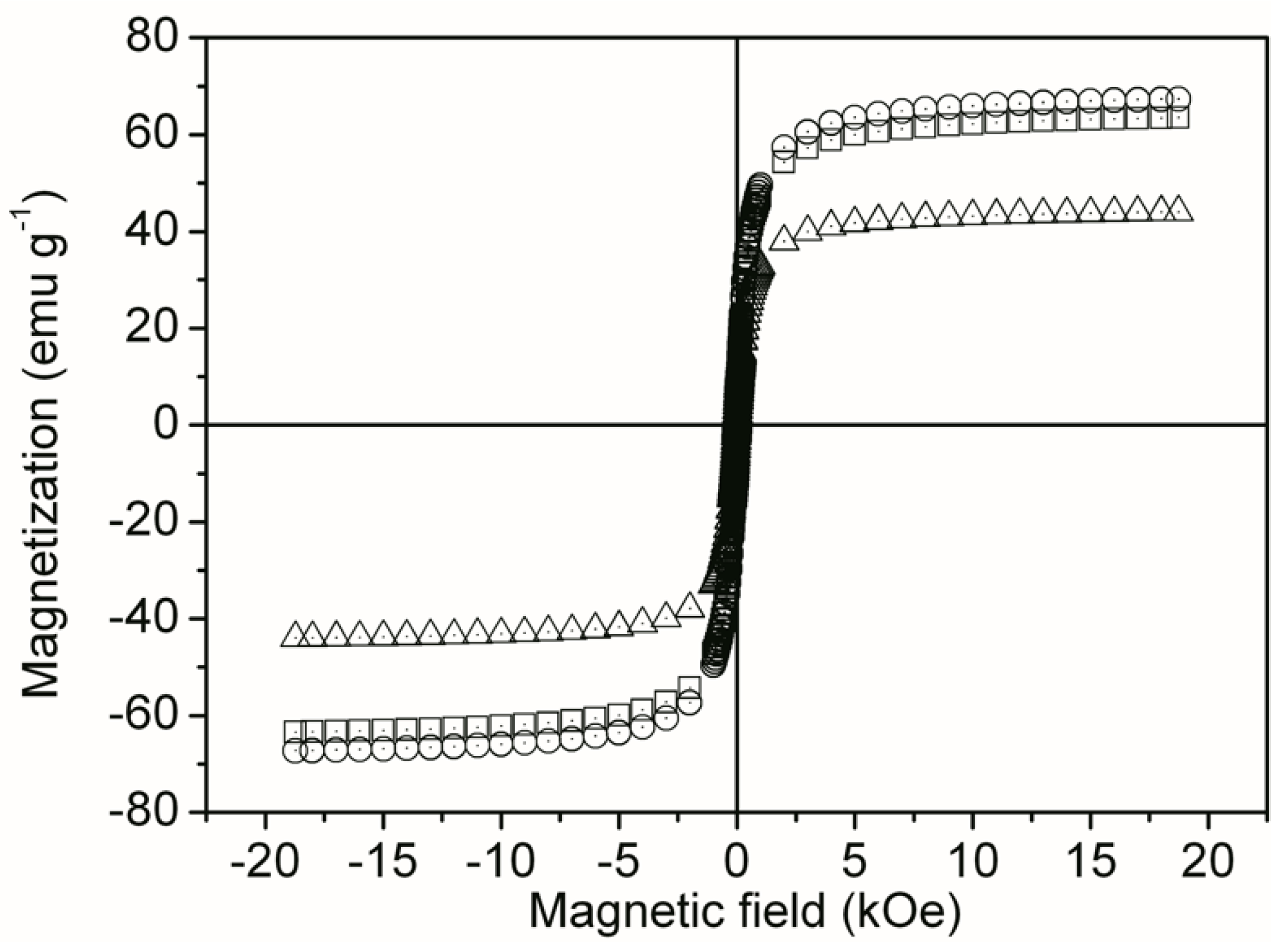
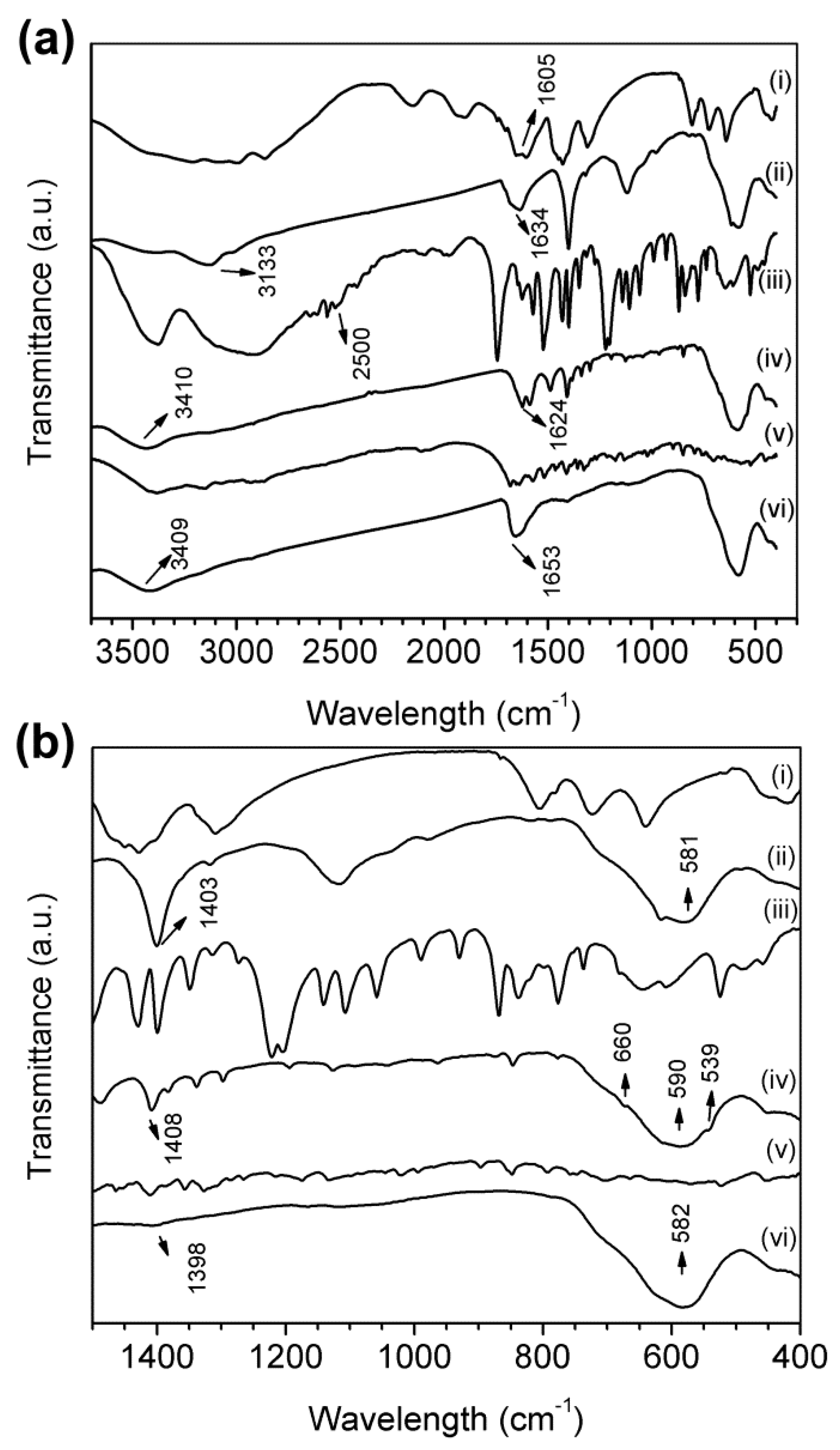
3.1. Characterization of Fe3O4@Oxa, Fe3O4@Arg and Fe3O4@Cys
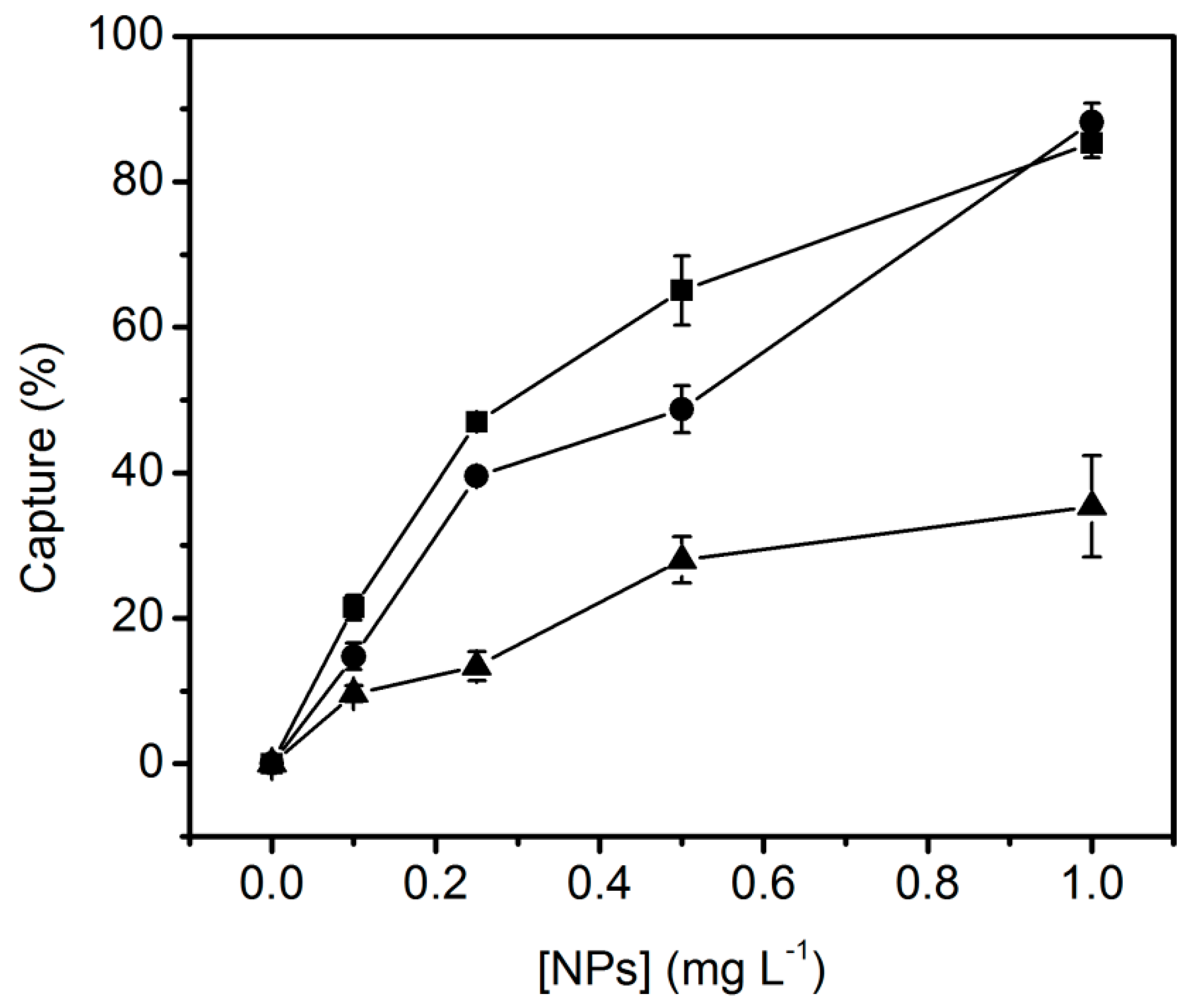
3.2. Bacteria Capture Experiments
4. Discussion
5. Conclusions
Supplementary Materials
Author Contributions
Funding
Acknowledgments
Conflicts of Interest
References
- Roger, J.; Pons, J.N.; Massart, R.; Halbreich, A.; Bacri, J.C. Some biomedical applications of ferrofluids. Eur. Phys. J. Appl. Phys. 1999, 5, 321–325. [Google Scholar] [CrossRef] [Scilit]
- Sun, S.; Murray, C.B.; Weller, D.; Folks, L.; Moser, A. Monodisperse FePt nanoparticles and ferromagnetic FePt nanocrystal superlattices. Science 2000, 287, 1989–1992. [Google Scholar] [CrossRef] [Scilit] [PubMed]
- Miller, M.M.; Prinz, G.A.; Cheng, S.F.; Bounnak, S. Detection of a micron-sized magnetic sphere using a ring-shaped anisotropic magnetoresistance-based sensor: A model for a magnetoresistance-based biosensor. Appl. Phys. Lett. 2002, 81, 2211–2213. [Google Scholar] [CrossRef] [Scilit]
- Chourpa, I.; Douziech-Eyrolles, I.; Ngaboni-Okassa, L.; Fouquenet, J.F.; Cohen-Jonathan, S.; Soucé, M.; Marchis, H.; Dubois, P. Molecular composition of iron oxide nanoparticles, precursors for magnetic drug targeting, as characterized by confocal Raman microspectroscopy. Analyst 2005, 130, 1395–1403. [Google Scholar] [CrossRef] [Scilit] [PubMed]
- Boutry, S.; Laurent, S.; Elst, L.V.; Muller, R.N. Specific E-selectin targeting with a superparamagnetic MRI contrast agent. Contrast Media Mol. Imaging 2006, 1, 15–22. [Google Scholar] [CrossRef] [Scilit] [PubMed]
- Corot, C.; Robert, P.; Idée, J.M.; Port, M. Recent advances in iron oxide nanocrystal technology for medical imaging. Adv. Drug Deliv. Rev. 2006, 58, 1471–1504. [Google Scholar] [CrossRef] [Scilit] [PubMed]
- Sambucetti, C. Magnetic ink for jet printing. IEEE Trans. Med. Imaging 1980, 16, 364–367. [Google Scholar] [CrossRef]
- Gupta, A.K.; Wells, S. Surface-modified superparamagnetic nanoparticles for drug delivery: Preparation, characterization, and cytotoxicity studies. IEEE Trans. Nanotechnol. 2004, 3, 66–73. [Google Scholar] [CrossRef] [Scilit]
- Kim, D.K.; Zhang, Y.; Voit, W.; Rao, K.V.; Muhammed, M.J. Synthesis and characterization of surfactant-coated superparamagnetic monodispersed iron oxide nanoparticles. J. Magn. Magn. Mater. 2001, 225, 30–36. [Google Scholar] [CrossRef] [Scilit]
- Jolivet, J.P. Metal Oxide Chemistry and Synthesis: From Solution to Solid State; Wiley and Sons Ltd.: West Sussex, UK, 2000. [Google Scholar]
- Vayssières, L.; Chanéac, C.; Tronc, E.; Jolivet, J.P. Size tailoring of magnetite particles formed by aqueous precipitation: An example of thermodynamic stability of nanometric oxide particles. J. Colloid Interface Sci. 1998, 205, 205–212. [Google Scholar] [CrossRef] [Scilit] [PubMed]
- Tartaj, P.; Morales, M.P.; Veintemilla-Verdaguer, S.; Gonzalez-Carreno, T.; Serna, C.J. Synthesis, properties and biomedical applications of magnetic nanoparticles. In Handbook of Magnetic Materials; Buschow, K.H.J., Ed.; Elsevier: Amsterdam, The Neverthelands, 2006; Volume 16, pp. 403–482. [Google Scholar]
- Dunlop, D.J.; Özdemir, Ö. Rock Magnetism: Fundamentals and Frontiers; Cambridge University Press: Cambridge, UK, 1997. [Google Scholar]
- Vincent, B.; Edwards, J.; Emment, S.; Jones, A. Depletion flocculation in dispersions of sterically-stabilised particles (‘soft spheres’). Colloids Surf. 1986, 18, 261–281. [Google Scholar] [CrossRef] [Scilit]
- Laurent, S.; Forge, D.; Port, M.; Roch, A.; Robic, C.; Vander Elst, L.; Muller, R.N. Magnetic iron oxide nanoparticles: Synthesis, stabilization, vectorization, physicochemical characterizations, and biological applications. Chem. Rev. 2008, 108, 2064–2110. [Google Scholar] [CrossRef] [Scilit] [PubMed]
- Cornell, R.M.; Schwetmann, U. The Iron Oxides: Structure, Properties, Reactions, Occurrences and Uses, 2nd ed.; Wiley-VCH: Weinheim, Germany, 2006. [Google Scholar]
- Massart, R.; Dubois, E.; Cabuil, V.; Hasmonay, E. Preparation and properties of monodisperse magnetic fluids. J. Magn. Magn. Mater. 1995, 149, 1–5. [Google Scholar] [CrossRef] [Scilit]
- Schwaminger, S.P.; García, P.F.; Merck, G.K.; Bodensteiner, F.A.; Heissler, S.; Günther, S.; Berensmeier, S. Nature of interactions of amino acids with bare magnetite nanoparticles. J. Phys. Chem. C 2015, 119, 23032–23041. [Google Scholar] [CrossRef] [Scilit]
- Koo, H.; Allan, R.N.; Howlin, R.P.; Hall-Stoodley, L.; Stoodley, P. Targeting microbial biofilms: Current and prospective therapeutic strategies. Nat. Rev. Microbiol. 2017, 15, 740–755. [Google Scholar] [CrossRef] [Scilit] [PubMed]
- Kumar, M.; Curtis, A.; Hoskins, C. Application of nanoparticle technologies in the combat against anti-microbial resistance. Pharmaceutics 2018, 10, 11. [Google Scholar] [CrossRef] [Scilit] [PubMed]
- Jin, Y.; Liu, F.; Shan, C.; Tong, M.; Hou, Y. Efficient bacterial capture with amino acid modified magnetic nanoparticles. Water Res. 2014, 50, 124–134. [Google Scholar] [CrossRef] [Scilit] [PubMed]
- Abenojar, E.C.; Wickramasinghe, S.; Ju, M.; Uppaluri, S.; Klika, A.; George, J.; Barsoum, W.; Frangiamore, S.J.; Higuera-Rueda, C.A.; Samia, A.C.S. Magnetic glycol chitin-based hydrogel nanocomposite for combined thermal and D-amino-acid-assisted biofilm disruption. ACS Infect. Dis. 2018, 10, 11. [Google Scholar] [CrossRef] [Scilit] [PubMed]
- Kallay, N.; Matijevic, E. Adsorption at solid/solution interfaces. 1. Interpretation of surface complexation of oxalic and citric acids with hematite. Langmuir 1985, 1, 195–201. [Google Scholar] [CrossRef] [Scilit]
- Tie, S.L.; Lin, Y.Q.; Lee, H.C.; Bae, Y.S.; Lee, C.H. Amino acid-coated nano-sized magnetite particles prepared by two-step transformation. Colloids Surf. A 2006, 273, 75–83. [Google Scholar] [CrossRef] [Scilit]
- Cametti, C.; Codastefano, P.; Tartaglia, P. Aggregation kinetics in model colloidal systems: A light scattering study. J. Colloid Interface Sci. 1989, 131, 409–422. [Google Scholar] [CrossRef] [Scilit]
- Bromberg, L.; Chang, E.P.; Hatton, T.A.; Concheiro, A.; Magariños, B.; Alvarez-Lorenzo, C. Bactericidal core-shell paramagnetic nanoparticles functionalized with poly(hexamethylene biguanide). Langmuir 2011, 27, 420–429. [Google Scholar] [CrossRef] [Scilit] [PubMed]
- Vieira, A.P.; Berndt, G.; de Souza, I.G., Jr.; Di Mauro, E.; Paesano, A., Jr.; de Santana, H. Adsorption of cysteine on hematite, magnetite and ferrihydrite: FT-IR, Mössbauer, EPR spectroscopy and X-ray diffractometry studies. Amino Acids 2011, 40, 205–214. [Google Scholar] [CrossRef] [Scilit] [PubMed]
- Ünal, B.; Durmus, Z.; Baykal, A.; Sözeri, H.; Toprak, M.S.; Alpsoy, L. l-Histidine coated iron oxide nanoparticles: Synthesis, structural and conductivity characterization. J. Alloys Compd. 2010, 505, 172–178. [Google Scholar] [CrossRef] [Scilit]
- Bastian, E.J.; Martin, R.B. Disulfide vibrational spectra in the sulfur-sulfur and carbon-sulfur stretching region. J. Phys. Chem. 1973, 77, 1129–1133. [Google Scholar] [CrossRef] [Scilit]
- La, B.H.; Yeh, C.C.; Chen, D.H. Surface modification of iron oxide nanoparticles with polyarginine as a highly positively charged magnetic nano-adsorbent for fast and effective recovery of acid proteins. Process. Biochem. 2012, 47, 799–805. [Google Scholar] [CrossRef] [Scilit]
- Sangeetha, J.; Philip, J. Synthesis, characterization and antimicrobial property of Fe3O4-Cys-HNQ nanocomplex, with l-cysteine molecule as a linker. RSC Adv. 2013, 3, 8047–8057. [Google Scholar] [CrossRef] [Scilit]
- Wejrzanowski, T.; Pielaszek, R.; Opalinska, A.; Matysiak, H.; Lojkowski, W.; Kurzydlowski, K.J. Quantitative methods for nanopowders characterization. Appl. Surf. Sci. 2006, 253, 204–208. [Google Scholar] [CrossRef] [Scilit]
- Huang, Y.F.; Wang, Y.F.; Yan, X.P. Amine-functionalized magnetic nanoparticles for rapid capture and removal of bacterial pathogens. Environ. Sci. Technol. 2010, 44, 7908–7913. [Google Scholar] [CrossRef] [Scilit] [PubMed]
- Honda, H.; Kawabe, A.; Shinkai, M.; Kobayashi, T. Development of chitosan-conjugated magnetite for magnetic cell separation. J. Ferment. Bioeng. 1998, 86, 191–196. [Google Scholar] [CrossRef] [Scilit]
- Xu, Z.Z.; Wang, C.C.; Yang, W.L.; Deng, Y.H.; Fu, S.K. Encapsulation of nanosized magnetic iron oxide by polyacrylamide via inverse miniemulsion polymerization. J. Magn. Magn. Mater. 2004, 277, 136–143. [Google Scholar] [CrossRef]
- Angermann, A.; Töpfer, J. Synthesis of magnetite nanoparticles by thermal decomposition of ferrous oxalate dihydrate. J. Mater. Sci. 2008, 43, 5123–5130. [Google Scholar] [CrossRef] [Scilit]
- Smolensky, E.D.; Park, H.Y.; Zhou, Y.; Rolla, G.A.; Marjańska, M.; Botta, M.; Pierre, V.C. Scaling laws at the nano size: The effect of particle size and shape on the magnetism and relaxivity of iron oxide nanoparticle contrast agents. J. Mater. Chem. B 2013, 1, 2818–2828. [Google Scholar] [CrossRef] [Scilit] [PubMed]
- Chen, G.; Li, Z.; Wang, X.; Xie, L.; Qi, Q.; Fang, W. Preparation of CTAB-loaded magnetic nanospheres for rapid bacterial capture and decontamination. Mater. Lett. 2014, 134, 290–294. [Google Scholar] [CrossRef] [Scilit]
- El-Boubbou, K.; Gruden, C.; Huang, X. Magnetic glyco-nanoparticles: A unique tool for rapid pathogen detection, decontamination, and strain differentiation. J. Am. Chem. Soc. 2007, 129, 13392–13393. [Google Scholar] [CrossRef] [Scilit] [PubMed]
- Ranmadugala, D.; Ebrahiminezhad, A.; Manley-Harris, M.; Ghasemi, Y.; Berenjian, A. Magnetic immobilization of bacteria using iron oxide nanoparticles. Biotechnol. Lett. 2018, 40, 237–248. [Google Scholar] [CrossRef] [Scilit] [PubMed]
- Van Loosdrecht, M.C.; Lyklema, J.; Norde, W.; Schraa, G.; Zehnder, A.J. Electrophoretic mobility and hydrophobicity as a measured to predict the initial steps of bacterial adhesion. Appl. Environ. Microb. 1987, 53, 1898–1901. [Google Scholar]
- Yang, X.; Dang, Y.; Lou, J.; Shao, H.; Jiang, X. D-alanyl-D-alanine-modified gold nanoparticles form a broad-spectrum sensor for bacteria. Theranostics 2018, 8, 1449–1457. [Google Scholar] [CrossRef] [Scilit] [PubMed]
- Geoghegan, M.; Andrews, J.S.; Biggs, C.A.; Eboigbodin, K.E.; Elliott, D.R.; Rolfe, S.; Scholes, J.; Ojeda, J.J. The polymer physics and chemistry of microbial cell attachment and adhesion. Faraday Discuss. 2008, 139, 85–103. [Google Scholar] [CrossRef] [Scilit] [PubMed]
- Yousefi Rad, A.; Ayhan, H.; Pişkin, E. Adhesion of different bacterial strains to low-temperature plasma-treated sutures. J. Biomed. Mater. Res. 1998, 41, 349–358. [Google Scholar] [CrossRef]
- Roosjen, A.; Busscher, H.J.; Norde, W.H.; van der Mei, C. Bacterial factors influencing adhesion of Pseudomonas aeruginosa strains to a poly(ethylene oxide) brush. Microbiology 2006, 152, 2673–2682. [Google Scholar] [CrossRef] [Scilit] [PubMed]
- Xue, J.; BinAhmed, S.; Wang, Z.; Karp, N.G.; Stottrup, B.L.; Romero-Vargas Castrillón, S. Bacterial adhesion to graphene oxide (GO)-functionalized interfaces is determined by hydrophobicity and GO sheet spatial orientation. Environ. Sci. Technol. Lett. 2017, 5, 14–19. [Google Scholar] [CrossRef] [Scilit]
- Zhan, S.; Zhu, D.; Ma, S.; Yu, W.; Jia, Y.; Li, Y. Highly efficient removal of pathogenic bacteria with magnetic graphene composite. ACS Appl. Mater. Interfaces 2015, 7, 4290–4298. [Google Scholar] [CrossRef] [Scilit] [PubMed]
- Huang, X.; Xiong, Y.; Lu, L.; Liu, J.; Peng, K. Manipulation of surface hydrophobicity and charge of demulsifying bacteria using functional magnetic nanoparticles: A mechanistic study of demulsification performance. Energy Fuels 2017, 31, 3295–3304. [Google Scholar] [CrossRef] [Scilit]
- Darabdhara, G.; Boruah, P.K.; Hussain, N.; Borthakur, P.; Sharma, B.; Sengupta, P.; Das, M.R. Magnetic nanoparticles towards efficient adsorption of Gram positive and Gram negative bacteria: An investigation of adsorption parameters and interaction mechanism. Colloids Surf. A Physicochem. Eng. Asp. 2017, 516, 161–170. [Google Scholar] [CrossRef] [Scilit]
- Cserháti, T.; Szögyi, M. Role of hydrophobic and hydrophilic forces in peptide-protein interaction: New advances. Peptides 1995, 16, 165–173. [Google Scholar] [CrossRef] [Scilit]



| NPs | C (%) | O (%) | Fe (%) | N (%) | S (%) |
|---|---|---|---|---|---|
| Fe3O4@Oxa | 8.4 | 58.7 | 33.53 | - | - |
| Fe3O4@Cys | 30.54 | 39.6 | 11.09 | 8.61 | 10.16 |
| Fe3O4@Arg | 10.28 | 51.18 | 31.62 | 6.92 | - |
| NPs | Size (nm) | Capture Media (pH) | V (mL) | NPs (mg mL−1) | CFU mL−1 before Incubation | Incubation (min) | Capture Efficiency (%) | Ref. |
|---|---|---|---|---|---|---|---|---|
| Fe3O4@Oxa | 9.8 ± 2.0 | CBS (5) | 2 | 1 | 1 × 10⁷ (P. putida) | 30 | 85 | This work |
| Fe3O4@Arg | 11.4 ± 2.3 | CBS (5) | 2 | 1 | 1 × 10⁷ (P. putida) | 30 | 95 | This work |
| Fe3O4@Cys | 12.3 ± 2.5 | CBS (5) | 2 | 1 | 1 × 10⁷ (P. putida) | 30 | 97 | This work |
| Fe3O4@mSiO2/CTAB | 150 | PBS (ns) | 2 | 0.2 | ≈107 (B. subtillis or E. coli) | 10 | 98 | [38] |
| Fe3O4@Arg | 10 | H2O (6) | 5 | 0.8 | 1.5 × 10⁷ (E. coli) | 30 | 97 | [21] |
| Fe3O4@Man | 10 | PBS (ns) | 1 | 2 | 1.5 × 10⁶ (E. coli) | 45 | 83.5 | [39] |
| Fe3O4@AF | ns | PBS (7) | 5 | 1 | ns, OD600nm = 1 (E. coli) | 1 | 97 | [33] |
© 2018 by the authors. Licensee MDPI, Basel, Switzerland. This article is an open access article distributed under the terms and conditions of the Creative Commons Attribution (CC BY) license (http://creativecommons.org/licenses/by/4.0/).
Share and Cite
Figueredo, F.; Saavedra, A.; Cortón, E.; Diz, V.E. Hydrophobic Forces Are Relevant to Bacteria-Nanoparticle Interactions: Pseudomonas putida Capture Efficiency by Using Arginine, Cysteine or Oxalate Wrapped Magnetic Nanoparticles. Colloids Interfaces 2018, 2, 29. https://doi.org/10.3390/colloids2030029
Figueredo F, Saavedra A, Cortón E, Diz VE. Hydrophobic Forces Are Relevant to Bacteria-Nanoparticle Interactions: Pseudomonas putida Capture Efficiency by Using Arginine, Cysteine or Oxalate Wrapped Magnetic Nanoparticles. Colloids and Interfaces. 2018; 2(3):29. https://doi.org/10.3390/colloids2030029
Chicago/Turabian StyleFigueredo, Federico, Albert Saavedra, Eduardo Cortón, and Virginia E. Diz. 2018. "Hydrophobic Forces Are Relevant to Bacteria-Nanoparticle Interactions: Pseudomonas putida Capture Efficiency by Using Arginine, Cysteine or Oxalate Wrapped Magnetic Nanoparticles" Colloids and Interfaces 2, no. 3: 29. https://doi.org/10.3390/colloids2030029
APA StyleFigueredo, F., Saavedra, A., Cortón, E., & Diz, V. E. (2018). Hydrophobic Forces Are Relevant to Bacteria-Nanoparticle Interactions: Pseudomonas putida Capture Efficiency by Using Arginine, Cysteine or Oxalate Wrapped Magnetic Nanoparticles. Colloids and Interfaces, 2(3), 29. https://doi.org/10.3390/colloids2030029