



Topical Advisory Panel applications are now closed. Please contact the Editorial Office with any queries.
-
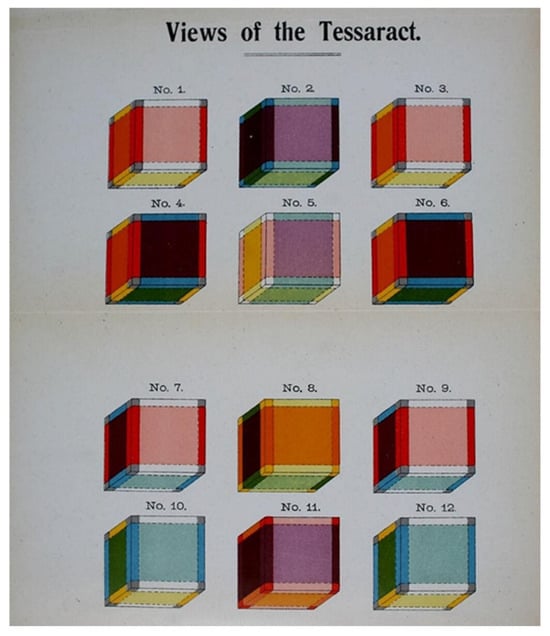
Visual Nature: Multiperspectivity on Peru’s South Coast -
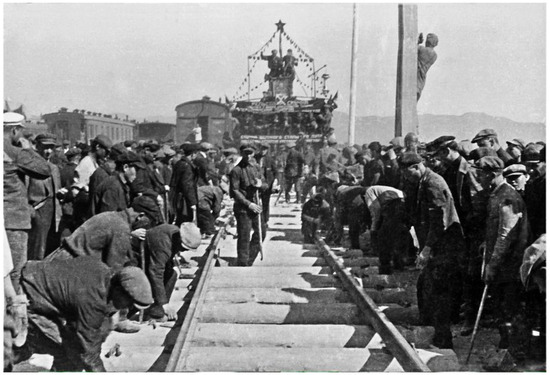
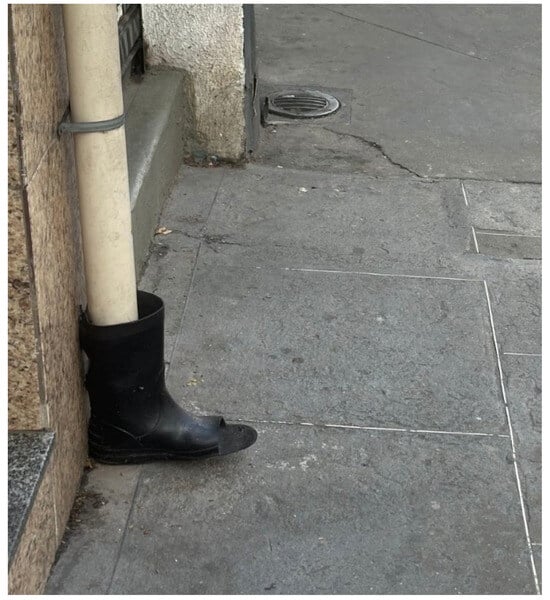
Tarrying with Failure: Film Form and the Horizon of Abolition in Svetlana Baskova’s For Marx… -
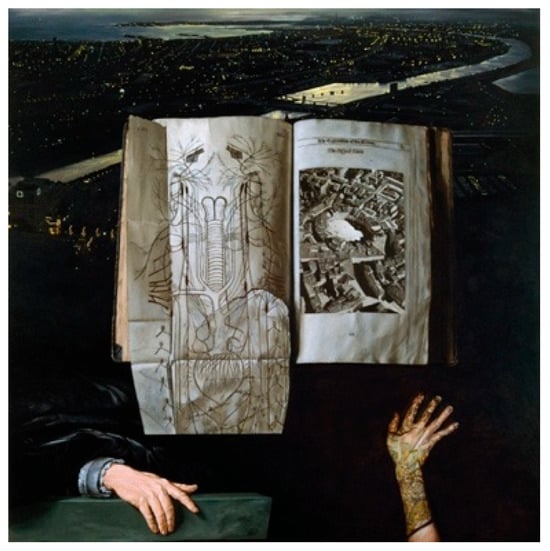
Curating Awareness and Hope: Performing Field and Finzi as Gentle Climate Activism -
A Layer of Salt for My Oblivion: An Artist’s Reflections on Archives and Resistance -
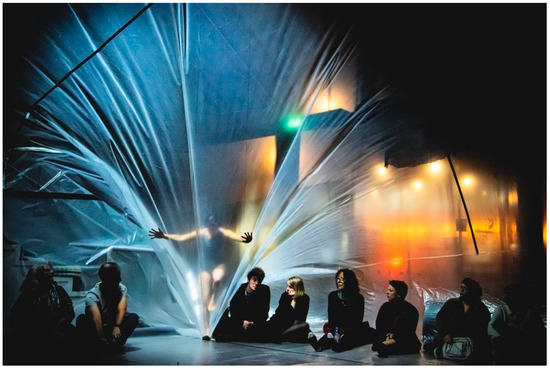
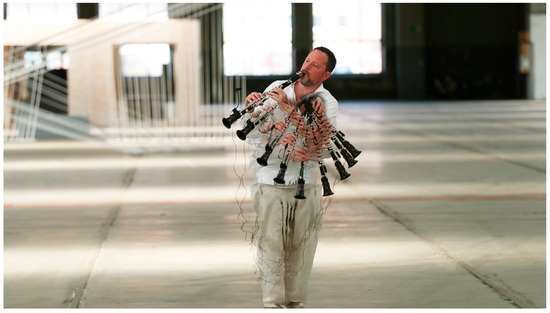
WASTEland—Claudia Bosse’s Performative Activation of Haunted Landscapes as an Embodied Form of Planetary Thinking
Journal Description
Arts
Arts
is an international, peer-reviewed, open access journal promoting significant research on all aspects of the visual and performing arts, published monthly online by MDPI.
- Open Access— free for readers, with article processing charges (APC) paid by authors or their institutions.
- High Visibility: indexed within ESCI (Web of Science), and other databases.
- Rapid Publication: manuscripts are peer-reviewed and a first decision is provided to authors approximately 40.7 days after submission; acceptance to publication is undertaken in 11.9 days (median values for papers published in this journal in the first half of 2026).
- Recognition of Reviewers: reviewers who provide timely, thorough peer-review reports receive vouchers entitling them to a discount on the APC of their next publication in any MDPI journal, in appreciation of the work done.
Impact Factor:
0.5 (2025)
Latest Articles
The Rear-View Mirror: Matthew Bourne’s Swan Lake as a Historiographical Uncloseting of Tchaikovsky’s Queer Archive
Arts 2026, 15(7), 168; https://doi.org/10.3390/arts15070168 - 21 Jul 2026
Abstract
This article reads Matthew Bourne’s Swan Lake (1995) not merely as a refunctionalisation of the classical ballet, but as a historiographical instrument that excavates the queer tensions latent in the Romantic-era ballet. Its premise is that Tchaikovsky’s score and the original libretto (1877/1895)
[...] Read more.
This article reads Matthew Bourne’s Swan Lake (1995) not merely as a refunctionalisation of the classical ballet, but as a historiographical instrument that excavates the queer tensions latent in the Romantic-era ballet. Its premise is that Tchaikovsky’s score and the original libretto (1877/1895) already contain the fissures of non-normative desire, sublimated by imperial censorship and the aesthetic conventions of the period. The theoretical framework mobilizes Nick Salvato’s concept of uncloseting, Judith Butler’s account of gender performativity, and a Freudian reading of melancholia. This conceptual map is then applied to Bourne’s choreography to show how his production reactivates the repressed archive through male bodies. Three principal axes structure the analysis: the deconstruction of the swan archetype, the Oedipal function of the Queen-Mother as repressive Super-Ego, and the reinterpretation of the Prince’s melancholia as the symptom of a structural impossibility. On the basis of these elements, the article proposes the concept of historiographical uncloseting, defined as a mode in which performance operates as embodied historical research, reactivating affective archives inaccessible through textual sources alone. Bourne’s Swan Lake thus becomes a critical instrument for re-reading the queer dimensions of the archive of Romantic ballet.
Full article
(This article belongs to the Special Issue Queerness in 18th- and 19th- Century European Art (2nd Edition))
Open AccessArticle
Missed Opportunities: Restitution and Relational Ethics
by
Reilly Clark
Arts 2026, 15(7), 167; https://doi.org/10.3390/arts15070167 - 21 Jul 2026
Abstract
The return of African cultural objects represents an opportunity to practice what Felwine Sarr and Bénédicte Savoy call “a new relational ethics.” Oftentimes, repatriation begins and ends with the literal return of physical objects. This does little to address legacies of colonial theft,
[...] Read more.
The return of African cultural objects represents an opportunity to practice what Felwine Sarr and Bénédicte Savoy call “a new relational ethics.” Oftentimes, repatriation begins and ends with the literal return of physical objects. This does little to address legacies of colonial theft, value extraction, and epistemicide. It can also reinscribe the power of Western interpretive frameworks and reproduce Western patterns of state power by returning objects to Western-style institutions within postcolonial nation-states. This essay considers the return of the Benin bronzes as a case study for these missed opportunities and alternative paths forward. It follows the various and sometimes competing means by which Benin bronzes came “home:” whether to the postcolonial nation of Nigeria, to the Oba of Benin himself, or to the controversial public-private partnership known as the Museum of West African Art (MOWAA). This essay considers how these various means of return, and these various meanings of “home,” can work against one another and can be co-opted as neoliberal and neocolonial forms of control. The essay also explores alternative paths forward through the framework of relational ethics. Sarr and Savoy first applied the phrase to the return of African cultural objects in their 2018 report. This essay expands on Sarr and Savoy’s report and builds from Native American and Indigenous scholars like Margaret Kovach and Linda Tuhiwai Smith, who identify opportunities to remake relations as a means of restitution. This includes remaking relations between indigenous communities, Western institutions, and postcolonial nation-states. It also includes remaking relations between human beings and the more-than-human world, including spirits of the ancestors, outside the systems of Western knowledge and value production.
Full article
(This article belongs to the Special Issue Restitution Beyond Repatriation: Rethinking African Tangible Heritage in Twenty-First Century Museums)
Open AccessArticle
Fragile Edges: Dance as a Provocation for Human-ness
by
Adesola Akinleye
Arts 2026, 15(7), 166; https://doi.org/10.3390/arts15070166 - 20 Jul 2026
Abstract
This paper reflects on what dance reveals about the notion of “human-ness” at a time when globalization could be understood as defining humanity in terms of bound, isolated bodies that generate capital, are fixed by borders, and recognized through surveillance. Rather than treating
[...] Read more.
This paper reflects on what dance reveals about the notion of “human-ness” at a time when globalization could be understood as defining humanity in terms of bound, isolated bodies that generate capital, are fixed by borders, and recognized through surveillance. Rather than treating humans as a bounded interior essence of a bodied-self, I suggest it emerges at the edge, where sense of self meets otherness. I suggest dance offers conversation at the periphery of self, where perceived othernesses are met (floor, music, another dancer). In dancing, the self becomes most discernible at points of encounter with texture, rhythm, and trajectory. Human-ness, then, is not form/possession but relational. Drawing on Sylvia Wynter’s critique of the colonial figure of “Man,” within the notion of ‘human’, and Timothy Morton’s concepts of hyperobjects and ecological entanglement, which challenge bounded scales of human perception, I position dance as a practice that unsettles narrow categories of the human. I discuss dance as a method to unearth epistemologies of the edge, articulating humanness as intra-active and ecological, constituted through relation rather than containment. In this framing, the edge of globalization reveals an urgent fragility and the hopeful possibility of other genres of being human: relational, porous, and responding to ecological and historical entanglements. I suggest that dance as a method of moving together discloses an opportunity to reevaluate humanness and consider a definition of ‘to be human’ that is an action and an ever-emerging practice of being in relation.
Full article
(This article belongs to the Special Issue Bodies on Edge in a Globalized World)
Open AccessArticle
Reusing Kurgans in the Western Scythian World
by
Joanna Porucznik
Arts 2026, 15(7), 165; https://doi.org/10.3390/arts15070165 - 20 Jul 2026
Abstract
Kurgans in the Northern Black Sea region have long been treated as monuments “frozen” in their Scythian moment, yet excavation records show repeated re-engagement over much longer timescales. This article argues that kurgan reuse in the Western Scythian world is best understood not
[...] Read more.
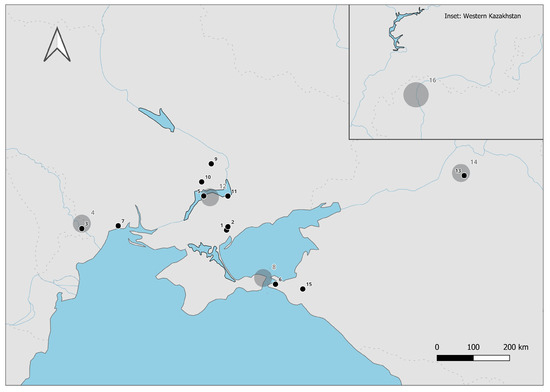
Kurgans in the Northern Black Sea region have long been treated as monuments “frozen” in their Scythian moment, yet excavation records show repeated re-engagement over much longer timescales. This article argues that kurgan reuse in the Western Scythian world is best understood not as a single behaviour, but as a bundle of practices with different archaeological signatures and social implications. Rather than offering an exhaustive catalogue, the study develops a methodological framework based on selected published case studies. It proposes a three-part typology: (1) intrusive mortuary reuse, that is, later secondary or inserted burials placed within earlier mounds; (2) associative reuse, including landscape appropriation, in which older barrows structured later funerary space through clustering, demarcation, visibility, and spatial reference; and (3) reuse through reopening, including shafts, tunnels, selective removal, and the manipulation of human remains. The article applies this framework to evidence from Scythian, Sarmatian, Greek, and early medieval/medieval contexts, with particular attention to Sarmatian intrusive burials in earlier barrows, the structured reuse of older kurgans in the Molochna basin, reopening and looting in Scythian and Sarmatian mounds, and the cross-cultural case of Koshary in the Olbian chora. The discussion situates these practices within mortuary archaeology, social memory, and the politics of the past, and argues that older kurgans could function not only as burial places, but also as mnemonic anchors, territorial markers, and targets of symbolic aggression.
Full article
(This article belongs to the Special Issue Situating Eurasia in Antiquity: Objects, Places and Interactions in the Western Scythian World)
►▼
Show Figures

Figure 1
Open AccessArticle
Sociological Factors in the Secondary Art Markets of China and Spain: Analysis and Proposals for Sustainable Market Development
by
Zeyefu Li and Diana Angoso de Guzmán
Arts 2026, 15(7), 164; https://doi.org/10.3390/arts15070164 - 16 Jul 2026
Abstract
This study analyzes how sociological factors within the context of globalization have influenced the development of secondary markets for contemporary art in China and Spain. Through a comparative approach, it examines the impact of economic, cultural, and legal changes on market structures and
[...] Read more.
This study analyzes how sociological factors within the context of globalization have influenced the development of secondary markets for contemporary art in China and Spain. Through a comparative approach, it examines the impact of economic, cultural, and legal changes on market structures and collectors’ behavior. Special attention is given to the growth of the Chinese market as a new global player, contrasted with the Spanish market, which is characterized by a more gradual institutional development and greater structural challenges. The study also explores how the interaction between East and West is transforming collecting practices and perceptions of cultural value. Finally, strategies are proposed to strengthen the resilience and competitiveness of both secondary art markets in a shifting global landscape. In doing so, the study highlights the importance of adapting sociological structures to the new dynamics of the contemporary art market.
Full article
(This article belongs to the Section Applied Arts)
Open AccessArticle
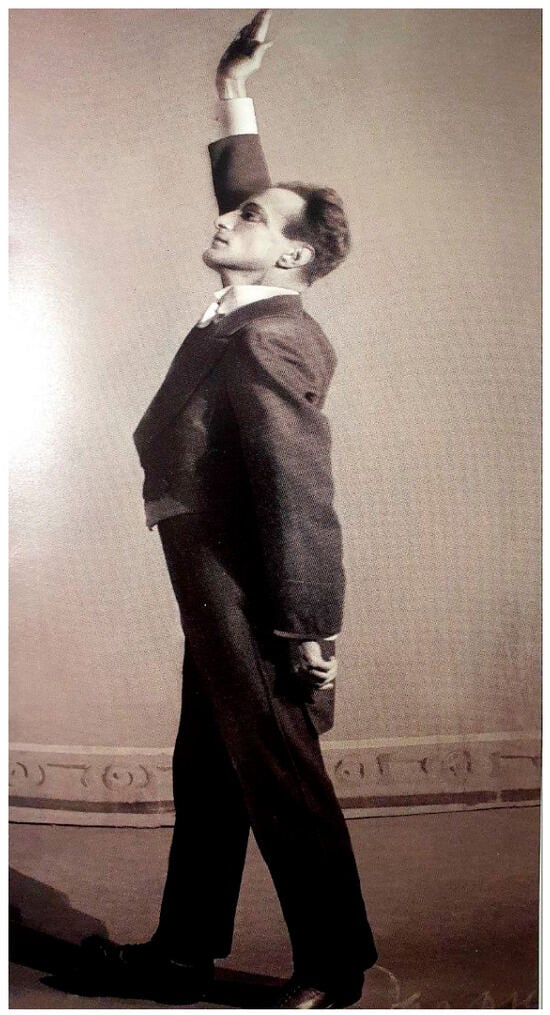
The Semiotic Tekhnē of Poetic Choreography: The Case of Valentin Parnakh
by
Marina V. Akimova
Arts 2026, 15(7), 163; https://doi.org/10.3390/arts15070163 - 15 Jul 2026
Abstract
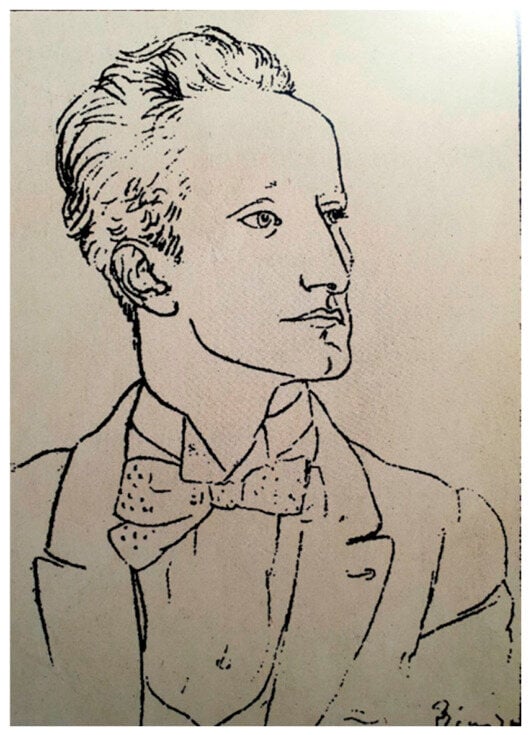
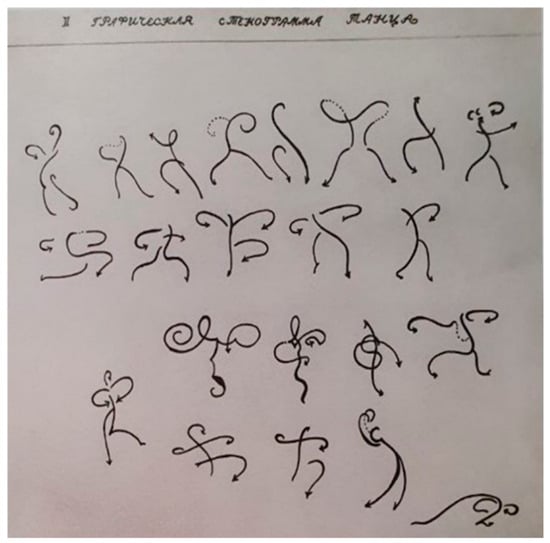
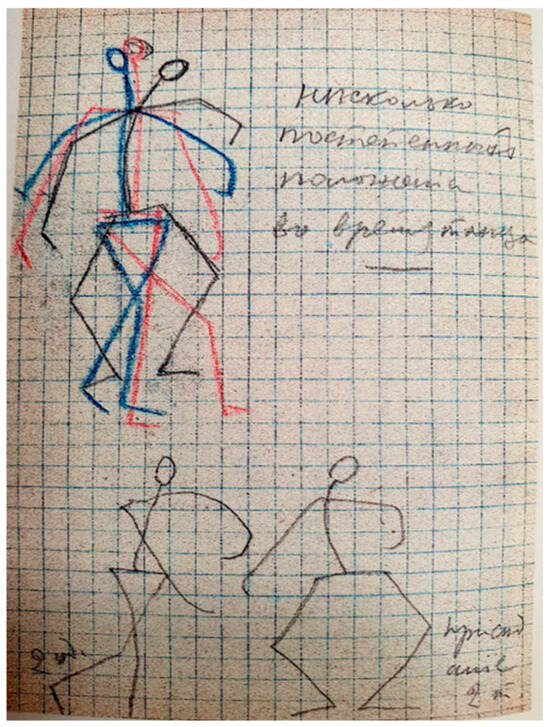
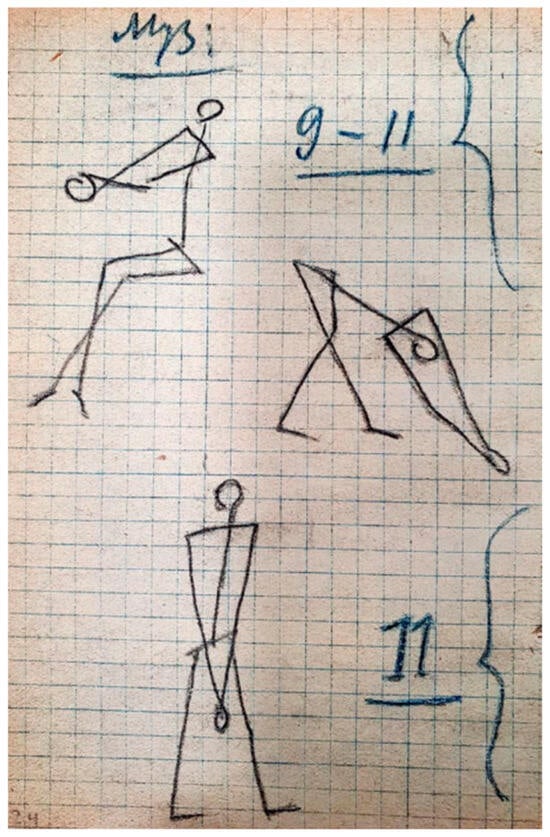
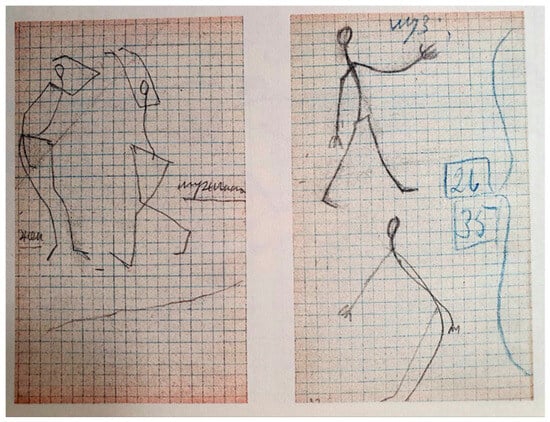
Valentin Yakovlevich Parnakh (1891–1951)—poet, dancer, translator, critic, and indefatigable mediator between artistic milieux—developed idiosyncratic avant-garde poetics in which verbal texture, choreographic invention, and graphic inscription form a single communicative ecology. Focusing on Parnakh’s Parisian collection The Acrobat Climbs (Karabkaetsya acrobat) (1922), this article
[...] Read more.
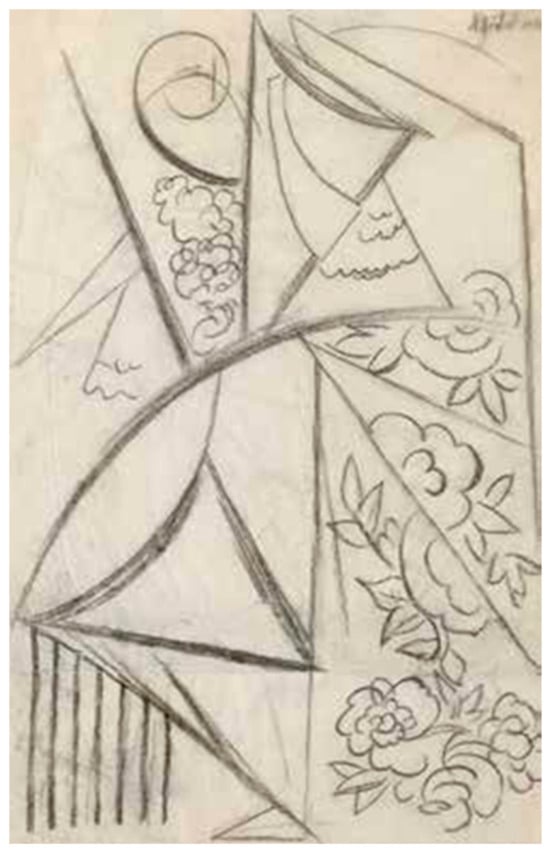
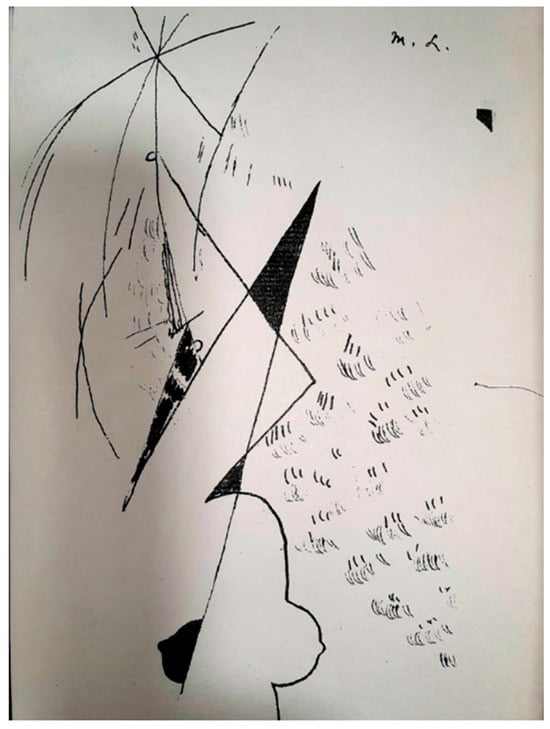
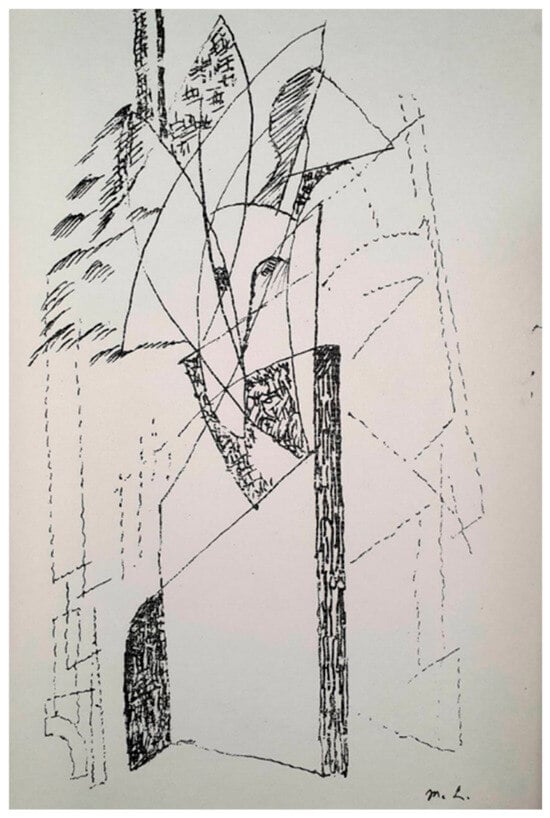
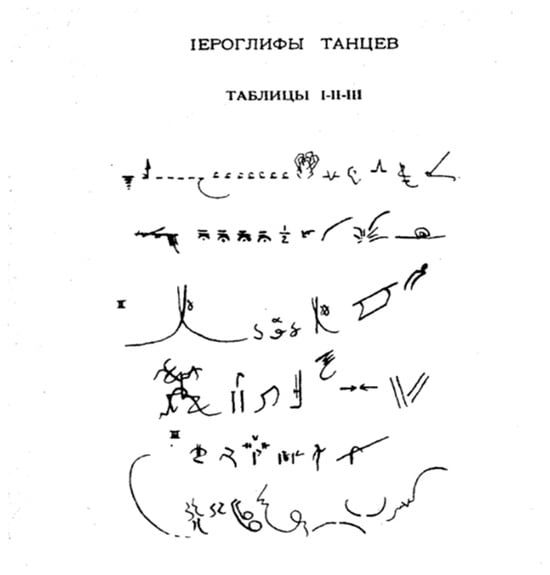
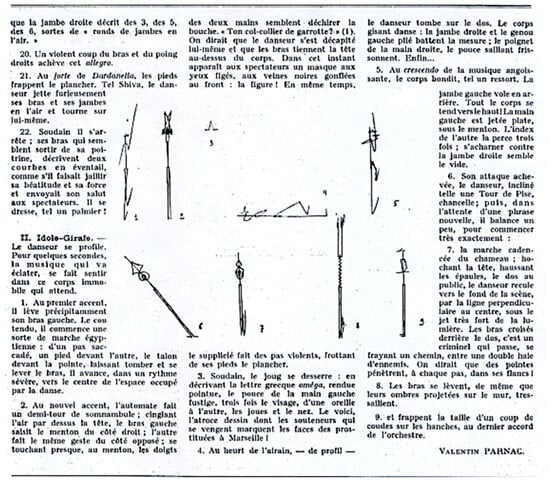
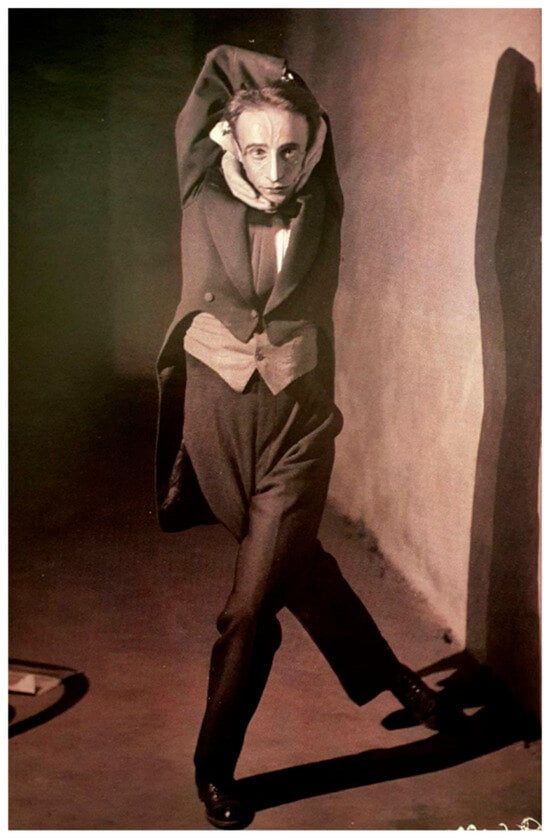
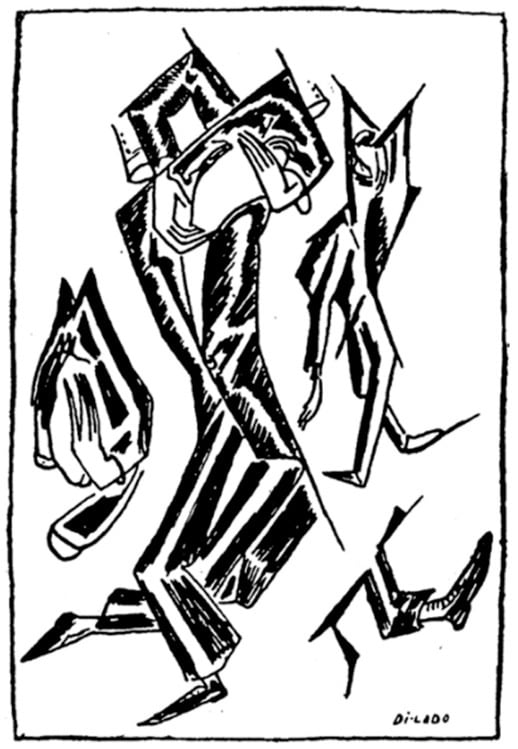
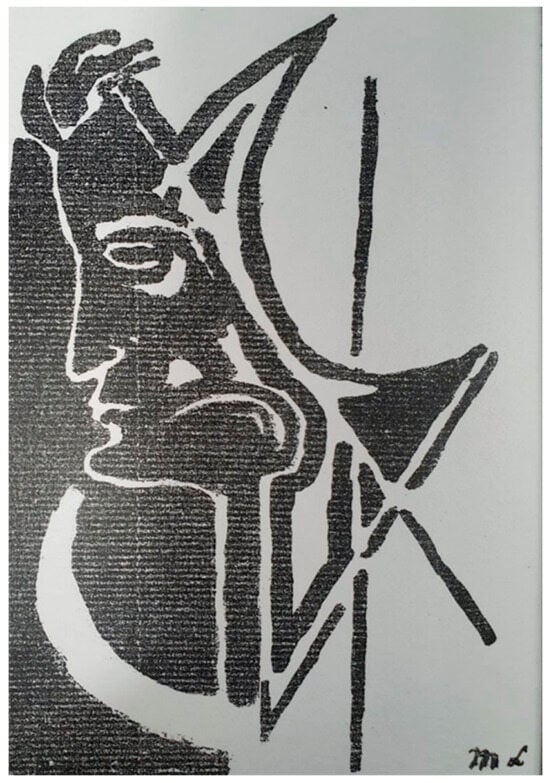
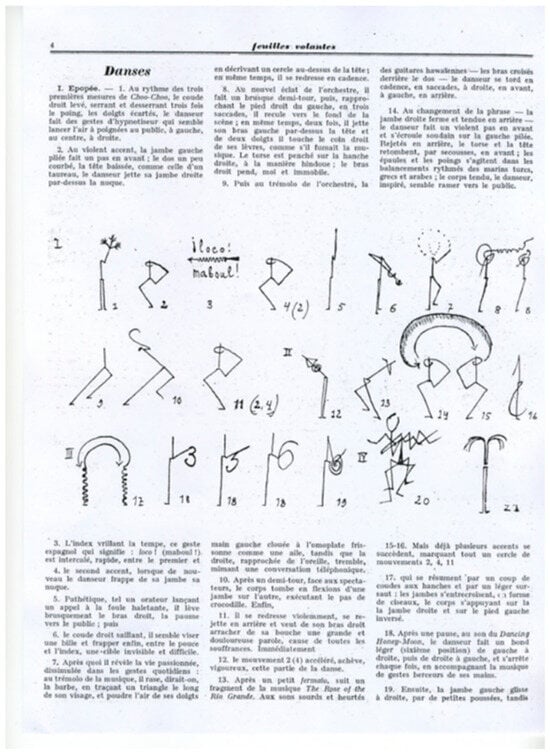
Valentin Yakovlevich Parnakh (1891–1951)—poet, dancer, translator, critic, and indefatigable mediator between artistic milieux—developed idiosyncratic avant-garde poetics in which verbal texture, choreographic invention, and graphic inscription form a single communicative ecology. Focusing on Parnakh’s Parisian collection The Acrobat Climbs (Karabkaetsya acrobat) (1922), this article reconstructs how “low” temporal arts (cabaret, music hall, circus, pantomime) and the modernist revaluation of the body reoriented lyric practice away from a representational “image” toward a performative event and a kinetic sign. The argument proceeds from Parnakh’s struggle “to free oneself from the burden of the word” to the compensatory emergence of dance as an international, non-nationalized medium—at once existential (a “cry of the soul”) and formally experimental. Central attention is given to the author’s attempts to fix movement: the enigmatic “hieroglyphs of dances” printed in 1922 and their later clarification through more legible pictographic systems (“stick-figures”) published in the second half of the 1920s. By correlating poems, self-descriptions of choreography, and visual materials, this study reframes Parnakh’s apparent “obscurity” not as gratuitous zaum, but as a deliberately intermedial hermeneutic problem—one that presupposes translation between sign systems (word/line/body) as the very substance of avant-garde meaning.
Full article
(This article belongs to the Special Issue The European Avant-Garde(s) and Technologies: Unfinished Modernity and the Idea of Tékhnē—the One Hundred Years’ Revolution, 1850–1950)
►▼
Show Figures

Figure 1
Open AccessArticle
Looking into the Mirror: Affective Dance Objects in the Performances of Indian Dancer Ram Gopal
by
Ann R. David
Arts 2026, 15(7), 162; https://doi.org/10.3390/arts15070162 - 13 Jul 2026
Abstract
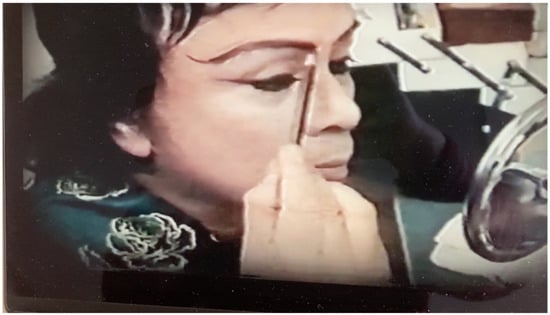
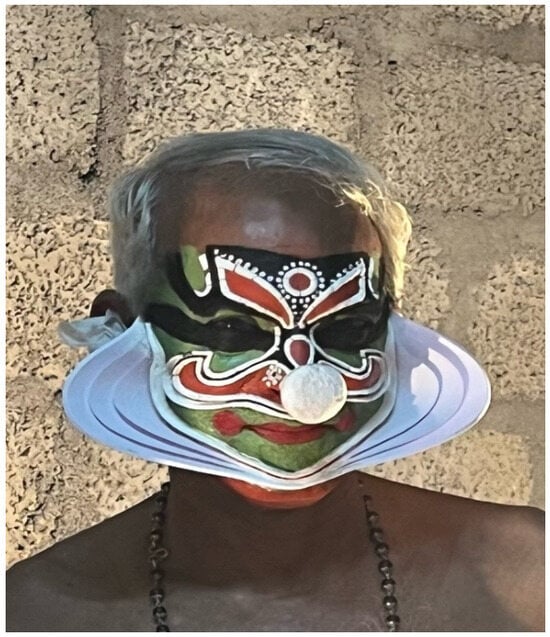
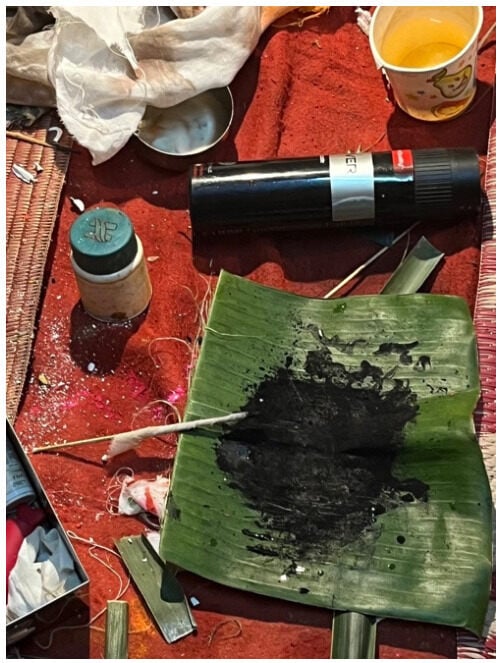
The article begins with a detailed description of a brief and rare film clip of Indian dancer Ram Gopal applying his black kājal eyeliner in front of the mirror in his dressing room before a performance, giving us an intimate glimpse into a
[...] Read more.
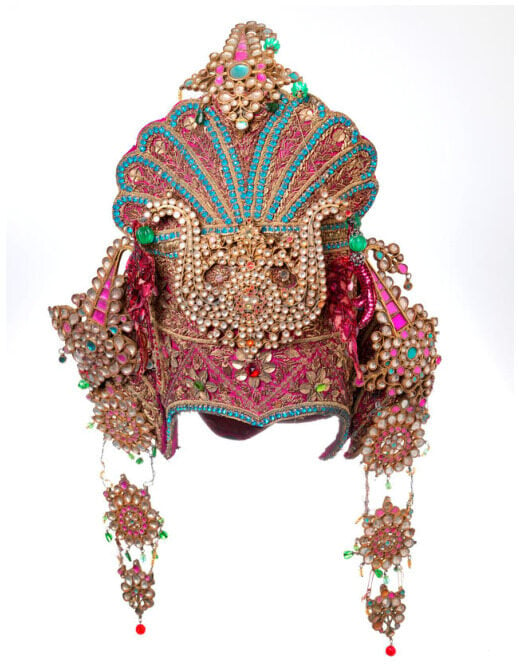
The article begins with a detailed description of a brief and rare film clip of Indian dancer Ram Gopal applying his black kājal eyeliner in front of the mirror in his dressing room before a performance, giving us an intimate glimpse into a dancer’s essential and careful preparation. Material objects related to dance performance such as make-up, mirrors and costumes are often essential to the presentation of Indian dance, especially in that historical period, but are often overlooked as significant artefacts or objects of dance. In considering this short clip of preparatory make-up, I argue how the materiality of cosmetic stage make-up together with dramatic stage costumes (in particular headdresses) and other material objects assist the process of alteration from dancer into a Hindu deity (Śiva) or mythological character on stage. I examine the process of making up, asking how it might manipulate what comes to be seen on stage and what affect is created through such a process. This article takes an imaginative look at the affective register of selected dance objects and their power to create transformation, drawing on theoretical evidence from philosophy and psychology relating to mirror image and the aesthetics of making up and the use of mirrors in early Indian art.
Full article
(This article belongs to the Special Issue Dance Objects)
►▼
Show Figures

Figure 1
Open AccessArticle
“A Nursery of Technique,” the Laboratory in the Socio-Cultural Context of the 1920s–1930s: Between Practice and Metaphor
by
Elena Penskaya
Arts 2026, 15(7), 161; https://doi.org/10.3390/arts15070161 - 8 Jul 2026
Abstract
This article analyzes the laboratory discourse in Soviet society during the first third of the twentieth century through the lens of tékhnē—the ancient fusion of making and knowing—arguing that the laboratory became a key site for redefining artistic practice as a form
[...] Read more.
This article analyzes the laboratory discourse in Soviet society during the first third of the twentieth century through the lens of tékhnē—the ancient fusion of making and knowing—arguing that the laboratory became a key site for redefining artistic practice as a form of knowledge production. Drawing on the institutional critique of the laboratory (Bruno Latour), the author raises the question of the potential for mutual influence between different types of laboratories established in the fields of art, technical sciences, and production. The mechanisms of a laboratory’s influence on society, as identified by Latour, allow for a new interpretation of the phenomenology of the All-Russian Theatre Society and its significant internal divisions. The history of the emergence and defeat of the Laboratory of Mass Psychology at the All-Russian Theatre Society (ARTS) in the 1920s–1930s is reconstructed on the basis of archival materials from RGALI (fund 970). Meeting minutes and documents from 1929 to 1932 reveal the main modes of the anthropology of the “laboratory genre” within the ARTS system (1920s–1980s). These are examined within the general experimental context of the era: the laboratory boom of the 1920s–1930s reshaped the boundaries between the natural sciences and the humanities. The second mode is the human experience of being on the threshold between life and death—a transgressive state. The third mode is the laboratory as a site for new forms of labor and technology. Within the laboratory’s work, psychotechnics acquired particular significance, reaching its culmination in 1931–1932. This period, marked by an intense flurry of events and new laboratory practices of psychological influence, was rightly called a “psychosis of activities” by the participants of the ARTS laboratory themselves.
Full article
(This article belongs to the Special Issue The European Avant-Garde(s) and Technologies: Unfinished Modernity and the Idea of Tékhnē—the One Hundred Years’ Revolution, 1850–1950)
►▼
Show Figures

Figure 1
Open AccessArticle
The Whimsical Inflatable: Pneumatic Objects in Contemporary Visual and Choreographic Art
by
Alexandra Kolb
Arts 2026, 15(7), 160; https://doi.org/10.3390/arts15070160 - 8 Jul 2026
Abstract
This article analyses pneumatic (inflatable) objects as used in the work of four contemporary European artists from diverse disciplinary backgrounds: choreographers Adrienne Hart and Gabriella Engdahl, and visual artists Michael Shaw and Bambí Benkö. Deployed across deconsecrated churches, swimming pools, theatres, galleries and
[...] Read more.
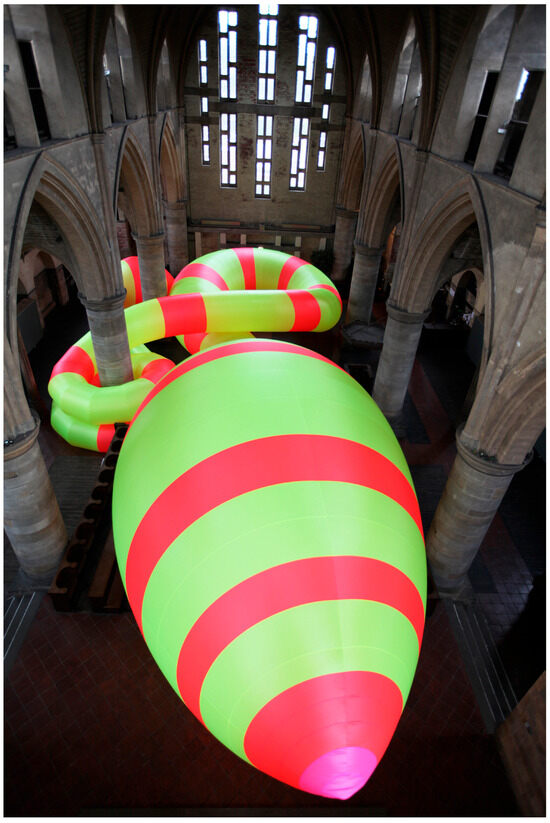
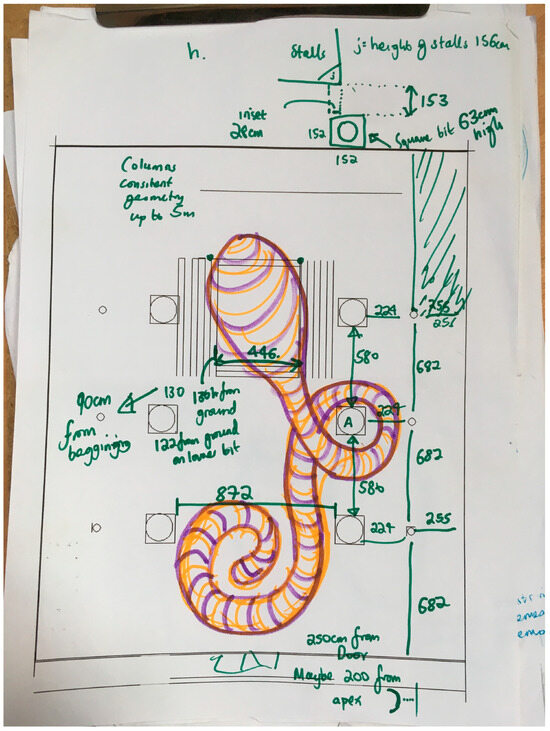
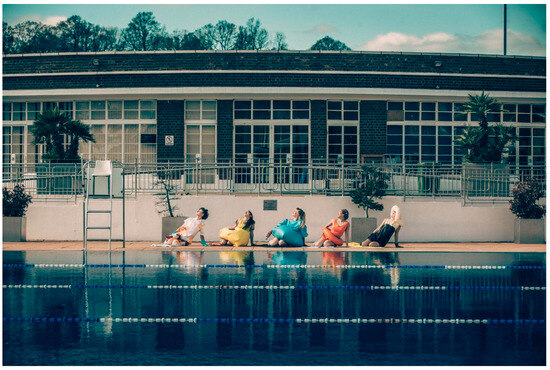
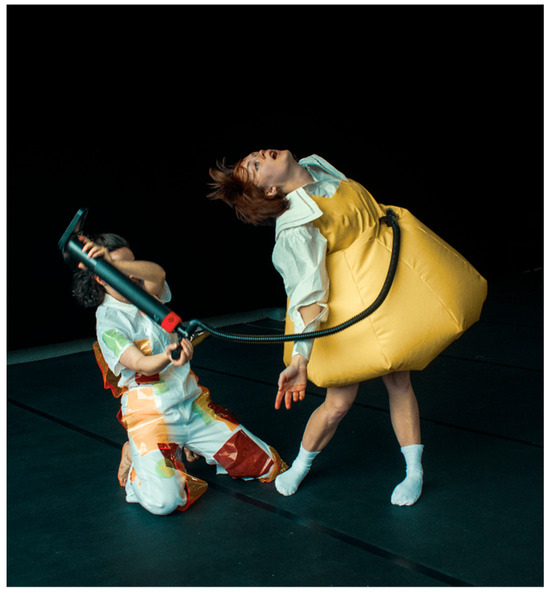
This article analyses pneumatic (inflatable) objects as used in the work of four contemporary European artists from diverse disciplinary backgrounds: choreographers Adrienne Hart and Gabriella Engdahl, and visual artists Michael Shaw and Bambí Benkö. Deployed across deconsecrated churches, swimming pools, theatres, galleries and streets, these works demonstrate a broad spectrum of engagement with inflatables, ranging from formalist to existential, social and political-activist purposes—all implicating choreography in an expanded sense. Informed by theories from the visual arts, dance studies and sociology, as well as interviews with the artists themselves, the analysis adopts a multi-methodological approach attuned to this diversity. Overarching concerns about spectatorship, site and materiality centre on how inflatables’ precarious properties—porous seams requiring continual reinflation—engender playful instability and encourage interaction with audiences. Proposing ‘whimsy’ as a critical lens, the essay reimagines contemporary inflatables as cultural-choreographic objects that question disciplinary boundaries. The artists’ practices both extend a 1960s legacy of pneumatic experiments and redirect their utopian-critical impulses toward twenty-first-century issues.
Full article
(This article belongs to the Special Issue Dance Objects)
►▼
Show Figures

Figure 1
Open AccessArticle
From the Rhapsody on the Goddess of the Luo River to the Goddess of the Luo River: The Indirect Translation from Literature into Image
by
Xuemei Zhong
Arts 2026, 15(7), 159; https://doi.org/10.3390/arts15070159 - 8 Jul 2026
Abstract
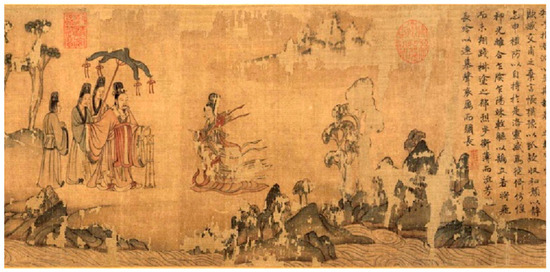
The Goddess of the Luo River is a visible painting that depicts The Rhapsody on the Goddess of the Luo River, an invisible poem. How does the painter convey the intricate plot, abstract verbal imagery, and musicality of the poem—particularly the subtle
[...] Read more.
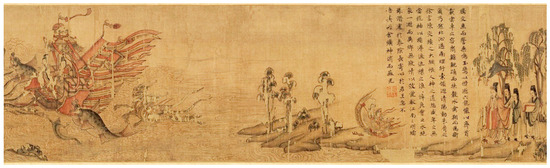
The Goddess of the Luo River is a visible painting that depicts The Rhapsody on the Goddess of the Luo River, an invisible poem. How does the painter convey the intricate plot, abstract verbal imagery, and musicality of the poem—particularly the subtle emotions of betrayal, anguish, and regret—in a tangible visual form? In translating the text, the painter employs at least five methods: literal depiction, perspective shift, metaphor, suggestion and symbolism. Corresponding to these methods, the painter selects, abridges, modifies, or expands upon the textual content. The success of this transformation from text to image lies precisely in the fact that the image does not rigidly adhere to the text but instead captures its spiritual essence. The indirect translation from literature to image is fundamentally grounded in the heterogeneous nature of poetry and painting and must respect the inherent principles of each art form.
Full article
(This article belongs to the Section Visual Arts)
►▼
Show Figures

Figure 1
Open AccessArticle
Abandoned Universalism: Shen Wei and His Early Transnational Dances
by
Fangfei Miao
Arts 2026, 15(7), 158; https://doi.org/10.3390/arts15070158 - 7 Jul 2026
Abstract
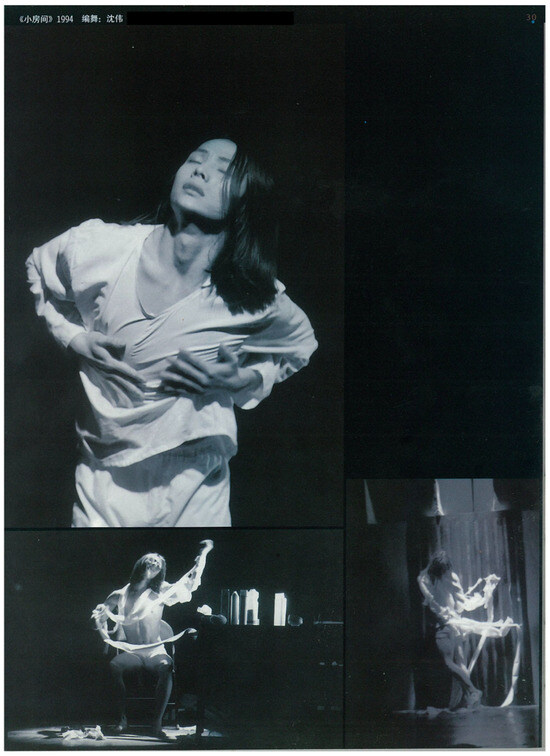
This paper examines the under-researched pivotal career moment of Shen Wei (沈伟, b.1968, last name Shen and first name Wei), one of the most renowned Chinese American dance artists in the West, when he traveled from China to the United States for the
[...] Read more.
This paper examines the under-researched pivotal career moment of Shen Wei (沈伟, b.1968, last name Shen and first name Wei), one of the most renowned Chinese American dance artists in the West, when he traveled from China to the United States for the first time in 1995 and his unacclaimed early career in New York from 1995 to 2000. Based on primary sources, I compare the divergent conceptualizations of universalism in China and the United States, as embodied in Shen’s choreographies and as manifested in the contrasting receptions of his works by Chinese and American critics. Building on existing dance scholarship on universalism and situated at the intersection of Asian studies and Asian American studies, this paper explores how Shen’s choreography of universalism convinced Chinese critics but discouraged American critics from recognizing the significant value of his art. I question the United States as a neutral platform for artistic freedom and propose that Shen must perform according to the expectations of American society—the “dress code” for Asian artists—to gain acceptance and success. In so doing, I challenge the intent that primarily examines Shen based on his widely acclaimed works. The “failures” that Shen experienced in his career contain the same, if not more, research value as his “successes.”
Full article
(This article belongs to the Special Issue Bodies on Edge in a Globalized World)
►▼
Show Figures

Figure 1
Open AccessArticle
Real-Time Detection of Laban Effort Factors in Music Performance Using Machine Learning
by
Robert Ek, Federico Visi and Anchen Froneman
Arts 2026, 15(7), 157; https://doi.org/10.3390/arts15070157 - 7 Jul 2026
Abstract
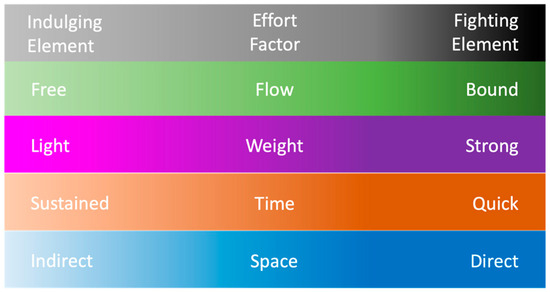
This article presents a study that applies Laban’s Effort theory to detect a musician’s expressive intentions during performance. Laban Effort theory was chosen for its capacity to support the observation, description, and interpretation of expressive movement. The aim was to develop interactive musical
[...] Read more.
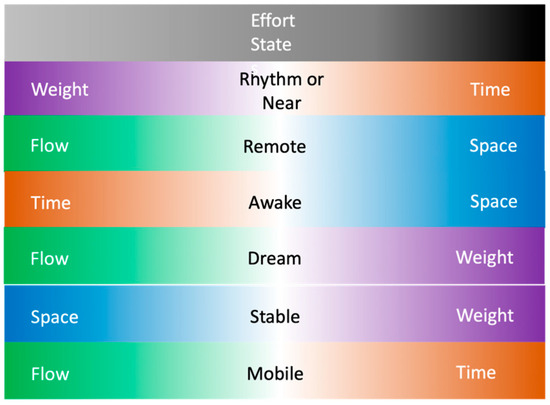
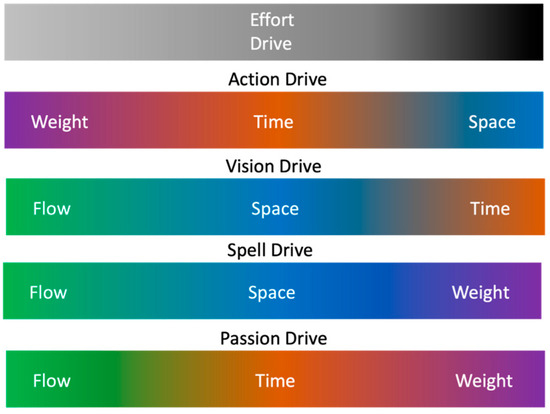
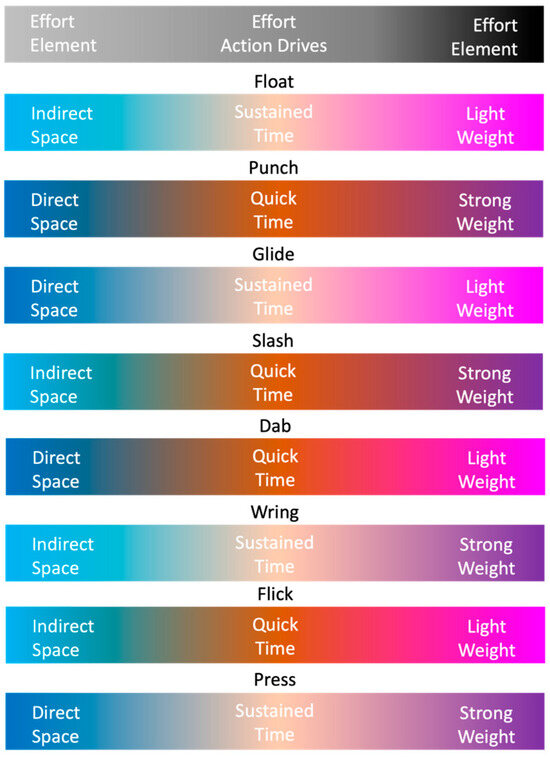
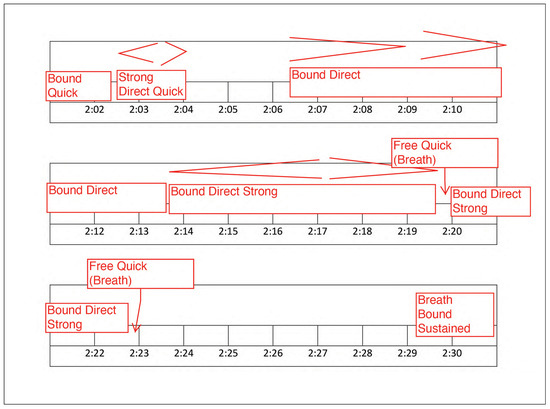
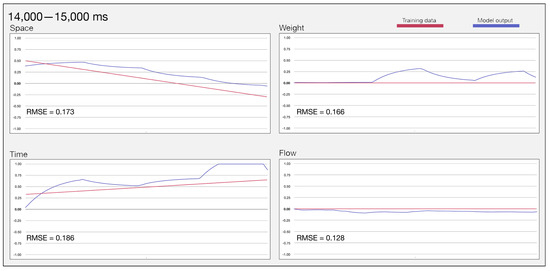
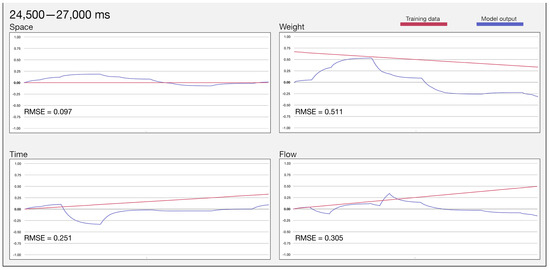
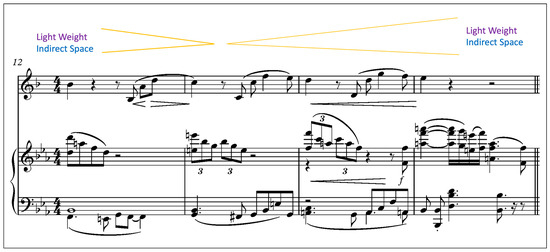
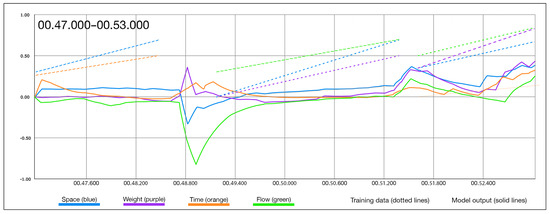
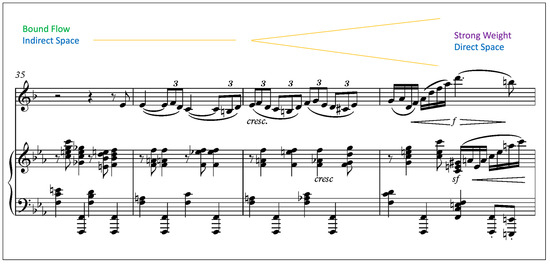
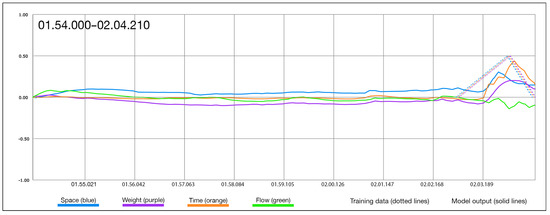
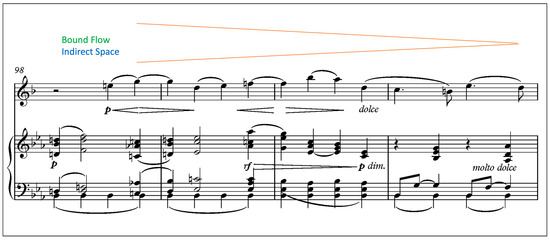
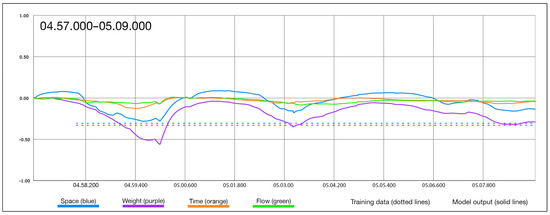
This article presents a study that applies Laban’s Effort theory to detect a musician’s expressive intentions during performance. Laban Effort theory was chosen for its capacity to support the observation, description, and interpretation of expressive movement. The aim was to develop interactive musical systems that learn from the embodied expressivity musicians cultivate through practice. The study adopts a multidisciplinary approach, combining Laban Motion Analysis with interactive machine learning. Gesture data, audio, and video were recorded during a performance of Brahms’s Clarinet Sonata Op. 120 No. 2. The video was then analysed by an expert annotator observing Laban Efforts. The annotated video was then reviewed in collaboration with the performer to incorporate Effort Phrasing that reflects changes in intensity within Efforts. The annotations were then used as training data, together with motion data recorded during the performance, to train a regression model. The model was evaluated against expert annotations and through qualitative video analysis. Unlike the very linear notation of a Laban analyst, the model reflects the dynamism of human motion by capturing the almost humanly unobservable nuances in Effort variations. This points to the possibility of using machine learning models to reflect a performer’s expressive intentions in real-time.
Full article
(This article belongs to the Special Issue Music, Gesture, and Embodiment: New Interdisciplinary Perspectives in Gesture–Sound Studies)
►▼
Show Figures

Figure 1
Open AccessEssay
The Last Cool Skies: An Artist Project by Lyndell Brown and Charles Green
by
Charles Green and Lyndell Brown
Arts 2026, 15(7), 156; https://doi.org/10.3390/arts15070156 - 6 Jul 2026
Abstract
Linking art and ecology can mean two significantly different things. First, it may suggest art that takes the objects of ecology as its theme. This, most frequently, means art that is about ecological health, including climate warming. Second, and less often, it may
[...] Read more.
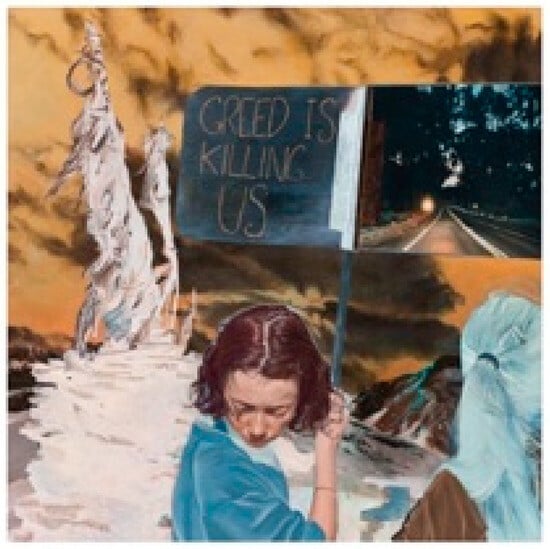
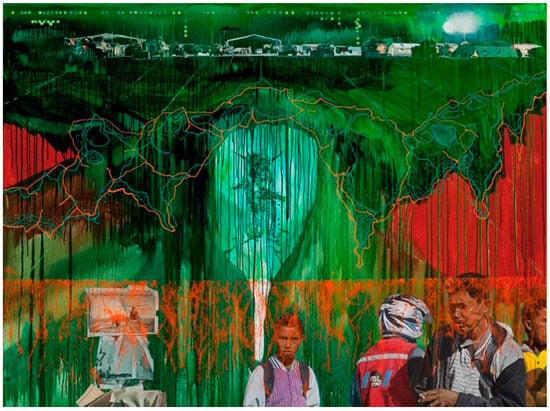
Linking art and ecology can mean two significantly different things. First, it may suggest art that takes the objects of ecology as its theme. This, most frequently, means art that is about ecological health, including climate warming. Second, and less often, it may suggest that art can be imagined from the methodologies of ecology rather than from the approaches of art history. The first two parts of this article are deliberately selective literature reviews of each approach, followed by a third part that traces the three-decade trajectory of an artistic collaboration that embodies both. (In full disclosure, I am one of the two artists.) What might such a self-consciously ecological art practice look like? These sections aim to provide the background and critical context for a response to this question, and that response is the final section of the article, an original artist project: The Last Cool Skies (2026) by artists Lyndell Brown and Charles Green. These artist pages are intended to be the principal focus of this article and are presented as research in the form of visual art across this journal’s pages, as original research contributions in themselves and not as ancillary or as simply illustrations to this article’s text.
Full article
(This article belongs to the Special Issue Rethinking Art History and Culture: Defining an Ecological Approach)
►▼
Show Figures

Figure 1
Open AccessArticle
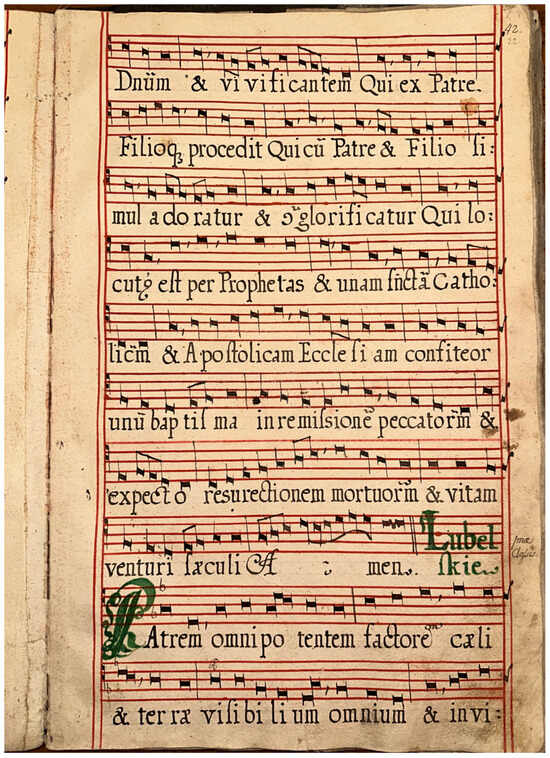
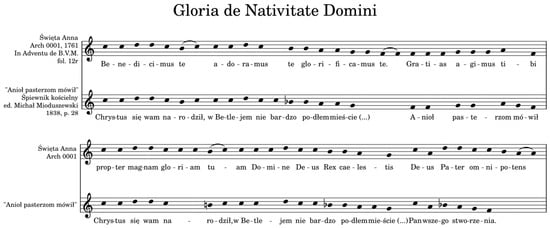
“Sweet” or “Decompositional”? The Bernardine Pseudo-Plainchant in the 1761 Series Concentuum Divae Annae Sacra from the Dominican Nunnery in Święta Anna near Częstochowa (Poland)
by
Michał Jędrzejski
Arts 2026, 15(7), 155; https://doi.org/10.3390/arts15070155 - 3 Jul 2026
Abstract
This article is devoted to the 18th-century Bernardine repertoire of pseudo-plainchant, that is, Latin liturgical monophony, which differs significantly from the style of Gregorian and Neo-Gregorian chant. The research employs methods of codicological (from Latin, codex = book) analysis of the source, as
[...] Read more.
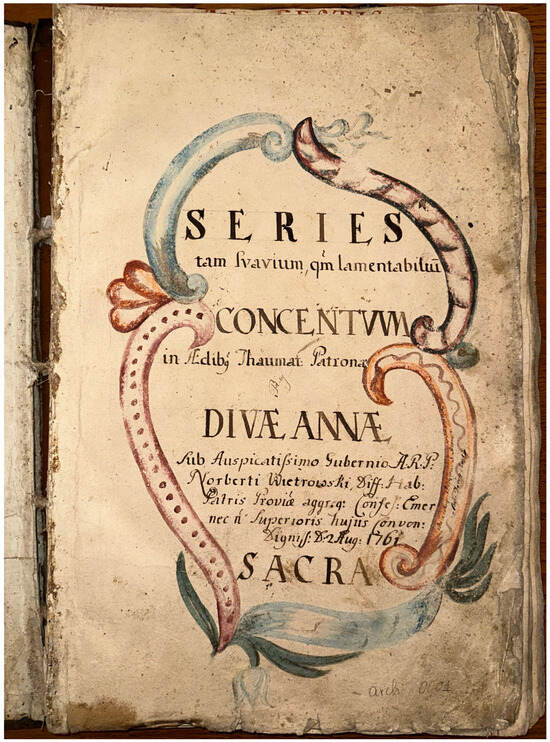
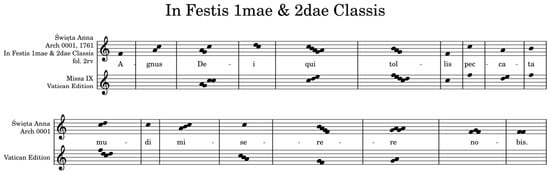
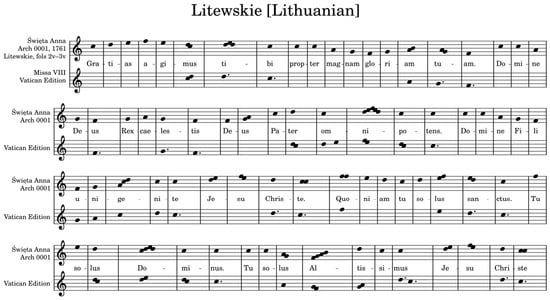
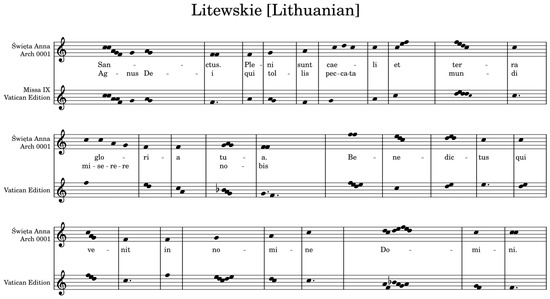
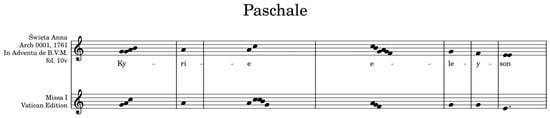
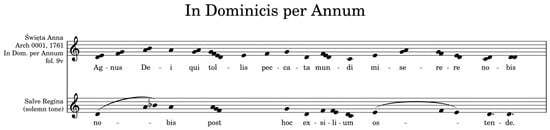
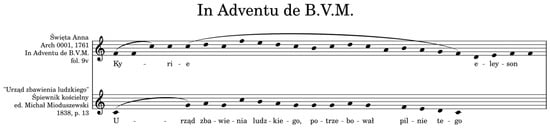
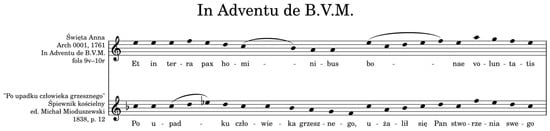
This article is devoted to the 18th-century Bernardine repertoire of pseudo-plainchant, that is, Latin liturgical monophony, which differs significantly from the style of Gregorian and Neo-Gregorian chant. The research employs methods of codicological (from Latin, codex = book) analysis of the source, as well as analysis of the repertoire, melody, text and musical notation. Melodies are also transcribed and compared with selected manuscripts from the Library of the Bernardine Province in Kraków. The research reveales that the pseudo-plainchant collection comprises 14 ordinarium missae (the Ordinary of the Mass, i.e., the fixed or invariable parts of the Mass), one Gloria and 15 Patrem (Credo, the Creed). The repertoire dedicated to St Anne, local patron saint, shares tonal language, elements of rhythm and metre, key signatures, chromatic signs, melodic sequences, the repeated use of the same musical material, alternatim technique (vocal and instrumental parts performed alternately), contrasts in performance, register and style, melodies based on Polish church songs, and geographical titles. The term “sweet” (suaves) appearing on the title page may indicate the aesthetic stance of the Bernardines from Święta Anna and their positive attitude towards the repertoire in question, although 20th-century musicological literature has attributed decompositional elements to it. In this way, the manuscript under study may serve as a basis for updating our understanding of the pseudo-plainchant repertoire as such.
Full article
(This article belongs to the Section Musical Arts and Theatre)
►▼
Show Figures

Figure 1
Open AccessArticle
Water as a Symbolic and Existential Medium in Contemporary Art: Phenomenology, Symbolism, and the Relationship with the Viewer
by
Anna Maria Wierzbicka and Marta Nawrocka
Arts 2026, 15(7), 154; https://doi.org/10.3390/arts15070154 - 1 Jul 2026
Abstract
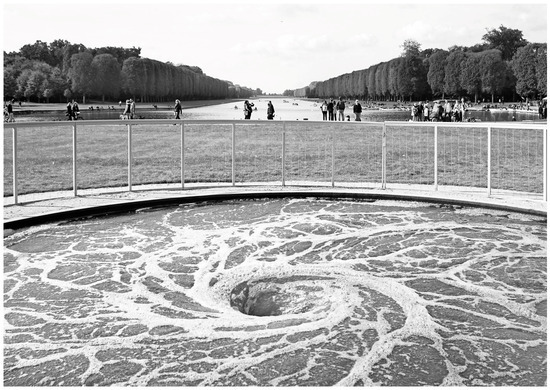
The article examines water as a symbolic and existential medium in contemporary art. Water, present in culture since the earliest times, constitutes both a fundamental condition of life and one of the most enduring archetypes of human imagination. The analysis is conducted from
[...] Read more.
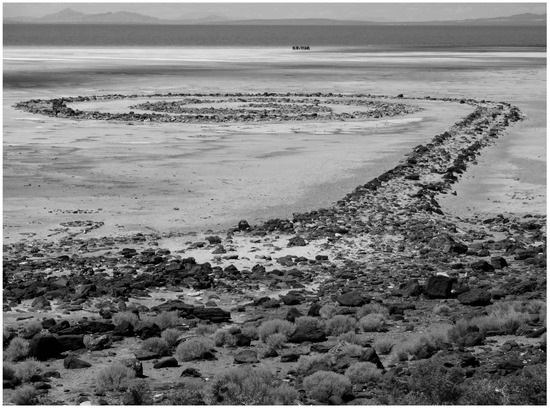
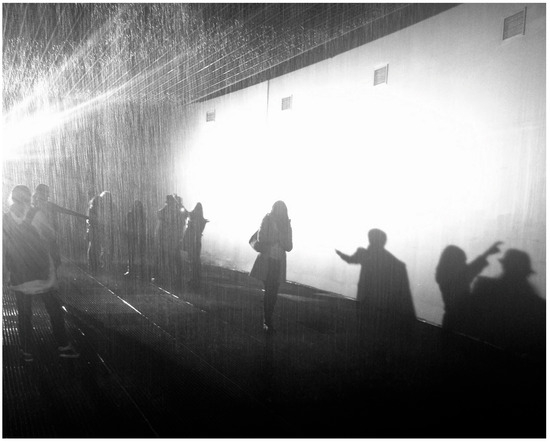
The article examines water as a symbolic and existential medium in contemporary art. Water, present in culture since the earliest times, constitutes both a fundamental condition of life and one of the most enduring archetypes of human imagination. The analysis is conducted from two theoretical perspectives: phenomenological, focusing on the embodied experience, and symbolic, presenting the cultural and spiritual meanings attributed to water, as well as contemporary concepts examining its role in relational and site-specific art. Particular attention is devoted to the analysis of selected case studies in which water serves as a medium for transformation, introspection, and boundary. The findings indicate that in contemporary art, water functions as a multidimensional medium, engaging all the viewer’s senses and eliciting profound aesthetic and existential experiences. At the same time, its use reveals tensions between the authentic message and the risk of greenwashing, or over-technologization. The article emphasizes that the combination of symbolic depth with a responsible approach is crucial for the credibility of water as an artistic medium.
Full article
(This article belongs to the Section Visual Arts)
►▼
Show Figures

Figure 1
Open AccessArticle
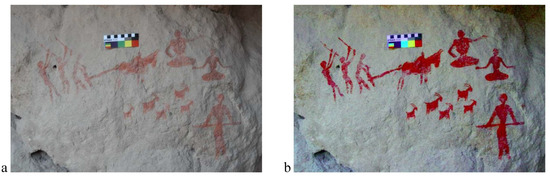
Women in Palaeoart and the Afterlives of Symbols: An Essay in Worldview Externalisation
by
Anni Li and Yan Xu
Arts 2026, 15(7), 153; https://doi.org/10.3390/arts15070153 - 1 Jul 2026
Abstract
►▼
Show Figures
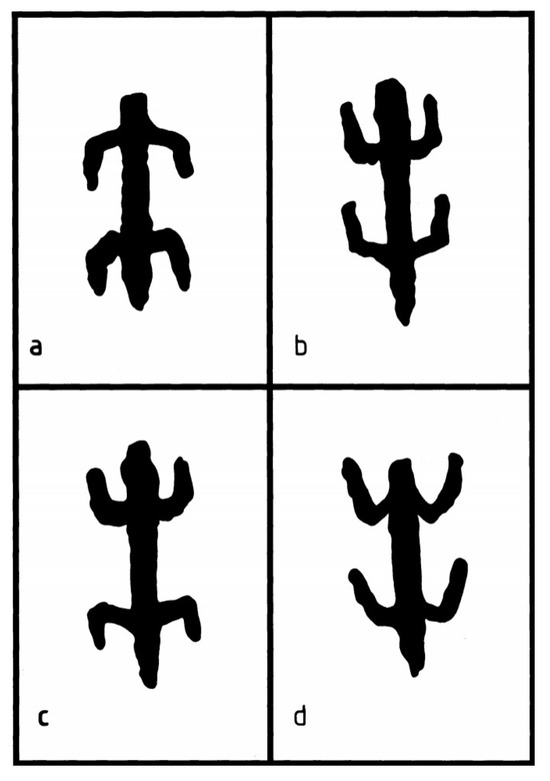
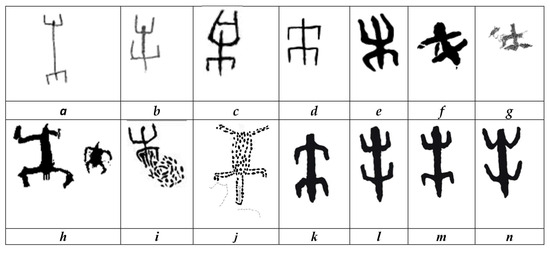
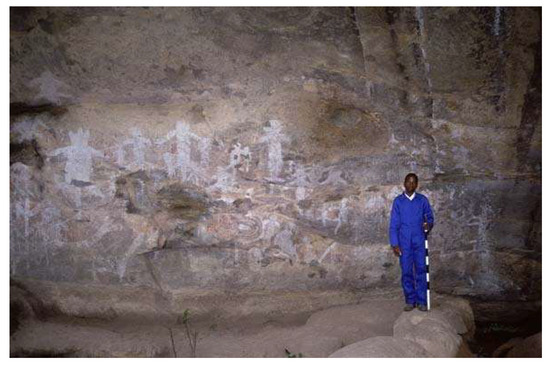
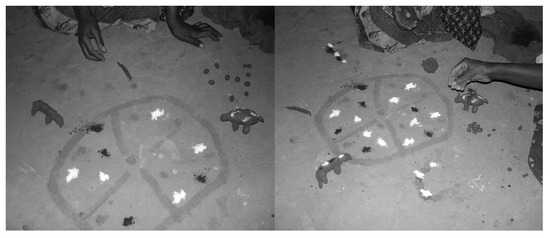
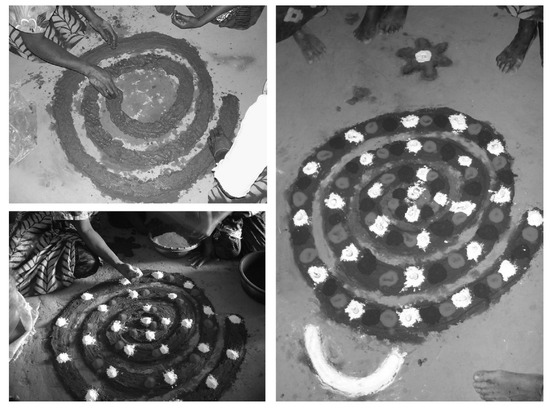
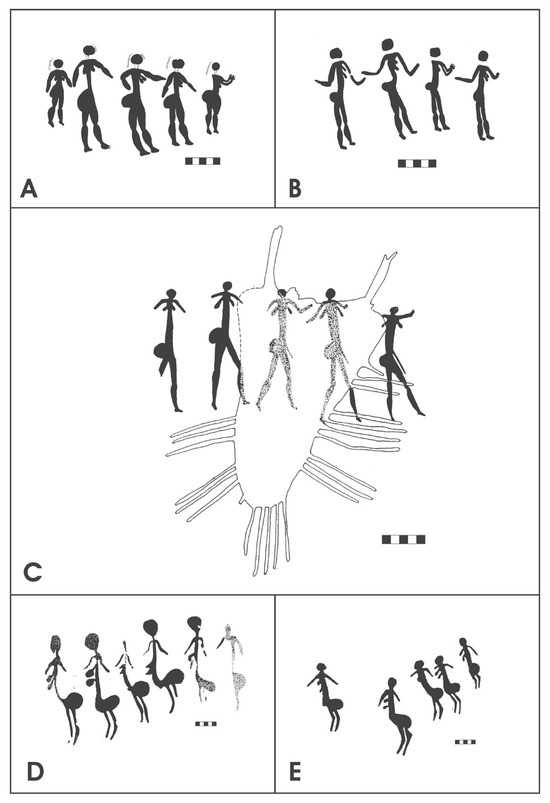
Women-centred motifs in African rock art form part of the most persistent symbolic repertoire of early cosmologies. Despite their prominence, these figures have received limited sustained analysis. Examination of their contexts reveals four recurrent logics—care, regeneration, boundary mediation, and the social encoding of
[...] Read more.
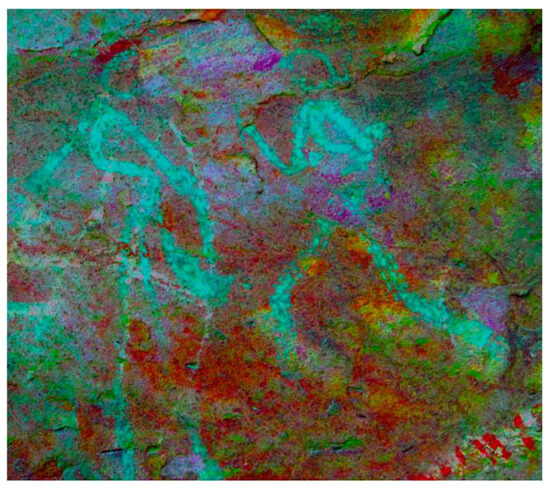
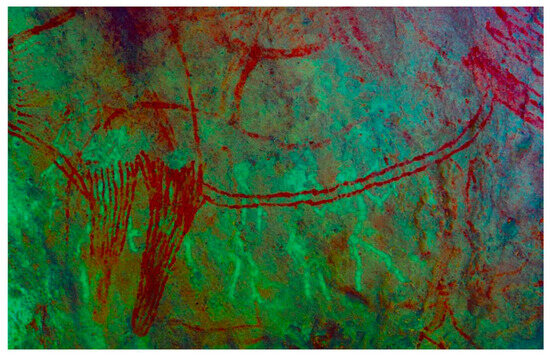
Women-centred motifs in African rock art form part of the most persistent symbolic repertoire of early cosmologies. Despite their prominence, these figures have received limited sustained analysis. Examination of their contexts reveals four recurrent logics—care, regeneration, boundary mediation, and the social encoding of voice—that structure social and ritual life. A comparative case from Alice Walker’s The Color Purple shows these logics rearticulated in the narrative of Celie’s self-awakening, demonstrating the afterlives of symbolic forms. This perspective clarifies the role of female imagery as a structuring element of cosmology and offers a heuristic for integrating rock-art studies with broader cross-temporal analysis.
Full article

Figure 1
Open AccessArticle
Eros and Abolition: The Fight to End Work in R.W. Fassbinder’s Eight Hours Don’t Make a Day
by
Daniel Paul Schwartz
Arts 2026, 15(7), 152; https://doi.org/10.3390/arts15070152 - 1 Jul 2026
Abstract
Commissioned for West German public television, Rainer Werner Fassbinder’s hotly debated 1972 series Eight Hours Don’t Make a Day was Germany’s first working-class family drama. Centering on the growing class consciousness of a crew of toolmakers in Cologne, the show provoked an explosion
[...] Read more.
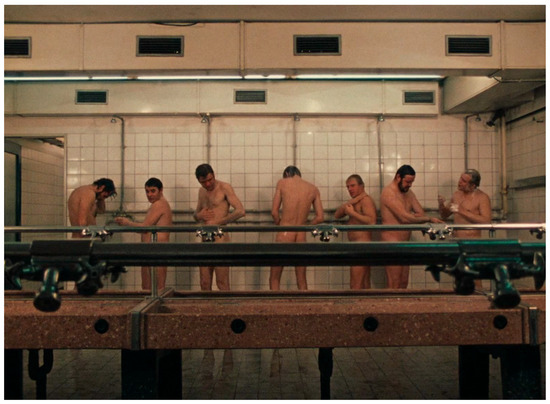
Commissioned for West German public television, Rainer Werner Fassbinder’s hotly debated 1972 series Eight Hours Don’t Make a Day was Germany’s first working-class family drama. Centering on the growing class consciousness of a crew of toolmakers in Cologne, the show provoked an explosion of criticism and debate among conservative critics, leftists, and trade unionists alike. Westdeutscher Rundfunk—a leader in high-quality, non-commercial, socially engaged television—sought to meet the cultural demands of the New Left by embracing the “worker film” (Arbeiterfilm) that aspired to bring the lives and dreams of the working class, WDR’s target audience, to the screen for the first time. What they got instead was a radical call for the abolition of capitalism—a TV-show that did not condescend to workers through representation of their everyday struggles, but rather radicalized them into the knowledge that employers need workers, not the other way around. Within a remarkably intersectional framework that appoints the lone non-straight, racialized worker and female characters the intellectual vanguard of the mobilizing workers, the show takes the contradictions between the factory workers’ interests and those of their management as its dramatic motor, converging on the anticapitalist insight that eight hours do not, in fact, make a day. Unsurprisingly, despite its popularity, Fassbinder’s show was cancelled five episodes into an eight episode series. In this article, I consider its potential in terms of two great thinkers of abolition—Mario Tronti, a founding figure in the Operaismo movement, and Mario Mieli, a gay communist organizer who asserted that the “liberation of Eros and the achievement of communism” were two sides of the same coin.
Full article
(This article belongs to the Special Issue Arts of Abolition and Liberation)
►▼
Show Figures

Figure 1
Open AccessArticle
Time in Space: Velimir Khlebnikov and the “Philosophy of Hyperspace”
by
Michaela Böhmig
Arts 2026, 15(7), 151; https://doi.org/10.3390/arts15070151 - 1 Jul 2026
Abstract
This article reconceptualizes Velimir Khlebnikov’s aesthetic temporality not as a lyrical motif but as an epistemic procedure through which poetic language tests the legibility of history. Treating his historico-mathematical “constants” and his avant-garde formal inventions as mutually implicative, it isolates a double regime:
[...] Read more.
This article reconceptualizes Velimir Khlebnikov’s aesthetic temporality not as a lyrical motif but as an epistemic procedure through which poetic language tests the legibility of history. Treating his historico-mathematical “constants” and his avant-garde formal inventions as mutually implicative, it isolates a double regime: time as oscillatory recurrence (wave, cyclic return, numerical periodicity) and time as a higher-order extension in which duration is spatialized, traversable, and re-coordinatizable. Against linear models of influence, this study situates Khlebnikov within a thick interdiscursive atmosphere—folkloric chronotopes, Romantic time–space convertibility (Novalis), non-Euclidean geometry (Lobachevsky, Riemann), Minkowski–Einstein relativity, and the Russian vogue for “hyperspace” mediated by Morozov and Ouspensky (with Hinton as prototype)—and argues that these matrices are metabolized via poetico-fantastic transmutation rather than imported as explanatory doctrine. Close readings show how reverse temporality, historical inversion, palindromic and collage logics, and the super-narrative architecture of autonomous “planes” operationalize a hyperspatial present in which distant epochs collide without recourse to technological “time machines.” The article thereby reframes Khlebnikov’s project as a cognitive technology: an attempt to re-engineer the chronotope so that past and future become navigable coordinates inside an expanded textual now. In this model, number and word converge as homologous instruments for forecasting, montage, and speculative world-construction itself.
Full article
(This article belongs to the Special Issue The European Avant-Garde(s) and Technologies: Unfinished Modernity and the Idea of Tékhnē—the One Hundred Years’ Revolution, 1850–1950)
►▼
Show Figures

Figure 1
Open AccessArticle
Reparative Realism in ‘Dry Ground Burning’
by
Andrew Philip
Arts 2026, 15(7), 150; https://doi.org/10.3390/arts15070150 - 1 Jul 2026
Abstract
This article investigates the reparative politics of resistance at the heart of the production model and formal strategies developed by Joana Pimenta and Adirley Queirós in the film Dry Ground Burning [Mato Seco em Chamas] (2022). Pimenta and Queirós propose an
[...] Read more.
This article investigates the reparative politics of resistance at the heart of the production model and formal strategies developed by Joana Pimenta and Adirley Queirós in the film Dry Ground Burning [Mato Seco em Chamas] (2022). Pimenta and Queirós propose an alternative to the tendency of global filmic realism to focus on the suffering of the impoverished. Their participatory approach fabulates heroic collective memories in the marginalised community where the film is set. I propose they are engaging with the Brazilian practice of gambiarra, a reframing of material and discursive possibilities given a lack of economic and/or social resources. By repurposing state financing to radically extend the duration of production, the filmmakers generate a reparative realism that expands the possibilities of World Cinema as well as the revolutionary ideals proposed by Third Cinema.
Full article
(This article belongs to the Special Issue Arts of Abolition and Liberation)
►▼
Show Figures

Figure 1
Open AccessArticle
Art as Structural Necessity: A Formal Theory of Aesthetic Engagement in Post-Scarcity Information Environments
by
Boris Kriger
Arts 2026, 15(7), 149; https://doi.org/10.3390/arts15070149 - 26 Jun 2026
Abstract
This paper argues that art and aesthetic engagement are not cultural luxuries but structural necessities for any cognitive system operating in post-scarcity information environments—a claim derived from a unified structural theory of complex systems grounded in the persistence principle. The argument proceeds in
[...] Read more.
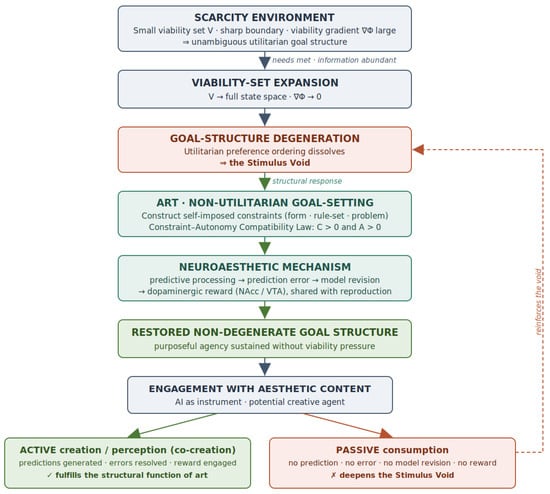
This paper argues that art and aesthetic engagement are not cultural luxuries but structural necessities for any cognitive system operating in post-scarcity information environments—a claim derived from a unified structural theory of complex systems grounded in the persistence principle. The argument proceeds in three stages. First, drawing on the formal theory of structural viability, the paper demonstrates that when a cognitive agent’s basic needs are satisfied and information is abundant, the agent’s viability set expands until utilitarian goal structures degenerate. Non-utilitarian goal-setting—creative activity pursued beyond direct utility—remains the only structurally available mode of purposeful agency. Second, the paper provides a neuroaesthetic grounding for this claim: predictive processing, derived as the unique optimal cognitive architecture under physical constraints, entails that creative engagement generates prediction errors whose resolution activates reward pathways shared with reproductive behavior—both being instances of generating new structure. Active perception of art constitutes co-creation through the same mechanism. Third, the paper addresses the role of artificial intelligence: AI accelerates the arrival of post-scarcity conditions and serves as an instrument of creative engagement, but passive consumption of AI-generated content without the agent’s own goal-setting fails to fulfill the structural function of art and deepens the very condition it could remedy. The framework contributes to neuroaesthetics by providing a substrate-independent formal foundation for understanding why cognitive systems require art—not merely enjoy it—and why this requirement intensifies as post-scarcity conditions approach.
Full article
(This article belongs to the Special Issue The Art of the Brain: Unlocking the Power of Neuroaesthetics in the Age of Artificial Intelligence)
►▼
Show Figures

Figure 1
Highly Accessed Articles
Latest Books
E-Mail Alert
News
Topics
Topic in
Arts, Genealogy, Histories, Philosophies, Religions
Reimagining Totemism: Mystical Experience, Life Values, and Contemporary Art Practices
Topic Editors: Zhilong Yan, Lidija Stojanović, Aixin ZhangDeadline: 31 October 2026
Topic in
AI, Arts, Computers, MTI
Artificial Intelligence and the Future of Art
Topic Editors: Ahmed Elgammal, Marian MazzoneDeadline: 31 October 2027
Special Issues
Special Issue in
Arts
Performative Imaging: Post-Digital Medialities in Contemporary Moving Image Practices
Guest Editors: Gabriel Menotti, Cornelia Lund, Ana CarvalhoDeadline: 31 July 2026
Special Issue in
Arts
Contemporary Development of American Film
Guest Editors: Catherine L. Benamou, Philana PaytonDeadline: 1 August 2026
Special Issue in
Arts
Divine Visions: A Global Exploration of Devotional Art and Iconography, c. 1200–1700
Guest Editor: Katharine ScherffDeadline: 1 August 2026
Special Issue in
Arts
Visible Records: Mapping the Narrative of Vernacular Design
Guest Editor: Dori GriffinDeadline: 15 August 2026