




Topical Advisory Panel applications are now closed. Please contact the Editorial Office with any queries.
-
Context-Awareness and Biologically Inspired Behaviour Based on Attention Mechanisms for Natural Human-Robot Interaction -
Strategic Management of Design and Conceptualization Factors for Wearable Postural Rehabilitation Devices: A Causal Interdependency Analysis -
A Modular Vision System for Practical Object Detection on Resource-Constrained Humanoid Robots -
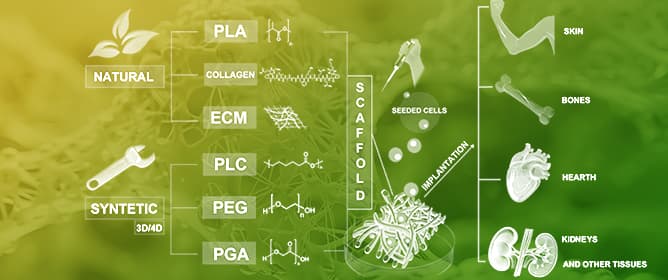
Advances in Biomaterials for Tissue Regeneration: From Scaffold Design to CAP-Enabled Interfaces and AI-Driven Optimization
Journal Description
Biomimetics
Biomimetics
is an international, peer-reviewed, open access journal on biomimicry and bionics, published monthly online by MDPI.
- Open Access— free for readers, with article processing charges (APC) paid by authors or their institutions.
- High Visibility: indexed within Scopus, SCIE (Web of Science), PubMed, PMC, Ei Compendex, CAPlus / SciFinder, and other databases.
- Journal Rank: JCR - Q1 (Engineering, Multidisciplinary) / CiteScore - Q2 (Biomedical Engineering)
- Rapid Publication: manuscripts are peer-reviewed and a first decision is provided to authors approximately 13.5 days after submission; acceptance to publication is undertaken in 3.5 days (median values for papers published in this journal in the first half of 2026).
- Recognition of Reviewers: reviewers who provide timely, thorough peer-review reports receive vouchers entitling them to a discount on the APC of their next publication in any MDPI journal, in appreciation of the work done.
Impact Factor:
4.2 (2025);
5-Year Impact Factor:
4.3 (2025)
Latest Articles
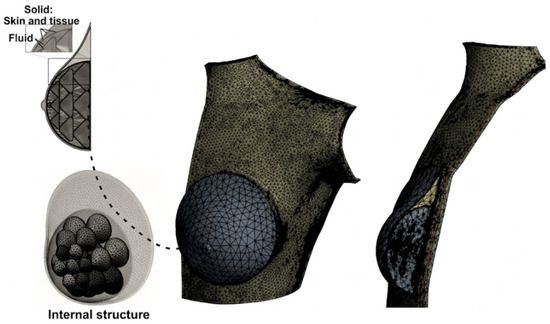
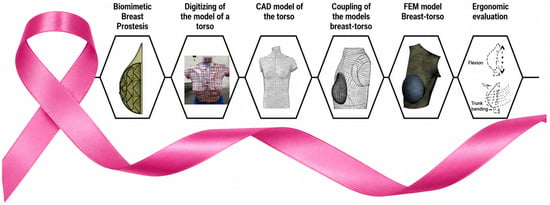
Beyond Design: Ergonomic Numerical Evaluation of a Biomimetic Breast Prosthesis for Daily Use
Biomimetics 2026, 11(8), 554; https://doi.org/10.3390/biomimetics11080554 - 4 Aug 2026
Abstract
External breast prostheses remain the primary noninvasive alternative after mastectomy; however, most commercial designs do not adequately reproduce natural breast biomechanics, heat dissipation, and ventilation behavior during daily activities. This study presents an integrated numerical framework for the ergonomic evaluation of a biomimetic
[...] Read more.
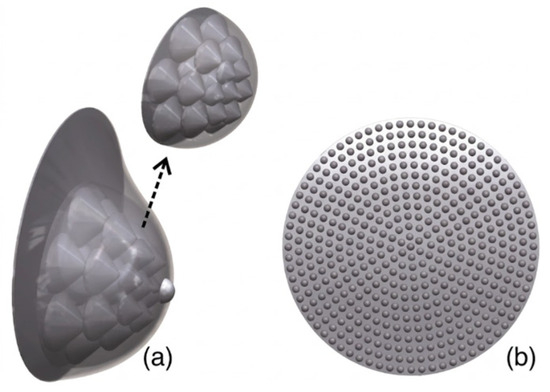
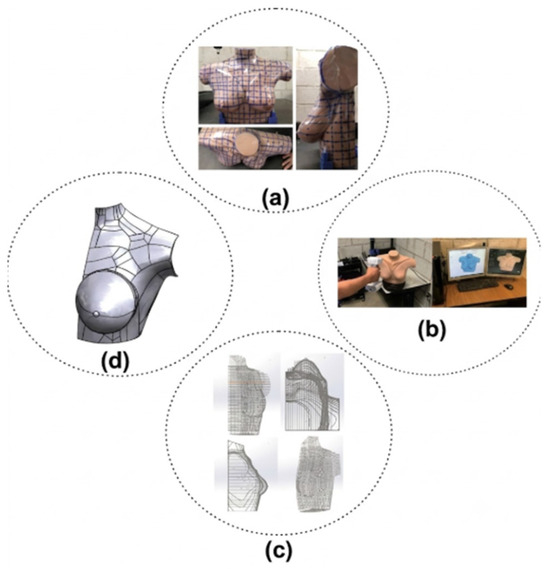
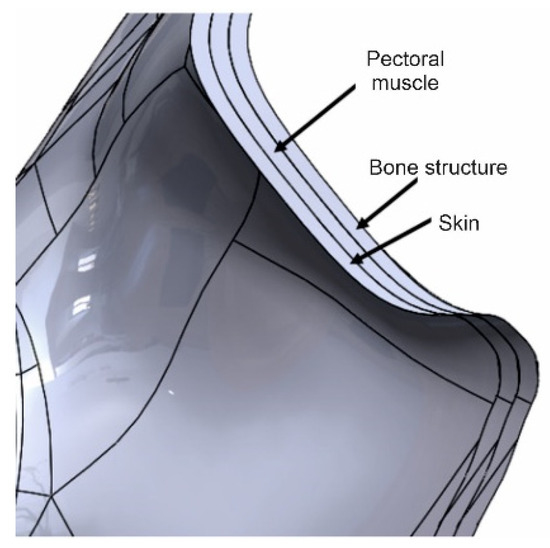
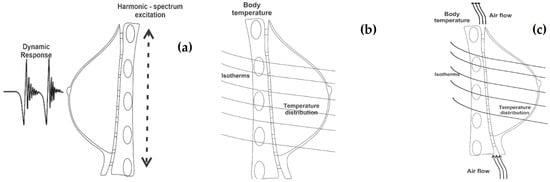
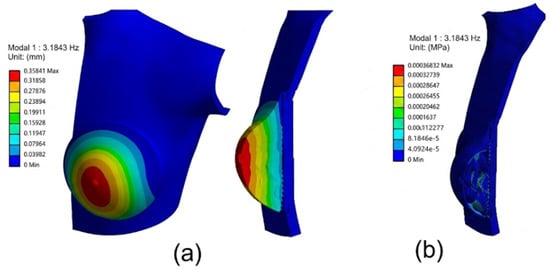
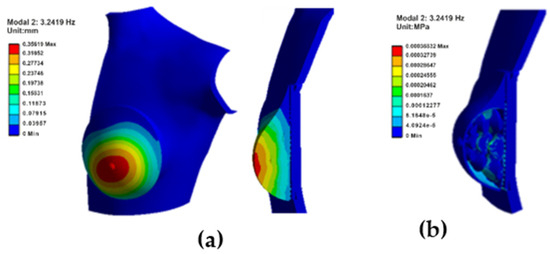
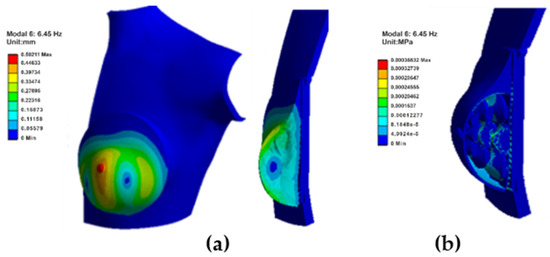
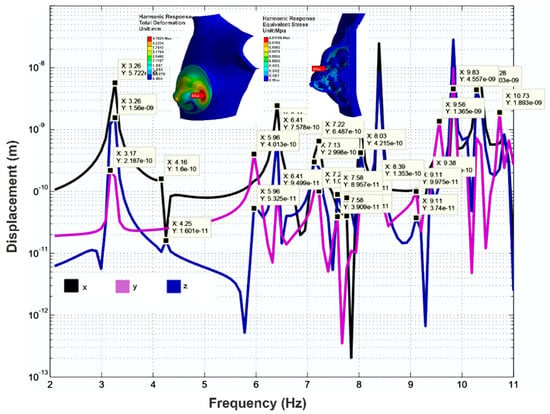
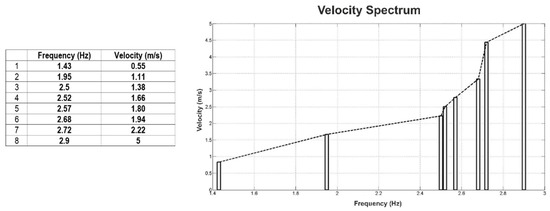
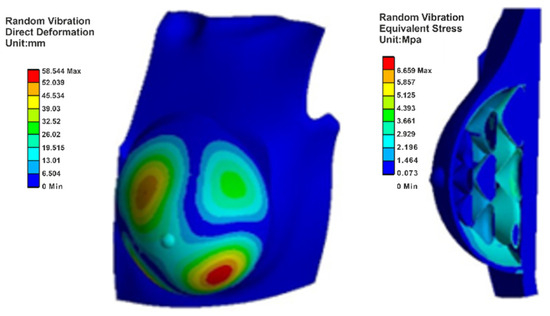
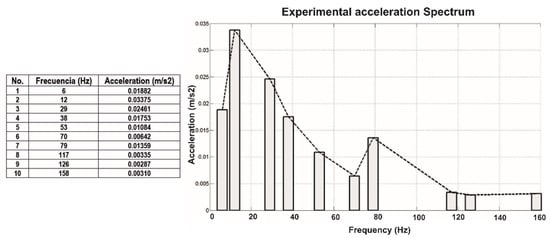
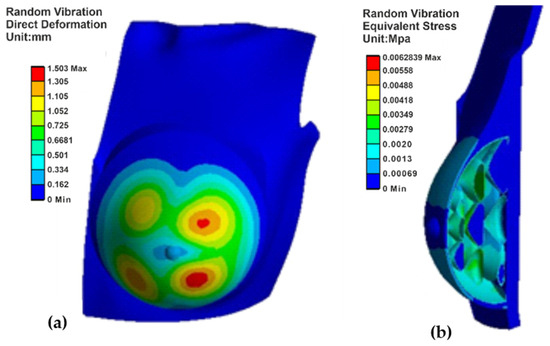
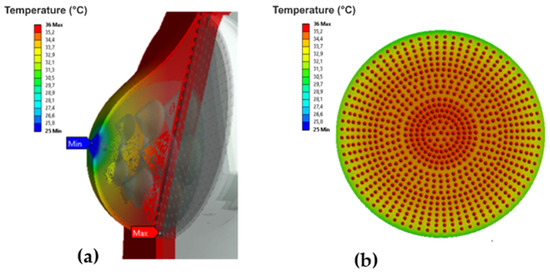
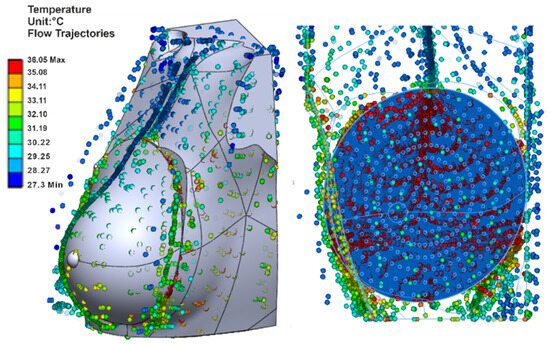
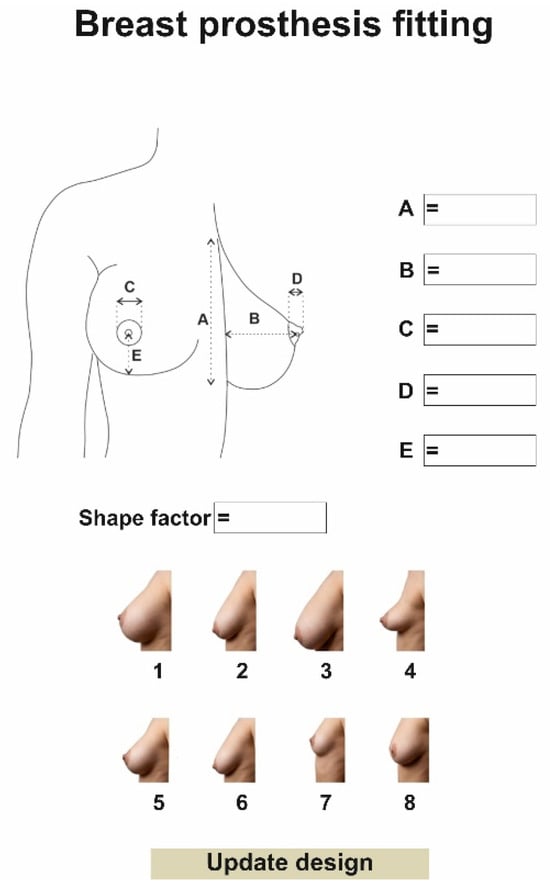
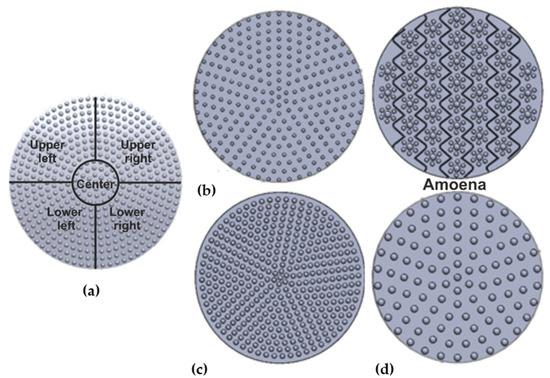
External breast prostheses remain the primary noninvasive alternative after mastectomy; however, most commercial designs do not adequately reproduce natural breast biomechanics, heat dissipation, and ventilation behavior during daily activities. This study presents an integrated numerical framework for the ergonomic evaluation of a biomimetic external breast prosthesis under realistic use conditions. A multilayer prosthesis–torso assembly was generated through 3D digitization and modeled using nonlinear hyperelastic finite element formulations. The proposed design incorporated biomimetic lobular internal architecture and microsphere-based posterior ventilation configurations to improve load distribution and heat dissipation. Dynamic behavior was evaluated through modal, harmonic, and spectral analyses, while thermal and airflow simulations were used to assess interface temperature reduction and ventilation efficiency. The results showed physiologically acceptable dynamic displacements, without critical stress concentrations and natural frequencies outside dominant gait excitation ranges. Additionally, biomimetic ventilation configurations reduced contact temperatures by up to 6.58 °C compared with conventional commercial geometries. Overall, the proposed architecture demonstrated mechanical stability, improved thermal performance, ergonomic compatibility, and potential for personalized prosthesis design.
Full article
(This article belongs to the Special Issue Biologically-Inspired Product Development)
►
Show Figures
Open AccessArticle
Epilepsy Detected Using a New Method Based on Volumetric Analysis Results from Brain MR Images
by
Orhan Bölükbaş and Harun Uğuz
Biomimetics 2026, 11(8), 553; https://doi.org/10.3390/biomimetics11080553 - 4 Aug 2026
Abstract
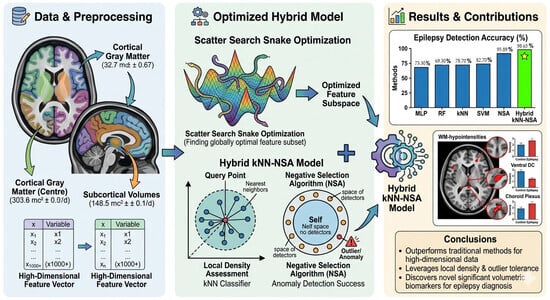
Epilepsy is a challenging brain disease that requires significant clinical findings. (1) Background: The aim of this study is to improve the success rate of epilepsy detection using a newly developed method by optimizing the high-dimensional dataset obtained from brain MRI images. Standard
[...] Read more.
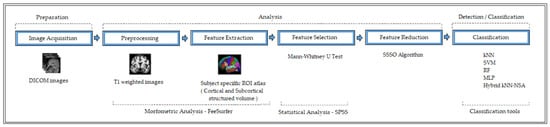
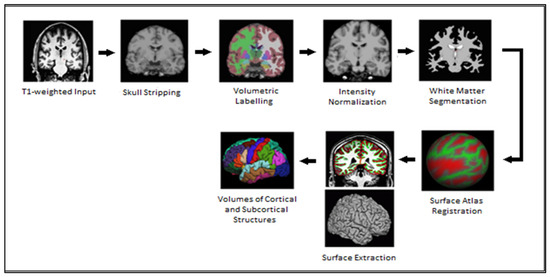
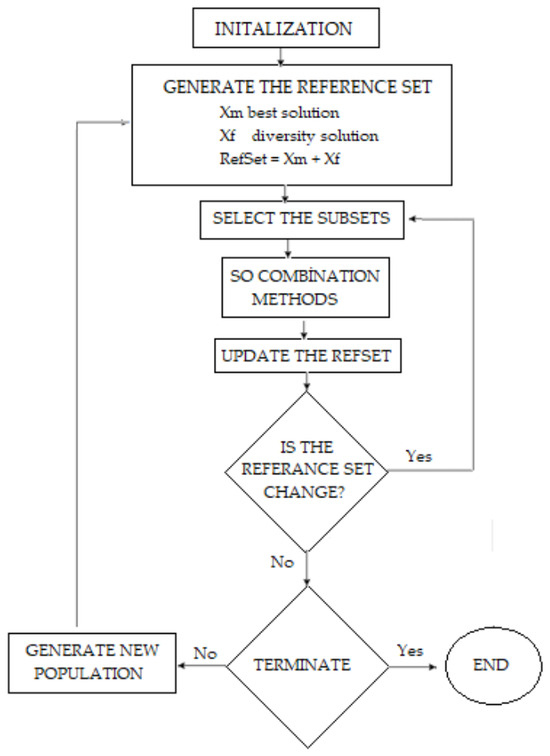
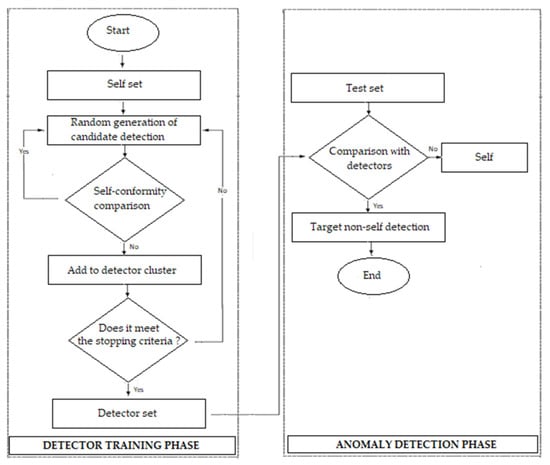
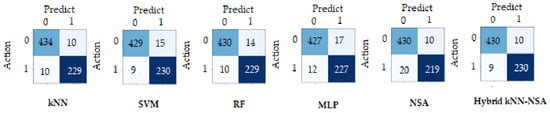
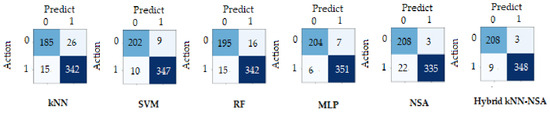
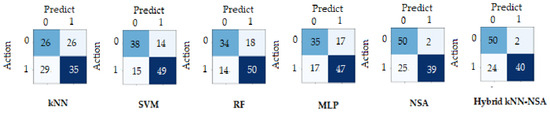
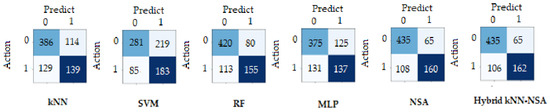
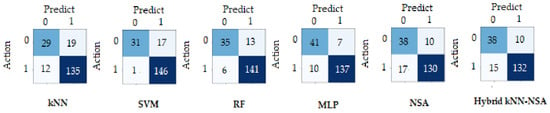
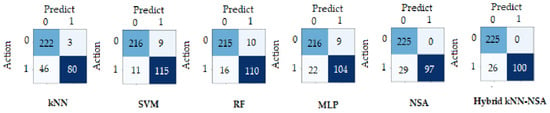
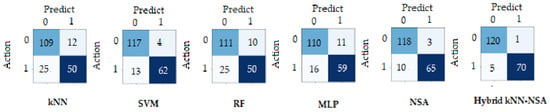
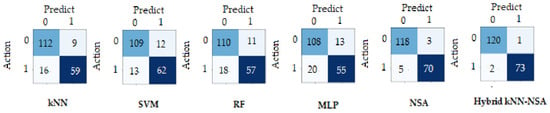
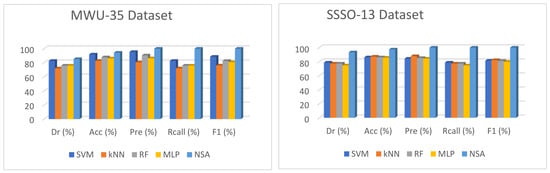
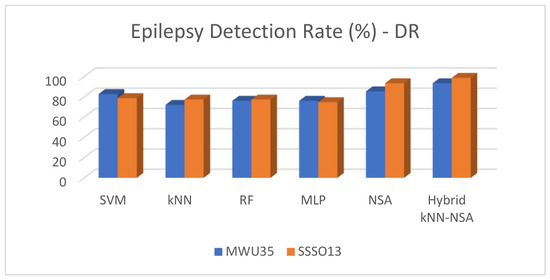
Epilepsy is a challenging brain disease that requires significant clinical findings. (1) Background: The aim of this study is to improve the success rate of epilepsy detection using a newly developed method by optimizing the high-dimensional dataset obtained from brain MRI images. Standard machine learning models fall short of achieving the desired success in high-dimensional datasets. To achieve this, we aimed to develop an optimized hybrid model by combining the local classification power of the k-Nearest Neighbor classifier and the anomaly detection success of the negative selection algorithm. (2) Methods: Cortical and subcortical brain regions were analyzed to examine volumetric differences. A dataset was created by identifying regions statistically significant for epilepsy. This dataset was then optimized using the Scatter Search Snake Optimization algorithm. The performances of six different machine learning models trained on this optimized dataset were compared. (3) Results: The standard and popular models, SVM (82.70%), kNN (78.70%), RF (69.30%), MLP (73.30%), and NSA (95.89%), demonstrated a detection success rate. In contrast, the proposed hybrid model, kNN-NSA (98.65%), demonstrated a detection success rate. (4) Conclusions: The optimized hybrid kNN-NSA approach, which considers local density in such high-dimensional datasets and tolerates outliers within the self-data, appears to outperform traditional methods. Furthermore, this study has demonstrated that volumetric differences in regions not previously reported in the literature, such as WM-hypointensities, ventral DC, and choroid plexus, may be effective in the decision-making process for diagnosing epilepsy, as they are also found to be significant.
Full article
(This article belongs to the Special Issue 10th Anniversary of Biomimetics: Bioinspired Sensing, Information Processing and Intelligent Control)
►▼
Show Figures

Graphical abstract
Open AccessArticle
Volumetric Thermal Characterisation of a Controlled Bioprinting Chamber Using Multi-Point Temperature Sensing
by
Alfonso C. Marcos-Romero, Manuel Matamoros-Pacheco, Laura Mendoza-Cerezo, Silvia M. Díaz-Prado and Jesús M. Rodríguez-Rego
Biomimetics 2026, 11(8), 552; https://doi.org/10.3390/biomimetics11080552 - 4 Aug 2026
Abstract
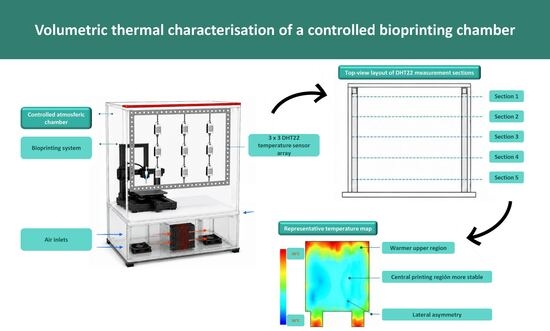
3D bioprinting requires control of environmental conditions within the printing chamber, as temperature affects bioink rheology, printability and cell viability. However, the spatial temperature distribution inside bioprinting enclosures remains poorly characterised, limiting the understanding of thermal gradients that may affect process stability. In
[...] Read more.
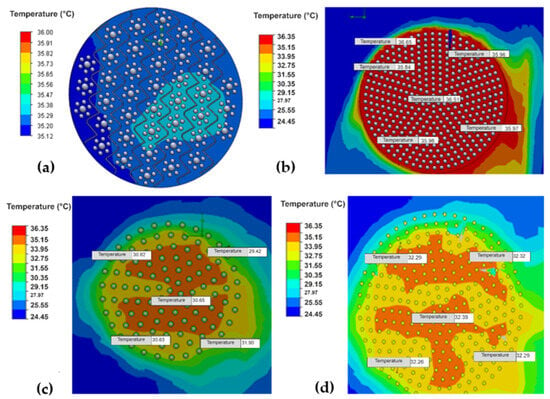
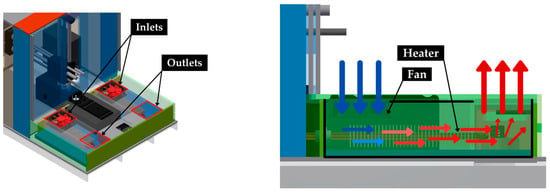
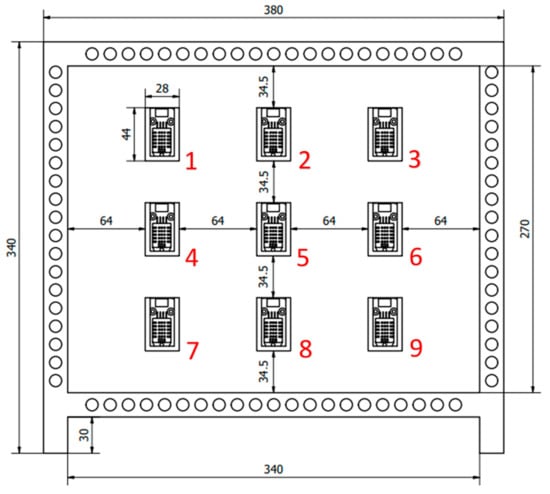
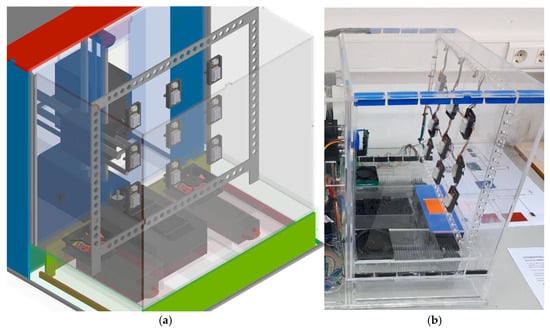
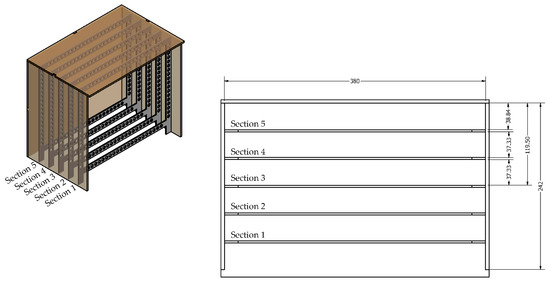
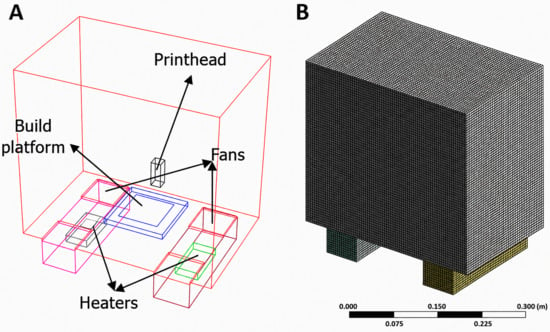
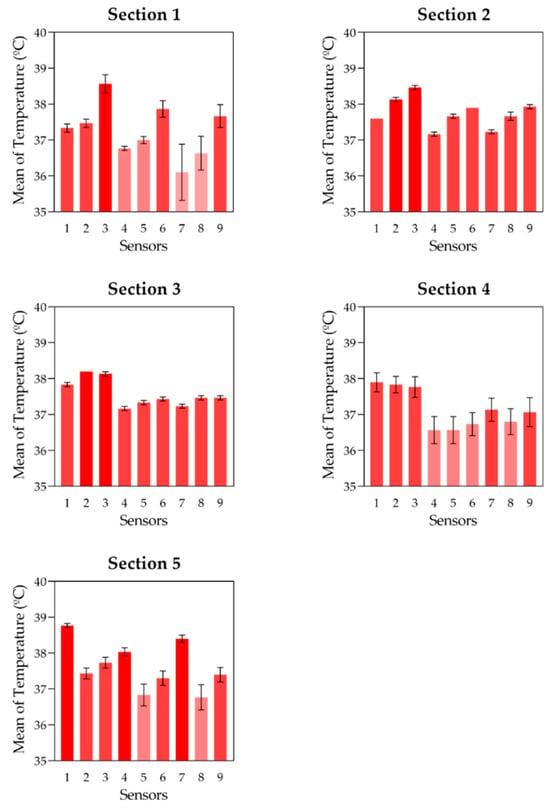
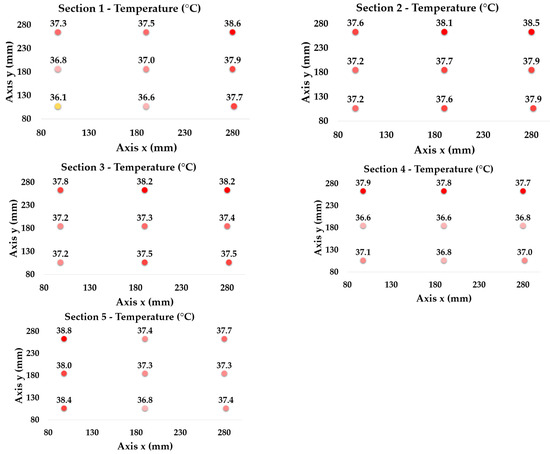
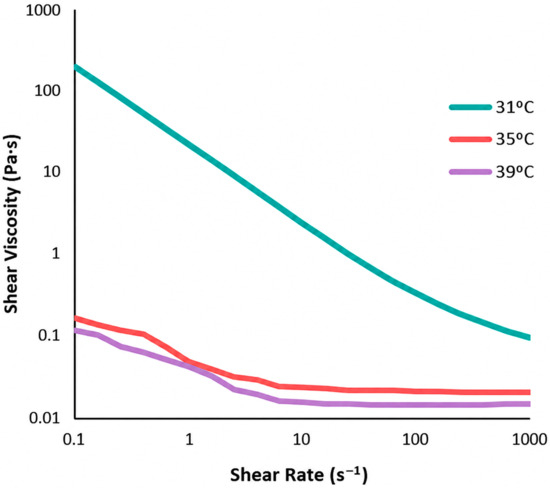
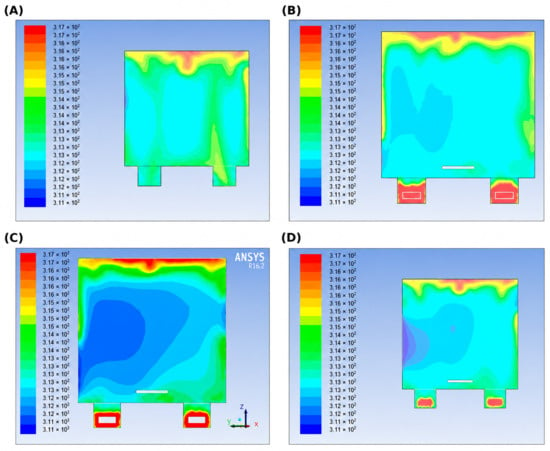
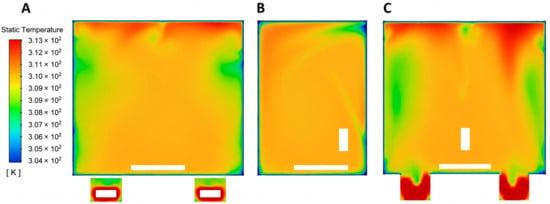
3D bioprinting requires control of environmental conditions within the printing chamber, as temperature affects bioink rheology, printability and cell viability. However, the spatial temperature distribution inside bioprinting enclosures remains poorly characterised, limiting the understanding of thermal gradients that may affect process stability. In this work, the spatial thermal behaviour of a previously developed controlled chamber was evaluated using a multi-point temperature acquisition system. Temperature was monitored at 45 locations distributed throughout the chamber volume under controlled conditions at 37 °C after thermal stabilisation. The results revealed vertical and lateral thermal gradients associated with natural convection and forced air recirculation, together with local non-uniformities influenced by fan operation. Nevertheless, comparatively homogeneous temperature regions were identified within the printing zone, indicating suitable areas for more stable and reproducible biofabrication processes. Additionally, a three-dimensional CFD model incorporating the internal air volume, two 200 W electrical heaters, two axial recirculation fans, and simplified representations of the printhead and build platform was developed to represent an operational chamber configuration. The model was used to visualise the spatial temperature distribution within the enclosure, including the thermal field around the internal printer components. The proposed approach provides a practical experimental framework for the volumetric characterisation of thermal conditions in bioprinting environments, contributing to the design and optimisation of controlled chambers and improving the reliability of biofabrication processes.
Full article
(This article belongs to the Special Issue Next-Generation 3D Bioprinting and Additive Manufacturing: From Digital Design to Functional Biomimetic Systems)
►▼
Show Figures

Graphical abstract
Open AccessArticle
Development and Characterization of Water-Based Porous Calcium Phosphate Bone Cements for Peri-Implant Regeneration: An In Situ Study
by
Qiuju Wei, Nima Farshidfar, Anton Sculean and Mia Rakic
Biomimetics 2026, 11(8), 551; https://doi.org/10.3390/biomimetics11080551 - 3 Aug 2026
Abstract
Background: Calcium phosphate cements (CPCs) are excellent biomaterials for peri-implant bone regeneration but suffer from slow resorption. This study evaluated whether adding carbonate salts improves the in situ porosity and resorption rate of customized CPCs. Methods: The control group comprised α-tricalcium phosphate (α-TCP)
[...] Read more.
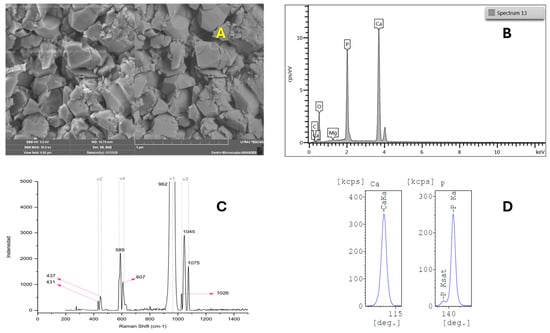
Background: Calcium phosphate cements (CPCs) are excellent biomaterials for peri-implant bone regeneration but suffer from slow resorption. This study evaluated whether adding carbonate salts improves the in situ porosity and resorption rate of customized CPCs. Methods: The control group comprised α-tricalcium phosphate (α-TCP) and phosphoserine (3:1 weight-to-weight ratio). The test group incorporated 3 wt.% anhydrous sodium carbonate (Na2CO3) into the powder. Both were hydrated with water at a liquid-to-powder ratio of 300 μL:1 g. Characterization included micro-computed tomography (μCT), scanning electron microscopy (SEM), Fourier Transform Infrared Spectroscopy with Attenuated Total Reflection (FTIR-ATR), removal torque tests, compression modulus tests, and hardness tests. Results: μCT and SEM confirmed higher porosity and uniform crystal plates in the test group compared to the dense control group. FTIR-ATR spectra showed a distinct CO2 peak at 2349 cm−1 for the test group, confirming gas entrapment. Mechanically, the control group significantly outperformed the test group in removal torque (71.58 ± 5.56 N/cm vs. 41.37 ± 4.54 N/cm) and compression modulus (1248.01 ± 278.21 MPa vs. 195.42 ± 29.55 MPa). Hardness tests showed increased brittleness in the test group (15.31 ± 1.63 vs. 2.01 ± 1.58). Conclusions: Incorporating Na2CO3 successfully induced in situ porosity via gas release but significantly compromised mechanical strength. Further optimization is required to balance porosity and mechanical integrity.
Full article
(This article belongs to the Special Issue Next-Generation Biomaterials and Bio-Inspired Strategies for Oral and Maxillofacial Regeneration)
Open AccessArticle
Finite Element Evaluation of Biomimetic Porous Ti6Al4V Implants for Femoral Reconstruction: Mechanical Performance of Mono-Block and Modular Designs
by
Antonio de Nigris, Joaquin Daud, Donato Monopoli and Luigi Ambrosone
Biomimetics 2026, 11(8), 550; https://doi.org/10.3390/biomimetics11080550 - 3 Aug 2026
Abstract
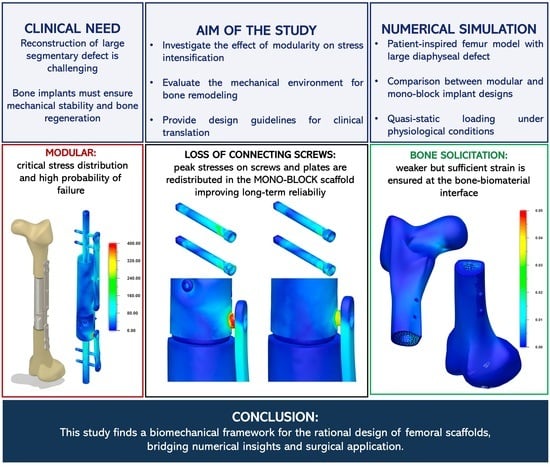
Two design solutions such as modular and mono-block Ti6Al4V porous implants for femoral defect repair were implemented and compared. Static stress analysis on each model was performed via finite element analysis to investigate potential critical elements that might cause system failure under physiological
[...] Read more.
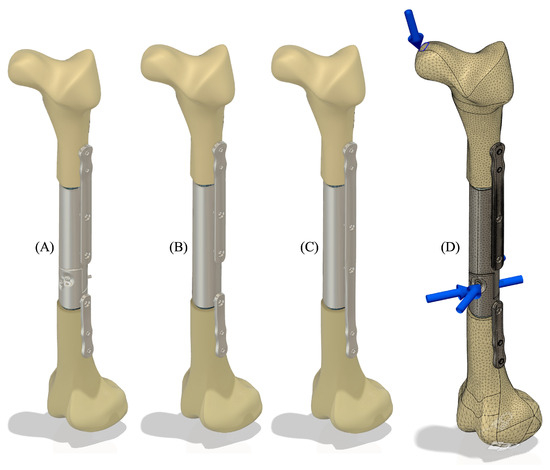
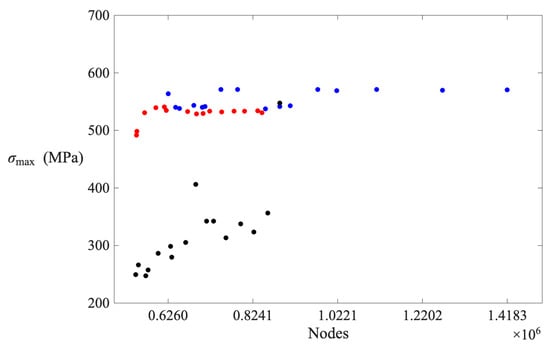
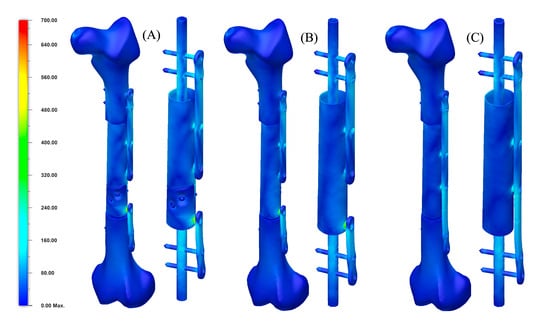
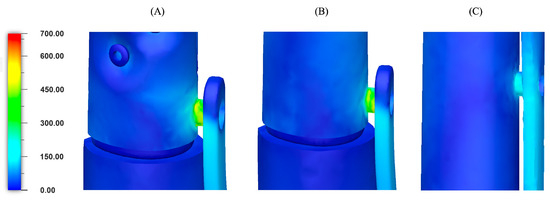
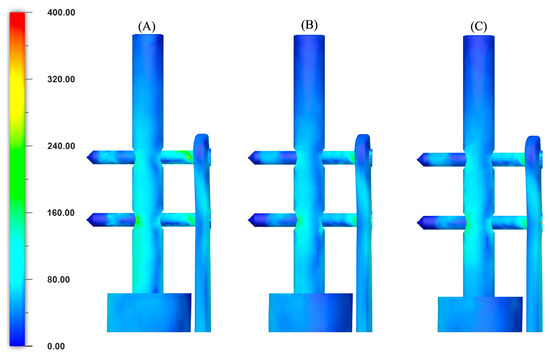
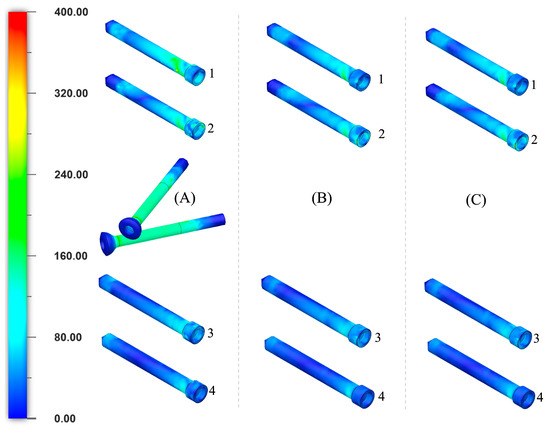
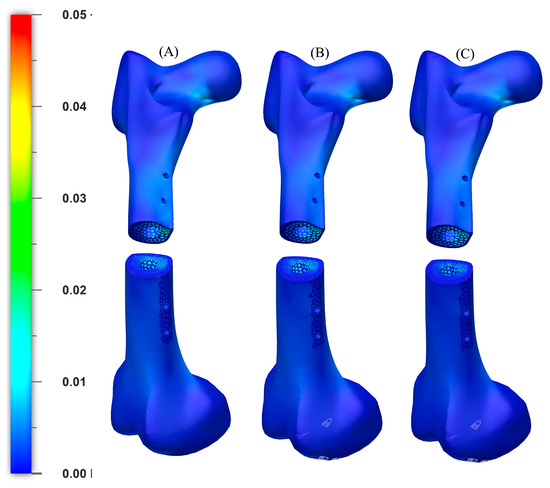
Two design solutions such as modular and mono-block Ti6Al4V porous implants for femoral defect repair were implemented and compared. Static stress analysis on each model was performed via finite element analysis to investigate potential critical elements that might cause system failure under physiological loads. Prior to calculations, a mesh convergence study was realized by varying the minimum element sizes. The entire bone–prosthetic system was modeled, and design optimization was performed. For mono-block implants, a less stressed configuration was found by changing the plate design. Comparison of the maximum Von Mises stress and equivalent strain between the models allowed for an understanding of the distribution of the loads and identify areas with critical stress concentration. The modular implant appeared to be highly solicited with stress shielding on epiphyses due to enhanced rigidity at the metal/bone interface. Finally, a study of the deformation on cancellous and cortical bone suggested that a more elastic junction with balanced strain delivery to the bone might improve tissue regeneration when using a mono-block implant.
Full article
(This article belongs to the Special Issue Bioinspired Materials, Surfaces, and Structures: 10th Anniversary Special Issue)
►▼
Show Figures

Graphical abstract
Open AccessArticle
Tribological Behavior and Attachment Force Regulation of Bioinspired Claw–Spines
by
Yanan Zhang, Xinlong Wu, Hongjian Wu, Xuan Wu, Feng Zhang, Baolin Jia, Xinping Li and Jing Pang
Biomimetics 2026, 11(8), 549; https://doi.org/10.3390/biomimetics11080549 - 3 Aug 2026
Abstract
This study investigates the tribological behavior of the attachment force between bio-inspired claw–spines and rough surfaces and conducts theoretical and model-based analyses of the corresponding attachment mechanism. Based on critical interfacial tribological theory, a frictional mechanics model for a single claw–spine interacting with
[...] Read more.
This study investigates the tribological behavior of the attachment force between bio-inspired claw–spines and rough surfaces and conducts theoretical and model-based analyses of the corresponding attachment mechanism. Based on critical interfacial tribological theory, a frictional mechanics model for a single claw–spine interacting with an arbitrary rough surface was developed. Furthermore, a stiffness-matrix-based mechanical model of bio-inspired claw–spine attachment to arbitrary surfaces was established, together with a contact interaction model between the claw–spine and the contact surface. The force distribution during the contact and attachment of the claw–spine to arbitrary surfaces was analyzed in detail. Criteria for determining stable claw–spine attachment were formulated, and the safe range of frame displacement variation under the corresponding conditions was identified. Based on these analytical results, a test platform for the bio-inspired claw–spine attachment structure was designed. In the experiments, the developed attachment-force measurement system was used to measure and analyze the frictional attachment forces generated by the claw–spine foot on different rough surfaces. After the claw–spine entered the stable attachment stage, the maximum claw–spine attachment forces measured on 60-grit, 80-grit, and 120-grit sandpaper surfaces were 0.62 N, 0.54 N, and 0.61 N, respectively. The corresponding maximum attachment forces measured on horizontal and vertical brick surfaces were 0.92 and 0.99 N, respectively. The results provide a basis for the mechanical analysis and force sensing of bio-inspired claw–spine attachment states and establish theoretical and experimental foundations for subsequent research on attachment-state recognition and motion control based on attachment-force feedback.
Full article
(This article belongs to the Special Issue Bioinspired Materials, Surfaces, and Structures: 10th Anniversary Special Issue)
Open AccessArticle
Biomimetic Wearable Device for Dysphagia: Digital Conceptual Design via KANO-EWM-TOPSIS and Extended FCBS Mapping
by
Ke Yin, Zilin Mao, Yiting Cui and Aimin Zhou
Biomimetics 2026, 11(8), 548; https://doi.org/10.3390/biomimetics11080548 - 3 Aug 2026
Abstract
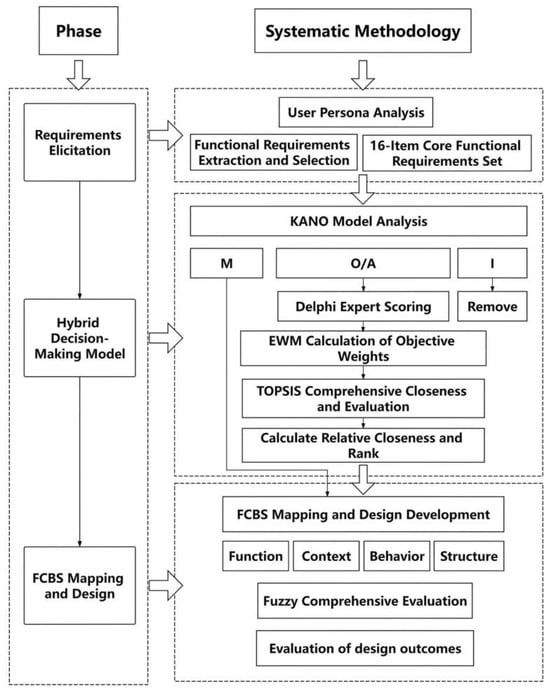
Biomimetic wearable devices provide non-invasive physical support for elderly patients with dysphagia. However, most existing assistive products adopt fixed layouts designed through empirical methods and cannot meet differentiated needs in household, social, and medical scenarios. To fill this gap, this study constructed an
[...] Read more.
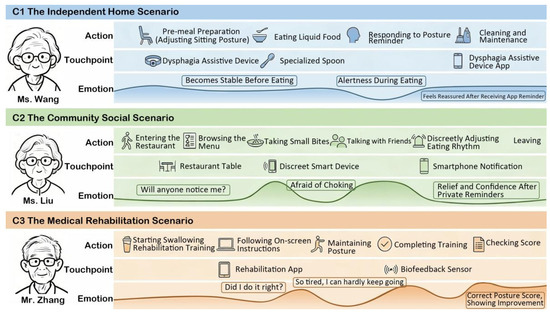
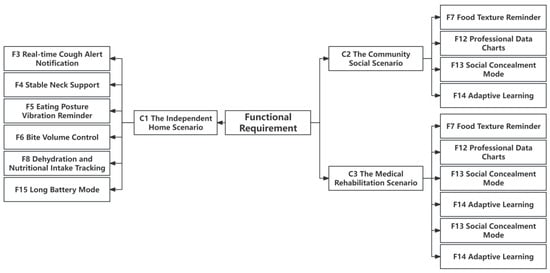
Biomimetic wearable devices provide non-invasive physical support for elderly patients with dysphagia. However, most existing assistive products adopt fixed layouts designed through empirical methods and cannot meet differentiated needs in household, social, and medical scenarios. To fill this gap, this study constructed an integrated design framework combining the KANO-EWM-TOPSIS hybrid model and extended FCBS mapping. The KANO model was used to classify functional attributes and exclude mandatory safety indicators from weighting calculations to prevent data dilution. The entropy weight method (EWM) and TOPSIS were then adopted to calculate scenario weights and prioritize core functions. To resolve structural incompatibility in traditional rigid braces, a morphological biomimetic design scheme was proposed. Referring to the anatomical outline of the thyroid cartilage and movement rules of the infrahyoid muscle groups, a high-fidelity 3D digital model of the wearable collar was established. The biomimetic structure replicates the soft tissue compliance of the human neck. It offers adequate physical support without limiting vertical laryngeal displacement during swallowing. Simulated usability tests were conducted with 16 participants, and the fuzzy comprehensive evaluation (FCE) returned an overall score of 77.91. The digital design balances physiological safety and users’ psychological feelings while reducing obvious medical styling. This study offers a repeatable quantitative process and practical reference for developing human larynx anatomy-based biomimetic wearable rehabilitation devices at the preliminary design stage.
Full article
(This article belongs to the Special Issue Recent Advances in Wearable Bioelectronics in Healthcare/Medical Devices 2026)
►▼
Show Figures

Figure 1

Open AccessArticle
Deep Learning-Based Prediction of Epithelial Cytokine Responses for the Selection of Functionally Consistent Airway Organoids
by
Hyeokjin Kweon, Mi Hyun Lim, David W. Jang, Keonhyeok Park, Seungchul Lee and Do Hyun Kim
Biomimetics 2026, 11(8), 547; https://doi.org/10.3390/biomimetics11080547 - 3 Aug 2026
Abstract
Although airway organoids provide a physiologically relevant platform for modeling human airway inflammation, their utility is often limited by substantial heterogeneity in epithelial differentiation and functional responsiveness across Matrigel domes. Here, we present a non-destructive, imaging-guided framework to predict epithelial cytokine responses and
[...] Read more.
Although airway organoids provide a physiologically relevant platform for modeling human airway inflammation, their utility is often limited by substantial heterogeneity in epithelial differentiation and functional responsiveness across Matrigel domes. Here, we present a non-destructive, imaging-guided framework to predict epithelial cytokine responses and enable the selection of functionally consistent airway organoid domes. Mature human airway organoids were stimulated with house dust mite (HDM) extract and dome-level inflammatory responsiveness was quantified by RT-qPCR for thymic stromal lymphopoietin (TSLP) and interleukin-33 (IL-33). Both cytokines exhibited wide dome-to-dome variability and showed a significant positive correlation, indicating coordinated allergic inflammatory regulation. Meanwhile, bright-field dome images were analyzed to segment individual organoids, define robust regions of interest, and extract quantitative morphological and texture descriptors based on gray-level co-occurrence matrix features. Organoid-level descriptors were aggregated into a single dome-level feature vector using distributional statistics, thereby capturing both central tendency and heterogeneity within each dome. Using these engineered dome-level features, we trained a deep tabular learning model (TabNet) to classify qPCR-defined inflammatory responsiveness. The resulting model achieved strong and consistent cross-validated performance for both targets, reaching balanced accuracies of 0.910 for TSLP and 0.833 for IL-33, demonstrating that bright-field phenotypes contain predictive signatures of cytokine activation. This approach provides a scalable enrichment strategy for robustly responsive organoid–Matrigel domes without destructive assay. It improves reproducibility in organoid-based airway inflammation studies and supports standardized dome selection for downstream mechanistic and translational applications.
Full article
(This article belongs to the Special Issue Next-Generation Biomaterials and Bio-Inspired Strategies for Oral and Maxillofacial Regeneration)
Open AccessArticle
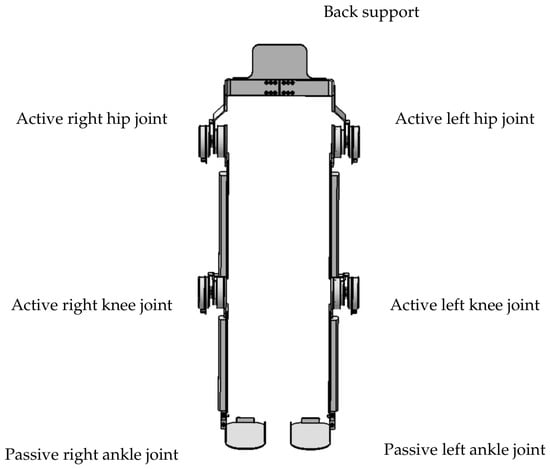
Adaptive Sliding-Mode Controller with Grey Wolf Optimization and Interval Type-2 Fuzzy Logic System for Rehabilitation Lower-Limb Exoskeletons
by
Liancheng Zheng, Mohammad Soleimani Amiri, Rizauddin Ramli and Nurul Hamizah Mohamed
Biomimetics 2026, 11(8), 546; https://doi.org/10.3390/biomimetics11080546 - 3 Aug 2026
Abstract
In recent years, the potential of exoskeletons to enhance human capabilities has attracted significant research interest. Nevertheless, the control of Rehabilitation Lower-Limb Exoskeletons (RLLEs) is challenging because of their strong nonlinear behaviour. In the paper, a Grey Fuzzy Sliding-Mode (GFSM) controller, which is
[...] Read more.
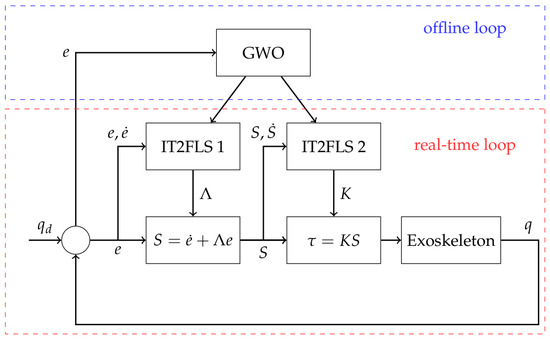
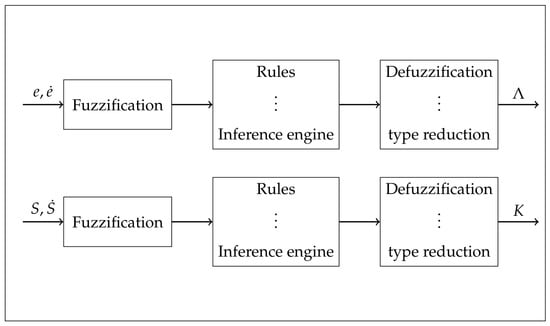
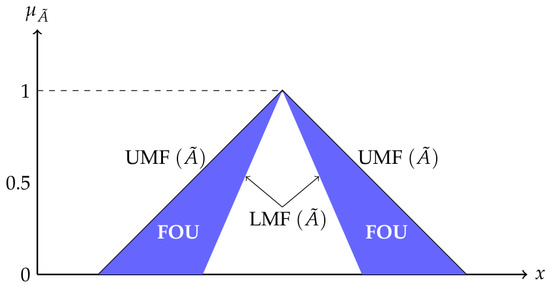
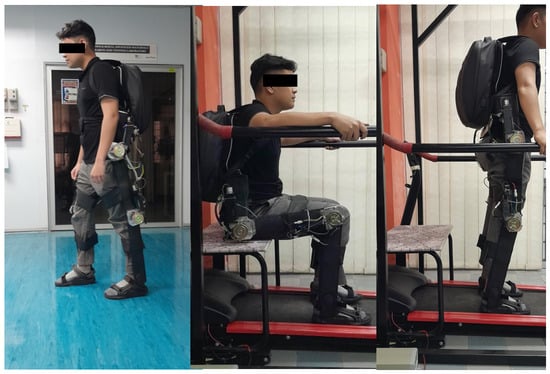
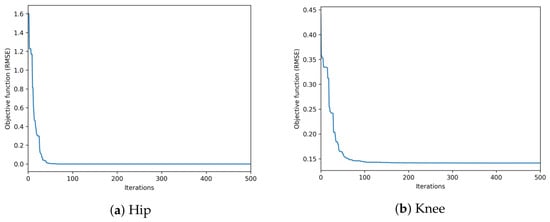
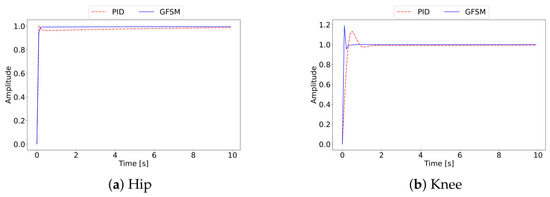
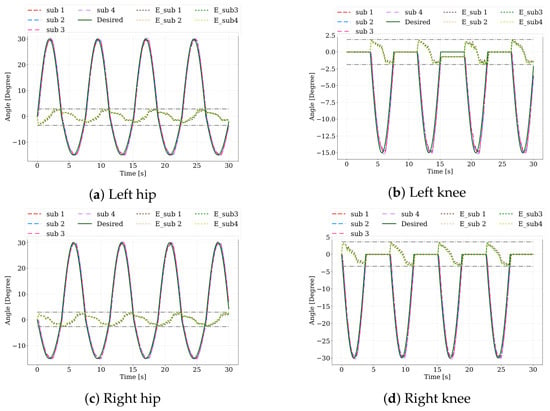
In recent years, the potential of exoskeletons to enhance human capabilities has attracted significant research interest. Nevertheless, the control of Rehabilitation Lower-Limb Exoskeletons (RLLEs) is challenging because of their strong nonlinear behaviour. In the paper, a Grey Fuzzy Sliding-Mode (GFSM) controller, which is designed based on the optimization accuracy and estimation capability of the fuzzy logic system, was used for trajectory tracking of a RLLE’s joints. This paper presents the tuning of the controller parameters optimally using Grey Wolf Optimization (GWO) integrated with an Interval Type-2 Fuzzy Logic System (IT2FLS) in real-time. The GFSM was selected as the controller law, in which initially, GWO was used to tune the parameters based on the estimated RLLE’s mathematical model. The optimal tuned parameters were employed to determine the defuzzification range of the fuzzy logic system. IT2FLS was provided to tune the real-time controller parameters. The performance of the GFSM was validated by human-RLLE experiments which showed superior performance compared to other conventional controllers. The experimental results show that the controller achieved reductions in the average error of 81.8%, 82.9%, 84.1%, and 80.6%, respectively, compared with conventional adaptive control methods. These findings indicate that the GFSM can be used to improve motor function recovery in individuals with hemiplegia. By integrating biomechanically inspired motion assistance with IT2FLS, our proposed GFSM controller contributes to the development of biomimetic rehabilitation exoskeletons capable of reproducing natural human gait.
Full article
(This article belongs to the Section Biological Optimisation and Management)
►▼
Show Figures

Figure 1

Open AccessArticle
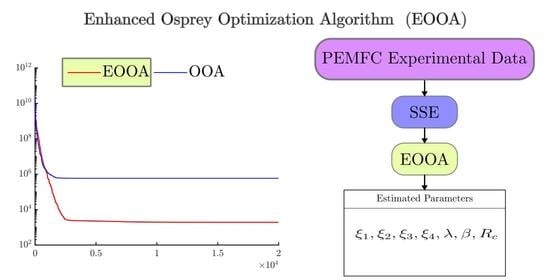
Enhanced Osprey Optimization Algorithm for Global Optimization with Application to PEM Fuel Cell Parameter Identification
by
Yacine Bouali and Basem Alamri
Biomimetics 2026, 11(8), 545; https://doi.org/10.3390/biomimetics11080545 - 3 Aug 2026
Abstract
Bio-inspired metaheuristic algorithms, which emulate natural predatory and evolutionary behaviors, play a crucial role in solving complex engineering problems, such as the accurate parameter extraction of proton exchange membrane fuel cells (PEMFCs). However, many existing optimization algorithms suffer from premature convergence, premature stagnation
[...] Read more.
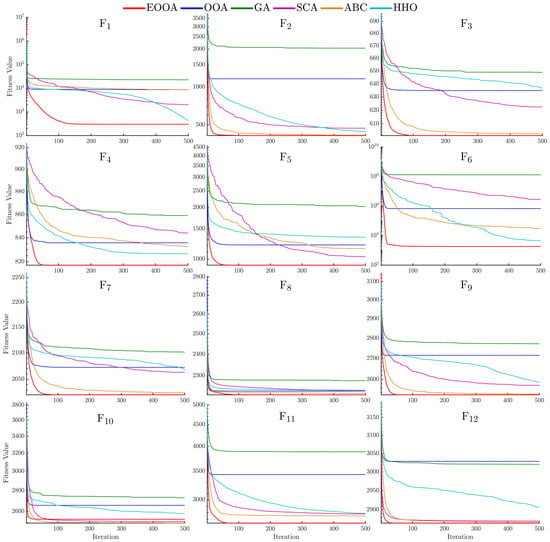
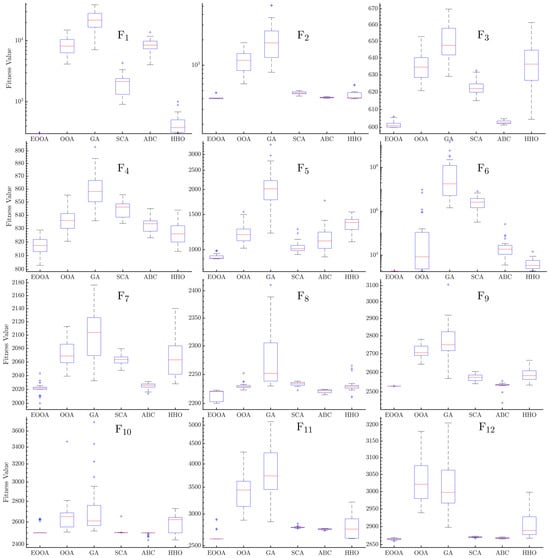
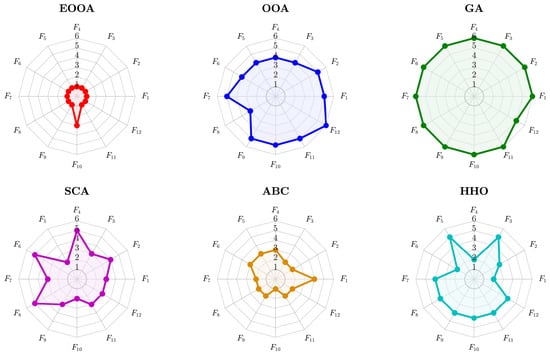
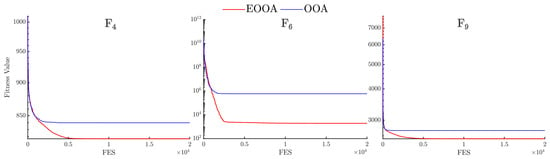
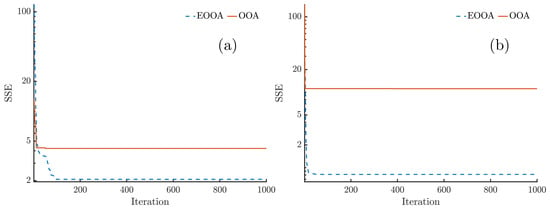
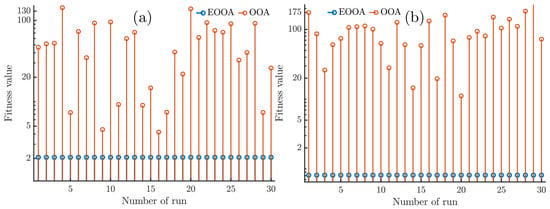
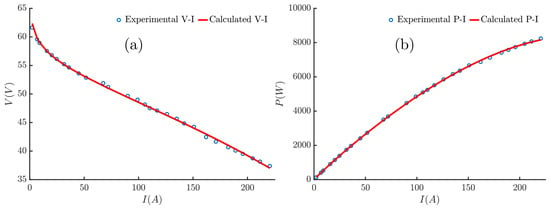
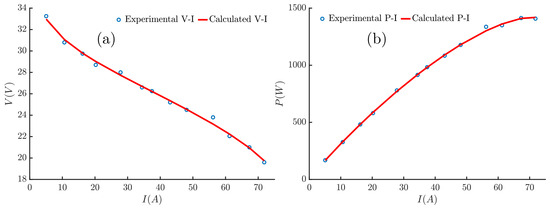
Bio-inspired metaheuristic algorithms, which emulate natural predatory and evolutionary behaviors, play a crucial role in solving complex engineering problems, such as the accurate parameter extraction of proton exchange membrane fuel cells (PEMFCs). However, many existing optimization algorithms suffer from premature convergence, premature stagnation in local minima, and limited accuracy. Among these algorithms, the Osprey Optimization Algorithm (OOA) has shown promising performance. In this paper, an Enhanced Osprey Optimization Algorithm (EOOA), an improved variant of the conventional OOA, is proposed. The performance of the proposed algorithm is first evaluated using the CEC2022 benchmark functions. Subsequently, the EOOA is applied to the problem of PEMFC parameter extraction for two commercial stacks, namely NedStack PS6 and Ballard Mark V. The results demonstrate that the EOOA outperforms the original OOA and four other metaheuristic algorithms, ranking first in 11 out of 12 CEC2022 benchmark functions. Furthermore, the EOOA shows superior performance in PEMFC parameter identification compared to the OOA and other methods reported in the literature. Specifically, the proposed algorithm achieves a sum of squared errors (SSE) of 2.065 for the NedStack PS6 and 0.81 for the Ballard Mark V. These results indicate that the EOOA has strong potential for application to other optimization problems beyond PEMFC parameter extraction.
Full article
(This article belongs to the Special Issue Bioinspired Computational Intelligence and Optimization in Engineering Systems)
►▼
Show Figures

Graphical abstract
Open AccessArticle
Multi-Objective Airflow Distribution Design in Mine Ventilation Systems Based on Sensitivity Screening and an Improved Multi-Objective Sparrow Search Algorithm
by
Fengliang Wu and Jianan Gao
Biomimetics 2026, 11(8), 544; https://doi.org/10.3390/biomimetics11080544 - 3 Aug 2026
Abstract
This study proposes a biomimetic multi-objective optimization framework for airflow distribution design in mine ventilation systems by integrating sensitivity screening with an improved multi-objective sparrow search algorithm (IMOSSA). The design problem is formulated with network-balance, critical branch airflow, fan-boundary, and adjustable-resistance constraints, while
[...] Read more.
This study proposes a biomimetic multi-objective optimization framework for airflow distribution design in mine ventilation systems by integrating sensitivity screening with an improved multi-objective sparrow search algorithm (IMOSSA). The design problem is formulated with network-balance, critical branch airflow, fan-boundary, and adjustable-resistance constraints, while theoretical ventilation air power and pressure-drop disturbance are minimized as two conflicting objectives. Resistance-perturbation sensitivity analysis is used to identify high-impact adjustable branches and construct branch-specific search bounds, thereby forming a compact and physically feasible decision domain. Inspired by the foraging and vigilance behaviors of sparrow populations, IMOSSA is employed as a swarm-intelligence Pareto-search engine and integrates three strategies: chaotic opposition-based elite initialization to enhance initial population diversity, density-penalized external-archive guidance to maintain Pareto-front diversity, and stagnation-triggered differential–Cauchy perturbation to improve late-stage escape capability. ZDT and DTLZ benchmark functions verify the computational reliability of IMOSSA; in particular, on the multimodal ZDT4 function, IMOSSA achieves GD, IGD, and HV values of 0.0096, 0.0195, and 0.8479, respectively, indicating strong robustness in complex Pareto-front search. A mine ventilation network case further validates the engineering applicability of the proposed framework. For 13 adjustable branches, the compromise solution reduces model-computed ventilation air power from 313.61 kW to 281.11 kW, corresponding to a reduction of 10.36%, with a pressure-drop deviation of 354.15 Pa; the energy-priority solution further reduces the power to 256.91 kW, corresponding to a reduction of 18.08%. The results show that the proposed biomimetic multi-objective optimization framework can provide computable and interpretable Pareto decision support for airflow distribution design in mine ventilation systems.
Full article
(This article belongs to the Section Biological Optimisation and Management)
Open AccessArticle
Neuromorphic Cardiac Sensing: A Bio-Inspired Spiking Neural Network with Sensory-Adaptive Encoding for Energy-Efficient Arrhythmia Detection from ECG and PPG Signals
by
Cheng Ding and Jiahao Tian
Biomimetics 2026, 11(8), 543; https://doi.org/10.3390/biomimetics11080543 - 3 Aug 2026
Abstract
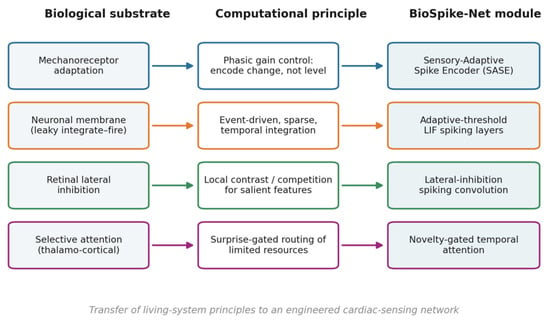
Living nervous systems sense the cardiovascular rhythm with a parsimony that engineered monitors cannot match: sensory receptors encode changes rather than absolute levels, neurons communicate through sparse all-or-none events, retinal circuits sharpen salient features through lateral inhibition, and attention is allocated by surprise.
[...] Read more.
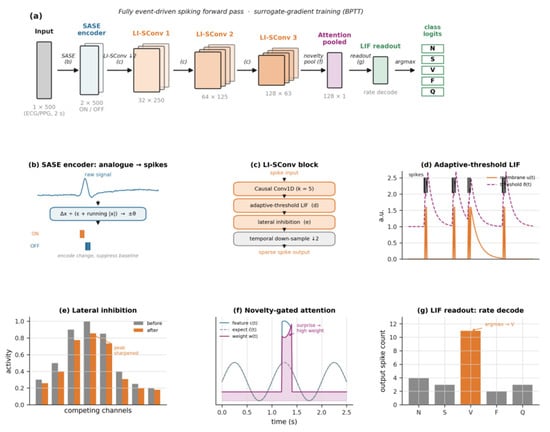
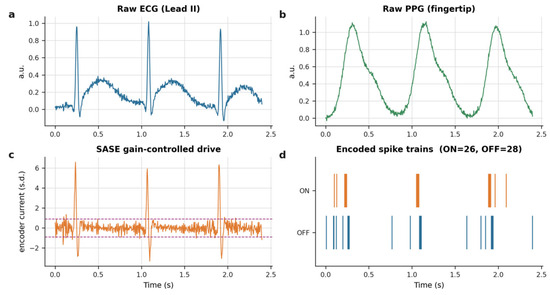
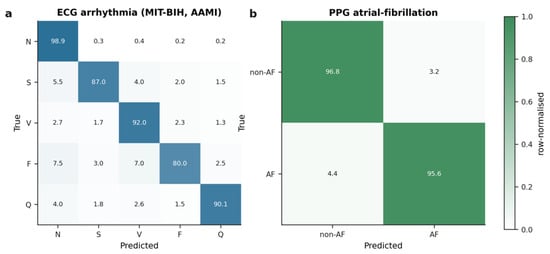
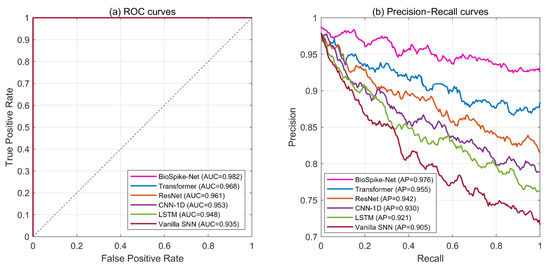
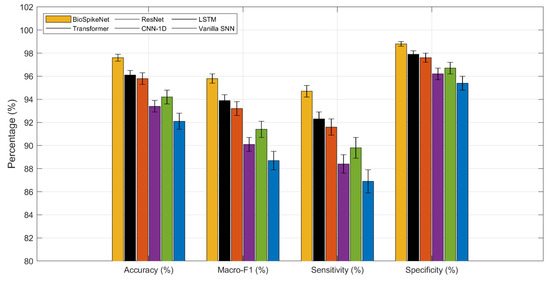
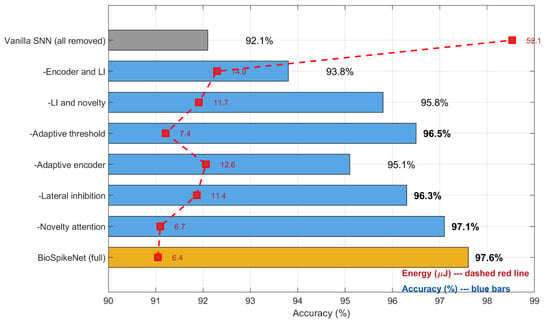
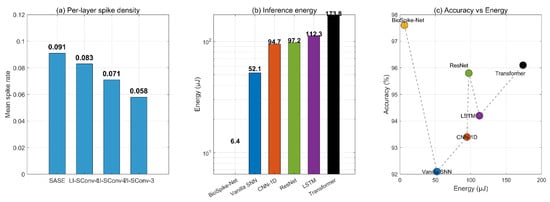
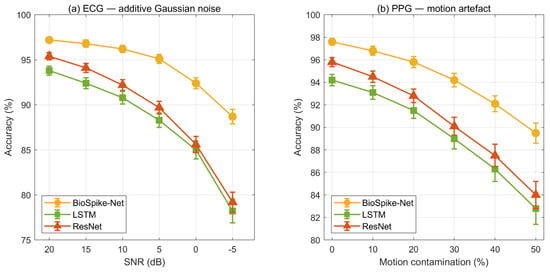
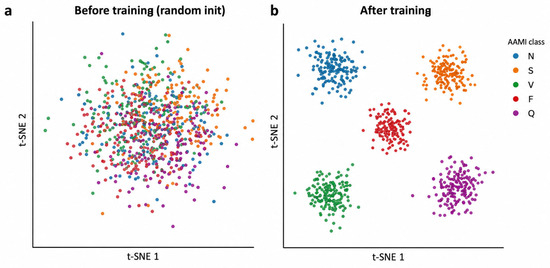
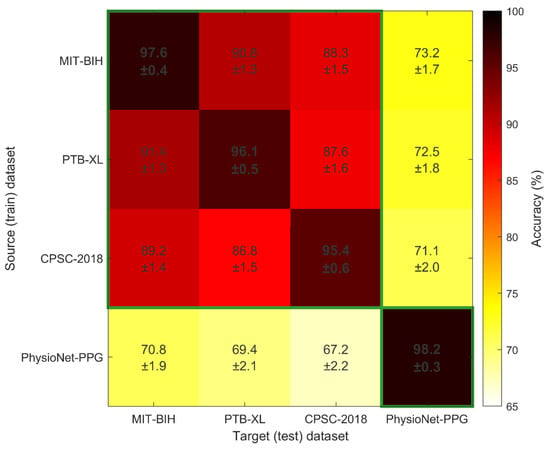
Living nervous systems sense the cardiovascular rhythm with a parsimony that engineered monitors cannot match: sensory receptors encode changes rather than absolute levels, neurons communicate through sparse all-or-none events, retinal circuits sharpen salient features through lateral inhibition, and attention is allocated by surprise. We translate these four principles into BioSpike-Net, a fully event-driven spiking neural network for cardiac-rhythm classification from electrocardiogram (ECG) and photoplethysmogram (PPG) signals. A sensory-adaptive spike encoder (SASE) converts analogue waveforms into ON/OFF spike trains through a mechanoreceptor-inspired gain-control law; adaptive-threshold leaky integrate-and-fire layers integrate these events; a lateral-inhibition spiking convolution emphasises locally salient morphology; and a novelty-gated temporal attention mechanism concentrates computation on the most surprising portions of each beat. Evaluated on the MIT-BIH Arrhythmia Database, PTB-XL, CPSC-2018, and a PhysioNet-derived PPG corpus, BioSpike-Net achieved 97.6 ± 0.3% accuracy and 95.8 ± 0.4% macro-F1 on MIT-BIH five-class arrhythmia classification, and 0.982 ROC-AUC on PPG atrial-fibrillation detection, matching or exceeding strong recurrent, convolutional, and transformer baselines while requiring an estimated 6.4 µJ per inference—approximately 27-fold below the transformer baseline—owing to a mean activation density below 0.10 spikes per neuron per time step. Ablations show that each biological principle contributes a measurable and interpretable accuracy-versus-energy benefit, and the network degrades gracefully under additive noise and motion artefact. By grounding architecture in the economy of biological sensing, this work offers a route to sustainable, always-on cardiac monitoring.
Full article
(This article belongs to the Special Issue Exploration of Bioinspired Computer Vision and Pattern Recognition: 2nd Edition)
►▼
Show Figures

Figure 1

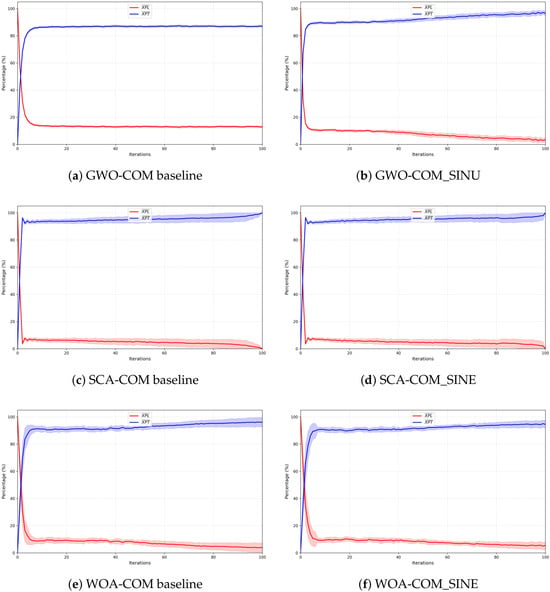
Open AccessArticle
Hyperspectral Image Classification Based on an Improved Octopus Optimization Algorithm
by
Yong Xu, Libo Jiang and Yi Zhang
Biomimetics 2026, 11(8), 542; https://doi.org/10.3390/biomimetics11080542 - 3 Aug 2026
Abstract
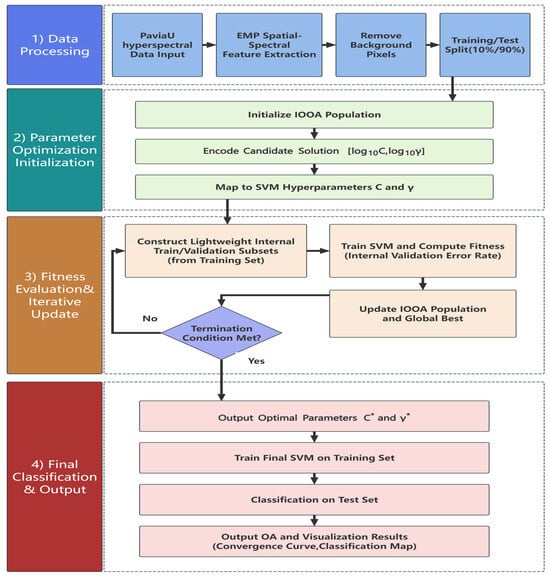
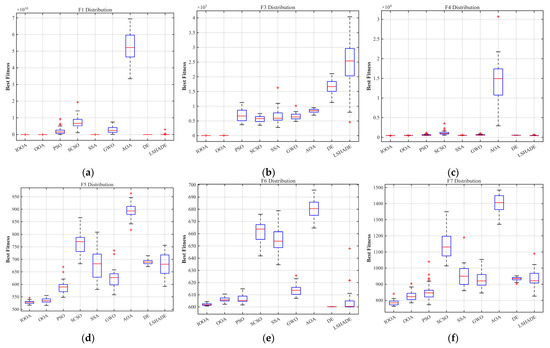
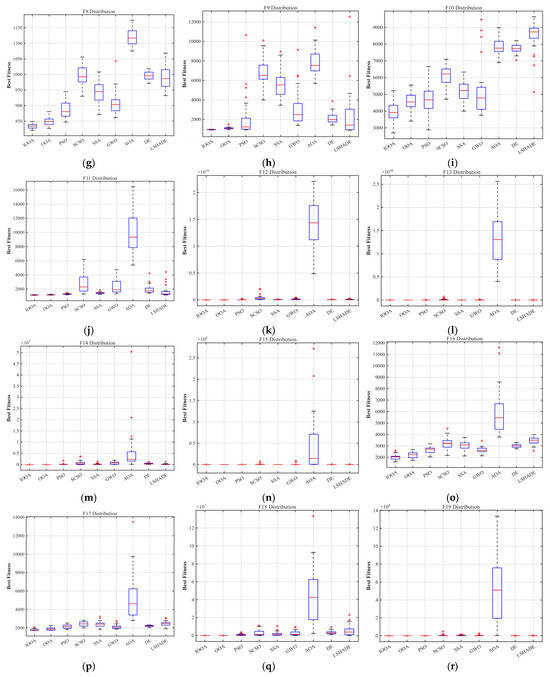
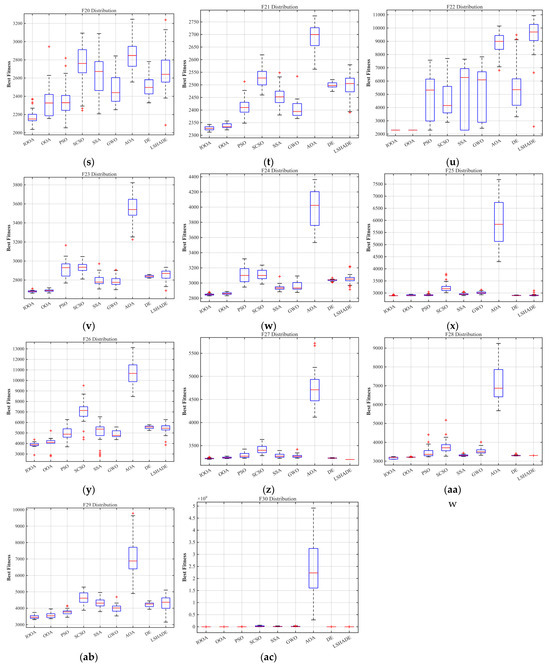
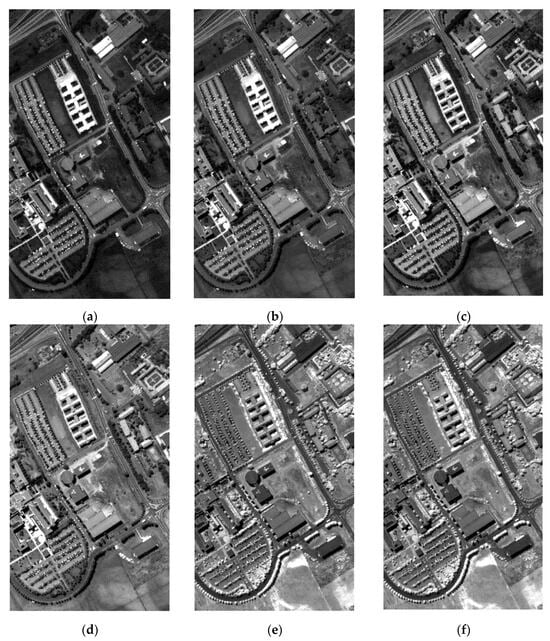
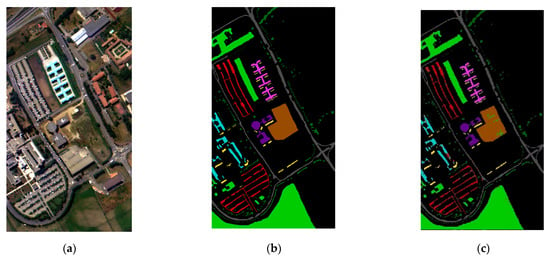
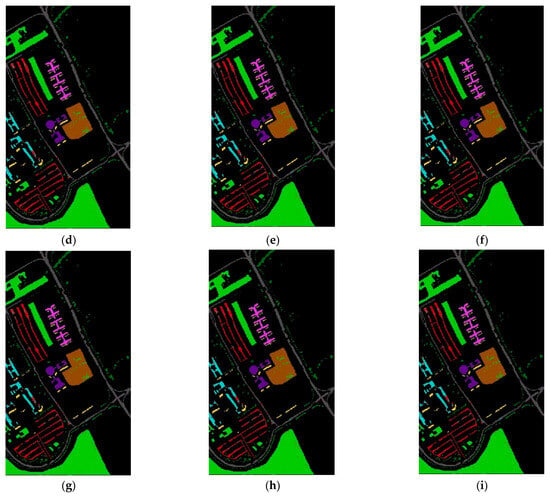
This paper proposes a multi-strategy-enhanced Octopus Optimization Algorithm (OOA) for hyperparameter optimization in hyperspectral image classification. Hyperspectral images pose significant challenges due to their numerous spectral bands, high dimensionality, and complex spectral differences between classes, which complicate classification modeling. The classification performance of
[...] Read more.
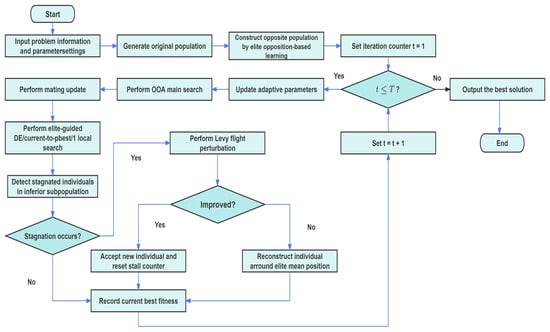
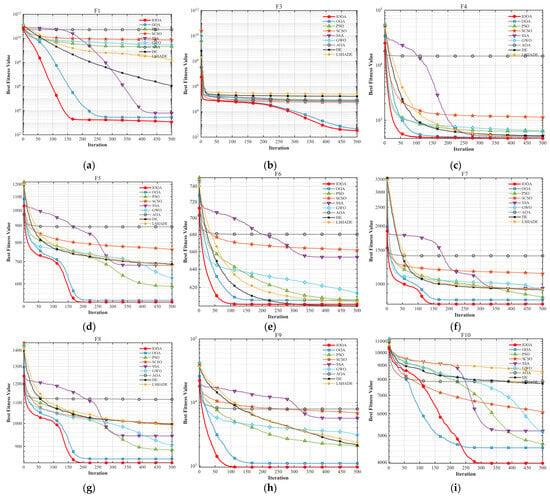
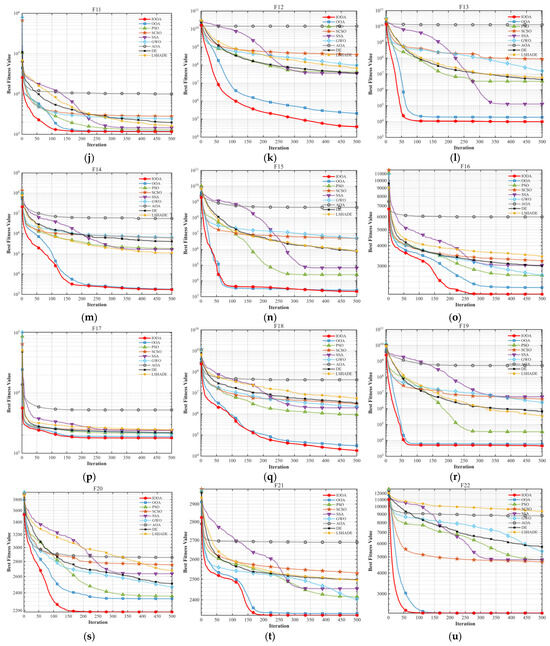
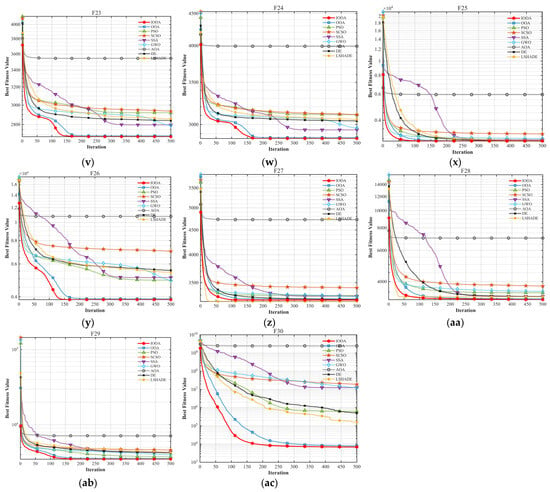
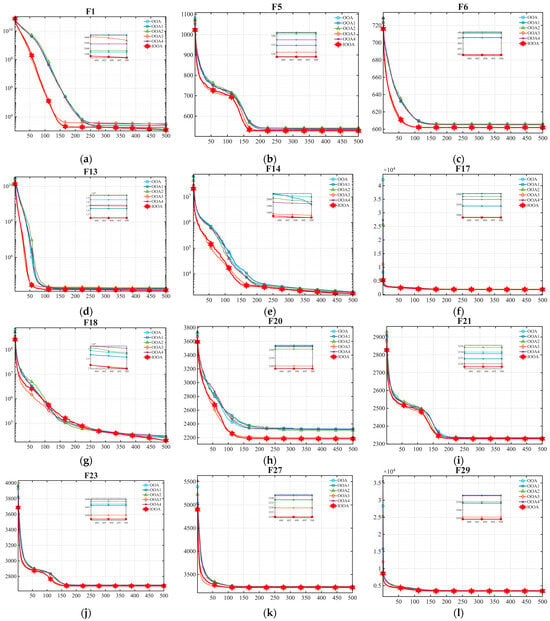
This paper proposes a multi-strategy-enhanced Octopus Optimization Algorithm (OOA) for hyperparameter optimization in hyperspectral image classification. Hyperspectral images pose significant challenges due to their numerous spectral bands, high dimensionality, and complex spectral differences between classes, which complicate classification modeling. The classification performance of support vector machine (SVM) classifiers is also highly dependent on parameter settings. The original OOA is extended by incorporating an initialization strategy based on elite backpropagation, a multi-stage nonlinear adaptive parameter control mechanism, an elite-guided differential mutation strategy, a Lévy flight restart mechanism with stagnation monitoring, and a stable boundary handling strategy. These enhancements constitute the IOOA-SVM parameter optimization framework. The proposed method is evaluated against OOA, Particle Swarm Optimization (PSO), Sand Cat Swarm Optimization (SCSO), Salp Swarm Algorithm (SSA), Grey Wolf Optimizer (GWO), Arithmetic Optimization Algorithm (AOA), Differential Evolution (DE) and Linear Population Size Reduction Success-History Based Adaptive Differential Evolution (L-SHADE) on the CEC2017 test set, achieving superior results on most of the 29 test functions, IOOA achieved the best results on average for 27 of the 29 test functions, outperforming the original OOA on all 29 test functions and demonstrating superior performance on most stability metrics. Different improvement strategies yield varying degrees of performance gains for the algorithm; among them, the elite-guided differential mutation strategy produces the most significant performance improvement. The synergy and complementarity among multiple strategies play a major role in enhancing the performance of the Improved Octopus Optimization Algorithm. Experimental results show that the SVM classifier optimized using the improved OOA achieves a classification accuracy of 97.3731%, representing a 0.2278 percentage point improvement over the original algorithm and demonstrating strong overall optimization performance.
Full article
(This article belongs to the Special Issue Advances in Digital Biomimetics)
►▼
Show Figures

Figure 1
Open AccessArticle
Swarm Intelligence-Guided Hybrid Transfer Learning for Gastrointestinal Polyp Classification
by
Una Tuba, Mladen Veinovic, Eva Tuba, Adis Alihodzic and Milan Tuba
Biomimetics 2026, 11(8), 541; https://doi.org/10.3390/biomimetics11080541 - 3 Aug 2026
Abstract
Colorectal cancer remains a leading cause of cancer-related mortality worldwide, with automated polyp classification from endoscopic images offering a promising avenue for improving early detection. Existing approaches rely on single convolutional neural network (CNN) backbones with manually designed classification heads, limiting both representational
[...] Read more.
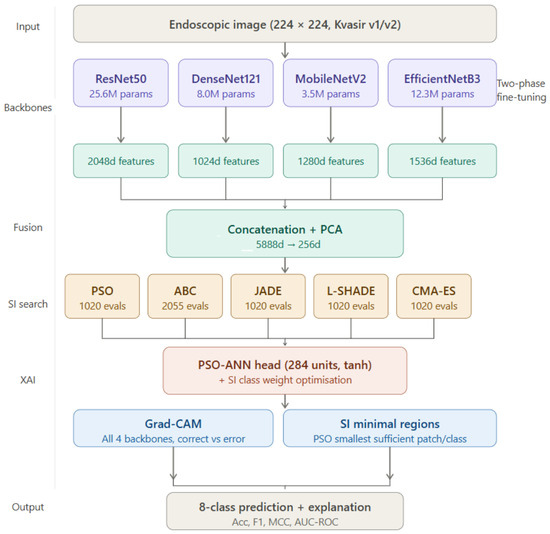
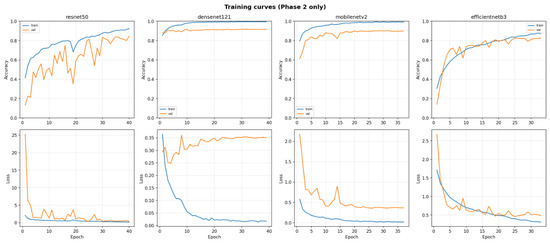
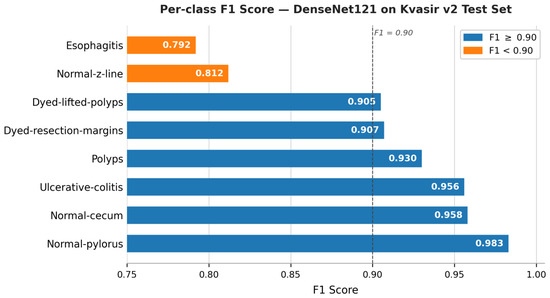
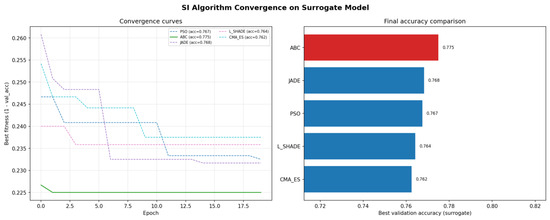
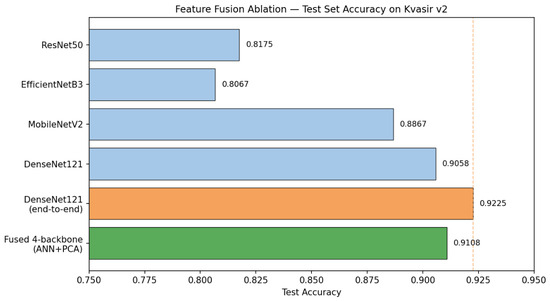
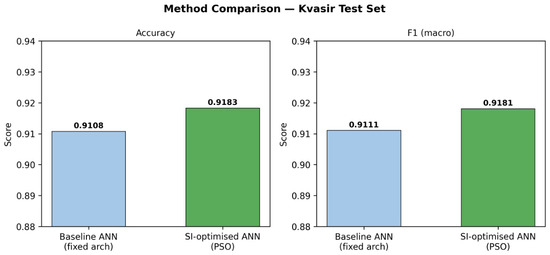
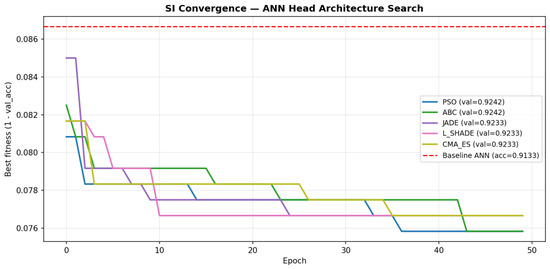
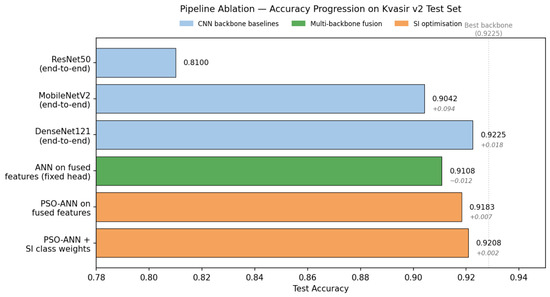
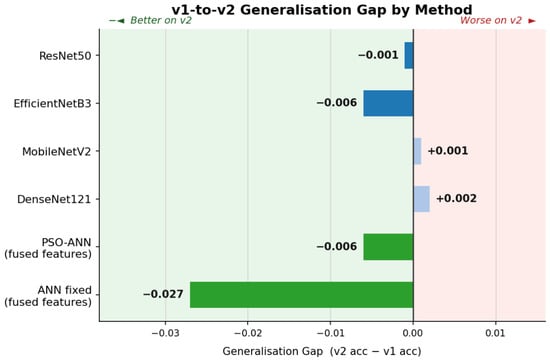
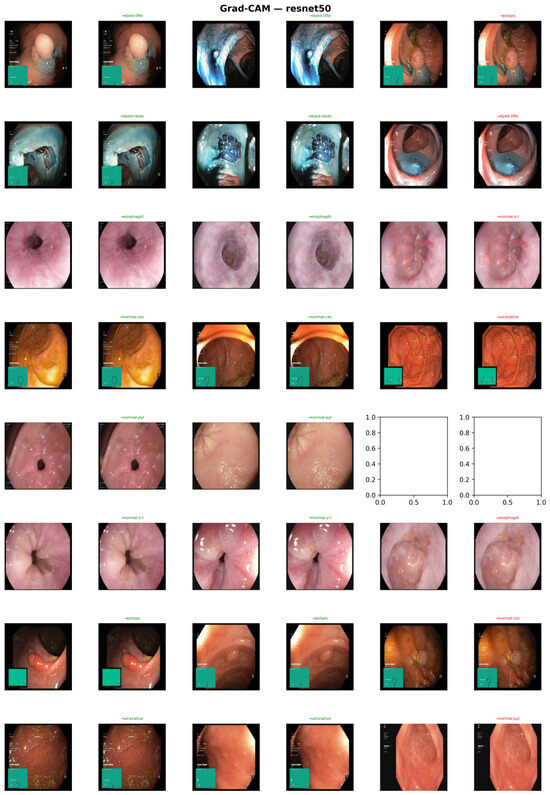
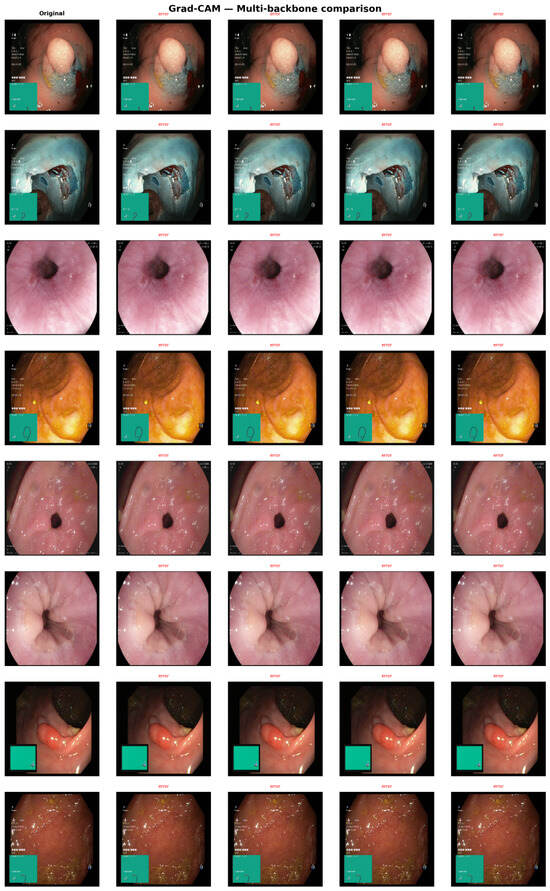
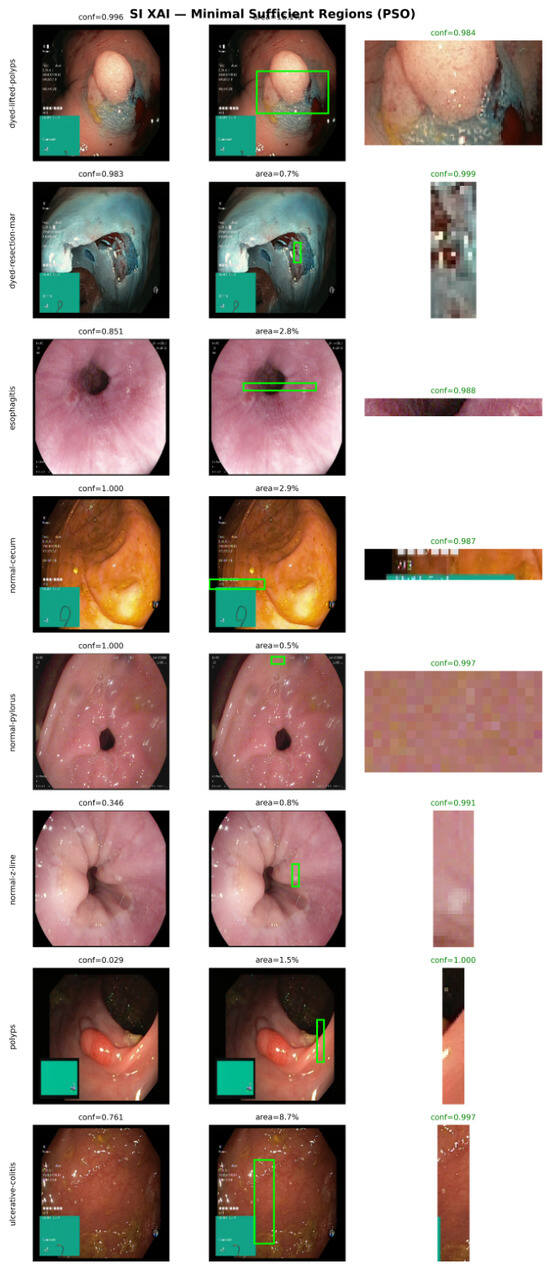
Colorectal cancer remains a leading cause of cancer-related mortality worldwide, with automated polyp classification from endoscopic images offering a promising avenue for improving early detection. Existing approaches rely on single convolutional neural network (CNN) backbones with manually designed classification heads, limiting both representational capacity and deployment flexibility. This paper presents a swarm intelligence-augmented multi-backbone deep learning framework for eight-class gastrointestinal lesion classification on the Kvasir benchmark. Four CNN backbones (ResNet50, DenseNet121, MobileNetV2, EfficientNetB3) are independently fine-tuned using a two-phase transfer learning protocol and their penultimate-layer features concatenated into a 5888-dimensional representation, reduced to 256 dimensions via PCA. Five swarm intelligence algorithms—Particle Swarm Optimization, Artificial Bee Colony, JADE, L-SHADE, and CMA-ES—are benchmarked on the classification head architecture search task; all independently converge to tanh activation, a consistent pattern across independently initialized algorithms that is suggestive of, though not conclusive evidence for, particular geometric properties of PCA-transformed deep feature spaces. The PSO-optimized single-layer head (284 units, tanh) outperforms a manually designed three-layer baseline by 0.75% while using 67% fewer parameters. SI-guided class weight optimization yields targeted F1 improvements on the two most clinically significant classes (polyps: +0.015, ulcerative-colitis: +0.013). The fixed-head classifier trained on fused four-backbone features achieves 91.08% accuracy on Kvasir v2 (multi-seed mean 91.47% ± 0.49 across nine converging seeds; one seed failed to converge and is disclosed rather than excluded), below end-to-end DenseNet121 (92.25%; Wilcoxon p = 0.31, not statistically significant), while enabling classifier updates in under 30 s; a three-backbone subset dropping the weakest backbone (EfficientNetB3) reaches 92.33%, exceeding the full four-backbone fusion. Cross-dataset evaluation on Kvasir v1-to-v2 confirms near-zero generalization gaps across dataset scales; a restricted two-class evaluation on HyperKvasir (the only two of eight classes with usable labeled data) reaches 96.28% accuracy, and dual Grad-CAM with SI minimal sufficient region analysis, validated quantitatively against Kvasir-SEG ground-truth masks, provides spatially grounded, clinically interpretable explanations.
Full article
(This article belongs to the Special Issue Exploration of Bioinspired Computer Vision and Pattern Recognition: 2nd Edition)
►▼
Show Figures

Figure 1
Open AccessArticle
Chaotic Regulation of Exploration and Exploitation in Bio-Inspired Swarm Intelligence for Combinatorial Optimization
by
Felipe Cisternas-Caneo, Broderick Crawford, Jorge Mendoza, José M. Lanza-Gutiérrez, José Barrera-García and Ricardo Soto
Biomimetics 2026, 11(8), 540; https://doi.org/10.3390/biomimetics11080540 - 3 Aug 2026
Abstract
The transition from continuous swarm intelligence algorithms to discrete combinatorial domains remains a critical challenge in bio-inspired computing. Traditional binarization techniques frequently induce premature convergence in highly constrained landscapes. This paper presents a chaotic discretization framework that replaces the classical behavior of the
[...] Read more.
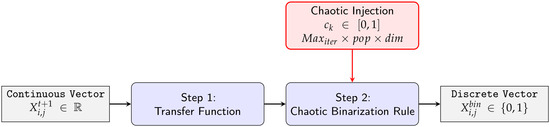
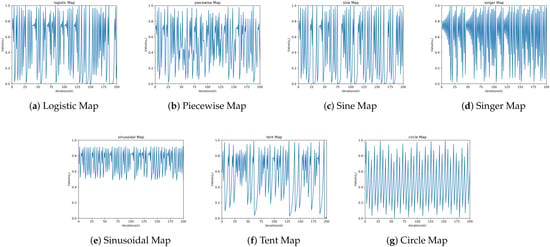
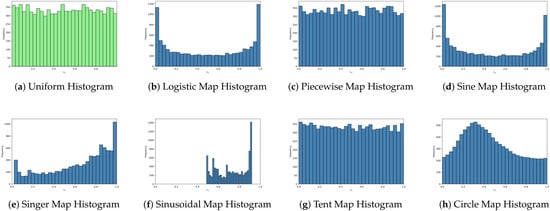
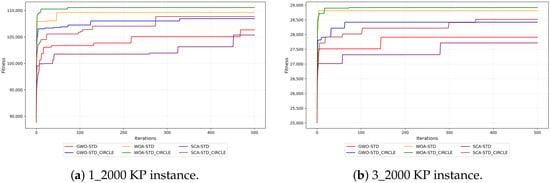
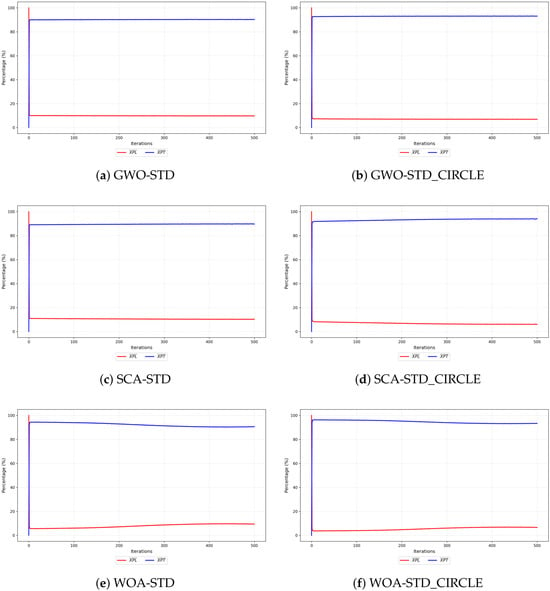
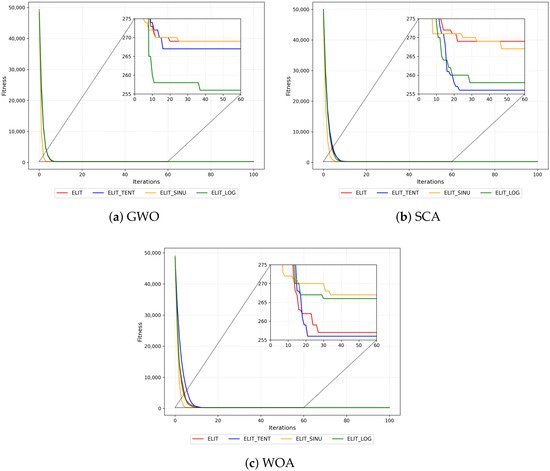
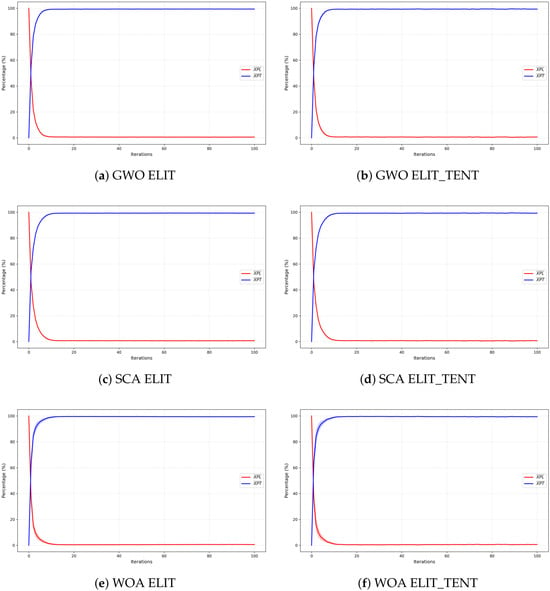
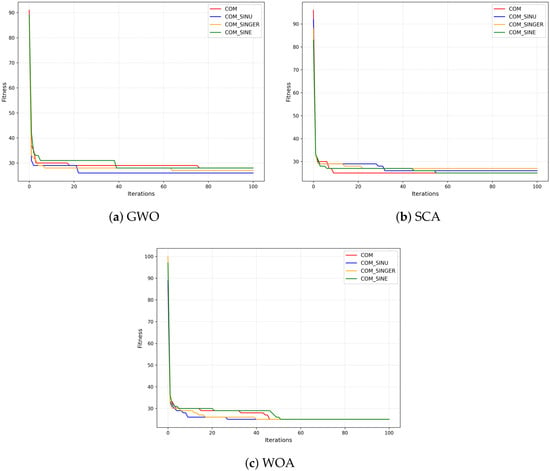
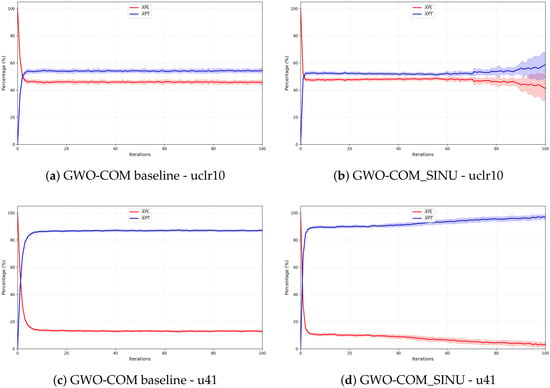
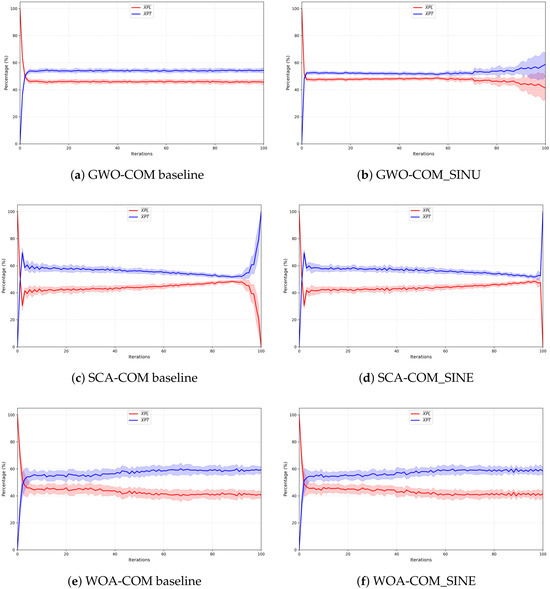
The transition from continuous swarm intelligence algorithms to discrete combinatorial domains remains a critical challenge in bio-inspired computing. Traditional binarization techniques frequently induce premature convergence in highly constrained landscapes. This paper presents a chaotic discretization framework that replaces the classical behavior of the two-step binarization technique to regulate the balance between exploration and exploitation. The proposal systematically integrates three leading continuous metaheuristics in the literature, with twenty-four binarization configurations, across three distinct NP-hard problem archetypes: capacity-constrained (0–1 Knapsack), sparse (Set Covering), and mathematically degenerate flat landscapes (Unicost Set Covering). Nonparametric statistical tests confirm that chaotic discretization acts as a powerful regulator in the landscape (p < 0.05). Empirical evidence shows that the highest-performing chaotic mapping is heavily influenced by the specific landscape morphology evaluated: the 0–1 Knapsack Problem is statistically optimized by the Circle map under standard rules; the Set Covering Problem achieves optimal median performance with the Tent map under elitist formulations, although severe matrix constraints ultimately force statistical ties; and the Unicost Set Covering Problem utilizes the nonlinear sequences of the sinusoidal map under complementary operators to break convergence stagnation.
Full article
(This article belongs to the Special Issue Bio-Inspired Intelligence: Bridging Neural Networks, Artificial Intelligence (AI), and Biomimetics for Next-Generation Innovation: 2nd Edition)
►▼
Show Figures

Figure 1
Open AccessArticle
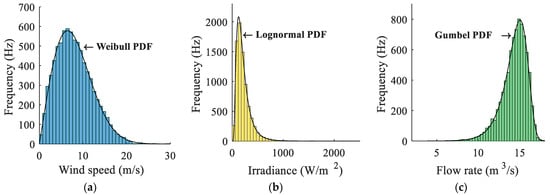
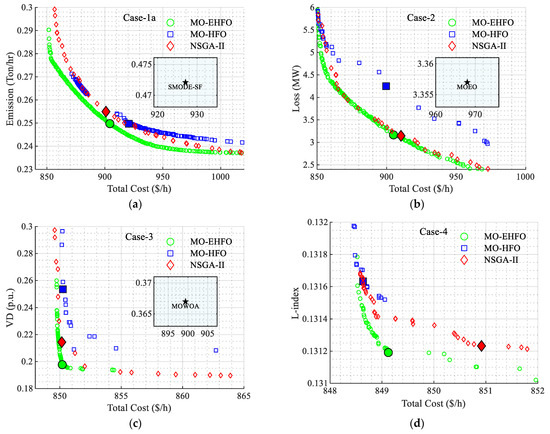
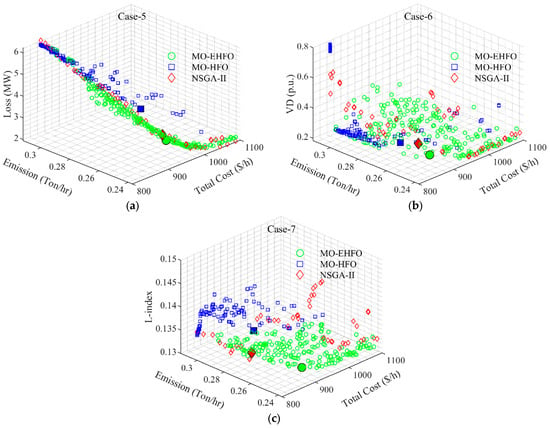
A Novel Bio-Inspired Multi-Objective Enhanced Honey Formation Optimization Algorithm for Power Systems with Stochastic Renewable Resources
by
Mehmet Kaya, Hakan Işıker and Kadir Abacı
Biomimetics 2026, 11(8), 539; https://doi.org/10.3390/biomimetics11080539 - 3 Aug 2026
Abstract
The increasing prevalence of renewable energy sources (RESs), along with the uncertainty in their generation characteristics and conflicting economic, environmental, and technical objectives, has significantly increased the complexity of Economic–Environmental–Technical Dispatch (EETD) problems. Although numerous studies have been proposed in the literature for
[...] Read more.
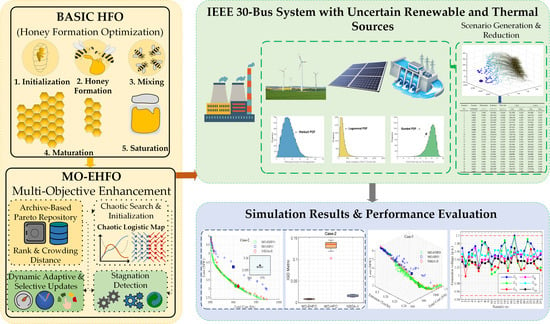
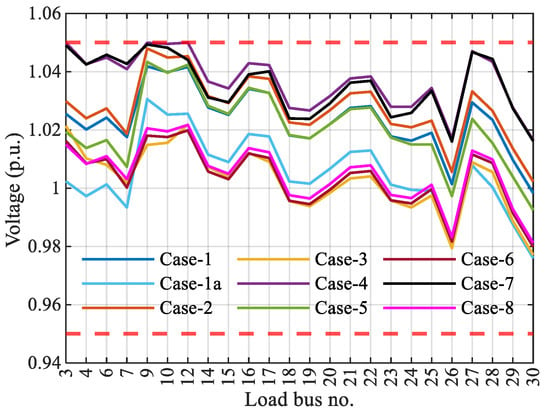
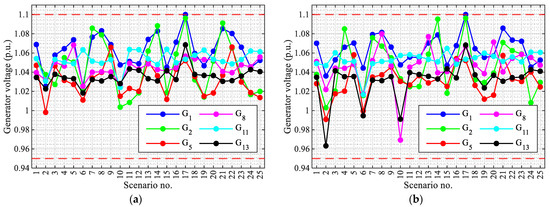
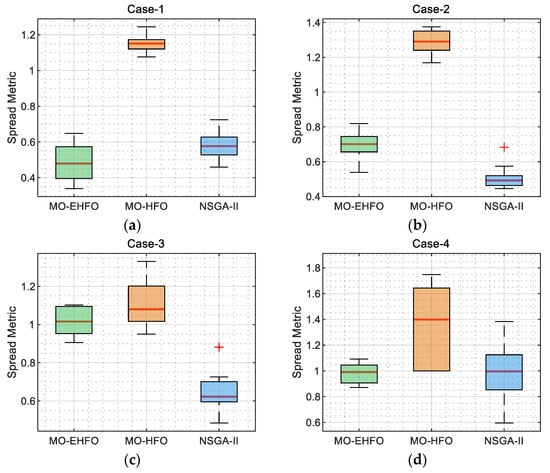
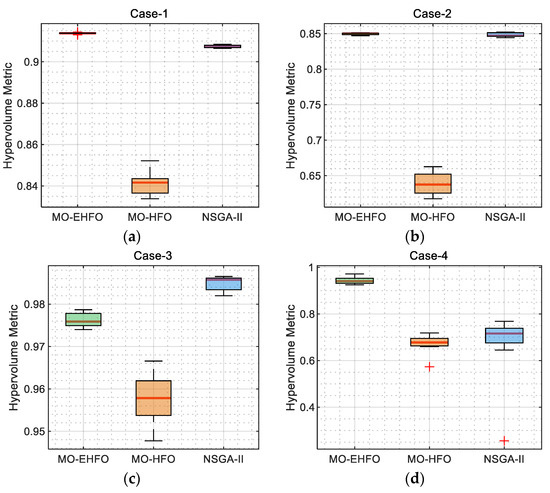
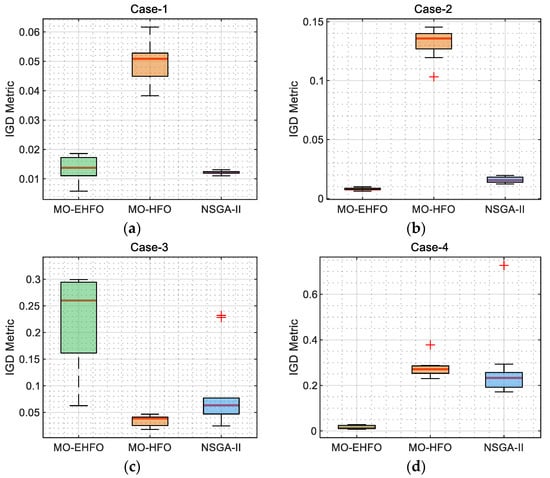
The increasing prevalence of renewable energy sources (RESs), along with the uncertainty in their generation characteristics and conflicting economic, environmental, and technical objectives, has significantly increased the complexity of Economic–Environmental–Technical Dispatch (EETD) problems. Although numerous studies have been proposed in the literature for optimal power flow (OPF) and Economic Emission Dispatch (EED), comprehensive multi-objective EETD studies that account for stochastic renewable generation remain limited. Many existing Pareto-based approaches still exhibit insufficient convergence, poor solution diversity, and low-quality compromise solutions. To address these limitations, this paper proposes the Multi-Objective Enhanced Honey Formation Optimization (MO-EHFO) algorithm for EETD with integrated renewable energy. While preserving the five-phase basic structure of the original HFO, the MO-EHFO algorithm integrates archive-based, chaotic, and dynamic selective improvements for each phase to optimize population diversity, search capability, and convergence performance, using a Pareto-consistent approach. Evaluations conducted on a modified IEEE 30-bus system across nine case studies, each involving two, three, or four objectives, validate the exceptional performance of MO-EHFO. Additionally, the robustness of the proposed algorithm was tested using 25 simplified renewable energy-based scenarios representing specific times of the year. Simulation results show that while MO-EHFO satisfies all operational and safety constraints, it consistently produces superior Pareto fronts and high-quality compromise solutions compared to MO-HFO, NSGA-II, and the current literature. In conclusion, this study demonstrates that MO-EHFO is a reliable decision-support tool that provides users with the optimal balance between practicality, cost, and technical safety in complex and uncertain power system problems.
Full article
(This article belongs to the Special Issue Bio-Inspired Optimization Algorithms)
►▼
Show Figures

Graphical abstract
Open AccessArticle
Capillary-Regulated Carbonized Lotus Stem for Efficient Solar-Driven Water Evaporation and Purification
by
Zhiqiu Yuan, Xinyi Li, Shiyu Deng, Liuzhang Hu, Lijun Li, Kaijie Zhang, Pengyu Zhang, Zhi Yang, Junchao Huang, Kai Huang, Langquan Shui and Longjian Xue
Biomimetics 2026, 11(8), 538; https://doi.org/10.3390/biomimetics11080538 - 3 Aug 2026
Abstract
Freshwater shortages have attracted increasing global concern. Solar-driven evaporation from wastewater or seawater has emerged as a promising technology to collect fresh water; however, achieving high-evaporation efficiency remains a significant challenge. Here, we propose a capillary-regulated solar evaporator, CHALS, derived from agricultural waste—specifically,
[...] Read more.
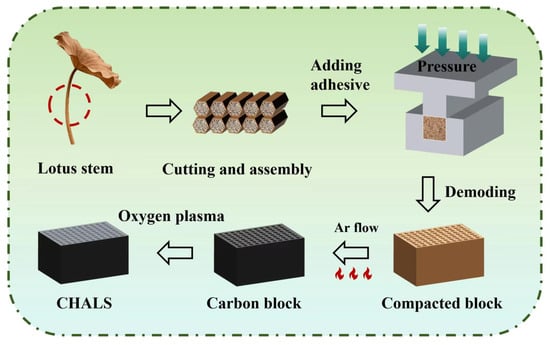
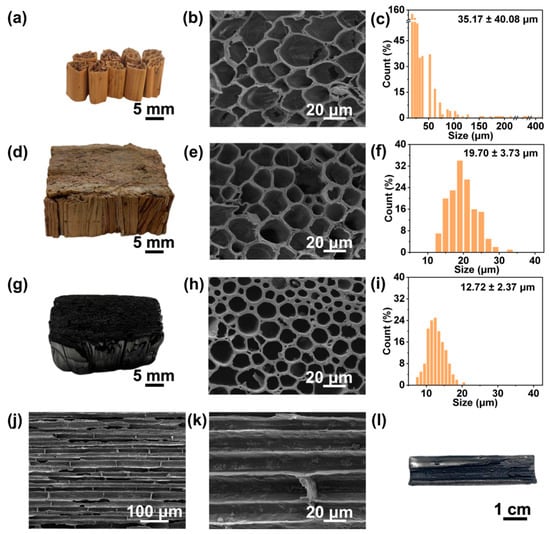
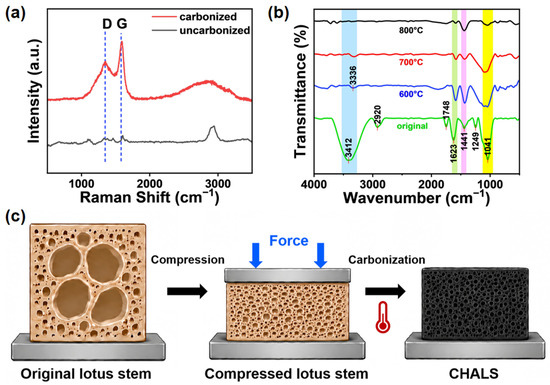
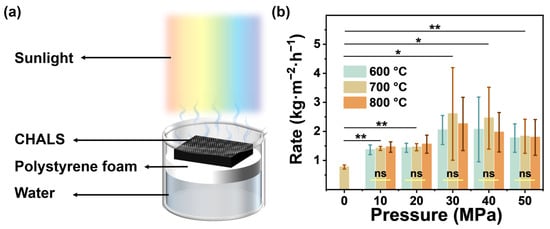
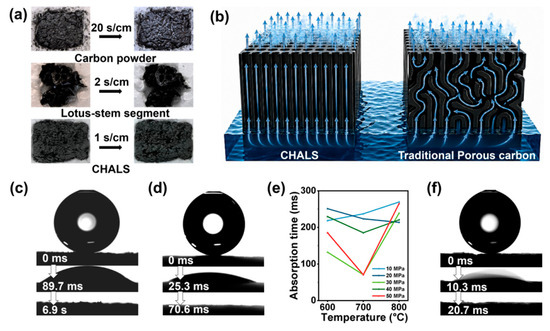
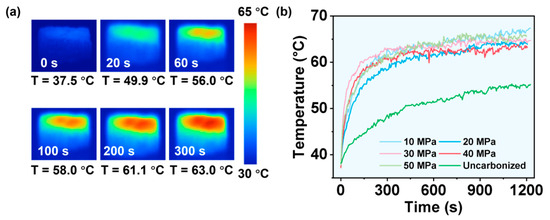
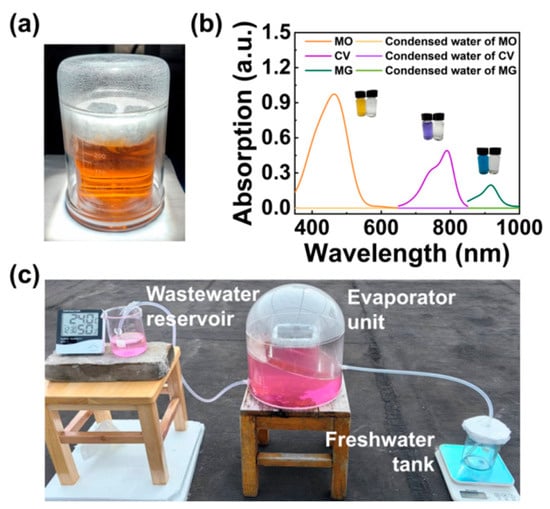
Freshwater shortages have attracted increasing global concern. Solar-driven evaporation from wastewater or seawater has emerged as a promising technology to collect fresh water; however, achieving high-evaporation efficiency remains a significant challenge. Here, we propose a capillary-regulated solar evaporator, CHALS, derived from agricultural waste—specifically, lotus stems. CHALS is constructed by the carbonization and hydrophilization of a compressed assembly of lotus stems. The compression, followed by carbonization, narrows the straight capillary channels; subsequent oxygen plasma treatment optimizes surface hydrophilicity. The two synergistic effects jointly elevate the Laplace capillary driving force to greatly accelerate internal water transportation. Meanwhile, the straight-through channels provide the shortest pathway for water transportation. Moreover, the efficient photothermal conversion raises the surface temperature of CHALS up to 65 °C. Benefiting from these synergistic effects, CHALS achieves an evaporation rate of 2.60 kg·m−2·h−1 under 1 sun irradiation. The work not only provides an agricultural waste-derived solar evaporator but also establishes a capillary-regulation strategy to boost solar evaporation efficiency.
Full article
(This article belongs to the Special Issue Advances in Biomimetics: 10th Anniversary)
►▼
Show Figures

Figure 1

Open AccessArticle
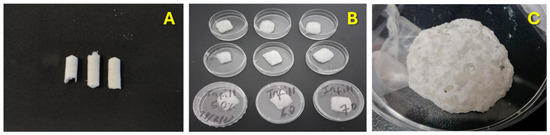
HAp/PLGA/Chitosan Scaffolds Fabricated by Freeze-Drying and 3D Printing for Bone Regeneration: In Vitro Evaluation and Finite Element Analysis
by
Jhon M. Pérez-Bohórquez, María C. Acero-Garzón, Sandra J. Gutiérrez-Prieto, Henry A. Méndez-Pinzón, Sandra J. Perdomo-Lara, Hernán Rodríguez-Hernández, María B. Solís-Valencia and Luis G. Sequeda-Castañeda
Biomimetics 2026, 11(8), 537; https://doi.org/10.3390/biomimetics11080537 - 2 Aug 2026
Abstract
Tooth loss and bone resorption of the alveolar cavity caused by dental caries and periodontal disease remain major clinical challenges that compromise oral function. Tissue engineering approaches based on biocompatible scaffolds have emerged as promising strategies for bone regeneration; however, the influence of
[...] Read more.
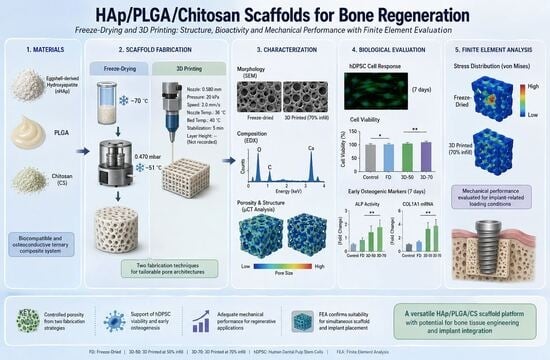
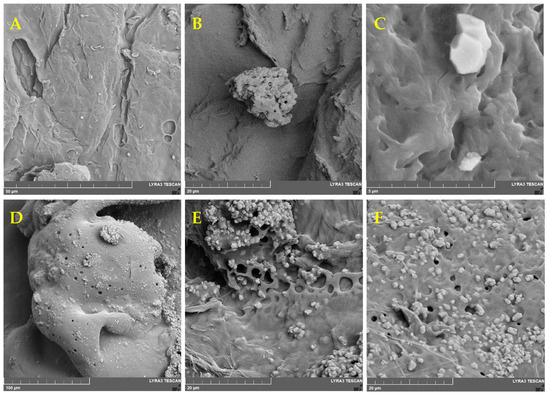
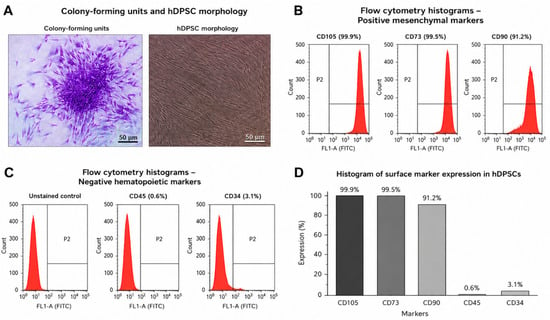
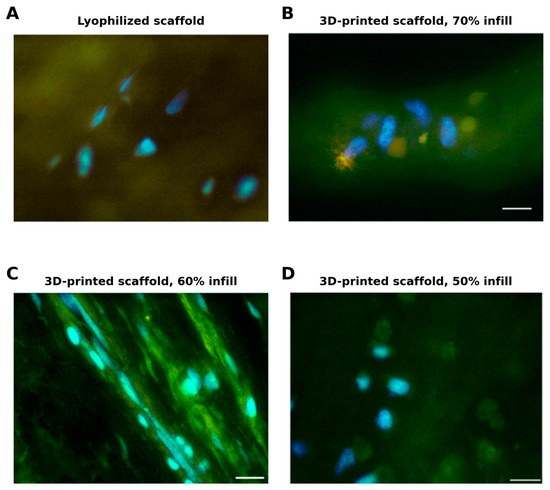
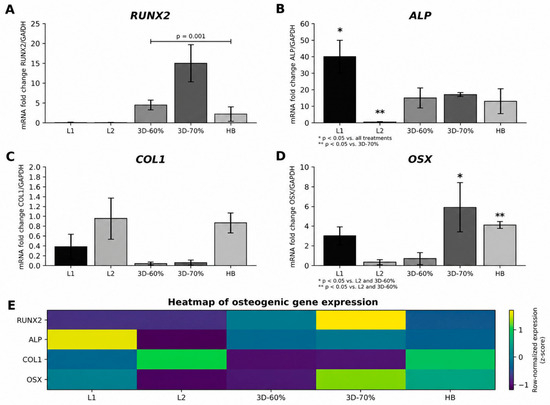
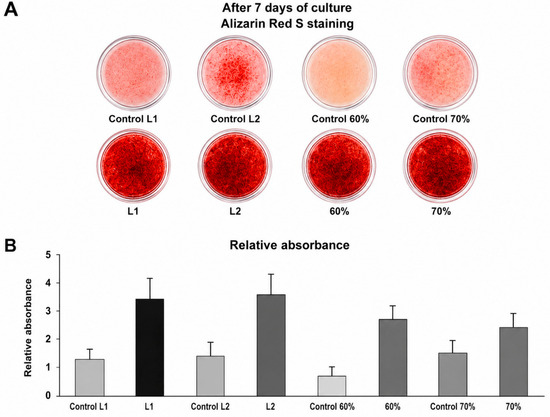
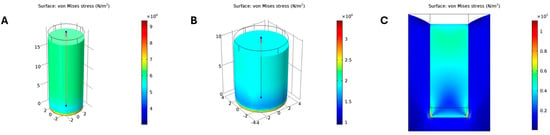
Tooth loss and bone resorption of the alveolar cavity caused by dental caries and periodontal disease remain major clinical challenges that compromise oral function. Tissue engineering approaches based on biocompatible scaffolds have emerged as promising strategies for bone regeneration; however, the influence of fabrication methods on scaffold performance remains unclear. This study developed hydroxyapatite/poly (lactic-coglycolic acid)/chitosan scaffolds (HAp/PLGA/CS) using freeze-drying and 3D-printing techniques and evaluated their physicochemical, biological, and biomechanical properties. The morphology, porosity, elemental composition, and mechanical properties of the scaffold were characterized, while the biocompatibility and osteogenic potential were evaluated using human dental pulp stem cells (hDPSCs). Finite element analysis (FEA) using COMSOL Multiphysics® Version 6.2. was performed to evaluate scaffold behavior under simulated dental implant loading conditions. The 3D-printed scaffolds exhibited significantly higher cell viability than the freeze-dried scaffolds, reaching approximately 85% in the 50% filling group compared with 50% in the freeze-dried group. Microstructural analysis revealed interconnected hierarchical porosity, including macro-, micro-, and submicrometer scale pores. Although the 50% infill scaffold showed the highest cell viability, the 70% infill scaffold demonstrated the most favorable osteogenic profile, with enhanced expression of RUNX2 and OSX. Both types exhibited degradation profiles compatible with early bone regeneration. FEA simulations indicated that further mechanical optimization is required to improve load transfer and reduce deformation at the implant–scaffold interface. Overall, HAp/PLGA/CS scaffolds showed potential as experimental bioactive platforms for bone tissue engineering, with 3D-printed scaffolds providing greater architectural control and favorable early osteogenic responses. However, the translational relevance of these findings remains preliminary and requires validation through long-term degradation studies, in vivo bone regeneration and osseointegration models, cyclic mechanical testing, and implant fixation experiments.
Full article
(This article belongs to the Special Issue Next-Generation Bone Regeneration and Dental Implant Therapies: Biomaterials, Digital Innovation, and AI Integration)
►▼
Show Figures

Graphical abstract
Open AccessArticle
Adaptive Neural Control for Constrained Biomimetic Rehabilitation Robots Using a Novel High-Order Integral Barrier Function
by
Tan Zhang, Jinzhong Zhang and Pianpian Yan
Biomimetics 2026, 11(8), 536; https://doi.org/10.3390/biomimetics11080536 - 2 Aug 2026
Abstract
To address the challenges of lumped model uncertainties and tracking error constraints in
biomimetic rehabilitation robot control, this paper proposes a novel high-order integral
barrier function to construct an adaptive neural tracking control scheme. Radial basis
function neural networks (NNs), inspired by the [...] Read more.
biomimetic rehabilitation robot control, this paper proposes a novel high-order integral
barrier function to construct an adaptive neural tracking control scheme. Radial basis
function neural networks (NNs), inspired by the [...] Read more.
To address the challenges of lumped model uncertainties and tracking error constraints in
biomimetic rehabilitation robot control, this paper proposes a novel high-order integral
barrier function to construct an adaptive neural tracking control scheme. Radial basis
function neural networks (NNs), inspired by the receptive field mechanism of motor
neurons, feature local activation and can accurately approximate the nonlinear dynamics
of such bionic rehabilitation devices. Distinct from traditional integral barrier Lyapunov
functions, the presented high-order integral barrier function can accommodate both timevarying
and time-invariant error constraints, while simplifying the controller derivation
and ensuring full differentiability of virtual control laws throughout the backstepping
framework. Supported by the derived barrier function theorems, the tracking error of
the robot is theoretically proven to stay within predefined safe boundaries and converge
exponentially to a compact neighborhood of the origin. Finally, comparative numerical
simulations on a biomimetic rehabilitation robot validate the effectiveness of the proposed
theorem and constrained adaptive neural control strategy Full article
biomimetic rehabilitation robot control, this paper proposes a novel high-order integral
barrier function to construct an adaptive neural tracking control scheme. Radial basis
function neural networks (NNs), inspired by the receptive field mechanism of motor
neurons, feature local activation and can accurately approximate the nonlinear dynamics
of such bionic rehabilitation devices. Distinct from traditional integral barrier Lyapunov
functions, the presented high-order integral barrier function can accommodate both timevarying
and time-invariant error constraints, while simplifying the controller derivation
and ensuring full differentiability of virtual control laws throughout the backstepping
framework. Supported by the derived barrier function theorems, the tracking error of
the robot is theoretically proven to stay within predefined safe boundaries and converge
exponentially to a compact neighborhood of the origin. Finally, comparative numerical
simulations on a biomimetic rehabilitation robot validate the effectiveness of the proposed
theorem and constrained adaptive neural control strategy Full article
(This article belongs to the Special Issue Bionic Intelligent Robots)
Open AccessArticle
Bio-Inspired Controller Design via Dholes-Inspired Optimization: A Novel Gompertz Function-Augmented PID Strategy for Electro-Hydraulic Actuator Control
by
Muhammet İsmail Güngör, Davut Izci and Serdar Ekinci
Biomimetics 2026, 11(8), 535; https://doi.org/10.3390/biomimetics11080535 - 2 Aug 2026
Abstract
Electro-hydraulic actuator systems are widely used in precision motion-control applications; however, their displacement regulation remains challenging because fast response, low overshoot, and high steady-state accuracy must be achieved simultaneously under strongly dynamic operating conditions. In this study, a proportional-integral-derivative (PID) controller augmented with
[...] Read more.
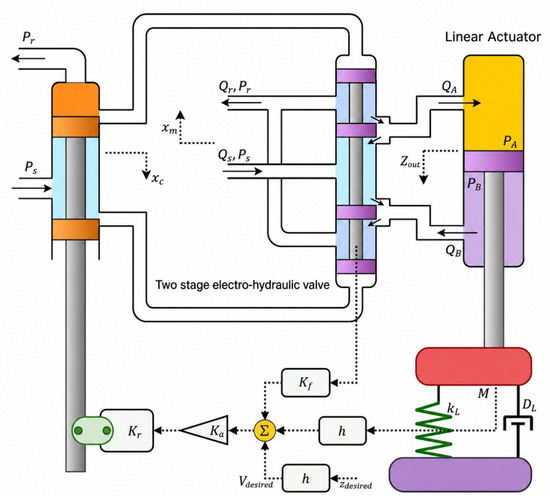
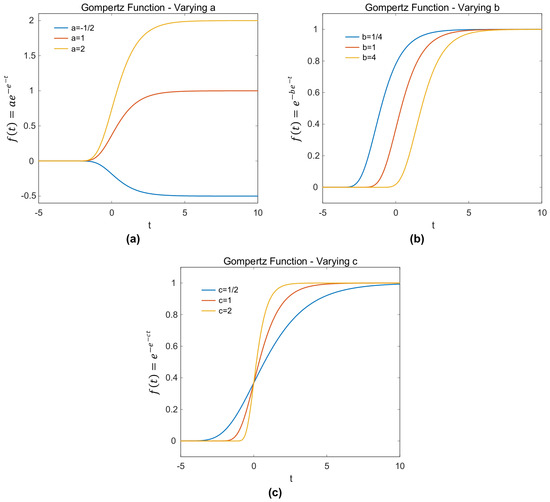
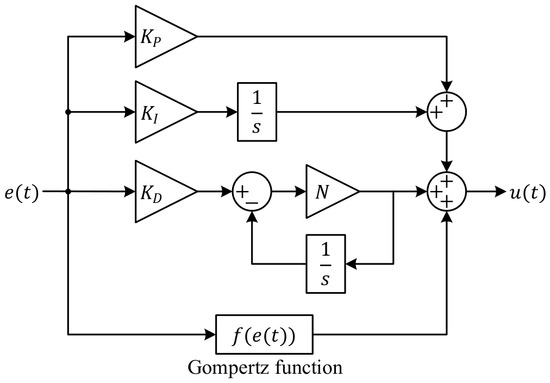
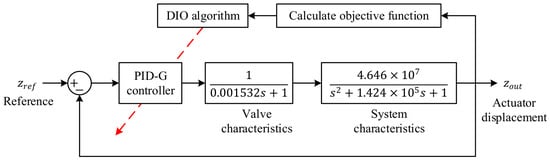
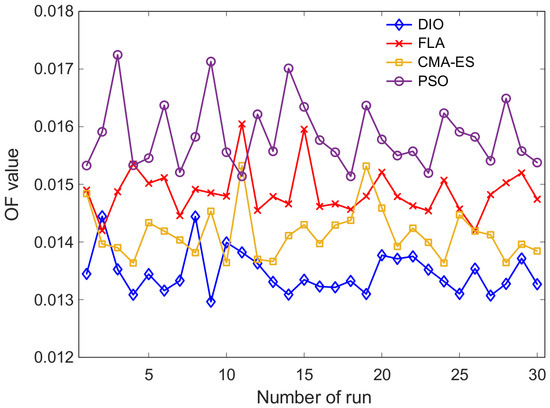
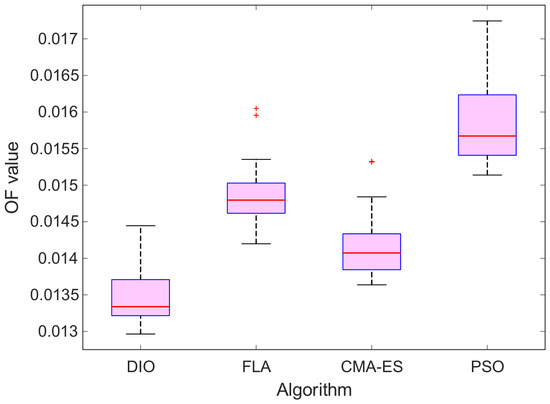
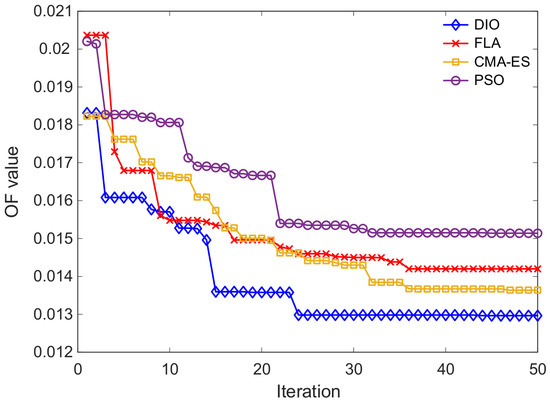
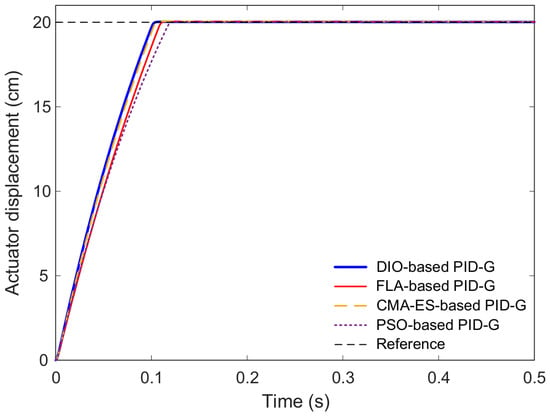
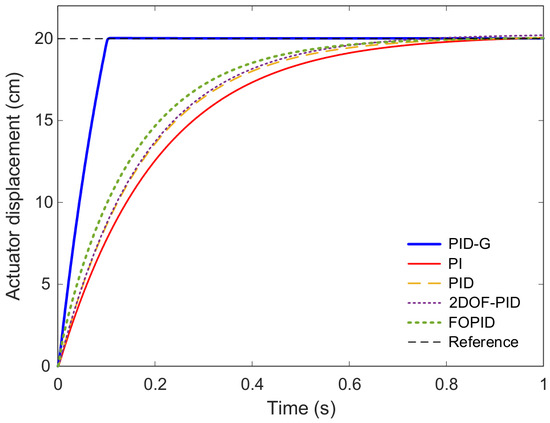
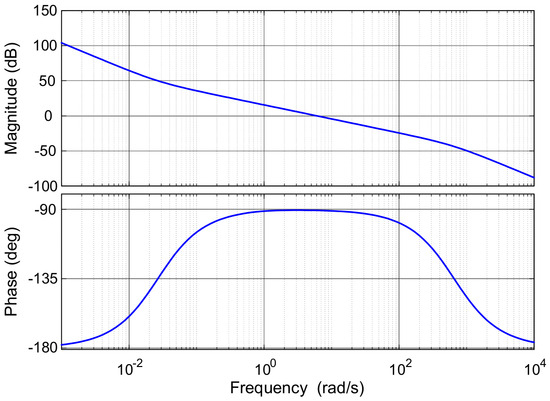
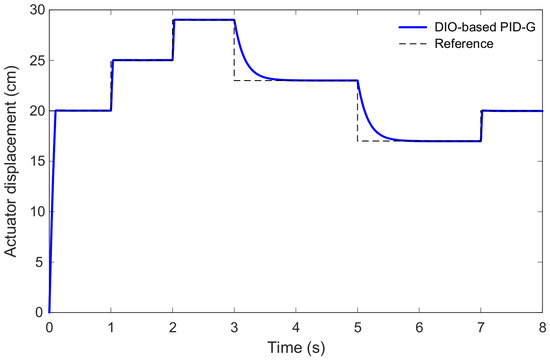
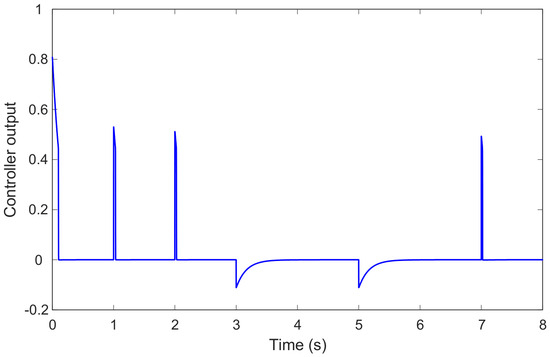
Electro-hydraulic actuator systems are widely used in precision motion-control applications; however, their displacement regulation remains challenging because fast response, low overshoot, and high steady-state accuracy must be achieved simultaneously under strongly dynamic operating conditions. In this study, a proportional-integral-derivative (PID) controller augmented with a Gompertz function (PID-G) is proposed for the position control of a four-way valve-controlled linear actuator, and its parameters are tuned by the recently introduced dholes-inspired optimizer (DIO). First, a control-oriented mathematical model of the electro-hydraulic actuator system is established by combining the valve and actuator dynamics. Then, the PID-G structure is formulated by incorporating a nonlinear Gompertz-based term into the conventional PID framework, and the resulting seven-parameter tuning problem is cast as an optimization task using a composite objective function that accounts for overshoot, steady-state error, rise time, and settling time. The effectiveness of DIO is evaluated comparatively against flood algorithm (FLA), covariance matrix adaptation evolution strategy (CMA-ES), and particle swarm optimization (PSO) under identical simulation conditions. The results show that DIO provides the best optimization performance, yielding the lowest best, average, and standard-deviation values of the objective function among the compared algorithms. In the time domain, the DIO-based PID-G controller achieves the most favorable overall response with a rise time of 0.079511 s, a settling time of 0.099326 s, an overshoot of 0.15110%, and a steady-state error of 0.089317%. The superiority of the DIO-based design is further confirmed by lower values of error based performance metrics (IAE, ISE, ITAE, and ITSE), improved convergence characteristics, and statistically significant advantages in the Wilcoxon test. Additional comparisons with different (PI, PID, 2DOF-PID, and FOPID) controllers also demonstrate that the proposed PID-G structure provides markedly better transient and error-based performance when tuned by DIO. Frequency-domain and varying-setpoint results further indicate satisfactory stability margins, robust tracking ability, and bounded control effort. Overall, the study shows that combining DIO with a Gompertz-augmented PID structure constitutes an effective strategy for high-performance electro-hydraulic actuator displacement control.
Full article
(This article belongs to the Section Biological Optimisation and Management)
►▼
Show Figures

Figure 1
Journal Menu
► ▼ Journal Menu-
- Biomimetics Home
- Aims & Scope
- Editorial Board
- Topical Advisory Panel
- Instructions for Authors
- Special Issues
- Topics
- Sections
- Article Processing Charge
- Indexing & Archiving
- Editor’s Choice Articles
- Most Cited & Viewed
- Journal Statistics
- Journal History
- Journal Awards
- Society Collaborations
- Conferences
- Editorial Office
- 10th Anniversary
Journal Browser
► ▼ Journal BrowserHighly Accessed Articles
Latest Books
E-Mail Alert
News
Topics
Topic in
Molecules, Biomimetics, Chemosensors, Life, AI, Sci
Recent Advances in Chemical Artificial Intelligence
Topic Editors: Pier Luigi Gentili, Jerzy Górecki, David C Magri, Pasquale StanoDeadline: 15 October 2026
Topic in
Biophysica, Cells, IJMS, Materials, Micro, Biomimetics, Biomolecules
Biofabrication Technologies for Tissue Repair and Regeneration
Topic Editors: Lorenzo Vannozzi, Eugenio Redolfi RivaDeadline: 20 February 2027
Topic in
ASI, Bioengineering, C, Healthcare, Biomimetics, Processes
Biomedical Engineering, Healthcare and Sustainability, 2nd Edition
Topic Editors: Teen-Hang Meen, Chun-Yen Chang, Charles Tijus, Po-Lei Lee, Yi-Chun DuDeadline: 30 April 2027
Topic in
Animals, Biomechanics, Biomimetics
Animal Biomechanics
Topic Editors: Stanislav N. Gorb, Wencke KringsDeadline: 31 July 2027
Conferences
Special Issues
Special Issue in
Biomimetics
Advances in Bio-Inspired Functional Surfaces
Guest Editor: Hisham A. Abdel-AalDeadline: 20 August 2026
Special Issue in
Biomimetics
Learning From Nature: Biomimetic Materials and Devices
Guest Editors: Zhengxing Li, Shichao DingDeadline: 25 August 2026
Special Issue in
Biomimetics
Exploration of Bioinspired Computer Vision and Pattern Recognition: 2nd Edition
Guest Editor: Qian JiangDeadline: 25 August 2026
Special Issue in
Biomimetics
Advances in Biogenic and Biomimetic Materials: From Bionanomedicine to Environmental Applications and Beyond: 2nd Edition
Guest Editors: Marcela-Elisabeta Barbinta-Patrascu, Irina Negut, Bogdan BițăDeadline: 30 August 2026