Journal Description
Histories
Histories
is an international, peer-reviewed, open access journal on inquiry of change and continuity of human societies (on various scales and with different approaches, including environmental, social and technological studies), published quarterly online by MDPI.
- Open Access— free for readers, with article processing charges (APC) paid by authors or their institutions.
- High Visibility: indexed within ESCI (Web of Science), EBSCO, and other databases.
- Journal Rank: JCR - Q2 (History)
- Rapid Publication: manuscripts are peer-reviewed and a first decision is provided to authors approximately 40.8 days after submission; acceptance to publication is undertaken in 5.4 days (median values for papers published in this journal in the first half of 2026).
- Recognition of Reviewers: APC discount vouchers, optional signed peer review, and reviewer names published annually in the journal.
- Journal Cluster of Human Thought and Cultural Expression: Culture, Histories, Humanities, Languages, Literature and Religions.
Impact Factor:
0.4 (2025)
Latest Articles
Cultural Spaces and Editorial Strategies: Jewish Journalists, Mediation, and the Pester Lloyd in Nineteenth-Century Hungary
Histories 2026, 6(3), 45; https://doi.org/10.3390/histories6030045 - 22 Jul 2026
Abstract
In 19th-century Hungary, the German-language press provided an important intellectual platform for Jewish journalists, many of whom became significant actors in political communication and cultural transfer. This study examines the Pester Lloyd (founded in 1854) as an institutional case through which the mediating
[...] Read more.
In 19th-century Hungary, the German-language press provided an important intellectual platform for Jewish journalists, many of whom became significant actors in political communication and cultural transfer. This study examines the Pester Lloyd (founded in 1854) as an institutional case through which the mediating role of Jewish journalists in a multilingual press culture can be explored. By analyzing editorial strategies, journalistic networks, and forms of cultural mediation, the paper explores how Jewish intellectuals operated between Hungarian- and German-language cultural and political spheres. Methodologically, the study combines historical press research with institutional and intellectual–historical analysis, drawing on editorials, feuilletons, autobiographical writings, and contemporary press material. Special attention is given to Miksa Falk, whose editorial leadership embodied the ideals of liberal constitutionalism and linguistic and cultural mediation. The article situates the Pester Lloyd as both a product of and an important medium for journalistic modernization and the participation of Jewish journalists within Hungary’s evolving media landscape.
Full article
(This article belongs to the Section Cultural History)
Open AccessArticle
Slovak Organisations and Societies in the USA at the Turn of 19th and 20th Centuries: Preservation of Ethnic Identity and Mutual Aid
by
Jana Ferencová
Histories 2026, 6(3), 44; https://doi.org/10.3390/histories6030044 - 15 Jul 2026
Abstract
This study examines Slovak compatriot associations in the United States at the turn of the nineteenth and twentieth centuries as institutional structures of mutual aid, community organization and immigrant adaptation. The analysis focuses on the National Slovak Society and American Živena and is
[...] Read more.
This study examines Slovak compatriot associations in the United States at the turn of the nineteenth and twentieth centuries as institutional structures of mutual aid, community organization and immigrant adaptation. The analysis focuses on the National Slovak Society and American Živena and is based on the qualitative content analysis of associational statutes and organizational documents. The study demonstrates that Slovak associations fulfilled functions extending beyond welfare assistance alone. Alongside systems of sickness, disability and death benefits, they also organized educational, publishing and cultural activities that contributed to the stabilization of Slovak immigrant community life in the United States. The comparison of the National Slovak Society and American Živena reveals differences between male and female organizational models within Slovak associational life. Whereas the National Slovak Society emphasized mutual aid and financial administration, American Živena focused more strongly on women’s educational and cultural activities. The findings situate Slovak associations within the broader context of immigrant mutual aid organizations in the United States and contribute to the historiography of Slovak migration and immigrant associational life.
Full article
Open AccessArticle
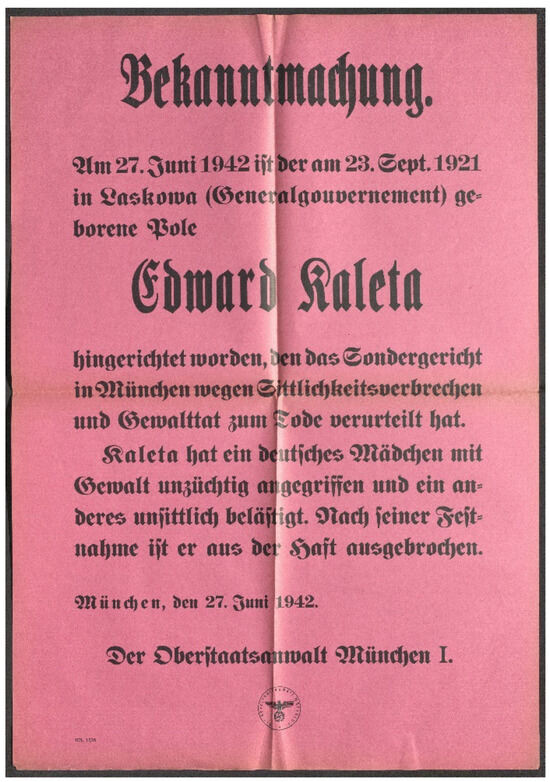
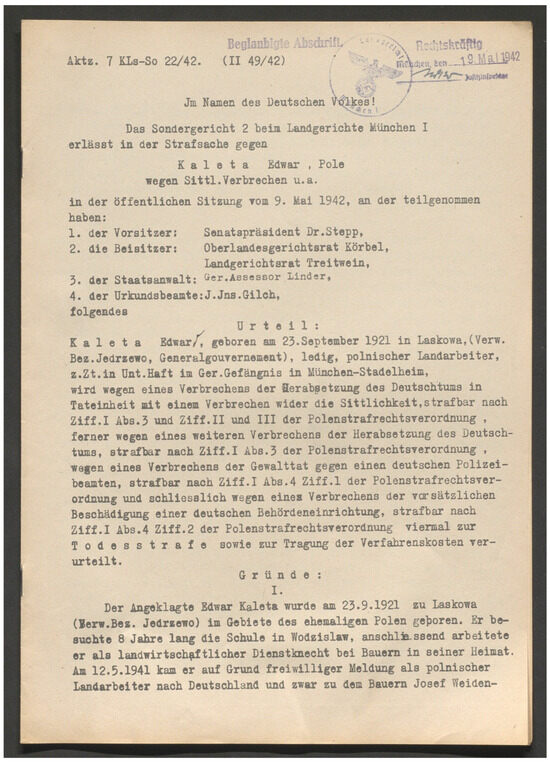
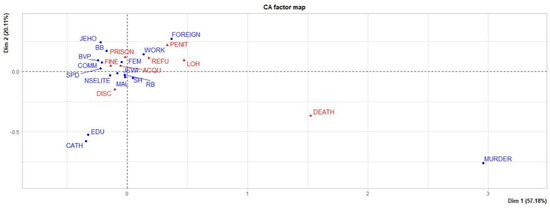
Appropriation, Abuse, and Configuration of Penal Justice in Terms of Repression and Ideology—Munich Special Court (1933–45) and Its Computational Historical Resumption
by
Markus Gerstmeier, Marlene Ernst, Sebastian Gassner and Malte Rehbein
Histories 2026, 6(3), 43; https://doi.org/10.3390/histories6030043 - 10 Jul 2026
Abstract
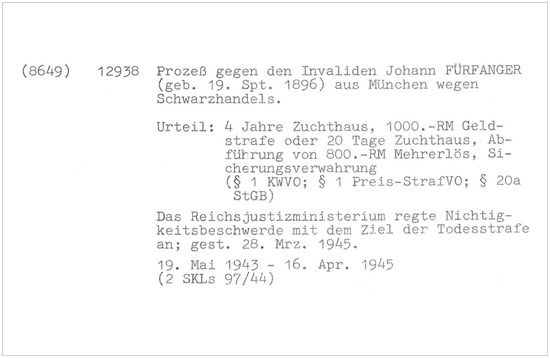
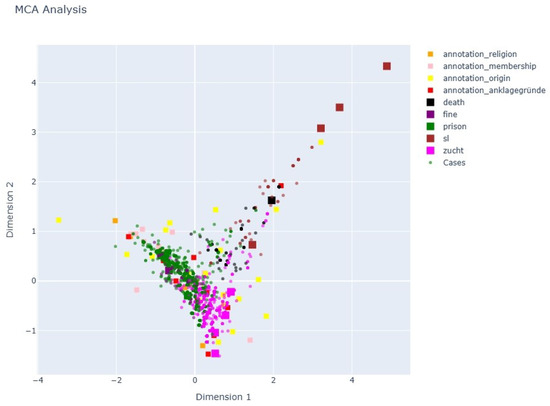
To date, many studies on the Nazi Special Courts have focused on the individuals involved in passing judgement or in the prosecution process in general, as well as on their political significance. For our study, we undertake a re-evaluation and computational ‘upcycling’ of
[...] Read more.
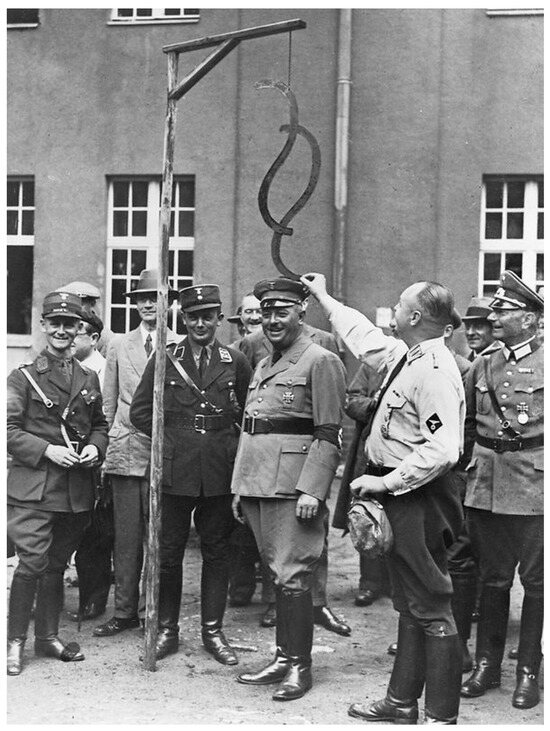
To date, many studies on the Nazi Special Courts have focused on the individuals involved in passing judgement or in the prosecution process in general, as well as on their political significance. For our study, we undertake a re-evaluation and computational ‘upcycling’ of an archive catalogue from the 1970s containing around 10,000 legal cases from the Munich Special Court (1933–1945). Although this was not an entirely new phenomenon–they were originally introduced by the Weimar Republic–, the Special Courts were unique in that they brought together general criminal law and ‘crimes’ in the form of non-conformity with National Socialist ideology under a single jurisdiction.
Full article
(This article belongs to the Section Digital and Computational History)
►▼
Show Figures

Figure 1
Open AccessArticle
The Making and Unmaking of a Sri Lankan Buddha
by
Bhadrajee Hewage
Histories 2026, 6(3), 42; https://doi.org/10.3390/histories6030042 - 7 Jul 2026
Abstract
This article reconstructs a largely forgotten episode in the history of Buddhist studies: the period in the late eighteenth and early nineteenth centuries when the Buddha was widely considered to have been Sri Lankan (Ceylonese) in origin. Contrary to modern scholarly consensus situating
[...] Read more.
This article reconstructs a largely forgotten episode in the history of Buddhist studies: the period in the late eighteenth and early nineteenth centuries when the Buddha was widely considered to have been Sri Lankan (Ceylonese) in origin. Contrary to modern scholarly consensus situating the Buddha firmly in northern India, early European encounters with Buddhism unfolded amid profound uncertainty regarding its geographical and historical origins. Drawing on colonial accounts, early translations, sacred relics, and the European interpretation of chronicle traditions, the article shows how Sri Lanka came to appear, within certain European scholarly frameworks, to possess a coherent and persuasive claim to Buddhist primacy, grounded in living religious practice, sacred geography, and continuous historical narratives. The article argues that the subsequent displacement of a Sri Lankan Buddha was not simply the result of improved evidence, but of a deeper epistemic transformation. During the nineteenth century, new standards of historical credibility—philology, cartography, archaeology, and comparative textual criticism—redefined what counted as authoritative knowledge. Through the interventions of figures such as Brian Hodgson and George Turnour, Ceylonese traditions were reclassified as local and symbolic rather than foundational. By tracing this shift, the article illuminates how scholarly consensus is produced through changes in method and authority, revealing how changing standards of evidence narrowed the range of historically credible possibilities.
Full article
(This article belongs to the Section History of Knowledge)
Open AccessArticle
Machiavelli and the Profession of Arms: Cesare Borgia as a Mercenary Prince
by
Jordan Sant
Histories 2026, 6(3), 41; https://doi.org/10.3390/histories6030041 - 7 Jul 2026
Abstract
The figure of Cesare Borgia occupies a complex and revealing place in the political thought of Niccolò Machiavelli. This article argues that the historical Cesare complicates Machiavelli’s more schematic presentation of military autonomy in The Prince. Whereas Chapter VII foregrounds Cesare’s dependence
[...] Read more.
The figure of Cesare Borgia occupies a complex and revealing place in the political thought of Niccolò Machiavelli. This article argues that the historical Cesare complicates Machiavelli’s more schematic presentation of military autonomy in The Prince. Whereas Chapter VII foregrounds Cesare’s dependence on Alexander VI, fortuna, French assistance, and contingent political circumstances, Chapter XIII presents a compressed movement from French auxiliaries and mercenary captains to “own” arms. By reconstructing the composition, financing, and command structures of Cesare’s forces, the article shows that his attempts to reduce dependence remained incomplete. His military power remained structurally dependent on papal finance, French backing, mercenary captains, intermediaries, and temporary forms of local recruitment. Cesare therefore did not consolidate the kind of stable territorial military apparatus that Machiavelli elsewhere identified as essential to durable rule. His rapid collapse after Alexander VI’s death reflects the fragility of a principality built on external, negotiated, and revocable support. The article thus reframes Cesare not as a historical exemplar of achieved Machiavellian military self-sufficiency, but as a figure whose career exposes the tension between Machiavelli’s theoretical use of armi proprie and the composite realities of warfare in Renaissance Italy.
Full article
(This article belongs to the Section Political, Institutional, and Economy History)
Open AccessArticle
Beyond the Civic/Ethnic Dilemma: Banal Nationalism and Everyday Border Drawing
by
Ali Çiçek, Abdullah Turan, Ömer Taylan and Aslıhan Çiçek
Histories 2026, 6(3), 40; https://doi.org/10.3390/histories6030040 - 7 Jul 2026
Abstract
This study proposes a new conceptual framework that moves beyond the widely used civic/ethnic dichotomy in nationalism theory by bringing Michael Billig’s concept of banal nationalism into dialogue with the literature on everyday boundary-making. It argues that the so-called “invisible” and routine markers
[...] Read more.
This study proposes a new conceptual framework that moves beyond the widely used civic/ethnic dichotomy in nationalism theory by bringing Michael Billig’s concept of banal nationalism into dialogue with the literature on everyday boundary-making. It argues that the so-called “invisible” and routine markers of banal nationalism play a constitutive role in the everyday reproduction of national belonging and in delineating who is counted as inside and who is excluded as outside. Crucially, this process is not static; it is activated and contested through the constant dialectic between everyday border-drawing and the lived reality of border-crossing. Banal nationalism, therefore, is not merely composed of unnoticed symbols, but is deeply intertwined with the quotidian mechanisms of boundary-drawing that shape rights, belonging, and processes of exclusion. In this regard, the study critiques the limitations of the civic/ethnic distinction and introduces a new model (termed “banal boundary-making”) which links banal nationalism to practices of boundary construction and the management of border-crossers across linguistic, affective, material, and administrative dimensions. The aim is to contribute to nationalism theory with a mechanism-oriented approach that transcends the binary of civic versus ethnic nationalism by showing how boundaries are performatively redrawn at the very moment they are crossed.
Full article
(This article belongs to the Special Issue Interactions Across Borders in Historical Contexts: Interdisciplinary Approaches)
Open AccessArticle
Gaspard Bauhin and His Contribution to the Standardization of Anatomical Nomenclature: A Linguistic Analysis of Theatrum Anatomicum (1605)
by
Dimitar Mirchev
Histories 2026, 6(3), 39; https://doi.org/10.3390/histories6030039 - 30 Jun 2026
Abstract
This article examines the terminological contributions of Gaspard Bauhin in his seminal work, “Theatrum Anatomicum” (1605). It is part of a series of articles exploring the development of anatomical terminology following Vesalius. Through linguistic analysis of the original Latin text, the
[...] Read more.
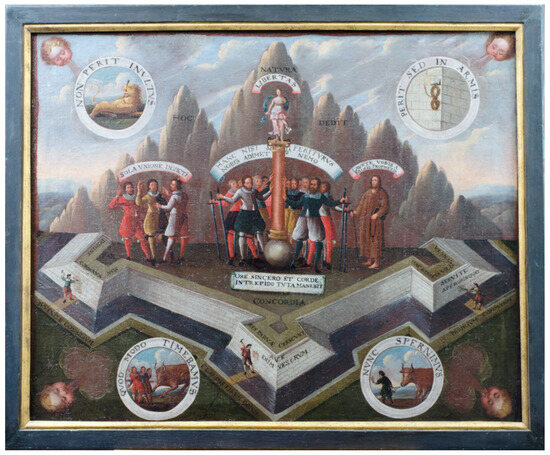
This article examines the terminological contributions of Gaspard Bauhin in his seminal work, “Theatrum Anatomicum” (1605). It is part of a series of articles exploring the development of anatomical terminology following Vesalius. Through linguistic analysis of the original Latin text, the study identifies four models of terminological transformation: (1) passive monosynonymy—the reduction of multiple synonyms to a single standard term (clavicula, scapula); (2) visual standardization—the transformation of descriptive phrases into binary terms through the labels of anatomical illustrations (musculus obliquus superior, musculus obliquus inferior); (3) conservative osteology—preservation of genitive constructions for cranial bones (os Frontis, ossa Syncipitis); (4) implicit consolidation—the establishment of terms with disputed priority (malleus, incus, stapes) by including them in an authoritative systematic text. Statistical analysis of the Index Rerum reveals a 70% binary form in the nomenclature of muscles compared to 38% in the nomenclature of bones, which confirms the selective nature of Bauhin’s standardization. The prescriptive language (vocamus, nominamus) indicates that Bauhin prescribes rather than describes. The study establishes that os frontale, os parietale, and os occipitale do not appear in Bauhin’s active nomenclature (Bauhin 1605, Lib. III, p. 531; Bauhin 1609, pp. 145–47)—a finding that qualifies the broad historiographical attribution of modern anatomical bone terminology to Bauhin (Pretterklieber 2024; Ghosh 2016) and confirms the selective character of his standardization programme. The parallel between Theatrum Anatomicum and Pinax Theatri Botanici (1671) reveals the universal applicability of the genus et differentia principle, anticipating Linnaeus’s binary system (1753).
Full article
(This article belongs to the Section History of Knowledge)
Open AccessArticle
Advancing Historical Research Through AI and Data-Centric Approaches
by
Wolfgang Thomas Göderle, Malte Rehbein and Markus Gerstmeier
Histories 2026, 6(3), 38; https://doi.org/10.3390/histories6030038 - 30 Jun 2026
Abstract
The rapid digitization of large source collections in the humanities over the last three decades has comprehensively transformed the discipline. The accessibility of primary sources has improved drastically, the pre-processing of research data has been revolutionized in some areas, and new transdisciplinary approaches
[...] Read more.
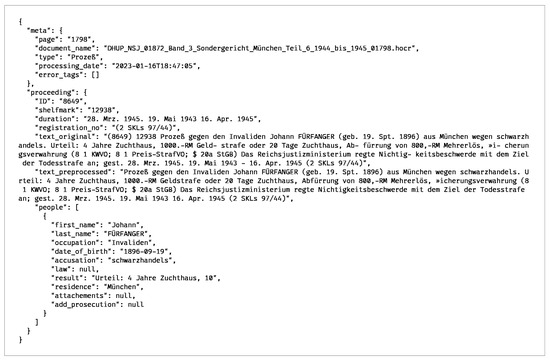
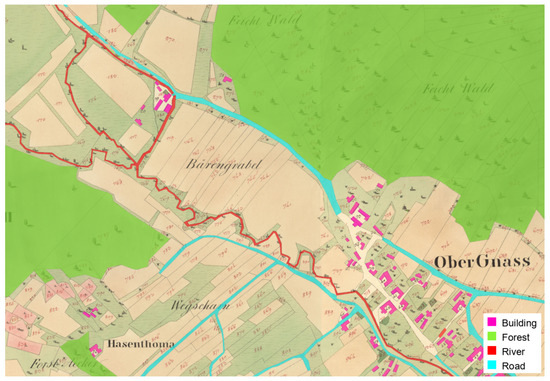
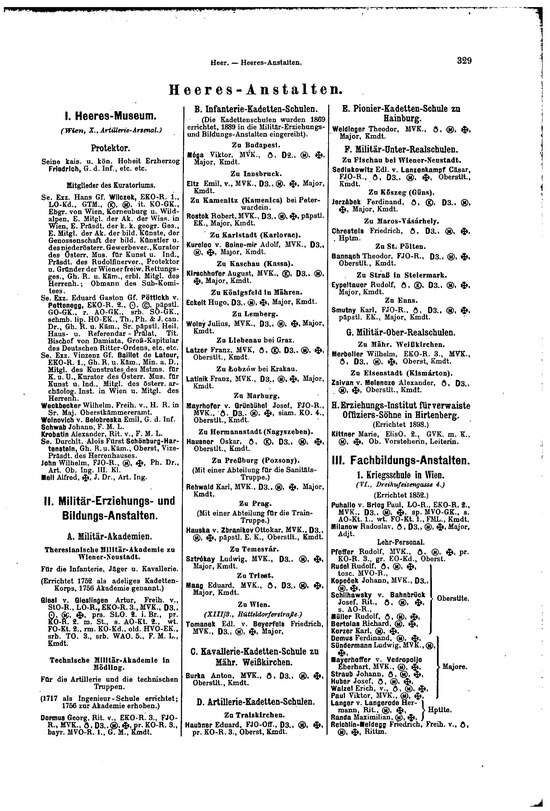
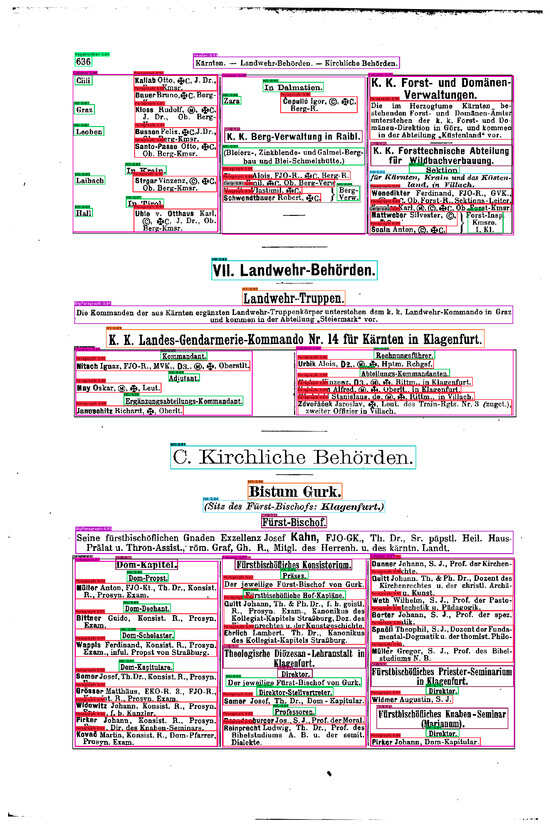
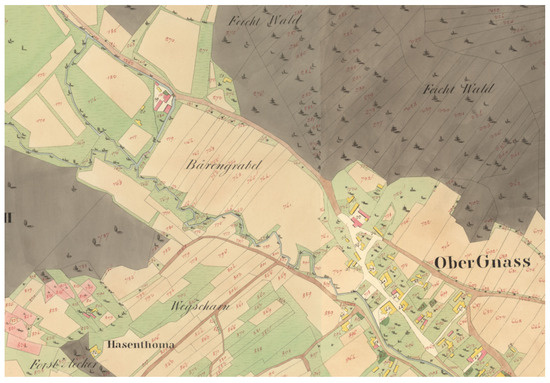
The rapid digitization of large source collections in the humanities over the last three decades has comprehensively transformed the discipline. The accessibility of primary sources has improved drastically, the pre-processing of research data has been revolutionized in some areas, and new transdisciplinary approaches have emerged and become possible. However, while digital and computational historians have produced extensive reflection on these developments, the theoretical grounding of this transformation has not been fully integrated into mainstream historical methodology: most critically, the concept of ‘information’, central to computer science and computational methods, has not yet been systematically received as a technical category within the discipline’s methodological canon. In this contribution, we employ a concept from Science and Technology Studies—Bruno Latour’s ‘circulating reference’—to analyze and render describable the processes of historical research within a digitized research environment. Through three case studies—AI-supported segmentation of Habsburg cadastral maps (1817–1861), computational analysis of the Hof- und Staatsschematismus (1702–1918), and the datafication of the Munich Special Court archive inventory (1933–1945, 1975–1977)—we demonstrate how and at which specific points historical research benefits from this framework, and what new insights it enables.
Full article
(This article belongs to the Section Digital and Computational History)
►▼
Show Figures

Figure 1
Open AccessArticle
The Spanish Military Structure and Insurrection Process in Cuba (1897–1898) in Light of the Reports of the Ottoman Military Attaché
by
Halit Baş
Histories 2026, 6(2), 37; https://doi.org/10.3390/histories6020037 - 19 Jun 2026
Abstract
This article examines two reports dated 4 October 1897 and 6 January 1898 written by the Ottoman military attaché in Madrid, Reşid bin Galib, Staff Senior Captain (Kolağası), to analyze how the late Ottoman Empire interpreted the Spanish military structure and the insurrection
[...] Read more.
This article examines two reports dated 4 October 1897 and 6 January 1898 written by the Ottoman military attaché in Madrid, Reşid bin Galib, Staff Senior Captain (Kolağası), to analyze how the late Ottoman Empire interpreted the Spanish military structure and the insurrection in Cuba. Situated within the broader development of nineteenth-century military intelligence practices, the study employs textual and contextual analysis, focusing on institutional language, strategic categorization, and threat perception. The report dated 4 October 1897 provides a detailed account of the military-administrative organization in Cuba, including command hierarchy, troop distribution, logistical infrastructure, and internal security mechanisms, while the report dated 6 January 1898 evaluates the historical trajectory of the rebellion and offers a comparative assessment of combat- and disease-related casualties, highlighting the importance of logistical and administrative capacity in warfare. Taken together, these documents show that Ottoman military intelligence systematically monitored a colonial crisis beyond Europe and interpreted it through an institutional military framework. The reports also reflect late Ottoman concerns regarding external intervention, security, and imperial stability. By examining a non-European colonial conflict, the article demonstrates how military knowledge was transferred, reframed, and integrated across imperial contexts, thereby contributing to the historiography of Ottoman military attachés and highlighting their role in shaping the Empire’s global strategic awareness at the turn of the twentieth century.
Full article
(This article belongs to the Special Issue Interactions Across Borders in Historical Contexts: Interdisciplinary Approaches)
Open AccessArticle
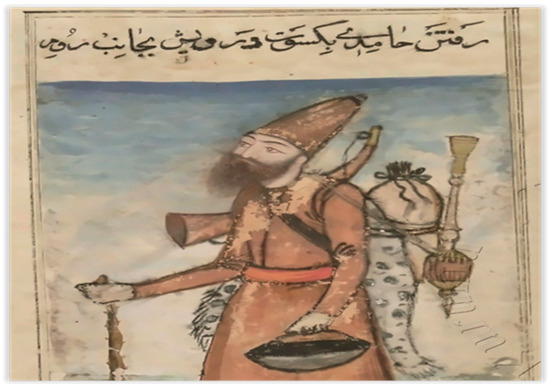
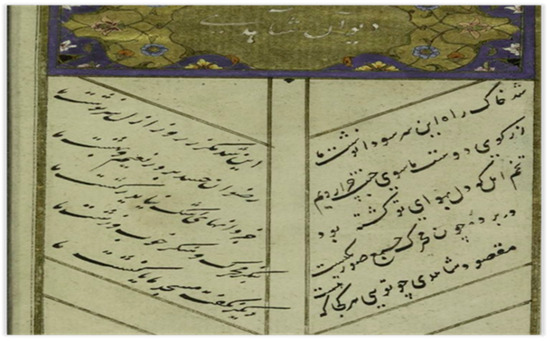
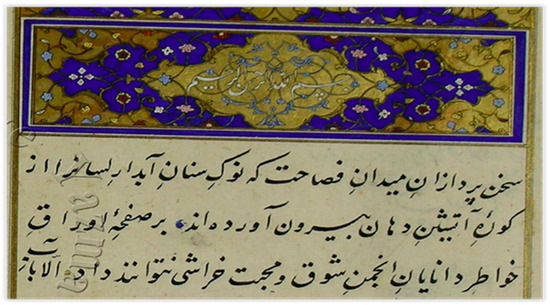
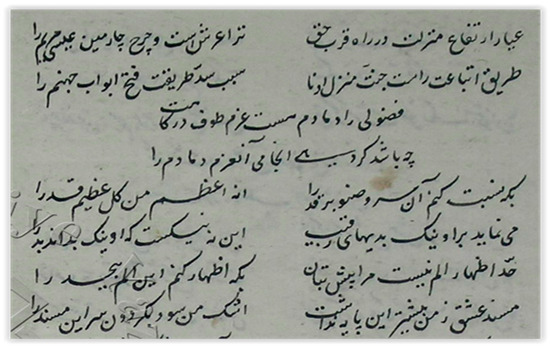
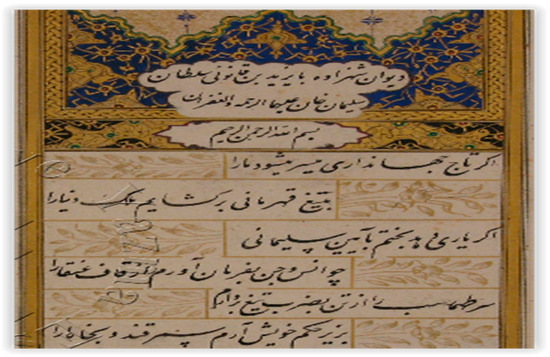
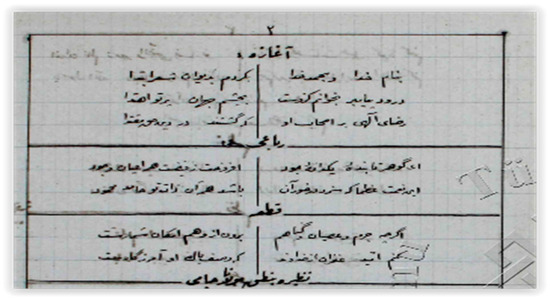
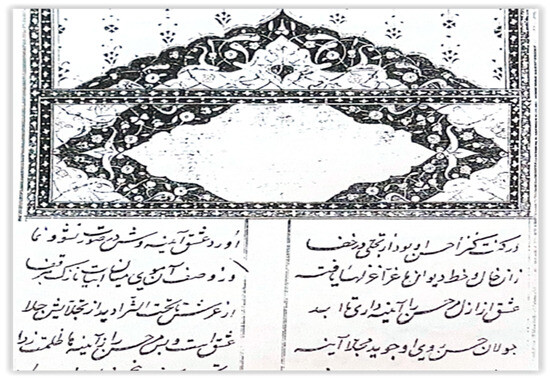
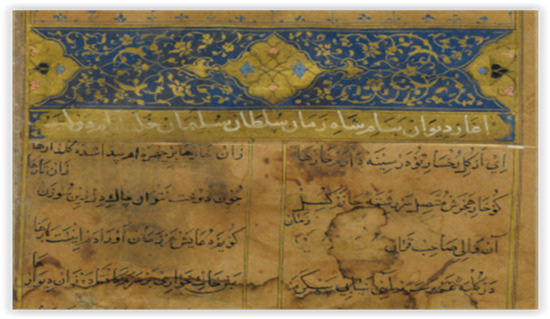
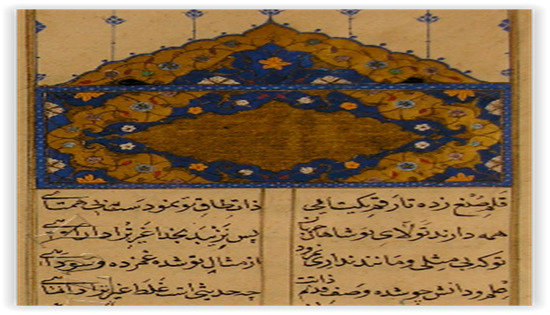
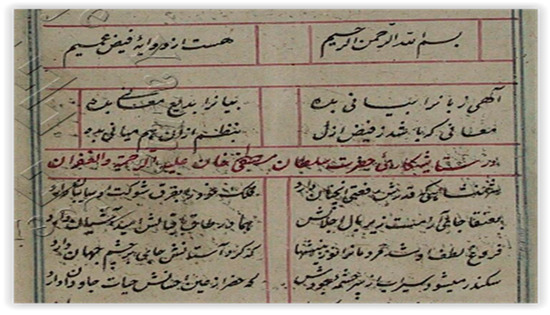
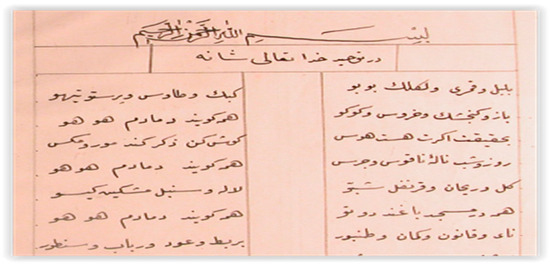
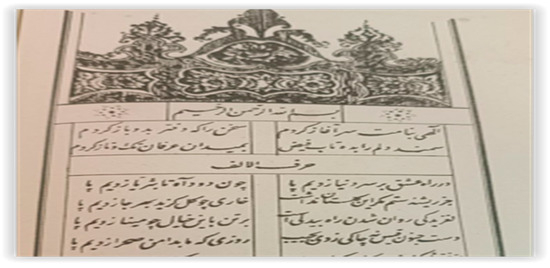
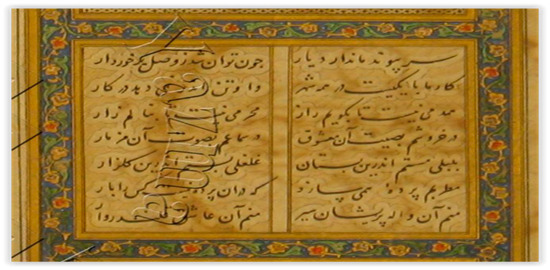
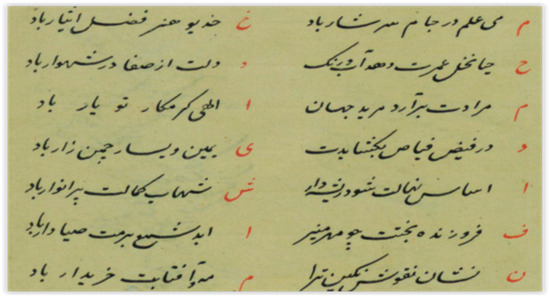
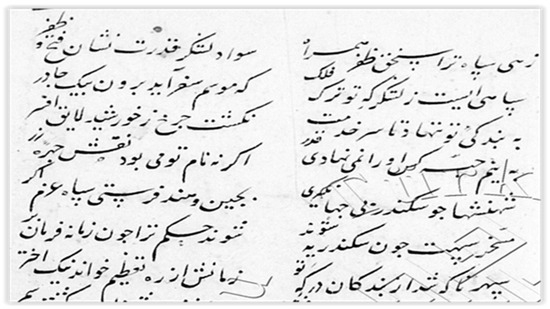
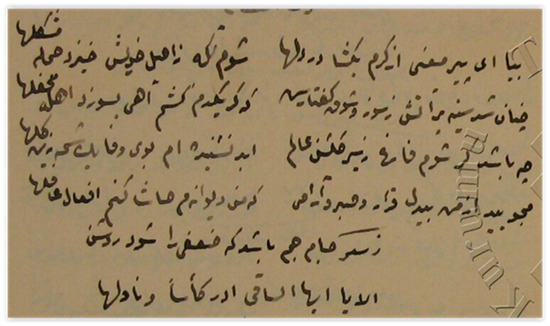
The Cultural Heritage of Anatolia: Persian Divans
by
Çetin Kaska
Histories 2026, 6(2), 36; https://doi.org/10.3390/histories6020036 - 4 Jun 2026
Abstract
From the period of the Anatolian Seljuks onward, Iranian culture and civilization exerted a strong influence over Anatolia. As a result of this interaction, Persian gradually became the region’s administrative and literary language; it was spoken in major cities, taught as a subject
[...] Read more.
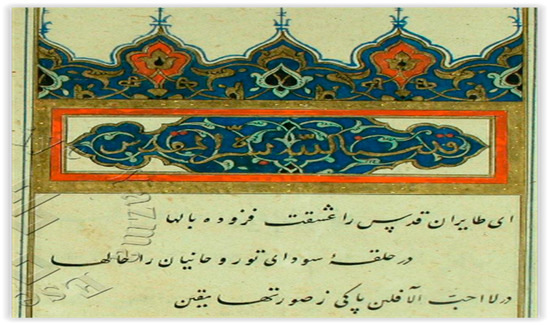
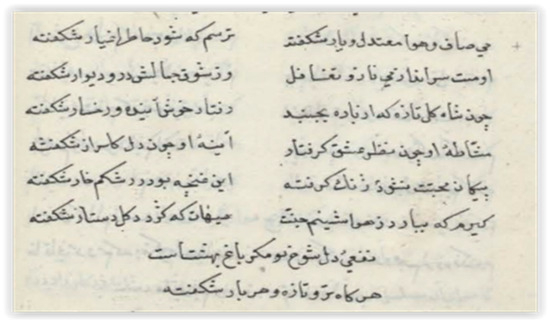
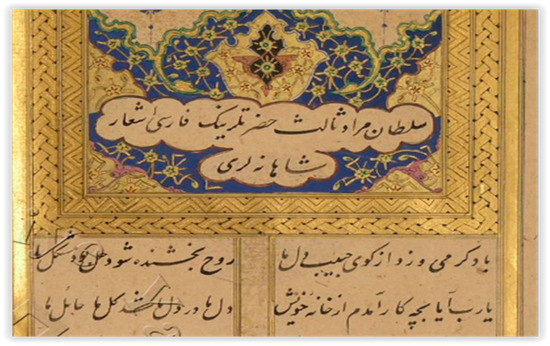
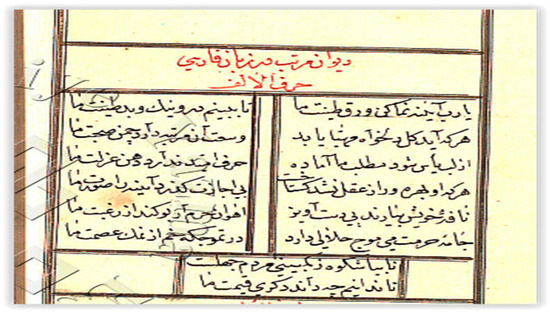
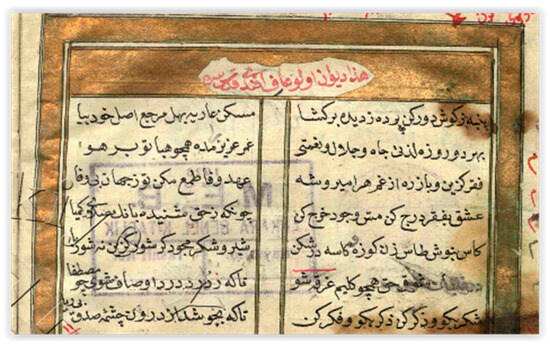
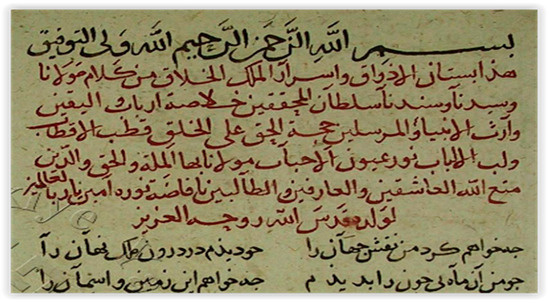
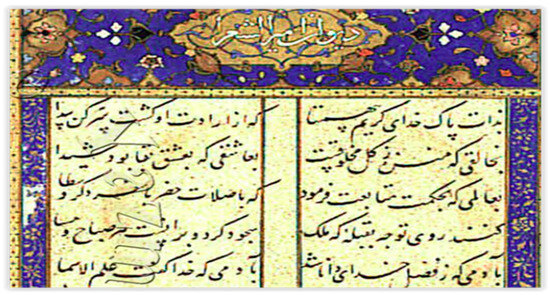
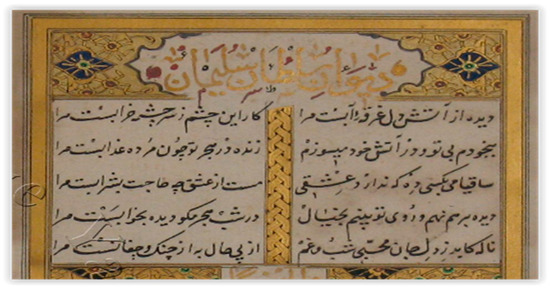
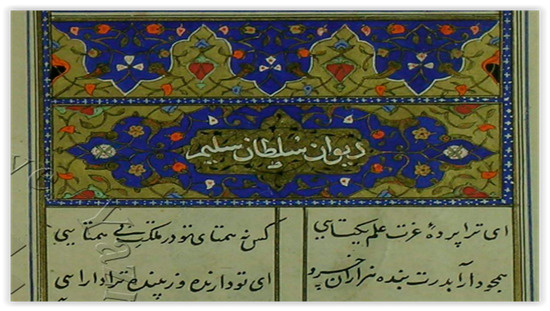
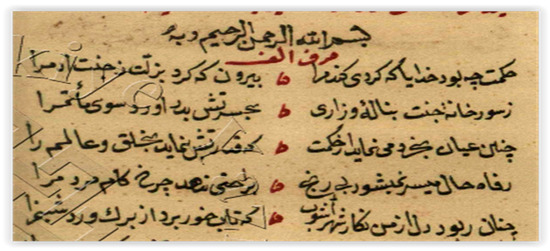
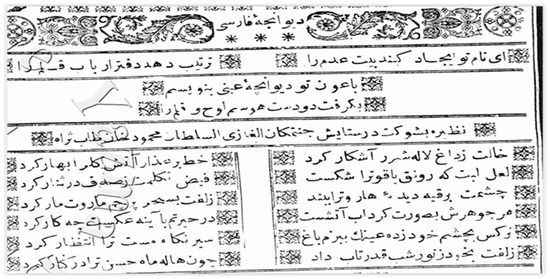
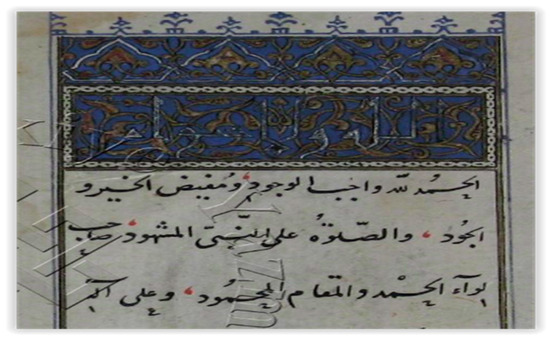
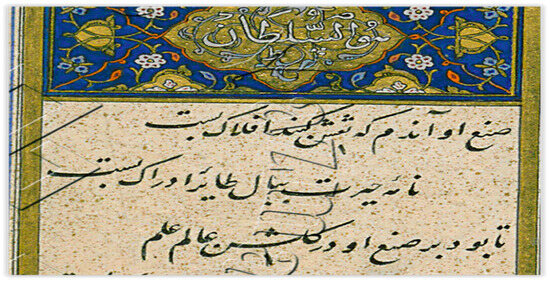
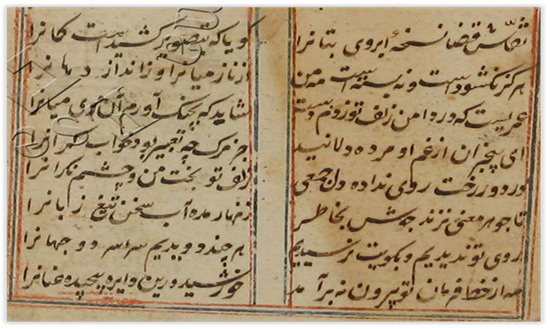
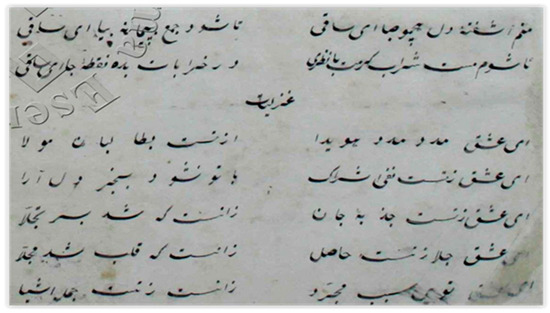
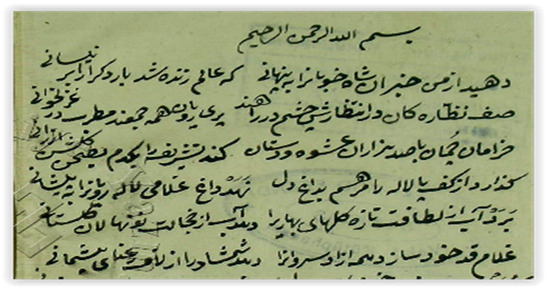
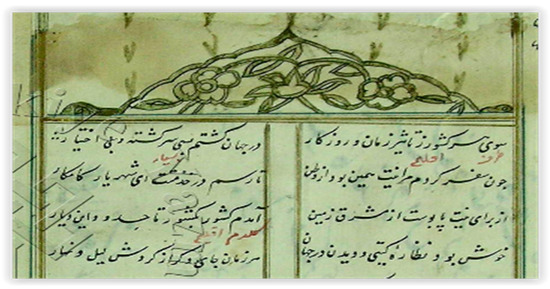
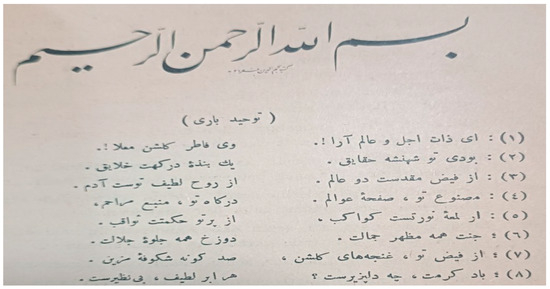
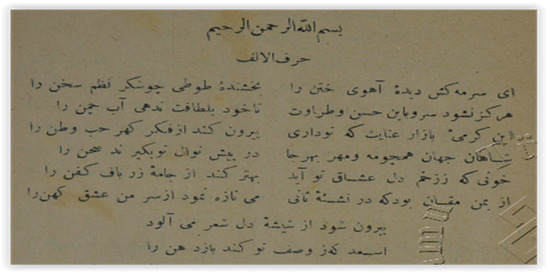
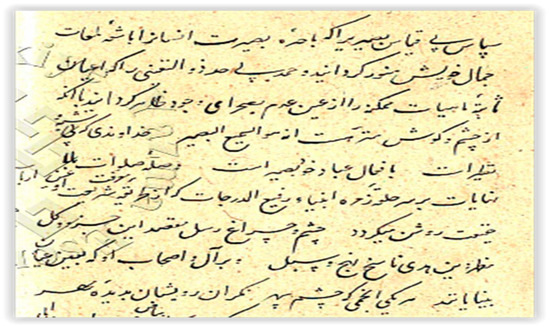
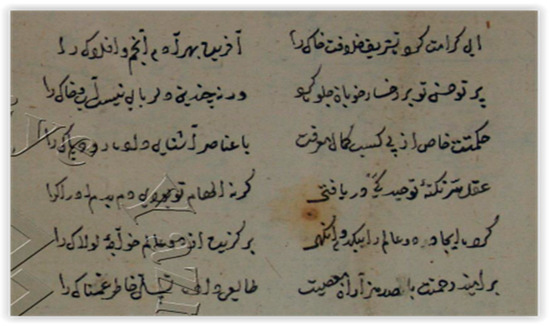
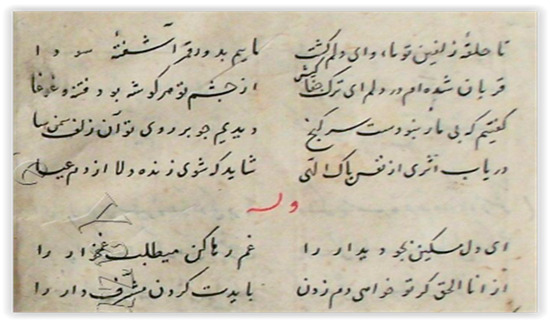
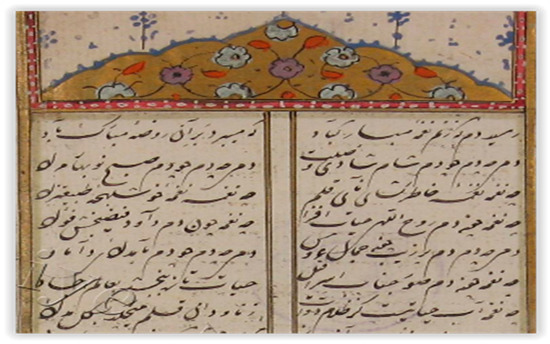
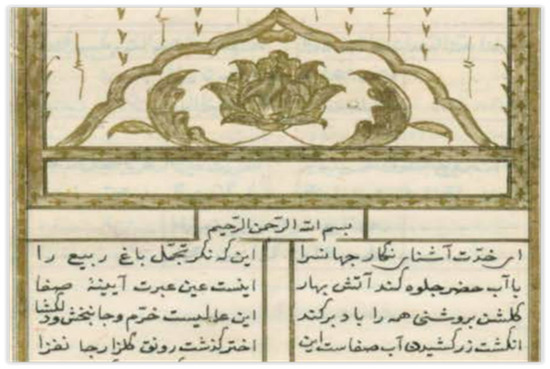
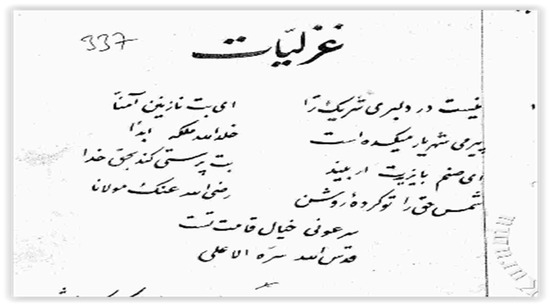
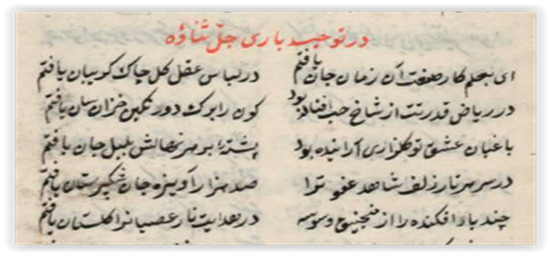
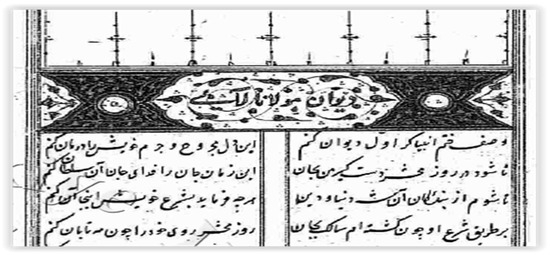
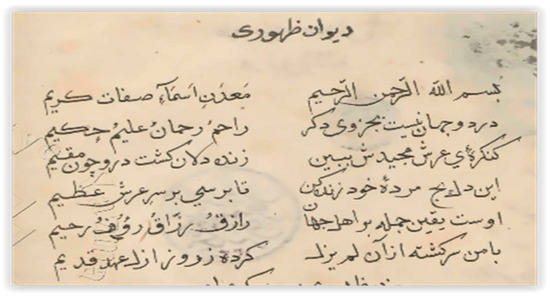
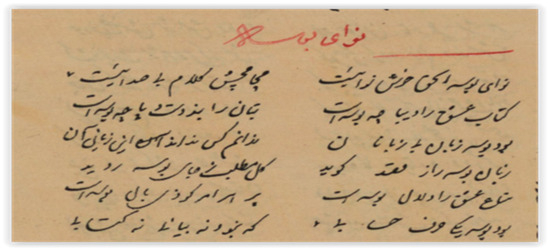
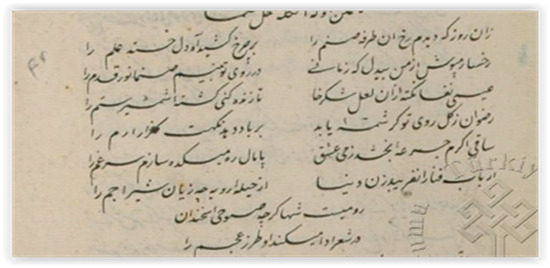
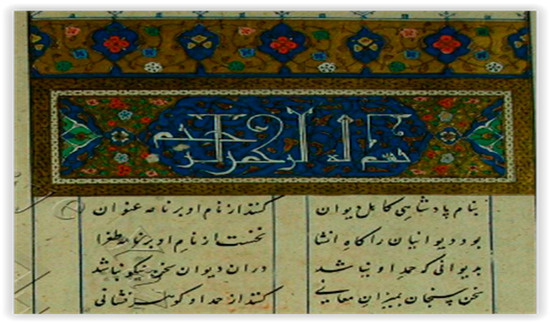
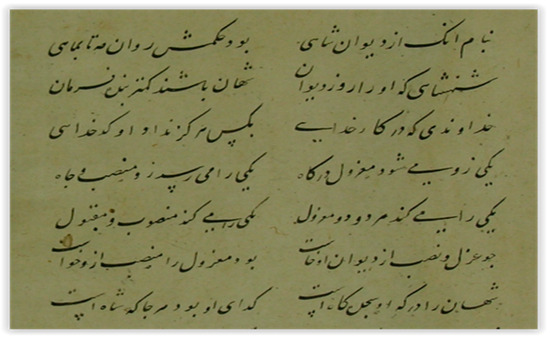
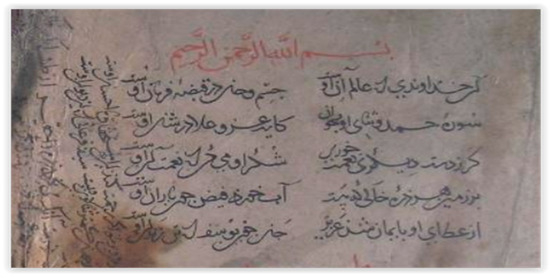
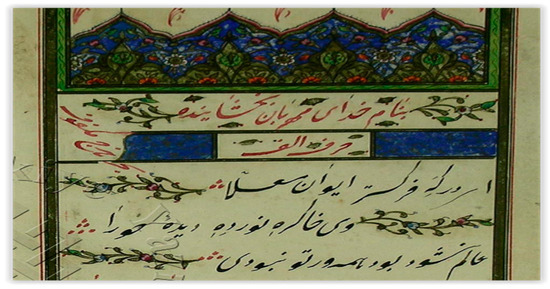
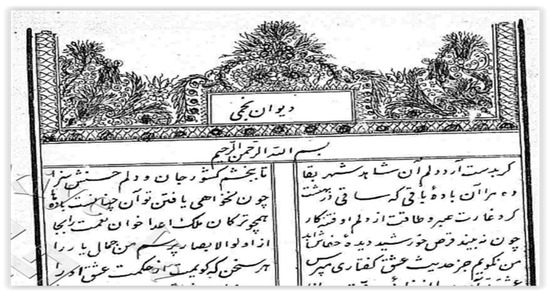
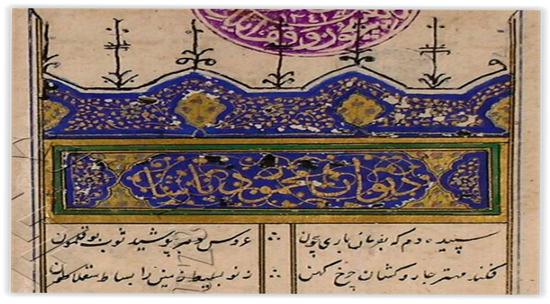
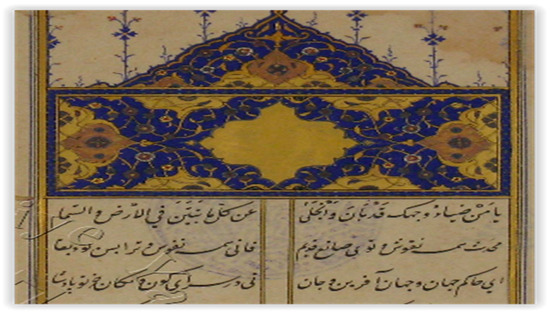
From the period of the Anatolian Seljuks onward, Iranian culture and civilization exerted a strong influence over Anatolia. As a result of this interaction, Persian gradually became the region’s administrative and literary language; it was spoken in major cities, taught as a subject in madrasahs, preferred in official correspondence, and played a central role in the production of literary works. The Anatolian Seljuk sultans and amirs of Anatolia, who possessed a profound mastery of Persian, supported this cultural exchange by patronizing Iranian poets, scholars, and intellectuals. The effort to preserve and promote Iranian culture, the Persian language, and its poetic tradition continued under the Ottomans as well. During this era, numerous poets and writers from Iran came to Istanbul, and the imperial courts became literary centers where Iranian artists gathered. In fact, those who arrived from Iran were often expected to possess poetic talent. Among the Ottoman rulers who encouraged Persian poetry were Sultan Süleyman the Magnificent, Sultan Selim I, and Sultan Murad III—each of whom composed Persian divans (collected poems). Poets who flourished during both the Anatolian Seljuk and Ottoman periods composed Persian poetry to demonstrate their literary mastery and to prove that they knew Persian as proficiently as Iranian poets. Those with only a few Persian poems interspersed them within their Turkish divans, whereas those who produced many compiled them into independent divans. This study aims to identify the Persian divans written in Anatolia during the Anatolian Seljuk and Ottoman periods and to present detailed information about these works. By systematically classifying the Persian divans of these eras, this study serves as a fundamental bibliographic reference for researchers.
Full article
(This article belongs to the Topic Reimagining Totemism: Mystical Experience, Life Values, and Contemporary Art Practices)
►▼
Show Figures

Figure 1
Open AccessArticle
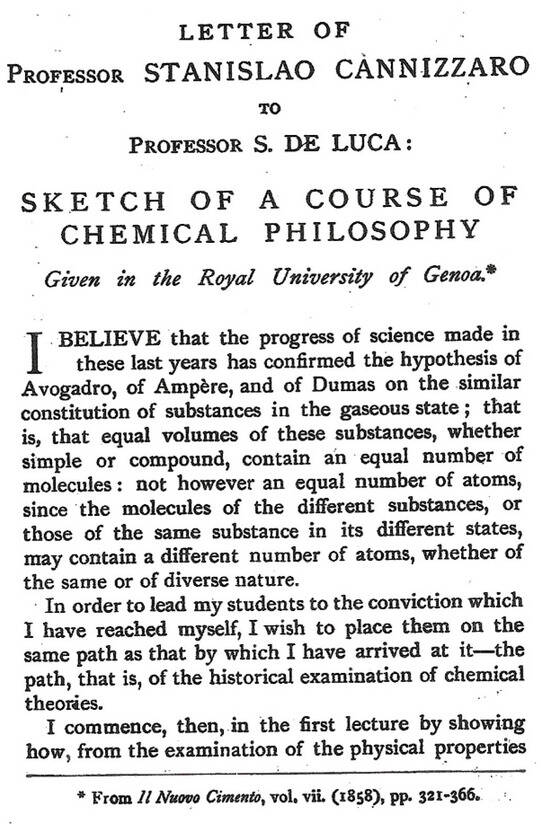
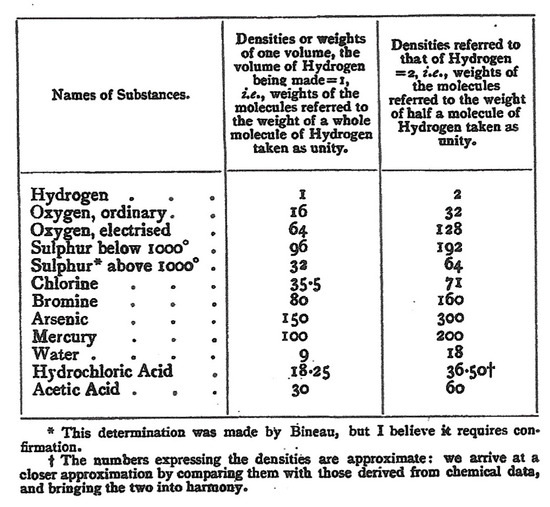
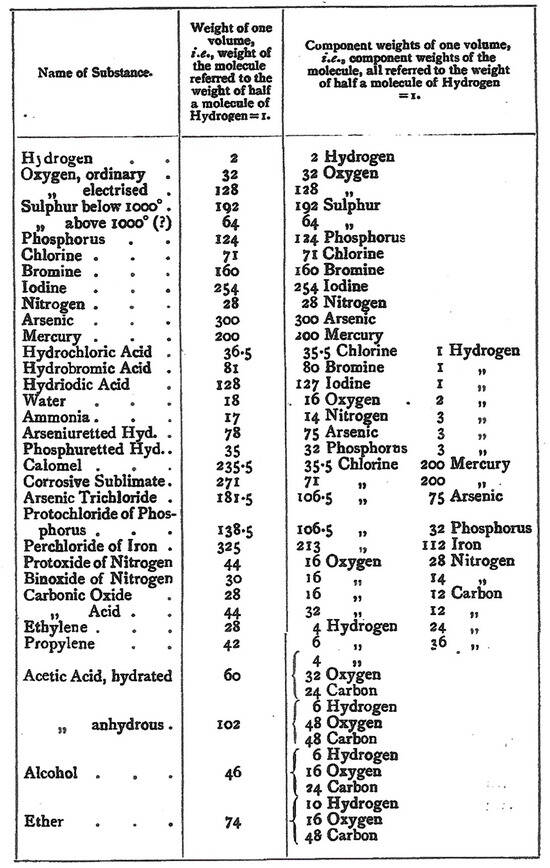
On the Birth of Modern Chemistry: II—The Difficult Path of Avogadro’s Hypothesis Until Cannizzaro’s Full Acceptance Within the Atomic–Molecular Theory
by
Pier Remigio Salvi
Histories 2026, 6(2), 35; https://doi.org/10.3390/histories6020035 - 29 May 2026
Abstract
This paper reviews the significant steps of the atomic–molecular theory, after Avogadro’s intimation of the equal volume/equal number of particles hypothesis until the final assertion embodied in Cannizzaro’s Sunto. Berzelius’s atomism, authoritatively present among chemists in the first decades of nineteenth century,
[...] Read more.
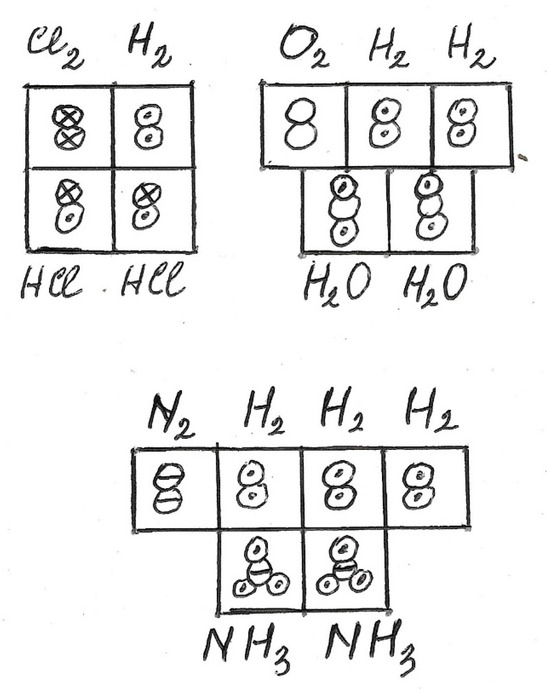
This paper reviews the significant steps of the atomic–molecular theory, after Avogadro’s intimation of the equal volume/equal number of particles hypothesis until the final assertion embodied in Cannizzaro’s Sunto. Berzelius’s atomism, authoritatively present among chemists in the first decades of nineteenth century, is outlined. Applying volume theory, atomic weights were determined and later revised considering heat capacity experiments on solid elements and the law of isomorphism. The peculiar traits of Berzelius’s atomism are (a) the restricted validity of Avogadro’s hypothesis to only elementary gases, and (b) the opposition to the existence of elementary polyatomic molecules. Next, Dumas’ experiments on vapors are described, aimed at supporting Avogadro’s hypothesis, whose perplexing results were ingeniously resolved by Gaudin assuming that the elementary molecules may contain unequal numbers of component atoms. In the fifth decade of the century, Gerhardt and Laurent established molecular formulae with reference to standard volumes. Finally, at the end of the sixth decade, Cannizzaro published Sunto di un Corso di Filosofia Chimica, in which he fully acknowledges Avogadro’s hypothesis, together with all its implications, and describes how to arrive at molecular and atomic weights from gaseous densities. A brief account of the Karlsruhe congress is included, emphasizing the scientific personality of Cannizzaro.
Full article
(This article belongs to the Section History of Knowledge)
►▼
Show Figures

Figure 1
Open AccessArticle
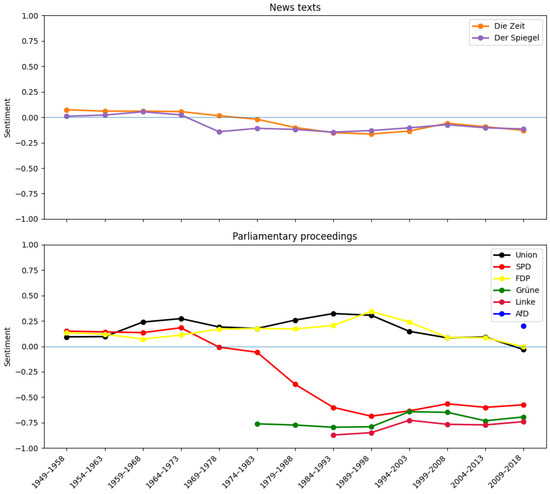
Measuring Nuclear Democracy: A Large-Scale Analysis of German Nuclear Energy Discourse
by
Maximilian Teich, Arne Cypionka, Thomas Haider and Malte Rehbein
Histories 2026, 6(2), 34; https://doi.org/10.3390/histories6020034 - 27 May 2026
Abstract
Nuclear energy has been a highly controversial issue in post-war (West) German politics. Previous research has identified discourse on nuclear energy as an important factor in the development of German political culture. However, little work has been done on the quantitative analysis of
[...] Read more.
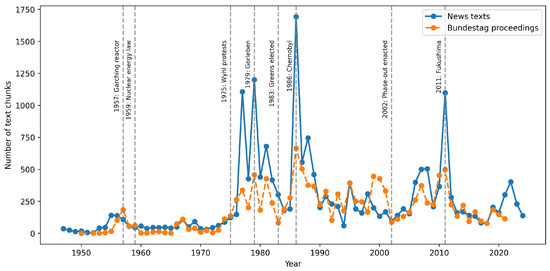
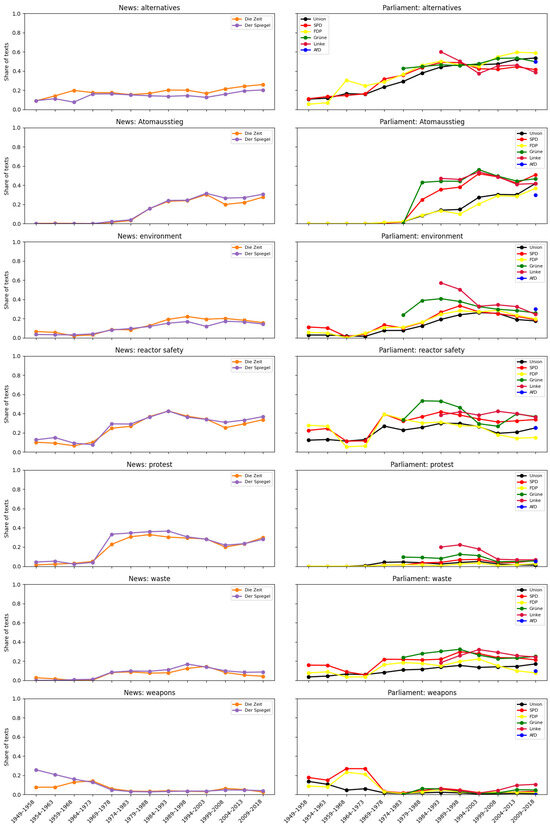
Nuclear energy has been a highly controversial issue in post-war (West) German politics. Previous research has identified discourse on nuclear energy as an important factor in the development of German political culture. However, little work has been done on the quantitative analysis of this discourse, despite the availability of large amounts of text data. We use large language models to classify texts in a corpus of Bundestag proceedings and news articles according to speakers’ stance and framing. In combination with the texts’ metadata, this enables us to draw conclusions about the positions taken by political parties and media publications on nuclear energy over time. We find that while media reporting remained mostly neutral, Bundestag speakers became divided on the issue along party lines by the 1970s. The framing of nuclear energy in both media and politics shifted in response to events and policy needs. More generally, our approach could be applied to other problems in discourse analysis where large amounts of data are available but no high-quality annotations for classifier training exist.
Full article
(This article belongs to the Section Digital and Computational History)
►▼
Show Figures

Figure 1
Open AccessArticle
Reappraising the Origins of Exclusion in Late Medieval Castile: Across the Boundaries Between Religion, Politics and Customs
by
Esther Pascua-Echegaray and Pablo Sánchez-León
Histories 2026, 6(2), 33; https://doi.org/10.3390/histories6020033 - 21 May 2026
Abstract
Over the past two decades, research on issues of agency and liminality around borders has highlighted the mutual permeability, fluidity and overlapping of spheres such as religion and politics, providing arguments on the construction of identity and otherness that allow us to reappraise
[...] Read more.
Over the past two decades, research on issues of agency and liminality around borders has highlighted the mutual permeability, fluidity and overlapping of spheres such as religion and politics, providing arguments on the construction of identity and otherness that allow us to reappraise long-standing historical debates. This framework is particularly illuminating for the case of 15th-century Castile, when consolidation of a pioneering centralized monarchy in Europe witnessed the end of the coexistence between Christian, Jewish and Muslim communities, eventually leading to the persecution of converts and the expulsion of cultural and religious minorities. Drawing upon both primary and secondary sources, and adopting the analytical framework of frontier-crossing, this article identifies the conditions under which particular social agents reconfigured the boundaries between religion and politics in 15th-century Castile. It further examines the process by which border crossing by various agents made customs and everyday practices crystallize into a third sphere for the construction of alterity and exclusion and analyzes the specific context in which the intersection of these three domains contributed to the stigmatization of Jews, Muslims and converts, ultimately leading to their exclusion and expulsion. Initially subordinated to theological and legal concerns, social practices, rituals and ceremonies became central to discourse intersecting the political, religious and moral domains, underpinning social stigmatization and the institutional mechanisms of rising monarchical centralization.
Full article
(This article belongs to the Special Issue Interactions Across Borders in Historical Contexts: Interdisciplinary Approaches)
Open AccessArticle
Research on the Division and Interconstruction of the Peking Opera Field Along the Central Axis of Beijing During the Qing Dynasty—Based on Pierre Bourdieu’s Field Theory
by
Xing Zhou and Yihui Ouyang
Histories 2026, 6(2), 32; https://doi.org/10.3390/histories6020032 - 13 May 2026
Abstract
This study applies Pierre Bourdieu’s field theory as an analytical framework to examine the development of Peking opera along the Beijing Central Axis during the Qing Dynasty. It explores how the interaction between the court and folk fields contributed to the formation of
[...] Read more.
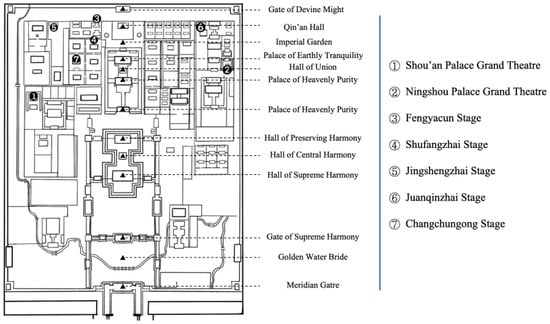
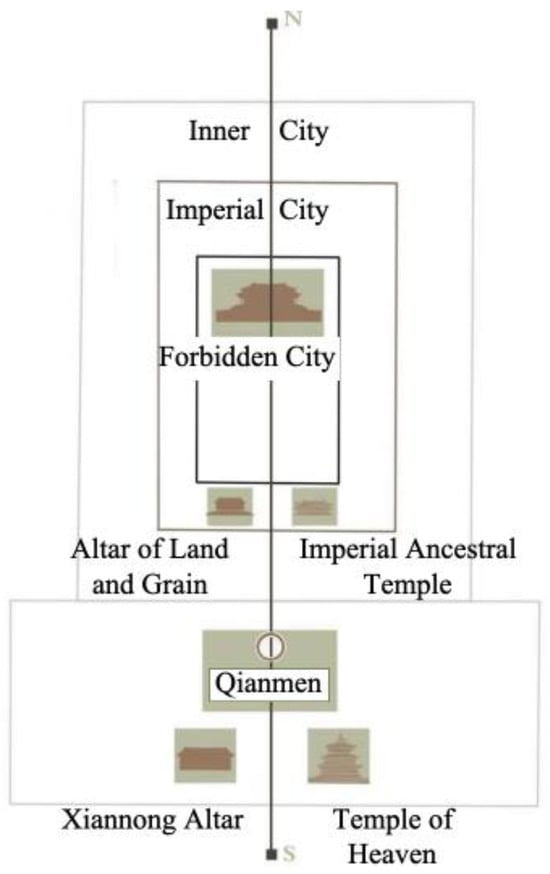
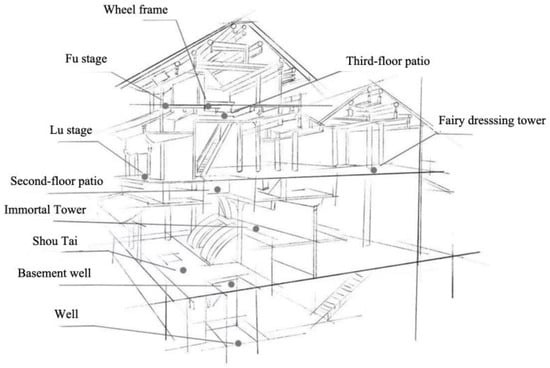
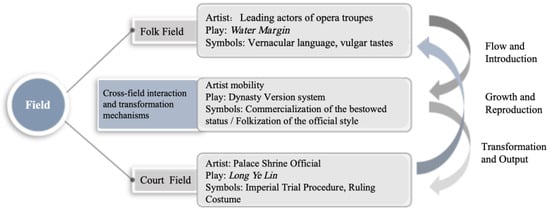
This study applies Pierre Bourdieu’s field theory as an analytical framework to examine the development of Peking opera along the Beijing Central Axis during the Qing Dynasty. It explores how the interaction between the court and folk fields contributed to the formation of its artistic form. From this perspective, social space is understood as a structured network of objective relations, shaped by the distribution of different forms of capital and the habitus of social actors. In the Qing Dynasty, as the core of political and cultural activities, the Peking opera field along the Beijing Central Axis was divided into two major sub-fields: the court field, centered around imperial power and subject to political discipline, and the folk field, market-oriented and following secular logic. By analyzing the differences between the two fields in terms of core power, spatial characteristics, capital distribution, and the habits of actors, this study reveals their two-way interaction achieved through the movement of artists, adaptation of repertoires, and capital conversion. The interaction between the two fields was not symmetrical: while the folk field contributed performative vitality and responsiveness to audience demand, the court provided institutional authority and symbolic legitimacy. Ultimately, in the dynamic balance between power and the market, the unique form of Peking opera, characterized by the integration of elegance and vulgarity, is refined. This study deepens our understanding of the interaction between spatial organization and artistic form, while further elucidating how power, culture, and art were structurally interconnected in the Qing Dynasty through the framework of field, capital, and habitus. In doing so, it offers both theoretical insights and empirical evidence for interdisciplinary research on the social and cultural functions of traditional art.
Full article
(This article belongs to the Section Cultural History)
►▼
Show Figures

Figure 1
Open AccessArticle
A Prime Minister Under Constraints: An Analysis of James Callaghan’s Prime Ministership
by
İbrahim Çağrı Erkul and Mehmet Onur Özer
Histories 2026, 6(2), 31; https://doi.org/10.3390/histories6020031 - 7 May 2026
Abstract
This article analyses the unique features of James Callaghan’s political career. He is the only politician to have served as Chancellor of the Exchequer, Home Secretary, Foreign Secretary, and Prime Minister in UK history. The analysis situates his career within key national and
[...] Read more.
This article analyses the unique features of James Callaghan’s political career. He is the only politician to have served as Chancellor of the Exchequer, Home Secretary, Foreign Secretary, and Prime Minister in UK history. The analysis situates his career within key national and foreign policy challenges. Callaghan did not really achieve significant success during his four different political appointments. He was often viewed as the subject of some of the political and economic failures that British society still remembers today. This article suggests that his failures were mainly due to complex parliamentary dynamics, national political landscape, the economy, and global actors, which severely constrained his ability to act. Additionally, Callaghan’s successes and failures were evaluated within the broader context of the period, rather than through a purely “results-oriented” lens, which is often used in political history. From this perspective, the article examines both the internal and external challenges of Callaghan’s premiership. It also highlights the obstacles he faced in decision-making and the factors that shaped his actions.
Full article
Open AccessArticle
Historical Anatomy of the Devotional Sculpture of Our Lady of Grace: Scientific and Patrimonial Contributions to the History of Southern Brazil
by
Marylene Santos Rodrigues and João Carlos Ferreira de Melo Júnior
Histories 2026, 6(2), 30; https://doi.org/10.3390/histories6020030 - 27 Apr 2026
Abstract
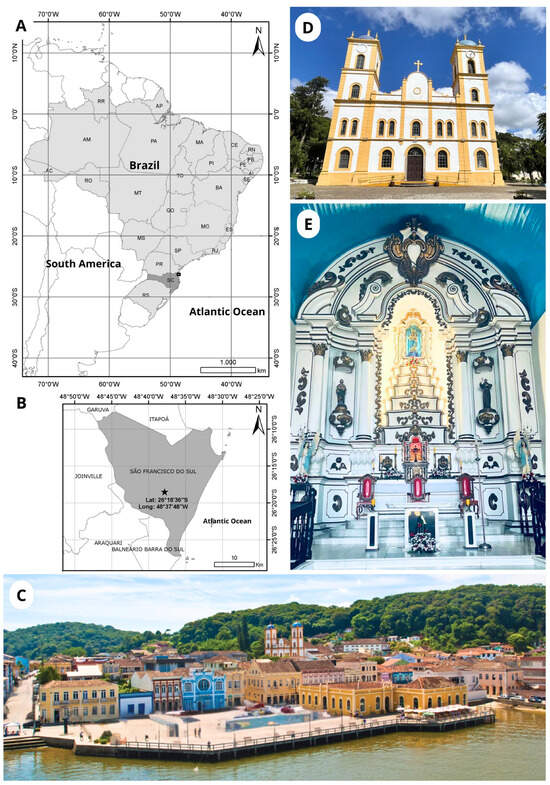
The history of ancient cities is often associated with devotional sculptures that accompanied the founding process of settlements. In southern Brazil, an old city founded in 1553 has its history linked to the image of Our Lady of Grace. However, the definition of
[...] Read more.
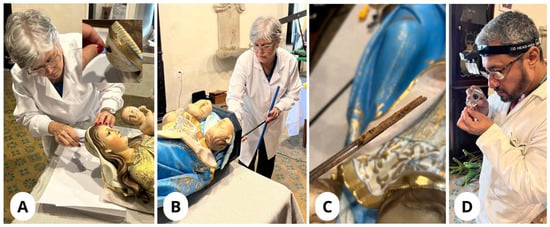
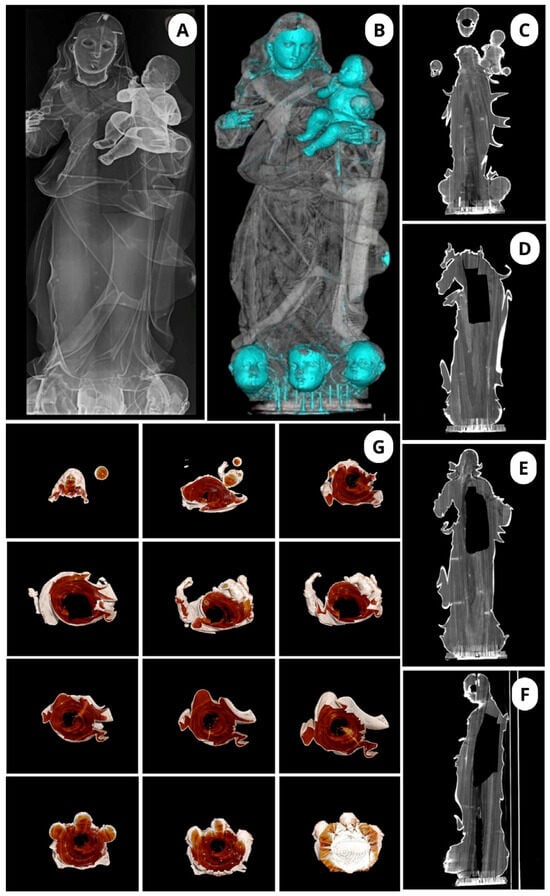
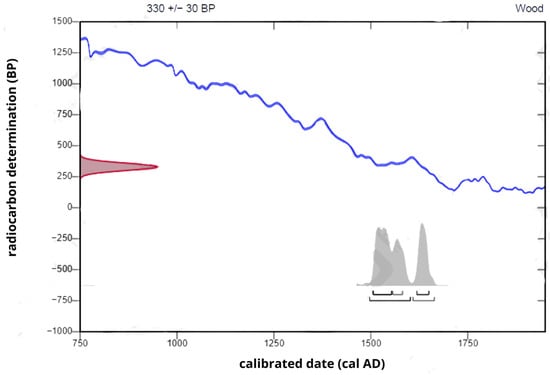
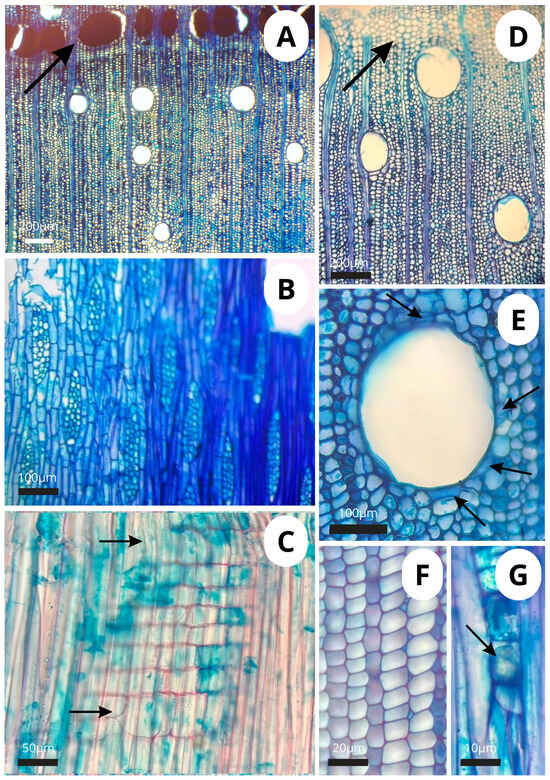
The history of ancient cities is often associated with devotional sculptures that accompanied the founding process of settlements. In southern Brazil, an old city founded in 1553 has its history linked to the image of Our Lady of Grace. However, the definition of its origin presents gaps, especially regarding its historical authenticity. This study aimed to identify the botanical species associated with this sculpture using the principles of historical anatomy. The sculpture underwent X-ray and CT scan examinations. Wood samples were extracted with a Pressler borer for histology and C14 dating. The identification was based on comparative anatomy. The artifact is carved from a single wood block, exhibiting wood integrity and absence of degrading agents. The species was identified as Cedrela sp. (Meliaceae), popularly known as cedar. C14 dated the wood around 1620 AD (330 ± 30 BP), offering new parameters for reflection on the origin of the piece and its relationship with the foundation of the city, traditionally associated with the year 1553. Cedar presents physical–structural characteristics of light density, is resistant to degrading agents, and possesses a pleasant aroma and dimensional stability, favoring its cultural use by master craftsmen and highlighting the richness in the carvings of religious images. The information contained within the wood was able to elucidate historical aspects regarding the founding of the city.
Full article
(This article belongs to the Section Environmental History)
►▼
Show Figures

Figure 1
Open AccessArticle
A Digital Humanities Study of Chinese Granary Systems Based on the Twenty-Six Dynastic Histories
by
Jiamin Wan
Histories 2026, 6(2), 29; https://doi.org/10.3390/histories6020029 - 10 Apr 2026
Abstract
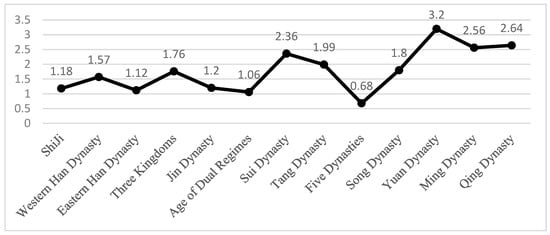
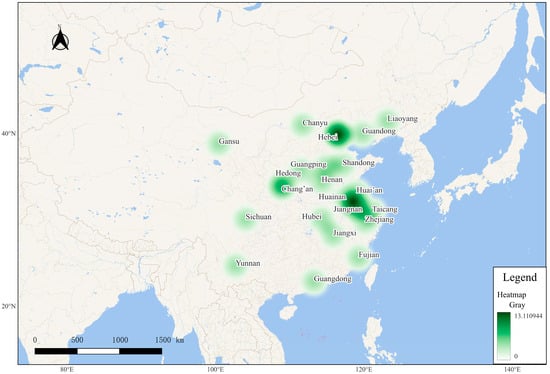
Granary systems formed a core institutional foundation of state governance, famine relief, and social stabilization in premodern China. Using the complete corpus of the Twenty-Six Dynastic Histories, this study employs digital humanities methods—including text preprocessing, word-frequency analysis, collocation analysis, time-series comparison, and geographic
[...] Read more.
Granary systems formed a core institutional foundation of state governance, famine relief, and social stabilization in premodern China. Using the complete corpus of the Twenty-Six Dynastic Histories, this study employs digital humanities methods—including text preprocessing, word-frequency analysis, collocation analysis, time-series comparison, and geographic co-occurrence analysis—to examine the long-term evolution and institutional structure of three major granary types: ever-normal granaries (ChangpingCang), charitable granaries (Yicang), and community granaries (Shecang). The results reveal significant temporal and spatial variation closely associated with dynastic stability, fiscal capacity, and disaster conditions. Ever-normal granaries evolved from early formation in the Western Han to institutional consolidation in the Tang, peak expansion in the Song, and functional diversification thereafter, operating as a centralized mechanism integrating price regulation, fiscal management, and famine relief. Charitable and community granaries, by contrast, display increasingly differentiated roles, reflecting a shift toward localized and socially embedded relief in later periods. Spatial analysis further demonstrates a hierarchical deployment pattern centered on political and agrarian cores and extended through transport corridors and frontier zones. Overall, the study highlights a multilayered relief system combining state authority and social participation, offering a data-driven reinterpretation of Chinese charity and governance.
Full article
(This article belongs to the Section Digital and Computational History)
►▼
Show Figures

Figure 1
Open AccessArticle
Would Switzerland Exist Without the Alps? Mountainous Environment and State Formation from a Historical Perspective
by
Jon Mathieu
Histories 2026, 6(2), 28; https://doi.org/10.3390/histories6020028 - 3 Apr 2026
Abstract
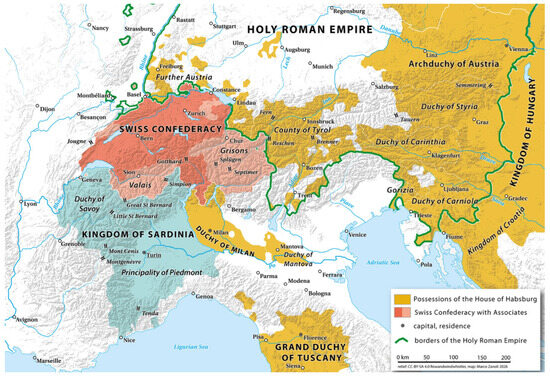
Since the emergence of scientific disciplines in the 19th century, geography and history have had an undefined relationship with each other. Conventions of subject-specific responsibility have developed, but in detail the separation is difficult, and the more the boundaries between the two disciplines
[...] Read more.
Since the emergence of scientific disciplines in the 19th century, geography and history have had an undefined relationship with each other. Conventions of subject-specific responsibility have developed, but in detail the separation is difficult, and the more the boundaries between the two disciplines are emphasised, the more tempting it sometimes is to cross them. A prominent example of this interdisciplinary tension and challenge is the relationship between geographical structures and certain forms of state formation. In scholarship, Swiss history is routinely associated with the Alps. Could one imagine this history without mountains? In the present article, I argue that it is important to analyse the relationships in all their complexity and not to be guided by general assumptions. To do this, one must consult various genres of literature. In this way, the self-evident may suddenly require explanation.
Full article
(This article belongs to the Section Political, Institutional, and Economy History)
►▼
Show Figures

Figure 1
Open AccessArticle
Degeneration and Its Discontents: Rereading Nordau in Context
by
Hedvig Ujvári
Histories 2026, 6(2), 27; https://doi.org/10.3390/histories6020027 - 3 Apr 2026
Abstract
This article examines Max Nordau’s Entartung (Degeneration) (1892/93) at the intersection of fin-de-siècle cultural critique and contemporary psychopathology. It argues that Nordau did not simply denounce modern art, but transferred an established psychiatric vocabulary—centred on degeneration, hysteria, and neurasthenia—into the sphere of aesthetic
[...] Read more.
This article examines Max Nordau’s Entartung (Degeneration) (1892/93) at the intersection of fin-de-siècle cultural critique and contemporary psychopathology. It argues that Nordau did not simply denounce modern art, but transferred an established psychiatric vocabulary—centred on degeneration, hysteria, and neurasthenia—into the sphere of aesthetic judgement. Interpreting a range of literary and cultural phenomena as symptoms of pathological degeneration, Nordau sought to diagnose the psychological condition of modern culture through the works of contemporary writers and intellectuals. Situating Entartung within the broader nineteenth-century degeneration paradigm and within contemporary evolutionary debates, the article analyses how scientific discourse was mobilised to authorise cultural evaluation. Rather than assessing the validity of Nordau’s diagnoses, it reconstructs the epistemic logic through which psychiatric categories were transformed into instruments of cultural criticism. In doing so, it repositions Nordau within the history of the human sciences, highlighting his role in the consolidation of expert authority in late nineteenth-century cultural debates. By foregrounding the structural migration of psychiatric categories into cultural criticism, the article contributes to a more nuanced understanding of the alliance between scientific knowledge and normativity at the fin de siècle.
Full article
Open AccessArticle
(Doing) Computational History: The Role of Data Work in Computational Approaches
by
Sarah A. Lang
Histories 2026, 6(2), 26; https://doi.org/10.3390/histories6020026 - 27 Mar 2026
Abstract
Computational methods have become increasingly prominent within the historical sciences, generating significant enthusiasm among some scholars. Yet their practical demands, epistemic limits, and ethical implications are less often critically examined than praised. This article explores what it means to do computational history today,
[...] Read more.
Computational methods have become increasingly prominent within the historical sciences, generating significant enthusiasm among some scholars. Yet their practical demands, epistemic limits, and ethical implications are less often critically examined than praised. This article explores what it means to do computational history today, arguing that it is not primarily defined by algorithms but by datasets. It is methodologically specific, resource-intensive, selective in scope, labour-heavy, and dependent on pre-digitised sources, specialised infrastructure, and interdisciplinary collaboration. These dependencies limit the scope of research questions and can produce narrow outcomes despite substantial effort, lending some validity to the concern over whether the field yields sufficient historiographical return for the labour invested. Corpus construction and data work lie at the epistemic core of computational history. These often undervalued tasks are not merely technical precursors to analysis, but interpretive and epistemic acts. Data are shaped by digitisation politics, historical bias, and institutional power. They shape the questions asked, the answers produced, and the legitimacy of findings. Recognising and valuing data work is essential, both to embed critical perspectives into computational humanities and to counteract the privileging of certain forms of labour over others. Due to the association of quantification with rigour and scholarly prowess, algorithmic work receives more credit, creating a two-tier system in this division of labour in which those who develop algorithms are elevated above those who curate data, despite their symbiotic interdependence. Computational history, when done well, requires deep engagement with our sources, be they historical or data. For computational history to stabilise as a meaningful discipline, it must prioritise building better datasets over pursuing increasingly complex algorithms on an unstable basis of data.
Full article
(This article belongs to the Section Digital and Computational History)
Highly Accessed Articles
Latest Books
E-Mail Alert
News
Topics
Topic in
Arts, Genealogy, Histories, Philosophies, Religions
Reimagining Totemism: Mystical Experience, Life Values, and Contemporary Art Practices
Topic Editors: Zhilong Yan, Lidija Stojanović, Aixin ZhangDeadline: 31 October 2026
Topic in
Histories, Humanities, Humans, Religions, Genealogy
Mysticism and Spiritual Syncretism in Ancestral Andean Cultures
Topic Editors: Edgar Gutiérrez-Gómez, Aldo Bazán-RamírezDeadline: 1 June 2027
Special Issues
Special Issue in
Histories
Interactions Across Borders in Historical Contexts: Interdisciplinary Approaches
Guest Editors: Pablo Sánchez Léon, Mariana Boscariol, André MurteiraDeadline: 1 December 2026
Special Issue in
Histories
People on the Move in Late Medieval Europe
Guest Editor: Bart LambertDeadline: 30 September 2027