Skip to Content
  • 1.6
    Impact Factor
  • 3.0
    CiteScore
  • 20 days
    Submission to First Decision
  • 7 days
    Acceptance to Publication

Journal of Zoological and Botanical Gardens

Journal of Zoological and Botanical Gardens is an international, peer-reviewed, open access journal on the intersection of fauna and flora conservation, published quarterly online by MDPI. The World Association of Zoos and Aquariums (WAZA) is affiliated with JZBG and its members receive discounts on the article processing charges.

Get Alerted

Add your email address to receive forthcoming issues of this journal.

All Articles (333)

  • Article
  • Open Access

Urbanization and climate change are exerting increasing pressure on biodiversity, particularly in rapidly growing cities of the southwestern United States. While urban development is generally associated with reduced species richness, responses among insect pollinators, including butterflies, are highly variable and shaped by habitat availability, resource distribution, and landscape structure. Concurrently, increasing aridity and extreme heat events linked to climate change pose additional risks to ectothermic organisms such as butterflies. Urban green spaces can function as hotspots, yet the role of zoological gardens in supporting local pollinator biodiversity remains poorly understood. Here, we use community science data from eButterfly and iNaturalist to compare butterfly species richness and diversity within zoos to those of their surrounding urban landscapes across five southwestern USA cities. Contrary to previous work comparing botanical gardens, we found that zoos consistently exhibited low to moderate species richness and diversity relative to comparable areas within their respective cities, falling well below our predetermined hotspot thresholds. We conclude that while zoological gardens, unlike botanical gardens, may not currently function as localized biodiversity hotspots within their urban matrix in these arid environments, they support functional urban pollinator communities. Thus, the current and future local conservation value of zoos could be substantially enhanced through targeted pollinator habitat management and expanded community science monitoring.

J. Zool. Bot. Gard.

15 October 2026
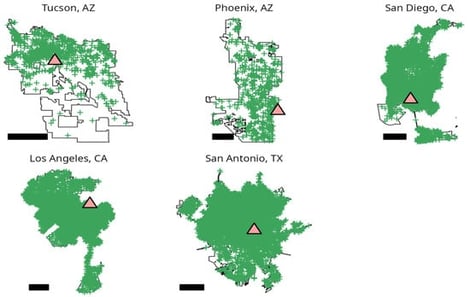
Locations of boundaries, zoos (orange triangles), and community science observations (green crosses) used in the current study. Relative scale bars (10 km) in the bottom left of each panel. City boundaries based on data from OpenStreetMap (2017).
  • Article
  • Open Access

Dendrometric Data from a Tropical Arboretum as a Teaching Dataset and Baseline for Living Collection Monitoring

  • Jorge Makhlouta Alonso,
  • Lucas Costa Monteiro Lopes and
  • Bruno Coutinho Kurtz
  • + 10 authors

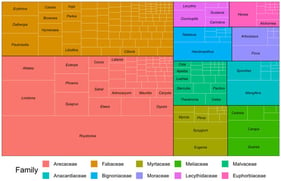
Living collections in botanical gardens play important roles in conservation, research, and education, but their potential to generate interpretable biological information for teaching and management is often underused. This study reports a teaching experience based on dendrometric data from the arboretum of the Rio de Janeiro Botanical Garden in a graduate course on applied statistics. The course combined R programming with a problem-oriented pedagogical approach, using a census dataset of 4621 individuals with DBH ≥ 10 cm as a common object of investigation. The dataset served as a common framework for linking statistical procedures, from exploratory analysis to model-based approaches, with botanical interpretation and management-oriented questions. Analytical outputs showed that taxonomic abundance, dominated by Arecaceae and Fabaceae, did not always correspond to structural dominance measured by total basal area. In addition, height–DBH models fitted for Roystonea and Carapa highlighted interspecific and between-bed variation within the arboretum. Student submissions reproduced and adapted the analytical workflows, while instructor feedback identified difficulties in regression interpretation and model diagnostics. Overall, the experience illustrates how dendrometric data from a living collection can be incorporated into applied statistics teaching while also providing information for collection assessment and future monitoring.

J. Zool. Bot. Gard.

13 October 2026

Treemap of individual abundance by genus within the ten most abundant families in the arboretum of the Rio de Janeiro Botanical Garden. Rectangle size is proportional to the number of individuals recorded in each family and genus.
  • Article
  • Open Access

Estimate of Agouti (Dasyprocta sp.) Abundance in the Emílio Goeldi Zoobotanical Park

  • Lorena Sarmento dos Santos,
  • Ana Luísa Kerti Mangabeira Albernaz and
  • Thatiana Andrade de Figueiredo
  • + 1 author

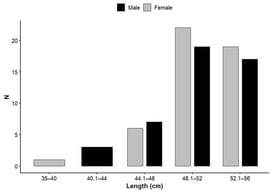
Many modern urban parks have free-ranging animals. This helps with the ex situ conservation of species and raises empathy and awareness. However, these populations, which receive food and medical treatment, can exceed expected densities and require management. Estimating population size is the first step. In this study, we used the capture–marking–recapture method to estimate the population size of free-ranging Dasyprocta sp. at the Emílio Goeldi Zoobotanical Park. Captures were conducted between October 2024 and December 2025. Each individual was weighed, measured, sexed and microchipped. We estimated population size using the Rcapture package and selected the best-fitting model using the Akaike information criterion (AIC). Size structure data showed that only two young animals were captured, and medical data recorded only two deaths during the study period. Due to closure, high population density and low birth and death proportions, we used closed population models. A total of 123 captures were made, including 94 markings and 28 recaptures. The estimated population size was 201 individuals, corresponding to a density of 37.2 ind/ha. This greatly exceeds previously reported densities for agoutis, and suggests an ecological imbalance in the study area. These findings provide an important baseline for monitoring and managing this population.

J. Zool. Bot. Gard.

12 October 2026

Length distribution (cm) among female (grey, N = 48) and male (black, N = 46) Dasyprocta individuals captured in Emílio Goeldi Zoobotanical Park.
  • Article
  • Open Access

Distribution Patterns of Terrestrial Nematodes and Plant Communities in an Irish Garden

  • Alejandra Vieyra-Ramírez,
  • Lisa Moran and
  • Thomais Kakouli-Duarte
  • + 2 authors

Gardens provide several ecosystem services, including functioning as a habitat for diverse taxa and promoting users’ well-being. Soil biodiversity is considered an important factor in the capacity of the soil to provide ecosystem services. Nematodes are widely used as environmental indicators based on their key roles in the soil food web. Nematode and plant communities were studied across five different areas in a garden in Ireland as part of an assessment of soil health, as well as to explore their distribution patterns inside the garden. The aims of the study were to contribute to the exploration of soil biodiversity and soil health in built environments, and to study nematode communities in different plant assemblages. Using nematode morphology, a total of 33 terrestrial nematode families were identified across the garden, indicating similar levels of soil ecosystem enrichment and food web structure among different plant assemblages. A total of 25 plant families were identified in the five areas, revealing distinct plant communities inside the gardens. The study was limited to a single sampling event and the taxonomic identification of nematode and plants at the family level. However, the results highlight the use of nematodes as environmental indicators for soil health assessments in gardens, and provided baseline information that could potentially inform on soil biodiversity and plant management strategies.

J. Zool. Bot. Gard.

5 October 2026

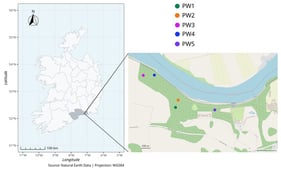
Location of MCG and colour-coded sampling areas (modified from OpenStreetMap).

Highly Accessed Articles

News & Conferences

Latest Issues

Open for Submission

Journal Sections

The Long-Standing Problem of Parasitic Diseases in Zoo Animals
Reprint

The Long-Standing Problem of Parasitic Diseases in Zoo Animals

Current Challenges and Searching for Solutions
Editors: Mariana Panayotova-Pencheva
XFacebookLinkedIn
J. Zool. Bot. Gard. - ISSN 2673-5636