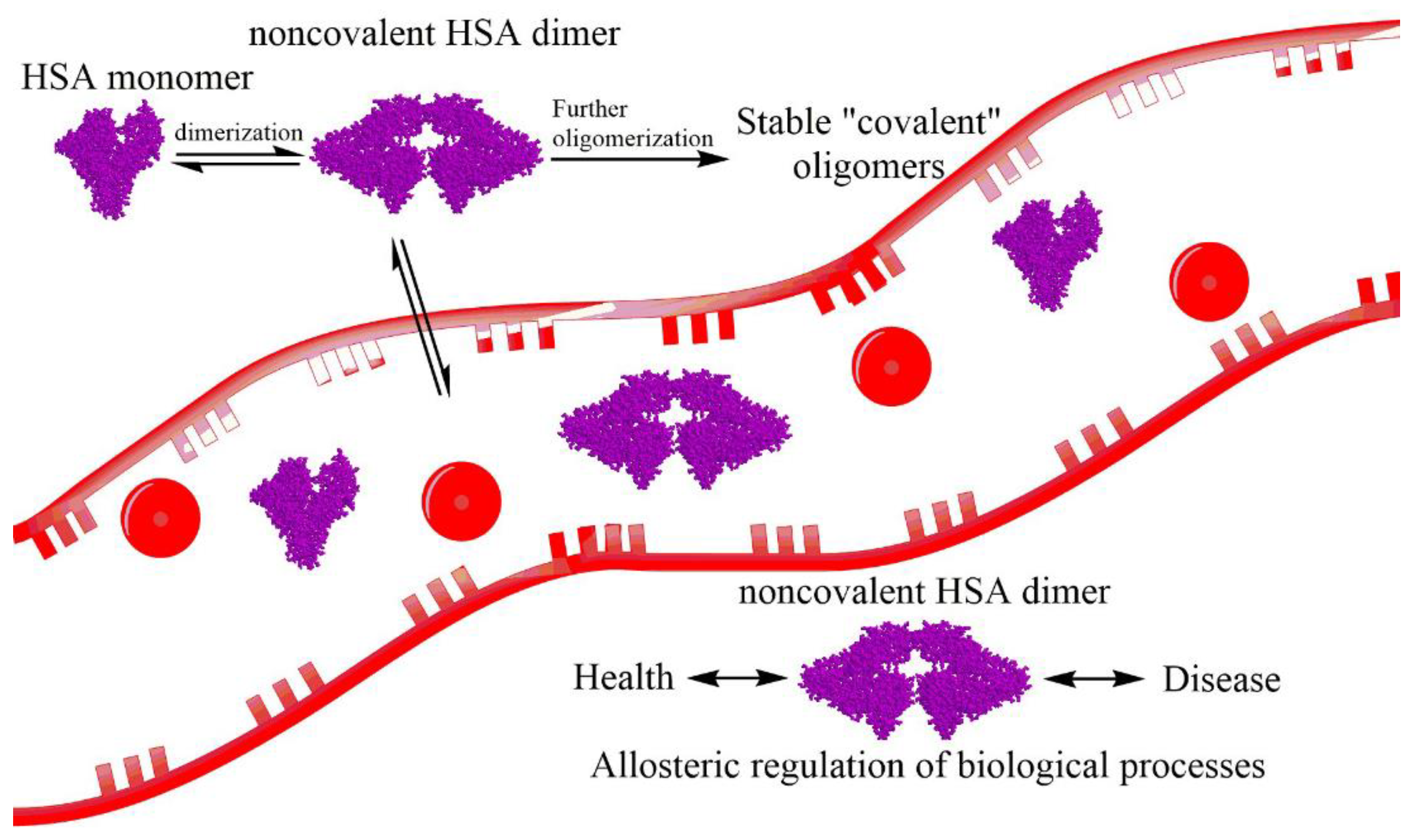
Reversible Dimerization of Human Serum Albumin

 ,
,  , ,
, , 
Abstract
Share and Cite
Chubarov, A.; Spitsyna, A.; Krumkacheva, O.; Mitin, D.; Suvorov, D.; Tormyshev, V.; Fedin, M.; Bowman, M.K.; Bagryanskaya, E. Reversible Dimerization of Human Serum Albumin. Molecules 2021, 26, 108. https://doi.org/10.3390/molecules26010108
Chubarov A, Spitsyna A, Krumkacheva O, Mitin D, Suvorov D, Tormyshev V, Fedin M, Bowman MK, Bagryanskaya E. Reversible Dimerization of Human Serum Albumin. Molecules. 2021; 26(1):108. https://doi.org/10.3390/molecules26010108
Chicago/Turabian StyleChubarov, Alexey, Anna Spitsyna, Olesya Krumkacheva, Dmitry Mitin, Daniil Suvorov, Victor Tormyshev, Matvey Fedin, Michael K. Bowman, and Elena Bagryanskaya. 2021. "Reversible Dimerization of Human Serum Albumin" Molecules 26, no. 1: 108. https://doi.org/10.3390/molecules26010108
APA StyleChubarov, A., Spitsyna, A., Krumkacheva, O., Mitin, D., Suvorov, D., Tormyshev, V., Fedin, M., Bowman, M. K., & Bagryanskaya, E. (2021). Reversible Dimerization of Human Serum Albumin. Molecules, 26(1), 108. https://doi.org/10.3390/molecules26010108