


Abstract
In previous review articles the attention of the biocatalytically oriented scientific community towards the marine environment as a source of biocatalysts focused on the habitat-related properties of marine enzymes. Updates have already appeared in the literature, including marine examples of oxidoreductases, hydrolases, transferases, isomerases, ligases, and lyases ready for food and pharmaceutical applications. Here a new approach for searching the literature and presenting a more refined analysis is adopted with respect to previous surveys, centering the attention on the enzymatic process rather than on a single novel activity. Fields of applications are easily individuated: (i) the biorefinery value-chain, where the provision of biomass is one of the most important aspects, with aquaculture as the prominent sector; (ii) the food industry, where the interest in the marine domain is similarly developed to deal with the enzymatic procedures adopted in food manipulation; (iii) the selective and easy extraction/modification of structurally complex marine molecules, where enzymatic treatments are a recognized tool to improve efficiency and selectivity; and (iv) marine biomarkers and derived applications (bioremediation) in pollution monitoring are also included in that these studies could be of high significance for the appreciation of marine bioprocesses.
1. Introduction
Currently there is enormous interest in marine biotechnology with the worldwide flourishing of editorial initiatives (journals, books, etc.) hosting important experimental results and surveys from several projects, especially those belonging to the FP7 program and to the topic “Blue growth” of H2020, potentially providing clues that will aid development of enabling technologies in the field. The oceans are the world’s largest ecosystem, covering more than 70% of the earth’s surface. They host the greatest diversity of life in unexplored habitats. The Census of Marine Life, evaluating marine biodiversity, ascertained that at least 50% and potentially more than 90% of marine species are undescribed by science [1]. Only a deep understanding of the complexity of the marine ecosystem will enable human beings to protect the oceans and organisms populating them, and pave the way for sustainable exploitation of marine resources. This knowledge will certainly fuel various applications and itself constitutes the core of marine biotechnology. Increasingly labeled “blue biotechnology”, this wide field covers many aspects that are highly relevant to societal challenges, as is well established in the EU Framework Programme Horizon 2020. Several outlined emerging technologies are (i) robotics; (ii) miniaturized solutions for marine monitoring; (iii) biomimetics; (iv) acoustics; (v) nanobiotechnlogy; (vi) renewable energy harvesting (wave energy, algae biofuels); and (vii) high-performance computing. However, many challenges remain, including a deep comprehension of the “marine biotechnology landscape” and a multidisciplinary approach, not only in education and training [2].
Marine sources (microorganisms in general and symbionts in particular, extremophiles, fungi, plants and animals) are of scientific interest in that the origin of marine biomolecules (i.e., biocatalysts) features all marine bioprocesses. Knowledge of these biocatalysts and their habitat-related properties such as salt tolerance, hyperthermostability, barophilicity and cold adaptivity (of great interest for industry) is necessary for bioprocesses exploitation. One of the most explicative aspects is related to the stereo-chemical properties of a marine enzyme. Substrate specificity and affinity, as evolved properties that are linked to the metabolic functions of the enzymes, are key aspects. Two review articles already appeared in 2010 [3] and in 2011 [4] with different focuses on these topics. The first [3], to draw the attention of the biocatalytically oriented scientific community to the marine environment as a source of biocatalysts; in fact the discussion was mainly about the specific diversity of molecular assets of biocatalysis that were recognized with respect to terrestrial counterparts. The second review [4] spotlighted habitat-related properties from a biochemical point of view, also reporting on important examples in bioprocesses. Various updates of these former analyses of the literature have also recently been published, such as the one by Lima et al. 2016 [5] including marine examples of oxidoreductases, hydrolases, transferases, isomerases, ligases and lyases ready for food and pharmaceutical applications.
In the present review, a new approach for searching the literature and presenting a more refined analysis is adopted with respect to previous surveys. The focus of the literature search is centered on the enzymatic process more than on a single novel activity. This survey is developed according to the biotechnological field of applications where bioprocesses, based on marine enzymes and/or marine biomasses, are central. Focusing on enzymatic processes rather than on single activities helsd us to recognize the fields of application. For the first, a biorefinery value-chain, the provision of biomass is one of the most important aspects, with aquaculture as the prominent sector. In the food industry the interest in the marine domain is similarly developed to deal with the enzymatic procedures adopted in food manipulation. Moreover, as for the selective and easy extraction/modification of structurally complex marine molecules, enzymatic treatments are a recognized tool to improve efficiency and selectivity in fine chemistry processes to get access to bioactive compounds and provide complex core blocks ready for hemisynthesis. In closing, the field of marine biomarkers and derived applications (bioremediation) in pollution monitoring could be of high significance for the appreciation of marine bioprocesses.
In the fields indicated above, the selected primary articles are presented in tabulated form, picking up different aspects of importance in short explicative notes to avoid a huge amount of text. Selected modern review articles are listed under each paragraph to depict the present state of the art of the related field.
2. Literature Search
A survey of the literature has been conducted mainly by using the database ScienceDirect with access to 3800 scientific journals in major scientific disciplines. The search was based on two terms: (i) “enzymatic processing” (in abstract, title or keywords) and (ii) “marine” (in all fields). How to manipulate these queries to get an effective result in terms of the number of hits was first investigated using the search functions offered by the database. In particular, the W/in function (proximity operator) has been found useful for the first query, with the keywords used in the query sorted into phrases (low numbers), sentences (medium) and paragraphs (high) of the hit. This result is then refined by using the AND operator with the word “marine” in all fields. The resulting pattern of these searches is as follows: W/3 (137 hits), W/4 (153), W/5 (161), W/15 (256) and for W/50 (442). As a comparison, a more general coverage alternative search was also used, adopting the same keywords, in the Scopus database. It resulted in a similar score (478 hits), thus confirming the choice of ScienceDirect as the reference database when using W/50. This has been the value adopted for searching for articles for this review.
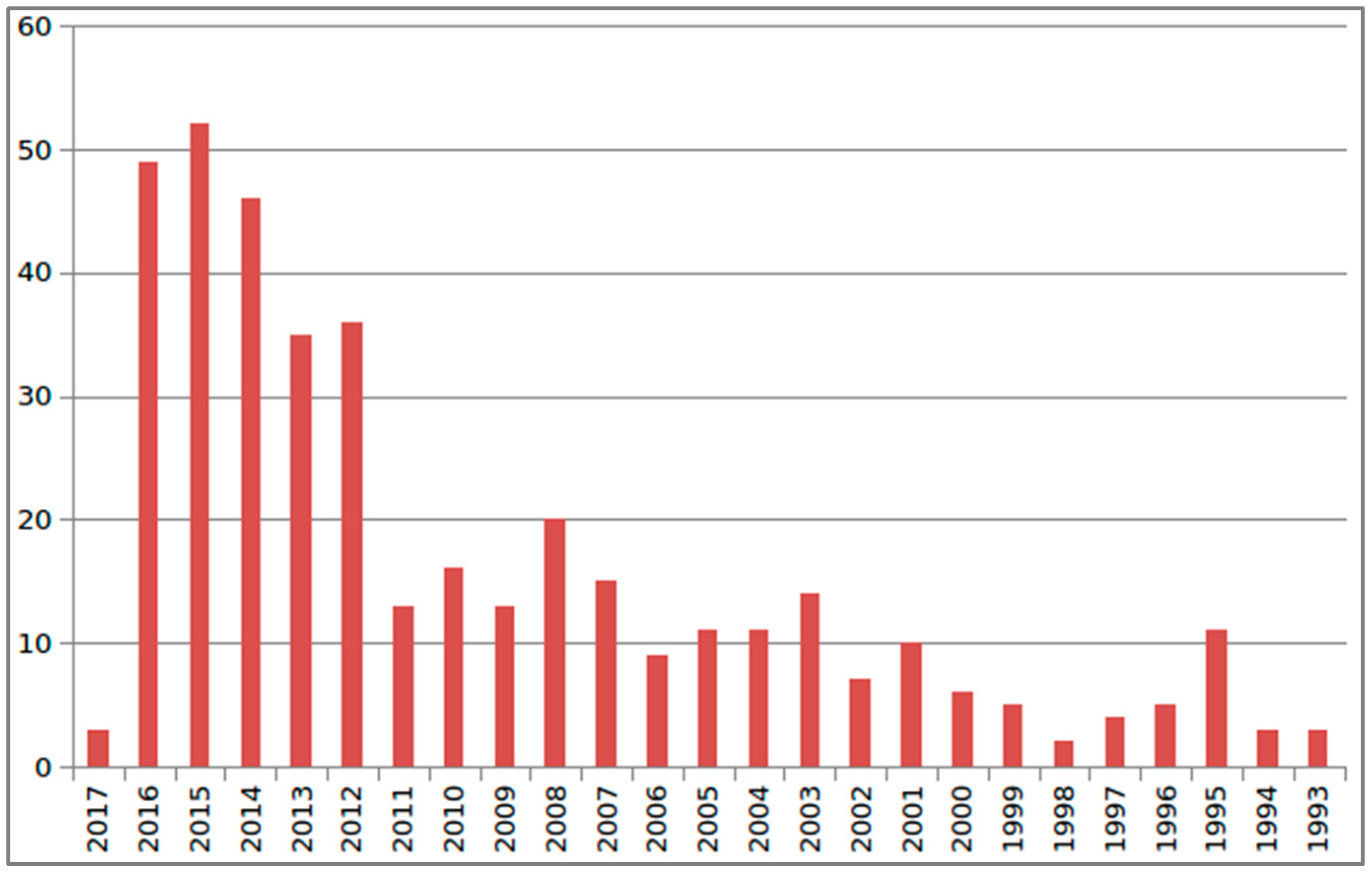
An interesting detail is the yearly distribution of the hits (shown in Figure 1 below). Two time intervals can be easily recognized; published results are doubled yearly from 2012 to 2016 with respect to the previous score in the interval 1993 to 2011, characterized by fewer than 20 hits per year. This picture reflects the strategic efforts of various funded programs created by the European Commission to support and foster research in the European Research Area and similar actions in other parts of the world. That logical reason for the variation of the results in the two intervals 1993–2011 and 2012–2016 further confirms the suitability of the keywords adopted.
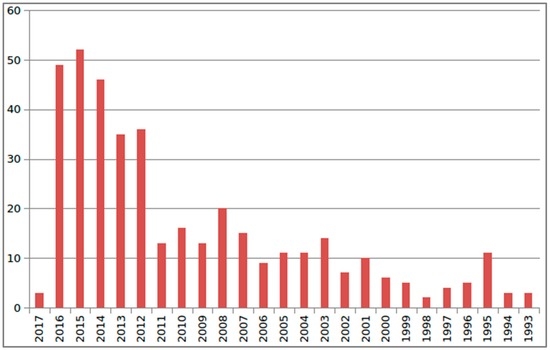
Figure 1.
Yearly distribution of the number of hits in the search for articles in this review (see text for details). Fewer than 20 hits per year characterizes the interval 1993–2011; a doubled value is seen for 2012–2016.
3. Biorefinery
A future sustainable economy based on renewable resources is the main point of the concept of a biorefinery. Research and development studies have been underway for many years in different parts of the world to replace a large fraction of fossil resources. The most important aspect of a biorefinery value-chain is the provision of biomass with a consistent and regular supply of renewable carbon-based raw materials [6]. One of the sectors providing these feedstocks is aquaculture (algae and seaweeds), which, together with biochemical processes (marine enzymes in pre-treatment) adopted, is an important aspect of the domain of marine biotechnology. Needless to say, the focus in many review articles [7] is on the importance of extremophiles and thermostable enzymes to overcome the limitations of biocatalysts in current bioprocesses for lignocellulosic biomass conversion. In this context, it is also of interest to mention the features of marine biocatalysts related to the ecological features of the habitat in which marine organisms thrive. Generally the resulting enzymatic properties are very important from a biotechnological point of view [4,8].
The idea here is to depict both the state of the art about marine enzyme-based bioprocesses and the importance of marine-originating feedstocks in biorefinery. Therefore, biocatalysts and biomass are the two fundamental elements on which the analysis of primary articles in the literature is based here (Table 1 [9,10,11,12,13,14,15,16,17,18,19,20,21,22,23,24,25,26,27,28,29,30,31,32,33,34,35,36,37,38,39,40,41,42]). The selected articles inserted in Table 1 deal with (i) cellulases and other important carbohydrate-active enzymes; (ii) lipases, to manipulate feedstock oils for biodiesel production and (iii) other biocatalysts, including those commercially available. However, to depict the current state of interest when only marine feedstock exploitation is present, chemical treatments were also listed in these selected modern articles (entries 13–34, Table 1).

Table 1.
Biorefinery.
Non-conventional sources of cellulase enzymes have been sought for a long time. As mentioned in an old report, the identification of these biocatalysts in the marine fungus Dendryphiella arenaria [43] dates back 40 years. However, of recent interest are the complex biopolymers in microalgae cells subjected to breakdown in biological pretreatments, as reported in a more modern review [44]. The focus is not only on cellulases as the most-explored specific and efficient enzymes (entries 1–5 Table 1), but also on other hydrolytic enzymes, including hemicellulase, pectinase, protease and amylase, even in the form of an enzymatic cocktail seen as an effective tool with respect to single enzymes as well. Entire microbial communities associated with marine organisms are studied (entry 2 Table 1). Chitinases are very well represented in research, too, and new insights into the disruption of crystalline polysaccharides were gained, as seen in a recent review report [45]. Substrate-disrupting accessory non-hydrolytic proteins are novel tools to improve molecular accessibility to polymers with increased process efficiency. Other primary articles, dealing with different carbohydrate active hydrolases, are listed in Table 1 (entries 6–8).
Obviously lipases are also considered a convenient tool for converting a wide range of feedstock oils into biodiesel [46]. A study of 427 yeast strains from seawater, sediment, mud of salterns, guts of the marine fish and marine algae should also be mentioned here [47]. Industrial yeast Yarrowia lipolytica of marine origin is a biocatalyst of interest in metabolic engineering studies used to expand the substrate range [48]. Entries 9–12 in Table 1 are interesting primary articles along this line of research. Microalgae cultivation and macroalgae developed as pests due to eutrophication are generally seen as potential resources for biofuel production [49]. Another interesting aspect is the combination of macroalgae cultivation exploiting nutrients coming from marine aquaculture or other processes.
In industrial squid manufacturing for chitin production, a large volume of protein effluents containing peptones from alkaline and enzymatic hydrolysis of the pens are substrates used as a nitrogen source to reduce the cost of marine probiotic bacteria cultivation (entry 13, Table 1). A similar approach was also reported for effluents originating from the industrial thermal treatment of mussels (entry 14, Table 1); many other examples on these lines are reported here (entries 15–33, Table 1), where studies on different biomasses were conducted often by comparing chemical and enzymatic procedures and yeast fermentations adopted for bioethanol production. An enzymatic cocktail of glucanase, cellulase and glucosidase was studied for R-phycoerythrin extraction, assisted by ultrasound technology from the red seaweed G. turuturu (entry 34, Table 1) proliferating along the French coast.
Marine biomass-centered studies are also listed in the section about food industry development. Additionally, a particular and interesting aspect studied is the use of algicidal microorganisms to improve cell disruption during biotechnological processes aimed at producing biofuels. Secreted algicidal substances to be used as microalgae breakdown agents are reviewed [50].
4. Food Applications
Enzymatic procedures in food processing are mostly based on biocatalysts of terrestrial or microbial origin, with new enzymes currently obtained from these environments. For years the marine domain has been seen as a promising source of interesting biocatalysts [51] for modern applications. However, the enzymatic activities present in seafood or in byproducts were utilized for centuries in the traditional production of various cured and fermented seafood, allowing the preparation of numerous sauces and pastes from the time of the Greeks and Romans and also seafood processes in the Far East [52].
The recovery and processing of waste is generally a challenge in the food industry. Especially in the seafood sector, a more complete utilization of the raw material with minimization of the inherent problems of pollution and waste treatment is a current issue. Many reviews or chapters in books depicting the state of the art of this specific topic were found. One of the oldest reports found during our search dates back to 1978; interestingly, it already pointed out bioconversion tools for the processing and valorization of food waste in the conversion to useful products [53]. Upgrading of sea byproducts is, however, still central in more modern analysis [54], with more attention dedicated nowadays to therapeutic potential. Attention to antihypertensive and immunomodulatory agents (i.e., peptides obtained by enzymatic hydrolysis of fish proteins) is recognized more than the simple nutritional and biological properties of these materials. Both have recently been investigated in marine mussels [55]. While for mussel proteins the focus is on peptides obtained by bioprocesses, lipids (PUFAs) are also investigated for the prevention and treatment of rheumatoid arthritis. The use of all-natural stabilizers for food, in the form of (enzymatically) muscle-derived extracts, appears interesting, as well as the addition of plant extracts or pure phenolic compounds to combat oxidation in seafood [56]. Basic research related to the enzymatic processes occurring in seafood material has also been traced; a study of blackening processes in freeze-thawed prawns during storage is of interest. The respiratory pigment hemocyanin is converted into a phenoloxidase-like enzyme and acts as a potent inducer of post-harvest blackening; these discoveries are helpful for the development of anti-blackening treatments for these foods [57]. Biotechnologists are also interested in the large availability of seafood raw materials; byproducts from waste in processing (liver, skin, head, viscera, trimmings, etc.) amount to 60% or more [58] of total renewable raw material. Review articles were found for general aspects [59,60] and a particular focused on seaweeds [61].
The food and biorefinery sections overlap because byproducts, primarily used as feed with low returns, are also thought to be useful for biodiesel generation. Some articles could thus be listed in both sections; however, repetition is avoided here and also in this case tabulation is based on the same fundamental key for the analysis of literature adopted previously in Table 1; enzyme (marine or commercial)-based bioprocesses and types of marine-originating feedstocks are the two columns of Table 2, including a third one for notes [62,63,64,65,66,67,68,69,70,71,72,73,74,75,76,77,78,79,80,81,82,83,84,85,86,87,88,89,90,91,92,93,94,95,96]. Commercial or marine-originating proteases and lipases are most used for production in this field and a wide range of edible biomass for the valorization study is listed in Table 2. They are also an excellent, low-cost source for enzyme production [97].
Table 2.
Food applications.
An enzymatic approach can overcome the environmental impact of traditional processes and make the processes sustainable and cost-effective. In a very recent comprehensive review, it is reported that significant developments can be expected for enzyme applications in the fish and seafood industries [98] in the near future.
5. Fine Chemistry and Lab Techniques
Biocatalytic procedures using marine enzymes for the production of fine chemicals are an important aspect of this review. The production and manipulation of complex biomolecules benefited from important biotechnological features characterizing biocatalyzed reactions with respect to the use of purely chemical-based methods [99].
Technological improvements (metagenomics) applied to bioprospecting in understudied environments help to identify a greater repertoire of novel biocatalysts with complementarity about properties (stereochemistry, resistance, etc.). Marine enzymes offer hyperthermostability, salt tolerance, barophilicity, cold adaptability, chemoselectivity, regioselectivity and stereoselectivity [4], thus acting as useful and new alternatives to terrestrial biocatalysts in use. Particular importance is represented by enzymes showing resistance to organic solvents, with the examples from marine environments mostly related to halophilic proteins (salt reduces water activity, like organic solvent systems), as analyzed in a recent, comprehensive review article [100].
As for carbohydrate-active enzymes, selective and easy manipulation of structurally complex marine polysaccharides provides homogeneous core blocks (oligosaccharides) for analysis and hemisynthesis. This constitutes the core of a sustainable process when using renewable resources. Other preminent examples of enzymatic treatments as a tool to improve the extraction efficiency of specific bioactive compounds from seaweeds were recently reviewed [101] and laboratory techniques in the preparation of compounds for further research are discussed in a recent report [102] listing enzymes for the functionalization of chitosan such as polyphenoloxidases (PPO) (tyrosinases, laccases) and peroxidases (POD); examples from the marine environment are indicated.
Due to our specific design of search terms in querying literature databases, the coverage of articles dealing with the simple prospecting, isolation and identification of new marine biocatalyst(s) is partial; however, however those found are included in this section. Indeed, most articles listed in Table 3 [103,104,105,106,107,108,109,110,111,112,113,114,115,116,117,118,119,120,121,122,123,124,125,126,127,128,129,130,131,132,133,134] focused on bioprocesses for the synthesis of useful products and on enzymatic routes adopted for setting up laboratory techniques to study marine complex biomolecules (e.g., improving extraction, digestion of polysaccharides to simple components for structural determination, etc.). Various examples are found in the literature of the synthesis and hydrolysis of glycosidic bonds. Entry 8, Table 3 [110] is only one of the examples of synthetic strategies for the production of interesting products (enzymatically glycosylated natural lipophilic antioxidants). Polymers with synthetic carbohydrates have a wide range of applications in medical biotechnology as new biomaterials [135] and carbohydrate-active hydrolases can also be applied; moreover, these biocatalysts are important for the synthesis of a number of novel dietary carbohydrates in food technology, for the production of chromophoric oligosaccharides of strictly defined structure as valuable biochemical tools, etc. Other numerous applications oriented to vegetal waste treatment in recovering useful materials are reported in the section devoted to biorefinery.
Table 3.
Fine chemistry and laboratory techniques.
Tabulation of primary articles in this section (Table 3) is based on biocatalyst(s) used, product(s) obtained with the biocatalyzed process, or evaluating of marine feedstock(s); comments about the contents of the article are also reported in the notes in Table 3. Entries 1–18 (Table 3) are related to carbohydrate-active hydrolases, while a few (entries 19–23) are listed for ester hydrolysis and proteolytic activities (entries 31 and 32).
Little is known about the distribution and diversity of Candida genus in marine environments, with only a few species isolated from these environments [136]. C. rugosa and C. antarctica are among the terrestrial yeasts, so biocatalysis-related articles dealing with these quite famous commercial lipases are not listed here. Interesting examples of oxidoreductases are also found in the literature, both for direct biocatalytic applications (including examples of immobilized enzymes) and for biogenetically related studies (see entries 24–30, Table 3).
Finally, it is worth mentioning in this section a remarkable review focused on the biosynthesis of oxylipins in non-mammals. Biocatalysts involved in pathways related to these biomolecules carry interesting and unusual catalytic properties for biocatalysis. A detailed biocatalytic knowledge of enzymatic catalysis in these reactions is needed to plan a possible direct in vitro biocatalytic lab-scale production of useful products [137]. With the similar aim of increasing knowledge about natural enzymes with interesting features, a review was compiled on the enzymatic breakage of dimethylsulfoniopropionate [138]. The compound, a zwitterionic osmolyte produced by corals, marine algae and some plants in massive amounts (ca. 109 tons per year), is transformed by marine microbes and bioprocesses involving this molecule and derivatives are of interest for assessing the ability of relevant enzymes to realize these transformations.
6. Sediments and Bioremediation
Among the studies on marine sources for enzymes, the fields of marine biomarkers and bioremediation applications are of high significance in this context [139].
In the list of parameters that are usually considered when assessing exposure to environmental pollutants in aquatic ecosystems, biotransformation enzymes (phase I and II), biotransformation products and stress proteins are of high interest for enzymatic processing. It is of value, for example, that a unique set of protein expression (signature) for exposure to different chemical compounds has been recognized for Mytilus edulis and the expressed proteins identified participate in α- and β-oxidation pathways, xenobiotic and amino acid metabolism, cell signalling and oxyradical metabolism [140]. Bioremediation as an enabling technology exploits naturally occurring organisms that with their metabolic ability are able to transform toxic substances in less hazardous compounds that in turn are included in biogeochemical cycles. Stereochemical aspects play an important role due to the fact that homochirality appears to be a requirement for the functioning of enzymes with specific (partial) incorporation of stereoforms. Enantioselective chromatographic separation of chiral environmental xenobiotics is covered in an interesting review. The study includes microbial transformation of chiral pollutants in aquatic ecosystems, enzymatic transformations, etc. [141]. An additional report states the effectiveness of enzymatic processes in bioremediation even though limited application is evidenced with respect to stability and the cost of biocatalysts. Marine enzymes are seen as a solution to this challenge. In particular, marine fungi and their laccases are used in the textile industry, mostly to deal with salty effluents [142].
A recent report of a European project in this field characterizes novel hydrocarbon degrading microbes isolated from the southern side of the Mediterranean Sea. Exploiting and managing the diversity and ecology of microorganisms thriving in these polluted sites is a major objective in terms of increasing knowledge of the bioremediation potential of these poorly investigated sites [143].
In Table 4 primary articles in the field are selected [144,145,146,147,148,149,150,151,152,153,154,155,156,157,158,159,160,161,162,163,164,165,166,167,168], indicating the biocatalyst(s) or organism(s) exploited and details of application, with notes about the results and importance of the work.
Table 4.
Sediments and bioremediation.
7. Others
Searching within records used in this review for the names of class of enzymes, oxidoreductases, transferases, hydrolases and lyases are equally represented, while isomerases and ligases are less often used as keywords. However, only 30% of the total records contain such names for classes, with common names of biocatalysts more often adopted in titles, abstracts and keywords. Thus, in this section a few other topics, difficult to insert in previous sections, are covered.
Enzymes acting on 1,4 glycosidic bonds between galacturonic acid residues in pectin were investigated for the improvement of banana fiber processing. At least one actinomycete strain of Streptomyces lydicus collected from estuarine and marine areas in India was found to be a potent producer of polygalacturonase [169].
In a study to reduce the cost of aquaculture of fish cobia by adding crustacean processing waste, an investigation of the endogenous chitinolytic enzymes in cobia was conducted. It suggested substantial endogenous production of enzymes of the chitinolytic system and that the activity from chitinolytic bacteria was not significant [170].
An interesting study based on enzymology tools was conducted for demonstrating the enhanced mixing processes between the sediment and the overlying waters of the Delaware Estuary. The authors used fluorescently labeled polysaccharides to determine the effects of suspended sediment transport on water column hydrolytic activities [171].
In another report, a rapid and easy-to-use set, composed of semi-quantitative kits, was adopted for the investigation of the heterotrophic bacterial community in meadows of Posidonia oceanica during environmental surveys. Although the set is composed of known kits (ApiZym galleries, Biolog microplates and BART™ tests) principal enzymatic activities, metabolic capabilities and benthic mineralisation processes were all studied [172].
A particular aspect is related to carbonic anhydrases; it is worth mentioning in this review since it was recently discussed in a book devoted to these enzymes from extremophiles and the possible biotechnological applications for which they can be used [173]. Among the CO2 sequestration methods proposed in order to capture and concentrate CO2 from combustion gases, the biomimetic approach [174] could indeed benefit from the diversity of marine carbonic anhydrases. However, these metallo-enzymes are also discussed for their potential as novel biomarkers in environmental monitoring and the development of biosensors for metals [175], and another interesting aspect, encompassing at least two of the fields listed in this review, is the investigation of other enzymatic activities possessed by carbonic anhydrases [176].
8. Conclusions
One of the recent transnational calls of ERA-NET (ERA-MBT), an action funded under the EU FP7 program, was focused on biorefinery and entitled “The development of biorefinery processes for marine biomaterials”. The projects were required to develop the production of a large number of different products and novel processes through the application of biotechnological knowledge. Further technological developments to improve the integration and optimisation of the processing steps were required. In this realm seaweed biomass seems to have great potential as a raw material in a biobased economy, offering advantages such as no competion with food production, absence of fertilisers or pesticides in the value-chain and positive relapses removing an excess of nutrients from marine environments. However, a few key areas where development is still needed are technology for the improvement of large-scale cultivation and fractionation, and the identification of new marine microbial strains to break down macroalgal polysaccharide.
The use of macroalgae in food preparation is a classical topic in food applications found when inspecting the primary articles listed in Table 2. Macroalgae contain a high concentration of minerals, vitamins, trace elements and fibre and have low fat content. Different projects studying these aspects are in development. It is of interest that a close inspection of the affiliations of the corresponding authors of all articles in Table 2 reveals that Spain and France are the top two countries where research efforts were published; however, many countries produce interesting research results.
As for fine chemistry and laboratory techniques, different case studies recently illustrated the importance of biocatalysis, considering the specificities of marine enzymes with respect to their terrestrial counterparts [177]. Ketone reduction and epoxide hydrolases useful in organic synthesis appeared to be central for stereochemical aspects. Access to bioactive aldehydes with lipooxygenases and lipases actions and biodegradation of marine pollutants are covered, along with other lipolytic activities used for enantioselective hydrolysis. From the overall analysis and examples reported, the strategy regarding the potential of marine habitats is clear. It is important to report the note of two editors in a special issue dedicated to biocatalysis in Current Opinion in Chemical Biology; they stated that “At least a third of this planet’s biomass resides in the oceans, and the rules of the marine biochemical game seem to be fundamentally different than those described in our biochemistry textbooks.” [178].
In the bioremediation field, [141] is very stimulating, pointing out the importance of stereoselectivity in aquatic ecosystem biotransformations and reporting on the great impact that the use of cyclodextrins in chiral gas-chromatography had in widening this knowledge. All the information reported by the studies on processes is of great interest to biocatalysis practitioners, starting from pioneering investigations into the distribution of atropisomeric PCBs in the marine environment. Marine bacteria specialising in the degradation of hydrocarbons have been isolated from polluted seawater and some of these bacteria can grow on these substrates; they represent an extraordinary archive of mono- and dioxygenases, oxidases, dehydrogenases and other enzymatic activities that can be applied in regio- and stereoselective biocatalysis. There is a gap between the general knowledge from the studies in this section and the specificity/suitability required for preparative enzymatic processes; bridging this gap could shed more light on the useful features of the enzymes involved in this type of pollutant biotransformation, thus enabling more effective application.
Fewer than half of the results from our literature search are cited in the references list. About 20% of the hits are represented by books or reference works that were hardly used here. Additionally, only four scientific journals hosted more than 10 articles of the remaining corpus: Bioresource Technology, Food Chemistry, Process Biochemistry and Chemosphere together account fornot far off 100 articles. The top specialist marine-oriented journal was Algal Research, with only eight papers. Inserting representative primary articles in the tables and excluding the ones that do not belong resulted in the current total number of references. Therefore, scientific interest in marine enzymatic processing can be considered successfully published in non-specialized journals such as the ones cited above; the separation of fields, as adopted here, is only for ease of discussion. This has already been mentioned above for marine biomass-centered studies that could have been listed under food applications or biorefinery, or for enzymatic activities used for polysaccharide manipulation that could have been listed under fine chemistry and lab techniques instead of biorefinery.
In conclusion, all these aspects point to a final consideration of the importance of an interdisciplinary network in setting up successful research projects enabling the identification of an arsenal of enzymes and pathways greatly in demand for biotechnological applications. In continuing this research effort, further refining of the scientific literature could be of interest; exploration of the fields individuated above should be continued in depth, in specialized journals, in a manner that could help to reveal sub-fields along with more details pointing to a single process with room to discuss a single enzymatic activity.
Acknowledgments
The financial support for bibliographic search facilities is provided by CNR funding to Istituto di Chimica Biomolecolare.
Conflicts of Interest
The author declares no conflict of interest.
References
- Census of Marine Life. Available online: http://www.coml.org (accessed on 23 March 2017).
- Trincone, A. Increasing knowledge: The grand challenge in marine biotechnology. Front. Mar. Sci. 2014, 1. [Google Scholar] [CrossRef]
- Trincone, A. Potential biocatalysts originating from sea environments. J. Mol. Catal. B Enzym. 2010, 66, 241–256. [Google Scholar] [CrossRef]
- Trincone, A. Marine Biocatalysts: Enzymatic features and applications. Mar. Drugs 2011, 9, 478–499. [Google Scholar] [CrossRef] [PubMed]
- Lima, R.N.; Porto, A.L.M. Recent advances in marine enzymes for biotechnological processes. In Marine Enzymes Biotechnology: Production and Industrial Applications, Part I—Production of Enzymes; Kim, S.-K., Toldra, F., Eds.; Academic Press Elsevier: New York, NY, USA, 2016; pp. 153–192. [Google Scholar]
- Cherubini, F. The biorefinery concept: Using biomass instead of oil for producing energy and chemicals. Energy Convers. Manag. 2010, 51, 1412–1421. [Google Scholar] [CrossRef]
- Bhalla, A.; Bansal, N.; Kumar, S.; Bischoff, K.; Sani, R. Improved lignocellulose conversion to biofuels with thermophilic bacteria and thermostable enzymes. Bioresour. Technol. 2013, 128, 751–759. [Google Scholar] [CrossRef] [PubMed]
- Menon, V.; Rao, M. Trends in bioconversion of lignocellulose: Biofuels, platform chemicals & biorefinery concept. Prog. Energy Combust. Sci. 2012, 38, 522–550. [Google Scholar]
- Trivedi, N.; Reddy, C.; Radulovich, R.; Jha, B. Solid state fermentation (SSF)-derived cellulase for saccharification of the green seaweed Ulva for bioethanol production. Algal Res. 2015, 9, 48–54. [Google Scholar] [CrossRef]
- Satheeja Santhi, V.; Bhagat, A.; Saranya, S.; Govindarajan, G.; Jebakumar, S. Seaweed (Eucheuma cottonii) associated microorganisms, a versatile enzyme source for the lignocellulosic biomass processing. Int. Biodeterior. Biodegrad. 2014, 96, 144–151. [Google Scholar] [CrossRef]
- Annamalai, N.; Rajeswari, M.; Balasubramanian, T. Enzymatic saccharification of pretreated rice straw by cellulase produced from Bacillus carboniphilus CAS 3 utilizing lignocellulosic wastes through statistical optimization. Biomass Bioenergy 2014, 68, 151–160. [Google Scholar] [CrossRef]
- Harshvardhan, K.; Mishra, A.; Jha, B. Purification and characterization of cellulase from a marine Bacillus sp. H1666: A potential agent for single step saccharification of seaweed biomass. J. Mol. Catal. B Enzym. 2013, 93, 51–56. [Google Scholar] [CrossRef]
- Kim, B.; Lee, B.; Lee, Y.; Jin, I.; Chung, C.; Lee, J. Purification and characterization of carboxymethylcellulase isolated from a marine bacterium, Bacillus subtilis subsp. subtilis A-53. Enzyme Microb. Technol. 2009, 44, 411–416. [Google Scholar] [CrossRef]
- Kang, D.; Hyeon, J.; You, S.; Kim, S.; Han, S. Efficient enzymatic degradation process for hydrolysis activity of the carrageenan from red algae in marine biomass. J. Biotechnol. 2014, 192, 108–113. [Google Scholar] [CrossRef] [PubMed]
- Seo, Y.B.; Park, J.; Huh, I.Y.; Hong, S.-K.; Chang, Y.K. Agarose hydrolysis by two-stage enzymatic process and bioethanol production from the hydrolysate. Process Biochem. 2016, 51, 759–764. [Google Scholar] [CrossRef]
- Kim, H.; Lee, S.; Kim, K.; Choi, I. The complete enzymatic saccharification of agarose and its application to simultaneous saccharification and fermentation of agarose for ethanol production. Bioresour. Technol. 2012, 107, 301–306. [Google Scholar] [CrossRef] [PubMed]
- Byreddy, A.; Barrow, C.; Puri, M. Bead milling for lipid recovery from thraustochytrid cells and selective hydrolysis of Schizochytrium DT3 oil using lipase. Bioresour. Technol. 2016, 200, 464–469. [Google Scholar] [CrossRef] [PubMed]
- Chen, C.-Y.; Bai, M.-D.; Chang, J.-S. Improving microalgal oil collecting efficiency by pretreating the microalgal cell wall with destructive bacteria. Biochem. Eng. J. 2013, 81, 170–176. [Google Scholar] [CrossRef]
- Chen, J.; Liu, X.; Wei, D.; Chen, G. High yields of fatty acid and neutral lipid production from cassava bagasse hydrolysate (CBH) by heterotrophic Chlorella protothecoides. Bioresour. Technol. 2015, 191, 281–290. [Google Scholar] [CrossRef] [PubMed]
- Wang, Y.; Liu, J.; Gerken, H.; Zhang, C.; Hu, Q.; Li, Y. Highly-efficient enzymatic conversion of crude algal oils into biodiesel. Bioresour. Technol. 2014, 172, 143–149. [Google Scholar] [CrossRef] [PubMed]
- Vázquez, J.; Caprioni, R.; Nogueira, M.; Menduiña, A.; Ramos, P.; Pérez-Martín, R. Valorisation of effluents obtained from chemical and enzymatic chitin production of Illex argentinus pen by-products as nutrient supplements for various bacterial fermentations. Biochem. Eng. J. 2015, 116, 34–44. [Google Scholar] [CrossRef]
- Prieto, M.; Prieto, I.; Vázquez, J.; Ferreira, I. An environmental management industrial solution for the treatment and reuse of mussel wastewaters. Sci. Total Environ. 2015, 538, 117–128. [Google Scholar] [CrossRef] [PubMed]
- Mathimani, T.; Uma, L.; Prabaharan, D. Homogeneous acid catalysed transesterification of marine microalga Chlorella sp. BDUG 91771 lipid–an efficient biodiesel yield and its characterization. Renew. Energy 2015, 81, 523–533. [Google Scholar] [CrossRef]
- Li, Y.; Cui, J.; Zhang, G.; Liu, Z.; Guan, H.; Hwang, H.; Aker, W.; Wang, P. Optimization study on the hydrogen peroxide pretreatment and production of bioethanol from seaweed Ulva prolifera biomass. Bioresour. Technol. 2016, 214, 144–149. [Google Scholar] [CrossRef] [PubMed]
- Healy, M.; Romo, C.; Bustos, R. Bioconversion of marine crustacean shell waste. Resour. Conserv. Recycl. 1994, 11, 139–147. [Google Scholar] [CrossRef]
- Kim, H.M.; Oh, C.H.; Bae, H.-J. Comparison of red microalagae (Porphyridium cruentum) culture conditions for bioethanol production. Biores. Technol. 2017, 233, 44–50. [Google Scholar] [CrossRef] [PubMed]
- Ravanal, M.; Pezoa-Conte, R.; von Schoultz, S.; Hemming, J.; Salazar, O.; Anugwom, I.; Jogunola, O.; Mäki-Arvela, P.; Willför, S.; Mikkola, J.; et al. Comparison of different types of pretreatment and enzymatic saccharification of Macrocystis pyrifera for the production of biofuel. Algal Res. 2016, 13, 141–147. [Google Scholar] [CrossRef]
- Kwon, O.; Kim, D.; Kim, S.; Jeong, G. Production of sugars from macro-algae Gracilaria verrucosa using combined process of citric acid-catalyzed pretreatment and enzymatic hydrolysis. Algal Res. 2016, 13, 293–297. [Google Scholar] [CrossRef]
- Tan, I.; Lee, K. Comparison of different process strategies for bioethanol production from Eucheuma cottonii: An economic study. Bioresour. Technol. 2016, 199, 336–346. [Google Scholar] [CrossRef] [PubMed]
- Hou, X.; Hansen, J.; Bjerre, A. Integrated bioethanol and protein production from brown seaweed Laminaria digitata. Bioresour. Technol. 2015, 197, 310–317. [Google Scholar] [CrossRef] [PubMed]
- Bohutskyi, P.; Chow, S.; Ketter, B.; Betenbaugh, M.; Bouwer, E. Prospects for methane production and nutrient recycling from lipid extracted residues and whole Nannochloropsis salina using anaerobic digestion. Appl. Energy 2015, 154, 718–731. [Google Scholar] [CrossRef]
- Mirsiaghi, M.; Reardon, K. Conversion of lipid-extracted Nannochloropsis salina biomass into fermentable sugars. Algal Res. 2015, 8, 145–152. [Google Scholar] [CrossRef]
- Abd-Rahim, F.; Wasoh, H.; Zakaria, M.; Ariff, A.; Kapri, R.; Ramli, N.; Siew-Ling, L. Production of high yield sugars from Kappaphycus alvarezii using combined methods of chemical and enzymatic hydrolysis. Food Hydrocoll. 2014, 42, 309–315. [Google Scholar] [CrossRef]
- Kim, D.; Lee, S.; Jeong, G. Production of reducing sugar from Enteromorpha intestinalis by hydrothermal and enzymatic hydrolysis. Bioresour. Technol. 2014, 161, 348–353. [Google Scholar] [CrossRef] [PubMed]
- Wu, F.; Wu, J.; Liao, Y.; Wang, M.; Shih, I. Sequential acid and enzymatic hydrolysis in situ and bioethanol production from Gracilaria biomass. Bioresour. Technol. 2014, 156, 123–131. [Google Scholar] [CrossRef] [PubMed]
- Kim, K.; Choi, I.; Kim, H.; Wi, S.; Bae, H. Bioethanol production from the nutrient stress-induced microalga Chlorella vulgaris by enzymatic hydrolysis and immobilized yeast fermentation. Bioresour. Technol. 2014, 153, 47–54. [Google Scholar] [CrossRef] [PubMed]
- Kumar, S.; Gupta, R.; Kumar, G.; Sahoo, D.; Kuhad, R. Bioethanol production from Gracilaria verrucosa, a red alga, in a biorefinery approach. Bioresour. Technol. 2013, 135, 150–156. [Google Scholar] [CrossRef] [PubMed]
- Hargreaves, P.; Barcelos, C.; da Costa, A.; Pereira, N. Production of ethanol 3G from Kappaphycus alvarezii: Evaluation of different process strategies. Bioresour. Technol. 2013, 134, 257–263. [Google Scholar] [CrossRef] [PubMed]
- Pilavtepe, M.; Sargin, S.; Celiktas, M.; Yesil-Celiktas, O. An integrated process for conversion of Zostera marina residues to bioethanol. J. Supercrit. Fluids 2012, 68, 117–122. [Google Scholar] [CrossRef]
- Ge, L.; Wang, P.; Mou, H. Study on saccharification techniques of seaweed wastes for the transformation of ethanol. Renew. Energy 2011, 36, 84–89. [Google Scholar] [CrossRef]
- Kim, S.; Hong, C.; Jeon, S.; Shin, H. High-yield production of biosugars from Gracilaria verrucosa by acid and enzymatic hydrolysis processes. Bioresour. Technol. 2015, 196, 634–641. [Google Scholar] [CrossRef] [PubMed]
- Le Guillard, C.; Dumay, J.; Donnay-Moreno, C.; Bruzac, S.; Ragon, J.; Fleurence, J.; Bergé, J. Ultrasound-assisted extraction of R-phycoerythrin from Grateloupia turuturu with and without enzyme addition. Algal Res. 2015, 12, 522–528. [Google Scholar] [CrossRef]
- Ladisch, M.; Lin, K.; Voloch, M.; Tsao, G. Process considerations in the enzymatic hydrolysis of biomass. Enzyme Microb. Technol. 1983, 5, 82–102. [Google Scholar] [CrossRef]
- Carrillo-Reyes, J.; Barragán-Trinidad, M.; Buitrón, G. Biological pretreatments of microalgal biomass for gaseous biofuel production and the potential use of rumen microorganisms: A review. Algal Res. 2016, 18, 341–351. [Google Scholar] [CrossRef]
- Eijsink, V.; Vaaje-Kolstad, G.; Vårum, K.; Horn, S. Towards new enzymes for biofuels: Lessons from chitinase research. Trends Biotechnol. 2008, 26, 228–235. [Google Scholar] [CrossRef] [PubMed]
- Guldhe, A.; Singh, B.; Mutanda, T.; Permaul, K.; Bux, F. Advances in synthesis of biodiesel via enzyme catalysis: Novel and sustainable approaches. Renew. Sustain. Energy Rev. 2015, 41, 1447–1464. [Google Scholar] [CrossRef]
- Wang, L.; Chi, Z.; Wang, X.; Liu, Z.; Li, J. Diversity of lipase-producing yeasts from marine environments and oil hydrolysis by their crude enzymes. Ann. Microbiol. 2007, 57, 495–501. [Google Scholar] [CrossRef]
- Ledesma-Amaro, R.; Nicaud, J. Metabolic engineering for expanding the substrate range of Yarrowia lipolytica. Trends Biotechnol. 2016, 34, 798–809. [Google Scholar] [CrossRef] [PubMed]
- Suganya, T.; Varman, M.; Masjuki, H.H.; Renganathan, S. Macroalgae and microalgae as a potential source for commercial applications along with biofuels production: A biorefinery approach. Renew. Sust. Energy Rev. 2016, 55, 909–941. [Google Scholar] [CrossRef]
- Demuez, M.; González-Fernández, C.; Ballesteros, M. Algicidal microorganisms and secreted algicides: New tools to induce microalgal cell disruption. Biotechnol. Adv. 2015, 33, 1615–1625. [Google Scholar] [CrossRef] [PubMed]
- Patel, A.; Singhania, R.; Pandey, A. Novel enzymatic processes applied to the food industry. Curr. Opin. Food Sci. 2016, 7, 64–72. [Google Scholar] [CrossRef]
- Shahidi, F.; Janak Kamil, Y. Enzymes from fish and aquatic invertebrates and their application in the food industry. Trends Food Sci. Technol. 2001, 12, 435–464. [Google Scholar] [CrossRef]
- Carroad, P.; Wilke, C. Enzymes and microorganisms in food industry waste processing and conversion to useful products: A review of the literature. Resour. Recover. Conserv. 1978, 3, 165–178. [Google Scholar] [CrossRef]
- Cudennec, B.; Caradec, T.; Catiau, L.; Ravallec, R. Upgrading of sea by-products: Potential nutraceutical applications. In Marine Medicinal Foods Implications and Applications—Animals and Microbes; Kim, S.-K., Ed.; Academic Press: New York, NY, USA, 2012; Volume 65, pp. 479–494. [Google Scholar]
- Grienke, U.; Silke, J.; Tasdemir, D. Bioactive compounds from marine mussels and their effects on human health. Food Chem. 2014, 142, 48–60. [Google Scholar] [CrossRef] [PubMed]
- Undeland, I. Oxidative stability of seafood. In Oxidative Stability and Shelf Life of Foods Containing Oils and Fats; Hu, M., Jacobsen, C., Eds.; AOCS Press: Champaign, IL, USA, 2016; pp. 391–460. [Google Scholar]
- Adachi, K.; Hirata, T.; Nagai, K.; Sakaguchi, M. Hemocyanin a most likely inducer of black spots in Kuruma prawn Penaeus japonicus during storage. J. Food Sci. 2008, 66, 1130–1136. [Google Scholar] [CrossRef]
- Chalamaiah, M.; Dinesh kumar, B.; Hemalatha, R.; Jyothirmayi, T. Fish protein hydrolysates: Proximate composition, amino acid composition, antioxidant activities and applications: A review. Food Chem. 2012, 135, 3020–3038. [Google Scholar] [CrossRef] [PubMed]
- Guerard, F. Enzymatic methods for marine by-products recovery. In Maximising the Value of Marine By-Products Woodhead Publishing Series in Food Science, Technology and Nutrition; Shahidi, F., Ed.; Woodhead Publishing: Cambridge, UK, 2007; pp. 107–143. [Google Scholar]
- Sila, A.; Bougatef, A. Antioxidant peptides from marine by-products: Isolation, identification and application in food systems. A review. J. Funct. Foods 2016, 21, 10–26. [Google Scholar] [CrossRef]
- Fleurence, J. Seaweeds as food. In Seaweed in Health and Disease Prevention; Fleurence, J., Levine, I., Eds.; Academic Press: San Diego, CA, USA, 2016; pp. 149–167. [Google Scholar]
- Bhaskar, N.; Sudepa, E.; Rashimi, H.; Tamilselvi, A. Partial purification and characterization of protease of Bacillus proteolyticus CFR3001 isolated from fish processing waste and its antibacterial activities. Bioresour. Technol. 2007, 98, 2758–2764. [Google Scholar] [CrossRef] [PubMed]
- De Oliveira, D.A.S.B.; Minozzo, M.G.; Licodiedoff, S.; Waszczynskyj, N. Physicochemical and sensory characterization of refined and deodorized tuna (Thunnus albacares) by-product oil obtained by enzymatic hydrolysis. Food Chem. 2016, 207, 187–194. [Google Scholar] [CrossRef] [PubMed]
- Zhang, K.; Zhang, B.; Chen, B.; Jing, L.; Zhu, Z.; Kazemi, K. Modeling and optimization of Newfoundland shrimp waste hydrolysis for microbial growth using response surface methodology and artificial neural networks. Mar. Pollut. Bull. 2016, 109, 245–252. [Google Scholar] [CrossRef] [PubMed]
- Sayari, N.; Sila, A.; Abdelmalek, B.E.; Abdallah, R.B.; Ellouz-Chaabouni, S.; Bougatef, A.; Balti, R. Chitin and chitosan from the Norway lobster by-products: Antimicrobial and anti-proliferative activities. Int. J. Biol. Macromol. 2016, 87, 163–171. [Google Scholar] [CrossRef] [PubMed]
- Charoensiddhi, S.; Conlon, M.A.; Vuaran, M.S.; Franco, C.M.M.; Zhang, W. Impact of extraction processes on prebiotic potential of the brown seaweed Ecklonia radiata by in vitro human gut bacteria fermentation. J. Funct. Foods 2016, 24, 221–230. [Google Scholar] [CrossRef]
- Tonon, R.V.; dos Santos, B.A.; Couto, C.C.; Mellinger-Silva, C.; Brígida, A.I.S.; Cabral, L.M.C. Coupling of ultrafiltration and enzymatic hydrolysis aiming at valorizing shrimp wastewater. Food Chem. 2016, 198, 20–27. [Google Scholar] [CrossRef] [PubMed]
- Vázquez, J.A.; Blanco, M.; Fraguas, J.; Pastrana, L.; Pérez-Martín, R. Optimisation of the extraction and purification of chondroitin sulphate from head by-products of Prionace glauca by environmental friendly processes. Food Chem. 2016, 198, 28–35. [Google Scholar] [CrossRef] [PubMed]
- Grant, B.; Picchi, N.; Davie, A.; Leclercq, E.; Migaud, H. Removal of the adhesive gum layer surrounding naturally fertilised ballan wrasse (Labrus bergylta) eggs. Aquaculture 2016, 456, 44–49. [Google Scholar] [CrossRef]
- Solaesa, Á.G.; Sanz, M.T.; Falkeborg, M.; Beltrán, S.; Guo, Z. Production and concentration of monoacylglycerols rich in omega-3 polyunsaturated fatty acids by enzymatic glycerolysis and molecular distillation. Food Chem. 2016, 190, 960–967. [Google Scholar] [CrossRef] [PubMed]
- Lassoued, I.; Mora, L.; Nasri, R.; Aydi, M.; Toldrá, F.; Aristoy, M.-C.; Barkia, A.; Nasri, M. Characterization, antioxidative and ACE inhibitory properties of hydrolysates obtained from thornback ray (Raja clavata) muscle. J. Proteom. 2015, 128, 458–468. [Google Scholar] [CrossRef] [PubMed]
- Gringer, N.; Hosseini, S.V.; Svendsen, T.; Undeland, I.; Christensen, M.L.; Baron, C.P. Recovery of biomolecules from marinated herring (Clupea harengus) brine using ultrafiltration through ceramic membranes. LWT Food Sci. Technol. 2015, 63, 423–429. [Google Scholar] [CrossRef]
- Opheim, M.; Šližytė, R.; Sterten, H.; Provan, F.; Larssen, E.; Kjos, N.P. Hydrolysis of Atlantic salmon (Salmo salar) rest raw materials—Effect of raw material and processing on composition, nutritional value, and potential bioactive peptides in the hydrolysates. Process Biochem. 2015, 50, 1247–1257. [Google Scholar] [CrossRef]
- Younes, I.; Nasri, R.; Bkhairia, I.; Jellouli, K.; Nasri, M. New proteases extracted from red scorpionfish (Scorpaena scrofa) viscera: Characterization and application as a detergent additive and for shrimp waste deproteinization. Food Bioprod. Process. 2015, 94, 453–462. [Google Scholar] [CrossRef]
- Chalamaiah, M.; Hemalatha, R.; Jyothirmayi, T.; Diwan, P.V.; Bhaskarachary, K.; Vajreswari, A.; Ramesh Kumar, R.; Dinesh Kumar, B. Chemical composition and immunomodulatory effects of enzymatic protein hydrolysates from common carp (Cyprinus carpio) egg. Nutrition 2015, 31, 388–398. [Google Scholar] [CrossRef] [PubMed]
- Laohakunjit, N.; Selamassakul, O.; Kerdchoechuen, O. Seafood-like flavour obtained from the enzymatic hydrolysis of the protein by-products of seaweed (Gracilaria sp.). Food Chem. 2014, 158, 162–170. [Google Scholar] [CrossRef] [PubMed]
- Šližytė, R.; Carvajal, A.K.; Mozuraityte, R.; Aursand, M.; Storrø, I. Nutritionally rich marine proteins from fresh herring by-products for human consumption. Process Biochem. 2014, 49, 1205–1215. [Google Scholar] [CrossRef]
- Halldorsdottir, S.M.; Sveinsdottir, H.; Freysdottir, J.; Kristinsson, H.G. Oxidative processes during enzymatic hydrolysis of cod protein and their influence on antioxidant and immunomodulating ability. Food Chem. 2014, 142, 201–209. [Google Scholar] [CrossRef] [PubMed]
- Beaulieu, L.; Thibodeau, J.; Bonnet, C.; Bryl, P.; Carbonneau, M.-É. Detection of antibacterial activity in an enzymatic hydrolysate fraction obtained from processing of Atlantic rock crab (Cancer irroratus) by-products. Pharmanutrition 2013, 1, 149–157. [Google Scholar] [CrossRef]
- Amado, I.R.; Vázquez, J.A.; González, M.P.; Murado, M.A. Production of antihypertensive and antioxidant activities by enzymatic hydrolysis of protein concentrates recovered by ultrafiltration from cuttlefish processing wastewaters. Biochem. Eng. J. 2013, 76, 43–54. [Google Scholar] [CrossRef]
- Saidi, S.; Deratani, A.; Ben Amar, R.; Belleville, M.-P. Fractionation of a tuna dark muscle hydrolysate by a two-step membrane process. Sep. Purif. Technol. 2013, 108, 28–36. [Google Scholar] [CrossRef]
- Castro-Ceseña, A.B.; del Pilar Sánchez-Saavedra, M.; Márquez-Rocha, F.J. Characterisation and partial purification of proteolytic enzymes from sardine by-products to obtain concentrated hydrolysates. Food Chem. 2012, 135, 583–589. [Google Scholar] [CrossRef] [PubMed]
- Cian, R.E.; Martínez-Augustin, O.; Drago, S.R. Bioactive properties of peptides obtained by enzymatic hydrolysis from protein byproducts of Porphyra columbina. Food Res. Int. 2012, 49, 364–372. [Google Scholar] [CrossRef]
- Rubio-Rodríguez, N.; de Diego, S.M.; Beltrán, S.; Jaime, I.; Sanz, M.T.; Rovira, J. Supercritical fluid extraction of fish oil from fish by-products: A comparison with other extraction methods. J. Food Eng. 2012, 109, 238–248. [Google Scholar] [CrossRef]
- Beaulieu, L.; Thibodeau, J.; Bryl, P.; Carbonneau, M.-É. Characterization of enzymatic hydrolyzed snow crab (Chionoecetes opilio) by-product fractions: A source of high-valued biomolecules. Bioresour. Technol. 2009, 100, 3332–3342. [Google Scholar] [CrossRef] [PubMed]
- Huo, J.; Zhao, Z. Study on enzymatic hydrolysis of Gadus morrhua skin collagen and molecular weight distribution of hydrolysates. Agric. Sci. China 2009, 8, 723–729. [Google Scholar] [CrossRef]
- Vázquez, J.A.; Murado, M.A. Enzymatic hydrolysates from food wastewater as a source of peptones for lactic acid bacteria productions. Enzyme Microb. Technol. 2008, 43, 66–72. [Google Scholar] [CrossRef]
- Barcia, I.; Sánchez-Purriños, M.L.; Novo, M.; Novás, A.; Maroto, J.F.; Barcia, R. Optimisation of Dosidicus gigas mantle proteolysis at industrial scale. Food Chem. 2008, 107, 869–875. [Google Scholar] [CrossRef]
- Guerard, F.; Sumaya-Martinez, M.T.; Laroque, D.; Chabeaud, A.; Dufossé, L. Optimization of free radical scavenging activity by response surface methodology in the hydrolysis of shrimp processing discards. Process Biochem. 2007, 42, 1486–1491. [Google Scholar] [CrossRef]
- Šližytė, R.; Rustad, T.; Storrø, I. Enzymatic hydrolysis of cod (Gadus morhua) by-products. Process Biochem. 2005, 40, 3680–3692. [Google Scholar] [CrossRef]
- Daukšas, E.; Falch, E.; Šližytė, R.; Rustad, T. Composition of fatty acids and lipid classes in bulk products generated during enzymic hydrolysis of cod (Gadus morhua) by-products. Process Biochem. 2005, 40, 2659–2670. [Google Scholar] [CrossRef]
- Lignot, B.; Lahogue, V.; Bourseau, P. Enzymatic extraction of chondroitin sulfate from skate cartilage and concentration-desalting by ultrafiltration. J. Biotechnol. 2003, 103, 281–284. [Google Scholar] [CrossRef]
- Guerard, F.; Guimas, L.; Binet, A. Production of tuna waste hydrolysates by a commercial neutral protease preparation. J. Mol. Catal. B Enzym. 2002, 19–20, 489–498. [Google Scholar] [CrossRef]
- Guérard, F.; Dufossé, L.; De La Broise, D.; Binet, A. Enzymatic hydrolysis of proteins from yellowfin tuna (Thunnus albacares) wastes using alcalase. J. Mol. Catal. B Enzym. 2001, 11, 1051–1059. [Google Scholar] [CrossRef]
- Charoensiddhi, S.; Lorbeer, A.J.; Lahnstein, J.; Bulone, V.; Franco, C.M.M.; Zhang, W. Enzyme-assisted extraction of carbohydrates from the brown alga Ecklonia radiata: Effect of enzyme type, pH and buffer on sugar yield and molecular weight profiles. Process Biochem. 2016, 10, 1503–1510. [Google Scholar] [CrossRef]
- Younes, I.; Hajji, S.; Frachet, V.; Rinaudo, M.; Jellouli, K.; Nasri, M. Chitin extraction from shrimp shell using enzymatic treatment. Antitumor, antioxidant and antimicrobial activities of chitosan. Int. J. Biol. Macromol. 2014, 69, 489–498. [Google Scholar] [CrossRef] [PubMed]
- Sovik, S.L.; Rustad, T. Effect of season and fishing ground on the activity of lipases in byproducts from cod (Gadus morhua). LWT Food Sci. Technol. 2005, 38, 867–876. [Google Scholar] [CrossRef]
- Fernandes, P. Enzymes in fish and seafood processing. Front. Bioeng. Biotechnol. 2016, 4, 59. [Google Scholar] [CrossRef] [PubMed]
- Blamey, J.M.; Fischer, F.; Meyer, H.P.; Sarmiento, F.; Zinn, M. Enzymatic biocatalysis in chemical transformations: A promising and emerging field in green chemistry practice. In Biotechnology of Microbial Enzymes; Brahmachari, G., Ed.; Academic Press: San Diego, CA, USA, 2017; pp. 347–403. [Google Scholar]
- Doukyu, N.; Ogino, H. Organic solvent-tolerant enzymes. Biochem. Eng. J. 2010, 48, 270–282. [Google Scholar] [CrossRef]
- Hardouin, K.; Bedoux, G.; Burlot, A.S.; Nyvall-Collén, P.; Bourgougnon, N. Enzymatic recovery of metabolites from seaweeds: Potential applications. In Advances in Botanical Research; Nathalie Bourgougnon, N., Ed.; Academic Press: San Diego, CA, USA, 2014; Volume 71, pp. 279–320. [Google Scholar]
- Aljawish, A.; Chevalot, I.; Jasniewski, J.; Scher, J.; Muniglia, L. Enzymatic synthesis of chitosan derivatives and their potential applications. J. Mol. Catal. B Enzym. 2015, 112, 25–39. [Google Scholar] [CrossRef]
- Zhu, Y.; Zhao, R.; Xiao, A.; Li, L.; Jiang, Z.; Chen, F.; Ni, H. Characterization of an alkaline β-agarase from Stenotrophomonas sp. NTa and the enzymatic hydrolysates. Int. J. Biol. Macromol. 2016, 86, 525–534. [Google Scholar] [CrossRef] [PubMed]
- Yang, S.; Fu, X.; Yan, Q.; Guo, Y.; Liu, Z.; Jiang, Z. Cloning, expression, purification and application of a novel chitinase from a thermophilic marine bacterium Paenibacillus barengoltzi. Food Chem. 2016, 192, 1041–1048. [Google Scholar] [CrossRef] [PubMed]
- García-Fraga, B.; da Silva, A.; López-Seijas, J.; Sieiro, C. A novel family 19 chitinase from the marine-derived Pseudoalteromonas tunicata CCUG 44952T: Heterologous expression, characterization and antifungal activity. Biochem. Eng. J. 2015, 93, 84–93. [Google Scholar] [CrossRef]
- Kermanshahi-pour, A.; Sommer, T.; Anastas, P.; Zimmerman, J. Enzymatic and acid hydrolysis of Tetraselmis suecica for polysaccharide characterization. Bioresour. Technol. 2014, 173, 415–421. [Google Scholar] [CrossRef] [PubMed]
- Chakraborty, S.; Jana, S.; Gandhi, A.; Sen, K.; Zhiang, W.; Kokare, C. Gellan gum microspheres containing a novel α-amylase from marine Nocardiopsis sp. strain B2 for immobilization. Int. J. Biol. Macromol. 2014, 70, 292–299. [Google Scholar] [CrossRef] [PubMed]
- Menshova, R.; Ermakova, S.; Anastyuk, S.; Isakov, V.; Dubrovskaya, Y.; Kusaykin, M.; Um, B.; Zvyagintseva, T. Structure, enzymatic transformation and anticancer activity of branched high molecular weight laminaran from brown alga Eisenia bicyclis. Carbohydr. Polym. 2014, 99, 101–109. [Google Scholar] [CrossRef] [PubMed]
- Tsuji, A.; Nishiyama, N.; Ohshima, M.; Maniwa, S.; Kuwamura, S.; Shiraishi, M.; Yuasa, K. Comprehensive enzymatic analysis of the amylolytic system in the digestive fluid of the sea hare, Aplysia kurodai: Unique properties of two α-amylases and two α-glucosidases. FEBS Open Bio 2014, 4, 560–570. [Google Scholar] [CrossRef] [PubMed]
- Trincone, A.; Pagnotta, E.; Tramice, A. Enzymatic routes for the production of mono- and di-glucosylated derivatives of hydroxytyrosol. Bioresour. Technol. 2012, 115, 79–83. [Google Scholar] [CrossRef] [PubMed]
- Shchipunov, Y.; Burtseva, Y.; Karpenko, T.; Shevchenko, N.; Zvyagintseva, T. Highly efficient immobilization of endo-1,3-β-d-glucanases (laminarinases) from marine mollusks in novel hybrid polysaccharide-silica nanocomposites with regulated composition. J. Mol. Catal. B Enzym. 2006, 40, 16–23. [Google Scholar] [CrossRef]
- Ilankovan, P.; Hein, S.; Ng, C.; Trung, T.; Stevens, W. Production of N-acetyl chitobiose from various chitin substrates using commercial enzymes. Carbohydr. Polym. 2006, 63, 245–250. [Google Scholar] [CrossRef]
- Shchipunov, Y.; Karpenko, T.; Bakunina, I.; Burtseva, Y.; Zvyagintseva, T. A new precursor for the immobilization of enzymes inside sol–gel-derived hybrid silica nanocomposites containing polysaccharides. J. Biochem. Biophys. Methods 2004, 58, 25–38. [Google Scholar] [CrossRef]
- Shimoda, K. Efficient preparation of β-(1→6)-(GlcNAc)2 by enzymatic conversion of chitin and chito-oligosaccharides. Carbohydr. Polym. 1996, 29, 149–154. [Google Scholar] [CrossRef]
- Inoue, A.; Nishiyama, R.; Ojima, T. The alginate lyases FlAlyA, FlAlyB, FlAlyC, and FlAlex from Flavobacterium sp. UMI-01 have distinct roles in the complete degradation of alginate. Algal Res. 2016, 19, 355–362. [Google Scholar] [CrossRef]
- Coste, O.; Malta, E.; López, J.; Fernández-Díaz, C. Production of sulfated oligosaccharides from the seaweed Ulva sp. using a new ulvan-degrading enzymatic bacterial crude extract. Algal Res. 2015, 10, 224–231. [Google Scholar] [CrossRef]
- Yang, M.; Mao, X.; Liu, N.; Qiu, Y.; Xue, C. Purification and characterization of two agarases from Agarivorans albus OAY02. Process Biochem. 2014, 49, 905–912. [Google Scholar] [CrossRef]
- Tramice, A.; Pagnotta, E.; Romano, I.; Gambacorta, A.; Trincone, A. Transglycosylation reactions using glycosyl hydrolases from Thermotoga neapolitana, a marine hydrogen-producing bacterium. J. Mol. Catal. B Enzym. 2007, 47, 21–27. [Google Scholar] [CrossRef]
- Wu, S. Degradation of κ-carrageenan by hydrolysis with commercial α-amylase. Carbohydr. Polym. 2012, 89, 394–396. [Google Scholar] [CrossRef] [PubMed]
- Xie, X.; Du, J.; Huang, Q.; Shi, Y.; Chen, Q. Inhibitory kinetics of bromacetic acid on β-N-acetyl-d-glucosaminidase from prawn (Penaeus vannamei). Int. J. Biol. Macromol. 2007, 41, 308–313. [Google Scholar] [CrossRef] [PubMed]
- Martinou, A.; Kafetzopoulos, D.; Bouriotis, V. Chitin deacetylation by enzymatic means: Monitoring of deacetylation processes. Carbohydr. Res. 1995, 273, 235–242. [Google Scholar] [CrossRef]
- Shin, S.; Sim, J.; Kishimura, H.; Chun, B. Characteristics of menhaden oil ethanolysis by immobilized lipase in supercritical carbon dioxide. J. Ind. Eng. Chem. 2012, 18, 546–550. [Google Scholar] [CrossRef]
- Kavitha, V.; Radhakrishnan, N.; Madhavacharyulu, E.; Sailakshmi, G.; Sekaran, G.; Reddy, B.; Rajkumar, G.; Gnanamani, A. Biopolymer from microbial assisted in situ hydrolysis of triglycerides and dimerization of fatty acids. Bioresour. Technol. 2010, 101, 337–343. [Google Scholar] [CrossRef] [PubMed]
- Liu, S.; Zhang, C.; Hong, P.; Ji, H. Lipase-catalysed acylglycerol synthesis of glycerol and n−3 PUFA from tuna oil: Optimisation of process parameters. Food Chem. 2007, 103, 1009–1015. [Google Scholar] [CrossRef]
- Wang, Y.; Zhang, Y.; Sun, A.; Hu, Y. Characterization of a novel marine microbial esterase and its use to make D-methyl lactate. Chin. J. Catal. 2016, 37, 1396–1402. [Google Scholar] [CrossRef]
- Alsufyani, T.; Engelen, A.; Diekmann, O.; Kuegler, S.; Wichard, T. Prevalence and mechanism of polyunsaturated aldehydes production in the green tide forming macroalgal genus Ulva (Ulvales, Chlorophyta). Chem. Phys. Lipids 2014, 183, 100–109. [Google Scholar] [CrossRef] [PubMed]
- Rocha, L.; de Souza, A.; Rodrigues Filho, U.; Campana Filho, S.; Sette, L.; Porto, A. Immobilization of marine fungi on silica gel, silica xerogel and chitosan for biocatalytic reduction of ketones. J. Mol. Catal. B Enzym. 2012, 84, 160–165. [Google Scholar] [CrossRef]
- Mertens, R.; Greiner, L.; van den Ban, E.; Haaker, H.; Liese, A. Practical applications of hydrogenase I from Pyrococcus furiosus for NADPH generation and regeneration. J. Mol. Catal. B Enzym. 2003, 24–25, 39–52. [Google Scholar] [CrossRef]
- Boonprab, K.; Matsui, K.; Akakabe, Y.; Yotsukura, N.; Kajiwara, T. Hydroperoxy-arachidonic acid mediated n-hexanal and (Z)-3- and (E)-2-nonenal formation in Laminaria angustata. Phytochemistry 2003, 63, 669–678. [Google Scholar] [CrossRef]
- Rontani, J.; Beker, B.; Volkman, J. Regiospecific oxygenation of alkenones in the benthic haptophyte Anand HAP 17. Phytochemistry 2004, 65, 3269–3278. [Google Scholar] [CrossRef] [PubMed]
- Kerr, R.; Rodriguez, L.; Keliman, J. A chemoenzymatic synthesis of 9(11)-secosteroids using an enzyme extract of the marine gorgonian Pseudopterogorgia americana. Tetrahedron Lett. 1996, 37, 8301–8304. [Google Scholar] [CrossRef]
- Wischang, D.; Radlow, M.; Schulz, H.; Vilter, H.; Viehweger, L.; Altmeyer, M.; Kegler, C.; Herrmann, J.; Müller, R.; Gaillard, F.; et al. Molecular cloning, structure, and reactivity of the second bromoperoxidase from Ascophyllum nodosum. Bioorg. Chem. 2012, 44, 25–34. [Google Scholar] [CrossRef] [PubMed]
- Saborowski, R.; Sahling, G.; del Toro, M.A.N.; Walter, I.; Garcı́a-Carreño, F. Stability and effects of organic solvents on endopeptidases from the gastric fluid of the marine crab Cancer pagurus. J. Mol. Catal. B Enzym. 2004, 30, 109–118. [Google Scholar] [CrossRef]
- Sana, B.; Ghosh, D.; Saha, M.; Mukherjee, J. Purification and characterization of a salt, solvent, detergent and bleach tolerant protease from a new gamma-Proteobacterium isolated from the marine environment of the Sundarbans. Process Biochem. 2006, 41, 208–215. [Google Scholar] [CrossRef]
- Wang, Q.; Dordick, J.S.; Linhardt, R.J. Synthesis and application of carbohydrate-containing polymers. Chem. Mater. 2002, 14, 3232–3244. [Google Scholar] [CrossRef]
- Wang, L.; Chi, Z.; Yue, L.; Chi, Z.; Zhang, D. Occurrence and diversity of Candida genus in marine environments. J. Ocean Univ. China 2008, 7, 416–420. [Google Scholar] [CrossRef]
- Andreou, A.; Brodhun, F.; Feussner, I. Biosynthesis of oxylipins in non-mammals. Prog. Lipid Res. 2009, 48, 148–170. [Google Scholar] [CrossRef] [PubMed]
- Johnston, A.; Green, R.; Todd, J. Enzymatic breakage of dimethylsulfoniopropionate—A signature molecule for life at sea. Curr. Opin. Chem. Biol. 2016, 31, 58–65. [Google Scholar] [CrossRef] [PubMed]
- Van der Oost, R.; Beyer, J.; Vermeulen, N. Fish bioaccumulation and biomarkers in environmental risk assessment: A review. Environ. Toxicol. Pharmacol. 2003, 13, 57–149. [Google Scholar] [CrossRef]
- Apraiz, I. Identification of proteomic signatures of exposure to marine pollutants in mussels (Mytilus edulis). Mol. Cell. Proteom. 2006, 5, 1274–1285. [Google Scholar] [CrossRef] [PubMed]
- Hühnerfuss, H. Chromatographic enantiomer separation of chiral xenobiotics and their metabolites–A versatile tool for process studies in marine and terrestrial ecosystems. Chemosphere 2000, 40, 913–919. [Google Scholar] [CrossRef]
- Demarche, P.; Junghanns, C.; Nair, R.; Agathos, S. Harnessing the power of enzymes for environmental stewardship. Biotechnol. Adv. 2012, 30, 933–953. [Google Scholar] [CrossRef] [PubMed]
- Daffonchio, D.; Ferrer, M.; Mapelli, F.; Cherif, A.; Lafraya, Á.; Malkawi, H.; Yakimov, M.; Abdel-Fattah, Y.; Blaghen, M.; Golyshin, P.; et al. Bioremediation of Southern Mediterranean oil polluted sites comes of age. New Biotechnol. 2013, 30, 743–748. [Google Scholar] [CrossRef] [PubMed]
- Zhou, H.; Pan, H.; Xu, J.; Xu, W.; Liu, L. Acclimation of a marine microbial consortium for efficient Mn(II) oxidation and manganese containing particle production. J. Hazard. Mater. 2016, 304, 434–440. [Google Scholar] [CrossRef] [PubMed]
- Rontani, J.-F.; Bonin, P.; Vaultier, F.; Guasco, S.; Volkman, J.K. Anaerobic bacterial degradation of pristenes and phytenes in marine sediments does not lead to pristane and phytane during early diagenesis. Org. Geochem. 2013, 58, 43–55. [Google Scholar] [CrossRef]
- Châtel, A.; Hamer, B.; Talarmin, H.; Dorange, G.; Schröder, H.C.; Müller, W.E.G. Activation of MAP kinase signaling pathway in the mussel Mytilus galloprovincialis as biomarker of environmental pollution. Aquat. Toxicol. 2010, 96, 247–255. [Google Scholar] [CrossRef] [PubMed]
- Cheung, K.H.; Gu, J.-D. Reduction of chromate (CrO42−) by an enrichment consortium and an isolate of marine sulfate-reducing bacteria. Chemosphere 2003, 52, 1523–1529. [Google Scholar] [CrossRef]
- Chang, C.-C.; Rahmawaty, A.; Chang, Z.-W. Molecular and immunological responses of the giant freshwater prawn, Macrobrachium rosenbergii, to the organophosphorus insecticide, trichlorfon. Aquat. Toxicol. 2013, 130–131, 18–26. [Google Scholar] [CrossRef] [PubMed]
- Davies, P.E. The toxicology and metabolism of chlorothalonil in fish. III. Metabolism, enzymatics and detoxication in Salmo spp. and Galaxias spp. Aquat. Toxicol. 1985, 7, 277–299. [Google Scholar] [CrossRef]
- Agatova, A.I.; Andreeva, N.M.; Kucheryavenko, A.V.; Torgunova, N.I. Transformation of organic matter in areas inhabited by natural and artificially cultured populations of marine invertebrates in the bay of Pos’et (sea of Japan). Aquaculture 1986, 53, 49–66. [Google Scholar] [CrossRef]
- Pfaffenberger, B.; Hühnerfuss, H.; Kallenborn, R.; Köhler-Günther, A.; König, W.A.; Krüner, G. Chromatographic separation of the enantiomers of marine pollutants. Part 6: Comparison of the enantioselective degradation of α-hexachlorocyclohexane in marine biota and water. Chemosphere 1992, 25, 719–725. [Google Scholar] [CrossRef]
- Regoli, F.; Principato, G. Glutathione, glutathione-dependent and antioxidant enzymes in mussel, Mytilus galloprovincialis, exposed to metals under field and laboratory conditions: Implications for the use of biochemical biomarkers. Aquat. Toxicol. 1995, 31, 143–164. [Google Scholar] [CrossRef]
- Warshawsky, D.; Cody, T.; Radike, M.; Reilman, R.; Schumann, B.; LaDow, K.; Schneider, J. Biotransformation of benzo[a]pyrene and other polycyclic aromatic hydrocarbons and heterocyclic analogs by several green algae and other algal species under gold and white light. Chem. Biol. Interact. 1995, 97, 131–148. [Google Scholar] [CrossRef]
- Hahlbeck, E.; Arndt, C.; Schiedek, D. Sulphide detoxification in Hediste diversicolor and Marenzelleria viridis, two dominant polychaete worms within the shallow coastal waters of the southern Baltic Sea. Comp. Biochem. Physiol. B Biochem. Mol. Biol. 2000, 125, 457–471. [Google Scholar] [CrossRef]
- Goto, N.; Mitamura, O.; Terai, H. Biodegradation of photosynthetically produced extracellular organic carbon from intertidal benthic algae. J. Exp. Mar. Biol. Ecol. 2001, 257, 73–86. [Google Scholar] [CrossRef]
- Company, R.; Serafim, A.; Bebianno, M.J.; Cosson, R.; Shillito, B.; Fiala-Médioni, A. Effect of cadmium, copper and mercury on antioxidant enzyme activities and lipid peroxidation in the gills of the hydrothermal vent mussel Bathymodiolus azoricus. Mar. Environ. Res. 2004, 58, 377–381. [Google Scholar] [CrossRef] [PubMed]
- Gallizia, I.; Vezzulli, L.; Fabiano, M. Oxygen supply for biostimulation of enzymatic activity in organic-rich marine ecosystems. Soil Biol. Biochem. 2004, 36, 1645–1652. [Google Scholar] [CrossRef]
- Barata, C.; Carlos Navarro, J.; Varo, I.; Carmen Riva, M.; Arun, S.; Porte, C. Changes in antioxidant enzyme activities, fatty acid composition and lipid peroxidation in Daphnia magna during the aging process. Comp. Biochem. Physiol. B Biochem. Mol. Biol. 2005, 140, 81–90. [Google Scholar] [CrossRef] [PubMed]
- Buet, A.; Banas, D.; Vollaire, Y.; Coulet, E.; Roche, H. Biomarker responses in European eel (Anguilla anguilla) exposed to persistent organic pollutants. A field study in the Vaccarès lagoon (Camargue, France). Chemosphere 2006, 65, 1846–1858. [Google Scholar] [PubMed]
- Lima, I.; Moreira, S.M.; Osten, J.R.-V.; Soares, A.M.V.M.; Guilhermino, L. Biochemical responses of the marine mussel Mytilus galloprovincialis to petrochemical environmental contamination along the north-western coast of Portugal. Chemosphere 2007, 66, 1230–1242. [Google Scholar] [CrossRef] [PubMed]
- Kankaanpää, H.; Leiniö, S.; Olin, M.; Sjövall, O.; Meriluoto, J.; Lehtonen, K.K. Accumulation and depuration of cyanobacterial toxin nodularin and biomarker responses in the mussel Mytilus edulis. Chemosphere 2007, 68, 1210–1217. [Google Scholar] [CrossRef] [PubMed]
- Correia, A.D.; Gonçalves, R.; Scholze, M.; Ferreira, M.; Henriques, M.A.R. Biochemical and behavioral responses in gilthead seabream (Sparus aurata) to phenanthrene. J. Exp. Mar. Biol. Ecol. 2007, 347, 109–122. [Google Scholar] [CrossRef]
- Koenig, S.; Solé, M. Natural variability of hepatic biomarkers in Mediterranean deep-sea organisms. Mar. Environ. Res. 2012, 79, 122–131. [Google Scholar] [CrossRef] [PubMed]
- Williams, T.D.; Diab, A.M.; Gubbins, M.; Collins, C.; Matejusova, I.; Kerr, R.; Chipman, J.K.; Kuiper, R.; Vethaak, A.D.; George, S.G. Transcriptomic responses of European flounder (Platichthys flesus) liver to a brominated flame retardant mixture. Aquat. Toxicol. 2013, 142–143, 45–52. [Google Scholar] [CrossRef] [PubMed]
- Arnosti, C. Contrasting patterns of peptidase activities in seawater and sediments: An example from arctic fjords of Svalbard. Mar. Chem. 2015, 168, 151–156. [Google Scholar] [CrossRef]
- Si, Y.-X.; Gu, X.-X.; Cai, Y.; Yin, S.-J.; Yang, J.-M.; Park, Y.-D.; Lee, J.; Qian, G.-Y. Molecular dynamics simulation integrating study for Cr3+-binding to arginine kinase. Process Biochem. 2015, 50, 1363–1371. [Google Scholar] [CrossRef]
- Da Fonseca, F.S.A.; Angolini, C.F.F.; Arruda, M.A.Z.; Junior, C.A.L.; Santos, C.A.; Saraiva, A.M.; Pilau, E.; Souza, A.P.; Laborda, P.R.; de Oliveira, P.F.L.; et al. Identification of oxidoreductases from the petroleum Bacillus safensis strain. Biotechnol. Rep. 2015, 8, 152–159. [Google Scholar] [CrossRef]
- Pi, Y.; Meng, L.; Bao, M.; Sun, P.; Lu, J. Degradation of crude oil and relationship with bacteria and enzymatic activities in laboratory testing. Int. Biodeter. Biodegrad. 2016, 106, 106–116. [Google Scholar] [CrossRef]
- Nicemol, J.; Niladevi, K.N.; Anisha, G.S.; Prema, P. Hydrolysis of pectin: An enzymatic approach and its application in banana fiber processing. Microbiol. Res. 2008, 163, 538–544. [Google Scholar]
- Fines, B.C.; Holt, G.J. Chitinase and apparent digestibility of chitin in the digestive tract of juvenile cobia. Rachycentron canadum. Aquaculture 2010, 303, 34–39. [Google Scholar] [CrossRef]
- Ziervogel, K.; Arnosti, C. Enzyme activities in the Delaware Estuary affected by elevated suspended sediment load. Estuar. Coast. Shelf Sci. 2009, 84, 253–258. [Google Scholar] [CrossRef]
- Richir, J.; Velimirov, B.; Poulicek, M.; Gobert, S. Use of semi-quantitative kit methods to study the heterotrophic bacterial community of Posidonia oceanica meadows: Limits and possible applications. Estuar. Coast. Shelf Sci. 2012, 109, 20–29. [Google Scholar] [CrossRef]
- Capasso, C.; Supuran, C.T. Carbonic Anhydrases from Extremophiles and Their Biotechnological Applications. In Carbonic Anhydrases as Biocatalysts; Supuran, C.T., De Simone, G., Eds.; Elsevier: Amsterdam, The Netherlands, 2015; pp. 311–324. [Google Scholar]
- Migliardini, F.; De Luca, V.; Carginale, V.; Rossi, M.; Corbo, P.; Supuran, C.T.; Capasso, C. Biomimetic CO2 capture using a highly thermostable bacterial alpha-carbonic anhydrase immobilized on a polyurethane foam. J. Enzyme Inhib. Med. Chem. 2013, 29, 146–150. [Google Scholar] [CrossRef] [PubMed]
- Lionetto, M.G.; Caricato, R.; Giordano, M.E.; Erroi, E.; Schettino, T. Carbonic anhydrase as pollution biomarker: An ancient enzyme with a new use. Int. J. Environ. Res. Public Health 2012, 9, 3965–3977. [Google Scholar] [CrossRef] [PubMed]
- Innocenti, A.; Scozzafava, S.; Parkkila, L.; Puccetti, G.; de Simone, G.; Supuran, C.T. Investigations of the esterase, phosphatase, and sulfatase activities of the cytosolic mammalian carbonic anhydrase isoforms I, II, and XIII with 4-nitrophenyl esters as substrates. Bioorg. Med. Chem. Lett. 2008, 18, 2267–2271. [Google Scholar] [CrossRef] [PubMed]
- Trincone, A. Biocatalytic processes using marine biocatalysts: Ten cases in point. Curr. Org. Chem. 2013, 17, 1058–1066. [Google Scholar] [CrossRef]
- Dawfik, D.S.; van der Donk, W.A. Editorial overvies: Biocatalysis and biotransformation: Esoteric, niche enzymology. Curr. Opin. Chem. Biol. 2016, 31, v–vii. [Google Scholar] [CrossRef]
© 2017 by the author. Licensee MDPI, Basel, Switzerland. This article is an open access article distributed under the terms and conditions of the Creative Commons Attribution (CC BY) license (http://creativecommons.org/licenses/by/4.0/).