
Skip Content
You are currently on the new version of our website. Access the old version .

Marine Drugs, Volume 16, Issue 12

2018 December - 60 articles

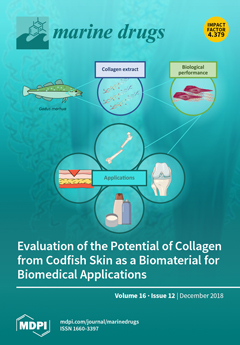
Cover Story: Collagen is the most abundant structural protein in vertebrates, found in skin, bones and cartilage, among other tissues, with a pivotal role in the maintenance of their biological and structural integrity. Collagen is thus a key building block in biomaterials design for tissue engineering and regeneration. Conventionally, collagen has porcine or bovine origin, which present some ethical and safety constrains, and marine species have been presented as a sustainable alternative, particularly when considering fish processing industry by-products. In the highlighted work, collagen type I was isolated from codfish skins and, despite the lower denaturation temperature, the high purity extracts enable the production of collagen coating supporting the culture of human fibroblast cell line, with promising biomedical application. View this paper.
  • Issues are regarded as officially published after their release is announced to the table of contents alert mailing list .
  • You may sign up for email alerts to receive table of contents of newly released issues.
  • PDF is the official format for papers published in both, html and pdf forms. To view the papers in pdf format, click on the "PDF Full-text" link, and use the free Adobe Reader to open them.

Articles (60)

  • Review
  • Open Access
21 Citations
5,100 Views
11 Pages

Marine Compound Xyloketal B as a Potential Drug Development Target for Neuroprotection

  • Haifan Gong,
  • Zhengwei Luo,
  • Wenliang Chen,
  • Zhong-Ping Feng,
  • Guan-Lei Wang and
  • Hong-Shuo Sun

19 December 2018

Xyloketal B is a natural compound isolated from the mangrove fungus, Xylaria sp. in the South China Sea. In the past decade, studies have shown that xyloketal B exhibits anti-oxidative, anti-inflammatory, and anti-apoptotic abilities and may serve as...

  • Article
  • Open Access
18 Citations
4,247 Views
15 Pages

Metabolites from the Paracel Islands Soft Coral Sinularia cf. molesta

  • Mei-Jun Chu,
  • Xu-Li Tang,
  • Xiao Han,
  • Tao Li,
  • Xiang-Chao Luo,
  • Ming-Ming Jiang,
  • Leen Van Ofwegen,
  • Lian-Zhong Luo,
  • Gang Zhang and
  • Guo-Qiang Li
  • + 1 author

19 December 2018

Five new oxygenated sesquiterpenes, molestins A–D (1, 35) and epi-gibberodione (2), three new cyclopentenone derivatives, ent-sinulolides C, D, and F ((+)-9–(+)-11), one new butenolide derivative, ent-sinulolide H ((+)-13), and one...

  • Article
  • Open Access
20 Citations
5,790 Views
19 Pages

Synergistic AML Cell Death Induction by Marine Cytotoxin (+)-1(R), 6(S), 1’(R), 6’(S), 11(R), 17(S)-Fistularin-3 and Bcl-2 Inhibitor Venetoclax

  • Cristina Florean,
  • Kyung Rok Kim,
  • Michael Schnekenburger,
  • Hyun-Jung Kim,
  • Céline Moriou,
  • Cécile Debitus,
  • Mario Dicato,
  • Ali Al-Mourabit,
  • Byung Woo Han and
  • Marc Diederich

19 December 2018

Treatment of acute myeloid leukemia (AML) patients is still hindered by resistance and relapse, resulting in an overall poor survival rate. Recently, combining specific B-cell lymphoma (Bcl)-2 inhibitors with compounds downregulating myeloid cell leu...

  • Article
  • Open Access
31 Citations
5,610 Views
12 Pages

19 December 2018

On the basis of the ‘one strain, many compounds’ (OSMAC) strategy, chemical investigation of the marine-derived fungus Trichothecium roseum resulted in the isolation of trichomide cyclodepsipeptides (compounds 1–4) from PDB medium,...

  • Article
  • Open Access
17 Citations
6,524 Views
18 Pages

Reduced Number of Adipose Lineage and Endothelial Cells in Epididymal fat in Response to Omega-3 PUFA in Mice Fed High-Fat Diet

  • Katerina Adamcova,
  • Olga Horakova,
  • Kristina Bardova,
  • Petra Janovska,
  • Marie Brezinova,
  • Ondrej Kuda,
  • Martin Rossmeisl and
  • Jan Kopecky

18 December 2018

We found previously that white adipose tissue (WAT) hyperplasia in obese mice was limited by dietary omega-3 polyunsaturated fatty acids (omega-3 PUFA). Here we aimed to characterize the underlying mechanism. C57BL/6N mice were fed a high-fat diet su...

  • Article
  • Open Access
14 Citations
4,782 Views
18 Pages

Potential Usefulness of a Wakame/Carob Functional Snack for the Treatment of Several Aspects of Metabolic Syndrome: From In Vitro to In Vivo Studies

  • Cristina Martínez-Villaluenga,
  • Elena Peñas,
  • Daniel Rico,
  • Ana Belén Martin-Diana,
  • Maria P. Portillo,
  • Maria Teresa Macarulla,
  • Daniel Antonio De Luis and
  • Jonatan Miranda

17 December 2018

Metabolic syndrome (MetS) greatly increases the risk of cardiovascular diseases and type 2 diabetes mellitus. The aim of this study was to evaluate the efficacy of functional snacks containing a combination of wakame (W) and carob pod (CP) flours in...

  • Review
  • Open Access
43 Citations
6,273 Views
20 Pages

Sterol and Sphingoid Glycoconjugates from Microalgae

  • Valentin A. Stonik and
  • Inna V. Stonik

17 December 2018

Microalgae are well known as primary producers in the hydrosphere. As sources of natural products, microalgae are attracting major attention due to the potential of their practical applications as valuable food constituents, raw material for biofuels...

  • Article
  • Open Access
18 Citations
4,968 Views
11 Pages

Bromopyrrole Alkaloids from the Sponge Agelas kosrae

  • Oh-Seok Kwon,
  • Donghwa Kim,
  • Heegyu Kim,
  • Yeon-Ju Lee,
  • Hyi-Seung Lee,
  • Chung J. Sim,
  • Dong-Chan Oh,
  • Sang Kook Lee,
  • Ki-Bong Oh and
  • Jongheon Shin

17 December 2018

Two new sceptrin derivatives (1,2) and eight structurally-related known bromopyrrole-bearing alkaloids were isolated from the tropical sponge Agelas kosrae. By a combination of spectroscopic methods, the new compounds, designated dioxysceptrin (1) an...

  • Article
  • Open Access
72 Citations
7,071 Views
10 Pages

Antiviral and Antioxidant Properties of Echinochrome A

  • Sergey A. Fedoreyev,
  • Natalia V. Krylova,
  • Natalia P. Mishchenko,
  • Elena A. Vasileva,
  • Evgeny A. Pislyagin,
  • Olga V. Iunikhina,
  • Vyacheslav F. Lavrov,
  • Oksana A. Svitich,
  • Linna K. Ebralidze and
  • Galina N. Leonova

15 December 2018

The aim of this study was to examine the in vitro antioxidant and antiviral activities of echinochrome A and echinochrome-based antioxidant composition against tick-borne encephalitis virus (TBEV) and herpes simplex virus type 1 (HSV-1). The antioxid...

  • Article
  • Open Access
37 Citations
6,691 Views
17 Pages

Transcriptome Analysis of Phycocyanin-Mediated Inhibitory Functions on Non-Small Cell Lung Cancer A549 Cell Growth

  • Shuai Hao,
  • Shuang Li,
  • Jing Wang,
  • Lei Zhao,
  • Yan Yan,
  • Qi Cao,
  • Tingting Wu,
  • Liyun Liu and
  • Chengtao Wang

15 December 2018

Phycocyanin (PC), derived from cyanobacteria and Spirulina cells, is a type of natural antineoplastic marine protein. It has been reported that phycocyanin exerts an antitumor function in non-small cell lung cancer (NSCLC) cells, but the underlying m...

  • Article
  • Open Access
59 Citations
6,500 Views
16 Pages

Fucoidan-Manganese Dioxide Nanoparticles Potentiate Radiation Therapy by Co-Targeting Tumor Hypoxia and Angiogenesis

  • Sung-Won Shin,
  • Wooju Jung,
  • Changhoon Choi,
  • Shin-Yeong Kim,
  • Arang Son,
  • Hakyoung Kim,
  • Nohyun Lee and
  • Hee Chul Park

15 December 2018

Tumor hypoxia is a major mechanism of resistance to radiation therapy (RT), which is associated with poor prognosis in affected cancer patients. Various approaches to treat hypoxic and radioresistant cancers, including pancreatic cancer, have shown l...

  • Article
  • Open Access
30 Citations
6,128 Views
15 Pages

Diversity and Ecology of Marine Algicolous Arthrinium Species as a Source of Bioactive Natural Products

  • Young Mok Heo,
  • Kyeongwon Kim,
  • Seung Mok Ryu,
  • Sun Lul Kwon,
  • Min Young Park,
  • Ji Eun Kang,
  • Joo-Hyun Hong,
  • Young Woon Lim,
  • Changmu Kim and
  • Jae-Jin Kim
  • + 2 authors

14 December 2018

In our previous study, all Arthrinium isolates from Sargassum sp. showed high bioactivities, but studies on marine Arthrinium spp. are insufficient. In this study, a phylogenetic analysis of 28 Arthrinium isolates from seaweeds and egg masses of Arct...

  • Article
  • Open Access
52 Citations
8,038 Views
28 Pages

Seasonal Variations in the Metabolome and Bioactivity Profile of Fucus vesiculosus Extracted by an Optimised, Pressurised Liquid Extraction Protocol

  • Edwin Heavisides,
  • Caroline Rouger,
  • Anna F. Reichel,
  • Cornelia Ulrich,
  • Arlette Wenzel-Storjohann,
  • Susanne Sebens and
  • Deniz Tasdemir

13 December 2018

The metabolism of seaweeds depends on environmental parameters, the availability of nutrients, and biotic/abiotic stresses; therefore, their chemical composition fluctuates throughout the year. This study investigated seasonal variations in the metab...

  • Article
  • Open Access
30 Citations
6,802 Views
19 Pages

Pro-Apoptotic Activity of French Polynesian Padina pavonica Extract on Human Osteosarcoma Cells

  • Giulia Bernardini,
  • Mariagiulia Minetti,
  • Giuseppe Polizzotto,
  • Manuele Biazzo and
  • Annalisa Santucci

13 December 2018

Recently, seaweeds and their extracts have attracted great interest in the pharmaceutical industry as a source of bioactive compounds. Studies have demonstrated the cytotoxic activity of macroalgae towards different types of cancer cell models, and t...

  • Article
  • Open Access
18 Citations
5,786 Views
15 Pages

MS/MS-Based Molecular Networking Approach for the Detection of Aplysiatoxin-Related Compounds in Environmental Marine Cyanobacteria

  • Chi Ying Gary Ding,
  • Li Mei Pang,
  • Zhao-Xun Liang,
  • Kau Kiat Kelvin Goh,
  • Evgenia Glukhov,
  • William H. Gerwick and
  • Lik Tong Tan

13 December 2018

Certain strains of cyanobacteria produce a wide array of cyanotoxins, such as microcystins, lyngbyatoxins and aplysiatoxins, that are associated with public health issues. In this pilot study, an approach combining LC-MS/MS and molecular networking w...

  • Article
  • Open Access
31 Citations
4,354 Views
10 Pages

13 December 2018

Non-small cell lung cancer (NSCLC) is among the leading causes of human mortality due to a lack of effective treatments. Conventional chemotherapies affect healthy cells and cause multidrug resistance, while tumors may eventually develop resistance t...

  • Article
  • Open Access
23 Citations
4,774 Views
14 Pages

13 December 2018

Recently, the muscle-type nicotinic acetylcholine receptors (nAChRs) have been pursued as a potential target of several diseases, including myogenic disorders, muscle dystrophies and myasthenia gravis, etc. α-conotoxin GI isolated from Conus ge...

  • Article
  • Open Access
10 Citations
5,803 Views
16 Pages

The Pseudoalteromonas luteoviolacea L-amino Acid Oxidase with Antimicrobial Activity Is a Flavoenzyme

  • Andrés Andreo-Vidal,
  • Antonio Sanchez-Amat and
  • Jonatan C. Campillo-Brocal

12 December 2018

The marine environment is a rich source of antimicrobial compounds with promising pharmaceutical and biotechnological applications. The Pseudoalteromonas genus harbors one of the highest proportions of bacterial species producing antimicrobial molecu...

  • Article
  • Open Access
30 Citations
5,153 Views
15 Pages

Analgesic Activity of Acid-Sensing Ion Channel 3 (ASIС3) Inhibitors: Sea Anemones Peptides Ugr9-1 and APETx2 versus Low Molecular Weight Compounds

  • Yaroslav A. Andreev,
  • Dmitry I. Osmakov,
  • Sergey G. Koshelev,
  • Ekaterina E. Maleeva,
  • Yulia A. Logashina,
  • Victor A. Palikov,
  • Yulia A. Palikova,
  • Igor A. Dyachenko and
  • Sergey A. Kozlov

12 December 2018

Acid-sensing ion channel 3 (ASIC3) makes an important contribution to the development and maintenance of inflammatory and acid-induced pain. We compared different ASIC3 inhibitors (peptides from sea anemones (APETx2 and Ugr9-1) and nonpeptide molecul...

  • Article
  • Open Access
16 Citations
5,634 Views
15 Pages

A Strategy to Replace the Mouse Bioassay for Detecting and Identifying Lipophilic Marine Biotoxins by Combining the Neuro-2a Bioassay and LC-MS/MS Analysis

  • Marcia Bodero,
  • Arjen Gerssen,
  • Liza Portier,
  • Mirjam D. Klijnstra,
  • Ron L. A. P. Hoogenboom,
  • Leonardo Guzmán,
  • Peter J. M. Hendriksen and
  • Toine F. H. Bovee

12 December 2018

Marine biotoxins in fish and shellfish can cause several symptoms in consumers, such as diarrhea, amnesia, or even death by paralysis. Monitoring programs are in place for testing shellfish on a regular basis. In some countries testing is performed u...

  • Article
  • Open Access
28 Citations
4,344 Views
11 Pages

The Marine Dinoflagellate Alexandrium minutum Activates a Mitophagic Pathway in Human Lung Cancer Cells

  • Christian Galasso,
  • Genoveffa Nuzzo,
  • Christophe Brunet,
  • Adrianna Ianora,
  • Angela Sardo,
  • Angelo Fontana and
  • Clementina Sansone

12 December 2018

Marine dinoflagellates are a valuable source of bioactive molecules. Many species produce cytotoxic compounds and some of these compounds have also been investigated for their anticancer potential. Here, we report the first investigation of the toxic...

  • Article
  • Open Access
64 Citations
6,976 Views
14 Pages

Effect of Marine Microalga Chlorella pyrenoidosa Ethanol Extract on Lipid Metabolism and Gut Microbiota Composition in High-Fat Diet-Fed Rats

  • Xuzhi Wan,
  • Tiantian Li,
  • Dan Liu,
  • Yihan Chen,
  • Yuanyuan Liu,
  • Bin Liu,
  • Huiying Zhang and
  • Chao Zhao

9 December 2018

Effects of marine microalga Chlorella pyrenoidosa 55% ethanol extract (CPE55) on lipid metabolism, gut microbiota and regulation mechanism in high fat diet-fed induced hyperlipidaemia rats were investigated. Structure characterizations of major compo...

  • Feature Paper
  • Article
  • Open Access
114 Citations
9,834 Views
14 Pages

Evaluation of the Potential of Collagen from Codfish Skin as a Biomaterial for Biomedical Applications

  • Ana M. Carvalho,
  • Alexandra P. Marques,
  • Tiago H. Silva and
  • Rui L. Reis

8 December 2018

Collagen is one of the most widely used biomaterials, not only due its biocompatibility, biodegradability and weak antigenic potential, but also due to its role in the structure and function of tissues. Searching for alternative collagen sources, the...

  • Article
  • Open Access
57 Citations
7,854 Views
13 Pages

Spirulina maxima Decreases Endothelial Damage and Oxidative Stress Indicators in Patients with Systemic Arterial Hypertension: Results from Exploratory Controlled Clinical Trial

  • Jesús Martínez-Sámano,
  • Adriana Torres-Montes de Oca,
  • Oscar Ivan Luqueño-Bocardo,
  • Patricia V. Torres-Durán and
  • Marco A. Juárez-Oropeza

8 December 2018

(1) Background: Spirulina (Arthrospira) maxima has shown beneficial effects such as being anti-dyslipidemic, antiviral, antioxidant and antihypertensive. However, there are few and limited clinical studies. (2) Methods: a prospective, randomized, par...

  • Article
  • Open Access
24 Citations
7,025 Views
14 Pages

Pyropia yezoensis Protein Prevents Dexamethasone-Induced Myotube Atrophy in C2C12 Myotubes

  • Min-Kyeong Lee,
  • Jeong-Wook Choi,
  • Youn Hee Choi and
  • Taek-Jeong Nam

8 December 2018

Glucocorticoids (GCs), which are endocrine hormones released under stress conditions, can cause skeletal muscle atrophy. This study investigated whether Pyropia yezoensis crude protein (PYCP) inhibits synthetic GCs dexamethasone (DEX)-induced myotube...

  • Article
  • Open Access
16 Citations
4,956 Views
13 Pages

Analysis of the Transcriptome of the Red Seaweed Grateloupia imbricata with Emphasis on Reproductive Potential

  • Pilar Garcia-Jimenez,
  • Carlos Llorens,
  • Francisco J. Roig and
  • Rafael R. Robaina

7 December 2018

Grateloupia imbricata is an intertidal marine seaweed and candidate model organism for both industry and academic research, owing to its ability to produce raw materials such as carrageenan. Here we report on the transcriptome of G. imbricata with th...

  • Article
  • Open Access
20 Citations
4,551 Views
13 Pages

7 December 2018

Paralytic shellfish toxins (PSTs) are a group of potent neurotoxic alkaloids that are produced mainly by marine dinoflagellates. PST biosynthesis in dinoflagellates is a discontinuous process that is coupled to the cell cycle. However, little is know...

  • Article
  • Open Access
74 Citations
6,435 Views
21 Pages

New Insights into the Culture Method and Antibacterial Potential of Gracilaria gracilis

  • Gioele Capillo,
  • Serena Savoca,
  • Rosaria Costa,
  • Marilena Sanfilippo,
  • Carmen Rizzo,
  • Angelina Lo Giudice,
  • Ambrogina Albergamo,
  • Rossana Rando,
  • Giovanni Bartolomeo and
  • Caterina Faggio
  • + 1 author

7 December 2018

Enormous marine biodiversity offers an endless reservoir of chemicals for many applications. In this scenario, the extraction of seaweeds represents an interesting source of compounds displaying antimicrobial activity. In particular, among the differ...

  • Article
  • Open Access
6 Citations
4,495 Views
9 Pages

7 December 2018

The green alga Chlamydomonas reinhardtii was recently been shown to be an effective bio-manufacturing platform for the production of recombinant proteins. The advantage of using C. reinhardtii is that it is fast to grow, inexpensive to culture, and r...

  • Article
  • Open Access
27 Citations
5,386 Views
13 Pages

7 December 2018

Increasing global temperatures are expected to increase the risk of extinction of various species due to acceleration in the pace of shifting climate zones. Nevertheless, there is no information on the physicochemical properties of membrane lipids th...

  • Article
  • Open Access
43 Citations
5,472 Views
19 Pages

Environmentally Friendly Valorization of Solieria filiformis (Gigartinales, Rhodophyta) from IMTA Using a Biorefinery Concept

  • Ana Peñuela,
  • Daniel Robledo,
  • Nathalie Bourgougnon,
  • Gilles Bedoux,
  • Emanuel Hernández-Núñez and
  • Yolanda Freile-Pelegrín

6 December 2018

Marine macroalgae (seaweed) are an excellent source of novel bioactive metabolites. The biorefinery concept applied to seaweed facilitates the extraction of many chemical constituents from the same biomass ensuring that the resource is used fully, ge...

  • Article
  • Open Access
22 Citations
4,471 Views
18 Pages

6 December 2018

Ten new triterpenoid compounds with structure diversity of the C-17 side-chain, including nine tirucallanes, named xylocarpols A–E (15) and agallochols A–D (69), and an apotirucallane, named 25-dehydroxy protoxylogranatin B...

  • Article
  • Open Access
16 Citations
4,728 Views
12 Pages

Heteronemin Induces Anti-Proliferation in Cholangiocarcinoma Cells via Inhibiting TGF-β Pathway

  • Hung-Yun Lin,
  • Shu-Leei Tey,
  • Yih Ho,
  • Yung-Tang Chin,
  • Kuan Wang,
  • Jacqueline Whang-Peng,
  • Ya-Jung Shih,
  • Yi-Ru Chen,
  • Yung-Ning Yang and
  • Yu-Chen SH Yang
  • + 3 authors

6 December 2018

A marine sesterterpenoid-type natural product, heteronemin, retains anticancer effects. In the current study, we investigate the antitumor mechanism of heteronemin in cholangiocarcinoma cells and further explore its molecular targets. Initially, hete...

  • Article
  • Open Access
59 Citations
8,343 Views
13 Pages

Marine Biomaterial-Based Bioinks for Generating 3D Printed Tissue Constructs

  • Xiaowei Zhang,
  • Gyeong Jin Kim,
  • Min Gyeong Kang,
  • Jung Ki Lee,
  • Jeong Wook Seo,
  • Jeong Tae Do,
  • Kwonho Hong,
  • Jae Min Cha,
  • Su Ryon Shin and
  • Hojae Bae

4 December 2018

Biologically active materials from marine sources have been receiving increasing attention as they are free from the transmissible diseases and religious restrictions associated with the use of mammalian resources. Among various other biomaterials fr...

  • Review
  • Open Access
80 Citations
12,353 Views
25 Pages

Bioactive Secondary Metabolites from Octocoral-Associated Microbes—New Chances for Blue Growth

  • Inês Raimundo,
  • Sandra G. Silva,
  • Rodrigo Costa and
  • Tina Keller-Costa

4 December 2018

Octocorals (Cnidaria, Anthozoa Octocorallia) are magnificent repositories of natural products with fascinating and unusual chemical structures and bioactivities of interest to medicine and biotechnology. However, mechanistic understanding of the cont...

  • Article
  • Open Access
45 Citations
6,224 Views
8 Pages

Algal Oxylipins Mediate the Resistance of Diatoms against Algicidal Bacteria

  • Nils Meyer,
  • Johanna Rettner,
  • Markus Werner,
  • Oliver Werz and
  • Georg Pohnert

4 December 2018

Algicidal bacteria can lyse microalgal blooms and trigger shifts within plankton communities. Resistant algal species can escape lysis, and have the opportunity to dominate the phytoplankton after a bacterial infection. Despite their important functi...

  • Article
  • Open Access
8 Citations
6,452 Views
26 Pages

Synthesis and Antiproliferative Activity of Marine Bromotyrosine Purpurealidin I and Its Derivatives

  • Chinmay Bhat,
  • Polina Ilina,
  • Irene Tilli,
  • Manuela Voráčová,
  • Tanja Bruun,
  • Victoria Barba,
  • Nives Hribernik,
  • Katja-Emilia Lillsunde,
  • Eero Mäki-Lohiluoma and
  • Päivi Tammela
  • + 4 authors

3 December 2018

The first total synthesis of the marine bromotyrosine purpurealidin I (1) using trifluoroacetoxy protection group and its dimethylated analog (29) is reported along with 16 simplified bromotyrosine derivatives lacking the tyramine moiety. Their cytot...

  • Article
  • Open Access
52 Citations
13,058 Views
12 Pages

3 December 2018

Aging-associated changes of skin conditions are a major concern for maintaining quality of life. Therefore, the improvement of skin conditions by dietary supplementation is a topic of public interest. In this study, we hypothesized that a composite s...

  • Article
  • Open Access
30 Citations
5,077 Views
12 Pages

New Bis-Alkenoic Acid Derivatives from a Marine-Derived Fungus Fusarium solani H915

  • Shun-Zhi Liu,
  • Xia Yan,
  • Xi-Xiang Tang,
  • Jin-Guo Lin and
  • Ying-Kun Qiu

3 December 2018

Fusarium solani H915 is a fungus derived from mangrove sediments. From its ethyl acetate extract, a new alkenoic acid, fusaridioic acid A (1), three new bis-alkenoic acid esters, namely, fusariumester A1 (2), A2 (3) and B (4), together with three kno...

  • Article
  • Open Access
21 Citations
4,858 Views
11 Pages

Modulation of Human Complement System by Antimicrobial Peptide Arenicin-1 from Arenicola marina

  • Ekaterina S. Umnyakova,
  • Nikolay P. Gorbunov,
  • Alexander V. Zhakhov,
  • Ilia A. Krenev,
  • Tatiana V. Ovchinnikova,
  • Vladimir N. Kokryakov and
  • Mikhail N. Berlov

1 December 2018

Antimicrobial peptides from marine invertebrates are known not only to act like cytotoxic agents, but they also can display some additional activities in mammalian organisms. In particular, these peptides can modulate the complement system as was des...

  • Review
  • Open Access
52 Citations
7,501 Views
21 Pages

Chemically-Induced Production of Anti-Inflammatory Molecules in Microalgae

  • Zaida Montero-Lobato,
  • María Vázquez,
  • Francisco Navarro,
  • Juan Luis Fuentes,
  • Elisabeth Bermejo,
  • Inés Garbayo,
  • Carlos Vílchez and
  • María Cuaresma

30 November 2018

Microalgae have been widely recognized as a valuable source of natural, bioactive molecules that can benefit human health. Some molecules of commercial value synthesized by the microalgal metabolism have been proven to display anti-inflammatory activ...

  • Article
  • Open Access
14 Citations
4,349 Views
20 Pages

A Soft Coral-Derived Compound, 11-Dehydrosinulariolide, Induces G2/M Cell Cycle Arrest and Apoptosis in Small Cell Lung Cancer

  • Yu-Chao Lin,
  • Jui-Hsin Su,
  • Shih-Chao Lin,
  • Chia-Che Chang,
  • Te-Chun Hsia,
  • Yu-Tang Tung and
  • Chi-Chien Lin

30 November 2018

11-Dehydrosinulariolide, an active compound that is isolated from the cultured soft coral Sinularia flexibilis, has been suggested to show anti-tumor biological characteristics according to previous studies. However, its potential effect on small cel...

  • Article
  • Open Access
21 Citations
5,410 Views
20 Pages

Preparation of the Sodium Alginate-g-(Polyacrylic Acid-co-Allyltrimethylammonium Chloride) Polyampholytic Superabsorbent Polymer and Its Dye Adsorption Property

  • Shuxian Tang,
  • Ying Zhao,
  • Haitao Wang,
  • Yuqiao Wang,
  • Hexiang Zhu,
  • Yu Chen,
  • Shusen Chen,
  • Shaohua Jin,
  • Ziming Yang and
  • Sidong Li
  • + 1 author

29 November 2018

A polyampholytic superabsorbent polymer (PASAP), sodium alginate-g-(polyacrylic acid-co-allyltrimethylammonium chloride) (SA-g-(PAA-co-PTM)), was prepared by free-radical graft copolymerization and characterized. The polymer exhibited pH-dependent sw...

  • Article
  • Open Access
6 Citations
3,791 Views
17 Pages

29 November 2018

Cystatins are a family of cysteine protease inhibitors which are associated with a variety of physiological and pathological processes in vivo. In the present study, the cDNA sequence of a cystatin F homologue called Lm-cystatin F was cloned from the...

  • Article
  • Open Access
15 Citations
3,815 Views
15 Pages

Cytotoxic Sesterterpenes from Thai Marine Sponge Hyrtios erectus

  • Wirongrong Kaweetripob,
  • Chulabhorn Mahidol,
  • Pittaya Tuntiwachwuttikul,
  • Somsak Ruchirawat and
  • Hunsa Prawat

28 November 2018

Four sesterterpenes, erectusolides B, C, D, and seco-manoalide-25-methyl ether, two 2-furanone derivatives, erectusfuranones A and B, together with thirteen known sesterterpenes, (6Z)-neomanoalide-24-acetate, two diastereomers of 24-O-methylmanoalide...

  • Article
  • Open Access
9 Citations
5,200 Views
12 Pages

Synthesis of Pseudellone Analogs and Characterization as Novel T-type Calcium Channel Blockers

  • Dan Wang,
  • Pratik Neupane,
  • Lotten Ragnarsson,
  • Robert J. Capon and
  • Richard J. Lewis

28 November 2018

T-type calcium channel (CaV3.x) blockers are receiving increasing attention as potential therapeutics for the treatment of pathophysiological disorders and diseases, including absence epilepsy, Parkinson’s disease (PD), hypertension, cardiovasc...

  • Article
  • Open Access
39 Citations
5,781 Views
13 Pages

Cloning, Expression and Characterization of a Novel Cold-adapted β-galactosidase from the Deep-sea Bacterium Alteromonas sp. ML52

  • Jingjing Sun,
  • Congyu Yao,
  • Wei Wang,
  • Zhiwei Zhuang,
  • Junzhong Liu,
  • Fangqun Dai and
  • Jianhua Hao

27 November 2018

The bacterium Alteromonas sp. ML52, isolated from deep-sea water, was found to synthesize an intracellular cold-adapted β-galactosidase. A novel β-galactosidase gene from strain ML52, encoding 1058 amino acids residues, was cloned and expre...

  • Article
  • Open Access
25 Citations
4,445 Views
10 Pages

27 November 2018

Four angucycline glycosides including three new compounds landomycin N (1), galtamycin C (2) and vineomycin D (3), and a known homologue saquayamycin B (4), along with two alkaloids 1-acetyl-β-carboline (5) and indole-3-acetic acid (6), were iso...

  • Article
  • Open Access
10 Citations
3,971 Views
10 Pages

Mutagenesis Studies and Structure-function Relationships for GalNAc/Gal-Specific Lectin from the Sea Mussel Crenomytilus grayanus

  • Svetlana N. Kovalchuk,
  • Nina S. Buinovskaya,
  • Galina N. Likhatskaya,
  • Valery A. Rasskazov,
  • Oksana M. Son,
  • Liudmila A. Tekutyeva and
  • Larissa A. Balabanova

27 November 2018

The GalNAc/Gal-specific lectin from the sea mussel Crenomytilus grayanus (CGL) with anticancer activity represents а novel lectin family with β-trefoil fold. Earlier, the crystal structures of CGL complexes with globotriose, galactose and galactosami...

  • Article
  • Open Access
58 Citations
5,140 Views
10 Pages

27 November 2018

This work aims to explore the amelioration of fucoidan on adenine-induced hyperuricemia and hepatorental damage. Adenine-induced hyperuricemic mice were administered with fucoidan, allopurinol and vehicle control respectively to compare the effects o...

of 2

Get Alerted

Add your email address to receive forthcoming issues of this journal.

XFacebookLinkedIn
Mar. Drugs - ISSN 1660-3397